Monthly Archives: September 2024

Rollercoaster Tycoon

A simulation game for theme parks with a focus on rollercoaster design. It has similar core mechanics to Theme Park, but focuses on the roller-coaster design element.
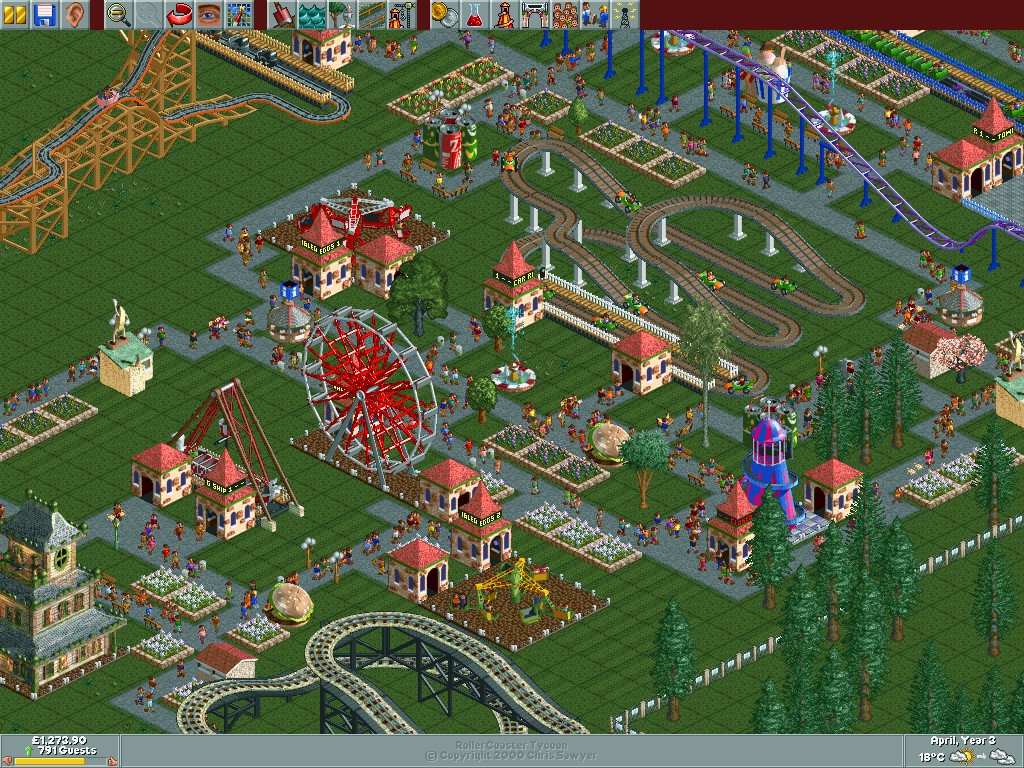
RCT places a heavy emphasis on the design and management of roller coasters and other rides. The coaster design system is intricate, allowing for complex creations with a high degree of customization. While it includes all aspects of park management like finances, staff, and guest happiness, the game really shines in its ride construction and the physics involved in coaster design.

The game is often compared to Theme Park, a Bullfrog game released in 1994. It differs as it was more about the overall management of the park with less emphasis on individual ride design. It included aspects like negotiating for rides, setting up shops, and even stock market elements in some versions. Theme Park also had a broader approach to management, including staff wages, stock levels for shops, and even the saltiness of fries to affect drink sales. It was more about the economic simulation with a whimsical approach to park design.

Park management is a core element of the game, Managing the park’s finances is crucial. This includes setting prices for park entry, individual rides, and concessions. Players must balance income with expenses like ride maintenance, staff wages, and loan repayments. Hiring and managing staff such as mechanics (to repair rides), handymen (to clean paths and mow lawns), security guards (to prevent vandalism), and entertainers (to boost guest happiness in certain areas). Understanding and catering to the needs of park guests (“peeps”) is vital. This includes placing amenities like toilets, food stalls, information kiosks, and ensuring guests don’t get lost or overly tired.
Regular maintenance checks and repairs are necessary to keep rides safe and operational. Neglecting this can lead to breakdowns or even accidents, which negatively impact the park’s reputation and guest happiness.

As a game released in 1999, you are treated to an 2D isometric view of your park. The game does allow you to rotate the screen with four different angles to get a better view of the park, but despite this it’s easy to get confused with the perspective, especially when building tall paths to connect to the larger rides since it’s easy to misjudge how high a path or ride is. To help with this you can turn off different layers of graphics to make it easier to see, and you can show the height value to know if your path is on the same level – useful if you are building on a hill since the perspective can be hard to judge.
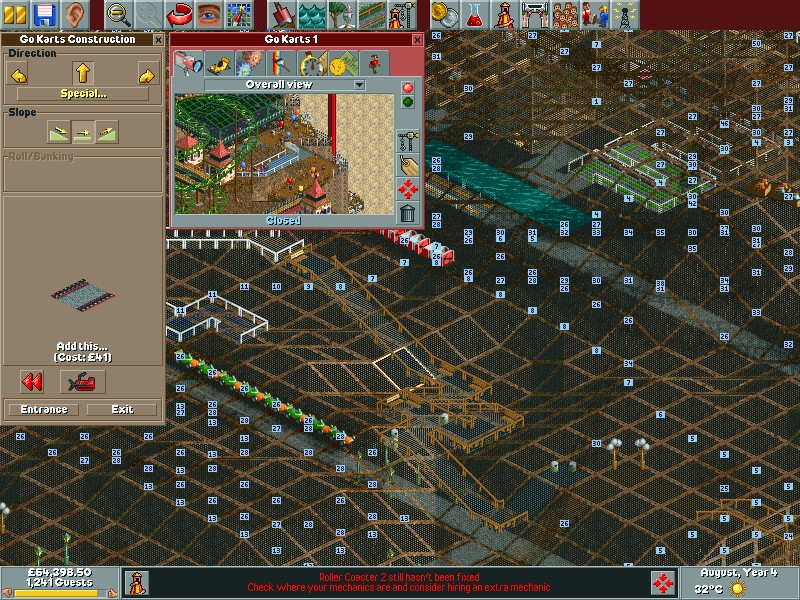
What is this I dont even

The soundtrack is like being at a carnival where the main attraction is a slightly out-of-tune merry-go-round. It’s catchy, it’s quirky, and it fits the theme perfectly. Sound effects? You’ve got the clatter of coasters, the screams of joy (or terror) of the guests, and the jingle of coins as you rake in revenue. The rides can also have background music, some might sound familiar if you’ve played other games from 1999 (Driver).

The game comes with a few built in scenarios where the objective is to have a certain amount of visitors in your park by a target year, which is usually the third or fourth year of operation. Certain parks have their own quirks by way of their environment or building regulations.
Forest Frontiers is the first one you will encounter and lets you get used to the basic mechanics of the game
Dynamite Dunes shows off the different terrain settings, with this one being set in the sand. It also has its own custom built roller coaster.
Evergreen Gardens sees you revamping a typical park into a theme park, with special care being given to designing and placing the roller coasters. Guests will typical get lost a lot due to the long-winded paths so its recommenced to delete some whilst being in the early stages of the park
Bumbly Beech introduces you to buying building rights for outside land. This allows you to build pathways but you cannot place stores or rides on them.
Paradise Pier is set mostly on water with the exception of the pier paths
Ivory Towers’s is set on a existing park but it run down and mismanaged with a lot of litter and vandalism which you must fix, in addition to expanding the park and adding additional rides. It does have a fully functional monorail however.
Rainbow Vally is the most difficult since you cannot destroy or remove any trees or alter the terrain. There is also a limit to how tall your rides can be.
• Additional expansions will come with even more scenarios.
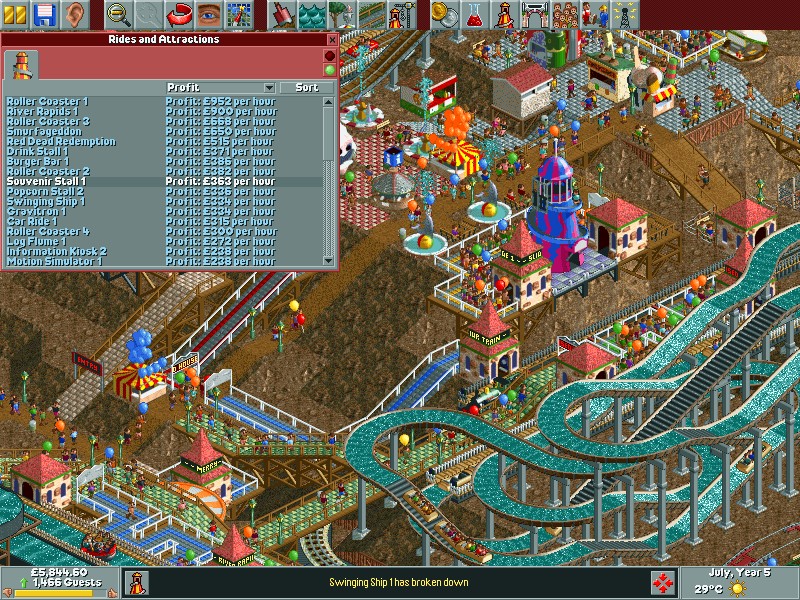
Like Theme Hospital/Park you will need to invest in research to unlock new rides, features and attractions. Initially, you start with a limited selection of rides. As you progress through the game, either by completing objectives in scenarios or by reaching certain milestones in open-ended play, you unlock additional rides, attractions, and even staff types. You can choose the amount of funding to contribute to research, with determines how fast items are unlocked. You can also adjust the type of items you want to research, if you prefer to focus on unlocking new roller coasters or gentle rides instead.

The Rides:
• Wooden Roller Coaster: A classic ride with wooden tracks, offering a nostalgic feel with its clackety-clack sound and traditional design.
• Steel Roller Coaster: Typically faster and smoother than wooden coasters, offering more modern thrills with loops, corkscrews, and inversions.
• Log Flume: Guests ride in logs that climb to a height before plunging down a steep slope, often getting splashed at the bottom.
• River Rapids: A circular ride where guests get soaked as they navigate through rapids, with the added fun of getting wet.

Many of the rides can be freely designed and built, but you can also choose from prebuilt templates of different sizes. You can also customize the price, colour and music used by the rides.Park guests can be picky as some might not prefer to ride some of the more intense coaster rides.

Aside from rides there are other attractions such as gentle rides and stores which sell food, beverages, items and ballons. The Information Kiosk, unlocked later in the park’s life, allows customers to purchase umbrellas and maps for better navigation. Food stalls are offered in the form of separate Fries/Chips, Pizza, Burgers and popcorn. You will need to place these strategically away from rollercoasters to reduce the chance of vomiting. Gentile Rides consist of the Haunted House, Bumper Cars, Ferris Wheel, Merry-Go-Round. These are easy going rides for customers that prefer less thrilling rides, or need a break from the roller coasters. Thill Rides are a bit more intense with the motion simulator, 3D Cinema, Swinging Ship and the Go Karts.

There are also transport rides that help get your guests from A to B, these consist of either the Monorail, Railroad or Chair Lift. These can also be considered as rides themselves.

RollerCoaster Tycoon was a massive commercial success, praised for its depth, creativity, and the freedom it gave players in park design. Originally for PC, RCT1 has been made available on modern systems through digital distribution platforms like Steam and GOG, often bundled with its expansions. A port was released for the original Xbox and is the only console port of the game.
Roller-coaster Tycoon on GOG

Alienware Alpha

Alienware’s Steam Machine

The Alienware Alpha was one of the few systems designed to be part of Valve’s Steam machines, which were computers designed for the living room to better compete with the console hardware of the time, which would have been the Xbox One, PlayStation 4 and the Wii U.

The Alpha is quite a small unit, only slightly larger than a Mac Mini and lacks an optical drive, but it packs an Nvidia GeForce 860M, capable of 1.3TF of performance which would have placed it in the same league of the Xbox One. 4GB of RAM comes with the machine, with some configurations supporting 8GB. The size and performance is underwhelming for a gaming system which makes me think Alienware intended for this to be the lower – end machine, with a larger and more powerful mode challenging the PS4 for it’s performance. With an 860M it’s mostly going to be a 720p machine.

This Alpha however lacks the bundled SteamOS, shipping with Windows 8 instead. Probably a good call from Dell/Alienware since the amount of native SteamOS games were very minor, and Steam’s Proton wasn’t a thing yet. Hardware-wise there are two USB 3.0 ports on the Rear, and two USB2.0 on the front, along with a single 2.0 port underneath which is intended for use with a wireless controller dongle. With only one HDMI output, running multiple screens isn’t possible unless you opt for a DisplayLink dock, like the Dell D3100 dock.

Restoring the Operating System

Since this unit was a second hand unit, it looks like the original owner had stripped the original install, along with the recovery partition and had install the latest version of Windows 10. Dell do offer recovery images for the Windows 10/11 systems on their website which can be download using this tool, just pop in your machines service tag along with a 16GB USB memory stick and off you go.

The recovery image Dell offer appears to be based off build 1809, and will require several updates. It also seems to lack the Nvidia drivers which kind of defeats the point of using Dell’s recovery image. The AlphaUI also isn’t included and had to be download separately off the machines drivers & downloads page. If I had to guess, Dell just provide a generic Windows 10 image for older machines, which simply gives OEM and support branding.

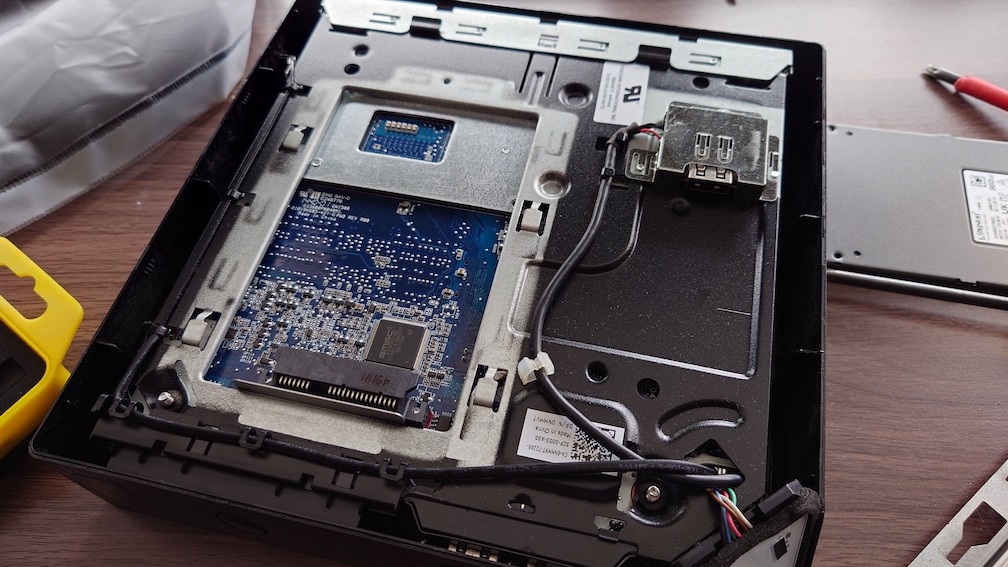
Also these machines come with a HDD as standard, which I promptly replaced with an SSD. Installation was easily, simply turn the computer upside-down and remove the bottom cover and you will see the HDD bay immediately.

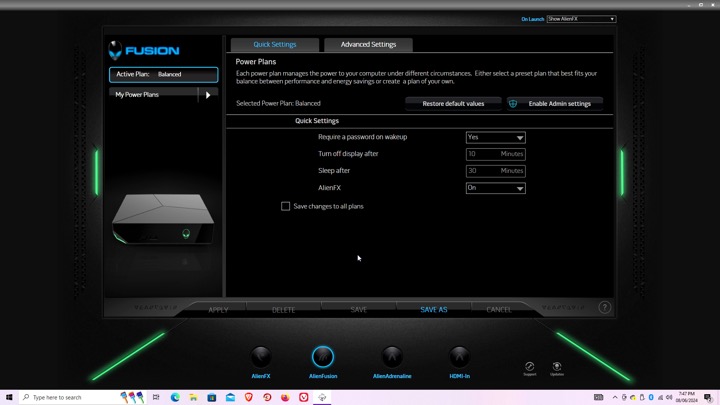
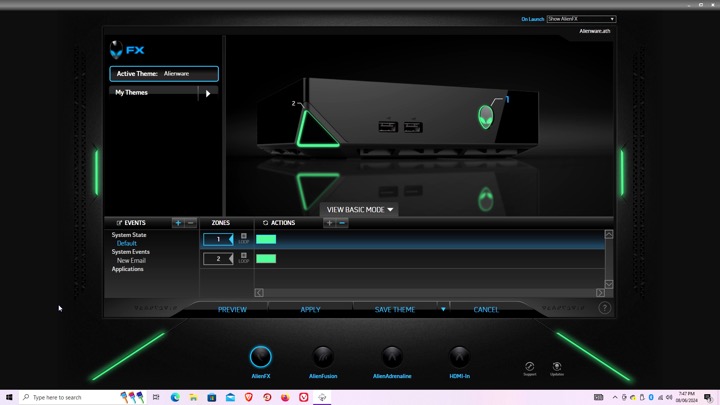
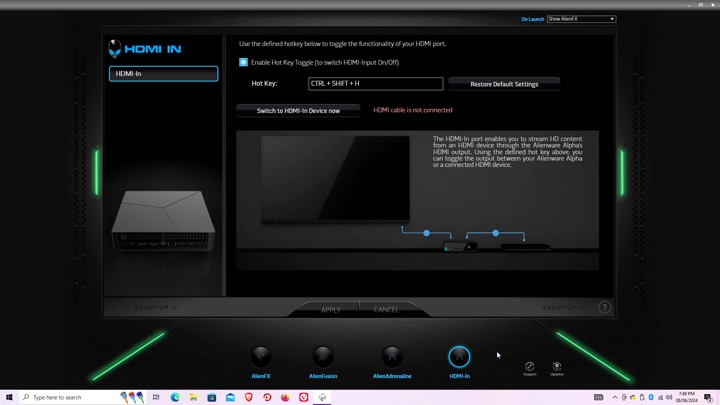
Alienware Command Center

Here is where you can configure the various different settings, like the LED lightning.

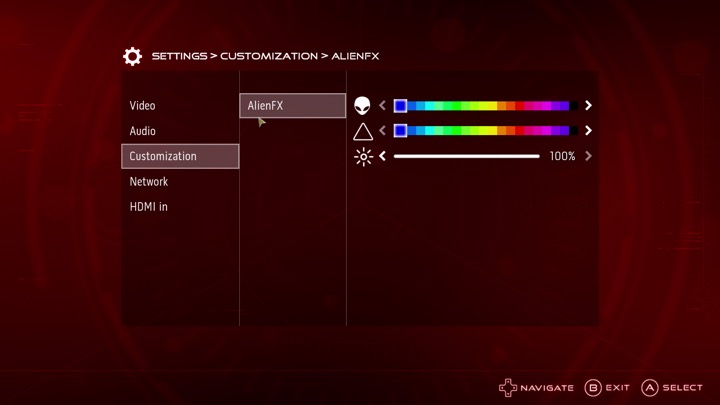
AlienFX: You can set different profiles which will change the colour scheme of the unit’s LED lights, this can be applied to different games or programs, although with Steam games you will need to navigate to the steamapps directory to locate the game’s exe file, otherwise you will get an error message. The Steam games on your desktop are just shortcuts.

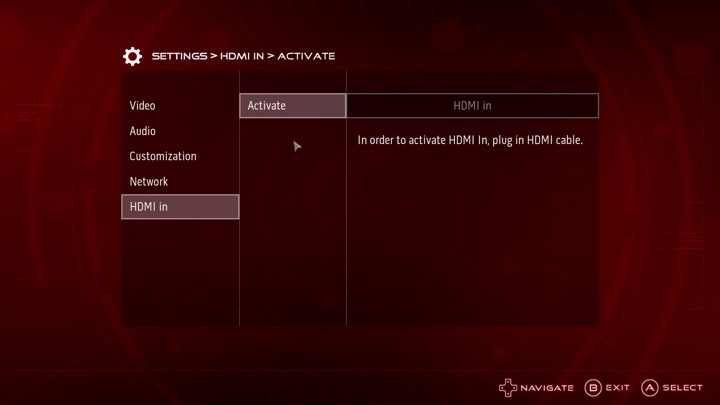
Settings for the HDMI input, there isn’t much to do there since you cannot capture the input. It simply functions as a passthrough, more suited to displays that only feature a limited amount of HDMI ports.

AlphaUI

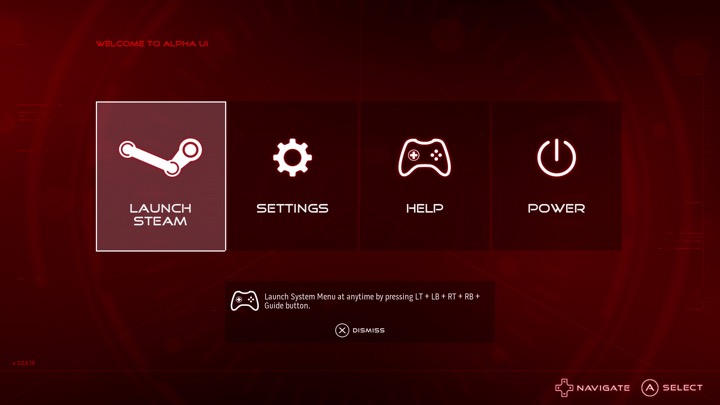
This was the intended interface for the Alpha, Alienware had originally planned to launch the Alpha as a dedicated Steam machine, sadly Valve time was a thing and the SteamOS was delayed several times. Alienware decided to cobble up a quick 10-foot UI that acts as a launcher. It’s based on XBMC and if you are familiar with it you will recognise some of the sounds when you select an option.

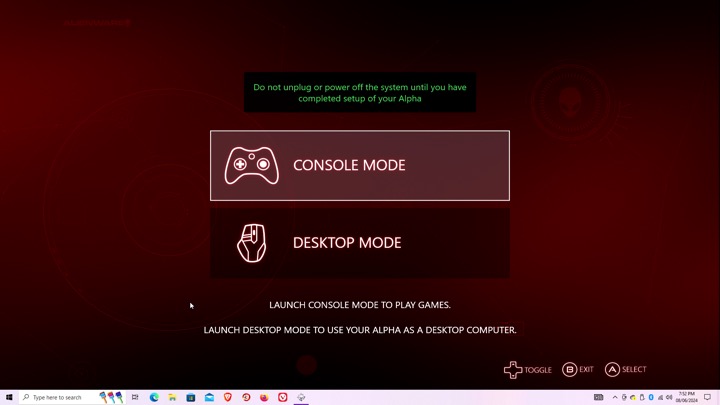
Setting up the AlphaUI, once we click on console mode we are immediately rebooted and a new user account is created. This interface is designed to be used from a controller, Alienware previously bunded an Xbox 360 controller with the system.

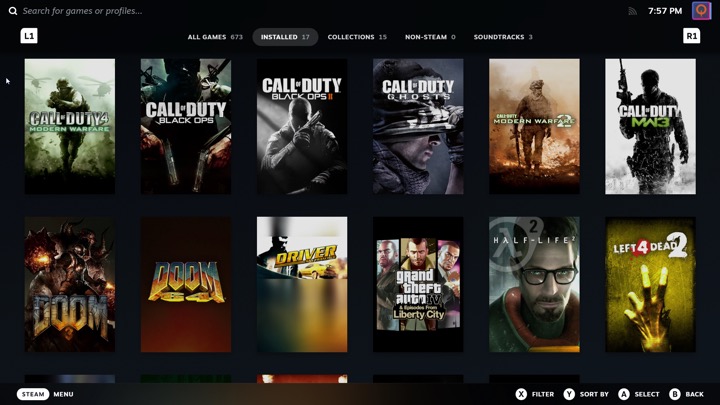
Selecting Steam will launch the Steam Big Picture interface. The Steam UI has changed since the AlphaUI was released and is orientated towards the SteamDeck, which is a little trickly to use on a non-touch screen hardware.

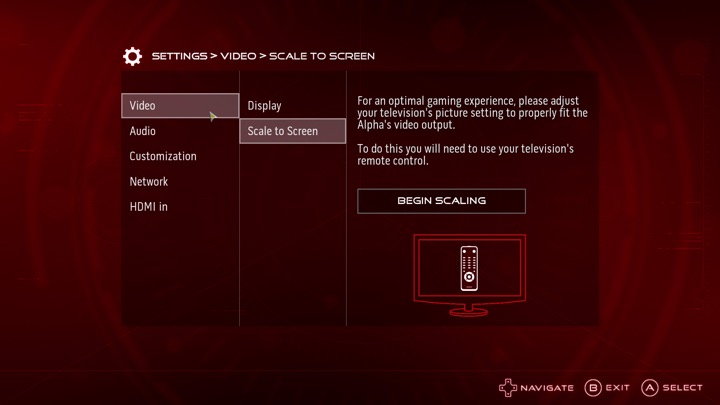
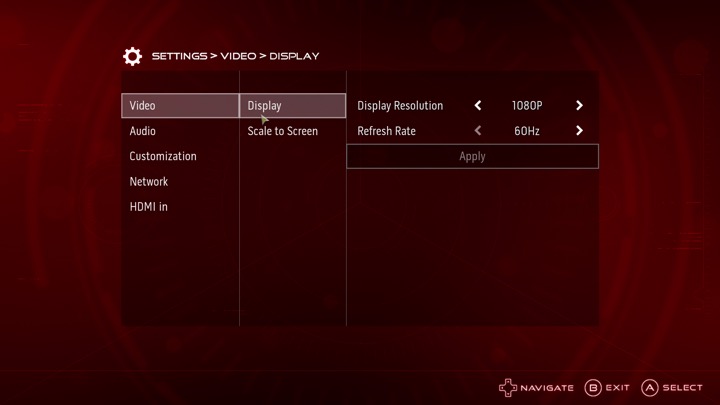
The settings menu, here you can adjust the video resolution and volume, along with customizing the AlienFX features. You can also switch into the HDMI input.

I can’t seem to find an option to add a custom program or launcher, it seems to assume you want to use Steam which makes it impossible to load something like Retroarch, unless you manually add it through Steam. It’s a bit of a letdown but not a big issue.

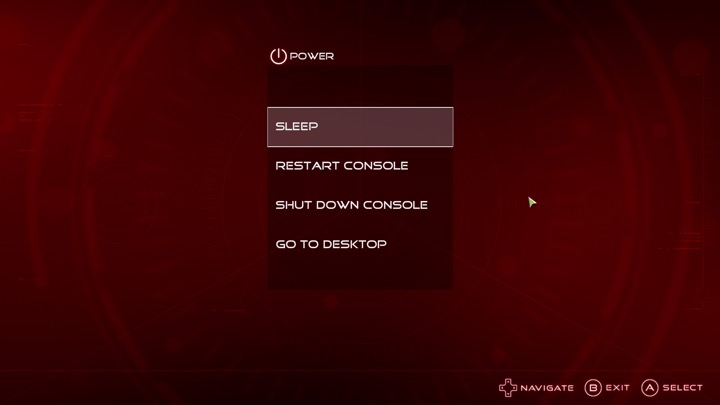
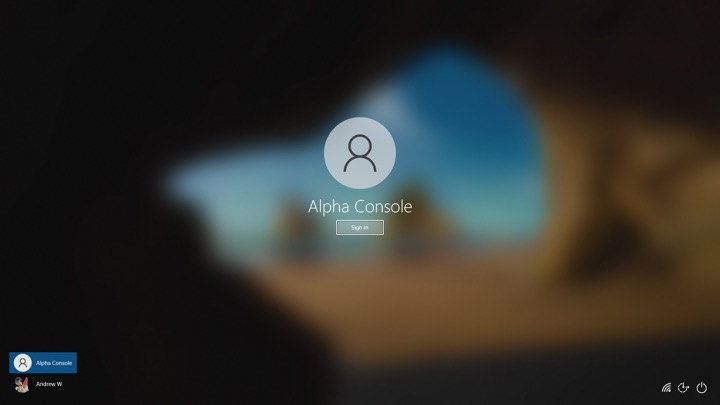
Lastly going to desktop will sign you out of the Alienware user account and will return you to your default Windows account.

Sadly the Alpha didn’t sell well, but was regarding as being the more popular of the Steam Machines. There was one hardware refresh that upgrades the graphics processor, and add an external PCI Express socket for an eGPU. Also the new Steam interface does not play well with just a controller, and Windows 10 can interfere with it’s silly feedback requests. Still there’s nothing stopping you from installing SteamOS and using it like a true Steam Machine.

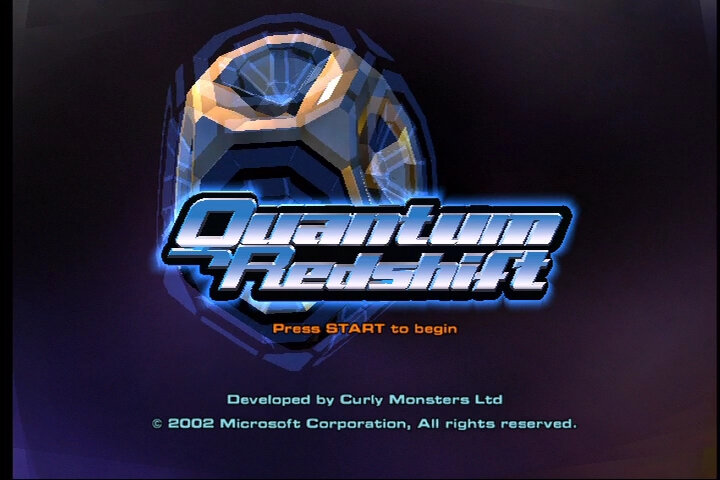
Quantum Redshift

Xbox’s answer to WipEout, No relation to Quantum Break
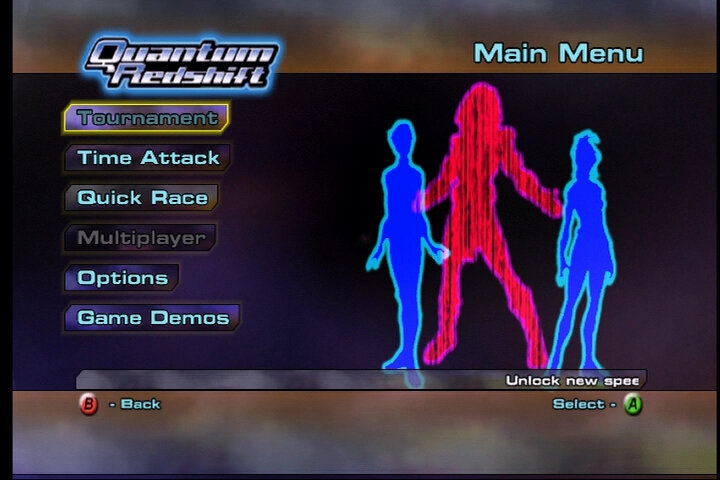
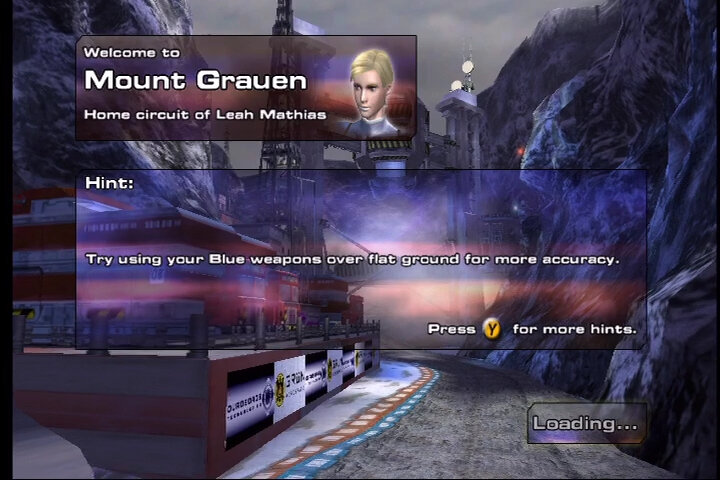
A futuristic racing game release exclusively for the original Xbox in 2003 by Curly Monsters, which would be the first and last game developed by the studio. It’s not a bad game but there are a few flaws, but defiantly worth checking out if you’re a fan of futuristic racing games.


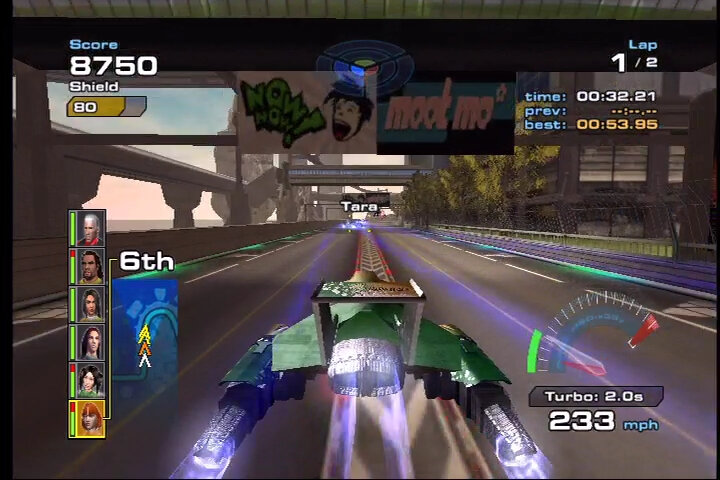
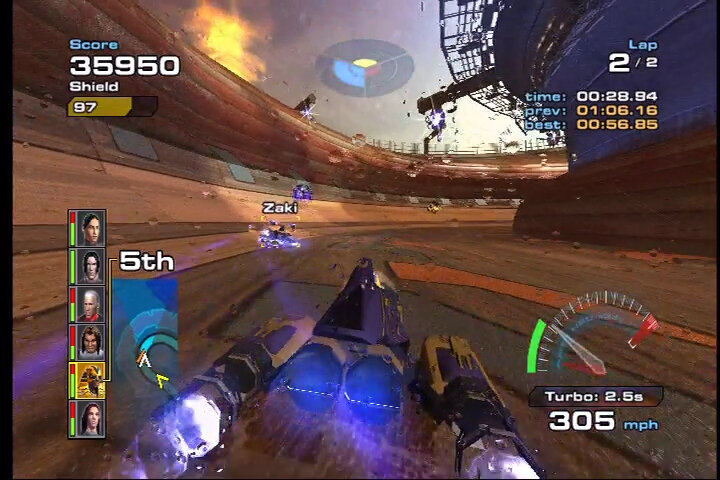
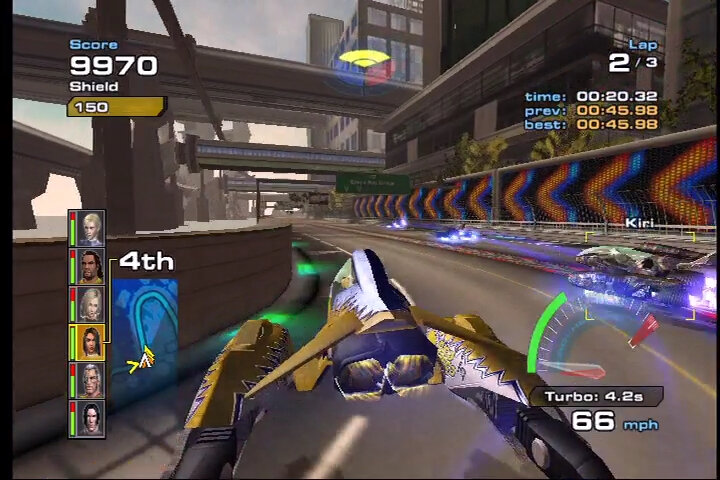
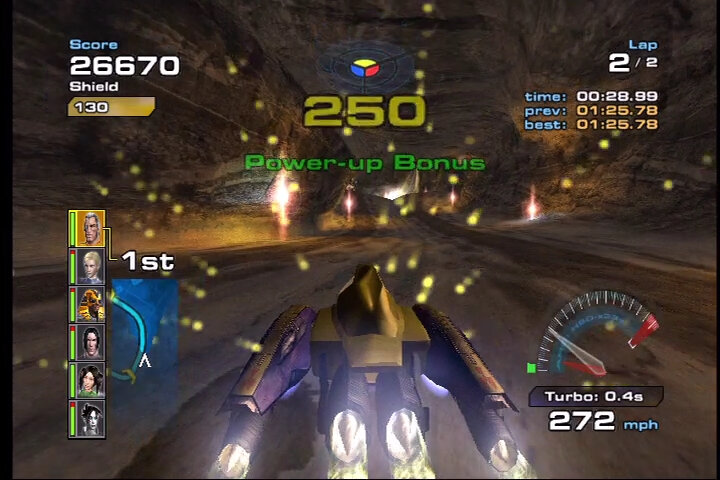
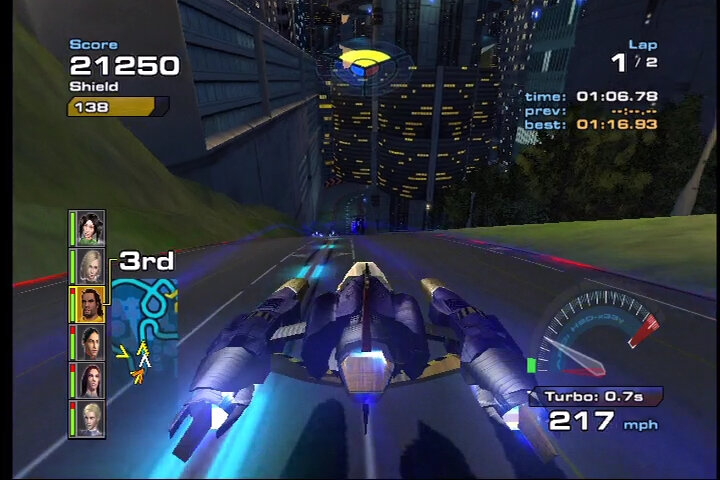
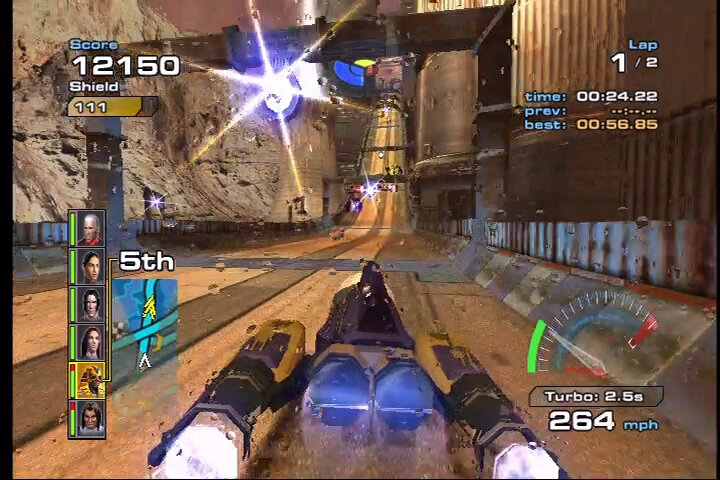
The graphics are one of there best for the original Xbox and really takes advantage of the effects the Nvidia GPU was capable of, with water lens effects appearing when your ship lands in the water, along with detailed textures that you would never find on the PS2. It certainly stood out from WipEout Fusion or Extreme EX G3 that were released at the same time.  The game also runs smoothly, with no noticeable lag or slowdown even during intense races, no matter how many ships are on screen.

Sound is where the game shines, with the soundtrack itself being composed by JunkieXL (also known as JXL, who is most known for that 2002 remix of an Elvis hit – A little Less Conversation). The music is segmented in sections that changes as you progress through the race, with some segments looping longer depending on your speed. This is similar to Tekken 4 on the PS2, or the arcade version of Tekken 3 that also progresses the soundtrack as you finish the rounds.

The music itself is your standard electronic/trance music that was also a main staple of WipEout and Extreme G3. But there is no support for custom soundtracks which was one of the exclusive features to the Xbox for that generation. Considering this game was built from the ground up for the Xbox, it’s odd that this feature wasn’t implemented.

As for the gameplay, it’s mostly the same as WipeOut but with a focus on combat and defence rather than speed, though you do travel at very high speeds on the later difficulties. You have to pickup powers which are either defence (yellow), homing weapon (red) or non-homing weapon (blue). Each ship/character has their own unique weapons that require you to master and seat specific points of the race, some will through grenade like weapons for when there are multiple opponents in front of you. 

Defence is also very important since your ship has limited life which when depleted, it’s game over. The game will warn you when an opponent is about to attack which will give you time to deploy the shield, providing you have picked up a defence power up. This isn’t always accurate and sometimes the opponents weapon will miss if they are far away or if you have passed a tight bend. It’s a bit of a gamble as you have to decide when to deploy your serene powerup (which gives a limited shield) or save it for later.  

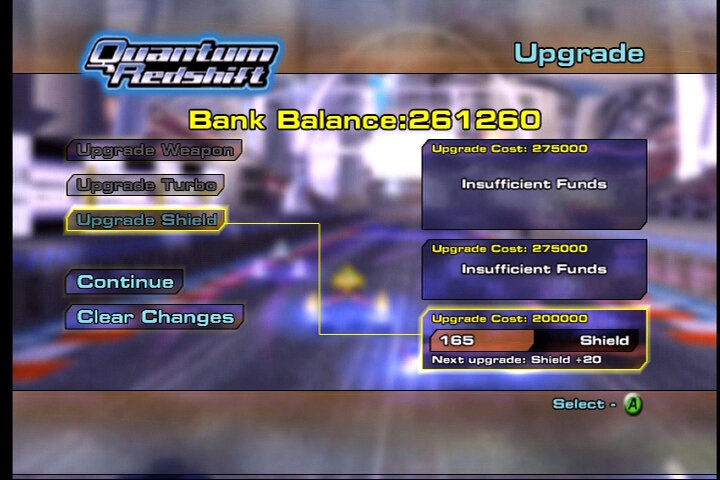
You also get turbo that refills after you complete a lap, initially you are limited to a few second of turbo but as you earn points, you can increase the turbo time you have. I usually recommend to save your turbo until the last lap, since the AI is a bit cheaty with speed boosts once you are in the lead, and you will have to watch out for enemy attacks.


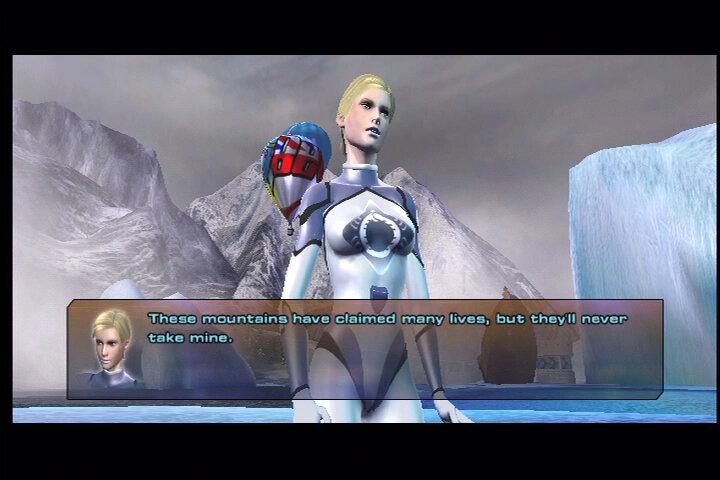
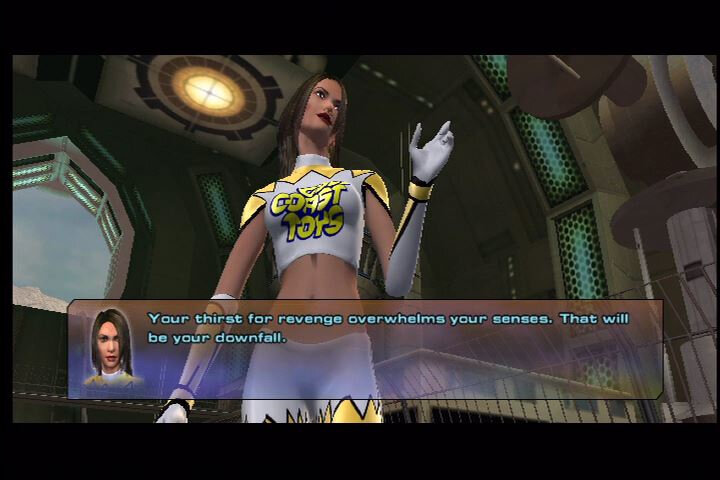
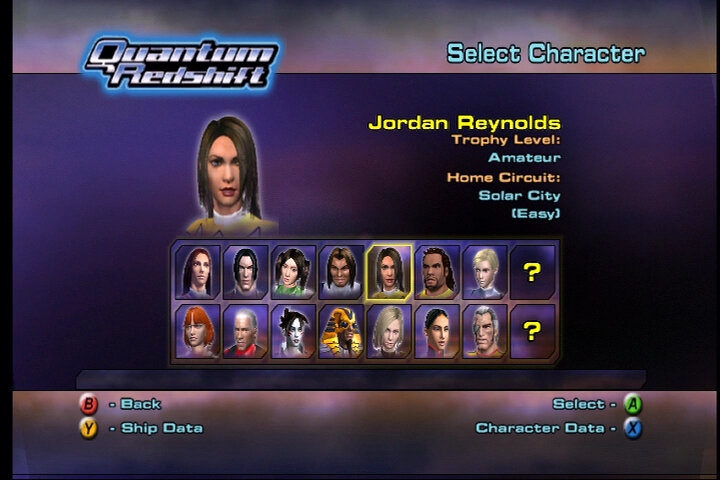
There isn’t much story to the game, mostly you are given cutscenes with your character and their rival before the race, some characters have a backstory that unfolds as you complete the races, and will need to complete the expert difficulty to view and unlock the complete set of cutscenes. Unlike WipEout, there is more focus on the character itself rather then the ships. The characters themselves are pretty diverse, being located around the globe though thankfully most of them speak English. Each character has a main rival that you will have to face in a duel in order to win, they also have a ‘home’ track depending on where the characters originate from. The voice acting is a bit cheesy and feels like you’re watching a budget soap opera, and most of the racers personality come off as arrogant and cringy. If you’re familiar with the cutscenes from fighting games like Dead Or Alive 2 or Tekken 5, its a very similar setup.


The racing tracks are also pretty diverse and varied, with interesting loops and bens that require precisions and mastery of your ship to win. A nice touch as the countdown voice being in the language where the track is set, Fukoushou City being in Japanese and Kalu wastelands being in Russian.

Despite the flaws, it’s a very nice looking game, and it defiantly is a worthy opponent to WipEout, competing favourable with WipEout Fusion. It’s one of the many true Xbox exclusives that are worth playing and preserving and it’s tragic it never got a sequel or a remaster. 

Also since it was released early into the Xbox life cycle, it lacks support for online play for Xbox Live, nor any support for downloadable DLC. The game was made comparable for the Xbox 360 but has yet to be made compatible with the Xbox One.

Obscure

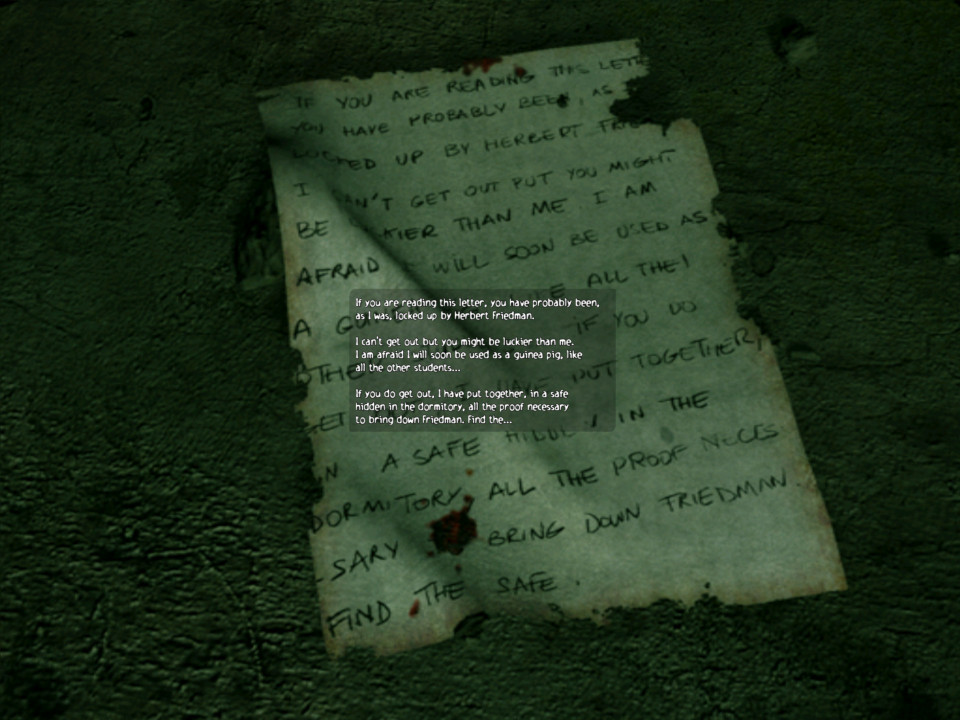
A horror game released in 2004, developed by Hydravision Entertainment. Set in a fictional high school where a bunch of students must uncover dark secrets of their school after one of their friends goes missing. It’s a survival horror game that features some co-operative elements.

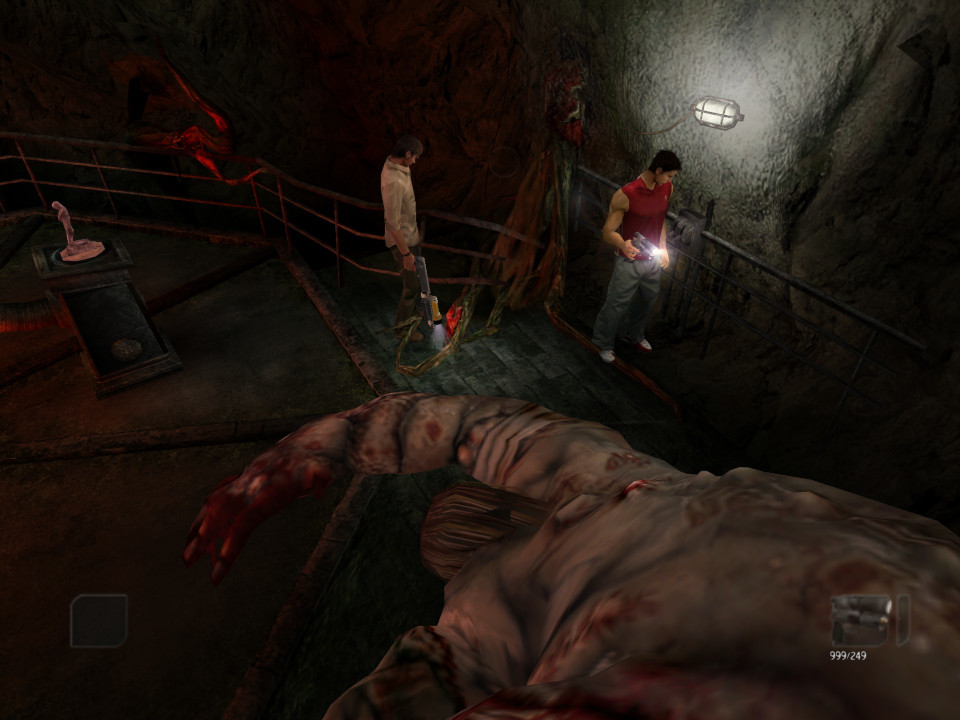
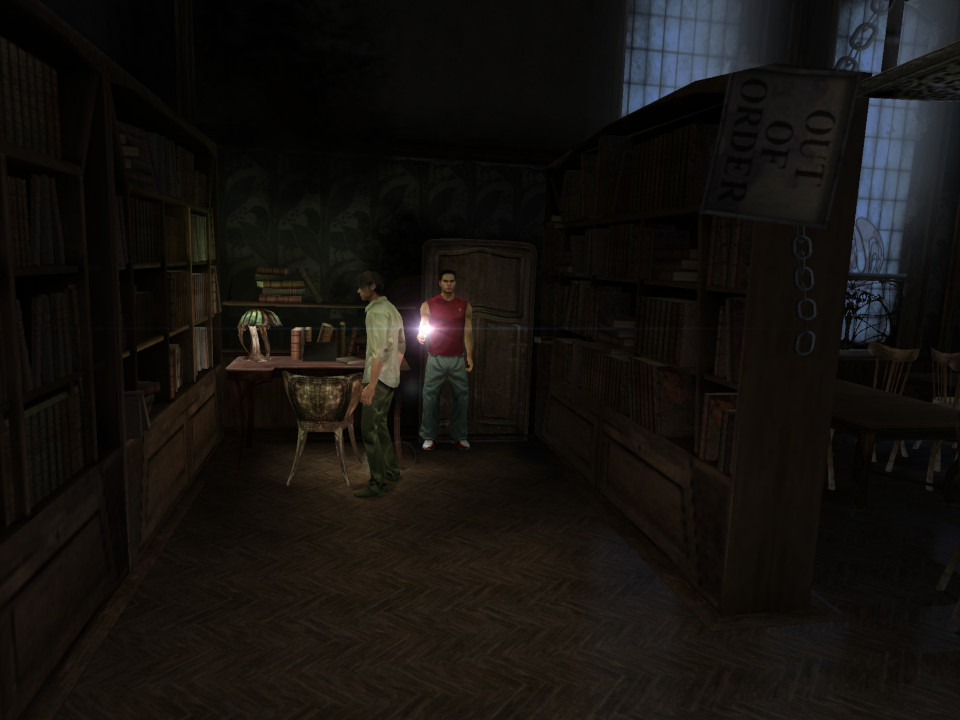
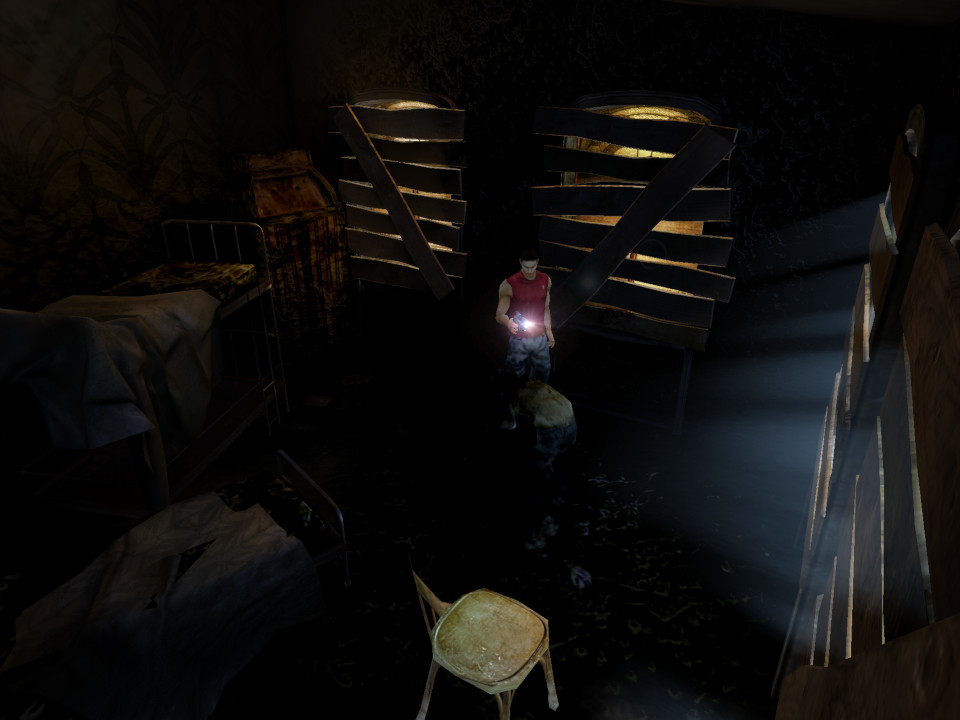
There’s a few puzzle’s that require you to acquire and use certain objects present around the school. Since the game starts after school is over, the earlier levels are set in the evening time and are a lot brighter, with it soon becoming night as the game progresses. As the enemies are sensitive to light, this makes the first few chapters easier since light will weaken them, proving you use a melee weapon to smash open the windows.

Whilst the game provides a map, there is no navigation or cursor to help assist you, meaning you must manually locate the objectives to progress the game. This can be frustrating as you will often need to backtrack through certain area’s and its easy to get lost or go around in circles. I would advise to seek a walkthrough if this is your first time playing the game.
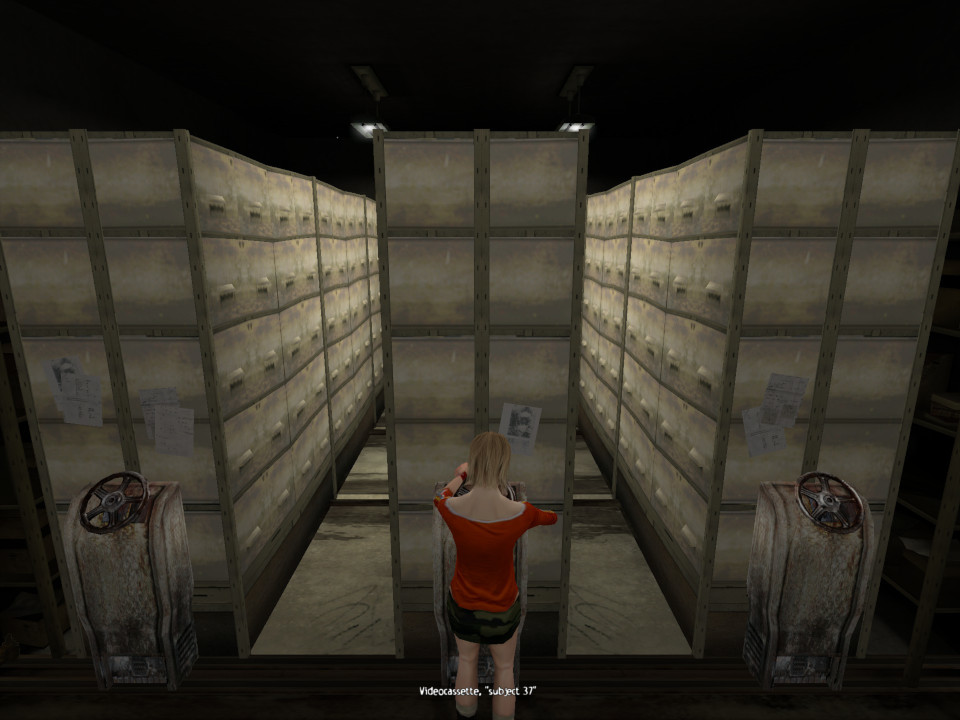
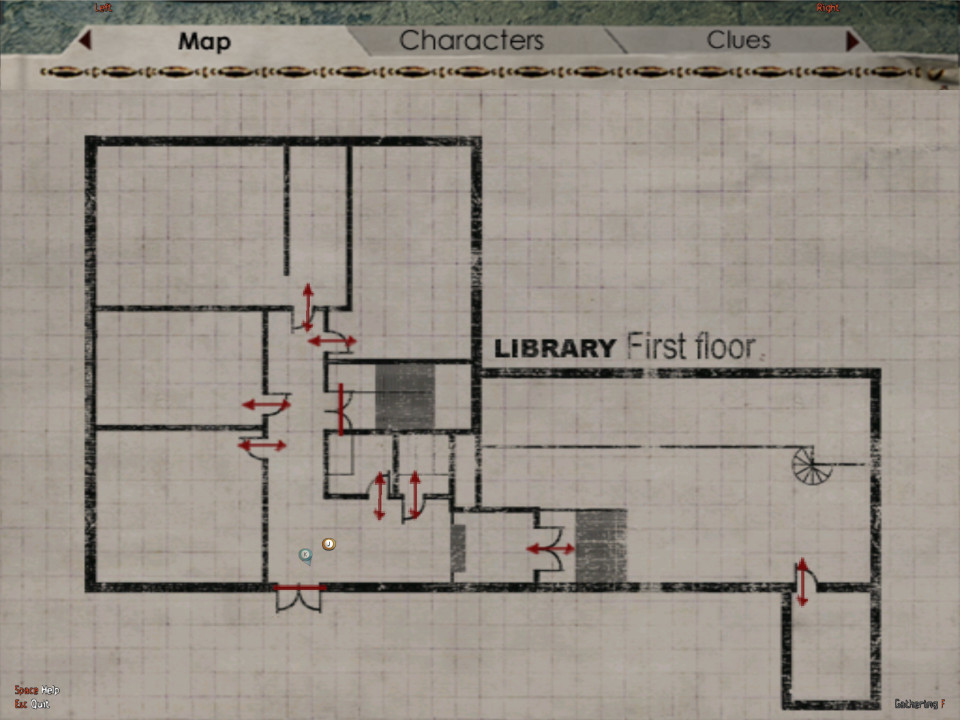
The game uses a limited save system, you can only save the game when you collect a compact disc, of which they are limited depending on the difficulty level chosen.
Bullets in the game are also limited, so you must conserve your ammo when possible. The game gives you melee weapons at first which are useful for smaller enemies, and for breaking objects to get energy drinks (that restore a small amount of health), later you are given a pistol and a shotgun, along with more powerful enemies to deal with.
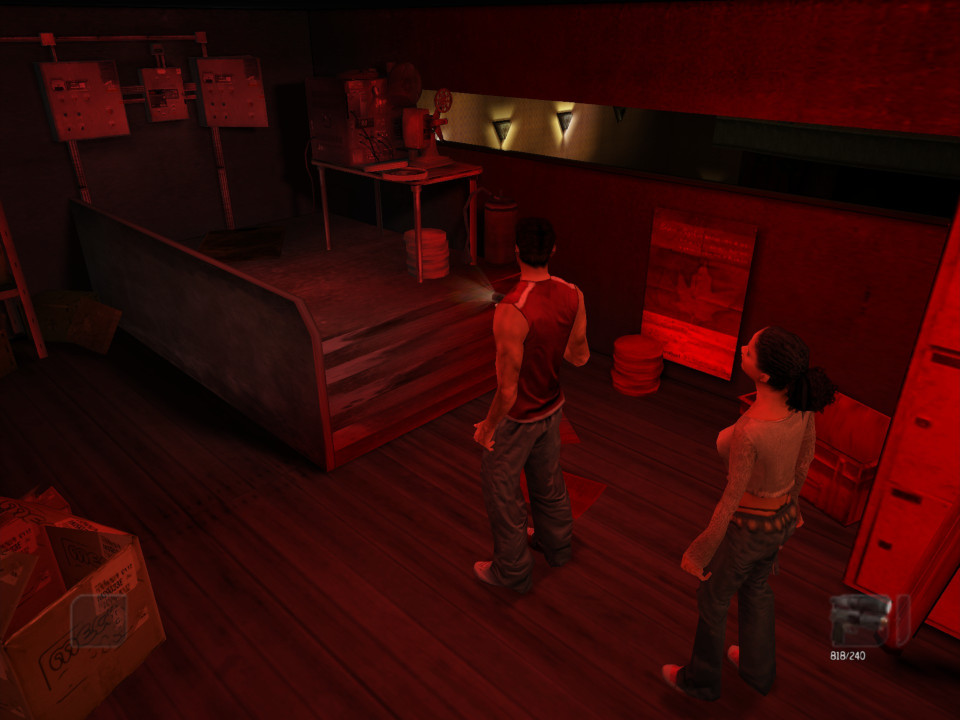
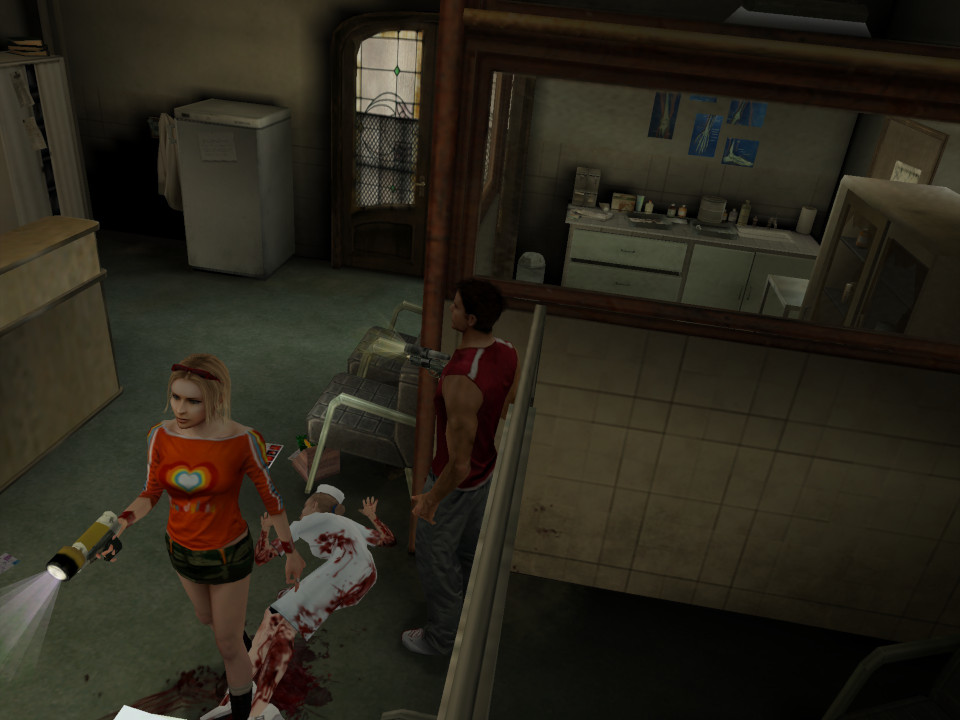
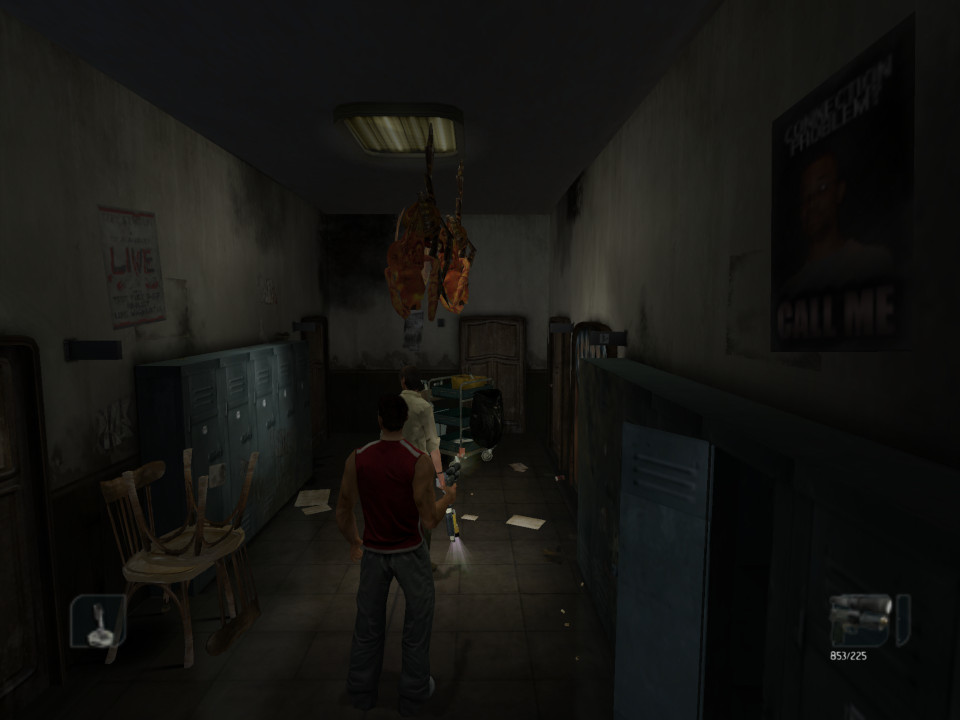
You can also pickup torches (flashlights) which can be combined with guns using tape to increase the visibility in darker areas, of which there are a lot. This is one of those games where you need to whack up the brightness of your TV to see.

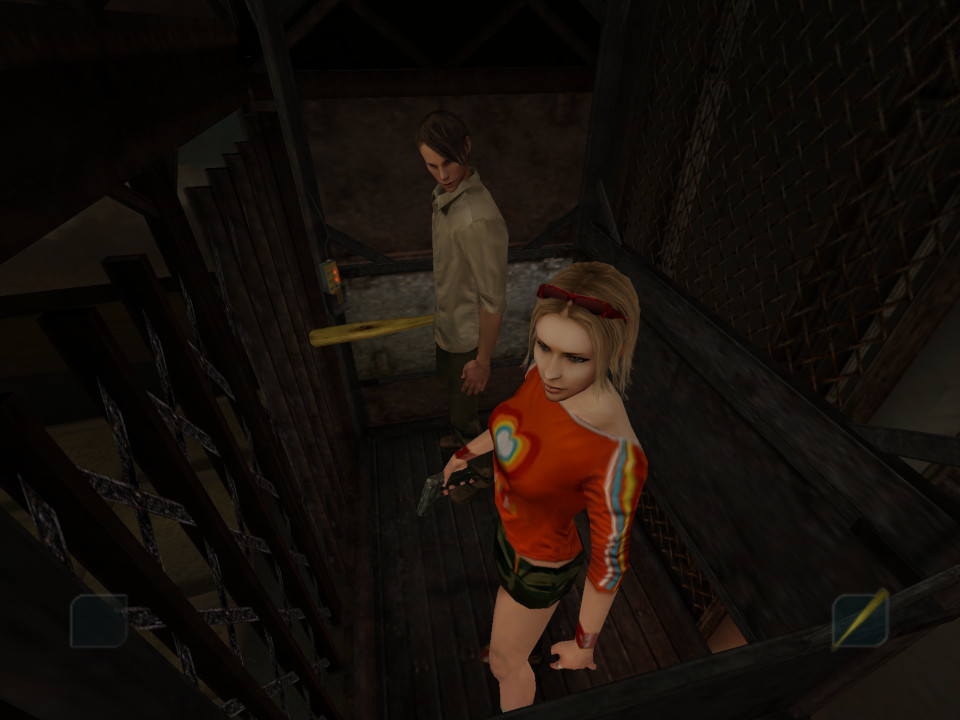
There are multiple characters in the game which you can switch between, each has a few perks exclusive to that character:
Kenny: Has the ability to run faster, might be more resistant to enemy attacks
Shannon: Kenny’s younger sister, The most useful for first time players since she will give hints on what or where we should be
Stanley: Picks locks more quicker, could be useful in enemy combat or speed running
Josh: A reporter for the school newspaper, Finds hidden items and clues to them
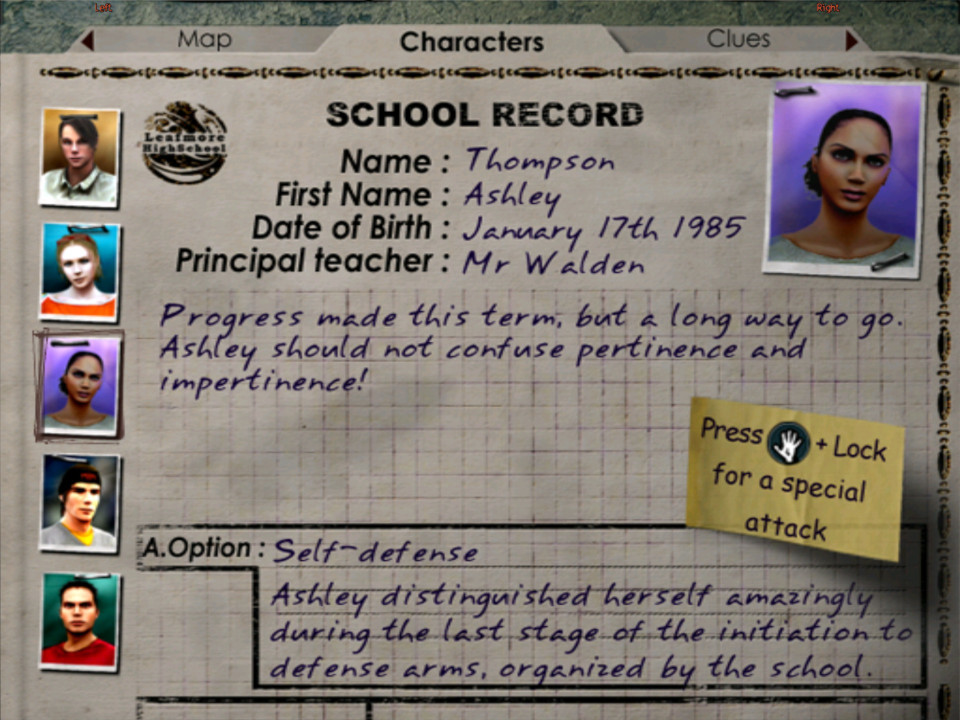
Ashley: Kenny’s girlfriend who a badass, she’s better when it comes to combat as she has a combo attack

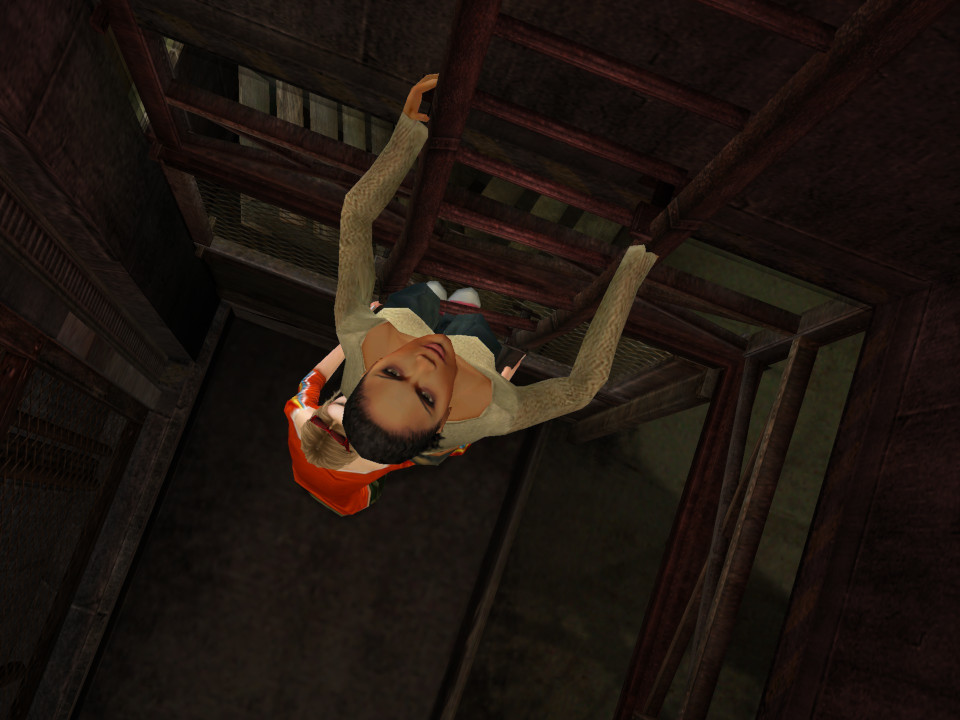
These characters will slowly be rolled out as you progress through the game, but be aware they can die as certain points if you run out of health or during cutscenes if you leave items in a certain way. Up to two characters can be active at a time, one that you controller with the other being controlled as an NPC, you can easily switch between the two but to swap out to the other character you must return to the meeting point. It’s sort of like Scooby-Doo where the gang will split into different groups, thought the other group will just stay at the meeting spot.
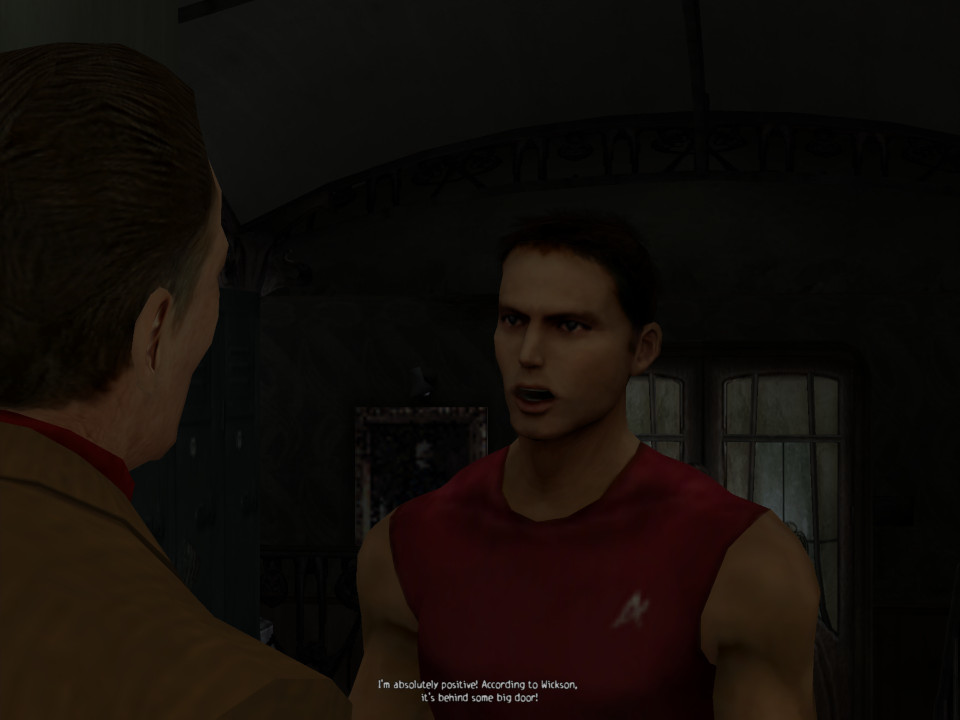
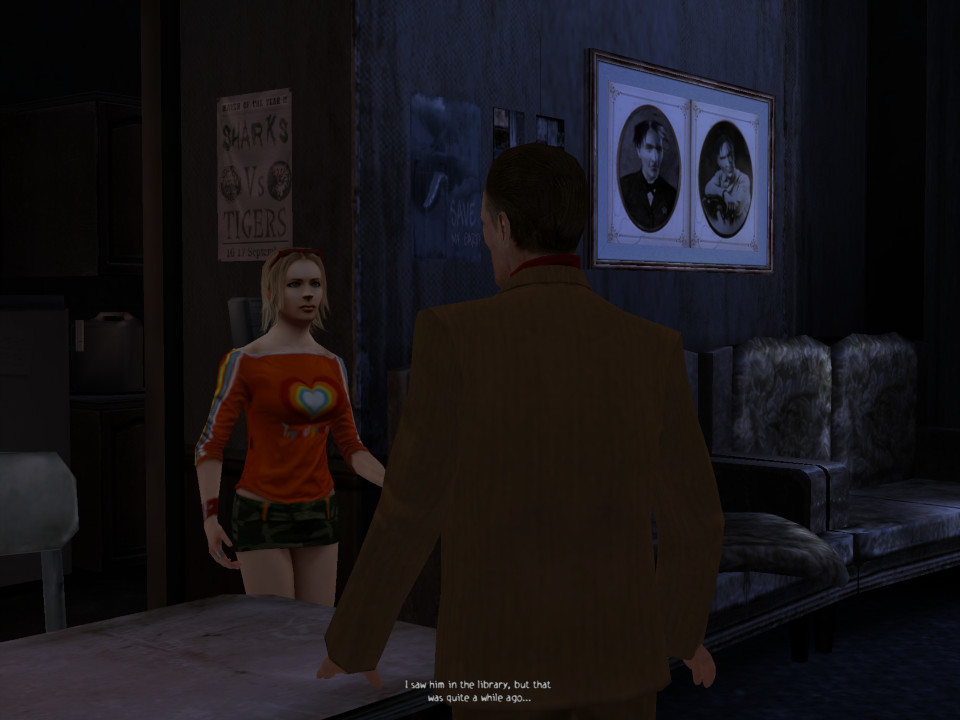
From time to time you will encounter some of the teachers within the cutscenes, who will detail what is going on with the school. Many cutscenes will take place in engine if it involves the students since they can have different costumes, scenes involving monsters or NPC’s will be prerendered.

The game was released for the Original Xbox, PlayStation 2 and Windows in 2004, there’s no major difference between them with the Xbox having higher resolution textures compared to the PS2. The Windows version was later released on Steam with achievement support. The console version might have easier co-operative support since you can just plug in a second controller, but they do not appear to be compatible with their successor consoles.

The original release of the game comes with a few extra’s such as a Sum41 music video, and New Game+ being unlocked along with some concept art. There is also some behind the scenes footage which shows the game’s development. Sadly it was never made compatible with the modern consoles, so you will need an original PS2 or Xbox (or an emulator) to play.