A simulation game for theme parks with a focus on rollercoaster design. It has similar core mechanics to Theme Park, but focuses on the roller-coaster design element.
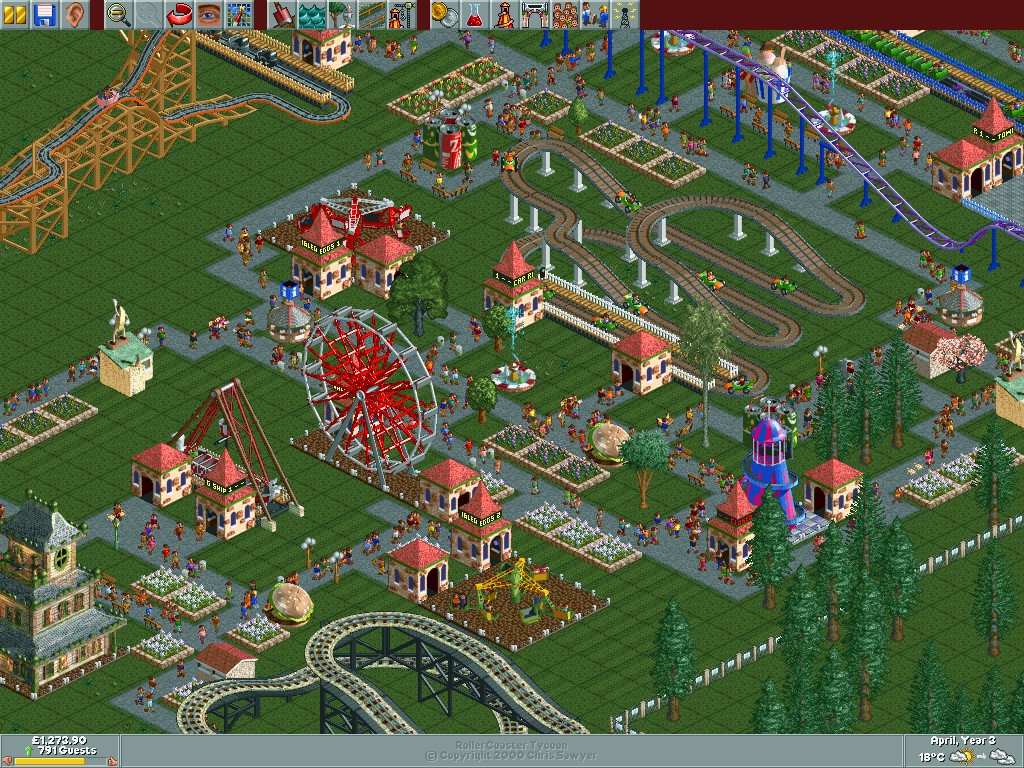
RCT places a heavy emphasis on the design and management of roller coasters and other rides. The coaster design system is intricate, allowing for complex creations with a high degree of customization. While it includes all aspects of park management like finances, staff, and guest happiness, the game really shines in its ride construction and the physics involved in coaster design.
The game is often compared to Theme Park, a Bullfrog game released in 1994. It differs as it was more about the overall management of the park with less emphasis on individual ride design. It included aspects like negotiating for rides, setting up shops, and even stock market elements in some versions. Theme Park also had a broader approach to management, including staff wages, stock levels for shops, and even the saltiness of fries to affect drink sales. It was more about the economic simulation with a whimsical approach to park design.


Park management is a core element of the game, Managing the park’s finances is crucial. This includes setting prices for park entry, individual rides, and concessions. Players must balance income with expenses like ride maintenance, staff wages, and loan repayments. Hiring and managing staff such as mechanics (to repair rides), handymen (to clean paths and mow lawns), security guards (to prevent vandalism), and entertainers (to boost guest happiness in certain areas). Understanding and catering to the needs of park guests (“peeps”) is vital. This includes placing amenities like toilets, food stalls, information kiosks, and ensuring guests don’t get lost or overly tired.
Regular maintenance checks and repairs are necessary to keep rides safe and operational. Neglecting this can lead to breakdowns or even accidents, which negatively impact the park’s reputation and guest happiness.

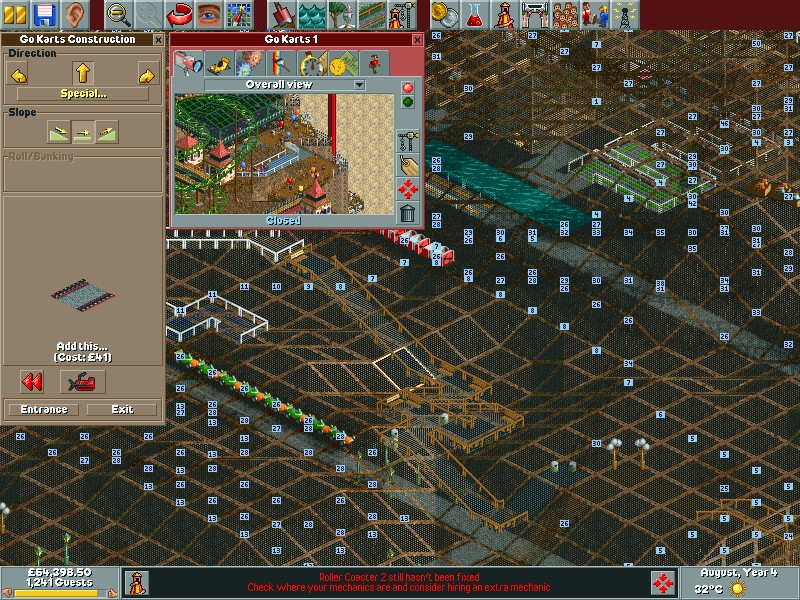
As a game released in 1999, you are treated to an 2D isometric view of your park. The game does allow you to rotate the screen with four different angles to get a better view of the park, but despite this it’s easy to get confused with the perspective, especially when building tall paths to connect to the larger rides since it’s easy to misjudge how high a path or ride is. To help with this you can turn off different layers of graphics to make it easier to see, and you can show the height value to know if your path is on the same level – useful if you are building on a hill since the perspective can be hard to judge.
The soundtrack is like being at a carnival where the main attraction is a slightly out-of-tune merry-go-round. It’s catchy, it’s quirky, and it fits the theme perfectly. Sound effects? You’ve got the clatter of coasters, the screams of joy (or terror) of the guests, and the jingle of coins as you rake in revenue. The rides can also have background music, some might sound familiar if you’ve played other games from 1999 (Driver).

The game comes with a few built in scenarios where the objective is to have a certain amount of visitors in your park by a target year, which is usually the third or fourth year of operation. Certain parks have their own quirks by way of their environment or building regulations.
• Forest Frontiers is the first one you will encounter and lets you get used to the basic mechanics of the game
• Dynamite Dunes shows off the different terrain settings, with this one being set in the sand. It also has its own custom built roller coaster.
• Evergreen Gardens sees you revamping a typical park into a theme park, with special care being given to designing and placing the roller coasters. Guests will typical get lost a lot due to the long-winded paths so its recommenced to delete some whilst being in the early stages of the park
• Bumbly Beech introduces you to buying building rights for outside land. This allows you to build pathways but you cannot place stores or rides on them.
• Paradise Pier is set mostly on water with the exception of the pier paths
• Ivory Towers’s is set on a existing park but it run down and mismanaged with a lot of litter and vandalism which you must fix, in addition to expanding the park and adding additional rides. It does have a fully functional monorail however.
• Rainbow Vally is the most difficult since you cannot destroy or remove any trees or alter the terrain. There is also a limit to how tall your rides can be.
• Additional expansions will come with even more scenarios.
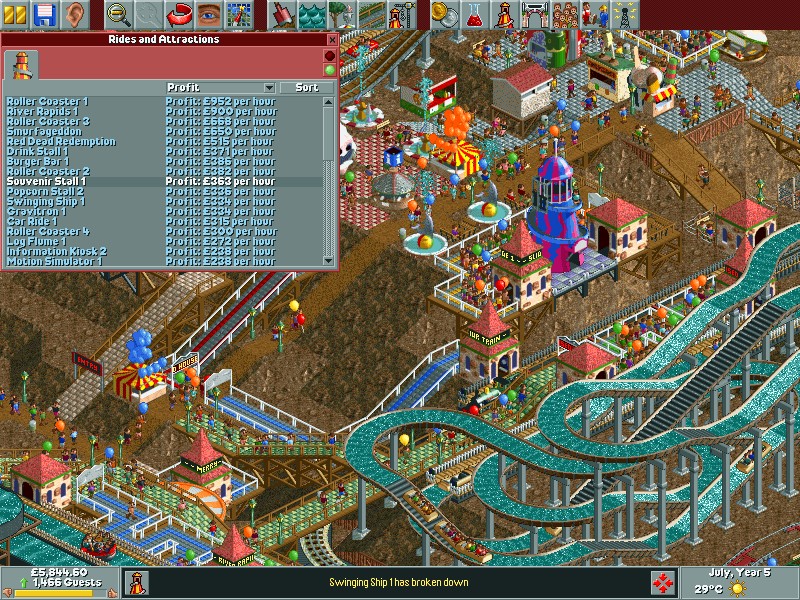
Like Theme Hospital/Park you will need to invest in research to unlock new rides, features and attractions. Initially, you start with a limited selection of rides. As you progress through the game, either by completing objectives in scenarios or by reaching certain milestones in open-ended play, you unlock additional rides, attractions, and even staff types. You can choose the amount of funding to contribute to research, with determines how fast items are unlocked. You can also adjust the type of items you want to research, if you prefer to focus on unlocking new roller coasters or gentle rides instead.
The Rides:
• Wooden Roller Coaster: A classic ride with wooden tracks, offering a nostalgic feel with its clackety-clack sound and traditional design.
• Steel Roller Coaster: Typically faster and smoother than wooden coasters, offering more modern thrills with loops, corkscrews, and inversions.
• Log Flume: Guests ride in logs that climb to a height before plunging down a steep slope, often getting splashed at the bottom.
• River Rapids: A circular ride where guests get soaked as they navigate through rapids, with the added fun of getting wet.

Many of the rides can be freely designed and built, but you can also choose from prebuilt templates of different sizes. You can also customize the price, colour and music used by the rides.Park guests can be picky as some might not prefer to ride some of the more intense coaster rides.
Aside from rides there are other attractions such as gentle rides and stores which sell food, beverages, items and ballons. The Information Kiosk, unlocked later in the park’s life, allows customers to purchase umbrellas and maps for better navigation. Food stalls are offered in the form of separate Fries/Chips, Pizza, Burgers and popcorn. You will need to place these strategically away from rollercoasters to reduce the chance of vomiting. Gentile Rides consist of the Haunted House, Bumper Cars, Ferris Wheel, Merry-Go-Round. These are easy going rides for customers that prefer less thrilling rides, or need a break from the roller coasters. Thill Rides are a bit more intense with the motion simulator, 3D Cinema, Swinging Ship and the Go Karts.
There are also transport rides that help get your guests from A to B, these consist of either the Monorail, Railroad or Chair Lift. These can also be considered as rides themselves.
RollerCoaster Tycoon was a massive commercial success, praised for its depth, creativity, and the freedom it gave players in park design. Originally for PC, RCT1 has been made available on modern systems through digital distribution platforms like Steam and GOG, often bundled with its expansions. A port was released for the original Xbox and is the only console port of the game.
 Drew1440: Blog