Monthly Archives: February 2025

Tekken 4

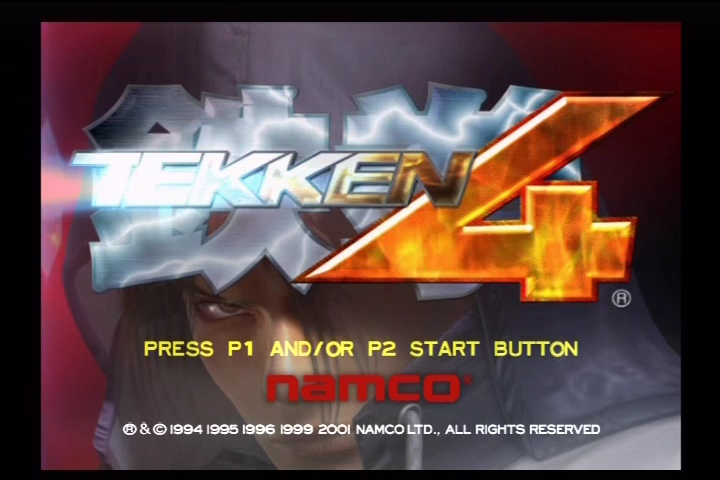
The first true next generation Tekken game, being released on the then-new PS2 hardware.
Fighting games have never been known for well-thought-out, let alone believable, story lines. Tekken 4 is no exception. Every fighter has their motivations, but the game really centers on the absurd relationship between Kazuya and Heihachi. At the heart of the story is the long-standing feud between Heihachi Mishima and his son, Kazuya Mishima, alongside the emergence of Jin Kazama and Jun, who is still missing as of the games release. A key element introduced more prominently in this game is the “Devil Gene,” a supernatural trait passed down through the Mishima bloodline, granting its bearers demonic powers. Kazuya and Jin both grapple with this curse, which plays a significant role in their motivations and the overall narrative.
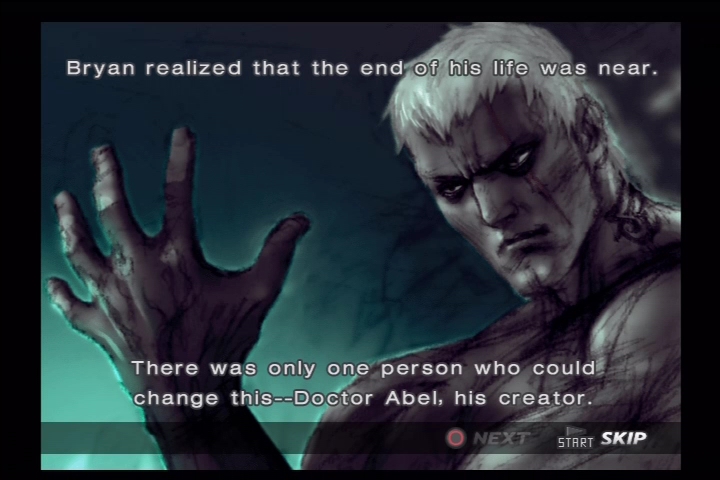
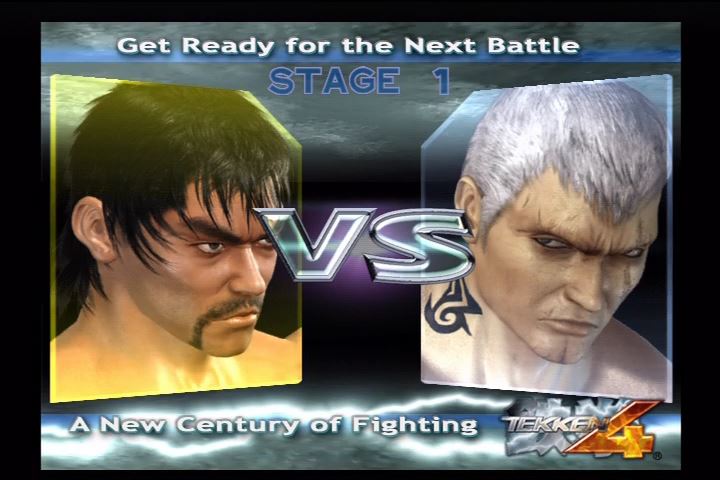
Like previous games, the story is set around the King of Iron Fist Tournament, which Heihachi uses as a means to lure Kazuya out and to test Jin’s abilities. However, this time, the tournament has more personal stakes for the characters involved, especially with Heihachi’s plan to create the ultimate life form through the Devil Gene. Each character, especially Jin and Kazuya, has their own arc dealing with redemption or revenge. Jin, in particular, is driven by a desire to avenge his mother’s death and to confront his own heritage, while Kazuya seeks to overthrow Heihachi and reclaim his birthright.

The game has 19 characters and a selection of modes. As with any fighting game sequel, a few new characters are mixed in with the core group seen in the previous installments. The new fighters are Craig, Steve, and Christie. Christie isn’t really a new character, being just a female equivalent of Eddy, the Capoeria specialist who is omitted from Tekken 4. Steve Fox, A British boxer with a mysterious past, later revealed to have a biological connection to one of the existing characters. Combot is meant to be a training robot, serving as a replacement for Mokujin. Despite the large character roster, half the characters still need to be unlocked by beating arcade/story mode.
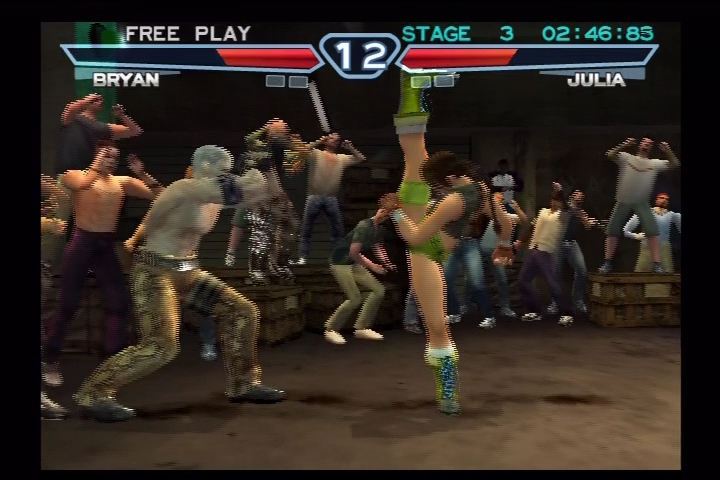
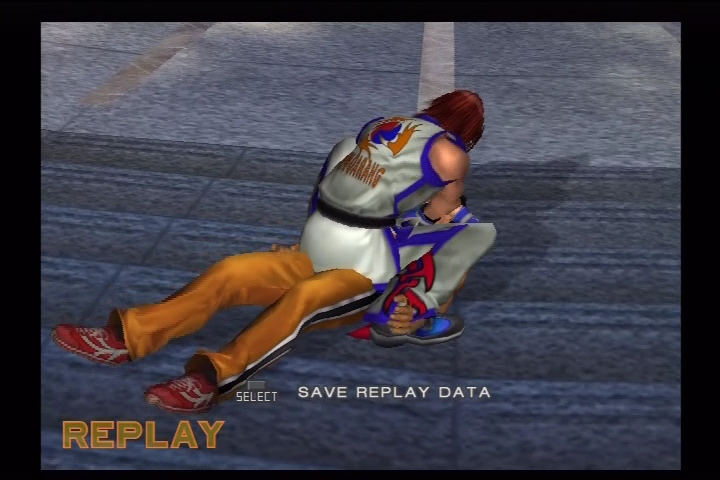
The game’s modes make up the typical fighting-game shopping list. These include practice, time-trial, and survival, as well as the expected arcade and story modes. Story mode is simply an arcade mode with still illustrations and FMV cut scenes that go into the chosen character’s plot, but lacks pre-match cutscenes that Dead or Alive 2 featured. A new feature in the series is the ability to save fight replays to the memory card, which will allow you to play them back at a later date.
Some changes have been made since Tekken Tag Tournament, No more do the levels reach out endlessly on either side, Now you must consider obstacles such as staircases, walls, and breakable statues. This opens up a new element to the game as you now run the risk of getting cornered. You cannot break into different parts of the stage like Dead Or Alive 2, But the new mechanics with the arenas, where you can knock people into walls or off ledges? That’s cool and innovative.
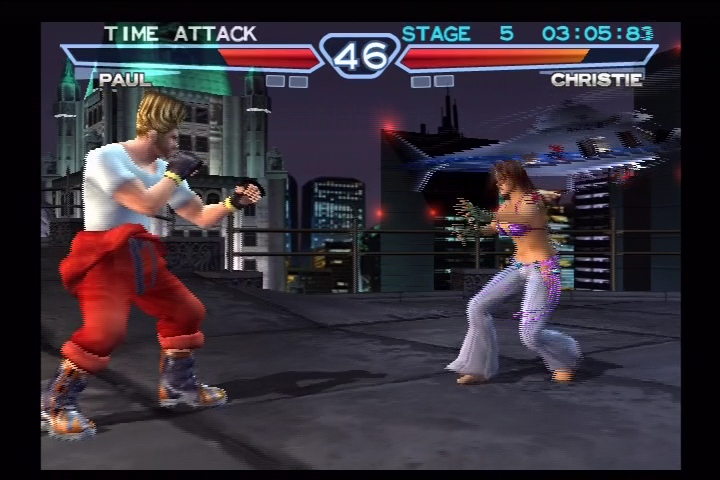
The two new modes are Training and Tekken Force. Training doesn’t so much train you as require you to pull off a menu of moves. Tekken Force is a beat-‘em-up, You take a fighter of your choice through a gauntlet of baddies. Naturally you’re able to use the available moves of your character. Tekken Force also makes for a good diversion, especially for those who like the beat-em-up genre.

For Tekken veterans, the gameplay will feel very familiar. Two buttons control the fist attacks while the other two handle the legs. Side-to-side movement has significantly improved in Tekken 4, allowing for more movement. This helps add depth to a franchise that’s in trouble of getting stale. You can also assign combo commands to each of the L1 or R1 buttons.
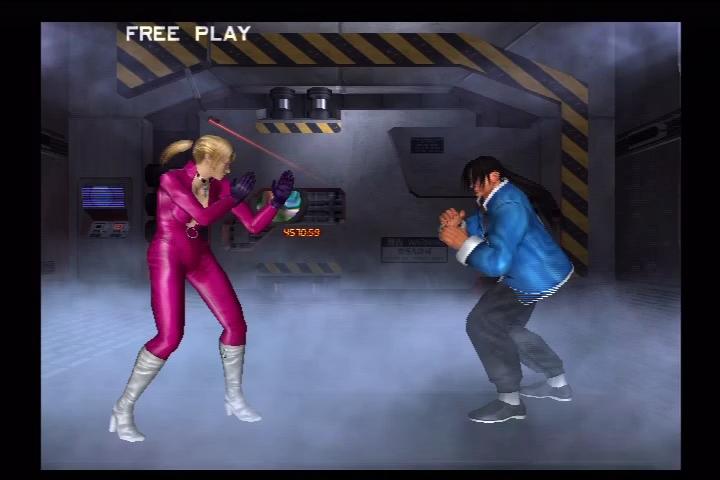
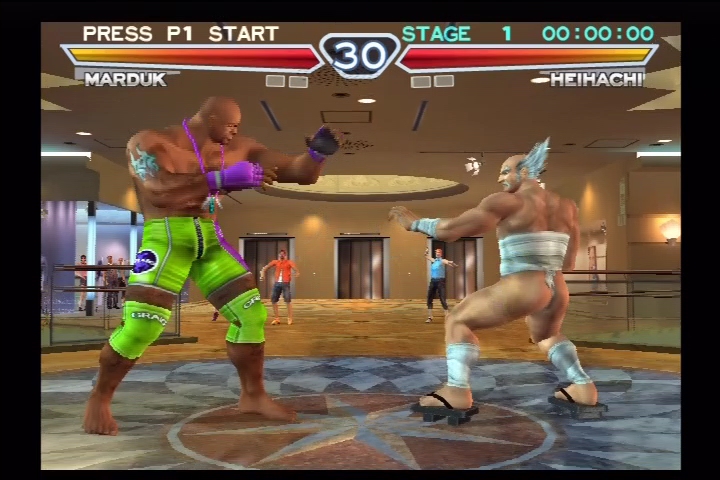
Tekken 4 has graphically improved over Tekken Tag Tournament. That’s not to say the visuals are perfect — far from it. While the anti-aliasing is noticeably smoother since Tekken Tag Tournament, the Tekken character models look inconsistent. Sure, they might be detailed, but the actual character animations are very choppy. This is especially clear in Christie’s jerky Capoeira animation.

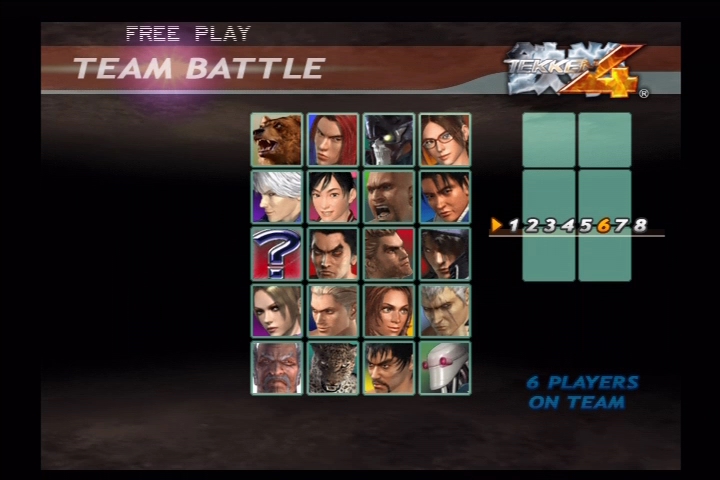
Tekken 4 is like that middle child in the family – not the favorite, but not the worst either. If you’re a die-hard fan of the series, you’ll enjoy the new mechanics and characters, but if you’re looking for the quintessential Tekken experience, you might find yourself missing what came before or waiting for what’s next. It delivers more of the same with slight tweaks in the character roster.

Grand Theft Auto III

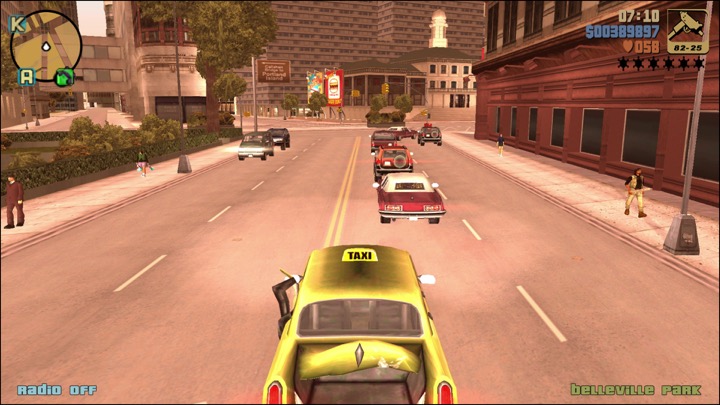
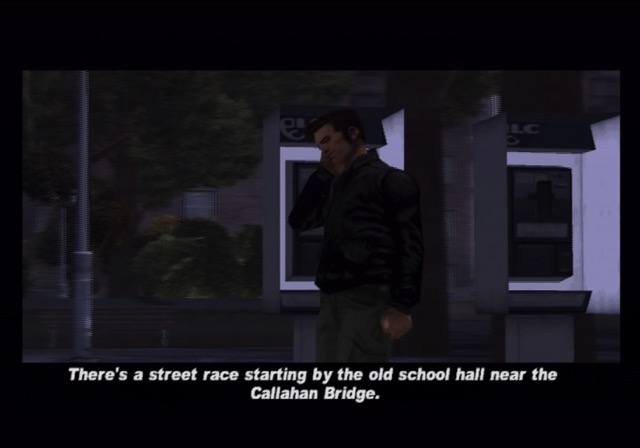
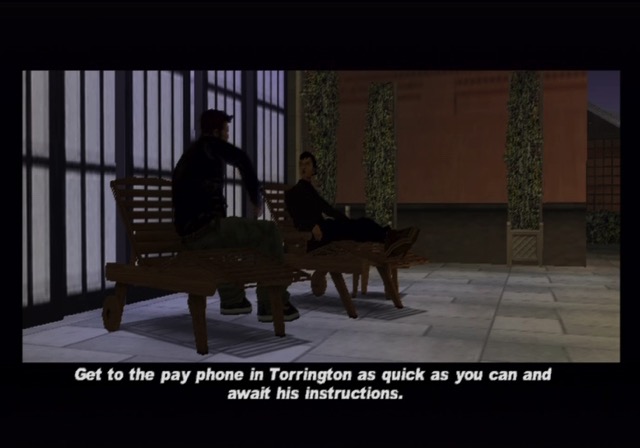
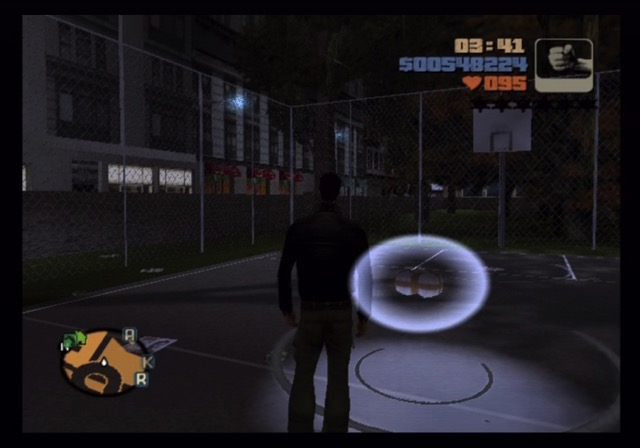
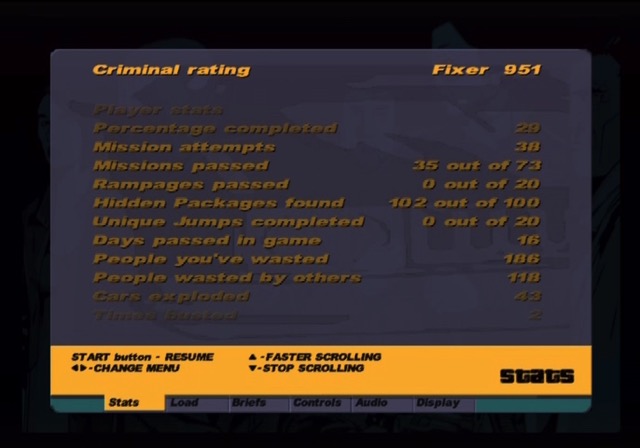
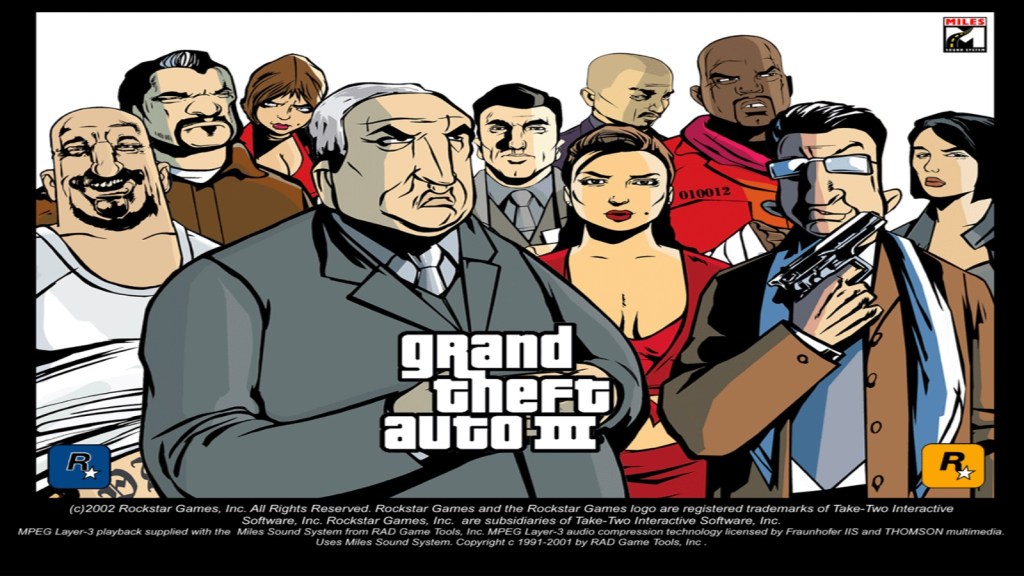
The third in a line of games from DMA Design, Grand Theft Auto III’s gameplay mechanics are built around the acts of theft (namely carjacking) and battery. The first two games featured diverse and open-ended gameplay, but the 2D delivery limited the concept’s execution. The release of Driver for the original PlayStation and PC showed that it was feasible to create an open world 3D rendered world on consumer hardware, Although you were limited to staying within your car, Driver 2 then allowed you to leave the car and carry out mission’s on foot. The original GTA and GTA2 used a top-down perspective view, With GTA3, the premise and plot are fleshed out to a fully realized story line against the backdrop of a 3D world that literally lives and breathes around you. DMA crafted a large virtual city for players to explore on foot or by car and has filled it with enough detail and nuance to continually surprise and impress you as you dig into the game’s hundred-plus hours of gameplay.

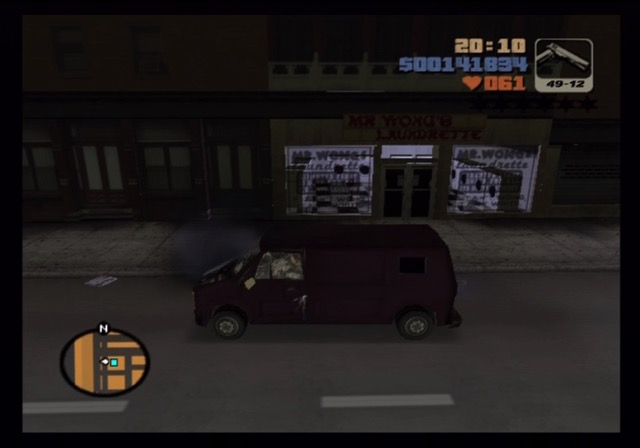
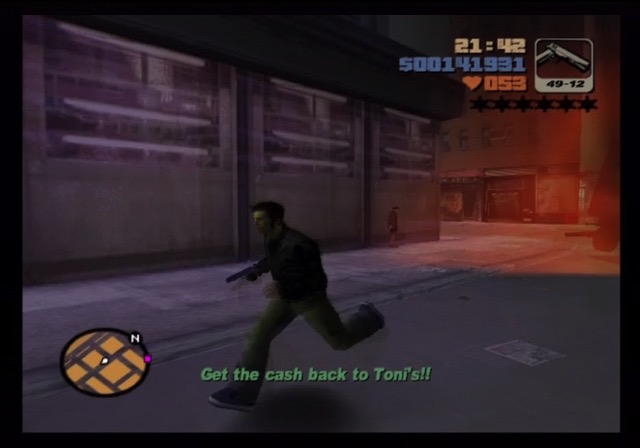
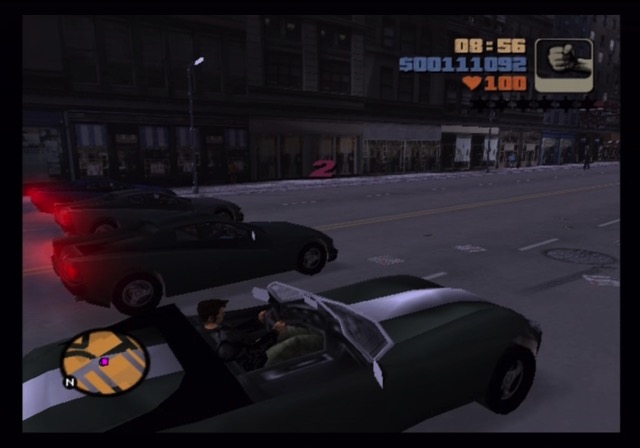
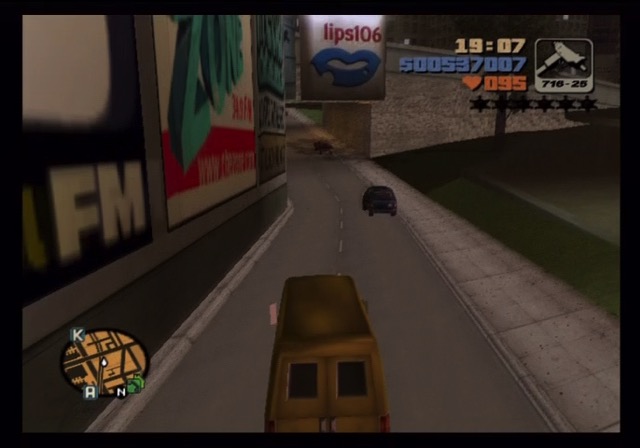
GTA III takes place in Liberty City, a metropolis with three distinct sections that are unlocked as the game progresses which is designed in the same image as New York City. At the game’s start you find your character in a robbery gone wrong. Flash forward to an escape from a prison transport, and the actual gameplay begins as you acquire a car and attempt to make a fresh start working for the mob. GTA III introduced players to Liberty City, an expansive and interactive city where players could roam freely. Liberty City is depicted as a place of economic disparity and decay, with visible signs of poverty, urban blight, and the stark contrast between different neighbourhoods. This setting mirrors real-world issues in major cities where economic policies have led to visible divides.

This freedom was unprecedented at the time, allowing players to explore, complete missions, or engage in chaotic antics at their discretion. The early missions familiarise you with the game’s controls, and give you ample opportunity to explore the city on foot or by car. However, if you want to get anything done in the game, you are going to have to get your hands dirty, inflict some pain, or stop a vehicle, pull out the driver, and take off before the police catch you. Missions ranged from carjacking to assassinations, providing a broad spectrum of criminal activities. The narrative drove players through a series of increasingly complex objectives, intertwining with diverse characters, each adding to the games storyline.

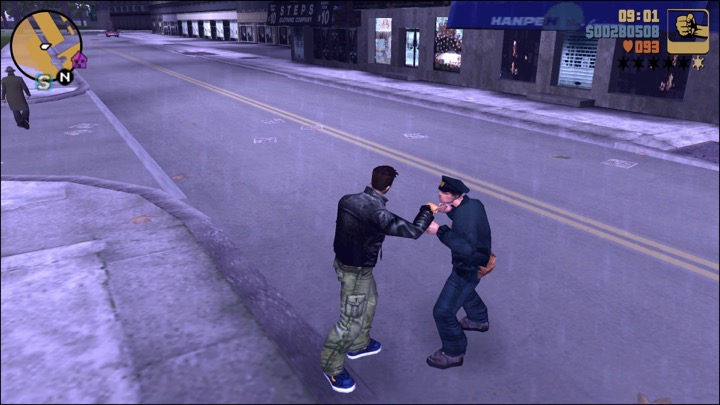
You choose how violent you get to be. Very little about the game is linear, though you can progress through all of Grand Theft Auto III sticking to the basic missions and just taking on fellow underworld criminals. But to really get the full effect of the game’s seemingly endless possibilities, you can cause some mayhem of your own, indulge in many of the game’s side missions or just go on a virtual crime spree. Though walking into a park and shooting at civilians will result in your character finding himself on the receiving end of a police assault rather quickly.

GTA III is often credited with popularizing the sandbox or open-world genre in video games. Many side missions involve stealing a taxi and collecting fares, or carjacking a police car or fire truck to give back to the community, and for some extra cash to purchase weapons or armour.. There is also something quite satisfying about rising up within the ranks of the underworld — at least for anyone who appreciates a good mafia movie or The Sopranos, which the game takes a lot of cues from. That said, its best to complete these side missions as early as possible, since the rewards they offer will help massively in completing missions, but a s the story progresses, the fans will become hostile to you which will cause them to open fire on your vehicle, making it very difficult to complete since the missions over once your vehicle is destroyed.


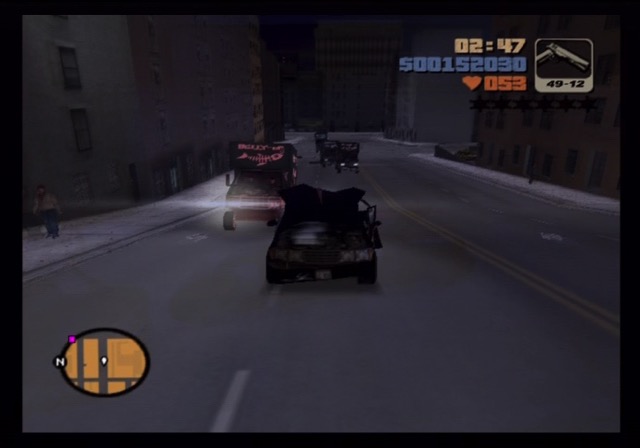
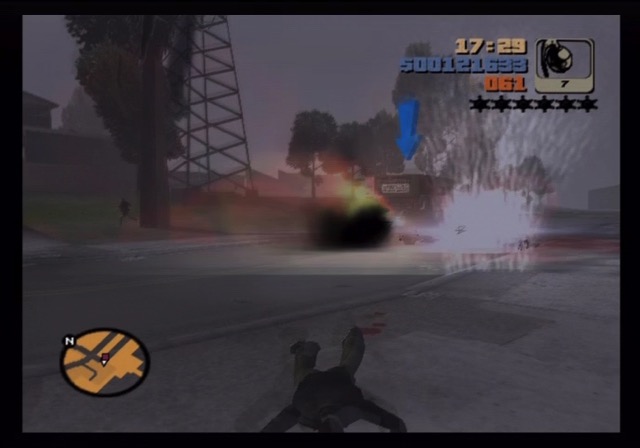
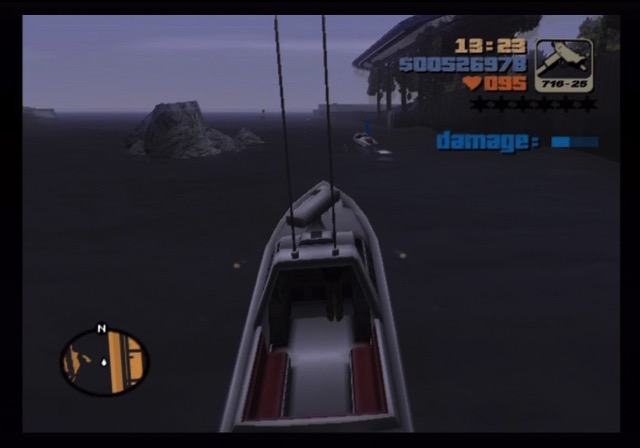
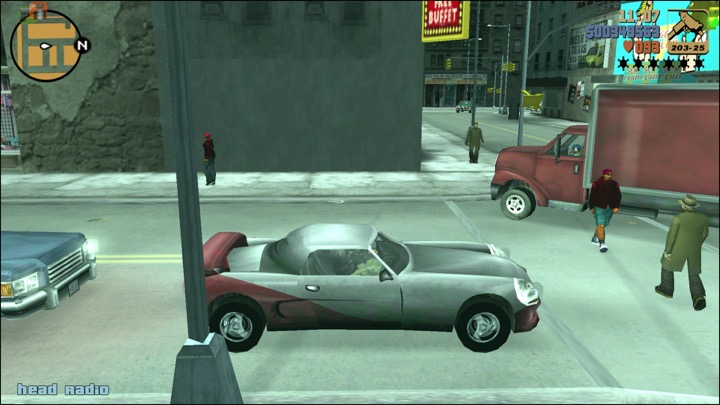
The actual execution of gameplay is quite amazing, and the play control seamlessly blends the walking and driving interfaces. Moving throughout Liberty City takes some getting used to at first, but it is rather easy to get the hang of things within the game’s first hour. Walking can get tiresome after a while, but each car has its share of nuance throughout that keeps driving around rather fresh. The gameplay mechanics allowed for chaos—carjacking, explosions, and general lawlessness—which might have been cathartic for some in a world where real-life violence had just taken a new, terrifying dimension. However, this also stirred debates about the morality and impact of such gameplay in the wake of real-world tragedies like 9/11 and the Columbine massacre.

The game’s radio, with its satirical news reports and DJ commentary, often touched on a cynical view of society, which could resonate with a post-9/11 audience feeling cynical about government, media, and the state of the world.

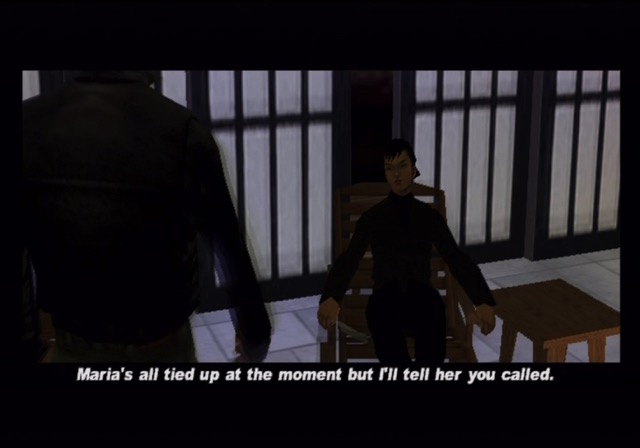
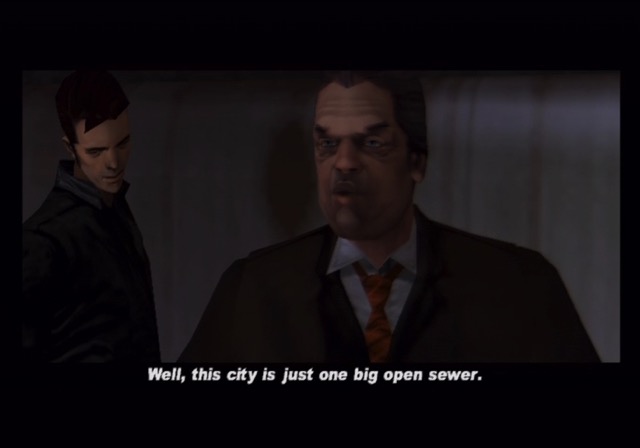
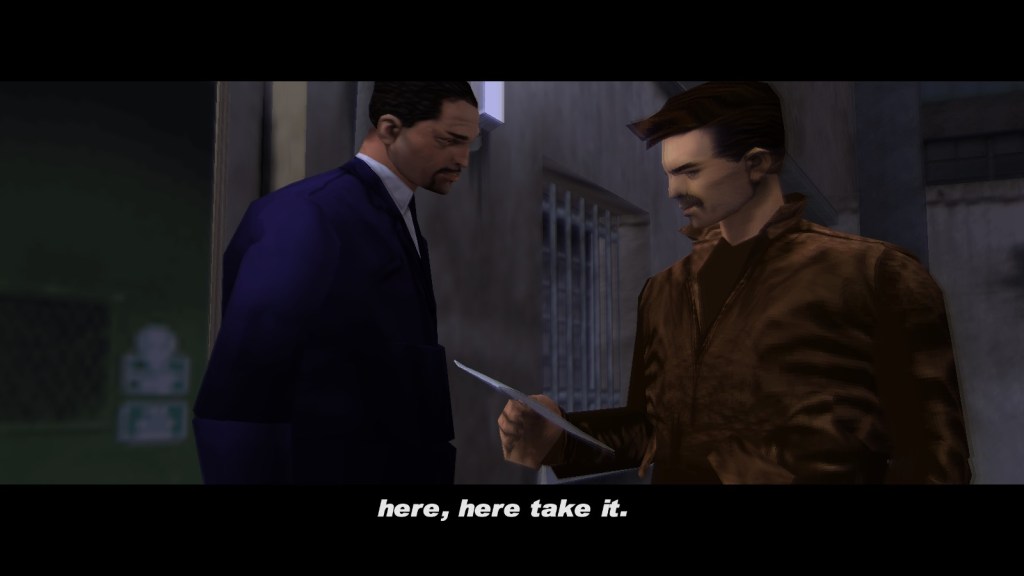
Grand Theft Auto III looks quite good as well for it’s time, though it never depicts violence in an overly graphic manner. The 3D world has an amazing amount of detail, especially considering how large each section of the city is, and while you can’t enter every building that you see, they at least offer plenty to look at up close. Every in-game movement, even switching back and forth between walking and driving, is smooth and the game feels rather polished. The game’s cut scenes are quite solid as well, moving the story along while not overdoing it and are rendered in engine, something that was becoming more common with the sixth generation of consoles.

Versions

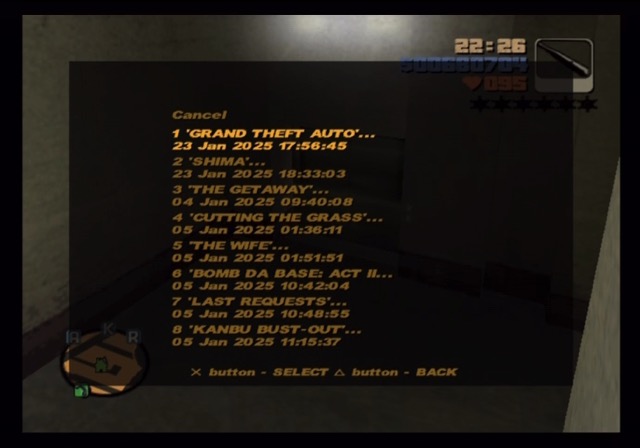
PlayStation 2: This was the original release and contains a few RenderWare splash screens showcasing the new technology. This version can get a bit ropey in the framerate department, with it slowing down when there are a lot of cars or explosions on screen. There is also some pop-in with the buildings, or blurry texture’s momentarily before they load which can be off putting. Using a soft-modded PS2 with OpenPS2loader, along with a hard drive is recommended which helps reduce the draw in massively. This version was made available on the PS3 as part of the PS2 classics, it lacks trophy support but is indeed the original ROM of the game. Since it’s emulated, the slowdown is more pronounced and isn’t really recommended unless you don’t have access to the PC version. This version was also used for the PS4, and is a lot more smoother not eh account of better emulation.

Also, this version is limited to 480i (Interlaced) or 576i only, progresive scan isnt supported in this version.

Xbox: The recommended version since this has involved textures and models compared to the PS2 and Windows versions, also supports custom music if they are installed to your hard drive. This version also benefits from analogue controls for steering and aiming, and better audio quamility, being encoded in 128k WMA format audio. This version was also playable on the Xbox 360 if a hard drive is installed, but not on the Xbox One or Series consoles. On the 360, the frame rate does suffer mostly when turning into a new street.

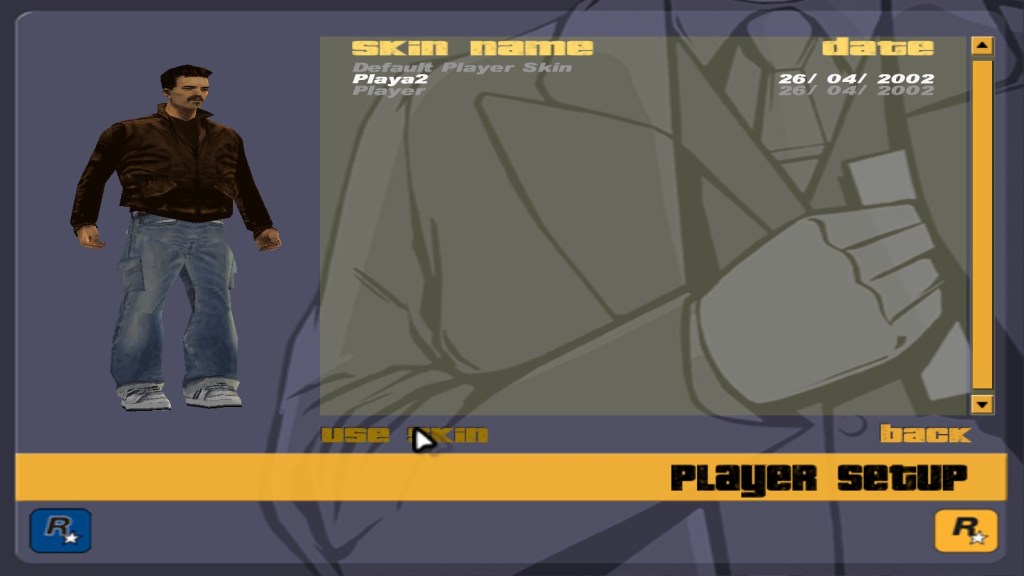
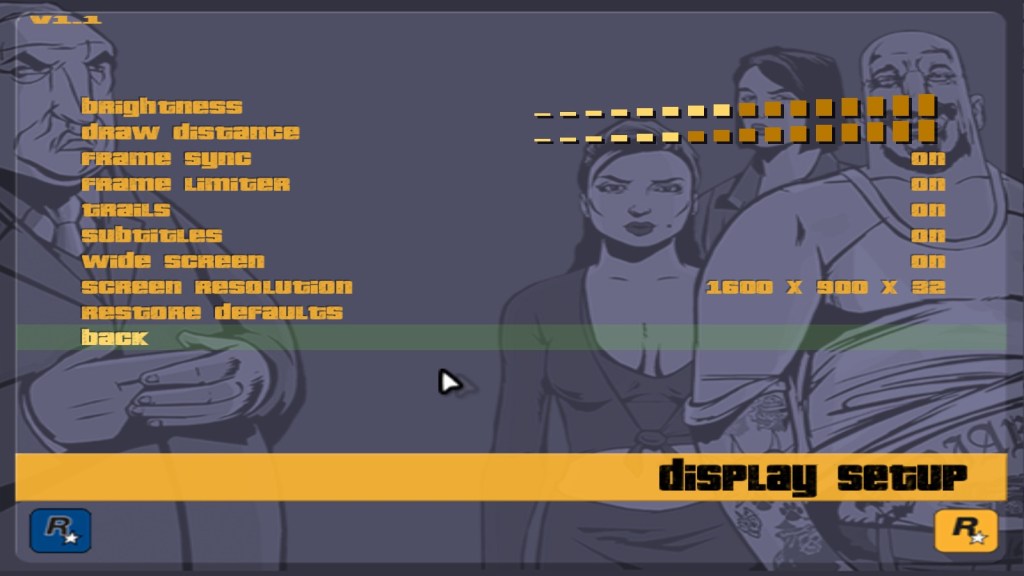
Windows: This version works well and is playable on modern versions of Windows, but lacks the improved details that the Xbox version had. But you can change your characters skin if desired, and can be modded. Some of the enhancements from the Xbox version have been adapted into the PC version using this method.

This version was also adapted for Mac OS X, which was implemented into a Wine DirectX wrapper (Developed by TransGaming Cider/Cedega) and released onto Steam.

Android: Released on GTA III 10th anniversary, This version features improved graphics, providing you set the graphics settings high. This has Android gamepad support, and plays very well on the Nvidia Shield console.  This version is alas playable on the Amazon Fire platform, but you will need to side load it to play.

iOS: also release for the iPhone and iPad platforms, but not Apple TV? As far as I’ve played is pretty much the same as the Android versions.

There is also a definite version of GTA III, which is the original mobile version that has been upscaled mostly using AI. The result is pretty poor and isn’t recommended.

While some people may be turned off by this innovation in Mature-rated games, Grand Theft Auto III was very well received, and surely one of the most impressive and ambitious ever released for the early sixth generation systems. The storyline, extensive gameplay, and excellent presentation make for an amazing experience, and older gamers will find themselves drawn into the seedier world the game depicts in a post 9/11 world.  Newcomers might appreciate it more through the lens of its historical significance rather than pure entertainment value today. Even though some people may see the violence as a novelty, once you get past the first few missions, this is a game you will not want to stop playing until you’ve explored everything it has to offer.

Unreal Tournament 2003

The original Unreal Tournament was the introduction to online and off-line multiplayer action for a lot of players with its gorgeous graphics, multiple game modes, reliable Net play, and a never-ending supply of intense action made it an instant classic. It’s offline bot modes were also valuable to those who didn’t yet have an internet connection. Its sequel, Unreal Tournament 2003 offers plenty of impressive attributes. 

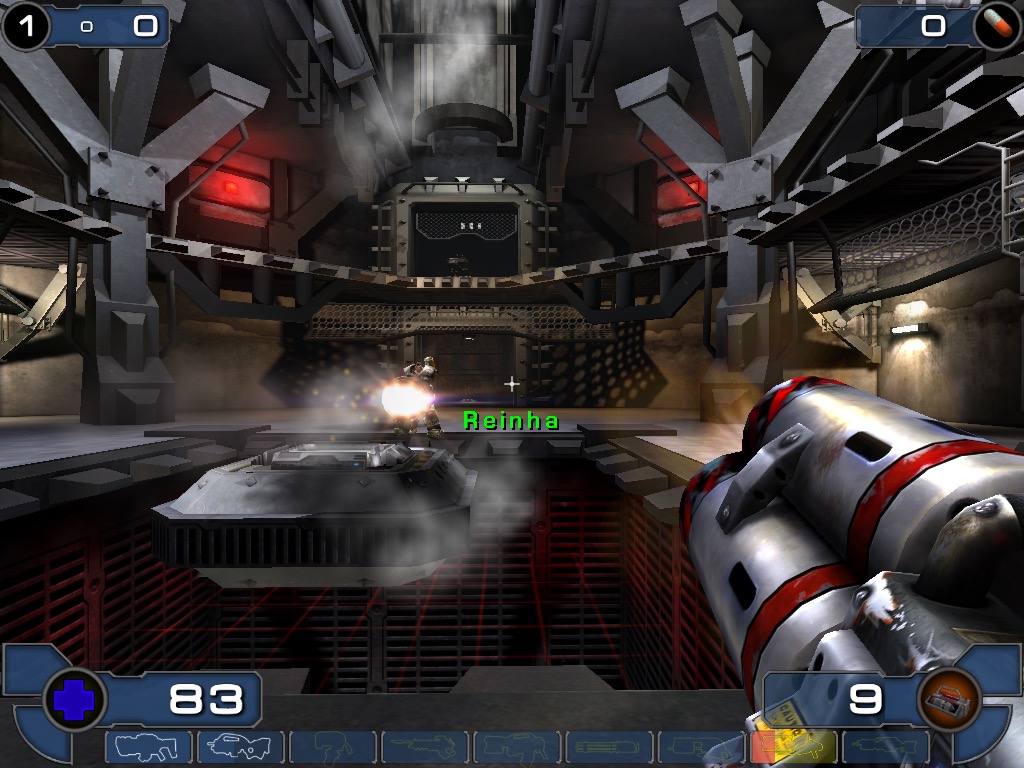
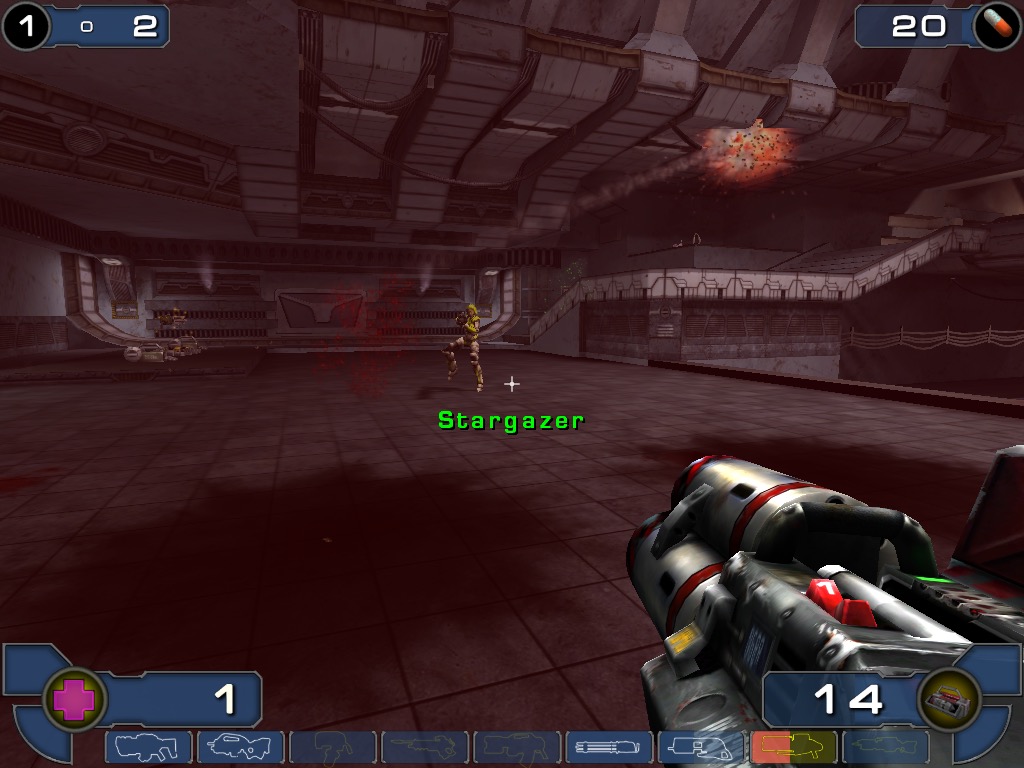
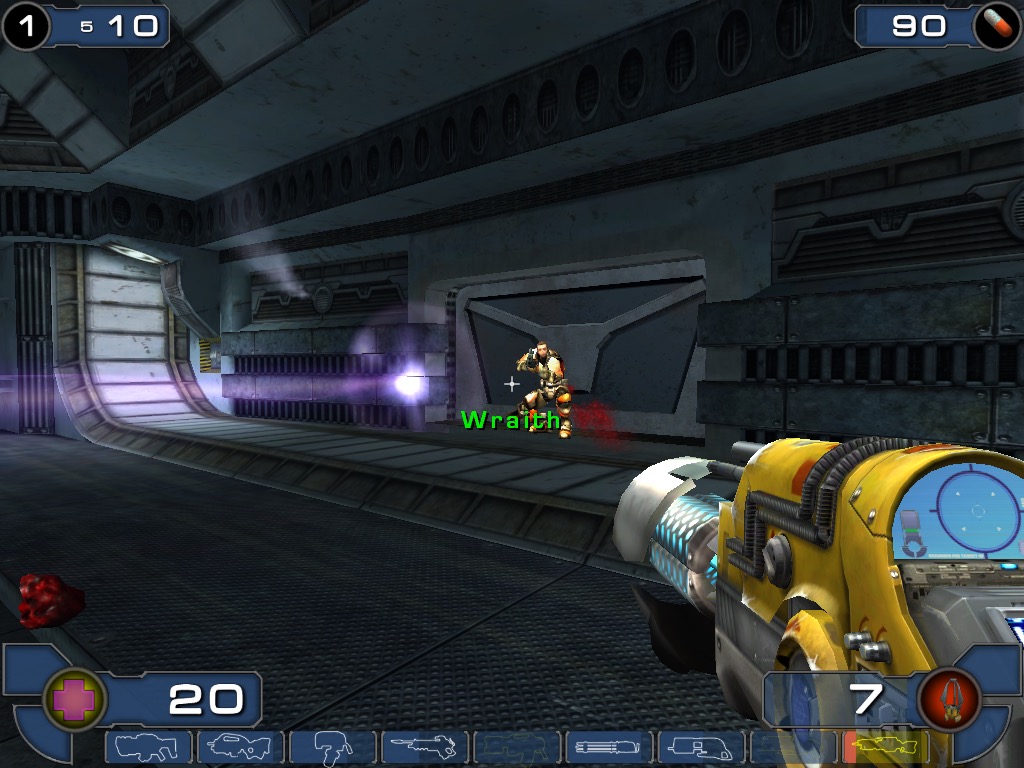
The graphics is one of the stand out features, implementing a smoothly integrated terrain engine the jagged and harsh lines of most 3D games are gone. The use of the Unreal Engine 2.0 brings beautifully detailed environments, with dynamic lighting and textures. The maps here are big, beautiful, and are full of fine detail. This is truly one of the best-looking games on the market when it was released and it runs remarkably well, even on modern hardware without any rendering flaws.

Audio play’s a big role in UT2003, A variety of diverse and amusing taunts, complaints, and other messages come from both your teammates and your opponents. The soundtrack is powerful and dramatic, although it moves quickly to the background during a heated game, a lot of the tracks are recycled from Unreal championship for the Xbox. It has a KMFDM electro/industrial feel to it that fits with the game’s theme, whilst the Egyptian-themed maps benefit from similar music. Sound effects are really good with plenty of bass-intensive booms and blasts that liven up any gunfight. The game has support for EAX with was supported on certain Creative SoundBlaster cards and gives extra environmental audio effects.

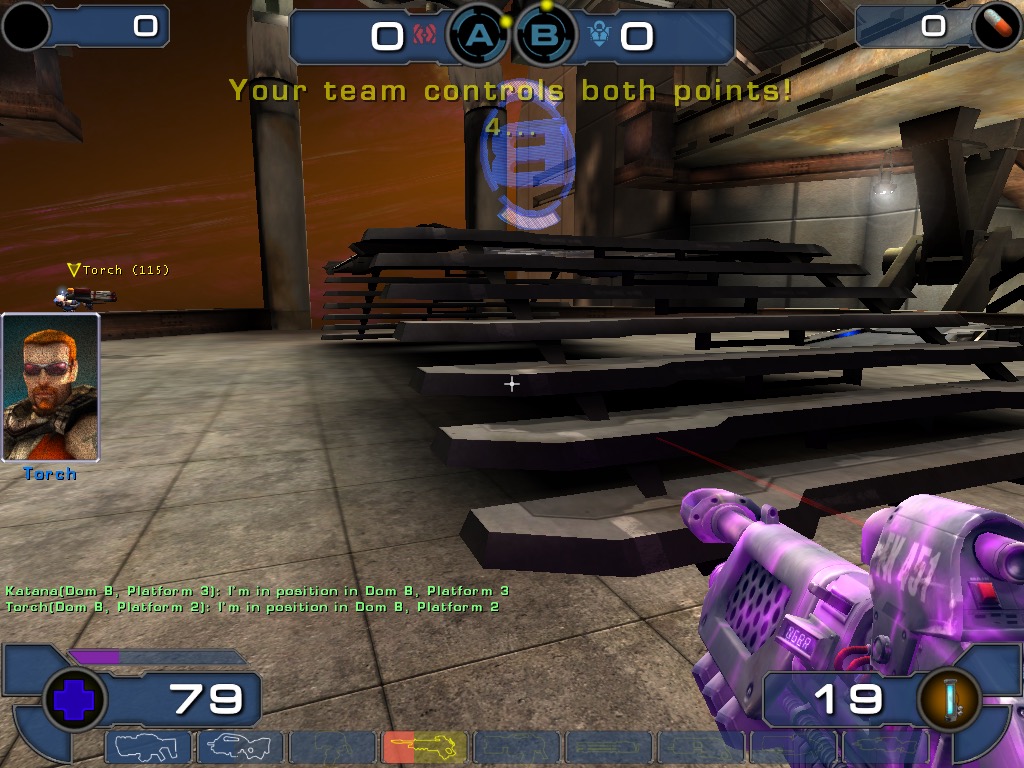
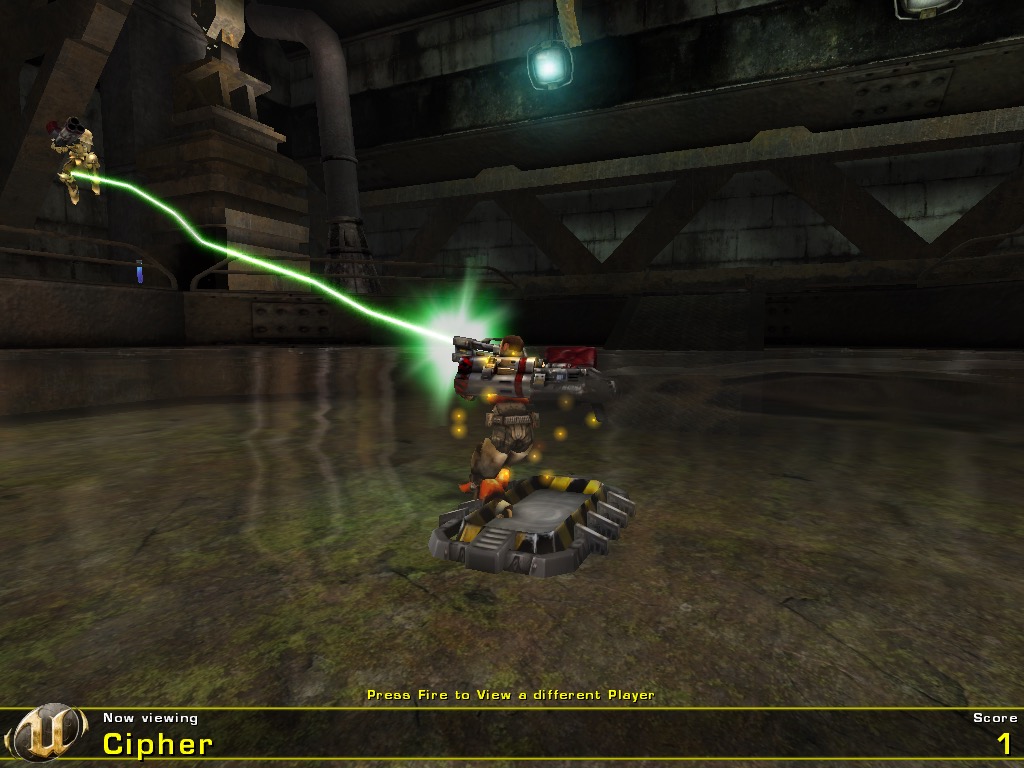
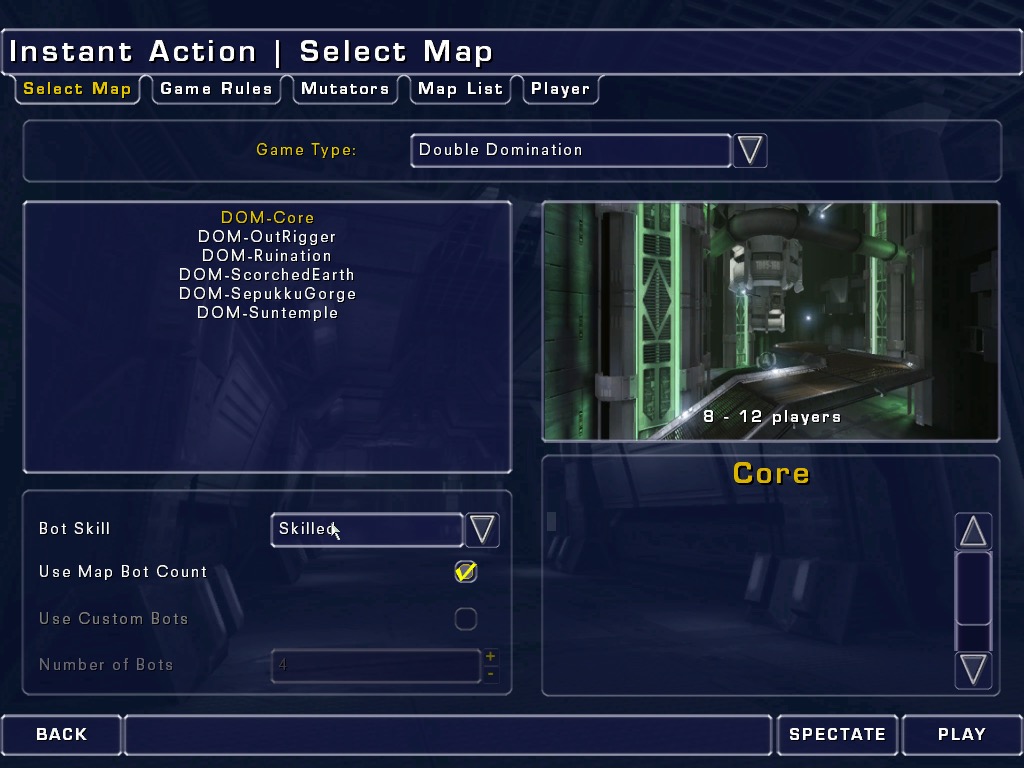
There are five game modes – Deathmatch, Team Deathmatch, Capture the flag, Domination 2.0, and Bombing Run. The first three should be familiar to anyone who has played any online arena shooter. Domination 2.0 is a popular mode from the first Unreal Tournament but has changed where both teams only need to hold two bases for a few seconds for them to score. Bombing Run mixes team-based death matching with ball sports to create an incredibly appealing and challenging variation, although its mostly just an altered version of Capture the flag.

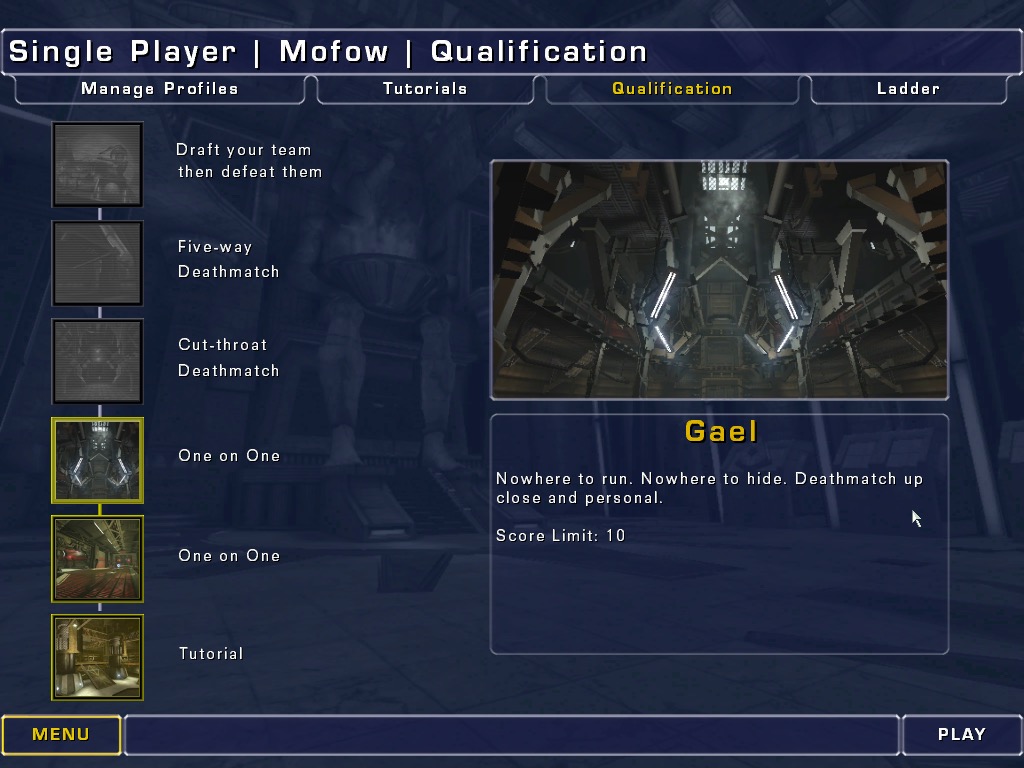
Although most players will get Unreal Tournament 2003 for its online gameplay, the game also offers a good single-player mode to help you get accustomed to the game’s new maps and mechanics. Single player works much like the multiplayer mode, but with bots as your teammates and enemies. The noticeable improvement is in the AI’s team tactics. When playing a bot-filled team game such as Domination, your computer-controlled teammates will work together, support you, and score points all on their own and they’ll do a decent job. You can dictate the AI’s general behavior before a match (defense, offence, auto, support, and so on), or issue orders to them during play via a quick menu. Most of the online servers have been phased out, following the release of UT2004 but you can still find the odd server still offering online play. Epic did shut off the master server (along with other Unreal titles) but third party servers are available.

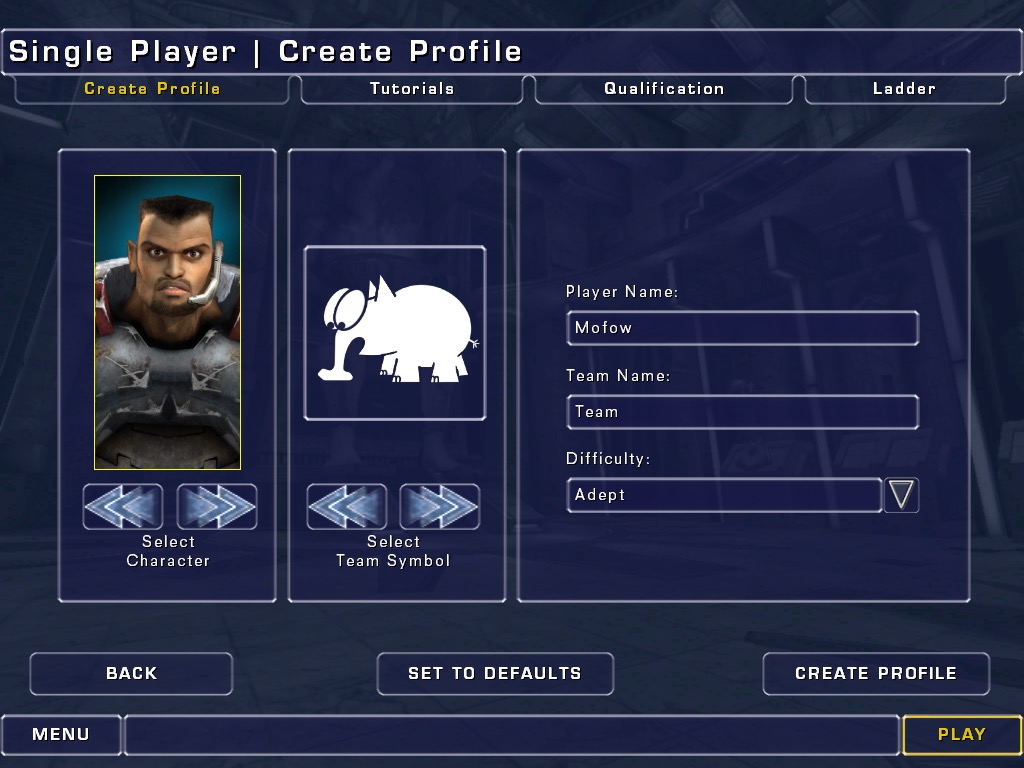
The single-player experience in Unreal Tournament 2003 is designed around the concept of a tournament ladder, where players fight through a series of matches to become the champion. You pick your teammates early on, and as you progress, other teams offer you teammate swaps. Each competitor has a rating for things such as accuracy, agility, stamina, and team play that come into play when you trade teammates. There are different races like the Juggernauts that move slower but have more health, that adds a strategy element to the game. Adding to the variety are more than 30 characters and maps to choose from, with the game supporting additional maps and skins. Also, power-ups abound throughout the levels. This lets you unleash mass carnage with the help of double damage, super shields, and even a new adrenaline rush that temporarily increases your abilities. Finally, there’s a horde of mutators that let you alter gameplay elements, allowing for big heads, low gravity, and instant kills, if you want.

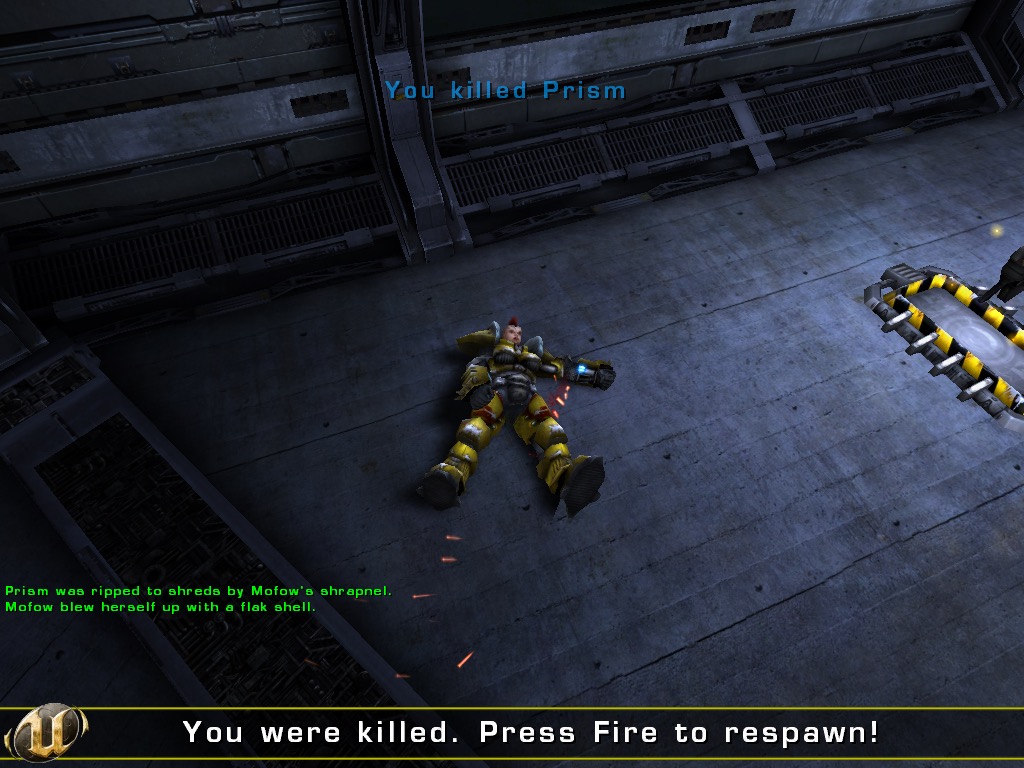
There are nine weapons available, including a flak cannon, a rocket launcher, a machine gun, a minigun, a bio-rifle, and a new sniper-riflelike lightning gun. The weapons are paced differently than in the previous game, making accuracy more of an issue and preventing random wild fire. However, the downside of this is that all the guns have been toned down from the original weapons of mass destruction. The biggest complaint that can be levelled at Unreal Tournament 2003 is that it wasn’t improved over the original enough. The game doesn’t pack in as much variety and features as it could have. More game modes and weapons would have helped put it over the top in terms of value. 

UT2003 was only released on Windows and MacOS, the console counterpart would be Unreal Championship that was released for the original Xbox. 

Windows: This version will work on Windows 98 with DirectX 8 or higher, all the way to Windows 11. Some features like DirectPlay will need to be manually installed through the Windows features:

Mac OS: The Macintosh port was only ever released for OS X for PowerPC, no Universal patch was made available. You will need a Mac running OS X Jaguar with a PowerPC G4 or G5 processor for the best experience.

Sid Meier’s SimGolf

A golf simulation game with a bit of Simcity/Sims formula, here players act as both a golf course designer and a golf resort manager. The game allows you to design your own golf courses, managing aspects like terrain, hazards, and amenities. Basically to create an interesting golf course and to keep your golfers happy. You’ve just inherited 100,000 simoleons! The only catch is, you’ve got to spend it building a golf resort empire. Thankfully you’ll love every minute of it, even if you don’t know the difference between a bunker and a ball washer.
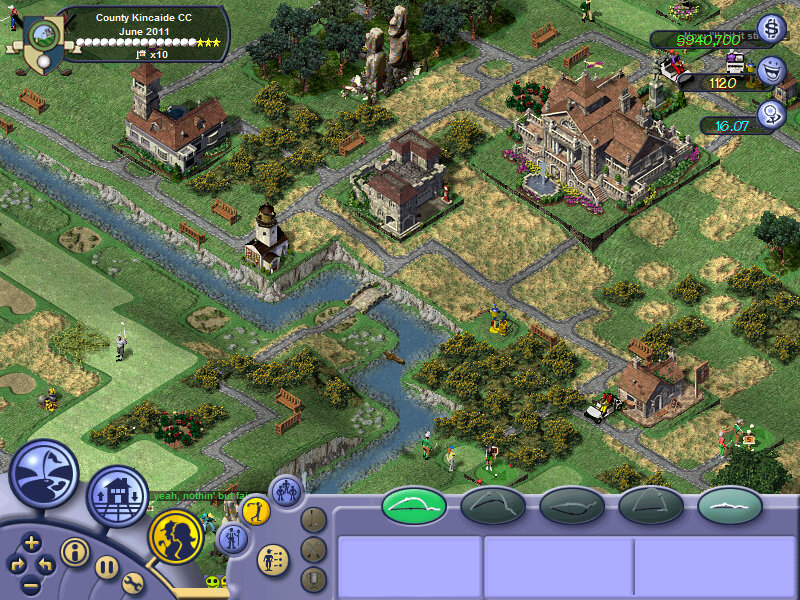
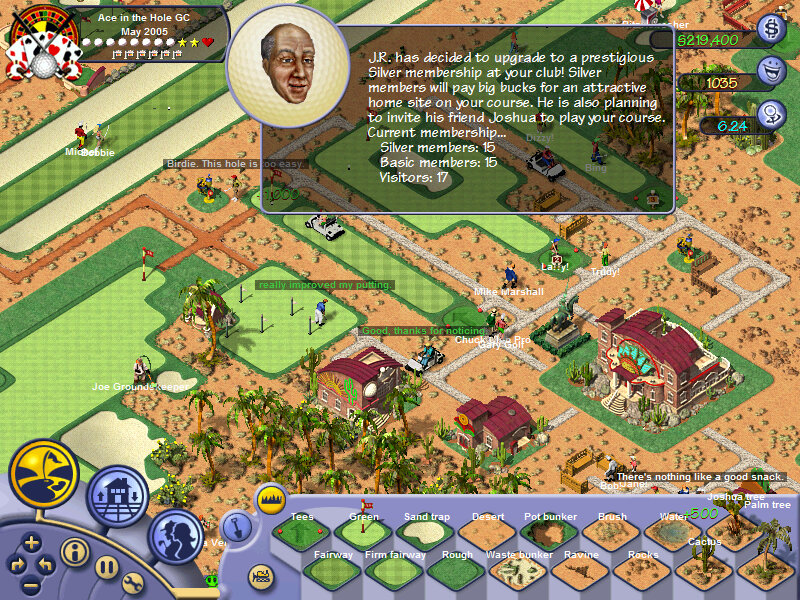
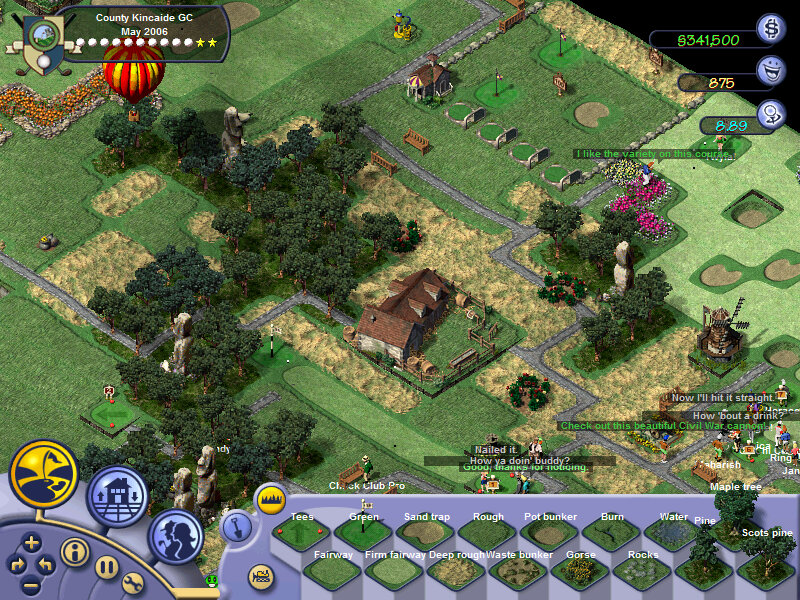
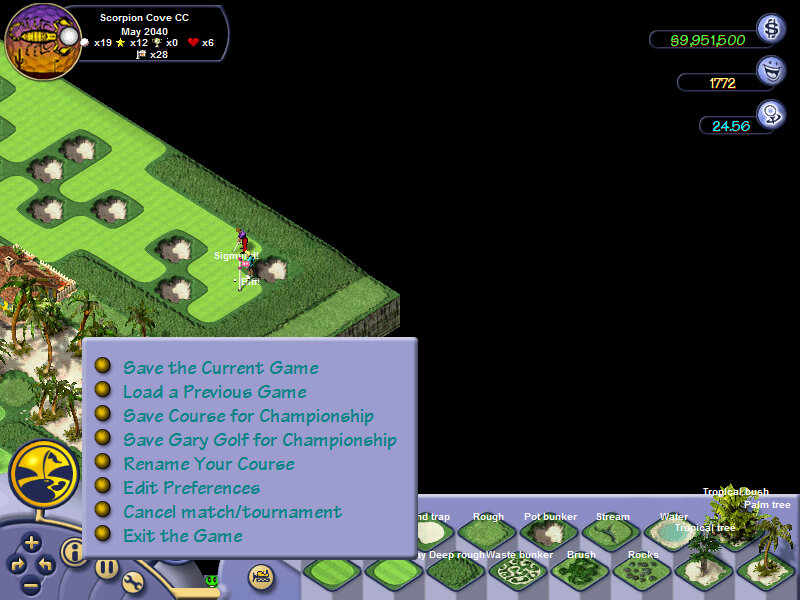
The user interface is pretty similar to what was seen in The Sims, where you can select different modes that relate to the gameplay. Course design has its own selection, as do building and then the golfers themselves. At the start of the game you choose one of six pieces of real estate. (There are 16 total. Six choices are chosen at random with each new game.) Each piece has its own unique climate, features, and terrain.
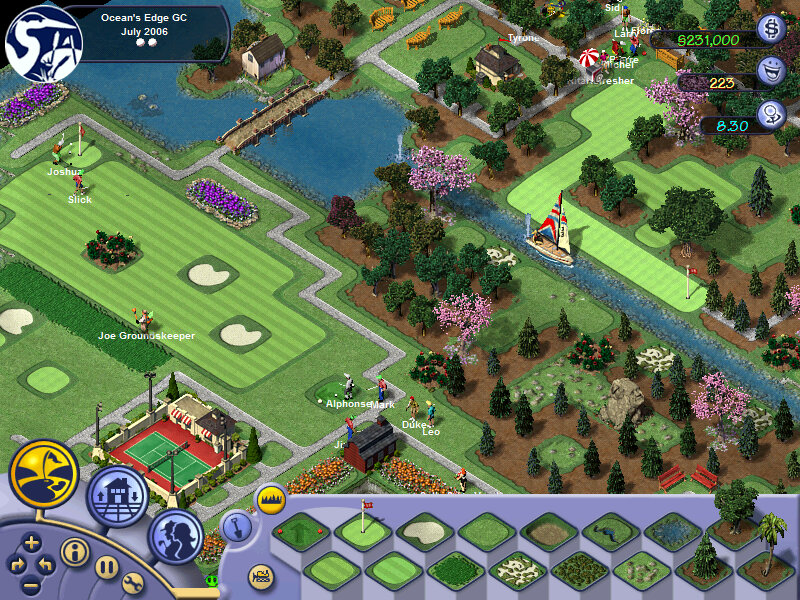
Next you have to start building your resort. That means budgeting your money to build holes, add paths, bridges, and decorations, hire workers, and buy buildings and amenities. You’re managing a golf resort and the golf itself is only part of the equation. From the moment you open your first hole, little people, sims, will visit, play, and begin commenting on your handiwork. Open a few holes and soon you’ll be inundated with critique and with praise, especially if you’ve designed things well.

The main mechanic with the game is the course design, you have to create and design your own golf course using the tools that have been provided, whilst making up challenging yet enjoyable. You will need to keep the difficulty fair, as golfers will start to rage and quit if the hole is too difficult to complete. This can be a bit of a challenge, as golfers will dislike it when they get stuck in tough terrain, or if the ball rolls down the hill that they have to climb up. When designing a hole, you first place the tee and then the green (the place with the flag and the hole). Between them you can place bunkers, rough, sand, rocks, trees, and even water. Somewhere you’re going to want to lay the fairway (closely cropped grass that’s easy to hit from). There are two types of fairway with slightly different characteristics, and their locations determine how golfers approach each shot.

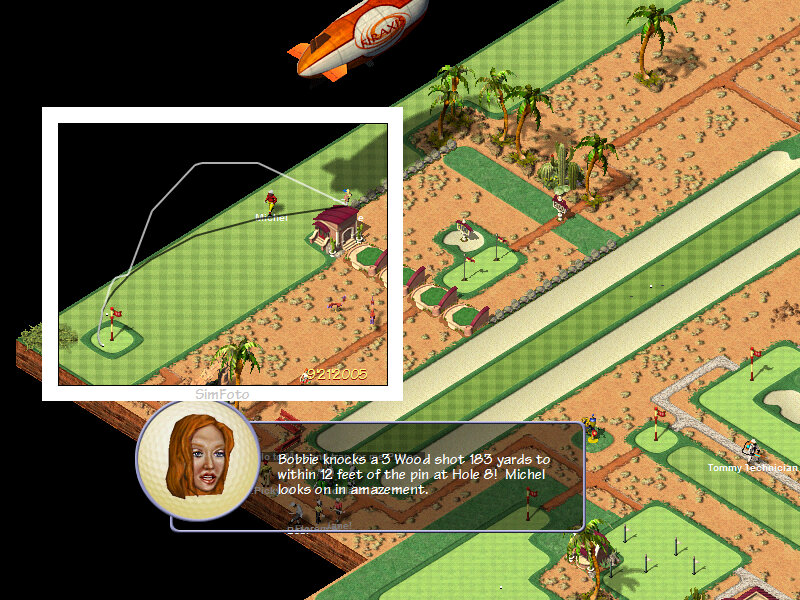
For example, you can place the tee low among the trees and the hole up on the other side of a hill (you control the terrain elevation as well), and lay a sand trap to the right and fairway to the left (this is called a dog leg left, by the way). Golfers can choose to power hit over the hill and onto the green, or they can play more conservatively and aim for the fairway to get there in two shots. Golfers are rated for accuracy, power, luck, skill at various shots, and imagination. Golfers better at certain skills will appreciate holes that cater to those skills, so, to keep everyone happy, you need a wide range of holes on your course.

Also golfers will try to take the most direct path to the end, which will mean they might end up shooting the ball within the tress if they are in the way which makes course design difficult since you cannot account for where the sims will shoot the ball. The game will try to help you by bringing up a while line to help guess where the sims will be tempted to shoot the ball, but this isn’t always accurate.

Staff can also be hired to help keep your golfers happy. These consist of a groundskeeper to help maintain your golf courses, Greeters who help keep golfers happy and engaged, drink vendors who will provide drinks to satisfy the thirst need and Marshals who will speed up play. There are two tiers of staff, which the more expensive tier having larger range that can cover more of a surface area.

In this way SimGolf captures the great and intangible design challenge inherent in golf: Nobody likes a hole that’s too easy, and nobody likes one that’s too hard. The easiest way to make sullen golfers happy is to let them succeed by making sure the next hole is a cakewalk. That way, when they nail a birdie on hole 6, their day is made. But on the next hole, if they hit the water trap three times in a row, their clubs will soon follow the ball into the drink and you’ll lose a customer. The challenge here is making courses that’ll make both Tiger Woods and the guy next door happy. You can mitigate this by improving on the scenery around the hole to bring up their happiness.

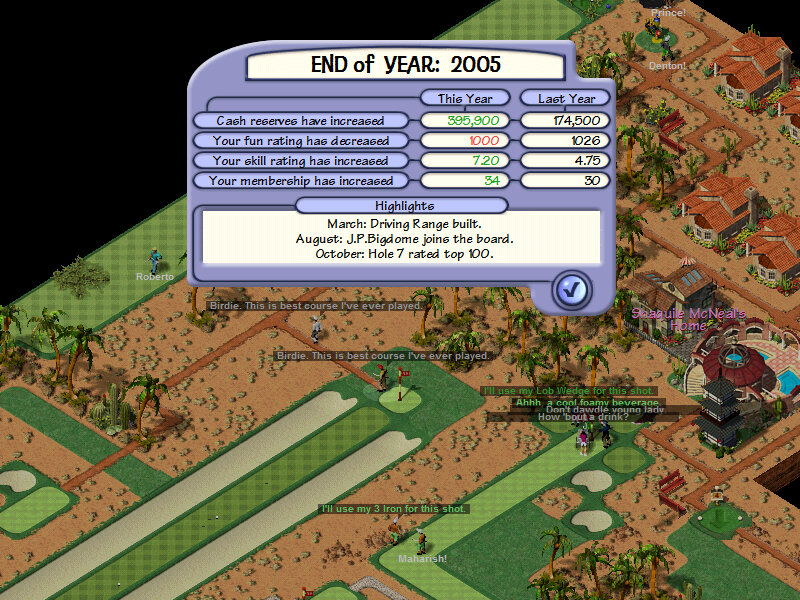
Golfers can also apply to become members, which help to increase your greens fees. They can upgrade their membership to silver and gold, which will allow them to purchase property and gives you an alternative revenue stream. Golfers can resign their membership if they are unhappy with the golf course as a whole.

There are various locations available to play within the game, many of these are set around the world and provide alternative terrain and building options that are suited to that location. Different locations can be purchased as you progress the game.

Building’s can also be brought and placed, some of which can help increase your golfers’ skills to help with the more difficult courses. The putting Green, Driving range and pro Shop will help your golfers improve their skills to play some of the longer or complex courses. A cart garage will help speed up movement between different holes.
There is also a café where golfers can purchase refreshments to keep them happy. Like The Sims, golfers will have motives that will deplete as they play the game, these will have to be replenished in order to keep them happy, otherwise they will get angry and leave. Hunger and thirst can be replenished with the café’s mentioned previously, whilst tiredness can be kept at bay by placing benches along the path to the next golf hole.

SimGolf is a pretty quirky game, and there’s a lot of little facets of charm from the golfers dialog, to the tine that plays when building the terrain. The only major downside to the game s the lack of speed control, unlike other Sims or SimCity games you cannot control the speed of the simulation, so you will need to wait until your sims complete. There’s a wide range of difficulty modes, and the game never really ends. You can always play a tournament on your finished courses, and once finished you can buy another plot and start a new course. Or you can take money out of the equation and use the Sandbox mode to create the course of your dreams or re-create the one next door. 

The game was never released digitally, so its not available on Steam GoG, or EA’s Origin Play.