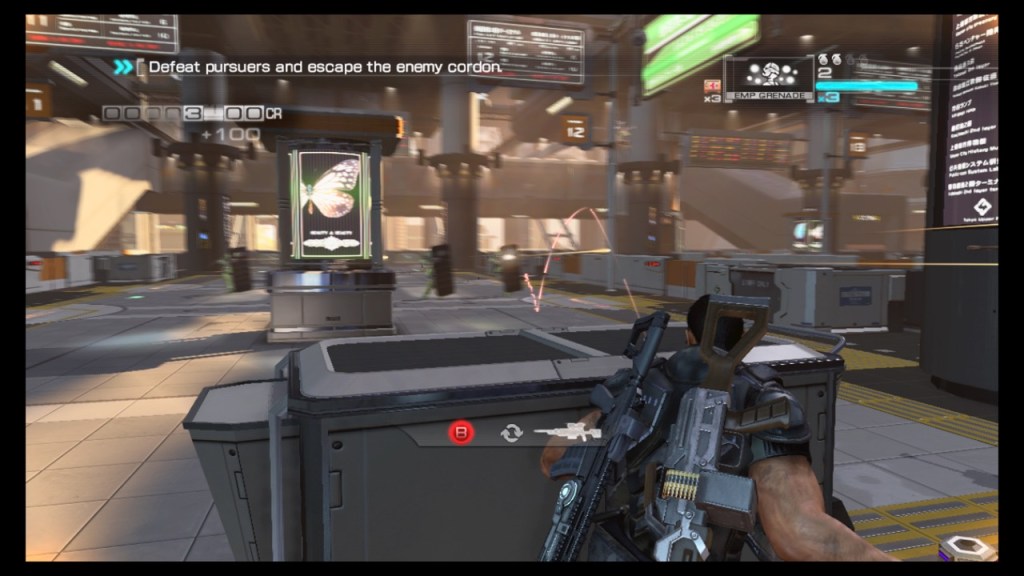
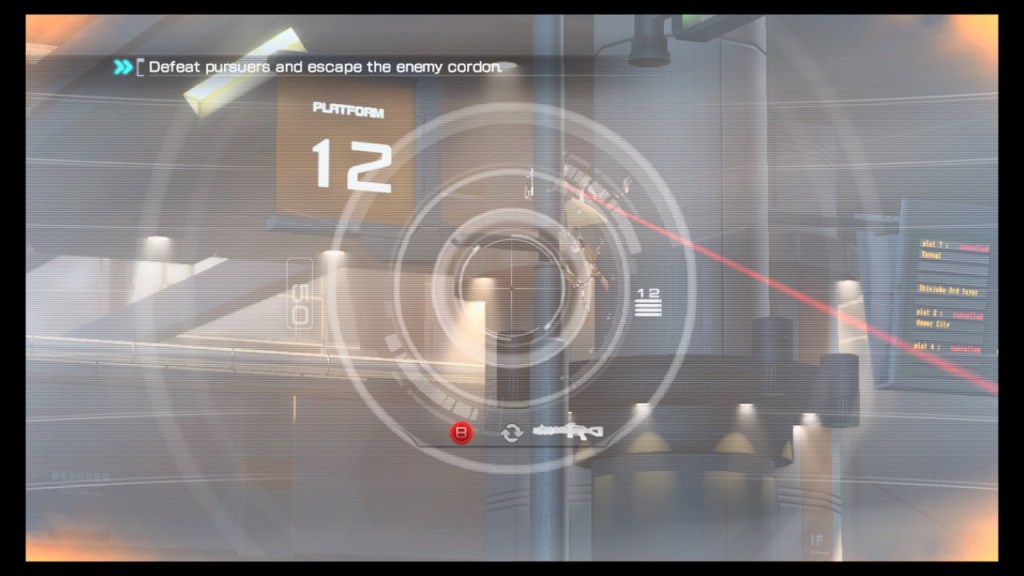
A third person shooter games related in 2012 by Sega, set in the future where global warming have causes robots to become the main labour force, followed by a series of conspiracies. However the game is well known for its use of speech input mechanics that can be used to give commands and reactions to the characters. It’s heavily driven by its shoot and cover mechanics that give it close similarities to Gears Of War.
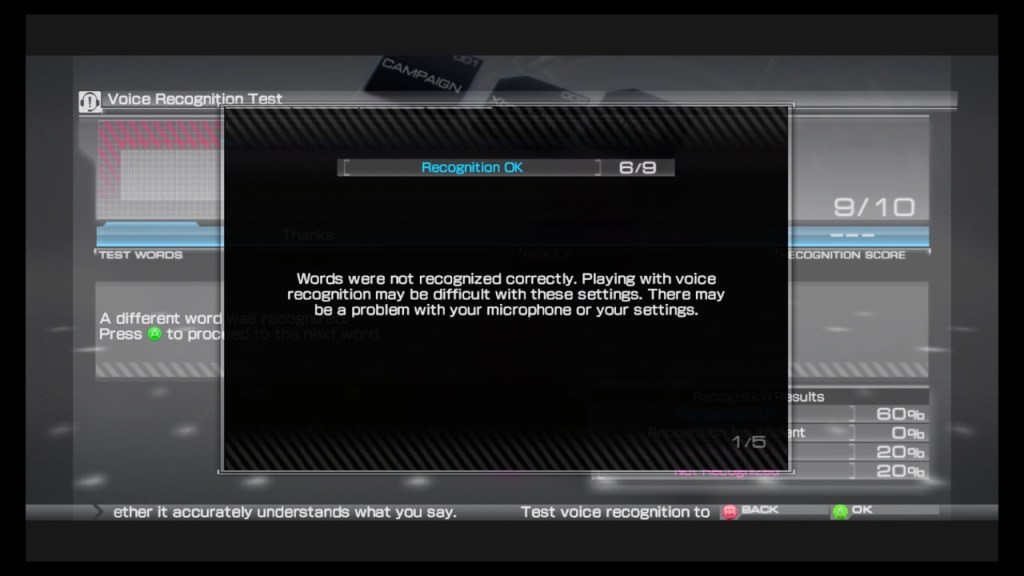
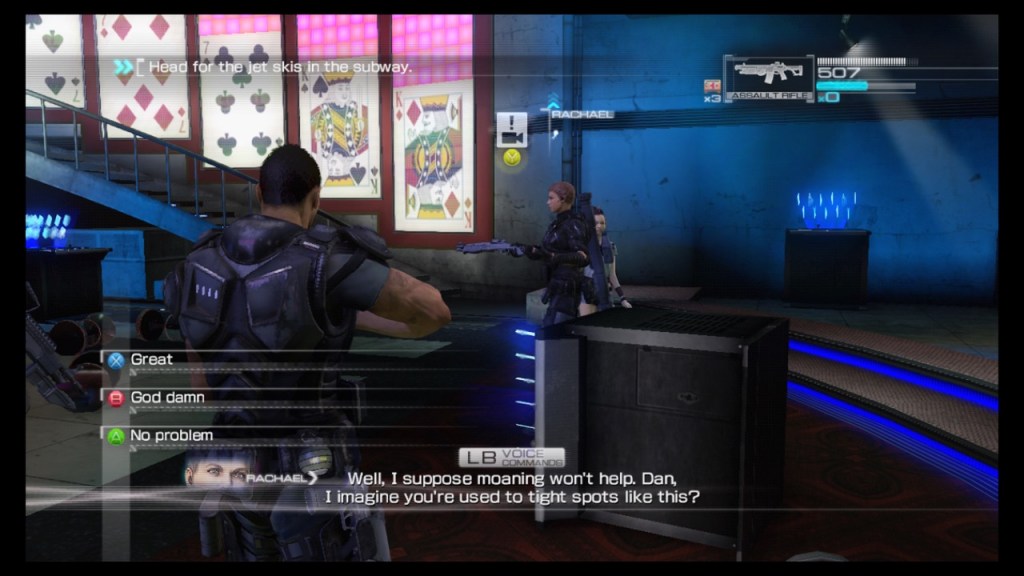
A key mechanic is the “Consequence System,” where player actions and dialogue choices affect squadmates’ trust in Dan, influencing their behaviour and the story’s progression. Players can issue commands to teammates either via controller inputs or voice recognition (using a headset or Kinect on Xbox 360), though the voice feature was often criticised for inconsistency. Personally I gave up with it after 20 minutes of use, since you often have to shout the commands to the game for it to pickup, its easier and more convenient to press the corresponding button on the controller instead.
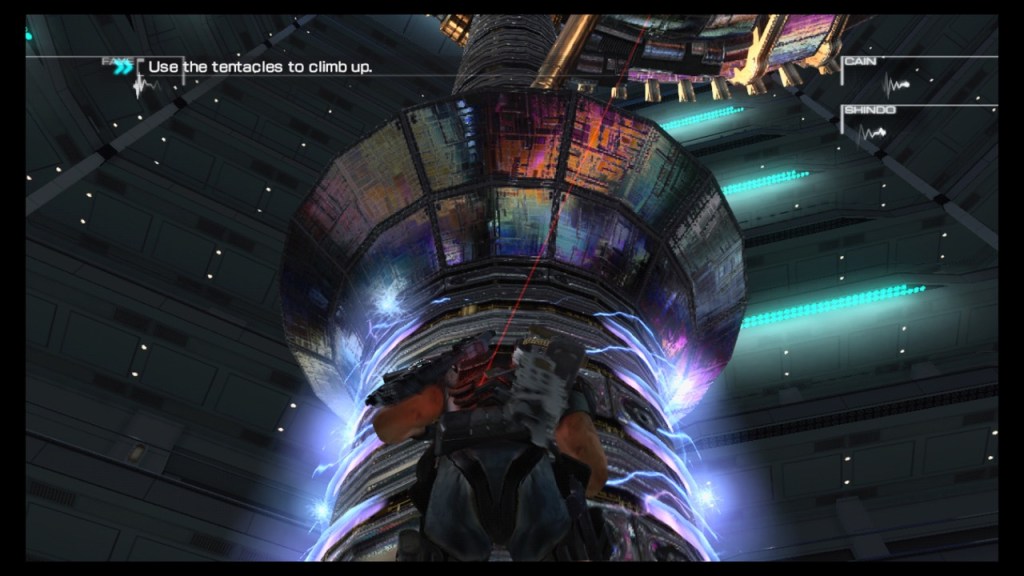
Combat involves fighting highly detailed robots that react dynamically to damage—shoot off a leg, and they’ll hobble; remove their head, and they might turn on their allies. Boss fights take advantage of this also, requiring you to find the enemy’s weak spot to attack it.
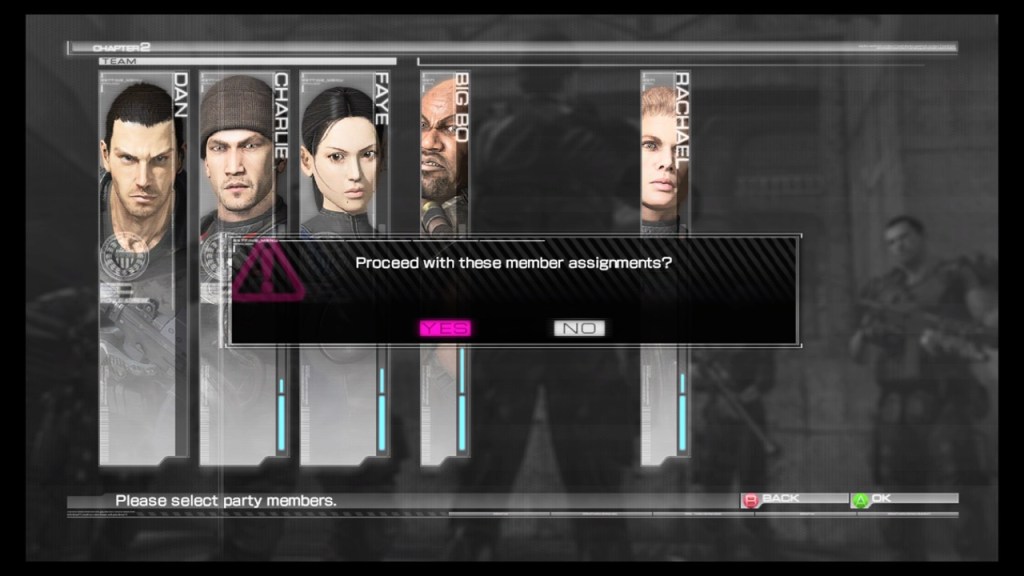
The main characters in the game are Dan Marshall, also known as ‘The Survivor’ due to his lucky history. Dan is a brash, cocky American with a sarcastic edge and a never-say-die attitude. He’s a natural leader but often hides his deeper emotions behind quips and bravado—like calling himself “The Survivor” after narrowly escaping death repeatedly. He’s loyal to his team but can clash with authority, showing a rebellious streak.
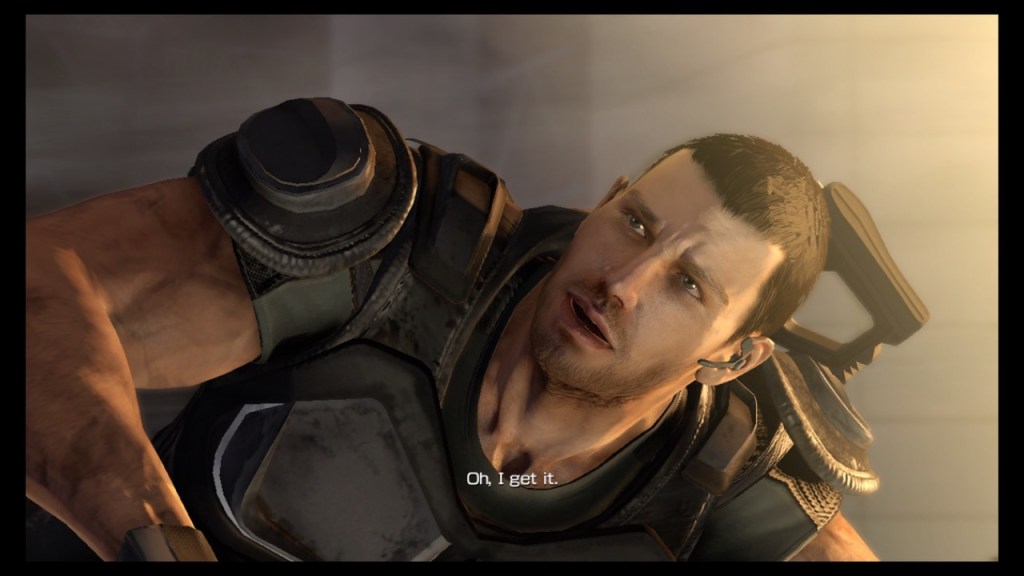
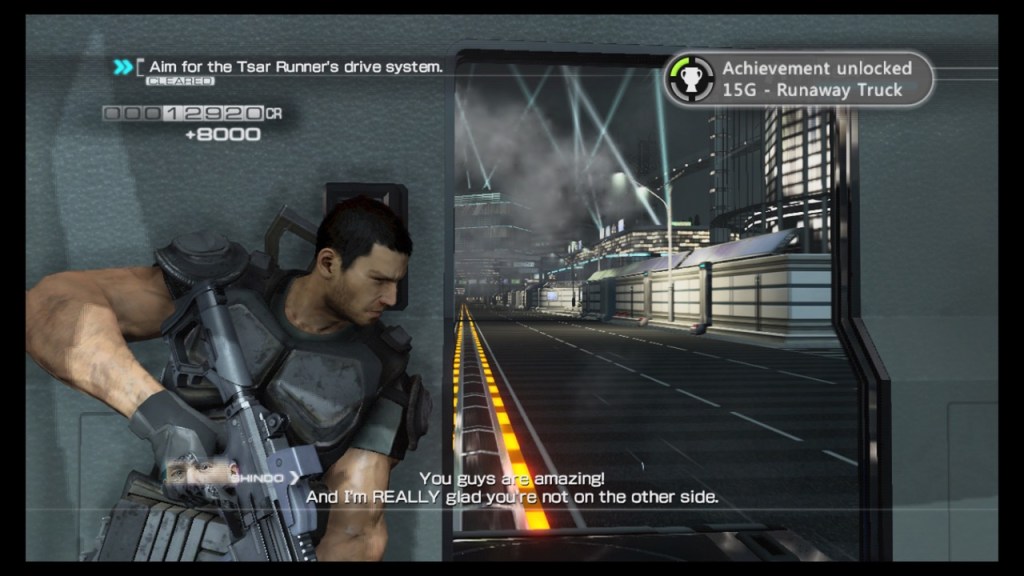
Additional characters you will meet no the way can be selected as team-mates, and your trust can increase as you react to certain dialogue lines or how well or quickly you shoot an enemies. Be careful though, friendly fire or picking the wrong dialog option can reduce their trust in you. In a way it’s similar to mass Effect 2 where your relationship with your squamates has an ultimate effect to the game’s ending.
Charles Gregory: Charlie is the calm, intellectual Brit of the group—think of him as the squad’s brain. He’s composed, methodical, and speaks with a dry wit, often playing the straight man to Dan’s chaos. He’s a stickler for protocol but isn’t above bending rules if the mission demands it. Beneath his cool exterior, he’s driven by a quiet sense of duty and a need to protect his team. He has a very professional demeanour, which means its best to respond with ‘yeah’ for most of his dialogue.
Cain Delaunay: Cain is a suave, charming French robot—yes, a robot on a team hunting robots, which is peak irony. He’s polite, witty, and unflappably cool, with a refined accent and a knack for dry one-liners. He’s programmed for loyalty and efficiency but shows glimmers of personality beyond his code, hinting at deeper self-awareness. He’s the squad’s optimist, balancing their human squabbles with calm logic.
Roy Boating: Big Bo is the loud, brash muscle of the group—think a jock with a heart of gold with a physique that could makes Ronnie Coleman look small. He’s got a frat-boy vibe but a strong sense of camaraderie, often hyping up the team, which makes me think he based based off Cole from Gears of War.
Faye Lee: Faye is cool-headed, reserved, and deadly precise—a Chinese operative with a stoic exterior. She’s professional to a fault, rarely cracking a smile, but shows hints of warmth as she bonds with Dan. She’s driven by duty and a buried personal vendetta, making her a wildcard in the squad’s dynamic.
Rachael Townsend: Rachael is tough, fiery, and no-nonsense—a classic strong female archetype with a British edge. She’s quick to call out stupidity and has a sharp temper, but she’s fiercely loyal once you earn her trust, and becomes more compassionate towards the end of the game.
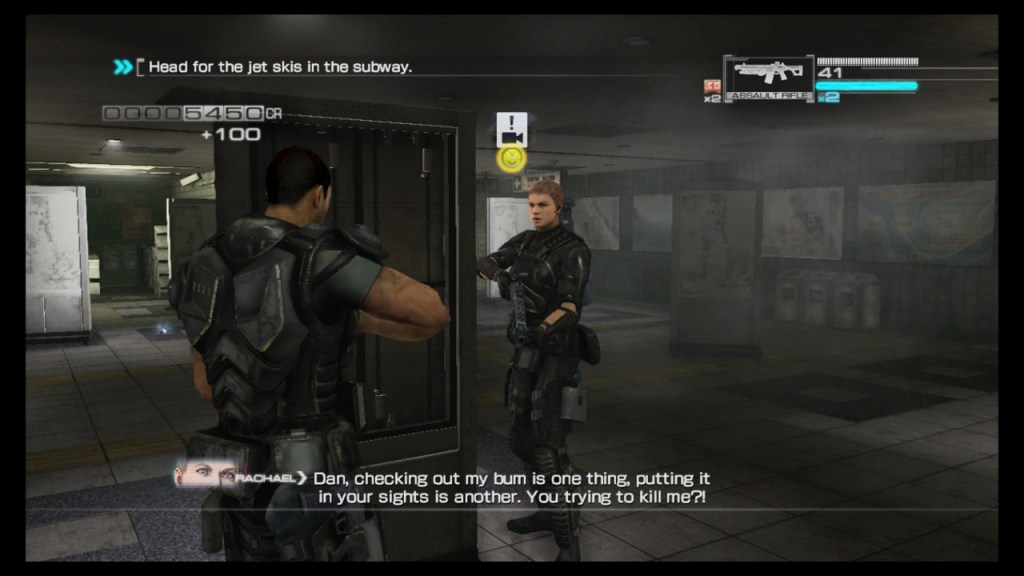
Getting more involved with the story, it’s set in Tokyo in the year 2080, Binary Domain takes place in a world reshaped by global warming and rising sea levels, where robots have become a dominant labor force. The story follows Dan Marshall, leader of an international squad called the “Rust Crew,” tasked with infiltrating Japan to investigate Amada, a corporation suspected of creating “Hollow Children”—robots indistinguishable from humans, violating global laws. Binary Domain explores themes of artificial intelligence, transhumanism, and the essence of life, unfolding in a futuristic Tokyo divided between derelict slums and pristine upper-city towers. If you’re a fan of Battlestar Galatica, the story should interest you as it questions the liens between AI and humanity.
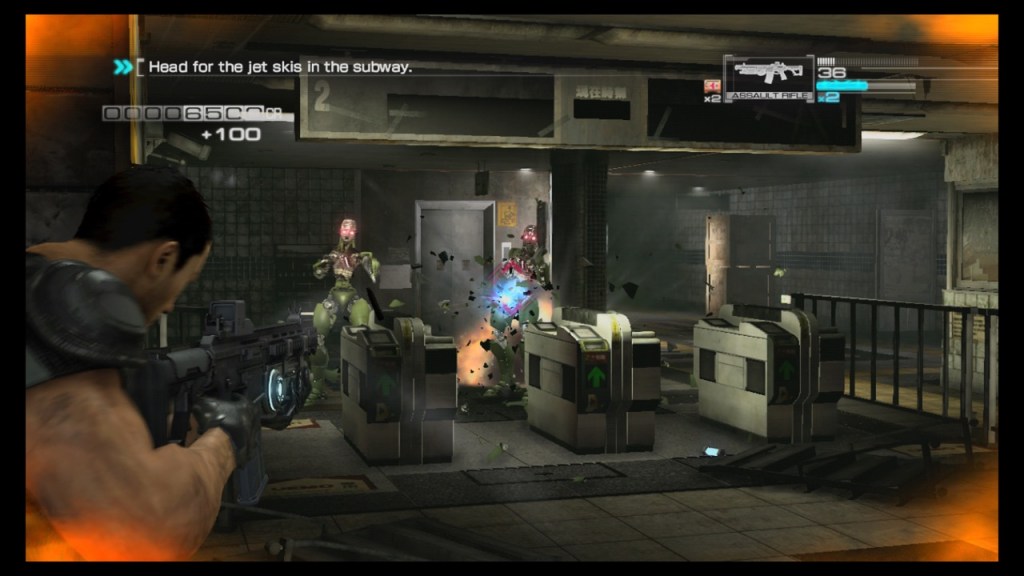
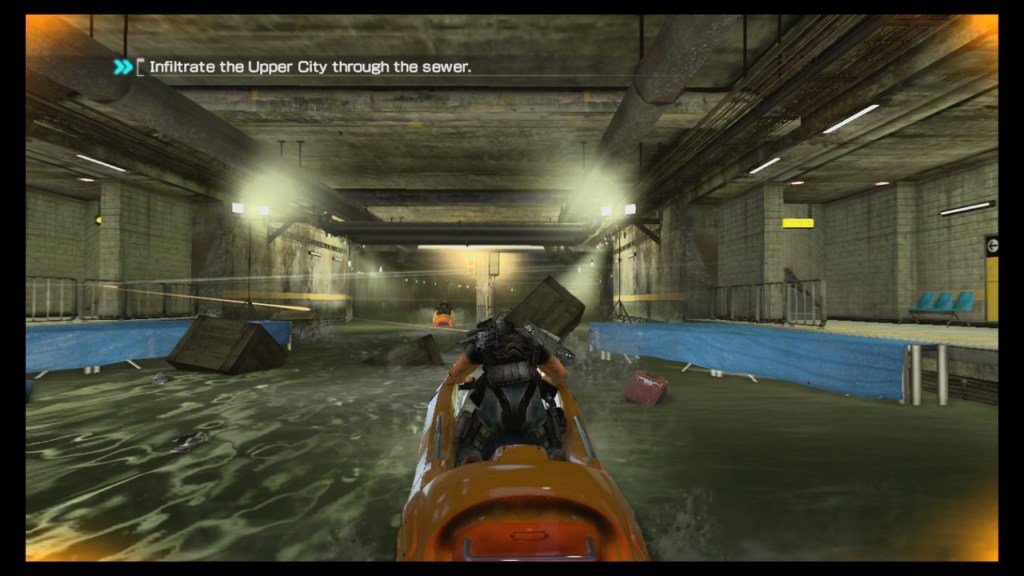
At the heart of Binary Domain is the New Geneva Convention, a global treaty banning the creation of robots indistinguishable from humans (like the “Hollow Children”). This reflects a political debate about controlling advanced technology—think AI ethics or genetic engineering in our world. The game pits the Amada Corporation, which secretly violates this law, against international forces like the Rust Crew, sent to enforce it. It raises questions about who gets to set technological boundaries, how those rules are policed, and what happens when profit-driven entities (Amada) defy them for power or innovation. The Hollow Children themselves—robots unaware they’re artificial—force players to grapple with the moral cost of such laws: is it right to destroy sentient beings to maintain human supremacy?
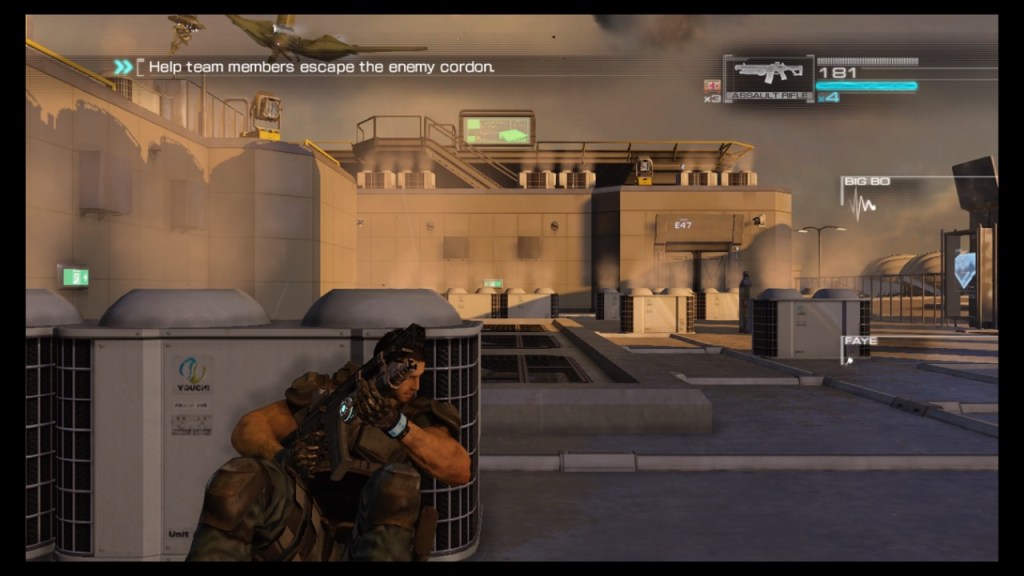
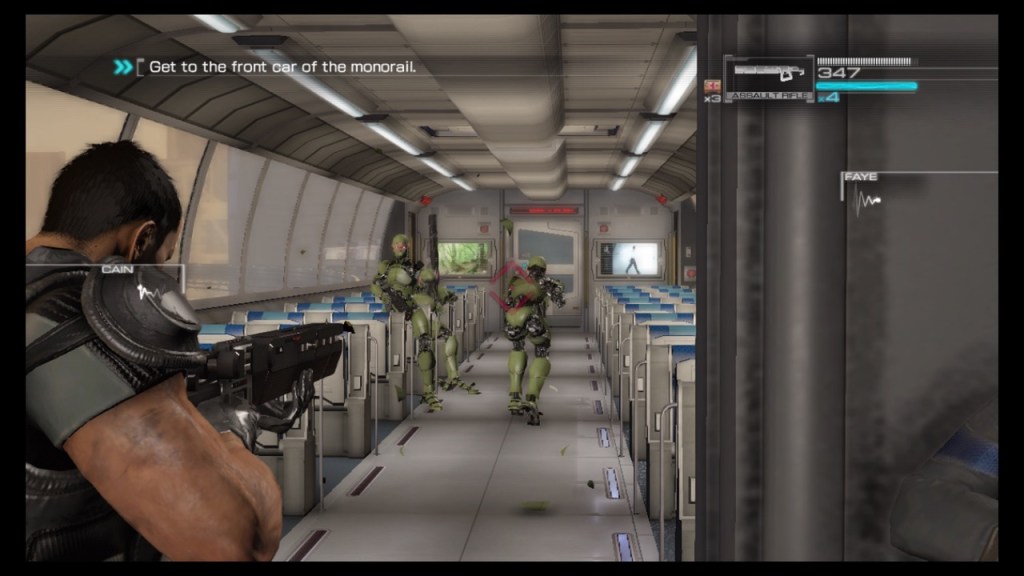
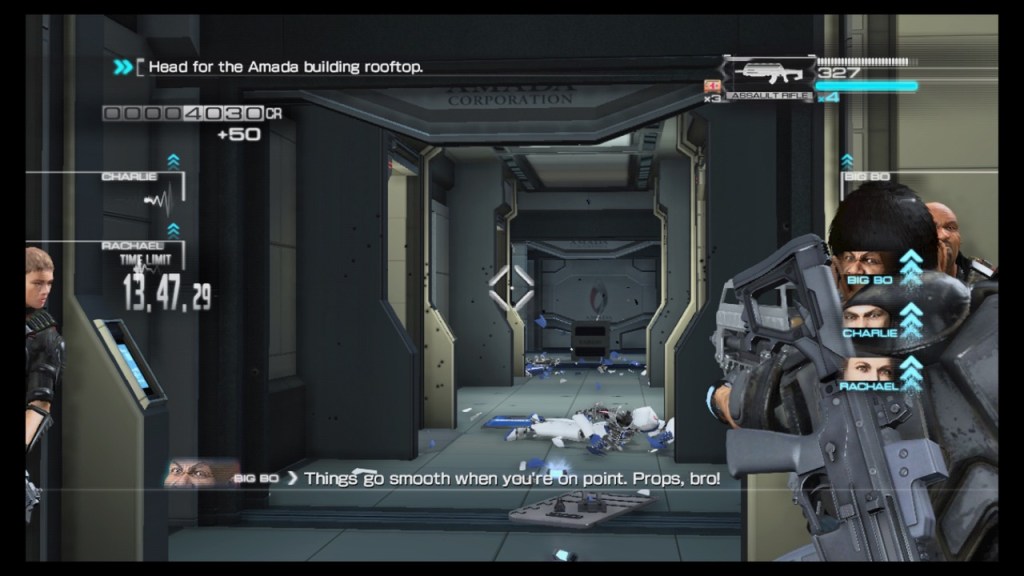
The game’s vision of Tokyo starkly illustrates class divides, a classic political theme. After global warming floods the world, Japan builds a new upper city for the elite—gleaming, robotic, and exclusive—while the lower city remains a derelict slum for the marginalised. Robots, built by companies like Amada, replace human labor, leaving the working class obsolete and resentful. This mirrors real-world anxieties about automation and economic disparity, asking how societies manage when technology benefits the few at the expense of the many. Characters like the resistance fighters you meet highlight this tension, fighting against a system that priorities robotic efficiency over human livelihoods.
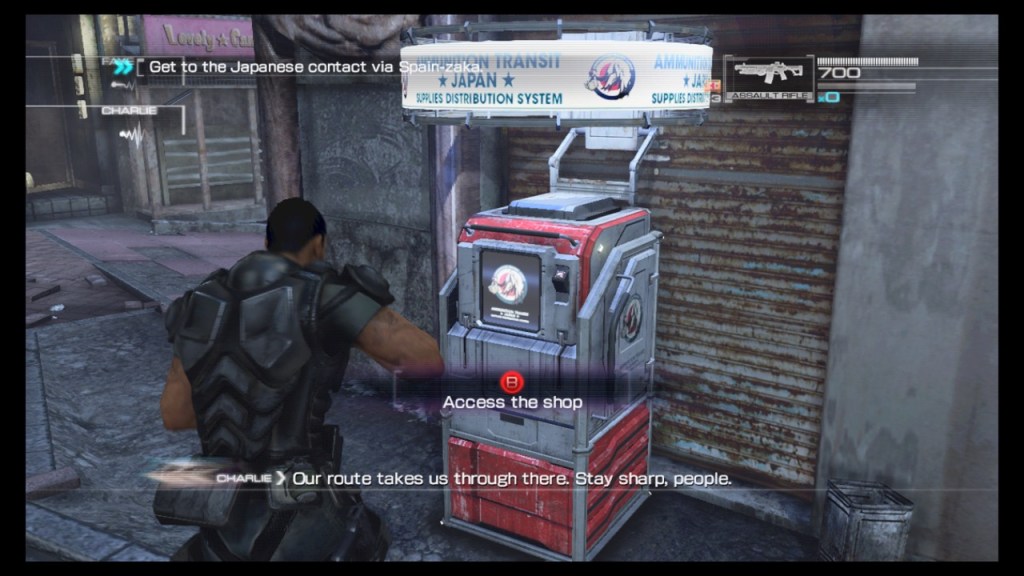
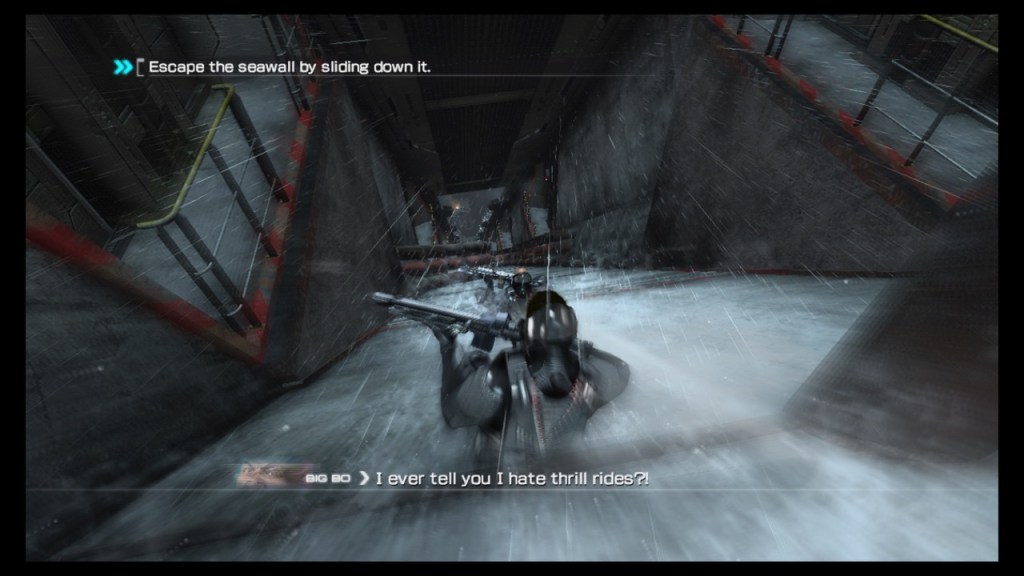
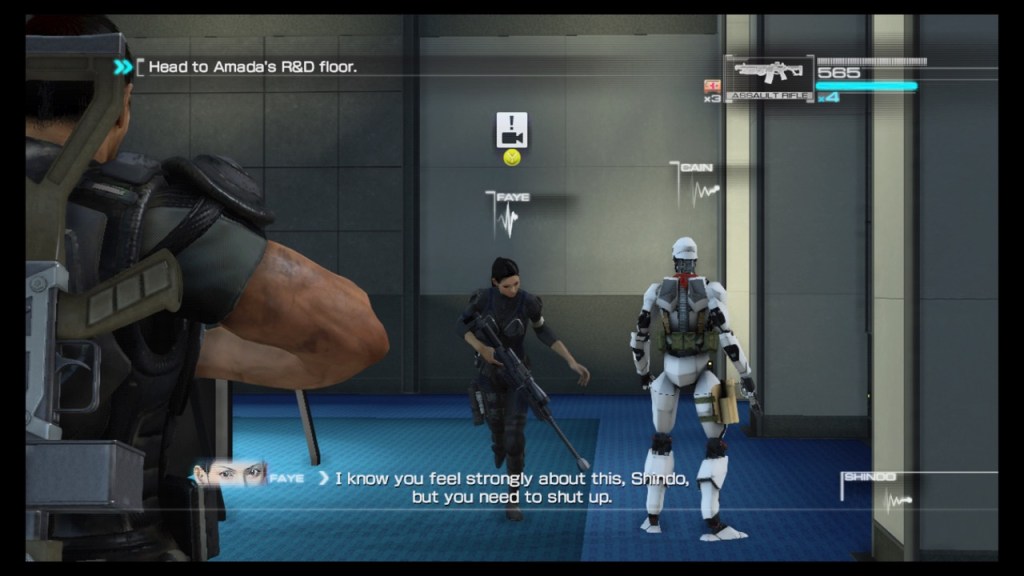
The Hollow Children introduce a philosophical-political angle: if something acts and feels human, does it deserve rights? The game’s twist—that some characters, and even Dan’s potential offspring, might be hybrids—blurs the line between human and machine, echoing debates about citizenship, personhood, and exclusion. In 2080, humans cling to their dominance by denying robots agency, a policy enforced through violence. This mirrors historical struggles over who gets to be “human” in political systems—slaves, immigrants, or marginalised groups—and critiques rigid definitions of identity upheld by power structures.
Versions
Windows: Available on Steam. For this version ic recommend to test and check the microphone settings in Windows before you play if you’re insisted, since the game will default to the selected input device in Windows.
PlayStation 3: Runs at a lower frame rate compared to the 360 version, but still fun to play.
Xbox 360: This version has the ability to use the gamepad’s headset or the microphone on the Kinect Sensor to give voice commands. The headset seems to be the more reliable way of doing this, though its still hit or miss if the commands get registered in time.This version can also be played not he Xbox one, and even benefits fromFPS Boost on the Xbox Series X.
Binary Domain was not considered a success, so it has yet to be rereleased onto a modern platform. A such, the Xbox One/Series X remains the better way to play, or the PC version since it benefits from higher resolution textures on modern hardware.
 Drew1440: Blog