Microsoft Encarta 2006 was a version of Microsoft’s popular multimedia encyclopaedia software, released around mid-2005. Encarta started in 1993 as one of the first major CD-ROM encyclopaedias and evolved into a major educational product through the 1990s and early 2000s, featuring thousands of articles, photos, videos, interactive maps, and more, all from your CD-ROM drive (or DVD in this case)
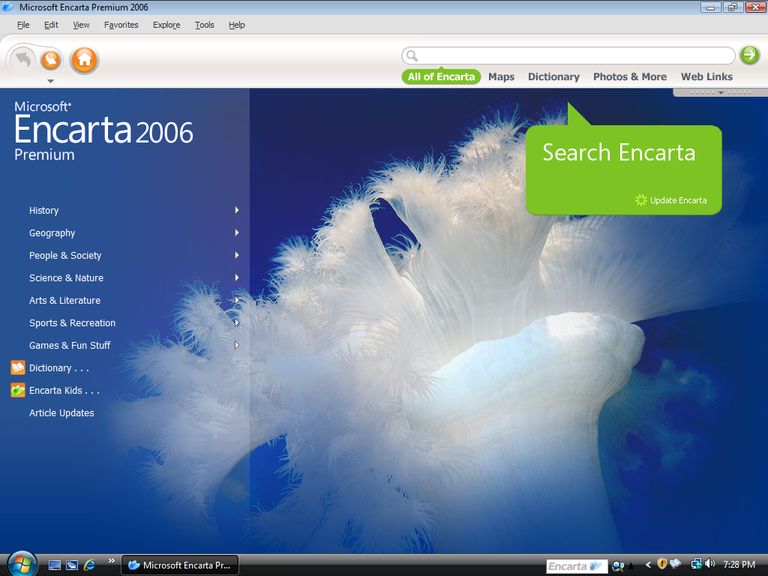
Over time Encarta split into different editions, with the Premium edition adding further content, dictionary tools and translation features. A more basic version known as ‘Standard’ was integrated with Microsoft Works that was typically bundled with Home PC’s of the era.
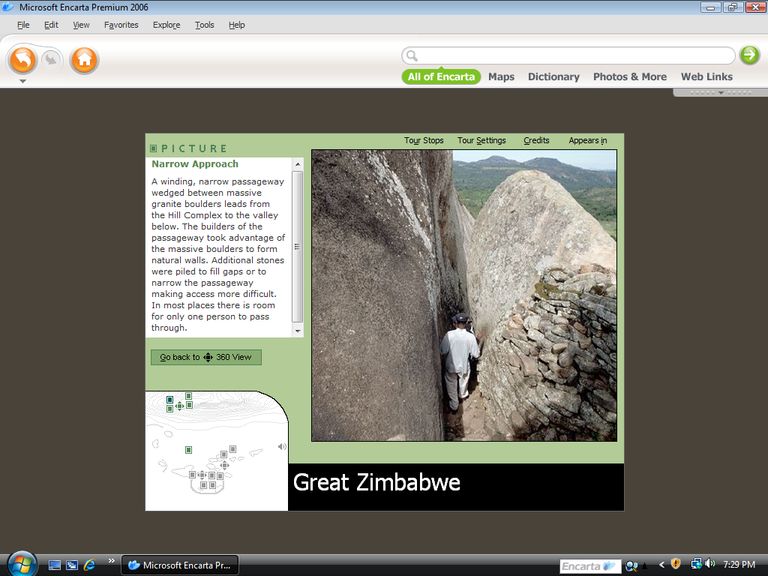
The Encarta interface, which looks like child-friendly browser with its navigation buttons. Clicking Home will take you to the Encarta start page, where you can choose the topic you wish to browse like History, Geography, Science, etc. Whilst intended to be used on Windows XP, it works quite well on modern versions of Windows. It’s just the information contained in it might be out of date.
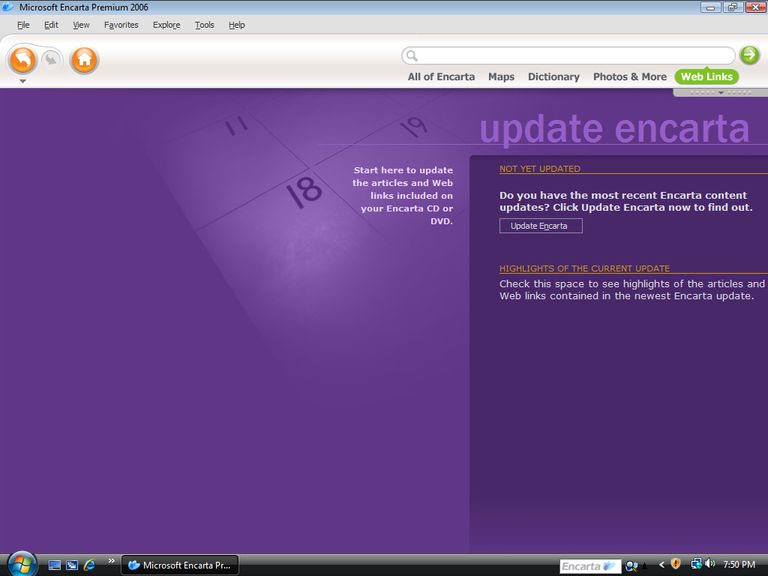
Article updates were a thing and you could download new or amended articles from Microsoft. This have long since been discontinued, though I wonder if its possible to reverse engineer Wikipedia articles into Encarta.
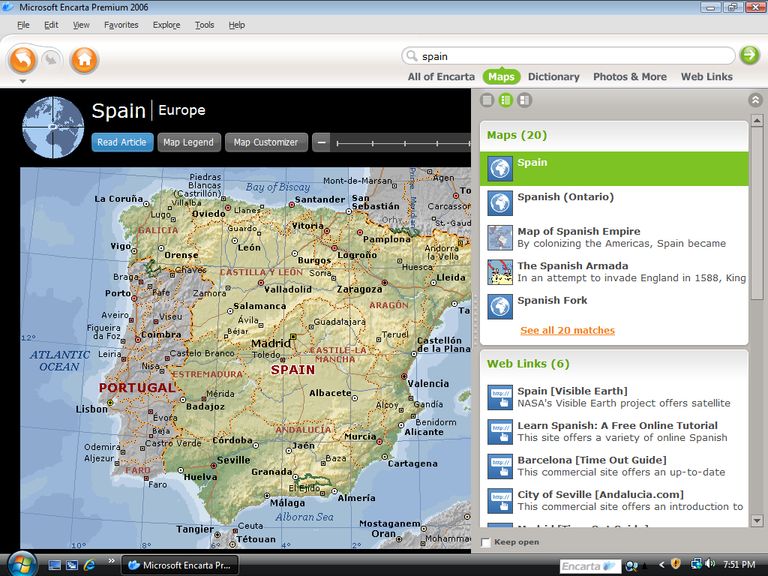
The search bar can be selected to search in specific subjects like the dictionary or maps. This is useful as the Encarta search can be fragmented,. Simply searching for Spain can yield results in relation to map/location and articles that relate to Spain itself.
The Discovery Channel video clips in Microsoft Encarta 2006 (particularly the Premium edition) consist of around 30 high-quality educational segments sourced from Discovery Channel, integrated directly into relevant encyclopedia articles to enhance multimedia learning. IT’s a nice change from just reading text in relation to reading the articles.
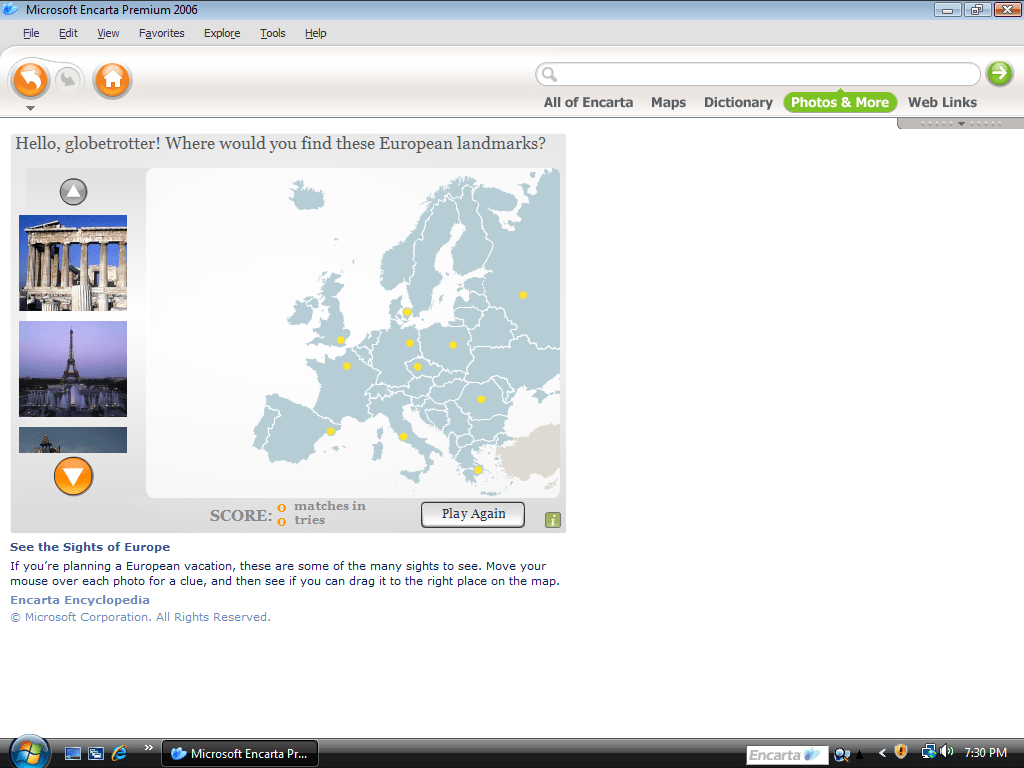
Encarta included a few educational games designed to make learning interactive and fun, primarily aimed at reinforcing encyclopedia content. These were not full-fledged video games but rather simple, knowledge-based activities integrated into the software. They are mostly powered by Flash and run within the Encarta program. Many of these consist of quizzes and puzzle’s.
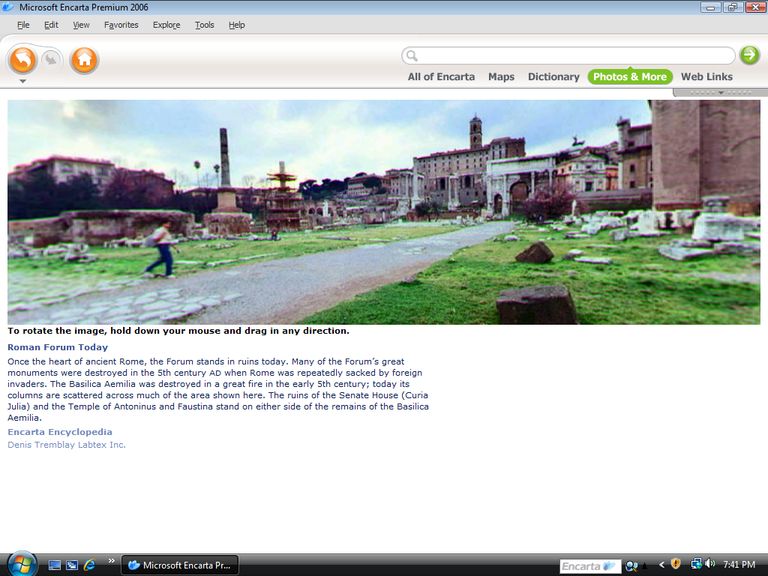
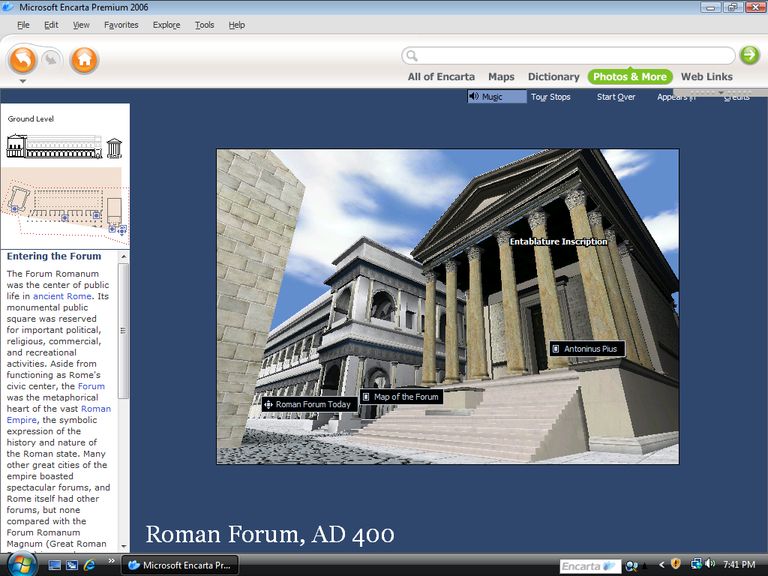
Microsoft Encarta 2006 featured 3D virtual tours as part of its multimedia enhancements, allowing users to explore reconstructed models of historical sites in an interactive, three-dimensional environment. This feature, introduced in Encarta 2002 and carried forward with minimal changes through later editions (including 2006), focused on ancient and historical landmarks to provide immersive educational experiences. You can navigate these tours using mouse controls to rotate views, zoom in on details, and access linked articles or hotspots for more information, albeit with the quality of early PlayStation graphics.
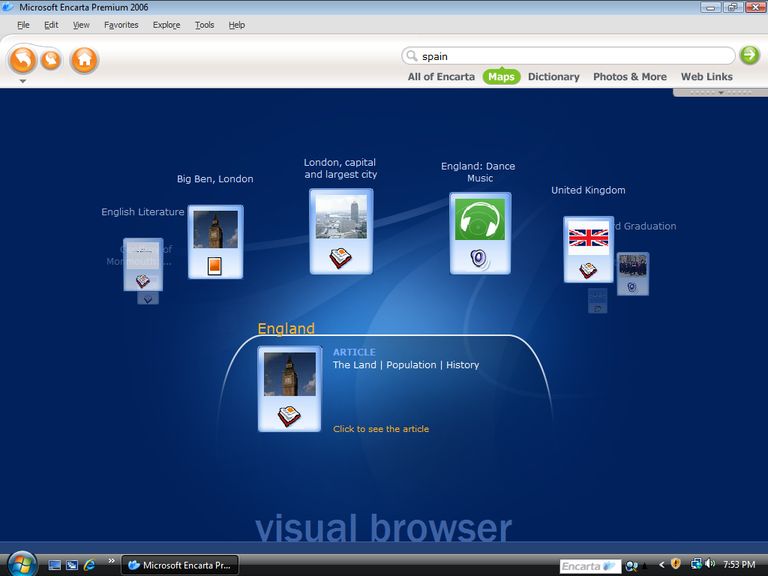
The visual browser feature that will show you relate topics with the use of icons. It’s intended to be a navigation tool to quickly locate related subjects, though it seems a bit gimmicky in its execution, and it scrolls too fast to be usable. It presented search results or article connections as a visual map of floating icons or clusters, allowing you to click through to refine queries by topic, relevancy, or media type (e.g., articles, images, videos).
It seems like something they would use to show off Encarta’s graphic engine, but has little practical use.
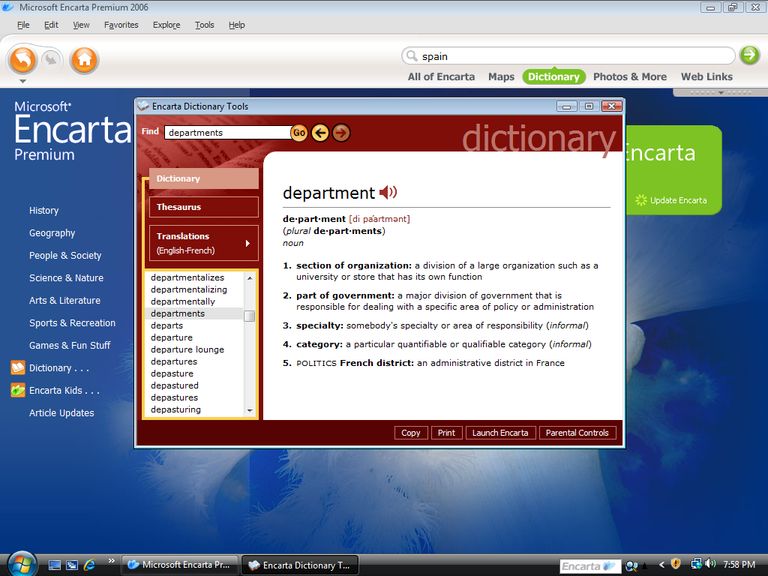
The dictionary of Encarta, which will show the definitions of words, along with a sound clip that you can play to hear the pronunciation of. A Thesaurus is also offered. Word definitions can be printed, and parental controls can be used to filter out slurs or swear words which are included.
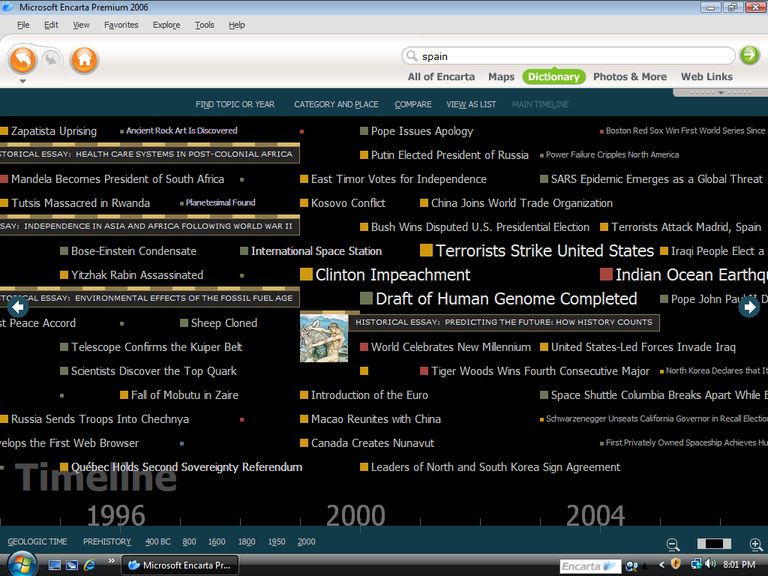
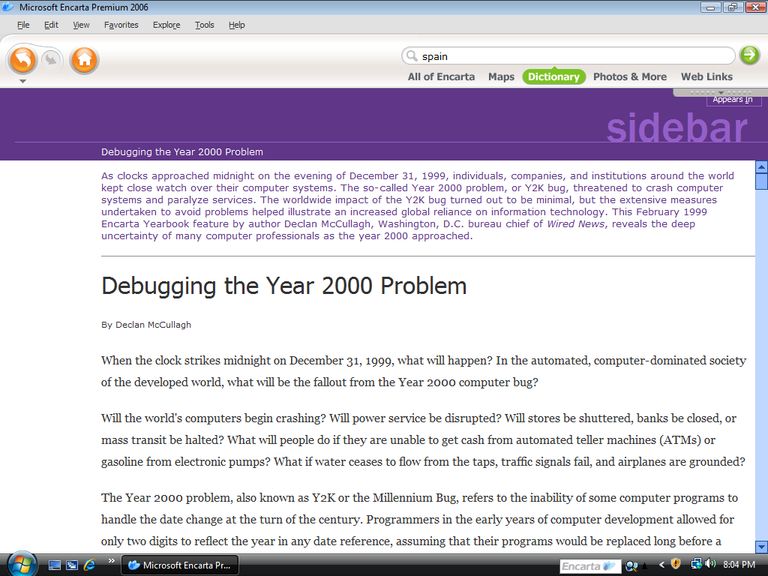
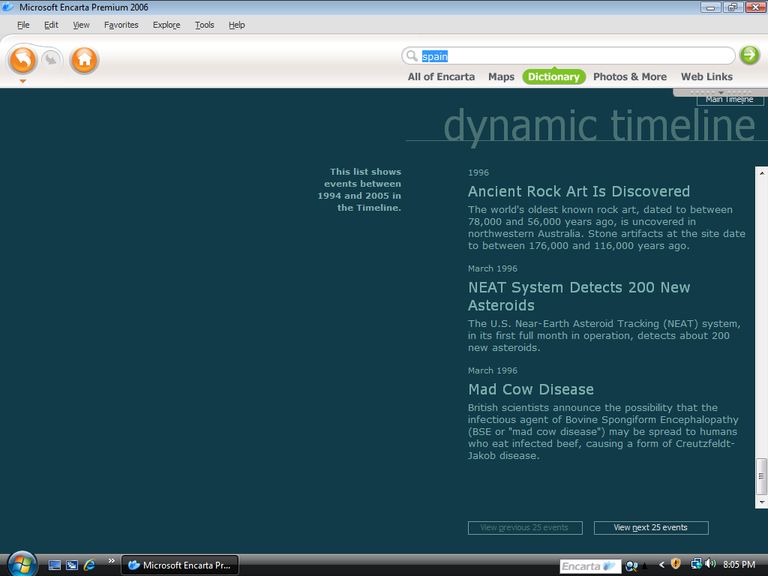
Another nice feature is the timeline which will show significant events in chronological order.
Encarta was followed up by its 2007 successor not long after its release as part of the annual cycle, however it would be discontinued altogether by 2009 in favor of Wikpedia and other online encyclopedia’s. Microsoft would later host Encarta online before that itself got discontinued.
 Drew1440: Blog