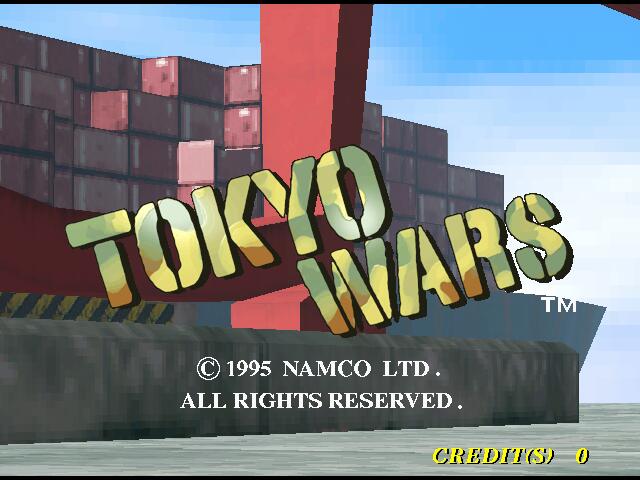
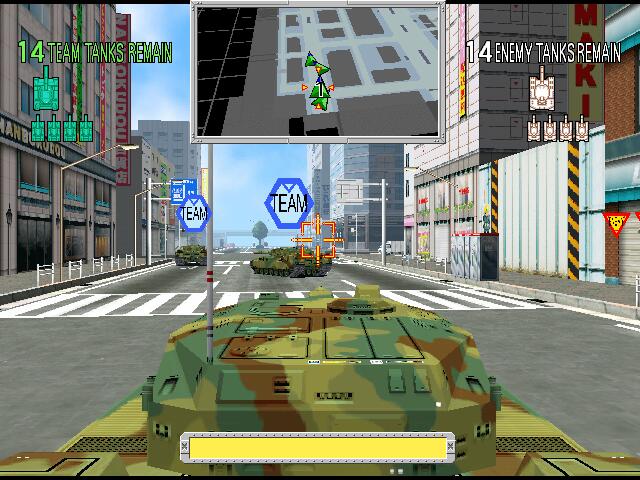
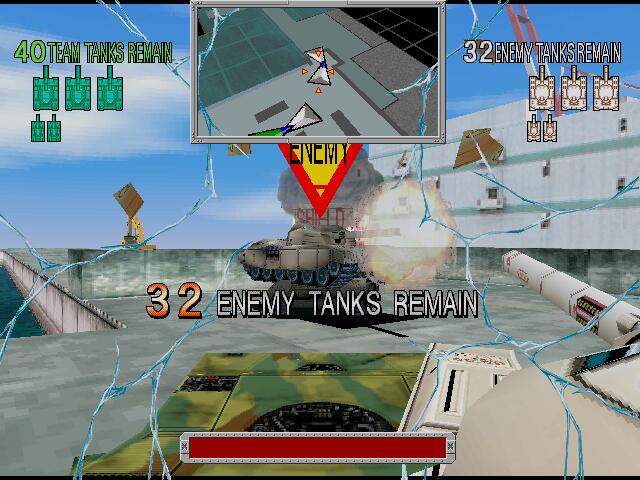
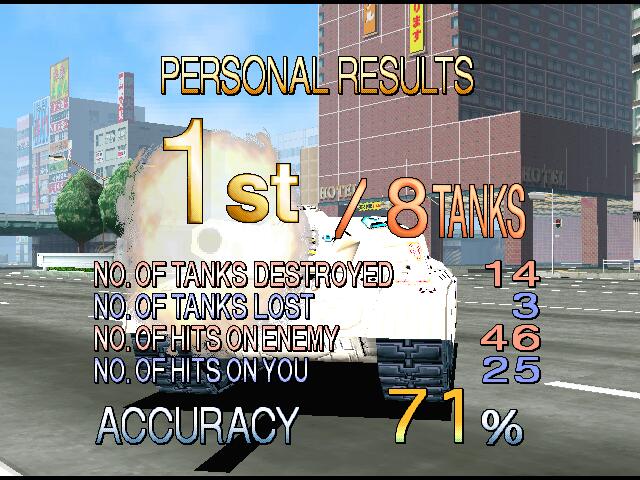
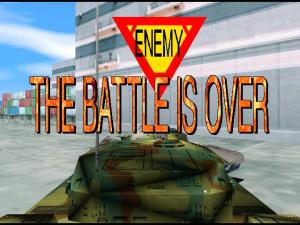
Namco’s first person tank shooter game, here you are split into two teams with the goal being to wipe out your enemy’s tanks. Running in beautiful 60fps in 640×480 resolution tanks to the powerful System 22 hardware, something that PC 3D accelerator software the era had difficulty achieving.
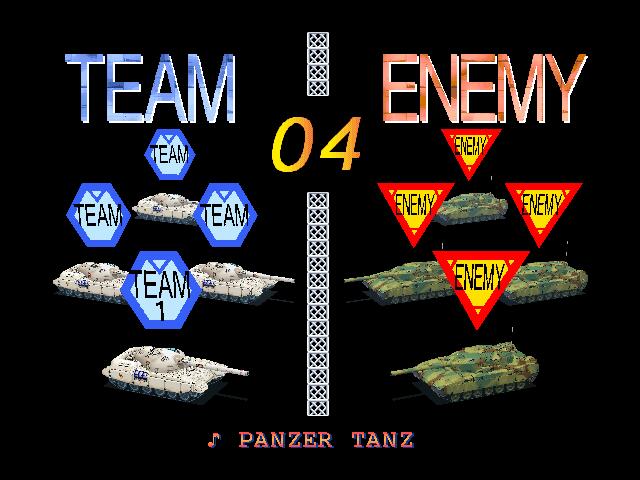
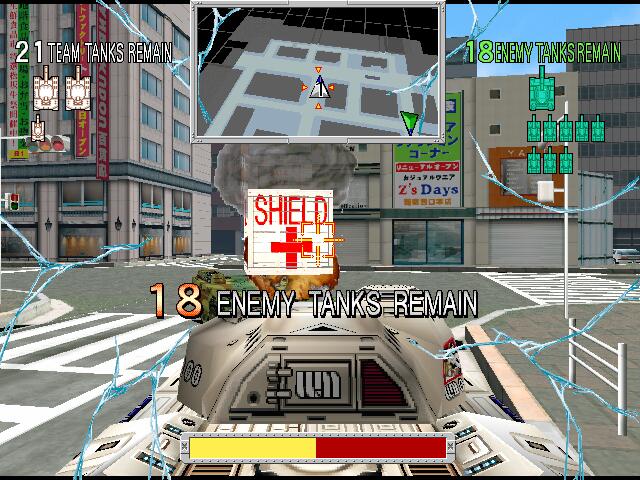
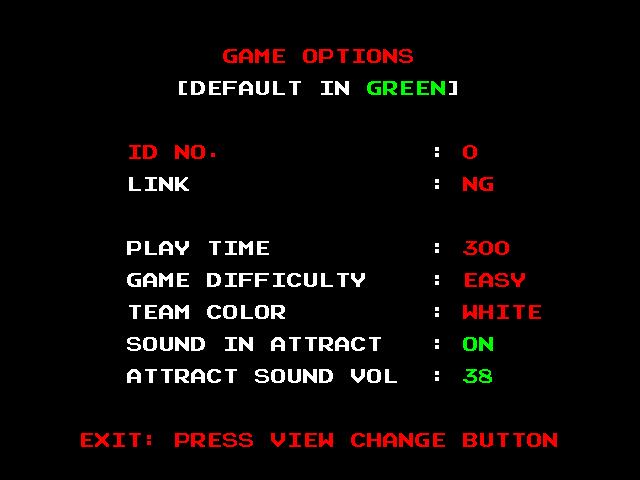
You join either the Green Force or White Force and battle opposing tanks in large 3D arenas. Matches last up to 15 minutes or until one team is wiped out – depending on the arcade operator settings. Destroying enemy tanks will give you a small shield boost that you have to pick up, which gives you more health.
You’re limited to just two stages, the Downtown street level and the docks stage. Certain elements of the level are destructible like cars, rails and even the on-ramps for the parking lot. The Bay Area (Bayside Dock), This is the training ground of the game. It is a massive, relatively flat shipping yard and dockside area. Because there aren’t many places to hide, the enemy teams usually meet in the middle for a massive battle. Despite the amount of tanks on screen, the frame rate never seems to dip.
The Downtown Tokyo, This is the more famous of the two levels and is significantly more complex. It represents a dense city center filled with narrow streets and intersections. A maze-like grid of streets that provide a quick hiding place from other tanks. It features elevated expressways (overpasses) that you can drive under or around, and tight alleys that allow for flanking maneuvers. There is no overall story or plot to the game, just seems like Tokyo crashed out and decided to have a tank battle.
Tokyo Wars comes close to a 3D arena shooter for the arcades in concept, but the tank controls limits your movement somewhat compared to the nimble movement that Unreal and Quake offer. The decision to use tanks as players was possibly done to avoid any controversy with the game. Arcades in the mid-90s were often in malls and family venues, so avoiding realistic human blood/gore (like in Mortal Kombat or Doom) was smart business in general. The game is still very much a high-octane, competitive war game but avoids having any serviced violence like gore or blood being sprayed around. Still the game provided an impressive amount of detail for an 90s arcade game thanks to the capabilities of Namco’s System 22 hardware, offering detailed buildings and animated billboards, many of which feature references to Namco’s other games of the era, especially when you compare it to other games that feature an urban city setting like the original Driver.
Now it’s easier to play Tokyo Wars, you can emulate it on MAME on a reasonable capable hardware. And as of 2026 it has been released as part of the Arcade Archive series that I recommend and is available to the PS5, Xbox Series X/S and Switch 2. These versions are accurate to the arcade original.
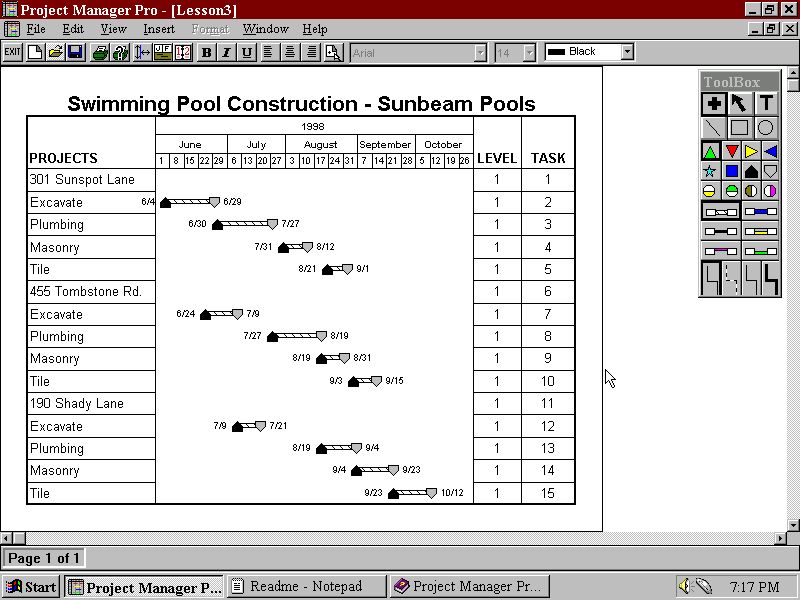
A project management software from 1996 that I found on a bundled OEM PC from TIME. Lets take a look at what project management was like in 1996
The software was intended to be used on Windows 95 and 3.1, which was still in common use at the time of release. It was developed by SoftKey Multimedia, who were well known for their line of budget software that was typically sold as part of a bundle. SoftKey would later acquire MECC and software division of The Learning Company. If you’re not familiar with project Management software, it’s intended for professional project managers and larger organizations to handle complex projects (e.g., construction, IT development) with detailed scheduling and resource management.
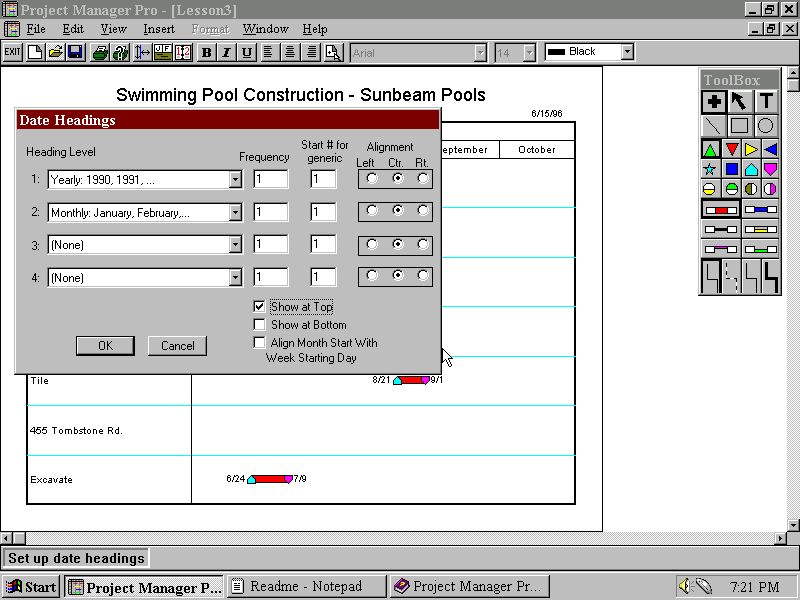
Here we have a straightforward interface, leveraging the graphical capabilities of Windows 95 to provide a more accessible experience compared to earlier DOS-based and Windows 3.1 tools. It included built-in features for creating Gantt charts, a popular feature for visualizing project timelines, influenced by the historical development of project management software like the Harmonogram and Gantt charts which are very common for project management.
Typical features were that users could create and manage tasks, breaking down projects into smaller, actionable components. This included setting task names, descriptions, and priorities, a standard feature for project management tools of the time.
The Symbol/Connector Date Sensitive feature is one of the ways Project Manager Pro will let you show progress. This feature causes symbols and connectors to change after the current date line to indicate future activity. The date. For straight line connectors, the line pattern will change from solid to dash. You can define dependencies between tasks, ensuring that certain tasks could not start until others were completed, reflecting methodologies like the Critical Path Method.
There is another way to show progress with Project Manager Pro. This is through the use your start and end date. Your start date is connected to the progress symbol and the progress symbol is connected to the end date.
In comparison to Microsoft Project 4.1a which would have been released around the same period, Microsoft’s is a professional-grade tool with advanced scheduling, resource management, and scalability for complex projects, targeting enterprises and experienced users. Project Manager Pro is a simplified, budget-friendly option for small-scale projects, designed for ease of use by non-experts.
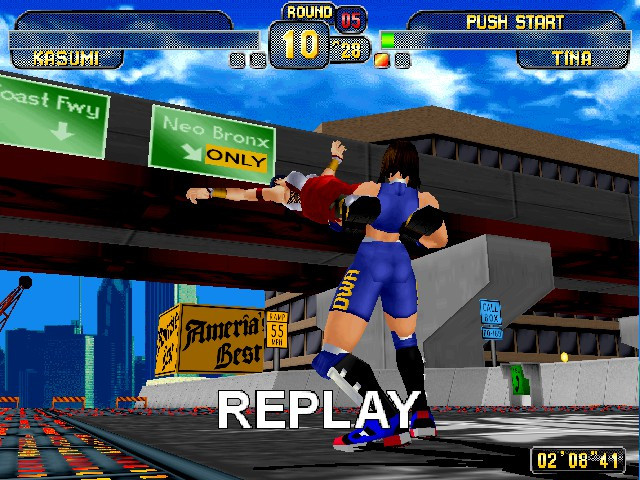
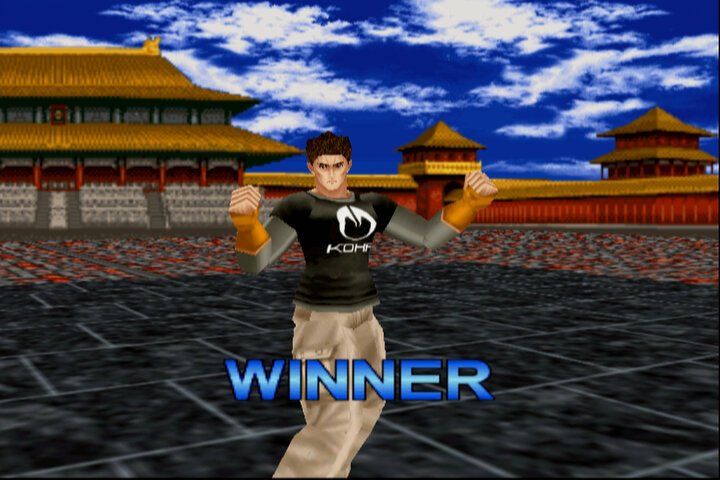
Released in 1996, Dead or alive was the fighting game created by Tomobou Itagaki, who is known for hating the Tekken game with a passion.
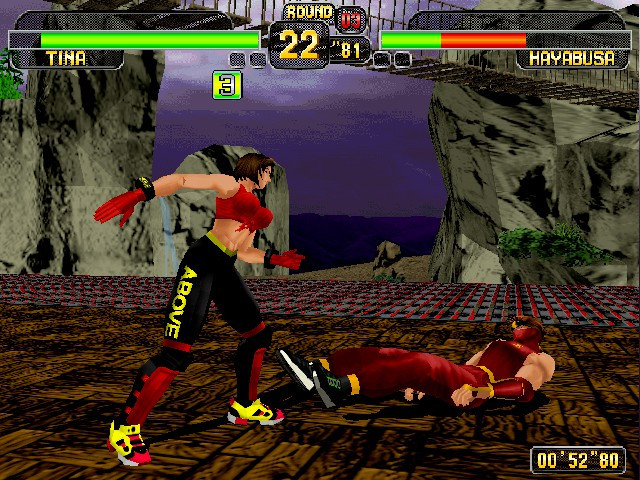
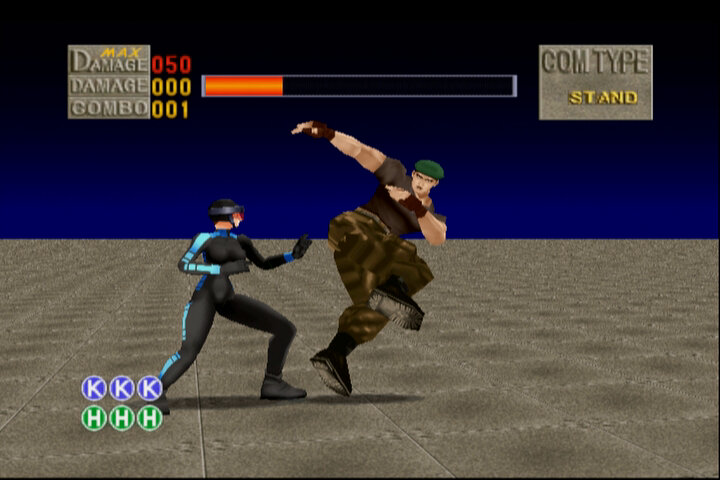
There are some similarities to the Virtua Fighter series of games by Sega, and have the same input controls and move-sets with Punch, Kick and Guard/Hold.
Characters
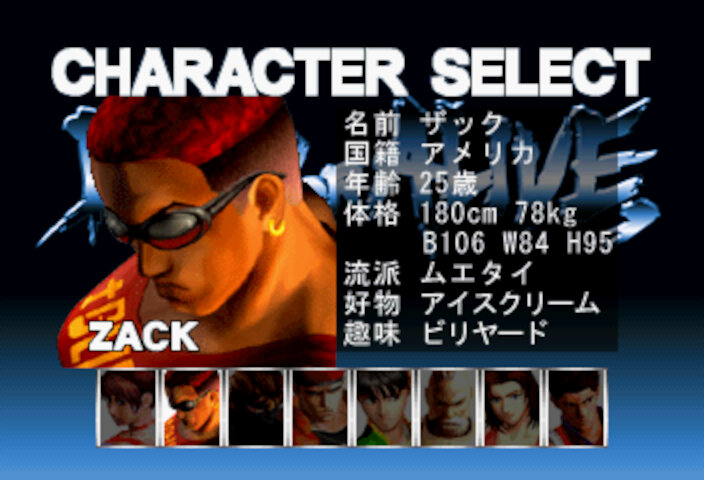
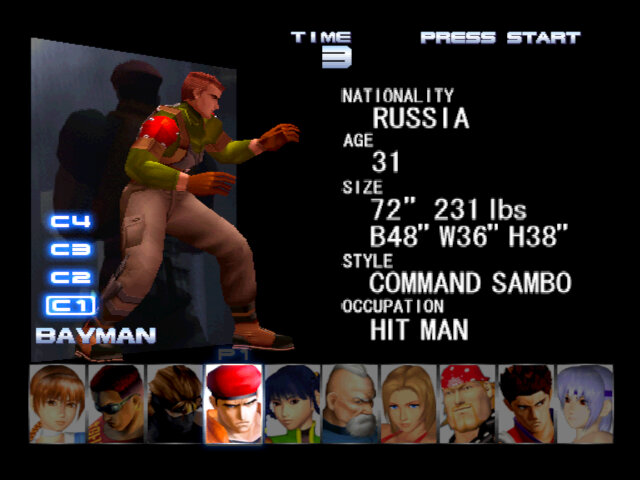
The character select screen displays basic stats on the characters and some not-so-useful information like the character’s favorite food and their hobbies. Honestly, this looks more like a dating site profile but does add a bit of personality to the fighters.
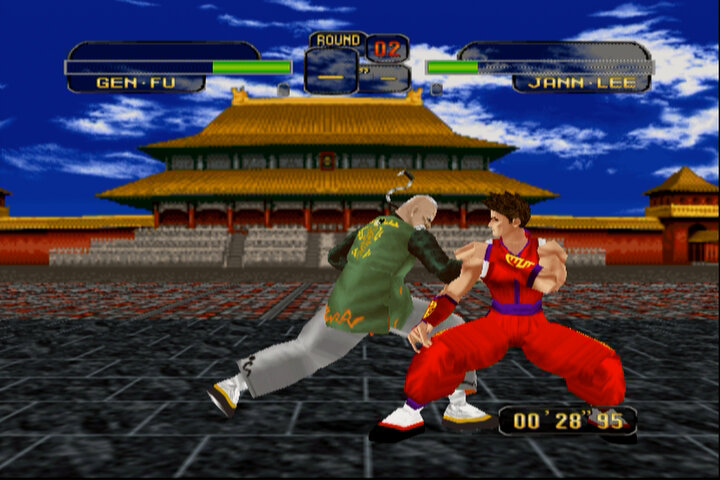
As with other fighting games, each character has their own unique fighting style which is tailored to their culture, and there are some obvious inspirations with Jann Lee being based off Bruce Lee.
Kasumi: The ginger ninja, or runaway shinobi according to the games lore
Zack: Dennis Rodman-inspired character who has a kickboxer moveset. The first opponent who stage is set on a tropical beach set at sunset
Ryu: Another Ninja, from the game Ninja Gaiden. The third opponent set on a rural Japanese stage with a hut in the background
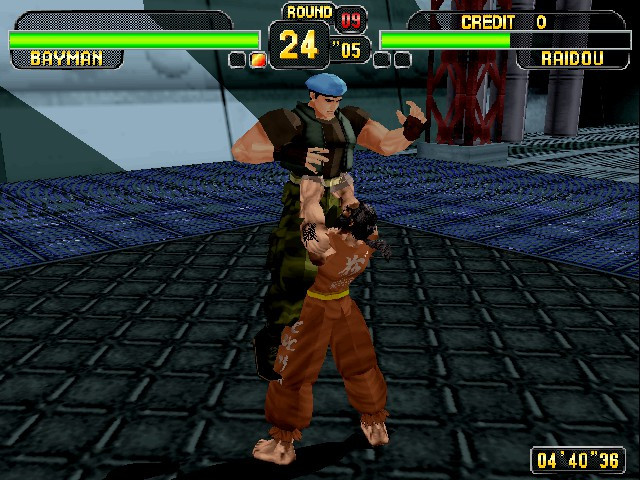
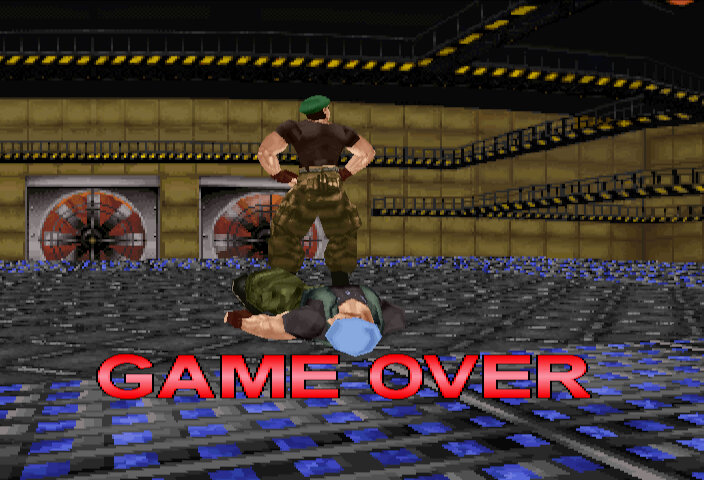
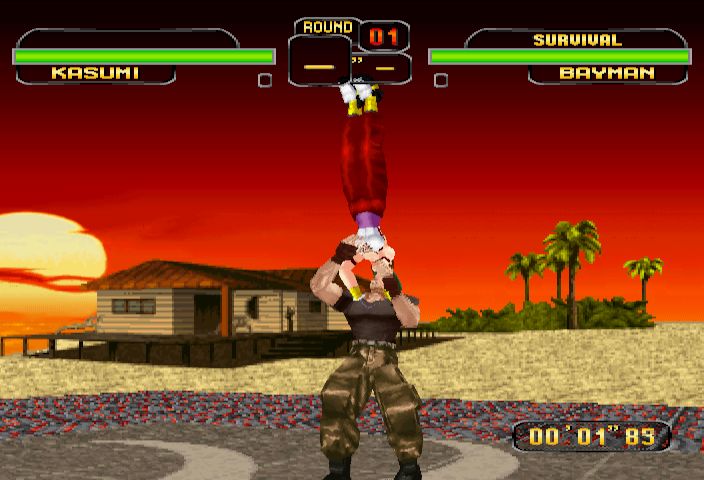
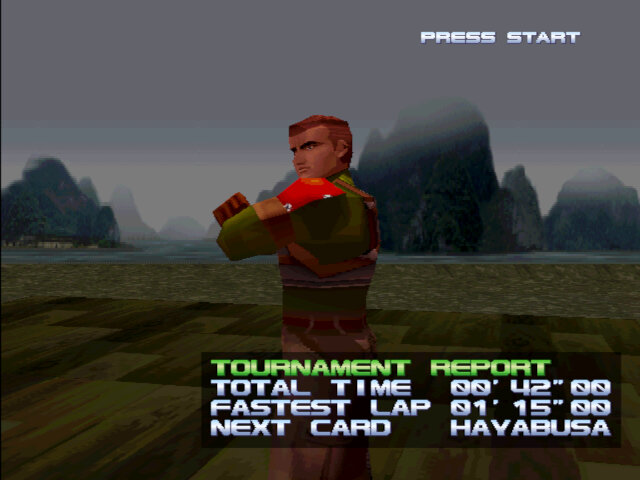
Bayman: A Russian henchman/assassin, the sixth opponent whose stage is set in an aircraft hangar since he is supposed to have a military background
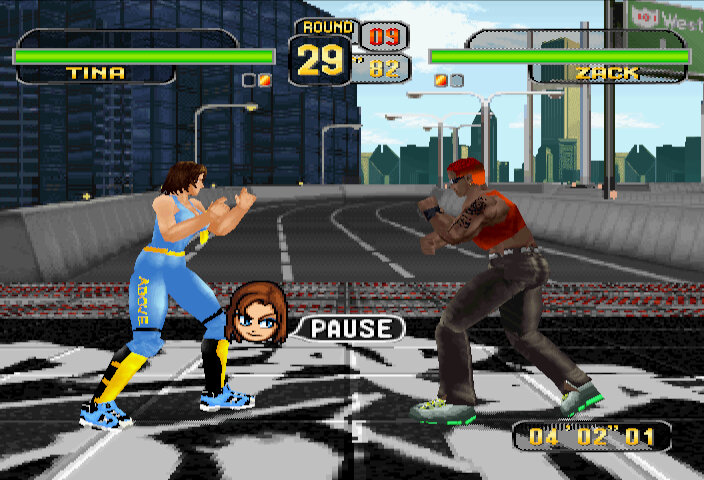
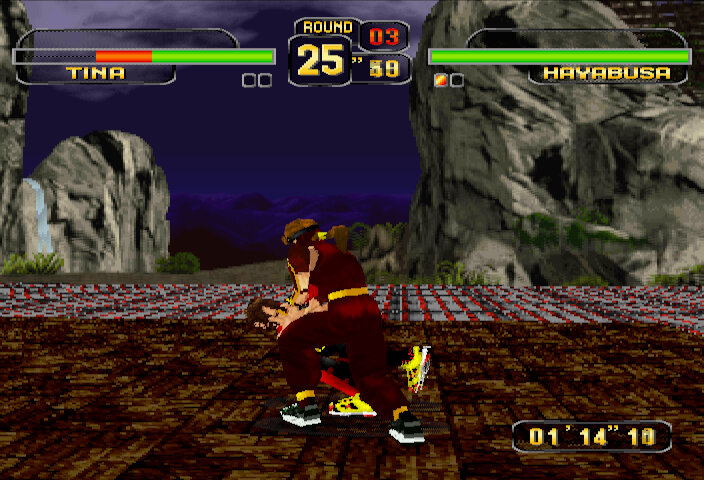
Jann Lee: Bruce Lee, similar to Law from Tekken. The fourth opponent and shares a stage with Tina, which is an American downtown highway set at night
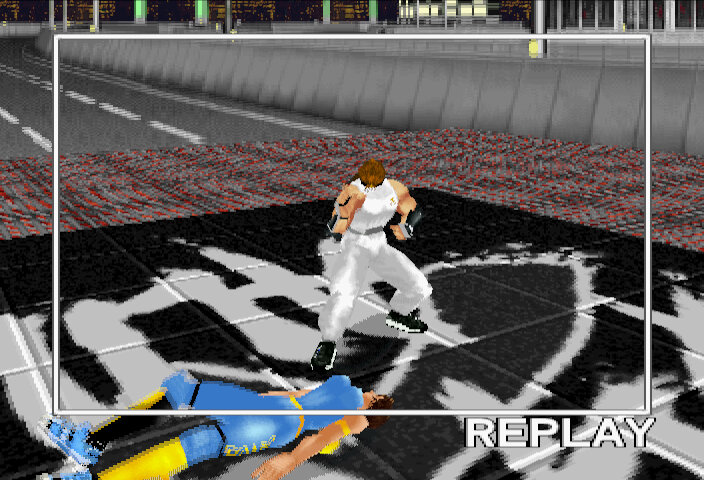
Tina Armstrong: A wrestler and daughter of Bass Armstrong
Gen Fu: Old dude who is a master in Kung Fu, like Wang from Tekken
Lei Fang: A Chinese fortune teller turned fighter
PlayStation Only
Ayane: Kasumi’s half-sister who are rivals. Looks like a feminist
Bass Armstrong: Tina’s father, Hulk Hogan and Randy Savage crossover
Versions
Dead or Alive was released initially in arcades in 1996, and then ported to home consoles in 1997
Arcade (Original)
The game runs on the Sega Model 2 arcade board and is very similar to Virtua Fighter 2 which also ran on the same board. The control movesets and even the background stages are similar. This version of the game renders its stage background in full 3D, allowing for certain moves that use the background elements like a couple of Ryu’s moves on his stage. There is also a ‘Danger Zone’ around the stage that when your opponent lands on it, will be propelled into the air with a mild explosion, dealing some damage.
Sega Saturn
The game was ported to the Saturn and was the first home port of the game. This version is a mostly faithful conversion of the arcade original, with some changes taking place due to the less capabilities of the Saturn 3D hardware. Still, the Saturn has always done good with fighting games, and Dead Or Alive is no exception to this, yet this version of the game was only released in Japan.
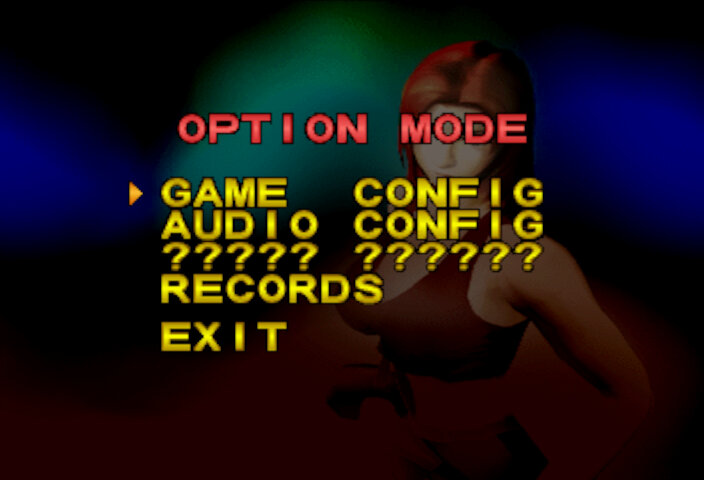
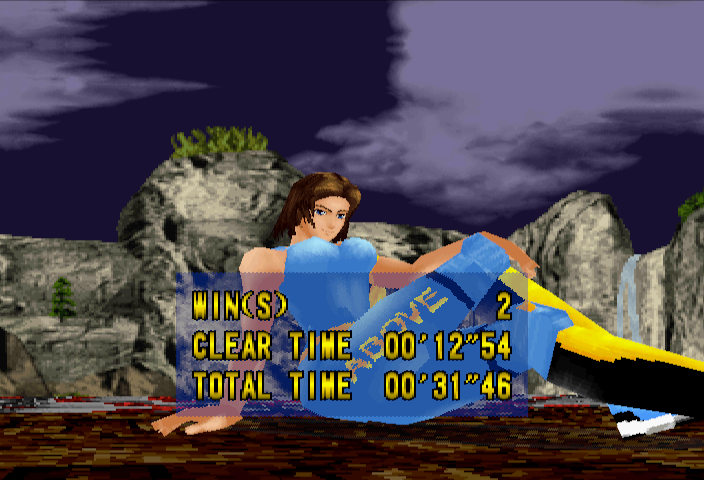
There are a few menu options added, with a Time Attack mode being similar to arcade mode but with the goal of completing rounds in the shortest amount of time. V.S being versus, allowing a second player to fight head to head. Survival mode has you fight against multiple opponents, one at a time, using a single life bar. Kumite is somewhat a sparing mode where you can fight from 30/60/100 opponents which the goal of having the highest winning percentage. Lastly, there is also a standard training mode that lets you practice each character move, and test against opponents’ defensive moves.
Like other Arcade to Saturn conversions, an opening FMV is included which gives a quick montage of the characters.
As the Saturn version of the game was only released in Japan, I would avoid this version and get the original Xbox version instead, which is the same game but with added online play and cleaned-up graphics.
Sony PlayStation
An updated version of the game was released for the PlayStation, which came with updated moves, two new added characters & backgrounds. This is considered a remake of sorts, as the stage background and music have been redesigned and are vastly different compared to the Sega versions. Two new characters have also been added which also feature in the arcade version, Dead or Alive ++, not the Model 2 version.
This version also includes the training, Kumite, Survival and Vs modes.
Arcade (Dead Or Alive++)
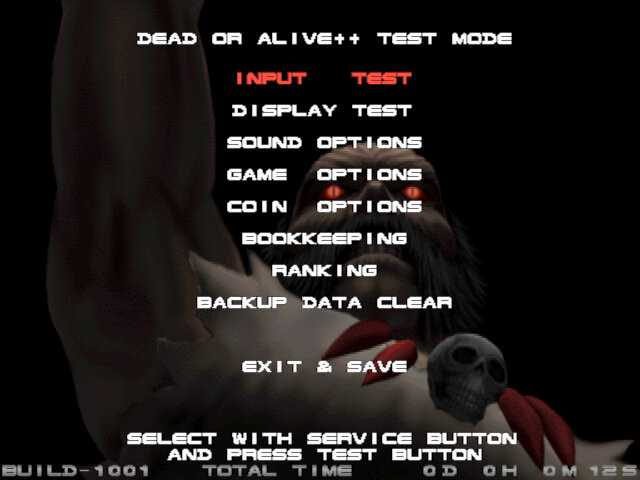
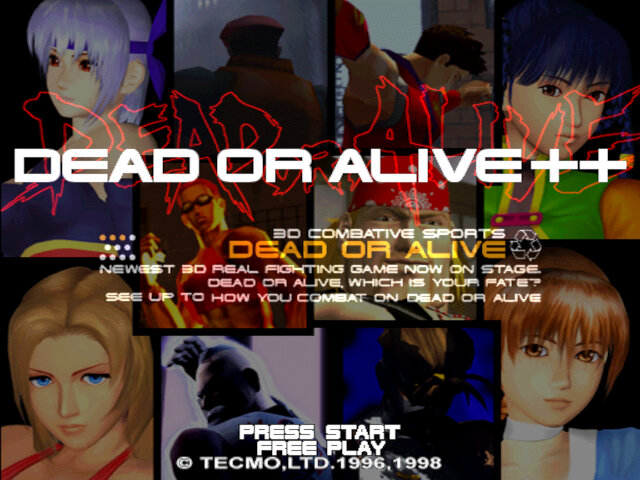
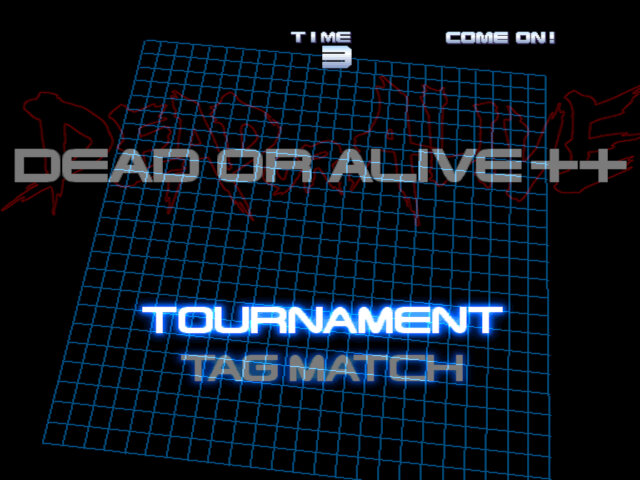
Another arcade version was released, this time on the PlayStation-based ZN arcade board, and shared a lot of similarities with the PlayStation home release. Each fighter has 4 different costumes to choose from, and a tag match mode has been added. New characters, Bass Armstong and Ayane have been added to this version.
Xbox
This version was based of the original Sega Saturn release but takes advantage of the Xbox hardware. However, id say it pales graphically compared to the Model 2 version which features full 3D background objects, whilst the Xbox version features the static 2D backgrounds (no moving objects in the background, but some textures are animated) the Saturn uses. Still the character’s models and textures are more detailed, and Xbox Live support is included in this port of the game to allow online multiplayer. This has since been shut down following Microsoft discontinuing support for original Xbox Live titles in 2010.
Still, you miss out on Bass Armstrong and Ayane which is an odd omission.
This version of the game is playable on the Xbox One and Series consoles and can be brought online. You can also play on the Xbox 360 with a compatible hard drive.
Conclusion
Dead Or Alive came at a very hard time for Tecmo, who was facing bankruptcy prior to the release, hence the name of Dead Or Alive.
Dead Or Alive would be followed up in 1999, with the release of Dead or Alive 2 for the Dreamcast, and the PlayStation 2. It would be the last game released for the arcades. Future installments would be released on the Xbox exclusively, before returning to multiplatform with Dead or Alive 5.
The sequel to the first Tekken game, released for arcades and was ported to the Sony PlayStation and eventually the Zeebo console
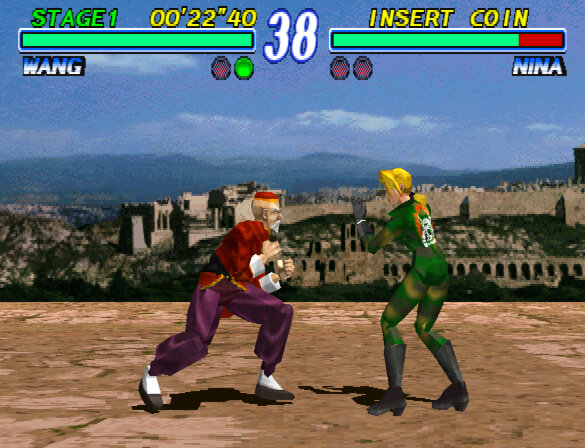
A lot of improvements have been made, with the graphics for the character models being improved and refinements to the character move-sets. The stage background have also been redesigned, featuring more detailed backdrops. Unlike the first Tekken, the stages don’t seem to be based off a specific location and the stage name no longer appears in the bottom right corner, rather they are inspired by a series of locations, e.g Jun’s stage is inspired by a European countryside, Lei is based off being at the top of a city skyscraper (Similar to Joe’s stage in Last Bronx) and King’s stage being set in a Church.
ArcadePlayStation
A removed feature is the view change option, In the first Tekken game you could change the viewing angle in the first 10 seconds of the match, now only one view is available in Tekken 2.
Characters
Lei: Jackie-Chan inspired cop, Namco forgot to give him a Time Crisis game
Jun: Greenpeace activist, and the only mainstream game she appears in (Also appears in the Tag Tournament spin offs)
Jack-2: Jack with with a upgraded processor
Baek: Tae Kwon Do fighter, similar to Hworang
Bruce: Muay Thai kickboxer
Roger: / Alex: Genetically altered animals who are capable of fighting
Angel: A literal Angel sent to save Kazuya’s soul
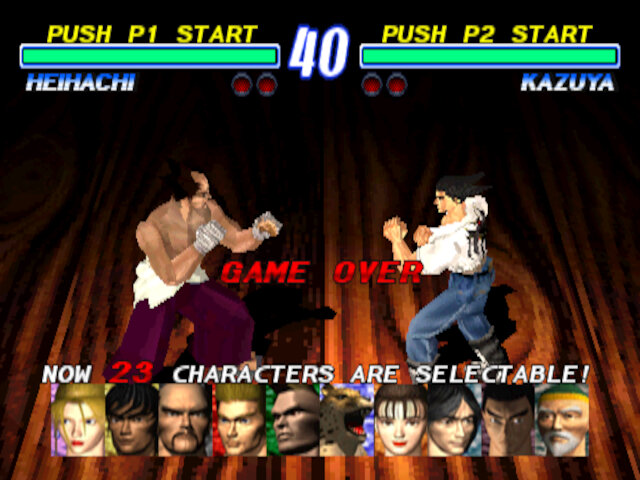
Most of the previous characters return from the previous game, except for the mysterious WildCard
Heiachi finding out he’s no longer the final boss
Arcade Version
Released in 1995 for the arcade and running on the same System 11 arcade platform as the previous game which allowed for operators to upgrade their machines by swapping out the ROM board.
There are a few versions of the arcade version, the original released and a Ver.B update that has a few game-play changes in regards to the AI behaviour. The title screen has also been amended indicating the new release.
MAME is able to run both versions of the game without any issues, although it has the imperfect graphics flag set. Zinc, a high level System 11 emulator is also capable of emulating Tekken 2, but was last updated in 2005 and its plugins are very outdated but they do enable bilinear filtering and upscaling.
Namco would later port this version to the PS2 with the release of Tekken 5, along with Tekken 1 & 3. This is not a direct port as some changes have been made. The audio from the PSone versions have been used since Namco System 11 uses its own custom sound hardware that the PS2 does not emulate. I’m also not sure if these games run on the PS2 I/O CPU, tapping into its native backwards compatibility or if Namco ported these games onto the PS2 Emotion Engine.
Zinc emulator
The Zinc emulator can be configured to apply texture filtering to reduce the blocky artifacts and enhance the overall image quality, resolution can also be increased too.
ZincMAME
Unfortunatly where the Zinc emulator falls short is the emulation itself, suffering from various sound issues due to lack of mature Namco sound emulation. As such the music sounds out of tune and many sound elements are missing.
PlayStation
The game was ported to the PlayStation with some additional features added. The soundtrack was also revised with an arranged remix making used of the PlayStations CD audio, the arcade original music also exists and can be selected by the user.
Like the first Tekken home port, FMV endings have been added for each characters that details their backstory. Namco expanded these to have their own soundtrack, compared tot he first game where every characters would have the same music playing over the FMV.
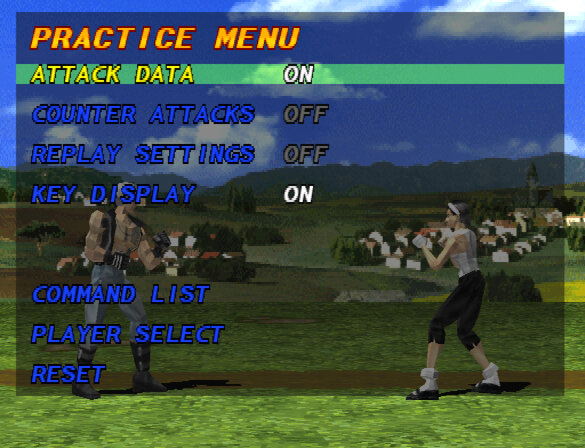
Additional game modes have been added such as survival, training and team battle mode. Also, when pausing the game you can view the character move and command sets. These would also be carried over to future home releases of Tekken games.
Most emulators wont encounter any issues playing Tekken 2, but there are a few issues with PXGP being added. Polygons have a tendency to warp with this enabled, and the character portraits can go off model.
Zeebo
The game was ported to the Zeebo console in 2008 and was similar to the PlayStation version but with slightly improved graphics. The textures appear to be cleaned up from the PlayStation version with some filtering enabled. The music however was butchered beyond repair due to the limited ROM sizes of the game. Zeebo games were distributed over the mobile network using UMTS, which meant games had to be of a certain size in order for them to be downloaded quickly which limited the music of these game to polyphonic like sounds.
I’m also not aware of any emulators or known dumps of this version, so the only footage exists that was uploaded on Youtube.


















 Drew1440: Blog