Tag Archives: 1999

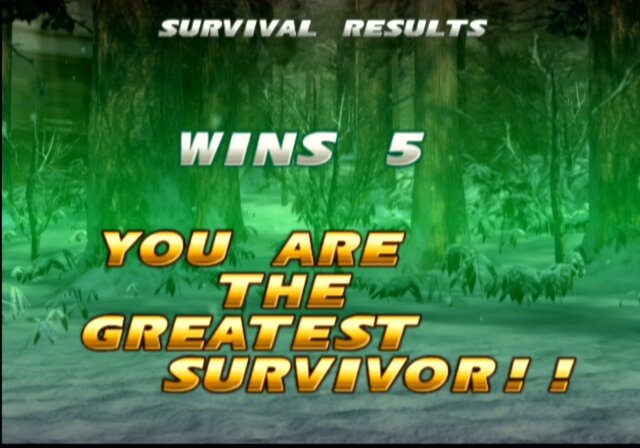
Tekken Tag Tournament

Tekken 3 but with a new tag mechanic and a huge roster.
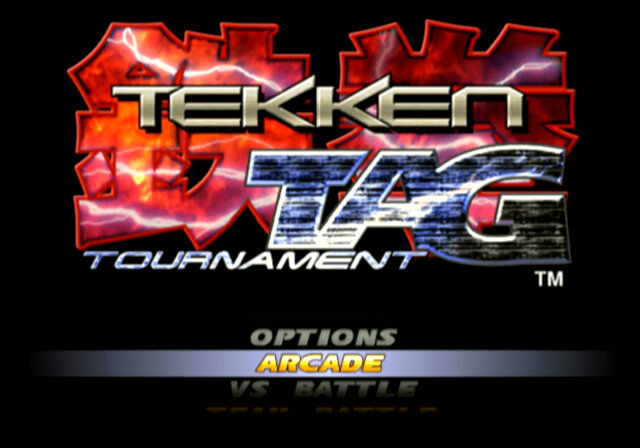
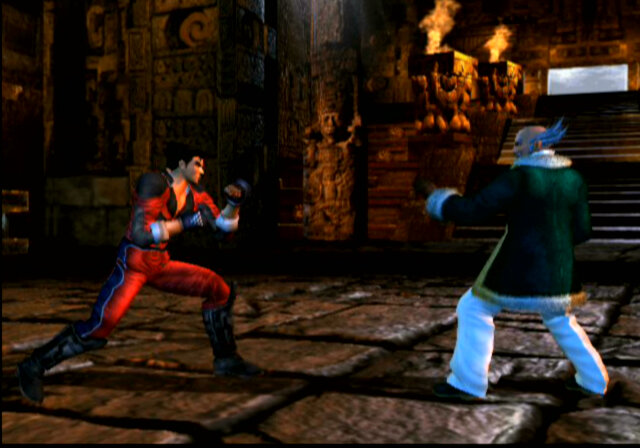
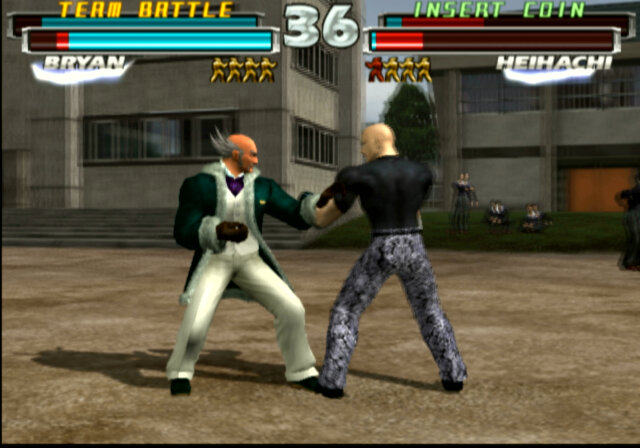
Tag Tournament takes the existing Tekken formula and adds a new tag team mechanic, allowing up to four characters to fight against each other. Its also one of the few games to be released for three generations of PlayStation hardware (sort of, The System 12 arcade board is an overclocked PS1 board.)

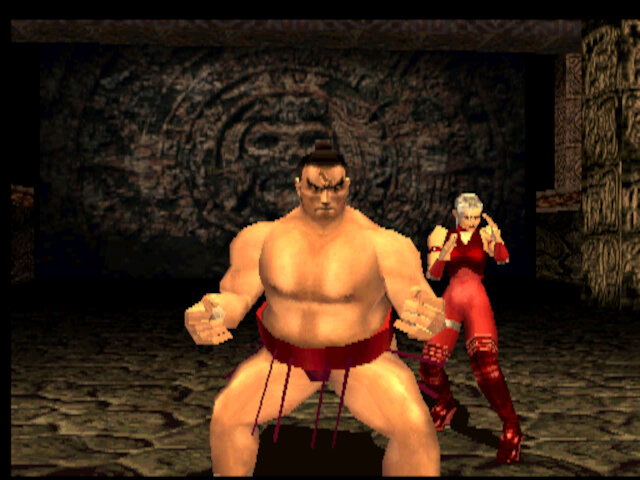
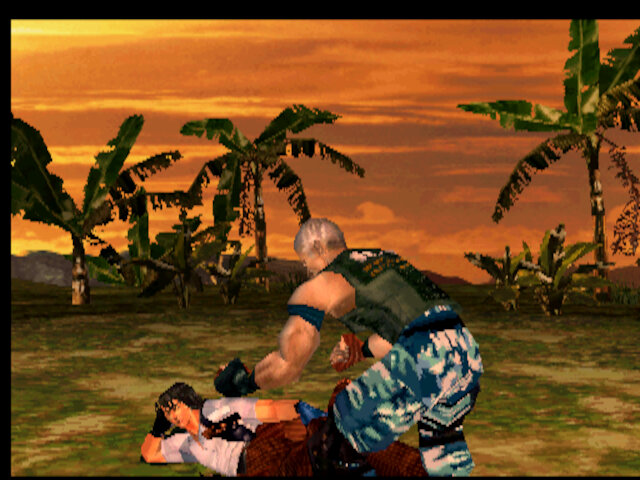
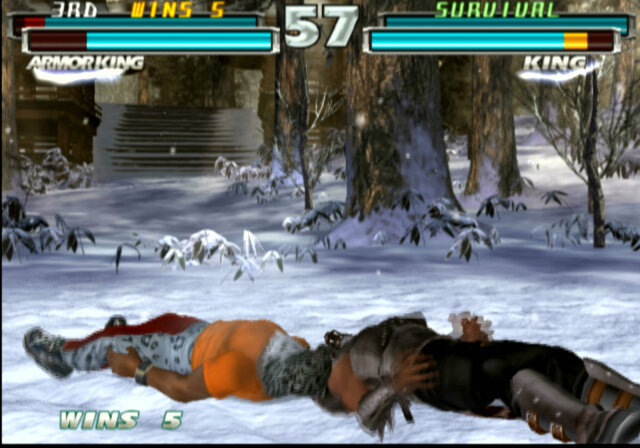
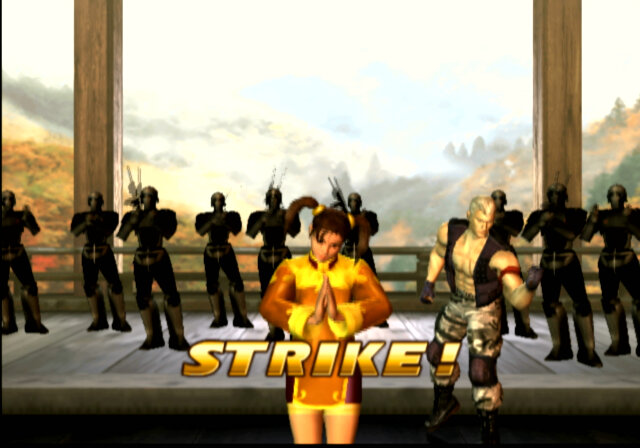
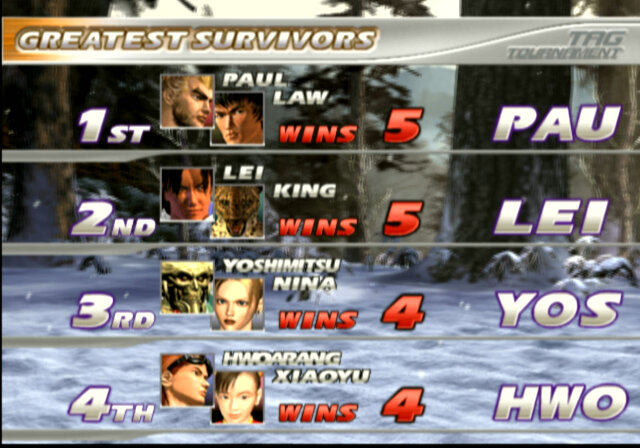
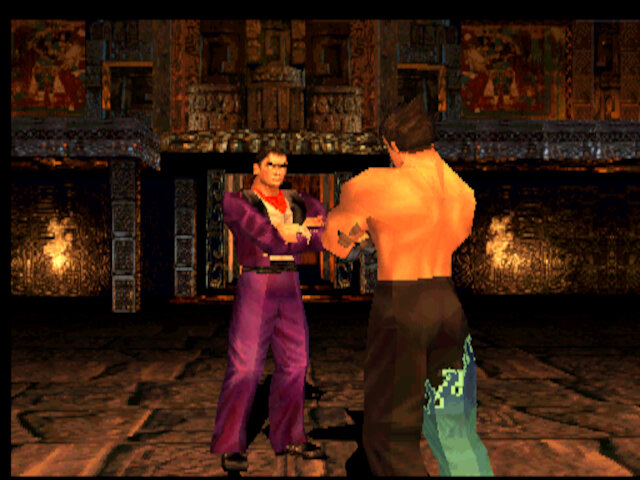
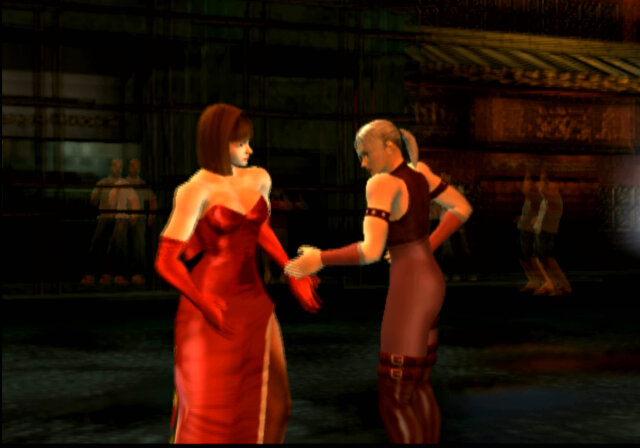
The fighter roster is stacked with an insane lineup of characters, many of which all featured in the first three installments of the Tekken franchise. You’ve got your classics like Kazuya, Jin, and Heihachi, all ready to unleash their devastating combos. Its like a Tekken greatest hits reunion featuring everyone’s favourite characters from previous games, but there are a few omissions like the original Jack, King and Armour King. Still Namco have also implemented Easter eggs for when you choose a certain par of characters, that affect the characters animations before and after the fight. Pairs like Nina & Anna, Kazaya & Heihachi and Michelle & Ganryu are a few examples to name that do this this, and it gives a nod to the Tekken backstory that fans of the franchise will be invested in.

Some pairs will also have unique moves that can be used to attack and switch out at the same time. These require a button combination along with the tag out button to trigger.

Versions

Arcade
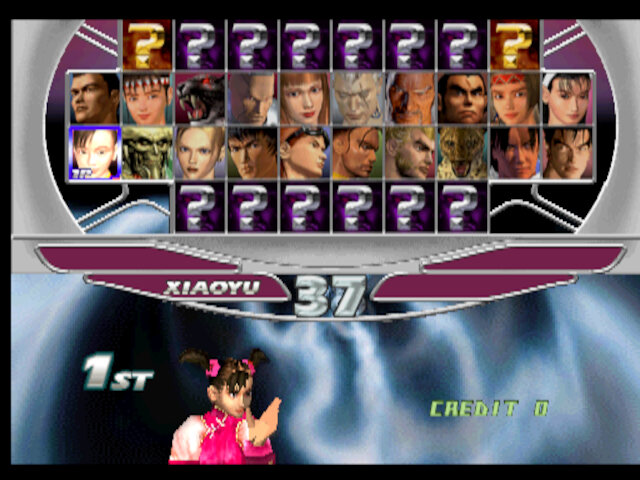
The original release of the game was in the arcade, like other early Tekken games. The game ran on the Namco System 12 board which was an upgraded PlayStation with additional memory and a faster clocked processor. This allows for multiple fighters to be featured onscreen, required for some of the character move sets. This version of the game also features its own soundtrack which is played on Namco’s own C352 sound processor that was also used in their System 23 arcade boards.
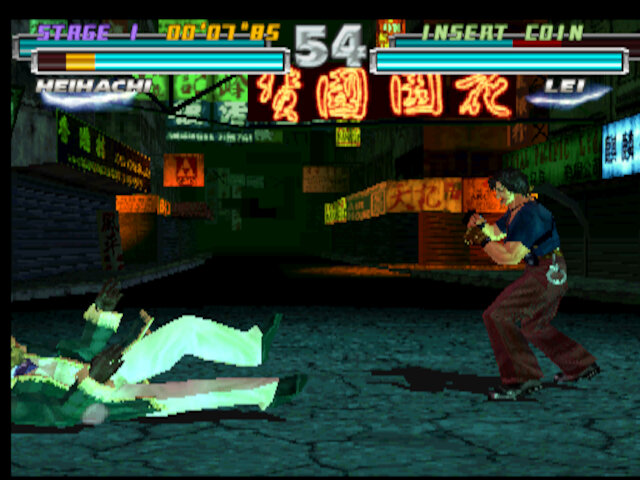
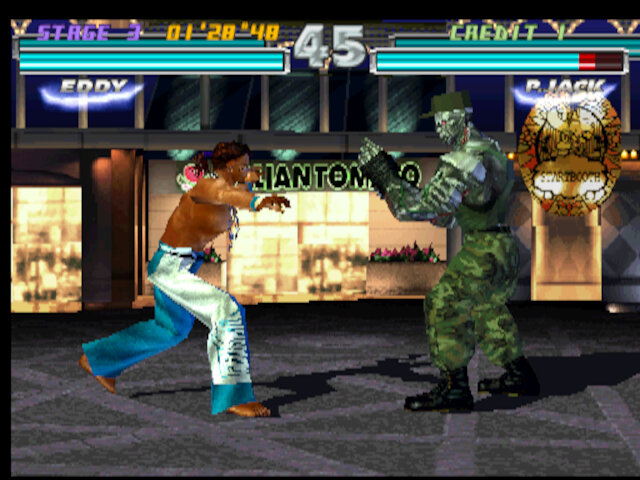
Many characters are locked in this version and are on a time based unlock, where characters gradually come available as the arcade machine is powered on. There is a MAME cheat to unlock all the characters upon clearing the EEPROM that can be used instead.

PlayStation 2
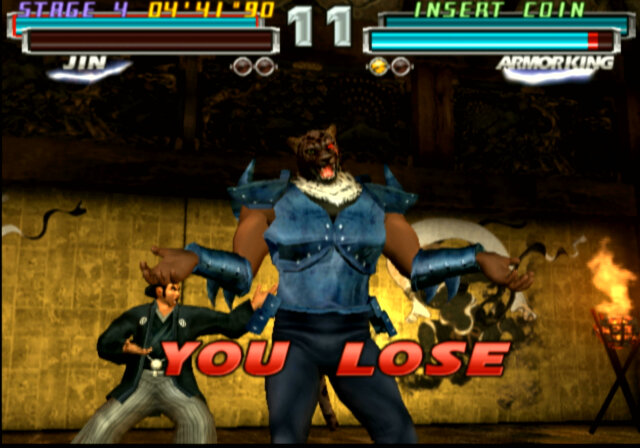
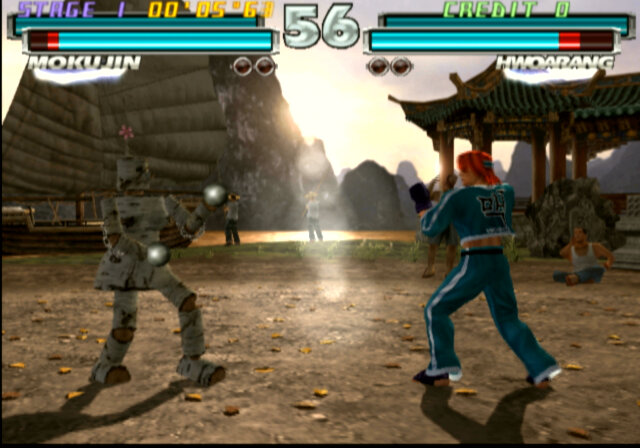
Tag Tournament was one of the launch titles for the PS2, and remained exclusive to the console for the home release until the HD PS3 version. This version features completely upgraded graphics that take advantage of the PS2’s Graphics Synthesizer
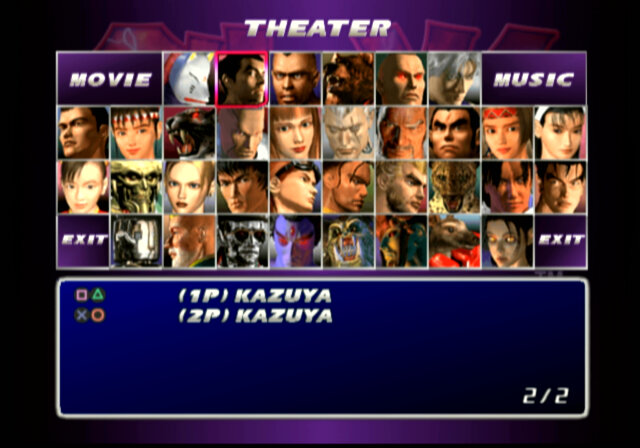
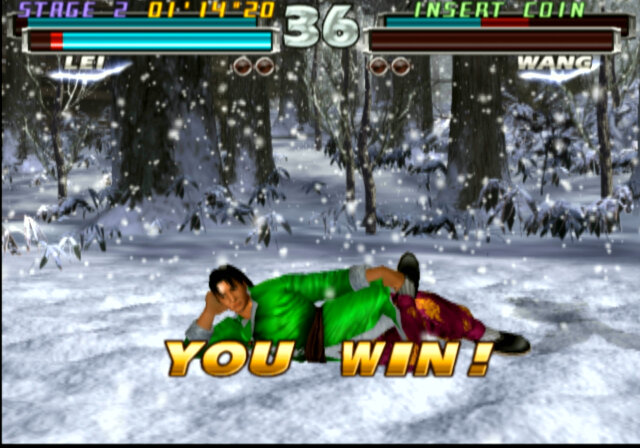
Unknown is a fully playable character in this version and has a unique feature where she can emulate another fighters moves.

This version also features a few unlock-able features and game modes.

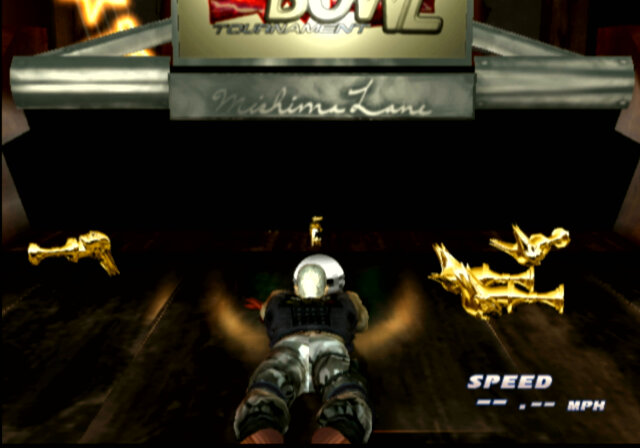
Tekken Bowl: In Tekken Bowling, players would select a character from the roster and take them to the bowling alley. The character would replace the traditional bowling ball, and players would control their chosen character’s movement and angle as they approached the lane. The objective was to knock down as many pins as possible in each frame.
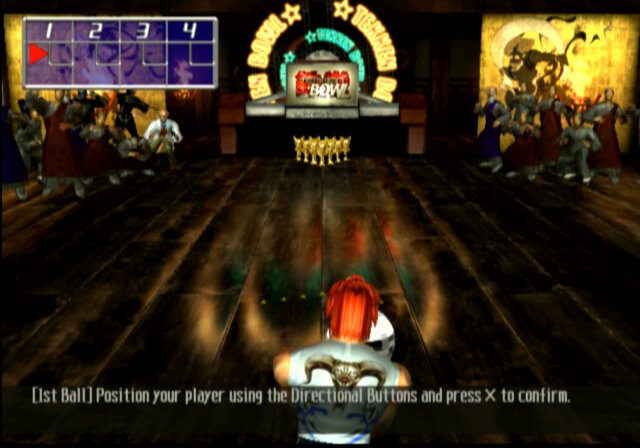
The mini-game incorporated the unique abilities and characteristics of each character into the bowling mechanics. Characters would have their own distinct bowling animations and techniques, adding a touch of personality to the gameplay. Some characters might have special abilities or moves that affected the trajectory or speed of the “ball” they threw.

Namco would later create a Tekken bowling spin-off for smartphones.
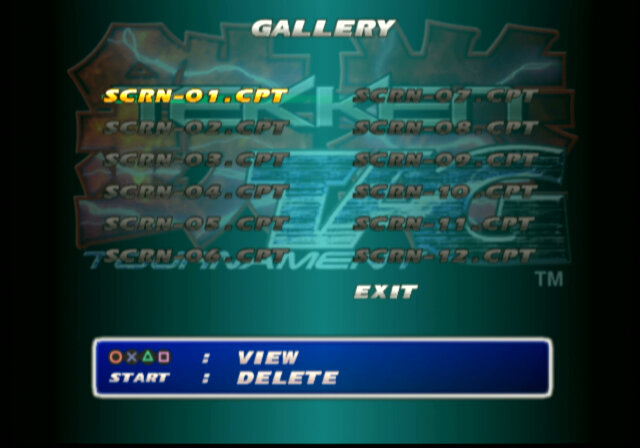
Screenshots: A screenshot can be captured and saved to the memory card, useful when you want to capture for character whilst they’re in the middle of a combo. A screenshot can be taken by pressing the pause button and selecting screenshot.

Pair Play mode: Another feature is the pair play mode, which allows two players to fight with their own controller against the CPU. Four plays can also play in a VS match if the PS2 multi-tap controller is used.

Lastly each character has a unique ending sequence which is rendered within the game engine, except for unknown which is a pre-rendered MPEG2 FMV.
PlayStation 3

Namco ported the game to the PS3 in 2012, and was released as part of Tekken blood Vengeance. Inserting the Blu-ray disc would prompt you to install the game as a bonus feature of the disc.

This version featured upscaled graphics running in HD resolution, trophy support, and is a port of the PS2 version. The soundtrack mostly remains the same, though there are some differences in composition. Sadly there is no online play over the PlayStation network, which would have made a nice addition though it would have suffered a limited population, as this game was not released standalone. Rather it was treated as a bonus.

Conclusion

Tekken Tag Tournament is an absolute knockout of a game. It’s a high-energy, pulse-pounding experience that’ll have you hooked from the moment you pick up the controller. Whether you’re a casual fighting game fan or a seasoned pro, this game delivers the goods. The Tag Tournament formula would be repeated in 2011 with the release of Tag Tournament 2 for the PS3, Wii U and Xbox 360.

Wip3out

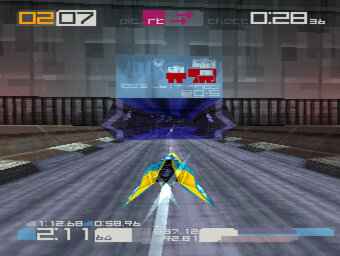
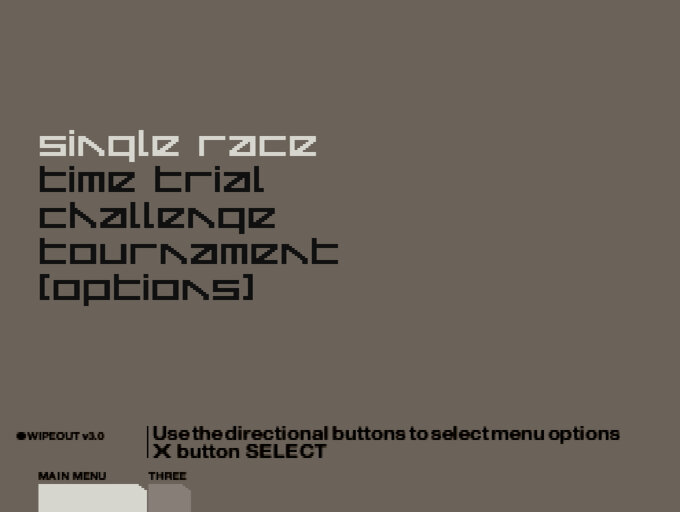
A racing video game developed by Psygnosis and released for the PlayStation console in 1999 and the final instalment for the original PlayStation. The game features fast-paced anti-gravity racing, where players control futuristic vehicles called AG craft through a series of challenging tracks, but features a resigned track style.

Wipeout 3 features impressive graphics for its time. The game’s anti-aliased, high-resolution graphics are rendered in real-time, and the frame rate is smooth and consistent and makes it one of the few PlayStation games that takes advantage of its higher resolution output resulting in a cleaner image quality. The game’s tracks and vehicles are designed with intricate details, and the game’s lighting effects and particle effects are impressive for what the hardware can achieve. Wipeout 3’s graphics are some of the best on the PlayStation, and the game’s stylish aesthetic still holds up well today. As one of the last games to be released by Studio Liverpool for the PlayStation, it severs as a nice finale for the studio as we prepare for the next generation.

Complementing the games graphics are its sound effects that are well-designed, with a range of satisfying engine noises, weapon sounds, and explosions. The game’s soundtrack, which features electronic dance music from artists like The Chemical Brothers and Underworld, perfectly complements the game’s futuristic atmosphere.

Complementing the games graphics are its sound effects that are well-designed, with a range of satisfying engine noises, weapon sounds, and explosions. The game’s soundtrack, which features electronic dance music from artists like The Chemical Brothers and Underworld, perfectly complements the game’s futuristic atmosphere.

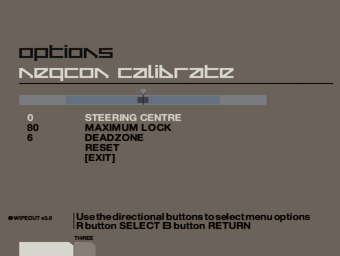
As with other titles in the series, Wipeout 3’s gameplay is fast, challenging, and satisfying. The game’s controls are tight and responsive, allowing players to execute precise manoeuvres and drifts with ease. The game’s tracks are well-designed, featuring multiple paths, jumps, and obstacles that require skilful driving to navigate. The game’s weapons system is also well-balanced, with a range of offensive and defensive options that can be used strategically to gain an advantage. The NeGcon controller is still supported for analogue input, in addition to the Dualshock and analogue controls.

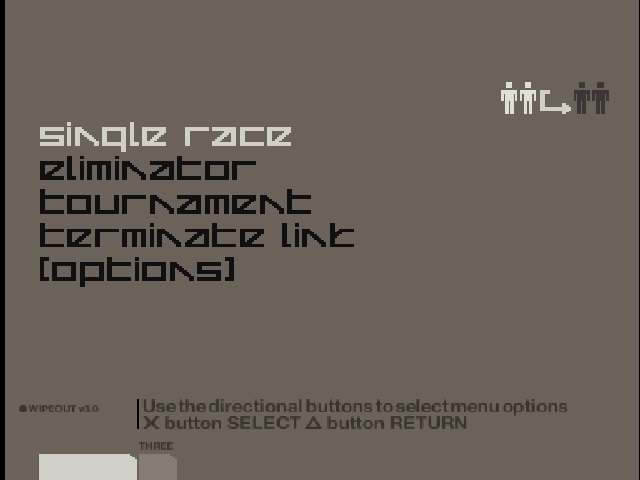
Wipeout 3 offers a lot of replay value, with multiple game modes and difficulty levels to choose from. The game’s Championship mode provides a lengthy campaign that will take hours to complete, and the game’s time trial mode provides a satisfying challenge for players looking to master each track’s nuances. The game also features a multiplayer mode that allows up to four players to compete against each other, adding even more replay value. This was a little tricky to setup as you have to establish a link between the two consoles first, as the game will also support two players from one console.

Using the Linux build of the PCSR-R emulator and an ethernet cable connected to two laptops, its possible to emulate the link play but it runs at such a low framerate that makes it unplayable. However you do get an idea how this would work on an actual console.

In Wip3out, there are several teams that the player can choose to represent during races. Each team has its own unique anti-gravity ship, which has different stats for speed, acceleration, handling, and shield strength. Here is a brief overview of each team

  • Auricom – This team is known for having the fastest ships in the game, but they have weaker shields and are more difficult to handle
  • FEISAR – This team has good acceleration and handling, but their top speed is slightly lower than other teams.
  • Goteki 45 – This team has good handling and acceleration, but their shields are weaker than other teams.
  • Piranha – This team has balanced stats and is a good choice for players who want a well-rounded ship.
  • Qirex – This team is known for having the strongest shields in the game, but their ships are slower and have lower acceleration.
  • AG Systems – This team has good handling and acceleration, but their top speed is slightly lower than other teams.
  • Assegai – This team has good handling and acceleration, but their shields are weaker than other teams.
  • Icaras – For more advanced players, as their ships run at high speed.

Wip3out includes a variety of power-ups that players can use during races to gain an advantage over their opponents. Here is a brief overview of each power-up:

  • Missile – This power-up fires a homing missile at the closest opponent in front of the player’s ship, causing them to spin out or crash.
  • Auto Pilot – This power-up temporarily takes control of the player’s ship, allowing them to focus on using weapons or navigating tricky sections of the track.
  • Shield – This power-up temporarily boosts the player’s ship’s shield strength, making it more resistant to damage from weapons or collisions.
  • Mines – This power-up drops a set of mines behind the player’s ship, causing opponents who run over them to spin out or crash.
  • Plasma Bolt – This power-up fires a powerful plasma bolt that can cause significant damage to opponents’ ships, potentially causing them to crash.
  • Quake Disruptor – This power-up causes a seismic disturbance that shakes opponents’ ships and makes them harder to control, potentially causing them to crash.
  • Invisibility – This power-up makes the player’s ship invisible for a short period of time, allowing them to avoid weapons and sneak past opponents.
  • Reflector – Reflects any damage to another ship
  • Cloak – Make your ship invisible for a short time
  • Force Wall – Spawns a wall that can be used to stop opponents

Each power-up is represented by a different icon on the track, and they can be picked up by flying over them.

Ridge Racer Type 4

Widely considered to be the best in the Ridge Racer series, its soundtrack and the opening FMV are defiantly most memorable. This would be the last Ridge Racer game released for the original PlayStation.

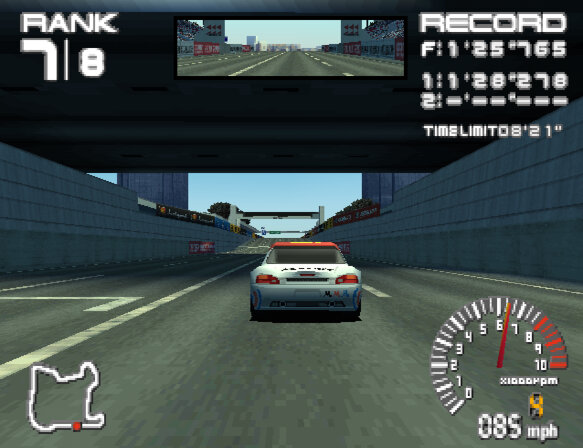
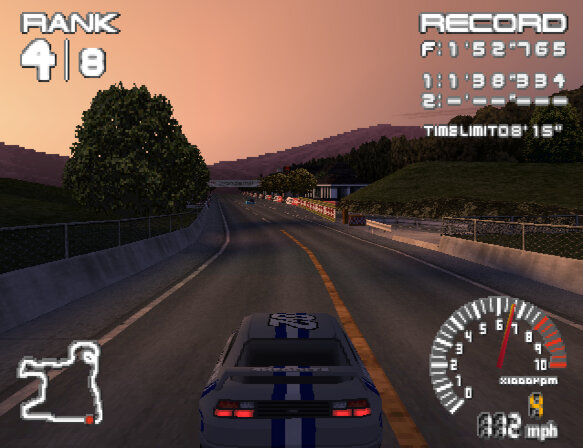
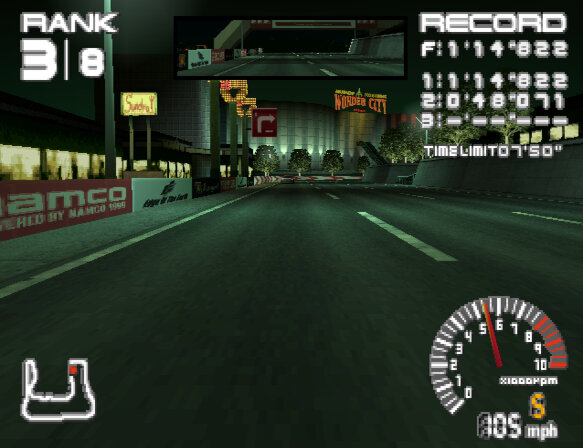
The game improves on the mechanics from Rage Racer and Ridge Racer Revolution, complete with eight brand new tracks and a soundtrack that’s a complete departure from the drum & bass themes from the previous instalment. Graphics-wise the game sees a shift that pushes the PlayStation hardware to the extreme, thanks to the use of Gouraud shading that gives a shade of depth to the polygons, giving the game a realistic appearance.

To keep a stable 30FPS, which was the game’s target framerate, certain changes are made to the enemy opponents, where you only have up to 4 cars on screen at the same time, of which the AI-controlled cars are more spread out across the track. In contrast to the early titles where you will pass multiple cars in the same area, in R4 the opponents feel spaced out and you pass by them in a linear fashion.

Grand Prix

There is a story mode of some sort, you can choose from four teams that will have their own unique manager representing the company. Here you have a direct dialog that gives more detail into the backstory of the teams and how they tie into the Ridge Racer Grand Prix. After every race you will have a meeting with them and their dialog is dependent on how you perform (which place you finish in). There is no dialogue for when you lose or fail to qualify, as the game will prompt you to retry or will go straight to a game over screen.
The team choice will also affect the ending epilogue (although on some emulators there is a bug that causes only the MMM epilogue to play)

The Teams

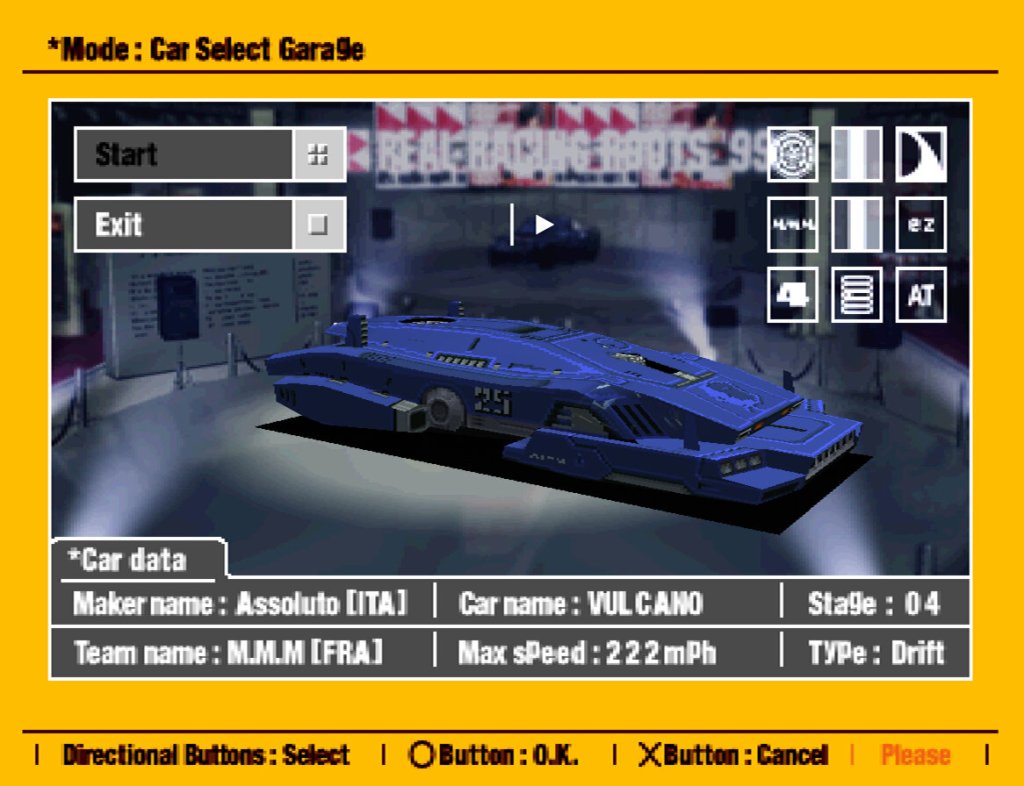
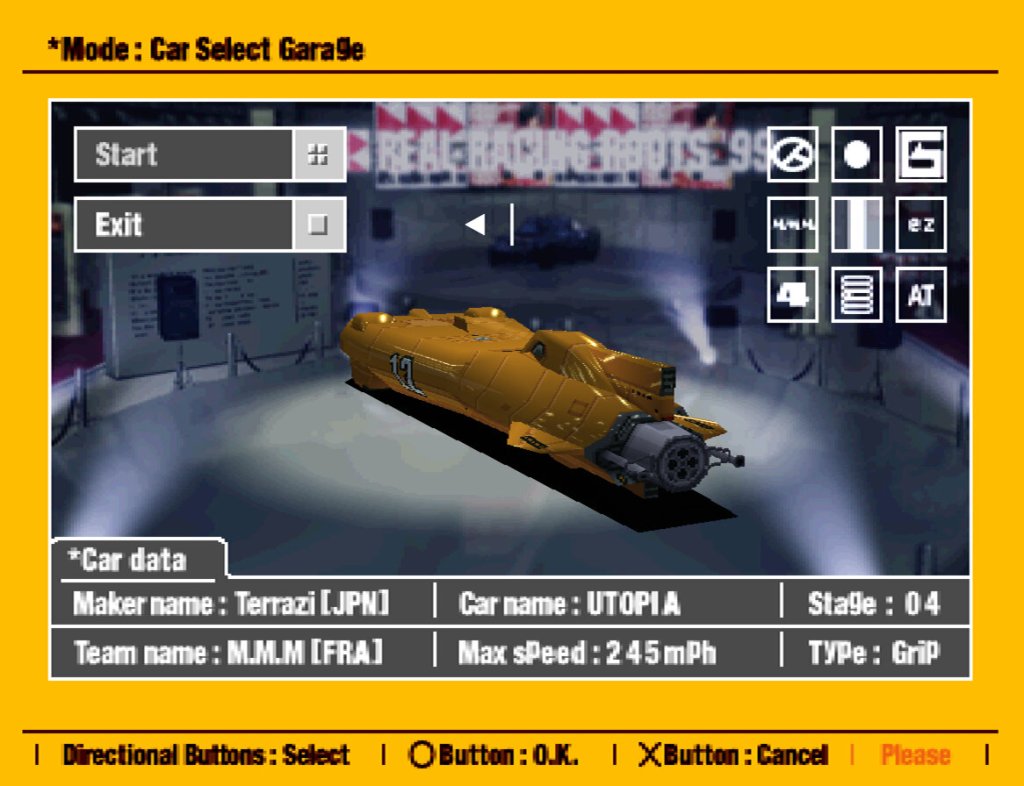
Four teams come with Ridge Racer Type 4, all of which are some reference to another Namco arcade game franchise.

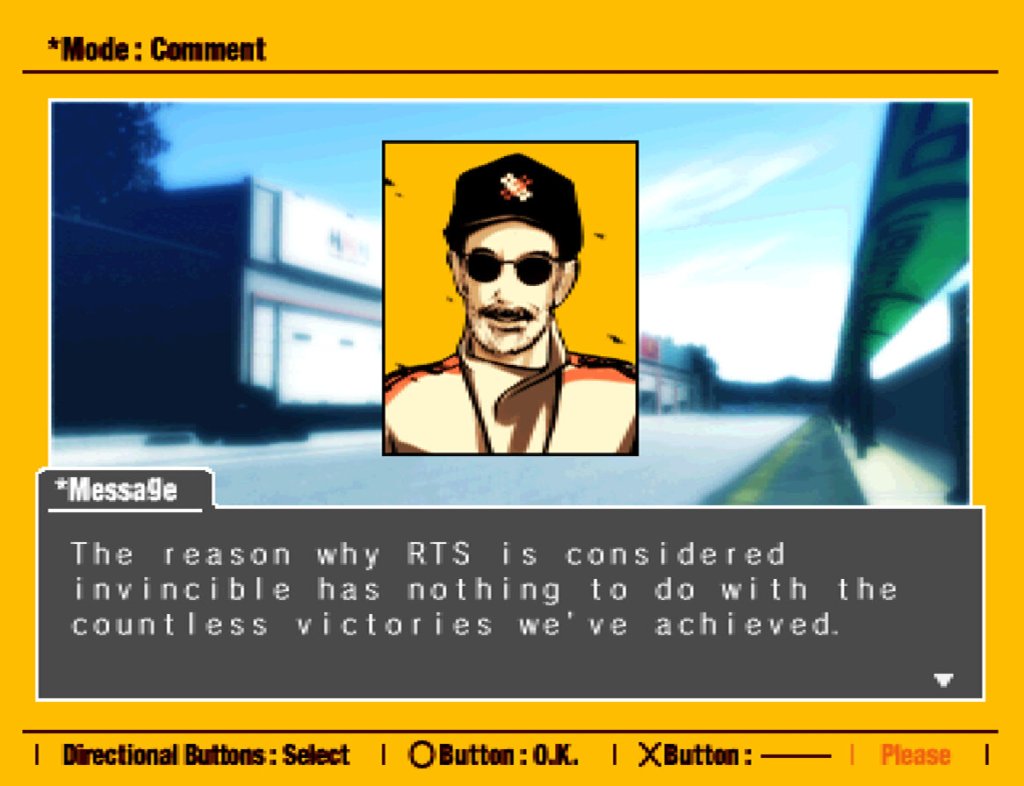
Conversation with your team representative

Micro Mouse Mappy: A French racing team led by Sophie Chevalier. The easiest team in the game which is recommended for new players.
R.T.S: Lead by Enki Gilbert, He starts off as a perfectionist, expecting you to come in first place in every race but eventually softens u after learning of the Pac Racing Club’s entry. Its implied the manager looks to the player as a second son, due to his actual son being involved in an accident that cost him his life. Towards the end he wants the player to take the race easy, fearing history could repeat again like the death of his son.
Dig Racing Team: My favorite team since I like the underdog teams, They’re a struggling team that is under budget and as a result will enable to provide fast cars from a majority of the races, meaning you will need to rely on skill in order to get ahead of the competition.
Pac Racing Club: Lead by Shinji Yazaki, seems to only care about the results of the race, but will open up over time about a past Gran Prix where Enki’s son died during a race in which he was involved in.

The Cars

There are lots of cars included in the game, over 320 in fact. Many of these are unlocked by beating the Grand Prix modes across various teams and car manufacturers.

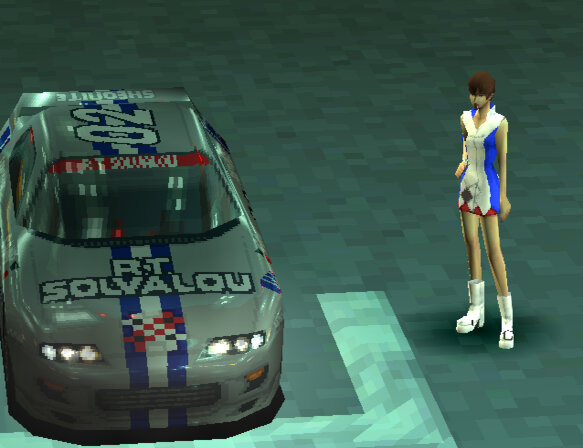
Garage cars are the cars you unlock during the Grand Prix events and can come from four manufacturers, across four different teams, giving 16 different design variations. However the game will reward you with a different car depending on your performance of the early events, ie, if you come 1st 2nd or 3rd during the first heat, will influence the type of upgrades you have, which the game counts as an additional car. Therefore in order to unlock all cars, you have to play the Grand Prix with the same manufacturer/team combo several times, coming deliberately in 3rd/2nd and 1st place for each run.
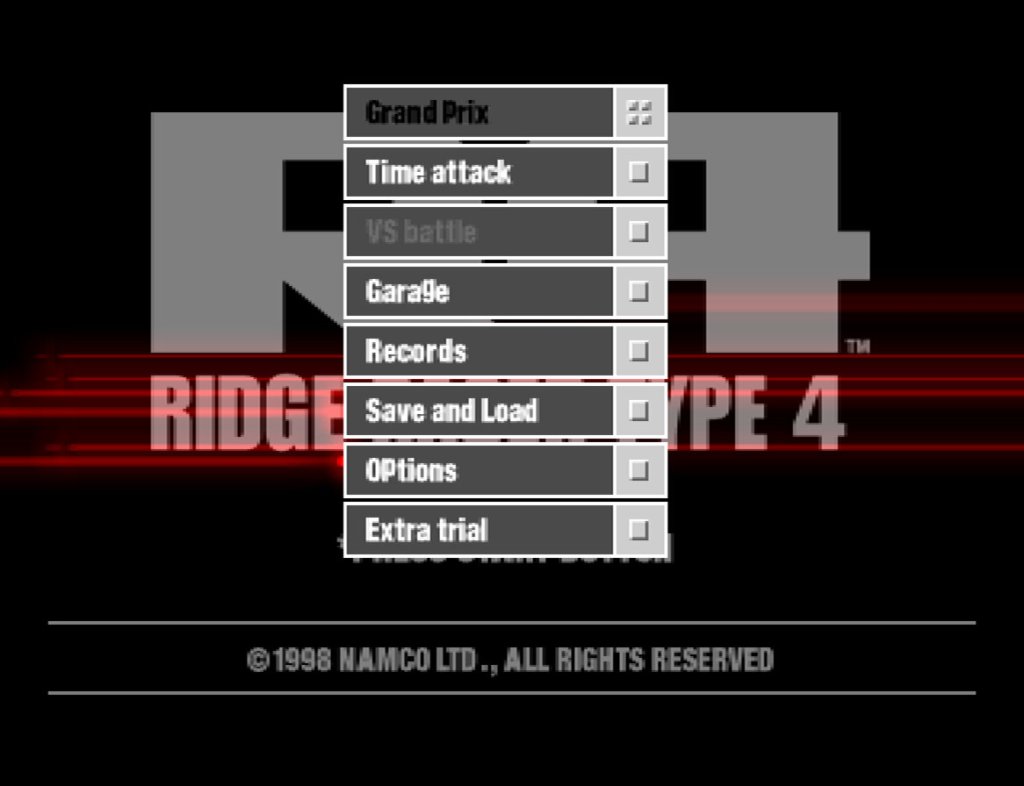
The garage can only hold a limited amount of cars, and will you have to swap out locked cars in order to play them in time attack or link/multiplayer.

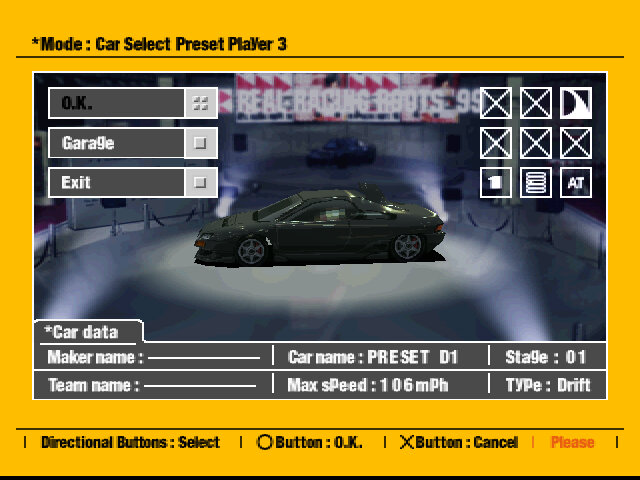
There are also a few preset cars that are already unlocked for use in time attack or for two-player mode, these are also in grip or drift varieties. These don’t seem to have any defined name, other than Preset G3, Preset D4, etc. Most players will refer to them by the color, which comes in (red, black/Grey, white or yellow)

And then you have the cars unlocked using the extra trials, you can only unlock these by winning a Grand Prix with a specific manufacturer, although the team does not matter much, except for the performance tuning.

The Tracks

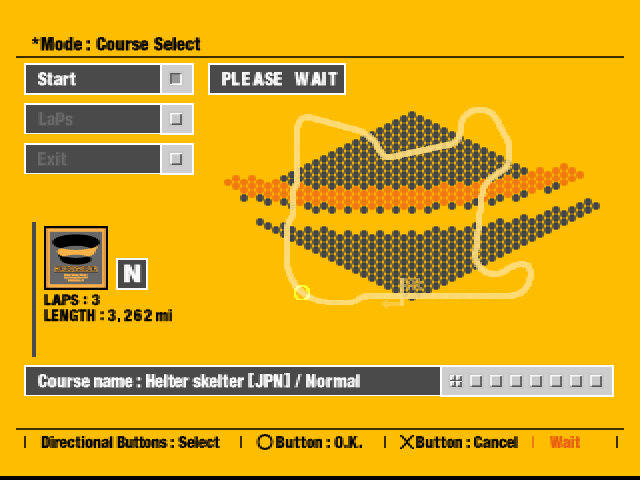
  • Helter Skelter: The first track you will probably play, set in Japan Yokohama and shares with Out Of Blue. A good track that serves as an introduction to the game’s drift mechanics and style. The song Pearl Blue Soul always plays on this course.
  • Wonderhill: The second track that is played on a late spring afternoon that gives a sunset sky. This track shares with the Heaven and Hell track that appears later in the game. The music on this track can differ if you are racing with the RTS team (Revlimit Funk plays), otherwise Naked Glow will usually play, and it really suits this course
  • Edge of the Earth: Set at night in an airport that leads into a small city, one of my favourite courses since you can go full speed, but also must be mindful of the courses.
  • Out of Blue: In contrast to the previous track, this one is set very early in the morning and shared with Helter Skelter, with OOB separating into its own path, which features locations near a shipping dock. Some of the scenery here reminds me of the original Ridge Racer track. The corners on this track can be brutal, so make sure you are used to the car’s handling.
  • Phantomile: It’s a very short course in comparison to the others, and the corners are rather savage. The Motor Species song always plays for this course. Also just so happens this race is set on the same day as my birthday.
  • Brightest Nite: Another course set at night time, this one also shares with Edge of the Earth. This one is set later at night and features a huge drop towards the end of the tack
  • Heaven and Hell: Shares with Heaven and hell, although it’s set earlier in the day which gives off a different feel of the track, being much brighter.
  • Shooting Hoops: The last track to race and it’s a good and simple one, set at midnight of December 31st 1999 on the eve of the new millennium. The song Movin’ in Circles always plays for this track and on the last lap you can see fireworks being set off as the new millennium is upon us (Cue airplanes falling out of the sky due to the Y2K bug)

Vs and Link Battle

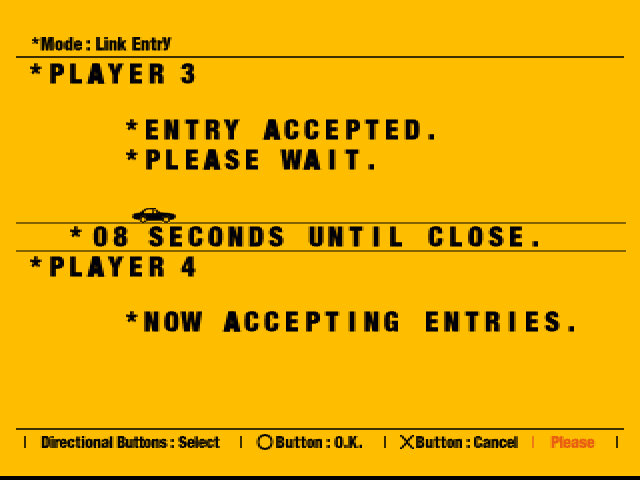
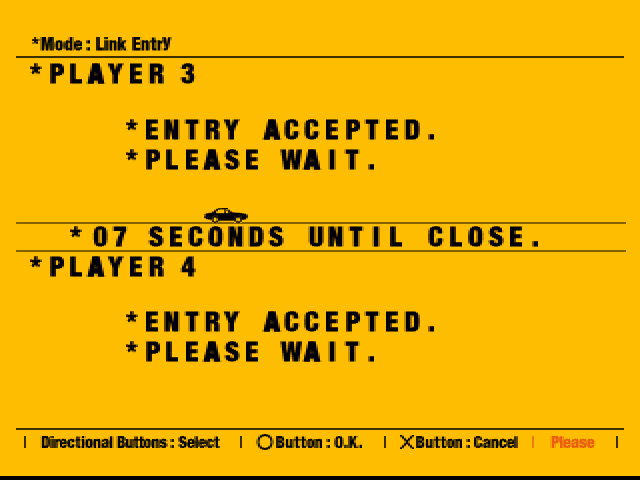
Link battle adds the ability to play with up to four different players, across two consoles. This is similar to how early titles handled multiplayer where two consoles are connected together using the official link cable, along with two displays and copies of the game.
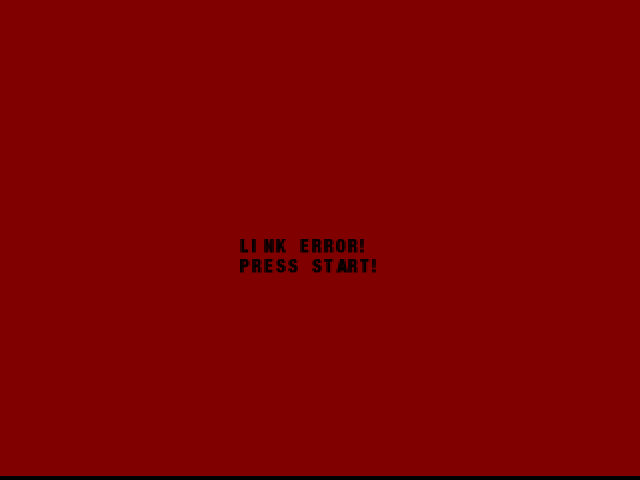
If the game detects another console connected using the serial link cable, the link battle option will appear in the main menu. Sadly in PCSX-R whilst we are able to establish a link between two instances with a Linux Virtual machine (running Ubuntu & Pop_OS), the speed is incredibly slow and unplayable, and whilst we can navigate the link mode menus, the game will display an error message when we try to start the race.

The regular VS mode can also be accessed by having two controllers connected to the console, where the game plays in a split-screen mode allowing for both racers to race at the same time through one console. You can combine this with the link battle to have a total of four players in a single race, with two players per console.

The multitap is not supported here, only a maximum of two players per console.

Further Information

Decal Editor

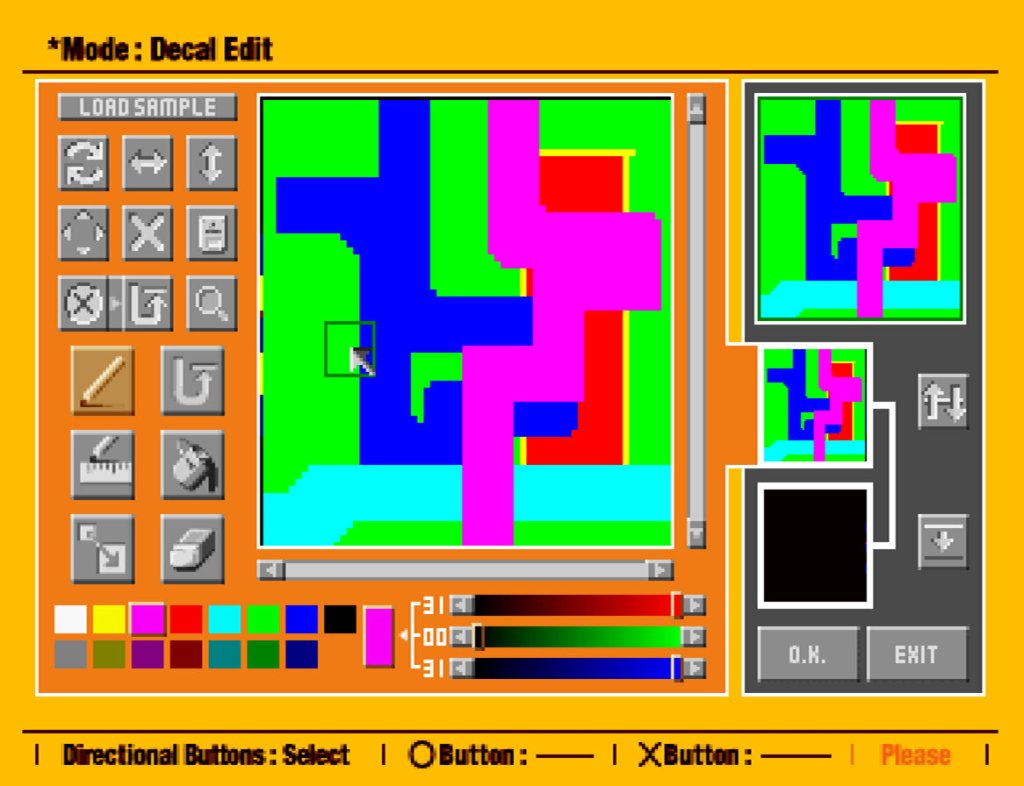
Like in Rage Racer, a decal can be created and applied to your team’s car which can be any pattern. Here the PlayStation mouse is best used

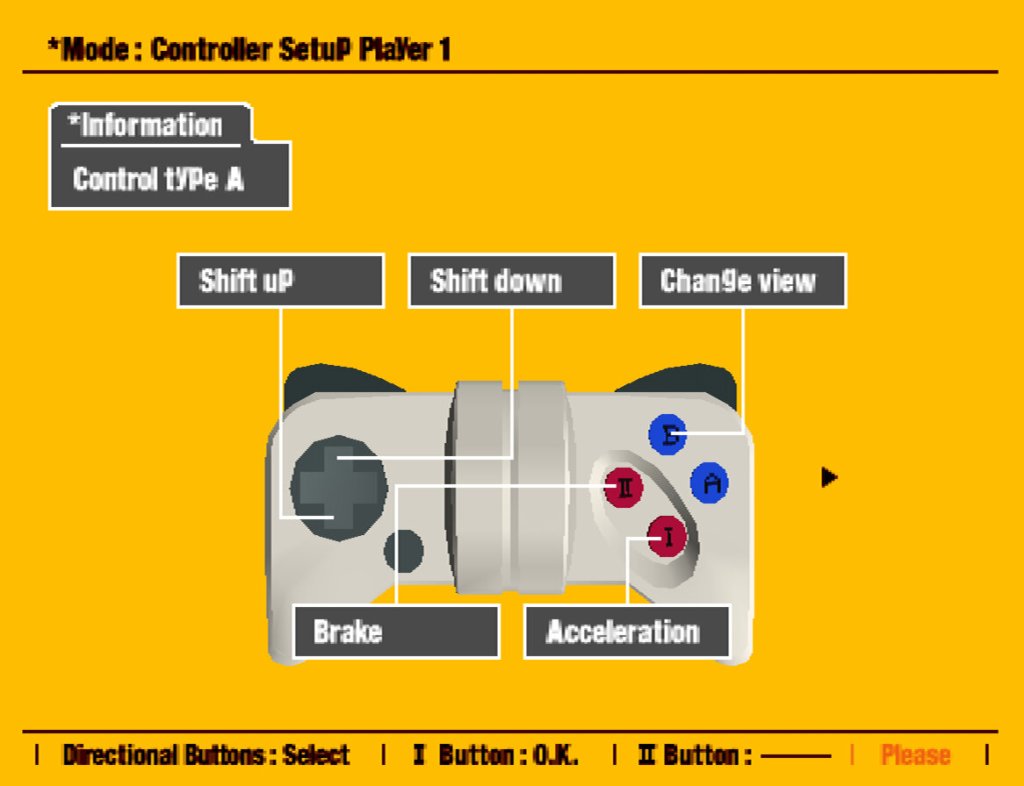
The Namco NeGcon is fully supported for steering and acceleration, in addition to the DualShock analog sticks.

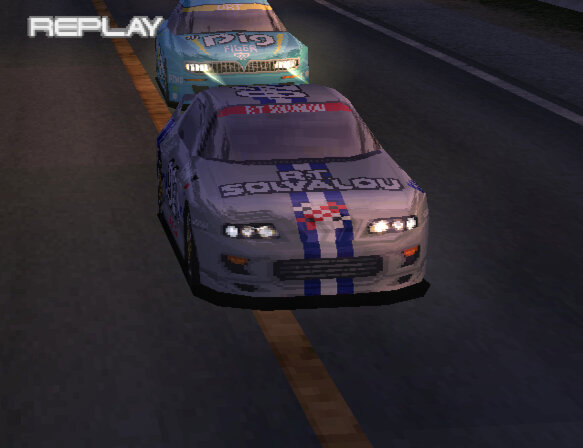
A visual blur effect can be applied when a race is being replayed, activated by pressing the L1 or R1 buttons.

Driver: You are the Wheelman

A classic game, Shame about the tutorial level…

  • Undercover – The main story mode of the game, you complete a set of missions which can range from driving from point A to B within a set amount of time, to escaping or pursuing another car
  • Take a Ride – Sandbox mode, only two cities are available with the other two being unlocked as you progress through the story.
  • Driving Games – A set of activities to choose from, Pursuit, Getaway, Cross Town Checkpoint, Trail Blazer, Survival and Dirt Track. Carnage is a mode exclusive to the PC version.
  • Training – Introduction to the came and the various mechanics and techniques to mastering Driver
  • There are no two player or multiplayer modes, Driver is a single player game.
Desert training level

PlayStation

The version that most people have played and are familiar with. This was the first version of the game to be released. Main attraction was the sandbox Take a Ride mode where you could drive freely until you caught the attention of the police, who would then proceed to ram you to death.

Cop car went vertical, a common occurrence

The game occupies on memory card block per story save, and two blocks for replay data, you can easily fill a memory card with this data, thankfully the game

PAL-land version

Thankfully this game runs in full PAL resolution, no top/bottom bars, likely since the studio that developed the game was based in Europe. There is a difference in the logos, with the NTSC version having a altered blue version of the logo with the works ‘You are the wheelman’ which is also present in the games title. The PC version adapts this for both Europe and US markets (Makes sense since the PC isn’t regionalized compared to the PlayStation releases, PAL/NTSC does not exist on PC)

Windows

Despite this version running in a higher resolution and a capability of having a higher framerate there are a few drawbacks compared to the PlayStation version. there was also a Mac version, although I believe its very similar to the PC version.

Screenshots here are running on an emulated PC (PCem v17), running an Intel Advanced/ZP with a Overdrive MMX processor with a 3DFX Voodoo Graphics card. The operating system is Windows Me. The graphics here will depend on the 3D video card an API, as 3DFX cards used Glide, the Direct3D version may look different.

Differences between the two

One of the main differences is the background music which was changed in the PC version. Also unlike the PlayStation version, there are no separate themes for when you gain felony, in the PlayStation version the music would change when you attracted the attention of the cops, but the PC version remains the same throughout. As someone who grew up on the PS1 version, it was kind of jarring to play Miami without the familiar theme, and for the game to not change when catching the cops attention.

Comparison screenshots below, the PSX version is running in Duckstation at twice the native resolution (640×480) with bilinear filtering and 2x anti-aliasing enabled. With these enhancements we can try to bring the PSX version up to the PC version, which is running at 640X480 resolution with ultra graphics present.

One thing to mention with the PC version, as with all PC games of the era the game is reliant on using Redbook CD audio for the background music, where the games streams the music from the disc itself, like an audio CD. For this to work you had to have an audio cable connected from the CD drive to the motherboard or soundcard, in addition to the IDE cable. On modern systems (with SATA drive onwards) this is no longer supported, and modern Windows versions / soundcards its no longer possible to stream analogue audio from the CD drive, instead being delivered through the IDE or SATA interface, which this game won’t support. The game itself will still run and you can still hear sound effect like the car engine, but you wont hear any music.

  • The spawn points are also different for each of the maps/level, again not sure why these were changed
  • The map layouts were also changed, with some areas being remodelled completely, Dodge Island had a massive change, possibly since it was designed around the PlayStations limitations initially.
  • The cop radio voices were also changed, with some lines being completely different
  • A speedometer is present which gives the speed of the players car in miles per hour
  • The car models themselves had change and I cant say I prefer the PC version of the cards, which are lacking certain details from their textures, the back of the cards look like a blur compared to the PlayStation version.

Upgrading the PlayStation version

Modern emulators are capable of running the game in a higher resolution with additional smoothing effects. Unfortunately there is little we can do for the framerate, that’s stuck at 30fps, or 25 for Pal-land copies. Still at least there’s no boarder, and you can overclock the PlayStation CPU on some of these emulators, which helps with the slowdown when there’s a lot of cars and particle effects on screen.

The game can be upscaled to 640×480 or 800×600, which the PC version also natively supports. Depending on the emulator, higher resolutions can be used but I don’t recommend it unless the emulator supports perspective correction, otherwise those polygons will be jittering aggressively. This video will help explain further on why this occurred on PlayStation games.

Texture filtering can be hit or miss, whilst it helps smooth out the textures, due to the way the PlayStation handled 2D, it can affect the HUD display too, causing excessive blurring on the HUD, making it look like an N64 game.

Exploring the disc

In the NFMV folder there is a exe file called NFMV.EXE however this does not open even in older versions of Windows