Tag Archives: Arcade

Tekken Tag Tournament

Tekken 3 but with a new tag mechanic and a huge roster.
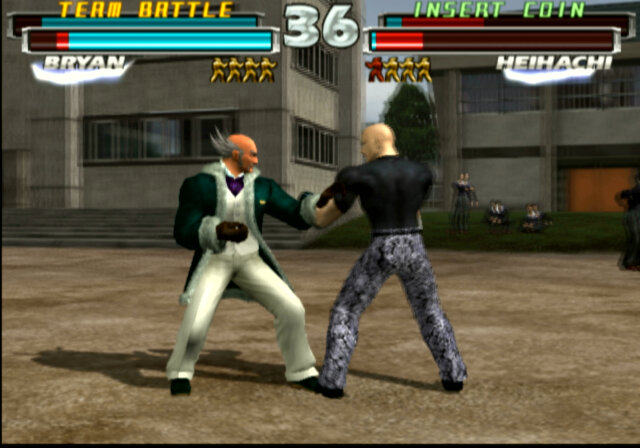
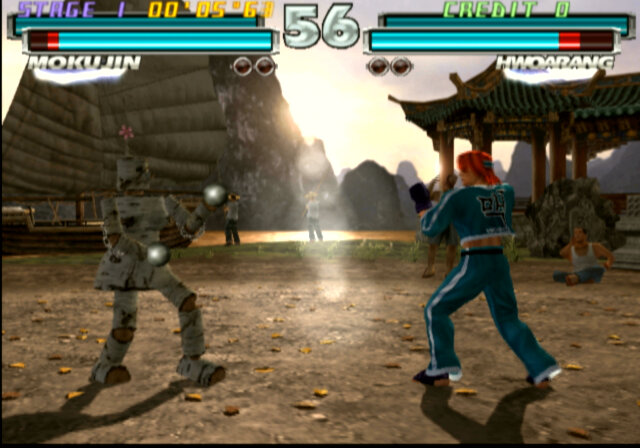
Tag Tournament takes the existing Tekken formula and adds a new tag team mechanic, allowing up to four characters to fight against each other. Its also one of the few games to be released for three generations of PlayStation hardware (sort of, The System 12 arcade board is an overclocked PS1 board.)

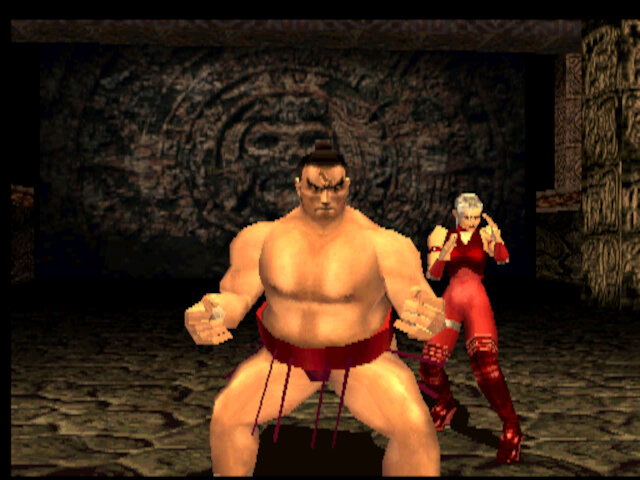
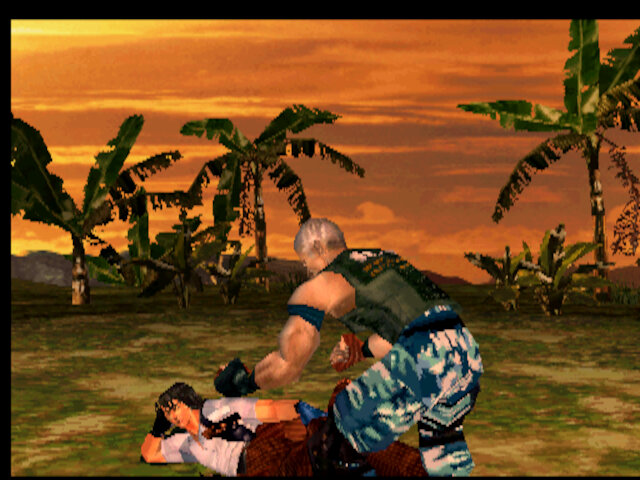
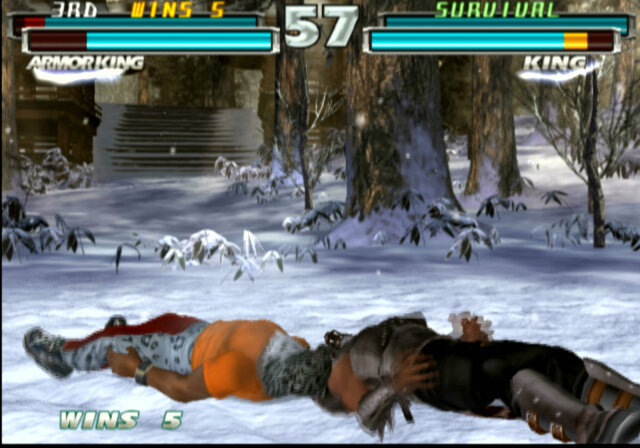
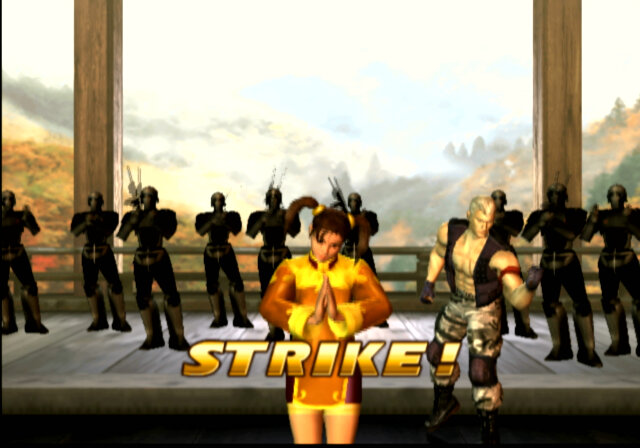
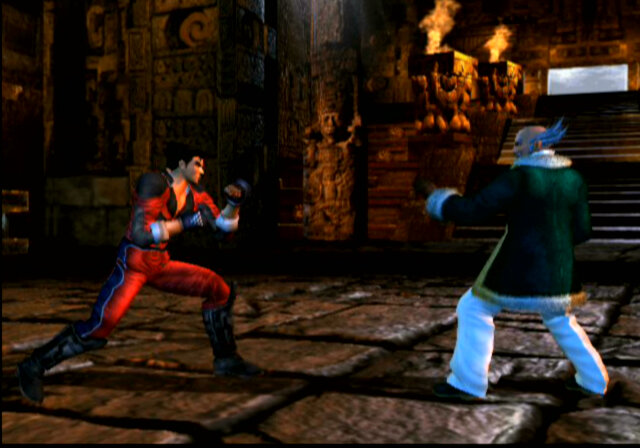
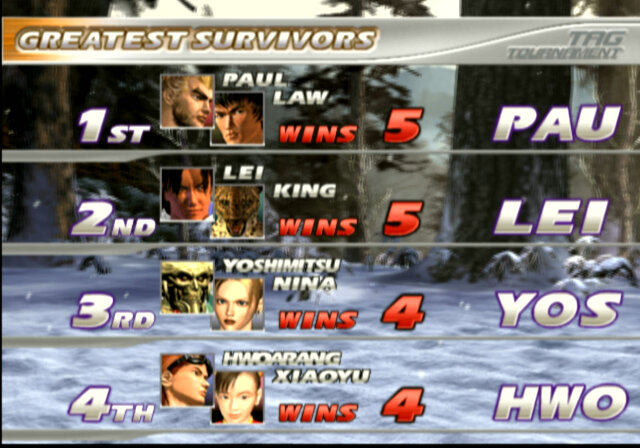
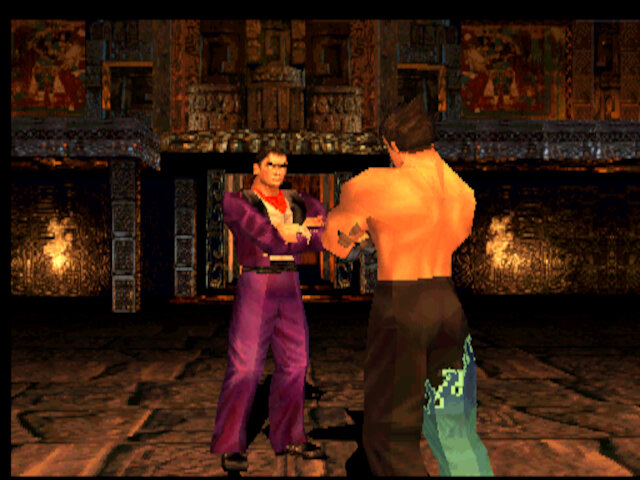
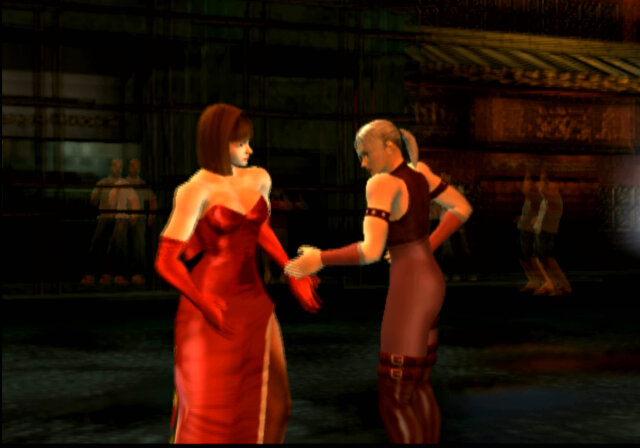
The fighter roster is stacked with an insane lineup of characters, many of which all featured in the first three installments of the Tekken franchise. You’ve got your classics like Kazuya, Jin, and Heihachi, all ready to unleash their devastating combos. Its like a Tekken greatest hits reunion featuring everyone’s favourite characters from previous games, but there are a few omissions like the original Jack, King and Armour King. Still Namco have also implemented Easter eggs for when you choose a certain par of characters, that affect the characters animations before and after the fight. Pairs like Nina & Anna, Kazaya & Heihachi and Michelle & Ganryu are a few examples to name that do this this, and it gives a nod to the Tekken backstory that fans of the franchise will be invested in.

Some pairs will also have unique moves that can be used to attack and switch out at the same time. These require a button combination along with the tag out button to trigger.

Versions

Arcade
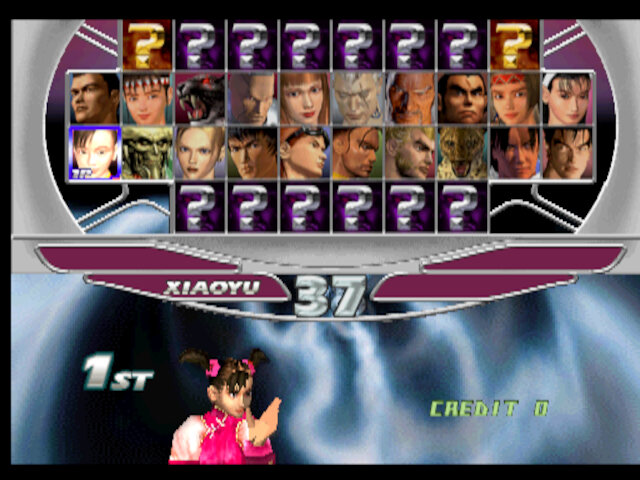
The original release of the game was in the arcade, like other early Tekken games. The game ran on the Namco System 12 board which was an upgraded PlayStation with additional memory and a faster clocked processor. This allows for multiple fighters to be featured onscreen, required for some of the character move sets. This version of the game also features its own soundtrack which is played on Namco’s own C352 sound processor that was also used in their System 23 arcade boards.
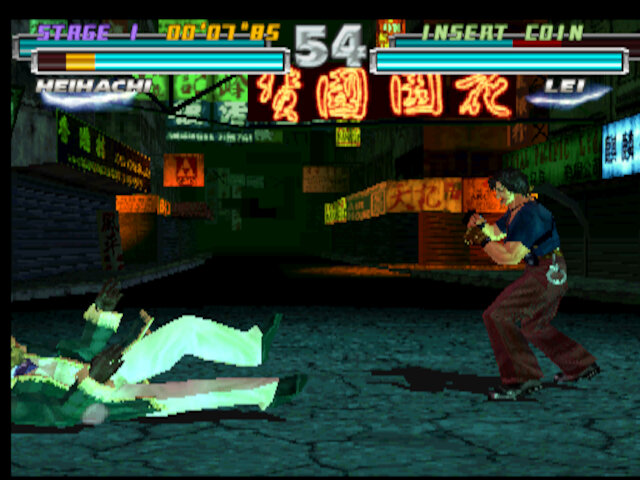
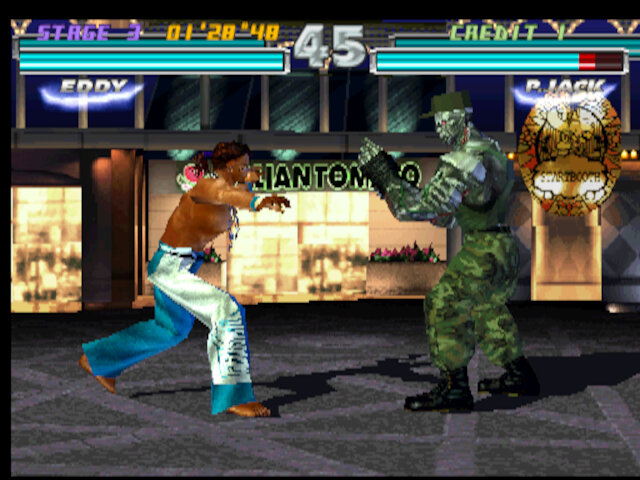
Many characters are locked in this version and are on a time based unlock, where characters gradually come available as the arcade machine is powered on. There is a MAME cheat to unlock all the characters upon clearing the EEPROM that can be used instead.

PlayStation 2
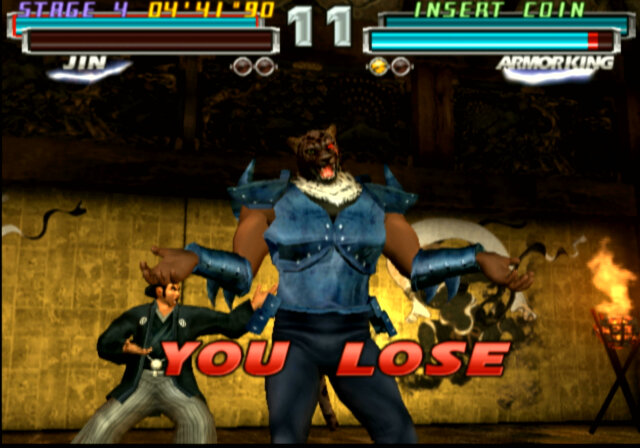
Tag Tournament was one of the launch titles for the PS2, and remained exclusive to the console for the home release until the HD PS3 version. This version features completely upgraded graphics that take advantage of the PS2’s Graphics Synthesizer
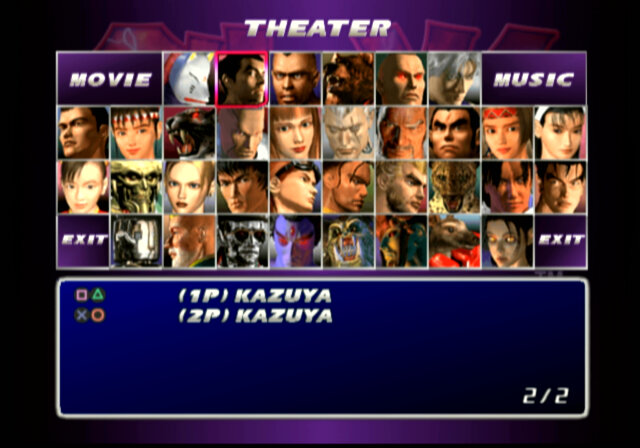
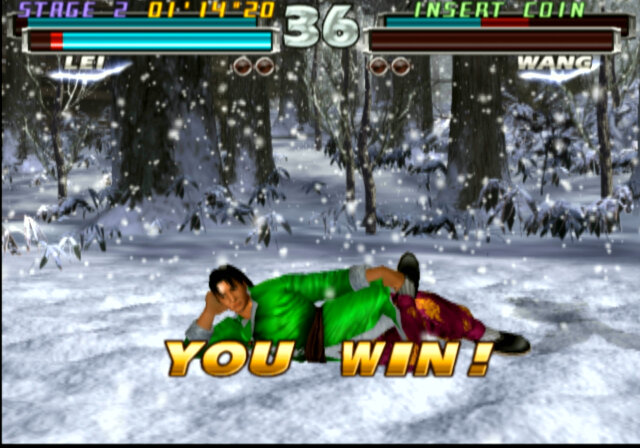
Unknown is a fully playable character in this version and has a unique feature where she can emulate another fighters moves.

This version also features a few unlock-able features and game modes.

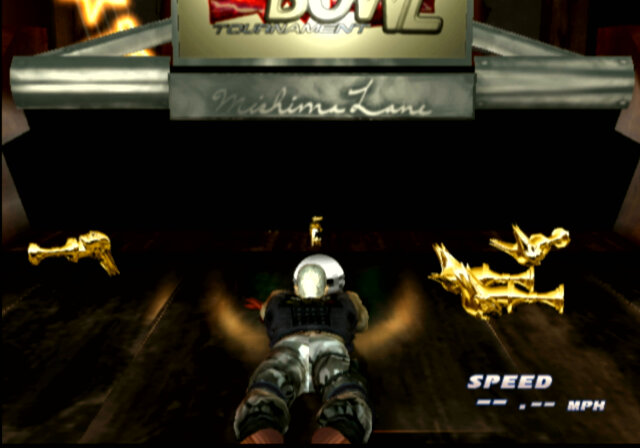
Tekken Bowl: In Tekken Bowling, players would select a character from the roster and take them to the bowling alley. The character would replace the traditional bowling ball, and players would control their chosen character’s movement and angle as they approached the lane. The objective was to knock down as many pins as possible in each frame.
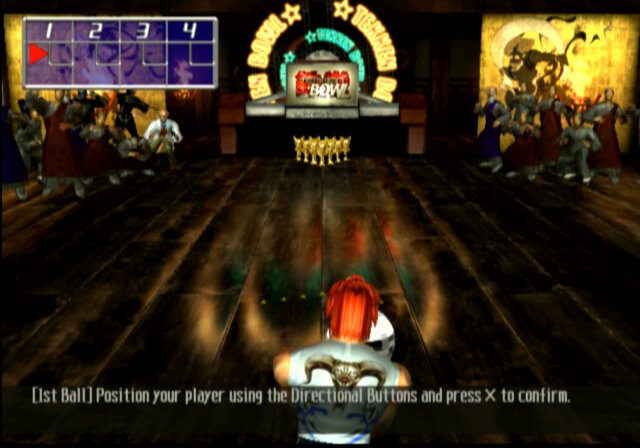
The mini-game incorporated the unique abilities and characteristics of each character into the bowling mechanics. Characters would have their own distinct bowling animations and techniques, adding a touch of personality to the gameplay. Some characters might have special abilities or moves that affected the trajectory or speed of the “ball” they threw.

Namco would later create a Tekken bowling spin-off for smartphones.
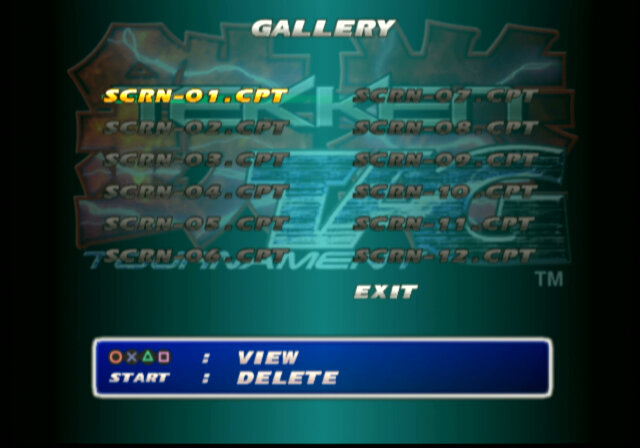
Screenshots: A screenshot can be captured and saved to the memory card, useful when you want to capture for character whilst they’re in the middle of a combo. A screenshot can be taken by pressing the pause button and selecting screenshot.

Pair Play mode: Another feature is the pair play mode, which allows two players to fight with their own controller against the CPU. Four plays can also play in a VS match if the PS2 multi-tap controller is used.

Lastly each character has a unique ending sequence which is rendered within the game engine, except for unknown which is a pre-rendered MPEG2 FMV.
PlayStation 3

Namco ported the game to the PS3 in 2012, and was released as part of Tekken blood Vengeance. Inserting the Blu-ray disc would prompt you to install the game as a bonus feature of the disc.

This version featured upscaled graphics running in HD resolution, trophy support, and is a port of the PS2 version. The soundtrack mostly remains the same, though there are some differences in composition. Sadly there is no online play over the PlayStation network, which would have made a nice addition though it would have suffered a limited population, as this game was not released standalone. Rather it was treated as a bonus.

Conclusion

Tekken Tag Tournament is an absolute knockout of a game. It’s a high-energy, pulse-pounding experience that’ll have you hooked from the moment you pick up the controller. Whether you’re a casual fighting game fan or a seasoned pro, this game delivers the goods. The Tag Tournament formula would be repeated in 2011 with the release of Tag Tournament 2 for the PS3, Wii U and Xbox 360.

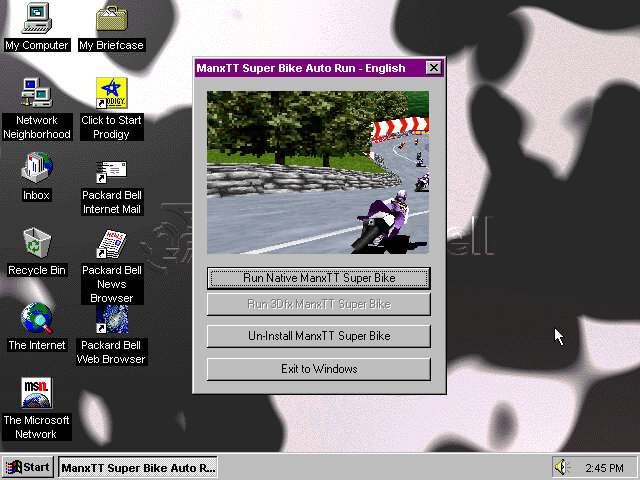
Manx TT Superbike

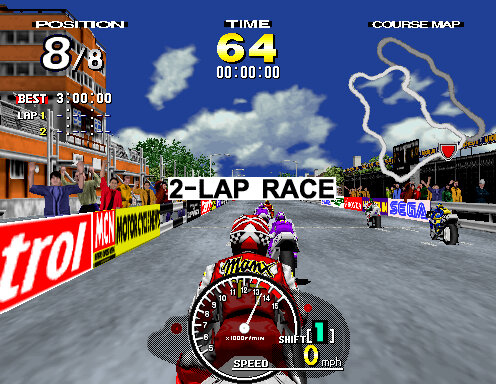
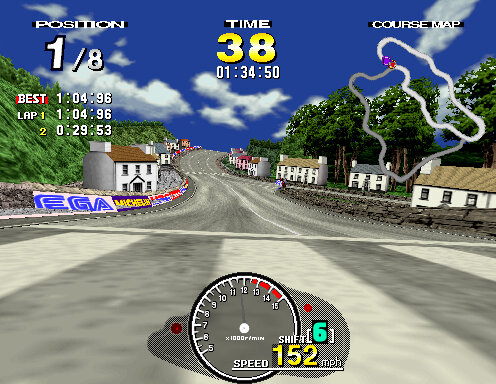
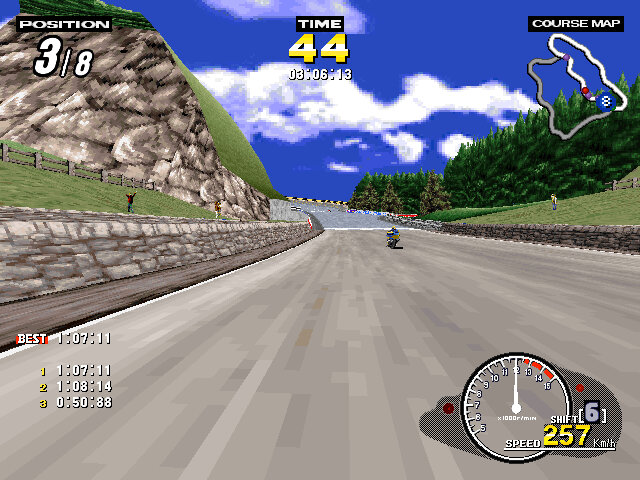
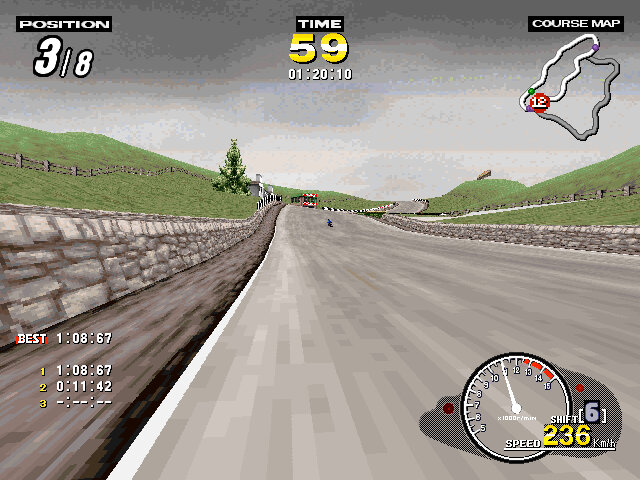
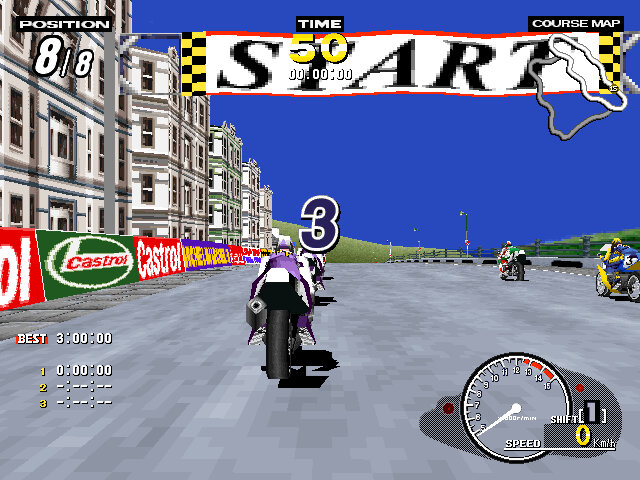
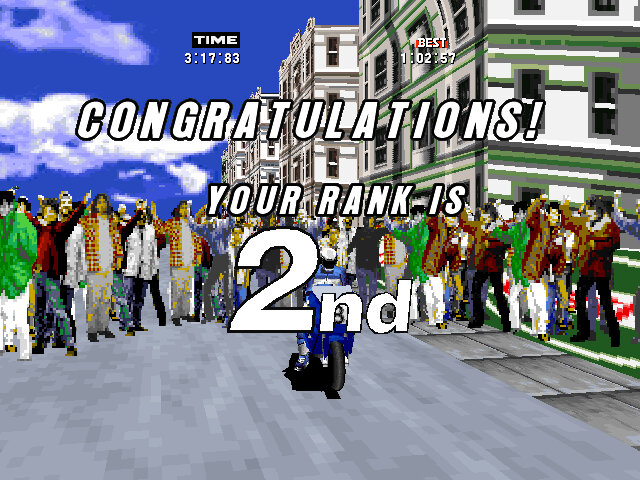
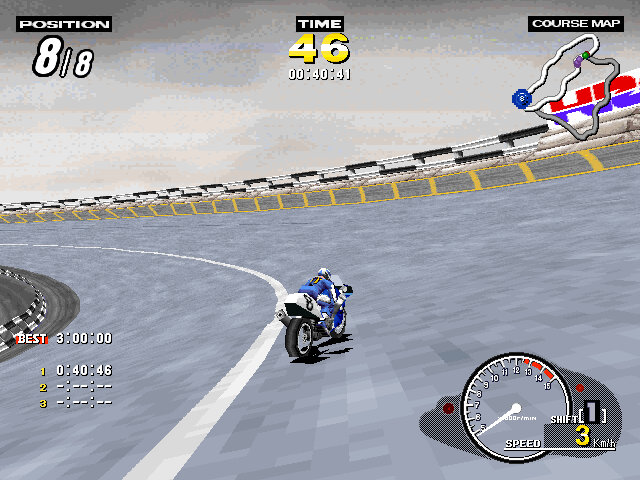
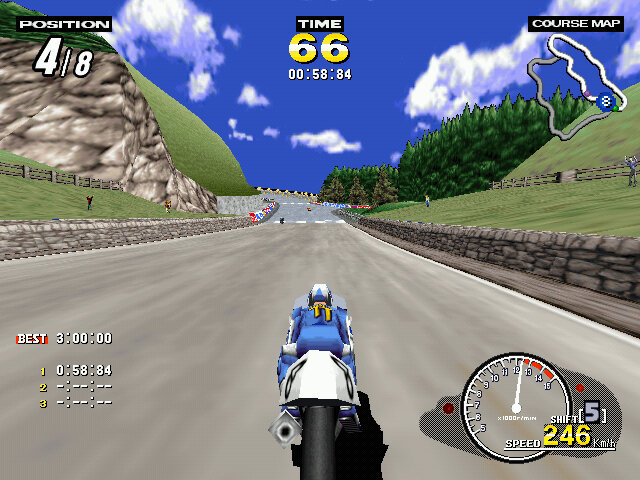
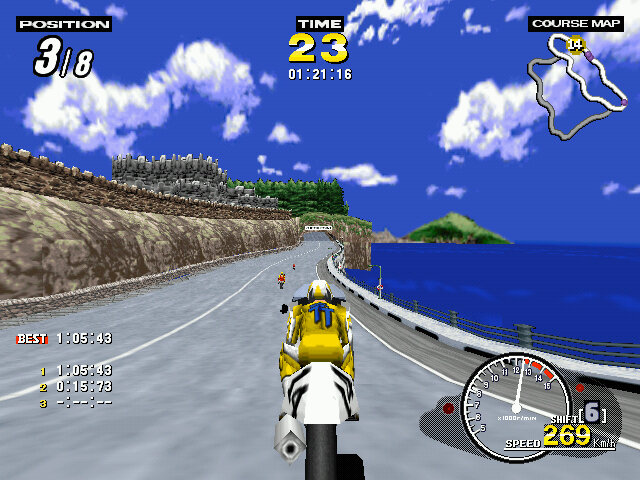
An arcade style racing game released in 1995, aimed to replicate the Isle of Man TT – a motorcycle racing event. Very similar in spirit to Daytona USA which was based on the real Daytona speedway, and Indy 500.

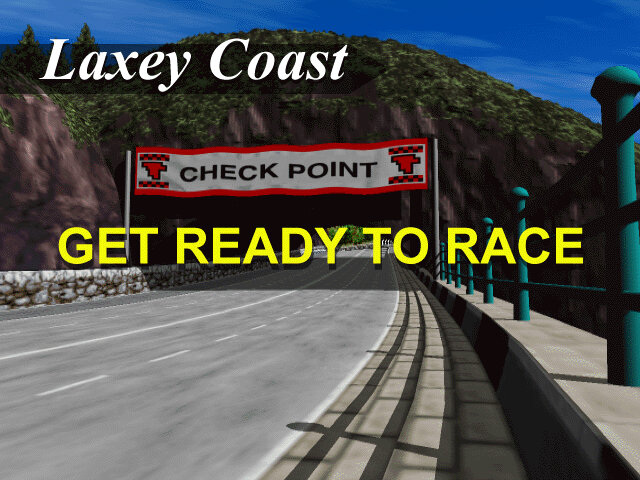
Two courses are offered, Laxely Coast and T.T Course, the latter being the actual track used in the Isle of Mann races. Both tracks share sections with each other and will split and re-join into their own different paths.
The home versions feature two additional tracks that are part of the PC/Saturn mode, these are reverse-mirror versions of the two arcade tracks and can only be selected in that mode. These tracks are also set in the early evening in the Saturn version, and early morning / dusk in the PC version.

Time Trial: Similar to time trial featured in other racing games, choose a track and a bike and try to get the lowest time. On the arcade version you have to hold the brake button when selecting a track to active time trial.

Console / PC Exclusives modes

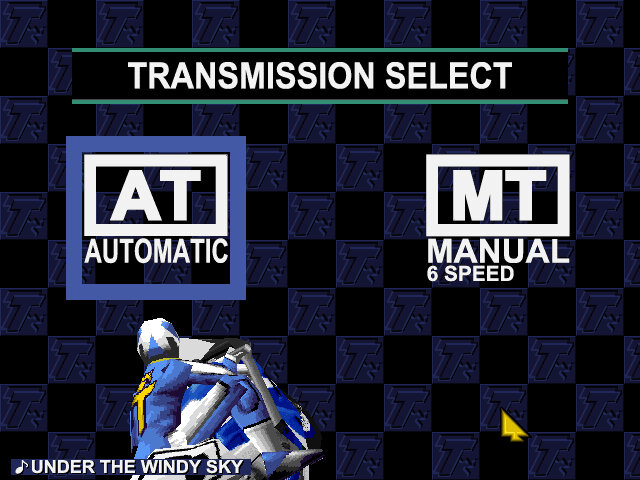
Practice Mode: Similar to arcade mode, choose a track and your bike which will have a unique stats for speed, acceleration and handling.

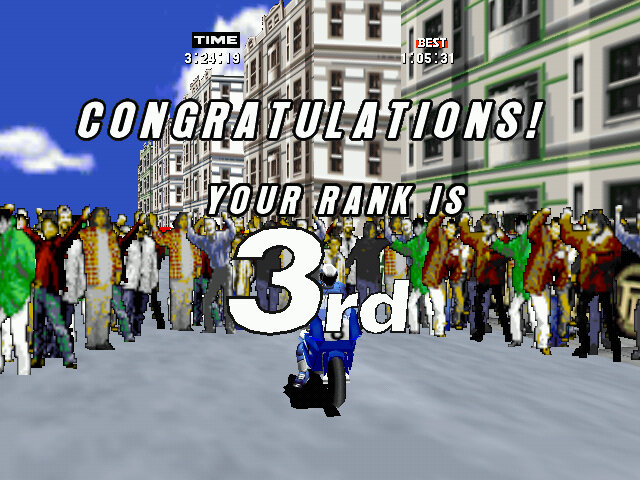
Challenge Mode: a tournament mode where you have to race on all four tracks, coming in a 3rd or higher in each one. The superbike challenge is unlocked after completing this mode.

Versions

Like other Sega games of the era, this title was relased to the arcades first, then to their Saturn console and eventually to Microsoft Windows.

Arcade

The original arcade release runs on the model 2 hardware, specifically the 2A version. This version was considered to be graphically superior of the three versions but is the most basic in terms of content, featuring only two courses and just the arcade and time trial mode. The Model 2 emulator is the most popular way to play this version of the game, with the MAME driver making steady progress but still unplayable in some regards.

Really for a home port, the game could have done with further tracks being added to increase the replay value of the game.

Sega Saturn

Sega ported the game to their home console of the era, the Sega Saturn in 1997. This version introduced new features including an FMV opening sequence and additional race modes. There are also options to change the bike model, which have unique stats across the different models. The game’s graphics were considered to be impressive for the Sega Saturn’s capabilities, with colorful and detailed environments that recreated the feel of the arcade version.

Windows

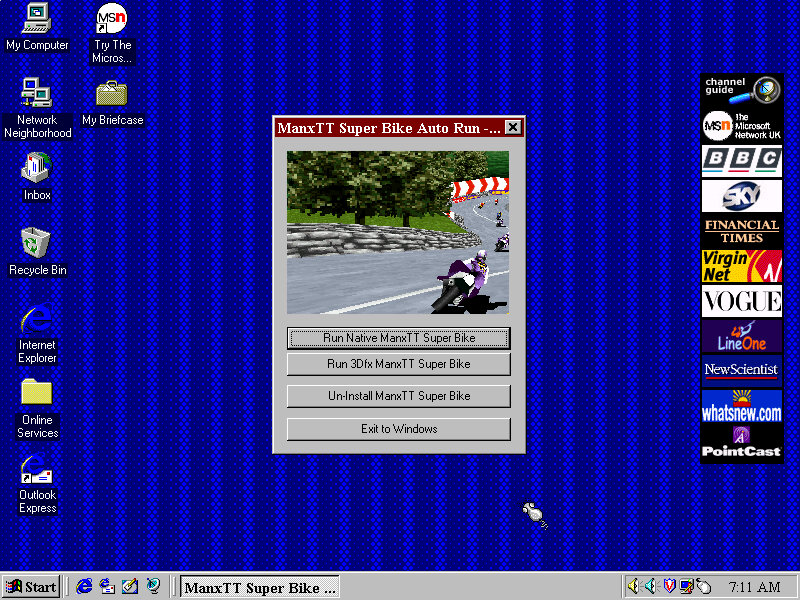
This version supported both DirectX 5 and 3DFX Glide, the latter gives a visual difference that makes it similar to the arcade version sans the frame rate. It seems the game will only render up to 30fps. Still the game can run at 640×480 which is higher than the Saturn or even the Arcade version.

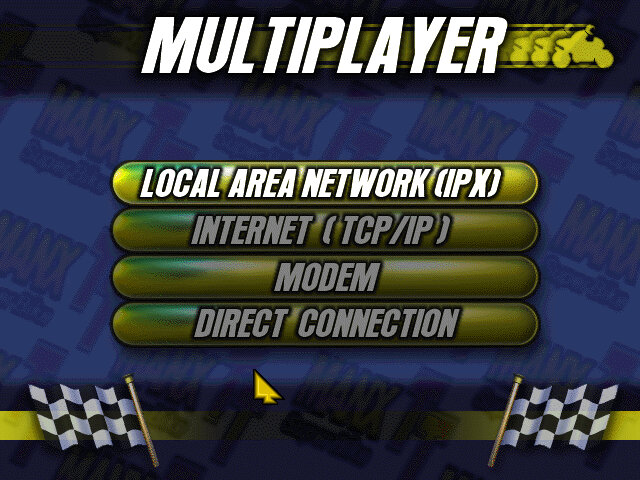
Multi player is supported in this version and can be done over a variety of channels. IPX, TCP/IP, Modem and Serial connections are supported. This can be done via virtual box of you use the PCap option between two 86box VMs, linking it to the VMware virtual network adaptor (8 is typically the local adaptor) then create an IPX session. It may also be possible to map to the serial port in the near future.

I believe up to 8 players can playing a single session, to this would require three machines or more. Unallocated players will be replaced with an AI enemy, similar to single player mode.

DirectX Version

The regular version that uses DirectX 5 for 3D acceleration which works fine in 86Box using the S3 ViRGE video card. This graphics card lacks support for texture filtering.

Only issue is after the race, the crowd can disappear and reappear intermittently.

3DFX Glide Version

The bundled 3DFX drivers will only function on the original Voodoo, or the Quantium3D version of the Voodoo card. Later 3DFX cards require updated libraries in order to be detected, otherwise you will receive the ‘Failed to find any glide hardware’ error, or ‘Failed to initialize viewport system’ error.

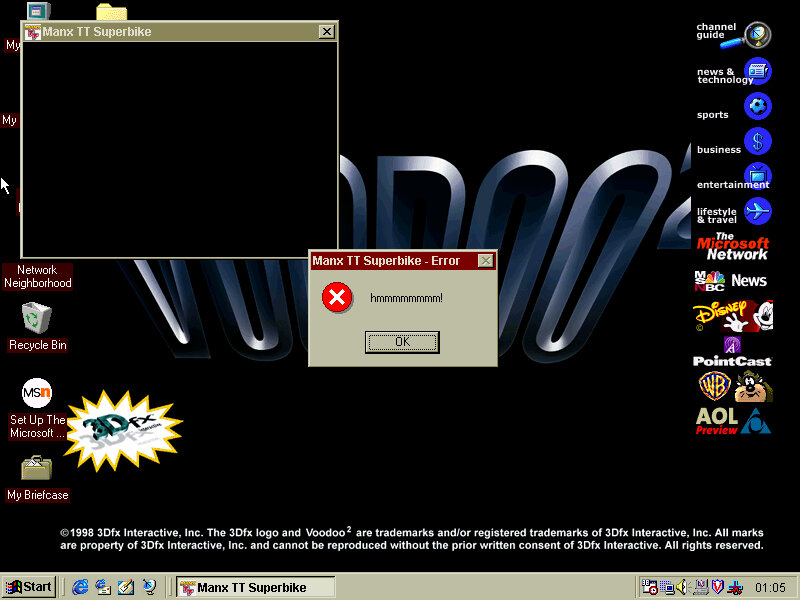
Works well in 86box until I tried it in a Pentium II PC with a Voodoo 2 (S3 Trio video card), where there were a couple of warping polygons and the game would throw up a ‘hmmmmmm’ error message. Whilst it looks like the game crashed, clicking Ok on the message box would restore and return you back to the game. None of this seemed to occur in other VMs I have that used the original Voodoo and AMD K6 combo.

Virtua Cop

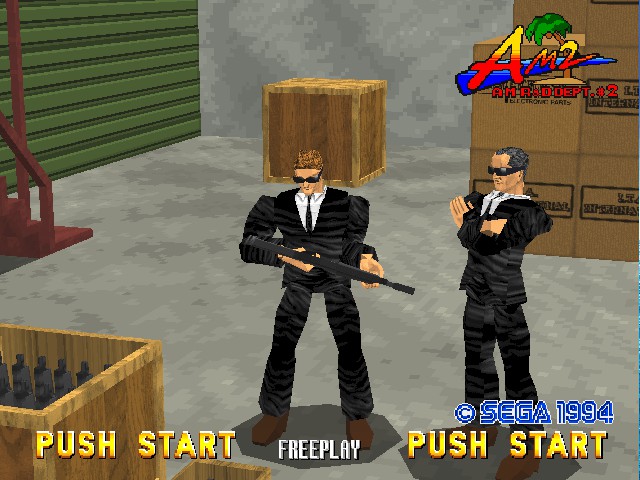
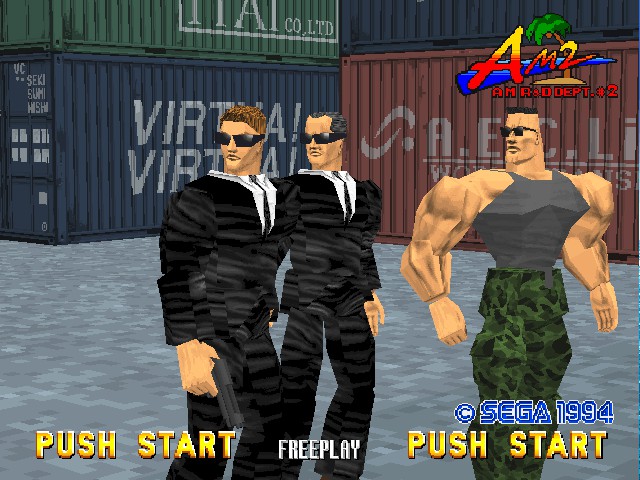
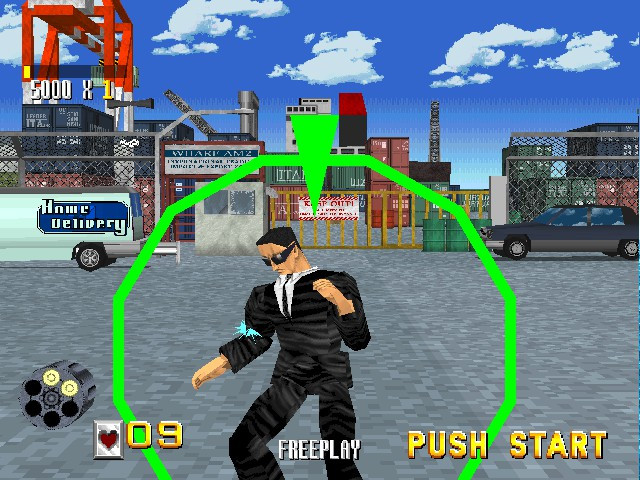
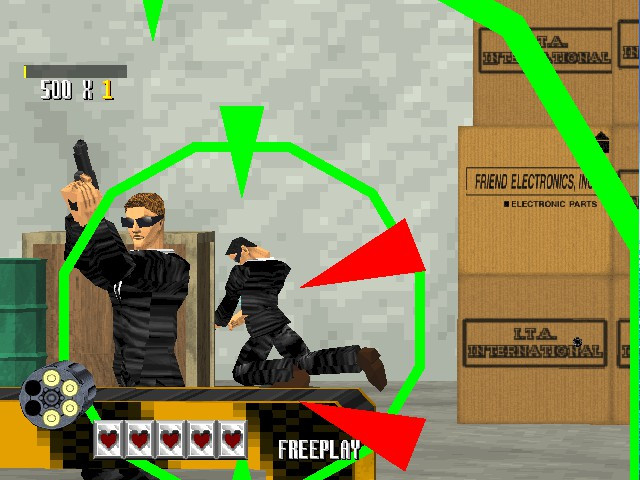
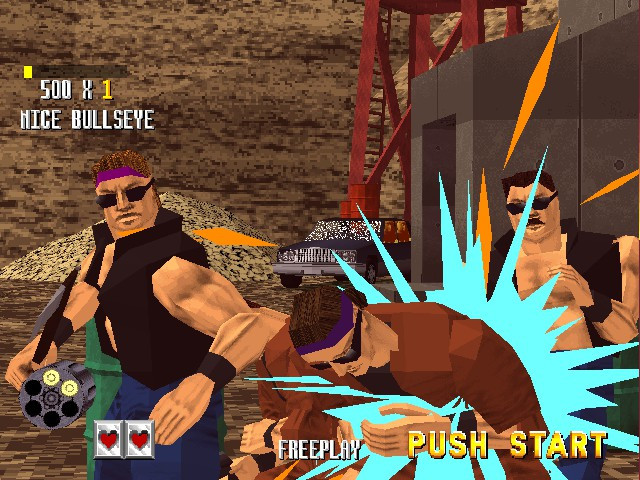
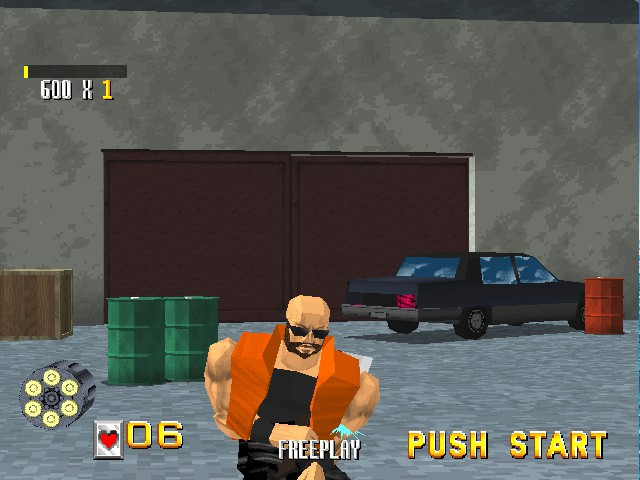
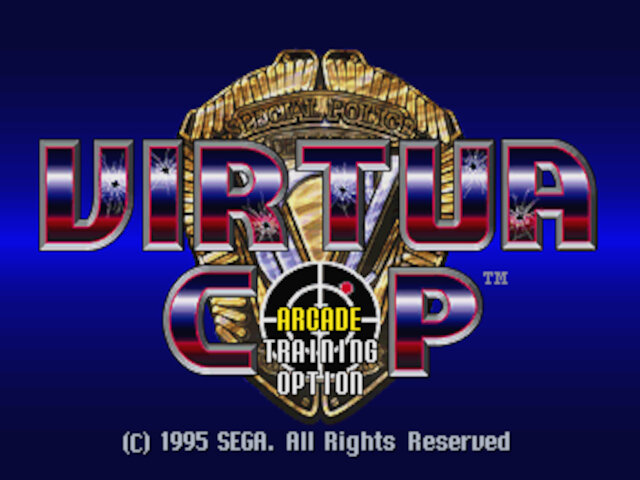
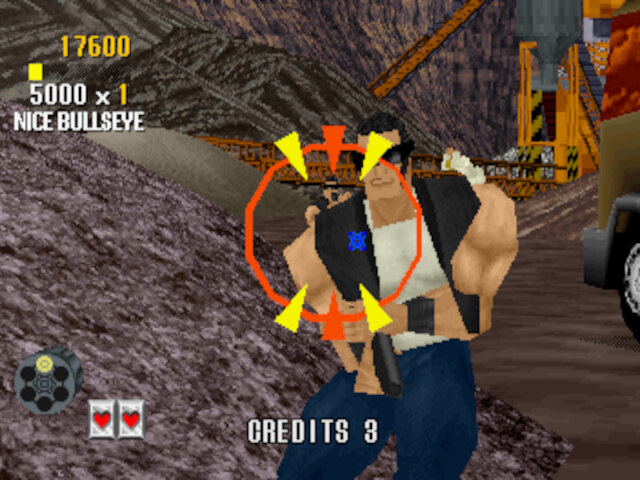
An on-the-rails arcade shooting game, here you only have to worry about aiming and shooting and all the movement is done automatically. There is still a challenge though and fast reflexes are essential to get a good score in Virtua Cop. If you’ve played Time Crisis you will be familiar with the concept, but Sega have implemented different mechanics.

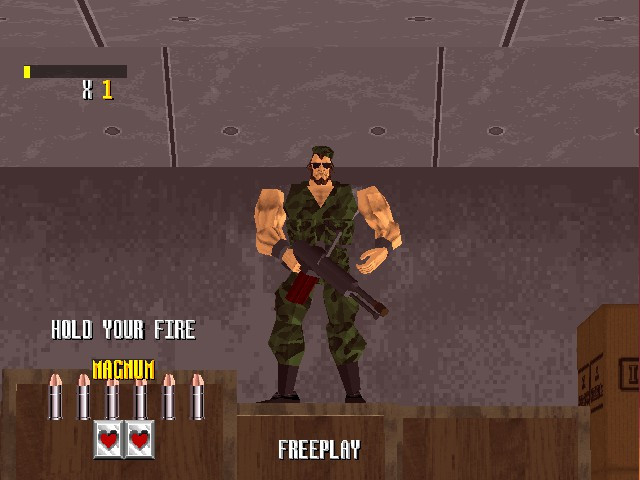
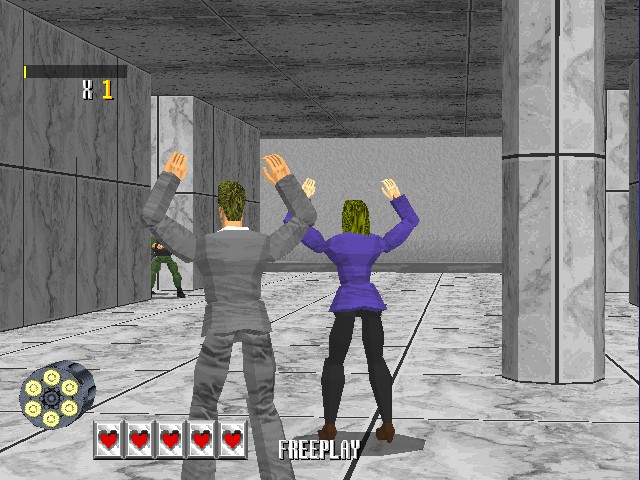
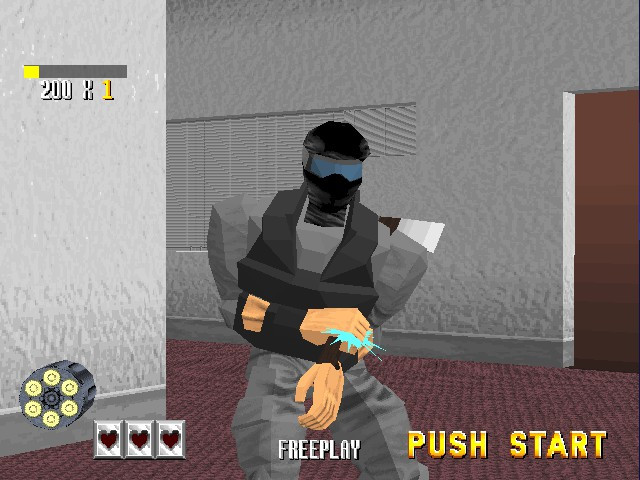
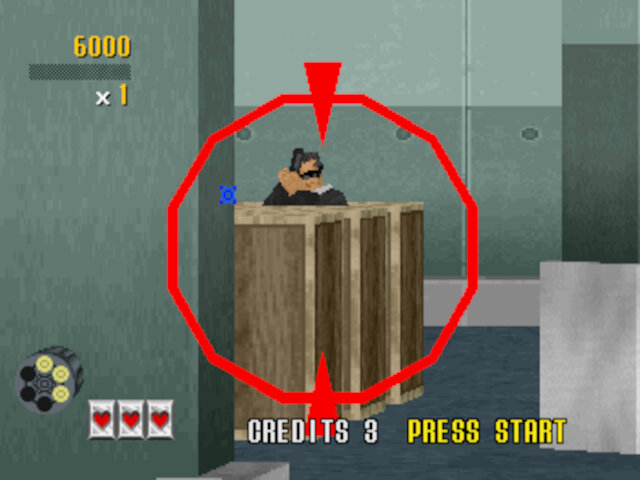
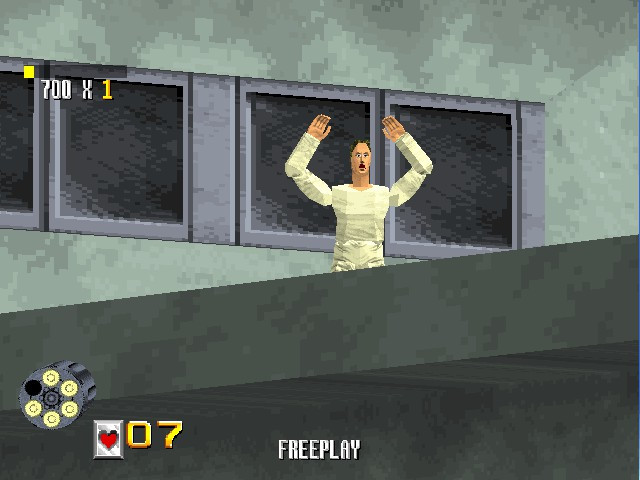
Don’t Shoot! Proceeds to run in front of player

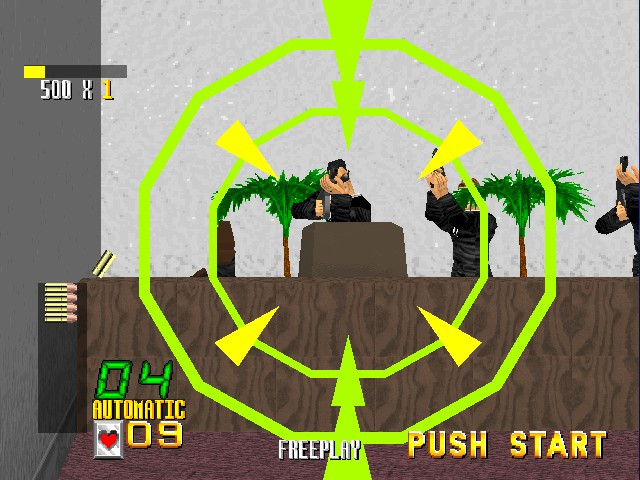
By default you start off with the revolver, which is a standard pistol. Over the course of the game other weapons can be picked up like the shotgun or an automatic, which holds more ammunition and can fire more rounds without being reloaded, but can only be used through one ammo clip.
You will lose the additional weapon if you get shot by an enemy or if you hit a civilian, when this happens you will revert back to the standard revolver.

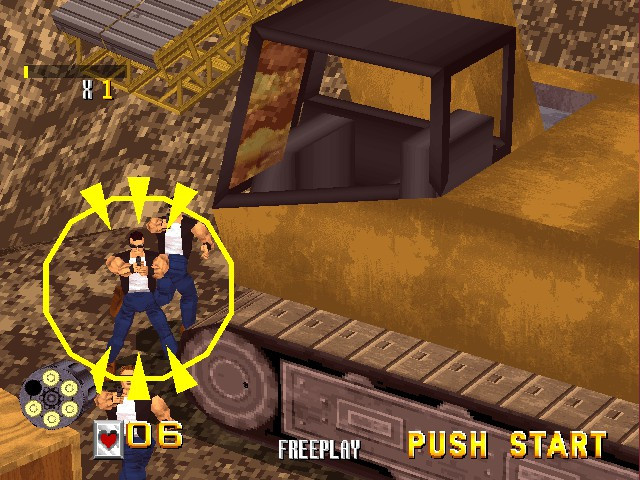
The whole objective of the game is to shoot the bad guys, whilst avoiding the civilians. Shooting a civilian will cause you to lose a life whilst shooting and disarming an enemy gives you a justice shot bonus. You can use the environment to help you, by shooting the red barrels you can create explosions that can take out several enemies.
Occasionally enemies will pop up on the screen and will throw an axe, you will need to shot them before their axe makes contact otherwise you will lose a life. These can take you by surprise, but remain consistent through multiple playthroughs, so over time you can memorise the enemy sequences.
Some enemies will also throw a grenade, you must shoot the grenade before it lands.

Levels:

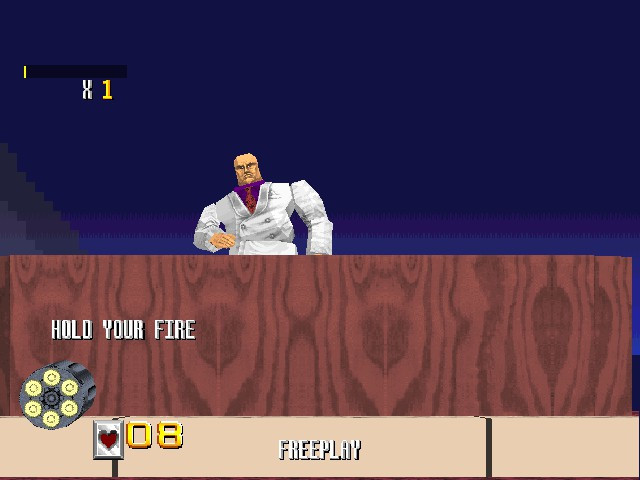
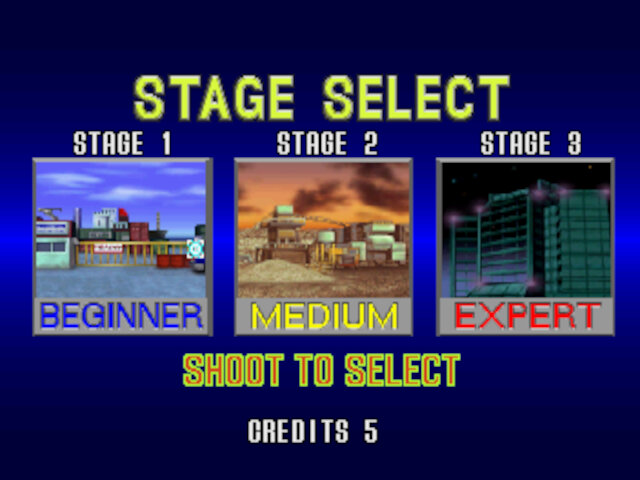
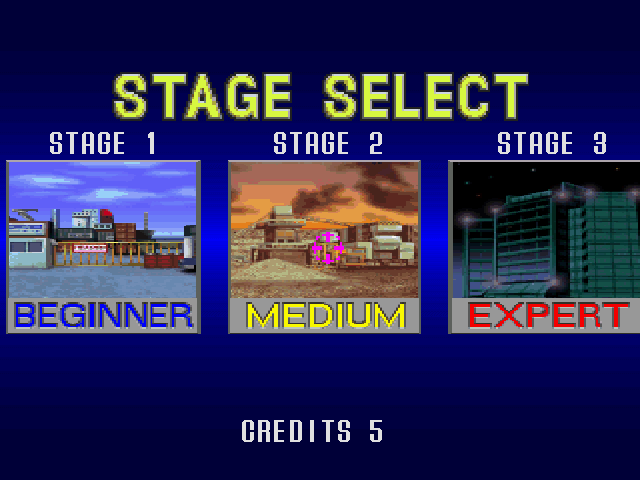
There are three stages in total, at the end of each stage is a boss fight where you will need to shoot both the boss enemy and their projectiles.

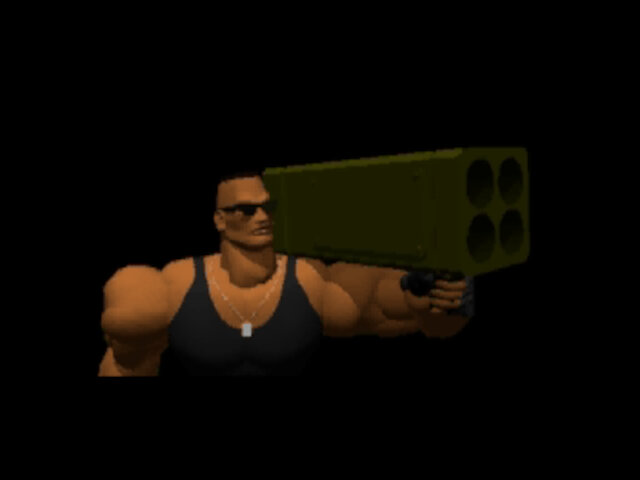
Stage 1: Arms Black Market, Starts off on a shipping yard, where this is suspected criminal activity going on with the illegal import of weapons. The end boss is Kong, who uses a rocket launcher.

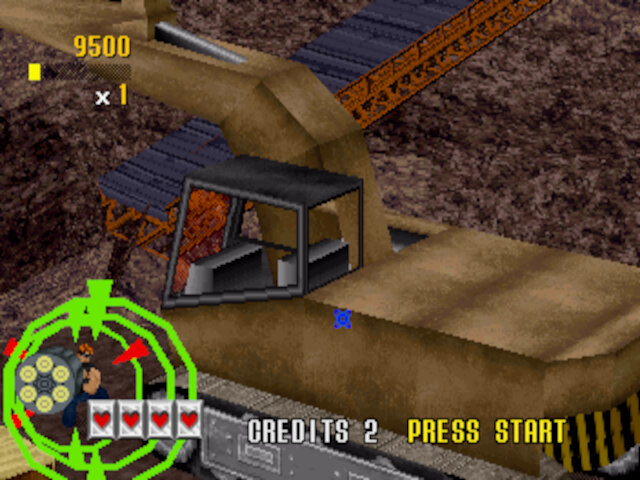
Stage 2: Underground Weapon Storage, Takes place on a construction site. Here the enemies start to become more frequent, with many popping up on screen, and environmental hazards involving vehicles now talking place. End boss here is called King (No, not the one from Tekken), and uses a flame flower that shoots balls of fire.

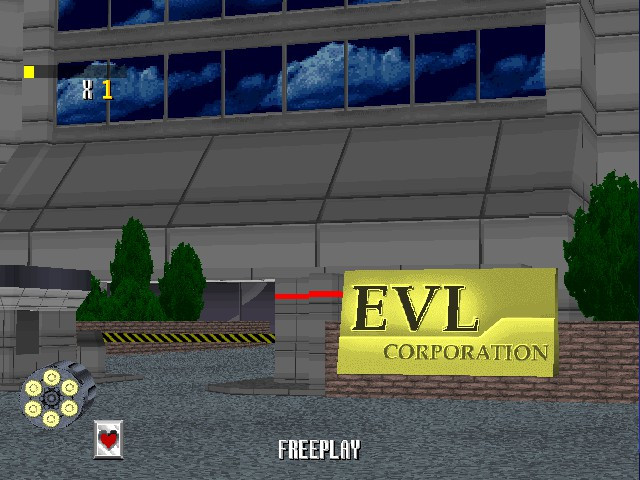
Stage 3: Gang Headquarters, We’re here in the EVL corporation headquarters. You fight shoot your way through the Skyscraper, through the various offices (equipped with Apple Macintosh Quadra 900s, guess we know what computers Sega was using back then). Here the enemies are a lot more quicker to react compared to the previous stages. At the end there are two gang bosses, Boss and Fang. Boss desk transforms into a mecha-suit that fires missiles, whilst Fang is an attack helicopter.

Versions

Arcade

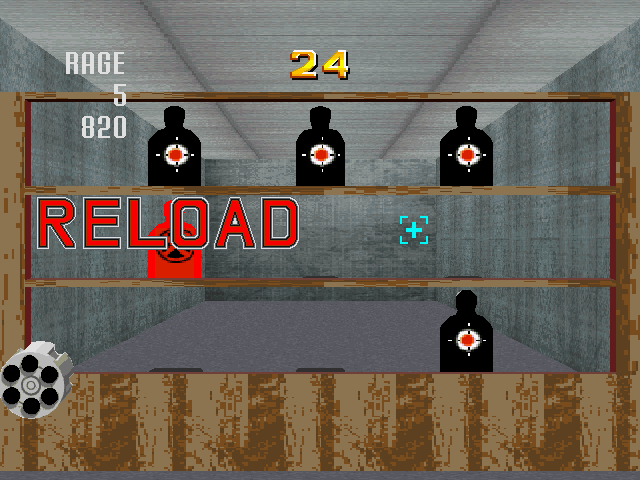
Virtua Cop debuted on the original Model 2 arcade board and was a light gun based game. The player uses the gun to aim at targets to fire and shoot enemies. Reloading is done through aiming the gun away from the screen and shooting.
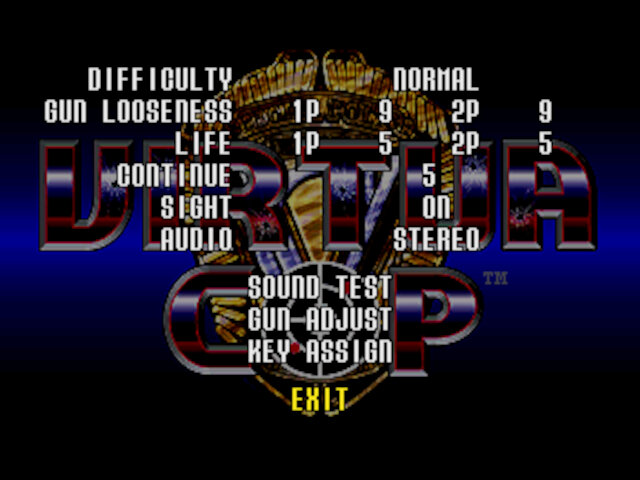
In total there are 3 stages, and can be played in any order. By default you have 5 lives, which can be amended in the games test mode. After all your lives have been lost, you need to insert credit in order to continue, but the game does allow you to pick up where you left off instead of starting from the first level again.

Sega Saturn

Sega ported the game to the Saturn in 1995 and was one of the fist games to be developed using the Saturn Graphics Library, which was intended to make it easier to develop games for the Saturn. Like other Model 2 to Saturn ports, the graphics quality has been reduced in order to adapt to the Saturn’s graphics hardware.
The Saturn does make use of pre rendered FMV for some of the opening sequences, however the arcade opening sequences is rendered in engine, although modified to account for the Saturn’s design.
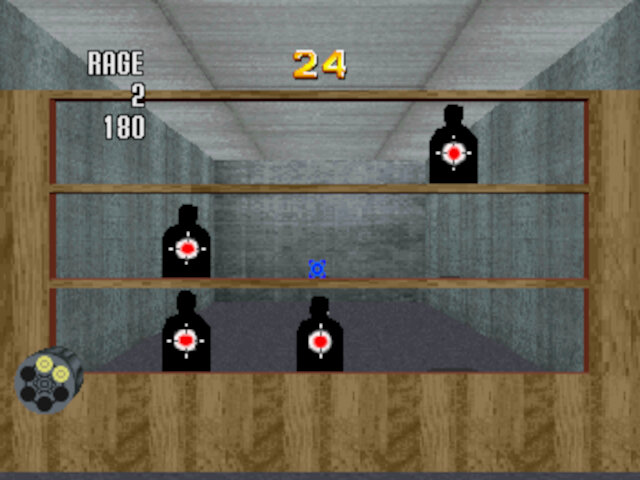
The Saturn compensates for this with the addition of a couple of features like the training mode which helps you get used to the shooting mechanics by shooting a set amount of targets under a time limit. There is also a two player mode that can be access through the training menu.

The Saturn version also makes use of the Virtua Gun which is a light gun that functions only on CRT TV’s or the Saturn mouse.

Windows

Sega also ported the game to Windows in 1996 and makes use of DirectX X
Like the Saturn version it also features a couple of features. However it still lacks the visuals of the arcade, even though some high end systems of the time were capable of Model 2 like graphics. It’s likely Sega assumed most players would be using software rending as opposed to a dedicated 3D card, and designed the game as such rather than targeting high end hardware.

Settings screen in glorious Comic Sans, and when 640×480 was considered high res

The PC port does suffer from a few issue’s in regards to how it is controlled. Navigating the menus is a pain, as you have to use the keyboard arrow keys and the enter key to select, the mouse cannot be used at all. Seems like the game was designed to be used mostly with the gamepad. The mouse can be used to aim and shoot, with reloading being done by double clicking the right mouse button quickly.

In terms of support the game was meant to be used for Windows 95, but will also work with Windows 98. No support for NT (Not tested yet). The game makes use of DirectX 2 for its 3D API. There is also support for the Nvidia NV1 accelerator, which Sega’s early 3D PC titles had support for, this also makes use of a special executable that runs on that graphics card only. No modern API wrapper for that card exists, and many emulators (PCem/86Box/QEMU) have no support for this unique card.

As with all CD-ROM based games from this era, this makes use of CD Audio for the games background music. In order for this to play back you must have the game in a BIN/CUE format since this preserves the audio subchannel data. PCem and 86Box do support this form of audio when mounting those images directly into the emulator, providing the correct image format is used. On an actual system an IDE hard drive with the CD Audio header must be connected to the CD Audio port on the soundcard, otherwise the music will not play, modern SATA drives and onboard soundcards will likely lack this interface.

Rave Racer

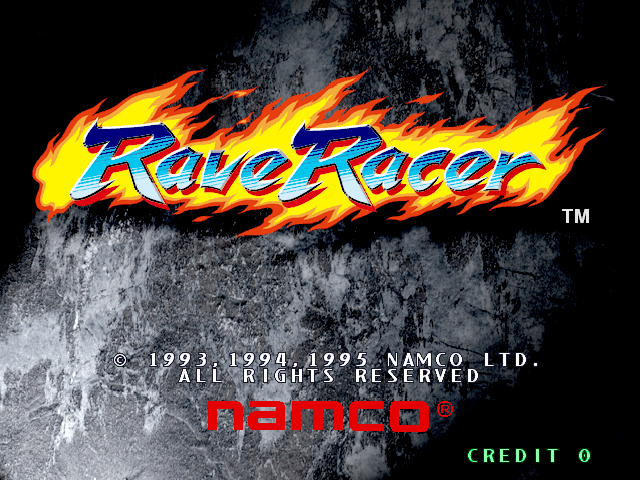
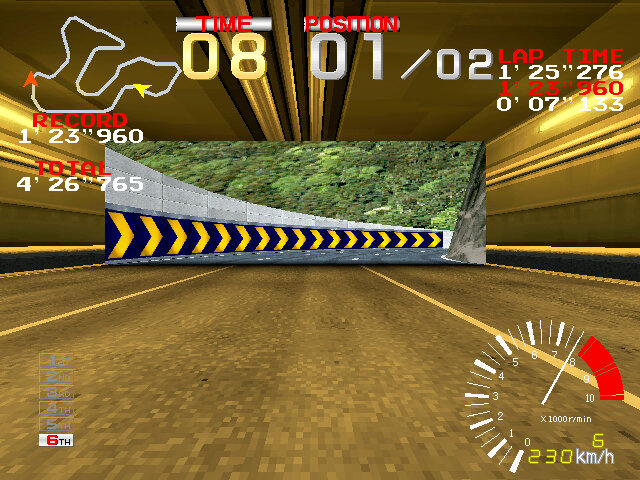
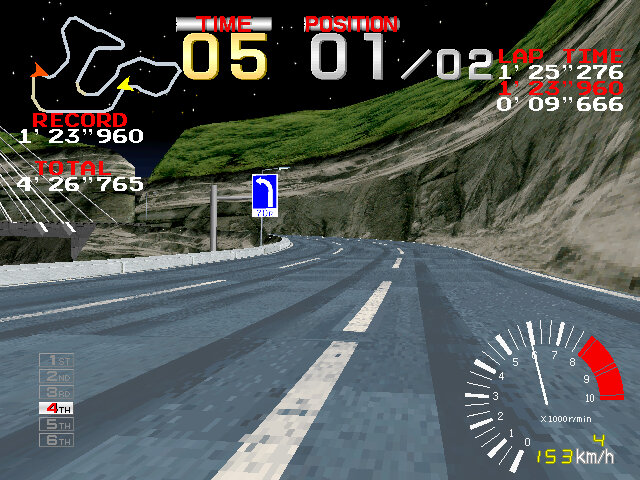
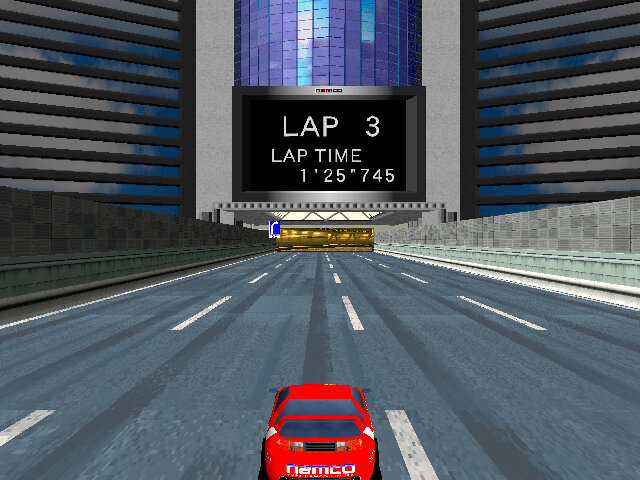
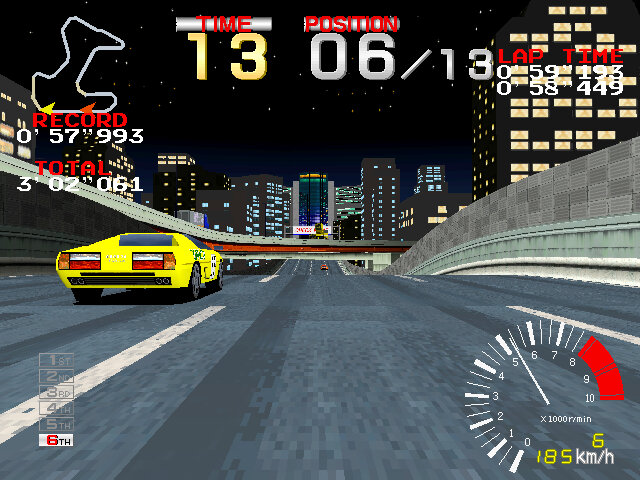
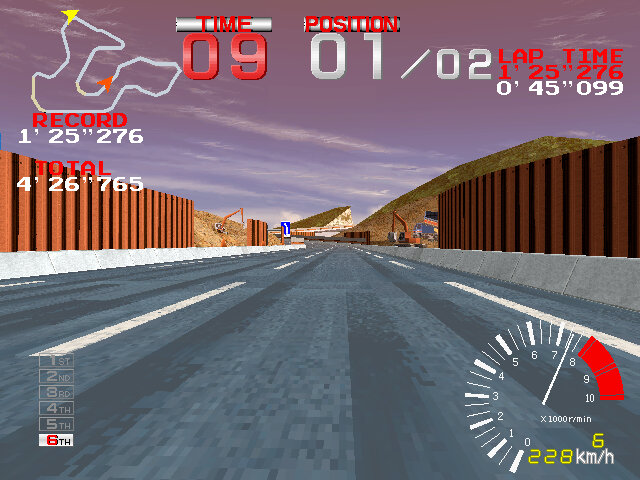
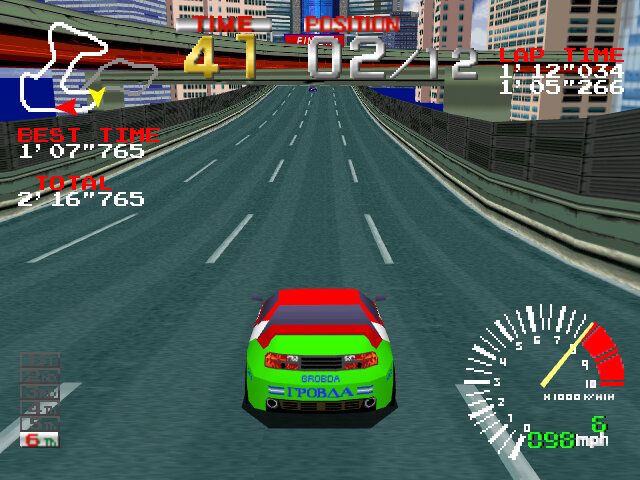
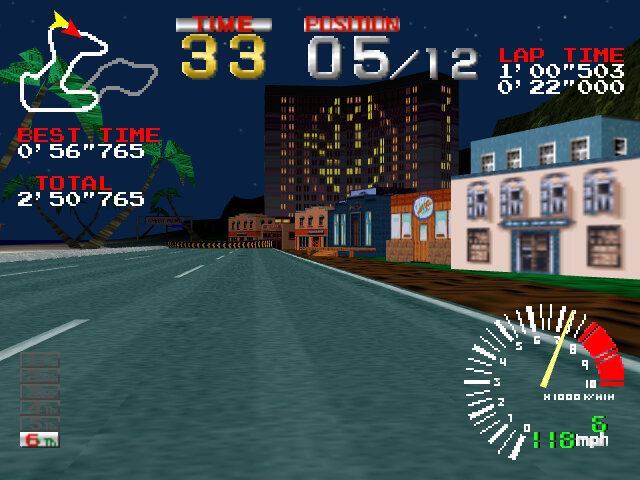
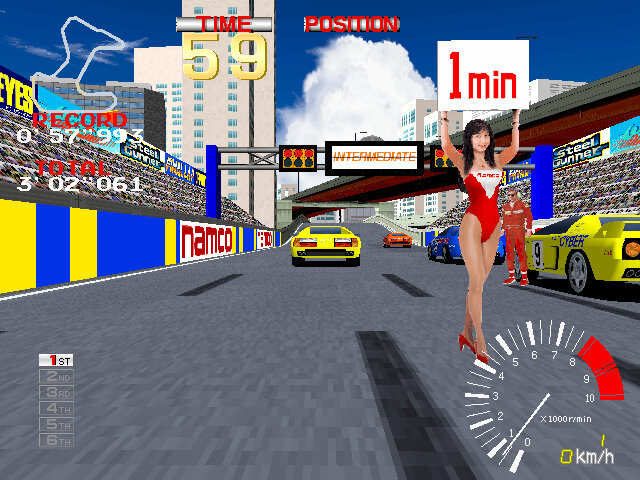
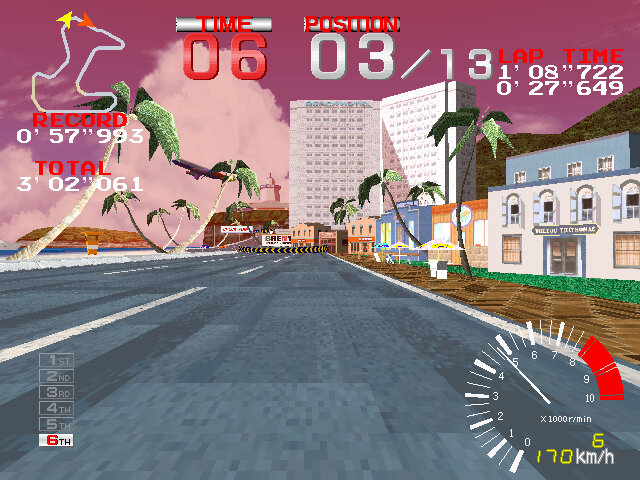
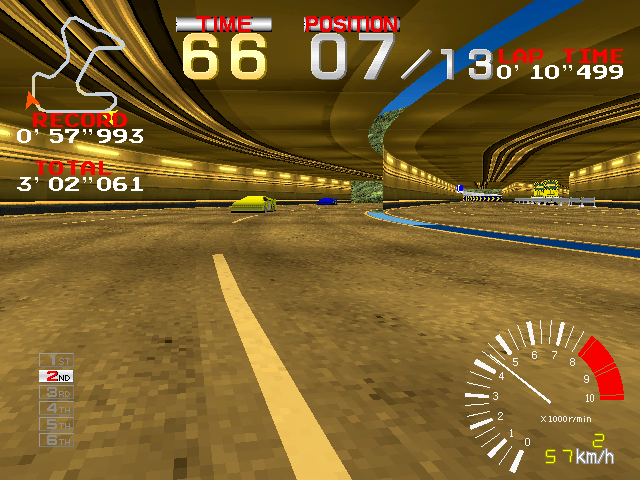
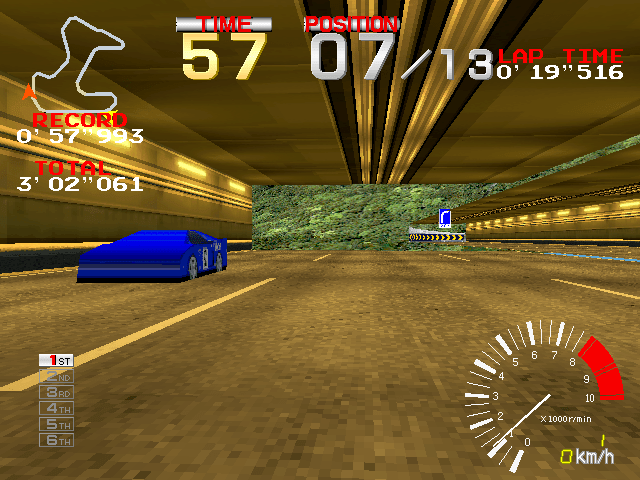
The third arcade instalment of the Ridge Racer series, and the first actual sequel/spin-off, since Ridge Racer 2 was mostly the same as the original except for the revised soundtrack, a revised HUD and multiplayer support.

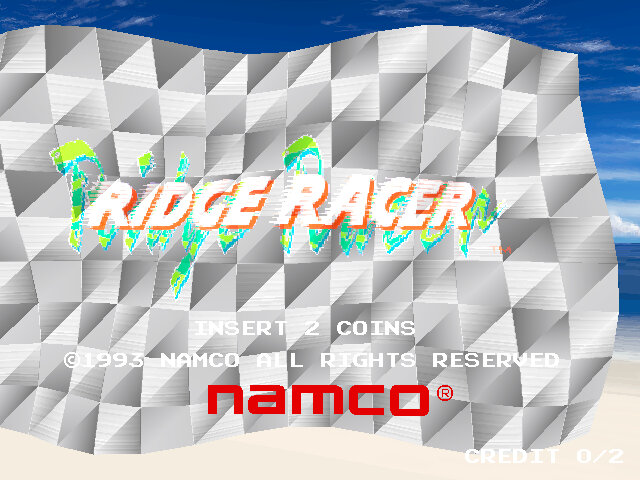
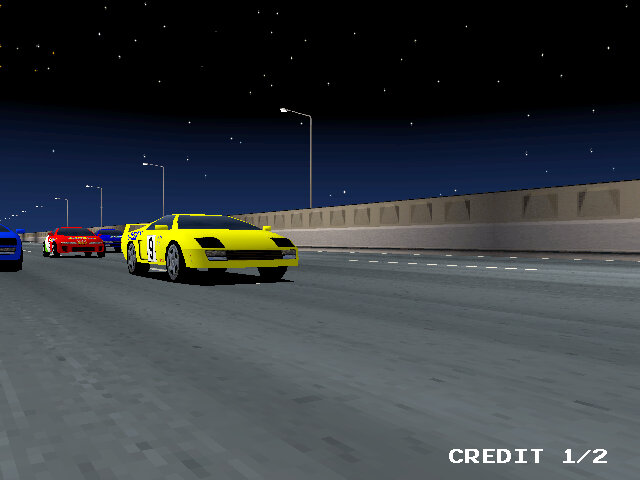
The music has also been revised with some completely new tracks covering techno/house and electronica genres, and some familiar ones – rare hero returns as a remix. Sadly this gets ruined by the two race announcers who insist on polluting the sound-waves with their rambling takes. The first one is a female sounding voice who is supposed to be the main announcer and has a tendency to repeat the same lies constantly (Go GO GOO This race is yours!!!) She also voices the attract screen. The second announcer is a male voice who seems to be one of the rival cars.

Emulation

Vivanonno

The original emulator for the game that was released in 2002, now has been eclipsed by MAME. Vivanonno could emulate most of the effects but has issues with the car shadows which can dissapear. Like Ridge Racer 2 however, there are a few geometry inaccuracies.

Texture Filtering

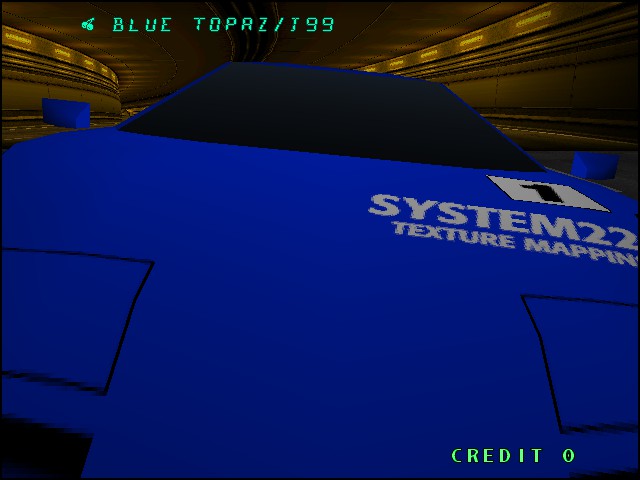
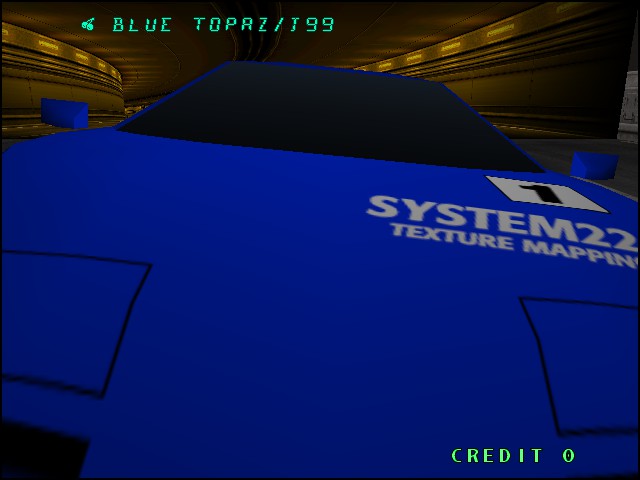
Left has filtering disabled and is how it would have appeared on the actual system, right has filtering enabled.

Other

Cars are slightly sunk into the track, but lift up when the race starts

Nintendo 64 Version?

Possible leaked build of the game running on the N64?

Its just the Vivanonno version with the texture reduction set to the highest option, but if it did come to the N64 it may have looked soomething like this.

Mjolnir

This was a fork of MAME and had the goal of emulating the Namco System 22/21 games with hardware acceleration. This had the benefit of better emulation performace since the graphics processing was offloaded onto the GPU.

Sadly Mjolnir was abandoned and the latest build is based off a very old version of MAME, which means System 22 emulation is very primitive and many graphics issues are present with the emulation being incomplete. As a result its difficult to play givern the graphics issues with this build. Also it uses an older ROM set which makes it incompatable with the currernt MAME sets.

More Information

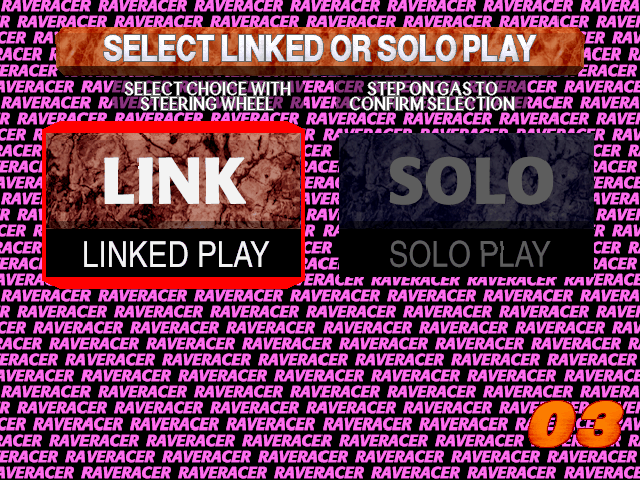
A fork of MAME now allows for link play with selected System 22 games. Unfortunately it is far from perect and only seems to work with only 2 players reliably.

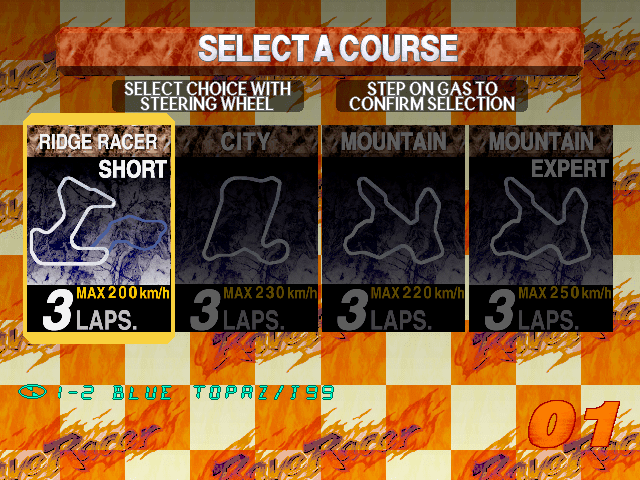
Track selection screen with link play enabled

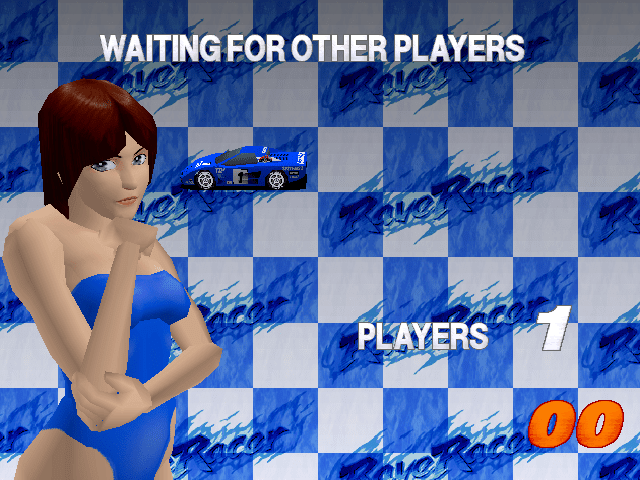
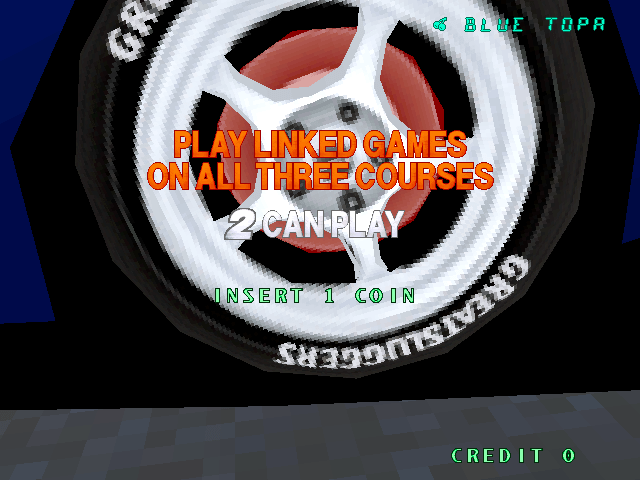
Meanwhile other linked machines will advertise that they are able to join in, the top two are displayed on the idle machines whilst the bottom is displayed on the machine that initated the link paly.

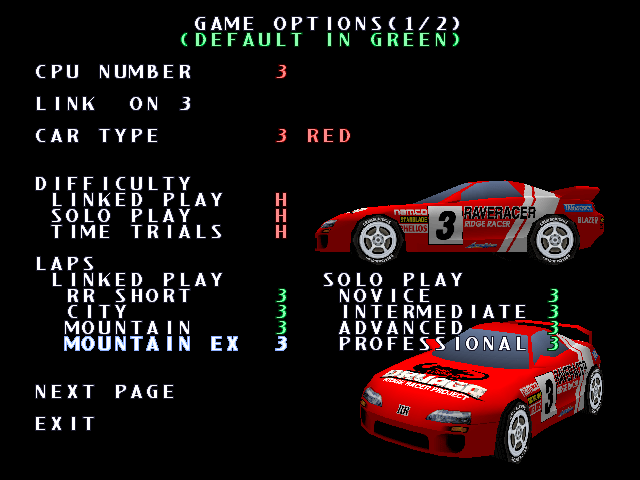
Left: the test mode configuration. Each machine needs to have a unique car colour and CPU number, which allows each machine to identify each toher. On the right the attract screen when link play is detected

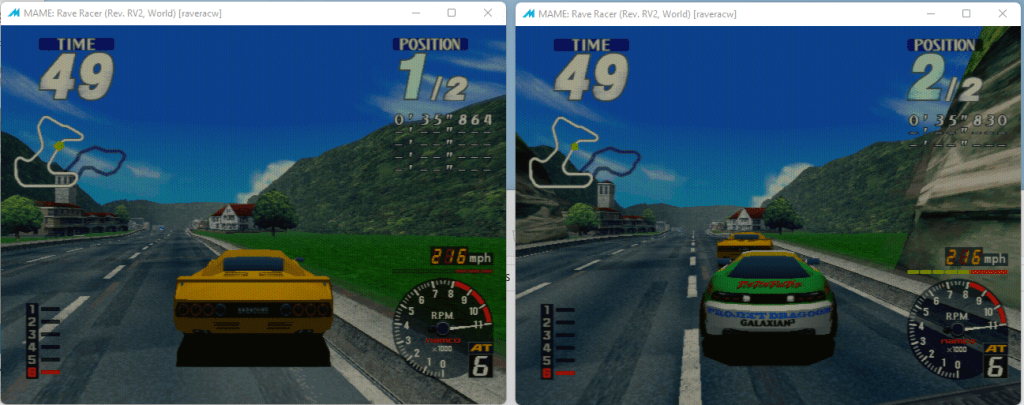
A two player game from both players view. The time is different on both machines because the right has the difficulty settings set to easy mode (H). Seems each machine can have their own independant game configuration. Infact you can have one machine set to complete three laps, whilst the other has to complete five, which does not seem fair. Perhaps Namco would assume the operator had to ensure all systems had the same configurations set?

One has 3 laps, the other has 5. Also both are marked as lap leader

Whilst its possible for two players to play this way, when trying to play with four players there seems to be a few issues. I would assume System 22 networking works on the basis it transmits network packets in a broadcast fashion, like UDP. When playing a ‘four’ player game it seemed that one machine was sending data to one machine, whilst receiving data from another which caused some interesting effects with the map display. Despite setting each machines IP address (emulated through MAME instance, the arcade board has no TCP/IP support) to be unique. It works on some sort of token ring like topology where one machine recieves data and then sends it on a different physical port to another machine, basically every machine has an input and output.

Its also possible that this is due to the early emulation, and may be improved in later releases.

More Information

Boundary Break

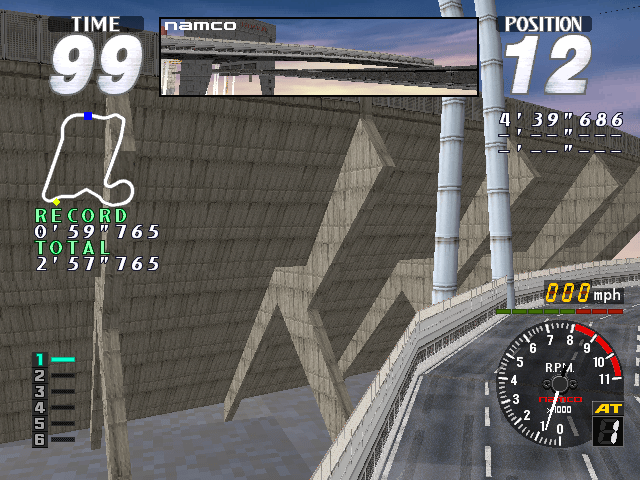
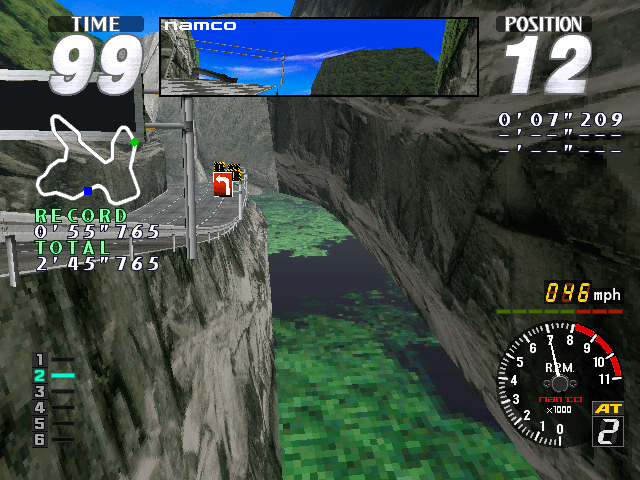
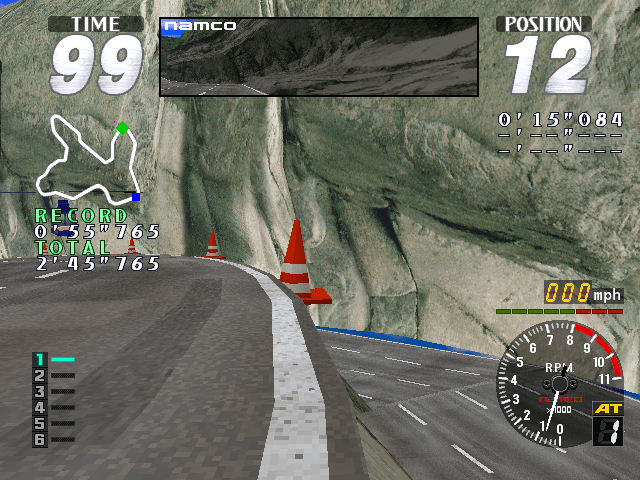
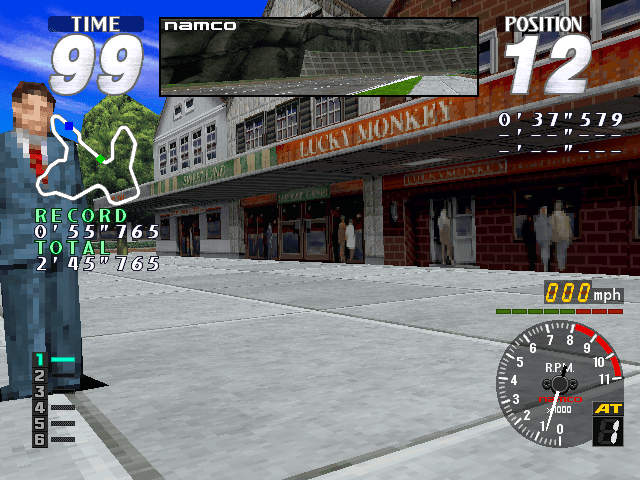
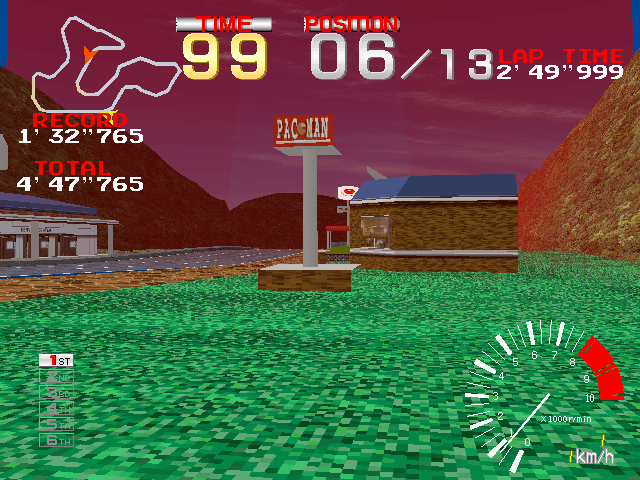
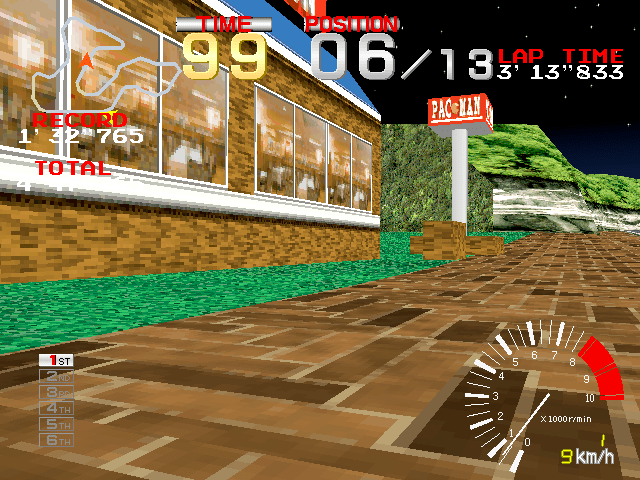
Namco always put a lot of detail into the track environments of their Ridge Racer games, and there are many references to their other arcade and console titles via the use of track billboards or building signs. A lot of this detail gets missed do to how fast paced the game is, and the arcade nature of the game. Many players are not going to stop and admire the buildings close up, which is where MAME and the no-collision cheats comes in.

Once nice detail that gets over looked, in the demo attract sequence, you can see the brake discs heat up as they are applied!

Novice Track

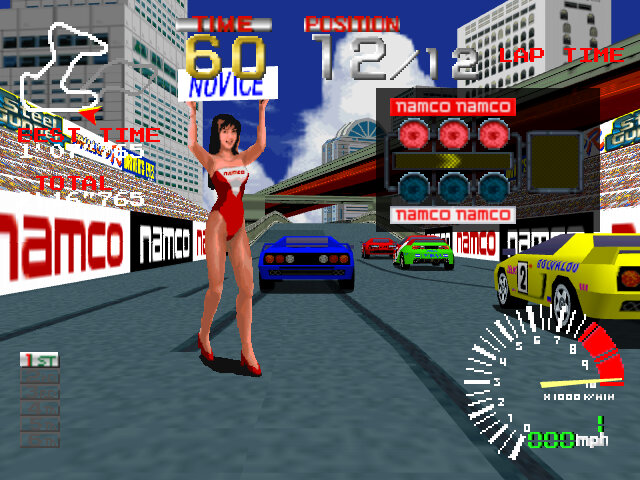
This is the same novice track from the first Ridge Racer game, but has updated textures which give it a more detailed look. Some buildings have been altered but the layout of the track remains the same.

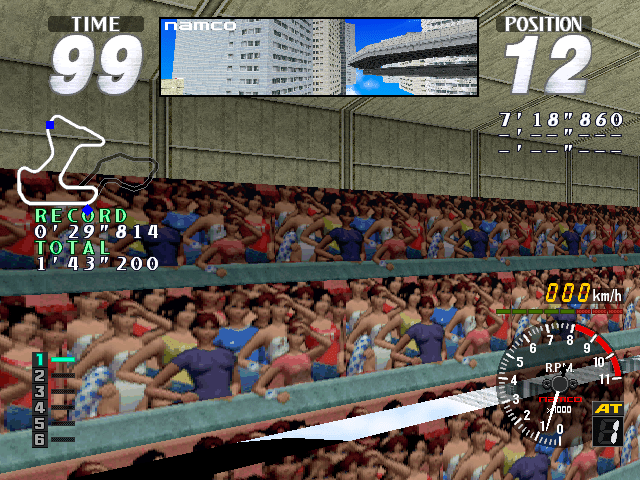
The crowd looks different compared to the Ridge Racer version.

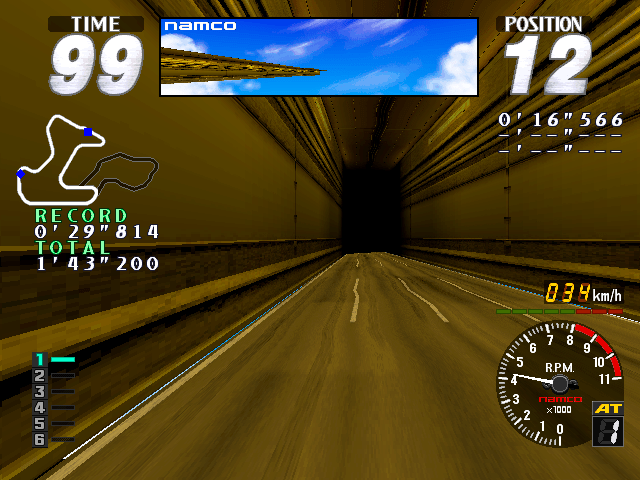
The end of the alternative tunnel path, which is normally blocked off and inaccessible. Seems to lead into the abyss…

Outside of the bridge in the first segment of the track

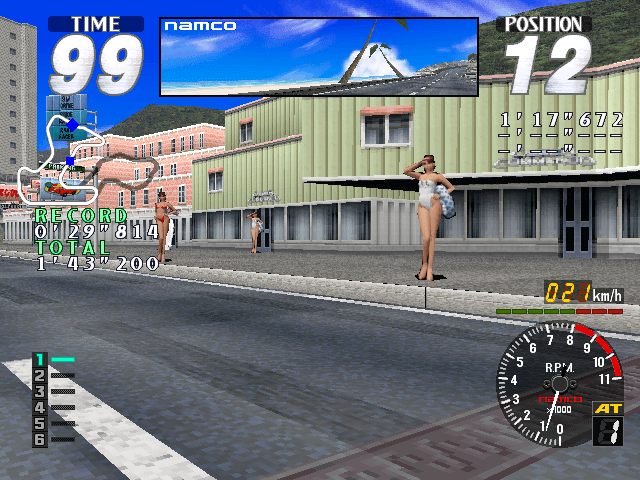
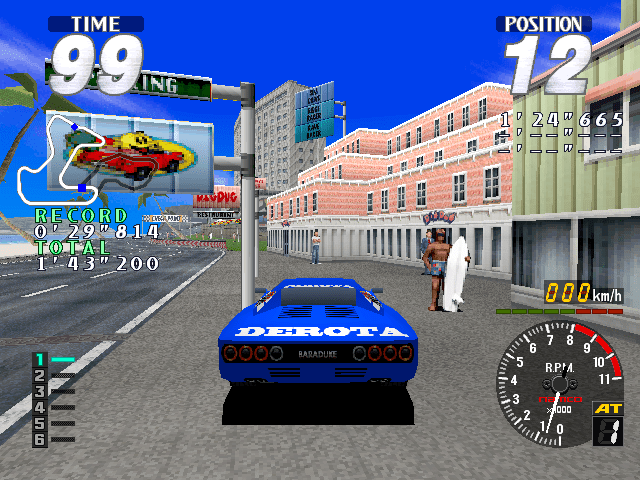
Closer view of the shops,

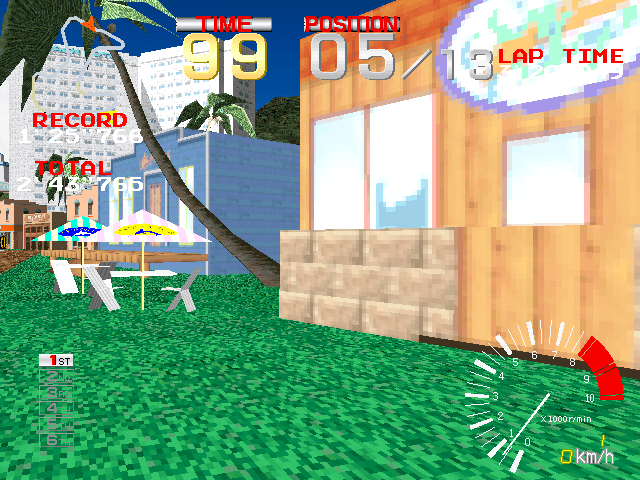
Getting a closer view of the shops near the beach

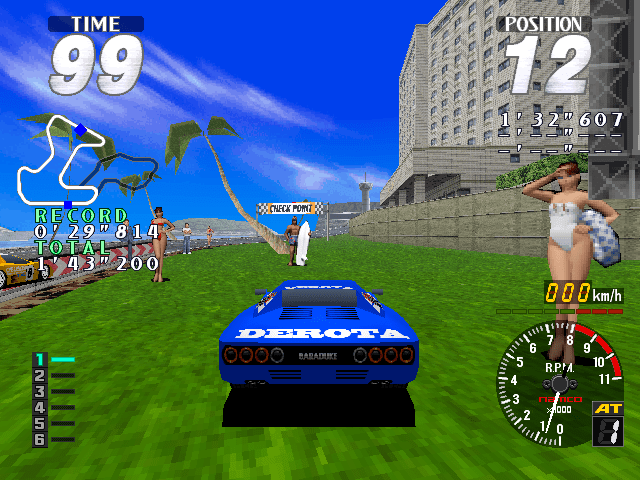
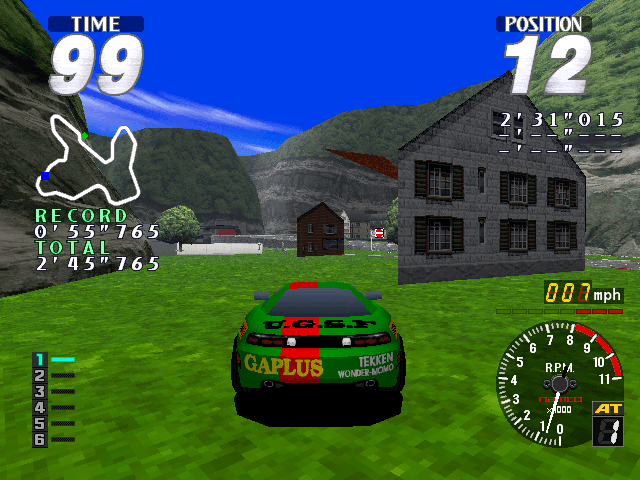
Driving in the grass, the peds here are unanimated

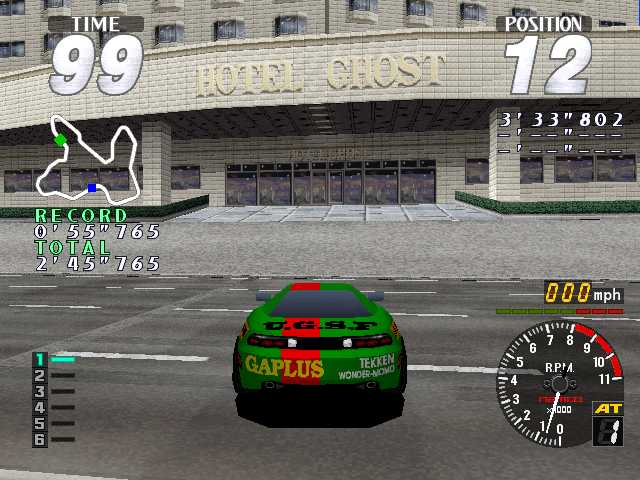
Hotel Ghost?

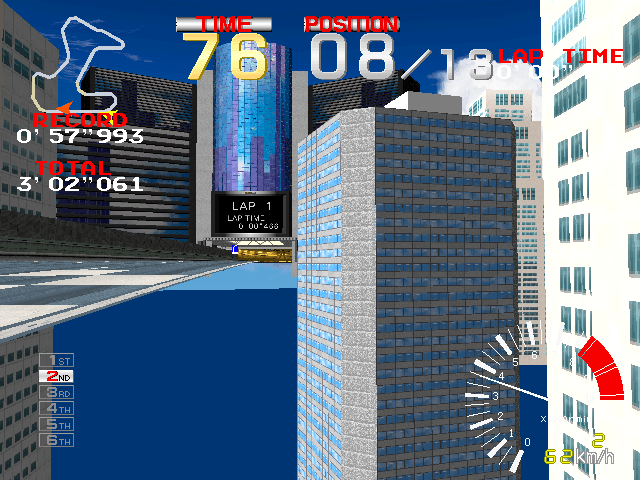
Out of the track and a view of the tower in the background, unfortunately we cannot drive to it since it disappears

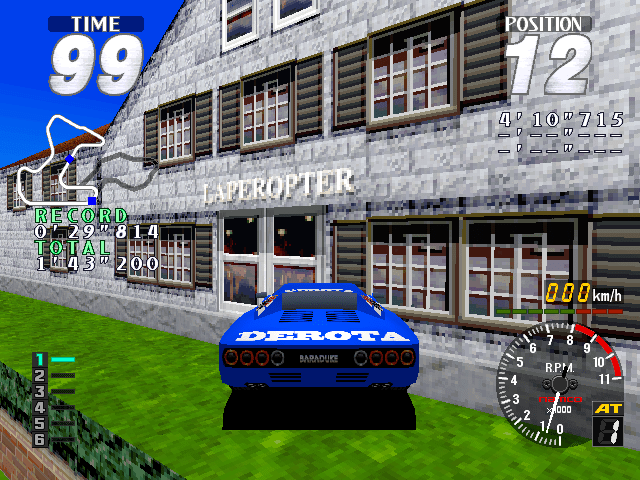
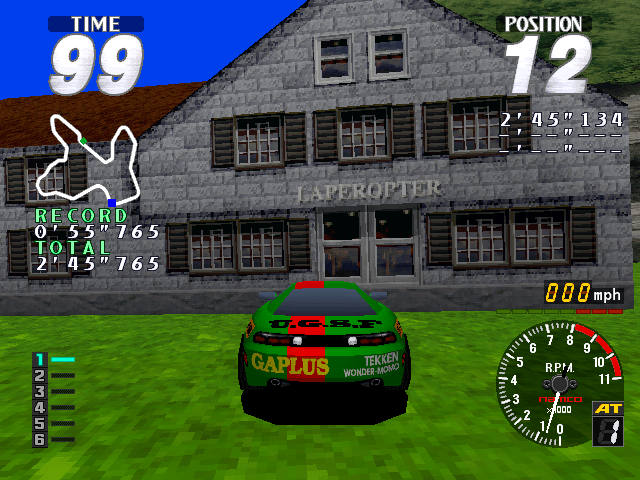
Laperopter?

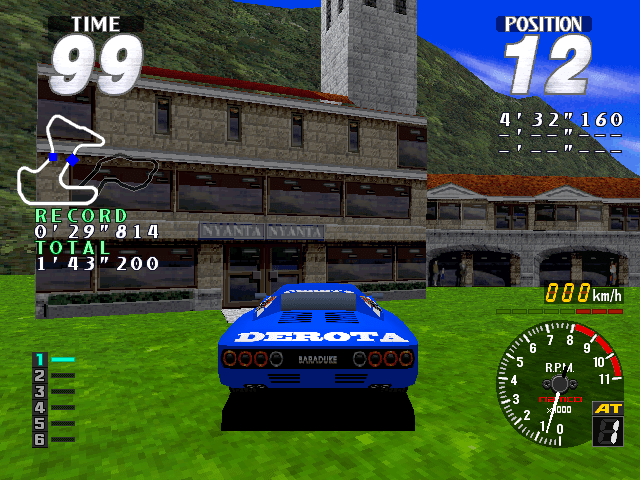
Building that reads Nyanta Nyanta, unsure what that means

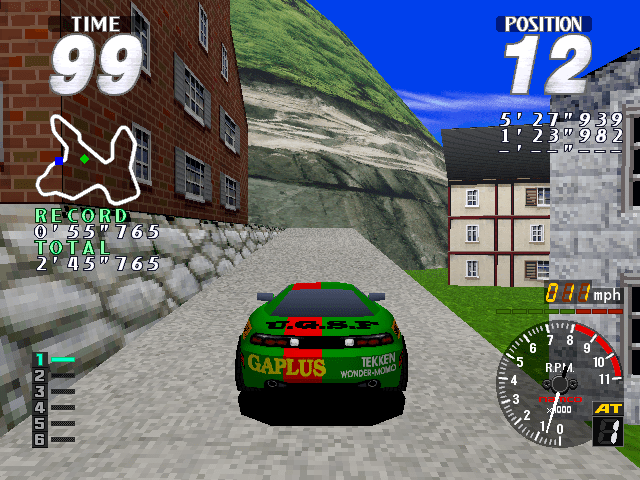
On the novice track there is a section that is blocked off, which leads to a track on the Advanced course, driving past here just leads to a empty void, since the world here isn’t populated

Another view from a out of bounds perspective

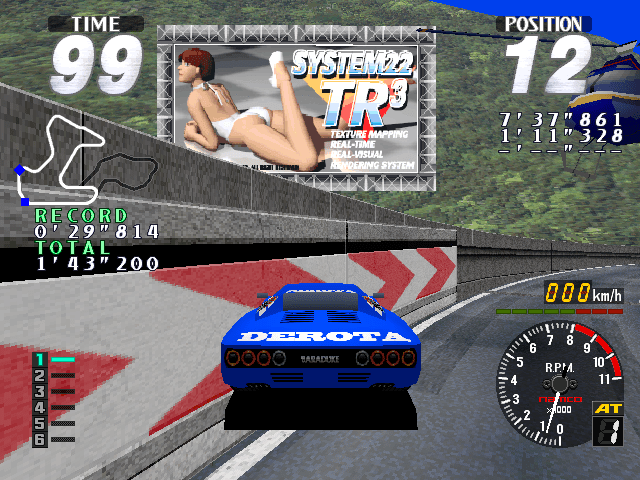
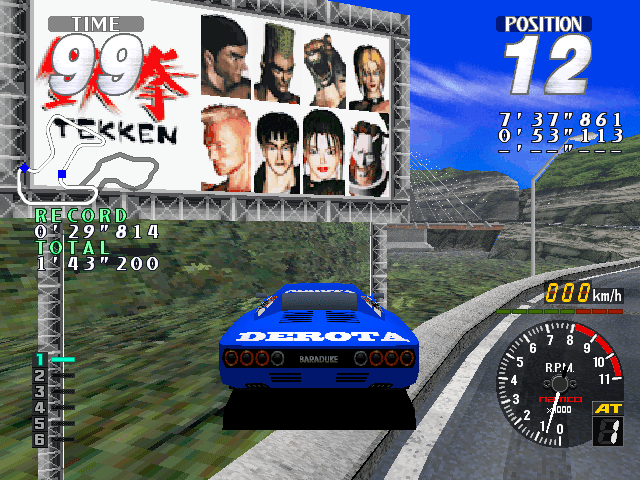
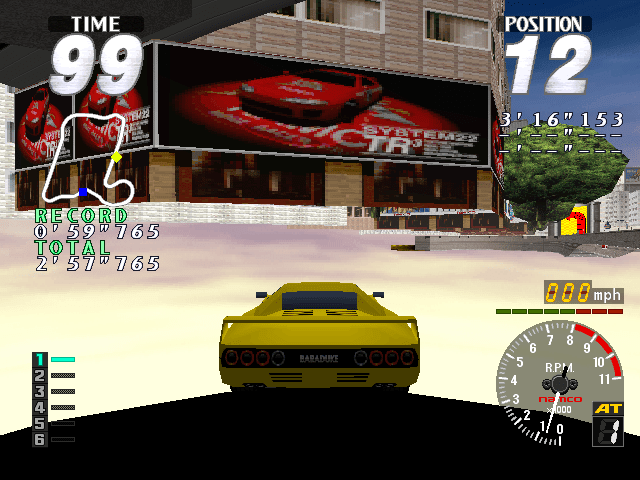
Namco advertising their TR3 chipset that was Co-developed by Evans&Sutherland. Billboard reads Texture mapping Real-Time Real-Visual rendering system

An advert for that other fighting game Namco is known for

Driving on the sea, a closer look at the boats

City

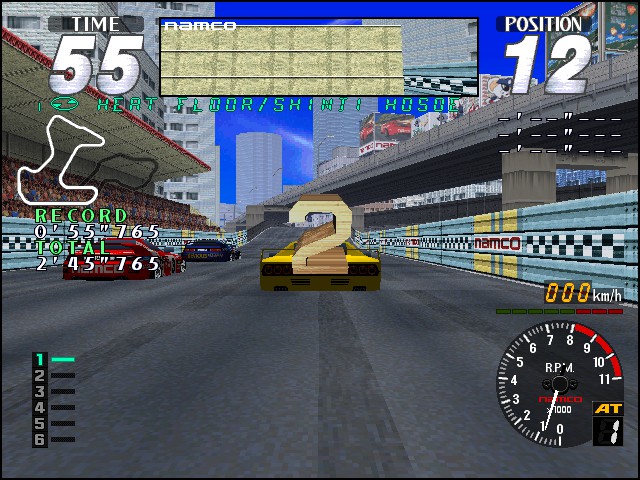
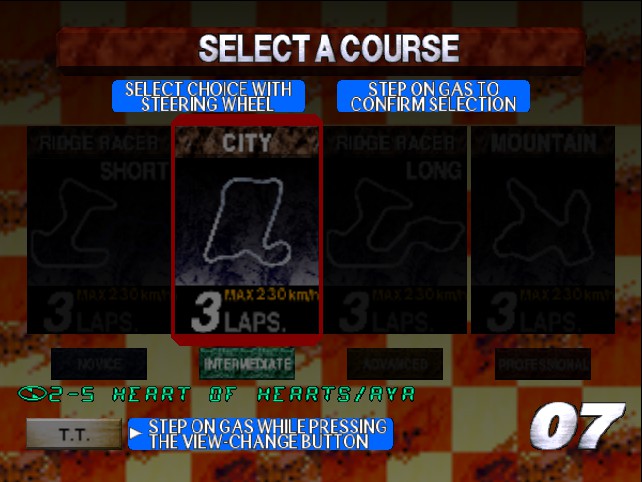
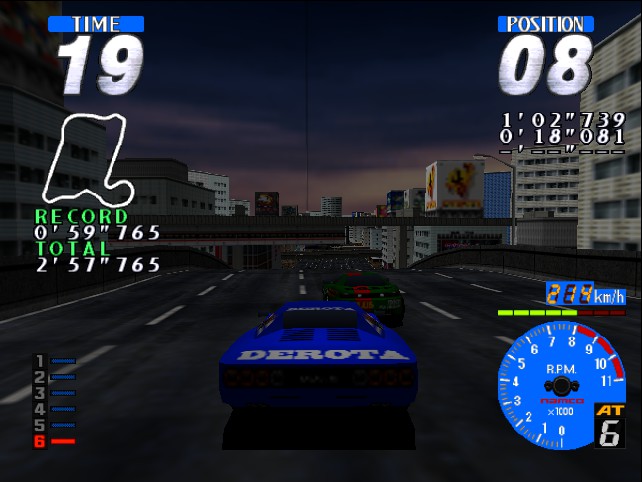
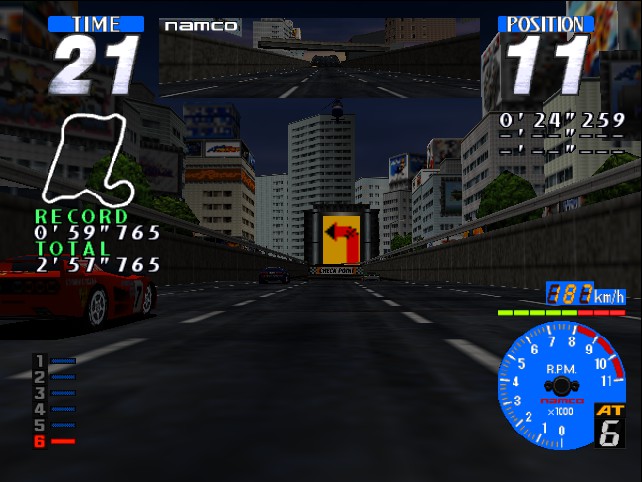
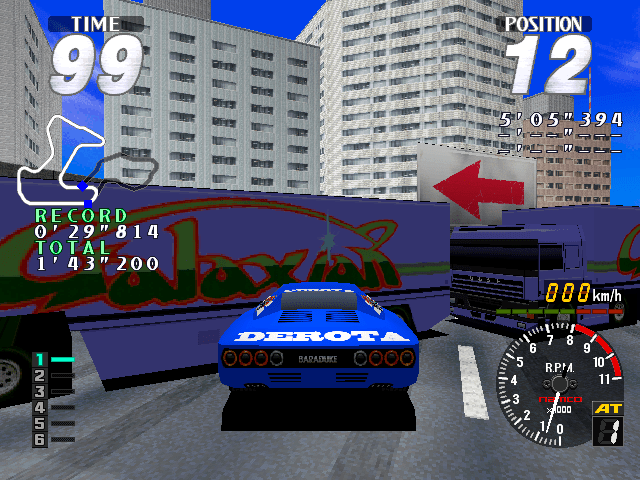
A new track that was previously exclusive to Rave Racer but has since reappeared in the PSP version of Ridge Racer, This one is set in a more urban environment with a rolling highway.

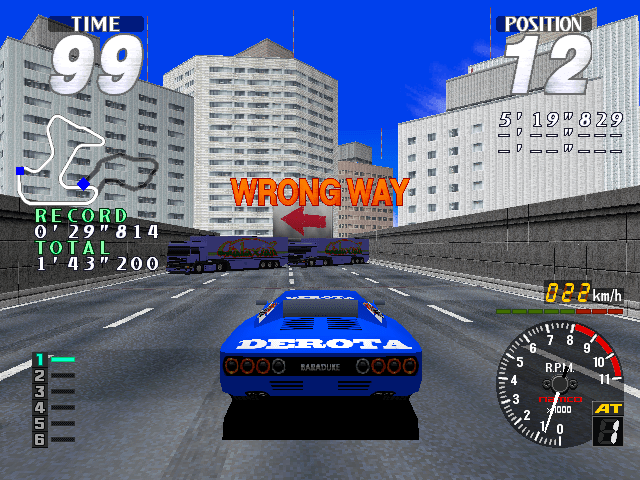
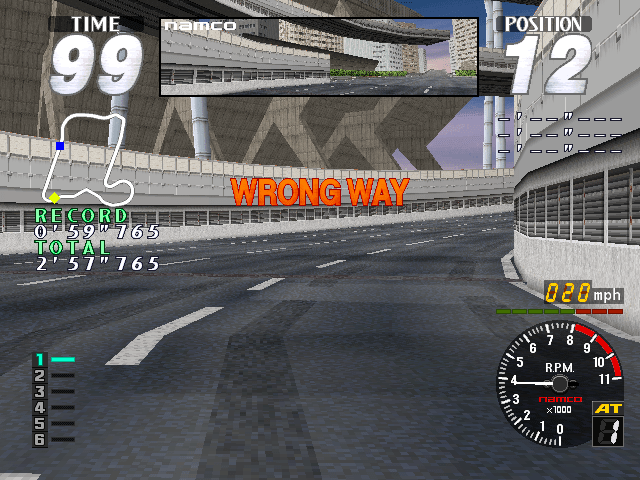
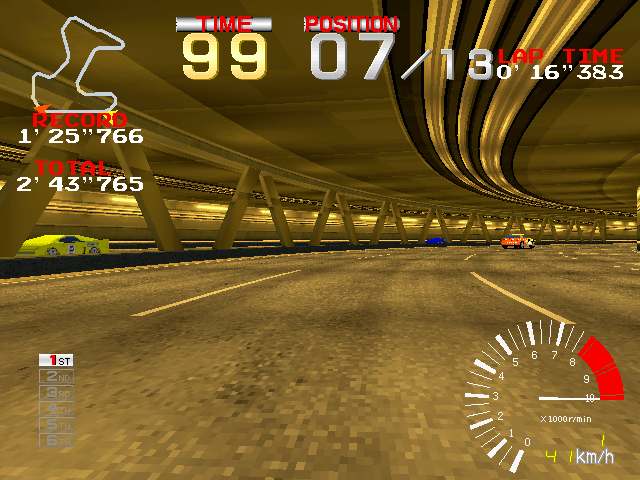
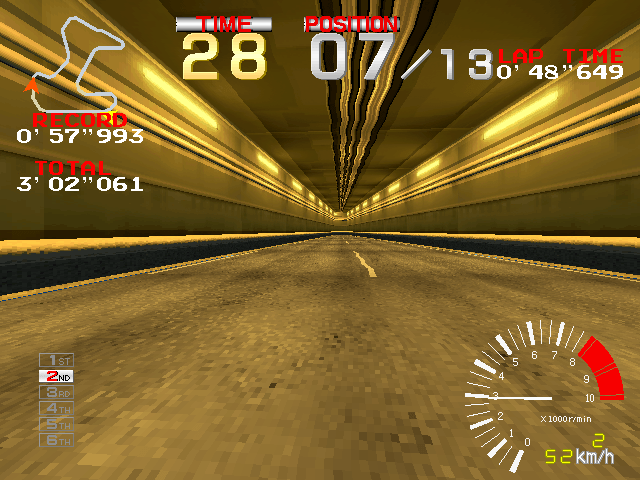
At the start of the track you can turn around 180 degrees and drive through a highway, you can do this without the use of cheats. You can drive until you reach a tunnel, where the game teleports you back out of the tunnel at a higher speed.

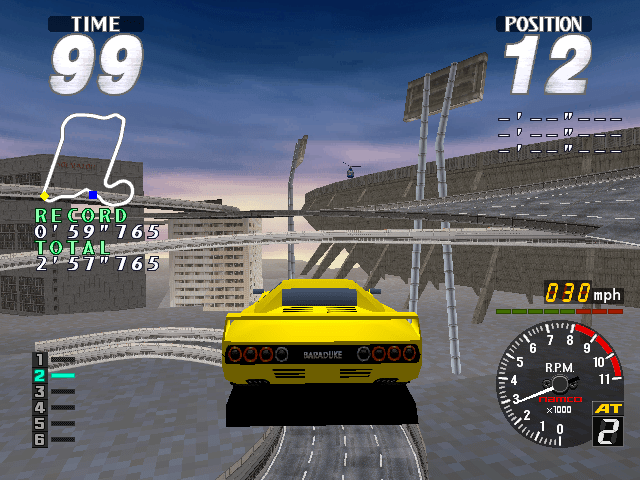
A no-clip like view of the world

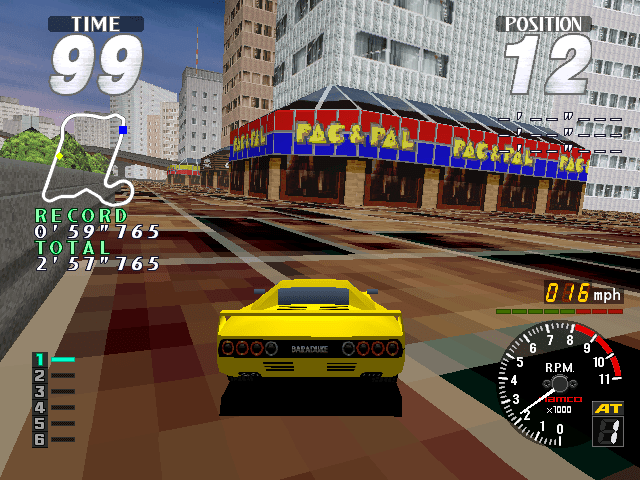
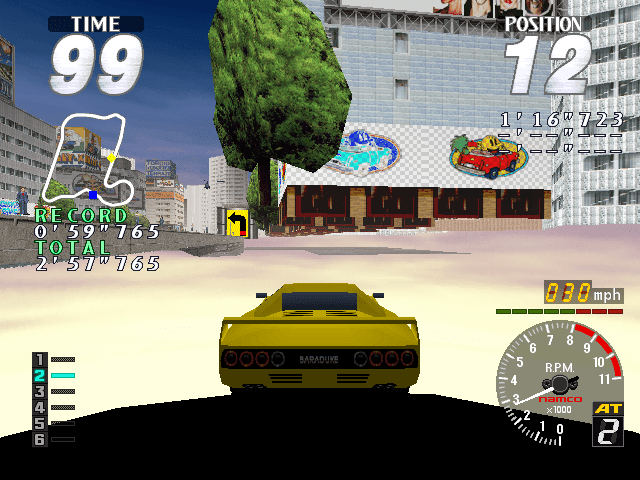
A look at the city, and a Pac&Pal store

Another system 22 advert, namco were really pround to show their arcade technology off

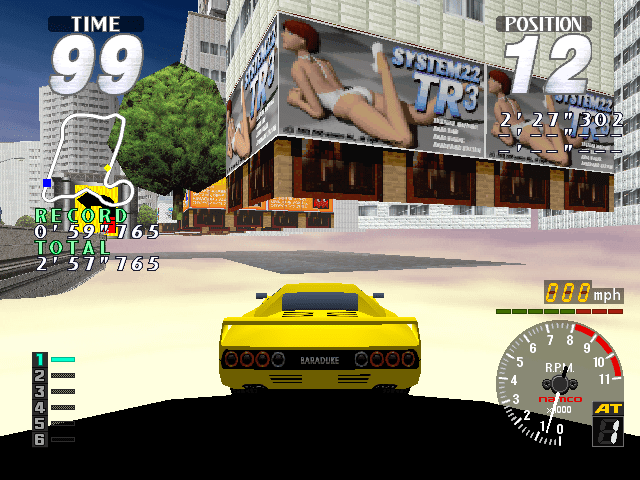
Another TR3 billboard

Mappy.png

I don’t know if the transparency was intentional or they just forgot

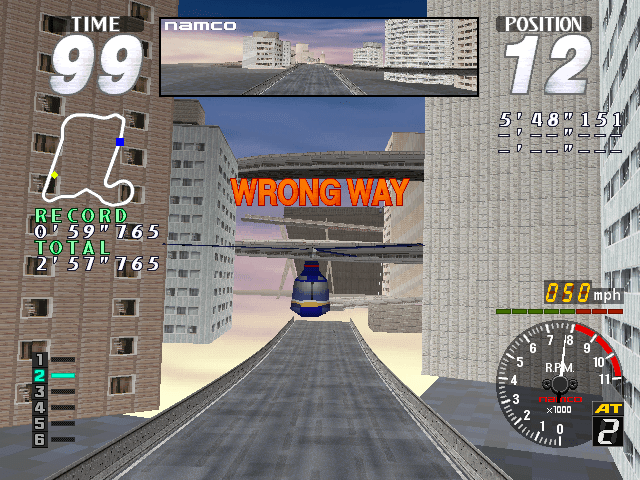
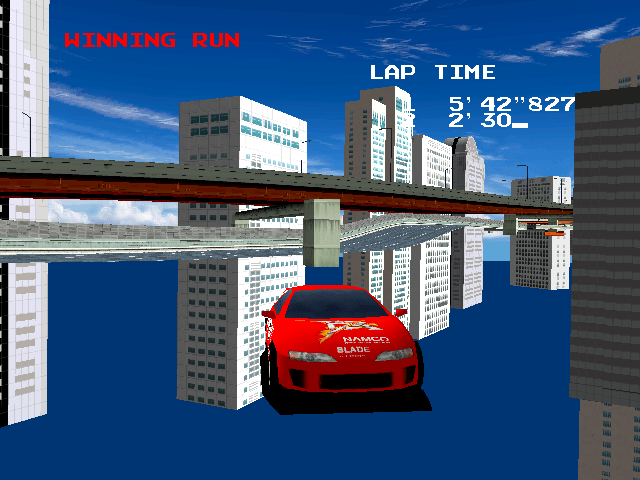
Another noclip like view, except im nearly colliding with a helicopter. Theres no collision data so your car just clips right through the heli

View of the stadium, where LiberoGrande takes place

Mountain

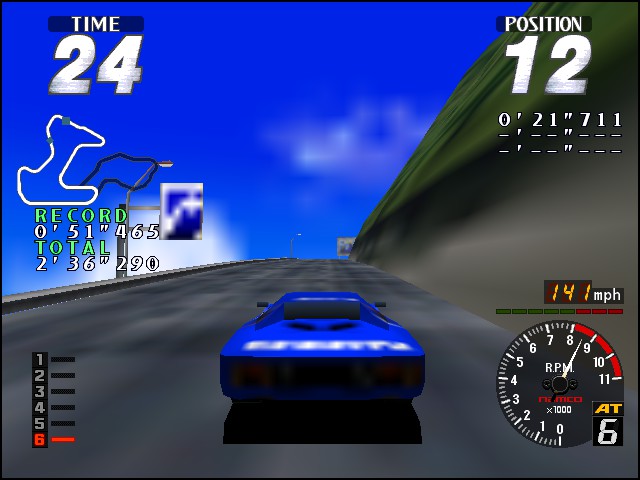
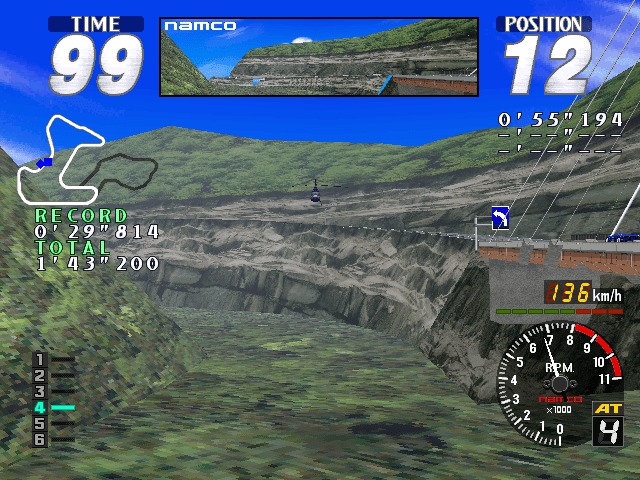
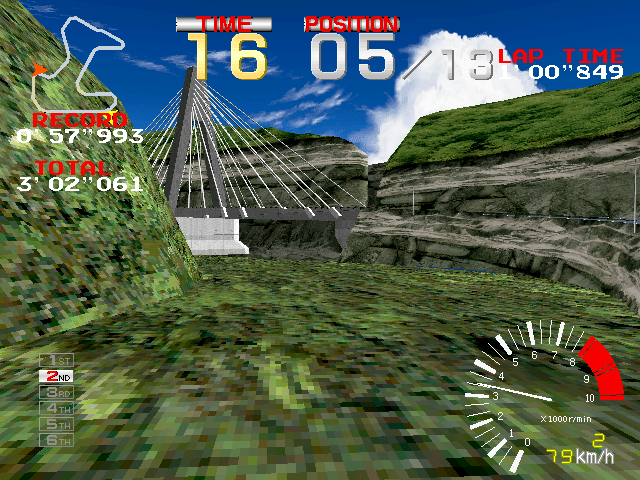
An alternative view of the mountain track, which normally cannot be seen within the game

Carefull…

I later learnt that this is an invisible wall, but when your collides with it at a certain speed the game teleports you to the bottom section, Driving into it at 10mph would just cause the car to bounce back to the track.

Some sort of casino??

Roadside Sign

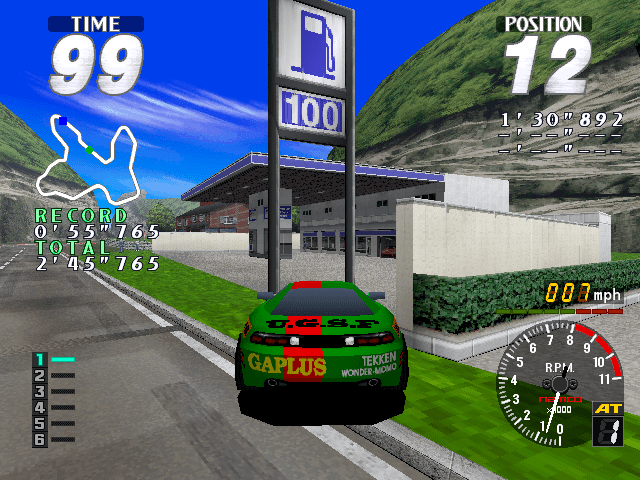
A gas station for when you need to refill your car, although this inst a game mechanic, cars in Ridge Racer do not have fuel

Who’s that?

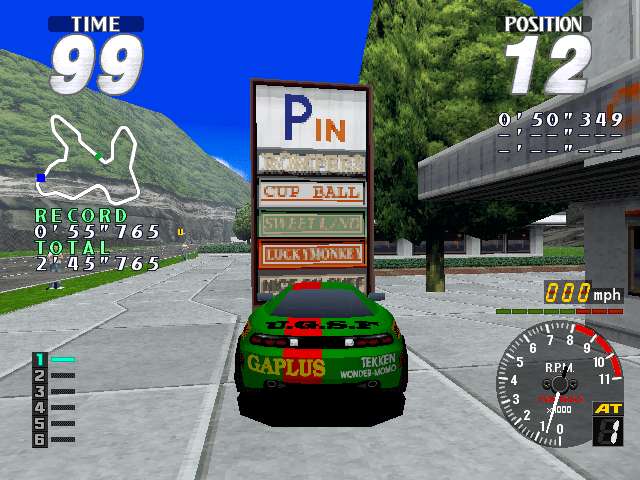
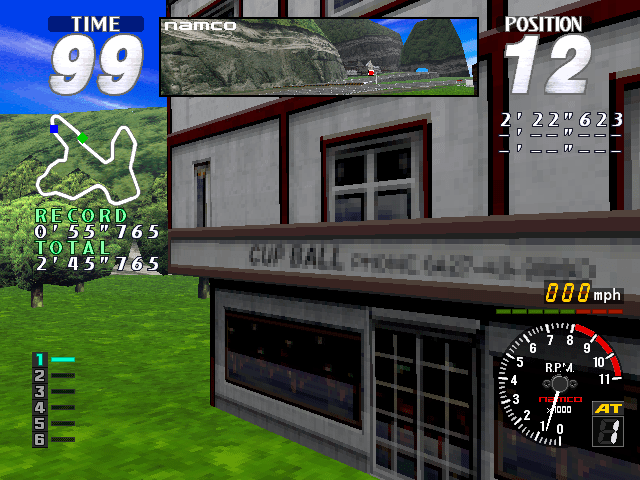
Cup Ball, some sort of bowling center?

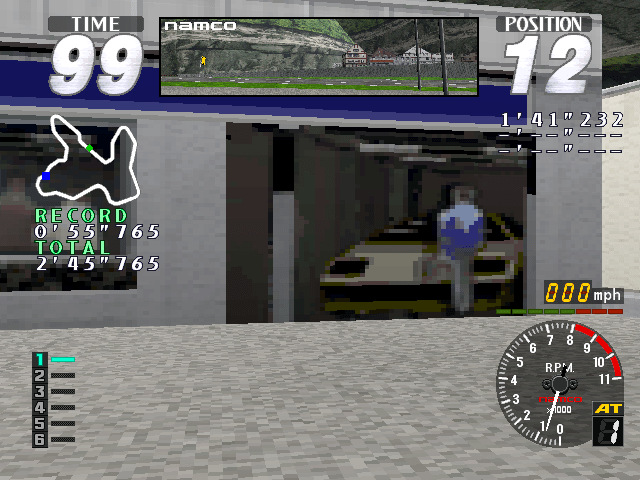
Buildings have no rendering data at the back of them, so the textures just disappear

Same Laperopter building in the first track

Better view of the spooky hotel ghost, seems Namco recycled building models to conserve ROM space

Going up the ramp, however the car clips through it

These tracks would remain exclusive to the arcade, and would not appear in any console version until the PSP version of Ridge Racer, I wonder what changes were made and if any buildings were kept?

Other Information

Rave Racer Fan Site (Archived)

Namco Rave Racer (Archived)

Ridge Racer

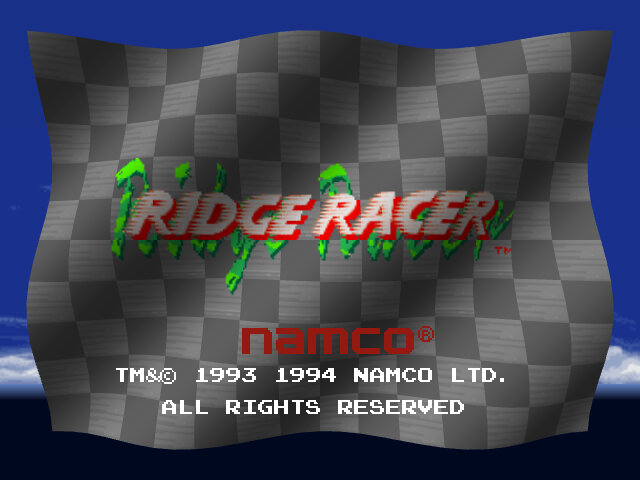
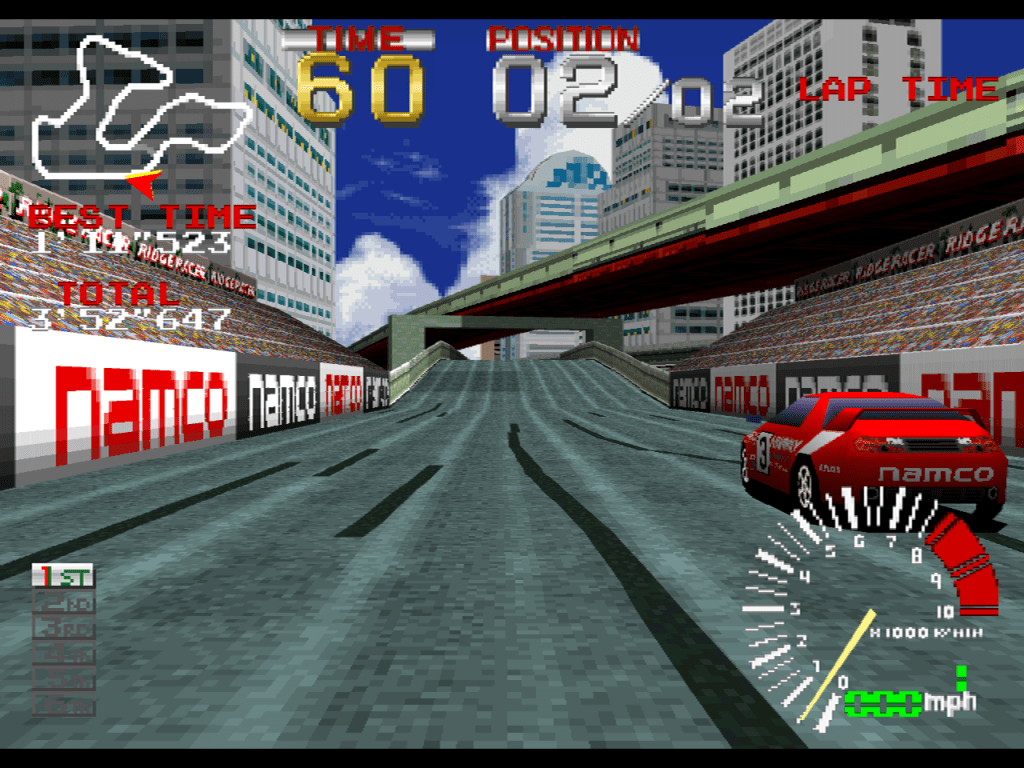
One of the first textured 3D racing games, and mostly known of being a launch title on the first PlayStation console. However it appeared a year earlier in the arcades. The arcade version runs on much more powerful 3D hardware, runs in a higher resolution, a higher framerate (60fps vs 30fps on the PS1) thanks to it’s Evans & Sutherland 3D hardware, which was previously used to power their simulations and CAD hardware.

Arcade

Released to the arcades in 1993 and running on the System 22 hardware, which was in direct competition with Sega’s Daytona USA and Midway’s Crusin USA.

PlayStation

The game was ported to the original PlayStation in 1994 as a launch title, and was considered to be an acceptable port of the arcade despite the downgrade made in order to run on the PlayStation hardware. The PlayStation port has support for the Namco neGcon controller, that allows the player to replicate analogue steering by twisting the controller as at the time the dual analogue controller wasn’t available.

Ridge Racer Hi-Spec

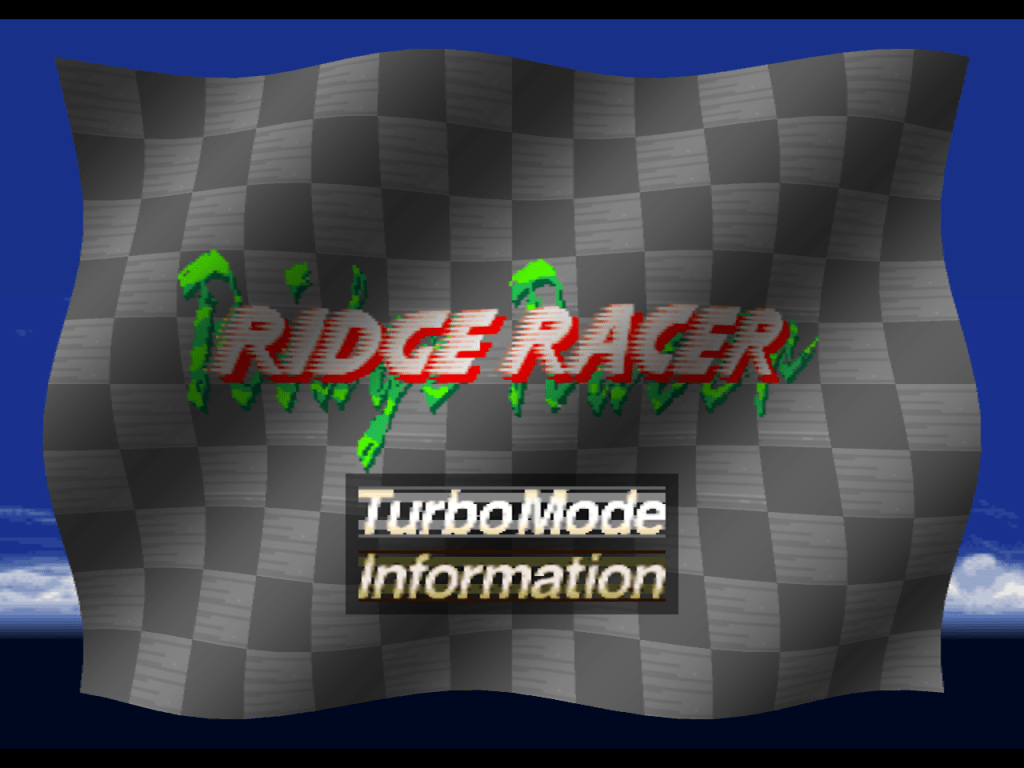
Runs in a resolution of 320×480 which is higher than the original release but less than the arcade version. The main attraction to this version is the 60fps upgrade and the gouraud shading, which enhances the graphics greatly. However there are only two cars on the track, with only 1 in time attack, and the texture quality has been reduced slightly. I had to disable texture filtering and display then unfiltered since it just looked like an N64 game. The polygon count of the cars and track may also have been educed, since the guide mentions optimised textures and polygons.

This build of the game was bundled on the Ridge Racer Type 4 bonus disc, and was not a standalone version of the game. It was meant to showcase a 60fps game on the original PlayStation hardware, and what sacrifices were needed no be made, as Namco were keen for later Ridge Racer titles to be running in 60fps. Ridge Racer V for the PlayStation 2 would be the first home game to be running at 60fps.

Zeebo

The game was ported to the Zeebo, a home console released in Brazil by TecToy and QUALCOMM, graphics have been slightly altered and the music is rendered entirely in MIDI.

Comparison

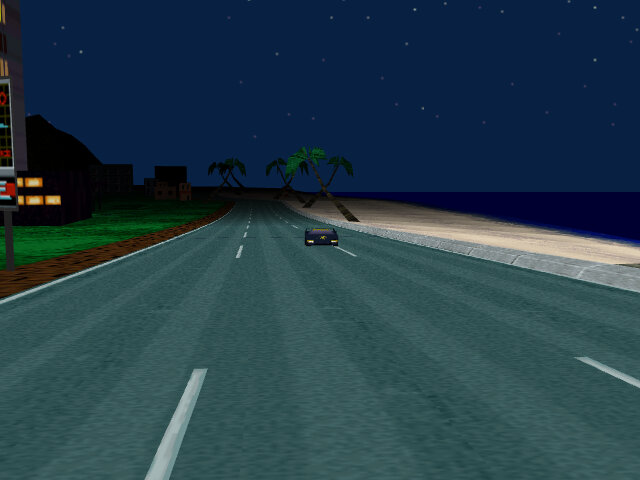
PSone on the left, using moderate enhancements in the Duckstation emulator with the Mame emulation of the arcade in the middle and the Hi-Spec version on the right, I wanted to see if I could get the PSone version to match the arcade in terms of image quality by upping the resolution to 640×480 and enabling texture filtering, something with System 22 lacked.

Arcade emulation seems to have issues rendering the flag, which is supposed to flap freely, maybe a physics issue with one of the Texas Instrument DSP?

The game isn’t a straight port and some design changes had to be made, the HUD has been changed around and the track objects have also changed. Some buildings have also been changed to be in line with the PSone limitations. On the right you can see the effects of the shading which affects the art style slightly, giving a more realistic look. The ground textures have also been altered.

It’s worth mentioning that System 22 also supported gouraud shading, but Ridge Racer did not utilise it until Rave Racer in 1995.

Sunset differences between the two ports, The Hi-Spec mode does not have a night time version.

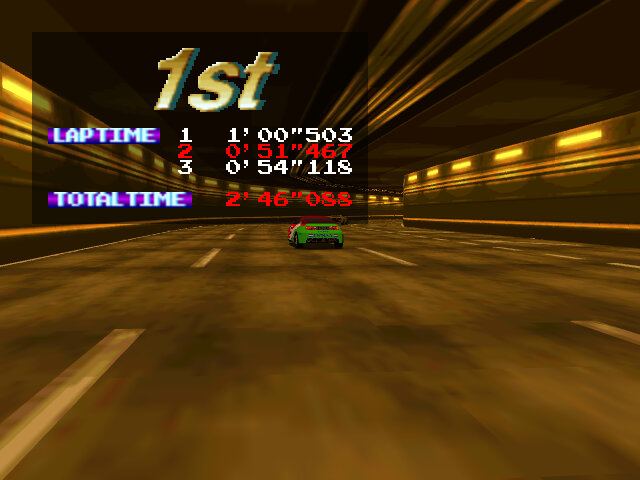
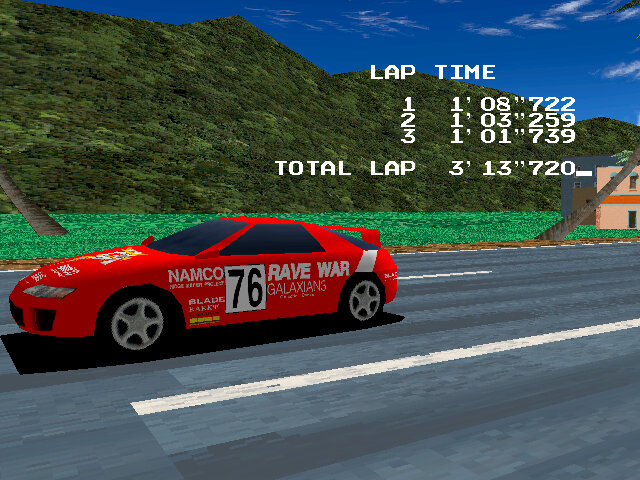
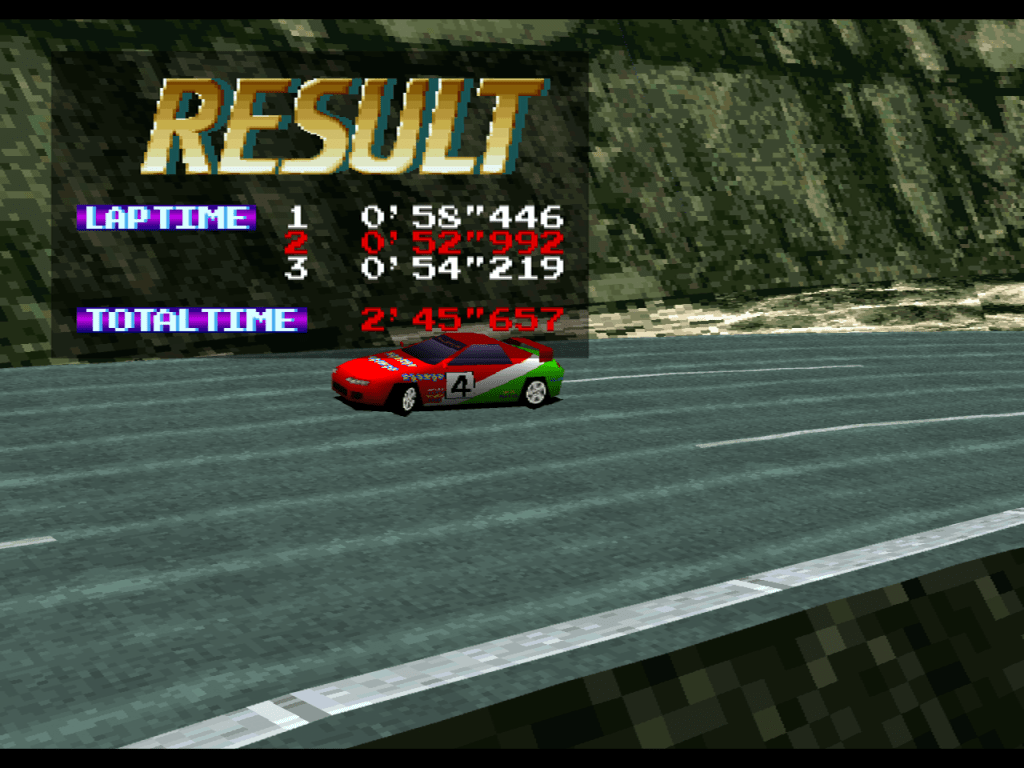
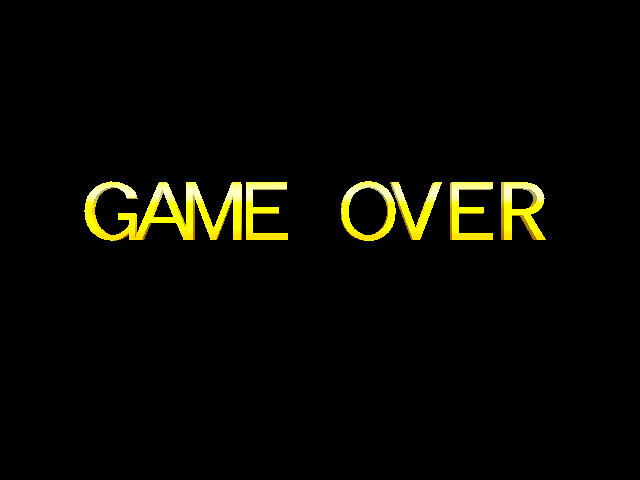
Game over is rendered in 3D for the arcade version, a static image on both PSone versions.

Comparison of the night sky, In the middle of a race the sun will set on the intermediate and time trials courses, to simulate a Le Mans race, the arcade shot is taken from one of the attract demos.

Boundary Break (Arcade)

With the help of some cheats in MAME, we are able to disable the collision detection, allowing us to move outside of the track. This gives some interesting close ups of some in game environment buildings.

Ridge Racer System 22

A look of the city from a different angle

Ridge Racer System 22

In the first tunnel, there is a path that is blocked off and is inaccessible

Ridge Racer System 22

A closer look at the other tunnel, with a view of the cars, normally these aren’t directly accessible. Namco used lower resolution models of the cars, since you typically see these driving in a distance.

Ridge Racer System 22

Another closer view of the cars, the tunnels ends abruptly to the outside, and the cars just disappear, and respawn at the other side after a few seconds.

Ridge Racer System 22

Before the end of the tunnel, theirs an intersection to another tunnel, which leads to a dead end

Ridge Racer System 22

The ground near the bridge, you can see the low detail textures, since System 22 didnt support texture filtering, giving a minecraft appearance

Ridge Racer System 22

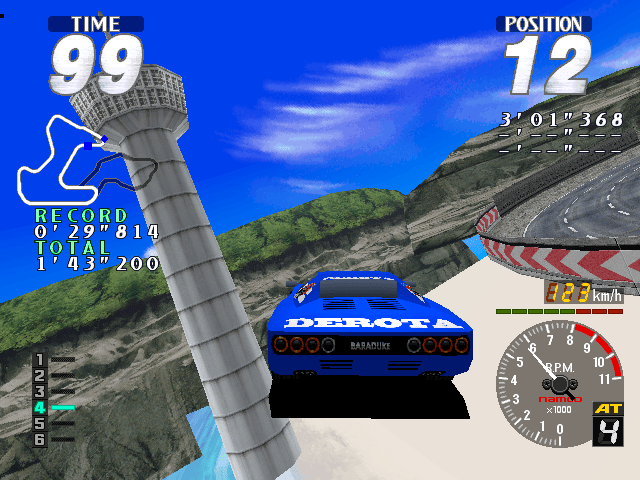
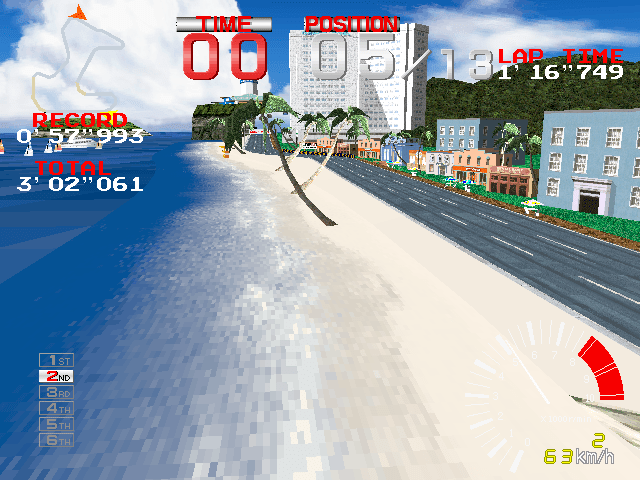
Another shot of the beach, sometimes if you break out of a track early on, your car remains on a higher evaluation allowing for a top down view for later sections of the game

A look at the buildings near the beach

Ridge Racer System 22

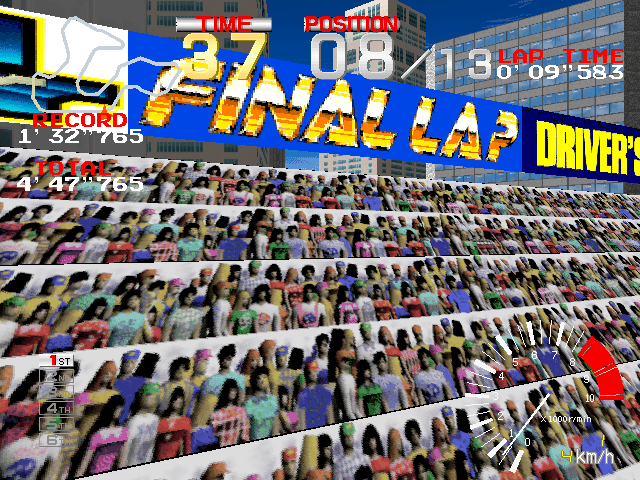
A closer look at the crowd at the start of the game

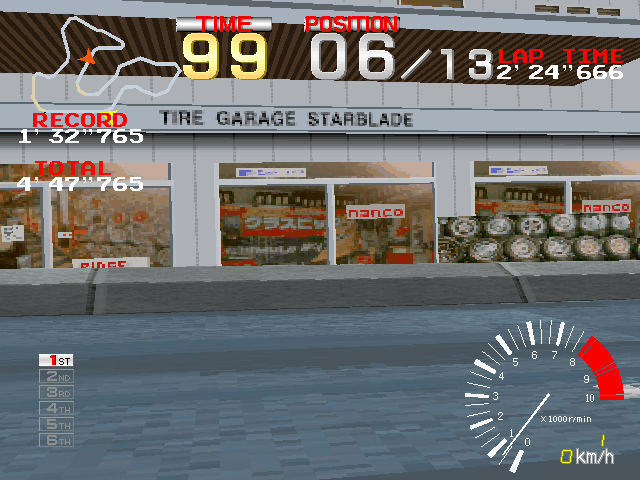
Tire Garage Starblade, one of the shops near the overpass. Starblade was a 3D rail shooter

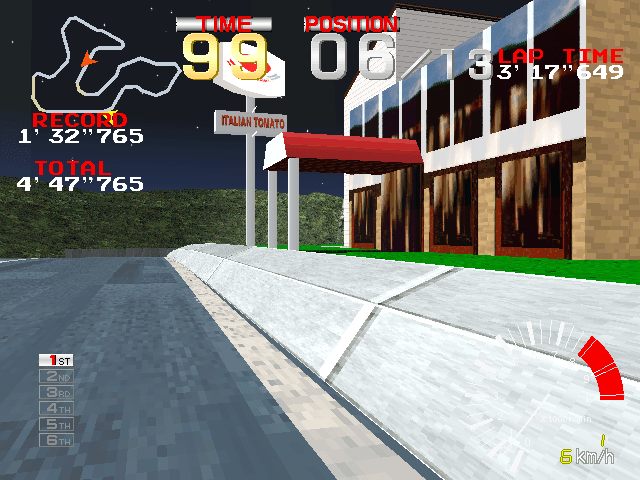
The buildings lack modelling towards the rear, since this view would not be available normally in the game. Also note the gap in the Sky where a bit of the blue sky is visible. Seems Namco displayed an overlay across the sky when it was night time, something the MAME emulator has issues replicating accurately.

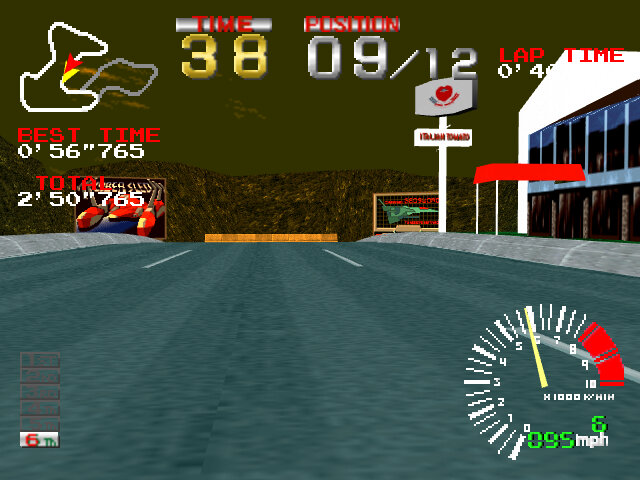
Italian tomato, some sort of resturant or obscure namco game?

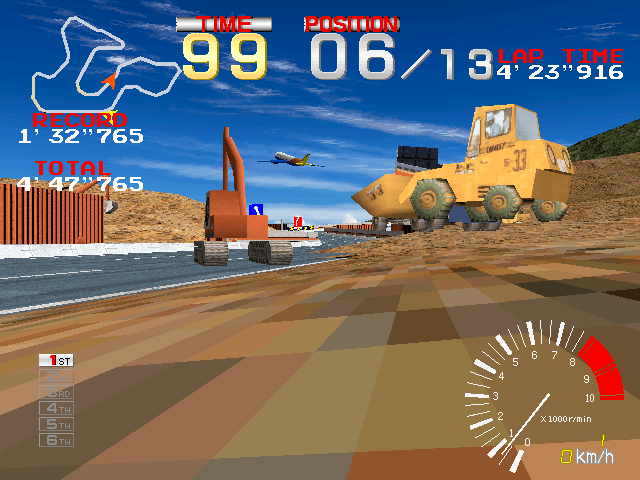
A closer view of the construction site, the trucks are levitating…

Ridge Racer System 22

View of the city, some of the building’s are quite long

The boats in the beach section

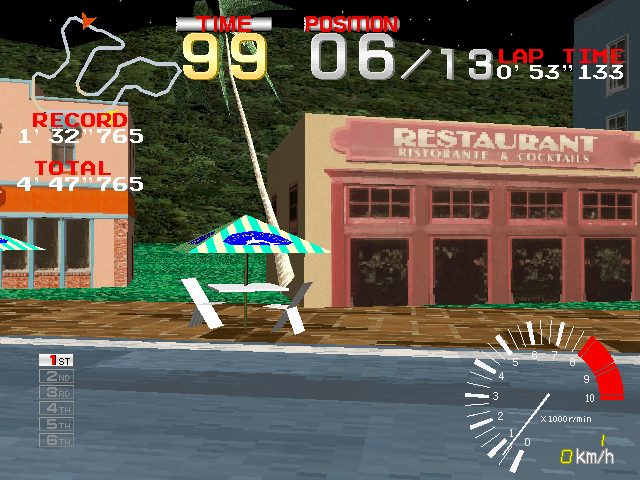
One of the many restaurants near the beech, this building appears multiple times. Also this game predates lightning effects, as the game is supposed to in night time mode but the building appear as if its daytime, however in the starting section, the buildings do change to a night time effect.

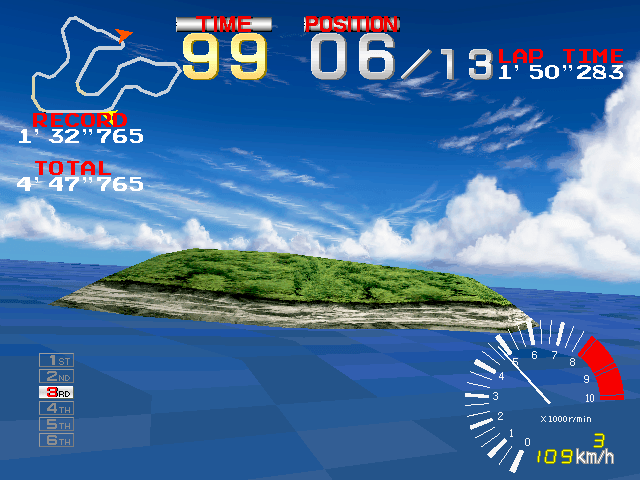
A distant island, near the marina

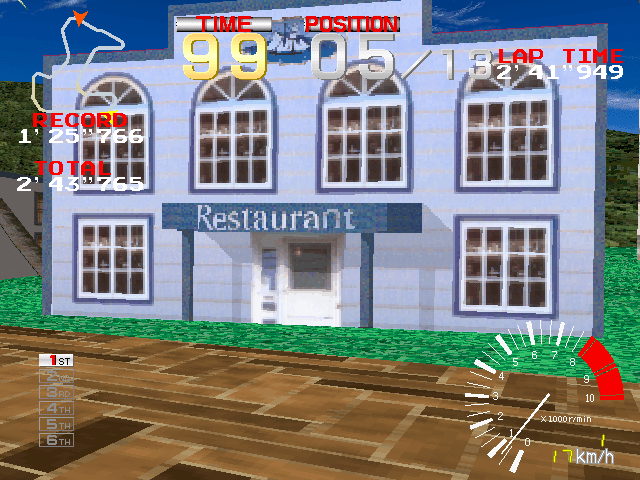
Another restaurant building

Ridge Racer System 22

Alternative view of the dead end tunnel, I’d like to try and do this to the PSOne version.

Todo: Mjlonir emulator was capable of running the system 22 versions of Ridge Racer with graphics acceleration, but as it was based on an older version of MAME it suffered from a lot of emulation and graphics issues, and uses an outdated rom set. Vivanonno was another emulator that was worth a look at.