Tag Archives: DirectX 5

House Of The Dead

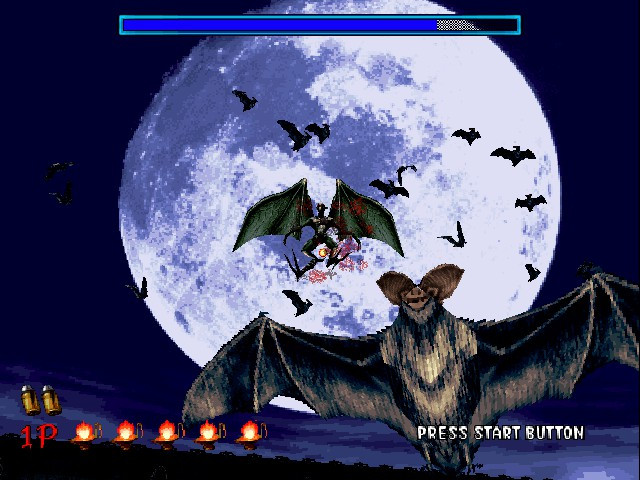
A mid-90s arcade rail shooter that takes the Virtua Cop formula and puts a horror spin on it, giving birth to a new franchise.
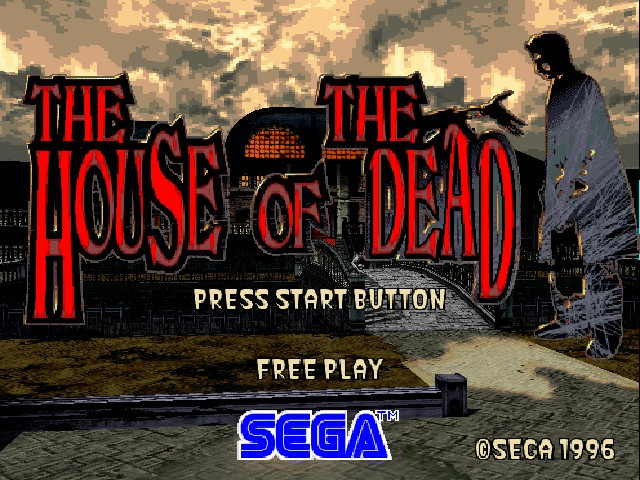
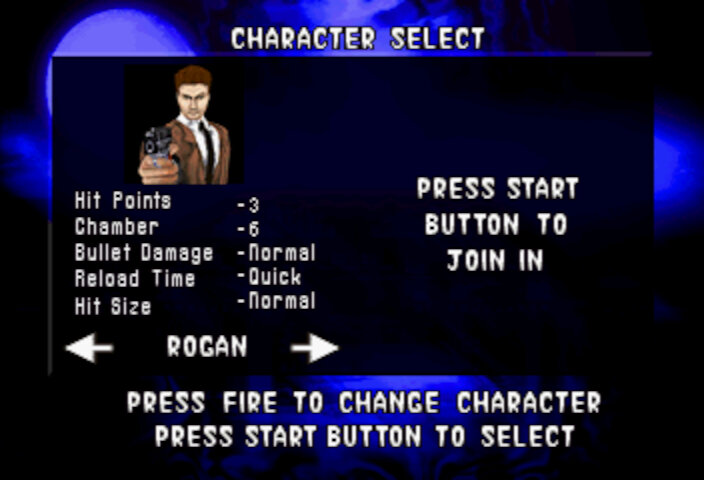
In House of the Dead, the main characters are two AMS agents named Thomas Rogan and G (Yes, just G). They are sent to investigate a mysterious outbreak at the DBR Corporation’s genetic research facility, which has been overrun by hordes of undead creatures. Throughout the game, the player controls either Thomas or G as they fight their way through the facility and uncover the truth behind the outbreak. Along the way, they encounter various other characters, including DBR’s CEO, Caleb Goldman, and his assistant, Dr. Roy Curien, who is responsible for the creation of the undead creatures.
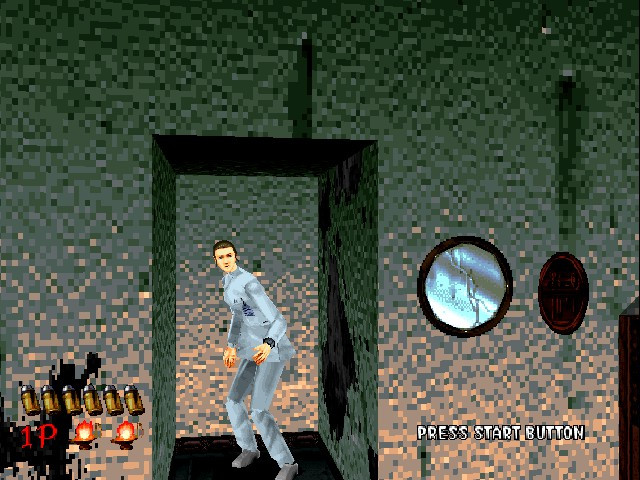
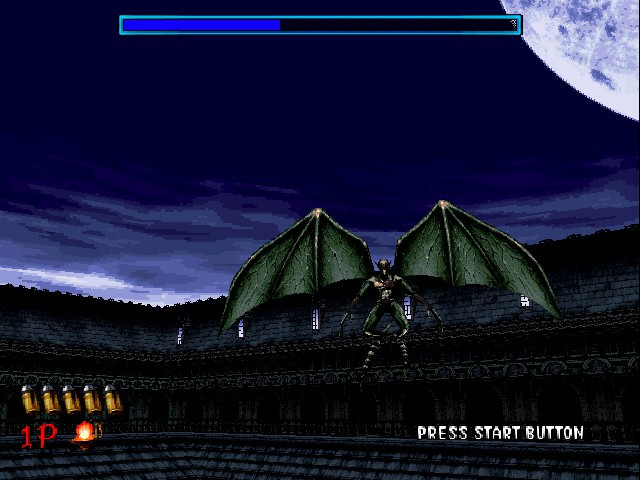
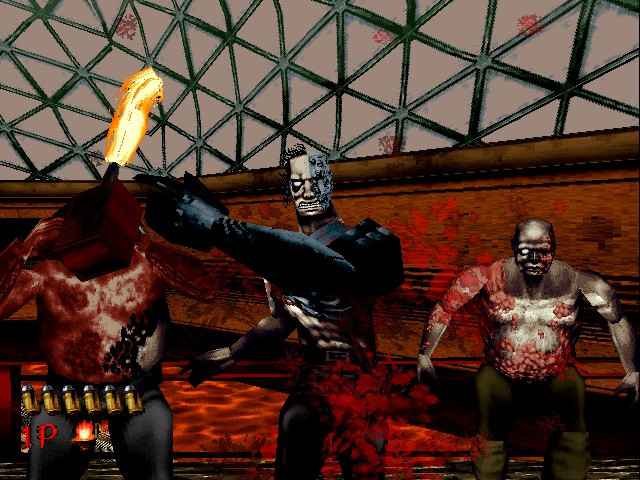
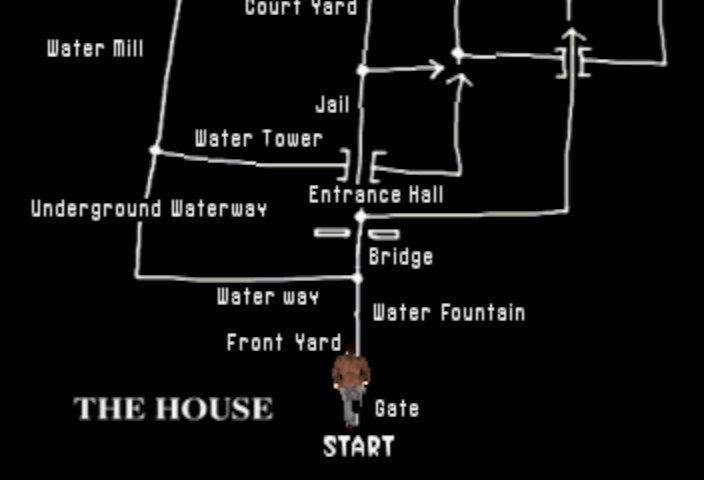
The gameplay of House of the Dead is simple, you’re armed with a light gun and tasked with shooting your way through levels filled with zombies, mutants, and other monstrous creatures. The gameplay is fast-paced and requires quick reflexes, as enemies can come at you from all angles in the form of jump scares. The game also features branching paths, which add some variety to the levels and encourage replayability as many of these will affect the ending sequence.

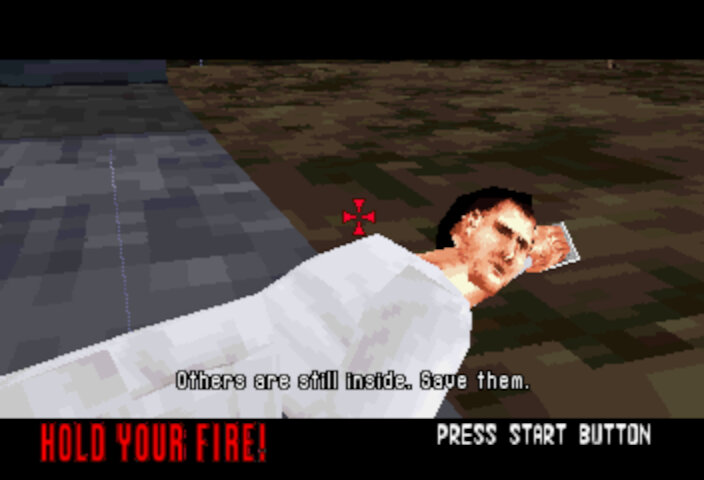
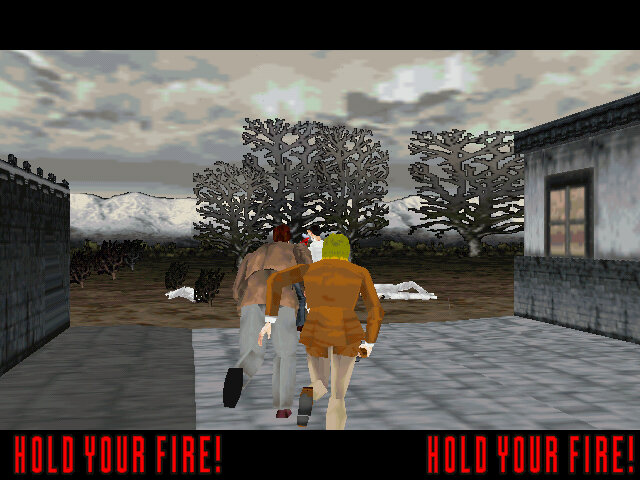
Some items can be shot at, typically pots, and will reveal additional lives. There are also opportunities to save scientists, who will sometimes reward you with an extra life or will direct you to another path.
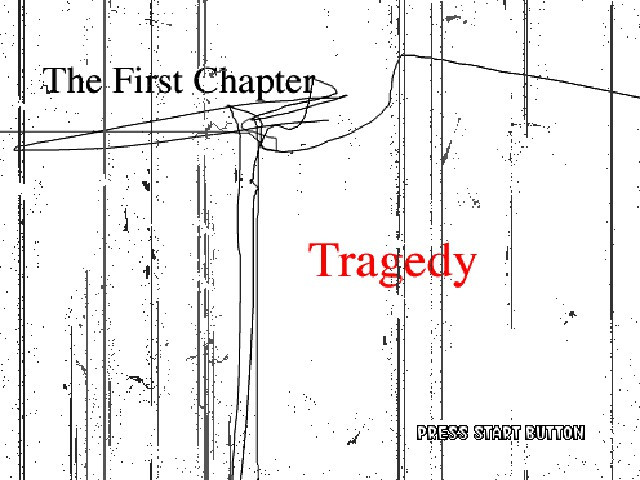
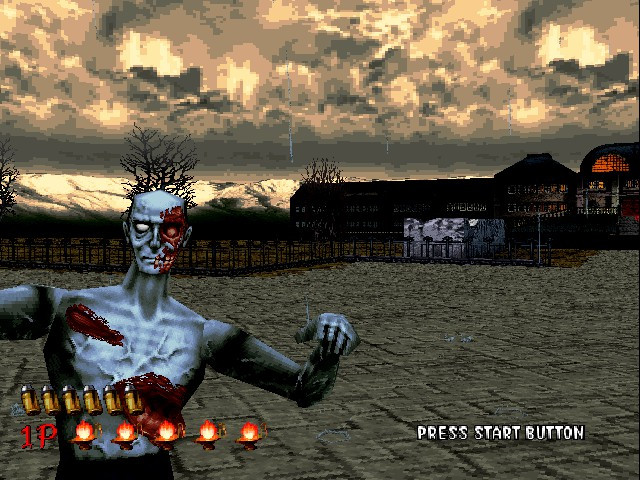
There are a few boss battles, each with a different way of defeating them. These occur at the end of each chapter. The Chariot is a large, armored zombie and appears at the end of Chapter 1 with the goal to target its weak spot in the armor to damage it. The final boss being the Magician serves as a challenging and memorable boss battle. He is able to create multiple illusions of himself, making it difficult for the player to determine which one is real. Additionally, he has powerful psychic attacks that can drain the player’s health and make it more difficult to aim. Defeating the Magician requires careful observation, quick reflexes and a lot of coins.

Versions

The game was somewhat popular and prompted Sega to port it to their Saturn console, it also get a Windows PC port similar to Daytona USA and Manx TT Superbike.

Arcade
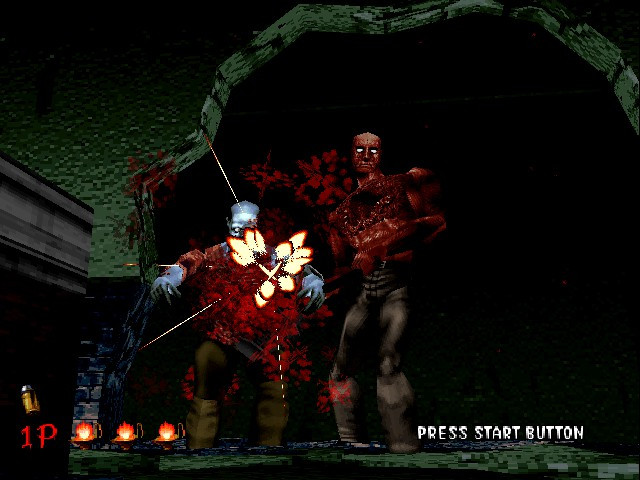
The arcade version of House of the Dead is considered a classic and is highly regarded by many gamers and fans of the shooter genre. The game was initially released in arcades in 1996 and like other Sega arcade titles of the era, it ran on the Model 2 arcade board.

This version of House of the Dead was popular due to its use of light guns, which allowed players to aim and shoot at enemies on the screen. Reloading is done by shooting outside of the screen, In contrast to Namco’s Time Crisis where you have to release the pedal to enter cover to reload.

Sega Saturn
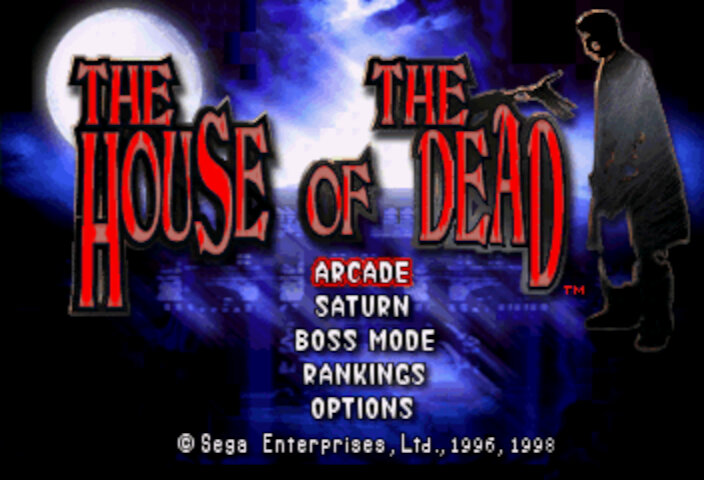
The Sega Saturn version of House of the Dead was a faithful recreation of the arcade version’s gameplay mechanics, graphics, and sound effects. However, the game’s performance on the Saturn can be a bit sluggish, with some frame rate drops and occasional slowdowns during intense action sequences.
The Saturn version also supports use of a light gun controller that was intended to give more precise aiming. Unfortunately this does not work well on modern LCD displays leaving the traditional controller as the only form of input.

You do have the ability to play as different characters, either ‘G’, Sophie or one of the Scientists which will affect the cutscenes as they are rendered in engine. Compared to the arcade version, the graphics takes a downgrade but you do get the benefit of high quality sound.

Still there’s no option to revert to the arranged arcade soundtrack, odd because both the Saturn and the Model 2 have the same sound processor (SCSP)

Microsoft Windows
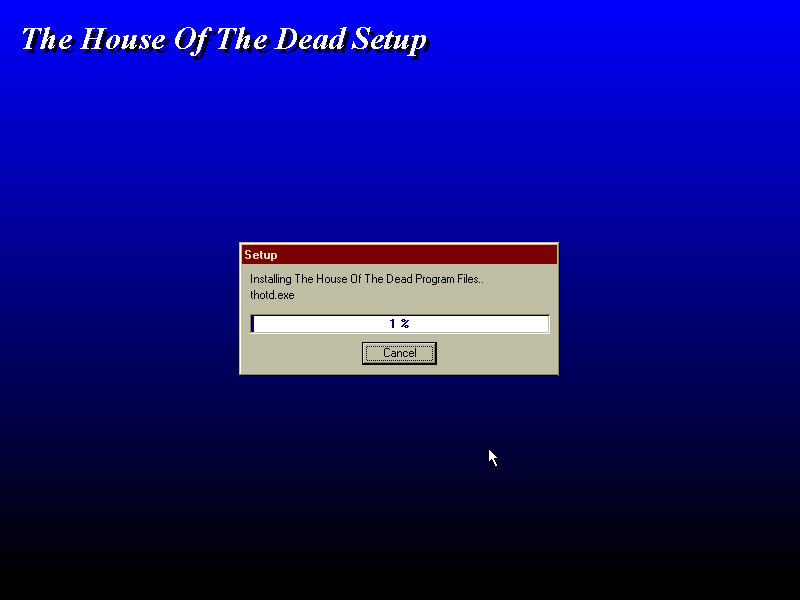
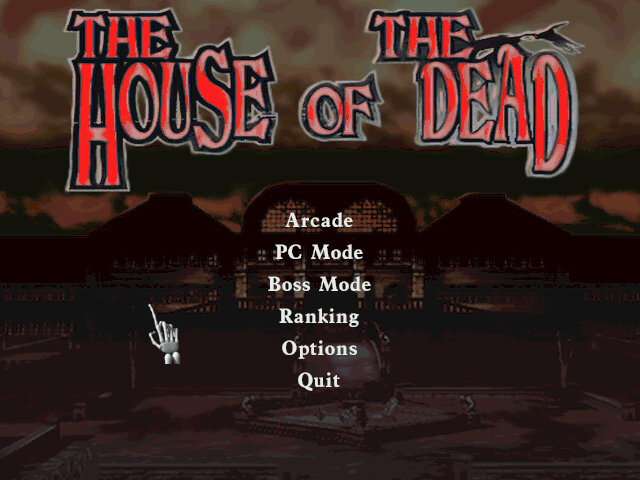
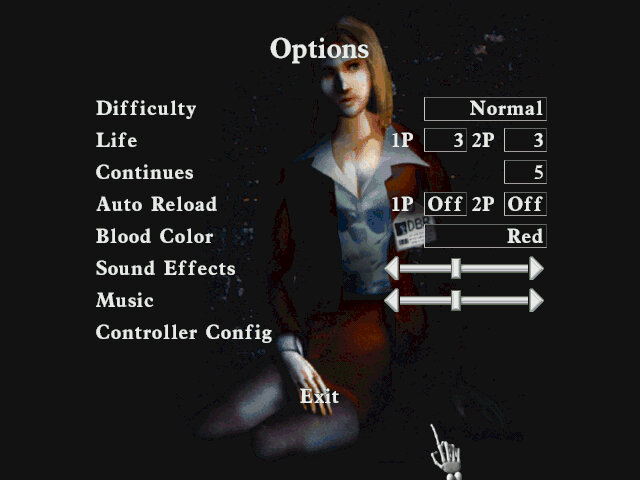
The game was initially released for PC in 1998, It offers several enhancements over the arcade version, including improved graphics and higher resolution support. Additionally, players have the option to use a keyboard and mouse or a controller for more precise aiming. Some parts of the Mansion have been retextured, likely to give it a more colder atmosphere and due to differences in how Model 2 and DirectX games handle textures.

For video cards that don’t support Direct3d, the game can run in DirectDraw mode instead. The 3DFX Voodoo card is capable of Direct3D acceleration and is supported in 86Box.
Conclusion

House of the Dead is a classic arcade game that still holds up today. Its addictive gameplay, impressive graphics, and horror-themed setting make it a must-play for any fan of arcade shooters.

Gateway Tigereye (Restore V5.5)

Another OEM system, but this seems to be a motherboard that was used in multiple Gateway systems from around 1997.

Motherboard appears to be based on an Intel design, might be a clone of an Intel board but with a Gateway customized BIOS. This was possibly used in various different models used throughout the late Pentium era. I actually had a Gateway system that was in a similar time frame, but we had it second hand and the original owner had wiped it in favor of a fresh Windows 98 install.

Supports up to 128MB RAM
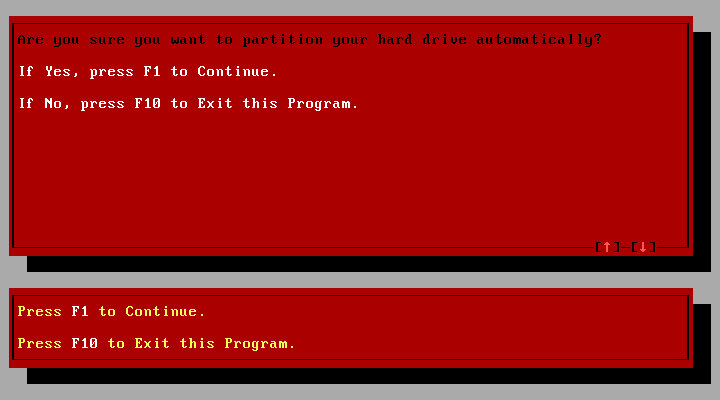
Supports CD-ROM booting
No sign of USB, 86Box cannot interface with USB currently

Install/Recovery CD

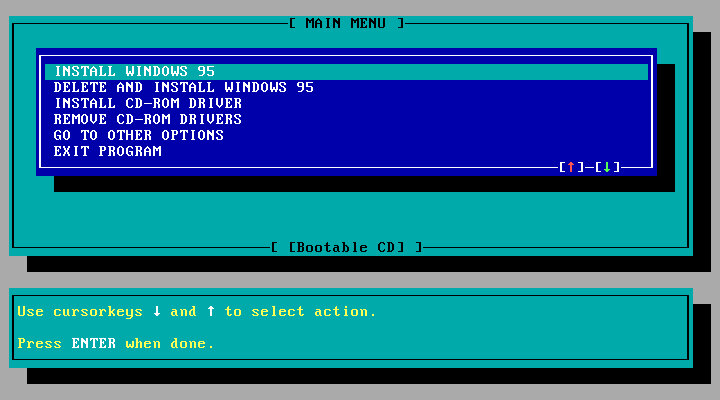
You will get the option to format as FAT32 or FAt16, whichever one you choose will depend on what build of Windows 95 you have, this restore Cd does not feature a Windows 95 install, instead it contains a set of drivers and utilities that are installed in conjunction to Windows 95, but you must use your own Windows install disk instead.
FAT32 is supported on OSR2.1 onwards, whilst earlier builds use FAt16, if in doubt choose FAT16. I believe you can ‘Upgrade’ to FAT32 once you update the OS.

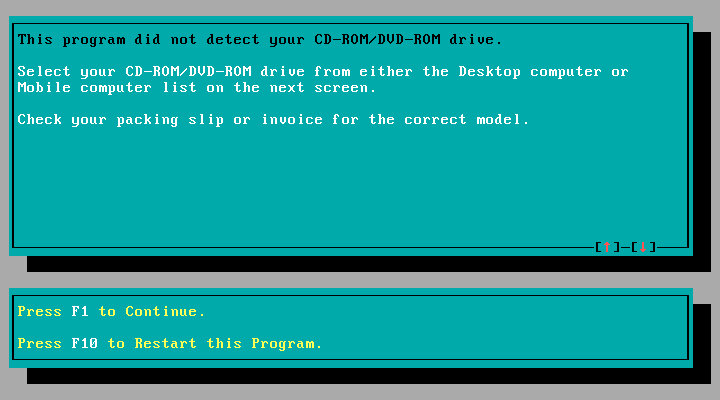
One potential issue here was the IDE CD-ROM driver, the restore CD gives you the option to choose, possibly because some systems might have used a propriety CD-ROM interface, or might be using the IDE interface on the soundcard instead. This could potentially cause issues if you choose the wrong option. For this I chose the Generic IDE-ROM driver, which can be found all the way at the bottom.

Once you begin the restore process you are requested to insert the Windows 95 install Cd and reboot, of which the system will begin to copy the Windows 95 files.

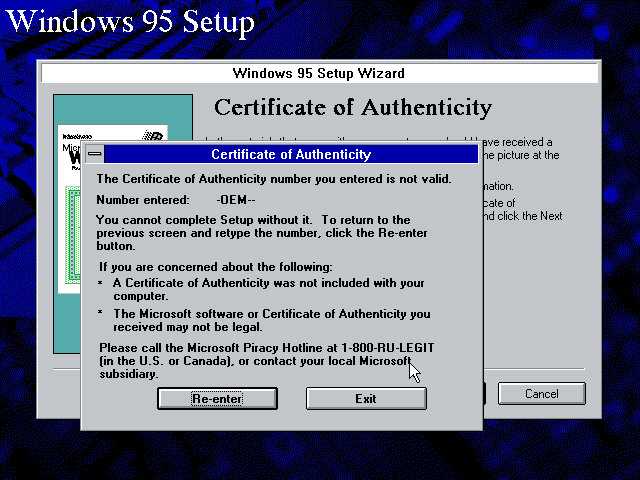
From here setup runs like a typical Windows 95 retail install, however on mine I encountered an error with the OEM serial number, and had to manually enter another one. I’m not sure of eyes are specific to the OEM version they were bundled with, or if each manufacture uses a slightly different algorithm, or maybe something failed to validate in the background.

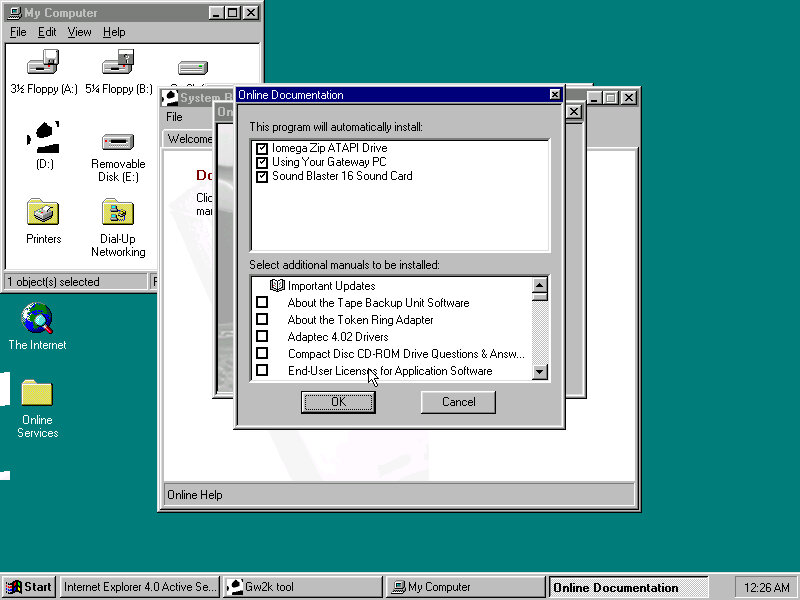
Reboot, then Gateway software proceeds to install


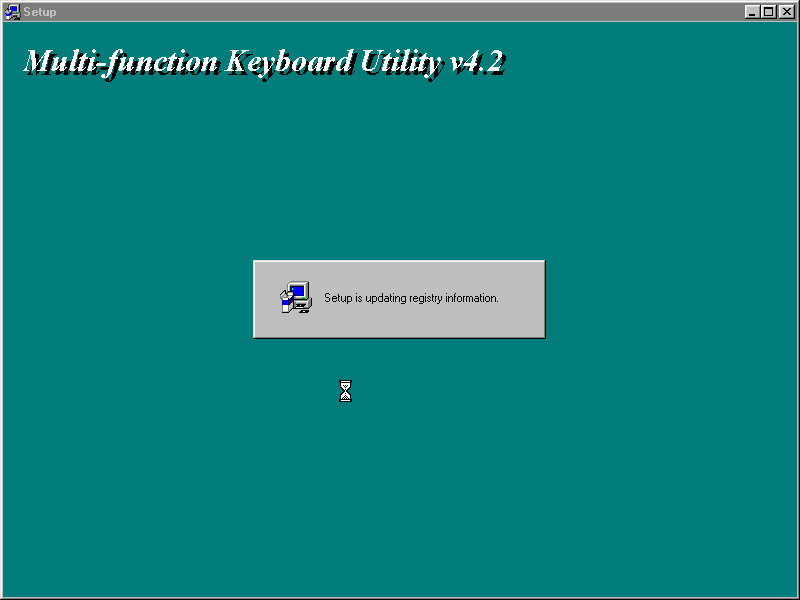
Installs keyboard multimedia utility, then install utility freezes. I had to force a reboot at this point


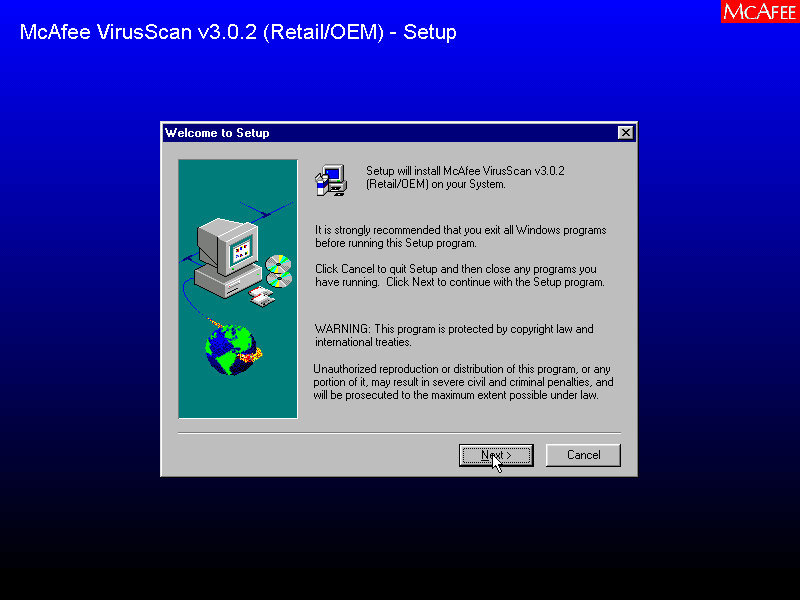
A quick reboot and it then installs McAfee Anti-Virus

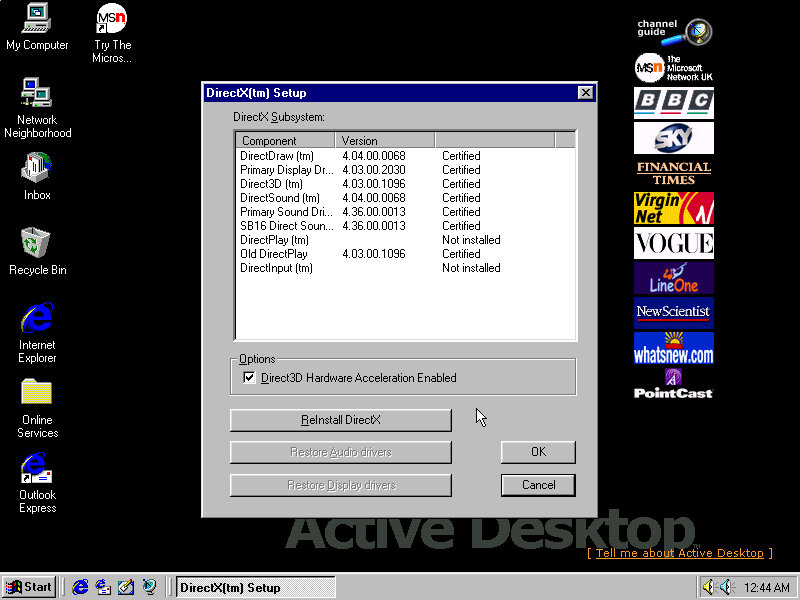
Installs DirectX 5, reboots again. Kind of redundant since OSR2 already included DirectX 5

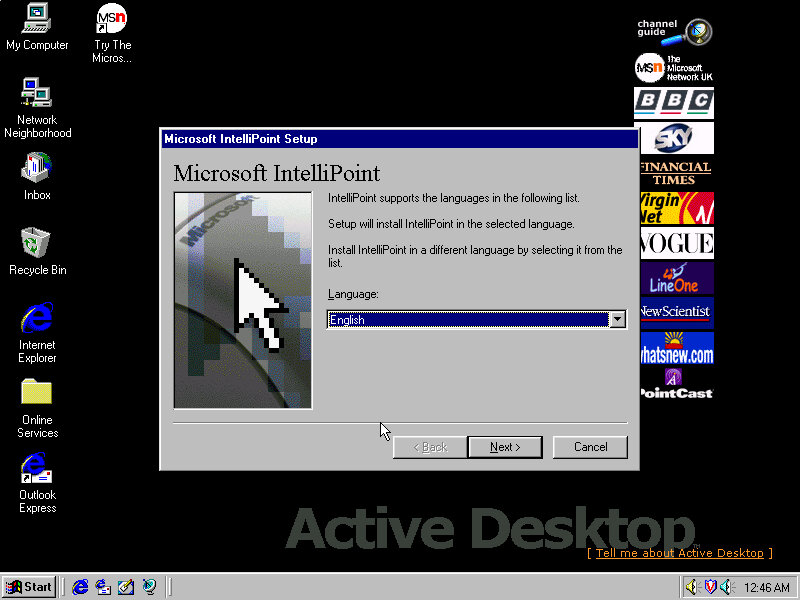
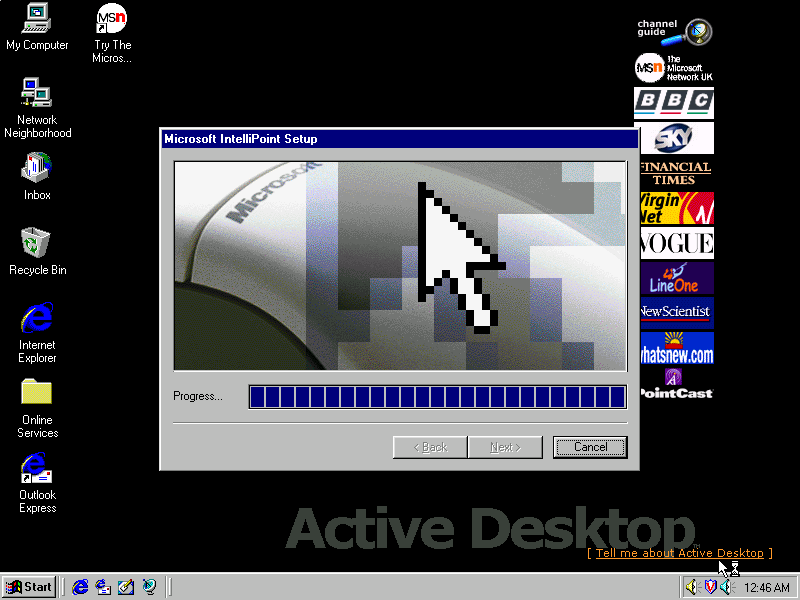
Installs Microsoft Intellipoint, Gateway possibly bundled the Microsoft mouse with their systems

Lastly the sound card software install, Windows had already detected the SoundBlaster on install, but here it inclused the Creative sound software.

Post Install

Megaphone

Appears to be a modem and address book software to manage internet connections and user contact information.

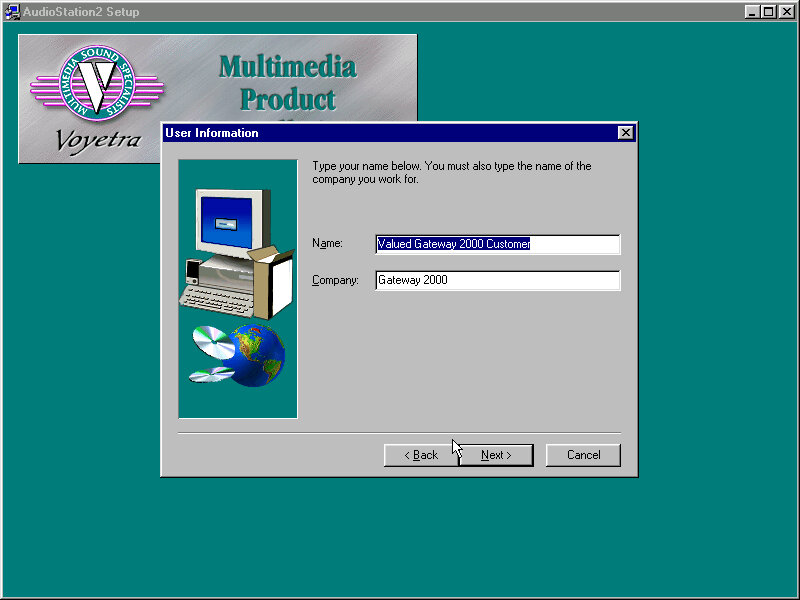
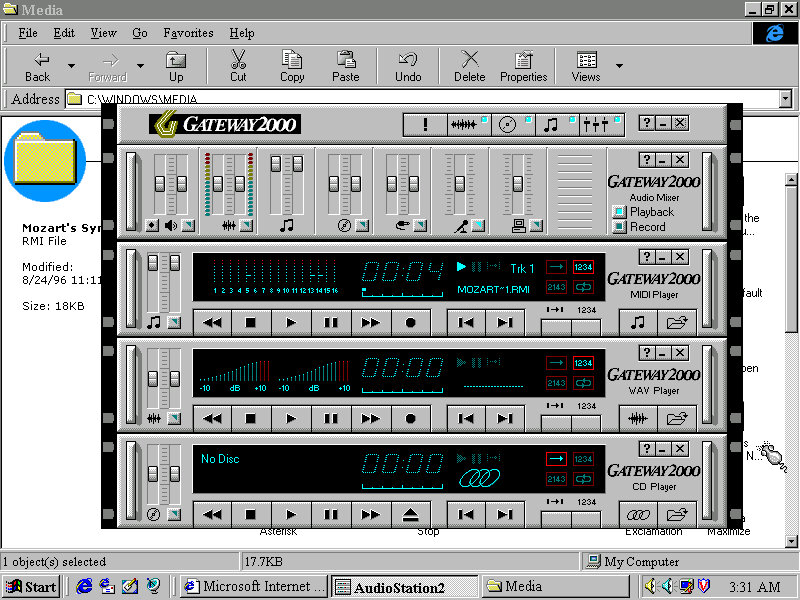
AudioStation2

A MIDI and CD player with a Hi-Fi like interface, something similar was also installed on the Sony VAIO PCV-90

Adding a second drive

The motherboard has two IDE channels for a total of four IDE drive, with the SoundBlaster 16 PnP card we can also add an extra two for a total of six IDE devices.

Adding the second IDE drive, I encountered a problem since after adding it as IDE slave (0:1), Windows 95 would freeze upon bootup. The way to fix it was to use the Windows 95 bootdisk, use the FDISK /FPRMT command to initialize the salve drive, format as FAT32 (Or FAT16 if you are using an earlier version of Windows 95), then reboot and format within the boot disk.
After then would Windows 95 boot up and mount the drive.

Preinstalled Software

This was a bit dry, I presume Gateway didn’t bundle much with their systems or this is typically stored on another disk. From browsing the CD-ROM it’s a generic recovery disk with a range of drivers that covered the hardware that gateway would have shipped in their desktops. Any additional bundled software would have been shipped on a separate disk.

Even the OEM branding was scarce, I expected there to be a cow-skin themed wallpaper like the cardboard boxes used

Adding additional devices

PCI: Video Card (S3 Trio64)
PCI: 3D Accelerator (3DFX Voodoo)
PCI: For future use
PCI: For future use
ISA: Ethernet (AMD PCnet-ISA)
ISA: For future use
ISA: Soundcard (SoundBlaster 16 PnP)

PCI slots are based on the amount found on the Vogons wiki, there are four PCI slots in total but there may be many more as this board could optionally come with onboard video (This could be AGP?) Or sound.
Some versions of the board came with an onboard S3 Trio64, the Phoenix in 86box was the closest match and as a bonus was automatically detected and installed during instillation.

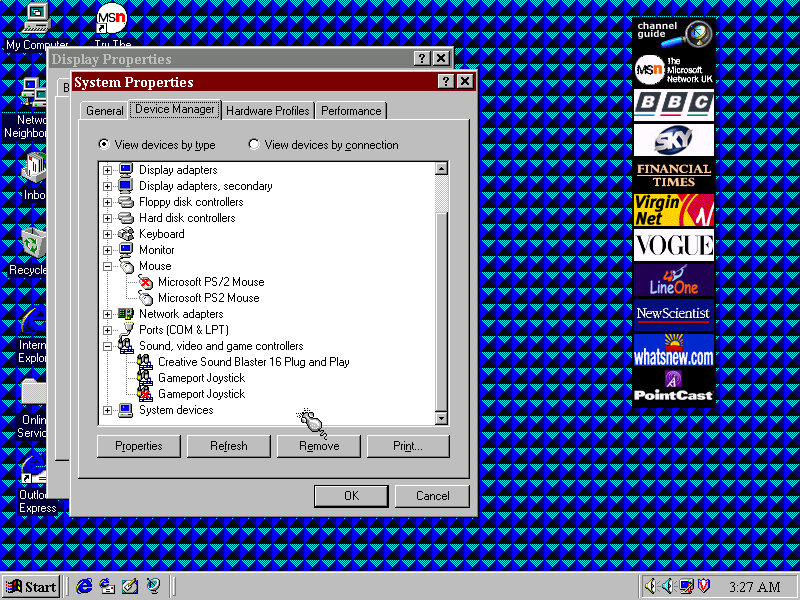
Device Manager with some duplicate devices

Restore Image – Archive

Windows 95 OSR2.5 (2.1 might be a better fit, or the original Windows 95, make sure to choose the FAT16 option when formatting for pre-OSR2.1 Windows 95)

Motherboard Information – VOGONS – Not a 1:1 match but the Gateway might be a close match to it


Last Bronx

Another Sega fighting game, but with weapons

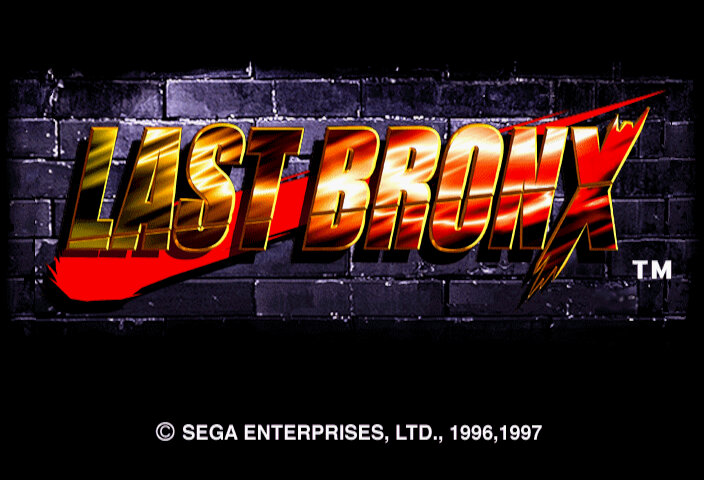
Title Screen

Set in Japan (But from the title you would assume Brooklyn, new York) the game features actual real life locations set in Japan. It was the first Sega fighting game to use motion capture footage giving the character detailed and accurate move sets compared to Virtua Fighter.

The fights typically take place in the evening or night, and most of the stages have a dark urban tone to them in contract to Virtual Fighter 2 where most stages take place in the daytime since its meant to be based on a worldwide tournament, Last Bronx has a more underground fight club like feel to it.

Stages

All characters have their own stage, but when you select their characters their personal stage is skipped until the end, where you will face Red Eye on that characters stage

Cross Street: which is complete with advertising billboards and may be based off the Tokyo/Shibuya crossing. This is the first stage for all characters, unless you choose Tommy then Tears Bridge will be the first

Tears Bridge: is set near a warehouse / cargo park near a large bridge, hence the name. At this point the game is set in the evening, and most stages thereafter have a night time ambiance to them.

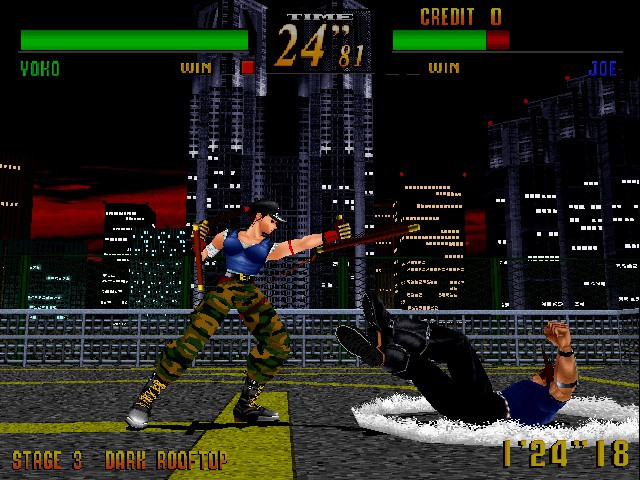
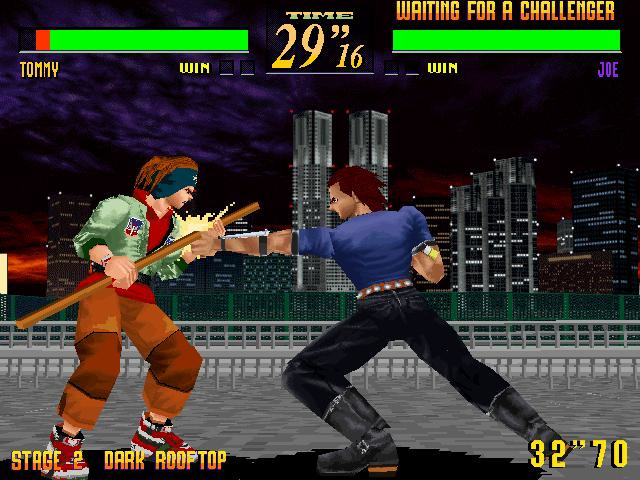
Dark Rooftop: reminds me a lot of Lei Wulong’s stage in Tekken 2, as its set on top of a skyscraper helicopter pad, with many building in the background. From the sky it looks like its set in the evening sunset, but Tears bridge gives the impression it is already night time, assuming the game is intended to simulate nightfall.

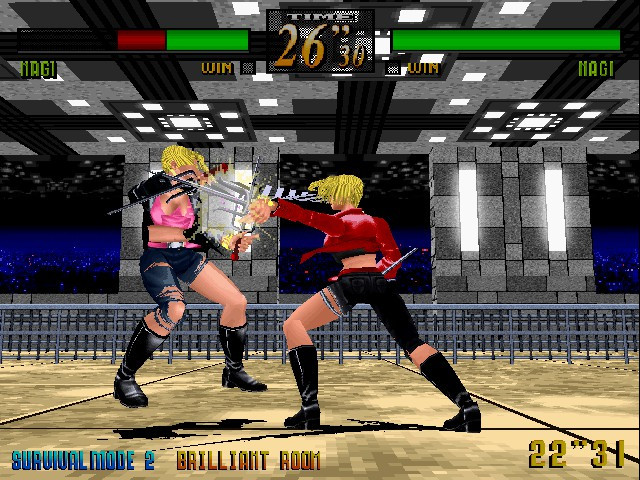
Saturn Version of the brilliant room stage

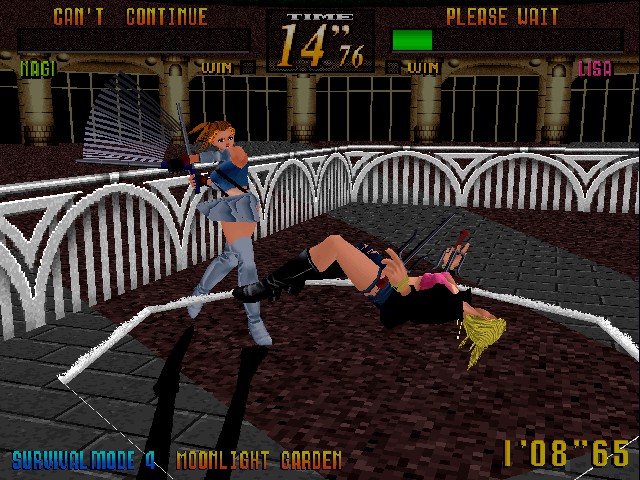
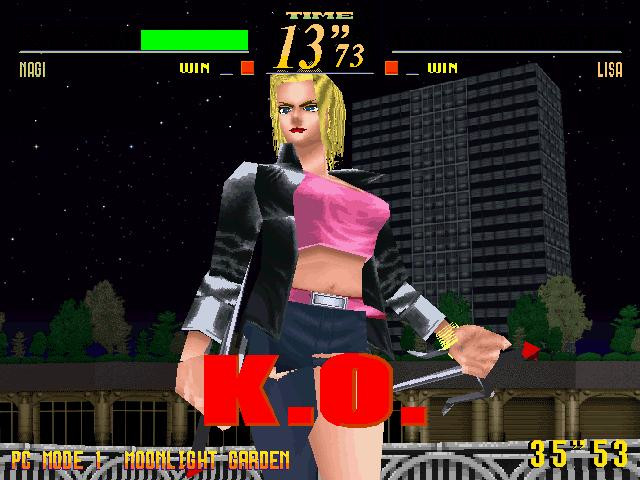
Moonlight Garden: A nice stage which is a departure from the industrial urban settings, this appears to be set on a garden or a large park and is a nice departure form the other stages

Lust Subway: Which is your typical Japanese underground subway, complete with display monitors. Thankfully this isn’t set at rush hour. This will be Yoko’s stage
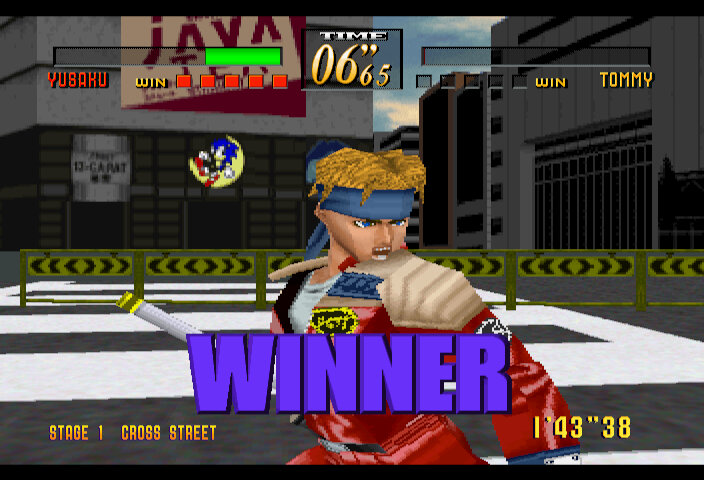
Nightmare Island: Set on a construction or a building site, despite the name insisting its an island, you will fight Zaimoku on this stage.

Naked Airport: Set on an airport runway and reminds me of the Shooting Hoops track from Ridge Racer Type 4 This is Yusaku’s stage

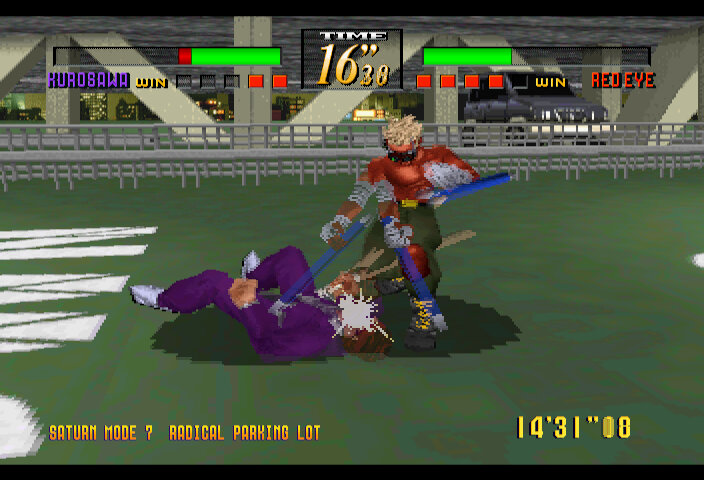
Radical Parking Lot: Kurosawa’s stage, not much to say here except its set on a moderately used parking lot.

Brilliant Room: Hidden and only available if you beat Red Eye with the lowest time

Lust Subway from the Model 2
A common occourance – Saturn Version
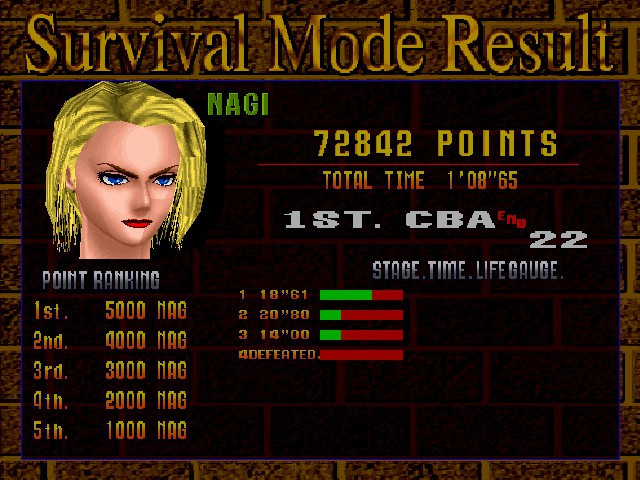
Survival Mode Results

Modes

Arcade: The main game mode, you choose a character and progress through 8 stages, with a bonus 9th stage if you complete the game with a new time record.

Saturn/PC mode: Similar to arcade player but features a story mode complete with cut scenes, and opponents are chosen at random

Team Battle: Pick multiple fighters who will battle

Survival Mode: You only have one life, and the health bar carries over to the next round. Objective here is to last the longest

Training Mode: A basic training mode that show the different fighting moves across the roster

Network Play: On the PC version, allows two players to play over a LAN

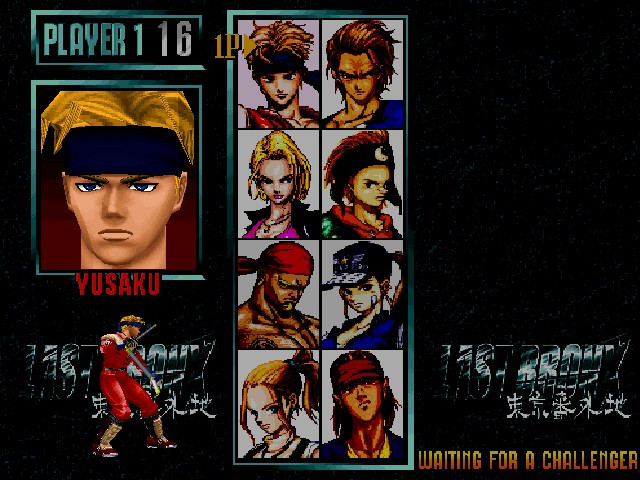
Character Select

There is also an extra mode in the Saturn/PC version that allows you to view unlocked FMVs

Versions

Arcade

The game was released on the Sega Model 2 arcade board, and was designed to be an upgrade for Virtua Fighter 2. This version has the best graphics, and it makes full use of the Model 2 graphics hardware which was more powerful than the Sega Saturn or common Windows PC’s of the time, in terms of 3D performance. However this version lacks FMV endings. It should be noted that the AI in this version is difficult to beat, since it was intended for the player to use multiple credits within a single play-through, you’d be surprised at how hard it is to beat on a single credit, despite using the easy settings in the games config.
This version of the game is fully playable in the Nebula Model 2 emulator, but is still unplayable in MAME as of 2021.

Most of the other screenshots captured are from the arcade version, except where noted.

Sega Saturn

Introduced a Saturn Mode which is similar to arcade mode but the opponents are randomized. This has a few changes compared to the arcade version, with the 3D background options being exchanged for sprite based background which are handled flawlessly by the Saturn’s VDP2. You will mostly notice the effect when the charicters move to an extent where the camera has to pan to follow the player. FMV videos are also present in the Saturn mode. Although they are in Japaneese, English subtitles are provided.

Most Saturn emulators will play this game, being a 3D titles it will play slowly on less powerful hardware. The Nvidia Shield struggles to play at full speed using the Yaba SanShiro emulator, and the FMV videos pixilate whilst playing. Mednafen Saturn will work the best

Microsoft Windows

A Windows PC port was released in 1998 and is very similar to the Sega Saturn version, and makes use of DirectX. Saturn game mode is renamed to PC Mode but remains the same with random opponents. The PC version supports higher resolutions then the Saturn version, and retains most graphical effects but lacks the texture quality and geometry of the arcade version.

Like most PC titles that were released in the 90s, the game is reliant on using analogue CD audio, which can cause problems on modern systems that use SATA or IDE CD drives without the CD audio line being connected. The reason is that from Windows 2000/ME on wards, Microsoft introduced digital audio for CD decoding, where audio is sent via the IDE cable itself rather then than the CD audio line. There’s no easy workaround unless you play the game in Pcem or 86box, otherwise the game will play but with no background audio or music.

I’ve not tested the game on modern Windows NT based release, but can confirm the game to be playablle using PCem or 86Box using any Windows 9x based operating system with a 3DFX or S3 based accellerator.