Tag Archives: DirectX 9

Call Of Duty – Black Ops

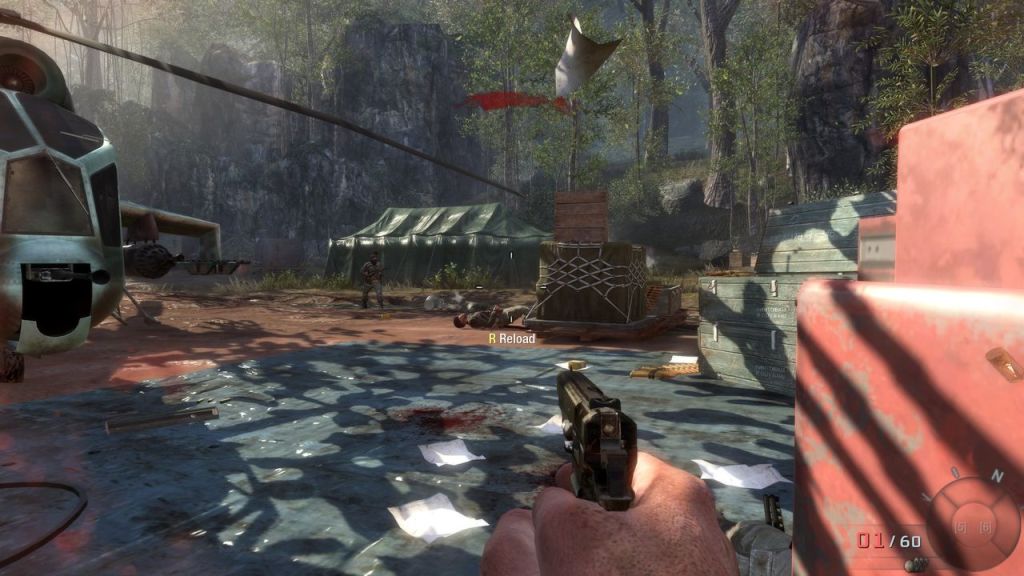
Another FPS game released November 2010 and developed by Treyarch. Considered to be a sequel to World At War.

The game’s set in the 1960s, at the height of the Cold War, where the U.S. and Soviet Union are locked in a global pissing match. The campaign’s core conflict revolves around covert U.S. operations to counter Soviet influence, from Cuba to Vietnam to Arctic outposts. It’s all about proxy wars and espionage, reflecting the real-world fear of mutually assured destruction. You’re playing as CIA operative Alex Mason, running black ops to stick it to the commies, which screams “America, hell yeah” but also shows the shady lengths the U.S. went to for dominance.
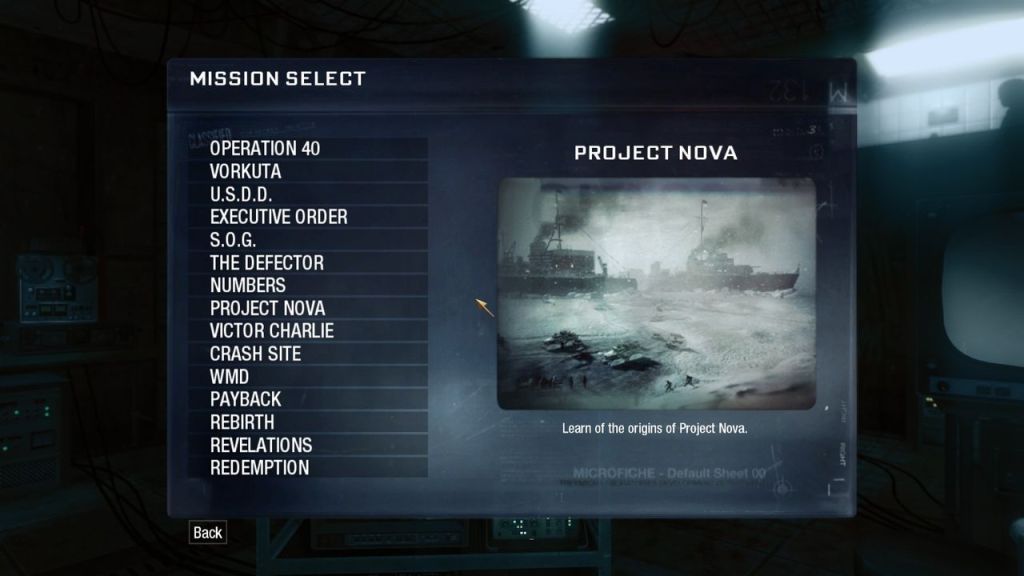
The Bay of Pigs Invasion (1961) kicks things off, with Mason involved in a botched CIA-backed attempt to overthrow Castro’s regime in Cuba. It’s a direct nod to U.S. anti-communist policies and the failure of covert intervention, showing the messy reality of regime change. The game doesn’t shy away from portraying Castro (or at least his double) and the Cuban Revolution as key pieces of the geopolitical chessboard. Vietnam War missions, like those in Khe Sanh and Hue City, highlight the U.S.’s military quagmire against the Viet Cong and North Vietnamese. Black Ops captures the chaos and moral ambiguity of the war, with soldiers like Woods griping about the pointlessness of it all, echoing real-world anti-war sentiments.
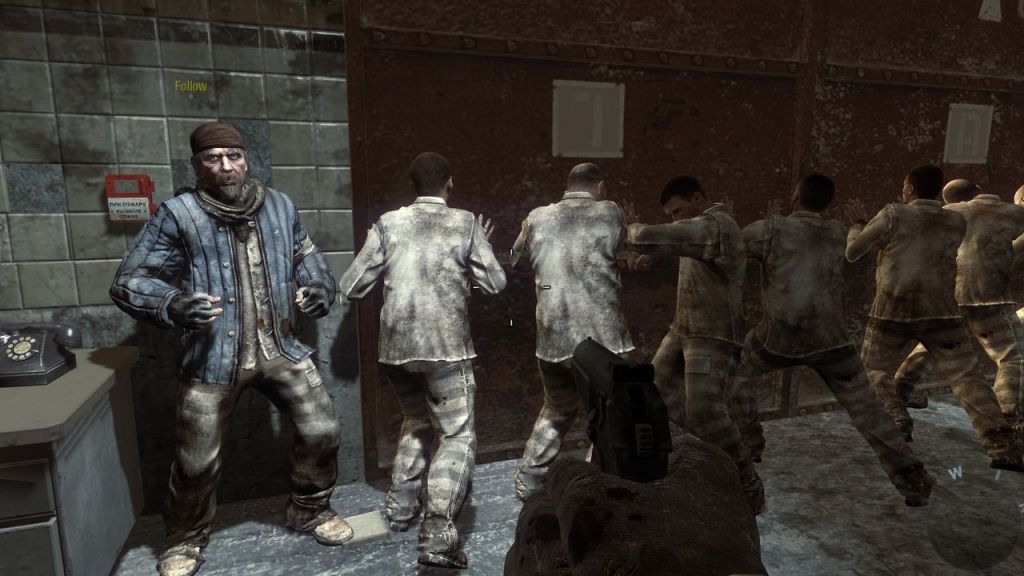
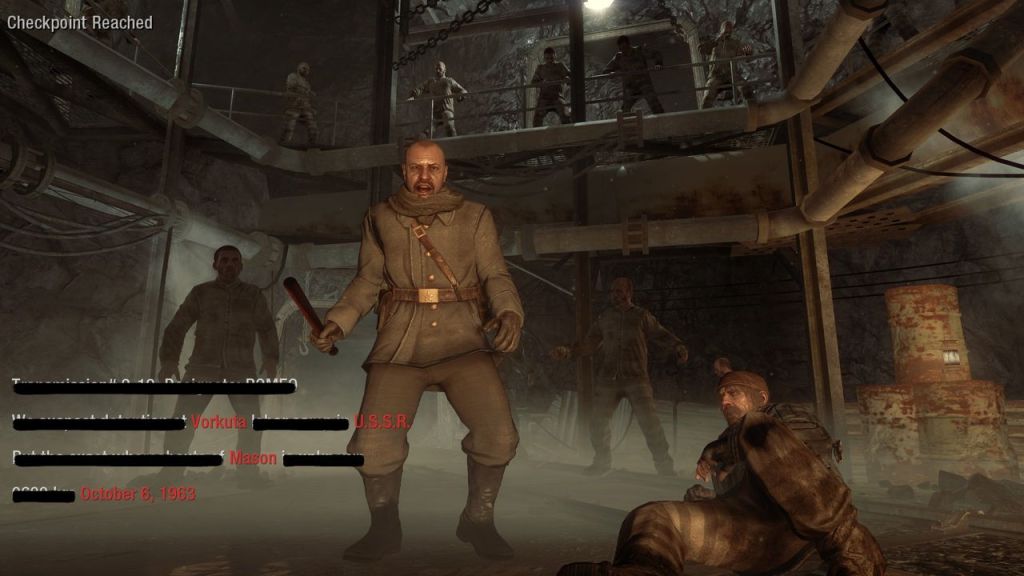
Numbers are a common occurance within the game campaign and play a large role int he story. The “Numbers” program, where Mason’s brainwashed by the Soviets, is a big metaphor for psychological warfare and propaganda. The idea of a sleeper agent programmed to kill on command plays into Cold War fears of ideological control—both sides were paranoid about the other “corrupting” their people. It’s less about left vs. right and more about how far governments (U.S. or Soviet) will go to manipulate minds for their agendas.
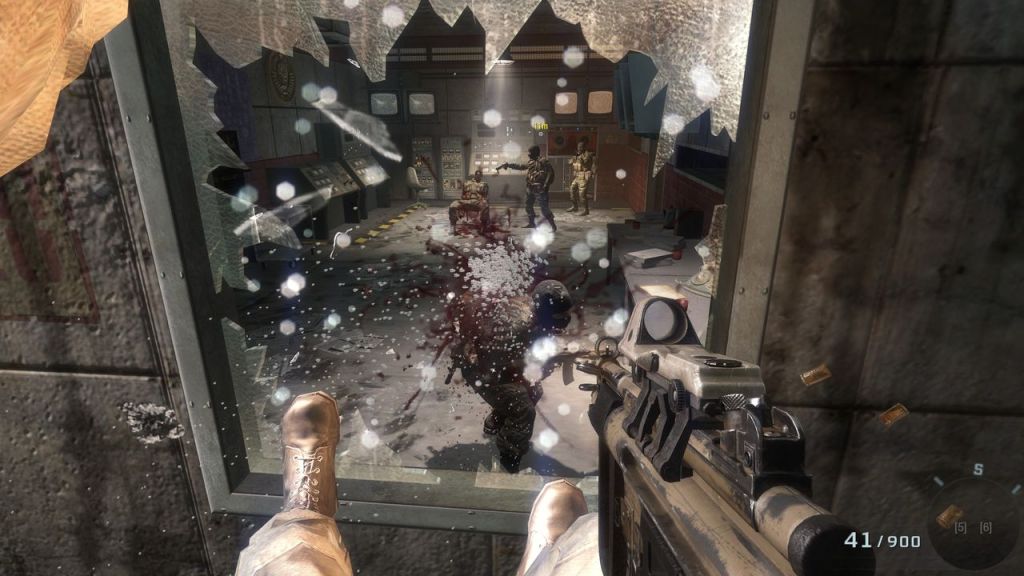
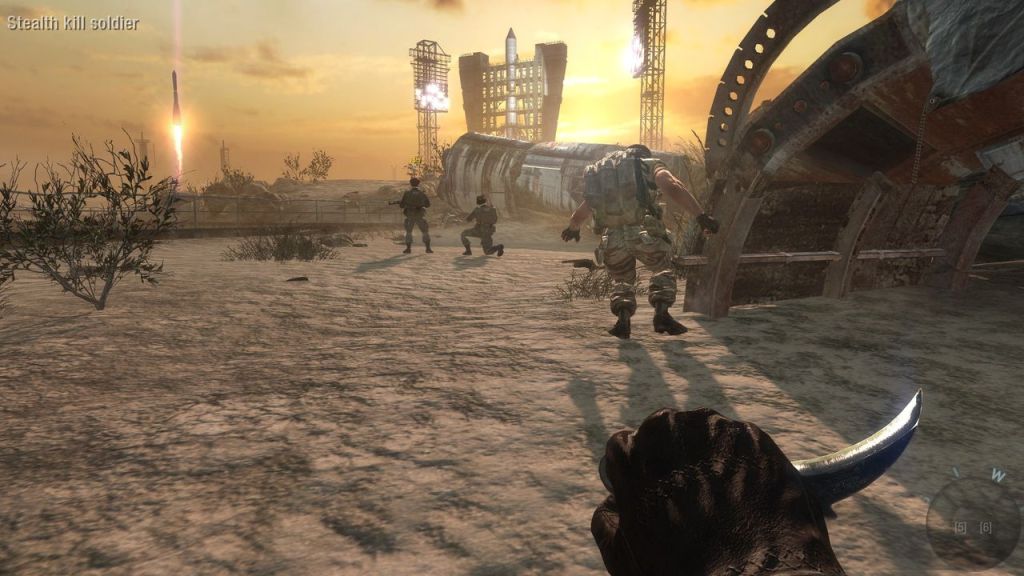
Nova 6, the fictional chemical weapon, is a plot driver, with the Soviets planning to unleash it on the West. It’s a stand-in for real Cold War anxieties about WMDs, like nerve gas or nukes. The game doesn’t preach, but it shows the U.S. and Soviets both playing dirty—testing weapons, running unethical experiments (like Reznov’s backstory)—which raises questions about the moral cost of “winning” a war.
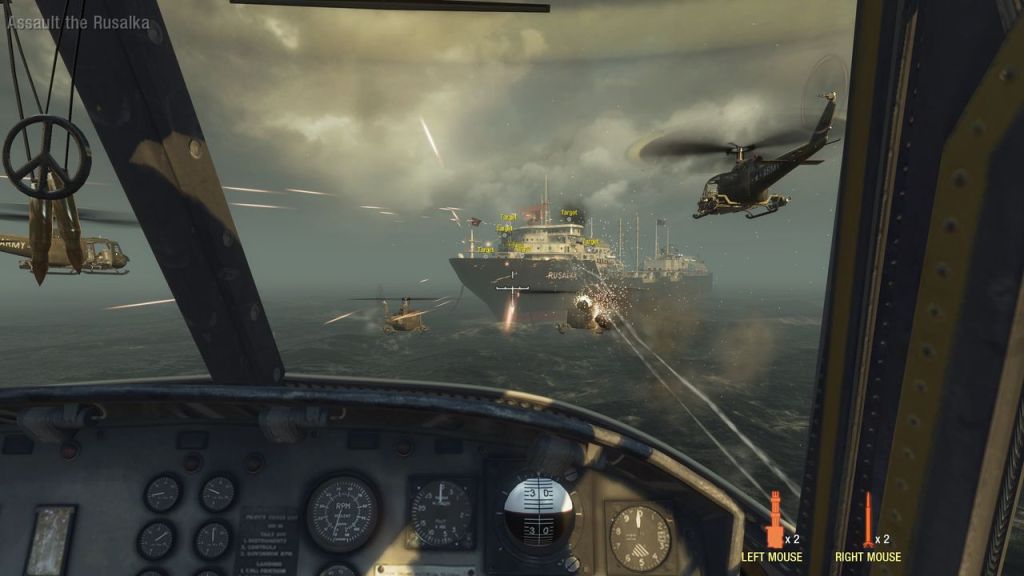
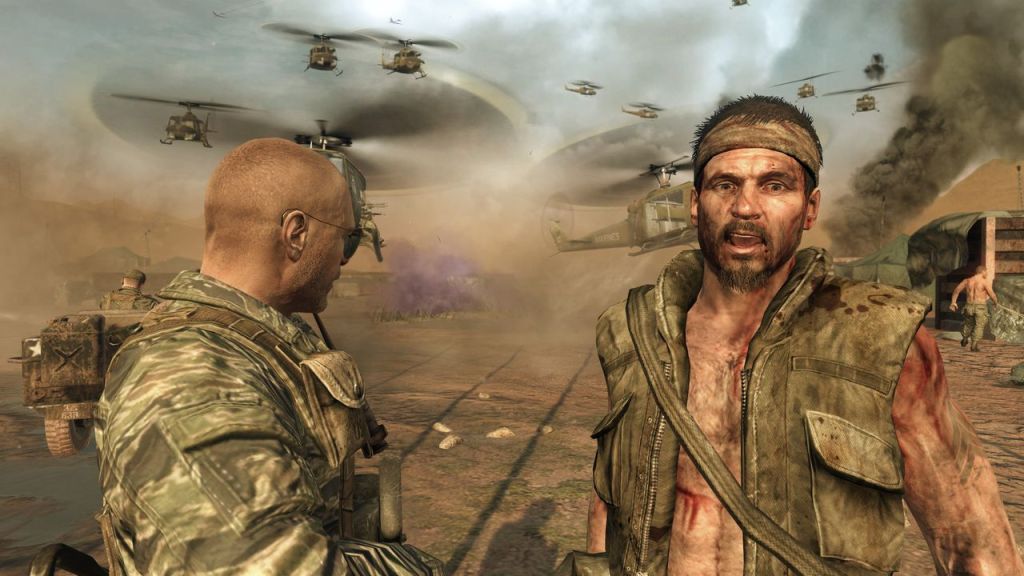
The game leans hard into the U.S. as the “good guys” fighting Soviet evil, with characters like Dragovich and Kravchenko painted as cartoonishly vile. This mirrors the era’s anti-communist propaganda, where the Red Scare was still a thing. That said, it’s not totally one-sided—Mason’s team isn’t exactly saintly, and the CIA’s methods (torture, assassination) get a side-eye, hinting at the hypocrisy of both superpowers.

Multiplayer

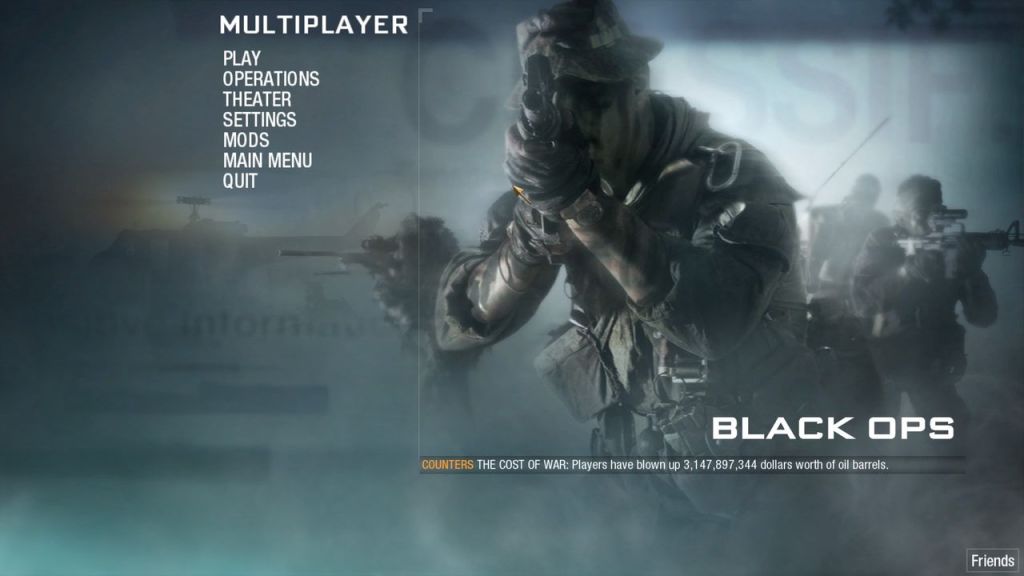
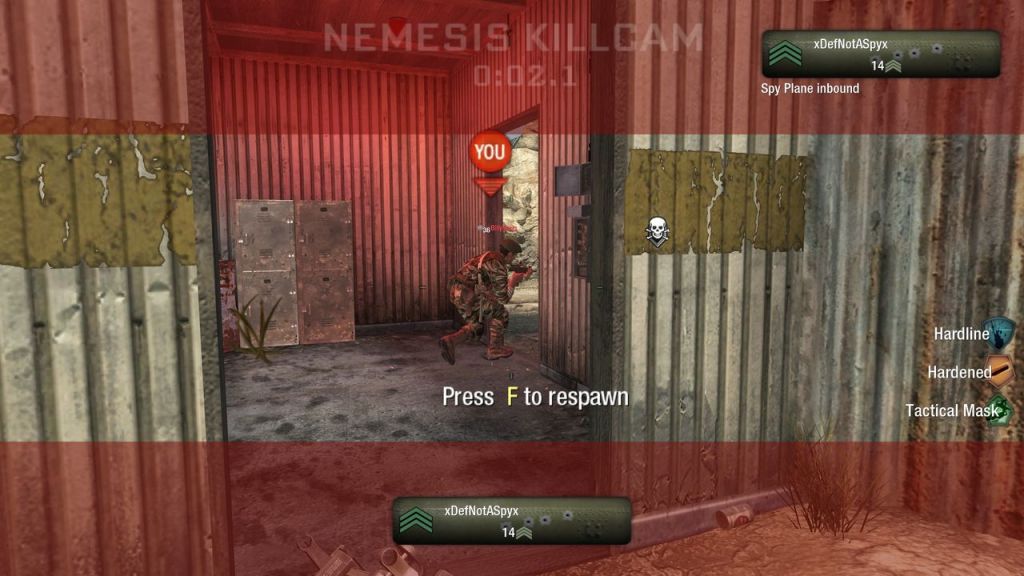
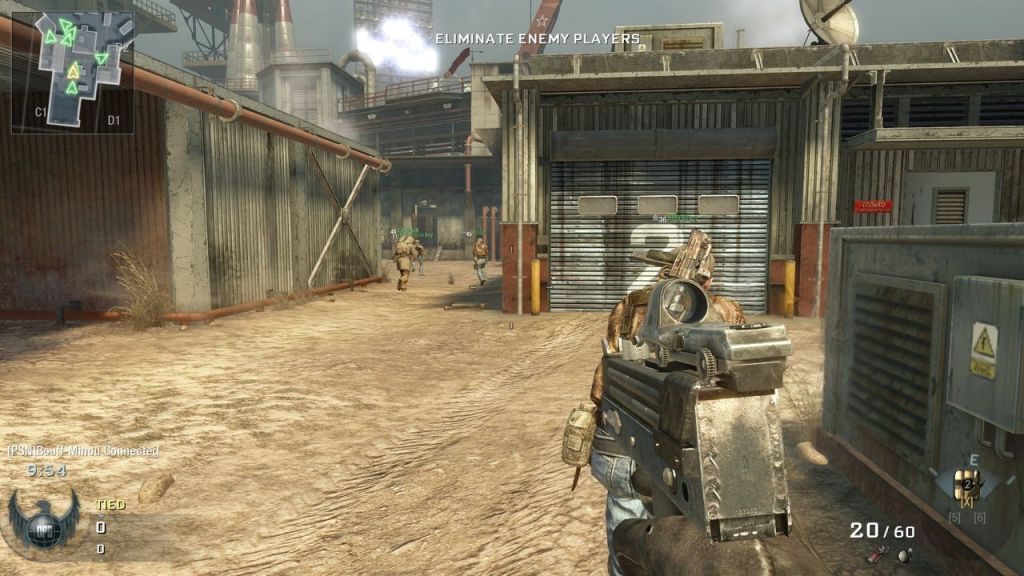
This is where Black Ops earned its stripes. You’ had a selection of 14 maps at launch, classics like Nuketown, Firing Range, and Jungle. Black Ops saw the introduction of COD Points, so you could flex your wallet and unlock that shiny new gun without grinding for days.
  • Nuketown: A tiny ‘50s suburb with two houses, a couple of buses, and a whole lot of carnage due to it’s small size. The nuke shelter and mannequins give it that creepy Cold War charm.
  • Firing Range: A military training ground with shacks, towers, and tight corners. Think of it as Nuketown’s slightly bigger cousin. Fast-paced but with just enough room to breathe. You can flank, hold a rooftop, or go Rambo in the middle. The central tower’s a death magnet, but controlling it feels like you’re the king of the lobby.
  • Jungle: A dense Vietnam jungle with rivers, huts, and elevated paths. It’s humid and hostile, like you’re actually in ‘Nam. Slower-paced, with sneaky flanks and sniper perches. The foliage lets you play Predator, but one wrong move and you’re eating an AK-47 burst. Perfect for tactical players who like a bit of stealth. Snipers and assault rifles shine, but watch for flankers with SMGs. Claymores are your best friend.
  • Launch: A Soviet cosmodrome with a rocket that actually launches mid-match. Big, open, and industrial. That rocket launch is a cool gimmick, shaking up sightlines. It’s a sniper’s dream with long lanes, but the side paths let rushers flank. Feels epic, like you’re storming Area 51. The rocket’s a distraction however, don’t get caught gawking.
  • Cracked: A war-torn Middle Eastern city with rubble, markets, and a big statue. Urban chaos at its finest. There lots of cover, destructible bits, and verticality. You can climb buildings or sneak through alleys. Feels like a real battlefield, but the layout’s forgiving for newbies.
  • Grid: A Soviet industrial complex with warehouses and open yards. Snowy and tactical. Great for objective modes—lots of choke points and a central building that’s a killzone. It’s balanced but rewards map knowledge.
  • Villa: A swanky Cuban estate with courtyards, a pool, and tight indoor areas. Fancy but deadly. It’s like crashing a drug lord’s party with an M16. The open courtyard’s a sniper’s playground, but indoors is a shotgun fest. Feels unique compared to the military vibes elsewhere.
  • Crisis: A Cuban military base with jungle edges and a central bunker. It’s got a good flow—open areas for firefights, jungle for stealth. The bunker’s a hotspot, but the map’s not as iconic as Nuketown or Firing Range. Solid, not spectacular.
  • Havana: Cuban city streets with colorful buildings, alleys, and a central plaza. Feels like a mini “Operation 40” from the campaign. Tight corners and rooftop routes make it a flankers’ paradise. The cars add cover but can explode GTA San Andreas style, so don’t get cozy around them.
  • Radiation: A Soviet nuclear plant with tunnels, conveyor belts, and an eerie glow. Creepy and industrial. The underground tunnels are a wild card—perfect for sneaky kills or getting ambushed. The open reactor area’s great for big team fights.
  • WMD: A snowy Soviet weapons facility, tied to the campaign mission. Big, with hangars and open fields. The snow adds atmosphere, but it’s a sniper’s map at heart. Feels epic but can drag if your team’s not coordinated.
  • Array: A massive Soviet radar base in the snow, with a giant dish and scattered buildings. It’s one of the biggest maps, built for snipers and vehicle cover. The dish is a cool landmark, but the map’s too spread out for my taste—feels like running a marathon to find a fight.
Zombie

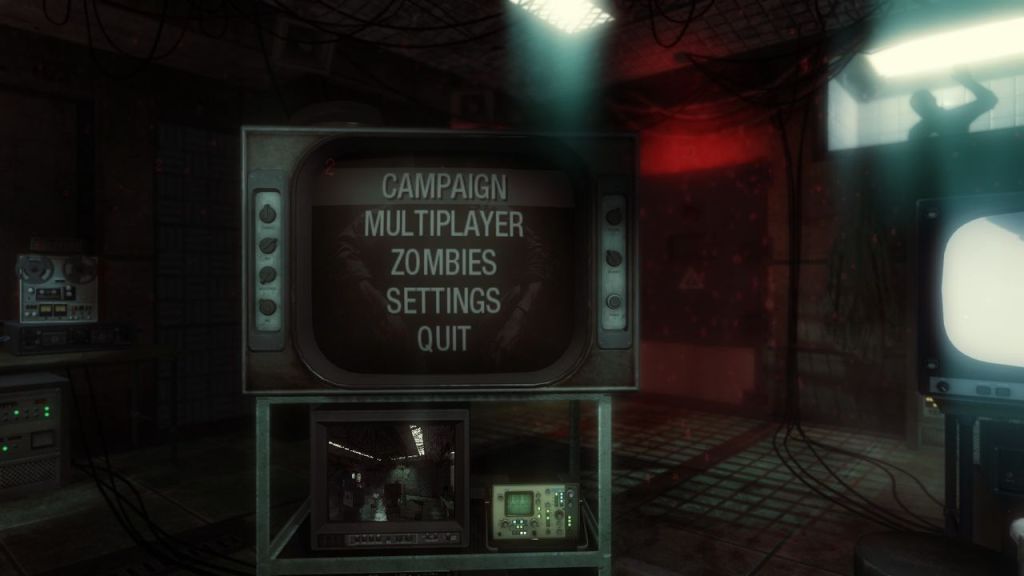
Zombies mode was one of the more popular modes of the multiplayer. “Kino der Toten” is set in an abandoned cinema, with you and other players trying to hold the line at the theater while zombies swarmed like Black Friday shoppers. Then you got “Five,” where you’re playing as JFK and Nixon mowing down the undead in the Pentagon. Very absurd. “Dead Ops Arcade” was this weird top-down fever dream, like if Smash TV and a zombie apocalypse had a lovechild. Additional DLCs like Rezurrection just poured gas on the fire with more maps.

Versions

Xbox 360: The 360 version runs at 1040×608 but manages to maintain its 60fps framerate. This version is playable on the Xbox One, although It’s not enhanced to take advantage of the more capable hardware. A co-operative mode is supported with two controllers, allowing for split-screen play for multiplayer.

Multiplayer is still active on Xbox Live, and for the deathmatch and free-for all playlists you can often jump into a match, or wait a few minutes for matchmaking to assemble a team of players. You might run into hackers every now and then, sometime I’ve even landed on a mod menu by chance, you can often just leave the match and wait a few minutes before matchmaking again.

PlayStation 3: Compared to the 360 version, the PS3 runs at a lower resolution at 960×544 which makes it closer to an SD resolution. Like the 360 version, you can also have two players off the same console with split screen mode. Online play is still supported and is free, but there is an issue with stats not saving for newer PSN profiles, stats have also been reported to reset when your PSN profile name is amended.

Microsoft Windows: The Windows version uses dedicated servers via Game Servers, a which was much preferred over Modern Warfare 2’s peer-to-peer. This means better connection stability and less host migration grief, though server quality varies. You get mod tools and a developer console, letting you tweak settings or create custom content (especially for Zombies).

Mac OS X: The Mac version was ported by Aspyr and was released a few years later. The game was previously sold on Steam, although it was a separate product/licence to the Windows version. It also used different servers, which meant it was more difficult to find multiplayer games. Since it was a 32bit application, it’s no longer compatible with modern versions of macOS which can only run 64bit applications.

The port itself is semi decent, it ran OK on low setting for an iMac 2011 (with a Radeon 6750) though expect to see a lot of ‘Shader Warming’ messages.

Nintendo Wii: The Wii version is a lot more compromised for it to run on its less capable hardware. You do have the benefit of motion controlled aiming but this can be awkward to get used to, thankfully there is support for the Wii Classic Controller (Not the Gamecube controller) for those that prefer the traditional experience.  Online play was previously supported but the official servers were discontinued. You can use Wiimmfi to restore online play, but the online populations are tiny and is often difficult to find a match. Sadly a lot of people wanting to play Black ops online will just use the more popular 360 or PS3 versions.

Still its an impressive port, but the motion controls can be an issue for some players.
Conclusion

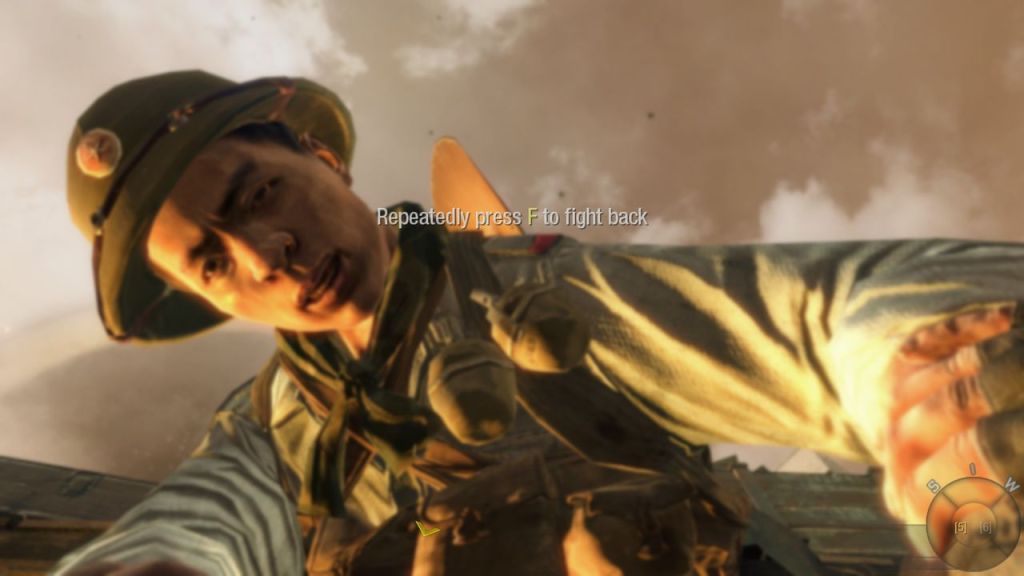
Black Ops is a popcorn shooter with a side of political spice. The Cold War backdrop gives it that gritty “us vs. them” vibe, but it’s not afraid to show the U.S. getting its hands dirty. You’re not just fighting for freedom; you’re knee-deep in the CIA’s sketchy playbook, which makes you wonder who the real bad guy is.
Call Of Duty – World At War

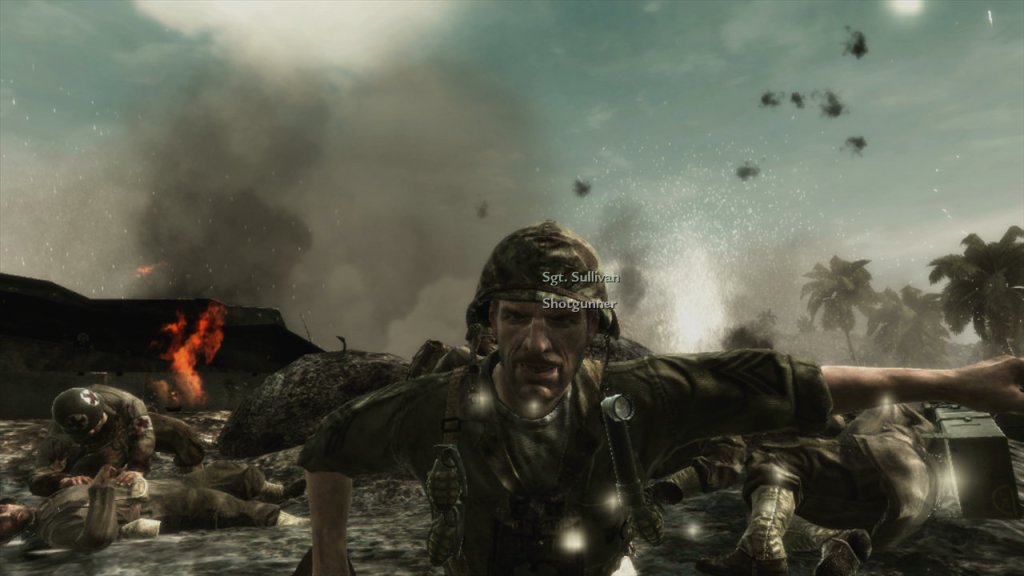
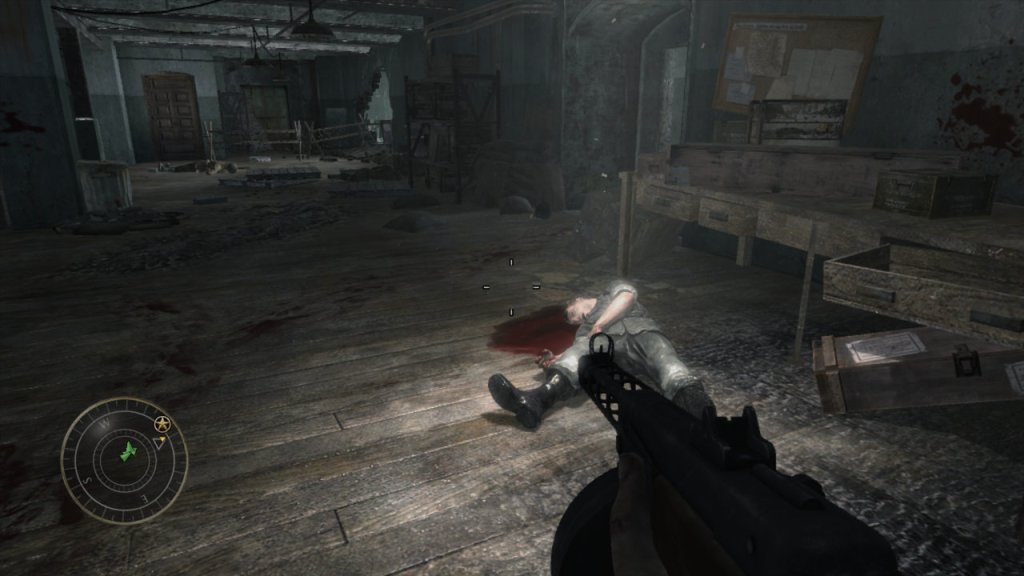
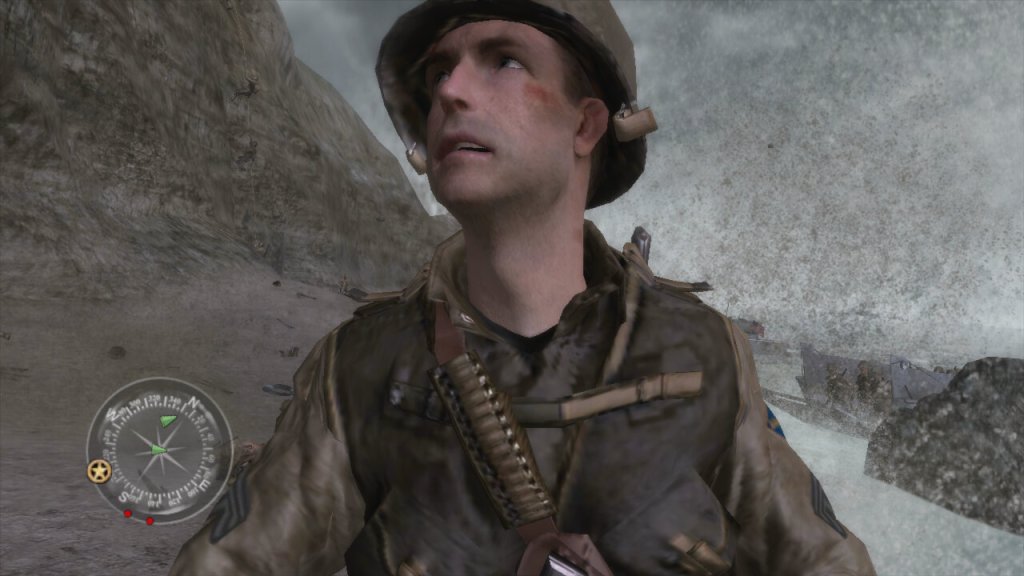
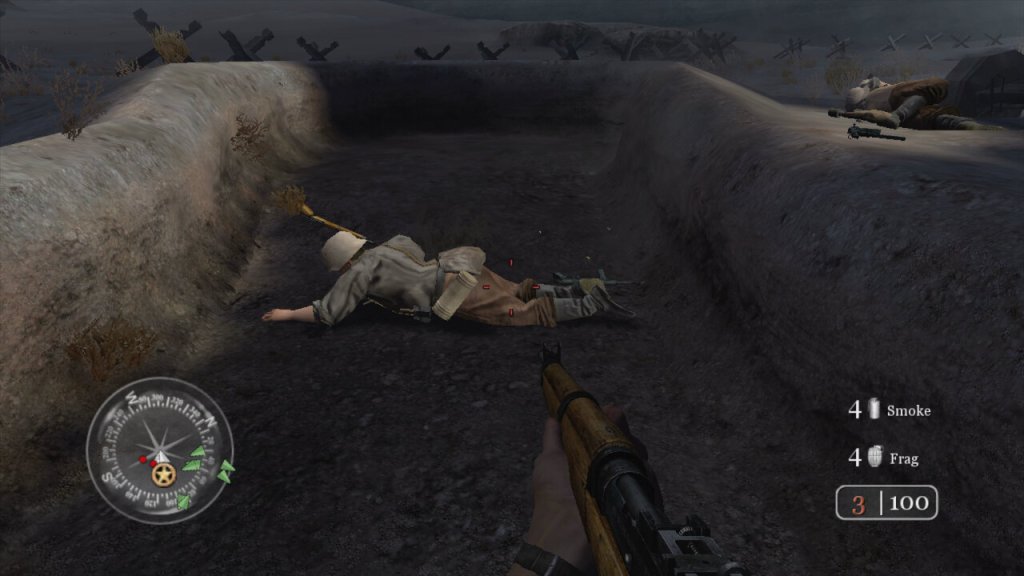
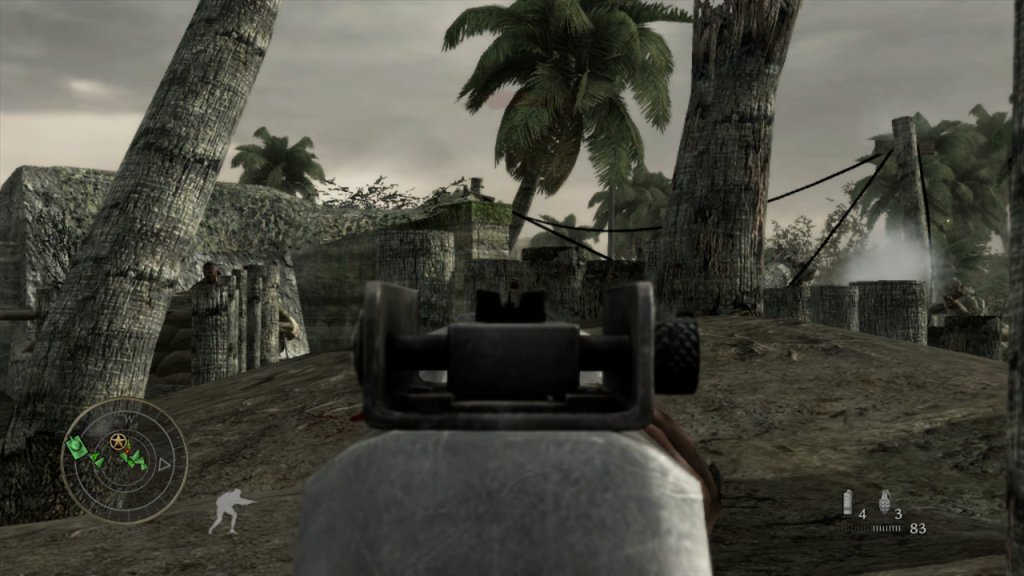
A first person shooter released as a followup to Modern Warfare (Call Of Duty 4), here we return to history. World at War hits different in comparison to the previous titles in the series, taking on a more gritty undertone with the games campaign, which can carry over to it’s multiplayer maps.

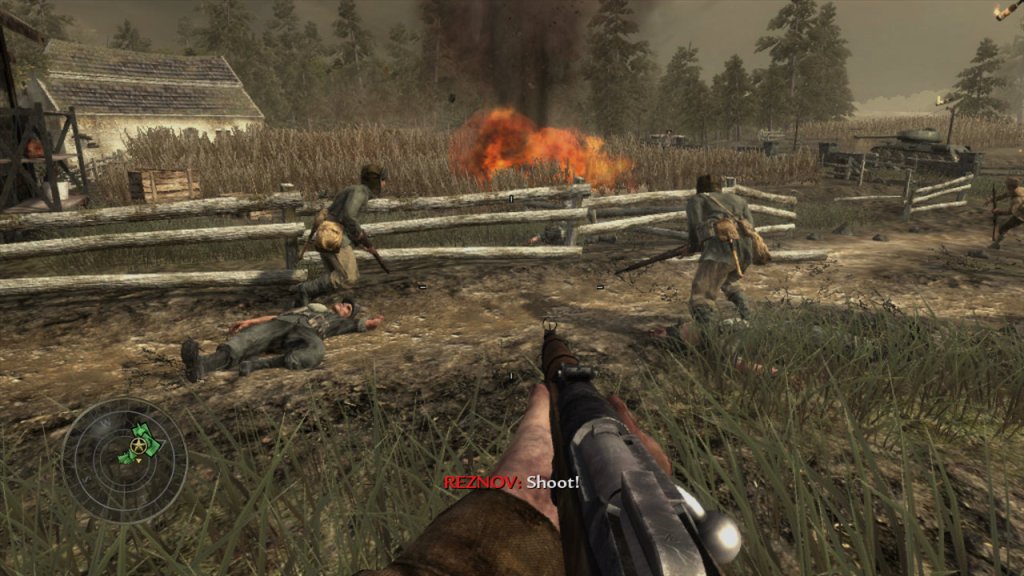
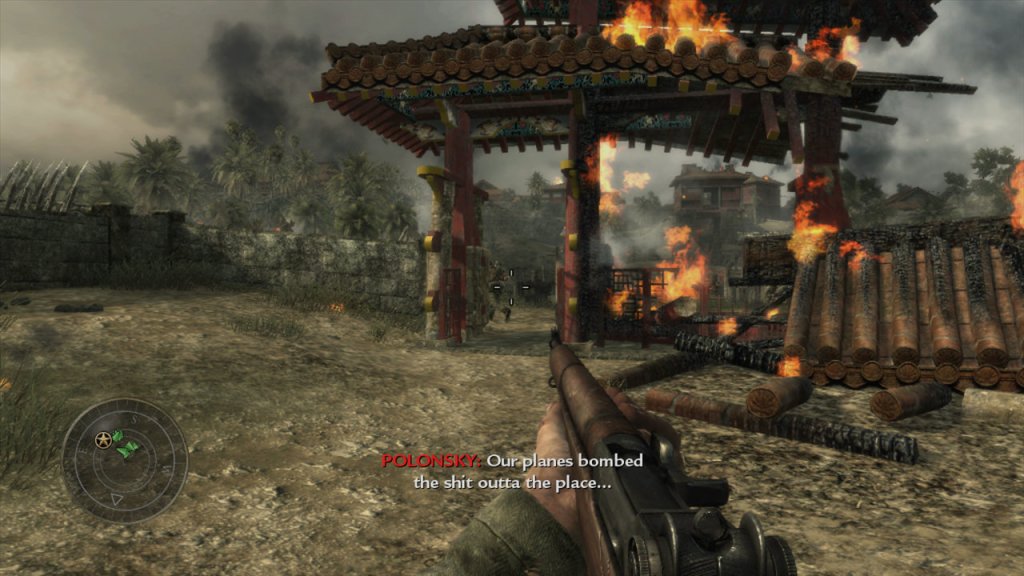
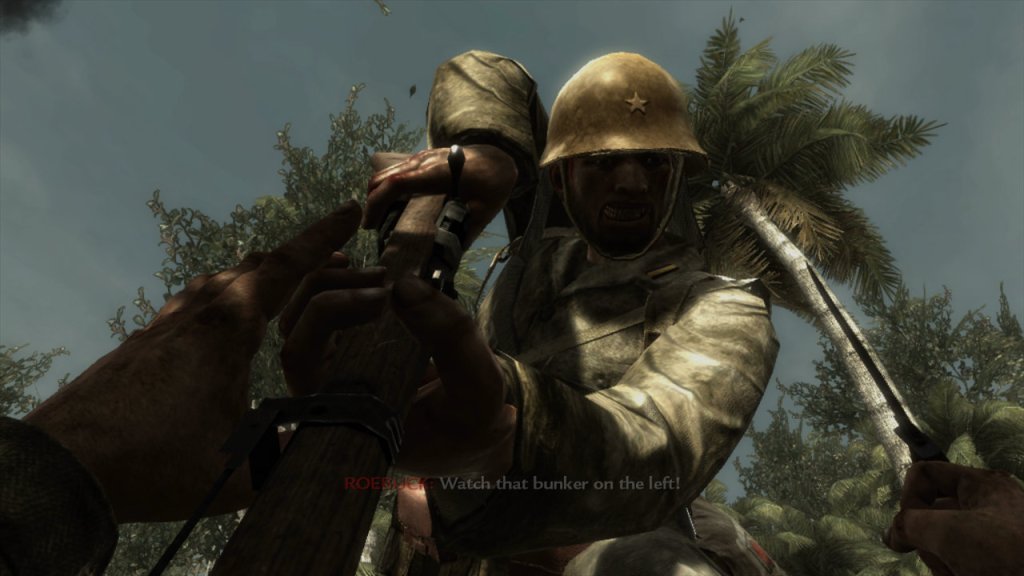
The game is set during World War II, depicting intense battles such as Peleliu, Okinawa, Stalingrado, and Berlin. It emphasizes the gritty and brutal nature of the conflict, including unique enemies like Kamikaze fighters and Banzai chargers. The single-player campaign is split into two perspectives. The American campaign follows US Marine Raider Private C. Miller in the Pacific Theater, covering battles like Makin Atoll, Peleliu, and Okinawa. A mission featuring US Navy Petty Officer Locke as a gunner during Okinawa is also include. The Soviet Campiagn centers on Soviet soldier Private Dimitri Petrenko, alongside Sergeant Viktor Reznov, from Stalingrado to the Battle of Berlin, culminating in planting the Soviet flag on the Reichstag.

The game’s campaign touches on a few political elements, specifically with patriotism and Nation Duty. While not overt, the game subtly critiques the dehumanizing nature of war through its graphic violence and grim tone, showing the cost of militaristic ideologies. The campaign doesn’t shy away from war’s horrors—flamethrowers burn enemies alive, civilians are caught in crossfire (e.g., “Vendetta”), and missions like “Eviction” depict urban devastation. This contrasts with the patriotic heroism, suggesting war’s toll on all sides, though it’s less critical of Allied actions. The game’s mature rating and gritty aesthetic (dismemberment, blood effects) aim to portray WWII’s brutality authentically, unlike earlier, sanitized WWII games. However, it stops short of questioning the Allies’ moral framework, focusing on Axis aggression.

The game reflects WWII’s propaganda-driven narratives, with each side’s campaign reinforcing their ideological stance—American democracy vs. Japanese imperialism, Soviet communism vs. Nazi fascism. Soviet missions use rhetoric like “For the Motherland!” to evoke communist unity, while American missions emphasize liberating the Pacific. The game doesn’t explore internal political tensions (e.g., Soviet purges, U.S. segregation) but mirrors wartime propaganda’s black-and-white framing. This reflects how WWII media shaped public perception, with clear heroes and villains. The game’s Zombies mode, while fictional, uses Nazi zombies as a shorthand for evil, reinforcing this narrative.

The Pacific campaign subtly touches on imperialism, as the U.S. fights to reclaim territories from Japanese control, but it doesn’t critique American expansionism. Missions like “Semper Fi” and “Black Cats” focus on retaking islands like Makin and Okinawa, framing the U.S. as liberators. The game sidesteps the Pacific’s colonial history (e.g., U.S. control of the Philippines) and Japan’s imperialist ambitions are villainized without nuance.

This reflects a Western-centric view, where Allied actions are heroic, and Japanese motivations (e.g., resource-driven expansion) are reduced to fanatical aggression.

Multiplayer

There are six multiplayer modes, including Team Deathmatch and Capture the Flag, with a ranking system up to level 65. You can unlock weapons, perks, and grenades as they progress, with a Prestige mode resetting rank for additional class slots. Killstreaks are rewarded following several consecutive kills In a row without dying, the rewards  Includes three killstreak rewards: Recon Plane (3 kills), Artillery Strike (5 kills), and Attack Dogs (7 kills). There are 13 maps included, with additional maps added as DLC.

Zombies Mode

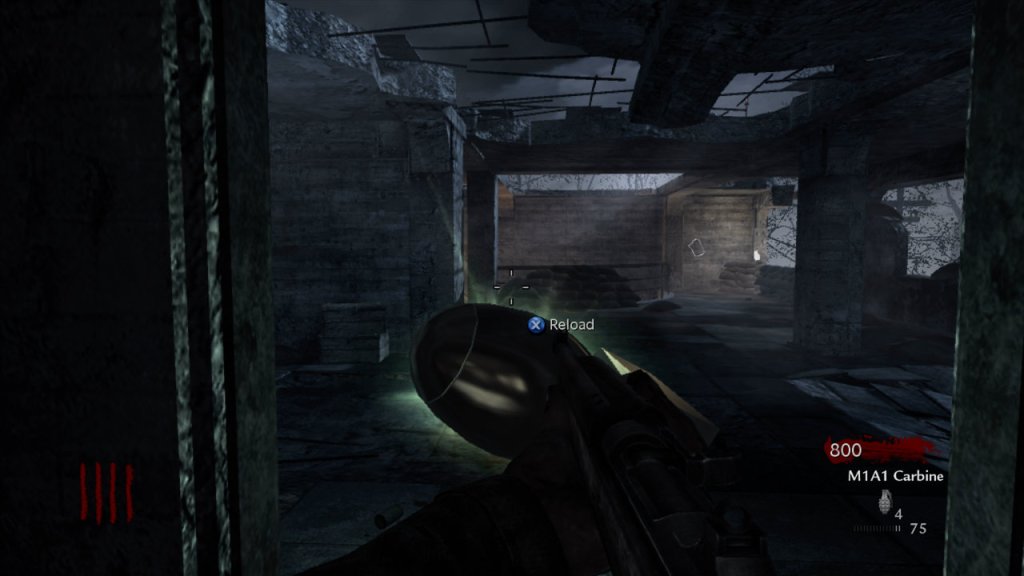
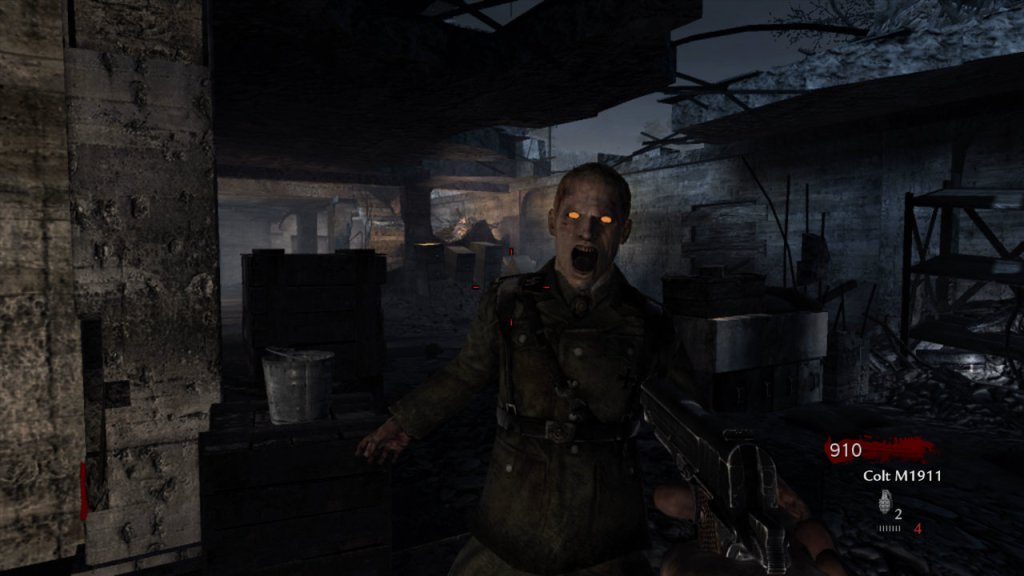
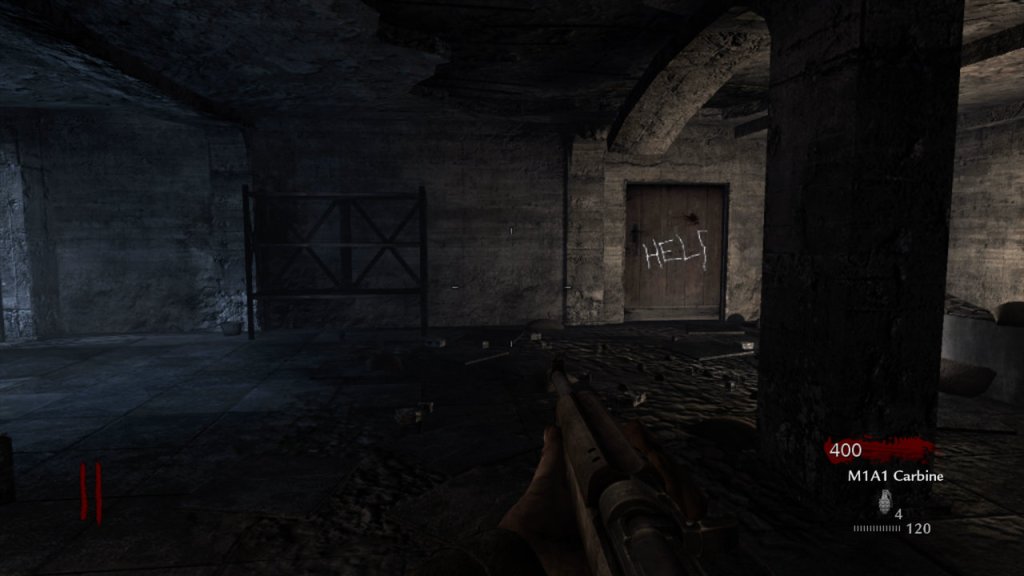
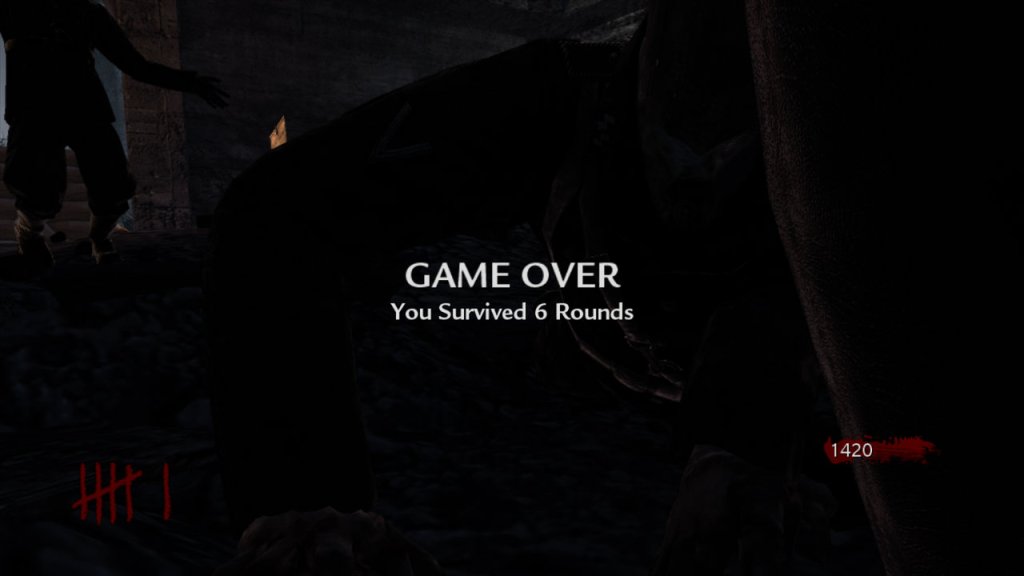
This was the first in the series to include a Zombies modes, which is a PVE mode where a team of players have to face off against computer controlled zombies whilst scoring enough points to spend on weapons, ammunition and barriers. The vibe is spooky, the teamwork is clutch, and it’s got that “one more game” energy that keeps you up ‘til 3 a.m. The later DLC zombie maps, like Verrückt, just crank the insanity up. This mode basically birthed a whole subgenre for Call of Duty and has become a common staple of the series. It can be best thought as a competitor to the Horde mode from Gears Of War 2, Firefight from Halo Reach, or survival from Left 4 Dead.

Versions

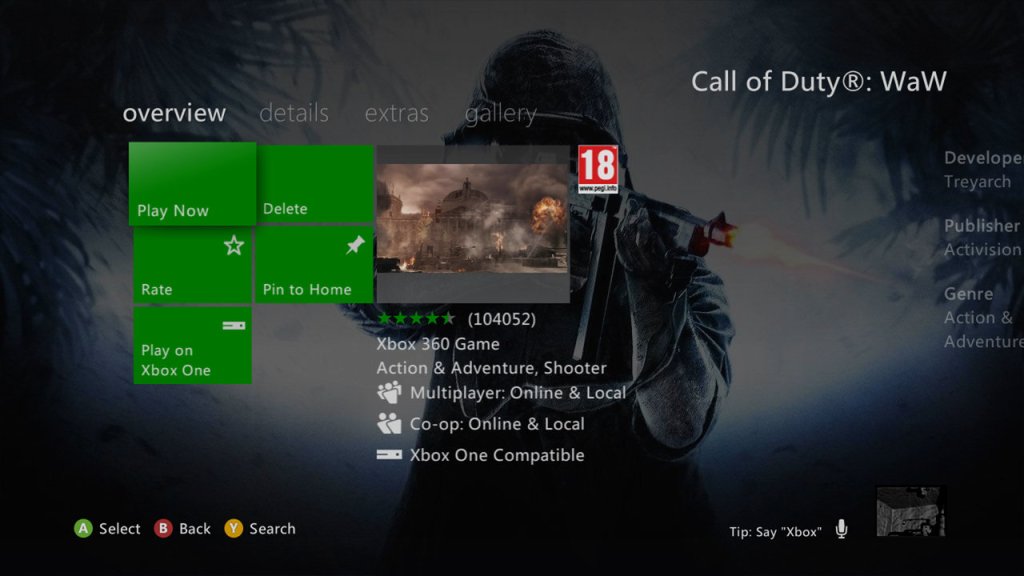
Xbox 360: The only version that has support for achievements, along with standard Xbox Live features like matchmaking and leaderboards. You do need to subscribe to play on Xbox Live unlike the other versions but is playable on the Xbox one and the Series consoles.

PlayStation 3: Compared to the 360 version, there is a noticeable frame drop when the game gets busy.Trophies were added following an update.

Wii: The Wii version is a tailored adaptation of the game for Nintendo’s console, offering unique benefits despite hardware limitations compared to the PS3, Xbox 360, and PC versions. While it sacrifices some graphical fidelity and features (e.g., no online co-op, fewer maps), it leverages the Wii’s motion controls and accessibility to deliver a different experience. I cant say the motion controls are good for aiming, sometimes you get a benefit of accuracy if the Wii Remote is playing nice, but most times it s awkward to correctly aim which makes the game more clunky to play.

Windows: Avaliable on Steam, but appears to lack achievement support since Steam did not support this at the time. This version still works on modern systems and the servicers are still online. But various security expoits make this version risky to play.

Conclusion

Call of Duty: World at War is a straight-up classic. The campaign’s a wild ride, multiplayer’s got that addictive grind, and Zombies? It’s not perfect—grenade spam and some repetitive missions can be a buzzkill—but this game’s got heart, guts, and a legacy that kicked off the Black Ops series of games.

Intel GMA3600 (PowerVR SGX545)

PowerVR graphics processers aren’t very common in the desktop PC space, you’re most likely to encounter them in mobile devices, having been used on the original iPhone, all the way to the iPhone 6S, various early Android devices like the original Samsung Galaxy, Galaxy S4 and the Google Nexus player. In the console space, the Sega Dreamcast and the PlayStation Vita have both used PowerVR for their graphics processors. On PC though, they did release a few early 3D accelerators during the late 90s, known as the Kyro Midas3/PCX and later Kyro series of 3D processors. They were mostly satisfactory for their time, but nothing remarkable over its competitors like Nvidia or 3DFX. They did make use of their own API (SGL)  before adopting DirectX.

Still Intel had their own line of integrated graphics chipsets, so why license the PowerVR?

Well its mostly due to die size and power consumption, with PowerVR chipsets being focused on the mobile marker, which Intel was desperate to get into. They even produced mobile phones that featured x86 processors running Android. In this case, we have a thin client (A 10Zig 58xx) that comes with an Intel Atom D2550 that has the PowerVR embedded, running at 640Mhz according to its Wikipedia article. Although I suspect it will throttle based on heat.

The SGX545 is based on Imagination’s tile-based deferred rendering (TBDR) architecture, a hallmark of PowerVR GPUs and is often brought up in Dreamcast Vs PS2 Comparisions across various message boards. This approach splits the display into tiles and performs rendering only after determining which surfaces are visible, reducing memory bandwidth usage and improving efficiency, a nice feature to have when the GPU shares memory bandwidth with the system.

I would have liked to show the Intel Graphics Utility but the utility refuses to start, crashing instead. This could be because Windows Thin PC is missing something the utility requires (.NET Framework 3.5). Oh well, not like those Intel Control Panels did much anyway…

Apparently this chip a complete fail with Windows 10, meaning its best to use it with Windows 7. Considering I’m running this on a thin client, I opted to use Windows Thin PC which is geared for such devices plus it has a lot of auxiliary stuff removed, ideal since we only have a 16GB DOM.

The system memory appears to be a single 2GB module ruinning at 1066MHZ, no idea of much that memory bandwidth affects gameplay. Now ther is an option within the BIOS, or Efi to change the amount of reserved RAM. By default it was set to 8MB, with the option to go all the way up to 48MB. I’m not sure what impact this could have on performance, since Windows reports the same amount of VRAM regardless of what option is set, although the reserved memory amount does change in the System Performance Monitor.

Games

Lets see what the typical experience for running game would be, despite this hardware being made anything but playing games. The GPU is supposed to have full DirectX 9 compliance, however given the power limitations I figure its best to test titles from the early 2000s era with a few 90s games to see how the drivers fare with older titles.

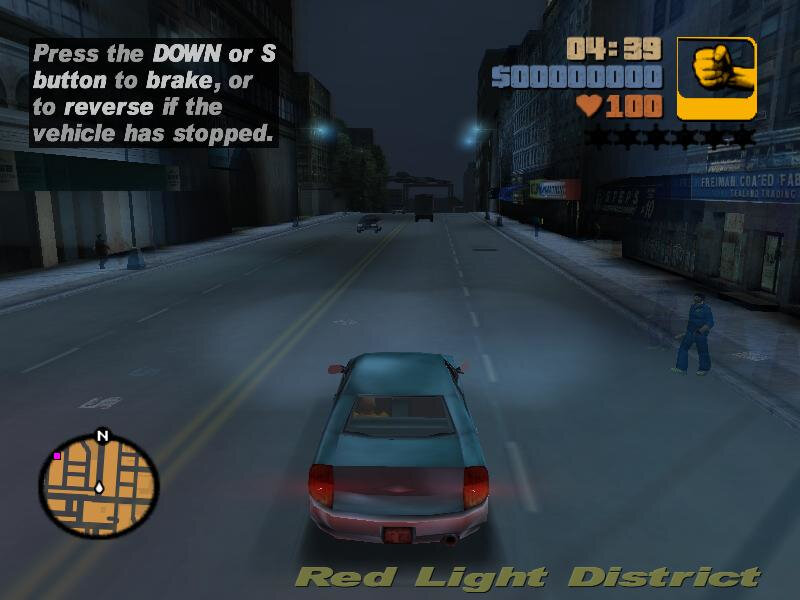
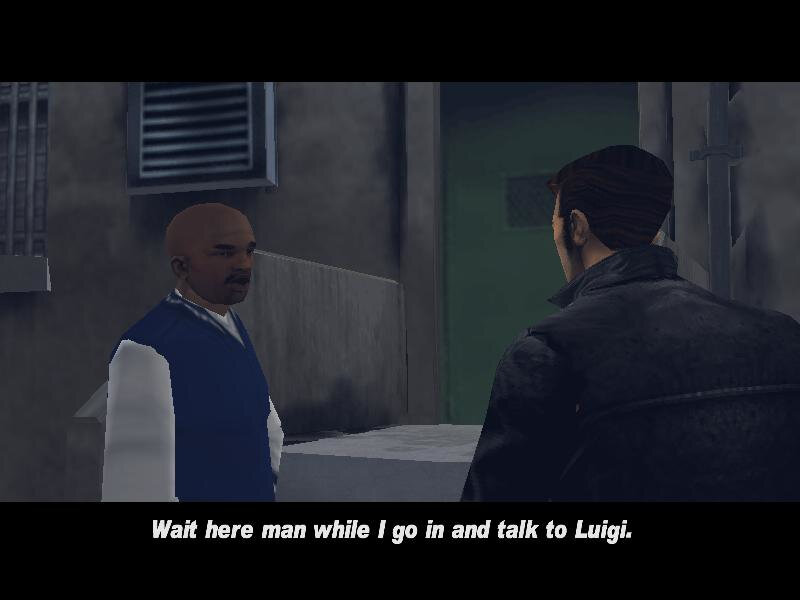
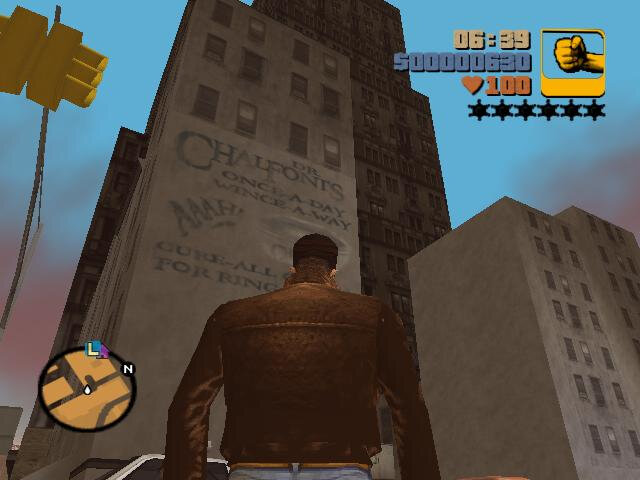
GTA III: Nearly what I consider to be playable, and the driver does not crash unlike the GMA950, but there are some weird seeming issues (white dots in between textures) that is visible on the roads. Also the headlights have this weird trail that shows even when pointer trails are turned off in the game settings. Still, in terms of framerate we hover around 17fps.

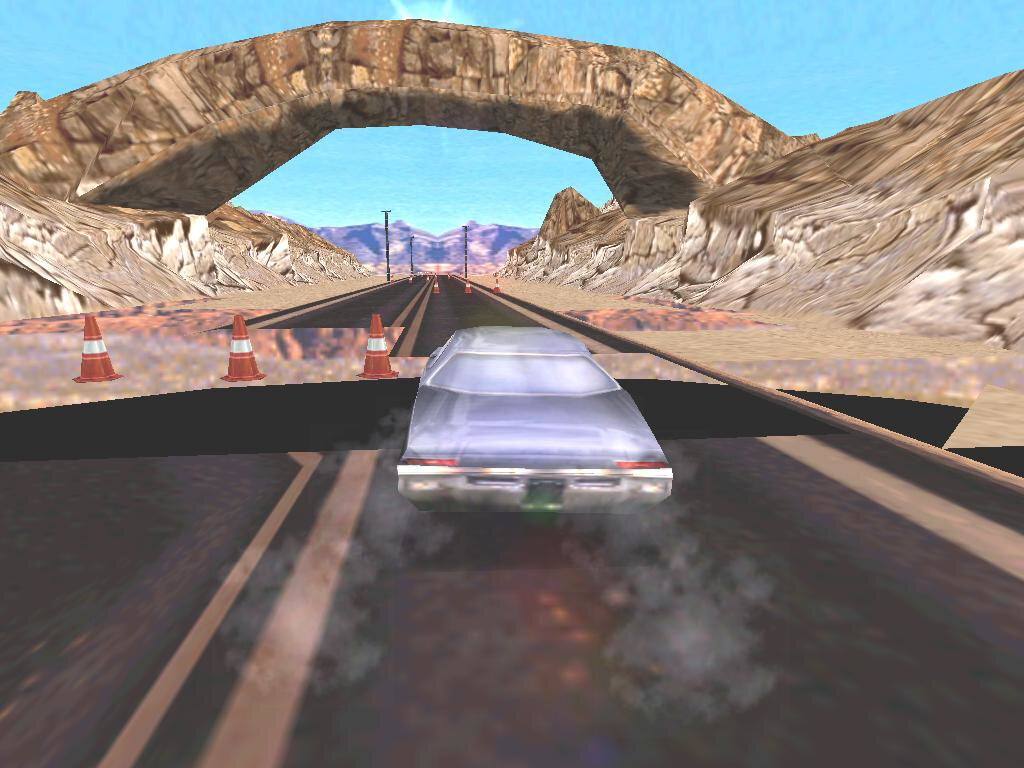
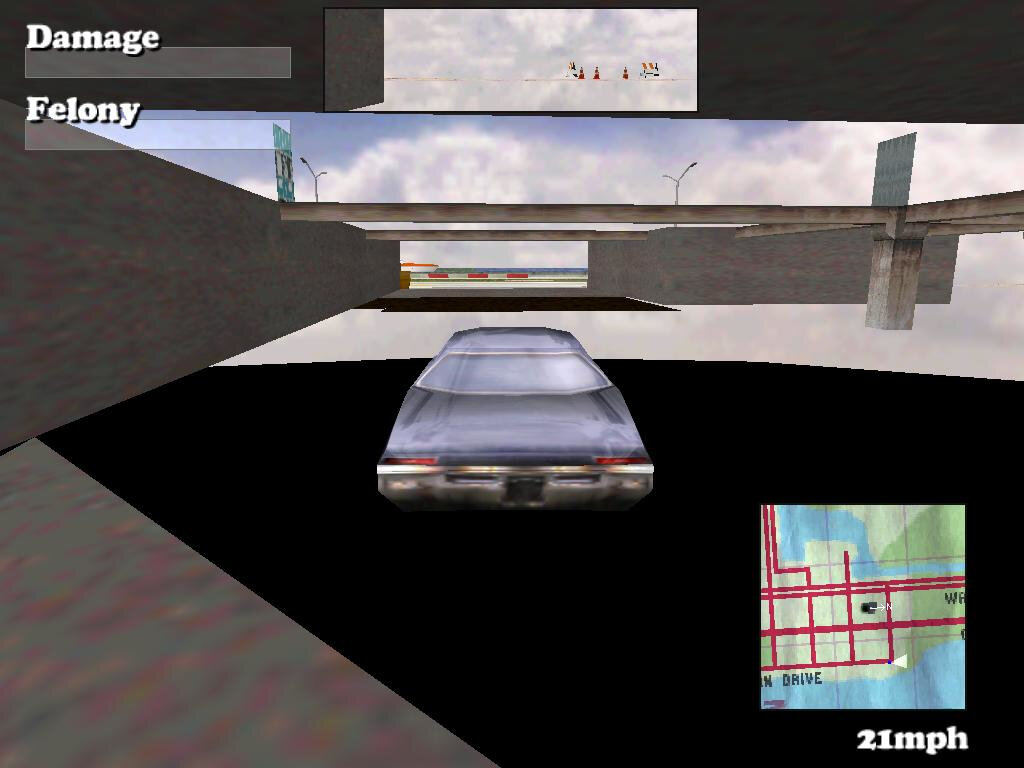
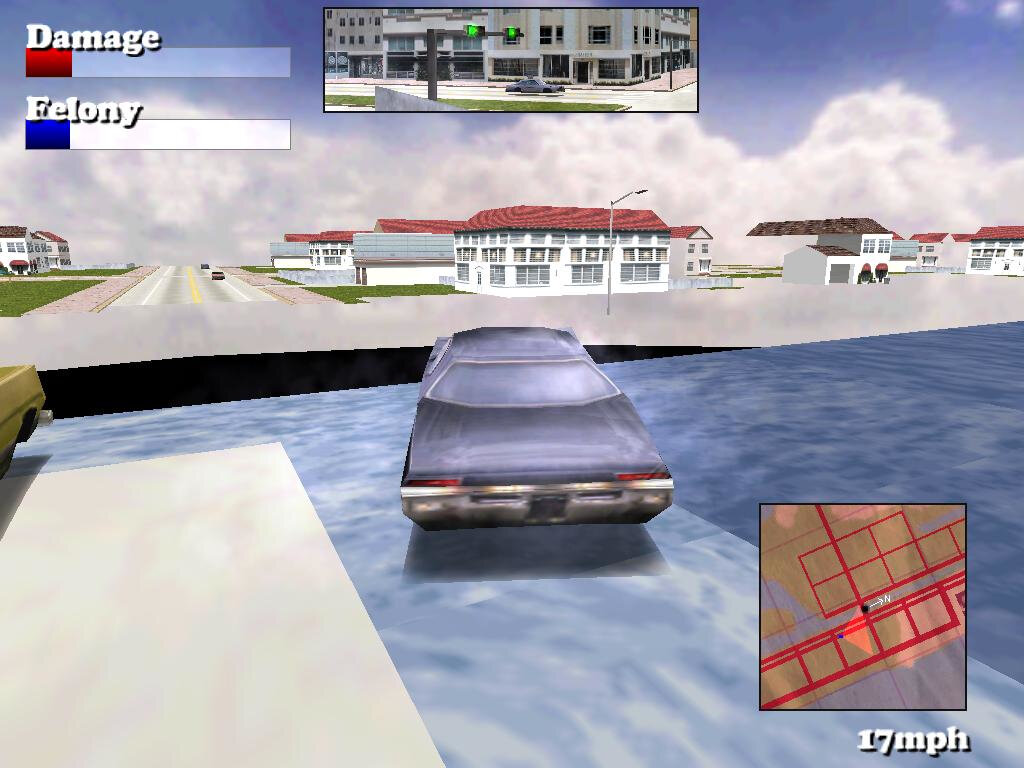
Driver: This one failed spectacularly, here we have missing or clipping textures on the road and on the environment. The car wheels have completely disappeared and parts of the road popping in randomly. Despite changing the graphics details and resolutions settings, I cannot seem to fix these issues

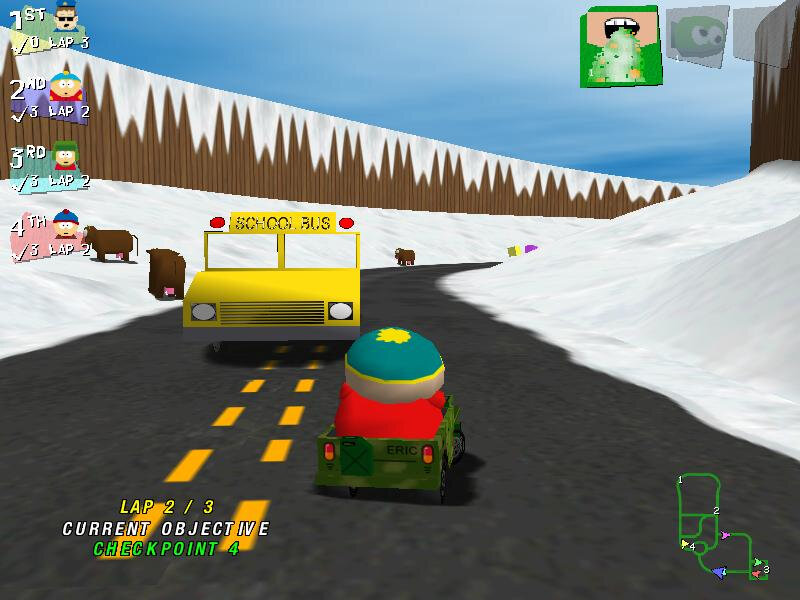
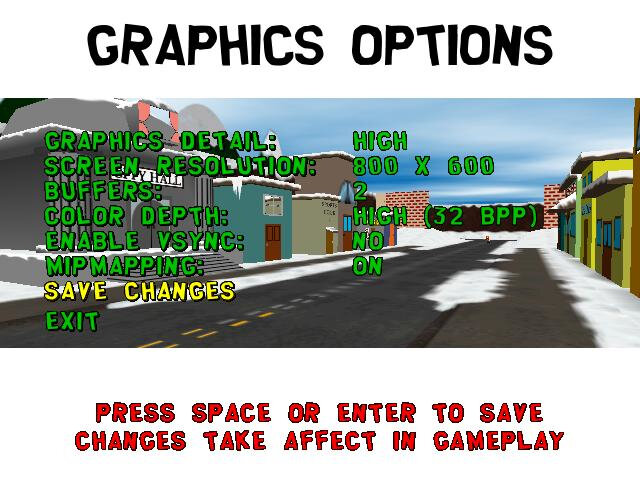
South Park Rally: This runs almost perfectly and has an average of 32fps, but some character models are missing details. This also affects Ms Crabtree’s bus in the first level.

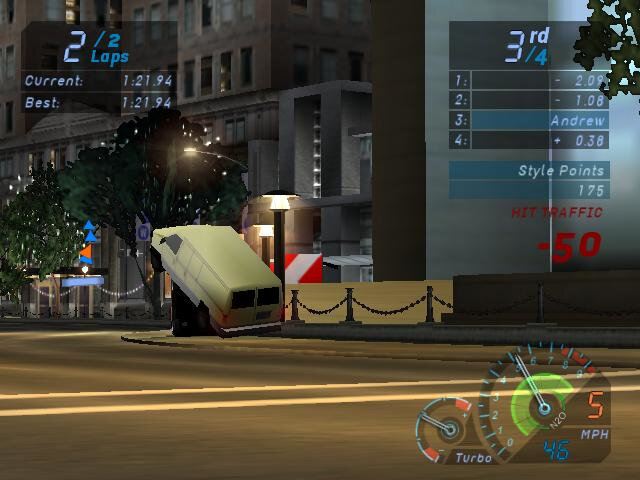
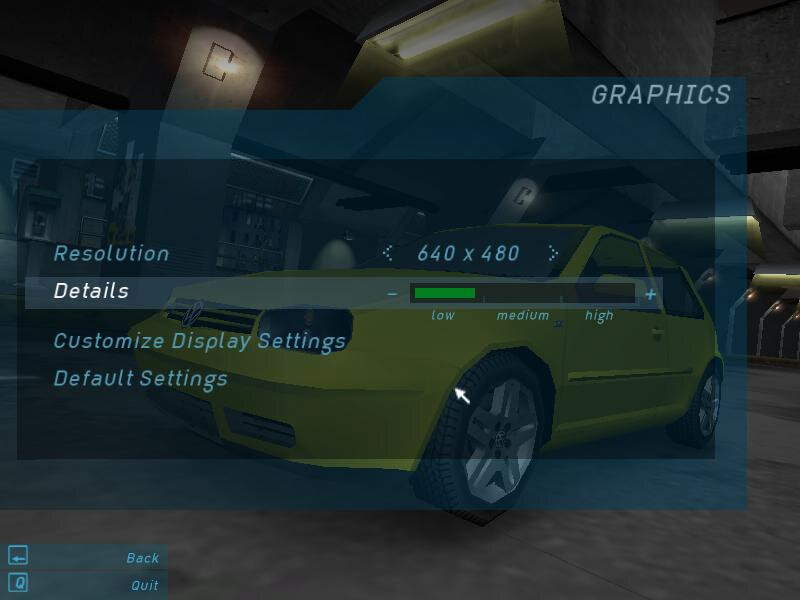
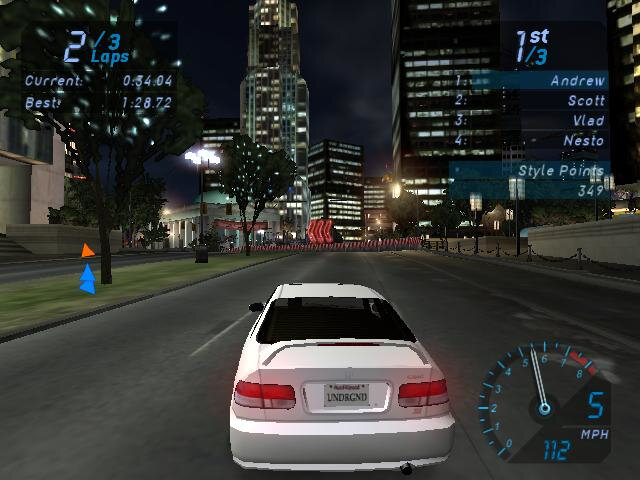
Need For Speed Underground: At 640×480 we mostly hovering around 24fps, with most of the settings turned down low, low.

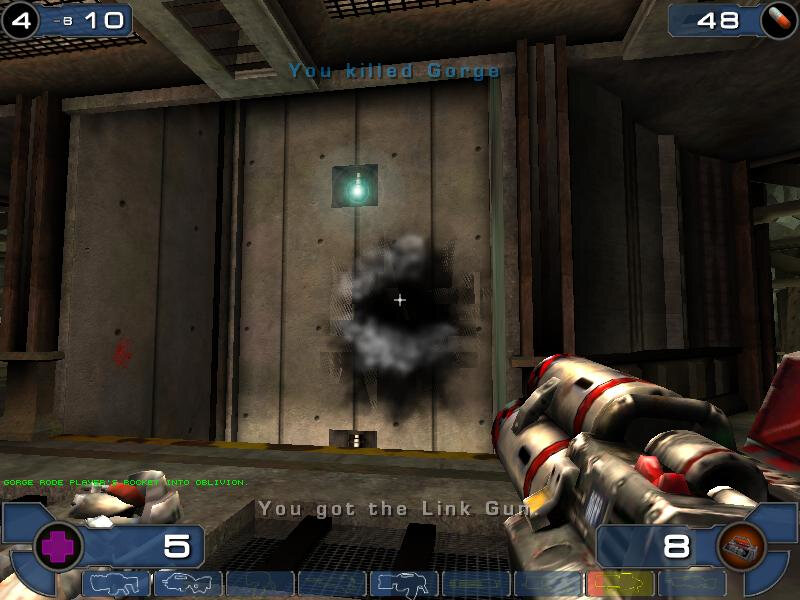
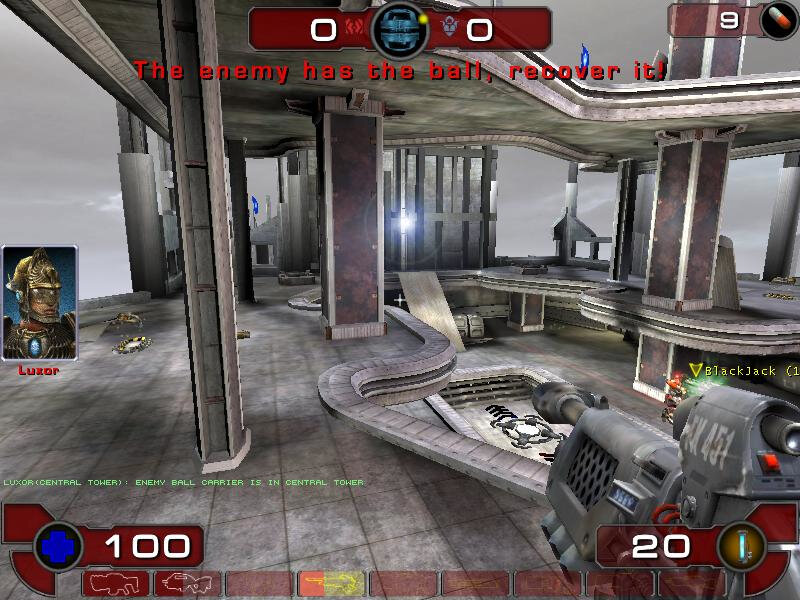
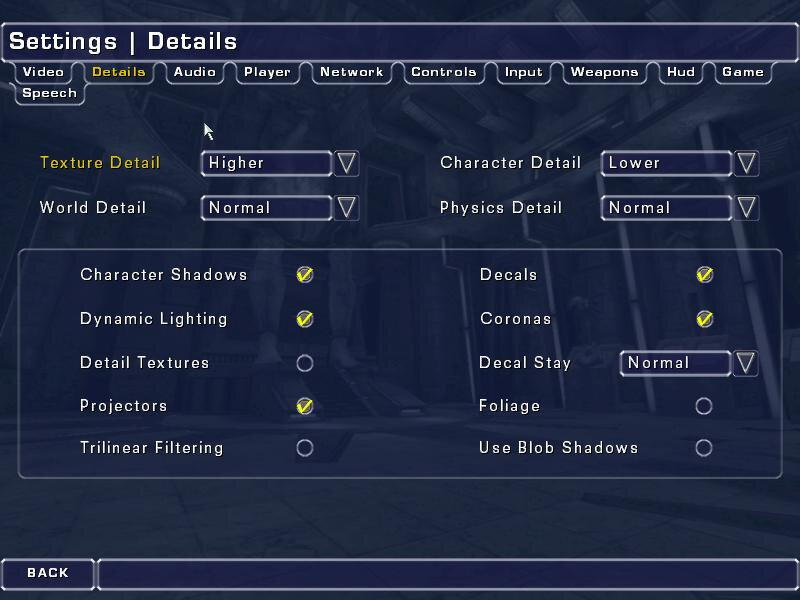
Unreal Tournament 2003: Shadows a glitchy/fickly, especially when you die, or when you se the flax cannon. But we do get good framerates with medium to low resolution t 800×600.

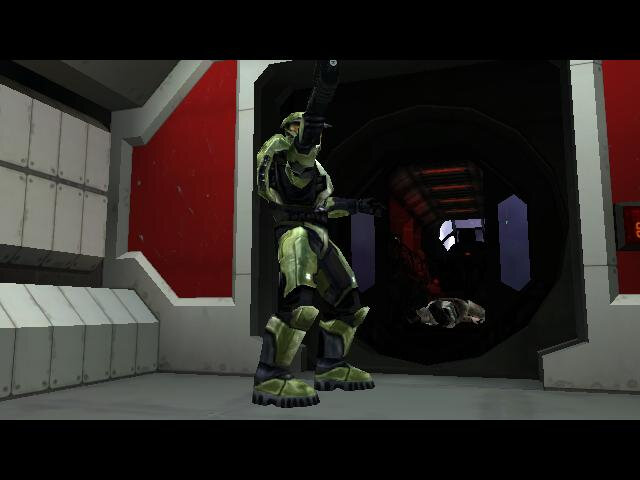
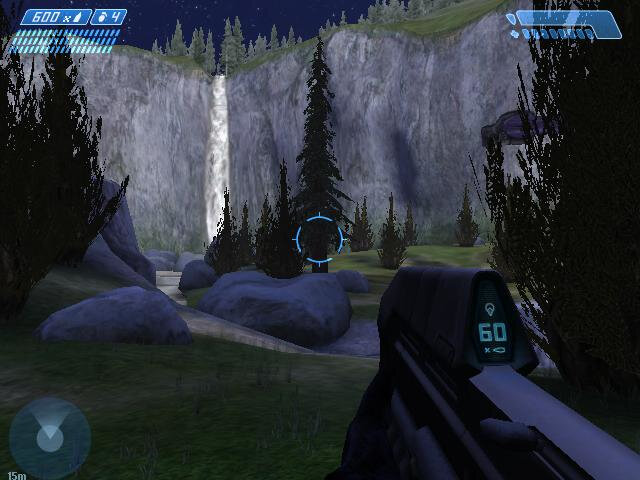
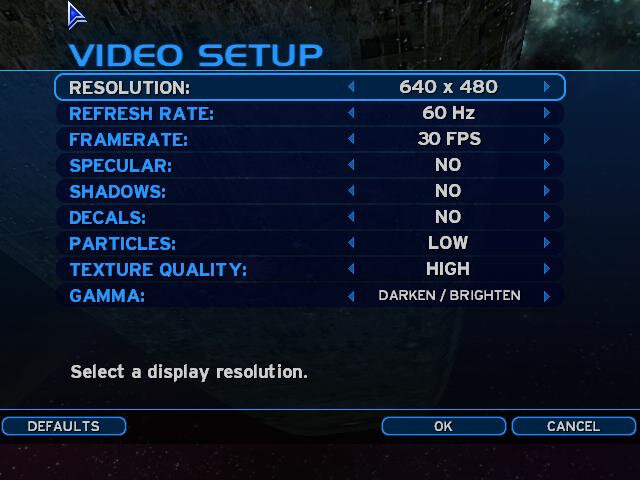
Halo Combat Evolved: This gives a more stable framerate compare ot the SiS Mirage, but we get a few missing graphics effects. But at 640×480 the game is playable when we disable decals, shadows and set the particles to low. Typically we get a steady 30fps when walking around. We get some dips to 17fps when entering a new area, or when there are a few enemies on scree.

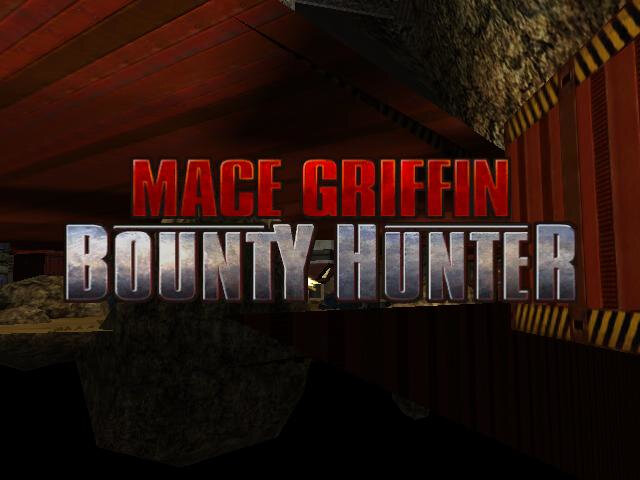
Mace Griffin Bounty Hunter: Apparently this game detects there are hardware shaders during the install, but has issues detecting the video card memory. Trying to run the game gives us a whole mess of polygons, and if we try to enable any graphics effects, the game will just crash. Unfortunately this was unplayable.

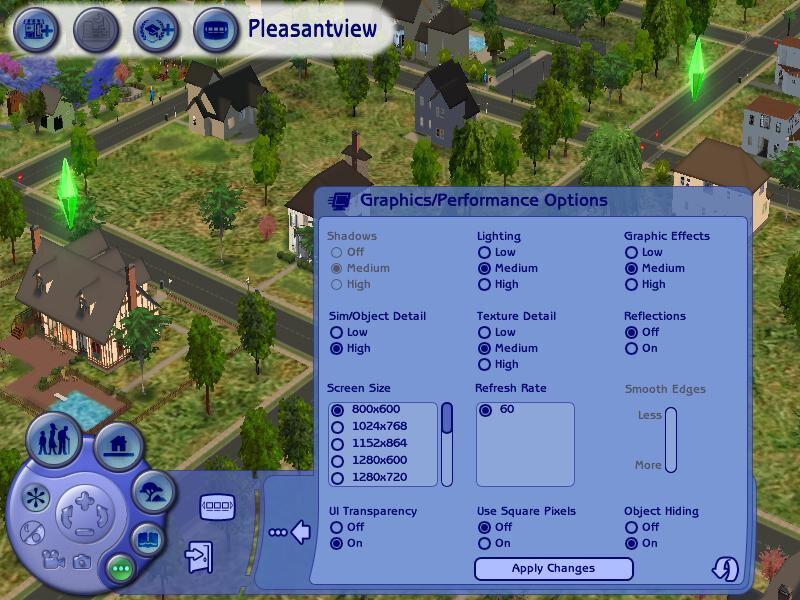
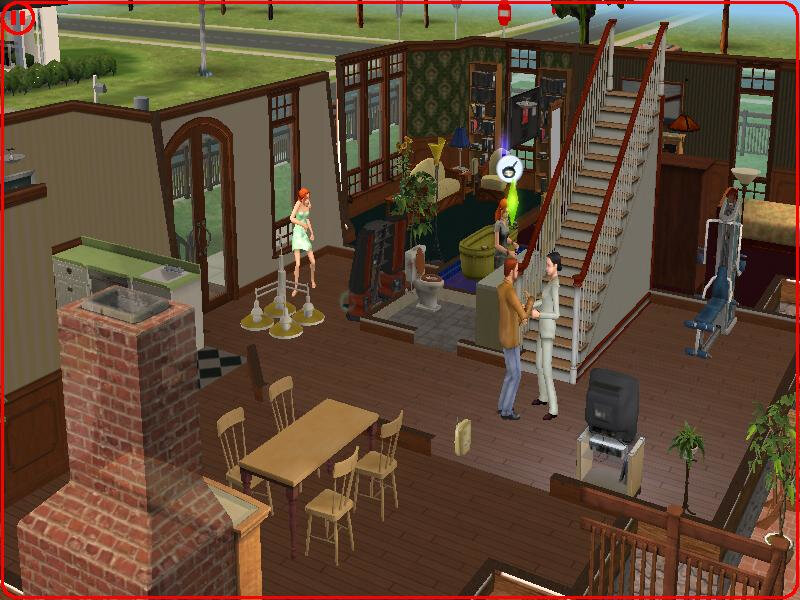
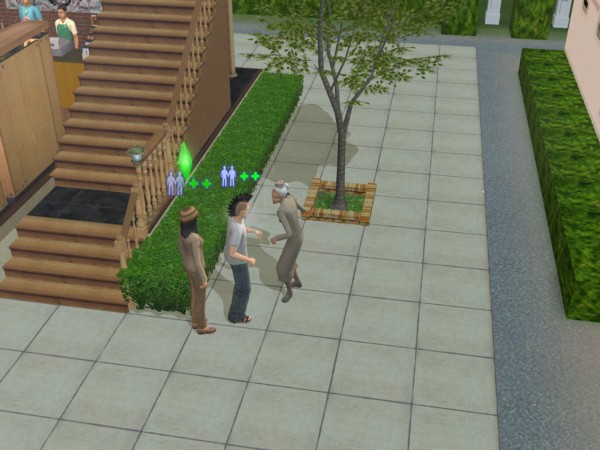
The Sims 2 Open For Business: We get a bit of flickering on the title screen after the intro, which then continues into gameplay, mostly affecting the HUD elements. The default graphics settings gives us low performance, but by lowering these down to their lowest settings (with the exception of texture quality) we can playable performance. 800×600 has us an average of 22fps, whilst 1024×768 gives us an average of 16fps on a graphical busy lot like the Pleasant’s.

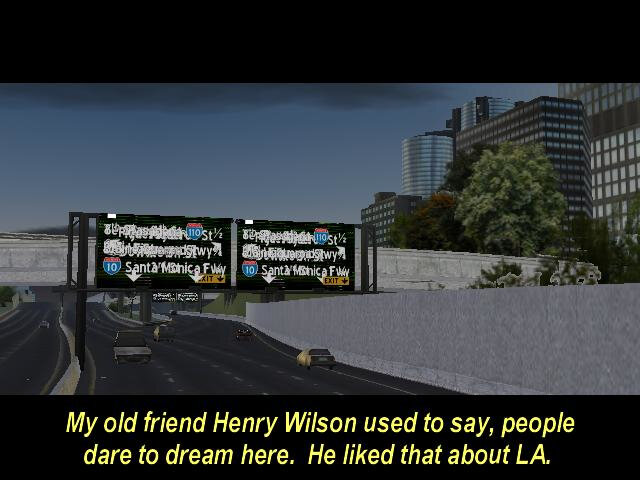
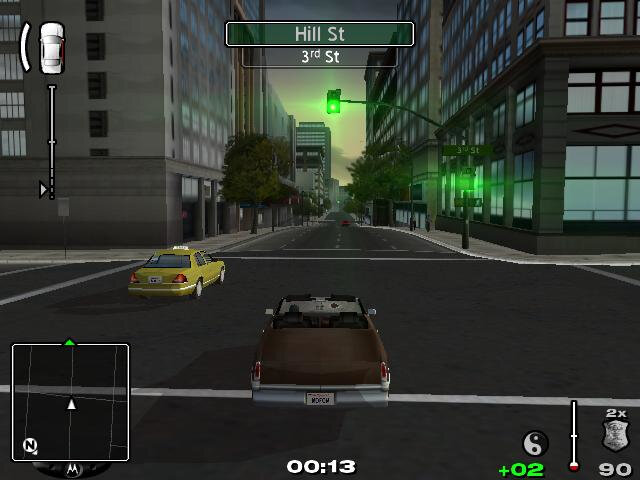
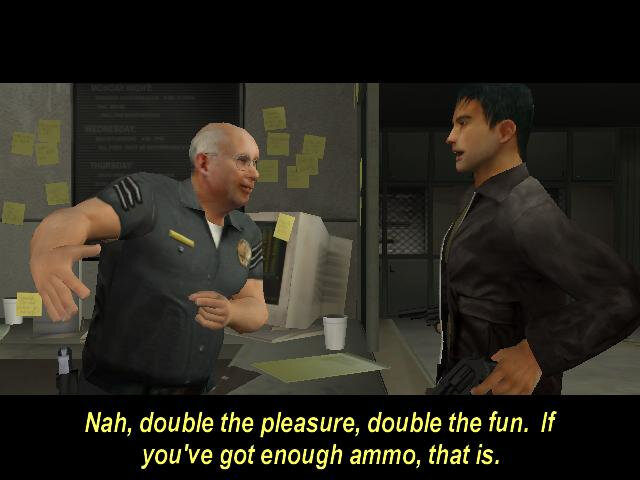
True Crime – Streets Of LA: Running at 640×480 at low graphics settings, we are treated to glitchy graphics. After 1 minute of the introduction sequence, the screen went black while the audio was still playing, I was unable to restore the game and had to open Task manager.

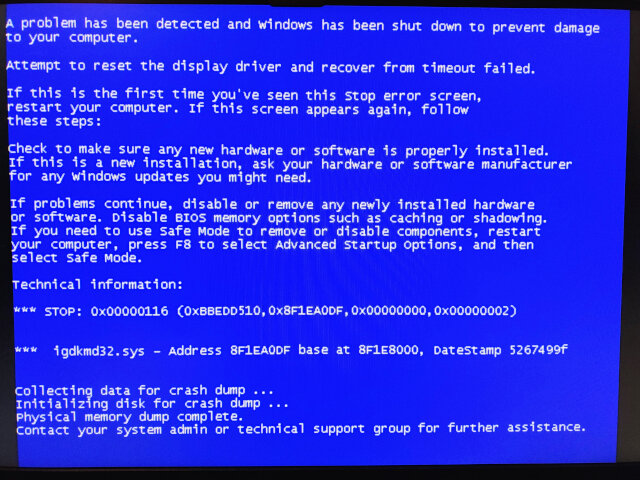
Reopening the game resulted in a BSOD, the first I have received on this system. The error appears to be due to the igdkmd32.sys file.

After a quick reboot, I was able to get back into the game, cutscenes mostly play at around 26fps, but in game whilst running around the city nets us a high of 7fps. I managed to play for another 10 minutes before the game crashed again, taking the graphics driver with it.

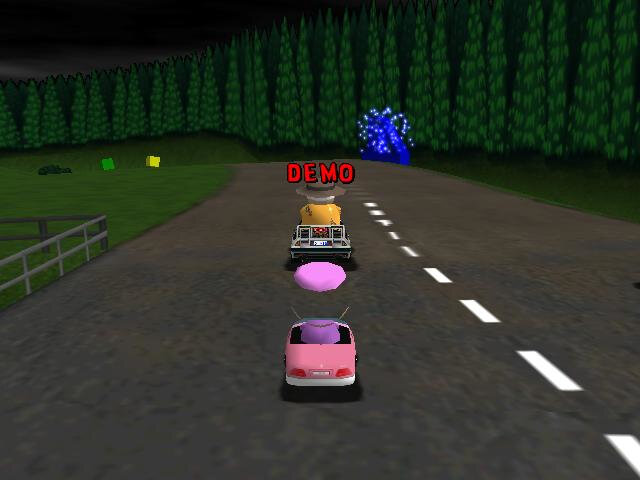
Revolt: After installing the latest patch, we got a ’Can’t flip display buffers’ error whilst the game is trying to load the main menu. Installing RVGL gives us a Shader compilation error instead. As it stands, the game refuses to run.

Conclusion

So it’s a bit of a disaster with many of the games experiencing either poor performance or just completely broken graphics. Its clear why Intel decided to abandon this arrangement as I suspect the drivers are core to the issue. Intel would later focus on scaling down their own graphics hardware to be more efficient for mobile devices, to the point where the Intel Compute Stick was possible.

Binary Domain

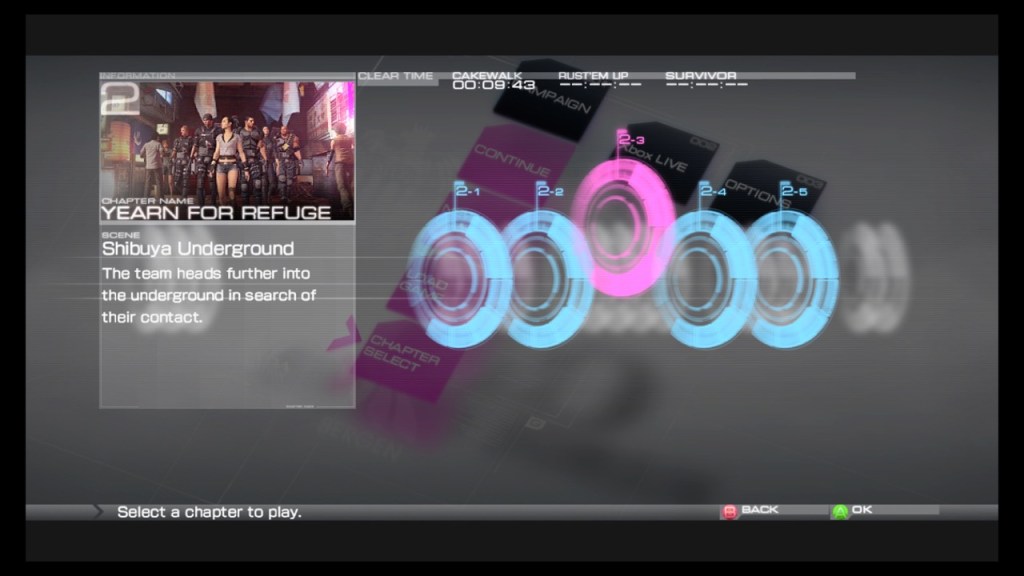
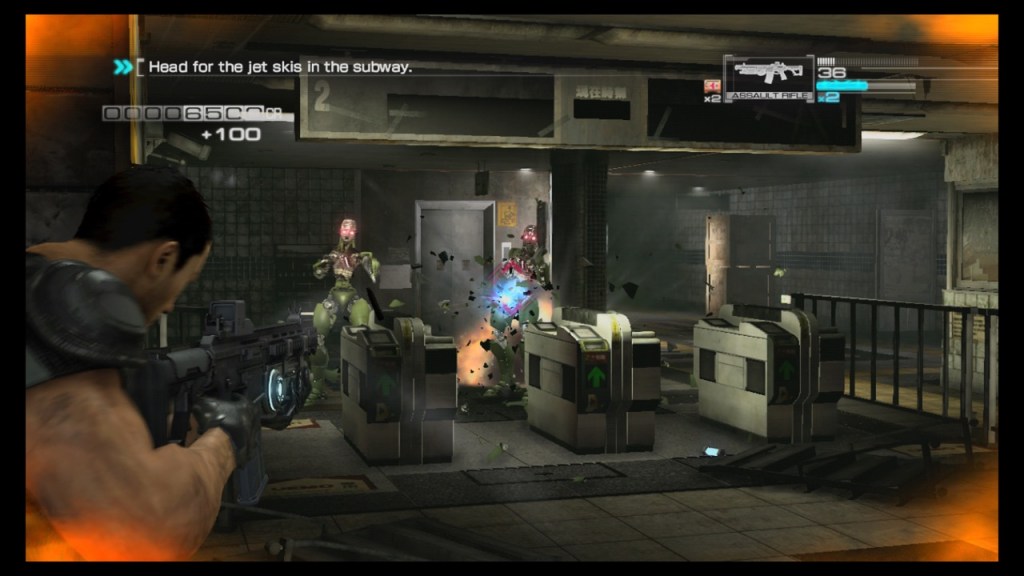
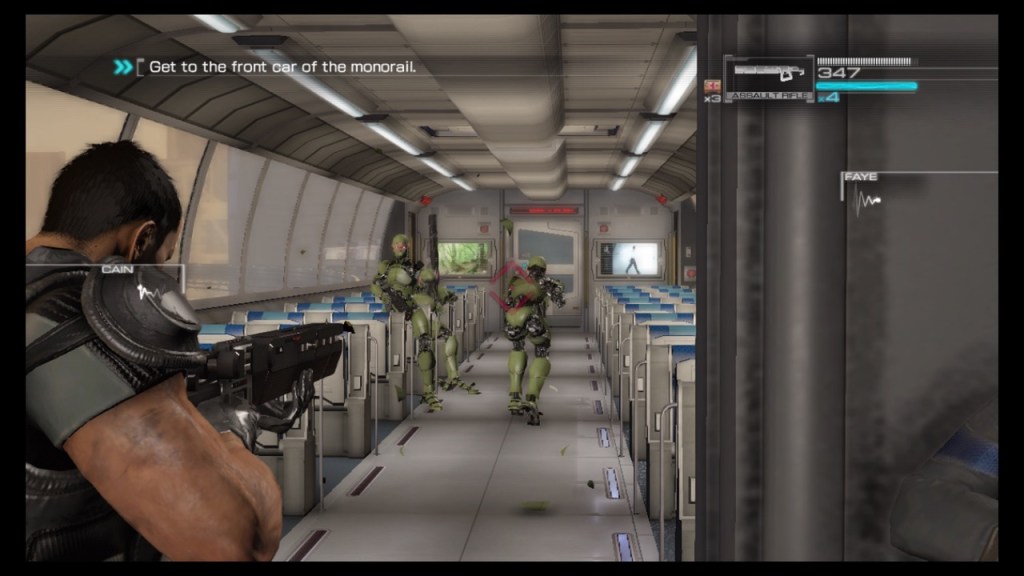
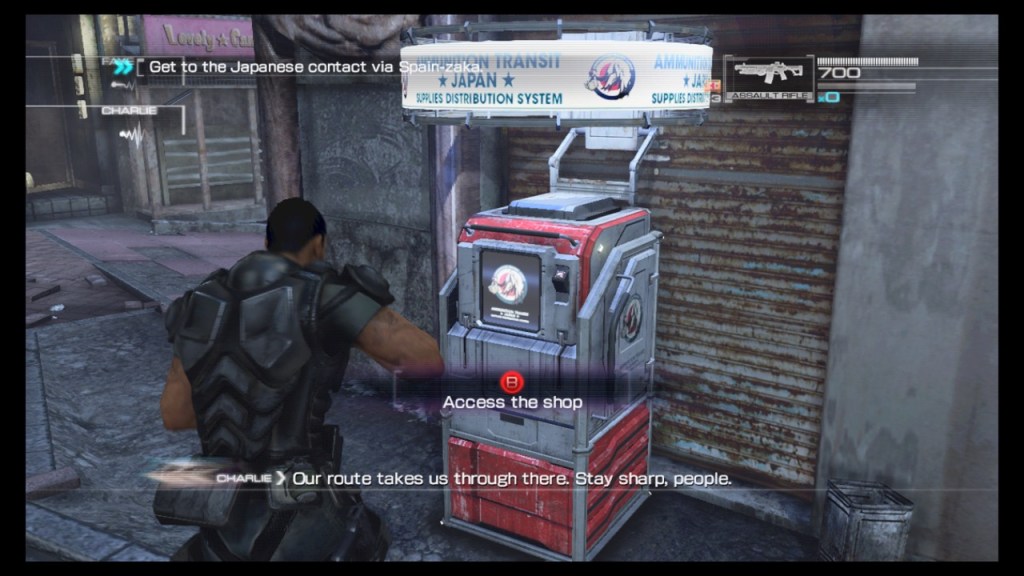
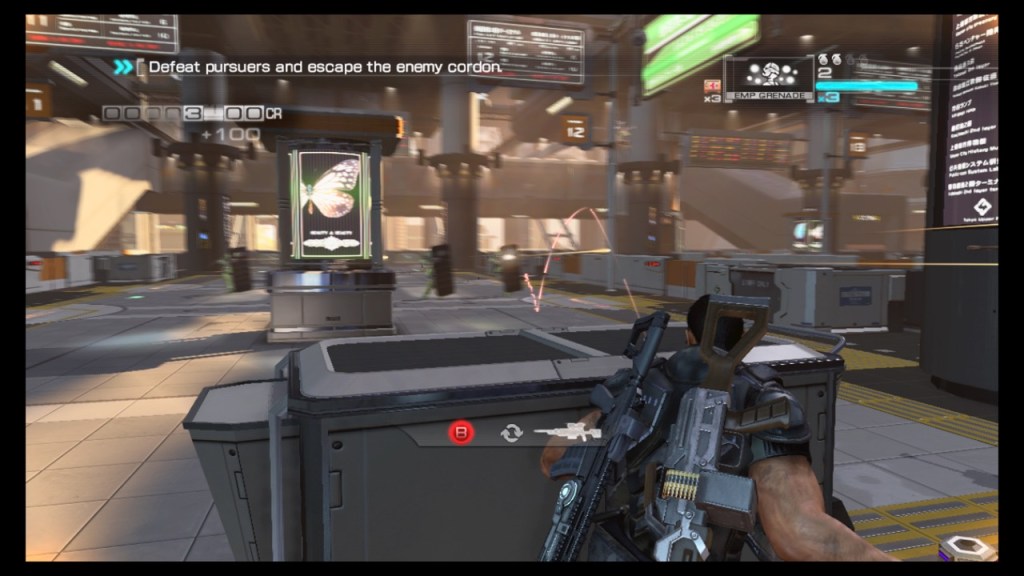
A third person shooter games related in 2012 by Sega, set in the future where global warming have causes robots to become the main labour force, followed by a series of conspiracies. However the game is well known for its use of speech input mechanics that can be used to give commands and reactions to the characters. It’s heavily driven by its shoot and cover mechanics that give it close similarities to Gears Of War.

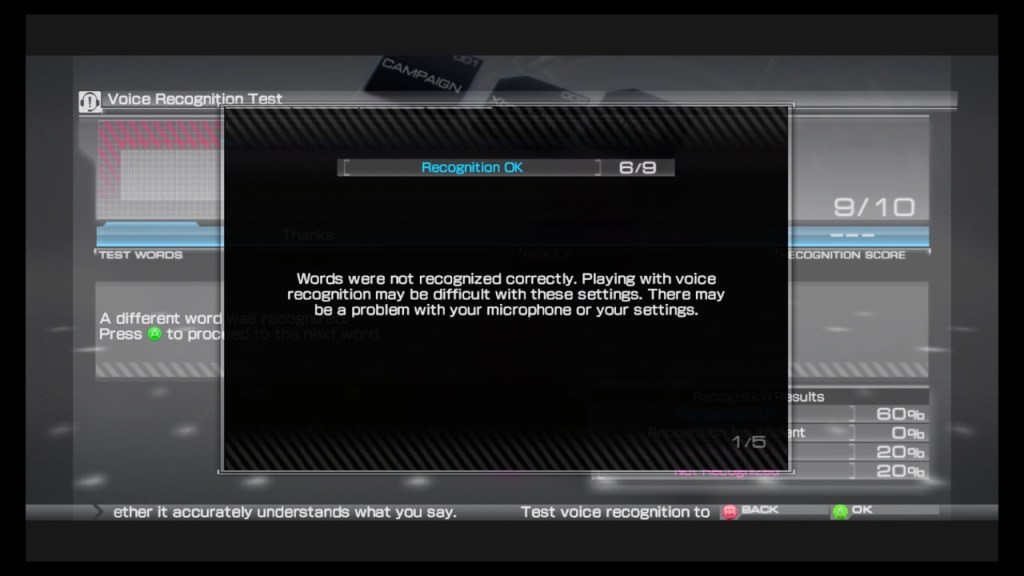
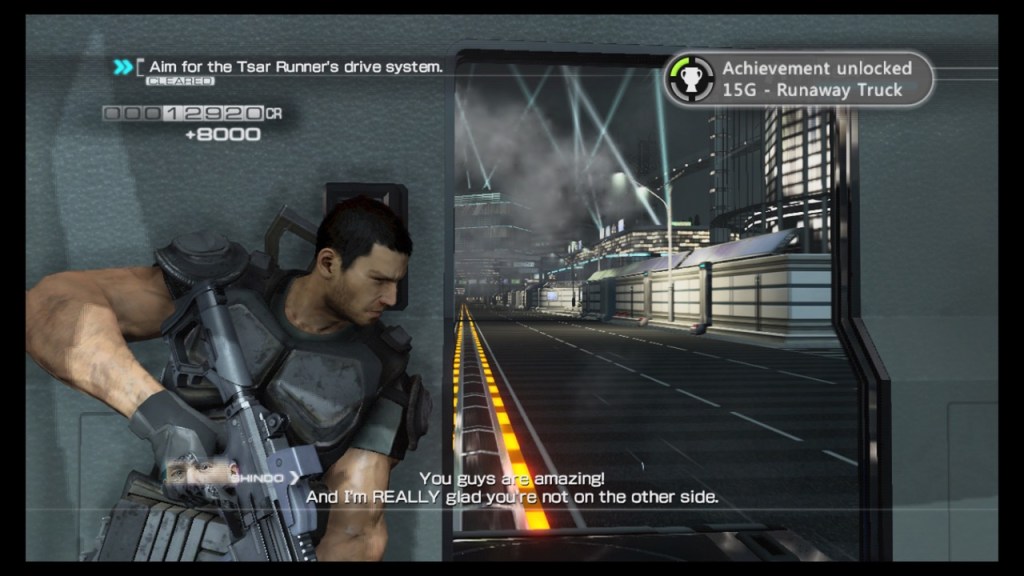
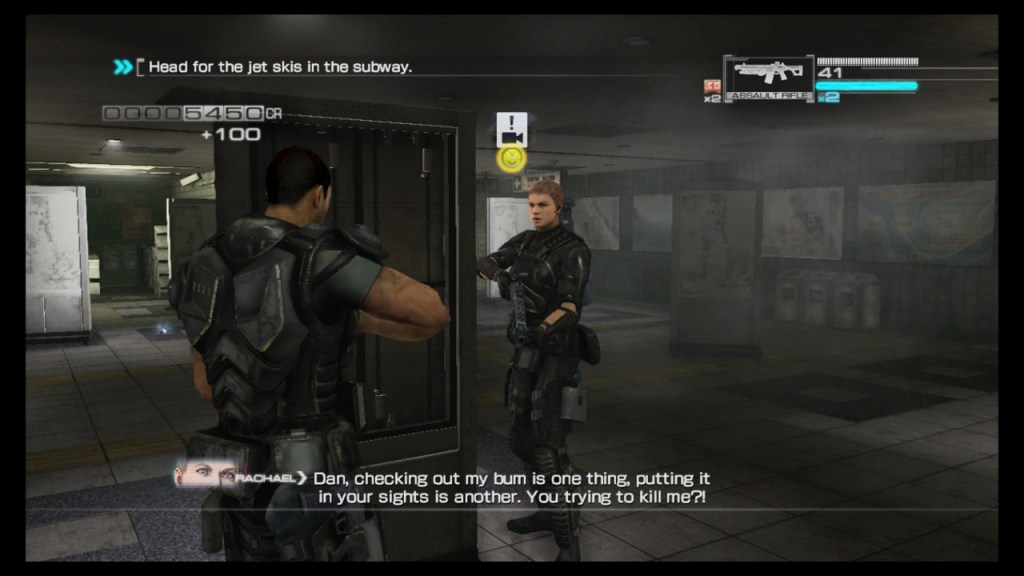
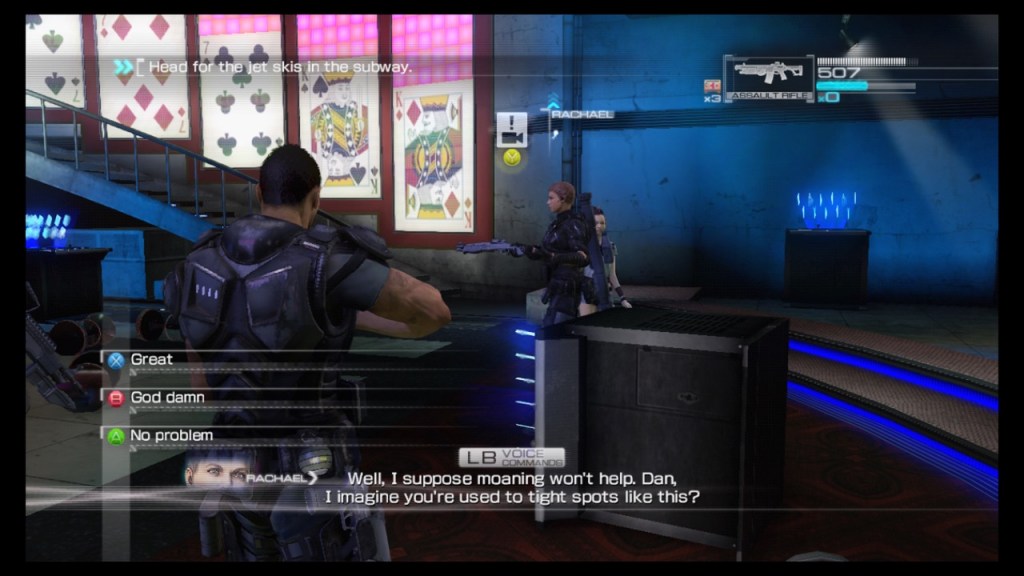
A key mechanic is the “Consequence System,” where player actions and dialogue choices affect squadmates’ trust in Dan, influencing their behaviour and the story’s progression. Players can issue commands to teammates either via controller inputs or voice recognition (using a headset or Kinect on Xbox 360), though the voice feature was often criticised for inconsistency. Personally I gave up with it after 20 minutes of use, since you often have to shout the commands to the game for it to pickup, its easier and more convenient to press the corresponding button on the controller instead. 

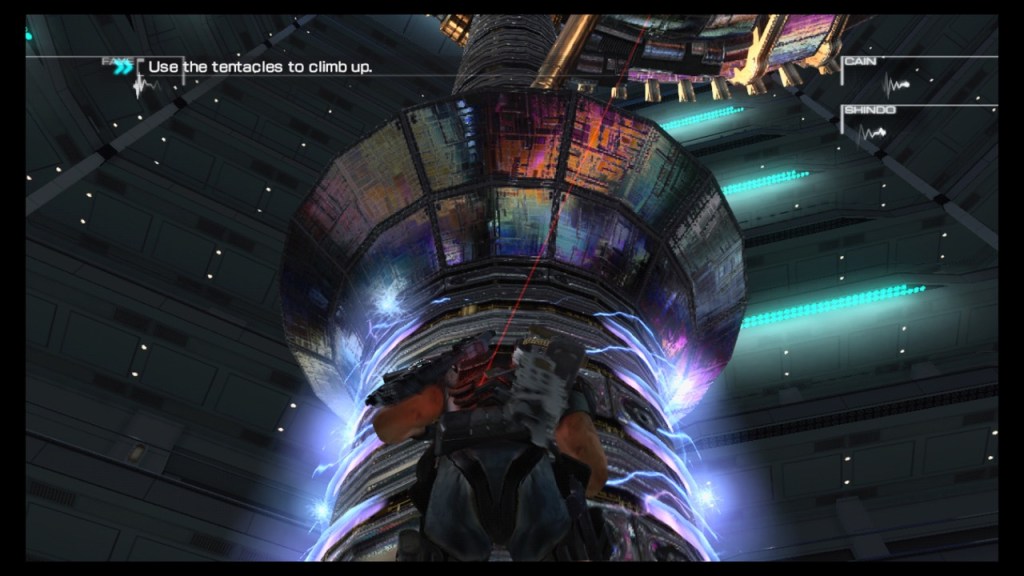
Combat involves fighting highly detailed robots that react dynamically to damage—shoot off a leg, and they’ll hobble; remove their head, and they might turn on their allies. Boss fights take advantage of this also, requiring you to find the enemy’s weak spot to attack it.

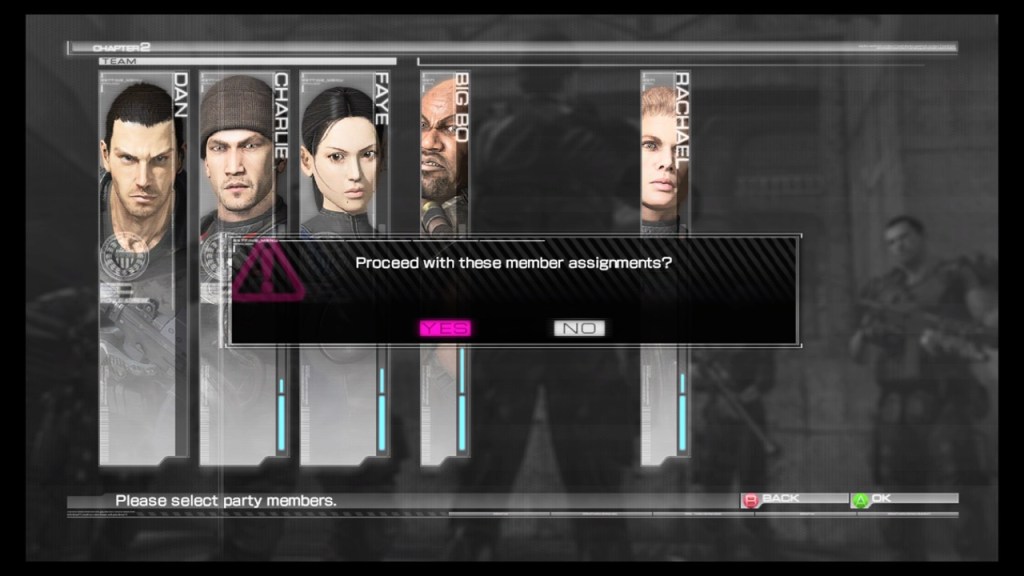
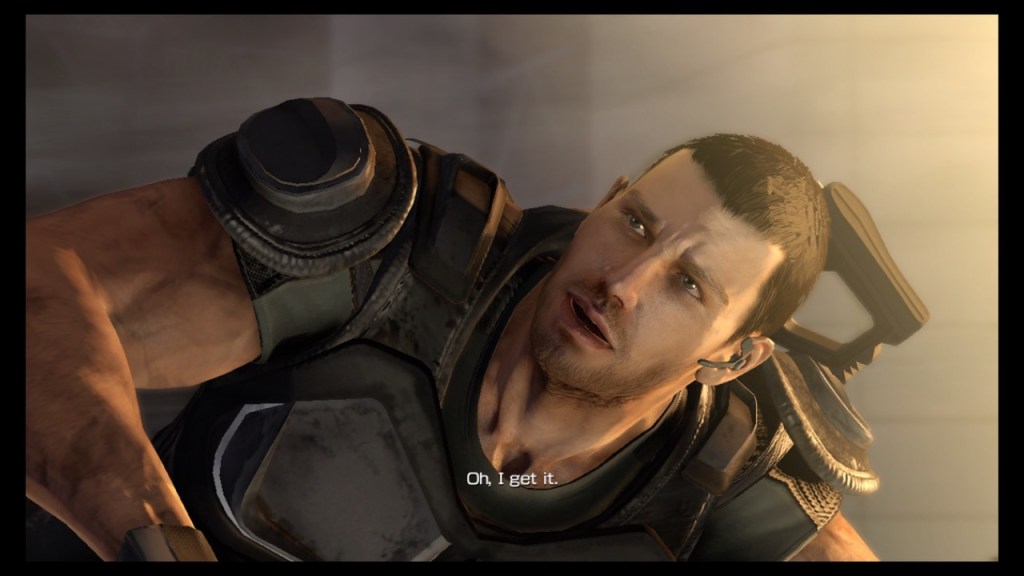
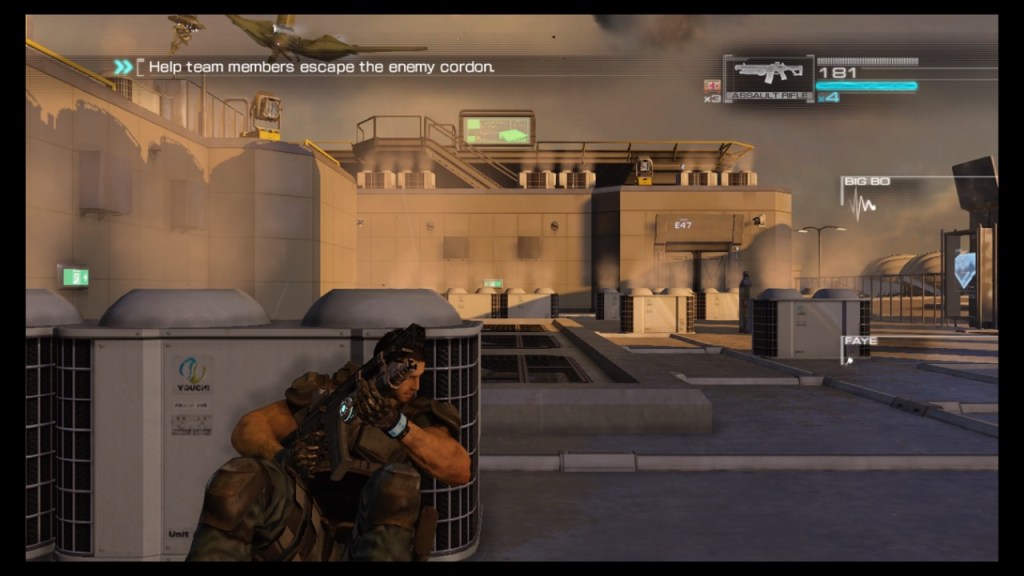
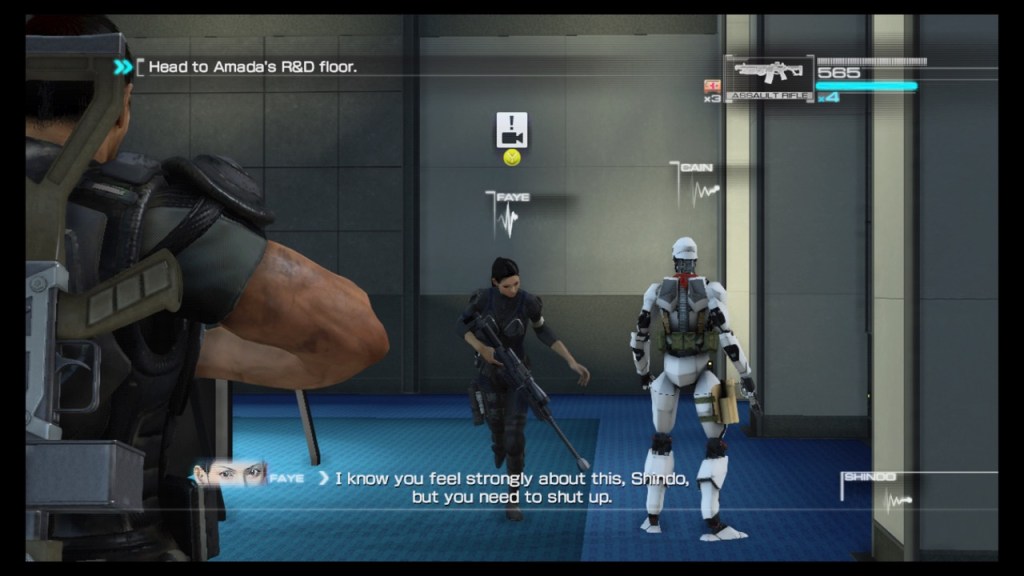
The main characters in the game are Dan Marshall, also known as ‘The Survivor’ due to his lucky history. Dan is a brash, cocky American with a sarcastic edge and a never-say-die attitude. He’s a natural leader but often hides his deeper emotions behind quips and bravado—like calling himself “The Survivor” after narrowly escaping death repeatedly. He’s loyal to his team but can clash with authority, showing a rebellious streak.

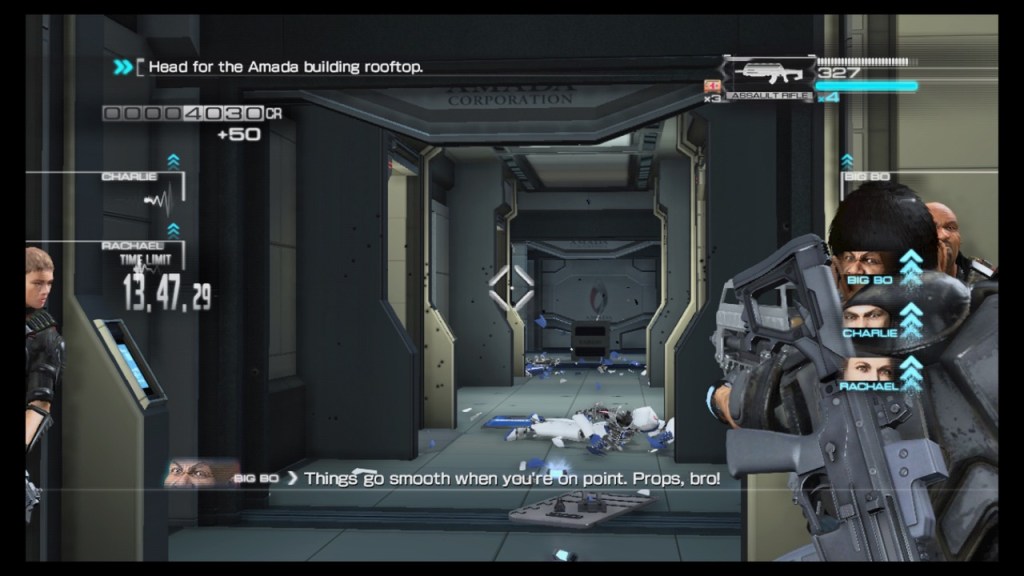
Additional characters you will meet no the way can be selected as team-mates, and your trust can increase as you react to certain dialogue lines or how well or quickly you shoot an enemies. Be careful though, friendly fire or picking the wrong dialog option can reduce their trust in you. In a way it’s similar to mass Effect 2 where your relationship with your squamates has an ultimate effect to the game’s ending.

Charles Gregory: Charlie is the calm, intellectual Brit of the group—think of him as the squad’s brain. He’s composed, methodical, and speaks with a dry wit, often playing the straight man to Dan’s chaos. He’s a stickler for protocol but isn’t above bending rules if the mission demands it. Beneath his cool exterior, he’s driven by a quiet sense of duty and a need to protect his team. He has a very professional demeanour, which means its best to respond with ‘yeah’ for most of his dialogue.

Cain Delaunay: Cain is a suave, charming French robot—yes, a robot on a team hunting robots, which is peak irony. He’s polite, witty, and unflappably cool, with a refined accent and a knack for dry one-liners. He’s programmed for loyalty and efficiency but shows glimmers of personality beyond his code, hinting at deeper self-awareness. He’s the squad’s optimist, balancing their human squabbles with calm logic.

Roy Boating: Big Bo is the loud, brash muscle of the group—think a jock with a heart of gold with a physique that could makes Ronnie Coleman look small. He’s got a frat-boy vibe but a strong sense of camaraderie, often hyping up the team, which makes me think he based based off Cole from Gears of War.

Faye Lee: Faye is cool-headed, reserved, and deadly precise—a Chinese operative with a stoic exterior. She’s professional to a fault, rarely cracking a smile, but shows hints of warmth as she bonds with Dan. She’s driven by duty and a buried personal vendetta, making her a wildcard in the squad’s dynamic.

Rachael Townsend: Rachael is tough, fiery, and no-nonsense—a classic strong female archetype with a British edge. She’s quick to call out stupidity and has a sharp temper, but she’s fiercely loyal once you earn her trust, and becomes more compassionate towards the end of the game.

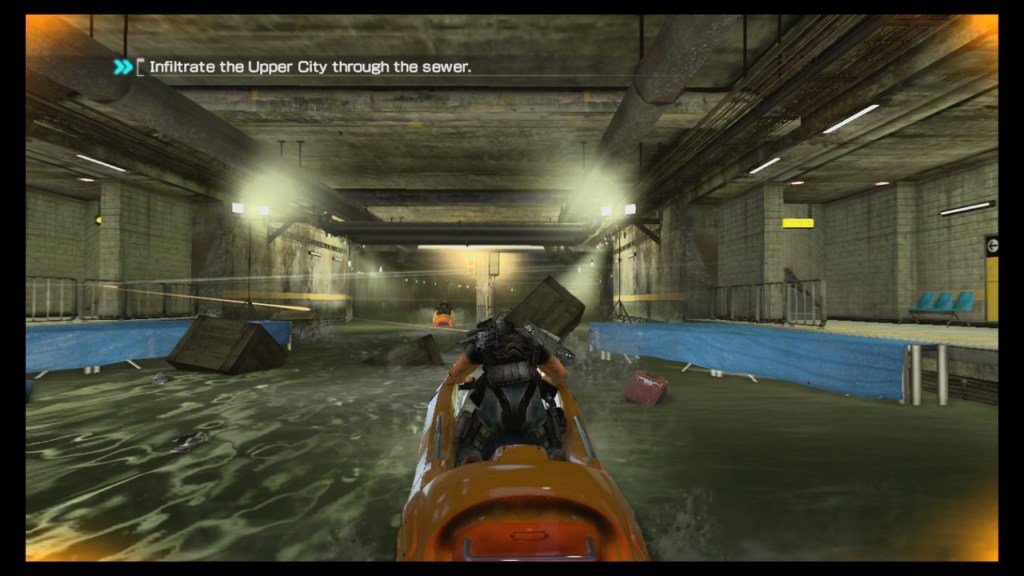
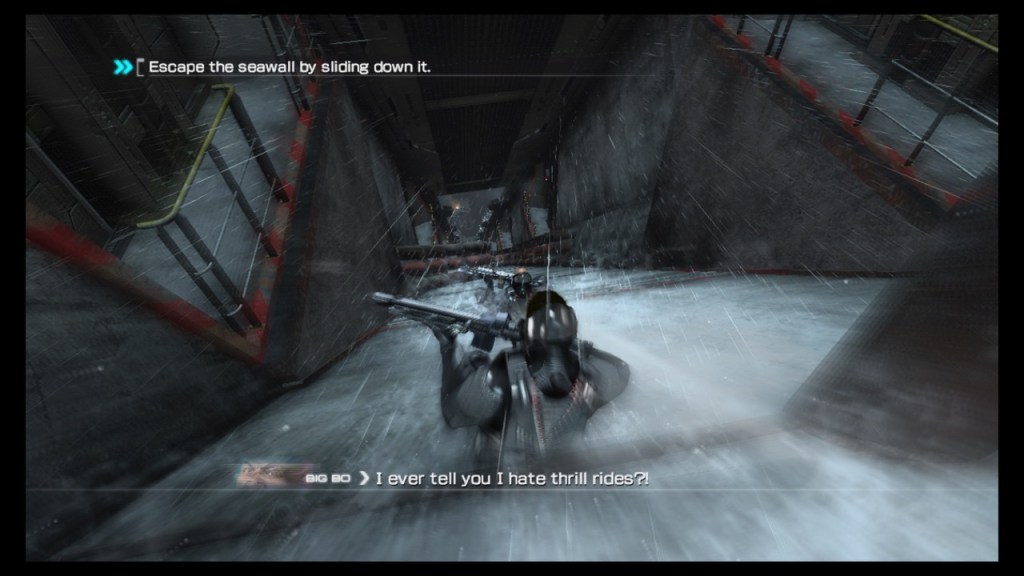
Getting more involved with the story, it’s set in Tokyo in the year 2080, Binary Domain takes place in a world reshaped by global warming and rising sea levels, where robots have become a dominant labor force. The story follows Dan Marshall, leader of an international squad called the “Rust Crew,” tasked with infiltrating Japan to investigate Amada, a corporation suspected of creating “Hollow Children”—robots indistinguishable from humans, violating global laws. Binary Domain explores themes of artificial intelligence, transhumanism, and the essence of life, unfolding in a futuristic Tokyo divided between derelict slums and pristine upper-city towers. If you’re a fan of Battlestar Galatica, the story should interest you as it questions the liens between AI and humanity.

At the heart of Binary Domain is the New Geneva Convention, a global treaty banning the creation of robots indistinguishable from humans (like the “Hollow Children”). This reflects a political debate about controlling advanced technology—think AI ethics or genetic engineering in our world. The game pits the Amada Corporation, which secretly violates this law, against international forces like the Rust Crew, sent to enforce it. It raises questions about who gets to set technological boundaries, how those rules are policed, and what happens when profit-driven entities (Amada) defy them for power or innovation. The Hollow Children themselves—robots unaware they’re artificial—force players to grapple with the moral cost of such laws: is it right to destroy sentient beings to maintain human supremacy?

The game’s vision of Tokyo starkly illustrates class divides, a classic political theme. After global warming floods the world, Japan builds a new upper city for the elite—gleaming, robotic, and exclusive—while the lower city remains a derelict slum for the marginalised. Robots, built by companies like Amada, replace human labor, leaving the working class obsolete and resentful. This mirrors real-world anxieties about automation and economic disparity, asking how societies manage when technology benefits the few at the expense of the many. Characters like the resistance fighters you meet highlight this tension, fighting against a system that priorities robotic efficiency over human livelihoods.

The Hollow Children introduce a philosophical-political angle: if something acts and feels human, does it deserve rights? The game’s twist—that some characters, and even Dan’s potential offspring, might be hybrids—blurs the line between human and machine, echoing debates about citizenship, personhood, and exclusion. In 2080, humans cling to their dominance by denying robots agency, a policy enforced through violence. This mirrors historical struggles over who gets to be “human” in political systems—slaves, immigrants, or marginalised groups—and critiques rigid definitions of identity upheld by power structures.

Versions

Windows: Available on Steam. For this version ic recommend to test and check the microphone settings in Windows before you play if you’re insisted, since the game will default to the selected input device in Windows. 

PlayStation 3: Runs at a lower frame rate compared to the 360 version, but still fun to play.

Xbox 360: This version has the ability to use the gamepad’s headset or the microphone on the Kinect Sensor to give voice commands. The headset seems to be the more reliable way of doing this, though its still hit or miss if the commands get registered in time.This version can also be played not he Xbox one, and even benefits fromFPS Boost on the Xbox Series X.

Binary Domain was not considered a success, so it has yet to be rereleased onto a modern platform. A such, the Xbox One/Series X remains the better way to play, or the PC version since it benefits from higher resolution textures on modern hardware.

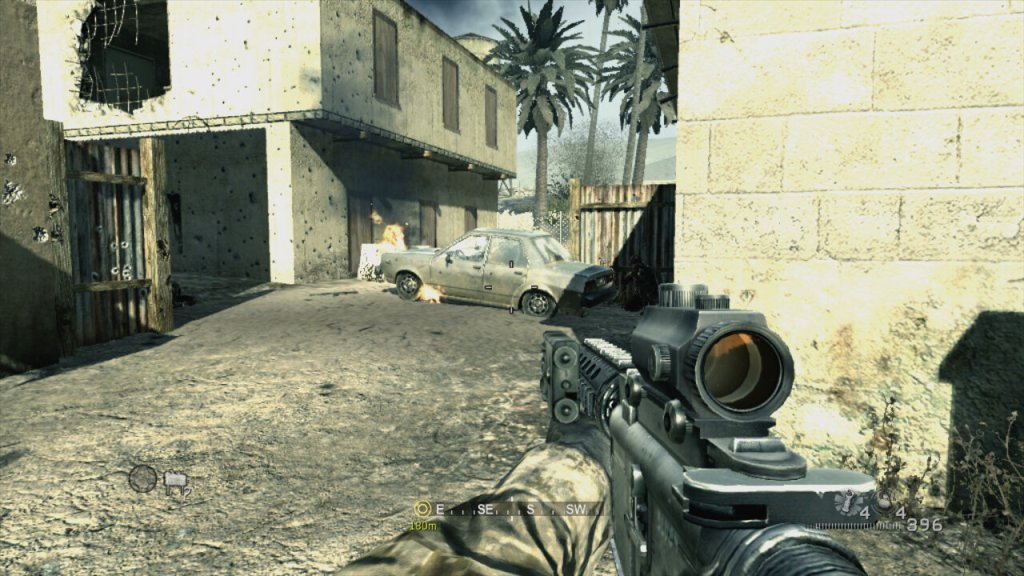
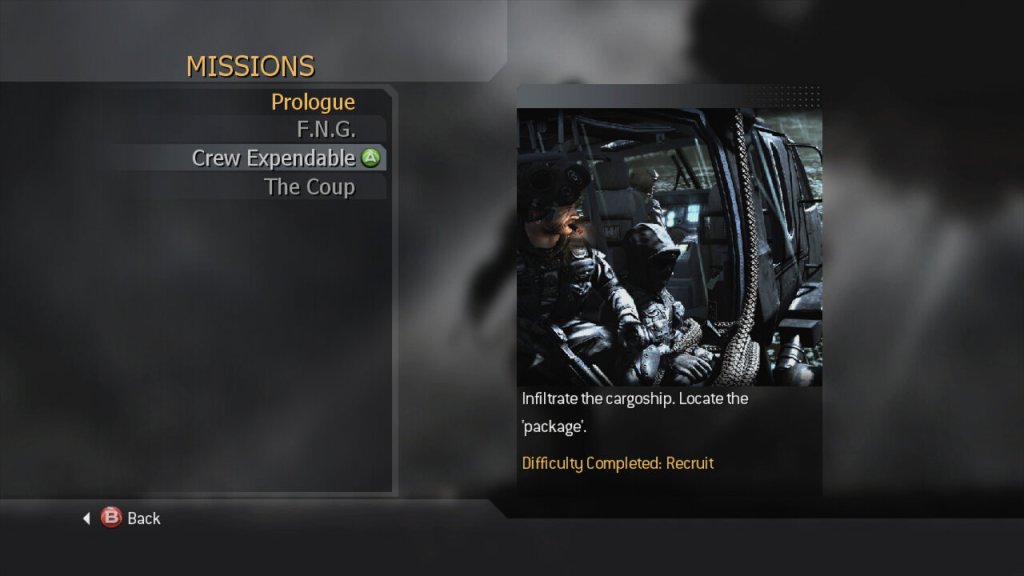
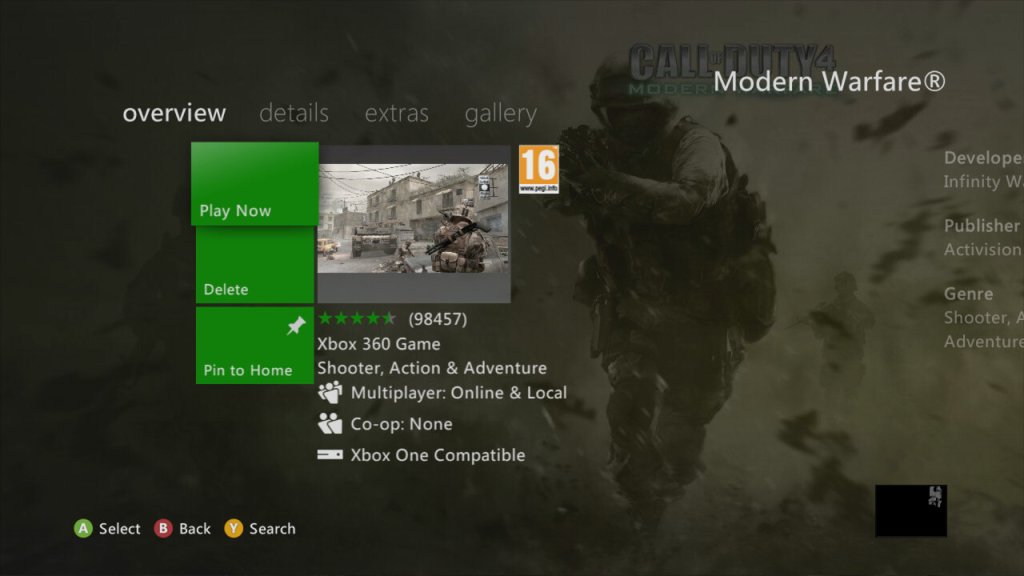
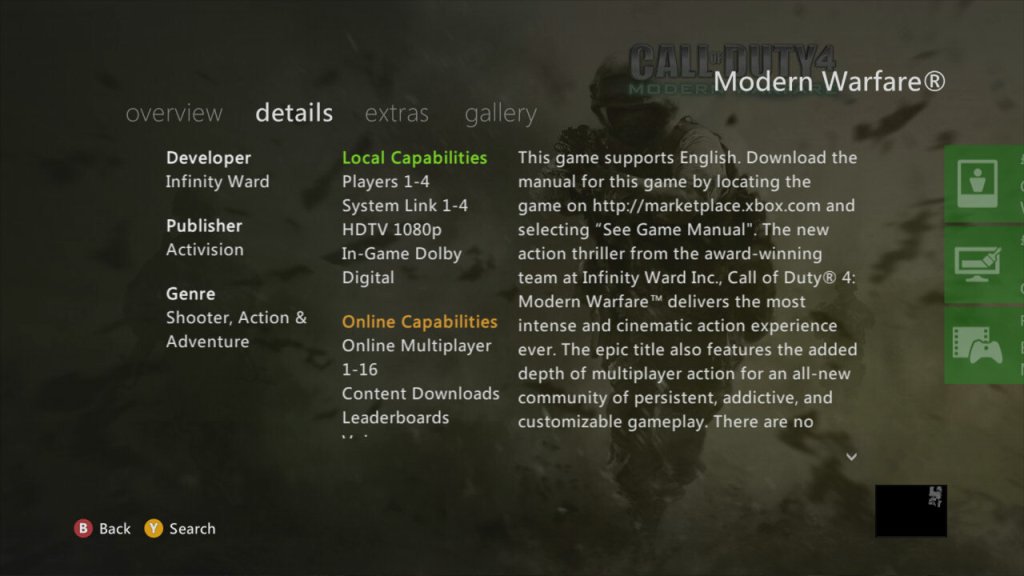
Call of Duty 4 Modern Warfare

The first in the memorable Modern Warfare series, and one that would take the Call Of Duty franchise to new levels. Not to be confused with the modern 2019 remake

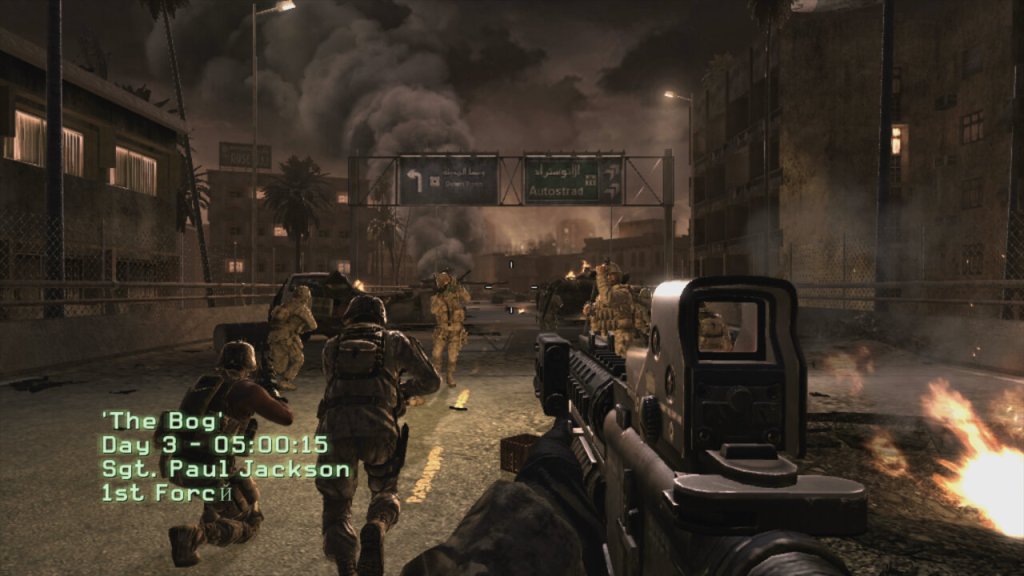
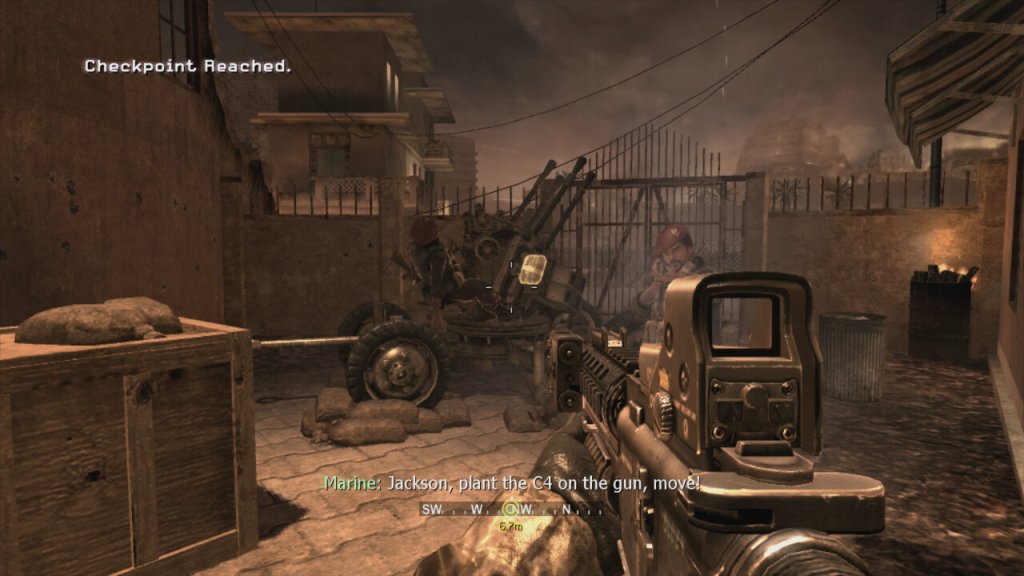
Released in 2007, Call of Duty 4: Modern Warfare marked a significant shift for the franchise by moving away from the World War II setting to a contemporary military conflict. Modern Warfare features a single-player campaign where players experience the story from the perspectives of both a U.S. Marine Force Recon sergeant and a British SAS commando. The narrative unfolds across various global locales, offering a cinematic experience that was groundbreaking for its time.
Set in 2011, the game’s plot revolves around a radical leader executing a Middle Eastern president, which leads to a movement in Russia sparking a civil war. This backdrop provided a rich, albeit fictional, narrative involving geopolitical tensions, terrorism, and military intervention.

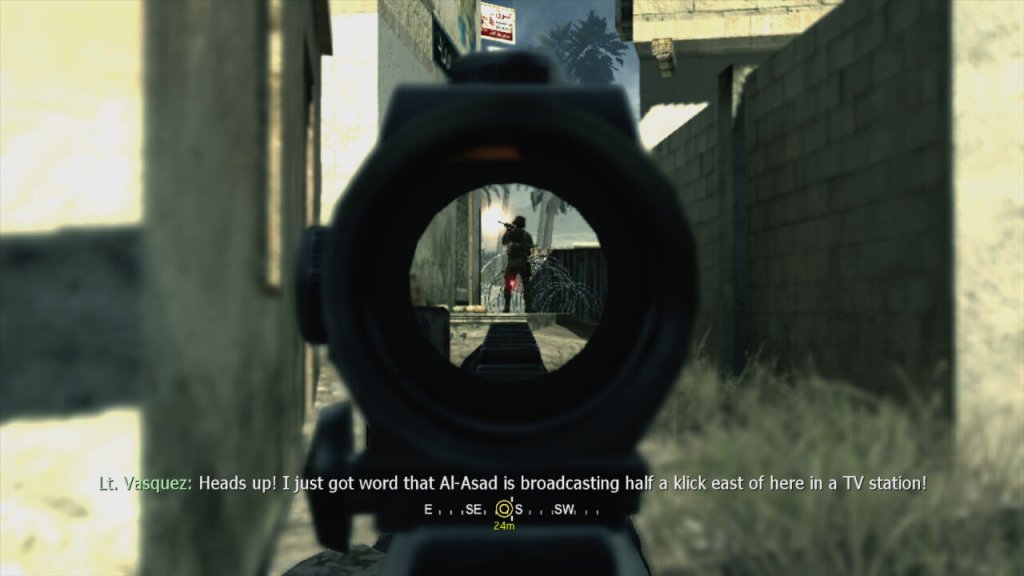
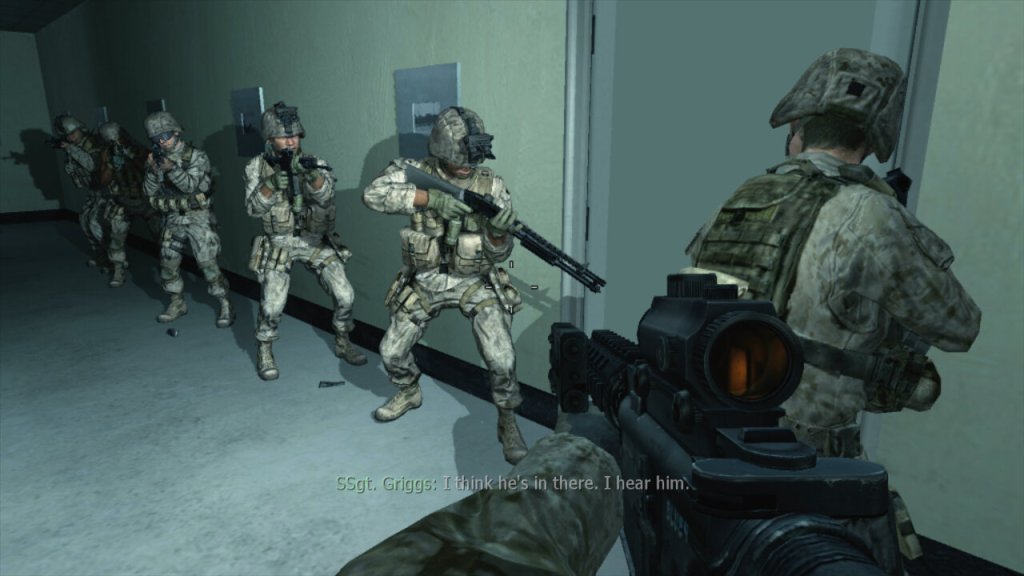
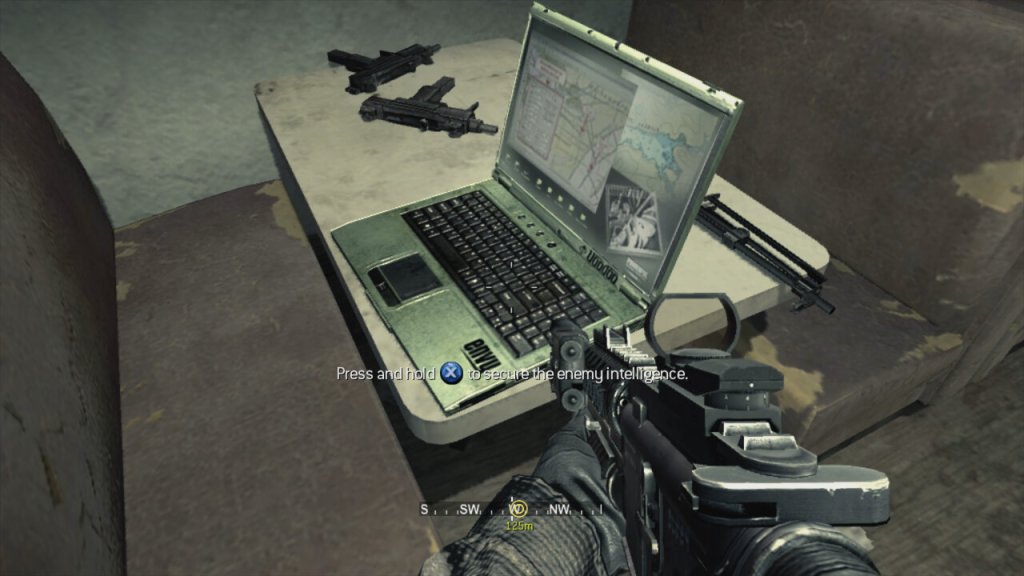
The game begins with the player assuming the role of Private Allen, undergoing training with the U.S. Marine Force Recon. This serves as a tutorial level and will instruct you on how to use your weapons and grenades, as well as tactical advice. The story quickly shifts to the Middle East, where U.S. forces, including the player’s character, are tasked with capturing or killing a terrorist leader. This mission goes awry when the terrorist leader, Khaled Al-Asad, executes the president of an unnamed Middle Eastern country on live television, inciting chaos. Here, the conflict escalates as both the SAS and the U.S. Marines engage in heavier combat. The narrative focus shifts towards locating and dealing with Al-Asad, while also hinting at a larger conspiracy involving nuclear weapons.

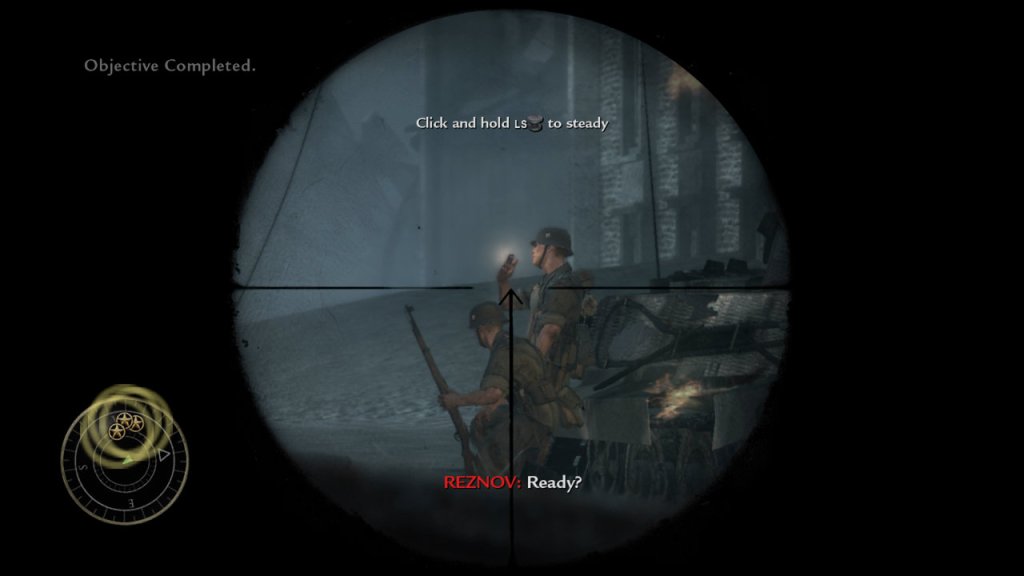
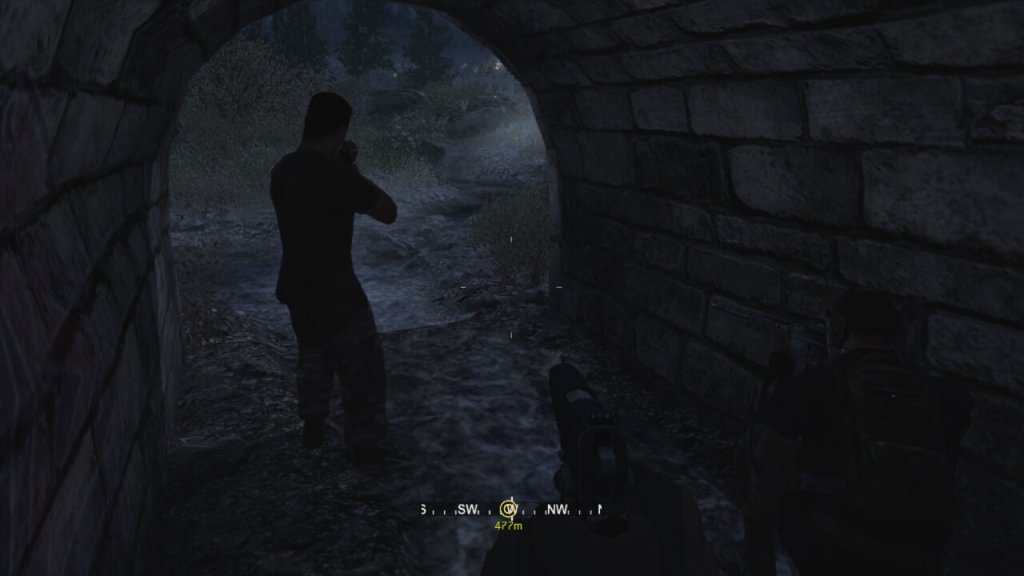
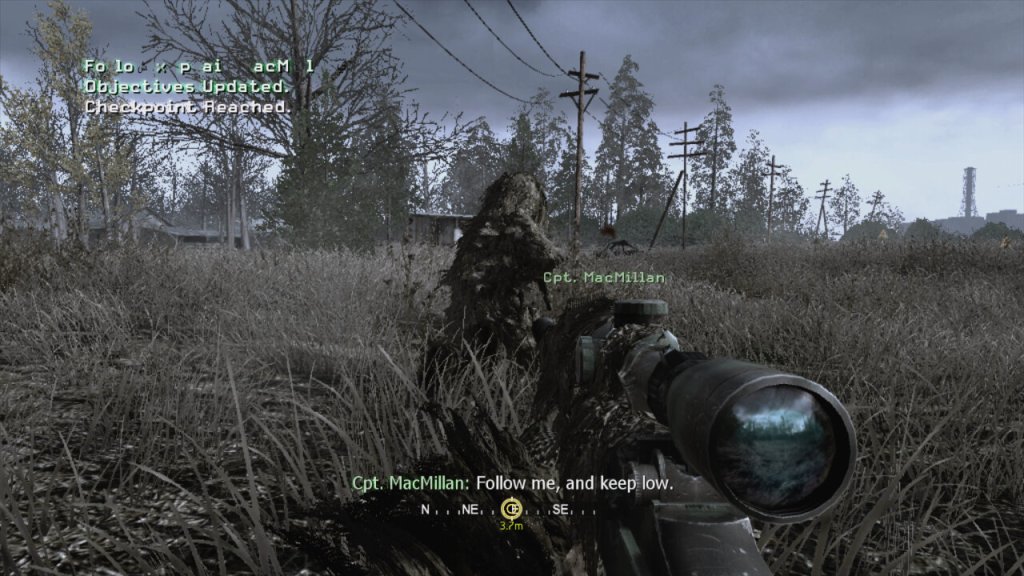
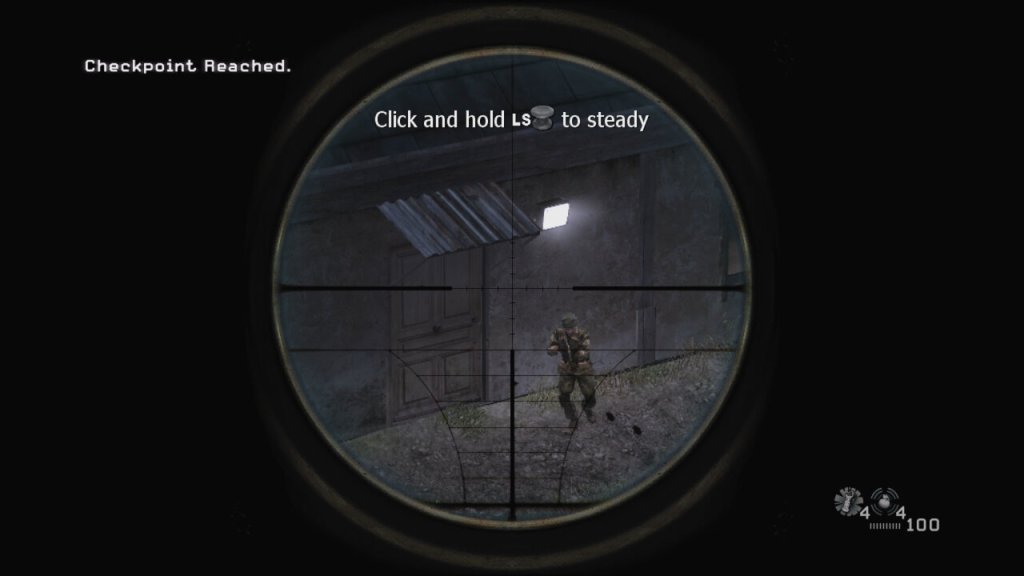
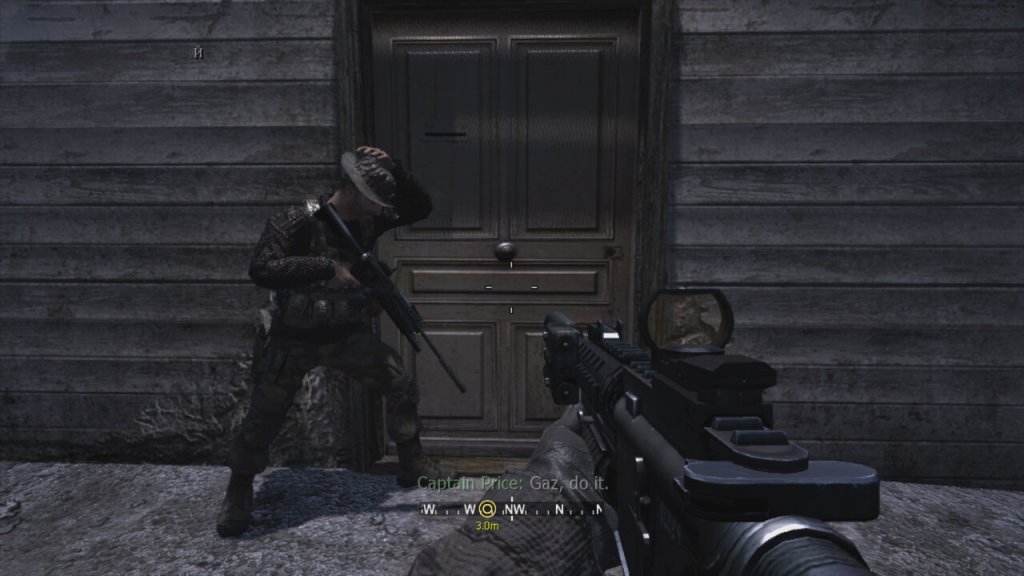
All Ghillied Up & One Shot, One Kill are pivotal missions flashback missions that explain the backstory of Captain Price with Imran Zakhaev, setting up the personal stakes for the characters involved. They are considered to the landmark missions in the Call Of Duty franchise due to their reliance on stealth mechanics, and the decisions the player has to make which will affect the outcome of the missions. Sometimes it’s easier to not take the shot, rather than to just sneak around the enemy and remain in stealth.
The later missions wrap up the game storyline, The SAS and Marines work together to thwart a nuclear threat. These missions include intense battles, the revelation of betrayal, and the pursuit of Zakhaev.

There is also an epilogue mission where you must rescue a VIP from a hijacked airplane. This mission is particularly challenging and not directly connected to the main storyline but serves as post campaign fun.

Political Themes

As a military focused game, Modern Warfare isn’t afraid to delve into several political themes, embedding them into tits narrative. The game begins with the coup in an unnamed Middle Eastern country, where a terrorist leader, Khaled Al-Asad, overthrows the government. This theme reflects real-world concerns about state stability in regions prone to radicalism. The use of a nuclear device by Al-Asad to prevent his capture mirrors fears of non-state actors or rogue states obtaining nuclear capabilities.
The game shows various Western forces, particularly American and British, intervening in Middle Eastern conflicts, which echoes real-world military engagements like the War on Terror. The collaboration between different nations’ special forces (e.g., U.S. Marine Force Recon, British SAS) highlights the theme of international military coalitions, reflecting NATO-like operations, these are detailed in the opening movies that play before the mission begins.

Ethical Dilemmas in Modern Warfare are also presented, The game occasionally presents scenarios where civilian casualties are a risk, exploring the moral impact on soldiers and the strategic considerations of warfare. In many missions you can fail by attacking innocent civilians, or by not reacting to events as quickly as possible. Decisions about when and how to engage enemies, especially in densely populated areas, touch on themes of proportionality in military action and the impact on civilian populations.
In terms of Globalization of Conflict, The game illustrates how modern warfare transcends borders, with characters and conflicts spanning multiple continents, reflecting a globalized world where threats are not confined by national boundaries, but also how there is a reliance on these different nations, due to production.

Lastly, While not directly discussed, the backdrop of the game, especially with its focus on terrorism and response, echoes the post-9/11 world where security measures often clash with individual liberties and international law.

Multiplayer

The game is very well known for its multiplayer mode, which became exceptionally popular, introducing perks, killstreaks, and a more dynamic gameplay experience with various maps set in modern contexts.
A few of the game modes consist of Team Deathmatch (TDM), Players are divided into two teams. The objective is to kill opponents, with each team’s score incrementing for each kill. The team with the most kills at the end of the match wins.

Search and Destroy (S&D) was possibly one of the most intense game modes. Players are divided into two teams of attackers and defenders. Attackers must plant a bomb at one of two bomb sites, while defenders must prevent the bomb from being planted or defuse it if it is. Each round is one life; if all players of one team die, the other team wins the round. The first team to win a set number of rounds wins the game.
Domination is where teams compete to capture and hold three objectives (A, B, C) scattered across the map. Holding zones gives the team points over time, and the team with the most points at the end wins. The strategic element involves capturing and defending zones while preventing the enemy from doing the same. If your familiar with the Domination game mode from Unreal Tournament, it’s pretty much the same gameplay.
Versions

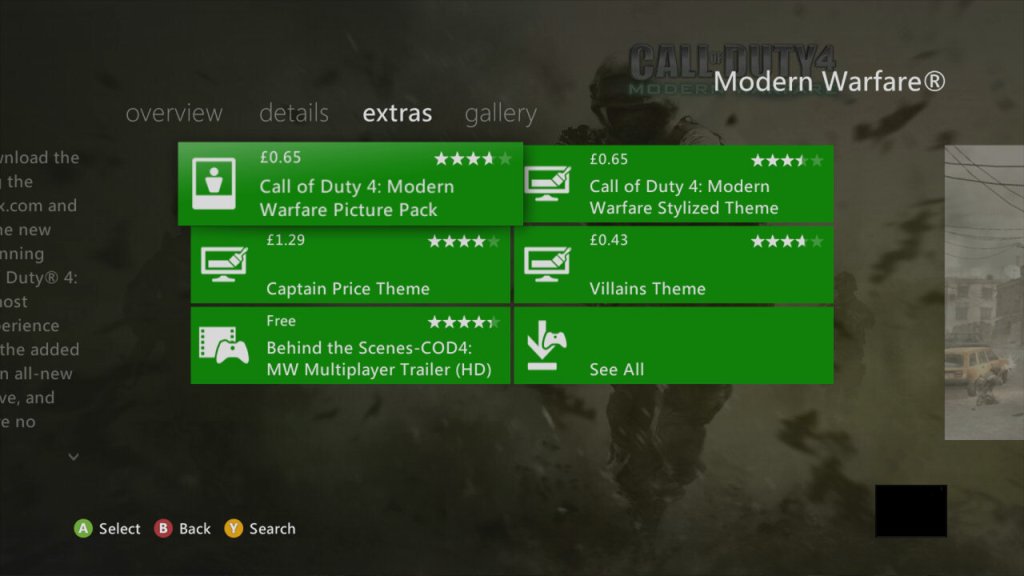
Xbox 360: The most popular release of the game, and the one with the most active multiplayer population due to ongoing Xbox Live support, and the game being made compatible with the Xbox One and Series consoles. You still need to pay for Xbox Live Gold Gamepass.
PlayStation 3: Still has a respectable online population and is free to play online. Performance wise it does suffer from tearing and a few frame drops compared to the 360 version. It does lack trophy support since this was released before Sony had standardized Trophy support for PS3 games.

Microsoft Windows: This version is still sold online through Steam, along with its DLC. There are a few security issues with it’s online multiplayer, mainly with CVE exploits that can occur. Its not recommenced to play the multiplayer on Windows for this reason.

Mac OS X: Modern Warfare was ported to macOS shortly after the PC release, but was only made available for 32bit Intel Mac’s. Modern macOS version’s from Catalina onward are unable to play the game since they dropped support for 32bit Intel apps, and no 64bit release was made. You might be better off playing the Windows versions using Parrells instead.

Wii: This version is known as the Reflex Editon, and makes use of the console motion controls. It’s very scaled down graphically compared to the other console versions due to the limited processing power of the Wii but it still regarded as a faithful port.
There is no support for the Classic controller or the Gamecube controller, instead the game can only be played with the Wii remote and Num-chuk since it is reliant on motion control aiming. This will take some getting used to, but once you adjust the sensitivity settings to get the sweet spot, you will find it’s quite precise to aim and shoot.
Multiplayer was also supported but has since been shut down officially following the Gamespy shutdown of 2013 which saw many Nintendo Wii services discontinued.

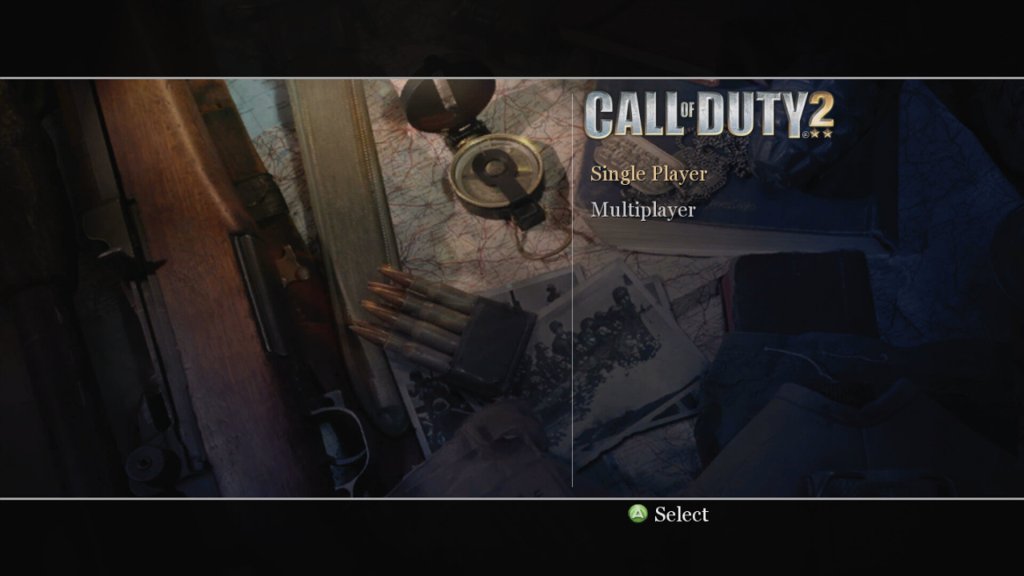
Call Of Duty 2

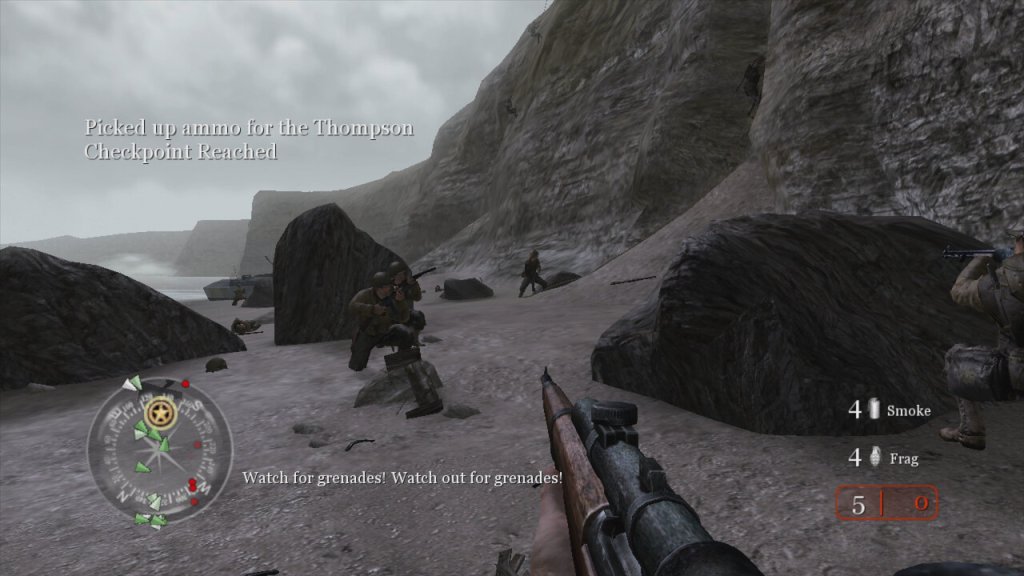
The second major installment, released in 2005 and a launch title for the Xbox 360. The game aims for a realistic portrayal of WWII combat, which includes historical accuracy in soldier uniforms, weapon models, and battle settings. Also not to forget the regenerating health. It’s the sequal to the original Call Of Duty and it’s console spinoffs.

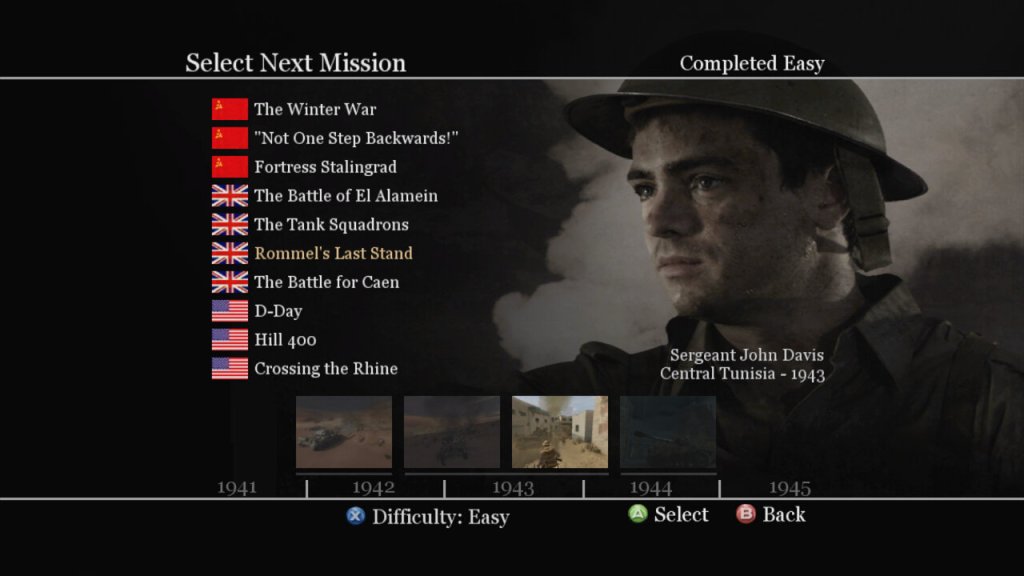
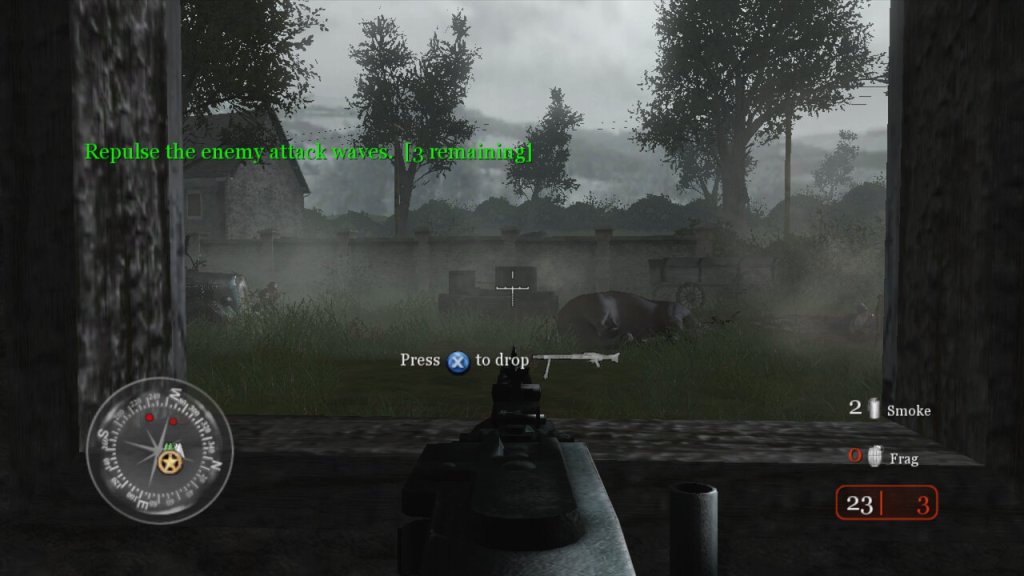
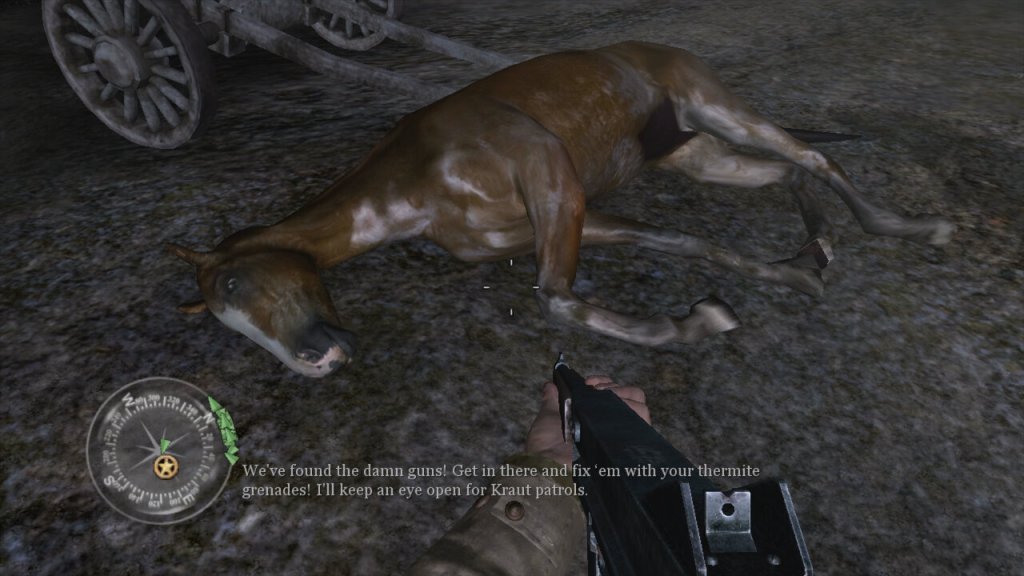
The story campaign is broken into three different arcs, with the narrative is told through the eyes of different soldiers from different nations (US, UK, USSR), giving a broad perspective on the war. Each mission is designed to feel immersive, with detailed environments, weather effects, and dynamic lighting, though the mission scripting can fail from time to time with some of the NPC characters getting stuck, preventing the mission from progressing. The game does autosave frequently to you can easily reload the last save when this occurs.
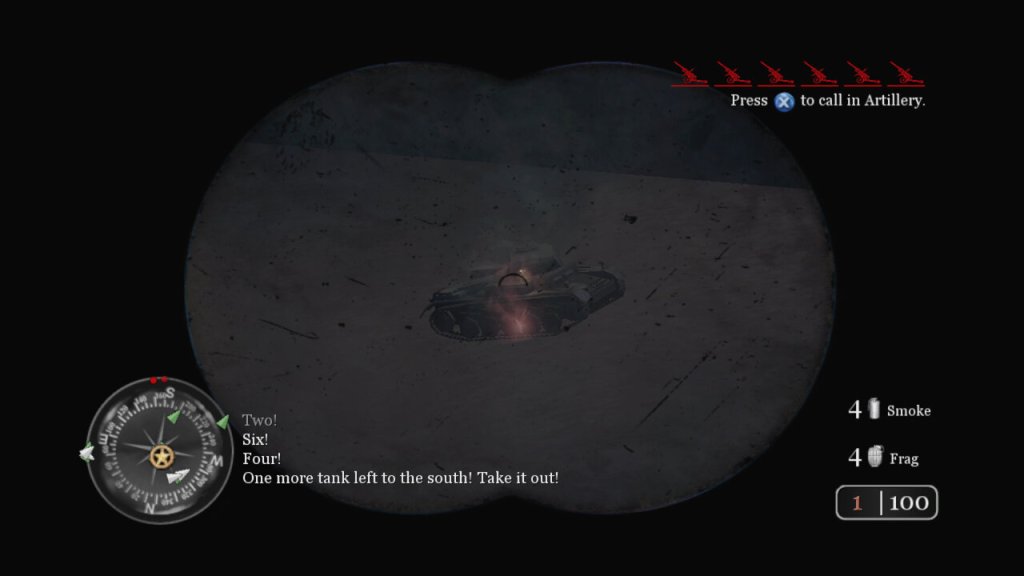
Missions are also pretty diverse, and sometimes you will be tasked to drive a tank through the fields, or use the mortar or snipers to take out distant enemies. Sometimes you will be tasked to hold out and wait for rescue to arrive. It’s a good way to break up the gameplay and to prevent the game from being monotomus.

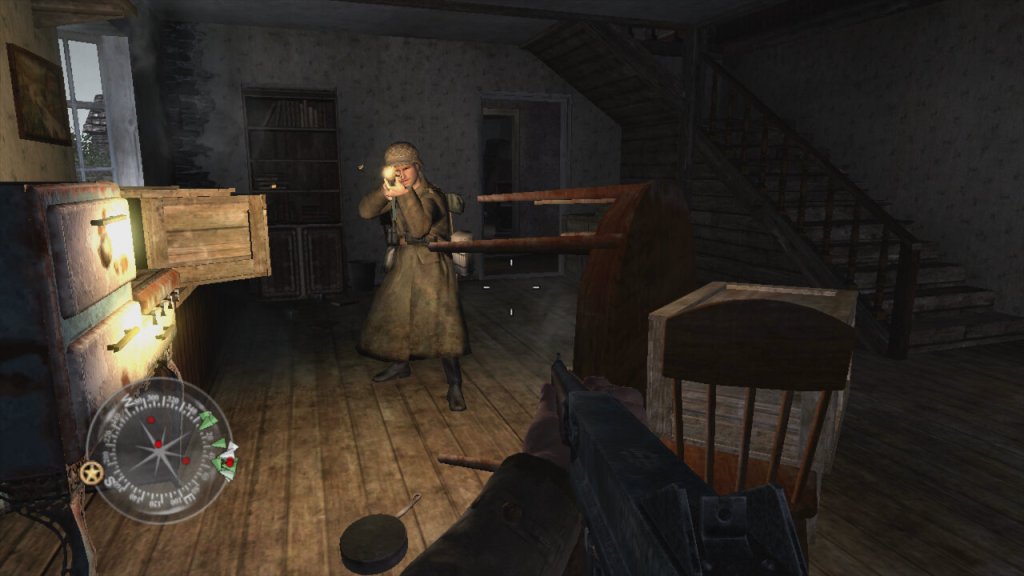
Players view the game from the perspective of their character, using a wide array of WWII-era weapons to engage enemies in combat. Each weapon has realistic firing rates, recoil, reload times, and damage models, influencing player strategy and engagement. Instead of health kits, the game features health regeneration where players recover health over time if they avoid taking damage instead of having to collect and use healing items. While not a traditional cover system, environmental interaction is crucial; players can use walls, doorways, and terrain for cover.

As a World War II game, it deals with historical political themes due to its setting, but it also introduces themes that can be interpreted in broader political contexts. The game presents World War II through the perspectives of soldiers from the USSR, USA, and UK, emphasizing the nationalistic pride each soldier might feel for their homeland. This is particularly evident in mission briefings and the portrayal of heroic acts by soldiers, which could be interpreted as promoting patriotic sentiments.


The game’s focus on combat glorifies military engagement to an extent, showcasing the technology, strategy, and heroism in battle. This can be seen as a form of militarism, where military power is celebrated as a means to resolve international conflicts. By depicting the Allied forces working together, Call of Duty 2 subtly touches upon the theme of international alliances, suggesting the necessity of cooperation against a common enemy, which mirrors real-world political alliances formed during WWII.
WWII is often referred to as “the good war” because of the clear moral lines between the Allies and the Axis powers. “Call of Duty 2” reinforces this narrative by rarely questioning the morality of the war itself, which can be interpreted as a political stance on the justification of warfare when facing extreme ideologies.

Activision beating a franchise to death

Platforms

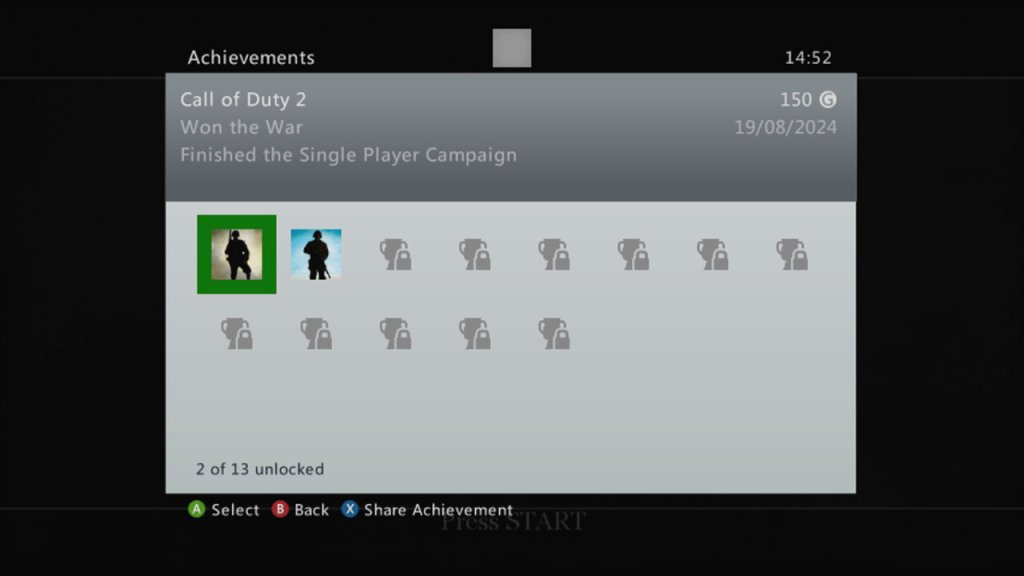
Call OF Duty 2 Achievemetns


Xbox 360 – This was a launch title for the Xbox 360 and was one of the only console ports of the game, not being released for the PS2 or the original Xbox. It’s odd since sequel, Call Of Duty 3, was released for these ageing sixth generation consoles.
The 360 version is also supported for the Xbox One and Series consoles. Being an early 360 titles, there isnt much achievements, but you get 50G for comleting traning, and 150G for finishing the campaign.

Xbox Live

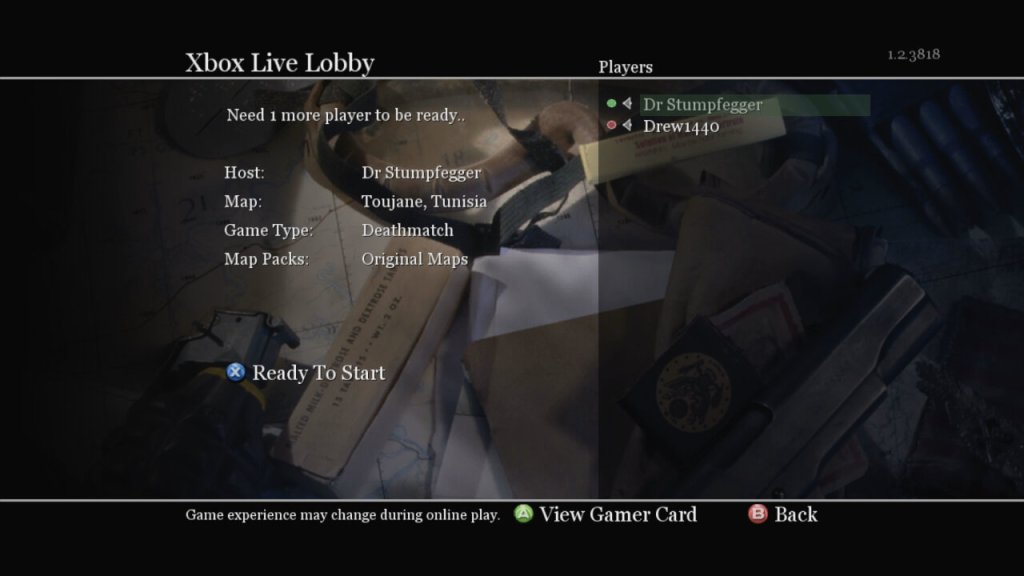
Microsoft Windows – Released on the PC at the same time as the 360, you can still purchase this on Steam. You can also play this online, though I’m not sure how safe this is due to modern exploits being possible through the game’s engine. The game does come with PunkBuster, but it’s no longer updated.

Mac OS X – the game was ported to Mac’s running both PowerPC and Intel processors, through it needs a beefy G5 processor for it to run correctly. The Mac Mini with it’s G4 and Radeon 9200 will struggle to run this game. This version of the game no longer runs on modern macs since it remins a 32bit applications, thje latest version to run is macOS Mojavie.

The Sims 2

The sequel to one of the best-selling games of all time.

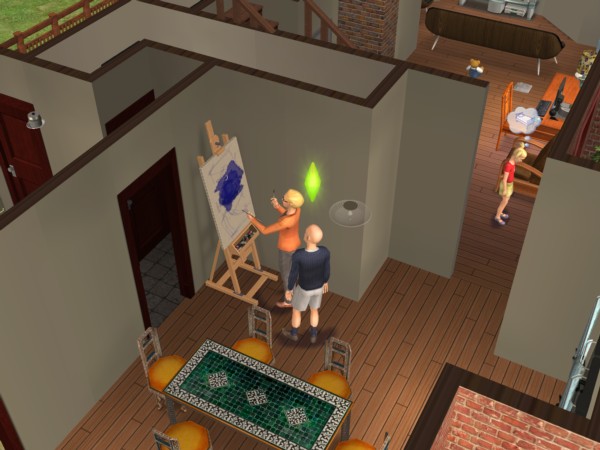
Sims themselves were a lot more complex compared to the previous installment, with sims now being rendered entirely in 3D graphics. In the original game only the head and body could be customized with only three body types and skin colour. Sims 2 made this more diverse with four skin colours being introduced, face sliders to customize the sims appearance and more customizable cloths, (Although you couldn’t change the colour of them, which was something the console versions could do).

Body sizes remained the same with the normal, thin and fat body types, which wasn’t very diverse since the fat sims only look slightly chubby, they are nowhere near the My-600lbs-life level. Then again Maxis would have had clipping issues when the sims had close contact with another sim or object, and would have had to have various different animations for the body types.
The concept of genetics was also introduced where sims can pass on their appearance and personality through their offspring, unlike the later game this got pretty complicated with the concept of recessive and dominant genes, later games just kept it simple and combined elements of both sims.

Memories and aspirations are new concepts introduced into the game, with memories serving as achievements that are saved. Aspirations serve as an indicator to a sims mental health, by achieveing ‘Wants’ their aspiraion bar will begin to fill. Fulfilling ‘Fears’ will cause this to go down and when it enters a failure state, sims will break down and will get a visit from a therapist. Points earned from Wants are used to redeem aspiration rewards, which can be used to make skilling or social itneractions easier or to increase the sims lifespan. These cannot be bought for case, only for points.

The concept of genetics and family trees are introduced in this game, where sims can pass on their personality and appearance onto their offspring. The comcept of family relations is also present here, which special socialinteractions being made avaliable to family members.

The Hoods

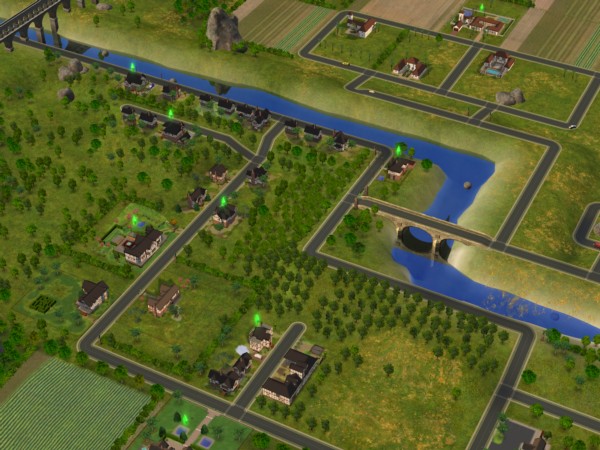
The original sims game only supported one hood, with multiple hoods being a feature of several of the expansion packs, however these hoods are all set in the same location with very little diversity in the environment. Sims 2 expands on the neighborhoods by allowing the ability to have custom hoods from the base game, and even come with three neighborhoods.

  • Pleasentview: This is supposed to be the original neighborhood from the first Sims game, but set 25 years later with the Sims themselves having aged older. There are many familiar families like the Goths, Burb and Pleasent. Non of the original lots return, will all the houses being remodeled to take advantage of the new building tools.
  • Strangetown – One of my favorite hoods because of how eccentric some of the characters are, set in a remote desert.
  • Veronaville – Inspired by various Shakespeare plays including Romeo and Juliet and The Midsummer Knights Dream. There are three main families who have a very rich backstory. The lots follow either a tudor or an Italian design.

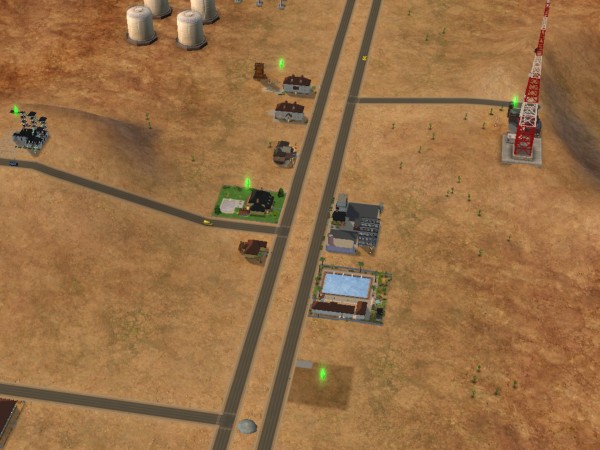
Hoods are based on Simcity 4 small citys, and you can even see the .sc4 file extension allowing for custom hoods to be created using Simcity 4, and then exported to The Sims 2. The terrain level and type could also be customised, although once set you cannot change this within the game. This differs from the original game which was fixedin the neighbourhood type and layout,a dn yiou were limited by the amount of lots (10 int he stock game, 48 in Unleashed) WithSims 2, you are givern the choice of quanitity or size, with larger lots occupying more space.

Pre-made sims

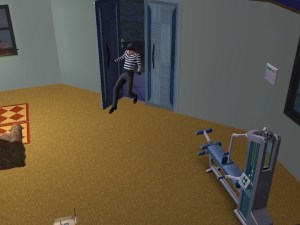
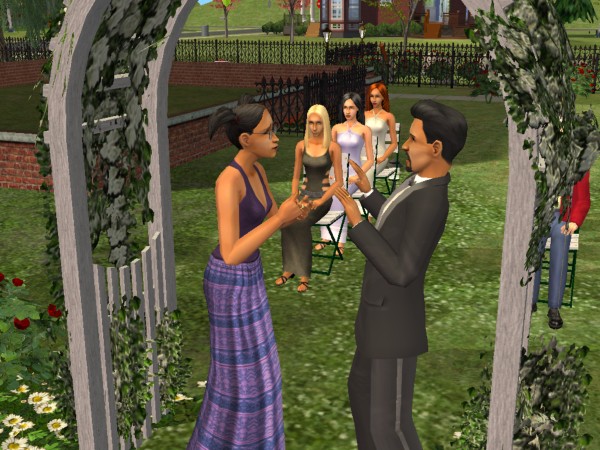
A lot of the premade sims have a storyline allocated to them, although this isn’t part of the gameplay itself, storytelling is a focused component of the game with the ability to take screenshots and capture video through the game. Of which can be collected into a family photo album. Some sims have premade scrips that function when you play them for the first time, some of which will introduce some of the games mechanics and features. The Calientes for example with have a scripted burglar appear on the lot at the first night

Pleasentview

  • Goth: Mortimer and Cassandra return 25 years older, complete in a new crib with the trademark gothic architecture and a gravestone. Alexander is the son of Mortimer and Bella, who is mysteriously missing (but can be added back into the game with either SimPE or the Sim Manipulator object) .
  • Pleasant: Daniel has grown up and has a wife Mary-Sue and kids of his own, twins Angels and Lilith. Daniel appears to be having an affair with the maid, whilst the twins have the worst sibling rivalry ever seen
  • Broke: Brandi with her son Dustin and Beau, live in what appears to be a trailer
  • Dreamer: Widow Darren and his son Dirk, who are struggeling to pay the bills
  • Oldie: An elderly couple with no kids, Coral and Herb. I normally have these adopt a kid just to keep their legacy alive, if you prefer to keep their generics there is also a mod that lets you create a baby from the crib directly.
  • Burb: Daniel Pleasant’s sister – Jennifer who married John Burb, who was also from the original sims game. They have a daughter. No sign of Johnny’s pet dog Tucker
  • Caliente – Nina and Dina – two sisters who have recently moved in and have already wrecked havoc in the neighborhood. Dina has already had an affair with Mortimer Goth, had previously married Michael Bachelor (Bella’s brother and a sim who was also in the original game). Interestingly their family tree shows they have alien ancestry
  • Lothario – Don who is the male counterpart to the Caliente sisters, this one also has an affair with both of them, and is engaged to be married with Cassandra Goth
  • There are also a few NPC’s that are well known, Kaylin Langerak (Who appears in The Sims 3), Gordon King and Goopy Gliscarbo – the NPC with the best fashion sense.

StrangeTown

  • Grunt: A military-esque family with General Buzz with his three sons Tank, Ripp and Buck Grunt. Tank seems to be the type of sim who is desperate for his fathers attention and tries to emulate him, Ripp seems like a slacker/stoner type who is struggling to find his feet, while Buck is the youngest. Their mother, Lydia divorced before passing away, and her grave can be found in Olive Specters garden, speaking off…
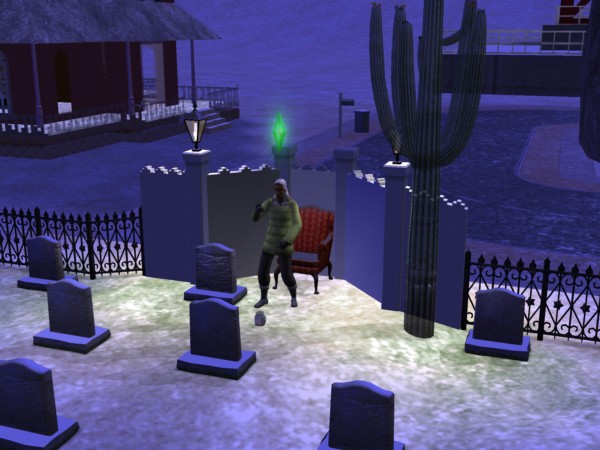
  • Specter: Olive Specter, one of my favourite premade sims since there is such as mystery around her, why does she have so many gravestones in her yard of different sims, why does she have positive memories of the Grim Reaper, why has she been married multiple times and why did she lose her only child to social services? Living with Olive is her niece, Ophelia who has a punk-rock style, like a black Avril Lavigne during her ‘Let Go’ era or Fefe Dobson.
  • Smith: The first alien hybrid family consists of Pollination technician 9, his human wife Jenny and their kids Johhny and Jill who live in a house that looks like something off Wisteria Lane (Desperate Housewives)
  • Singles: Four roommates with Erin (Who is related to Loki Beaker below), Kirsten and sisters Lola and Chloe.
  • Beaker: Loka and his wife Circe, along with their adopted slave Nervous Subject
  • Curious: Three brothers who live on some sort of observatory, with one of them being up the duff from an alien.
  • Loner: Just Ajay on his own, ready to move into a vacant lot. I typically pair him upo with a random townie
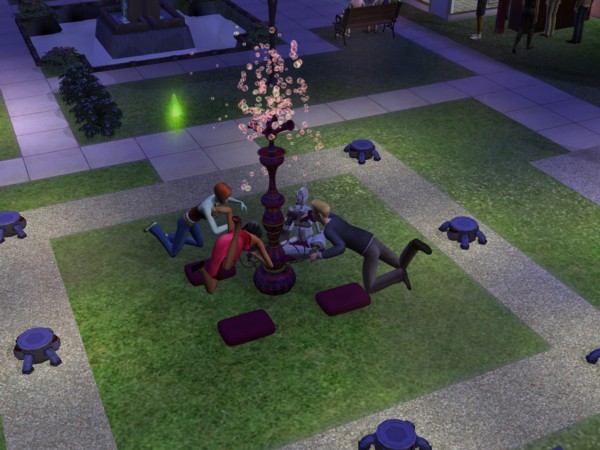
LAN Party, 2004 style

Veronaville

  • Capp – Consort is the oldest surviving member, with Kent and daughter’s Regan, Goneril and Cordelia, who is deceased. Goneril is married to Albany, who is ready to move into a vacant lot. Cordelia issurvived by Juliet, Hermia and Tybalt who live with Consort.
  • Monty – Based on the Montague family from Romeo & Juliet, Isabella is the matriach of the family, with Antonio and Biana present in the family bin, ready to move into an empty lot.
  • Summerdream – Oberon and Titania, and their kids Puck and Bottom.

Theres a shocking lack of Macbeth here, maybe that was too spicy for the game?

The new NPC’s

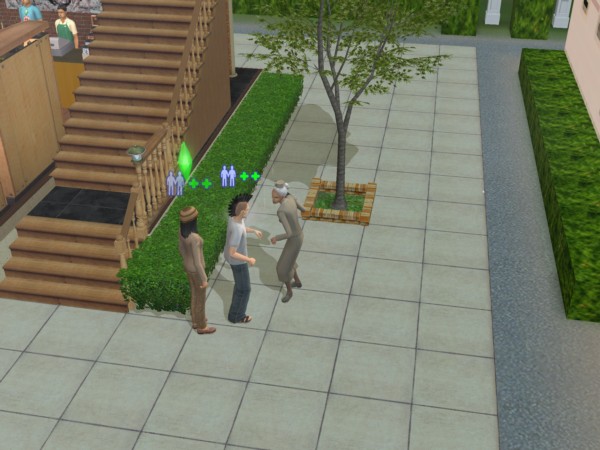
Most of the existing NPC’s serve a similar purpose to the previous game, but you can now interact them by talking or tipping them. If your sim builds up a relationship with them they can also move in with them.

Typical nanny experiance
Your typical nanny experiance

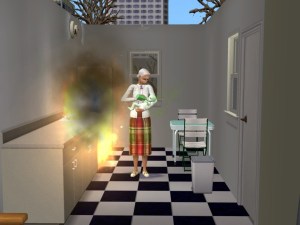
Nanny: These will take care of your child and toddler sims and can be set to track your sims work schedule so they will arrive before your sims are due for work. Unfortunately the Nanny’s are either incompetent or senile as they will often neglect the children and will go off and do something else whilst the babies are crying. Also the default-generated nanny’s seen to have very low nice personality points and will constantly fight with your sim. And they will constantly cook meals when there is no need to, and will also keep fetching baby bottles from the fridge despite there being plenty avaliable. Still, they are useful for keeping the social worker at bay.
Bartender: Useful for parties, they will tend the bur and will refill and serve drinks.
Exterminator: Will remove roaches, but not flies from the lot. You still need to clean up after them but they are useful against large swarms of them.

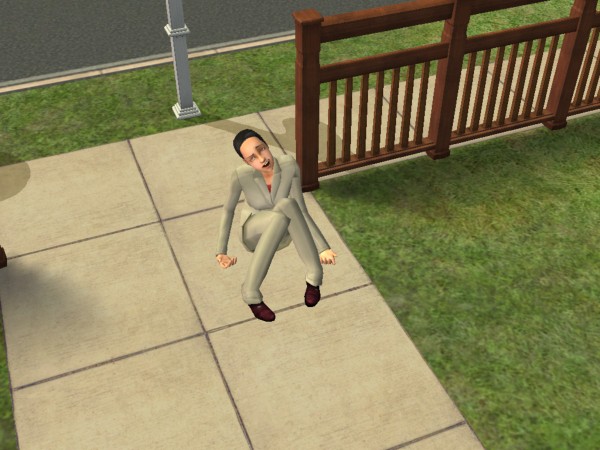
Dina left the front door unlocked again…

The Maid, Repairman, and Gardener continue to appear and can be contacted through the phone.

Deluxe Edition

This edition comes with the base game and the Nightlife expansion, another edition exists that adds the items from the Celebration expansion.

The Sims Nightlife

Developed similar to the Hot Date expansion pack for the original Sims, Nightlife was intended to bring added depth and variety to the social and nighttime activities of Sims in the game. The expansion aimed to provide players with more opportunities for their Sims to engage in exciting nightlife experiences and explore new aspects of their virtual lives. Here are some of the key intentions behind the expansion:

Downtown is where a lot of these new lots are located, and it can be added to any neighborhood in the game. Once added, Sims can call a taxi or drive to Downtown. Sims can also live in downtown lots, as there are residential lots available.
For shops, books, magazines and video games can be purchased from downtown stores, so sims are no longer stuck with SSX3. Video games that can be brought are references to other Sims games like SimCity 4 and The Sims Bustin Out

Like the regular neighborhood lots, Downtown is entirely customizable and new lots can be added and edited as normal lots.

A few new objects have been added, with mobile phones being featured for the first time that enable sims to make phone calls on the go which does not require a landline (no text messaging though). A handheld gaming console can also be purchased along with an MP3 player which plays the same music as the radio stations.

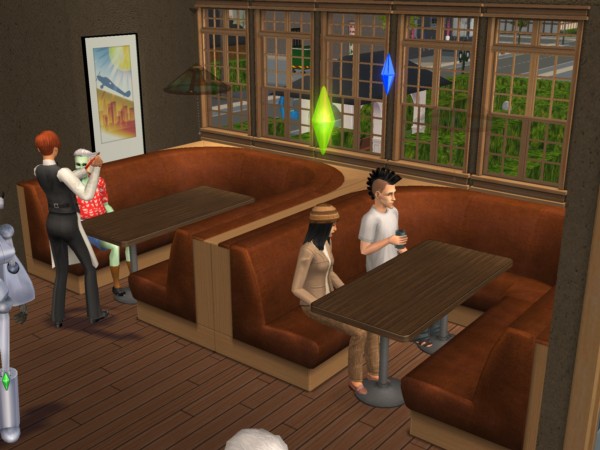
Dates are also a new concept to the game, where sims can ask others on a downtown date. Although this was in the first game, a new scoring meter which determines how well the date has gone based on social interactions and the amount of wants fulfilled during the date. You will be able to see the other sims wants to help fulfill them. Sims are rewarded for getting a high score, they may receive a gift or a card in the mail.

Cars are a welcome addition to the game where sims can drive to different community lots (but not residential lots) This was a similar concept to Bustin out. Sims must purchase and make room for a driveway on the lot, which a lot of the default Maxis lots had little to no support for and require adjustment. Adults can use their car to drive to work, replacing the carpool. They can also drive to work if they miss the carpool, though they are warned if they repeatedly come to work late. Teenagers can also drive which is useful if they miss the school bus.

No premande sims are included unless you count the mysterious Tricou family. There are exclusive Downtown NPCs that will only appear on Downtown lots and are generally intended for dating.

DLC

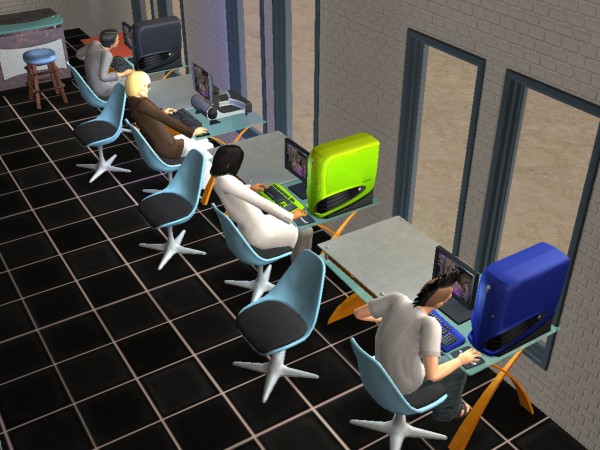
Shortly after release, EA offered official downloads for the game, which could be downloaded under the ‘Get Cool Stuff’ section of the website. One of which was a Running With Scissor’s, where your sim will pick up and run around with a pair of scissors. Some sort of PSA from Maxis on why you shoudn’t run around with sicssors. There is also an Alienware PC which gives a lot of Fun, but was never upgraded for alter expansions which means it cannot take advantage of features introduced in University (Like completing assignments or scholraships) but modded versions are available which support these features.

The Nightlife expansion also featured exclusive DLC in the from of downloadable Ford cars.

Inversion

Inversion, released in 2012 for multiple platforms, aimed to offer a unique twist on the shooter genre with its gravity-manipulating mechanics and a focus on destructible environments. Developed by Saber Interactive and published by Namco Bandai Games, it generated some initial buzz due to its innovative concept.

It’s best thought about as a Gear of War clone with gravity gameplay mechanics.

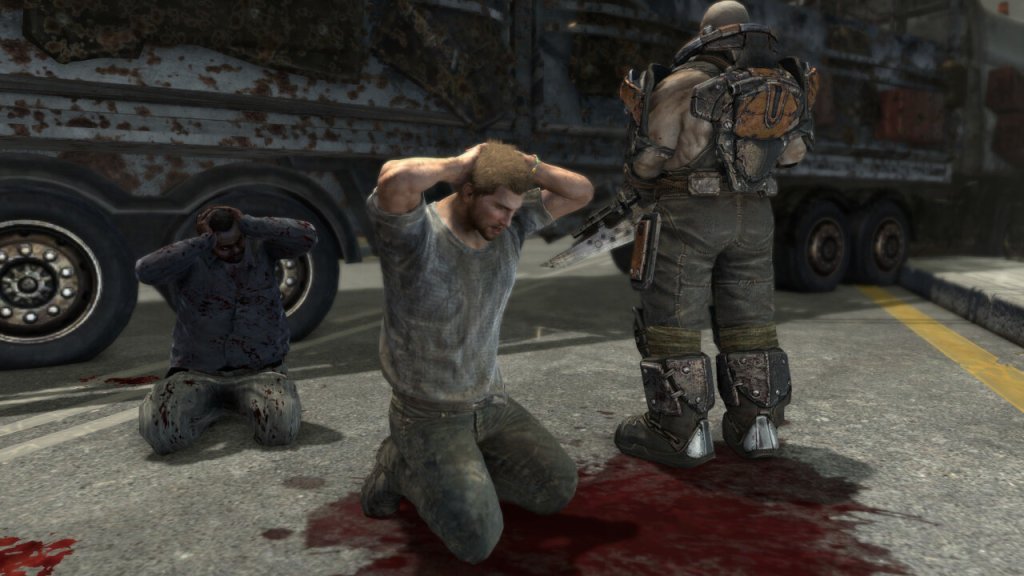
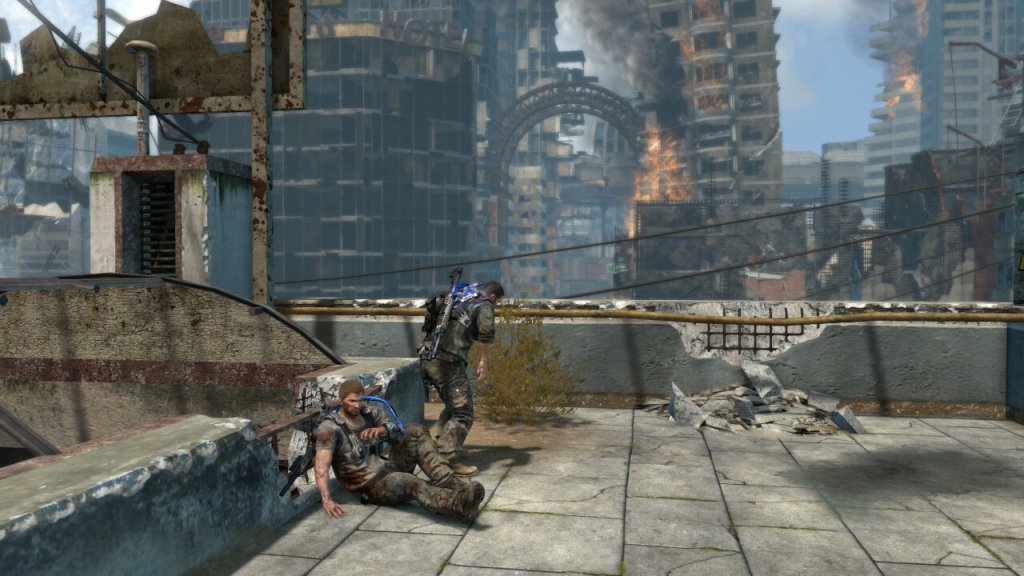
The story of Inversion centers around the protagonist, Davis Russel, and his quest to rescue his missing daughter in a world invaded by an alien force known as the Lutadores. Set in the fictional city of Vanguard, the game explores the aftermath of a catastrophic event called the Inversion, where gravity has been altered, leading to widespread destruction and chaos. Davis Russel, a police officer, and his partner Leo Delgado find themselves separated from their families when the Inversion occurs. As Davis navigates through the decimated city, he discovers that the Lutadores are using their advanced technology to control gravity and oppress humanity. Davis encounters an underground resistance group called the Resistance 33, led by a man named Dr. Raymond Gonzales, who holds knowledge about the Lutadores and their motives.

Throughout the game, Davis embarks on a journey to find his daughter and unravel the mystery behind the Inversion. Along the way, he confronts various Lutadores forces, including powerful bosses and their minions. Davis gains access to a gravity-manipulating weapon known as the Gravlink, which allows him to manipulate gravity, alter the environment, and combat enemies. As the story progresses, Davis discovers the Lutadores’ true intentions and their connection to his missing daughter. The narrative explores themes of family, sacrifice, and the fight against oppression. Davis must overcome personal challenges and make difficult choices to save his daughter and liberate humanity from the grip of the Lutadores.

Inversion’s core gameplay mechanic revolves around manipulating gravity to alter the environment and combat situations. While the concept was intriguing, the execution left much to be desired. The gravity manipulation abilities lacked fluidity and precision, making it challenging to execute actions with the desired accuracy. The controls felt clunky and imprecise, hindering the overall enjoyment and responsiveness of the gameplay.

Inversion features numerous combat encounters throughout the game. However, the combat lacked depth and strategy, resulting in repetitive and monotonous gameplay. The enemy AI is often predictable, and the lack of varied enemy types and tactics diminished the challenge. Additionally, the AI of allied characters proved to be lackluster, failing to provide meaningful assistance or engage players in cooperative gameplay elements.

One of the touted features of Inversion was its destructible environments. Players could use gravity manipulation to collapse structures and create cover. While this added a layer of dynamism to the gameplay, the destructibility felt scripted and limited, lacking the freedom and interactivity seen in other games with similar mechanics. The impact of environmental destruction on gameplay and strategy was not fully explored, resulting in missed opportunities to enhance the overall experience. In most cases, you will use the gravity mechanics to clear debris so you can progress to the next area and that’s about it.

They really could of added secret areas to the levels that could have been uncovered using gravity that would reward you with additional ammo or collectibles that could flash out the backstory. Again very similar to Gears Of War but it adds a lot more depth to the game itself.

Versions

Like most seventh-generation games, it was released on the HD twins (Xbox 360 and PS3) and on the PC (Windows). Nowadays it’s difficult to obtain this game digitally, meaning physical copies are the only feasible way.

Windows

This version was available on Steam, but has since been delisted for users outside North America. I had issues running the game on Windows 10 & 11, with the game refusing to launch. Only way to play the game was to use an older Windows 8 machine. There are supposedly fixes available online but unfortunately I was unable to get them to work.

Also announcing is the lack of Stream achievements despite this game being released in 2012, many Steam games were supporting achievements by then.

Xbox 360

The preferred console platform, but sadly this is not compatible with the Xbox One.

PlayStation 3

Pretty much the same as the 360 version but suffers from a lower frame rate.