The spin-off that became more popular that its origin game as it expands on the multiplayer aspect of Unreal.
There isn’t much point of trying to make sense of the Unreal Tournament lore, especially once the sequels come into play. Basically, the tournaments have become annual sports events (Like Soccer, football or handegg) that are also popular TV events set in a dystopian future where corporations control the government (Just like today).

Game Modes
Additional game modes and be downloaded and added to the game, making it very flexible for new ideas for gameplay. Jailbreak is an example of a new game mode. Because of this, Unreal Tournament, and its middleware Unreal Engine because very popular for game modders to add new maps, skins, and mutations to the game, and helped developers become familiar with the Unreal engine which would become the popular engine for various games (in fact, the seventh generations of western games were dominated by Unreal Engine 3)

Capture the Flag
You have to catch the enemy’s flag and bring it back to the base without being killed. If you are killed the flag you were holding would be dropped and someone from your team would have to pick it up, otherwise, it would teleport back to the enemy base should an enemy team member pick it up, or if the flag remains untouched after a certain amount of time.
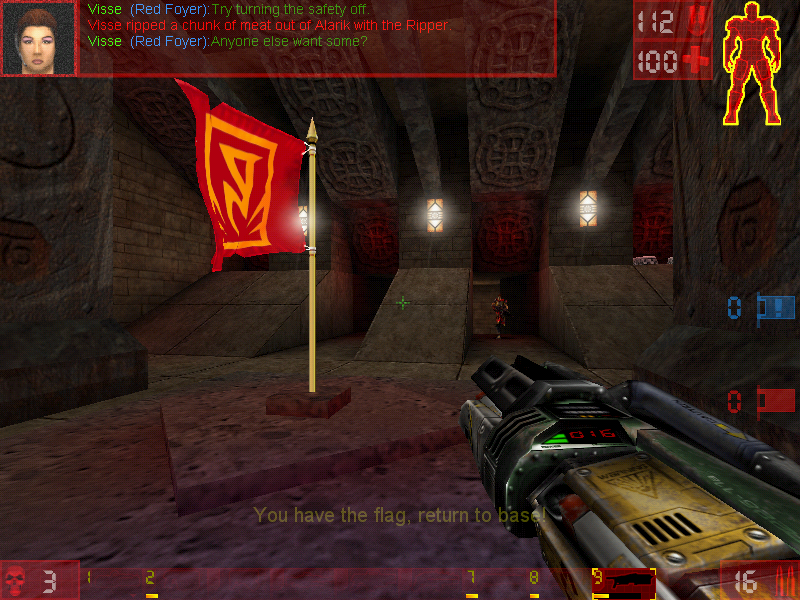
Here good team communication is key, as you will want someone to be watching the base flag whilst others go after the enemy flag, you may wish to have team members watch certain points of the arena map, especially areas that have narrow corners or corridors. Some maps have secret paths that lead to the flag, so be careful with those.

Deathmatch
Pure kill or be killed action, there are two main variants of this game mode, Deathmatch, and Team Deathmatch, with the former being you Vs everyone on the map. Team Deathwatch put you on one of two teams (Red Vs Blue) with the team having the most kills winning the game.
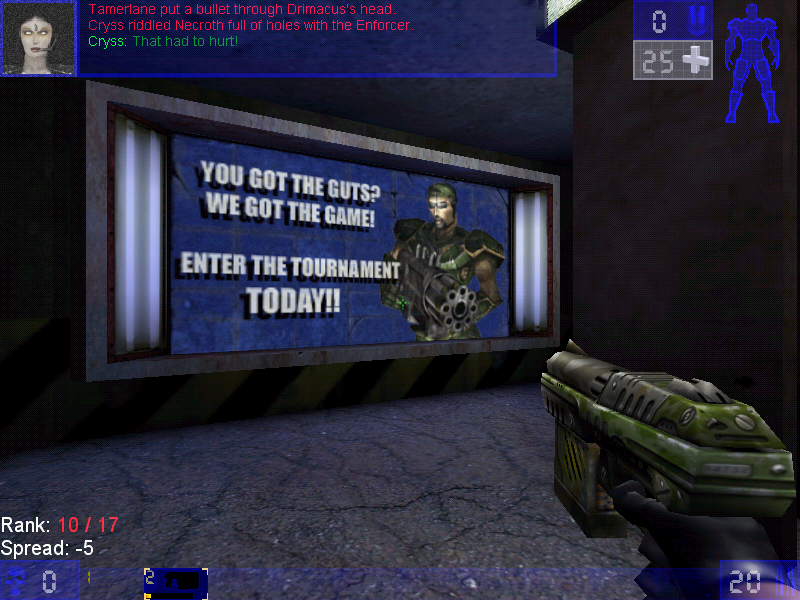
Last Man Standing: Another variant of deathmatch, here you have a limited amount of lives and have to be the last player in the arena to have one or more lives remaining. The lives affect the number of times you can spawn, with one life being deducted every time you die and respawn.
Assault
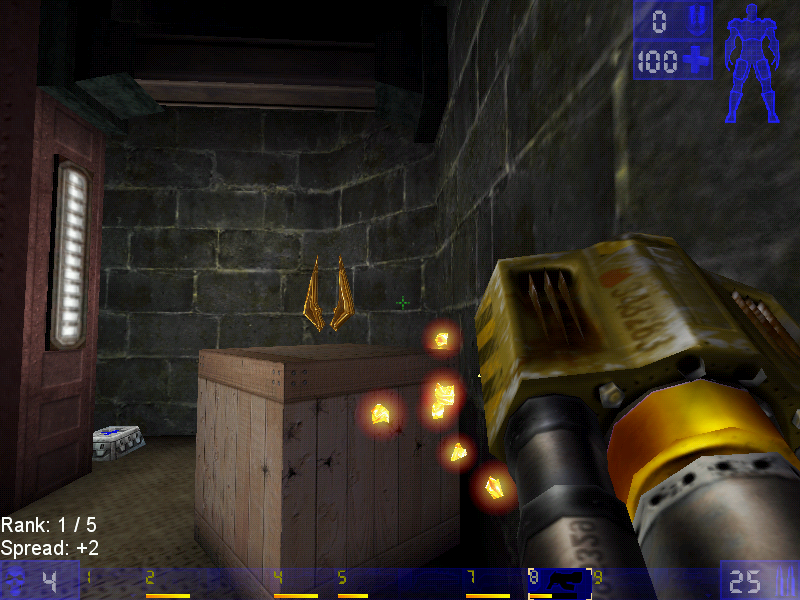
Each map has an equal set of objectives that must be completed before time runs out. One team has the role of attacking, whilst the other has to defend. When one team wins, another role starts where the teams switch sides with the opposing team defending. Spawn points depend on how far the attacking team has managed to progress, with later spawn points being available as objects have become completed.
Domination
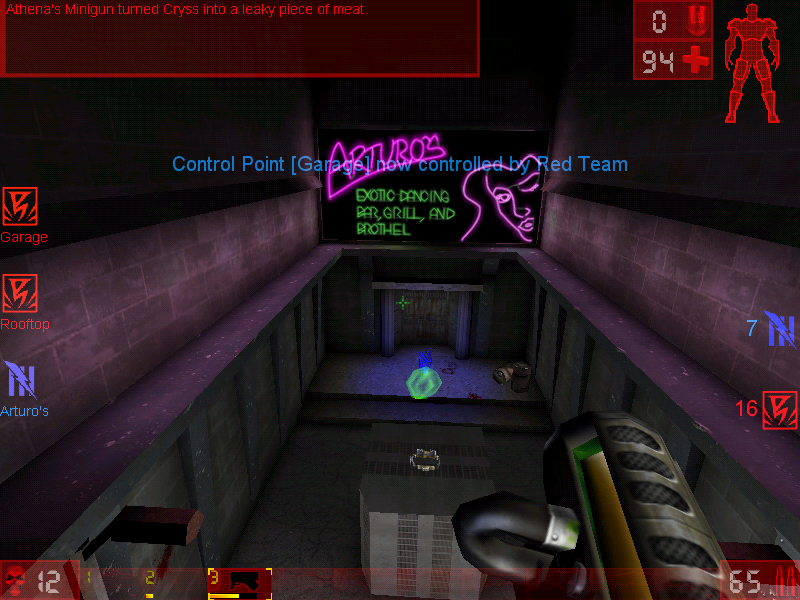
In this mode, there are two teams who had to capture 3 bases in order to gain points. Kills are not essential and sometimes hinder your team, since the opposing player will respawn next to the area they are dominating, making it harder to capture the base. You will preferably want to weaken the enemy player, allowing for an easy kill later.
Points are gained when you have captured a base, and the more bases you capture, the faster your team will accumulate points until the maximum has been reached, of which the resulting team will win.
Weapons
Translocator: Not much of a weapon in terms of damage but allows you to quickly teleport around the map. Your fire the beacon and right-click/alt-fire will teleport you to that location. Be careful though, if a player has been destroyed by the translocator, you will die.
Impact Hammer: The weapon that you use when you’ve run out of ammo and can’t find any more so as a last resort you hope you strike lucky with the impact hammer. This only works when you charge it up and sneak behind a player in order to kill them, otherwise it’s best running and finding a new weapon or ammo.
Enforcer: The default weapon that you start and respawn with. Causes minimal damage but gets the job done. The second fire does more dame and has faster speed, but very poor accuracy.
Bio-rifle: Sometimes called the snot gun, fires green-colored gel-like projectiles that stick to any surface. When a player gets in contact it can do some damage. Useful to surround the flag base or the capture point to prevent the flag from being taken. One of those fire and forget guns.
ASMD Shock Rifle: Shoots a stream of energy forward towards the target, the alt-fire shoots a ball of plasma which, when hit with the stream of energy exploded and odes further damage
Pulse Gun: Fires small green balls that are supposed to be energy pulse, nothing really spectacular since it only deals minor damage, but the alt-fire fires a straight green beam which can be linked with the beam from a teammates to increase the damage.
Ripper: Fires off razor blades which bounce off any walls or solid objects, useful for attacking around corners, just be careful since they can bounce back and damage your player
Minigun: Fires a series of bullets after a short delay, since the gun motor has to spin up. Alt fie fires more bullets but is more inaccurate
Flak Cannon: The GOAT weapon, fires a large number of projectiles, deadly upon close contact.
Rocket Launcher: Fires a rocket
Sniper Rifle: It’s a great weapon at a distance, and is somewhat usable at close range. You will really want to use this on CTF or assault games where players are more likely to camp
Redeemer: Fires a nuke into the arenas that deals a lot of damage and a large blast radius, alt-fire shoots a steerable missile but leaves you vulnerable to damage, and the missile can be shot at which will disarm the weapon.
Versions
The game was ported to more platforms than the original Unreal game which makes it more well known with the two console platforms of the time.
Dreamcast
The game was ported to the Sega Dreamcast in 2000, this version came with a few exclusive maps, a redesigned menu system, and HUD and retained keyboard and mouse support. Online play was also supported with you having the modem adaptor and an internet dial-up account.
The VMU is used somewhat, it displays the Unreal logo as a looping animation.
Playstation 2
Released early into the PS2 life, this version suffers from a few framerate issues since the game was not very optimized for the PS2 vector units, and was to serve as a concept for future Unreal Engine titles. You can also see the lower resolution textures as the graphics had to squeeze into the PS2’s 4MB VRAM buffer.
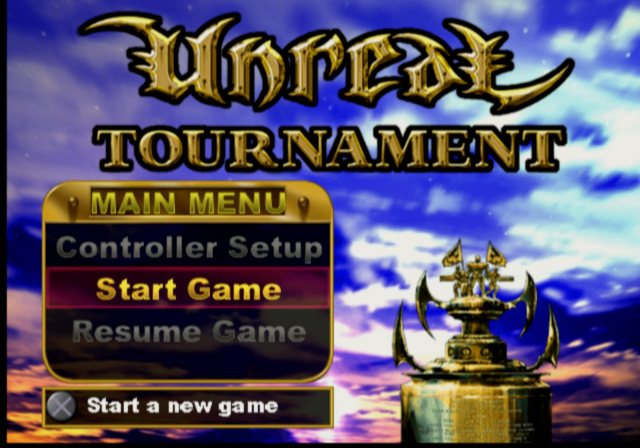

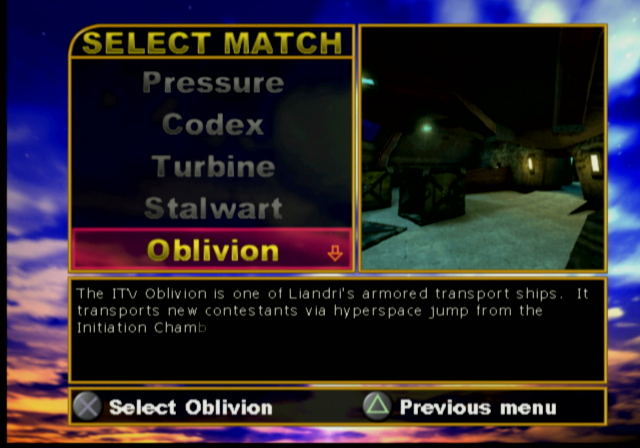

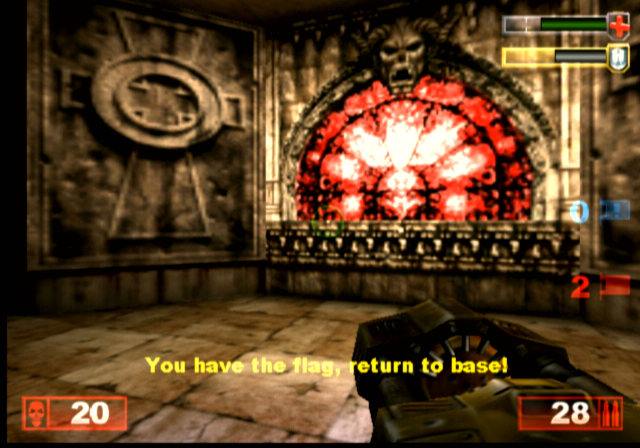
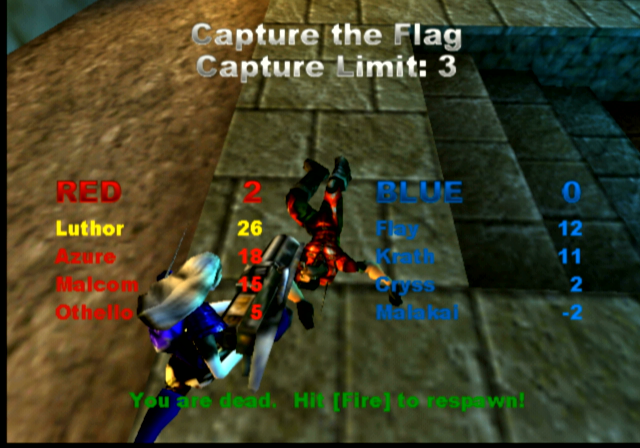


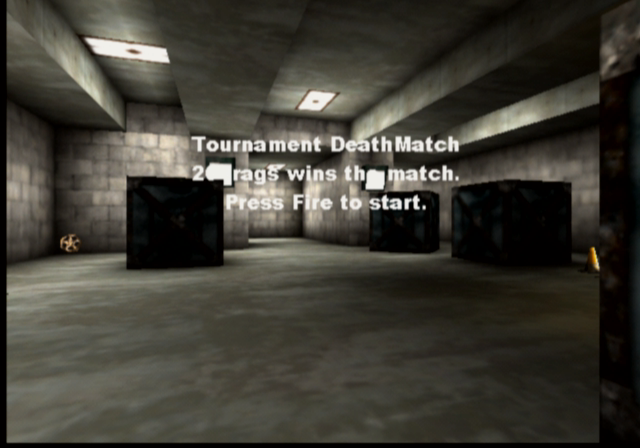
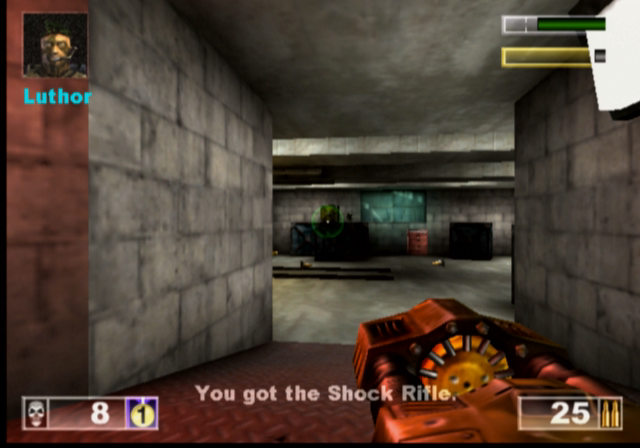
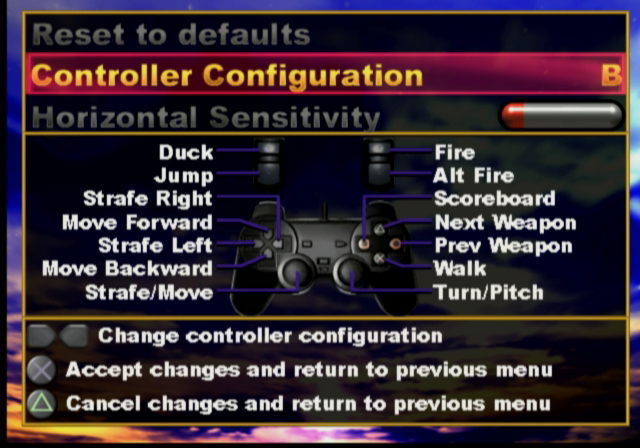
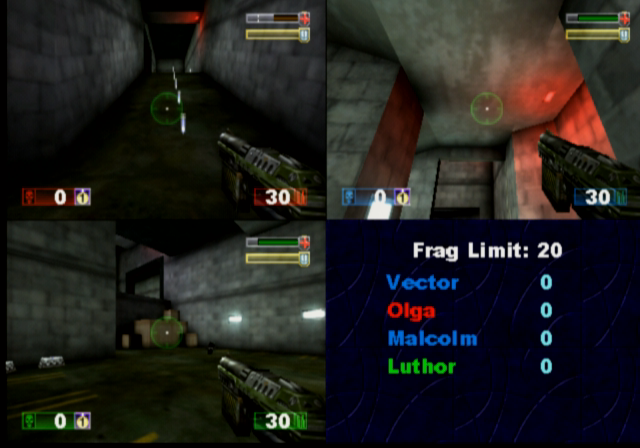
Unlike the Dreamcast version, the PS2 version does not support online play at all, as the PS2 network adaptor was not released at this point (Sony originally intended for the iLink connector to be used for online multiplayer/LAN, but only the US release of Unreal Tournament supports this) This version does support the use of a USB keyboard and mouse which can be used for single-player mode and multiplayer, where up to four players can play from one console with the addition of two controllers and two sets of a keyboard and mouse. This does require a USB hub since the PS2 only has two USB ports, unless you use a combined wireless keyboard and mouse which commonly appears in wireless desktop sets.


As four players are on one screen, a big screen TV is recommended like those huge rear projection TVs that were available of the era.
There are also a few console-exclusive maps that didn’t appear in the original PC release, and some existing maps have been altered slightly due to the console’s memory limitations.

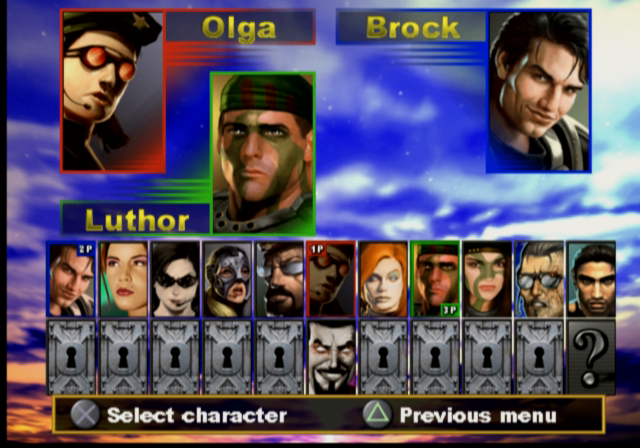
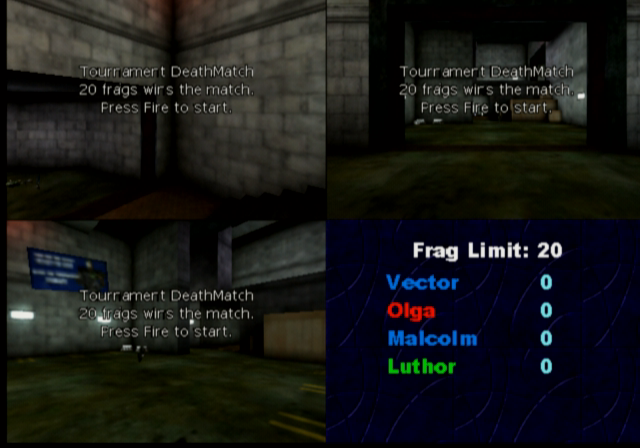
PCSX2 1.6 is capable of running the game but will encounter issues with background music stopping abruptly, and the game will randomly lockup when starting or finishing a game.
MacOS
The game was released for the Macintosh platform and is similar to the Windows PC port, and features support for the Macintosh 3D API (Known as RAVE and used the ATI 3D RAGE accelerators, or Nvidia cards on later Macs) and Glide if the Mac has a 3DFX Voodoo card installed. The game runs best on MacOS 9.2 and has issues running through the classic environment on OS X, for both Jaguar and Panther versions of Classic.
A Carbon version exists but this never left the beta stage and lacks a few features compared to the original MacOS version. This uses OpenGL for rendering and a custom User.ini file, which will cause issues if you dual boot with both OS 9 and OS X as they share the same ini file which dictates which 3D renderer the game should use. In order for these to coexist, you will need to have two different install directories of the game.
Windows
The original and lead platform of the game.
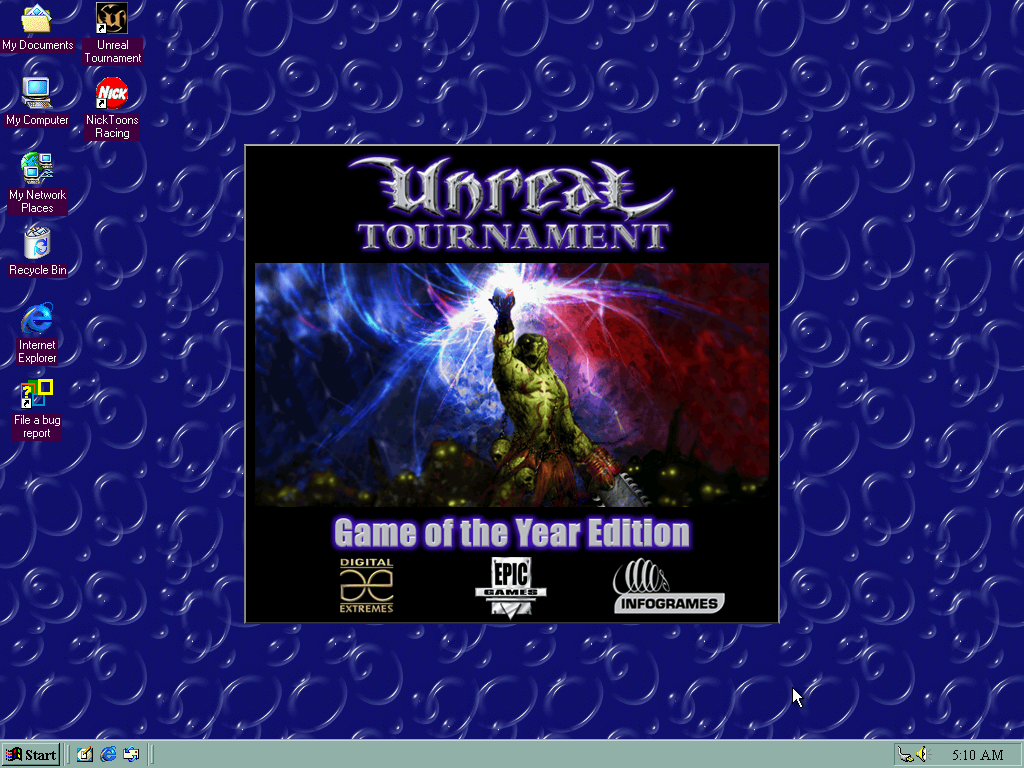


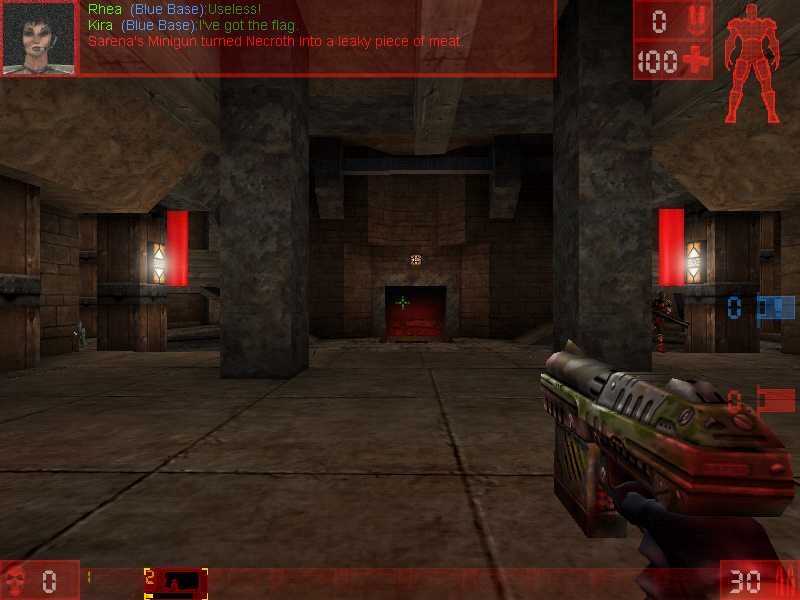
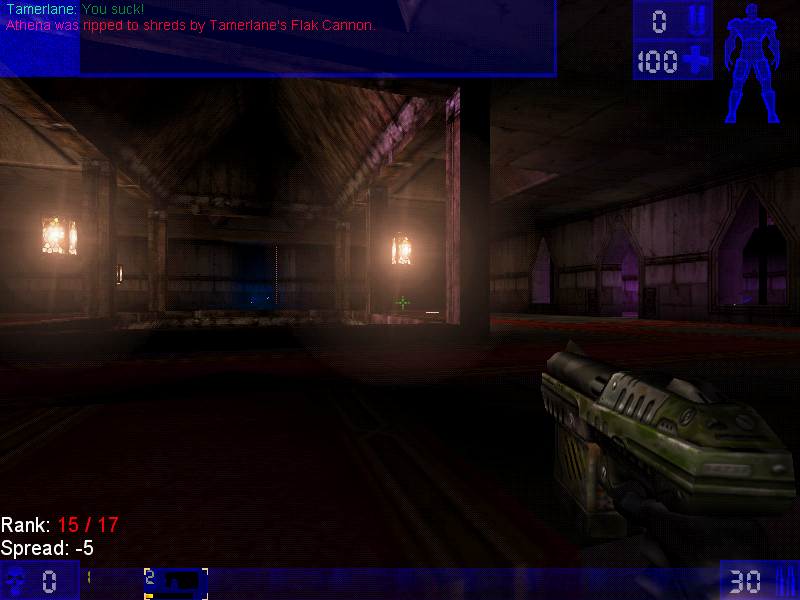
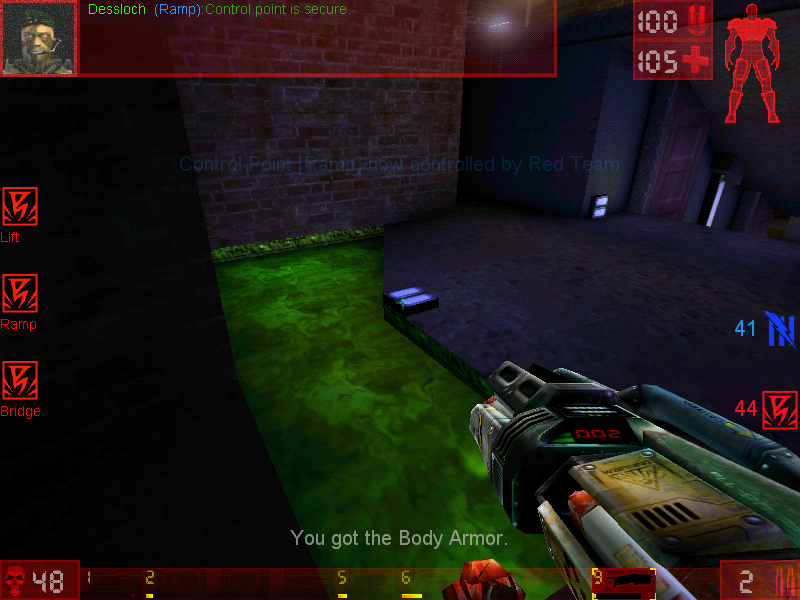
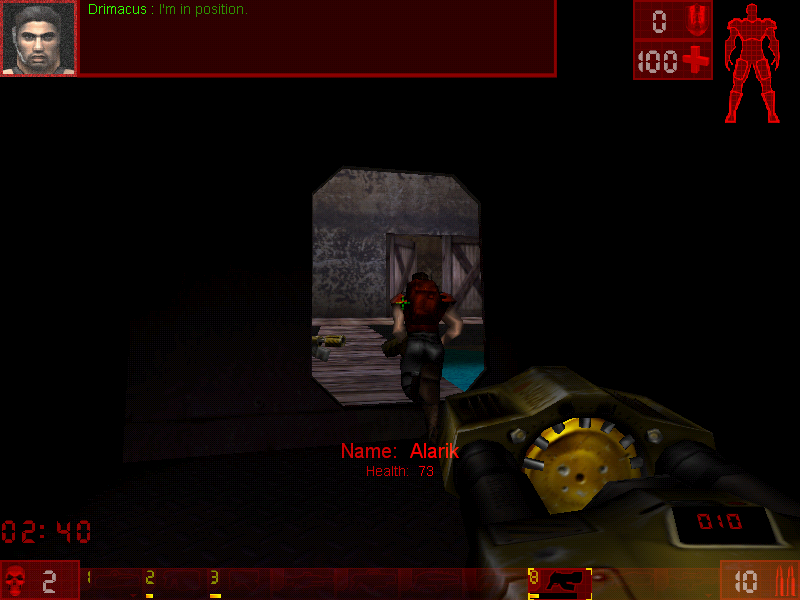

Running on an emulated 3DFX Voodoo 2 in PCem
As the game was released in the late 90s, various 3D API’s are supported
- Direct3D: Initially supported version 6, with patch v413 introducing DirectX 7 support.
- OpenGL
- 3DFX Glide: Version 2.4 of the API is supported
- S3 MeTaL: An API used for S3 Savage graphics card
- PowerVR SGL
- Software Rendering: If your PC has no 3D graphics card, or is not supported by Direct3D or OpenGL then you can run the game in software rendering instead which uses the CPU for the rendering functions.
The game will run perfectly on modern Windows systems, even on Windows 11.




 Drew1440: Blog