The SimCity series was one of the first simulation games to gain widespread popularity, despite a lack of concrete goals or action-packed gameplay. SimCity 4 maintains this kind of sandbox play, letting players build and develop cities as they see fit. Aside from staying within the constraints of a budget and carefully avoiding a rioting populace, players are free to build whatever environment strikes their fancy. The cardinal rule in SC4 is, keep the citizens happy. As the mayor, it’s up to you to set the taxes and zone the land in such a way that your residents happily build the city you want. There’s even a terrain-building mode with all the tools to create your own topology before founding a city.
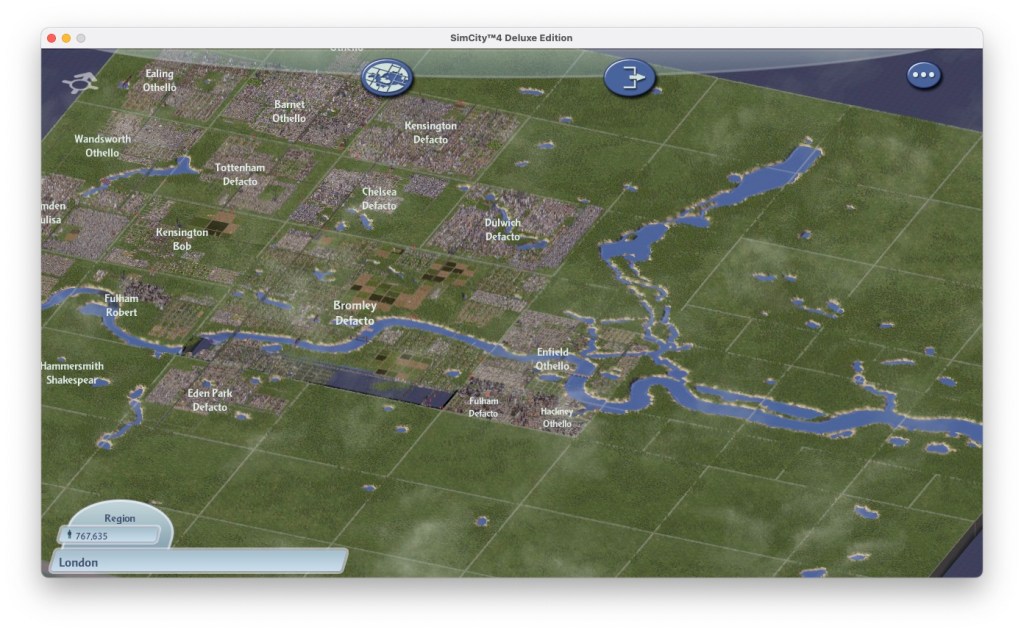
Veterans of the series will have no trouble assuming the role of mayor and will immediately begin laying down the roads, railways, economic zones, and other infrastructure. One notable feature is the addition of interlinked regions of cities even lets players create and manage economies of scale. By building transportation links in a region, cities can share resources, exchange labor pools, trade goods, and benefit from each other in dozens of other ways that weren’t possible in SimCity 3000. This also lets you be more flexible with designing your city, since you have have an industrial focused city, while another can be commercial or agricultural focused. As long as you have strong transport like between the two, you can have a very efficient network of cities. Resources like electricity and water can also be shared, at a monthly cost.
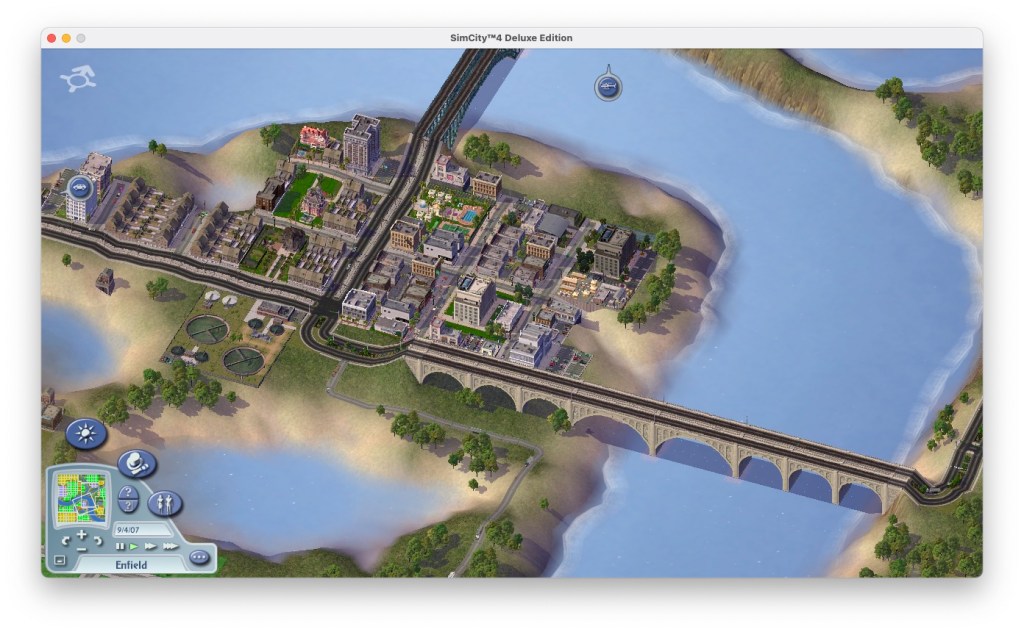
SC4 comes with seven precreated regions, some of which contain existing cities that can be played if you don’t feel like starting from scratch. Some of the remade serve as tutorials which help the player gradually learn the advanced mechanics of SC4.
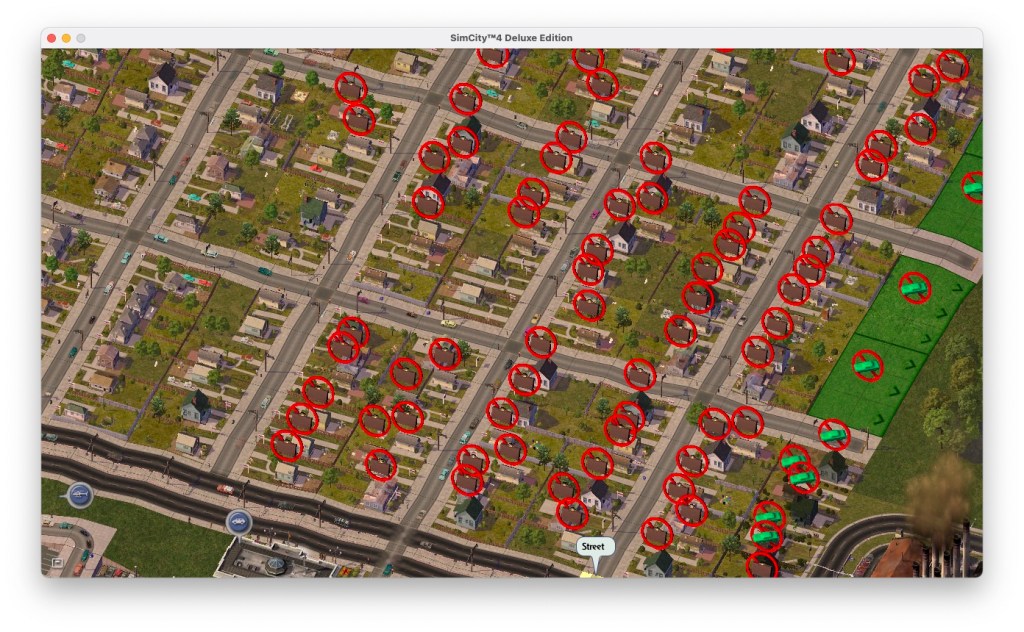
Growth in SC4 is obtained by carefully placing commercial, residential, and industrial districts to encourage new development. There’s a comprehensive system for managing transportation, including roads, highways, rail, sea, and air routes. Traffic management can be challenging but rewarding when optimized, giving a sense of accomplishment when your city runs smoothly. As your city grows, important municipal services such as water, public schooling, and hospitals must be placed strategically to keep your city happy and healthy, as each building can only serve a limited area. Transport will be the first issue you may encounter, such traffic jams can make sims unhappy if your roads aren’t high enough to accommodate, solving this cane done by implementing bus stations, tram, train or monorail lines.
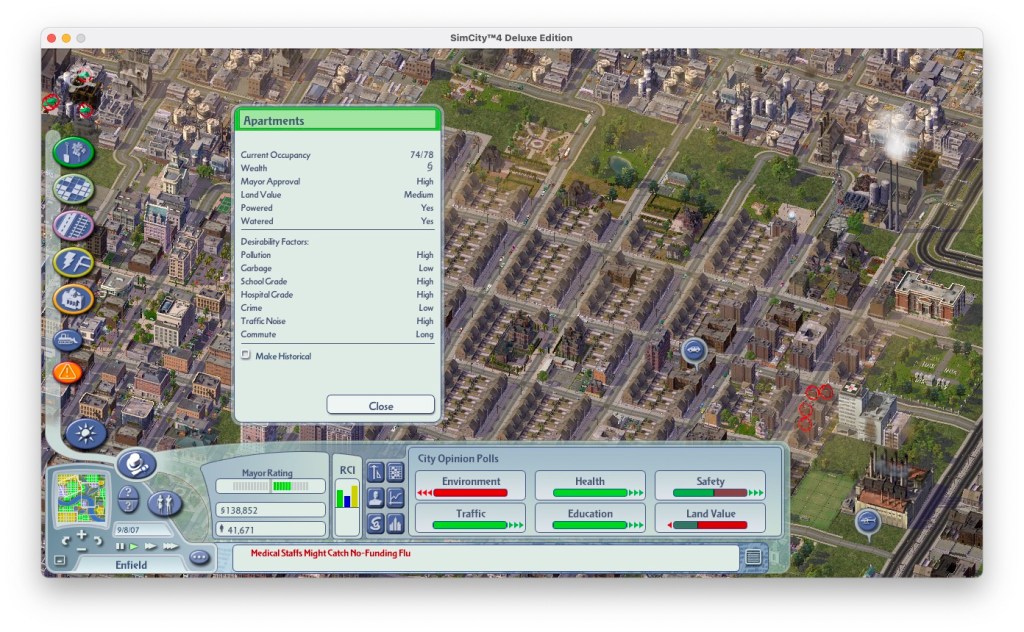
Although you can anticipate their needs, you can save a little money by improving services as complaints arise. Just don’t wait too long to add that water treatment plant or fire station, or your mayor rating will drop drastically and can lead to a population decrease, which means less taxes. All new mayors start with what seems like plenty of cash, but aggressive spending can lead to monthly deficits. Really, your city budget and expensive are the mainbattle here, and it’s difficult to keep themin balance witht he overall income. Slow growth is best, though the game can be too slow at times. It’s difficult to have more than a few hundred dollars cash-positive every month, and with that amount of money little expansion is possible even on the easy difficulty.
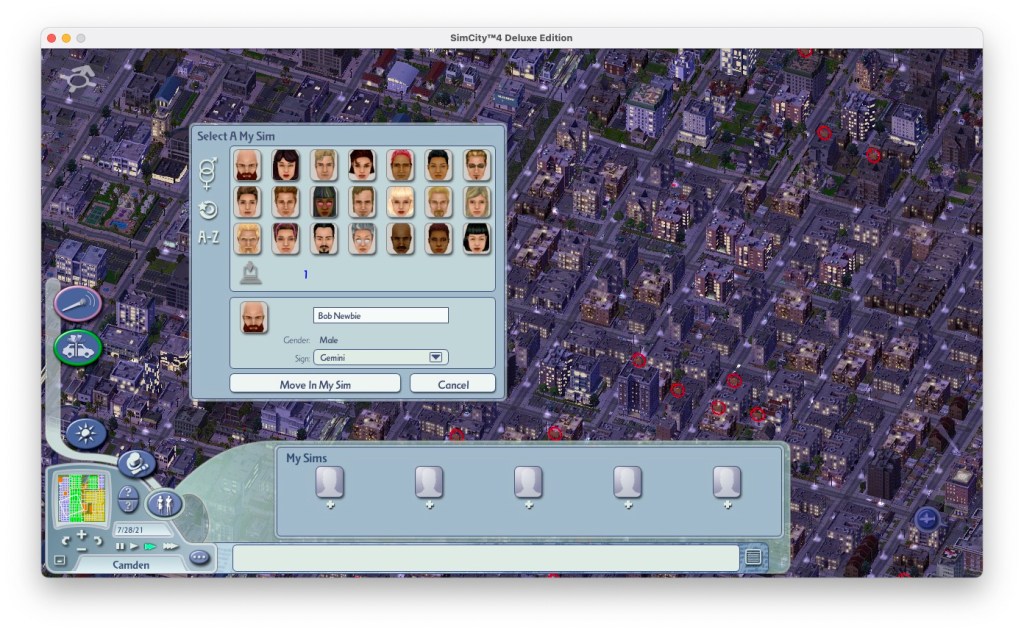
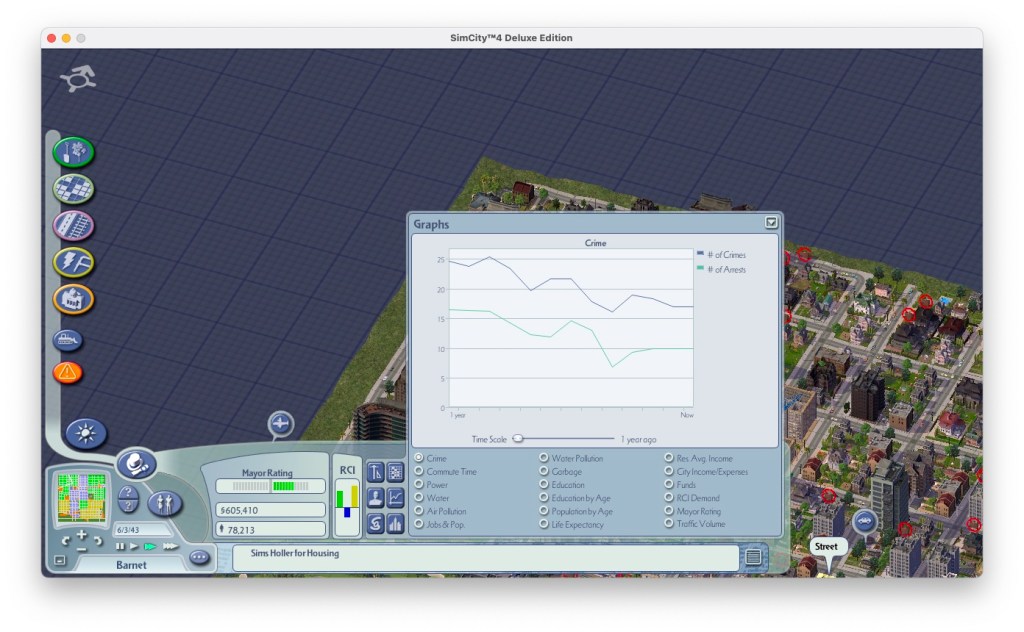
Among the tools at your disposal are graphs , colour-coded maps, and advisors who may or may not provide useful suggestions, these help provide data like which areas have the most serious crime, or which area is well educated or polluted. Residents of the city will also share their desires and frustrations in a number of ways. SC4 lets you place characters from The Sims into your city for more individualised feedback about life in your town. You can place these around the different residential locations of your city, and keep an observation of how rich or poor the different areas are and the success of your sims. They can also get ill and die, providing a reflection of the state of health in that area (pollution and access to hospitals). You might want to place several sims in different areas of economic value, to gauge the overall performance of that area.
Natural and unnatural disasters, including extraterrestrial incursion, present the most dramatic threat to any city. Although rare, meteor showers, lightning storms, and the like can level entire blocks and start fires throughout the city. Despite the damage they cause, these events are an enjoyable showcase of the improvements to the graphics in SC4, The detail available at the closest zoom level is quite striking. Individual Sims can be seen driving to the train station or enjoying a community garden.
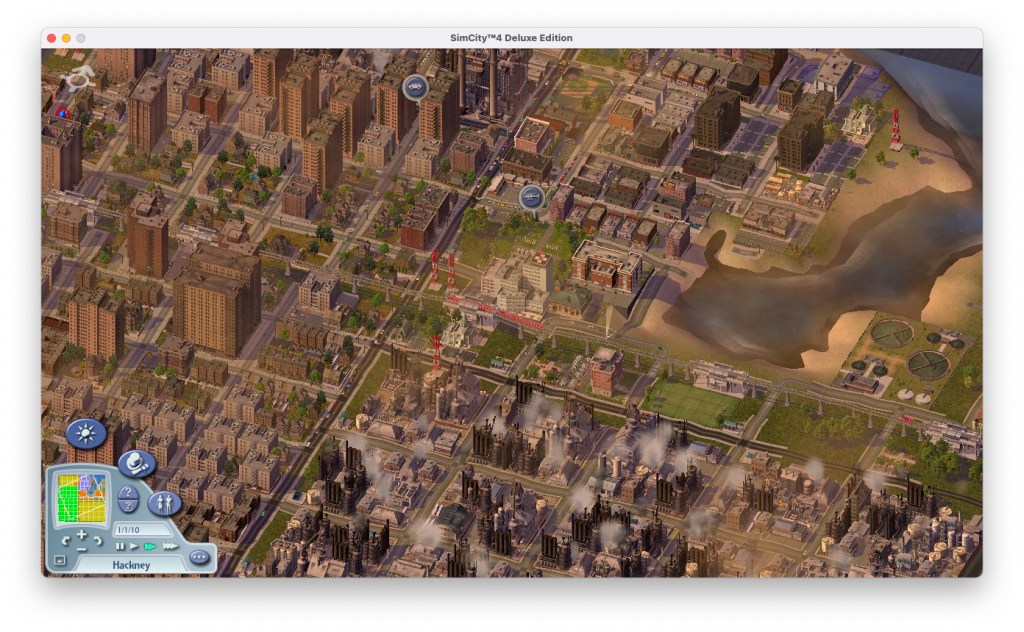
SimCity 4 includes a day to night cycle that’s reflected on-screen, complete with vehicle headlights, streetlights, and midnight basketball games on outdoor courts. If the nighttime view is too dim for your liking, you can elect to forgo the visuals, although your city will still operate according to the cycle. For your listening pleasure, Maxis included a diverse selection of music to accompany your play. Custom MP3 files can be added if you wish to add your own music.
Versions
Windows: The original port of the game, designed for DirectX 7. This version runs fuine on modern Windows 10, but the retail disc releases will require SecuROM which Windows no longer supports. The Steam release of the game removes this requirement in favour of Steam’s own DRM. Also, this game is notorious for crashing, especially on systems that have dual core or multi-core processors (pretty much any CPU from 2006 onwards). Setting the CPU affinity to 1 in Windows Task manager has been known to help, but I still do experience crashes. Always save your cities often, preferable every 5 minutes.
This version does not natively support widescreen resolutions, or higher resolutions but can be customised to run in a specific resolution.
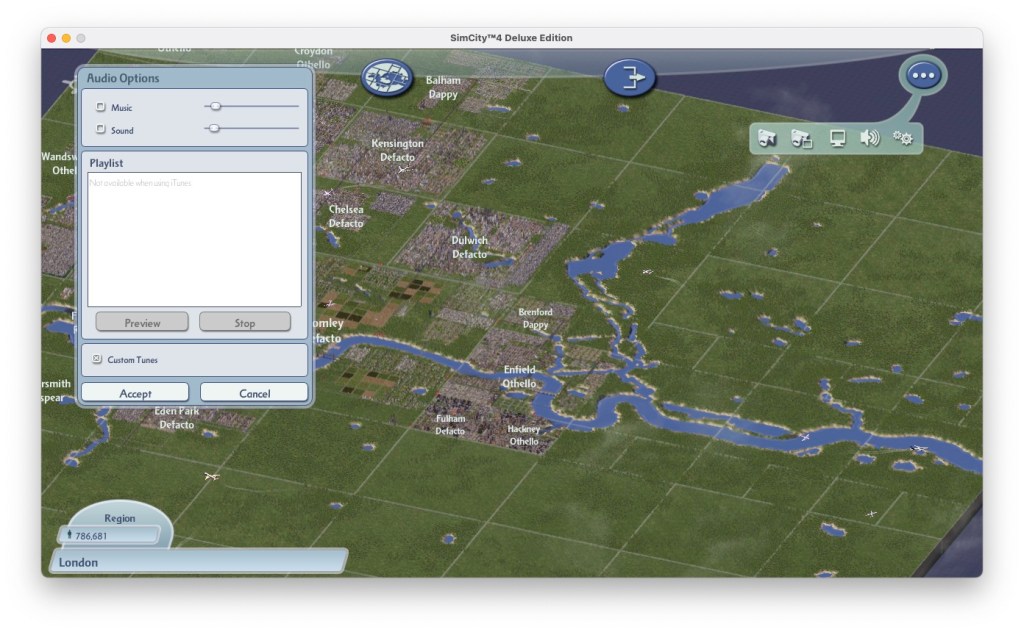
Mac OS X: Simcity was ported to OS X shortly after the release of the Windows version, and was only for PowerPC initially. The port is similar to the Windows version.
This version later received a Universal Binary patch that allowed the game to run natively on the Intel platform without the use of Rosetta, however this required the Rush Hour expansion to be installed.
Aspyr would later rerelease the game on the Mac App Store, and would update it to allow it to run on future versions of MacOS, enabling support for the Metal graphics API that enabled native support for higher resolutions, and 64bit support (though the game does not benefit much from this, even with a lot of mods installed). Music from iTunes can be played by using playlists, although this has issues on alter OS released (tested on Monterey) likely since Apple replaced iTunes with the Apple Music app. Still, This new version is the preferred way to play the game if you have access to a Mac.
And yes, like the Windows version the game can crashes frequently.
Conclusion
SimCity 4 isn’t a perfect game. It has a difficult learning curve, so the poor documentation and limited tutorials might frustrate players. And the gameplay suffers from some pacing and balance flaws. The time commitment to build a megalopolis from scratch is extensive, which might encourage players to just cheat instead. Still this version of SimCity is very highly regarded, and is preferred over SimCity Societies and the 2013 release of SimCity. It might be years before we will see another good SimCity game like SC4.





 Drew1440: Blog