Tag Archives: PlayStation 3

50 Cent: Blood On The Sand

Fiddy’s HD sequel

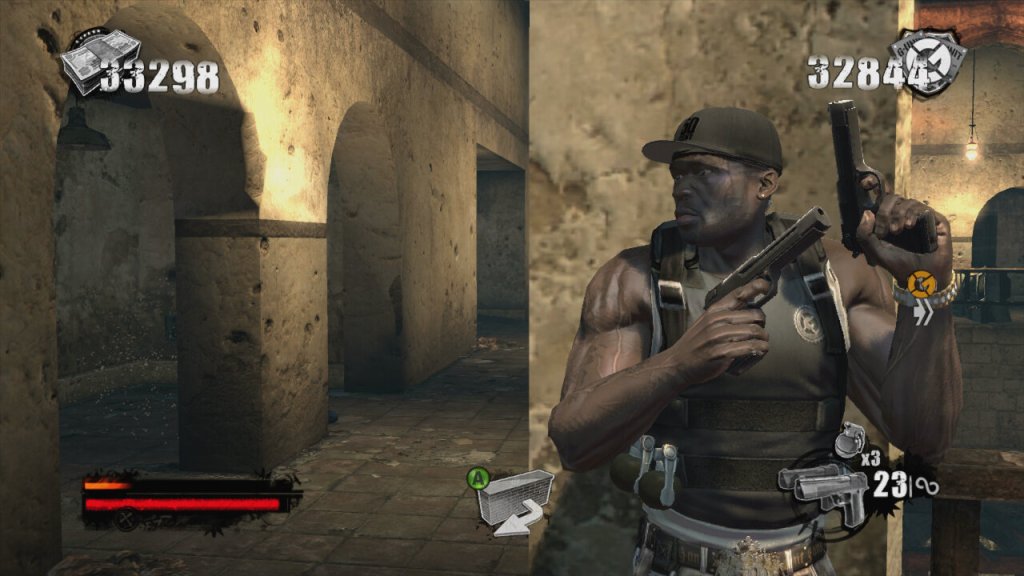
A third person shooter where you lay as 50 Cent, along with one of his bandmates in a single layer campaign. Players control 50 Cent and a sidekick player as they fight through waves of enemies using a variety of weapons. The game features a cover system (Like Gears Of War), dual-wielding weapons, and unique melee attacks where players can execute finishers on enemies to regain health, all whilst 50 Cent’s music is laying in the background.
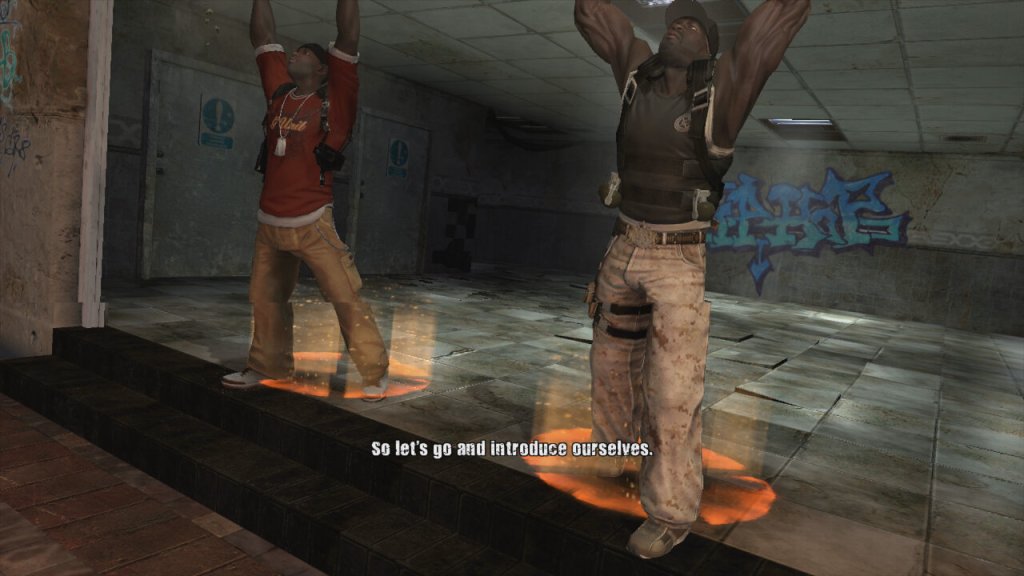
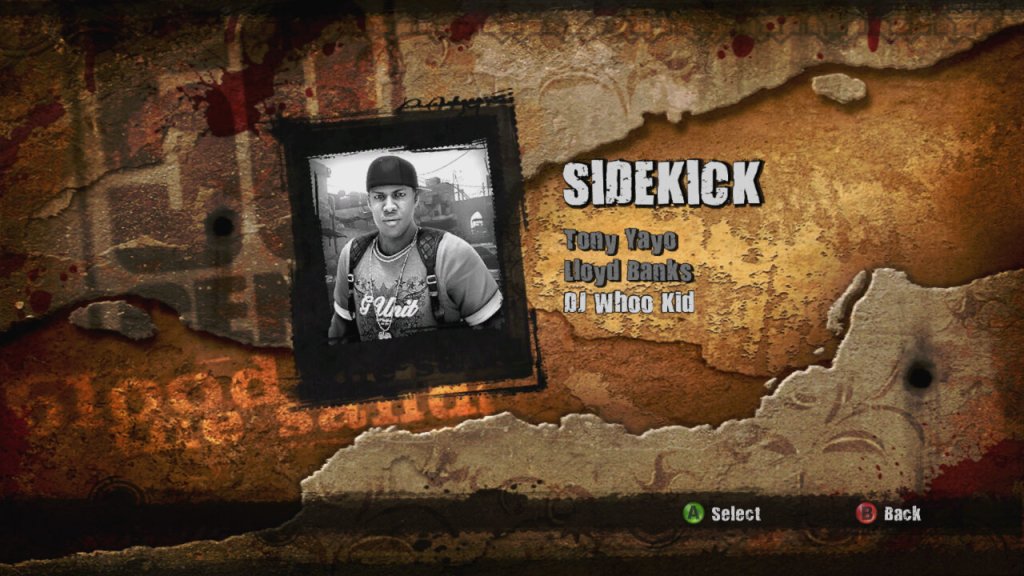
The game supports co-operative play using either split screen or online over Xbox Live. The second player can choose to be either Tony Yayo, Lloyd Banks or DJ Whoo Kid.
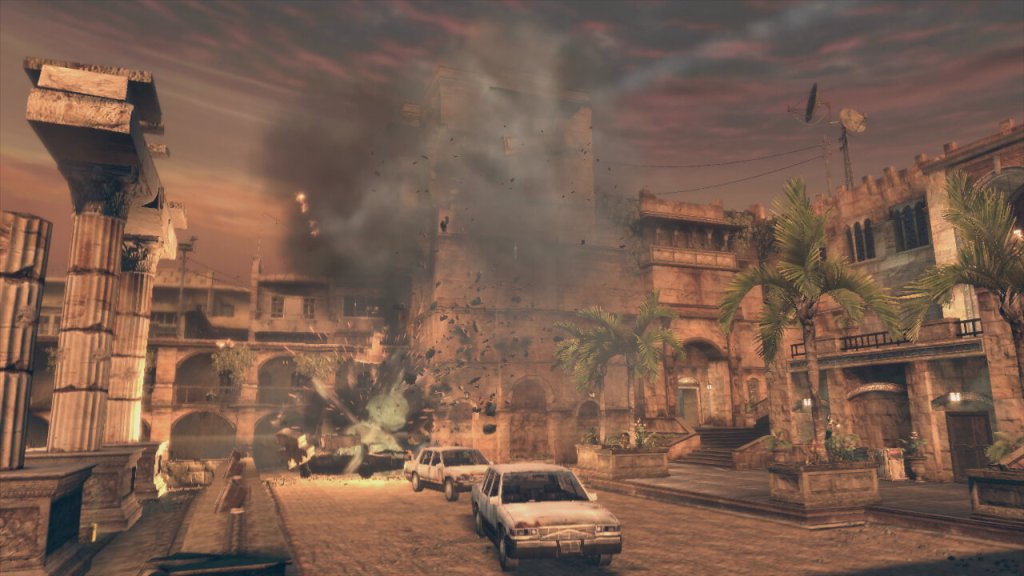
The plot of the game revolves around 50 Cent performing at a concert in a Middle Eastern city. However, their diamond get stolen during a coup. The game follows their quest to retrieve these diamonds from various warlords and factions. It’s not to take seriously and is more fun when played co-operatively with friends.
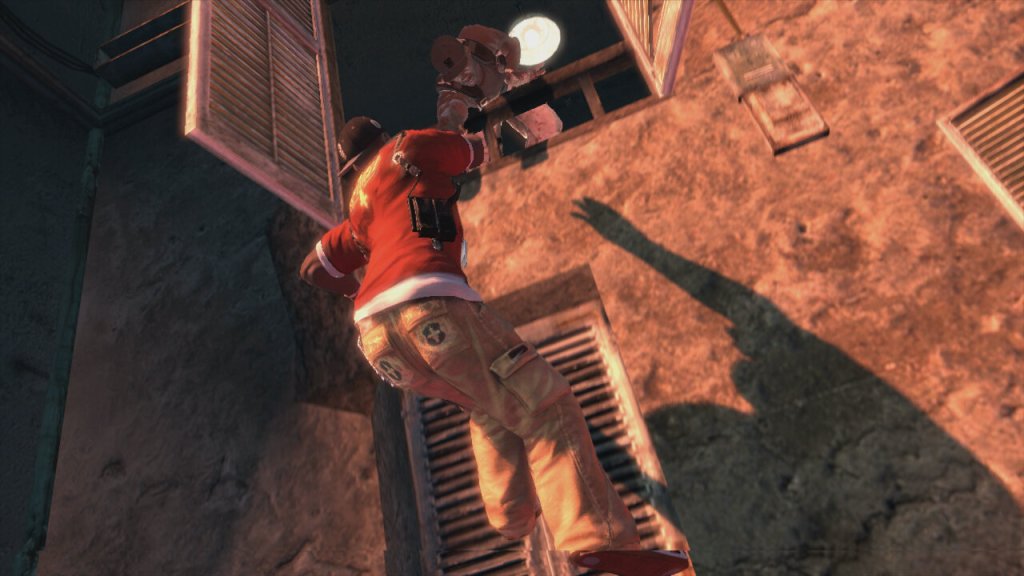
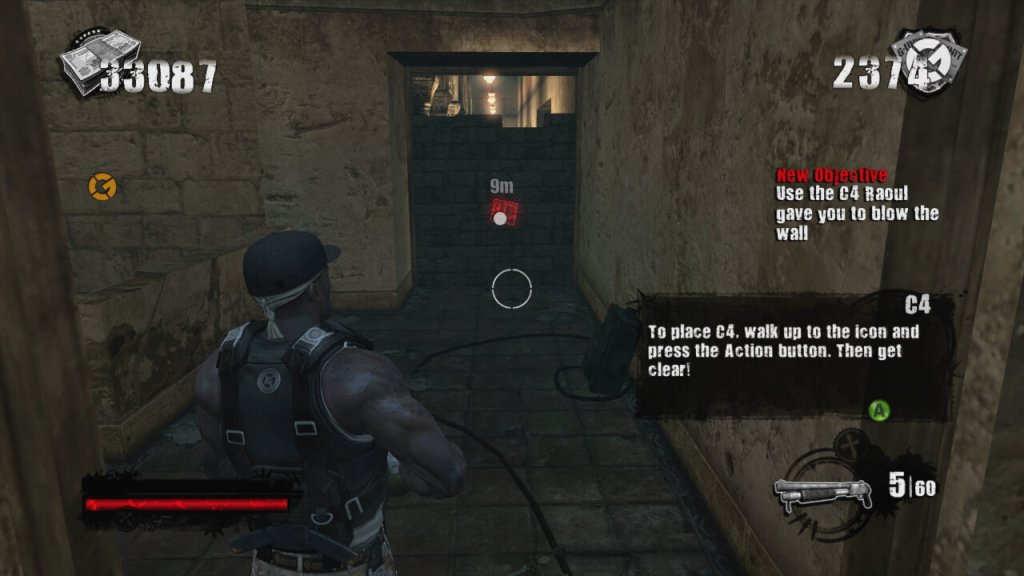
The gameplay itself is very similar to Gears Of War with you controlling 50 Cent in a third person view. The game has an emphasis on high scores, kill combos, and timed challenges set it apart, giving it more of an arcade-style feel compared to other third-person shooters like Army of Two (another console exclusive game to check out) which is used to unlock weapons that can be purchased in later levels of the game via phonebooths. Enemies drop ammo and cash when they are killed and this can also be used to purchase weapons. The game also gives hidden areas that you can loot for more cash, which also contributes to the score at the end of each mission.
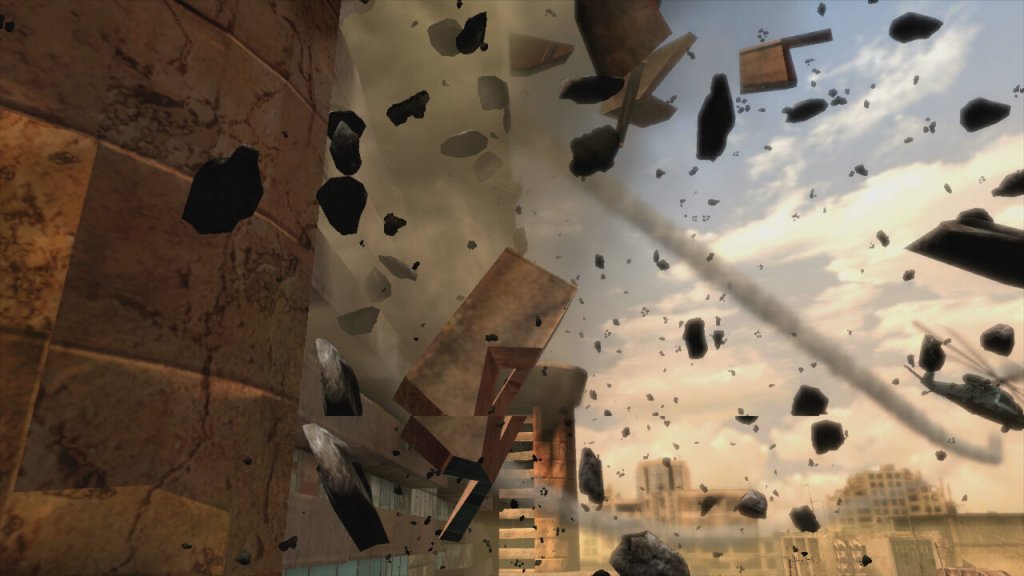
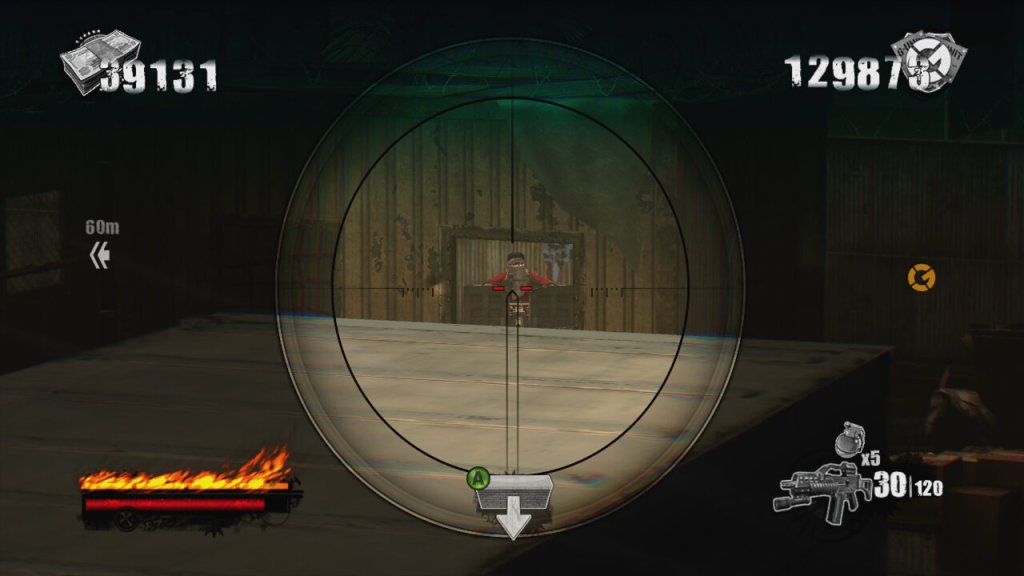
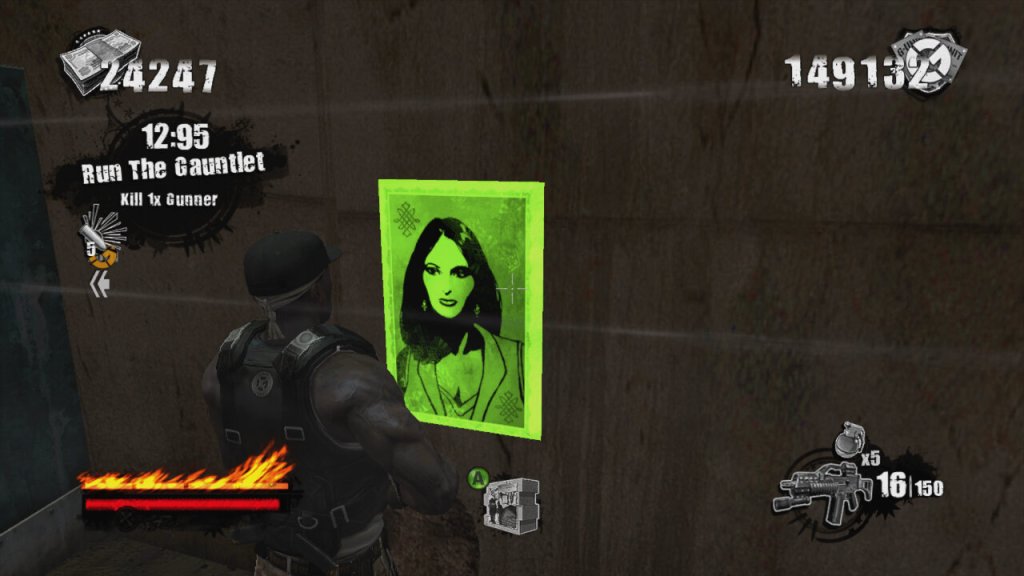
There’s also posters you can take down and targets you can shoot for extra points.

Breaking up the gunplay, you can also engage in hand to hand combat when you are near an enemy. By pressing B or Circle, you can beat the enemy to death when following the button prompts. You can also us the environment to take out groups of enemies.
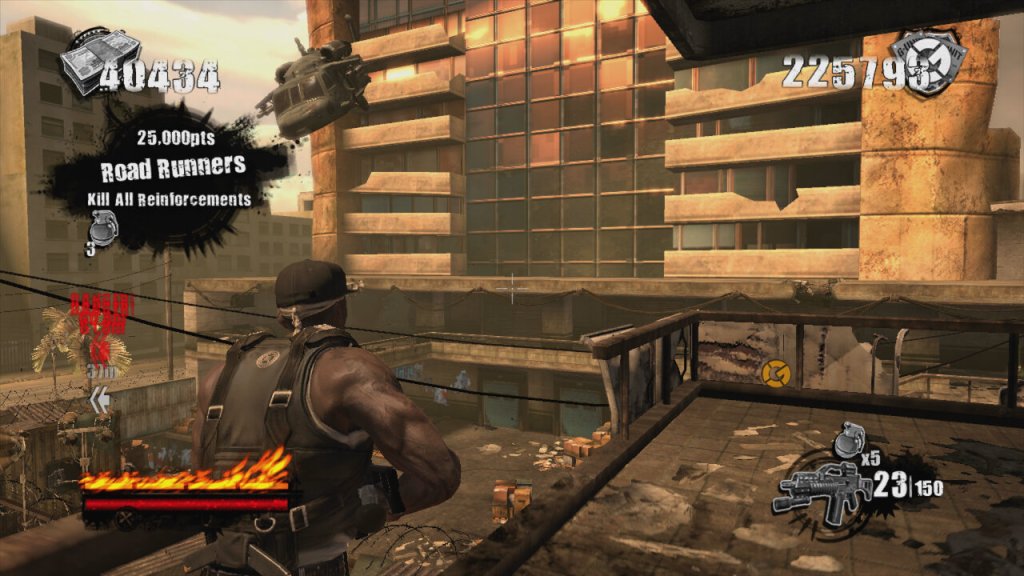
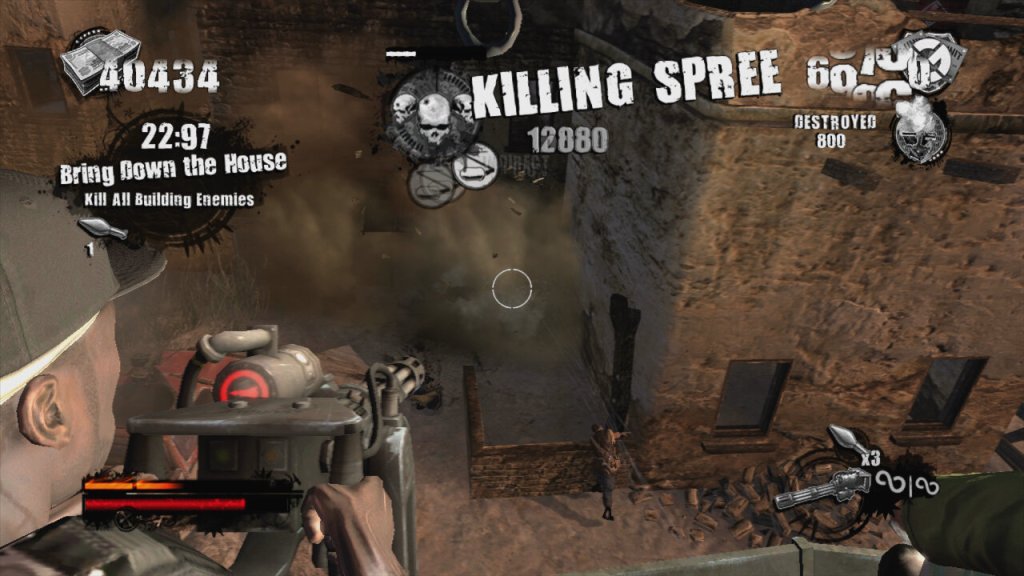
Blood On The Sand was only released on consoles, the PlayStation 3 and Xbox 360, with the latter being made compatible on the Xbox One. Both versions are very similar in terms of performance and gameplay, the 360 version does keep a more stable framerate.
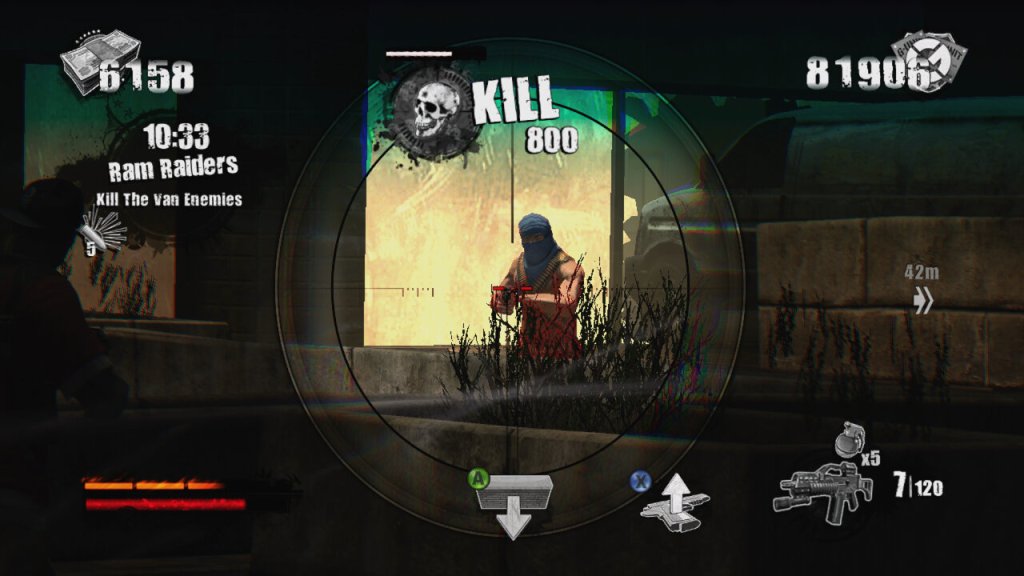
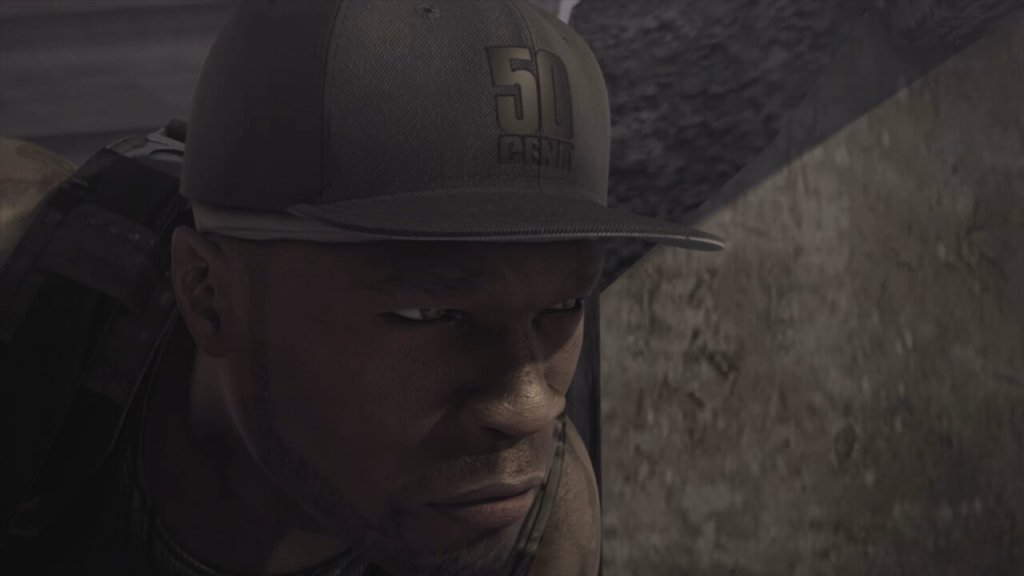
Blood on the Sand isn’t a game that’s going to win awards for innovation or narrative depth, but it delivers a fun, if not slightly repetitive, shooter experience wrapped in the persona of 50 Cent/G-Unit. It’s not perfect, but it’s a solid entry for anyone looking to mix up their gaming library.
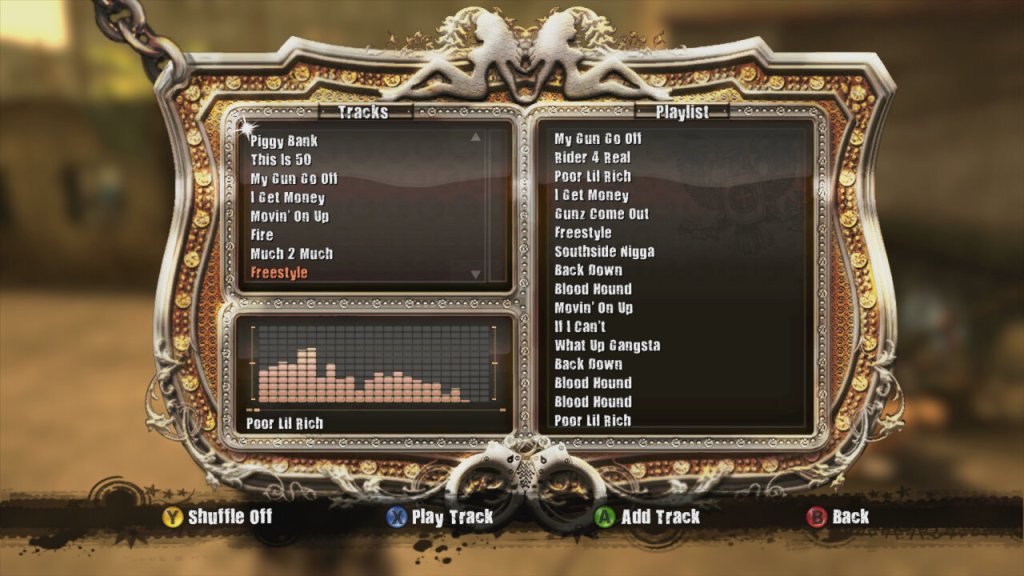
Music featured in the game, If HipHop isn’t your genre of music you can mute the music and use the console to play alternative music.
Dead to Rights: Retribution

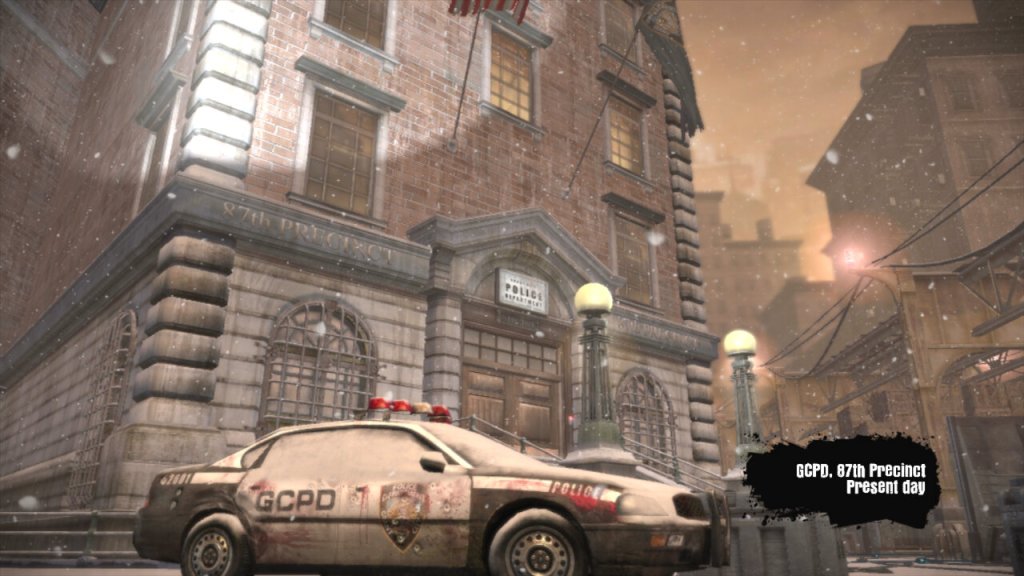
Dead to Rights: Retribution primarily takes place in the fictional and crime-ridden city of Grant City. The game’s environment is characterized by its dark and gritty atmosphere, which reflects the city’s seedy underbelly and ongoing criminal activities. In terms of weather, the game’s setting generally features a consistent and moody aesthetic that contributes to the overall atmosphere.

While the game doesn’t have dynamic weather systems or changes in weather conditions, it typically portrays Grant City as a place shrouded in darkness, with rain-soaked streets, dimly lit alleyways, and a generally overcast and gloomy ambiance. This atmospheric choice aligns with the game’s themes of crime, corruption, and a city in decline. The game’s visual design emphasizes the noir-like qualities of a crime-infested urban environment, and the lack of variation in weather conditions reinforces the consistent tone of the narrative. Players will often find themselves navigating through grim and rain-soaked urban landscapes as they progress through the story and engage in combat encounters with various adversaries.

Jack Slate is the protagonist of the game and a tough-as-nails cop with a no-nonsense attitude and a physique that puts Marcus from Gears Of War to shame. He’s on a mission to uncover a conspiracy involving a powerful criminal organization and bring them to justice. Jack is skilled in both firearms and hand-to-hand combat and is accompanied by his loyal canine companion, Shadow. Most of the game is spent playing as Jack, with a few sections requiring the control of Shadow, either to access hard-to-reach areas, or if Jack is incapacitated as part of the game’s plot.

Shadow is Jack Slate’s faithful canine companion and a key element of the gameplay. Shadow can be commanded to perform various tasks, including attacking enemies, retrieving items, and assisting Jack during missions. Shadow’s presence adds a unique dynamic to the game, as he can help Jack in combat and solve puzzles. Be careful around enemies, Shadow does not have much health and can only attack at close range.

I wonder if this was any inspiration for Riley from Call of Duty Ghosts?

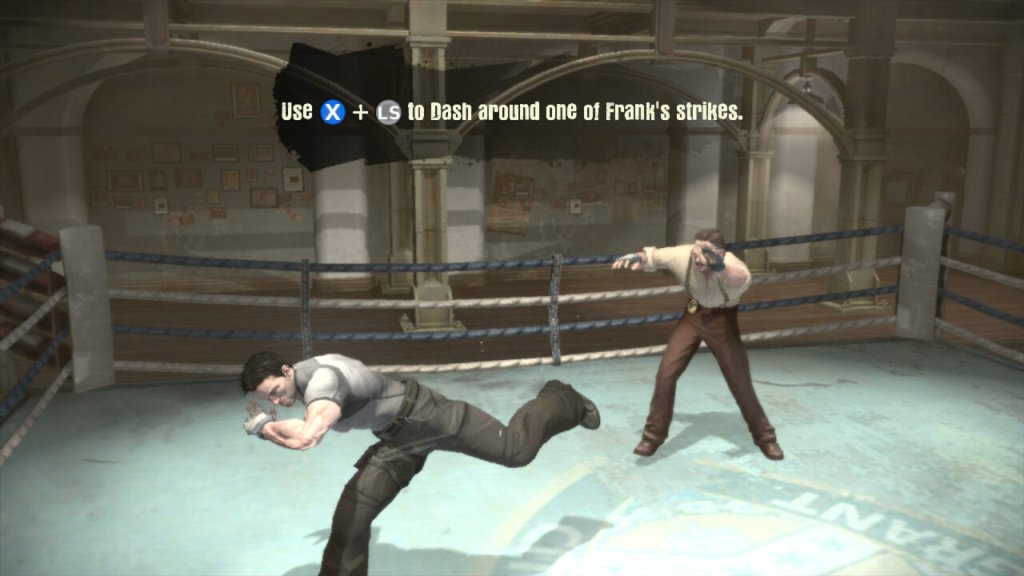
The game’s main focus is hand-to-hand combat, with gunfire taking a side role. Many of the guns you pick up in the game have very little ammo, meaning you have limited use of these weapons and must be used sparingly. You might want to save them for distant enemies instead.

The gameplay tried to mix brawling & melee attacks with shooting, however this gets repetitive fast with very few puzzles to break up the gameplay. There are some sections where you will have to fortify and hold out against a horde of enemies but again there is very little diversity in the gameplay.

Grant City is depicted as a city where corruption runs rampant within its law enforcement agencies and political institutions. Jack Slate’s journey to uncover the truth behind the criminal conspiracy highlights the pervasive corruption that has taken hold, with powerful figures involved in illegal activities.

The game touches on the abuse of power by individuals in positions of authority. The criminal organization known as the Triad wields significant influence and control over the city, and part of Jack’s mission is to expose and challenge this abuse of power.

While not explicitly political, the game’s portrayal of Grant City as a dystopian and crime-infested metropolis can be seen as a commentary on the societal decay that can result from political corruption and a lack of effective governance.

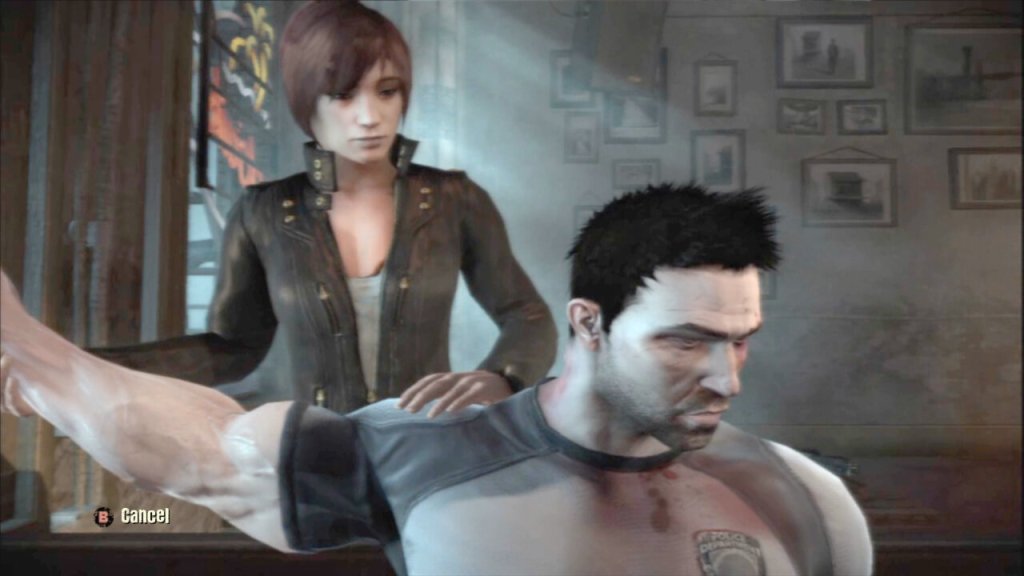
The character of Cassandra Hartz (seen below), a journalist investigating the criminal activities in Grant City, indirectly highlights the role of the media in exposing corruption and holding those in power accountable. Her presence in the game alludes to the importance of investigative journalism in a society plagued by political and criminal misconduct. Most of this is explained through the game cutscenes with her.

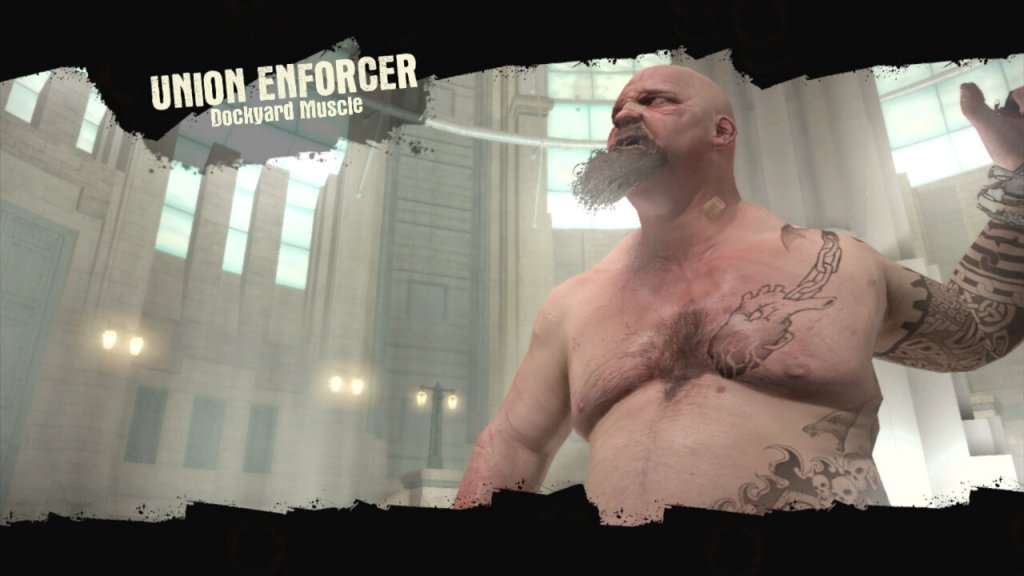
The type of enemies found in the game will change as you progress, initially facing against the Triads, the GAC later become the main focus of the game who are much more difficult to take down. The GAC were the Anti-crime units that became corrupt, whilst the Triads are your average gang where you must take out the boss to defeat them.

The game was only ever released on consoles, with no PC version released. Although It can be played on the PS3 or Xbox 360, Sadly it remains on seventh-generation consoles as we have yet to see it released or made compatible with the Xbox One. It also appears to be the final game in the franchise, as no new games have been released.

FUSE

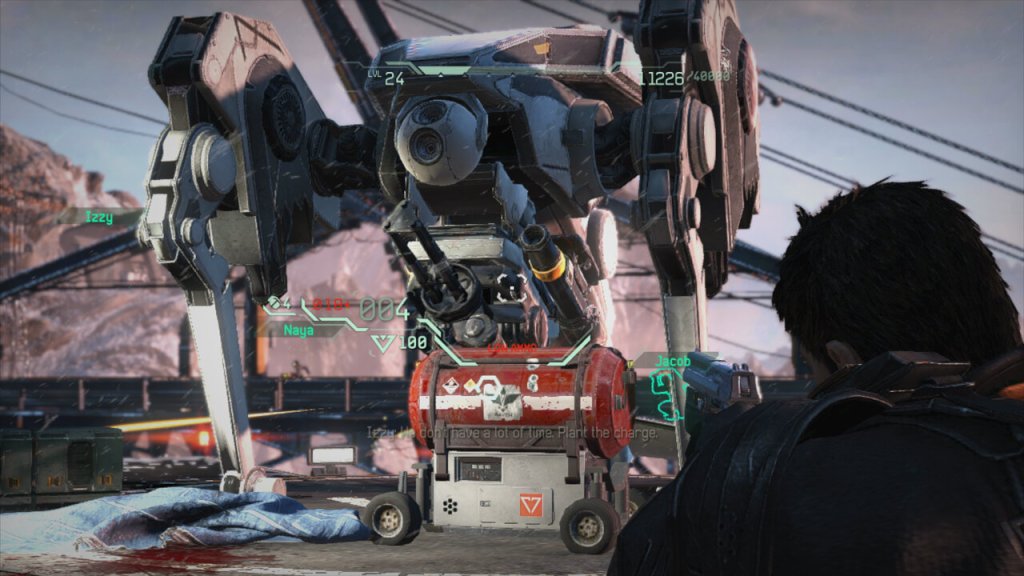
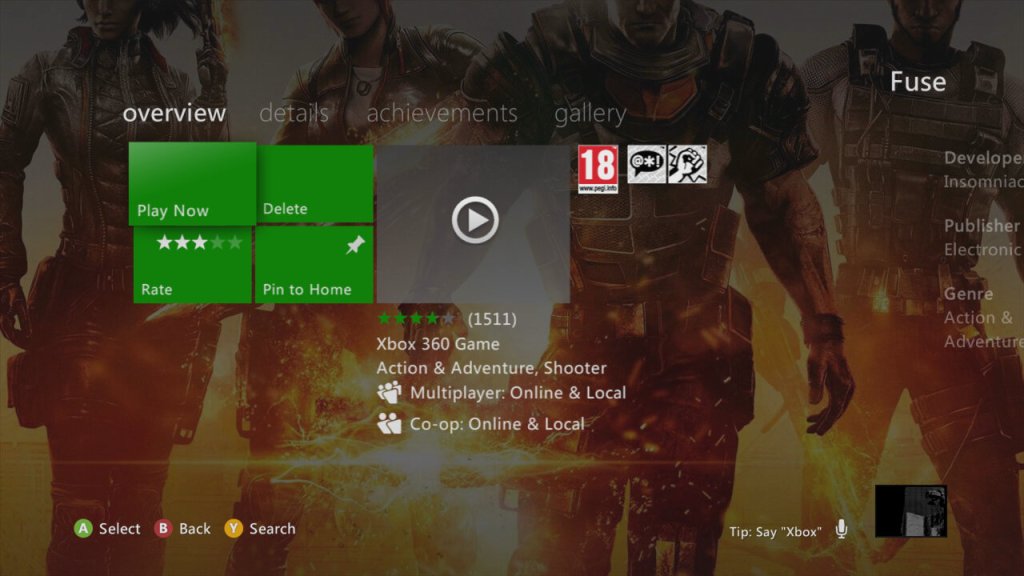
FUSE is a third-person shooter video game developed by Insomniac Games and released in 2013 for the Xbox 360. The game follows a team of four agents known as Overstrike 9 who are tasked with recovering an alien substance called Fuse that has been stolen by a rogue paramilitary organization.

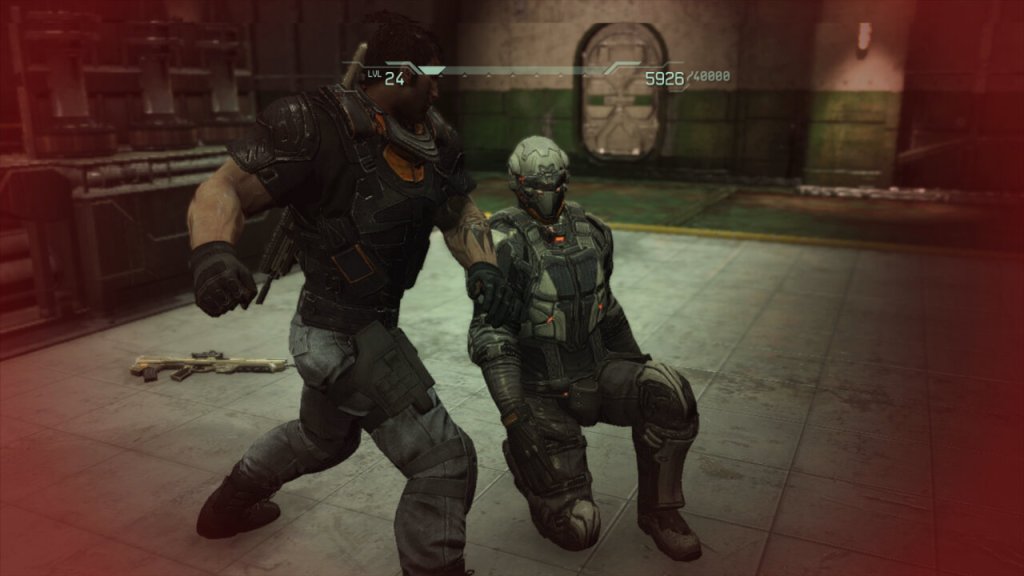
The gameplay in FUSE is primarily focused on co-op multiplayer, where players control the different members of Overstrike 9 with unique abilities and weapons. The game also features a single-player mode where the player can switch between characters on the fly, and an online multiplayer mode that includes cooperative and competitive gameplay. Co-op is where “Fuse” was supposed to shine, but it felt like a missed opportunity. The AI wasn’t the sharpest tool in the shed, making the single-player experience kinda meh. Plus, the lack of real innovation in the co-op mechanics didn’t help it stand out.

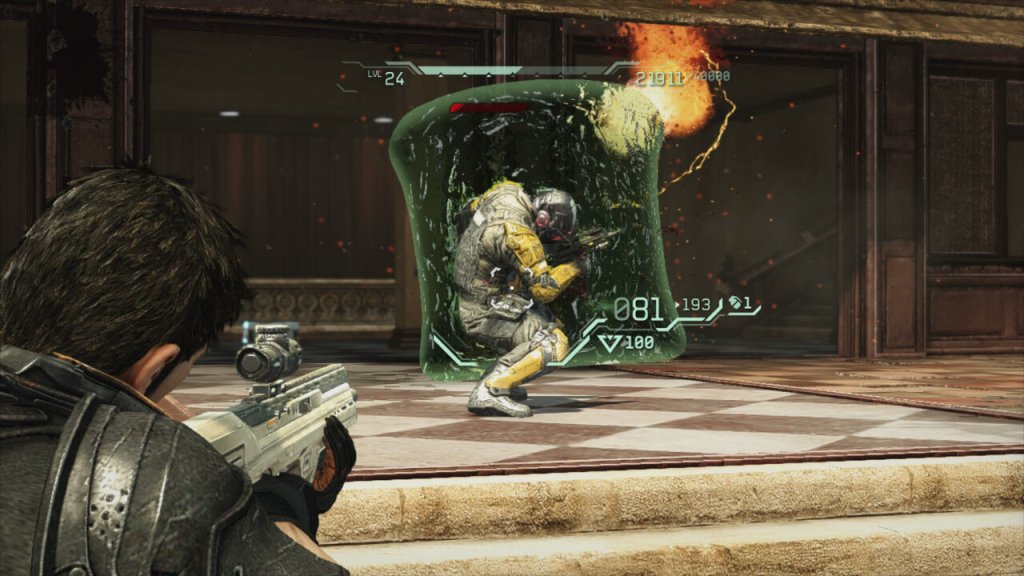
The gameplay in FUSE is solid, with responsive controls and satisfying gunplay. The game also features a cover system that is easy to use and adds a tactical element to the combat. The game’s weapons are diverse and interesting, with each character having access to a unique weapon that can be upgraded over time.

However, one of the main criticisms of FUSE is that it doesn’t do anything particularly new or innovative. While the game’s co-op gameplay is well-executed, it doesn’t introduce any new mechanics or ideas to the genre. The game’s storyline is also fairly predictable and doesn’t offer any surprises.

Additionally, the game’s graphics and presentation are somewhat underwhelming, especially compared to other games released around the same time. The game’s environments are often repetitive and lack detail, and the character models and animations are somewhat stiff.

Characters

One of the strengths of FUSE is its varied cast of characters, each with their own unique playstyle and abilities.

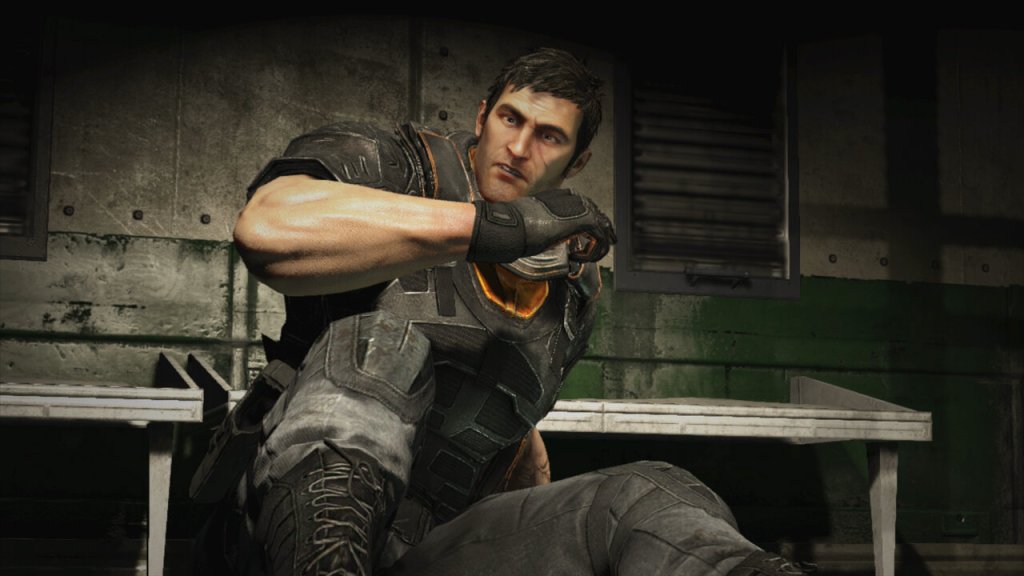
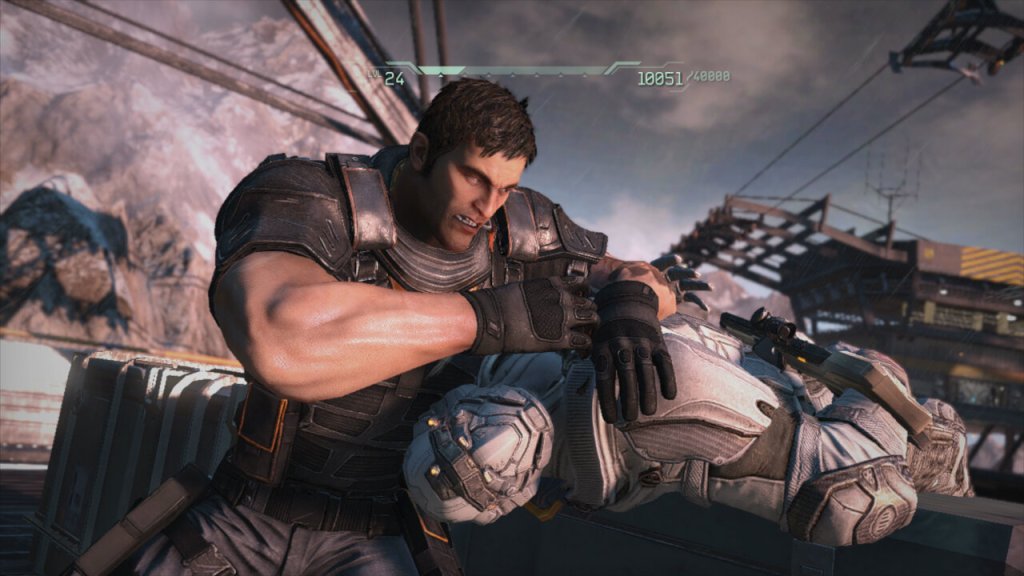
Dalton Brooks – the team leader who specializes in heavy weapons and defense. In combat, Dalton is a heavy weapons specialist, favoring powerful and explosive weapons such as rocket launchers and grenade launchers. He is also the team’s tank, with the ability to deploy his Magshield, a powerful energy barrier that protects him and his teammates from incoming fire. Outside of combat, Dalton is portrayed as a somewhat gruff and reserved character, but with a dry sense of humor. He has a complex relationship with Naya Deveraux, his former lover who betrayed him and the team in the past.

Throughout the course of the game, Dalton confronts his troubled past and the fallout from his relationship with Naya. As the team faces increasingly dangerous foes, Dalton must overcome his own inner demons and learn to trust his teammates in order to succeed. Overall, Dalton is a strong and compelling character. He’s also pretty huge, looking like a Gears Of War character.


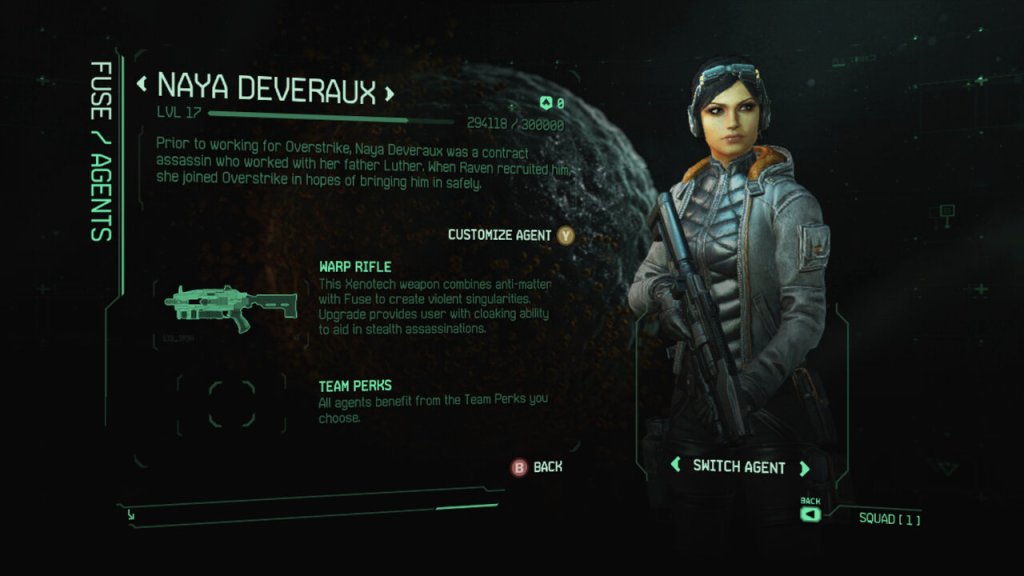
Naya Deveraux – the stealthy assassin who can turn invisible and use her enhanced agility to take out enemies silently.

Naya’s gameplay revolves around her expertise in stealth and precision. She can use her warp rifle to create wormholes, allowing her to manipulate enemies’ positions and open up strategic opportunities for her team. With her assassin skills, Naya is lethal at close range, and players can utilize her abilities to flank enemies and take them down swiftly and silently.

As with the other characters in “Fuse,” Naya’s powers and abilities are meant to complement the rest of the team, encouraging players to work together and use each character’s unique traits to overcome challenges throughout the game.


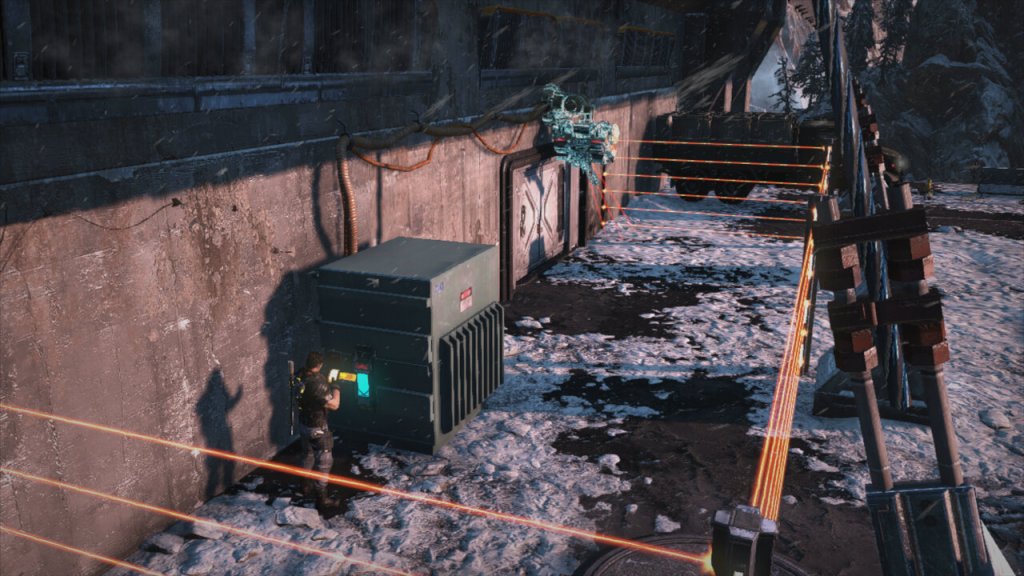
Izzy Sinclair – the tech expert who uses her Fuse-powered energy barriers to protect the team and heal them in battle. Izzy’s playstyle focuses on using her unique weapon to control the battlefield. By creating black holes, she can disorient and suck enemies into the void, leaving them vulnerable to attacks from her and her teammates. Additionally, her technological skills are essential for hacking systems, gaining access to secure areas, and providing support during missions.


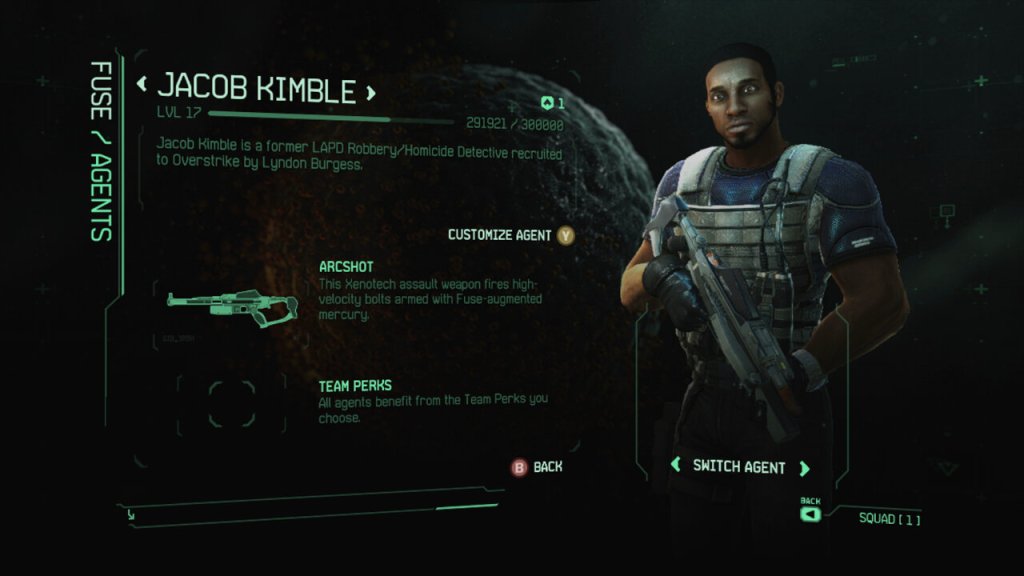
Jacob Kimble – the team sniper who can create miniature black holes to suck enemies into or fire devastating shots with his Fuse-powered weapon. Jacob’s playstyle focuses on precision and tactics. As a sniper, he can take out enemies from a distance and eliminate high-priority targets with ease. His Arcshot crossbow, in particular, allows for some creative and devastating attacks, as the electric bolts can chain between multiple enemies, causing collateral damage.

Versions

FUSE was only released on consoles, it was never officially released on the PC. There isn’t really any major difference between the two consoles, as the game was released late into the console’s lifetime, it’s a pretty well-optimized game.

Xbox 360: Works fine and can be installed to the HDD through the dashboard, but is not compatible with the Xbox One

PlayStation 3: Performs just as well as the 360 version, clearly Insomniac have used their expertise from their previous PS3 titles to take advantage of the Cell processor.

Tekken Tag Tournament

Tekken 3 but with a new tag mechanic and a huge roster.

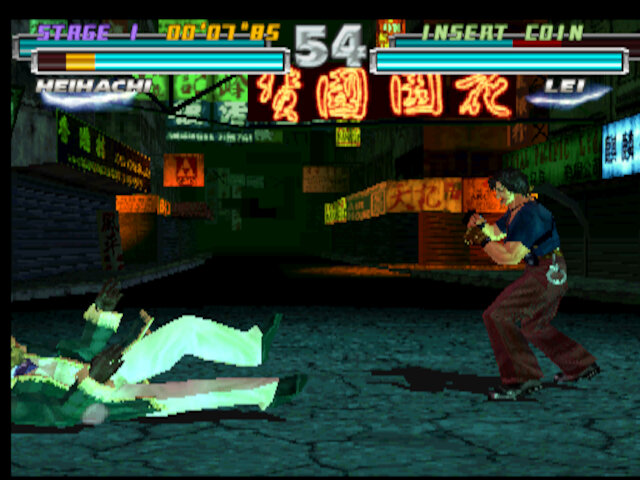
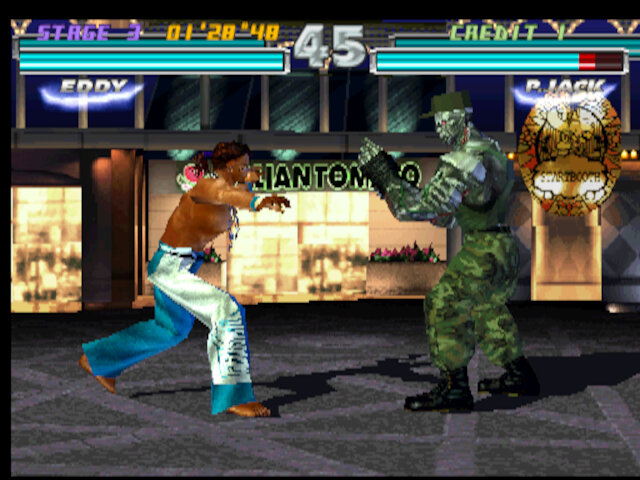
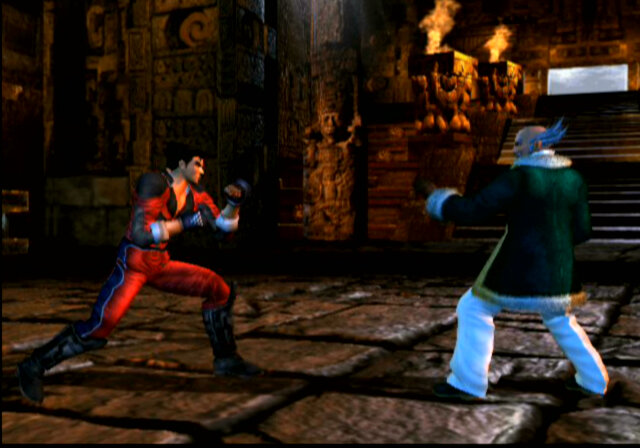
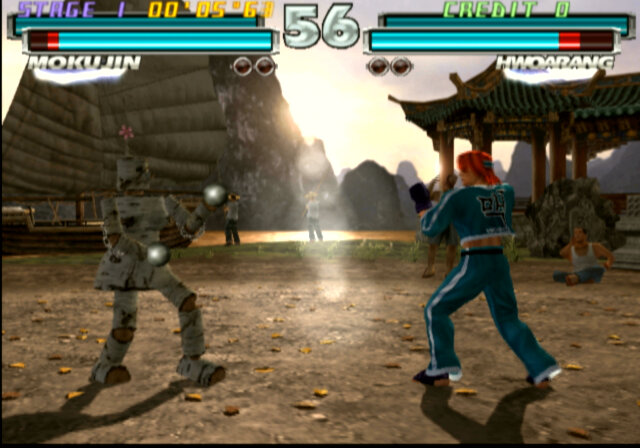
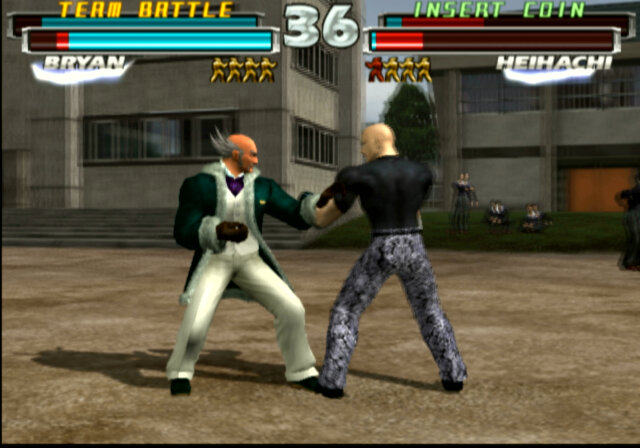
Tag Tournament takes the existing Tekken formula and adds a new tag team mechanic, allowing up to four characters to fight against each other. Its also one of the few games to be released for three generations of PlayStation hardware (sort of, The System 12 arcade board is an overclocked PS1 board.)

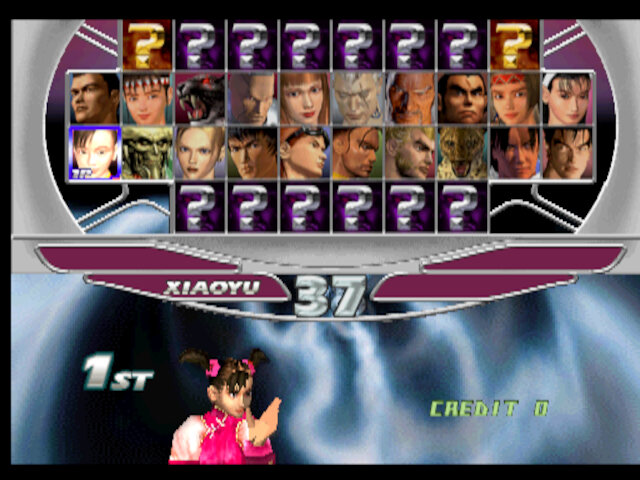
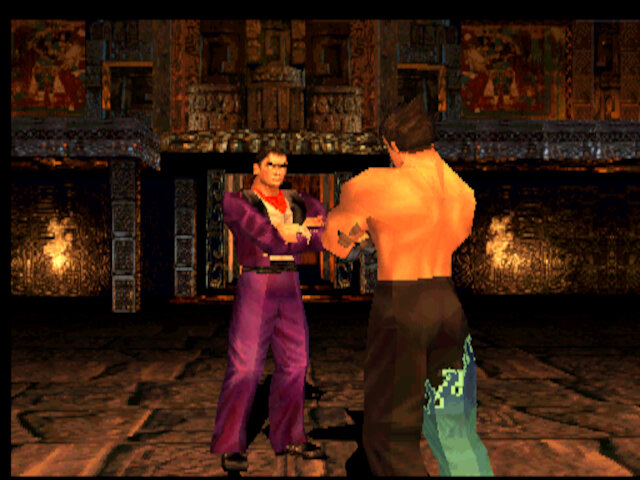
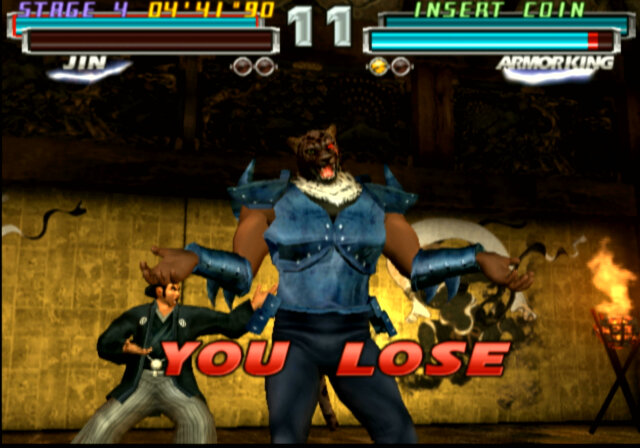
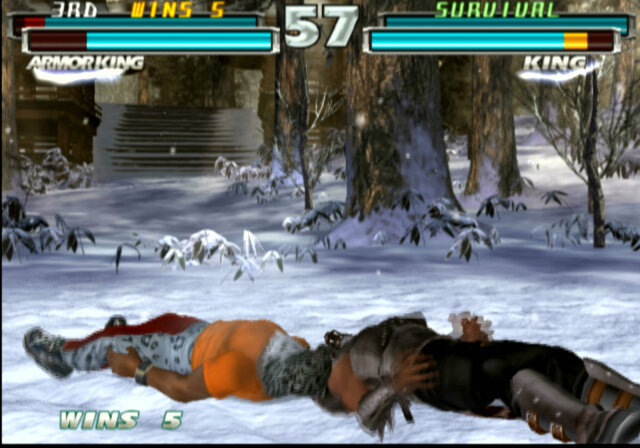
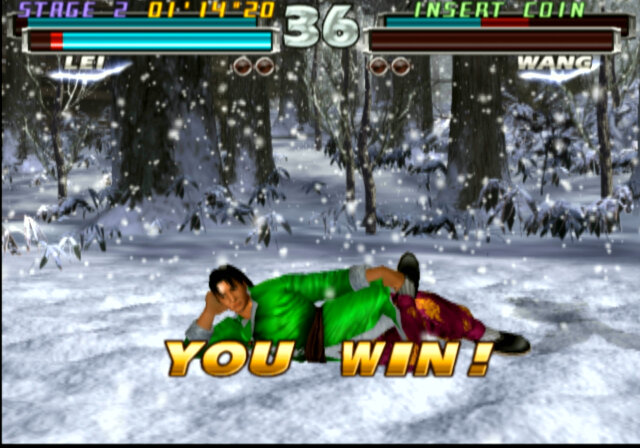
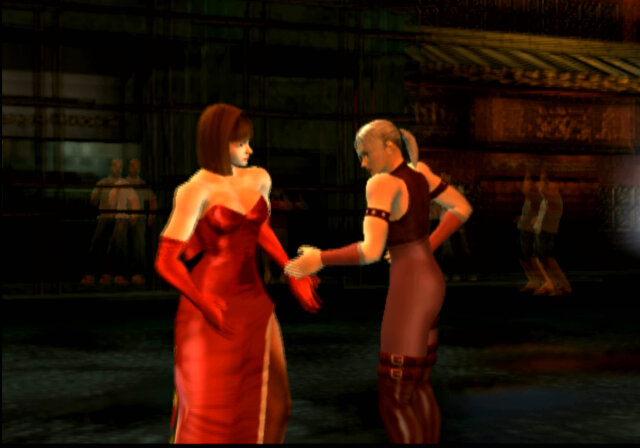
The fighter roster is stacked with an insane lineup of characters, many of which all featured in the first three installments of the Tekken franchise. You’ve got your classics like Kazuya, Jin, and Heihachi, all ready to unleash their devastating combos. Its like a Tekken greatest hits reunion featuring everyone’s favourite characters from previous games, but there are a few omissions like the original Jack, King and Armour King. Still Namco have also implemented Easter eggs for when you choose a certain par of characters, that affect the characters animations before and after the fight. Pairs like Nina & Anna, Kazaya & Heihachi and Michelle & Ganryu are a few examples to name that do this this, and it gives a nod to the Tekken backstory that fans of the franchise will be invested in.

Some pairs will also have unique moves that can be used to attack and switch out at the same time. These require a button combination along with the tag out button to trigger.

Versions

Arcade

The original release of the game was in the arcade, like other early Tekken games. The game ran on the Namco System 12 board which was an upgraded PlayStation with additional memory and a faster clocked processor. This allows for multiple fighters to be featured onscreen, required for some of the character move sets. This version of the game also features its own soundtrack which is played on Namco’s own C352 sound processor that was also used in their System 23 arcade boards.

Many characters are locked in this version and are on a time based unlock, where characters gradually come available as the arcade machine is powered on. There is a MAME cheat to unlock all the characters upon clearing the EEPROM that can be used instead.

PlayStation 2

Tag Tournament was one of the launch titles for the PS2, and remained exclusive to the console for the home release until the HD PS3 version. This version features completely upgraded graphics that take advantage of the PS2’s Graphics Synthesizer

Unknown is a fully playable character in this version and has a unique feature where she can emulate another fighters moves.

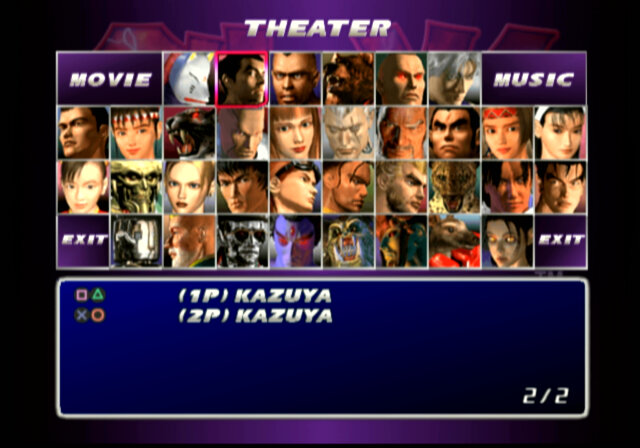
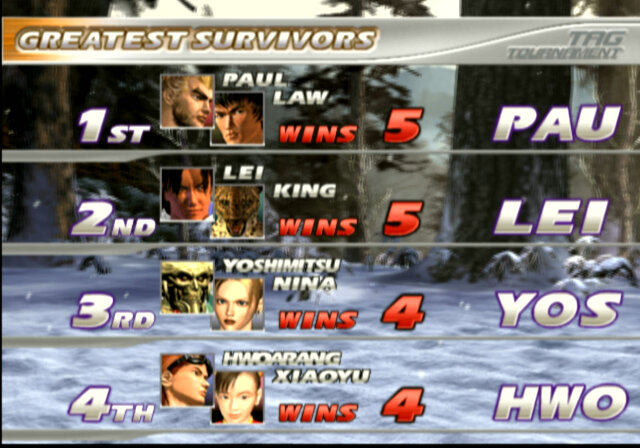
This version also features a few unlock-able features and game modes.

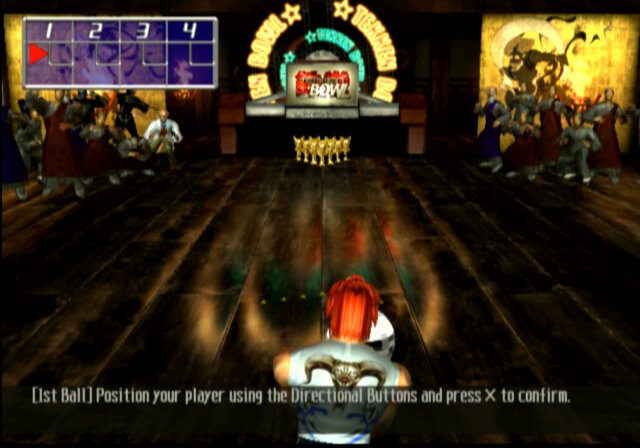
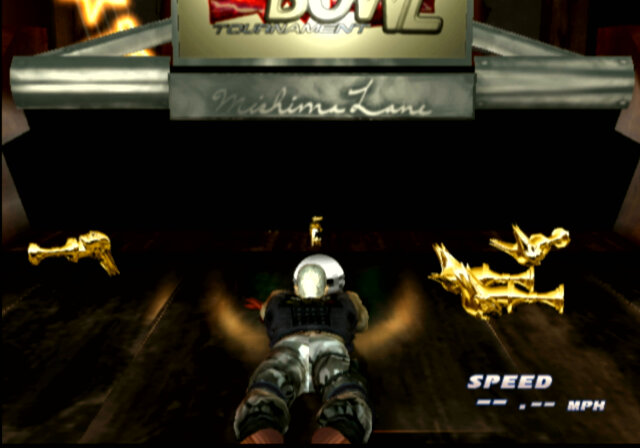
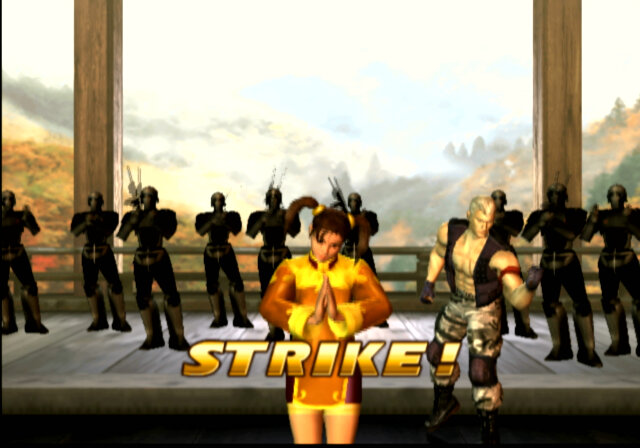
Tekken Bowl: In Tekken Bowling, players would select a character from the roster and take them to the bowling alley. The character would replace the traditional bowling ball, and players would control their chosen character’s movement and angle as they approached the lane. The objective was to knock down as many pins as possible in each frame.

The mini-game incorporated the unique abilities and characteristics of each character into the bowling mechanics. Characters would have their own distinct bowling animations and techniques, adding a touch of personality to the gameplay. Some characters might have special abilities or moves that affected the trajectory or speed of the “ball” they threw.

Namco would later create a Tekken bowling spin-off for smartphones.

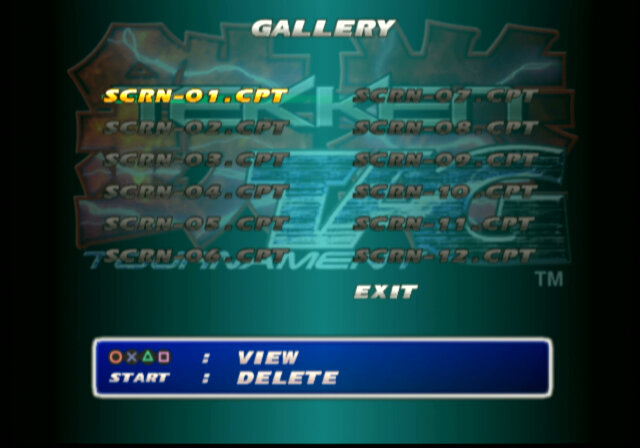
Screenshots: A screenshot can be captured and saved to the memory card, useful when you want to capture for character whilst they’re in the middle of a combo. A screenshot can be taken by pressing the pause button and selecting screenshot.

Pair Play mode: Another feature is the pair play mode, which allows two players to fight with their own controller against the CPU. Four plays can also play in a VS match if the PS2 multi-tap controller is used.

Lastly each character has a unique ending sequence which is rendered within the game engine, except for unknown which is a pre-rendered MPEG2 FMV.

PlayStation 3

Namco ported the game to the PS3 in 2012, and was released as part of Tekken blood Vengeance. Inserting the Blu-ray disc would prompt you to install the game as a bonus feature of the disc.
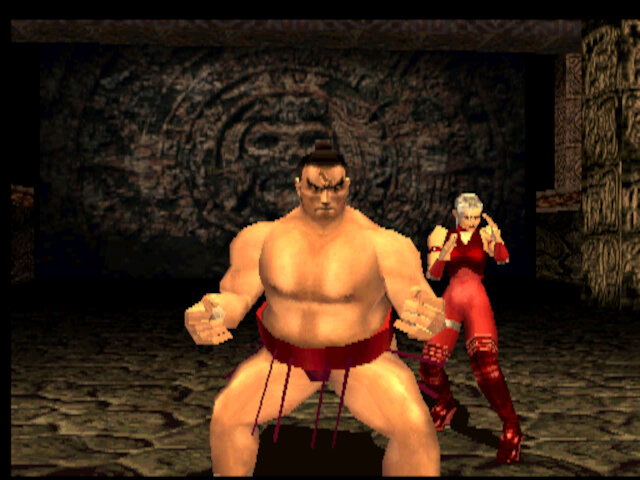
This version featured upscaled graphics running in HD resolution, trophy support, and is a port of the PS2 version. The soundtrack mostly remains the same, though there are some differences in composition. Sadly there is no online play over the PlayStation network, which would have made a nice addition though it would have suffered a limited population, as this game was not released standalone. Rather it was treated as a bonus.
Conclusion

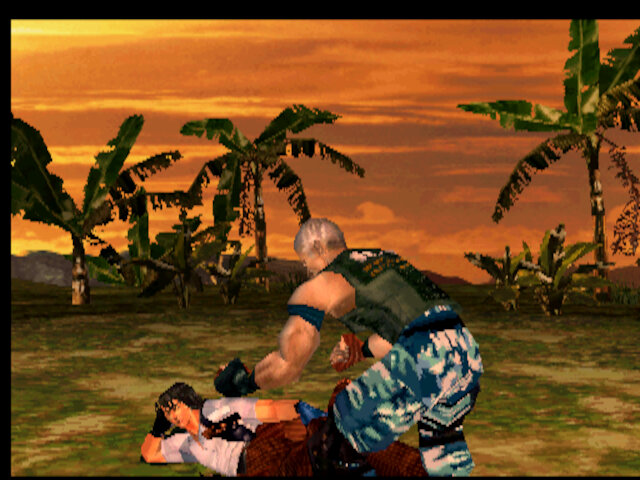
Tekken Tag Tournament is an absolute knockout of a game. It’s a high-energy, pulse-pounding experience that’ll have you hooked from the moment you pick up the controller. Whether you’re a casual fighting game fan or a seasoned pro, this game delivers the goods. The Tag Tournament formula would be repeated in 2011 with the release of Tag Tournament 2 for the PS3, Wii U and Xbox 360.