Tag Archives: Sega AM3

Manx TT Superbike

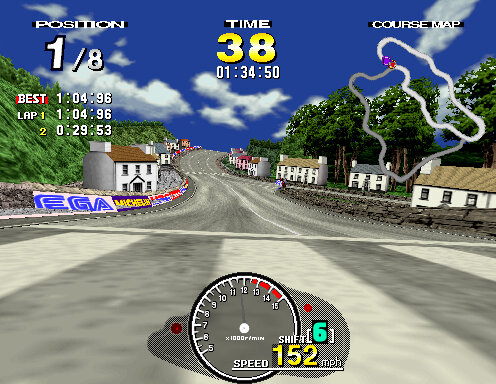
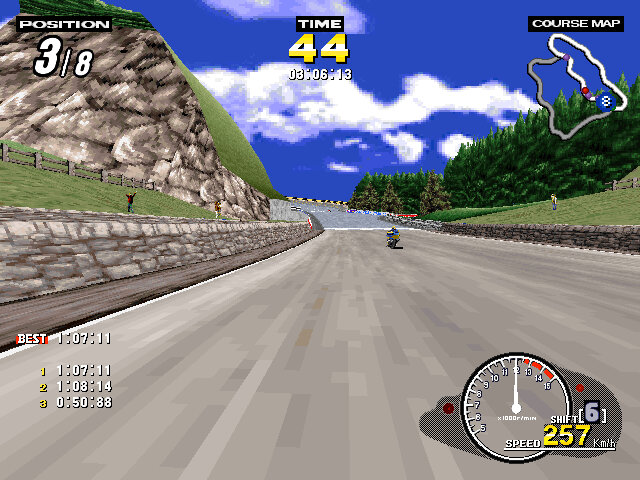
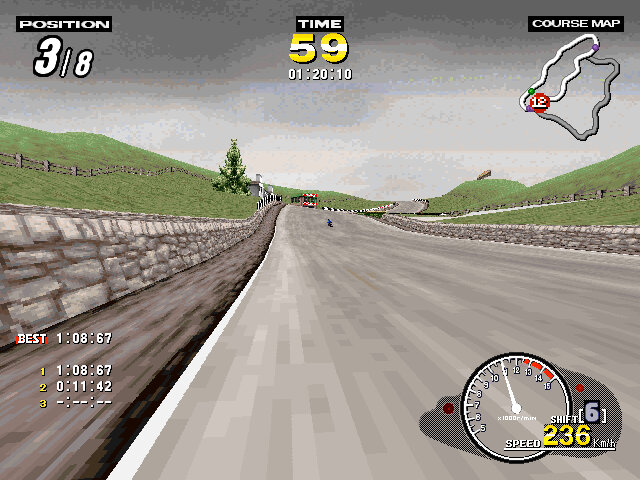
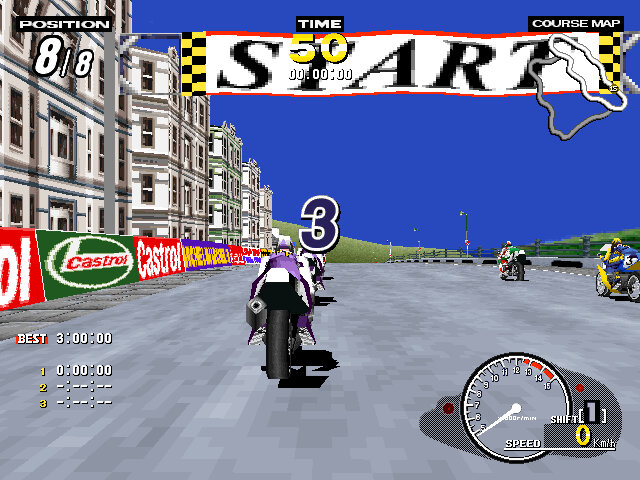
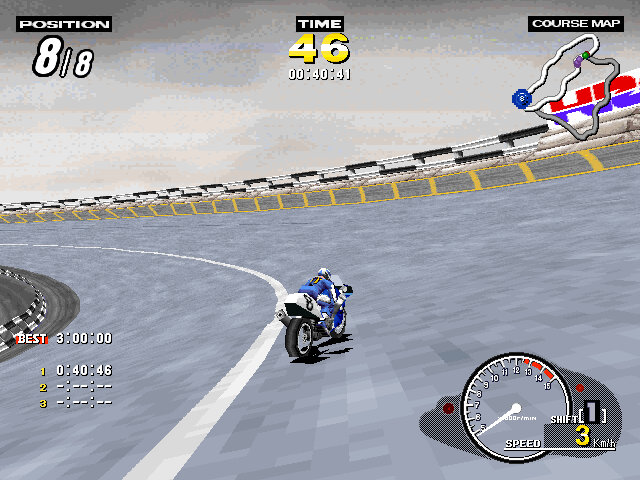
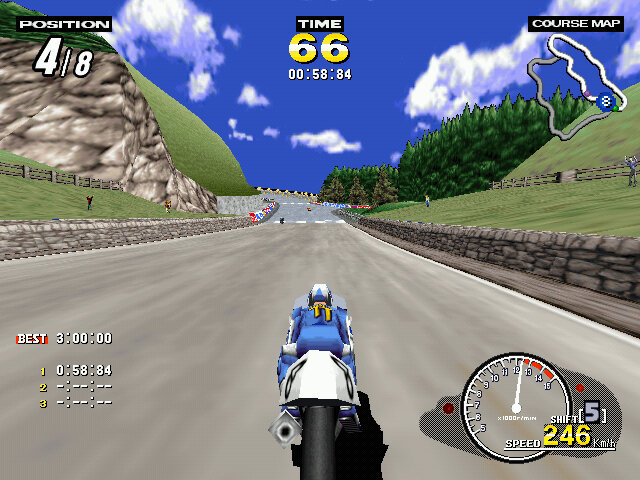
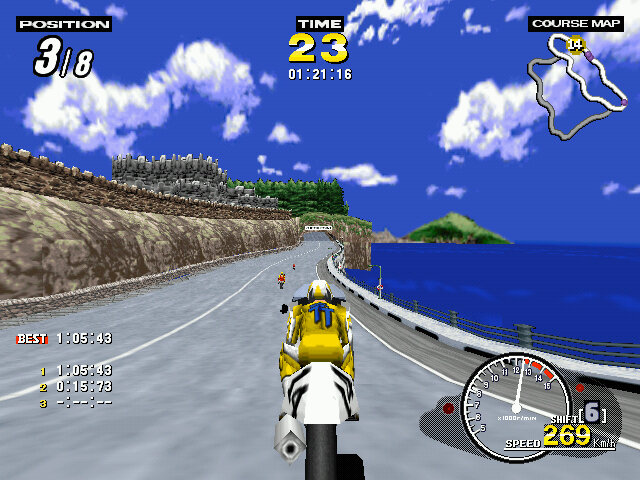
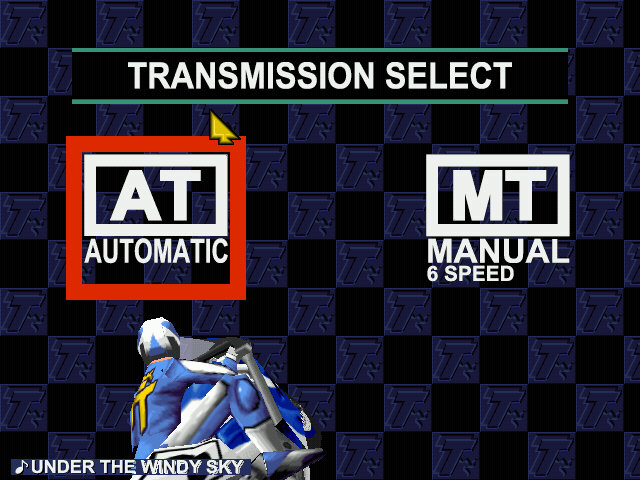
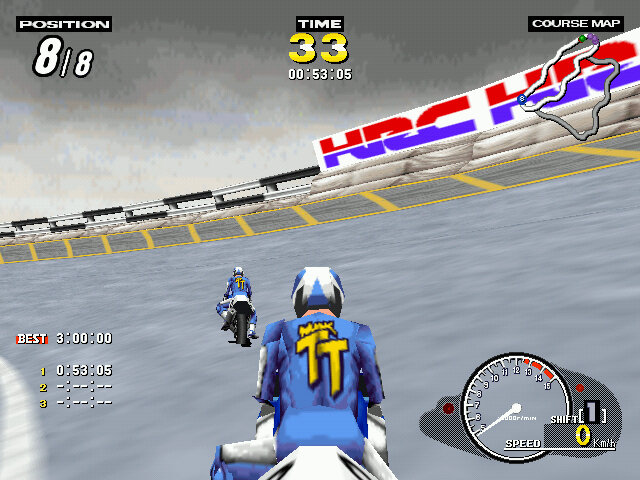
An arcade style racing game released in 1995, aimed to replicate the Isle of Man TT – a motorcycle racing event. Very similar in spirit to Daytona USA which was based on the real Daytona speedway, and Indy 500.
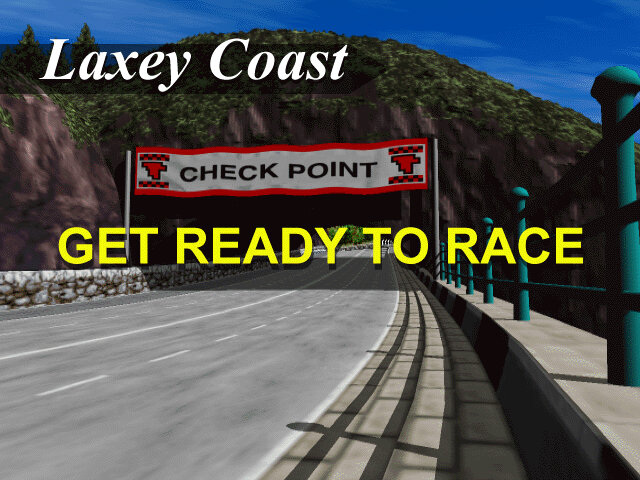
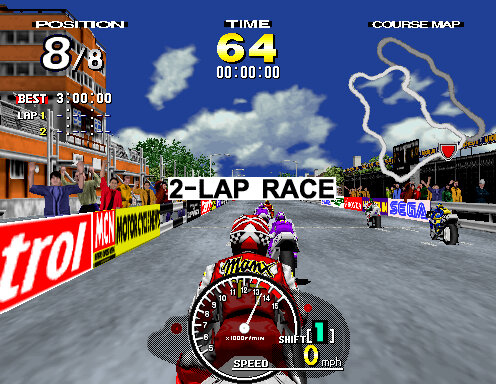
Two courses are offered, Laxely Coast and T.T Course, the latter being the actual track used in the Isle of Mann races. Both tracks share sections with each other and will split and re-join into their own different paths.
The home versions feature two additional tracks that are part of the PC/Saturn mode, these are reverse-mirror versions of the two arcade tracks and can only be selected in that mode. These tracks are also set in the early evening in the Saturn version, and early morning / dusk in the PC version.

Time Trial: Similar to time trial featured in other racing games, choose a track and a bike and try to get the lowest time. On the arcade version you have to hold the brake button when selecting a track to active time trial.

Console / PC Exclusives modes

Practice Mode: Similar to arcade mode, choose a track and your bike which will have a unique stats for speed, acceleration and handling.

Challenge Mode: a tournament mode where you have to race on all four tracks, coming in a 3rd or higher in each one. The superbike challenge is unlocked after completing this mode.

Versions

Like other Sega games of the era, this title was relased to the arcades first, then to their Saturn console and eventually to Microsoft Windows.

Arcade

The original arcade release runs on the model 2 hardware, specifically the 2A version. This version was considered to be graphically superior of the three versions but is the most basic in terms of content, featuring only two courses and just the arcade and time trial mode. The Model 2 emulator is the most popular way to play this version of the game, with the MAME driver making steady progress but still unplayable in some regards.

Really for a home port, the game could have done with further tracks being added to increase the replay value of the game.

Sega Saturn

Sega ported the game to their home console of the era, the Sega Saturn in 1997. This version introduced new features including an FMV opening sequence and additional race modes. There are also options to change the bike model, which have unique stats across the different models. The game’s graphics were considered to be impressive for the Sega Saturn’s capabilities, with colorful and detailed environments that recreated the feel of the arcade version.

Windows

This version supported both DirectX 5 and 3DFX Glide, the latter gives a visual difference that makes it similar to the arcade version sans the frame rate. It seems the game will only render up to 30fps. Still the game can run at 640×480 which is higher than the Saturn or even the Arcade version.

Multi player is supported in this version and can be done over a variety of channels. IPX, TCP/IP, Modem and Serial connections are supported. This can be done via virtual box of you use the PCap option between two 86box VMs, linking it to the VMware virtual network adaptor (8 is typically the local adaptor) then create an IPX session. It may also be possible to map to the serial port in the near future.
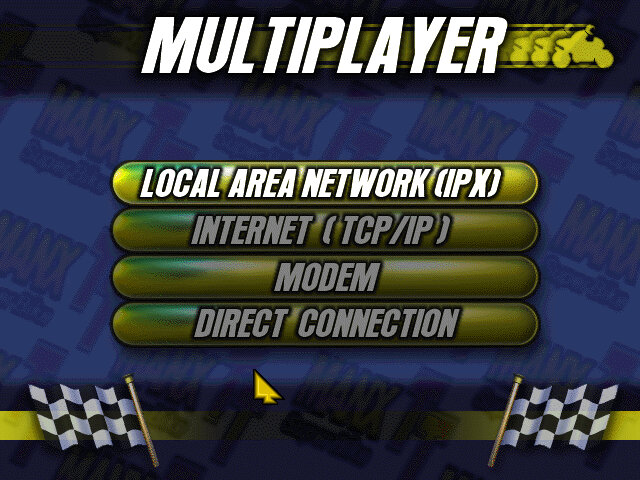
I believe up to 8 players can playing a single session, to this would require three machines or more. Unallocated players will be replaced with an AI enemy, similar to single player mode.

DirectX Version
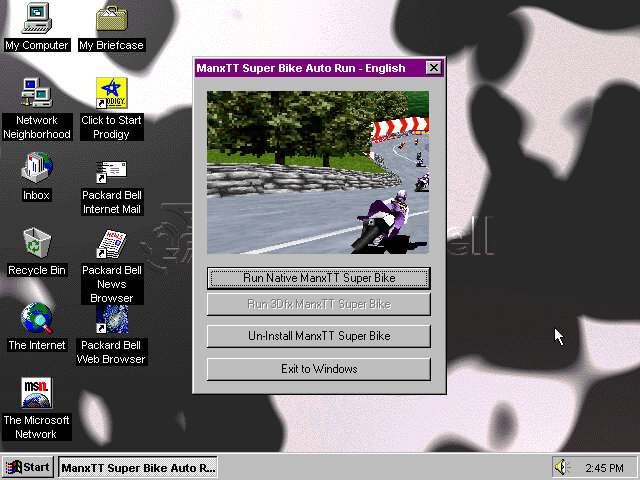
The regular version that uses DirectX 5 for 3D acceleration which works fine in 86Box using the S3 ViRGE video card. This graphics card lacks support for texture filtering.

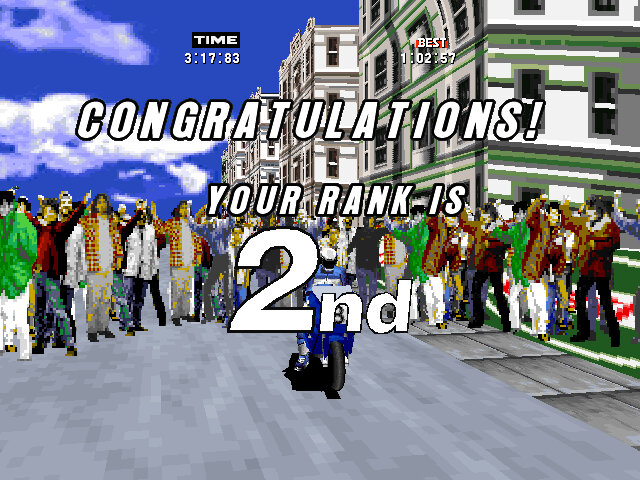
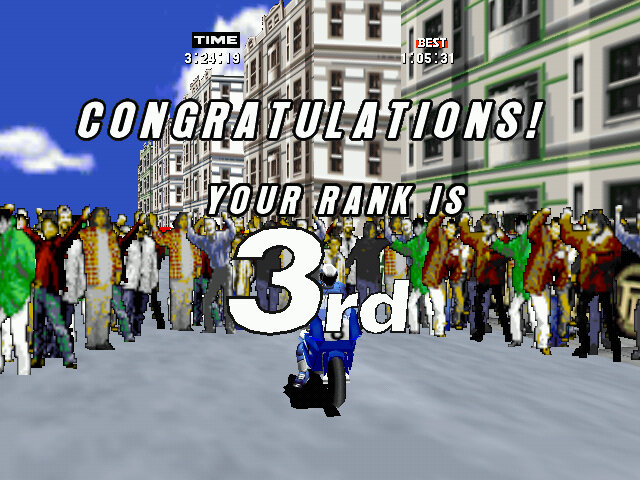
Only issue is after the race, the crowd can disappear and reappear intermittently.

3DFX Glide Version

The bundled 3DFX drivers will only function on the original Voodoo, or the Quantium3D version of the Voodoo card. Later 3DFX cards require updated libraries in order to be detected, otherwise you will receive the ‘Failed to find any glide hardware’ error, or ‘Failed to initialize viewport system’ error.
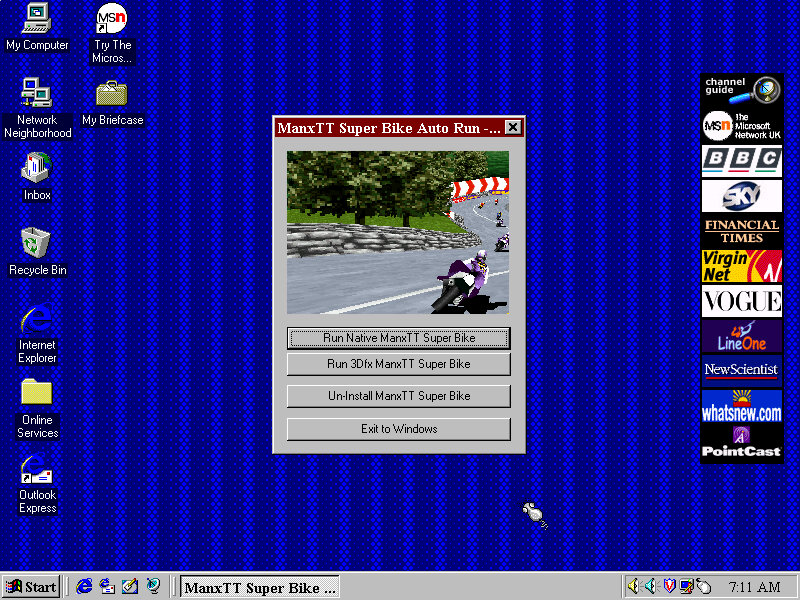
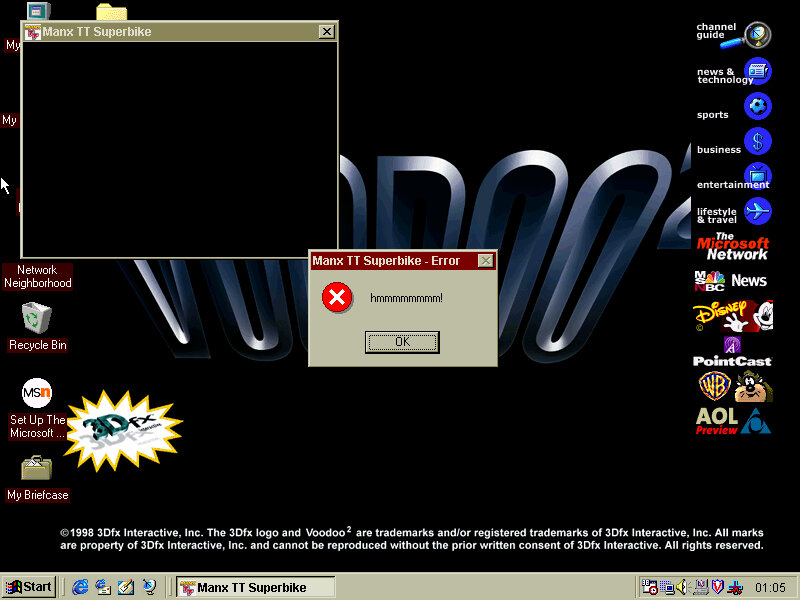
Works well in 86box until I tried it in a Pentium II PC with a Voodoo 2 (S3 Trio video card), where there were a couple of warping polygons and the game would throw up a ‘hmmmmmm’ error message. Whilst it looks like the game crashed, clicking Ok on the message box would restore and return you back to the game. None of this seemed to occur in other VMs I have that used the original Voodoo and AMD K6 combo.
Last Bronx

Another Sega fighting game, but with weapons

Title Screen

Set in Japan (But from the title you would assume Brooklyn, new York) the game features actual real life locations set in Japan. It was the first Sega fighting game to use motion capture footage giving the character detailed and accurate move sets compared to Virtua Fighter.

The fights typically take place in the evening or night, and most of the stages have a dark urban tone to them in contract to Virtual Fighter 2 where most stages take place in the daytime since its meant to be based on a worldwide tournament, Last Bronx has a more underground fight club like feel to it.

Stages

All characters have their own stage, but when you select their characters their personal stage is skipped until the end, where you will face Red Eye on that characters stage

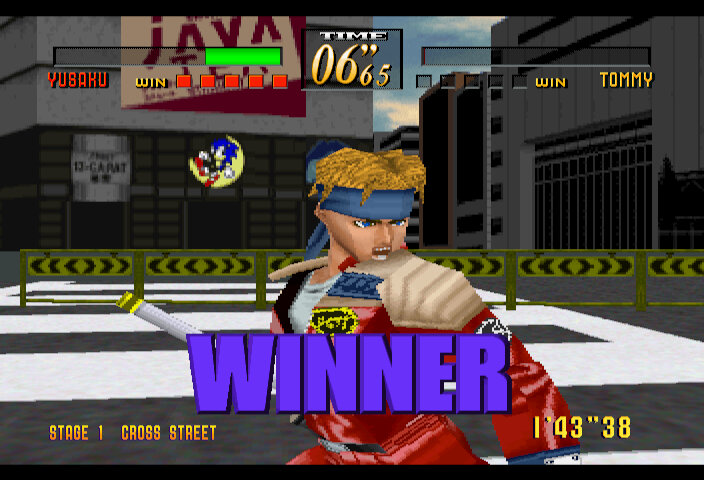
Cross Street: which is complete with advertising billboards and may be based off the Tokyo/Shibuya crossing. This is the first stage for all characters, unless you choose Tommy then Tears Bridge will be the first

Tears Bridge: is set near a warehouse / cargo park near a large bridge, hence the name. At this point the game is set in the evening, and most stages thereafter have a night time ambiance to them.

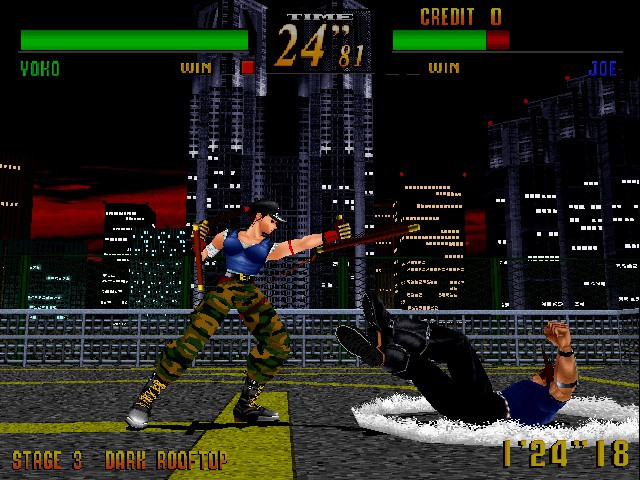
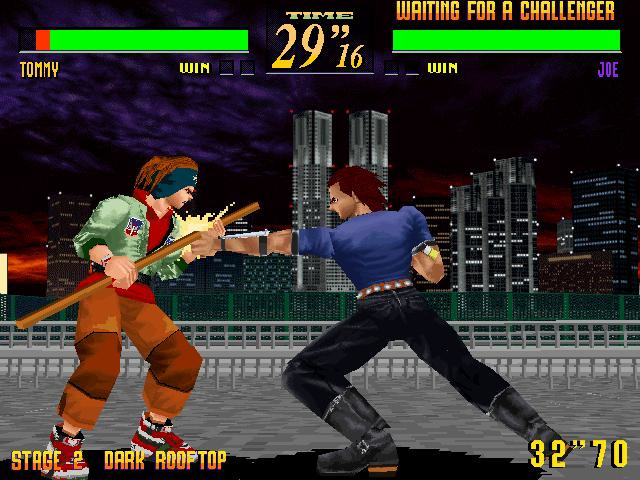
Dark Rooftop: reminds me a lot of Lei Wulong’s stage in Tekken 2, as its set on top of a skyscraper helicopter pad, with many building in the background. From the sky it looks like its set in the evening sunset, but Tears bridge gives the impression it is already night time, assuming the game is intended to simulate nightfall.

Saturn Version of the brilliant room stage

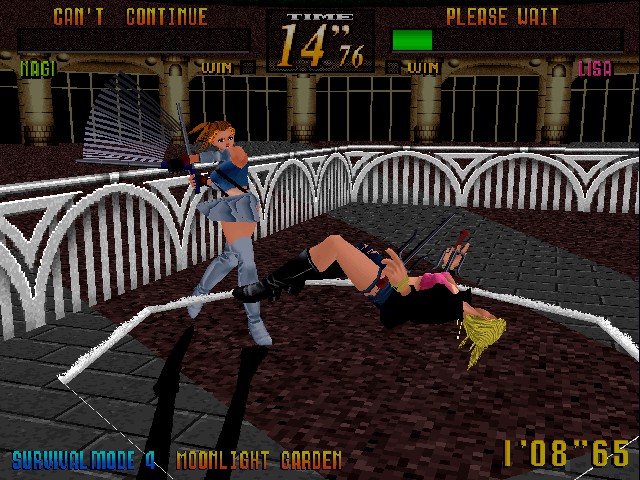
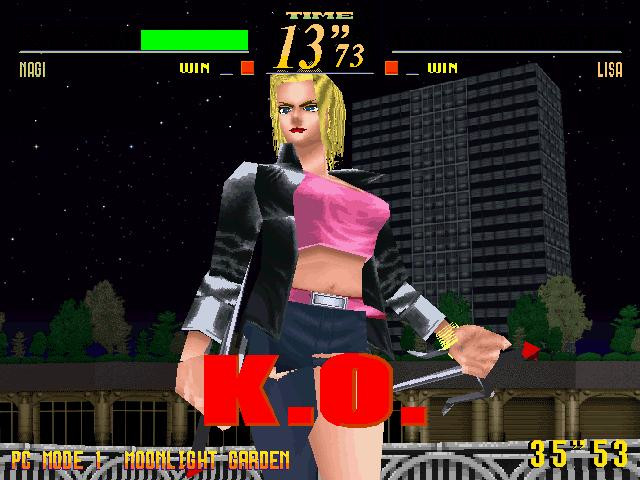
Moonlight Garden: A nice stage which is a departure from the industrial urban settings, this appears to be set on a garden or a large park and is a nice departure form the other stages

Lust Subway: Which is your typical Japanese underground subway, complete with display monitors. Thankfully this isn’t set at rush hour. This will be Yoko’s stage

Nightmare Island: Set on a construction or a building site, despite the name insisting its an island, you will fight Zaimoku on this stage.

Naked Airport: Set on an airport runway and reminds me of the Shooting Hoops track from Ridge Racer Type 4 This is Yusaku’s stage

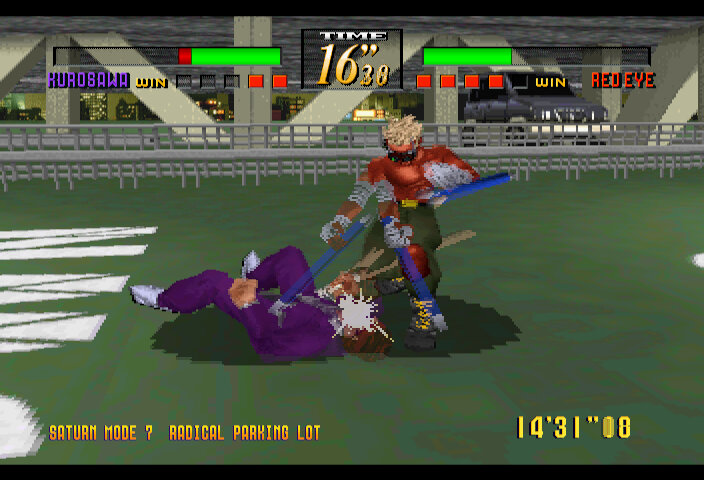
Radical Parking Lot: Kurosawa’s stage, not much to say here except its set on a moderately used parking lot.

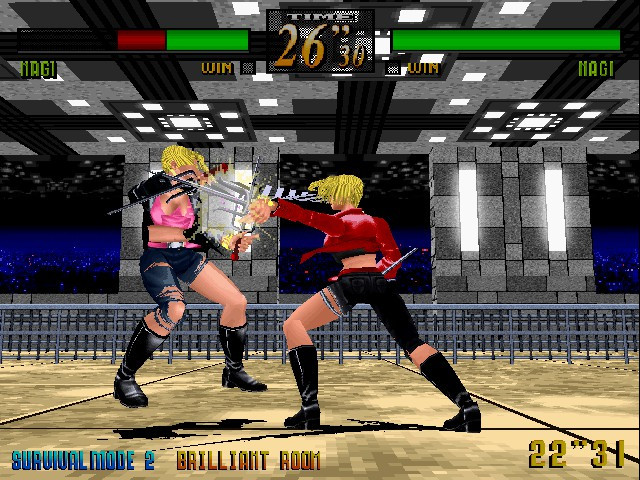
Brilliant Room: Hidden and only available if you beat Red Eye with the lowest time

Lust Subway from the Model 2
A common occourance – Saturn Version
Survival Mode Results

Modes

Arcade: The main game mode, you choose a character and progress through 8 stages, with a bonus 9th stage if you complete the game with a new time record.

Saturn/PC mode: Similar to arcade player but features a story mode complete with cut scenes, and opponents are chosen at random

Team Battle: Pick multiple fighters who will battle

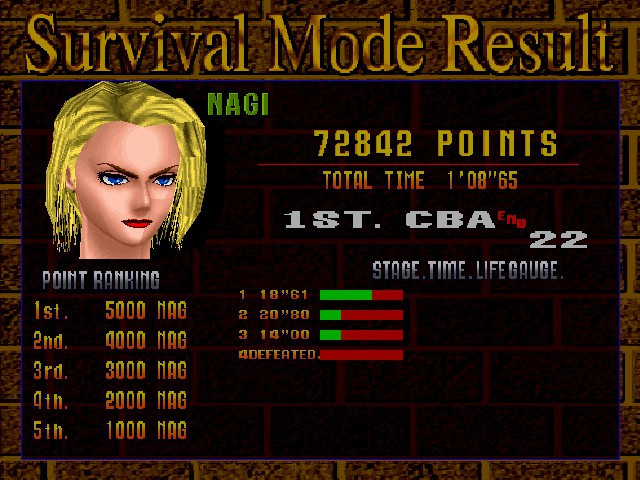
Survival Mode: You only have one life, and the health bar carries over to the next round. Objective here is to last the longest

Training Mode: A basic training mode that show the different fighting moves across the roster

Network Play: On the PC version, allows two players to play over a LAN

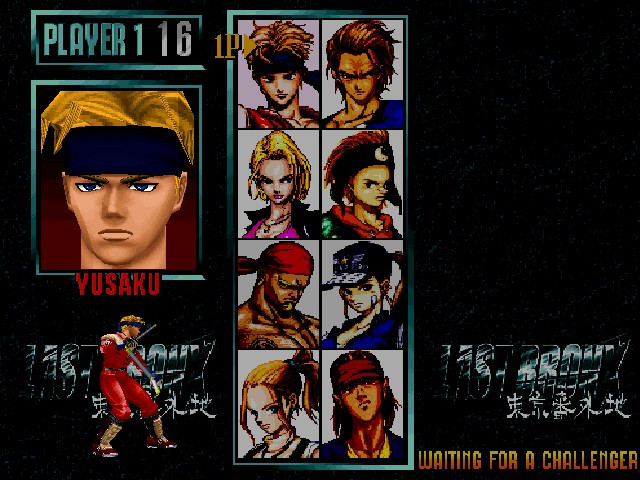
Character Select

There is also an extra mode in the Saturn/PC version that allows you to view unlocked FMVs

Versions

Arcade

The game was released on the Sega Model 2 arcade board, and was designed to be an upgrade for Virtua Fighter 2. This version has the best graphics, and it makes full use of the Model 2 graphics hardware which was more powerful than the Sega Saturn or common Windows PC’s of the time, in terms of 3D performance. However this version lacks FMV endings. It should be noted that the AI in this version is difficult to beat, since it was intended for the player to use multiple credits within a single play-through, you’d be surprised at how hard it is to beat on a single credit, despite using the easy settings in the games config.

This version of the game is fully playable in the Nebula Model 2 emulator, but is still unplayable in MAME as of 2021.

Most of the other screenshots captured are from the arcade version, except where noted.

Sega Saturn

Introduced a Saturn Mode which is similar to arcade mode but the opponents are randomized. This has a few changes compared to the arcade version, with the 3D background options being exchanged for sprite based background which are handled flawlessly by the Saturn’s VDP2. You will mostly notice the effect when the charicters move to an extent where the camera has to pan to follow the player. FMV videos are also present in the Saturn mode. Although they are in Japaneese, English subtitles are provided.

Most Saturn emulators will play this game, being a 3D titles it will play slowly on less powerful hardware. The Nvidia Shield struggles to play at full speed using the Yaba SanShiro emulator, and the FMV videos pixilate whilst playing. Mednafen Saturn will work the best

Microsoft Windows

A Windows PC port was released in 1998 and is very similar to the Sega Saturn version, and makes use of DirectX. Saturn game mode is renamed to PC Mode but remains the same with random opponents. The PC version supports higher resolutions then the Saturn version, and retains most graphical effects but lacks the texture quality and geometry of the arcade version.

Like most PC titles that were released in the 90s, the game is reliant on using analogue CD audio, which can cause problems on modern systems that use SATA or IDE CD drives without the CD audio line being connected. The reason is that from Windows 2000/ME on wards, Microsoft introduced digital audio for CD decoding, where audio is sent via the IDE cable itself rather then than the CD audio line. There’s no easy workaround unless you play the game in Pcem or 86box, otherwise the game will play but with no background audio or music.

I’ve not tested the game on modern Windows NT based release, but can confirm the game to be playablle using PCem or 86Box using any Windows 9x based operating system with a 3DFX or S3 based accellerator.