Tag Archives: Sega Model 2A

Manx TT Superbike

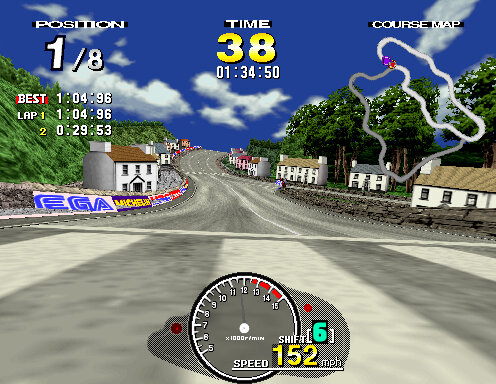
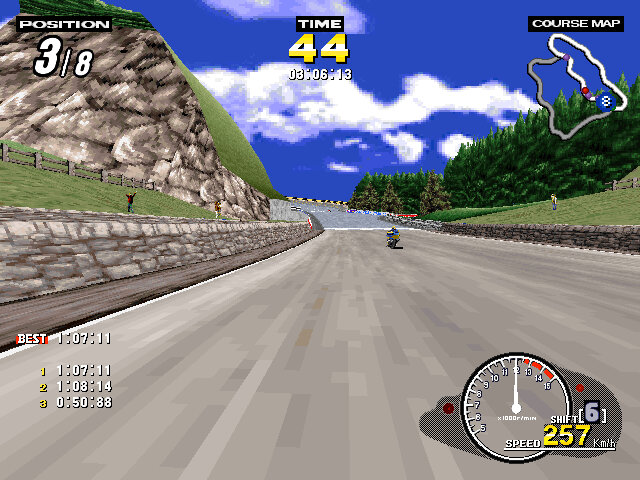
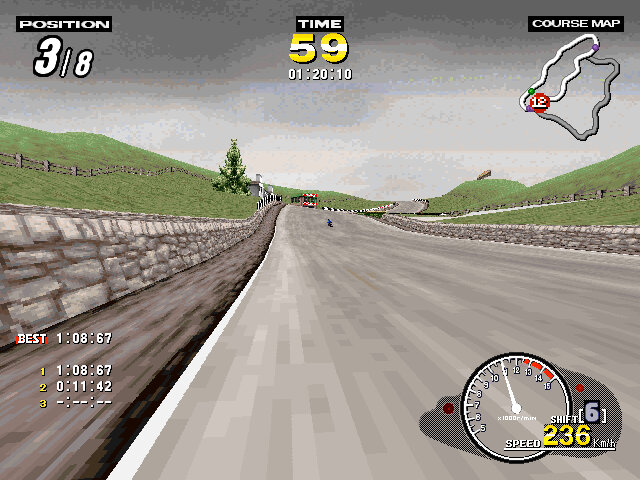
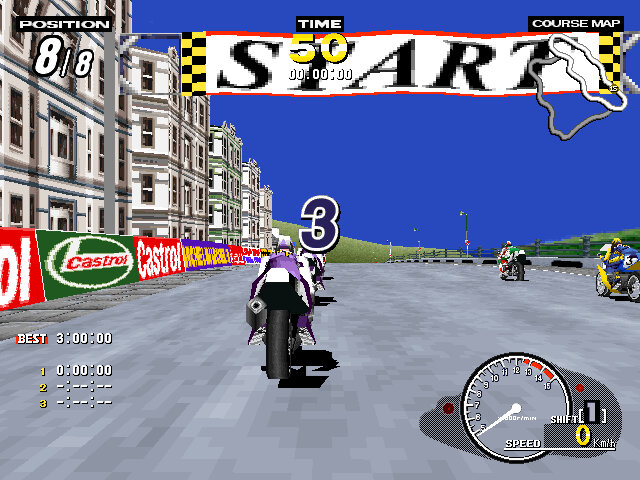
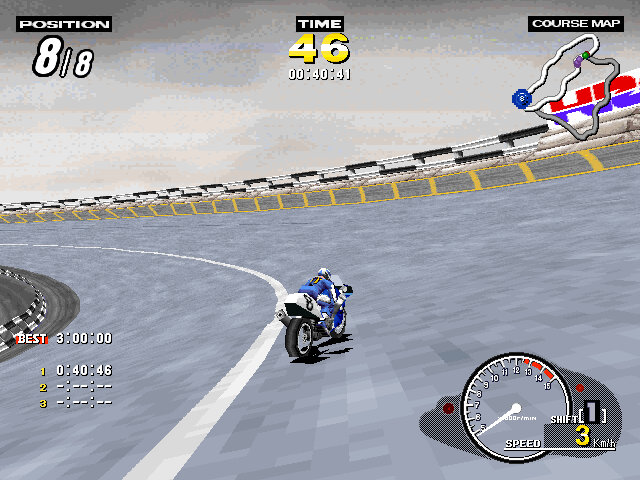
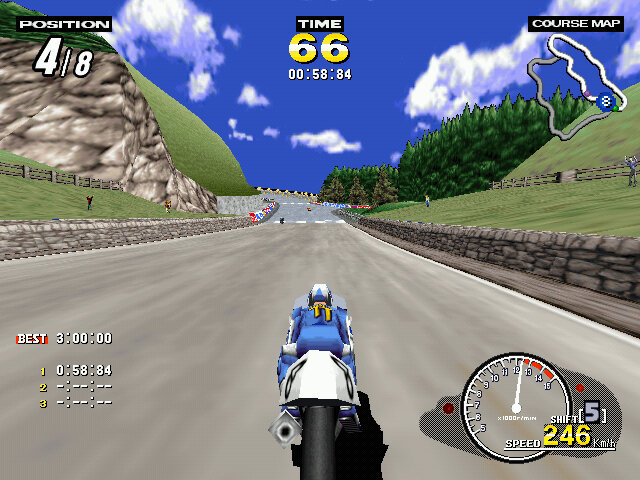
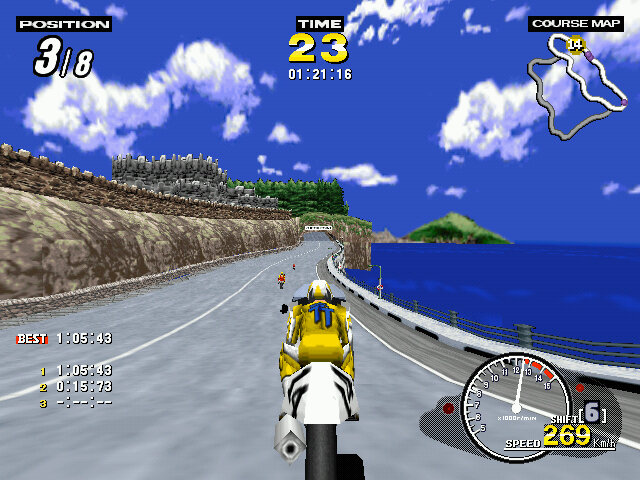
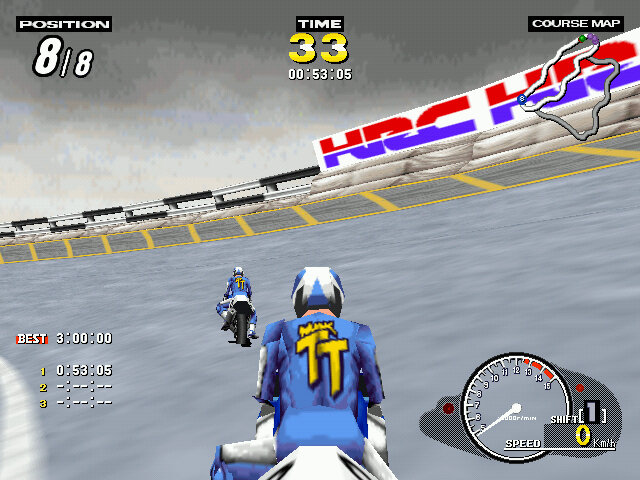
An arcade style racing game released in 1995, aimed to replicate the Isle of Man TT – a motorcycle racing event. Very similar in spirit to Daytona USA which was based on the real Daytona speedway, and Indy 500.
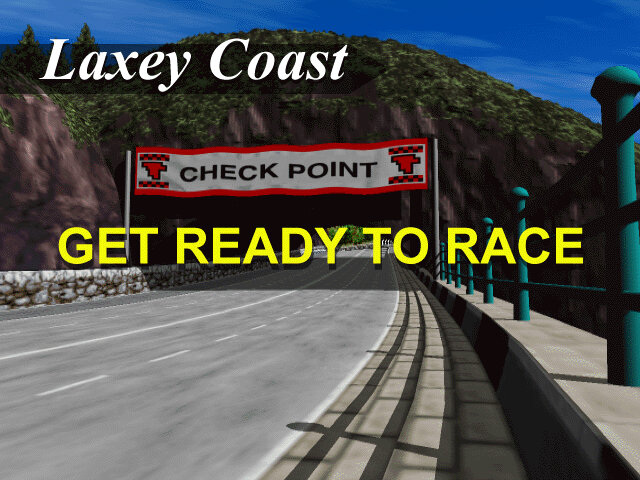
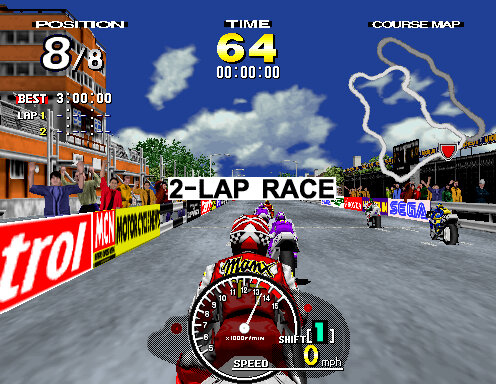
Two courses are offered, Laxely Coast and T.T Course, the latter being the actual track used in the Isle of Mann races. Both tracks share sections with each other and will split and re-join into their own different paths.
The home versions feature two additional tracks that are part of the PC/Saturn mode, these are reverse-mirror versions of the two arcade tracks and can only be selected in that mode. These tracks are also set in the early evening in the Saturn version, and early morning / dusk in the PC version.

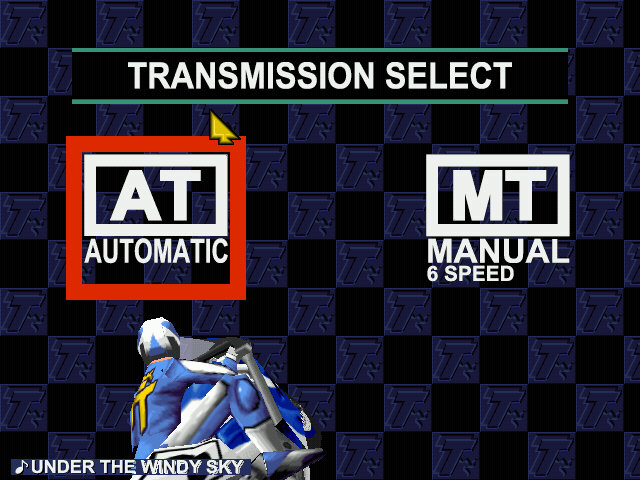
Time Trial: Similar to time trial featured in other racing games, choose a track and a bike and try to get the lowest time. On the arcade version you have to hold the brake button when selecting a track to active time trial.

Console / PC Exclusives modes

Practice Mode: Similar to arcade mode, choose a track and your bike which will have a unique stats for speed, acceleration and handling.

Challenge Mode: a tournament mode where you have to race on all four tracks, coming in a 3rd or higher in each one. The superbike challenge is unlocked after completing this mode.

Versions

Like other Sega games of the era, this title was relased to the arcades first, then to their Saturn console and eventually to Microsoft Windows.

Arcade

The original arcade release runs on the model 2 hardware, specifically the 2A version. This version was considered to be graphically superior of the three versions but is the most basic in terms of content, featuring only two courses and just the arcade and time trial mode. The Model 2 emulator is the most popular way to play this version of the game, with the MAME driver making steady progress but still unplayable in some regards.

Really for a home port, the game could have done with further tracks being added to increase the replay value of the game.

Sega Saturn

Sega ported the game to their home console of the era, the Sega Saturn in 1997. This version introduced new features including an FMV opening sequence and additional race modes. There are also options to change the bike model, which have unique stats across the different models. The game’s graphics were considered to be impressive for the Sega Saturn’s capabilities, with colorful and detailed environments that recreated the feel of the arcade version.

Windows

This version supported both DirectX 5 and 3DFX Glide, the latter gives a visual difference that makes it similar to the arcade version sans the frame rate. It seems the game will only render up to 30fps. Still the game can run at 640×480 which is higher than the Saturn or even the Arcade version.

Multi player is supported in this version and can be done over a variety of channels. IPX, TCP/IP, Modem and Serial connections are supported. This can be done via virtual box of you use the PCap option between two 86box VMs, linking it to the VMware virtual network adaptor (8 is typically the local adaptor) then create an IPX session. It may also be possible to map to the serial port in the near future.
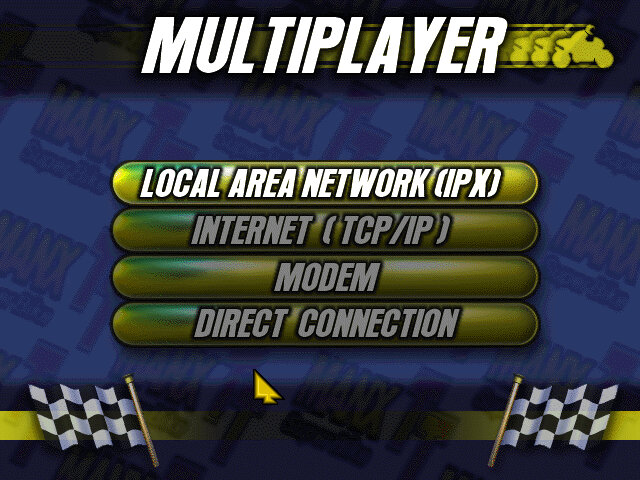
I believe up to 8 players can playing a single session, to this would require three machines or more. Unallocated players will be replaced with an AI enemy, similar to single player mode.

DirectX Version
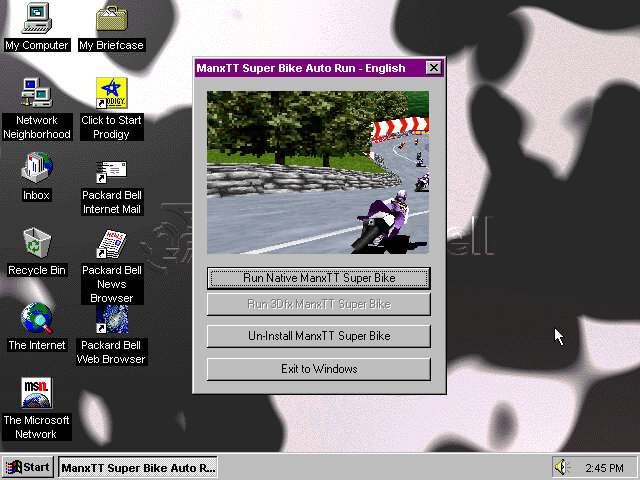
The regular version that uses DirectX 5 for 3D acceleration which works fine in 86Box using the S3 ViRGE video card. This graphics card lacks support for texture filtering.

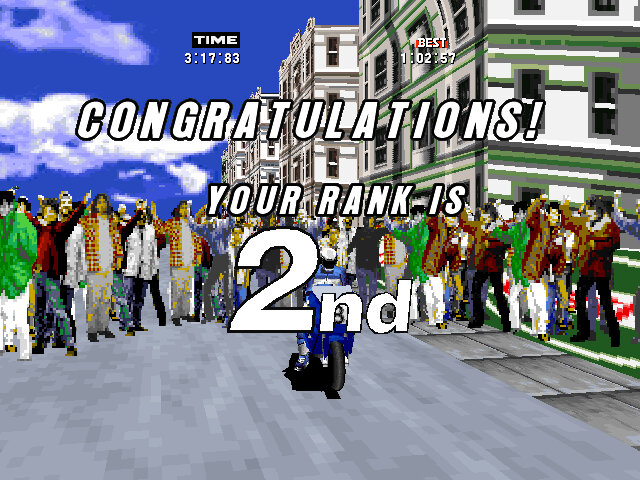
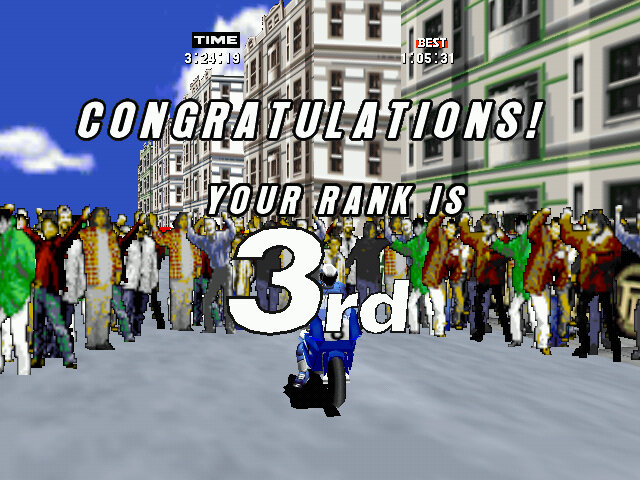
Only issue is after the race, the crowd can disappear and reappear intermittently.

3DFX Glide Version

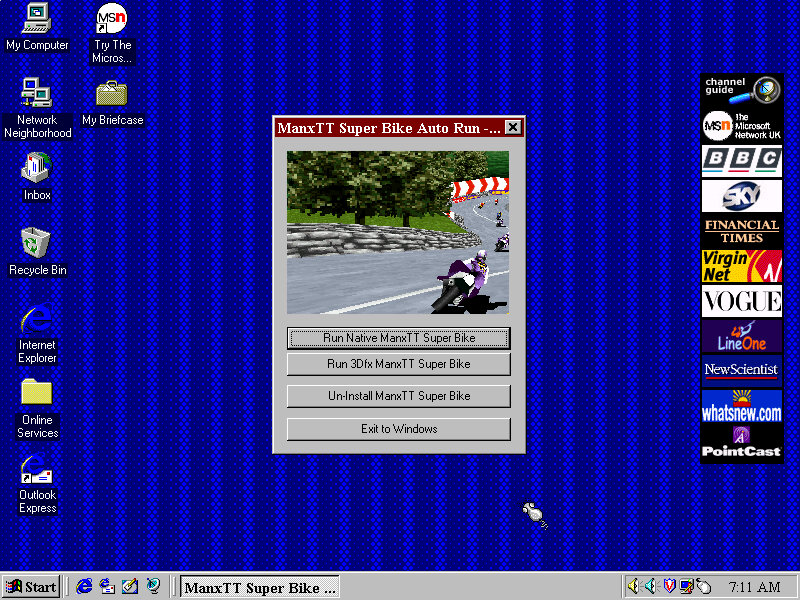
The bundled 3DFX drivers will only function on the original Voodoo, or the Quantium3D version of the Voodoo card. Later 3DFX cards require updated libraries in order to be detected, otherwise you will receive the ‘Failed to find any glide hardware’ error, or ‘Failed to initialize viewport system’ error.
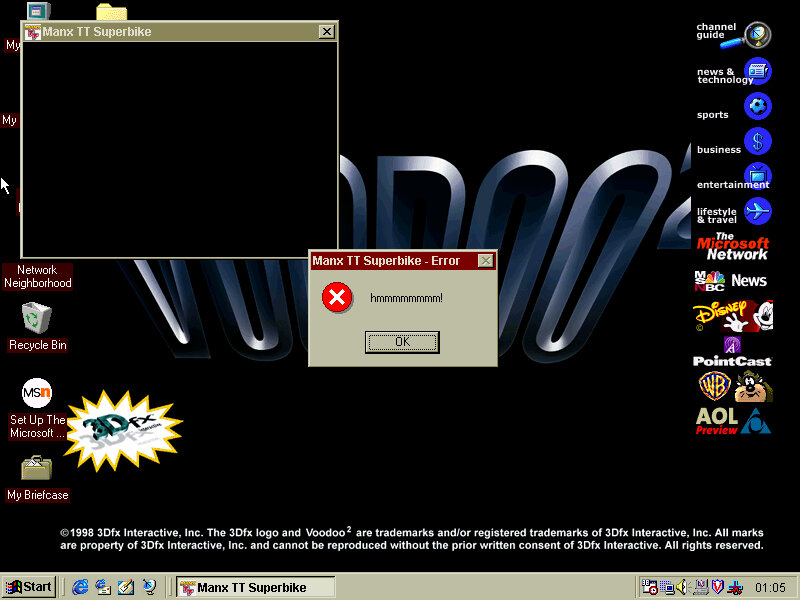
Works well in 86box until I tried it in a Pentium II PC with a Voodoo 2 (S3 Trio video card), where there were a couple of warping polygons and the game would throw up a ‘hmmmmmm’ error message. Whilst it looks like the game crashed, clicking Ok on the message box would restore and return you back to the game. None of this seemed to occur in other VMs I have that used the original Voodoo and AMD K6 combo.
Dead or Alive

Virtua Fighter with bouncing physics

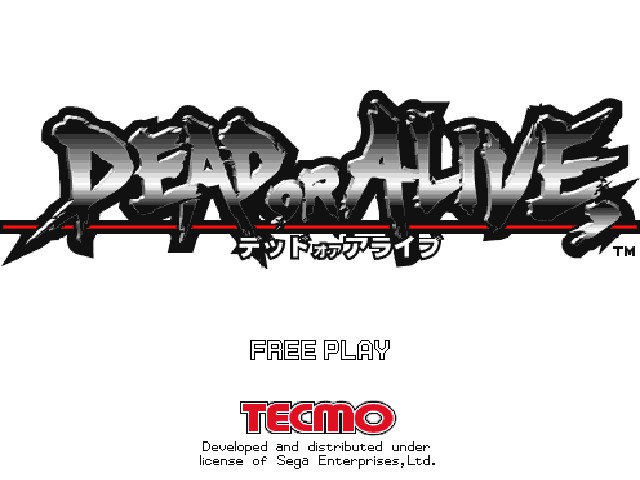
Released in 1996, Dead or alive was the fighting game created by Tomobou Itagaki, who is known for hating the Tekken game with a passion.
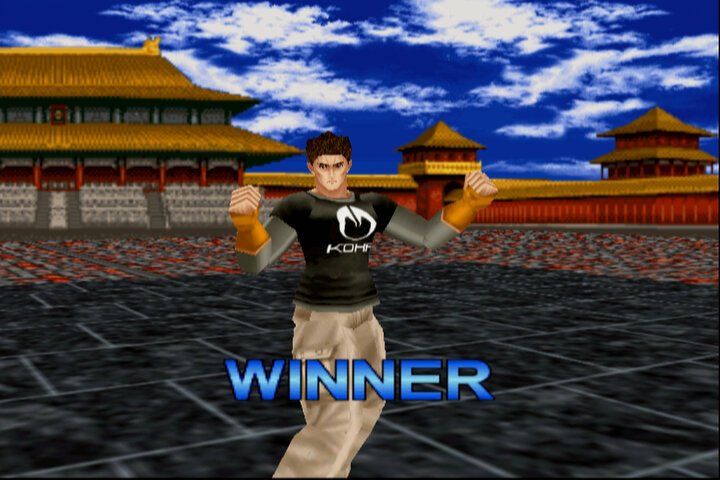
There are some similarities to the Virtua Fighter series of games by Sega, and have the same input controls and move-sets with Punch, Kick and Guard/Hold.

Characters

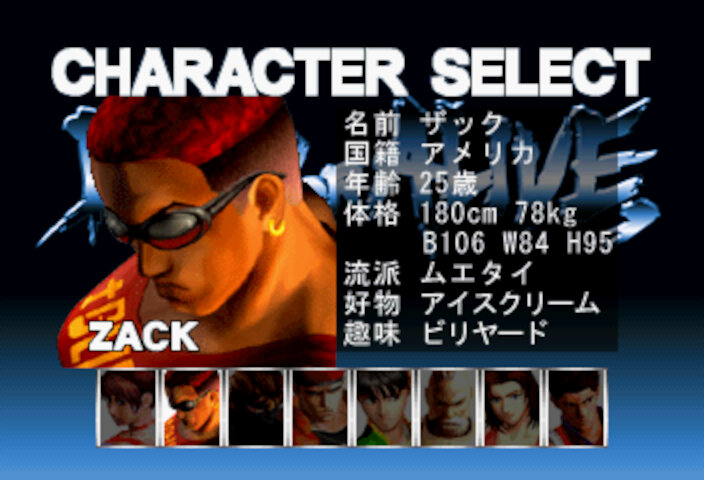
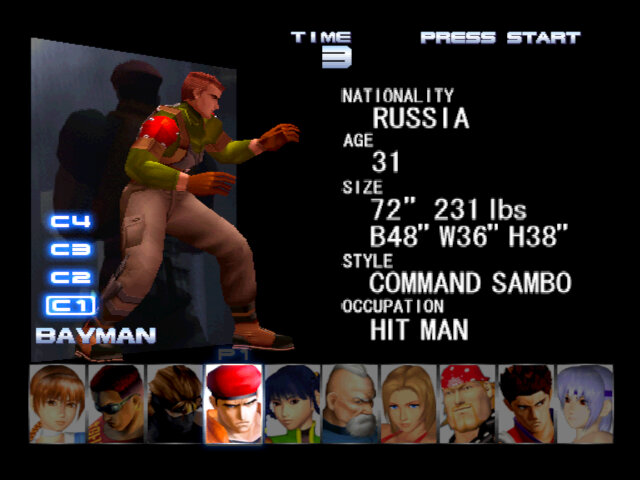
The character select screen displays basic stats on the characters and some not-so-useful information like the character’s favorite food and their hobbies. Honestly, this looks more like a dating site profile but does add a bit of personality to the fighters.

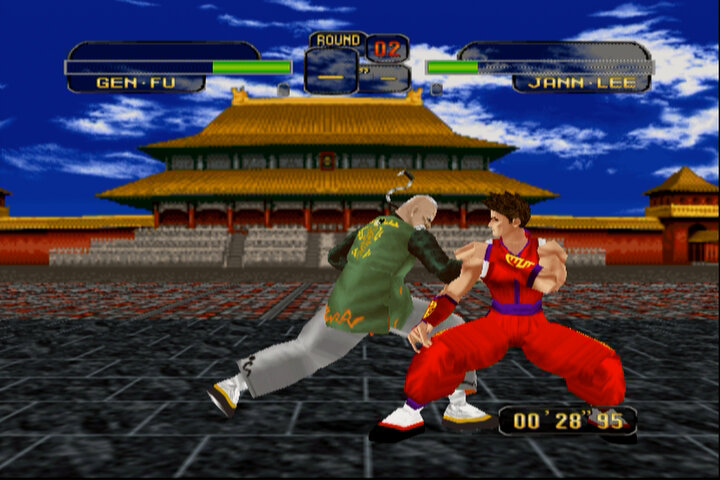
As with other fighting games, each character has their own unique fighting style which is tailored to their culture, and there are some obvious inspirations with Jann Lee being based off Bruce Lee.

  • Kasumi: The ginger ninja, or runaway shinobi according to the games lore
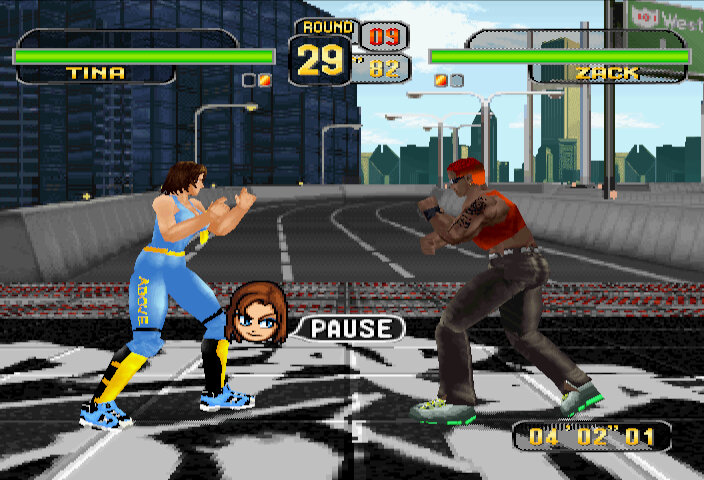
  • Zack: Dennis Rodman-inspired character who has a kickboxer moveset. The first opponent who stage is set on a tropical beach set at sunset
  • Ryu: Another Ninja, from the game Ninja Gaiden. The third opponent set on a rural Japanese stage with a hut in the background
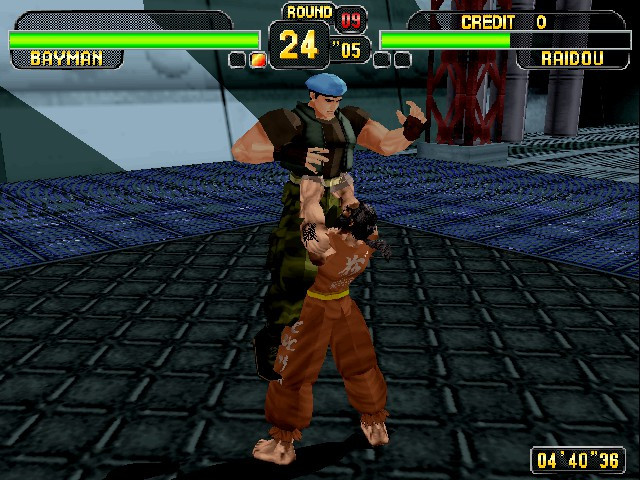
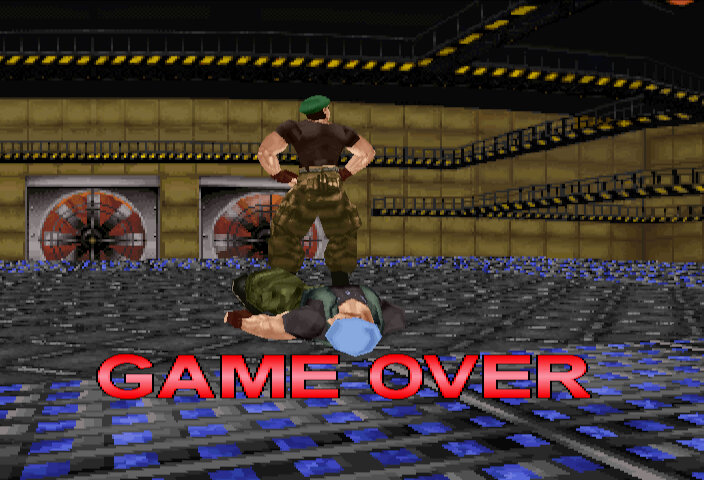
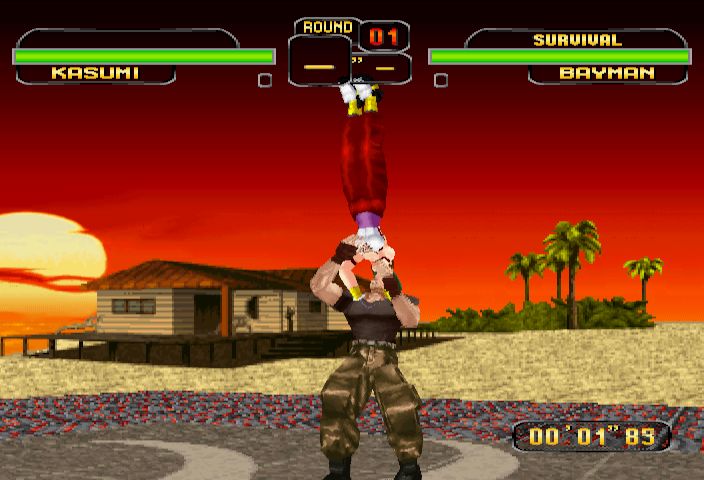
  • Bayman: A Russian henchman/assassin, the sixth opponent whose stage is set in an aircraft hangar since he is supposed to have a military background
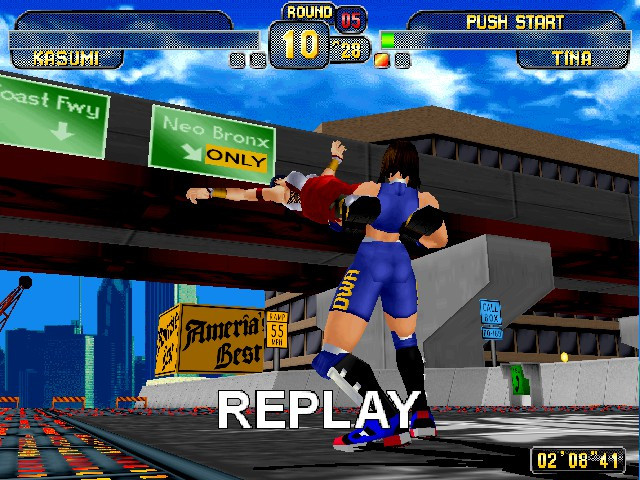
  • Jann Lee: Bruce Lee, similar to Law from Tekken. The fourth opponent and shares a stage with Tina, which is an American downtown highway set at night
  • Tina Armstrong: A wrestler and daughter of Bass Armstrong
  • Gen Fu: Old dude who is a master in Kung Fu, like Wang from Tekken
  • Lei Fang: A Chinese fortune teller turned fighter
  • PlayStation Only
    • Ayane: Kasumi’s half-sister who are rivals. Looks like a feminist
  • Bass Armstrong: Tina’s father, Hulk Hogan and Randy Savage crossover

Versions

Dead or Alive was released initially in arcades in 1996, and then ported to home consoles in 1997

Arcade (Original)

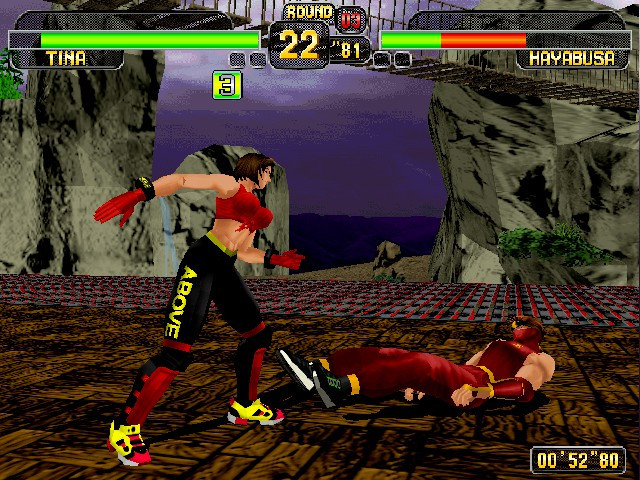
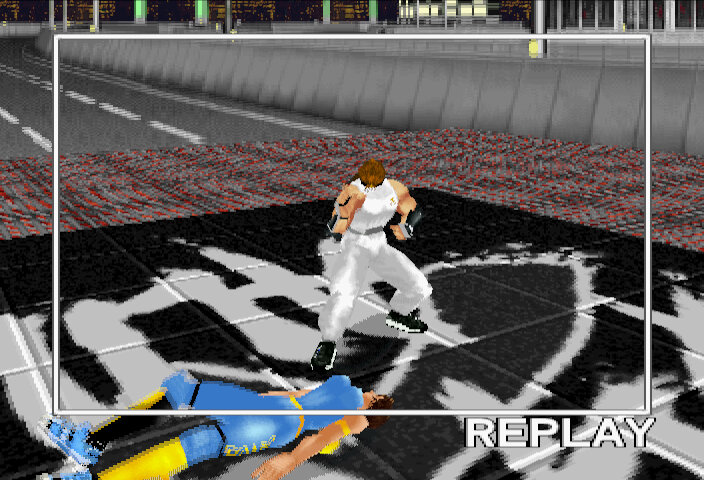
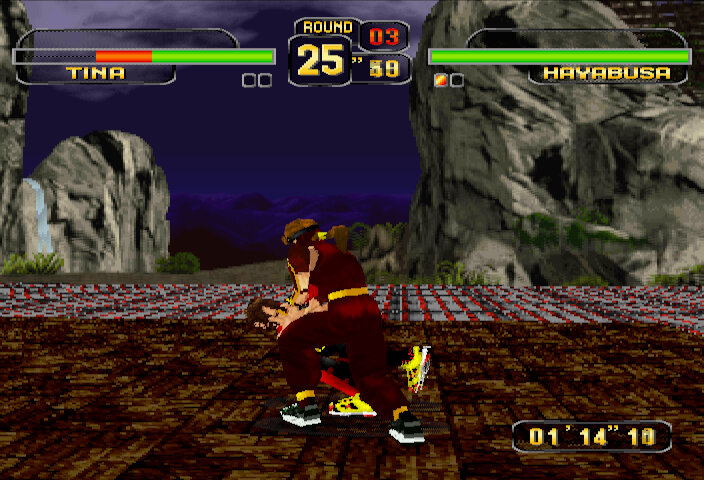
The game runs on the Sega Model 2 arcade board and is very similar to Virtua Fighter 2 which also ran on the same board. The control movesets and even the background stages are similar. This version of the game renders its stage background in full 3D, allowing for certain moves that use the background elements like a couple of Ryu’s moves on his stage. There is also a ‘Danger Zone’ around the stage that when your opponent lands on it, will be propelled into the air with a mild explosion, dealing some damage.

Sega Saturn

The game was ported to the Saturn and was the first home port of the game. This version is a mostly faithful conversion of the arcade original, with some changes taking place due to the less capabilities of the Saturn 3D hardware. Still, the Saturn has always done good with fighting games, and Dead Or Alive is no exception to this, yet this version of the game was only released in Japan.

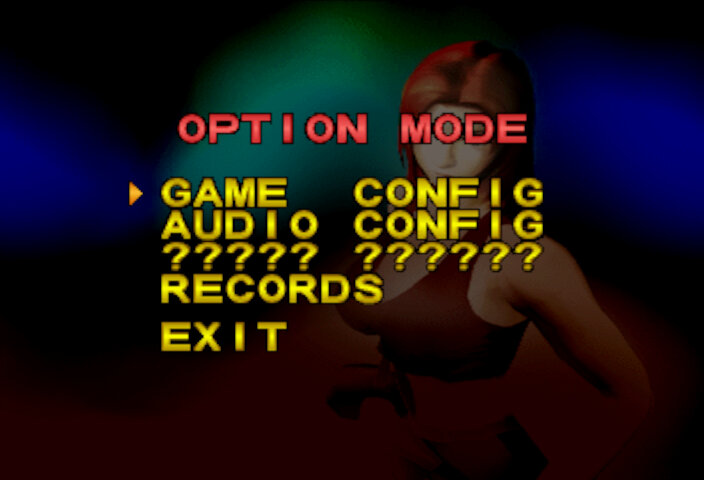
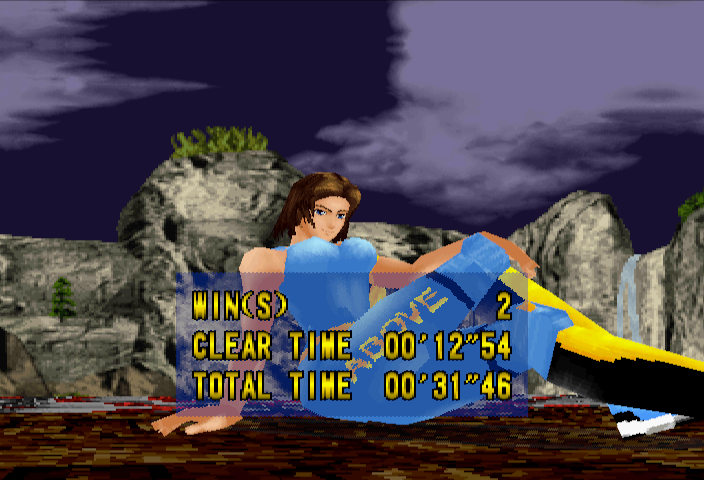
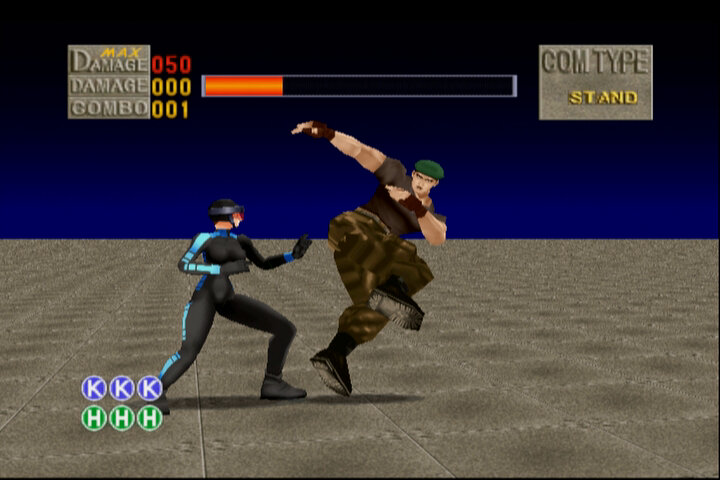
There are a few menu options added, with a Time Attack mode being similar to arcade mode but with the goal of completing rounds in the shortest amount of time. V.S being versus, allowing a second player to fight head to head. Survival mode has you fight against multiple opponents, one at a time, using a single life bar. Kumite is somewhat a sparing mode where you can fight from 30/60/100 opponents which the goal of having the highest winning percentage. Lastly, there is also a standard training mode that lets you practice each character move, and test against opponents’ defensive moves.

Like other Arcade to Saturn conversions, an opening FMV is included which gives a quick montage of the characters.

As the Saturn version of the game was only released in Japan, I would avoid this version and get the original Xbox version instead, which is the same game but with added online play and cleaned-up graphics.

Sony PlayStation

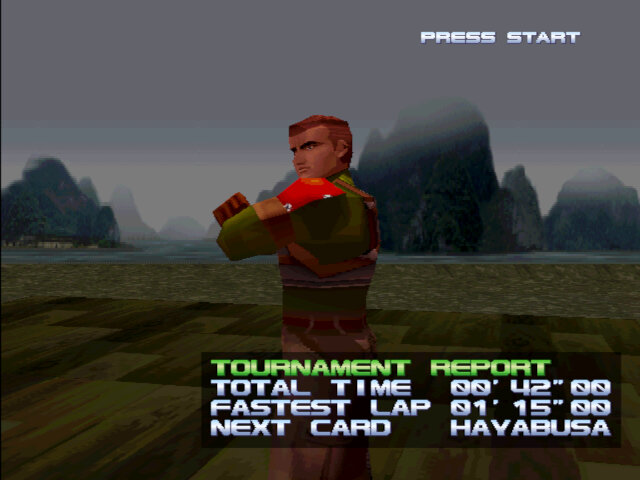
An updated version of the game was released for the PlayStation, which came with updated moves, two new added characters & backgrounds. This is considered a remake of sorts, as the stage background and music have been redesigned and are vastly different compared to the Sega versions. Two new characters have also been added which also feature in the arcade version, Dead or Alive ++, not the Model 2 version.

This version also includes the training, Kumite, Survival and Vs modes.

Arcade (Dead Or Alive++)

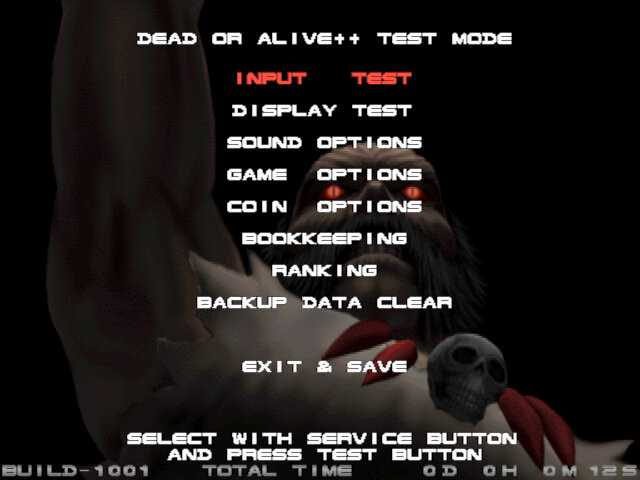
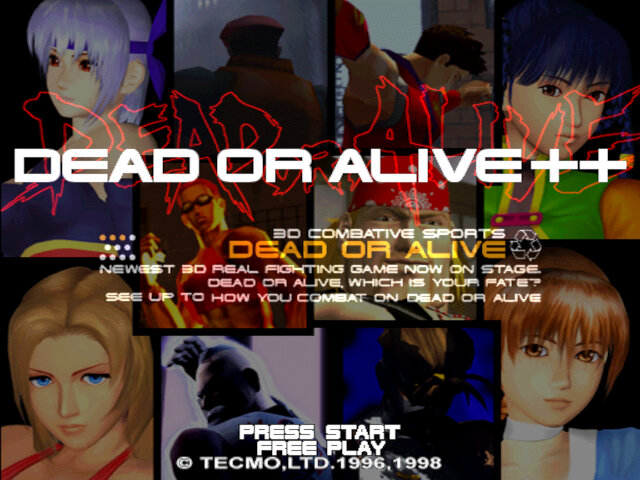
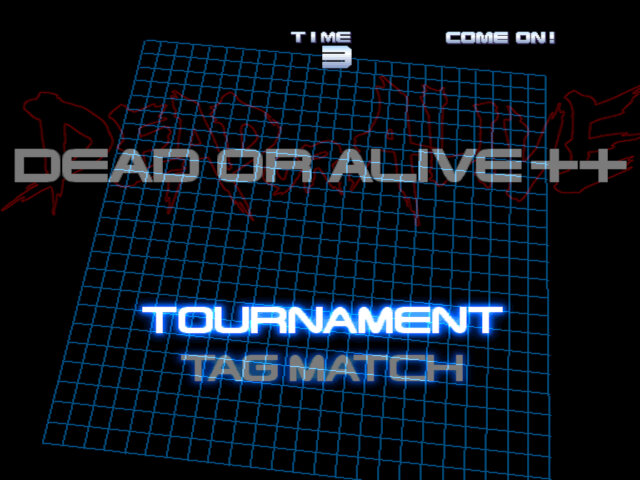
Another arcade version was released, this time on the PlayStation-based ZN arcade board, and shared a lot of similarities with the PlayStation home release. Each fighter has 4 different costumes to choose from, and a tag match mode has been added. New characters, Bass Armstong and Ayane have been added to this version.

Xbox

This version was based of the original Sega Saturn release but takes advantage of the Xbox hardware. However, id say it pales graphically compared to the Model 2 version which features full 3D background objects, whilst the Xbox version features the static 2D backgrounds (no moving objects in the background, but some textures are animated) the Saturn uses. Still the character’s models and textures are more detailed, and Xbox Live support is included in this port of the game to allow online multiplayer. This has since been shut down following Microsoft discontinuing support for original Xbox Live titles in 2010.

Still, you miss out on Bass Armstrong and Ayane which is an odd omission.

This version of the game is playable on the Xbox One and Series consoles and can be brought online. You can also play on the Xbox 360 with a compatible hard drive.

Conclusion

Dead Or Alive came at a very hard time for Tecmo, who was facing bankruptcy prior to the release, hence the name of Dead Or Alive.

Dead Or Alive would be followed up in 1999, with the release of Dead or Alive 2 for the Dreamcast, and the PlayStation 2. It would be the last game released for the arcades. Future installments would be released on the Xbox exclusively, before returning to multiplatform with Dead or Alive 5.