Tag Archives: 1995

Manx TT Superbike

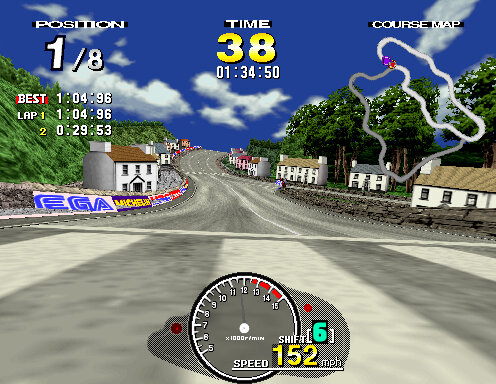
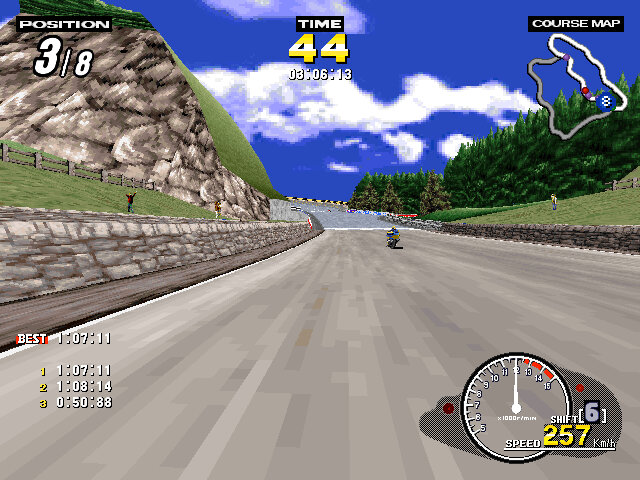
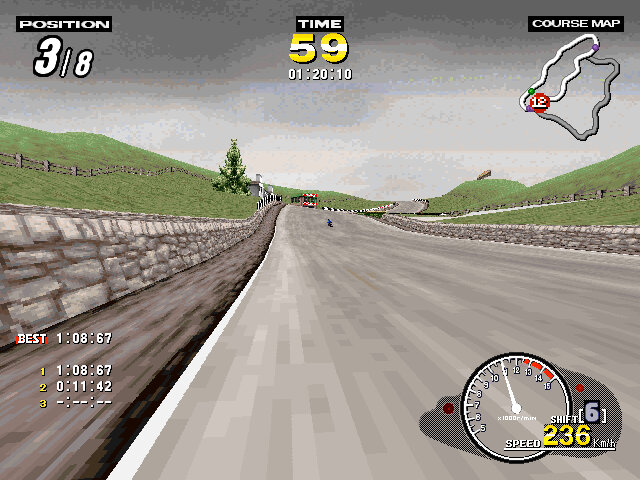
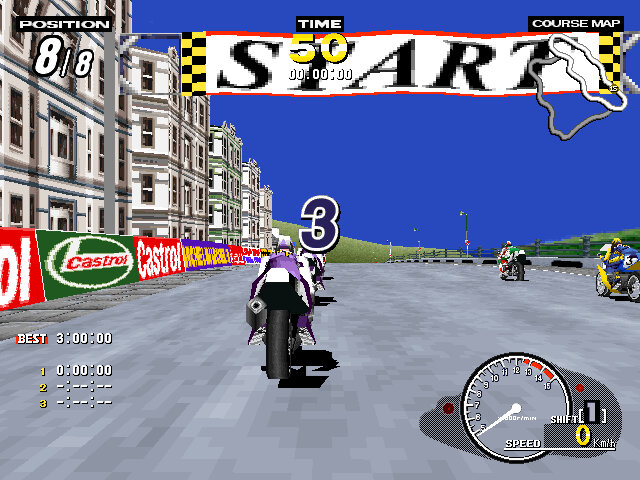
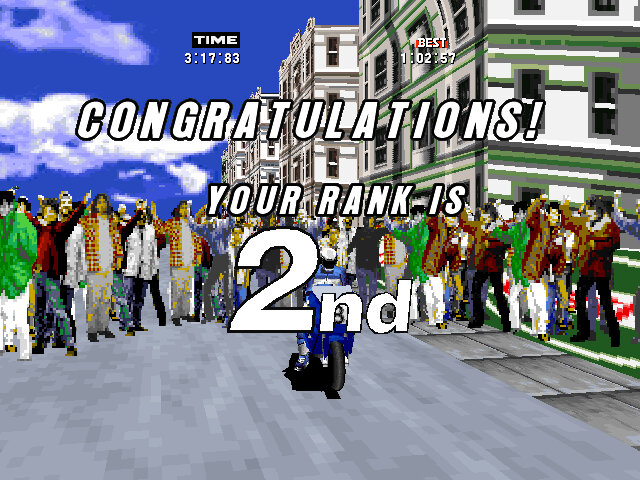
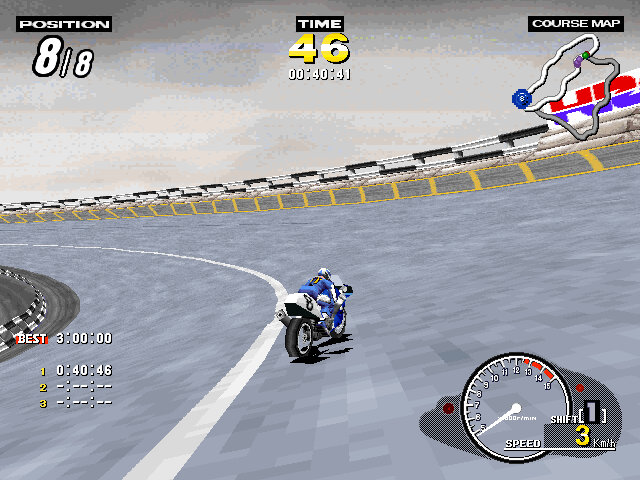
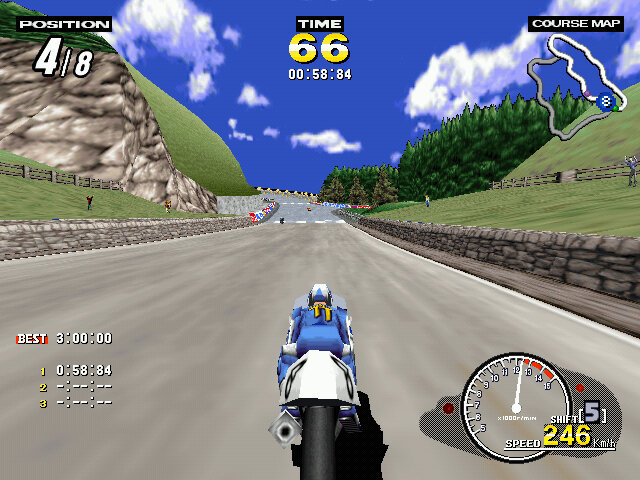
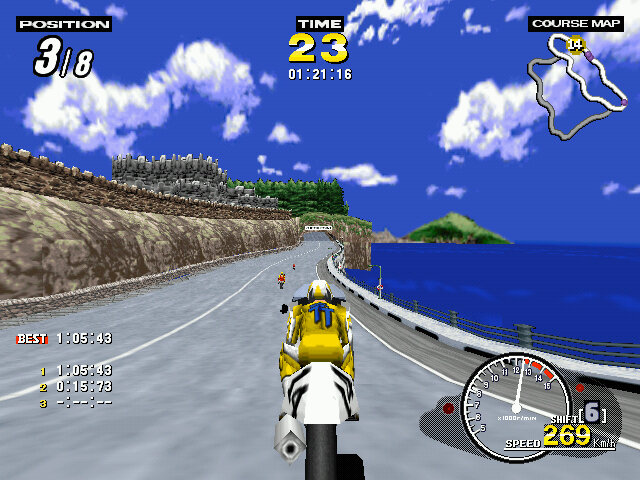
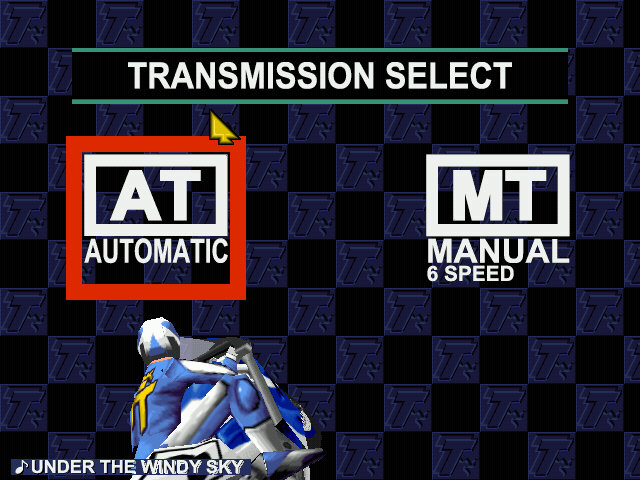
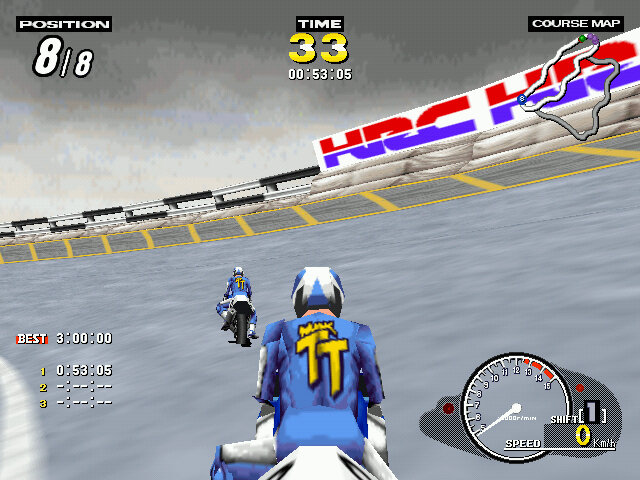
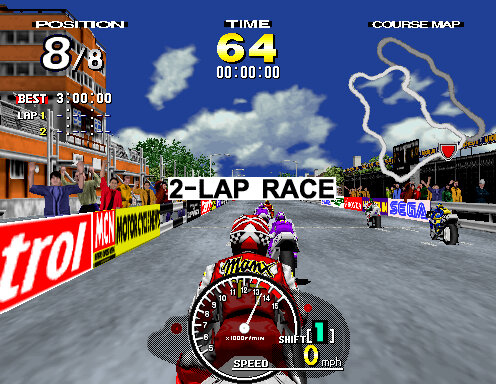
An arcade style racing game released in 1995, aimed to replicate the Isle of Man TT – a motorcycle racing event. Very similar in spirit to Daytona USA which was based on the real Daytona speedway, and Indy 500.
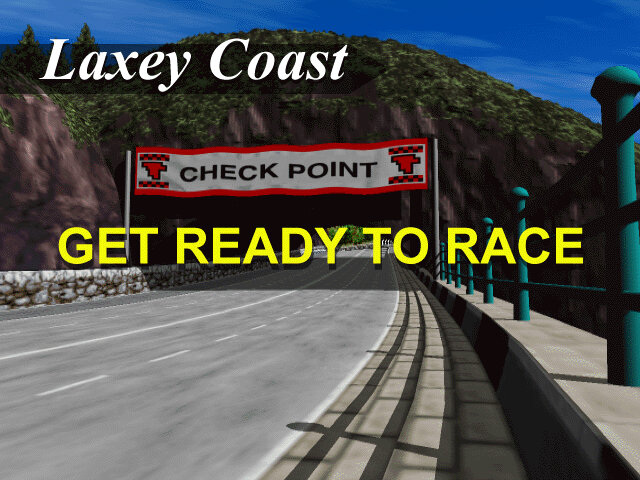
Two courses are offered, Laxely Coast and T.T Course, the latter being the actual track used in the Isle of Mann races. Both tracks share sections with each other and will split and re-join into their own different paths.
The home versions feature two additional tracks that are part of the PC/Saturn mode, these are reverse-mirror versions of the two arcade tracks and can only be selected in that mode. These tracks are also set in the early evening in the Saturn version, and early morning / dusk in the PC version.

Time Trial: Similar to time trial featured in other racing games, choose a track and a bike and try to get the lowest time. On the arcade version you have to hold the brake button when selecting a track to active time trial.

Console / PC Exclusives modes

Practice Mode: Similar to arcade mode, choose a track and your bike which will have a unique stats for speed, acceleration and handling.

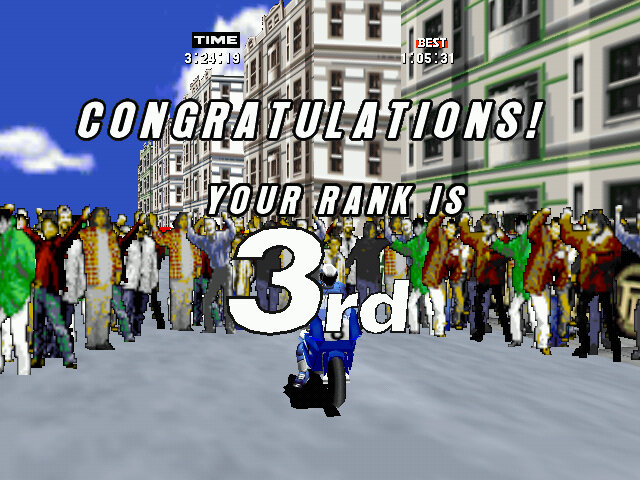
Challenge Mode: a tournament mode where you have to race on all four tracks, coming in a 3rd or higher in each one. The superbike challenge is unlocked after completing this mode.

Versions

Like other Sega games of the era, this title was relased to the arcades first, then to their Saturn console and eventually to Microsoft Windows.

Arcade

The original arcade release runs on the model 2 hardware, specifically the 2A version. This version was considered to be graphically superior of the three versions but is the most basic in terms of content, featuring only two courses and just the arcade and time trial mode. The Model 2 emulator is the most popular way to play this version of the game, with the MAME driver making steady progress but still unplayable in some regards.

Really for a home port, the game could have done with further tracks being added to increase the replay value of the game.

Sega Saturn

Sega ported the game to their home console of the era, the Sega Saturn in 1997. This version introduced new features including an FMV opening sequence and additional race modes. There are also options to change the bike model, which have unique stats across the different models. The game’s graphics were considered to be impressive for the Sega Saturn’s capabilities, with colorful and detailed environments that recreated the feel of the arcade version.

Windows

This version supported both DirectX 5 and 3DFX Glide, the latter gives a visual difference that makes it similar to the arcade version sans the frame rate. It seems the game will only render up to 30fps. Still the game can run at 640×480 which is higher than the Saturn or even the Arcade version.

Multi player is supported in this version and can be done over a variety of channels. IPX, TCP/IP, Modem and Serial connections are supported. This can be done via virtual box of you use the PCap option between two 86box VMs, linking it to the VMware virtual network adaptor (8 is typically the local adaptor) then create an IPX session. It may also be possible to map to the serial port in the near future.
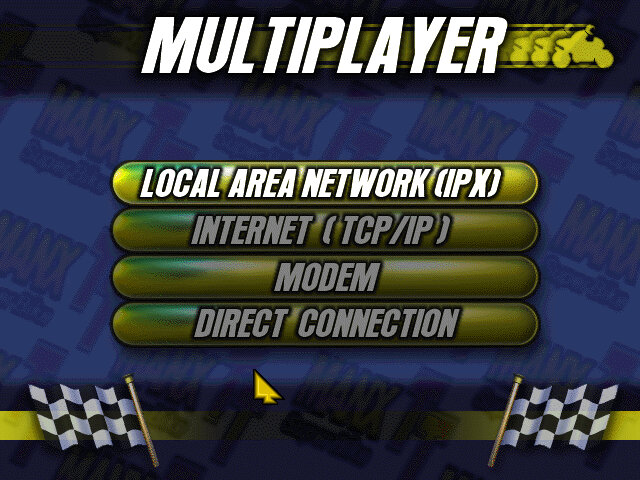
I believe up to 8 players can playing a single session, to this would require three machines or more. Unallocated players will be replaced with an AI enemy, similar to single player mode.

DirectX Version
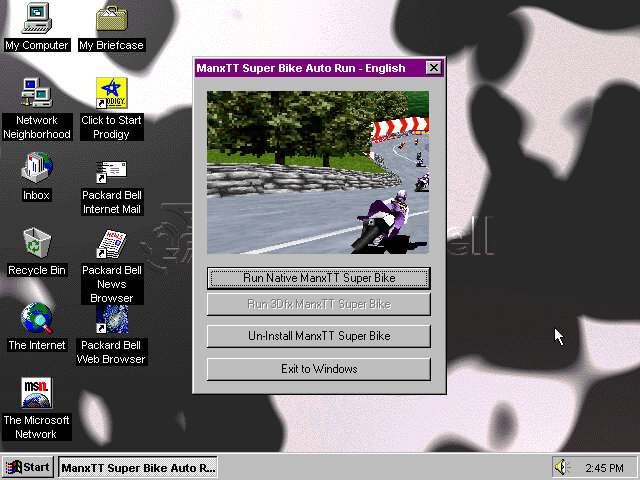
The regular version that uses DirectX 5 for 3D acceleration which works fine in 86Box using the S3 ViRGE video card. This graphics card lacks support for texture filtering.

Only issue is after the race, the crowd can disappear and reappear intermittently.

3DFX Glide Version

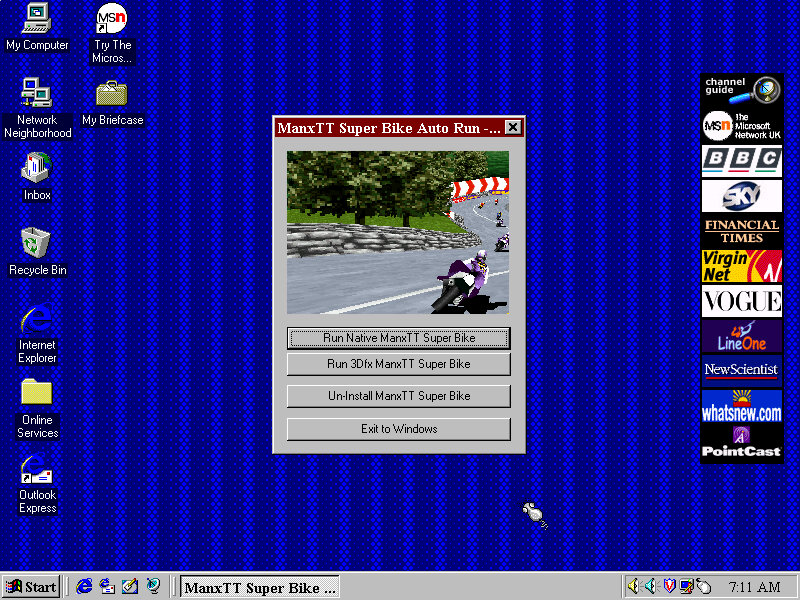
The bundled 3DFX drivers will only function on the original Voodoo, or the Quantium3D version of the Voodoo card. Later 3DFX cards require updated libraries in order to be detected, otherwise you will receive the ‘Failed to find any glide hardware’ error, or ‘Failed to initialize viewport system’ error.
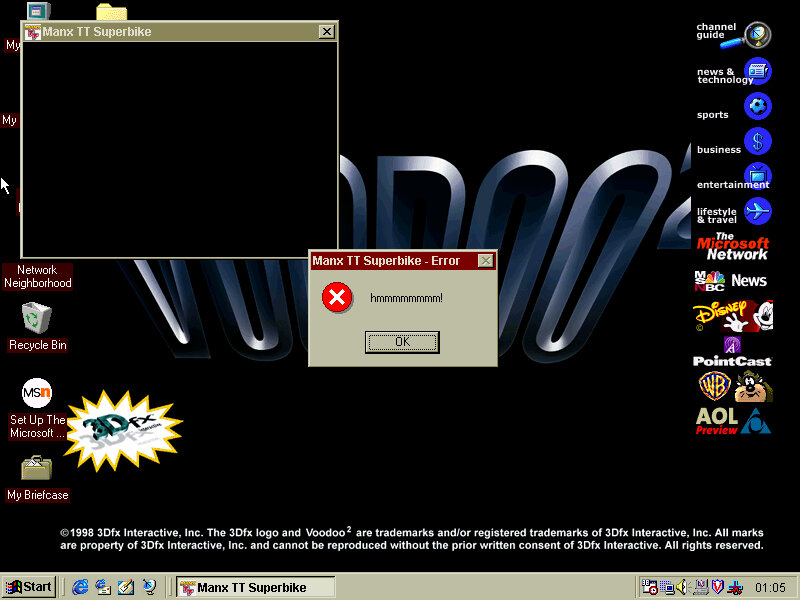
Works well in 86box until I tried it in a Pentium II PC with a Voodoo 2 (S3 Trio video card), where there were a couple of warping polygons and the game would throw up a ‘hmmmmmm’ error message. Whilst it looks like the game crashed, clicking Ok on the message box would restore and return you back to the game. None of this seemed to occur in other VMs I have that used the original Voodoo and AMD K6 combo.
Ridge Racer Revolution

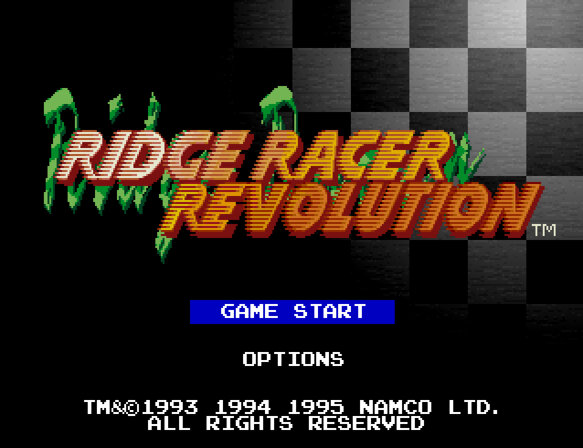
The follow-up to the PlayStation launch classic

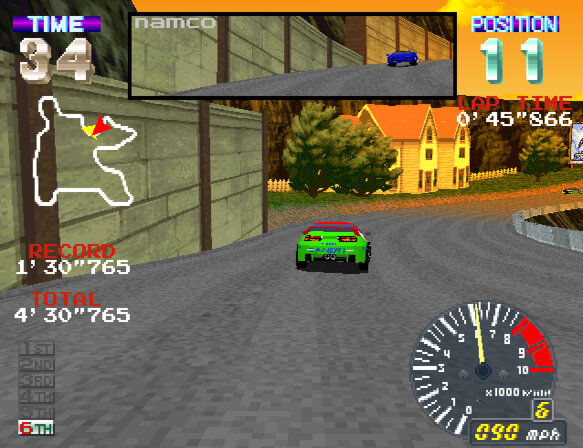
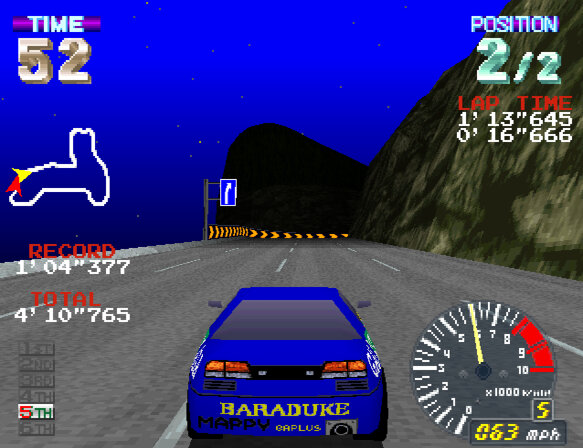
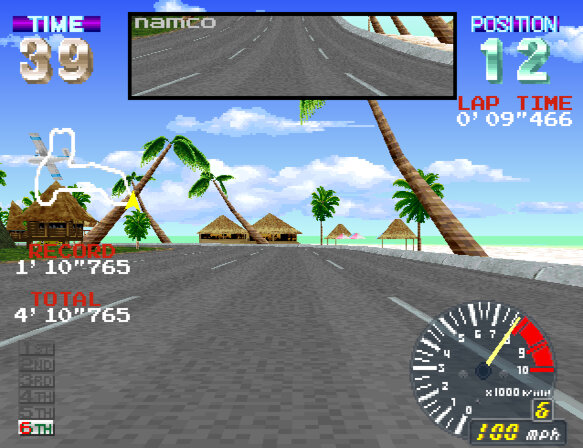
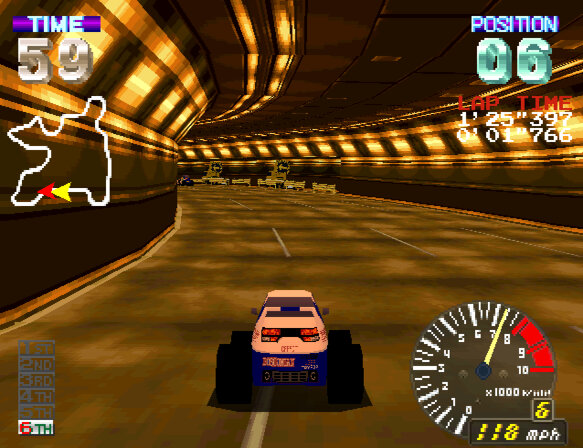
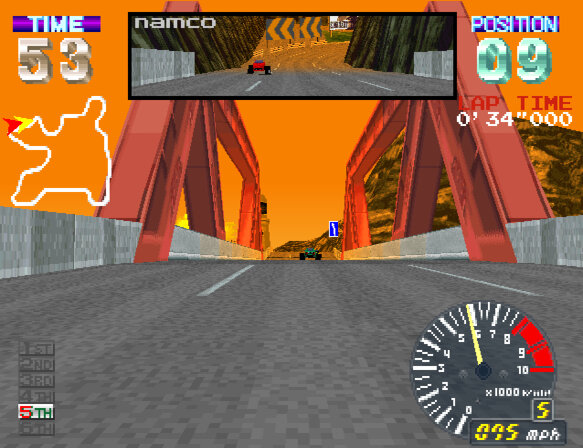
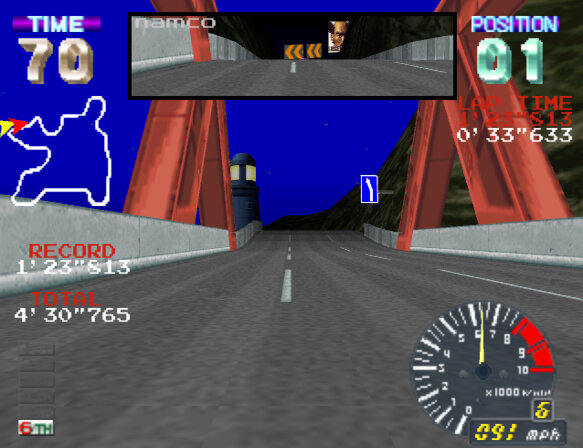
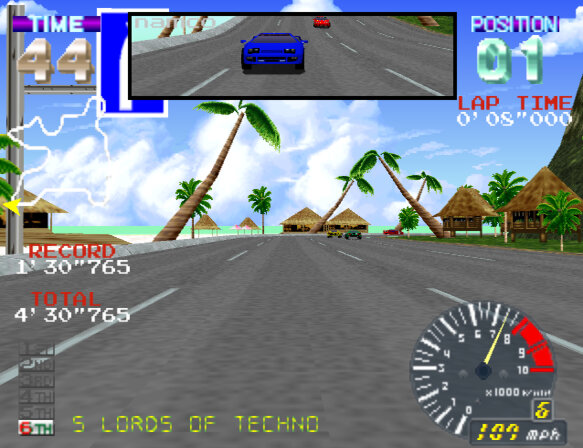
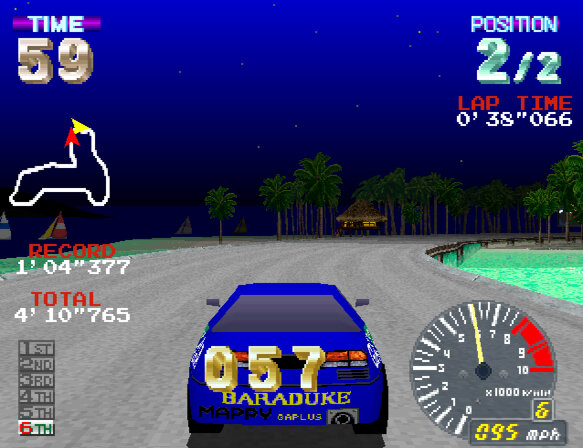
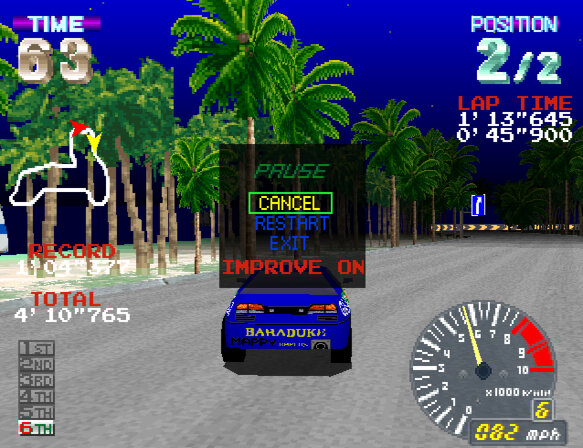
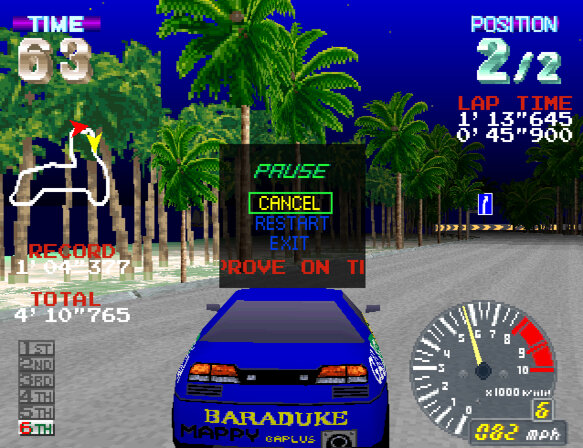
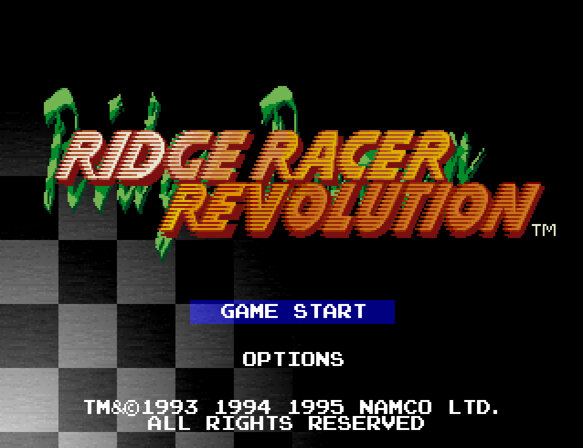
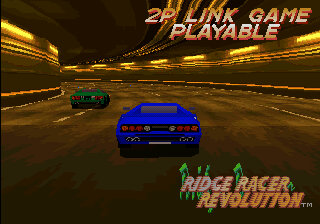
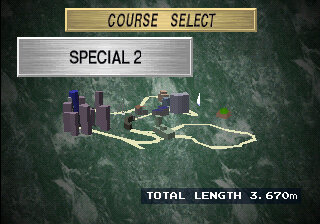
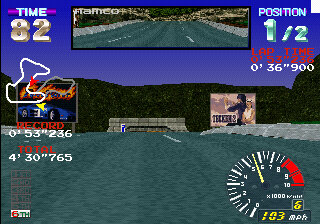
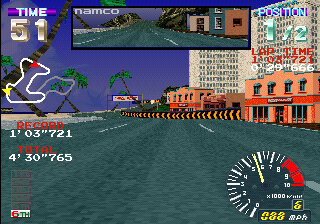
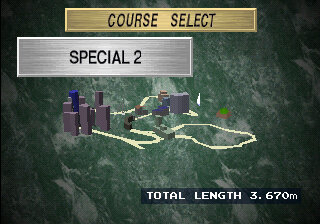
Ridge Raver Revolution builds upon the original Ridge Racer game, set with a new course being added with a few variations. All three tracks are similar in how they start, but branch out into different directions and are named by the difficulty of the track itself (Novice, Advanced, Expert).

As with the first game, there is support for the NeGcon controller, so make sure to enable it in your emulator if you wish to take advantage of analogue steering.

Race Modes

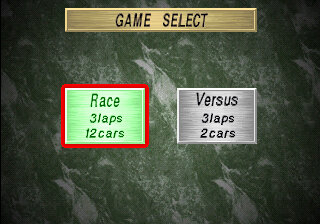
Race: Normal racing mode, race 3 laps around the track and finish in 1st place for each one.
Time Trial: Same as Race mode but you have no opponents, the objective is to get the fastest lap time for each track. I’ve always found these modes boarding and don’t really play these much. Completing these modes will unlock a new car.
Free: You can run as many courses as you like. When you reach 99 laps, the lap counter display will stay fixed at 99 laps.

In terms of gameplay, it’s very similar to the original game, with the same graphics style and mostly the same drifting mechanics. Therefore you could consider this as a standalone expansion pack of sorts.

The soundtrack is the exact same as Ridge Racer 2 was released for the arcade, however, Ridge Racer 2 featured only the original arcade tracks, not the ones featured in Revolution.

Secrets

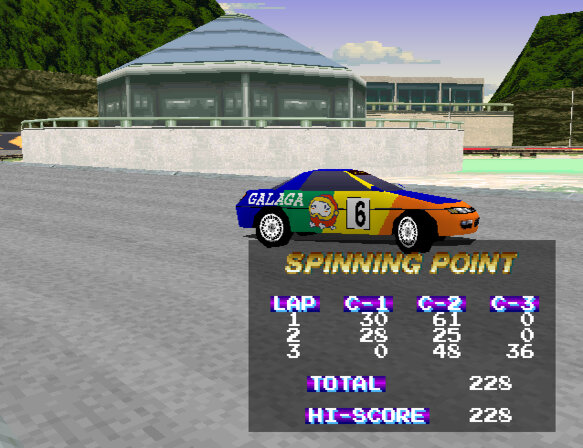
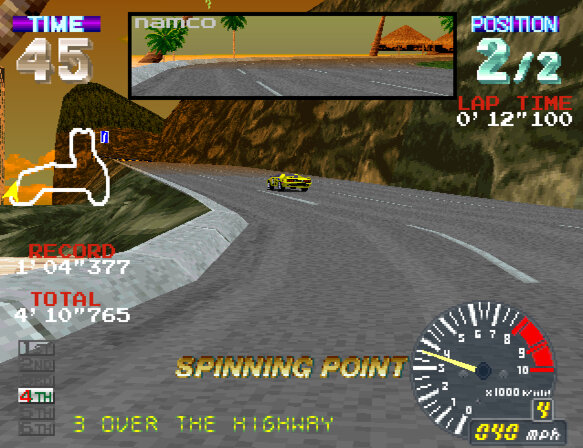
Spinning Point: When selecting time trial, hold down the X and Square buttons and select Start (Note: Not the Start button on the controller, the option on the screen), then when playing the track, Spinning Point will appear where you can spin and the game will score you based on how well you spun the car. This only functions in time trial mode and the scores are not saved.


Pocket Racer: A hidden mode that is enabled when you beat the Galaga mini game without wasting a shot. This mode would later spawn into an arcade spinoff that was released in Japan arcades only as Pocket Racer.


Mirror Tracks: to play in mirror mode for every track, at the start of the game accelerate forward slightly but turn around 180 degrees, then drive into the barrier at over 66MPH and the track will be in mirror mode, along with all the road signs.
Zoom In/Out: When in third-person view, pause the game and then press either the L1 or R1 buttons to zoom in or out respectively. You can then resume the game with the new viewpoint.


Title Screen: The spotlight can be manipulated by holding both the L1 & R1 buttons, then using the d-pad to move the spotlight.

Two Player Link

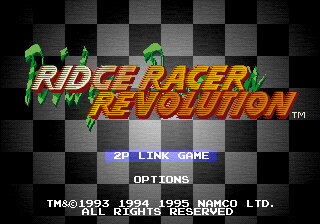
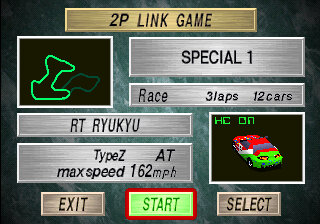
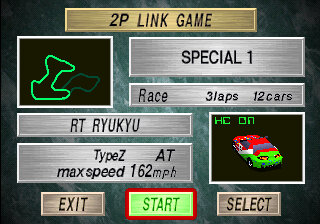
Revolution included a new two-player link that allows for two players to race each other through the use of two consoles, two copies of the game and two displays. This is not the same as the split-screen modes in the later installments of Ridge Racers, with only one player per console.
A link cable is required to connect both consoles together using the serial port located on the original PlayStation models. The smaller Psone branded consoles lack this port and cannot make use of the two-player modes, but can still play the single-player modes.

You can replicate the two-player mode using the NO$PSX emulator, or PCSX. PCSX was troublesome to work within Windows as starting the emulator as a client would just cause it to crash. Under Linux we have some luck but when we are able to re-establish a link, the performance is horrendous with both games running at around 2FPS. Possibly due to both emulators trying to run in sync with each other. I tried running both in a VM, running in a LAN segment but the performance was still the same.

The original Ridge Racer tracks can be played in this mode, as this functionality was missing from the first game.

Conclusion

The game feels like what Ridge Racer should have been when it was ported to the PlayStation. Presumably a lot of content was shifted to Revolution in order to meet the launch deadline since the original Ridge Racer only featured one track with two variations.

One of the main criticism of the original Ridge Race port was its lack of content featuring only 1.5 tracks (the second being an expansion to the original) and around 12 cars, which limited replay value. Here Namco has tried to add as much content whilst still making the game accessible, however I question why certain modes are hidden behind key combinations instead of being directly accessible.

Tekken

The game that put the PlayStation on the map for fighting games.

Select Screen, with the mysterious Wild Card fighter

Plot

So the backstory is, Heihachi Michima throws his kid (Kazuya) off a volcano as a test to see his sons strength as a test to see if he is a worthy successor for the Mishima Ziabatsu corporation. Kazaya (who is 5 years old at the time) nearly dies but makes a deal with the devil. He swears revenge on Hitachi for throwing him off the volcano and enters the iron fist tournament. Clearly this family feud was beyond Jerry Springer…
There also a bunch of other fighters who enter the tournament for money or to prove themselves, including a robot and a bear.

Gameplay

Each character corresponds to the face buttons on the PlayStation controller, with two buttons being assigned to the left/right hands of the playable character, with the X and O buttons for the left/right which can be used to issue kicks to the opponent. Guarding is done by holding the left, or right depending on where your character is facing the opponent. Some moves cannot be guarded against.

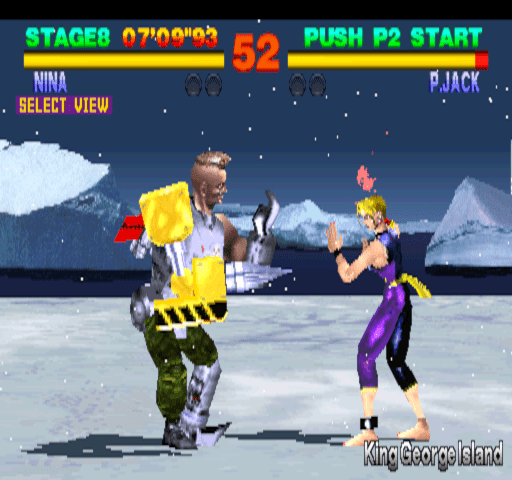
During the first 9 seconds of the fight, you can press the select button to switch between different views (1P Start on the Arcade version)

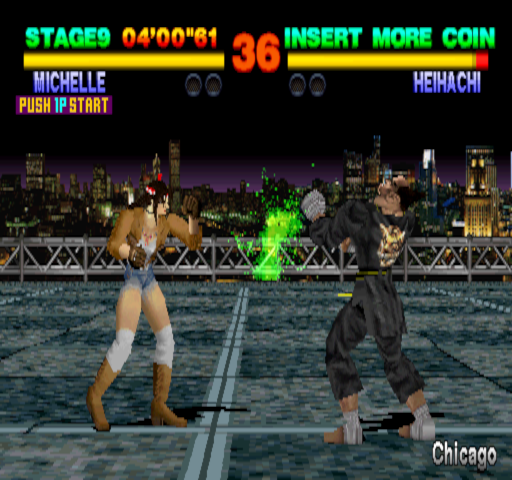
Arcade mode consists of nine stages, for the first seven stages these are opponents picked at random, on the eighth round you will fight against a rival, depending on the character chosen. The 9th round puts you against Heihachi, and after winning the match the end credits will play. The arcade version runs through a montage of KO replays for each round, whereas the home version will show the characters ending FMV.


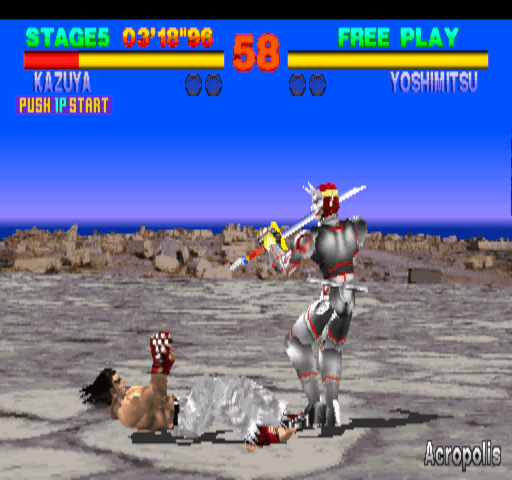
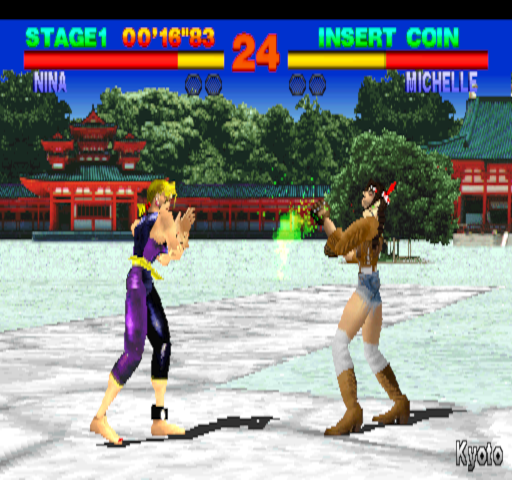
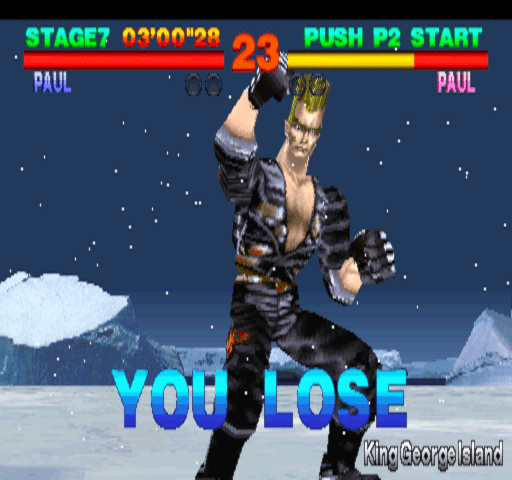
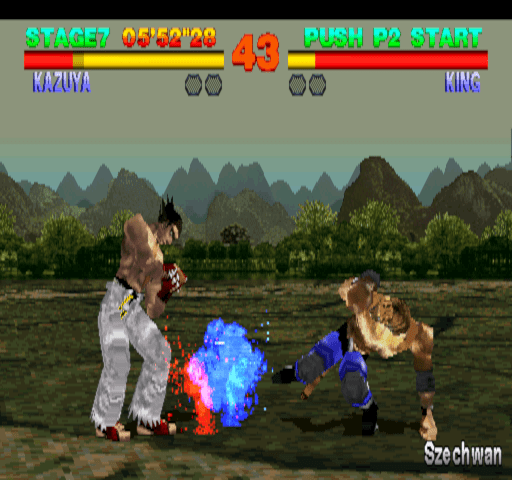
Tekken featured different fighting game stages that are based on different real world locations, and each location has their own background theme.

Characters

Nina Williams: An assassin. Rival is sister Anna Williams
• Michelle Chang
Paul Phoenix: A biker who has a killer fist, also a judo expert
Wang Jinrei: Standard old guy who is an expert in Marshall arts
Yoshimitsu: The Ninja
Prototype Jack: A robot who is slightly altered from the regular Jack
Marshall Law: Bruce Lee who can’t keep his mouth closed
Lee Chaolan: Step-brother to Kazuya
Kunimitsu: A kleptomaniac Ninja, rival to Michelle who she stole a pendant from
Kuma: A bear
King: Mexican Catholic wrestler who has a head of a Lion/Tiger for a mask
Kazuya Mishima: Seeks revenge against his dad for throwing him off a volcano,
Jack: A robot cyborg
Anna Williams: Sister to Nina Williams
Armour King: Rival of King
Ganryu: Plus sized Sumo wrestler
Heihachi Mishima: The final boss of the game

All characters have an alternative costume that can be selected by pressing Triangle/Square, instead of X or O. There is also Devil, who is Kazuya but serves as the final boss of the game. He can be unlocked and become playable character by completing the Galaga mini-game at the start with a perfect score.

There is also an unused charicter that exists, known as Wildcard. Believed to be Kazuya’s long lost twin, he grew up and was raised by Yoshimitsu who adopted him into the Manji clan where he learnt how to fight. He entered the iron fist tournament to reunite with his family, but after learning of the devil gene and Kazuya’s heart of darkness, Wildcard left and was never to be seen again.

Versions

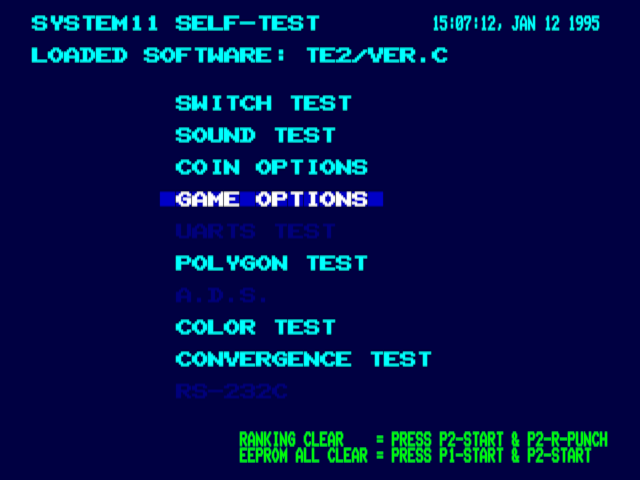
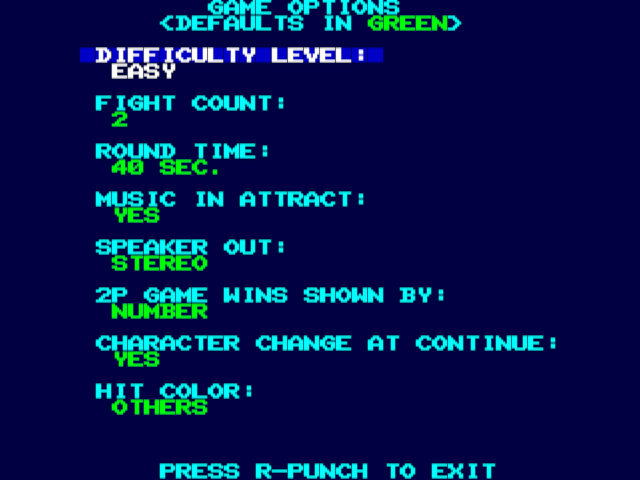
Arcade: The arcade version runs on the PlayStation based Namco System 11 board, which is very similar but with a different sound processor, the Namco C76 and C352 which was also used on their System 22 arcade board. This version only allows a limited amount of characters to be selected and playable compared to the home PlayStation release.

PlayStation: Released 1 year after the launch of the PlayStation, this version included FMV based endings for each of the character which explains the back story. Like other Tekken games, the home version has a revised soundtrack, but has the option for the arcade original soundtrack also.
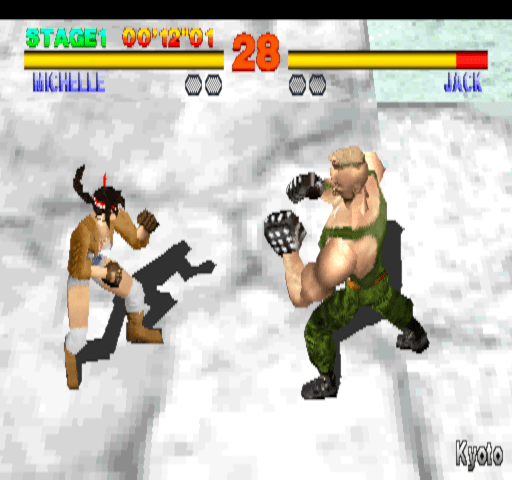
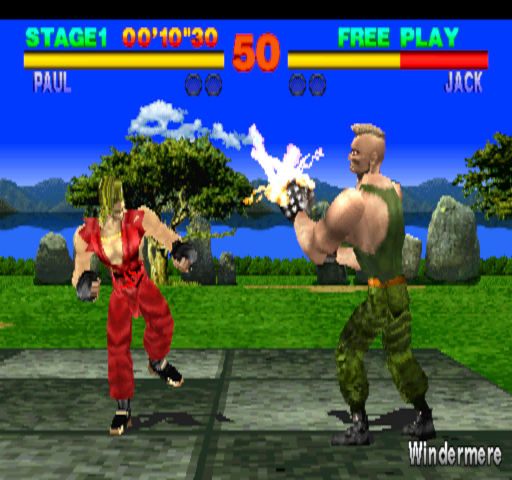
The home release of Tekken 5 features an arcade version of the first Tekken game, which looks and play exactly like the actual arcade release, no improved textures or effects. I’m not sure if these are ports for the PS2 hardware or if they’re tapping into the PS2 PlayStation backwards compatibility.
Other Differences

The only other noticeable difference is the question mark animation spins on the arcades character select screen, whilst it is static on the home release. An animation also plays when a character is selected on the arcade, but does not display on the PlayStation.
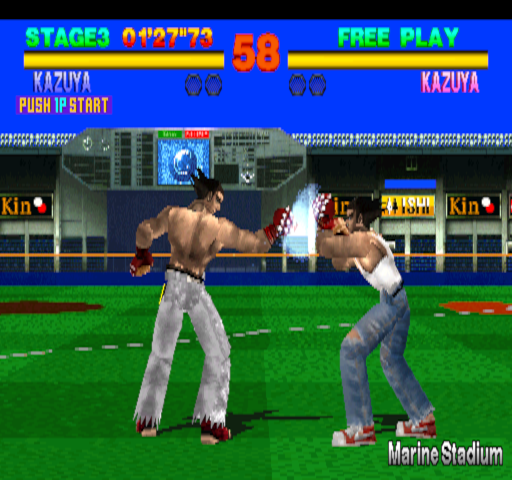
On the stadium stage, a screen can be seen in the background that shows a copy of both characters fighting, the arcade has a static texture in place of this. The stage name is also different, referred to as Marine Stadium in the arcade, and Stadium in the console version.


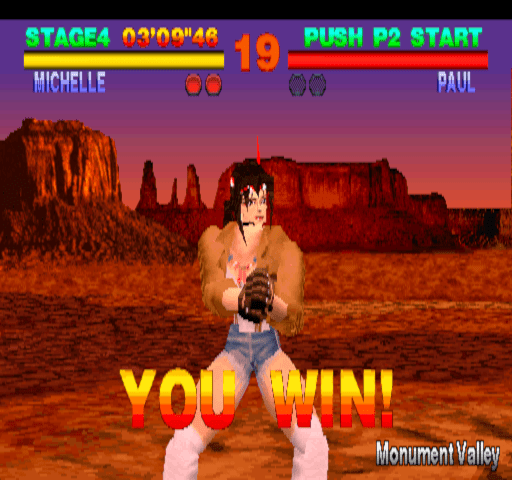
In Monument Valley, the sun sets in very round for the arcade version, but in the console version the sun sets only one, and stays down for each round

These differences may be due to the arcade version having a larger amount of VRAAM compared to the PlayStation version, 2MB vs 1MB. However the main system RAM remains the same (2MB), along with the main CPU and the GTE (33.8Mhz, although MAME shows this to run at 67Mhz since the PSX CPU divide the incoming clock signal by half, so its still running at 33.8)

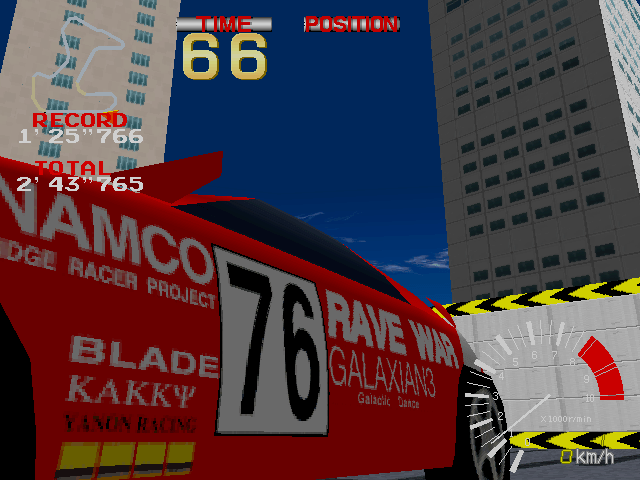
Originally Tekken was known as RAVE WAR which appears on a couple of Ridge Racer cars on both the arcade and PlayStation. Also to note the game was originally in development for Namco System 22, which Ridge Racer and Time Crisis had run on.

Rave War – Unseen64

WipEout

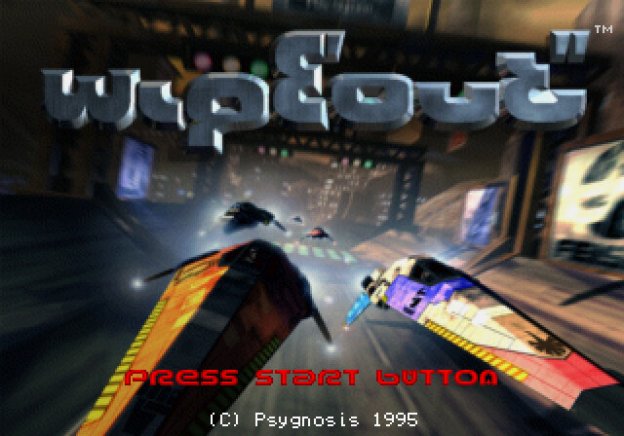
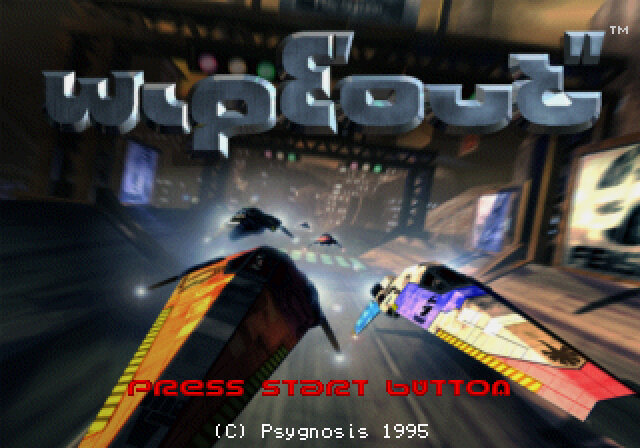
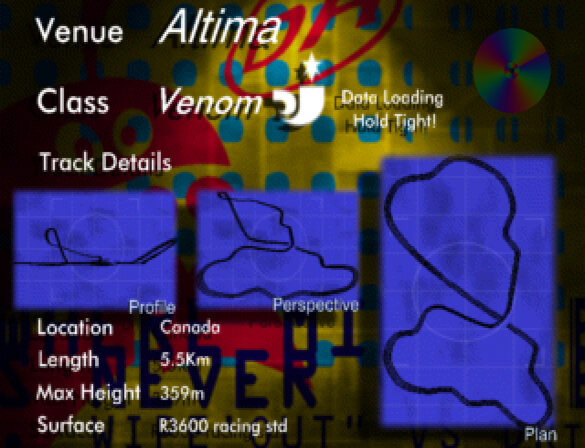
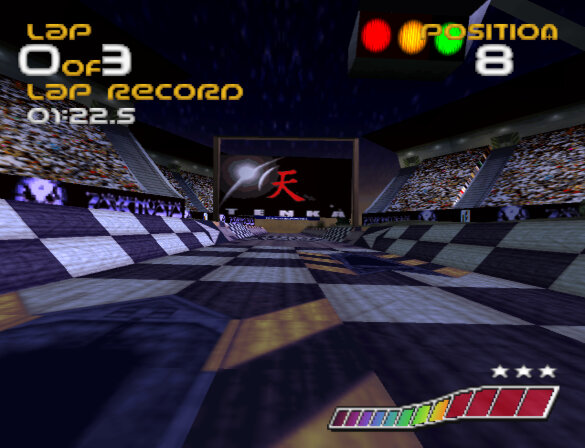
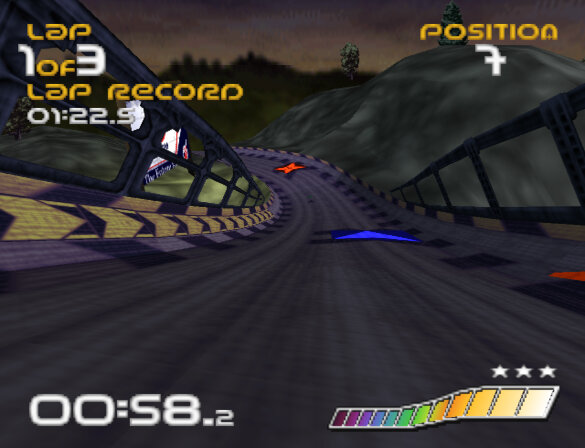
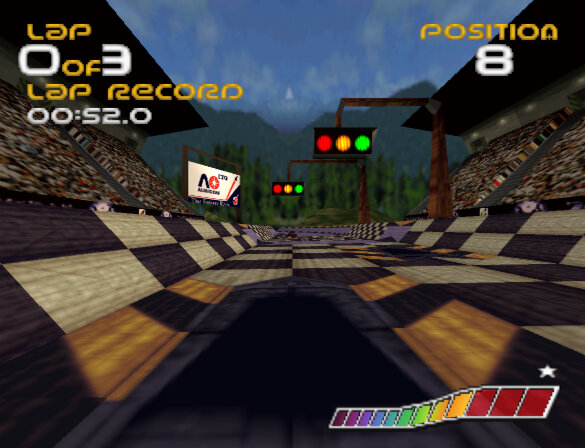
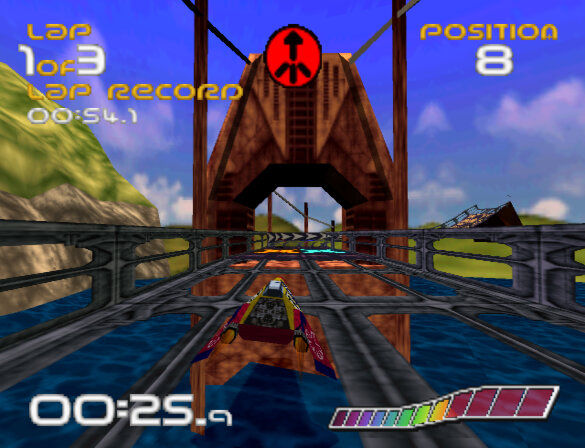
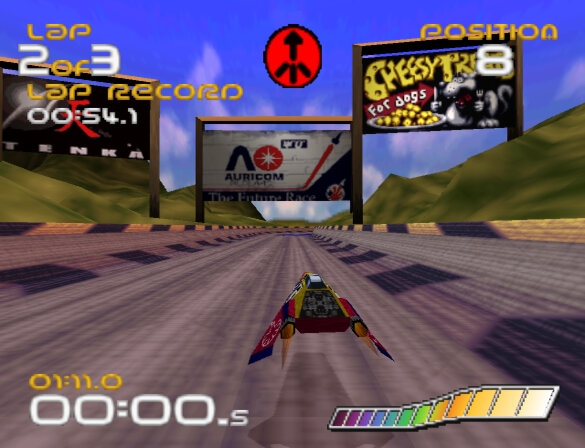
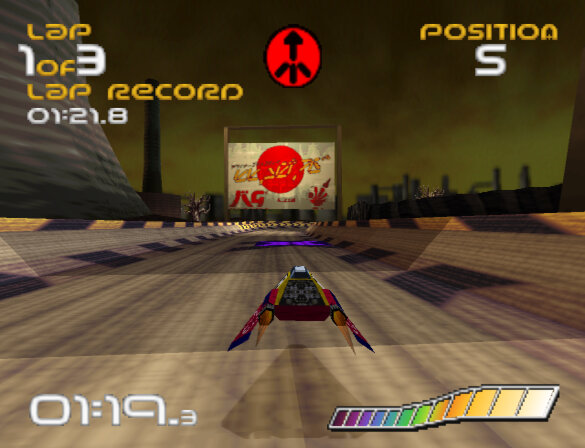
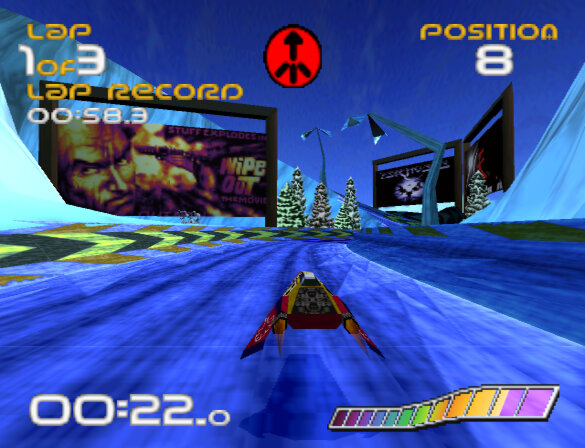
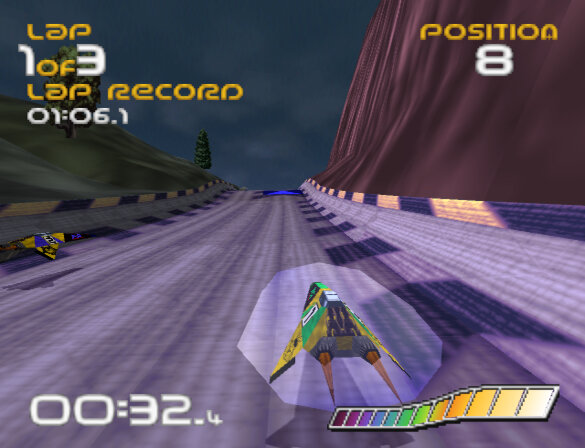
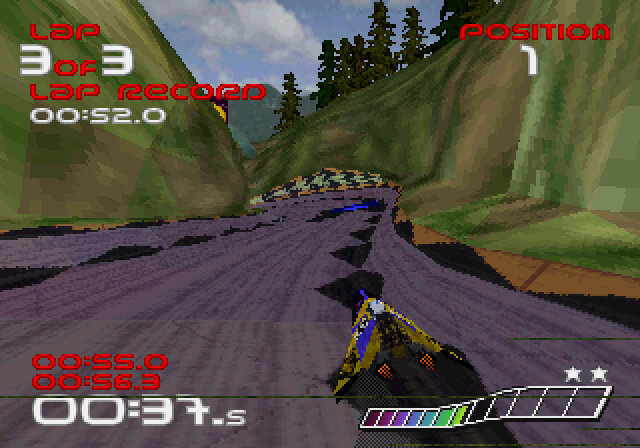
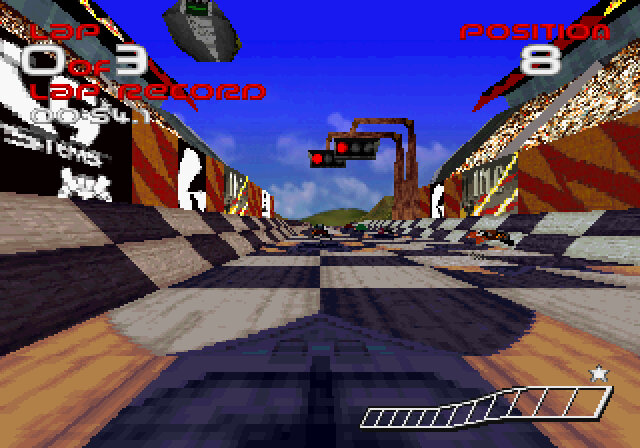
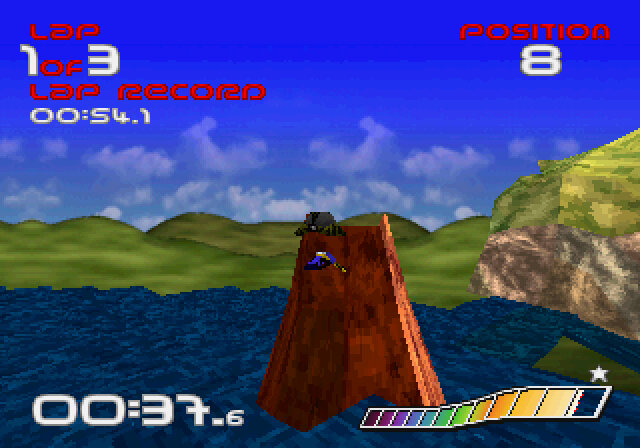
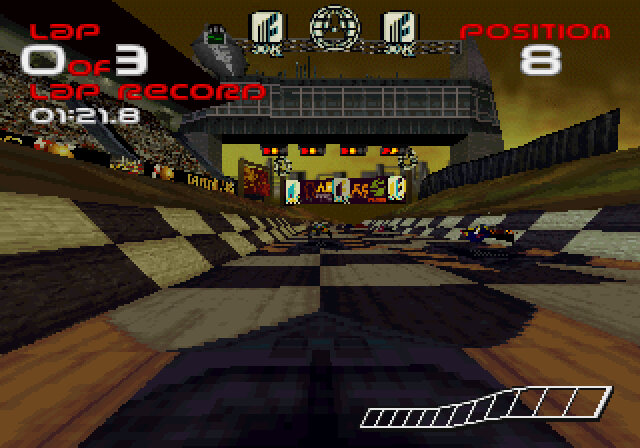
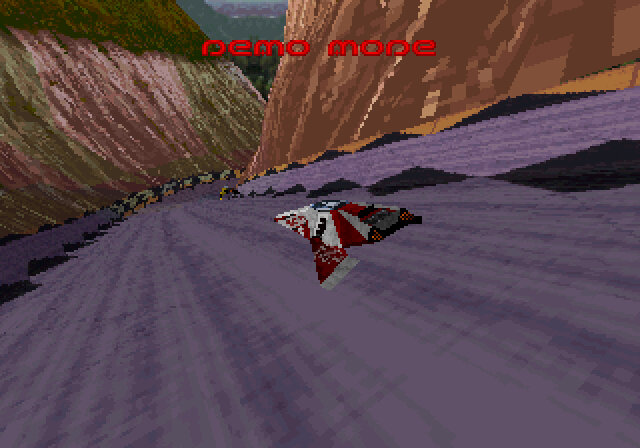
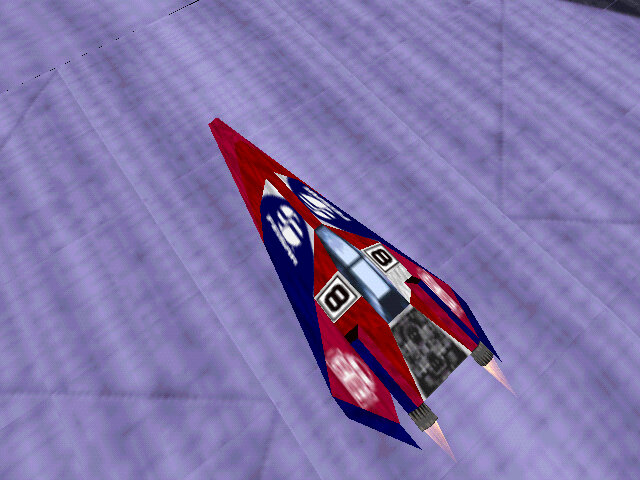
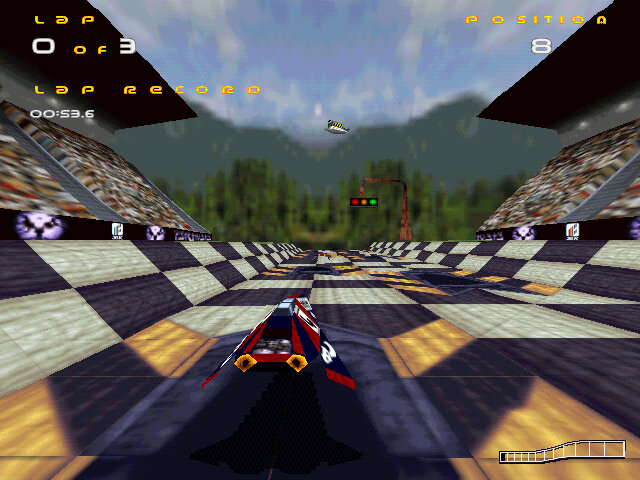
A futuristic racing game released in 1995 for various platforms.

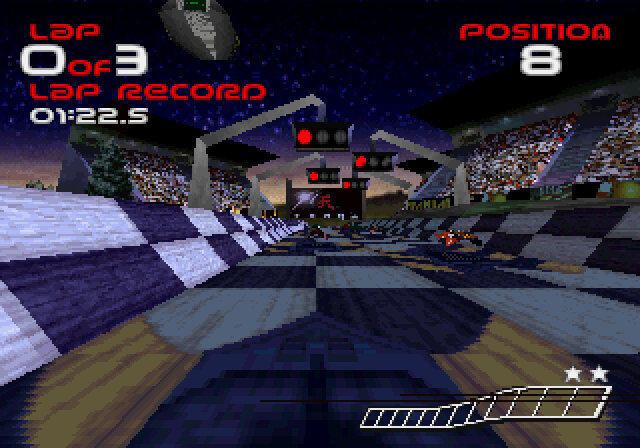
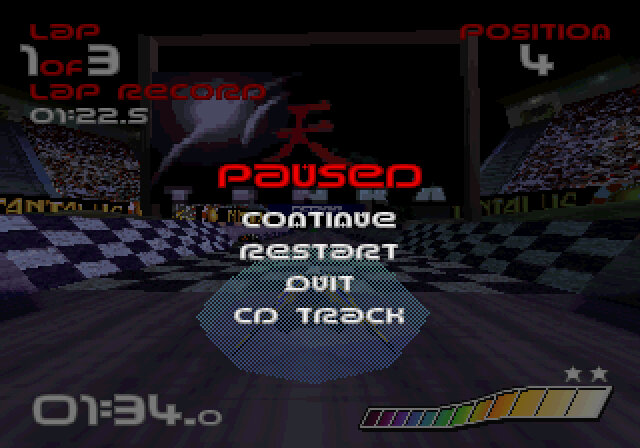
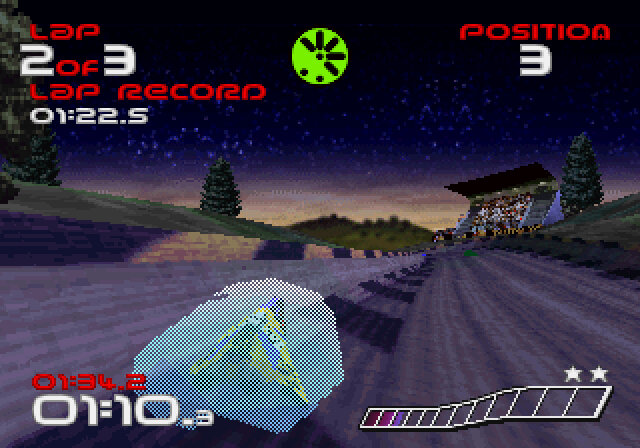
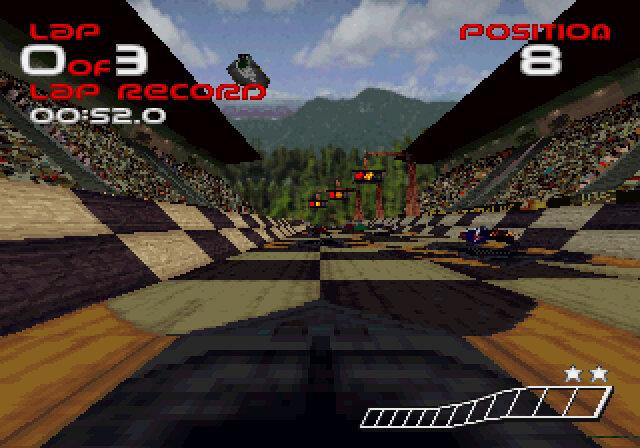
In Wipeout your mostly battling against the track itself, rather than the rival ships, and at fast speeds the game can become a challenge, requiring quick reflexes. Thankfully it comes with a banging soundtrack, something which is a staple of the Wipeout series of games.

2 Player mode exists for the console versions, but its one of those games that needs a serial cable, two PlayStation or two Saturn’s, TV’s and copies of each game.

PlayStation

Probably the best version, since it has all the graphical effects, and the sound effects when you enter a tunnel. Can also be played on the PlayStation 3 and PSP as part of the PS Classics. Only issue with this port is the low resolution and the pop-in textures on the track, poor draw distance. As a bonus the game supports the use of a NeGcon controller, allowing for an analogue control, useful for turning and for the airbreaks.

On modern emulators you can sort of re-create the PC effects such as higher resolution and texture filtering, but you are still stuck at 30fps. Overclocking the CPU results in the game running too fast.

Duckstation: Enhanced

The game clears up rather well compared to how it originally looked

Sega Saturn

Wipeout was released for the promising Sega Saturn, and serves as an example of the PSY-Q dev kit for the Saturn, which Psygnosis were trying to promote at the time as an alternative to Sega’s devkit (a version of PSY-Q was released for the PlayStation). The soundtrack has been altered with some songs being removed

Screenshots: SSF emulator

Windows

WipEout was ported to the PC a year later than the PlayStation release, and was designed exclusively for ATI video cards and was typically bundled with Windows PC that had those cards. It’s one of the games that supports ATI’s CIF API rather than Direct3D. This limits it to ATI Rage series 3D chipsets, the one in my Dell OptiPlex being one of them, but in order to play CIF games you need to use an older 1999 driver from ATI (The Windows 98 bundled driver has no CIF support), also CIF is only supported under Windows 98, there is no support for Windows NT 4.0. ATI later removed CIF support from its drivers from late 1999 onwards, so you may have to downgrade the driver order to play. A CIF wrapper exists for Windows 7 onwards, although I’ve not tested it.

Screenshots below are captured from a Dell OptiPlex GX1 with an Intel Pentium 2 350mhz and an ATI RAGE 2 with 4Mb of VRAM

The main difference is the ability to play the game in a higher resolution and with the ability to play at a higher framerate, it’s not exactly 60fps on a Rage2 but its a lot more smoother than the PlayStation version. However the sound is not has good as the console versions, with the PC missing the echo sound effects that play when you enter a tunnel. It’s also one of those games that’s stores the music as Redbook CD audio, and the game plays the audio back like a regular CD player would. This gives the option to change the CD (as the game runs from the hard disk) to play your own music.

MS-DOS

Very similar to the accelerated Windows version, but has a lot of enhancements removed, there’s no texture filtering, the framerate is lower and the resolution is reduced, likely because everything is being done on the CPU. You are limited to a low 320 resolution, 16 bit colour.

Personally I would stick with the PlayStation version, or the Saturn if you prefer more detailed textures. The PC versions sacrifice too much for what benefit they give, although you get the opportunity to run in a higher resolution, the missing sound effects are a huge setback and ruin the immersion of the game. besides with modern emulators you can run the game with additional filtering and upscaling, the FPS is still stuck at 30fps.

Hackers

A concept imaging of Wipeout appeared in the movie Hackers, which features slightly different gameplay with obstacles on the track, a crew that speaks to you instead of techno music playing. It was believed to be rendered on a SGI workstation and features perspective correct texture mapping

External Links

WipEout – Archive Website

WipEout – DOS Support