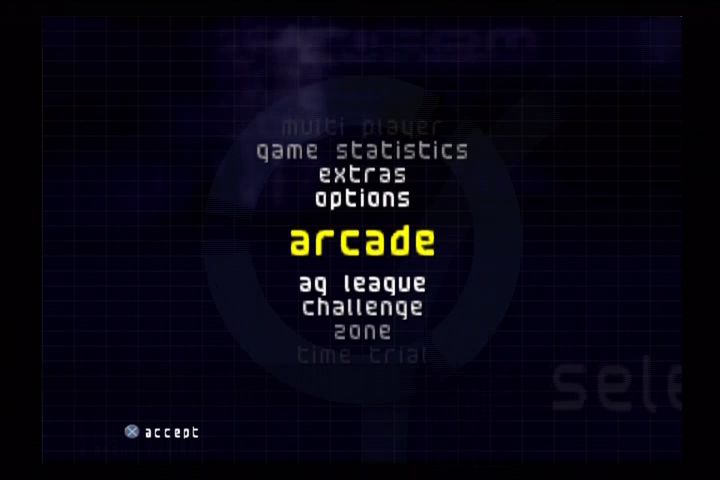
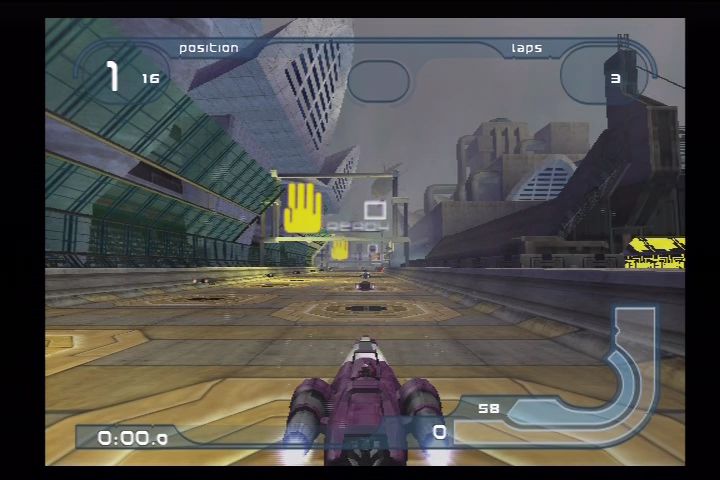
The PS2 instalment for Sony’s Wipeout series of futuristic racers, which gave us the first 60fps Wipeout experience. It was released late for a first party PS2 title, coming out in 2002. It is set in the year 2160 during the F9000 Anti-Gravity Racing League and sees the return of ship pilots that can be selected by the player.
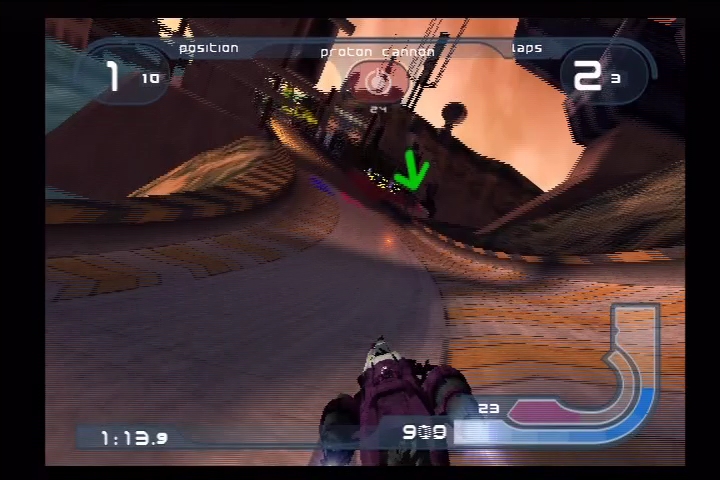
Wipeout Fusion builds on the series’ evolving combat system, which started simple in the original game and grew more complex. The F9000 league’s focus on aggression leads to more weapons (26 vs. 10-15 in priors), greater emphasis on elimination, and modifications like backward-firing options. Your ship has limited energy that can be depleted, which must be replenished by passing through a energy recharge station located adjacent to the finish line. Because of how vicious the enemy players can be, you will often find yourself having to pass through this to keep your ship in the game.
Track design is a bit of a mixed bag, here you are treated to much more detailed environments with a lot more elements on the track. But this can be very distracting and often confusion, occasionally I have took a wrong turn or have even got lost as there are twits and turns and pathways that appear to be deadened. It does not help the the frame rate tends to tank when there are a lot of ships onscreen, in addition to the article effects when you are either in a sandy or snowy area. Some of the tracks are quite visually busy it can very distracting to play. Some of the track sections are just too dark, like when you enter a tunnel. With the tracks themselves, Wipeout Fusion took the approach of reusing the design over different tracks, kind of like the Ridge Racer games where certain tracks are variations of others. Temtesh bay is a rocky desert mining region set in Australia and features sections that are quite open. Alca Venus as a rainforest feel to it with dense vegetation temples and waterfalls. Cubiss Flat is set in the Alpine glaciers and features snowy mountains and blizzards.
The music’s amazing as to be expected for a Wipeout game, you have a mix of electro, trance and drum & bass that was popular from the era with some standout artists like Utah Saints and Future Sound Of London. Music appears to play sequently, or you can switch it to random play.
Already we have more opponents on the race than was possible on the PS1 versions, with 16 opponents.
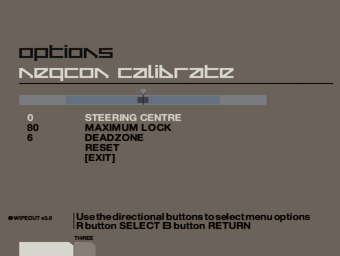
What’s disappointing is for a first party exclusive game, Wipeout Fusion does not take much advantage of the PS2 functionality like the i.Link port. The PS1 Wipeout games often made use of the link cable to allow two player gameplay with two consoles which was a nice feature as it allowed for two players to play without having to use split screen. The Namco NeGcon controller is still supported for analogue control, but is redundant since the PS2 comes with the DualShock as standard.
The game’s loading times are also pretty terrible, expect to wait upto one minute for a typical race to load.
Wipeout Fusion faced completion from other futuristic racing games of the era, Quantum Redshift which was exclusive to the original Xbox was released in the same year and features ships racing on planetary tracks, with character-driven pilots (similar to F-Zero) who have rivalries and unique abilities, contrasting Fusion’s pilot team-based approach. Both games share core mechanics like weapon pickups, upgrades, and high-speed chaos but Quantium Redshift has more refined combat system with the concept of homing weapons, non-homing weapons and a deployable shield. They types of weapons are dictated by the ship you choose, while Wipeout Fusion is based on what has randomly been selected when you fly over a weapon pad.
Still, Wipeout Fusion was considered a weak entry in the series, and it wasn’t until 2005 with the release of Wipeout Pure which saw a reboot of the series mechanics.
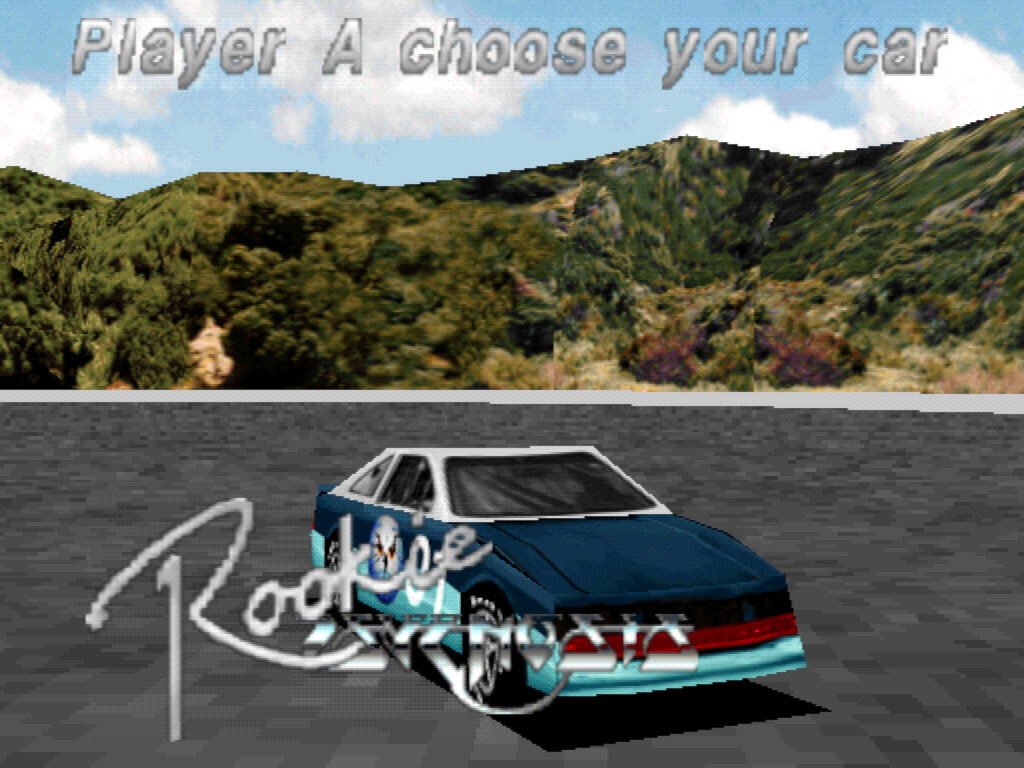
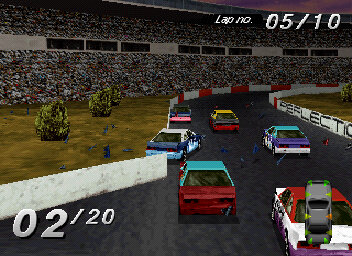
A racing & combat game, developed by Reflections (Who went on to produce Driver) that was released in 1995, at the begriming of the 3D gaming revolution. In Destruction Derby, players compete in demolition derby-style events where the objective is to crash into opponents’ cars to damage them while trying to survive and be the last car running. The game features both racing and demolition derby modes:
Destruction Derby Mode: In this mode, players compete in arenas specifically designed for vehicular combat. The last car that remains operational wins the match. Players can earn points by inflicting damage on opponents’ vehicles. Wreckin’ Racing Mode: This mode combines racing and demolition derby elements. Players race around circuits while attempting to wreck opponents’ cars. The winner is determined by a combination of finishing position and damage inflicted. Stock Car Racing: Traditional racing mode where you finish a race of multiple laps Time Trials: Similar to Stock Car Racing, but you have to aim to get the fastest lap time. Getting the quickest time will allow you to enter your name as a high score.
Each mode can be played in practice, championship, dual or multiplayer mode.
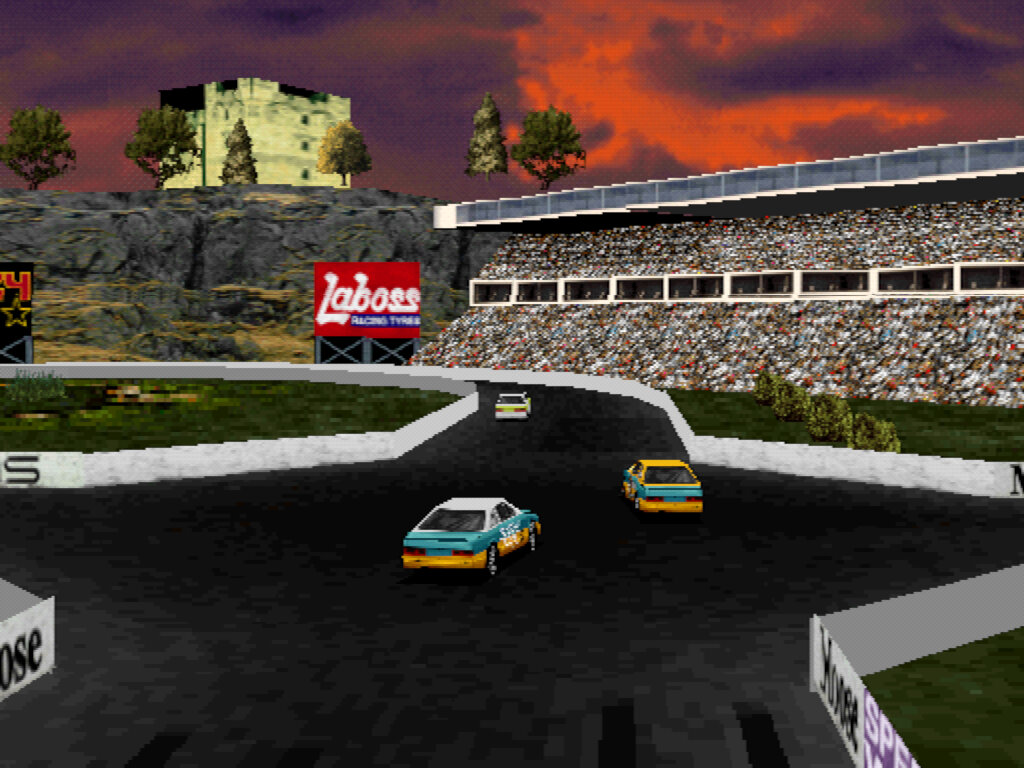
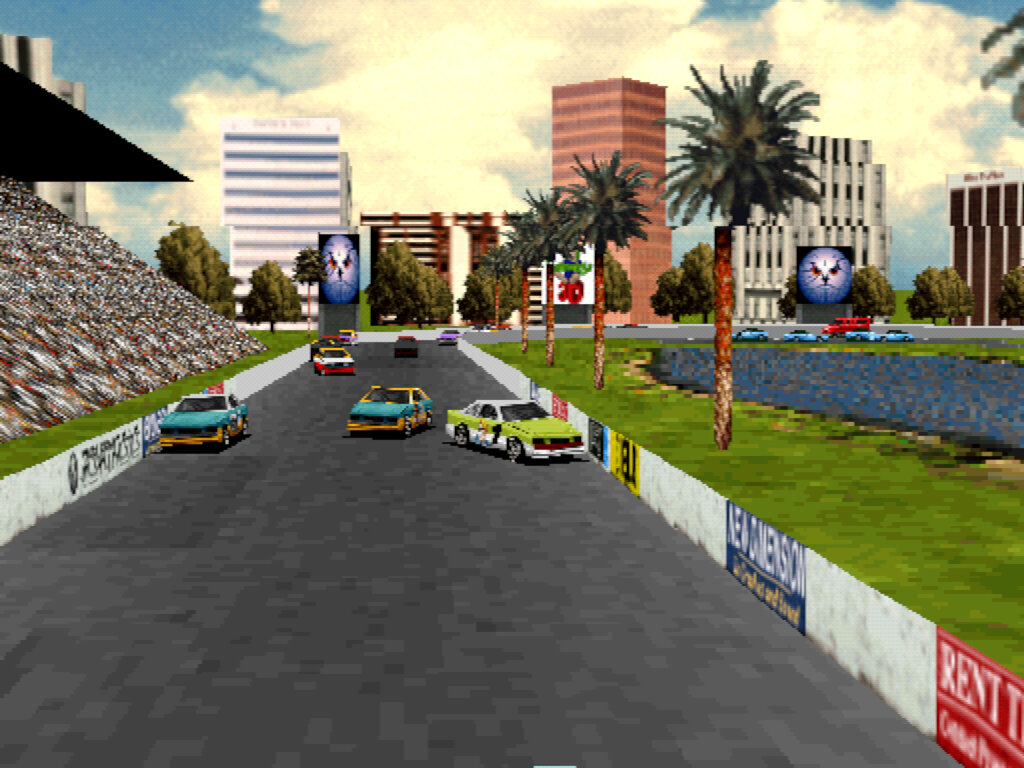
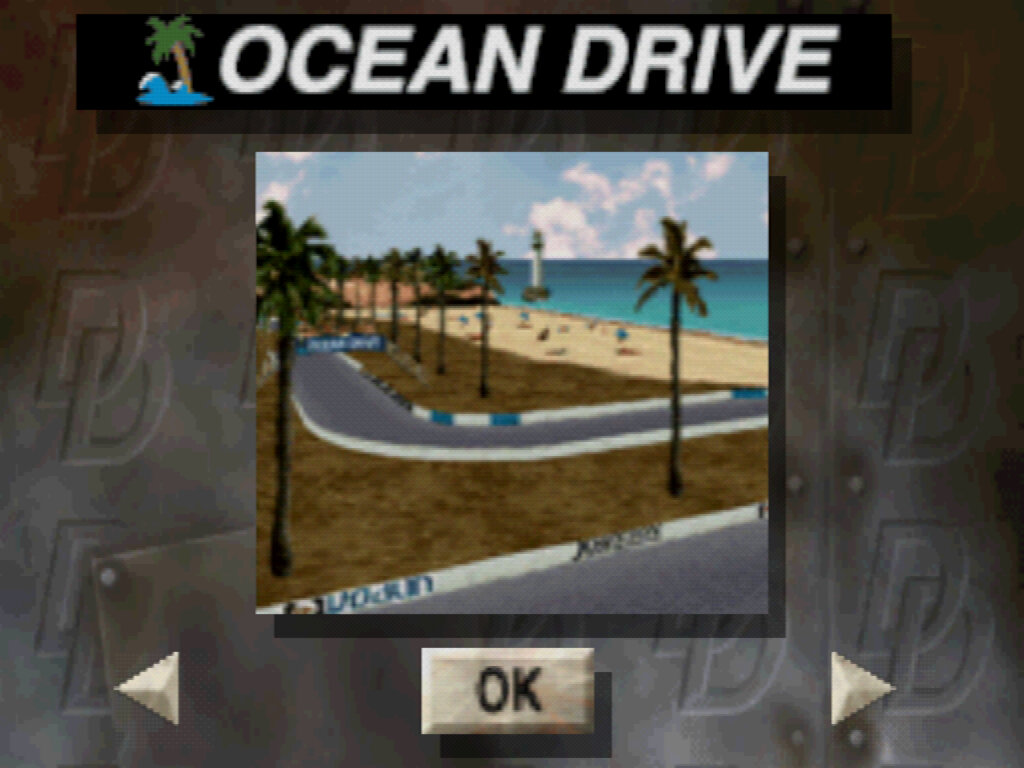
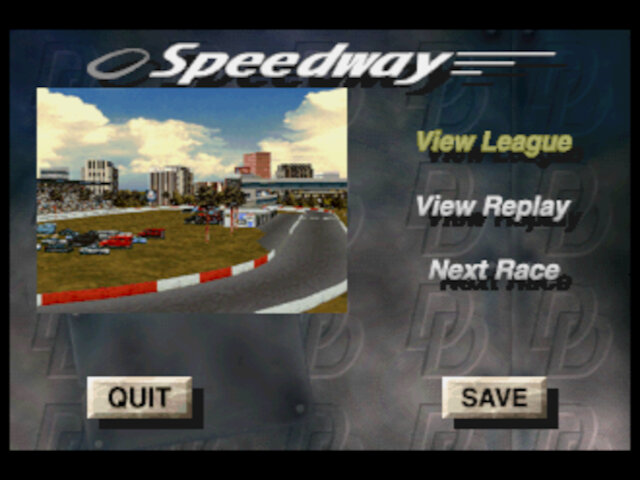
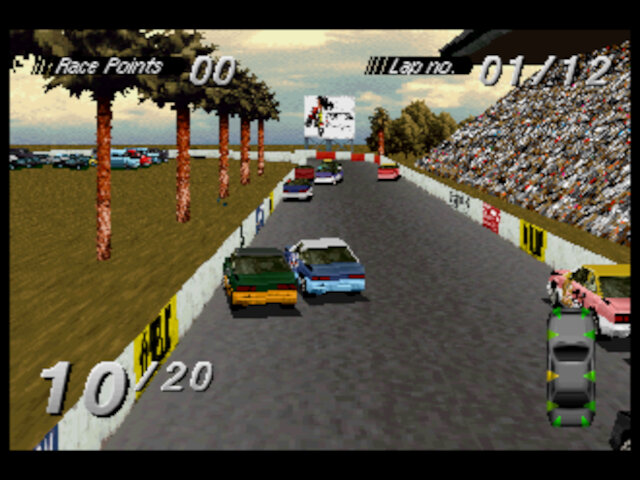
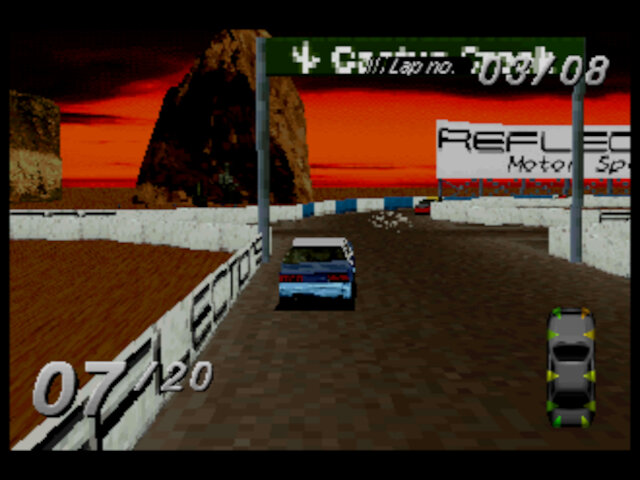
Five tracks are available at the start of the game, Speedway, CrossOver, Ocean Drive, Catus Creek, and City Heat. Each track is set in it’s own environment and have their own unique track design. Some feature a loop design which require you to dodge and avoid opposing cards, otherwise it easy to lose which direction you’re supposed to go. Pileups are also fairly common on these type of tracks.
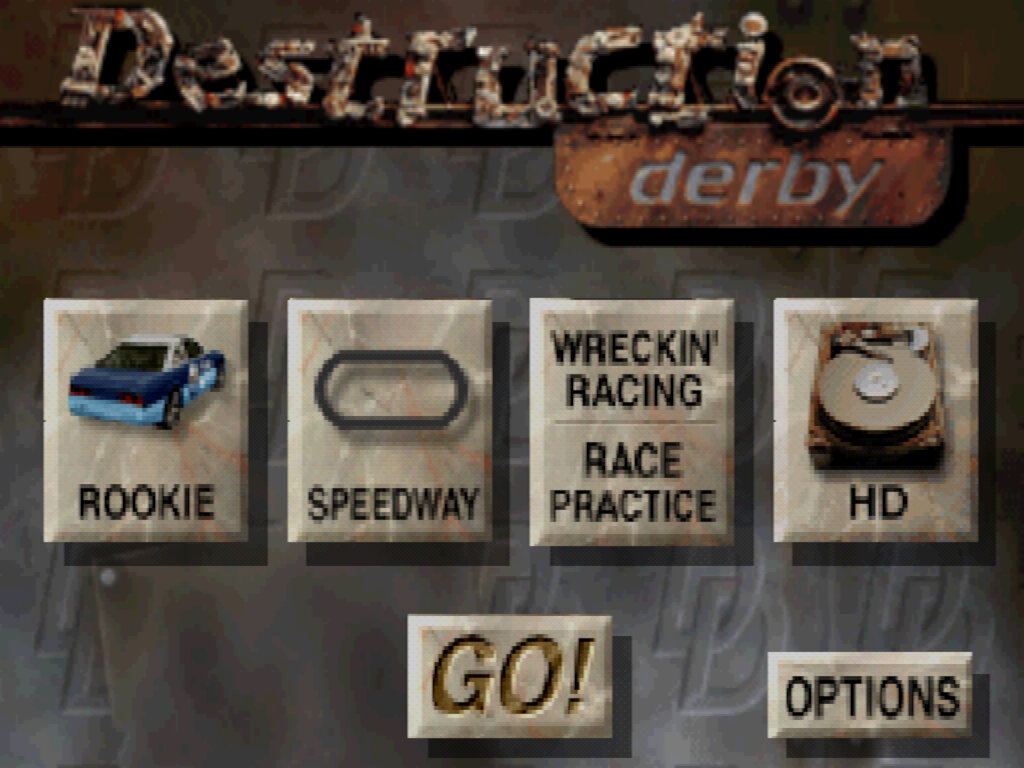
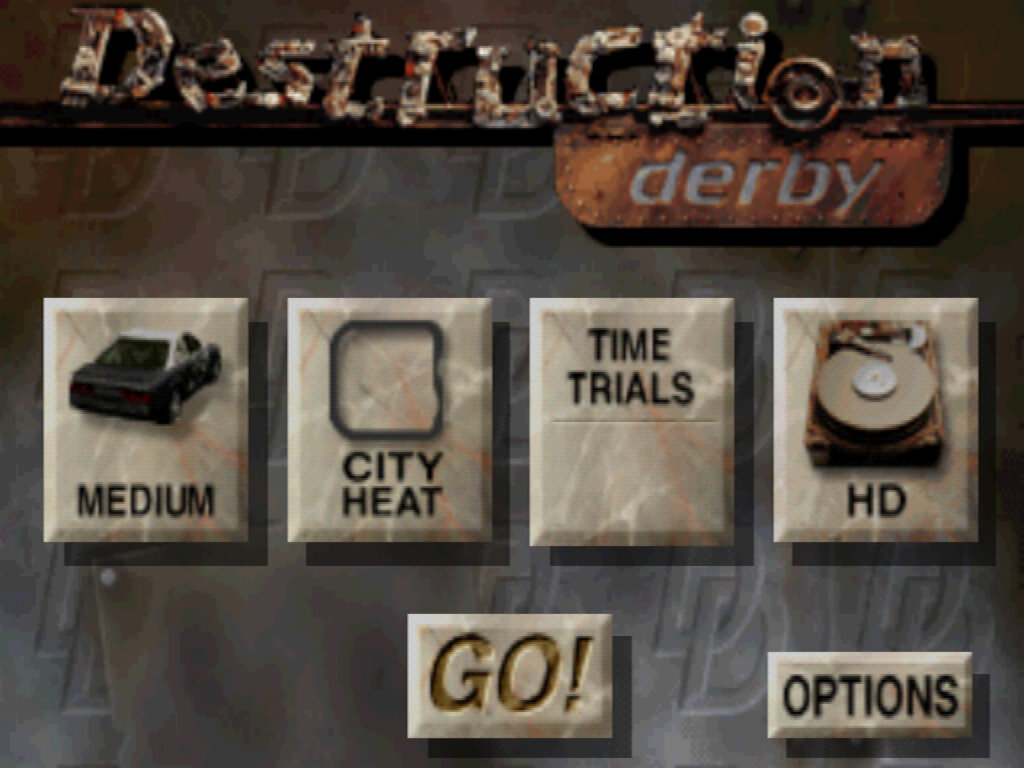
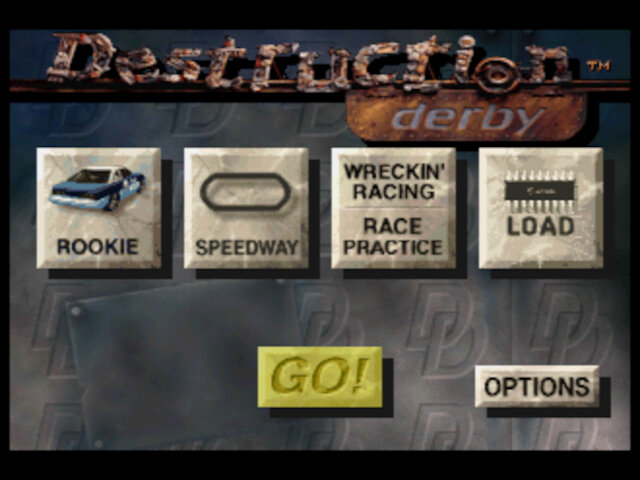
A look at the main menu of the PC relase, which features 3D tiles that function as menu items. Similar to the save screen on Mario 64 or on the SGI demos of the era.
Windows
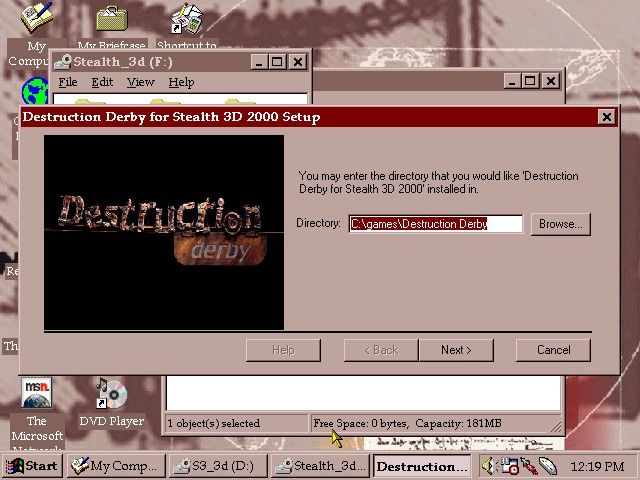
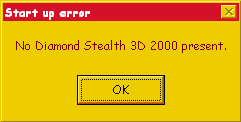
The Windows version had support for S3D acceleration, with was supported on S3 graphics cards which were common of the time. This required the use of a specific OEM copy of the game that shipped with a computer that featured the S3 ViRGE video card. Other PC releases would make use of MS-DOS and software rendering instead, which was inferior to the S3D and console releases. One issue with the S3 version is it’s limited to Diamond Stealth 3D 2000 cards, and will refuse to function on even the 3000 model. This can be bypassed with a patch that removes this check. There I also an option to enable texture filtering that gives the textures a smoother look, but at the expense of framerate. It can be togged on the settings menu of the game.
86Box is able to play this version of this game by using the emulated Diamond Stealth 3D card, paired with a Pentium MMX. Windows 95 lacks built in drivers for this card but they can be obtained here.
Trying to run the game without using a Diamond graphics card, using a generic S3 ViRGE card instead. A patch exists to remove this check.
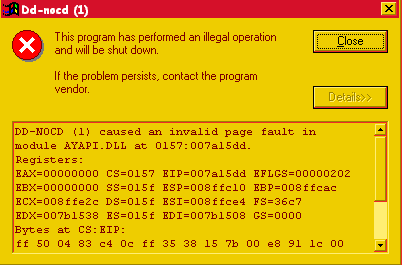
Using the Stealth 3000 caused a crash, with the AYAPI.DLL causing the issue despite using the Diamond drivers and the fixed EXE.
If you’re wondering about the colour scheme, its the RE-MAN theme from the Windows 95 Plus! pack.
PlayStation
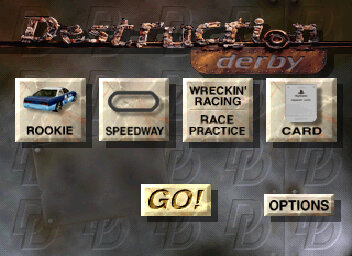
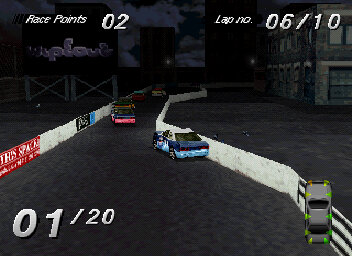
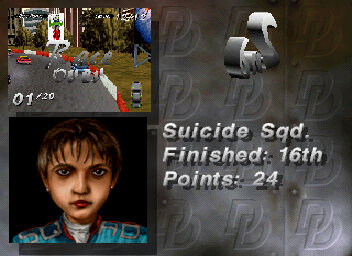
The game was also ported to the PlayStation, This release is a lot more polished, and features thumbnails of the rival characters after the race, showcasing their overall position. The framerate is also a lot more smoother compared to the PC but misses out on the potential of texture filtering unless an emulator is used. DuckStation is the emulator used here, with the stock graphic settings (no enhancements)
For analogue control the NeGcon controller can be used for more precise turns, as this game predates the release of the dual-analogue controller. The menu controls are awkward to control compared to traditional PlayStation games, as you have to press the start button to confirm/enter menus rather than using the X button that most other games use.
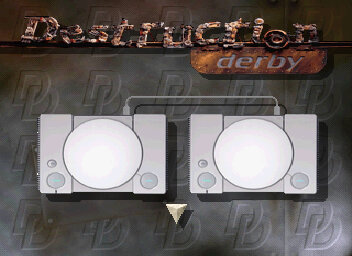
Multiplayer is also a better experience in this version of the game because it supports the use of the PlayStation link cable. For this, two consoles and copies of the game are required, as split screen is not supported.
It’s also a lot more easily accessible, since it can be brought from the PSN store and played on the PS3.
Sega Saturn
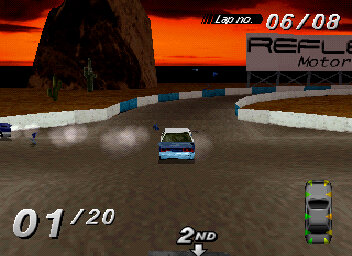
There was also a Saturn version, released in 1996 in Europe. Like other third-party ports it suffers from a poorer framerate compared to the PlayStation version. Still the game is playable and defiantly worth checking out if you’re interested in Saturn racing games. The Mednafen emulator is used for the screenshots below.
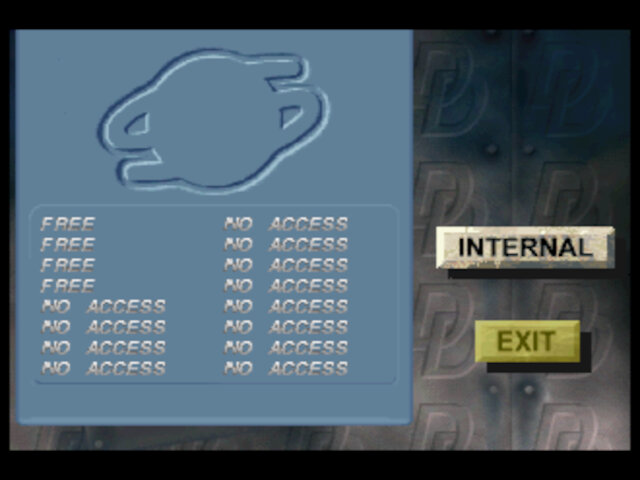
The game supports saving to the internal memory, or though the backup cartridge
The game does not appear to support the 3D controller, which means the game lacks analogue control support.
A racing video game developed by Psygnosis and released for the PlayStation console in 1999 and the final instalment for the original PlayStation. The game features fast-paced anti-gravity racing, where players control futuristic vehicles called AG craft through a series of challenging tracks, but features a resigned track style.
Wipeout 3 features impressive graphics for its time. The game’s anti-aliased, high-resolution graphics are rendered in real-time, and the frame rate is smooth and consistent and makes it one of the few PlayStation games that takes advantage of its higher resolution output resulting in a cleaner image quality. The game’s tracks and vehicles are designed with intricate details, and the game’s lighting effects and particle effects are impressive for what the hardware can achieve. Wipeout 3’s graphics are some of the best on the PlayStation, and the game’s stylish aesthetic still holds up well today. As one of the last games to be released by Studio Liverpool for the PlayStation, it severs as a nice finale for the studio as we prepare for the next generation.
Complementing the games graphics are its sound effects that are well-designed, with a range of satisfying engine noises, weapon sounds, and explosions. The game’s soundtrack, which features electronic dance music from artists like The Chemical Brothers and Underworld, perfectly complements the game’s futuristic atmosphere.
Complementing the games graphics are its sound effects that are well-designed, with a range of satisfying engine noises, weapon sounds, and explosions. The game’s soundtrack, which features electronic dance music from artists like The Chemical Brothers and Underworld, perfectly complements the game’s futuristic atmosphere.
As with other titles in the series, Wipeout 3’s gameplay is fast, challenging, and satisfying. The game’s controls are tight and responsive, allowing players to execute precise manoeuvres and drifts with ease. The game’s tracks are well-designed, featuring multiple paths, jumps, and obstacles that require skilful driving to navigate. The game’s weapons system is also well-balanced, with a range of offensive and defensive options that can be used strategically to gain an advantage. The NeGcon controller is still supported for analogue input, in addition to the Dualshock and analogue controls.
Wipeout 3 offers a lot of replay value, with multiple game modes and difficulty levels to choose from. The game’s Championship mode provides a lengthy campaign that will take hours to complete, and the game’s time trial mode provides a satisfying challenge for players looking to master each track’s nuances. The game also features a multiplayer mode that allows up to four players to compete against each other, adding even more replay value. This was a little tricky to setup as you have to establish a link between the two consoles first, as the game will also support two players from one console.
Using the Linux build of the PCSR-R emulator and an ethernet cable connected to two laptops, its possible to emulate the link play but it runs at such a low framerate that makes it unplayable. However you do get an idea how this would work on an actual console.
In Wip3out, there are several teams that the player can choose to represent during races. Each team has its own unique anti-gravity ship, which has different stats for speed, acceleration, handling, and shield strength. Here is a brief overview of each team
Auricom – This team is known for having the fastest ships in the game, but they have weaker shields and are more difficult to handle
FEISAR – This team has good acceleration and handling, but their top speed is slightly lower than other teams.
Goteki 45 – This team has good handling and acceleration, but their shields are weaker than other teams.
Piranha – This team has balanced stats and is a good choice for players who want a well-rounded ship.
Qirex – This team is known for having the strongest shields in the game, but their ships are slower and have lower acceleration.
AG Systems – This team has good handling and acceleration, but their top speed is slightly lower than other teams.
Assegai – This team has good handling and acceleration, but their shields are weaker than other teams.
Icaras – For more advanced players, as their ships run at high speed.
Wip3out includes a variety of power-ups that players can use during races to gain an advantage over their opponents. Here is a brief overview of each power-up:
Missile – This power-up fires a homing missile at the closest opponent in front of the player’s ship, causing them to spin out or crash.
Auto Pilot – This power-up temporarily takes control of the player’s ship, allowing them to focus on using weapons or navigating tricky sections of the track.
Shield – This power-up temporarily boosts the player’s ship’s shield strength, making it more resistant to damage from weapons or collisions.
Mines – This power-up drops a set of mines behind the player’s ship, causing opponents who run over them to spin out or crash.
Plasma Bolt – This power-up fires a powerful plasma bolt that can cause significant damage to opponents’ ships, potentially causing them to crash.
Quake Disruptor – This power-up causes a seismic disturbance that shakes opponents’ ships and makes them harder to control, potentially causing them to crash.
Invisibility – This power-up makes the player’s ship invisible for a short period of time, allowing them to avoid weapons and sneak past opponents.
Reflector – Reflects any damage to another ship
Cloak – Make your ship invisible for a short time
Force Wall – Spawns a wall that can be used to stop opponents
Each power-up is represented by a different icon on the track, and they can be picked up by flying over them.
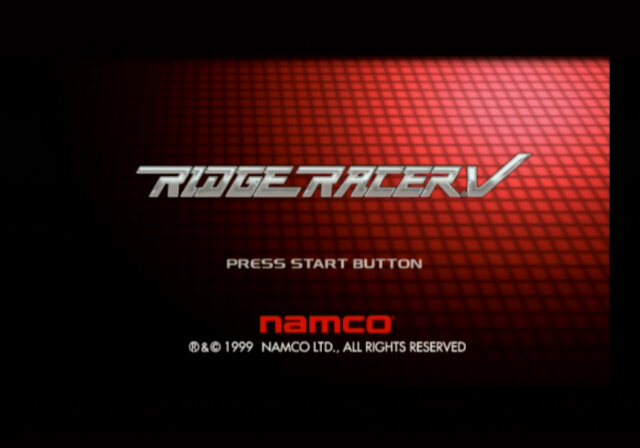
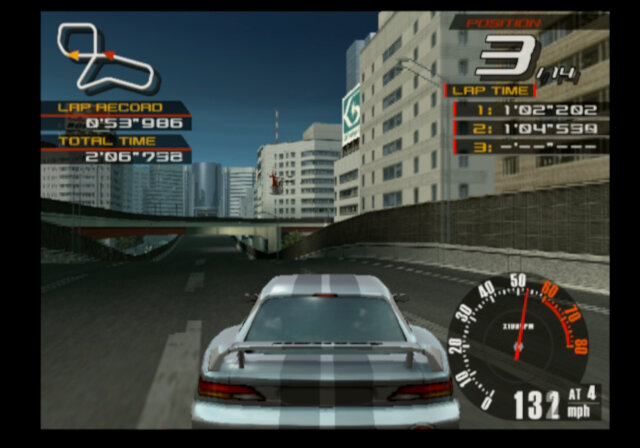
One of the launch titles for the PlayStation 2, Sony’s follow-up to the popular PlayStation. Like the first Ridge Racer, this was one of the first games developed and released for the PlayStation 2 and was built from the ground up for that console. Ridge Racer V brought us 60fps which was a staple of the arcade versions but was something that the home console versions had always lacked. Although Namco did treat us to a 60fps build of the original Ridge Racer that was bundled as a bound for Ridge Racer Type 4, a lot of sacrifices had to be made in order to reach that frame rate. RRV gives us an insight as to what the PS2 is capable of, and what to expect from a new generation of racing games.
Although it seems Namco has forgotten to count, with Ridge Racer V being the fifth console installment, it’s not counting the three arcade titles, plus you have Ridge Racer 6 which was released in the same year. The numbering scheme is about as inconsistent s as Microsoft’s
Ouch, you could cut yourself on those jaggies (look at the neck)
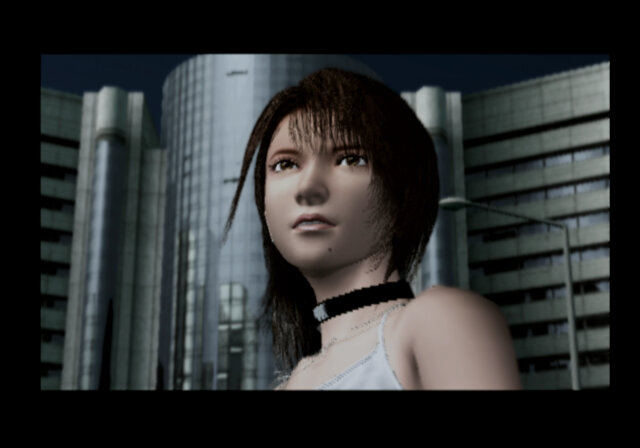
Oh and no Reiko, instead she was replaced by Ai Fukami (Fuck-a-me) who appears in the intro. Unlike the R4 intro, the cars don’t stop for Ai as they did for Reiko. https://www.youtube.com/watch?v=VhQhZyNKqhM
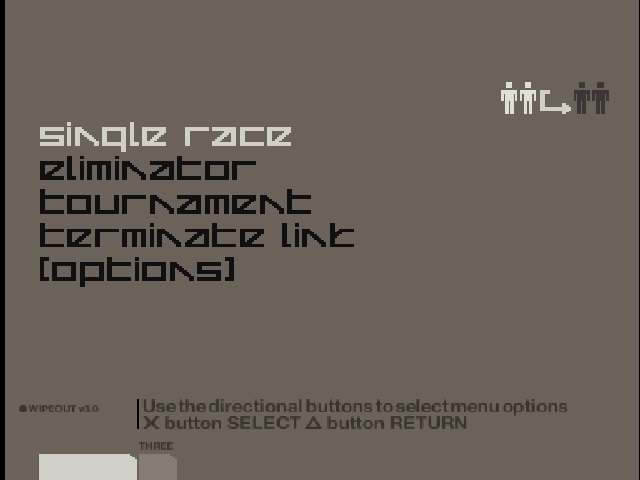
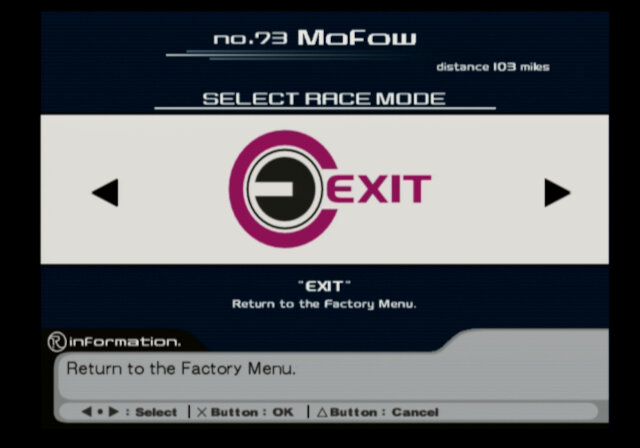
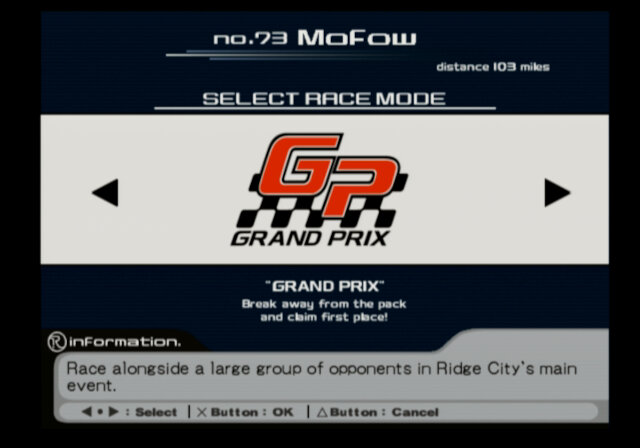
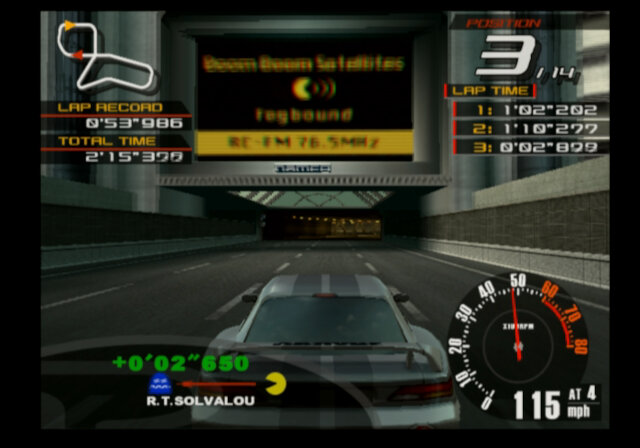
Straight away you will notice how sleek the menu and navigation system are compared to previous titles, borrowing design concepts from Tokyo Racer Drift which was released on the Dreamcast. Each menu selection plays its own quick animation which gives a nice touch to the game, and reminds me of the menu icons from the original WipEout that was created by the Designers Republic.
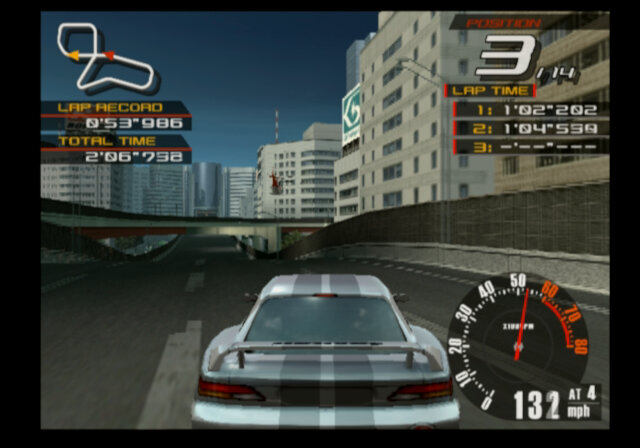
Whilst the game gives the appearance of reflections, they are not real-time but the game casts generic reflections of trees onto the car to simulate it. This is affected by your car’s position on the track, steer to the left and on the edge of the track and you can see the reflection of trees on your car, even if that part of the track has no trees at all. I guess real-time reflections were beyond the scope of the PS2 at the time of release, or Namco didn’t have enough time to implement this. Speaking of graphics, you will know how aliased the cars are in addition to the track objects. The PS2 had an unconventional form of AA which took developers some time to get used to and as a result, some games have bad aliasing due to how their field scanning is implemented, as the games run exclusively in interlaced mode. I’m not sure if later releases (Greatest Hits, Platinum in Europe) fix this, or if it’s fixed in the Arcade Battle version.
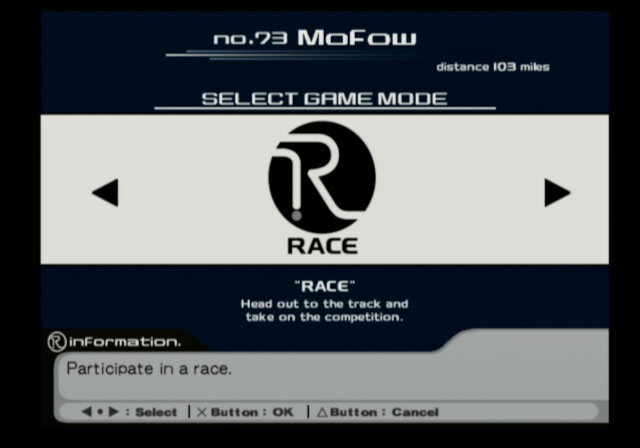
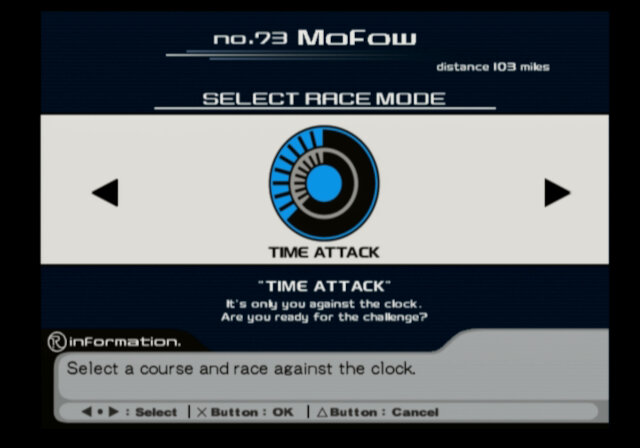
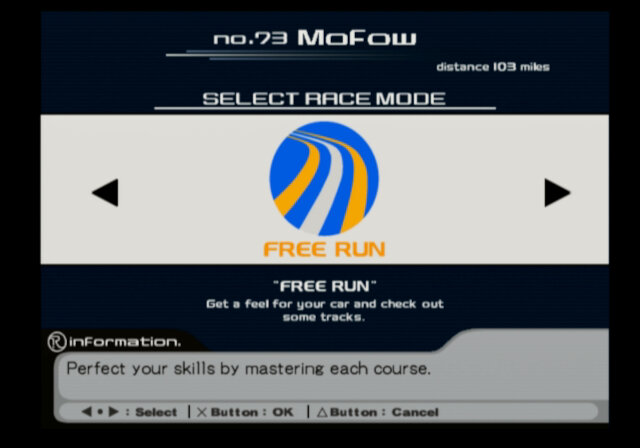
Race Modes
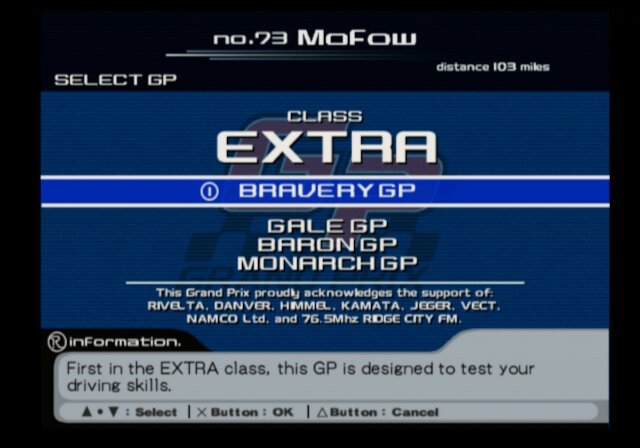
GP Selection Screen
Grand Prix
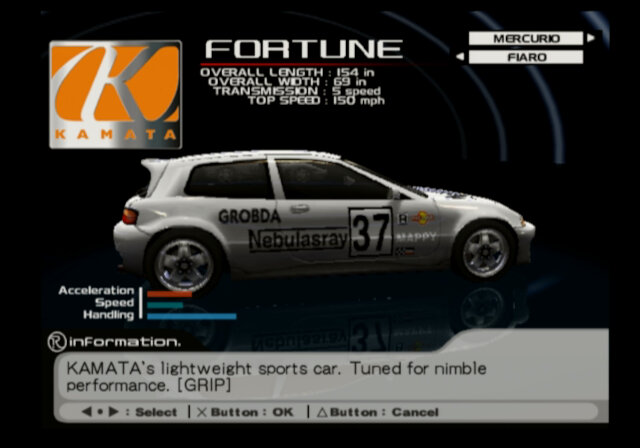
Like in R4, RRV features its own unique Grand Prix. This is a departure from one we saw in R4 with the four teams being missing along with their managers can choose your own team name and colour but that’s it. As for the cars, we have a choice of different car manufacturers and models, including Danver & Himmel. These are fictional brands that are used throughout the Ridge Racer, and possibly in Namco’s other games. Each car has its own unique stats, including top speed, acceleration, handling and control style (Grip or Drift).
Standard Basis GP: Consists of four rounds of different courses, at first you must place 4th or higher to progress to the next found, then 3rd, then 2nd and then 1st for the last race. Winning this GP will unlock a new car based on the machine you have chosen to race with which can then be used in the Extra GP’s. You will also win a trophy, which can be viewed later in the game. Alternatively known as Frontal GP in Normal difficulty and Fountain GP in Hard mode.
Extra Heroic GP: Tracks have been shuffled around, finish standings are the same as the basis GP, only you now race on the extra car you unlocked. Known as Bravely GP in normal, and Spartan GP on hard difficulty.
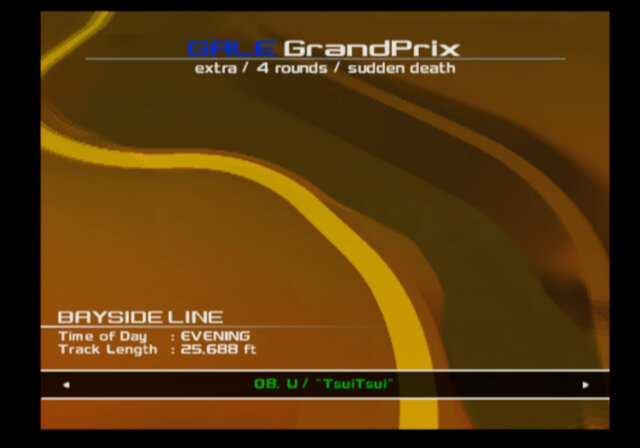
Extra Blast GP: This series uses a sudden death type of gameplay, where if the clock timer runs out, then you are ejected from the race. As you race you will pass through checkpoints which extend the time. If you are familiar with the arcade versions of Ridge racer this will seem familiar to you. For these races, you will still need to satisfy the qualifying rank to progress. Known as Gale Gp in normal, and Tornado GP on hard.
Extra Knight GP: These tracks are now completed in reverse mode. Also known as Balon GP on normal, and Duke GP on hard.
Extra Throne GP: You race on the airport oval track, with your car being equipped with an oval engine. This is a single long near-circle-shaped track similar to the Rage Racer tracks. Top speed is the priority here. Known as Monarch GP on normal and Tyrant GP on hard difficulty.
Maxim class: This is unlocked by beating the Tyrant GP on hard difficulty, which opens up the Ultimate GP.
Music track selection screen
Duel
Unlocked later in the game, it’s a 1 vs 1 mode against another opponent. When you beat them, you unlock their car which can then be used in the extra GP.
Time Attack
The goal here is to beat the rival times and come in first, which will unlock that rival for challenge dal. This will also increase your car standing number.
Car selection screen
Other Modes
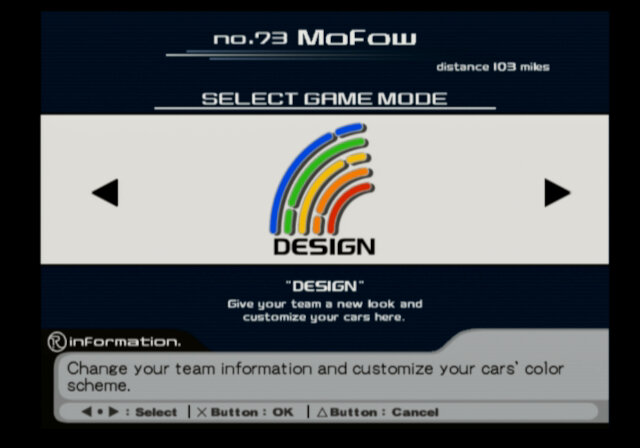
Design: Similar in concept to the decal feature in R4, you can customize the colour and patterns on your team’s car. Here you can only change the colour combinations.
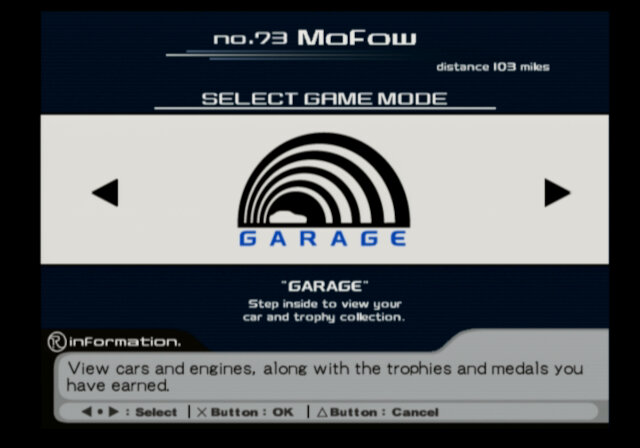
Garage: View cars that you have unlocked by winning the GP races with that car, along with any unlocked engines.
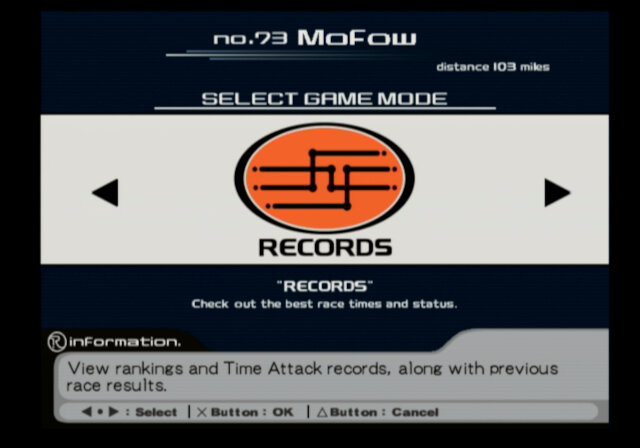
Records: Best lap times and the player names for time attack mode
Courses
In GP Mode, a quick tour of the race track is played
RRV included a brand new set of courses, most of which are based on the original course from the original Ridge Racer game, But these new courses are interlinked somewhat, with many taking place within Ridge City but branching out into different paths that take you into a different direction, with some leading you into the main downtown whilst others take you onto the highway. The tracks are fixed, it’s not an open world like Burnout paradise, instead different paths are blocked off depending on which track you select, very similar to how it functioned in Rage Racer and Ridge Racer Type 4. Speaking of which, none of the tracks featured in those games appear in Ridge Racer V, only the track from the first arcade game, or which many of the RRV tracks are based around.
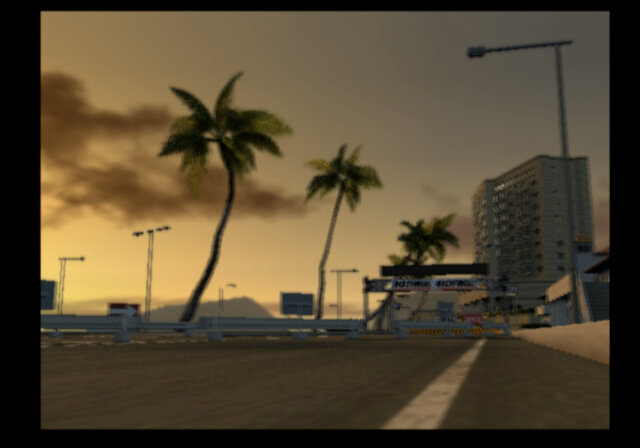
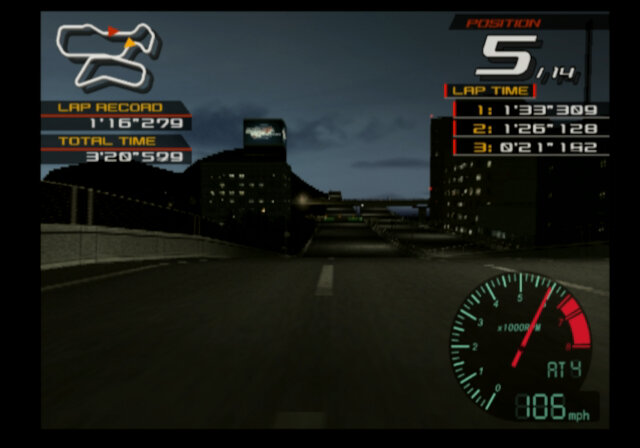
Despite this, you get a good feel of the Ridge Racer city, Some tracks can be raced at different times of day, such as Day, evening & night. Unlike the first Ridge racer game where the sun will set or rise during the race which results in a day/night cycle, The sky will remain constant through the race, giving the game a realistic passage of time. This is the case even with the 99 trial.
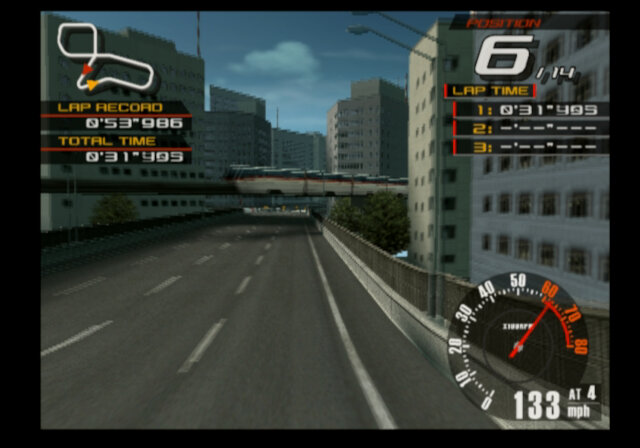
Park Town: Probably the first track in RRV you will race if you follow the Grand Prix, this starts off the same as Above The City but then branches out to a different track which gives an alternative view of Ridge City, of which the scenery consists of high-rise building. A tram/monorail system can be seen in some parts of the track.
Outer Pass: This track looks a lot like the original track from Ridge Racer judging from the course map, but it’s set using the background roads that we can finally race in. It starts off on the bottom road where you can see the onpass ramp for Park Town and Sunny Beech before it leads to its own side of the tunnel. Towards the end it branches back to the original track before diverting back to its own path. A few sharp turns make this track more challenging and there’s an extra turn where the seaside part is.
Above the City: Starts off the same as park town but branches to its own path, again filled with buildings and highways, although there are a few parts of open grass and trees, it’s clear there’s less scenery diversity than in R4.
Bayside Line: One of the longest tracks in the game, complete with sharp turns. This one takes you out near the highway and then branches back to the start of Outer Pass.
Greenfield: The advanced track from the original Ridge Racer, now updated with modern visuals.
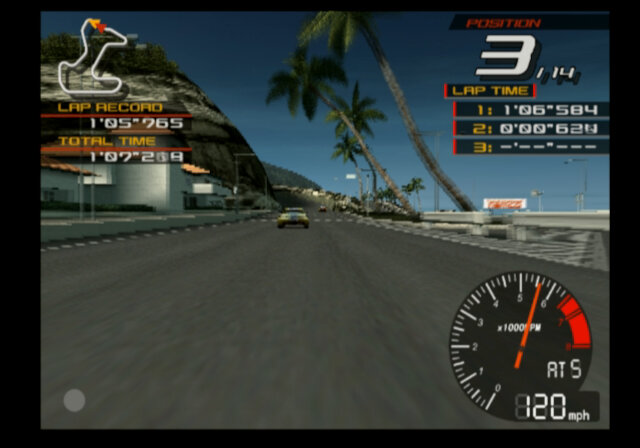
Sunny Beach: It’s the original track that we all know and love, only now its been modernized 7 years later, and has been remastered of sorts. Compared to the original there’s been a few changes with different skyscrapers and building placement, and minor changes to the shops opposite the beach area where the first checkpoint resides. Sadly the Pac-Man easter egg no longer appears in the building at night.
Airport Oval: Unlike other tracks, this one takes place independent of the other tracks, it’s a large oval-shaped track designed for top speeds, although there is a sharp turn that will require a drift, depending on your car. Since the other tracks feature low-flying airplanes, it can be assumed this is the Ridge City airport.
Additional Notes
This is one of the games that insist on funning in 480i mode (or 440i mode, PS2 games use this weird resolution) and trying to force it to 480p using GSMode results in only half the screen being rendered, as such there is no official way to run this game in progressive mode. It’s a shame because this game has some bad aliasing, and could benefit better from progressive scan. Even the lap timer suffers from noticeable interlacing effects.
The game does not fare better with emulation either, with various texture and shading issues in PCSX2, and even had issues running in Sony’s official PS2 emulators on the PS3 and PS4. Supposedly this is due to how Namco implemented the texturing and shading for these games: https://github.com/PCSX2/pcsx2/issues/2427#issuecomment-590020696 https://github.com/PCSX2/pcsx2/issues/3278 The intro sequence is also messed up and requires switching between hardware and software rendering modes in order to display.
Saving to a memory card larger than 8MB may take a while to read and write. With a 128Mb card it took a minute to save the game. I’m not sure if replacing the MCM IOP driver could help with this, or just break/corrupt the file entirely.
Conclusion
Whilst in some regard it’s a step back from Ridge Race Type 4 with the reduction of cars, tracks and the story mode, you have to take in mind the game was possibly developed in a short timeframe that R4 had, and Namco’s desire to have is a launch title for the PS2, the 1999 copyright date is very telling of this and one of the few games on the PS2 to have this copyright date. As a launch title it makes a huge splash with its high resolution, 60fps gameplay, and the intro sequence with Ai, possibly the highest poly model on the PS2. But this would be the only installment of Ridge Racer for the PlayStation 2 whilst the original PlayStation enjoy four mainline Ridge Racer titles, the PS2 would only have RRV and R: Racing Evolution which is more of a spinoff rather than a follow-up game. It wouldn’t be until 2004 that a proper followup to Ridge Racer would be released for the PlayStation Portable. And even then, it’s considered a compilation game rather than a true sequel. Ridge Racer 6 for the Xbox 360 would be the proper sequel with unique tracks. As for why only one title? Possibly due to higher budgets required for PS2 development and the popularity of sim racing games like Gran Turismo. Hopefully we get another proper Ridge Racer titles from Namco at some point in the future.
Widely considered to be the best in the Ridge Racer series, its soundtrack and the opening FMV are defiantly most memorable. This would be the last Ridge Racer game released for the original PlayStation.
The game improves on the mechanics from Rage Racer and Ridge Racer Revolution, complete with eight brand new tracks and a soundtrack that’s a complete departure from the drum & bass themes from the previous instalment. Graphics-wise the game sees a shift that pushes the PlayStation hardware to the extreme, thanks to the use of Gouraud shading that gives a shade of depth to the polygons, giving the game a realistic appearance.
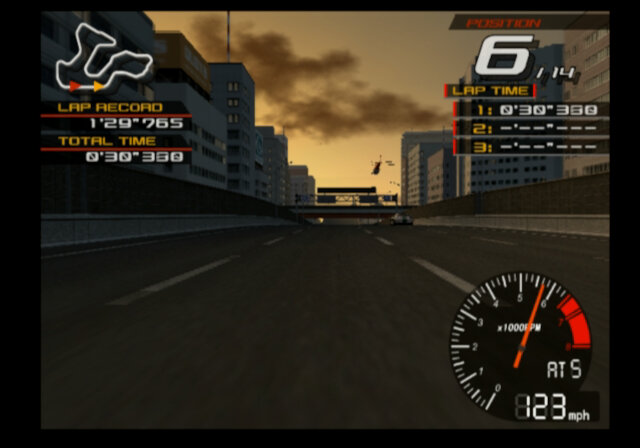
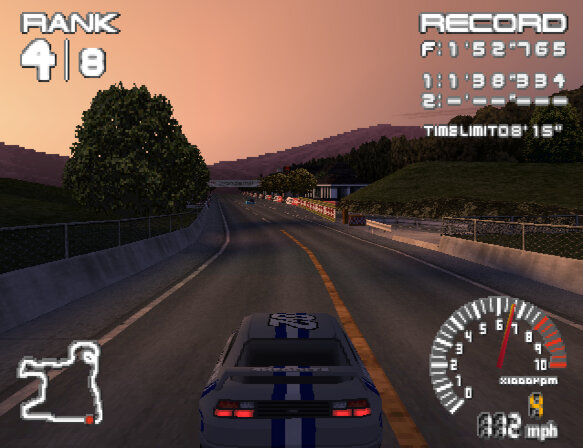
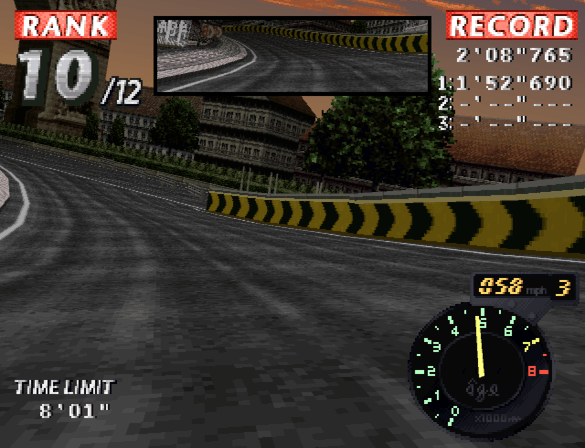
To keep a stable 30FPS, which was the game’s target framerate, certain changes are made to the enemy opponents, where you only have up to 4 cars on screen at the same time, of which the AI-controlled cars are more spread out across the track. In contrast to the early titles where you will pass multiple cars in the same area, in R4 the opponents feel spaced out and you pass by them in a linear fashion.
Grand Prix
There is a story mode of some sort, you can choose from four teams that will have their own unique manager representing the company. Here you have a direct dialog that gives more detail into the backstory of the teams and how they tie into the Ridge Racer Grand Prix. After every race you will have a meeting with them and their dialog is dependent on how you perform (which place you finish in). There is no dialogue for when you lose or fail to qualify, as the game will prompt you to retry or will go straight to a game over screen. The team choice will also affect the ending epilogue (although on some emulators there is a bug that causes only the MMM epilogue to play)
The Teams
Four teams come with Ridge Racer Type 4, all of which are some reference to another Namco arcade game franchise.
Conversation with your team representative
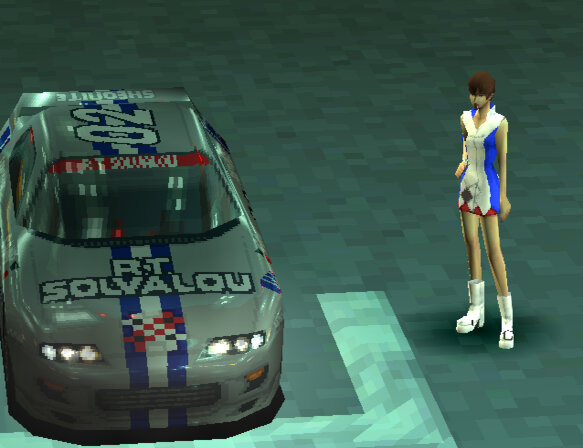
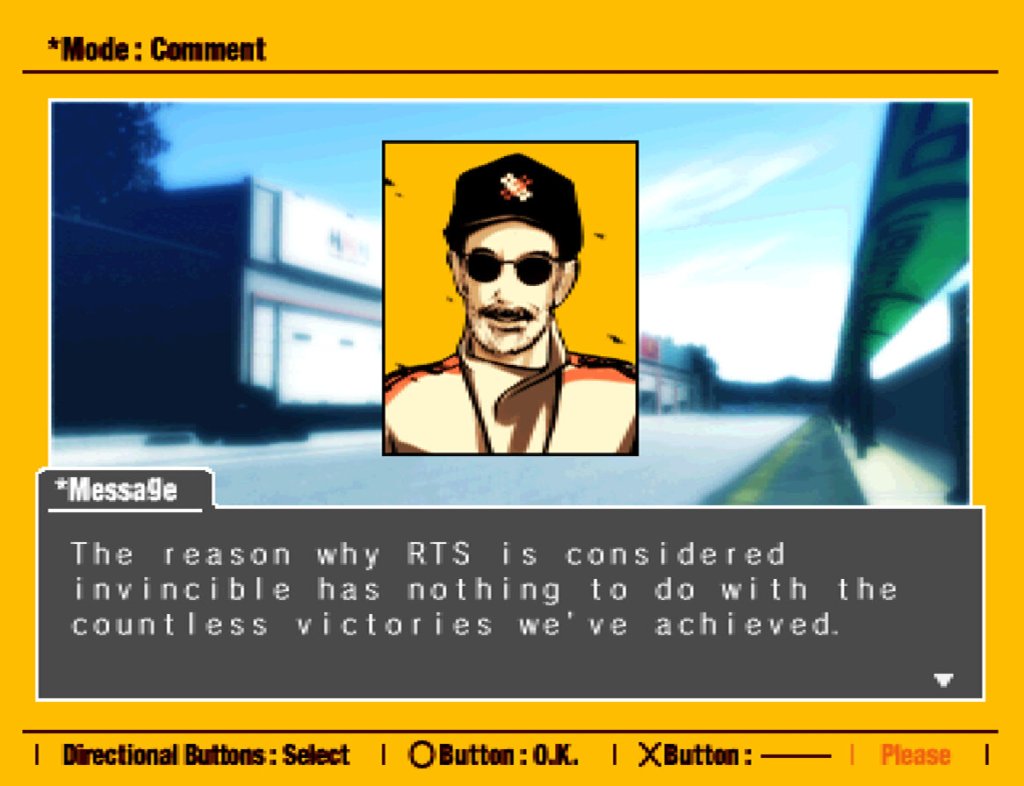
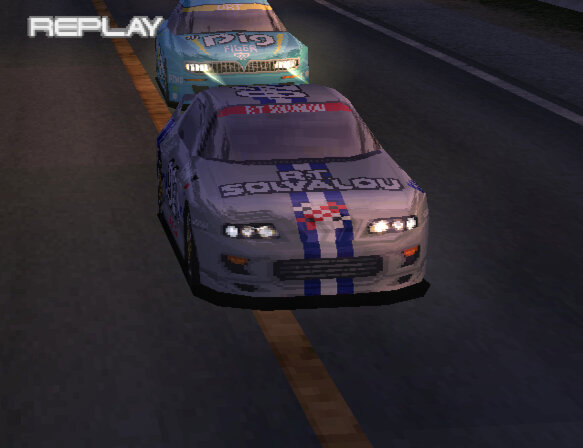
Micro Mouse Mappy: A French racing team led by Sophie Chevalier. The easiest team in the game which is recommended for new players. R.T.S: Lead by Enki Gilbert, He starts off as a perfectionist, expecting you to come in first place in every race but eventually softens u after learning of the Pac Racing Club’s entry. Its implied the manager looks to the player as a second son, due to his actual son being involved in an accident that cost him his life. Towards the end he wants the player to take the race easy, fearing history could repeat again like the death of his son. Dig Racing Team: My favorite team since I like the underdog teams, They’re a struggling team that is under budget and as a result will enable to provide fast cars from a majority of the races, meaning you will need to rely on skill in order to get ahead of the competition. Pac Racing Club: Lead by Shinji Yazaki, seems to only care about the results of the race, but will open up over time about a past Gran Prix where Enki’s son died during a race in which he was involved in.
The Cars
There are lots of cars included in the game, over 320 in fact. Many of these are unlocked by beating the Grand Prix modes across various teams and car manufacturers.
Garage cars are the cars you unlock during the Grand Prix events and can come from four manufacturers, across four different teams, giving 16 different design variations. However the game will reward you with a different car depending on your performance of the early events, ie, if you come 1st 2nd or 3rd during the first heat, will influence the type of upgrades you have, which the game counts as an additional car. Therefore in order to unlock all cars, you have to play the Grand Prix with the same manufacturer/team combo several times, coming deliberately in 3rd/2nd and 1st place for each run. The garage can only hold a limited amount of cars, and will you have to swap out locked cars in order to play them in time attack or link/multiplayer.
There are also a few preset cars that are already unlocked for use in time attack or for two-player mode, these are also in grip or drift varieties. These don’t seem to have any defined name, other than Preset G3, Preset D4, etc. Most players will refer to them by the color, which comes in (red, black/Grey, white or yellow)
And then you have the cars unlocked using the extra trials, you can only unlock these by winning a Grand Prix with a specific manufacturer, although the team does not matter much, except for the performance tuning.
The Tracks
Helter SkelterWonderhillEdge Of The Earth
Helter Skelter: The first track you will probably play, set in Japan Yokohama and shares with Out Of Blue. A good track that serves as an introduction to the game’s drift mechanics and style. The song Pearl Blue Soul always plays on this course.
Wonderhill: The second track that is played on a late spring afternoon that gives a sunset sky. This track shares with the Heaven and Hell track that appears later in the game. The music on this track can differ if you are racing with the RTS team (Revlimit Funk plays), otherwise Naked Glow will usually play, and it really suits this course
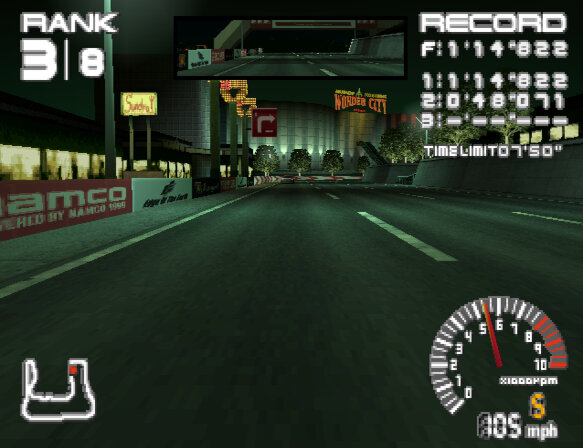
Edge of the Earth: Set at night in an airport that leads into a small city, one of my favourite courses since you can go full speed, but also must be mindful of the courses.
Out of Blue: In contrast to the previous track, this one is set very early in the morning and shared with Helter Skelter, with OOB separating into its own path, which features locations near a shipping dock. Some of the scenery here reminds me of the original Ridge Racer track. The corners on this track can be brutal, so make sure you are used to the car’s handling.
Phantomile: It’s a very short course in comparison to the others, and the corners are rather savage. The Motor Species song always plays for this course. Also just so happens this race is set on the same day as my birthday.
Brightest Nite: Another course set at night time, this one also shares with Edge of the Earth. This one is set later at night and features a huge drop towards the end of the tack
Heaven and Hell: Shares with Heaven and hell, although it’s set earlier in the day which gives off a different feel of the track, being much brighter.
Shooting Hoops: The last track to race and it’s a good and simple one, set at midnight of December 31st 1999 on the eve of the new millennium. The song Movin’ in Circles always plays for this track and on the last lap you can see fireworks being set off as the new millennium is upon us (Cue airplanes falling out of the sky due to the Y2K bug)
Vs and Link Battle
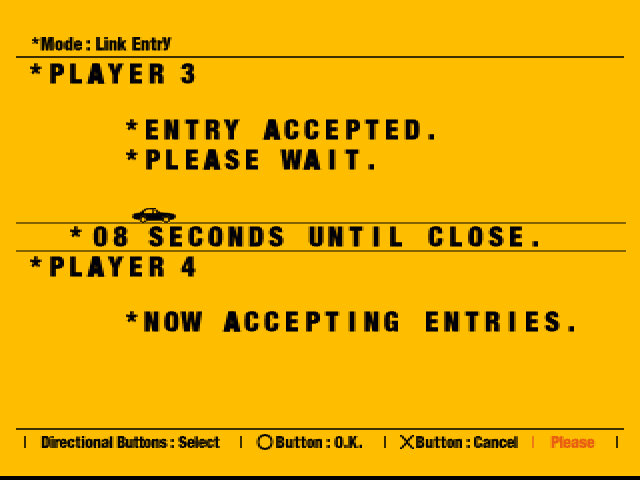
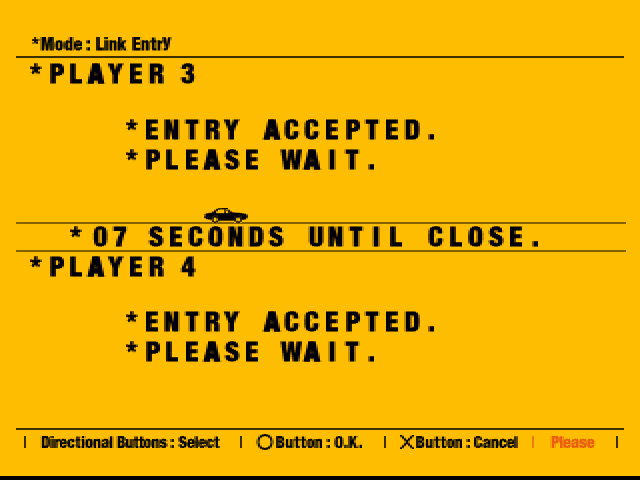
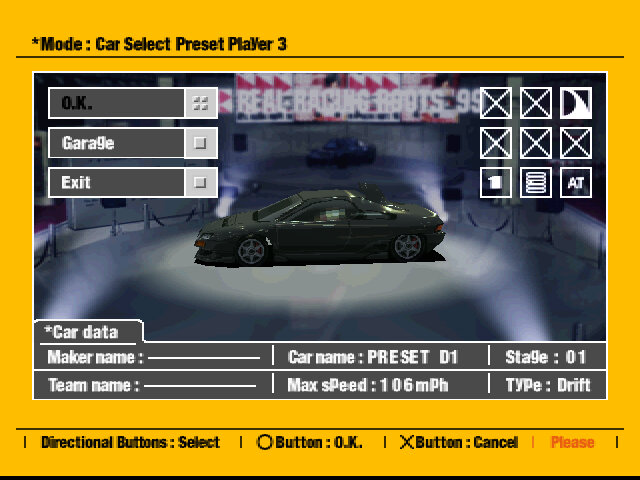
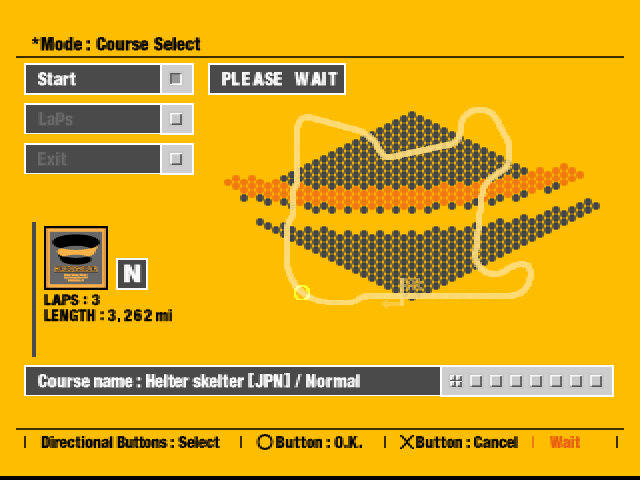
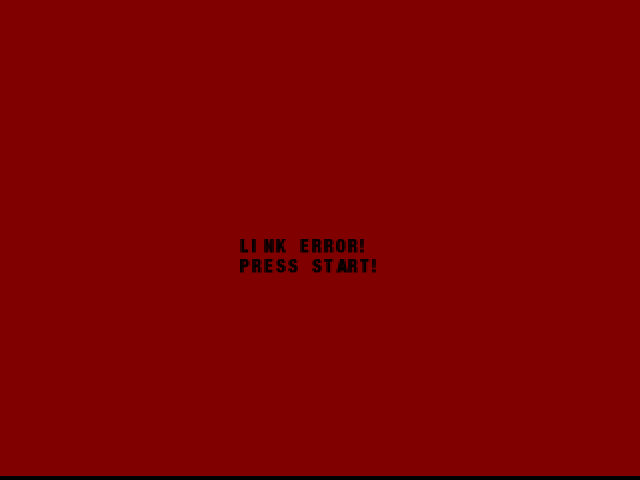
Link battle adds the ability to play with up to four different players, across two consoles. This is similar to how early titles handled multiplayer where two consoles are connected together using the official link cable, along with two displays and copies of the game. If the game detects another console connected using the serial link cable, the link battle option will appear in the main menu. Sadly in PCSX-R whilst we are able to establish a link between two instances with a Linux Virtual machine (running Ubuntu & Pop_OS), the speed is incredibly slow and unplayable, and whilst we can navigate the link mode menus, the game will display an error message when we try to start the race.
The regular VS mode can also be accessed by having two controllers connected to the console, where the game plays in a split-screen mode allowing for both racers to race at the same time through one console. You can combine this with the link battle to have a total of four players in a single race, with two players per console.
The multitap is not supported here, only a maximum of two players per console.
Further Information
Decal Editor
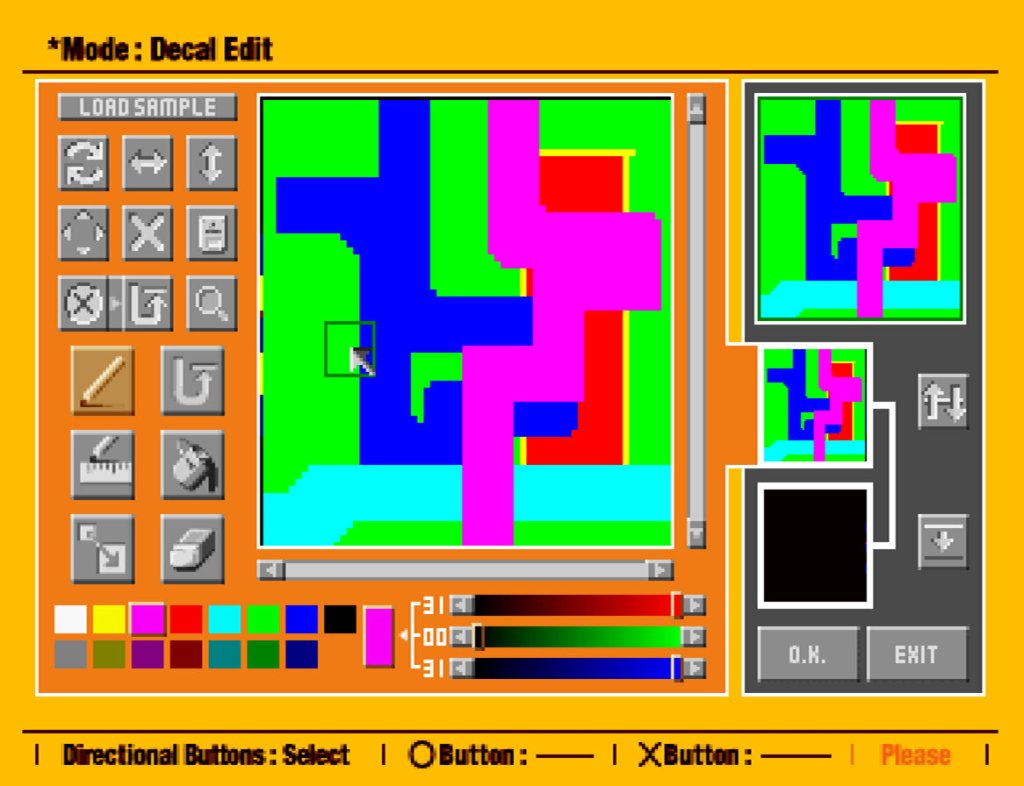
Like in Rage Racer, a decal can be created and applied to your team’s car which can be any pattern. Here the PlayStation mouse is best used
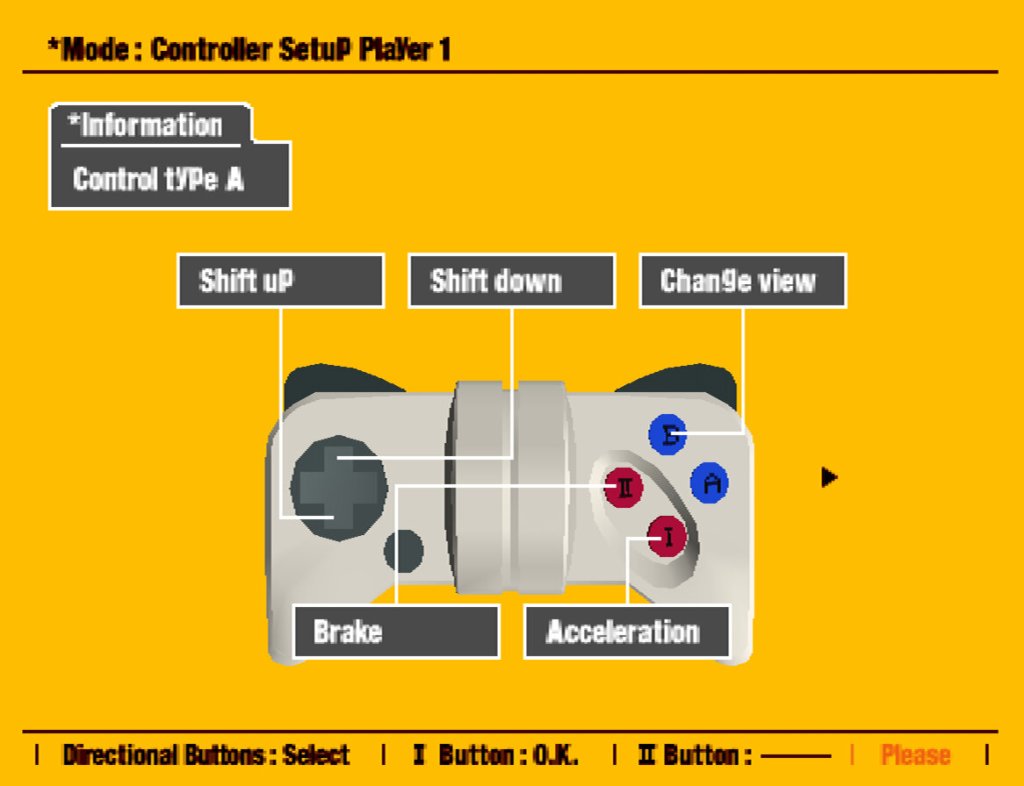
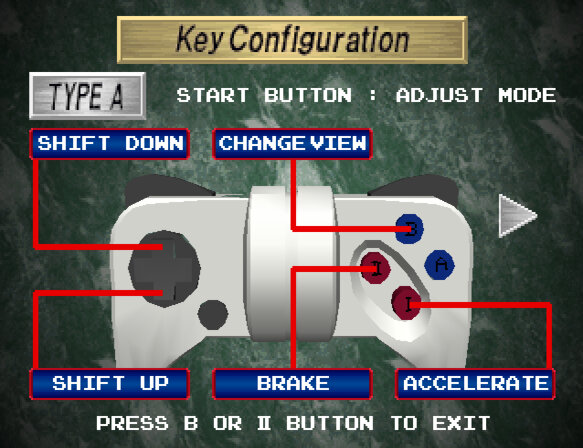
The Namco NeGcon is fully supported for steering and acceleration, in addition to the DualShock analog sticks.
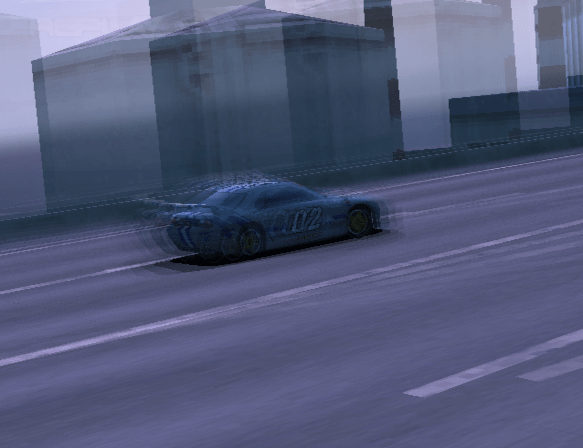
A visual blur effect can be applied when a race is being replayed, activated by pressing the L1 or R1 buttons.
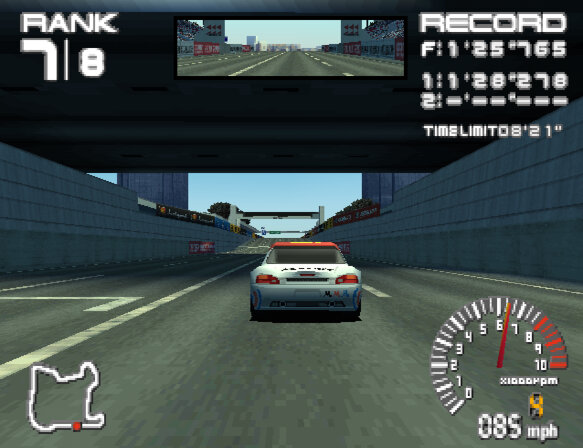
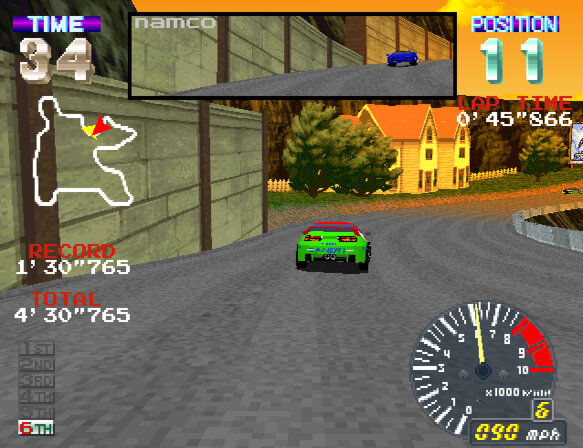
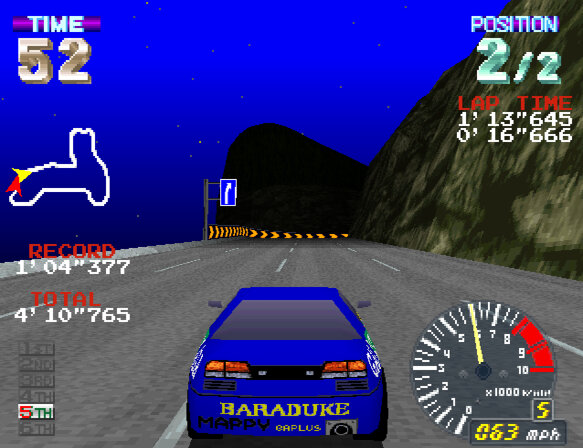
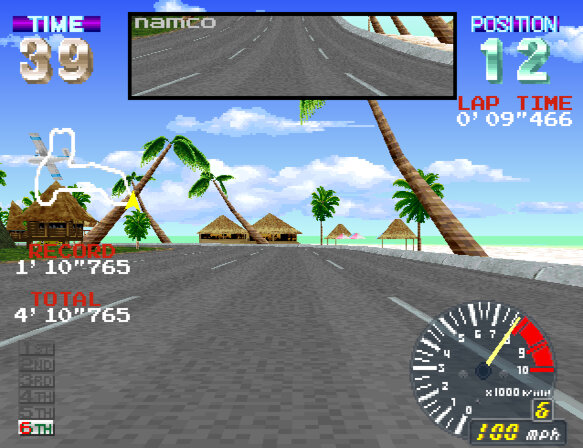
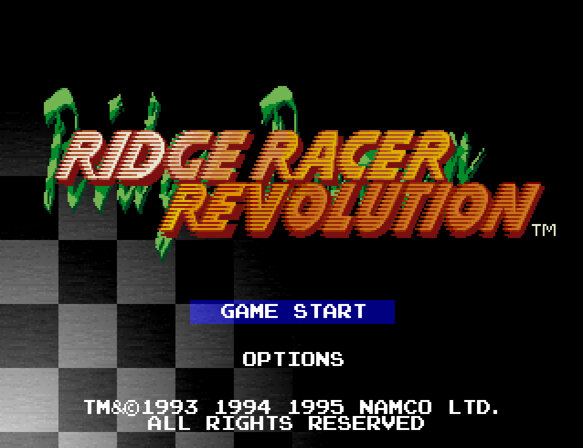
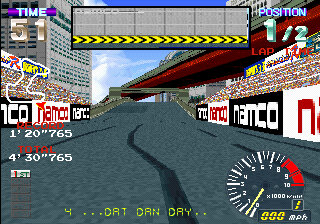
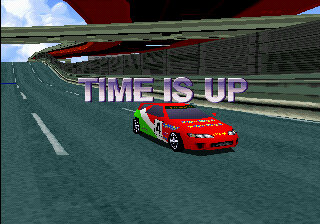
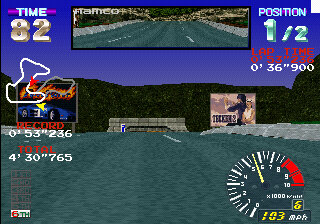
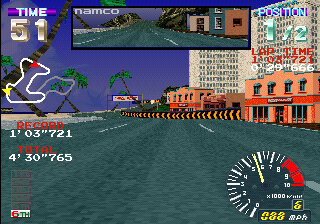
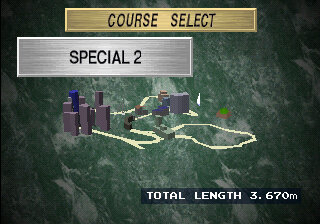
Ridge Raver Revolution builds upon the original Ridge Racer game, set with a new course being added with a few variations. All three tracks are similar in how they start, but branch out into different directions and are named by the difficulty of the track itself (Novice, Advanced, Expert).
As with the first game, there is support for the NeGcon controller, so make sure to enable it in your emulator if you wish to take advantage of analogue steering.
Race Modes
Race: Normal racing mode, race 3 laps around the track and finish in 1st place for each one. Time Trial: Same as Race mode but you have no opponents, the objective is to get the fastest lap time for each track. I’ve always found these modes boarding and don’t really play these much. Completing these modes will unlock a new car. Free: You can run as many courses as you like. When you reach 99 laps, the lap counter display will stay fixed at 99 laps.
In terms of gameplay, it’s very similar to the original game, with the same graphics style and mostly the same drifting mechanics. Therefore you could consider this as a standalone expansion pack of sorts.
The soundtrack is the exact same as Ridge Racer 2 was released for the arcade, however, Ridge Racer 2 featured only the original arcade tracks, not the ones featured in Revolution.
Secrets
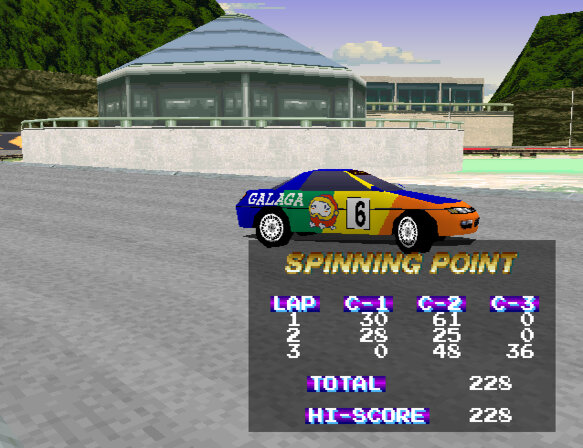
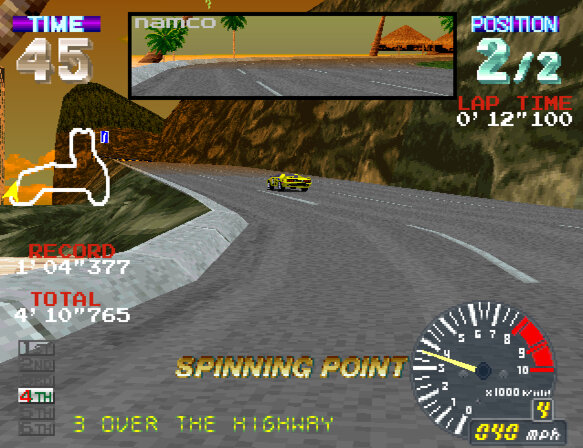
Spinning Point: When selecting time trial, hold down the X and Square buttons and select Start (Note: Not the Start button on the controller, the option on the screen), then when playing the track, Spinning Point will appear where you can spin and the game will score you based on how well you spun the car. This only functions in time trial mode and the scores are not saved.
Pocket Racer: A hidden mode that is enabled when you beat the Galaga mini game without wasting a shot. This mode would later spawn into an arcade spinoff that was released in Japan arcades only as Pocket Racer.
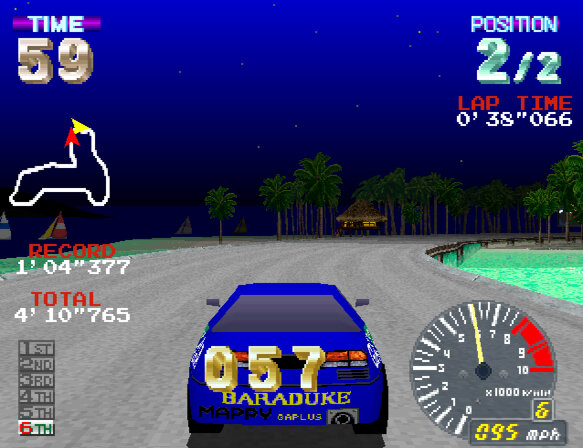
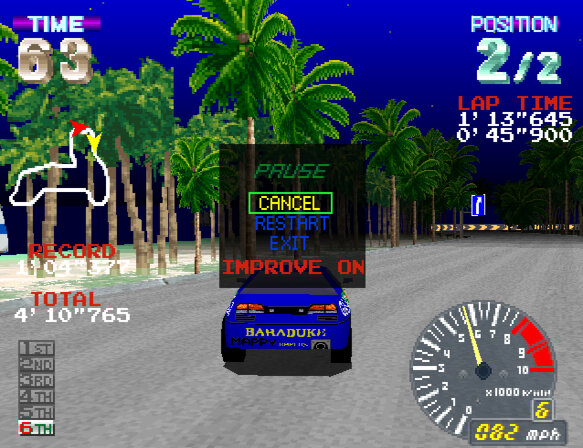
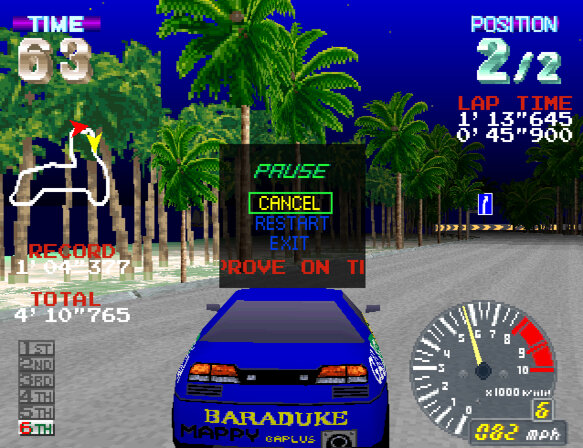
Mirror Tracks: to play in mirror mode for every track, at the start of the game accelerate forward slightly but turn around 180 degrees, then drive into the barrier at over 66MPH and the track will be in mirror mode, along with all the road signs. Zoom In/Out: When in third-person view, pause the game and then press either the L1 or R1 buttons to zoom in or out respectively. You can then resume the game with the new viewpoint.
Title Screen: The spotlight can be manipulated by holding both the L1 & R1 buttons, then using the d-pad to move the spotlight.
Two Player Link
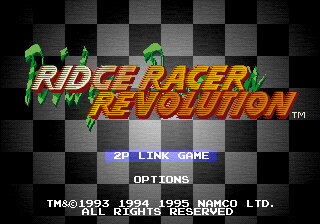
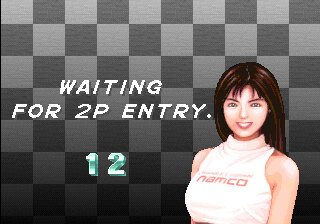
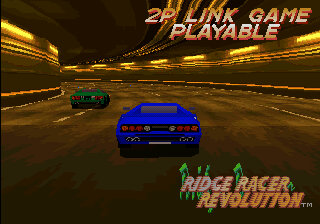
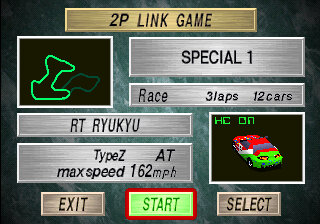
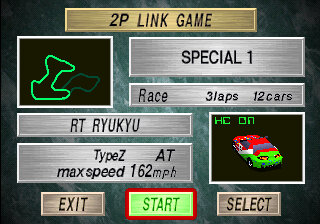
Revolution included a new two-player link that allows for two players to race each other through the use of two consoles, two copies of the game and two displays. This is not the same as the split-screen modes in the later installments of Ridge Racers, with only one player per console. A link cable is required to connect both consoles together using the serial port located on the original PlayStation models. The smaller Psone branded consoles lack this port and cannot make use of the two-player modes, but can still play the single-player modes.
You can replicate the two-player mode using the NO$PSX emulator, or PCSX. PCSX was troublesome to work within Windows as starting the emulator as a client would just cause it to crash. Under Linux we have some luck but when we are able to re-establish a link, the performance is horrendous with both games running at around 2FPS. Possibly due to both emulators trying to run in sync with each other. I tried running both in a VM, running in a LAN segment but the performance was still the same.
The original Ridge Racer tracks can be played in this mode, as this functionality was missing from the first game.
Conclusion
The game feels like what Ridge Racer should have been when it was ported to the PlayStation. Presumably a lot of content was shifted to Revolution in order to meet the launch deadline since the original Ridge Racer only featured one track with two variations.
One of the main criticism of the original Ridge Race port was its lack of content featuring only 1.5 tracks (the second being an expansion to the original) and around 12 cars, which limited replay value. Here Namco has tried to add as much content whilst still making the game accessible, however I question why certain modes are hidden behind key combinations instead of being directly accessible.
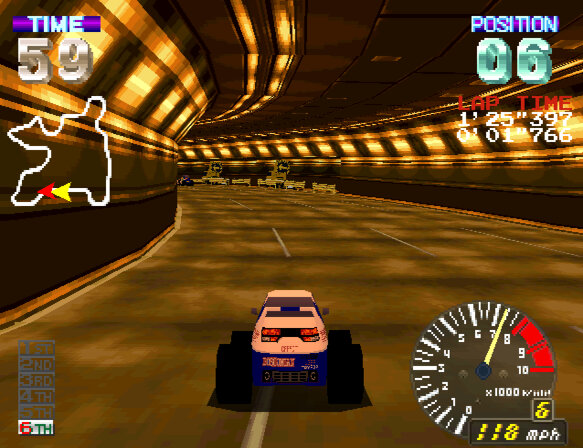
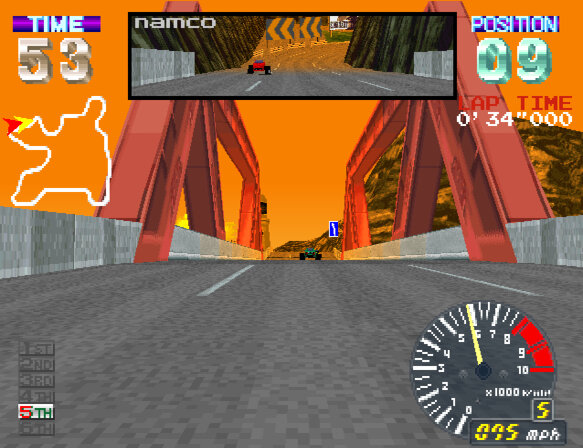
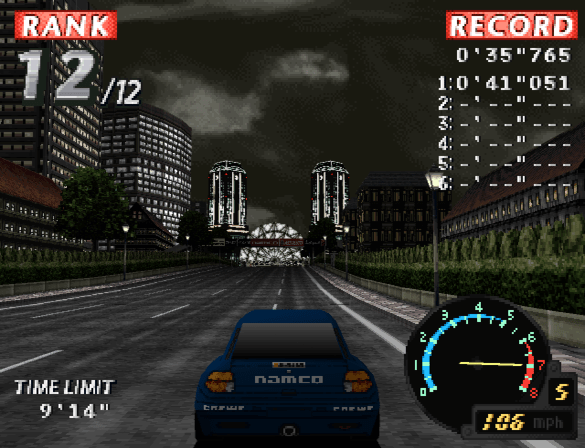
The third console instalment of the Ridge Racer series. This sets on a more darker tone, with more realistic looking graphics and a completely revised soundtrack inspired by industrial drum and bass.
Grand Prix
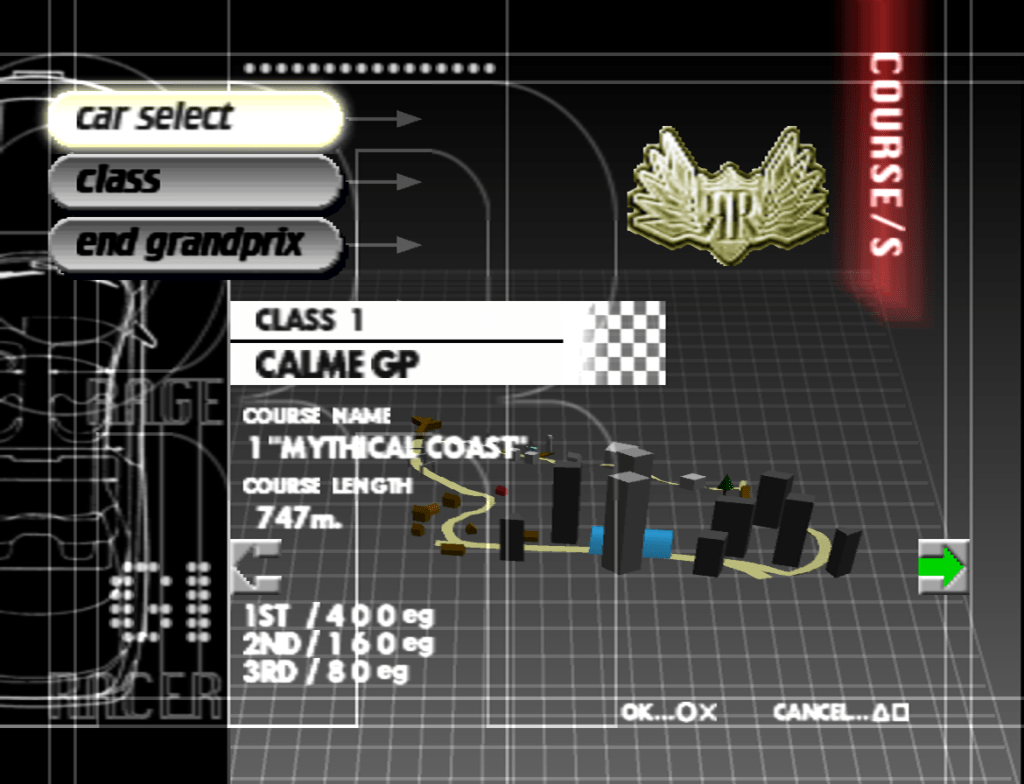
The main game mode where you complete a series of races. Like the previous game you start in bottom place and have to finish in third place or higher against the computer controlled cars. There are five classes in total with a bonus sixth class and an extra GP, which is unlocked by completing the main GP mode.
Medals are awarded depending on what place you finish in. As you play the game you will need to replay a few of the races to build up your credit in order to purchase new vehicles, as you move up the GP class the competitors cars also get faster
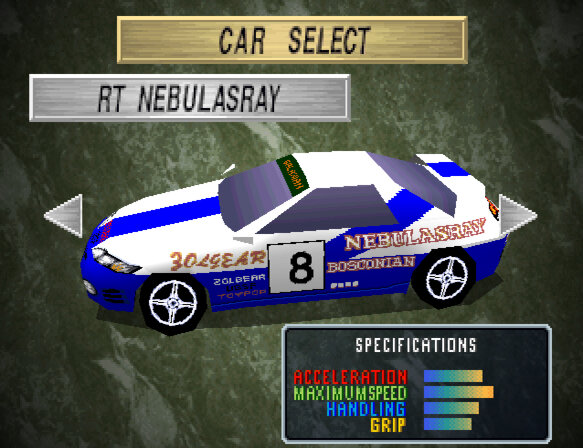
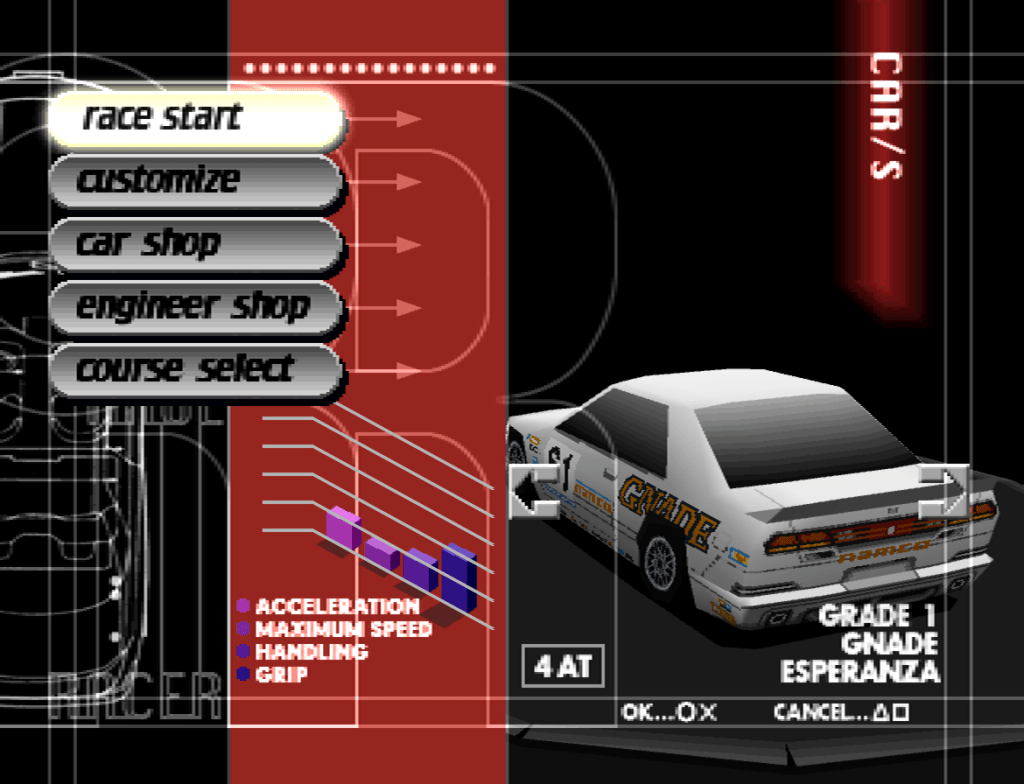
Unlike the previous games in the Ridge Racer series, cars are handled differently with you only starting from one car, instead of four being available. When more races are completed, credit are awarded which allow you to spend them on buying new cars or upgrading your existing car, which will be required in order for you to progress though the next class of GP. Different cars have different specifications, with some having better handling, acceleration or top speed. Some of the later cars are in manual transmission only which requires you to manually change and shift gears.
The Grand Prix mechanic would be expanded heavily in it’s successor – Ridge Racer Type 4.
Time Attack
The mode that no one ever uses, here you get access to the fastest models of the cards with the goal of having the fastest time.
Tracks
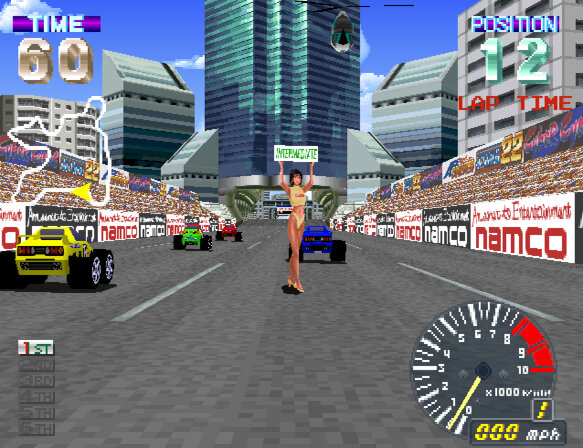
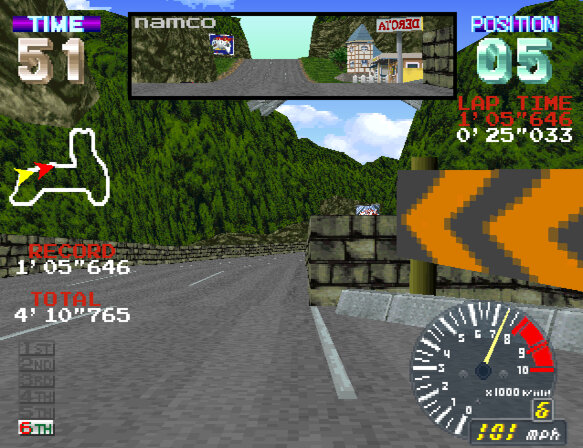
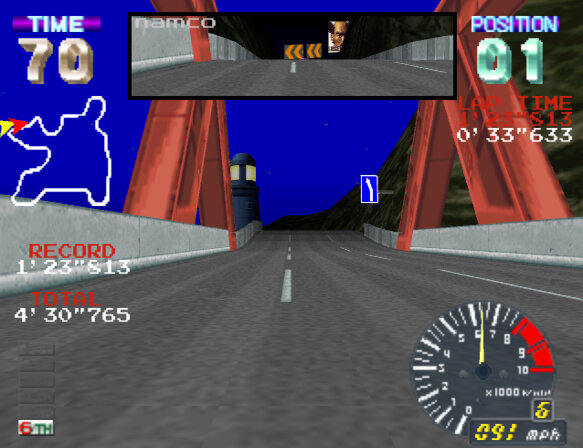
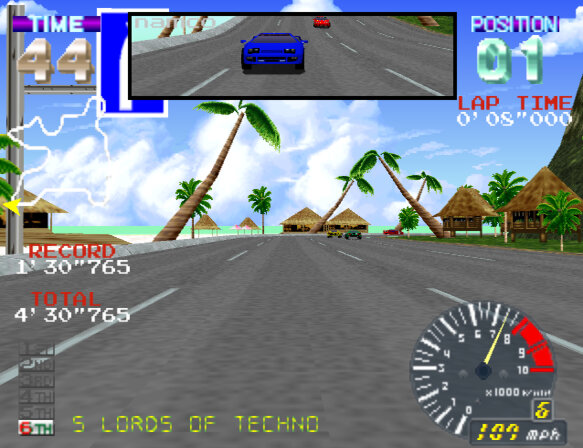
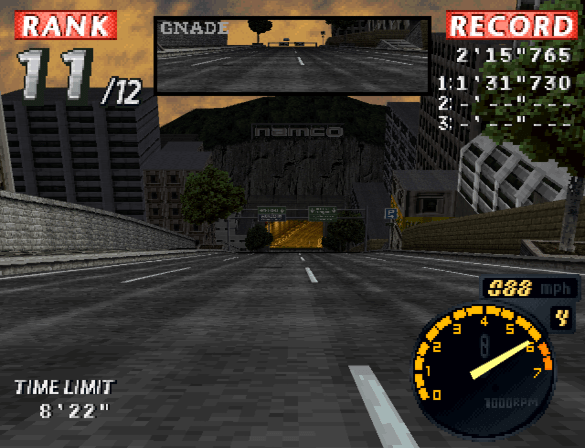
Like the previous Ridge Racer PlayStation games, they all use the same track with some variations in them, Rage Racer is no exception as all tracks have the same starting area but then branch off into different sections and bends, which then combine back together at the end of the lap. This gives the premise of the tracks being set in the same urban city or a town.
The tracks follow a specific design and were designed around the PlayStation’s limitations, as most tracks feature bends that obscure the environmental view as to prevent pop in and to keep the game running at 30fps. Slope and hills are also used to this effect and are incorporated as a game mechanic as for manual transmission vehicles you have to drop down a gear in order to maintain your speed. All of this was used in the next Ridge Racer Game (Type 4) to greater effect and shows how Namco was able to make the most out of the PlayStation hardware which was becoming mainstream at this point.
The environments themselves feature a European look judging from the building design, and some Greek style columns can be seen with the first track, which contrasts from the Japanese look of the city in the first game.
However the quantity of the tracks is part of the games downfall, with it recycling the same tracks as reversed and mirrored. It would have been nice to race on the original tracks from Ridge Racer and Revolution, or include the Rave Racer tracks which was already released to the arcades by the time Rave Racer came out. The fact that most tracks are reused limits the variety and questions the value of the game, eventually you are going to get bored of these tracks. It’s even worse when you compare it to the Rush and Crusin series of game which feature way more tracks that are independent from each other.
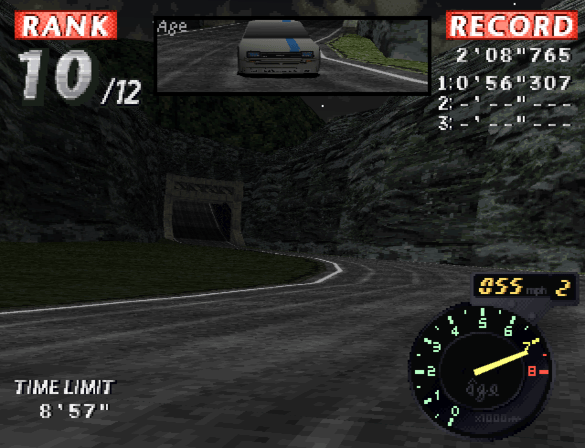
Mystical Coast: The started course for the game, driving past the waterfall into the tunnel, then pass down onto the coast area with Spanish/meddidertain style housing and then into some ruins until you reach a tunnel that takes you back to the starting line
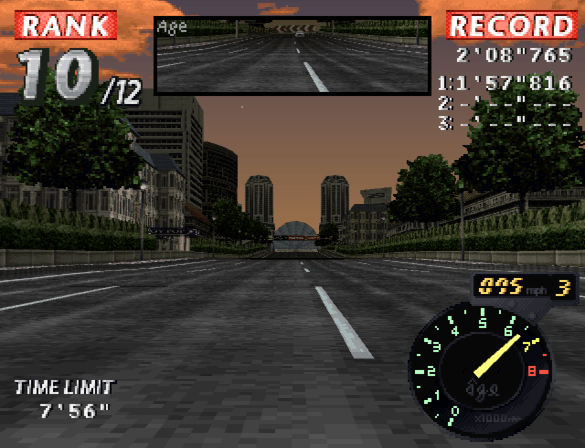
Over Pass City: starts the name as Mystical Coast where you pass the waterfall but the tunnel takes a different direction into the main city, here there are very steep hills past the tram and steep curves as you return to the starting line. This is the longest course in the game.
Lakeside Gate: Tricky since there are a lot of sharp turns where you need to drift sharply. Reaching top speed isn’t much of an issue here but having a car that you can control well is necessary. There’s a lot of tunnels and cave/hill like scenery when then proceeds into a rural area with some open scenery.
The Extreme Oval: A simple track designed for cars to reach their top speeds, but has one sharp turn within a tunnel.
Music
As someone who regularly listens to drum and bass, the music in Rage Racer was a pleasure to listen to with many songs taking inspiration from the industrial rock and break beat samples of the era. With many tracks being inspired by popular tracks of the era. They are also similar to music that was used in Namco’s other games, like in Tekken.
Conclusion
As a Ridge Racer game it takes the series into a more serious setting with its GP/credit based mechanic and its realistic art style but as a racing game it falls short due to lack of content, especially with the amount of tracks.
The game as not been released on any digital platforms, which is odd since this is an entirely Namco game that does not feature any licensed cards or music.












 Drew1440: Blog