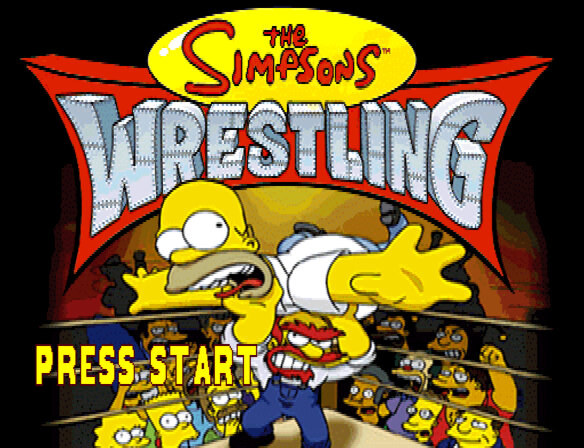
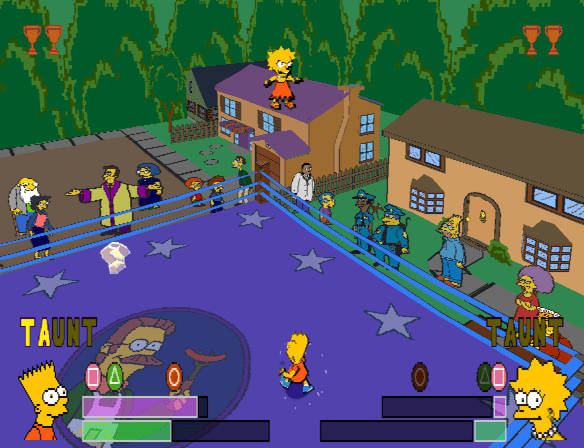
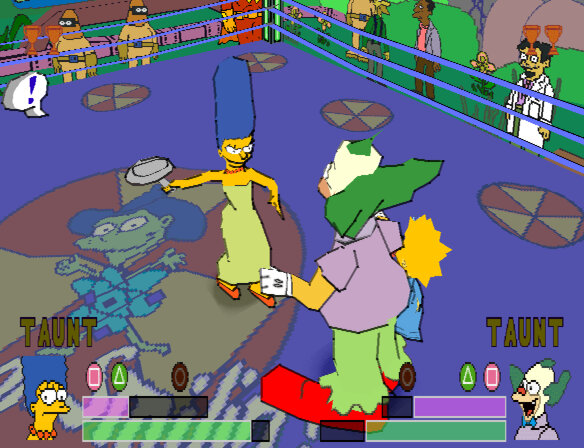
A simple wrestling game inspired by the attitude era of WWE (or WWF), although the wrestling mechanic is implemented loosely. Matches are set in the giant ring set in various locations across Springfield, complete with their own theme tune music. background characters can be heard and will react to attacks you and your opponent will make. Pinning is very basic and is how you win a match, you can pin everywhere and there is no way to block or reverse attacks. As such it’s not as complex as the WWE wrestling games.
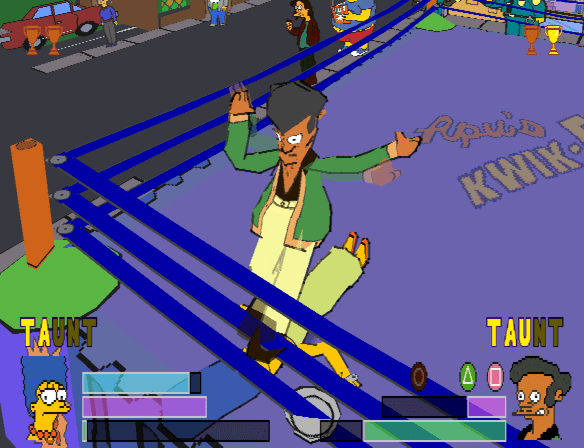
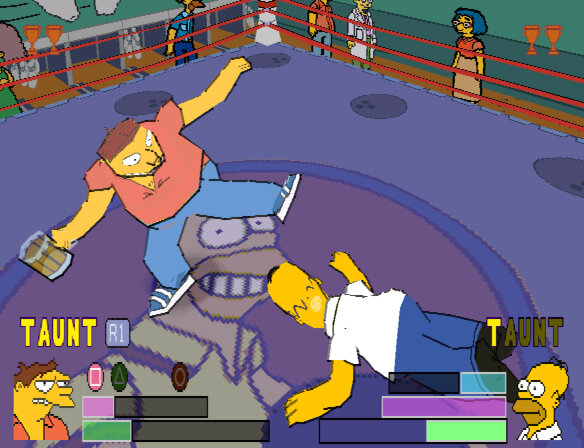
Marge and Apu fight over the price of nutmegWhile Homer fights for a promotion
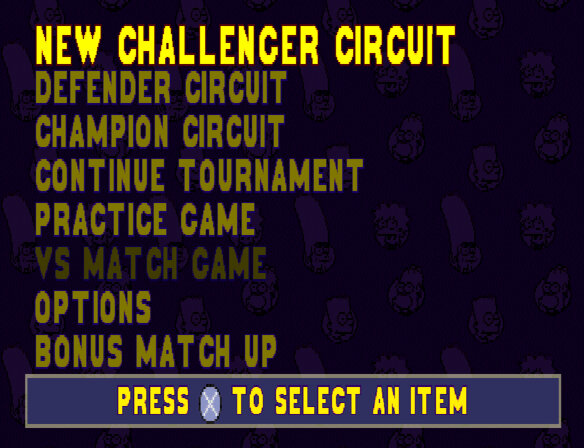
Main menu
There are a few campaign options that are unlocked sequentially, these are a series of matches that you must play to unlock new characters and to complete the game.
The VS/Exhibition mode is greyed out and needs a second controller to be plugged in to be selectable.
Gameplay
The type of attacks that can be done is determined by the energy/stamina bar, which depletes when you execute a move.
Strike: done by pressing the Square button, deals a basic strike attack. When you have a 4 hit combo you can knock your opponent to the ground Long Range / Alt Attack: Done by pressing the Triangle button, your character will typically throw or shoot a weapon. Special: Done using the circle button, this takes a lot of energy but deals a lot of damage, or will unleash a series of uninterruptable attacks on your opponent.
Taunt: Knocking out an opponent gives you one taunt letter, collecting all five allows you to taunt your opponent which will stunt them and gives you temporally invulnerability.
Other/Combo attacks
Grappling is possible by pressing L1 when you are next to an opponent, you can then execute a grapple move.
The Cross button will allow your character to jump, and they can combine an attack using the Square, Triangle, or Circle buttons
Lastly, you can also attack using the ropes, which allows your character to execute unique moves, simply run into the ropes and press the desired attack button.
Battle of the ratings
Charicters
Barney: The town drunk, fights with a glass full of beer and belches toxic gas that will reduce your health
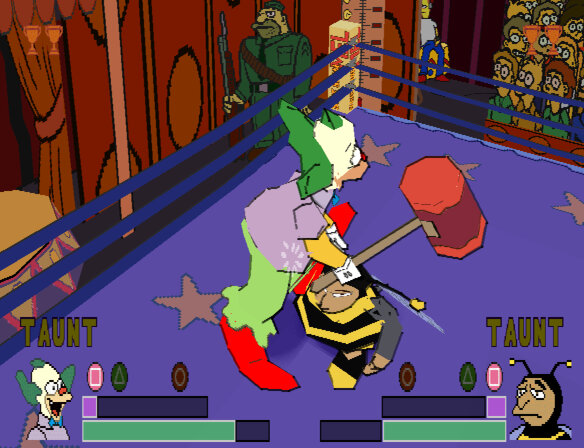
Krustry: Throws creme pies and can summon a huge hammer as an attack.
Willie: Can set traps like a beartrap, a rake or garden scissors,
Apu: Likes to use the jump attack, a lot. Will sometimes throw his trademark squishee. Special attacks seems to be him having some sort of seizure.
Homer: Has a basic attack and can deploy bowling balls that roll throughout the ring, has special attat that will transform into a larger sized Homer who will deal more damage
Marge: Can deploy Maggie who will hold opponents to slow then down, marge can then wack em with her frying pan or headbutt them with her hair
Bart: Special attack is him rolling on a skateboard, can also fire using his
Lisa: Plays a saxophone that when done correctly, will stun the opponent character, must have a full energy bar to do this.
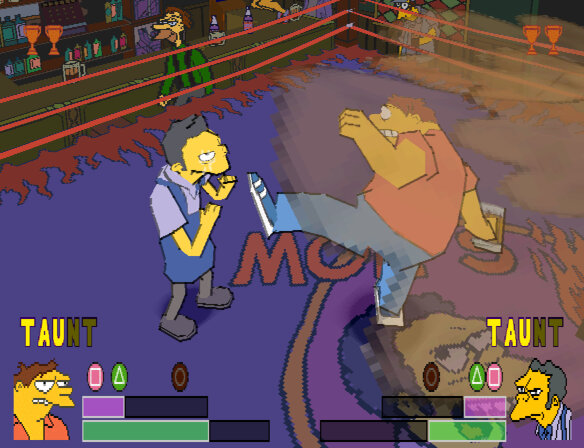
Moe: Has very fast attacks and can throw flaming Moe’s, which resolt in fire for a few seconds
Frink: Pretty strong character, can deploy random objects like a homing rocket, an exploding robot or an exploding mine
Bumblebee Man: Ok but has a fucking annoying pet chuwaw dog that will bite your charicter
Flanders: This is the character that breaks the game, most of his attacks are ok except for one where lighting bolds strike your character, draining your health unless you keep moving. His throw attacks are flying bibles which circle round the ring until they hit your character (I’ve heard of bible bashing but homing bibles takes it to another level). And to top it off he gets an extra life as when you try to pin him, he will resurrect back to life. Really don’t know what they were thinking with Flanders here. The only way to beat him is through luck.
Smithers: Another overpowered character, but is more fair than Flanders. Smithers can only be played in single player and has his own stage. Mr Burns will throw what appears to be radioactive mini-nukes into the ring which only affect your charicter, Smithers does not take any damage. Perhaps prolonged exposure has made him immune to the effects?
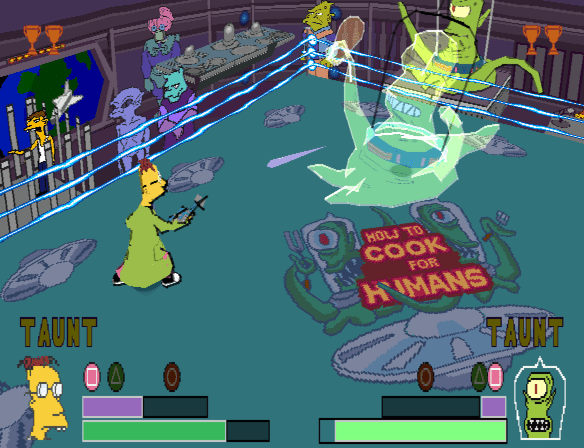
Kang & Kodos: The space aliens who have their own stage, these charicters are quite large and occupy a lot of space in the ring
Sibling rivalsBarney tries to settle his tab with Moe
Conclusion
As a wrestling game is a poor title, since it very liberally uses the wrestling genre, there are no ring-outs. Really if you’re looking for a good wrestling game, your not gonna get it with The Simpsons, and why would you expect anything more? Calling it one of the worst games ever is misleading, as there is fun to be had here, and what the game lacks in graphics it makes up with its soundtrack. But for what it is, a Simpsons game is pretty ok, and worth a play if you’re a fan of The Simpsons. And it’s a lot more fun in Vs mode rather than single player, which can get mundane after a few minutes.
Marge settles to get violent cartoons off the air
Also, why did we only get one Simpsons game on the PlayStation? (Technically two, Simpsons Bowling was an arcade game running on PS1 based hardware) Both were at the prime in the late 90s so you’d think we get a few games on the PlayStation, instead, titles like Virtual Springfield ended up exclusive on PC platforms like Windows and MacOS.
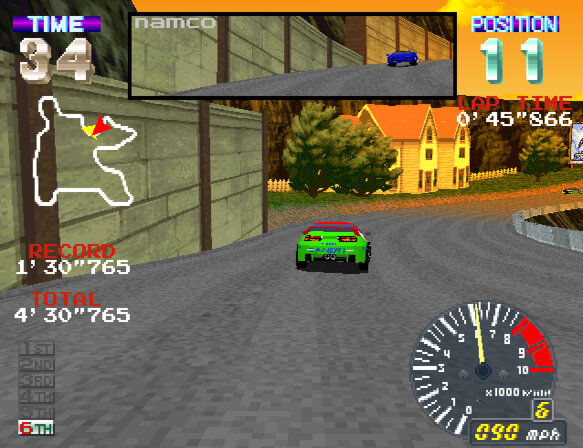
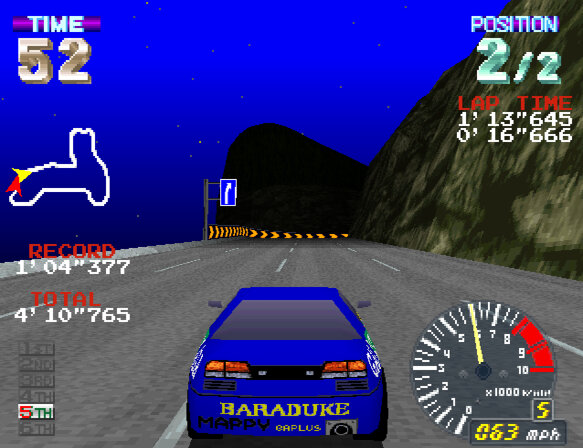
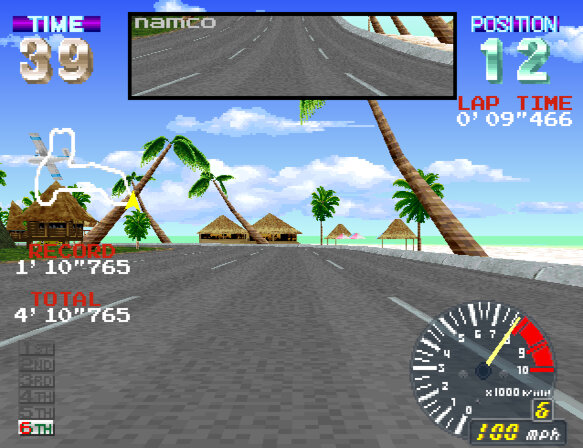
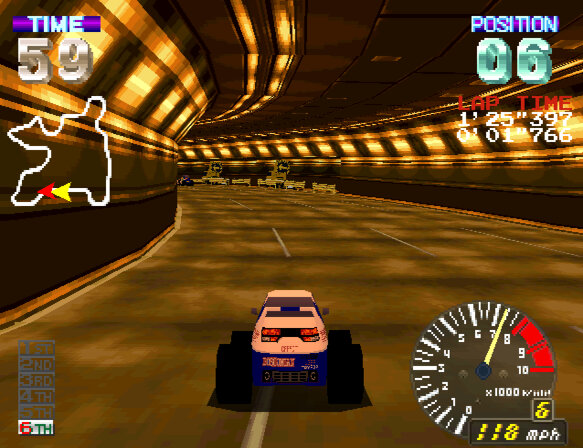
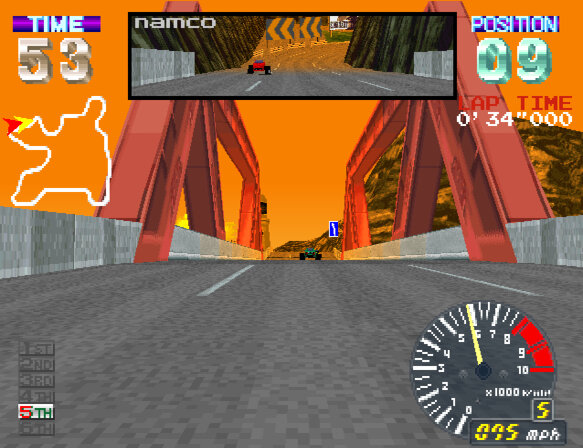
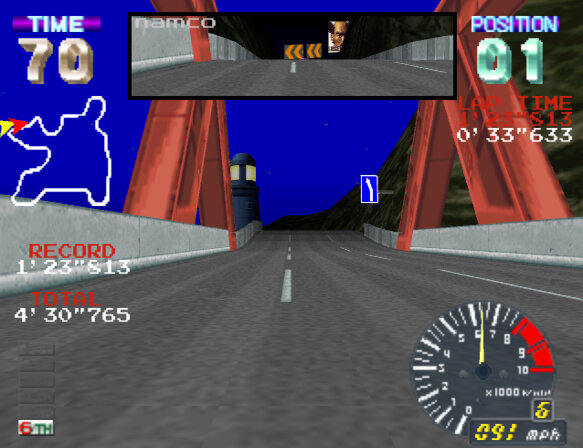
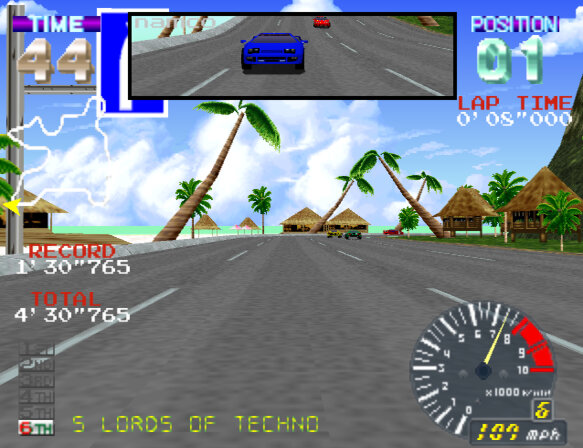
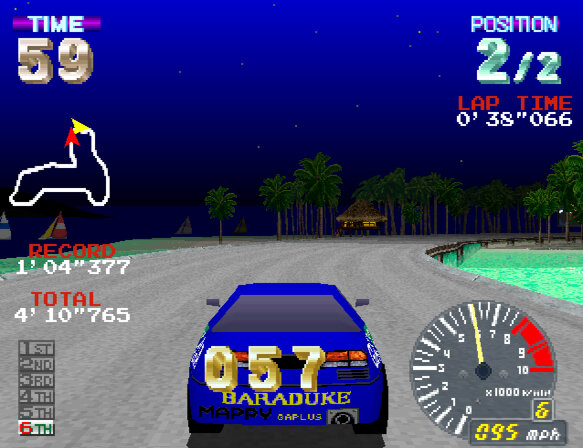
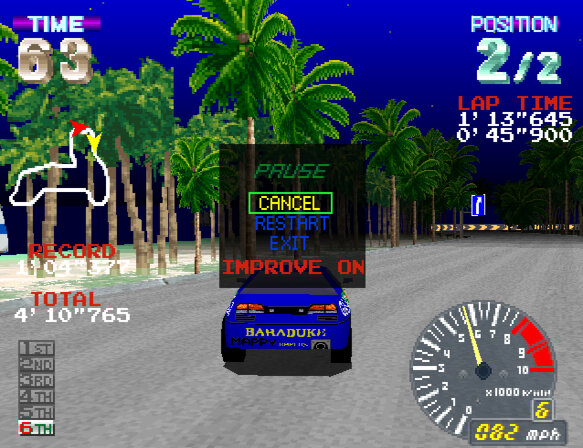
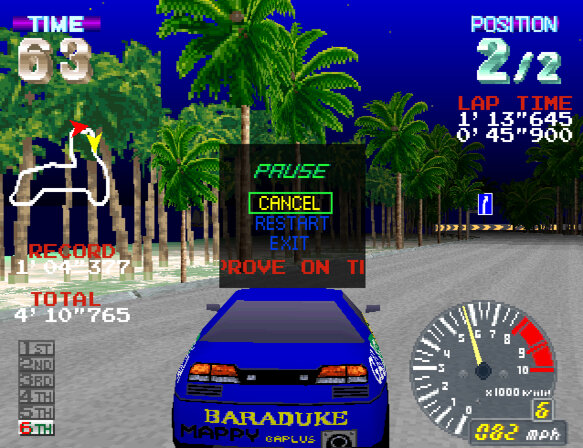
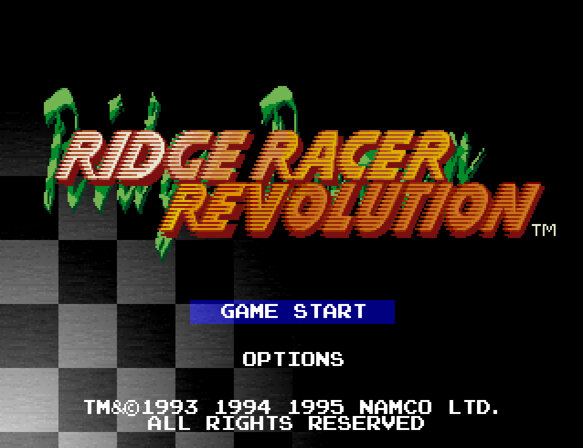
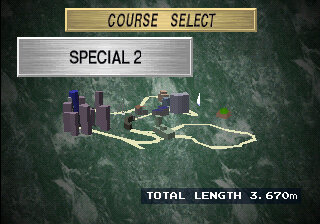
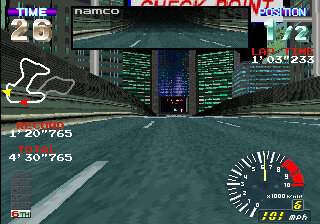
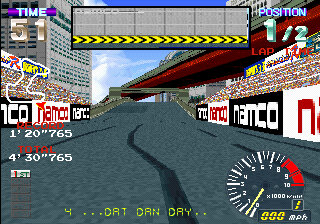
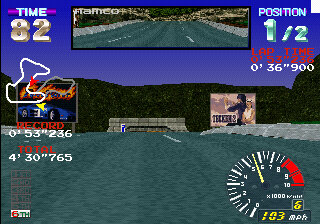
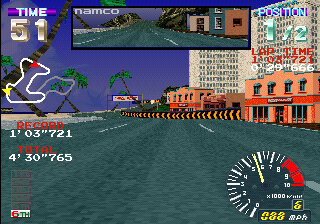
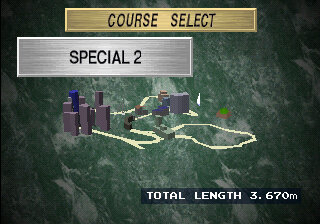
Ridge Raver Revolution builds upon the original Ridge Racer game, set with a new course being added with a few variations. All three tracks are similar in how they start, but branch out into different directions and are named by the difficulty of the track itself (Novice, Advanced, Expert).
As with the first game, there is support for the NeGcon controller, so make sure to enable it in your emulator if you wish to take advantage of analogue steering.
Race Modes
Race: Normal racing mode, race 3 laps around the track and finish in 1st place for each one. Time Trial: Same as Race mode but you have no opponents, the objective is to get the fastest lap time for each track. I’ve always found these modes boarding and don’t really play these much. Completing these modes will unlock a new car. Free: You can run as many courses as you like. When you reach 99 laps, the lap counter display will stay fixed at 99 laps.
In terms of gameplay, it’s very similar to the original game, with the same graphics style and mostly the same drifting mechanics. Therefore you could consider this as a standalone expansion pack of sorts.
The soundtrack is the exact same as Ridge Racer 2 was released for the arcade, however, Ridge Racer 2 featured only the original arcade tracks, not the ones featured in Revolution.
Secrets
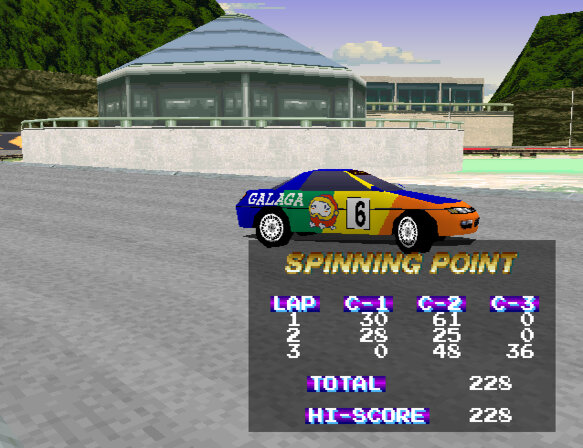
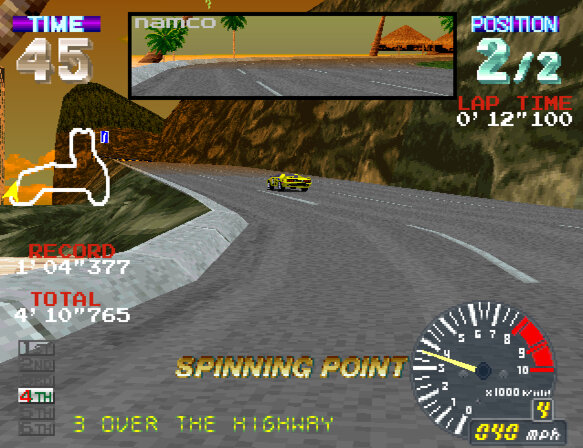
Spinning Point: When selecting time trial, hold down the X and Square buttons and select Start (Note: Not the Start button on the controller, the option on the screen), then when playing the track, Spinning Point will appear where you can spin and the game will score you based on how well you spun the car. This only functions in time trial mode and the scores are not saved.
Pocket Racer: A hidden mode that is enabled when you beat the Galaga mini game without wasting a shot. This mode would later spawn into an arcade spinoff that was released in Japan arcades only as Pocket Racer.
Mirror Tracks: to play in mirror mode for every track, at the start of the game accelerate forward slightly but turn around 180 degrees, then drive into the barrier at over 66MPH and the track will be in mirror mode, along with all the road signs. Zoom In/Out: When in third-person view, pause the game and then press either the L1 or R1 buttons to zoom in or out respectively. You can then resume the game with the new viewpoint.
Title Screen: The spotlight can be manipulated by holding both the L1 & R1 buttons, then using the d-pad to move the spotlight.
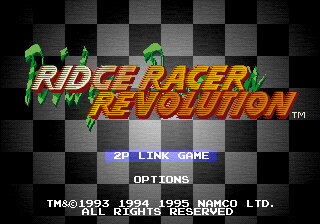
Two Player Link
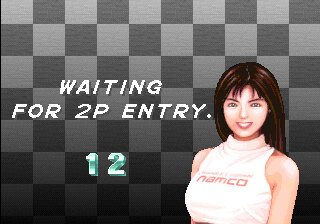
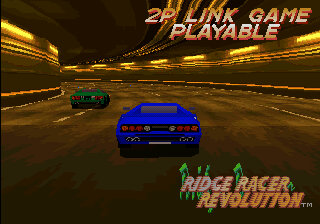
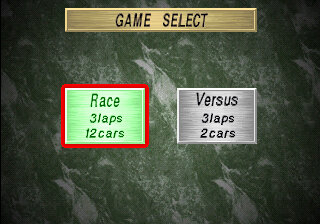
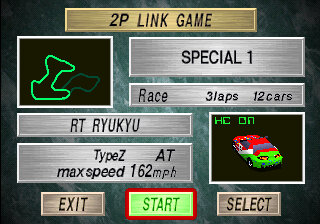
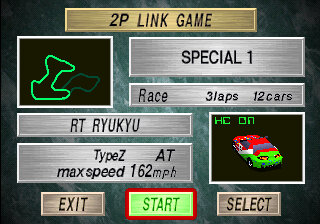
Revolution included a new two-player link that allows for two players to race each other through the use of two consoles, two copies of the game and two displays. This is not the same as the split-screen modes in the later installments of Ridge Racers, with only one player per console. A link cable is required to connect both consoles together using the serial port located on the original PlayStation models. The smaller Psone branded consoles lack this port and cannot make use of the two-player modes, but can still play the single-player modes.
You can replicate the two-player mode using the NO$PSX emulator, or PCSX. PCSX was troublesome to work within Windows as starting the emulator as a client would just cause it to crash. Under Linux we have some luck but when we are able to re-establish a link, the performance is horrendous with both games running at around 2FPS. Possibly due to both emulators trying to run in sync with each other. I tried running both in a VM, running in a LAN segment but the performance was still the same.
The original Ridge Racer tracks can be played in this mode, as this functionality was missing from the first game.
Conclusion
The game feels like what Ridge Racer should have been when it was ported to the PlayStation. Presumably a lot of content was shifted to Revolution in order to meet the launch deadline since the original Ridge Racer only featured one track with two variations.
One of the main criticism of the original Ridge Race port was its lack of content featuring only 1.5 tracks (the second being an expansion to the original) and around 12 cars, which limited replay value. Here Namco has tried to add as much content whilst still making the game accessible, however I question why certain modes are hidden behind key combinations instead of being directly accessible.
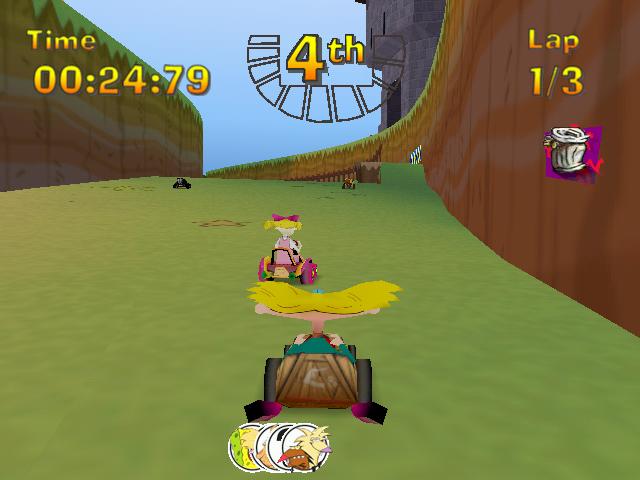
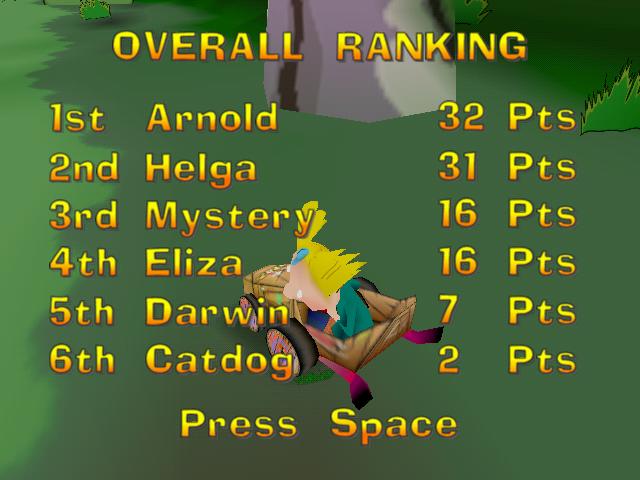
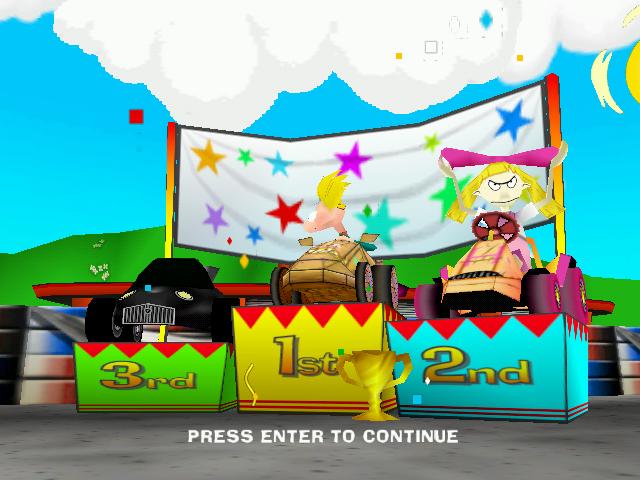
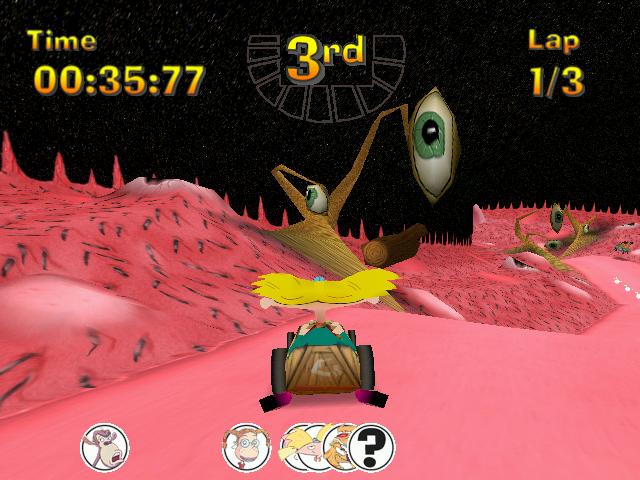
Cart base racing game featuring popular Nicktoons of the time, complete with powerups
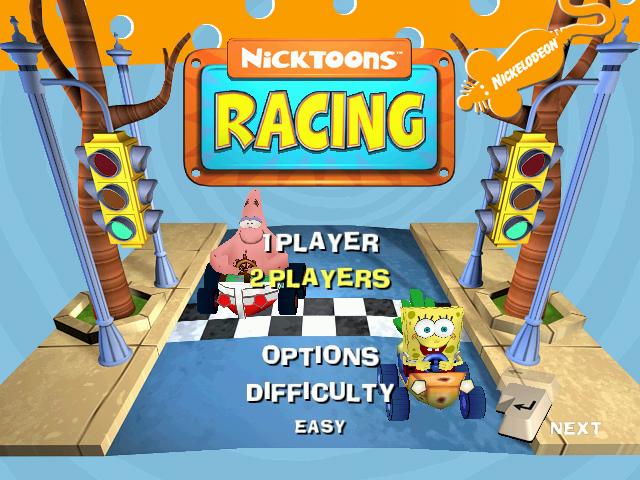
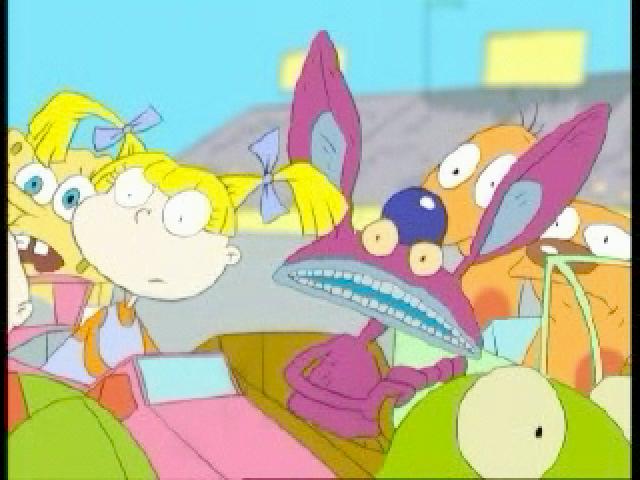
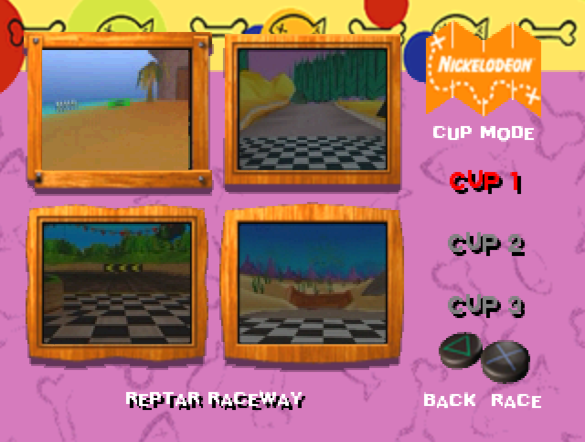
The opening FMV, and a look at the games menu and track selection screen
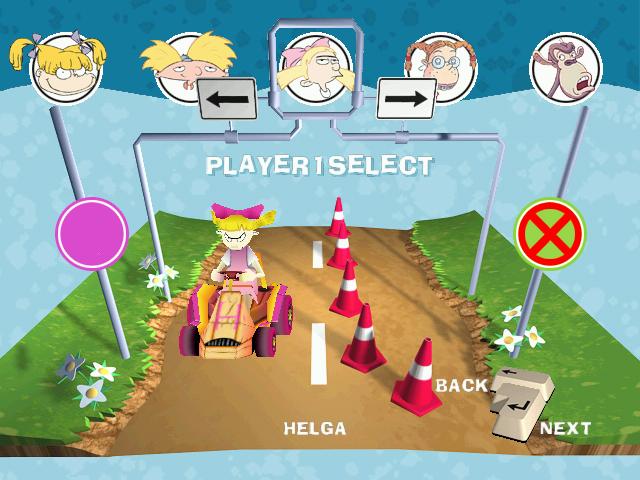
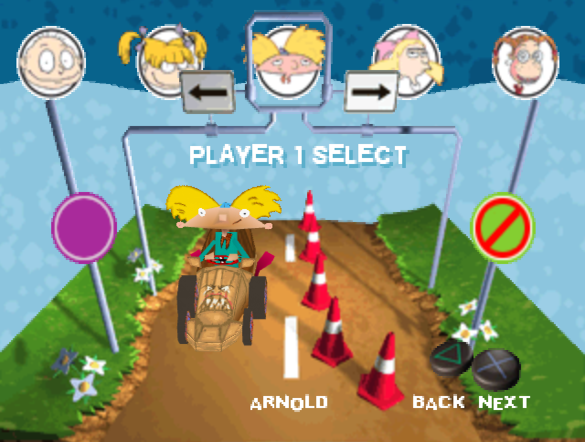
The character selection screen, You can choose from:
Rugrats: Tommy & Angelica
Hey Arnold: Arnold & Helga
Wild Thornberry’s: Eliza and Darwin
Spongebob Squarepants: Sprongebob and Patrick
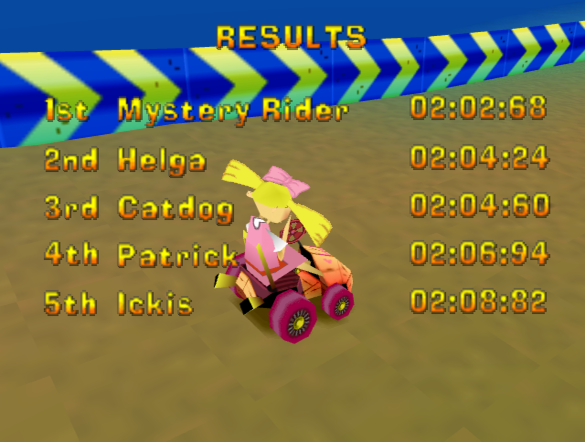
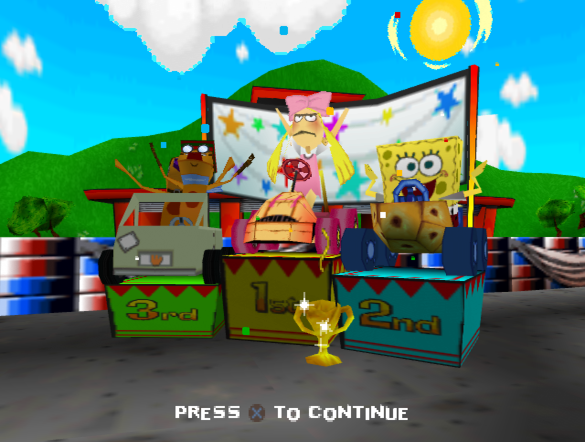
Other playable characters include Ickis from Ahhh Real Monsters, Ren from Ren & Stimpy, Catdog The Angry Beavers, and a Mystery Rider that is unlocked by beating the game.
Tracks
Many tracks are based upon each Nicktoon show and follow the respective art style of that show.
Many of the tracks have shortcuts, which the NPC drivers will use more on a higher difficulty level. There are also many pickups and speed boost pads spread across the track. Some tracks will branch and split into two different section which can vary in speed and difficulty, one path might be shorted but with less pickups, or might have a few tricky bends which have to be navigated.
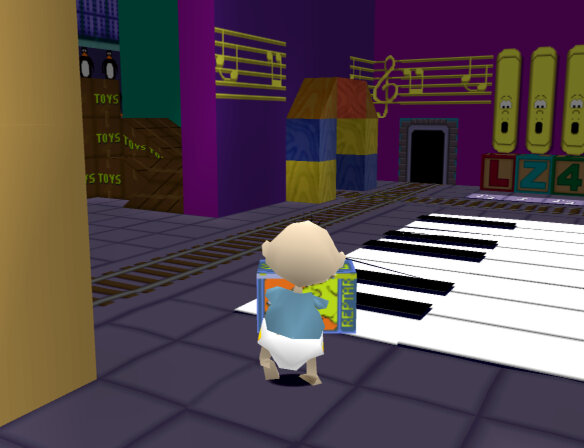
I’m disappointed they didn’t expand on the Rugrats themed tracks, considering they already released Rugrats games previously, why not have tracks that were based off Search for Reptar? like Toy Palace, or the Mini Golf levels.
Windows
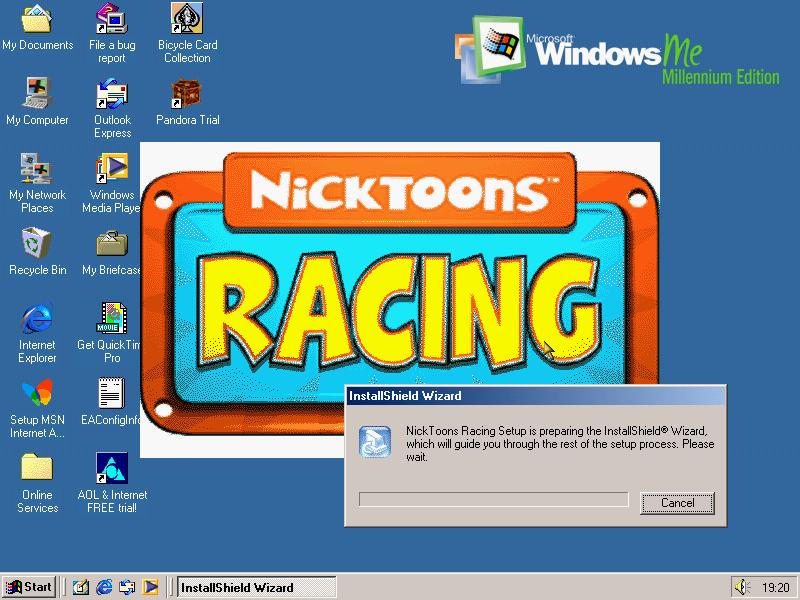
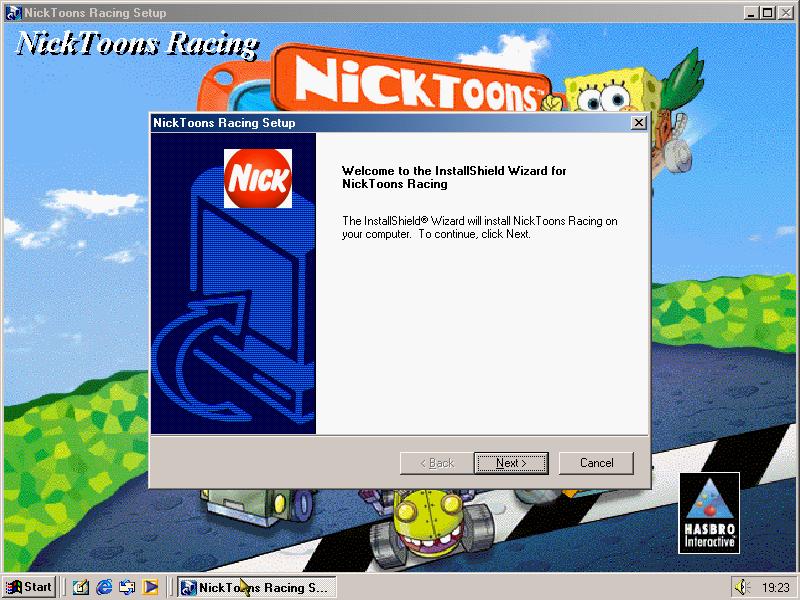
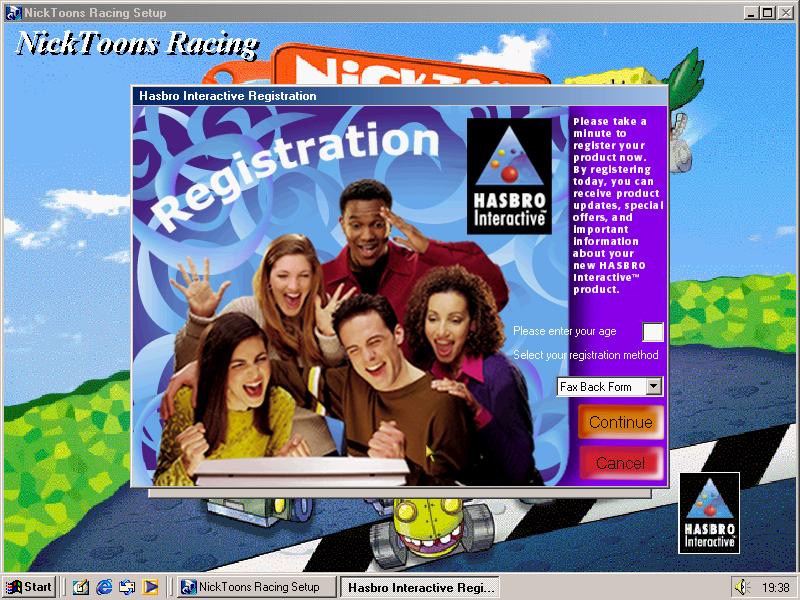
Game can be installed to the hard drive and offers a minimal or a full install, with the full install including the opening FMV and music. At the end the user is given a choice to register their copy of the game.
The PC version benefits from a higher framerate, resolution and texture quality compared to the PlayStation version.
PlayStation
The game was ported to the PlayStation in 2001 and is a straight port of the PC version, with lower resolution graphics. However this version has issues when the CD drive is played at a higher speed and can lead to the opening FMV video skipping, which can also happen with the music. When being played on Duckstation, it is recommended to use the default CD drive speeds (2X/ 300K)
The PlayStation was the only console the game was released on, and did not see a release on any sixth generation console, despite the game being released from 2000-2003
Arcade
An arcade version was released in 2003 and was an adaption of the PC version and was distributed by Chicago Gaming Company
A dancing/rhythm based game for the original PlayStation, released in Europe, US and Japan with each having some minor changed being made across the different regions. A very niche game and one that could only exist an a console.
Gameplay
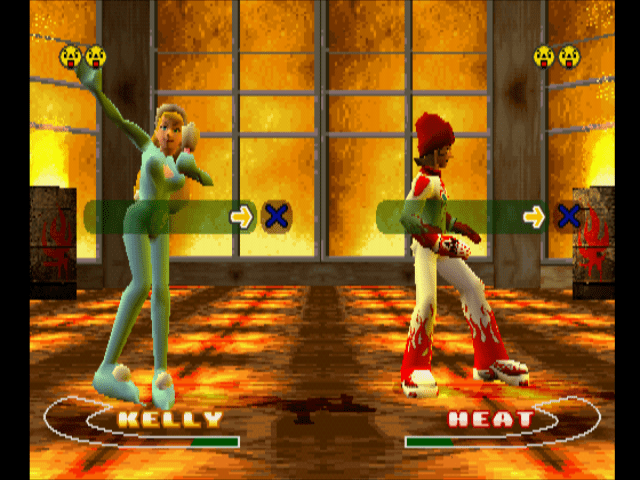
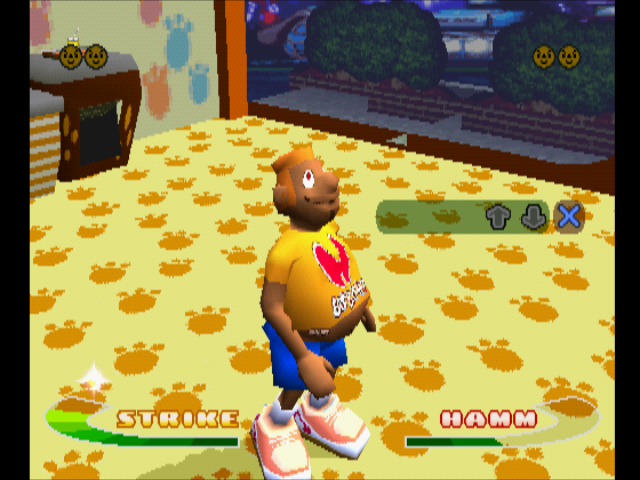
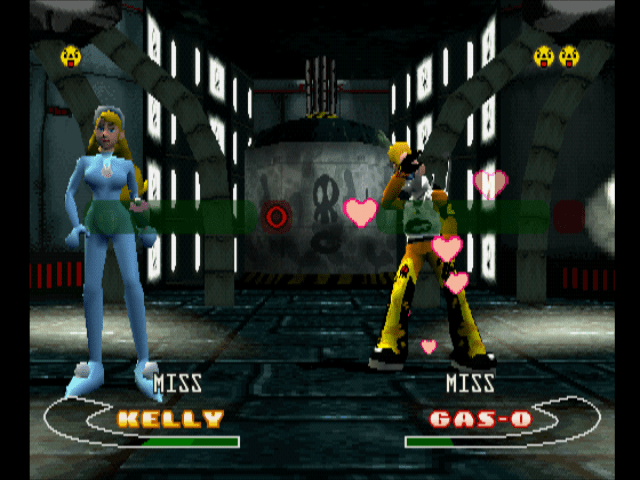
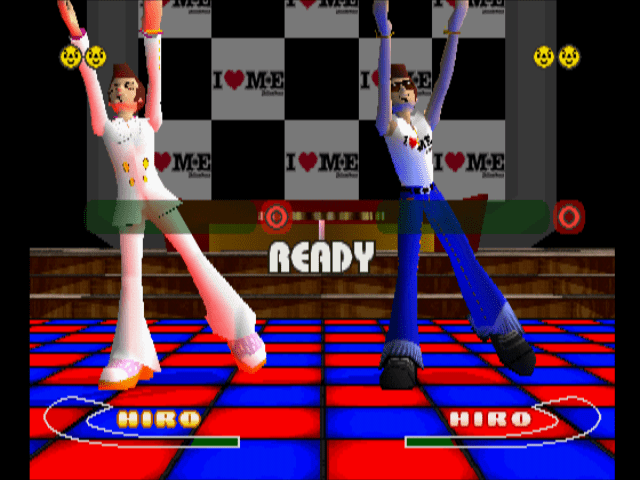
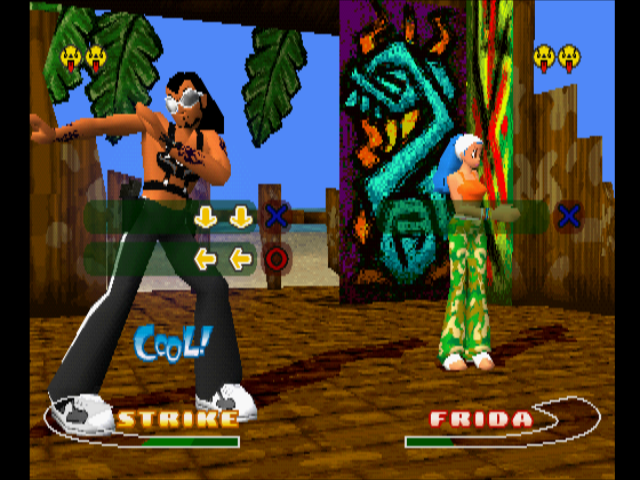
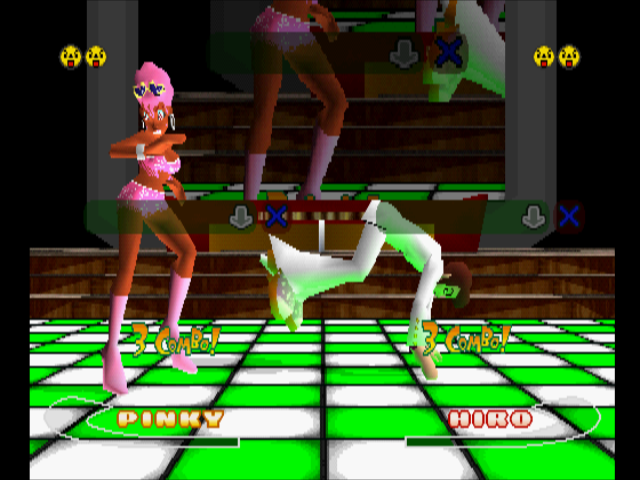
The game is played by monitoring the beats within rhythm, there are four beats. You press the directional buttons and on the fourth beat you press either the Circle or Square button to execute your character dance move. Whilst this seems easy a lot of the timing is based on the current song being played, and on some songs this can be difficult (Like Kelly’s stage, which is at a slower BPM than the other songs) Timing is crucial and on some emulators its hard to play the game because the delay in response makes it near impossible to play. This is something to consider when playing on a system that has wireless controllers. You can look at the two faces icons at the top left or right of the screen for an idea of which beat you are on. The green bar that shows the buttons to enter also flash to indicate the beat.
There is only one round per level, and score is determined by the complexity of the dance moves performed. The commands to enter are displaced on screen, and after completing the first two combos, you have two possible combinations to enter which alter the dance moves your character does, some being more complex.
Its possible for your enemy player to attack interrupt and break your combo for a maximum of two chances per round. If your quick to respond, you can jump and avoid the attack by pressing triangle. You cannot attack or be attacked during a solo. Otherwise if your hit you will lose whatever combo you were building and will have to start again.
A normal play-through features 12 levels, each getting harder as you progress. Capoeira serves as the mid boss, whilst Robo-Z serves as the final boss. Completing the main game mode unlocks that character for Dance View use, which is where you can select that character and crate your own sequence using the different dance moves that character has.
A Jammer in action, this interrupts your rivals dance move
Fever Time: If you score high enough, your character will enter what is called fever time at the end of the game, this is a bonus dance moves that your character does and does not require any additional input from you, the player.
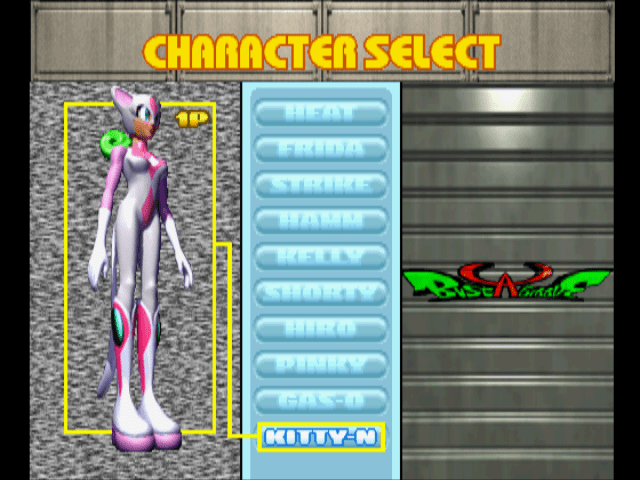
Characters
Each charicters has their own dance moveset, along with a unique stage and music. Except for Columbo and Burger Dog, which reuse Shorty’s and Hamm’s music and stage respectivly.
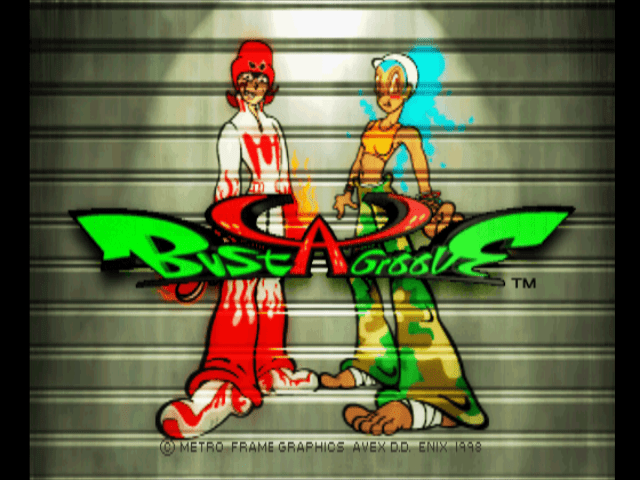
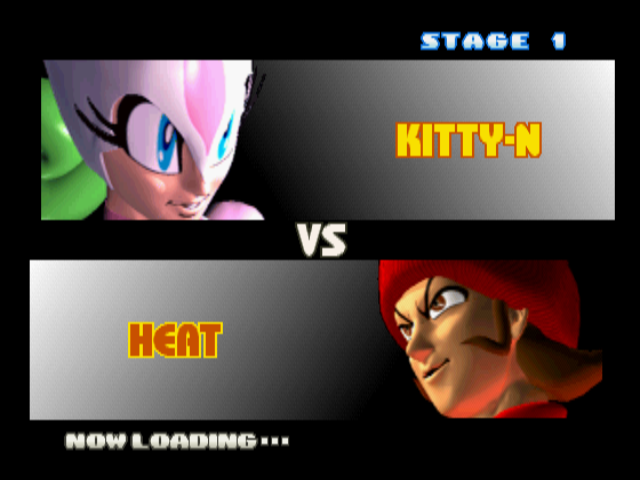
Heat: The poster character of the game, basically the Kazaya of Bust A Groove (For those who are familiar with Tekken). Supposedly got indo a race-car accident and is now able to expel flames from his body. Dances to the break-dance style.
Frida: A Hippie/Beech chick who lives on a beech shack and is a keen graphic artist.When you attain a high score a tropical storm blows her shack to bits, leaving her homeless.
Pinky: A Dancer, looks like RuPaul
Hamm: A hiphop rapper who loves burgers, sounds like Kermit the Frog. Despite his size he is able to pull off some moves
Strike: A gangster rapper, inspired by Snopp Dogg and Coolio. Drinks from a flash in the Japaneese version which is missing in the US/Europe versions.
Shorty: A 12 year old girl who deiced to enter a dance competition, has a pet mouse
Kelly: Blonde woman who has a fetish for milkshake and baby items, her level can potentially cause a seizure if you’re doing well.
Gas-O: Wears a gas suit, some sort of scientist?
Hiro: Disco dancer, also has a hairy chest. The official description of him shows hes is shy and works with his computer each night (On the disco Reddit?)
Kitty N:Might be A Furry? Has a catchy theme music
Capoeria: Two aliens (Lala and Kiki) who serve as the mid-boss. You can guess what their dance style is. Unlocked when you complete the game on normal.They have supposedly come to earth to collect enough billboard to construct a giant fan (To combat global warming?)
Robo-Z: A vogue dancing robot, and the final boss of the game. Unlocked when you beat the game on hard.
Columbo: Unlocked when you beat the game with Shortly, her pet mouse/ferret.
BurgerDog: You can see him in Ham’s stage behind the counter. Can be unlocked by playing with Hamm once you have unlocked Robo-Z, uses Hamms move set.
Each character has an alternative costume
Screenshots are captured from the Mednafen emulator running on elementaryOS, using the Mednaffle fronted, up scaled to 2x the resolution
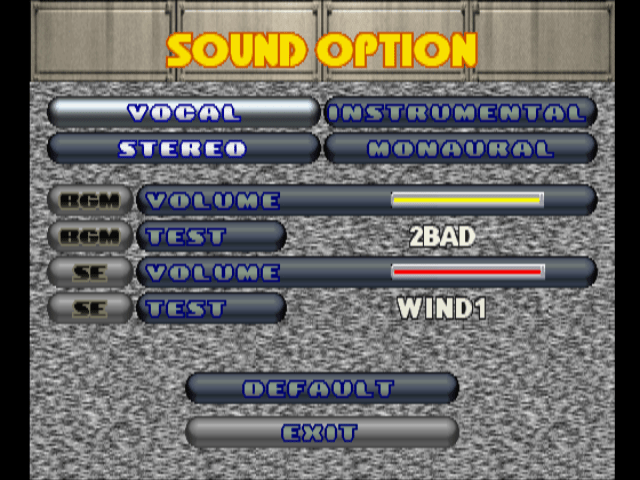
You can choose from the default soundtrack which features vocals, or just the instrumental versions. You can also hear the various samples and sound-effects.
Arcade
There are references to an arcade version of the game that was released in Japan only, most likely running on Namco System 10 or Sony ZN hardware which was PlayStation based. There isn’t much footage of this available online and there are no MAME roms that exist so I would assume this game was never fully released, or was only produced in small numbers.
The game that put the PlayStation on the map for fighting games.
Select Screen, with the mysterious Wild Card fighter
Plot
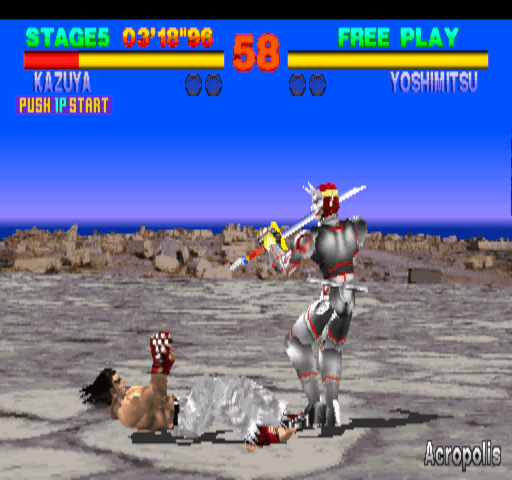
So the backstory is, Heihachi Michima throws his kid (Kazuya) off a volcano as a test to see his sons strength as a test to see if he is a worthy successor for the Mishima Ziabatsu corporation. Kazaya (who is 5 years old at the time) nearly dies but makes a deal with the devil. He swears revenge on Hitachi for throwing him off the volcano and enters the iron fist tournament. Clearly this family feud was beyond Jerry Springer… There also a bunch of other fighters who enter the tournament for money or to prove themselves, including a robot and a bear.
Gameplay
Each character corresponds to the face buttons on the PlayStation controller, with two buttons being assigned to the left/right hands of the playable character, with the X and O buttons for the left/right which can be used to issue kicks to the opponent. Guarding is done by holding the left, or right depending on where your character is facing the opponent. Some moves cannot be guarded against.
During the first 9 seconds of the fight, you can press the select button to switch between different views (1P Start on the Arcade version)
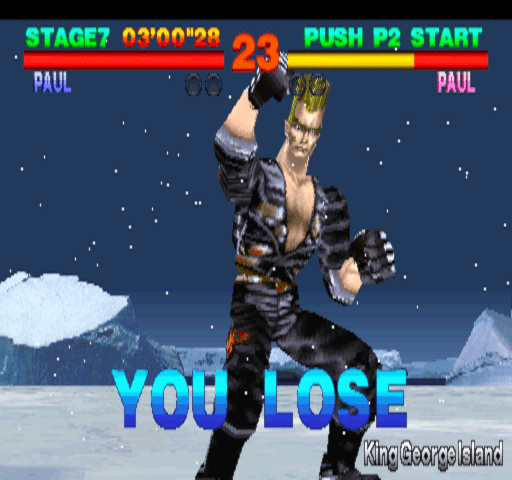
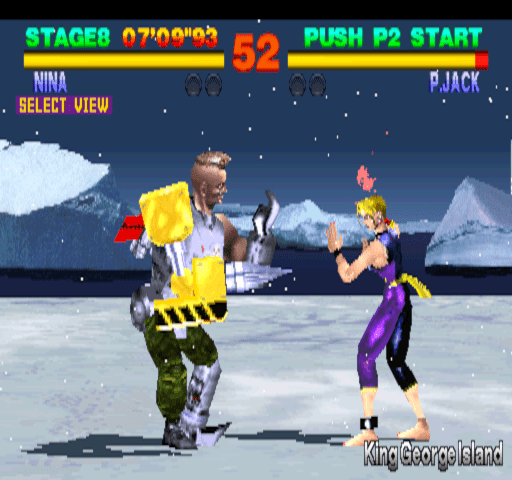
Arcade mode consists of nine stages, for the first seven stages these are opponents picked at random, on the eighth round you will fight against a rival, depending on the character chosen. The 9th round puts you against Heihachi, and after winning the match the end credits will play. The arcade version runs through a montage of KO replays for each round, whereas the home version will show the characters ending FMV.
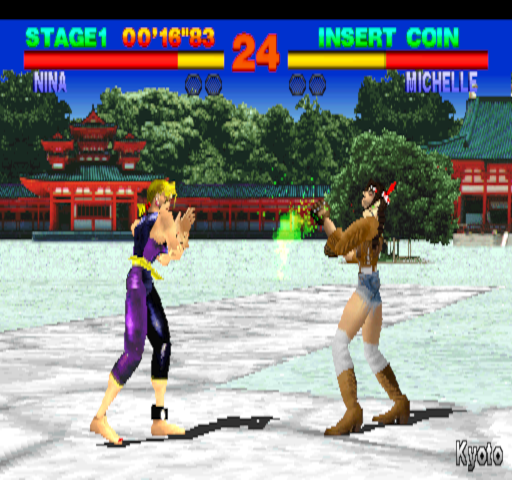
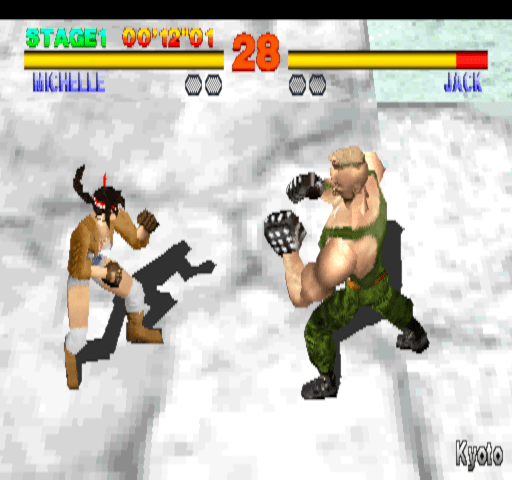
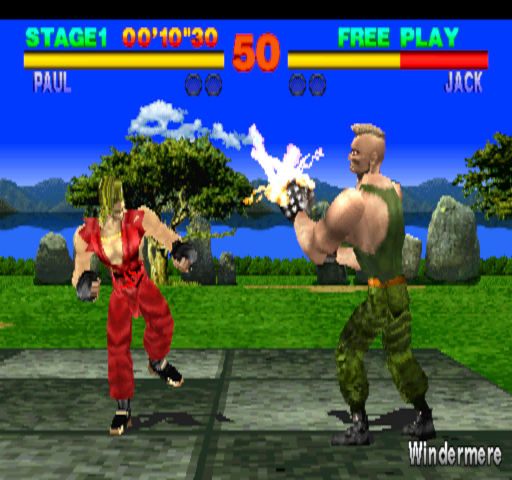
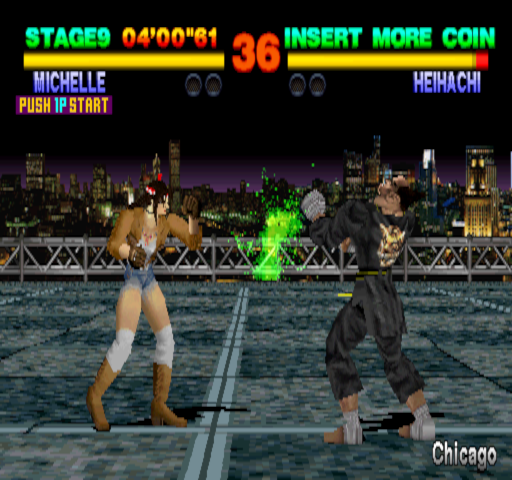
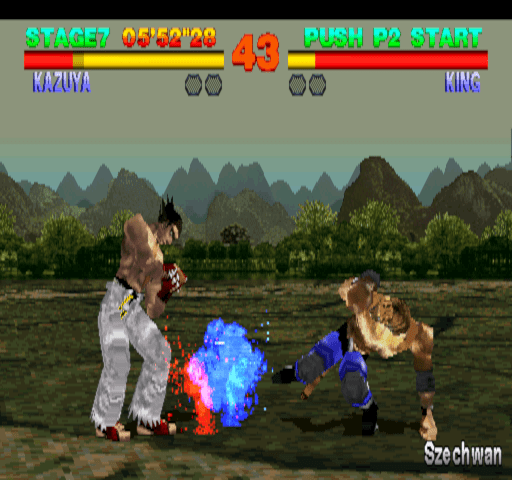
Tekken featured different fighting game stages that are based on different real world locations, and each location has their own background theme.
Characters
• Nina Williams: An assassin. Rival is sister Anna Williams • Michelle Chang • Paul Phoenix: A biker who has a killer fist, also a judo expert • Wang Jinrei: Standard old guy who is an expert in Marshall arts • Yoshimitsu: The Ninja • Prototype Jack: A robot who is slightly altered from the regular Jack • Marshall Law: Bruce Lee who can’t keep his mouth closed • Lee Chaolan: Step-brother to Kazuya • Kunimitsu: A kleptomaniac Ninja, rival to Michelle who she stole a pendant from • Kuma: A bear • King: Mexican Catholic wrestler who has a head of a Lion/Tiger for a mask • Kazuya Mishima: Seeks revenge against his dad for throwing him off a volcano, • Jack: A robot cyborg • Anna Williams: Sister to Nina Williams • Armour King: Rival of King • Ganryu: Plus sized Sumo wrestler • Heihachi Mishima: The final boss of the game
All characters have an alternative costume that can be selected by pressing Triangle/Square, instead of X or O. There is also Devil, who is Kazuya but serves as the final boss of the game. He can be unlocked and become playable character by completing the Galaga mini-game at the start with a perfect score.
There is also an unused charicter that exists, known as Wildcard. Believed to be Kazuya’s long lost twin, he grew up and was raised by Yoshimitsu who adopted him into the Manji clan where he learnt how to fight. He entered the iron fist tournament to reunite with his family, but after learning of the devil gene and Kazuya’s heart of darkness, Wildcard left and was never to be seen again.
Versions
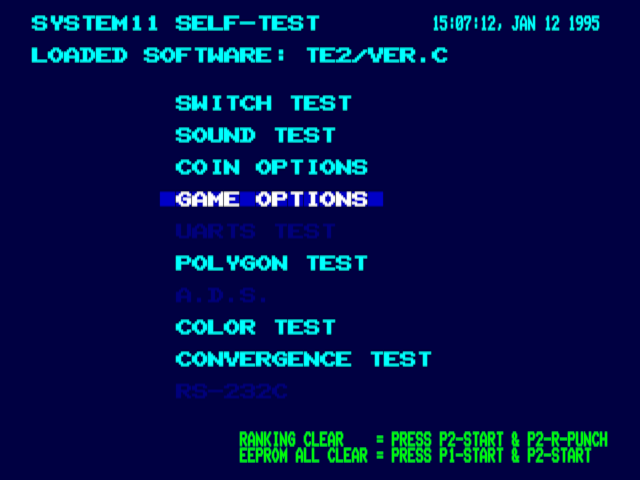
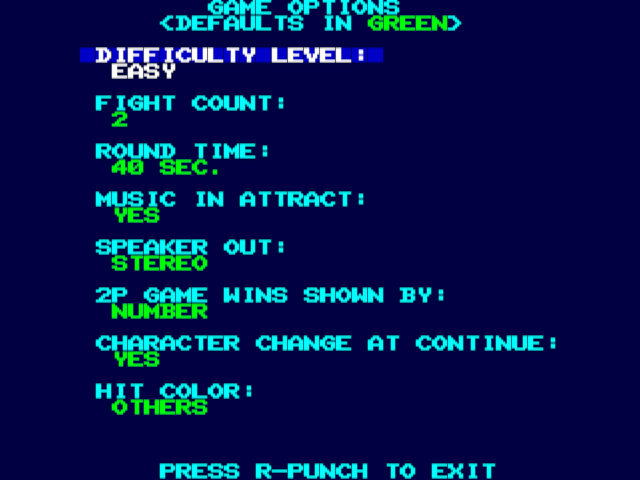
Arcade: The arcade version runs on the PlayStation based Namco System 11 board, which is very similar but with a different sound processor, the Namco C76 and C352 which was also used on their System 22 arcade board. This version only allows a limited amount of characters to be selected and playable compared to the home PlayStation release.
PlayStation: Released 1 year after the launch of the PlayStation, this version included FMV based endings for each of the character which explains the back story. Like other Tekken games, the home version has a revised soundtrack, but has the option for the arcade original soundtrack also. The home release of Tekken 5 features an arcade version of the first Tekken game, which looks and play exactly like the actual arcade release, no improved textures or effects. I’m not sure if these are ports for the PS2 hardware or if they’re tapping into the PS2 PlayStation backwards compatibility.
Other Differences
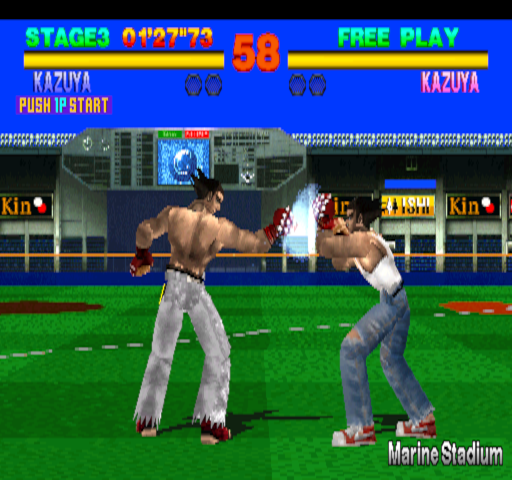
The only other noticeable difference is the question mark animation spins on the arcades character select screen, whilst it is static on the home release. An animation also plays when a character is selected on the arcade, but does not display on the PlayStation. On the stadium stage, a screen can be seen in the background that shows a copy of both characters fighting, the arcade has a static texture in place of this. The stage name is also different, referred to as Marine Stadium in the arcade, and Stadium in the console version.
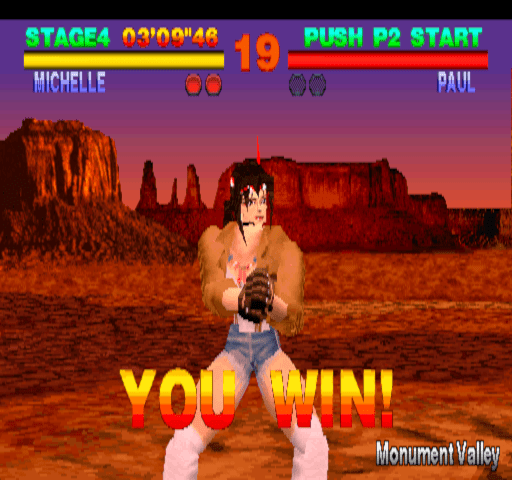
In Monument Valley, the sun sets in very round for the arcade version, but in the console version the sun sets only one, and stays down for each round
These differences may be due to the arcade version having a larger amount of VRAAM compared to the PlayStation version, 2MB vs 1MB. However the main system RAM remains the same (2MB), along with the main CPU and the GTE (33.8Mhz, although MAME shows this to run at 67Mhz since the PSX CPU divide the incoming clock signal by half, so its still running at 33.8)
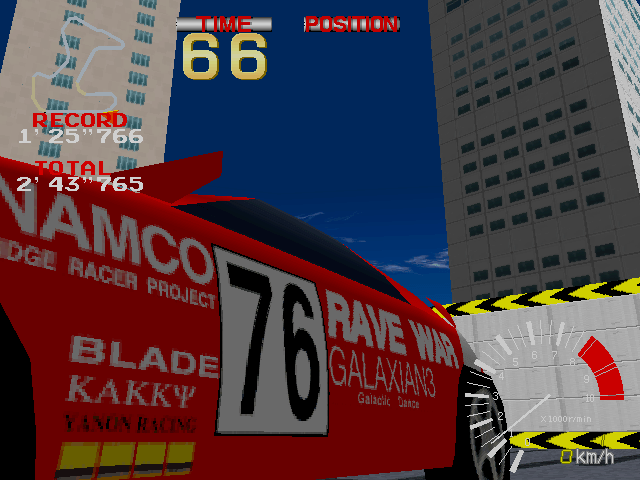
Originally Tekken was known as RAVE WAR which appears on a couple of Ridge Racer cars on both the arcade and PlayStation. Also to note the game was originally in development for Namco System 22, which Ridge Racer and Time Crisis had run on.
The third console instalment of the Ridge Racer series. This sets on a more darker tone, with more realistic looking graphics and a completely revised soundtrack inspired by industrial drum and bass.
Grand Prix
The main game mode where you complete a series of races. Like the previous game you start in bottom place and have to finish in third place or higher against the computer controlled cars. There are five classes in total with a bonus sixth class and an extra GP, which is unlocked by completing the main GP mode.
Medals are awarded depending on what place you finish in. As you play the game you will need to replay a few of the races to build up your credit in order to purchase new vehicles, as you move up the GP class the competitors cars also get faster
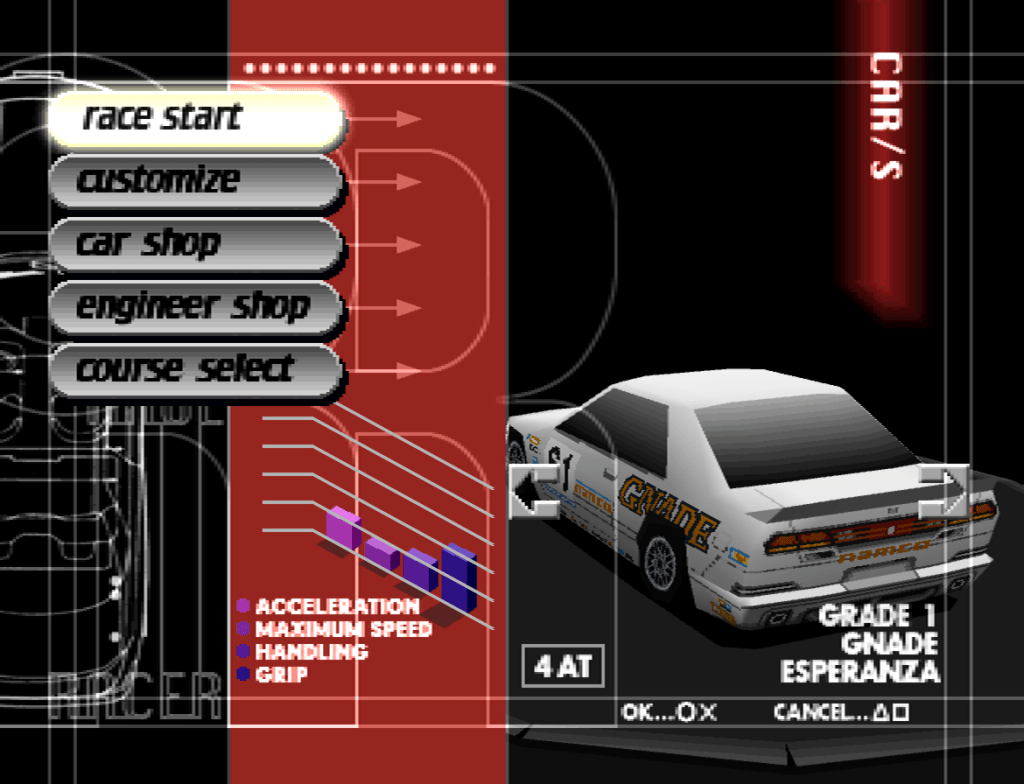
Unlike the previous games in the Ridge Racer series, cars are handled differently with you only starting from one car, instead of four being available. When more races are completed, credit are awarded which allow you to spend them on buying new cars or upgrading your existing car, which will be required in order for you to progress though the next class of GP. Different cars have different specifications, with some having better handling, acceleration or top speed. Some of the later cars are in manual transmission only which requires you to manually change and shift gears.
The Grand Prix mechanic would be expanded heavily in it’s successor – Ridge Racer Type 4.
Time Attack
The mode that no one ever uses, here you get access to the fastest models of the cards with the goal of having the fastest time.
Tracks
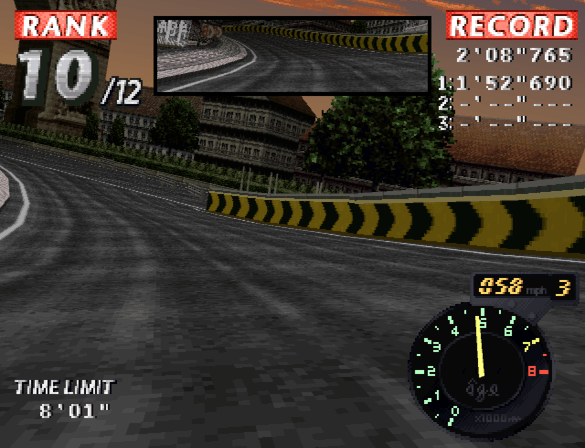
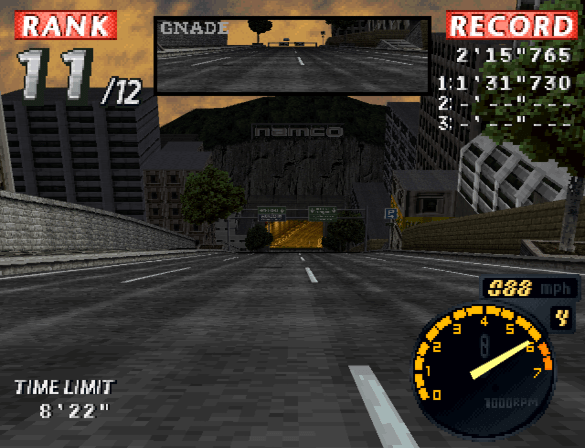
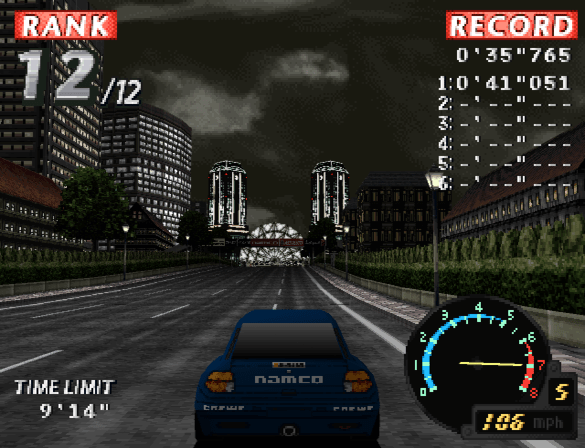
Like the previous Ridge Racer PlayStation games, they all use the same track with some variations in them, Rage Racer is no exception as all tracks have the same starting area but then branch off into different sections and bends, which then combine back together at the end of the lap. This gives the premise of the tracks being set in the same urban city or a town.
The tracks follow a specific design and were designed around the PlayStation’s limitations, as most tracks feature bends that obscure the environmental view as to prevent pop in and to keep the game running at 30fps. Slope and hills are also used to this effect and are incorporated as a game mechanic as for manual transmission vehicles you have to drop down a gear in order to maintain your speed. All of this was used in the next Ridge Racer Game (Type 4) to greater effect and shows how Namco was able to make the most out of the PlayStation hardware which was becoming mainstream at this point.
The environments themselves feature a European look judging from the building design, and some Greek style columns can be seen with the first track, which contrasts from the Japanese look of the city in the first game.
However the quantity of the tracks is part of the games downfall, with it recycling the same tracks as reversed and mirrored. It would have been nice to race on the original tracks from Ridge Racer and Revolution, or include the Rave Racer tracks which was already released to the arcades by the time Rave Racer came out. The fact that most tracks are reused limits the variety and questions the value of the game, eventually you are going to get bored of these tracks. It’s even worse when you compare it to the Rush and Crusin series of game which feature way more tracks that are independent from each other.
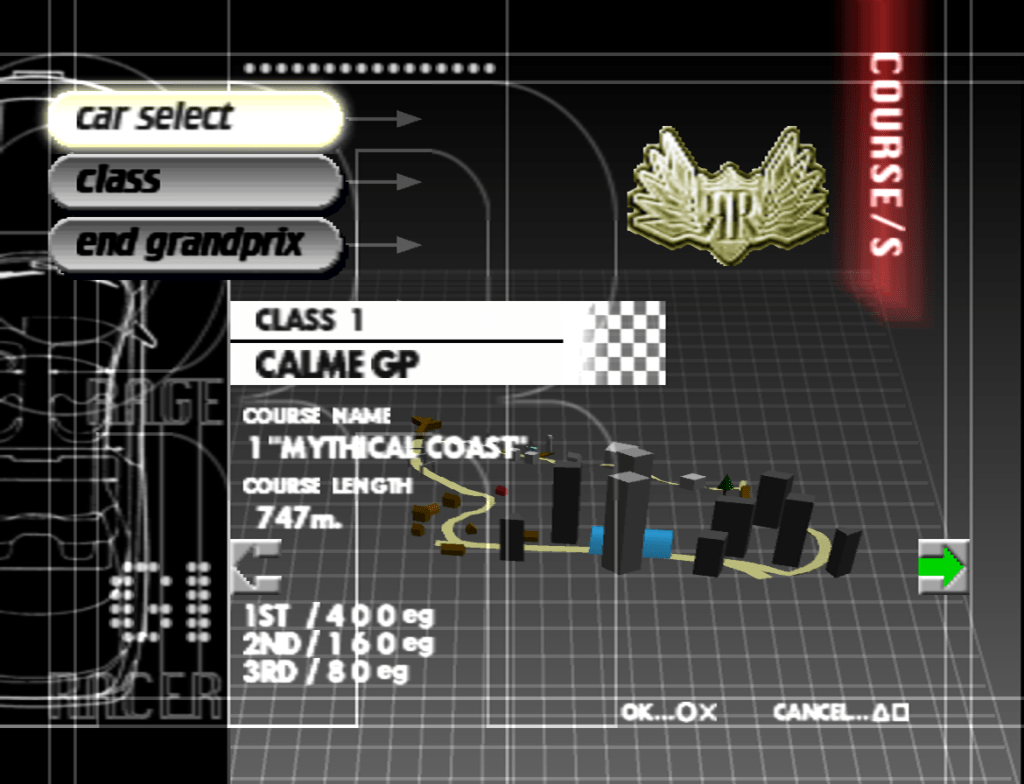
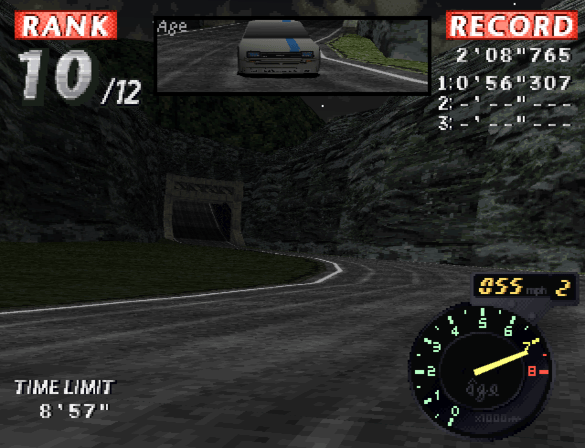
Mystical Coast: The started course for the game, driving past the waterfall into the tunnel, then pass down onto the coast area with Spanish/meddidertain style housing and then into some ruins until you reach a tunnel that takes you back to the starting line
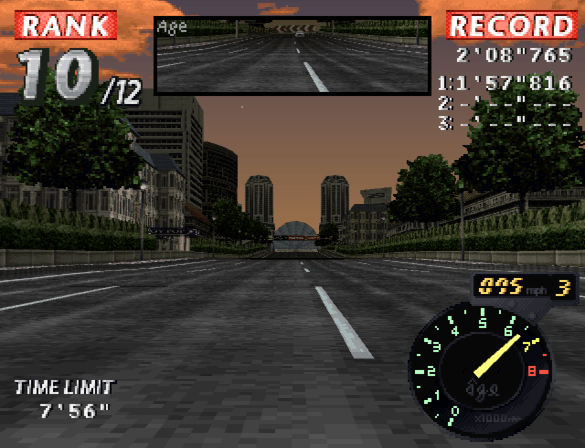
Over Pass City: starts the name as Mystical Coast where you pass the waterfall but the tunnel takes a different direction into the main city, here there are very steep hills past the tram and steep curves as you return to the starting line. This is the longest course in the game.
Lakeside Gate: Tricky since there are a lot of sharp turns where you need to drift sharply. Reaching top speed isn’t much of an issue here but having a car that you can control well is necessary. There’s a lot of tunnels and cave/hill like scenery when then proceeds into a rural area with some open scenery.
The Extreme Oval: A simple track designed for cars to reach their top speeds, but has one sharp turn within a tunnel.
Music
As someone who regularly listens to drum and bass, the music in Rage Racer was a pleasure to listen to with many songs taking inspiration from the industrial rock and break beat samples of the era. With many tracks being inspired by popular tracks of the era. They are also similar to music that was used in Namco’s other games, like in Tekken.
Conclusion
As a Ridge Racer game it takes the series into a more serious setting with its GP/credit based mechanic and its realistic art style but as a racing game it falls short due to lack of content, especially with the amount of tracks.
The game as not been released on any digital platforms, which is odd since this is an entirely Namco game that does not feature any licensed cards or music.
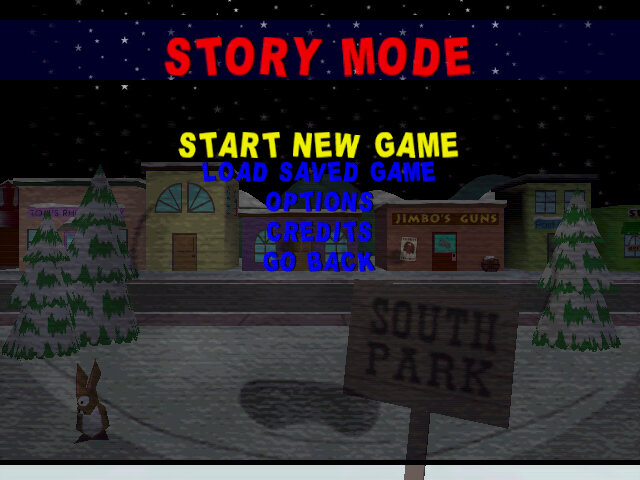
The game based on the popular TV show, came out very early in the shows life, along with a hit number 1 single
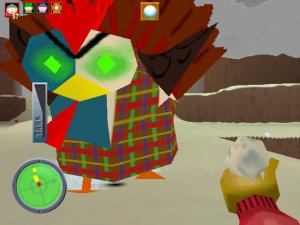
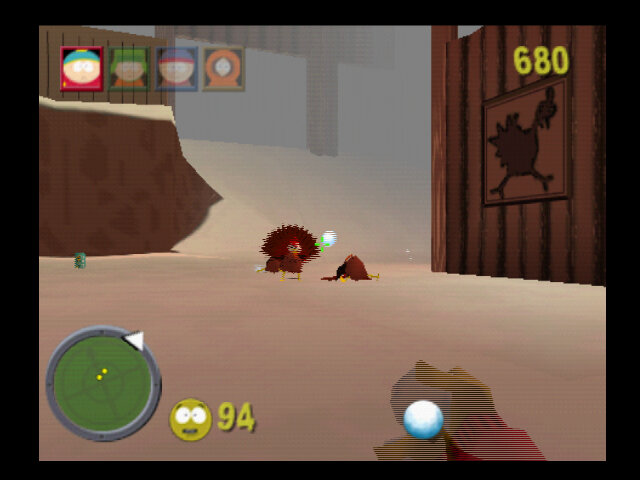
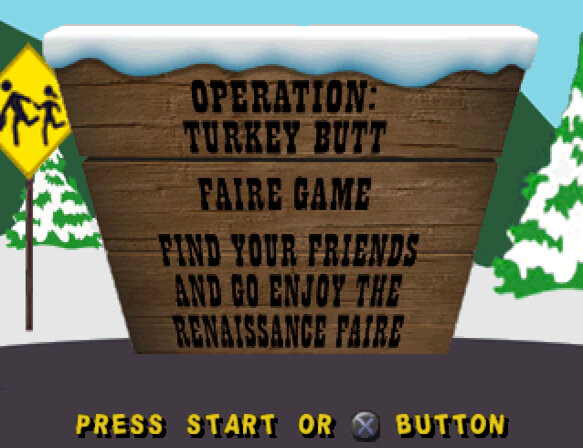
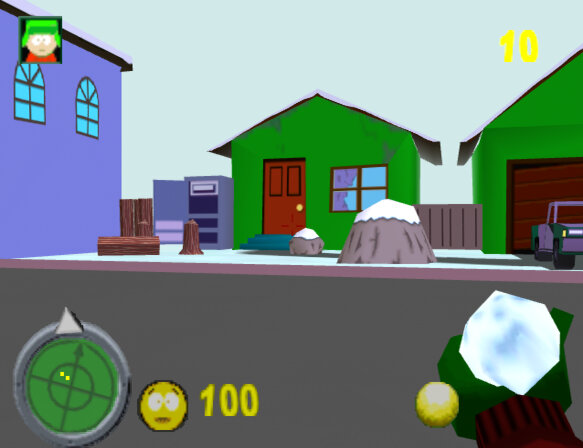
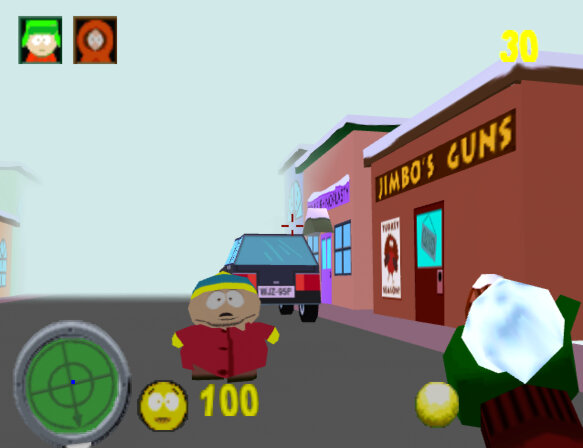
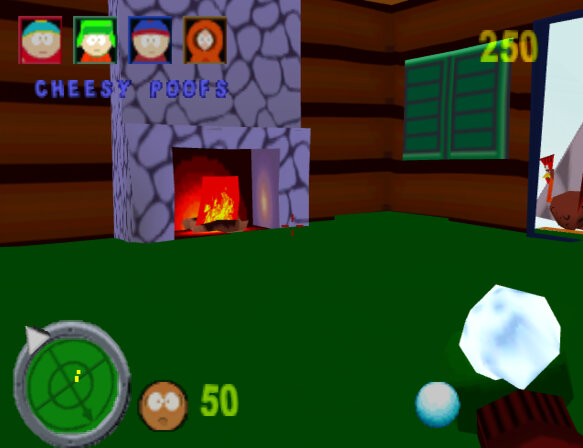
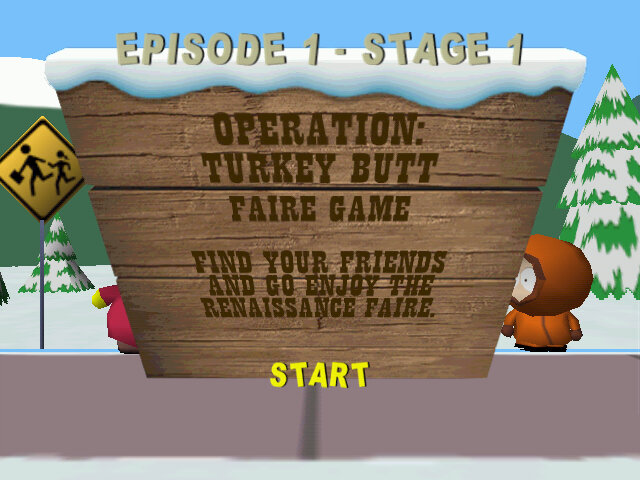
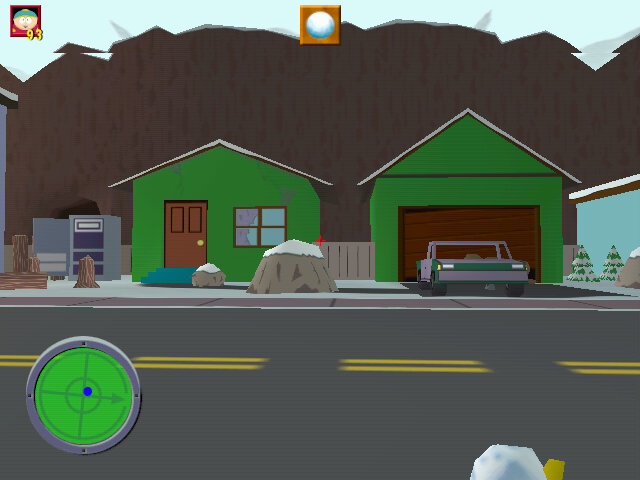
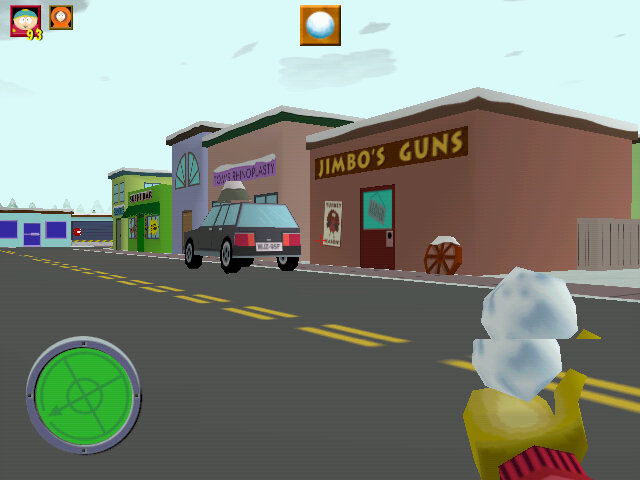
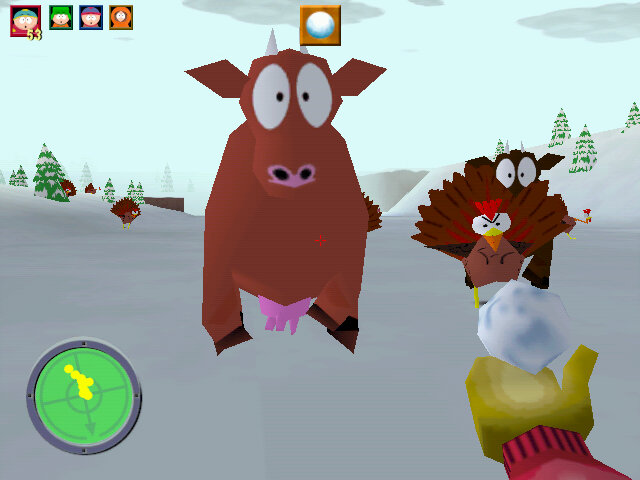
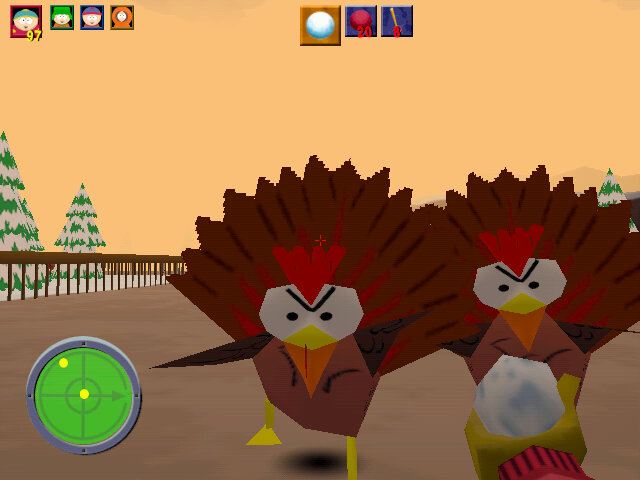
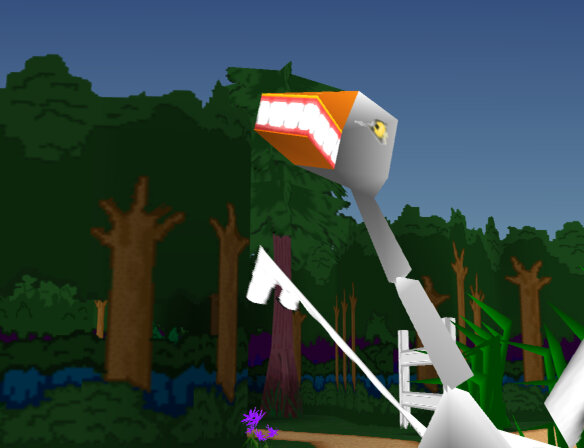
Story mode does not make for a good game, with the enemies being repetitive to the point of tediousness. The first level starts you off in your home town where you are attacked by deranged Turkey’s (who have the most horrible sound effect, and it’s horrendous if there’s 3 or more enemies present) and throughout the first three levels its just ongoing Turkey’s, with the occasional cow thrown in (only on the PC version, I’ve not seen the cow in the console versions on this level).
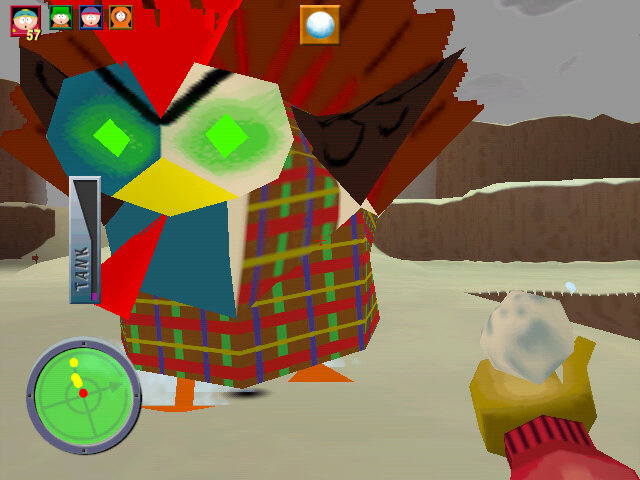
A Tank version of the turkey.
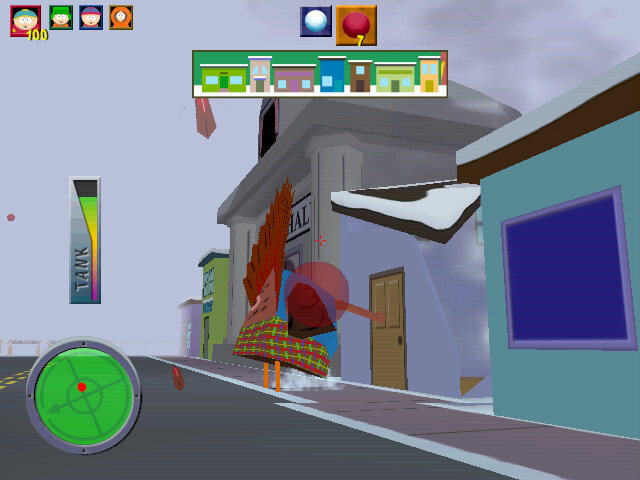
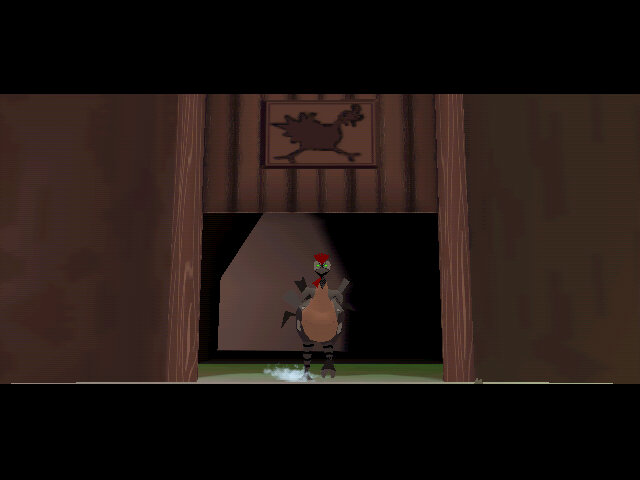
On the next stage you encounter Tank enemies which are larger Turkey’s that have the ability to spawn more turkeys that will attack. The tank’s have much more health than regular turkeys and will start to run into the beginning of the level when their health goes below 30%. If a tank manages to make it to the start point of a level, than another stage will need to be completed after you complete the level, where you have to kill the tank enemies that escaped, with a replenished health bar. You will need to do this before they destroy the town, of which depends on how many tanks had escaped. For this reason its a good idea to kill the tanks in the main game, since you are going to have to beat them regardless. What’s frustrating to me is they speed run back to the start of the level, meaning you have to chase them whilst firing, and causing you to backtrack. This makes the level much more tedious since you hare going through areas you have already passed.
The next levels don’t change much, replacing the turkeys with clones, robots, aliens and moving toys, however its mostly the same type of enemy throughout the level which become boring fast. Some of the later enemies becoming literal bullet sponges, taking 20-30 hits before they go down.
The multiplayer on the other hand is rather fun, playing as a regular FPS with a interesting selection of guns. The console versions let you play with two players, whilst the PC version supports LAN netplay. If there is one reason to play this game, its for the multiplayer mode.
The Nintendo 64 version has 17 different maps to choose from, all with a variety of weapons. The PC version has the most maps, with 26 in total This includes all the N64 maps, plus some PC exclusive maps. PlayStation has an alerted version of the multiplayer mode, discussed in its section.
Nintendo 64
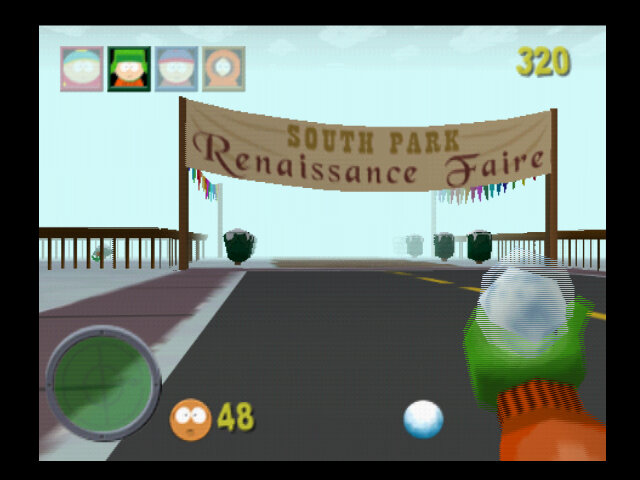
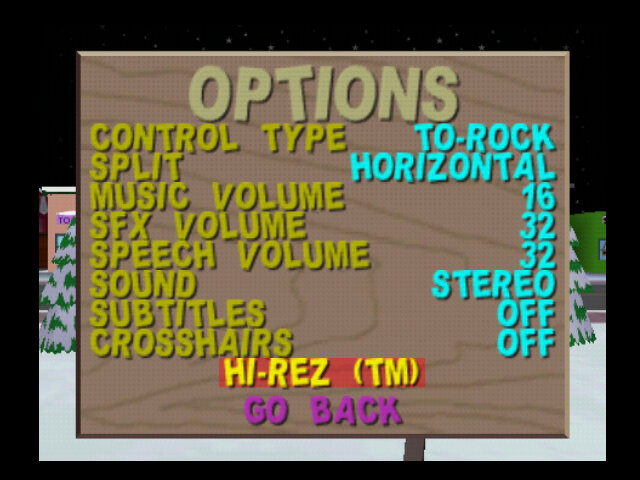
The first release of the game, and was the best version of the game until the PC version, however it remains the most accessible. Multiplayer supports up to four players on one console with a range of multiplayer options, including deathmatch. This version also features a high score table and supports 16:9 aspect ratio and a ‘High-Res’ mode with the use of the expansion pack.
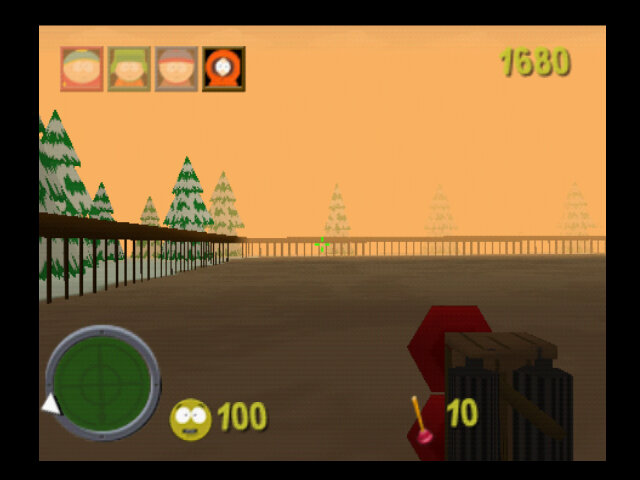
Downside to this version is the significant frame drops when there’s a lot of action on the screen, and the short draw distance being disguised as fog.
Below is running on Retroarch Mupen64plus with Angrylion RSP plugin, I do own a copy of the PAL version of the game, but my N64 is one of those models that only supports composite out (No RGB or even S-Video, way to go Nintendo)
PlayStation
Released a year later (1999) and used a revised soundtrack compared to the MIDI N64 version, the cutscenes are captured from the N64 version instead of being pre-rendered on a workstation like many other games of the era. Graphically its a downgrade compared to the N64 version, and the multiplayer only supports two players, known as head to head in this version.
The PlayStation version comes with a head to head mode that has 6 maps, some of which are modified from the Nintendo 64 version. DM1 is based off the Ravine level from the N64, but with some alterations like the removal of water. DM4 is based of the badlands level, DM5 off badlands 2 and DM6 is based off the Gym Class map. DM2 and DM3 look to be unique maps for the PlayStation version.
Captured on Duckstation emulator with bi-linear filtering and rendered at twice the original resolution, with GTE accuracy enabled
Windows
The definitive port of the game, with better graphics and CD audio. Also comes with a proper multiplayer mode that use the Gamespy client (now defunct) to organize games. However there are issues running this game on modern systems, as the game only seems to work on Windows 98/Me systems (95 untested but assumed to work) this could be down to DirectX/Glide support on modern systems.
Below is running on the PCem v17 emulator running Windows 98, emulating a Pentium Overdrive MMX 200Mhz, 3DFX Voodoo graphics, with a Aztech sound galaxy soundcard.
There is also a software rendering mode that renders the games graphics in just the CPU, ideal if you do not have a dedicated 3D accelerator or one that is unsupported. Unfortunately it gives PlayStation level graphics at a weird screen aspect ratio.
Cheats PC
These were hard to find, so I thought i’d put them here
Press the Esc button, select Options and move the mouse cursor to the lower left of the screen and then click, you can then enter the below cheats. Sometimes you may have to move the cursor so it goes off the screen before you can enter a cheat.
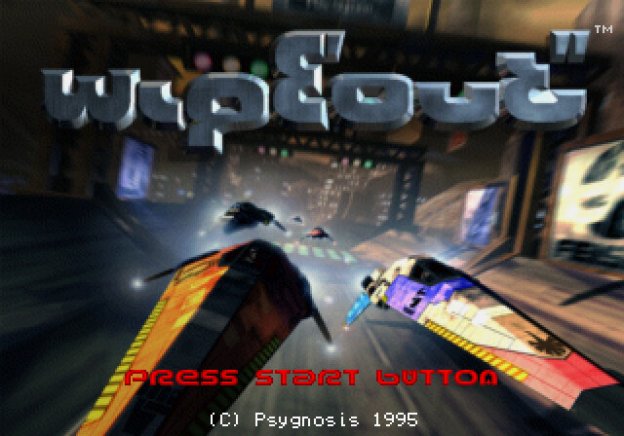
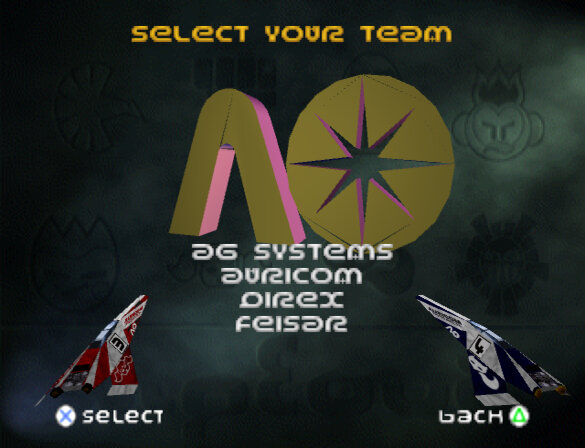
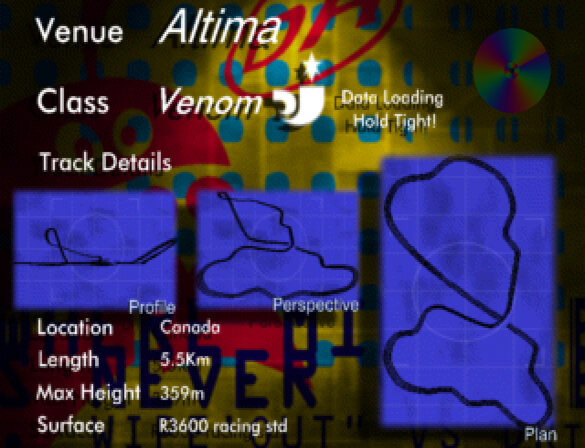
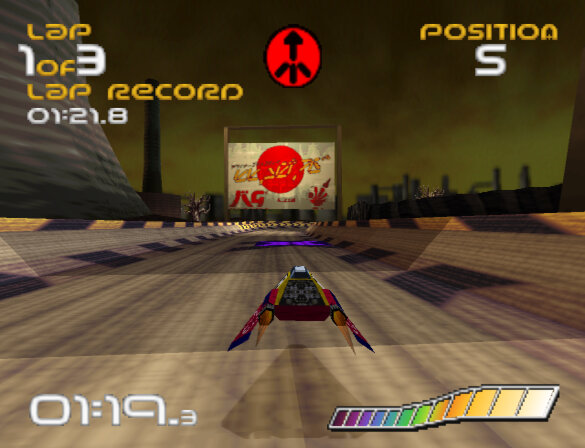
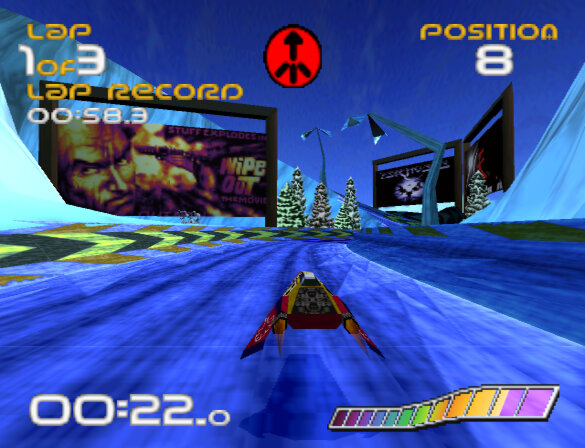
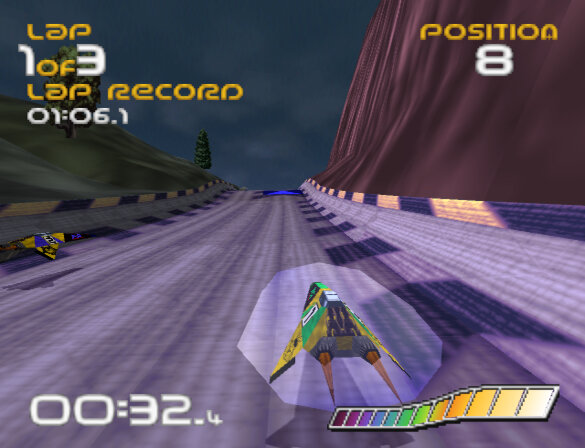
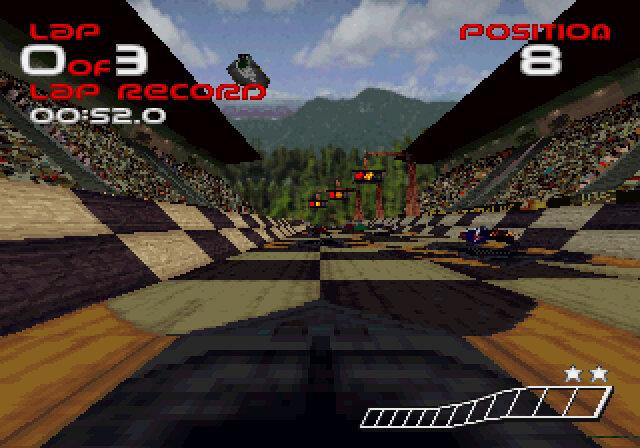
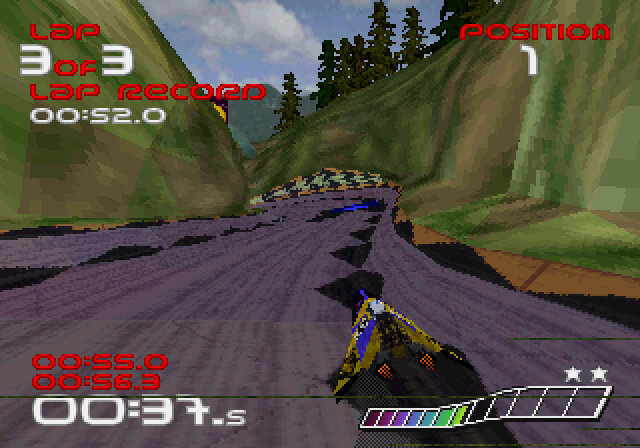
A futuristic racing game released in 1995 for various platforms.
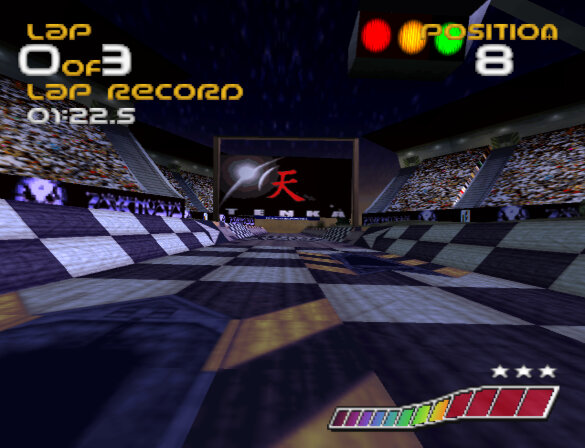
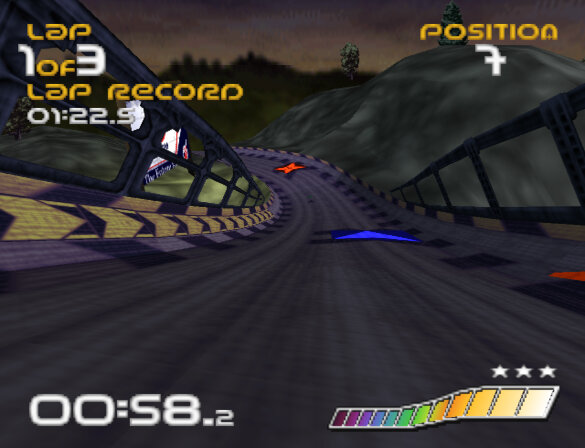
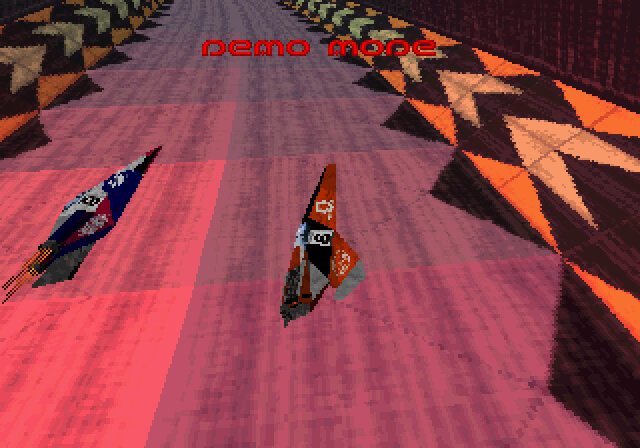
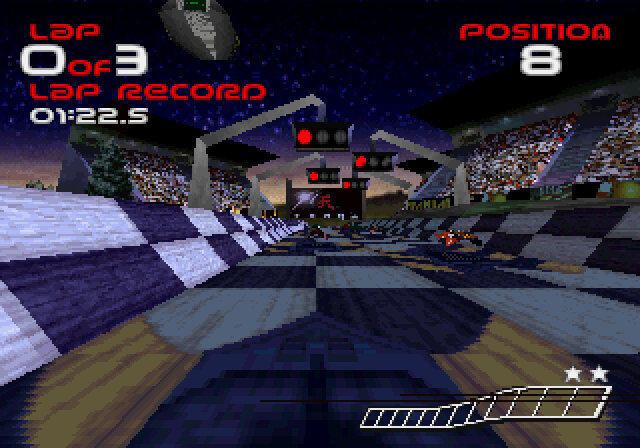
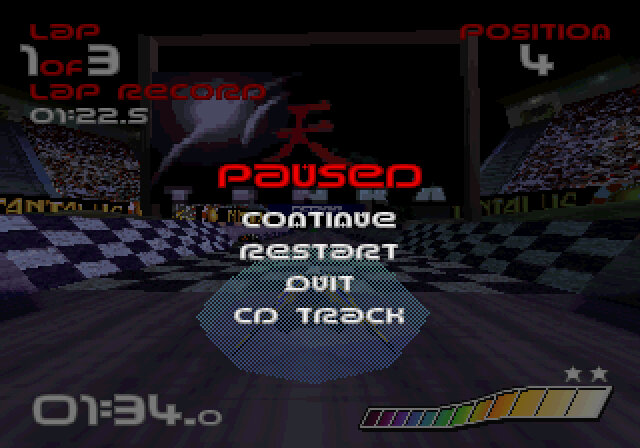
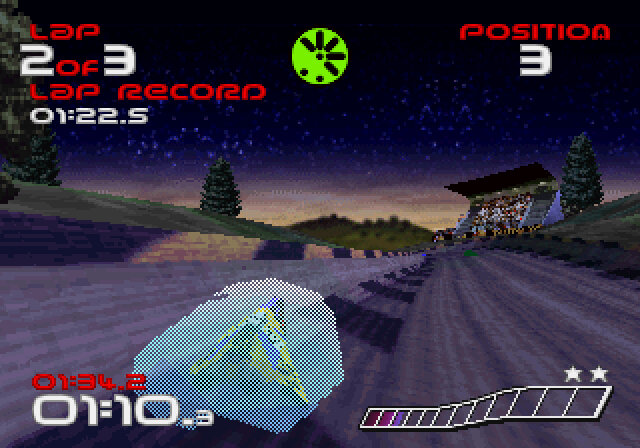
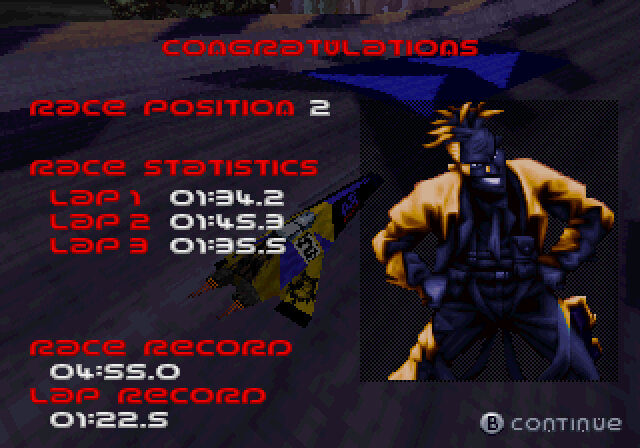
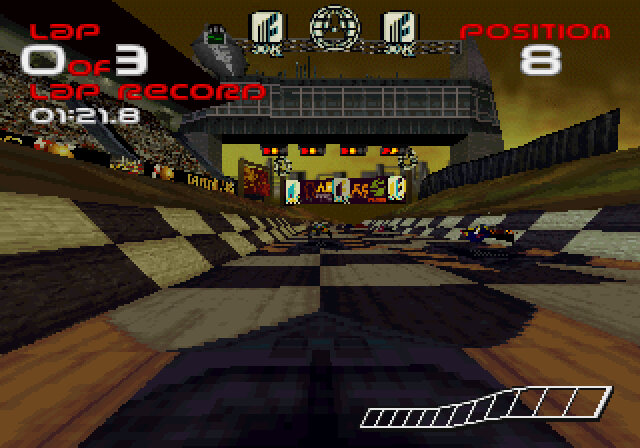
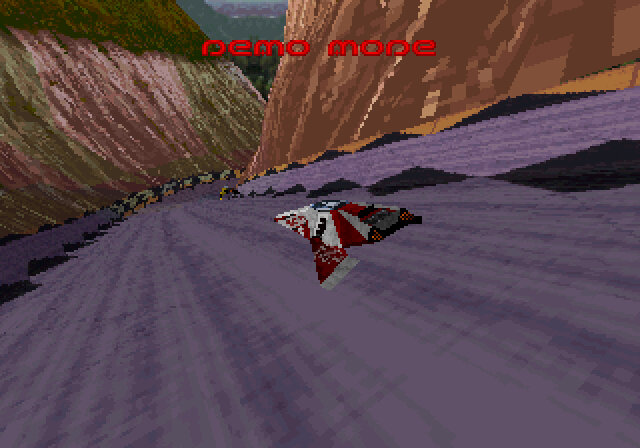
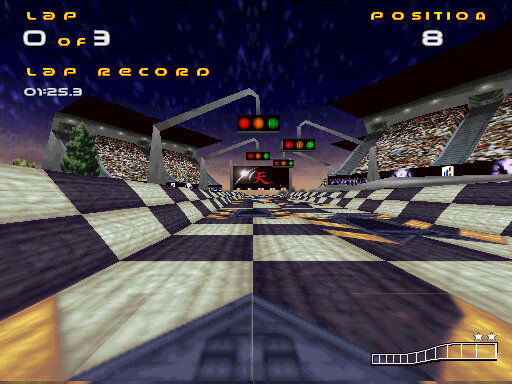
In Wipeout your mostly battling against the track itself, rather than the rival ships, and at fast speeds the game can become a challenge, requiring quick reflexes. Thankfully it comes with a banging soundtrack, something which is a staple of the Wipeout series of games.
2 Player mode exists for the console versions, but its one of those games that needs a serial cable, two PlayStation or two Saturn’s, TV’s and copies of each game.
PlayStation
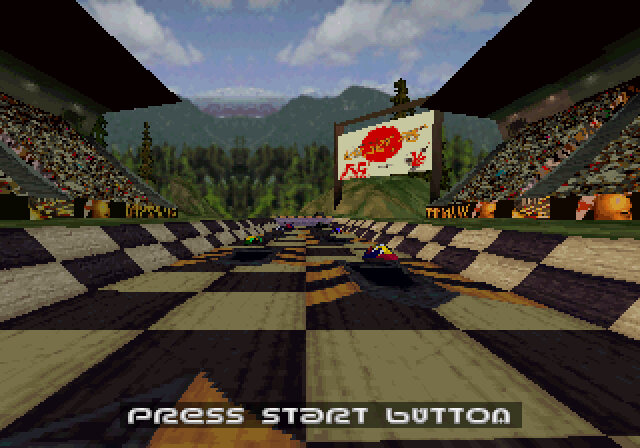
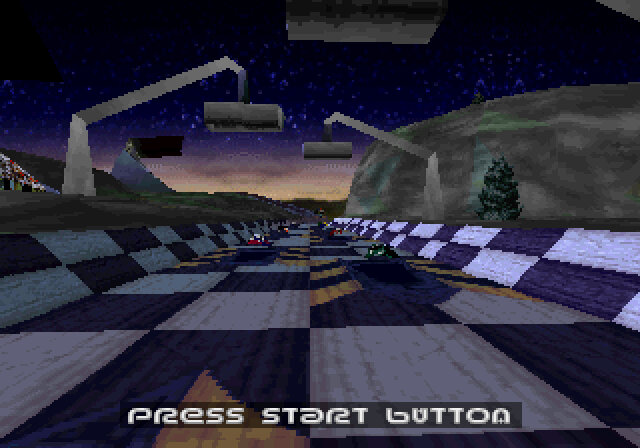
Probably the best version, since it has all the graphical effects, and the sound effects when you enter a tunnel. Can also be played on the PlayStation 3 and PSP as part of the PS Classics. Only issue with this port is the low resolution and the pop-in textures on the track, poor draw distance. As a bonus the game supports the use of a NeGcon controller, allowing for an analogue control, useful for turning and for the airbreaks.
On modern emulators you can sort of re-create the PC effects such as higher resolution and texture filtering, but you are still stuck at 30fps. Overclocking the CPU results in the game running too fast.
Duckstation: Enhanced
The game clears up rather well compared to how it originally looked
Sega Saturn
Wipeout was released for the promising Sega Saturn, and serves as an example of the PSY-Q dev kit for the Saturn, which Psygnosis were trying to promote at the time as an alternative to Sega’s devkit (a version of PSY-Q was released for the PlayStation). The soundtrack has been altered with some songs being removed
Screenshots: SSF emulator
Windows
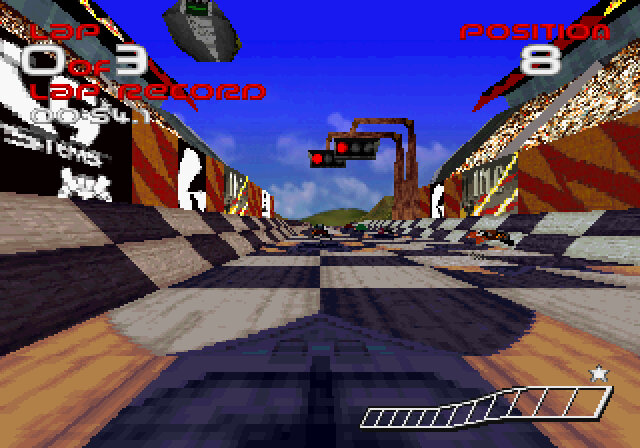
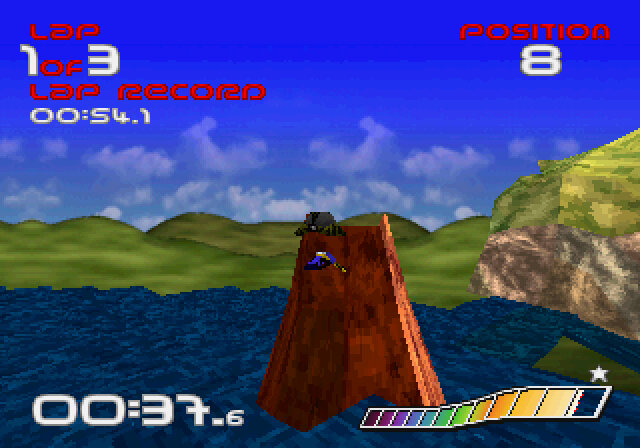
WipEout was ported to the PC a year later than the PlayStation release, and was designed exclusively for ATI video cards and was typically bundled with Windows PC that had those cards. It’s one of the games that supports ATI’s CIF API rather than Direct3D. This limits it to ATI Rage series 3D chipsets, the one in my Dell OptiPlex being one of them, but in order to play CIF games you need to use an older 1999 driver from ATI (The Windows 98 bundled driver has no CIF support), also CIF is only supported under Windows 98, there is no support for Windows NT 4.0. ATI later removed CIF support from its drivers from late 1999 onwards, so you may have to downgrade the driver order to play. A CIF wrapper exists for Windows 7 onwards, although I’ve not tested it.
Screenshots below are captured from a Dell OptiPlex GX1 with an Intel Pentium 2 350mhz and an ATI RAGE 2 with 4Mb of VRAM
The main difference is the ability to play the game in a higher resolution and with the ability to play at a higher framerate, it’s not exactly 60fps on a Rage2 but its a lot more smoother than the PlayStation version. However the sound is not has good as the console versions, with the PC missing the echo sound effects that play when you enter a tunnel. It’s also one of those games that’s stores the music as Redbook CD audio, and the game plays the audio back like a regular CD player would. This gives the option to change the CD (as the game runs from the hard disk) to play your own music.
MS-DOS
Very similar to the accelerated Windows version, but has a lot of enhancements removed, there’s no texture filtering, the framerate is lower and the resolution is reduced, likely because everything is being done on the CPU. You are limited to a low 320 resolution, 16 bit colour.
Personally I would stick with the PlayStation version, or the Saturn if you prefer more detailed textures. The PC versions sacrifice too much for what benefit they give, although you get the opportunity to run in a higher resolution, the missing sound effects are a huge setback and ruin the immersion of the game. besides with modern emulators you can run the game with additional filtering and upscaling, the FPS is still stuck at 30fps.
Hackers
A concept imaging of Wipeout appeared in the movie Hackers, which features slightly different gameplay with obstacles on the track, a crew that speaks to you instead of techno music playing. It was believed to be rendered on a SGI workstation and features perspective correct texture mapping
Undercover – The main story mode of the game, you complete a set of missions which can range from driving from point A to B within a set amount of time, to escaping or pursuing another car
Take a Ride – Sandbox mode, only two cities are available with the other two being unlocked as you progress through the story.
Driving Games – A set of activities to choose from, Pursuit, Getaway, Cross Town Checkpoint, Trail Blazer, Survival and Dirt Track. Carnage is a mode exclusive to the PC version.
Training – Introduction to the came and the various mechanics and techniques to mastering Driver
There are no two player or multiplayer modes, Driver is a single player game.
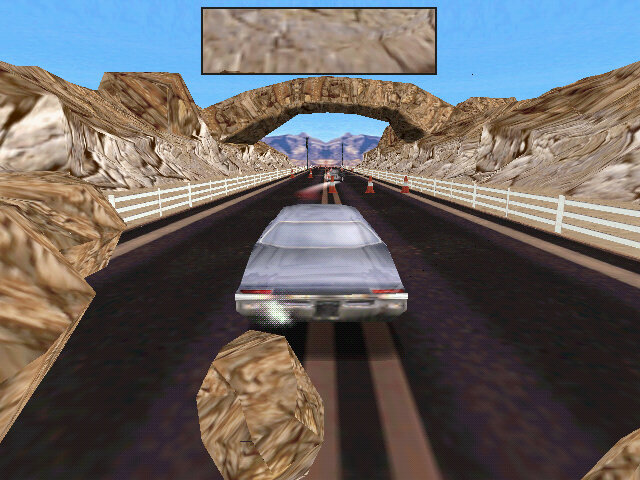
Desert training level
PlayStation
The version that most people have played and are familiar with. This was the first version of the game to be released. Main attraction was the sandbox Take a Ride mode where you could drive freely until you caught the attention of the police, who would then proceed to ram you to death.
Cop car went vertical, a common occurrence
The game occupies on memory card block per story save, and two blocks for replay data, you can easily fill a memory card with this data, thankfully the game
PAL-land version
Thankfully this game runs in full PAL resolution, no top/bottom bars, likely since the studio that developed the game was based in Europe. There is a difference in the logos, with the NTSC version having a altered blue version of the logo with the works ‘You are the wheelman’ which is also present in the games title. The PC version adapts this for both Europe and US markets (Makes sense since the PC isn’t regionalized compared to the PlayStation releases, PAL/NTSC does not exist on PC)
Windows
Despite this version running in a higher resolution and a capability of having a higher framerate there are a few drawbacks compared to the PlayStation version. there was also a Mac version, although I believe its very similar to the PC version.
Screenshots here are running on an emulated PC (PCem v17), running an Intel Advanced/ZP with a Overdrive MMX processor with a 3DFX Voodoo Graphics card. The operating system is Windows Me. The graphics here will depend on the 3D video card an API, as 3DFX cards used Glide, the Direct3D version may look different.
Differences between the two
One of the main differences is the background music which was changed in the PC version. Also unlike the PlayStation version, there are no separate themes for when you gain felony, in the PlayStation version the music would change when you attracted the attention of the cops, but the PC version remains the same throughout. As someone who grew up on the PS1 version, it was kind of jarring to play Miami without the familiar theme, and for the game to not change when catching the cops attention.
Comparison screenshots below, the PSX version is running in Duckstation at twice the native resolution (640×480) with bilinear filtering and 2x anti-aliasing enabled. With these enhancements we can try to bring the PSX version up to the PC version, which is running at 640X480 resolution with ultra graphics present.
PSXPC
One thing to mention with the PC version, as with all PC games of the era the game is reliant on using Redbook CD audio for the background music, where the games streams the music from the disc itself, like an audio CD. For this to work you had to have an audio cable connected from the CD drive to the motherboard or soundcard, in addition to the IDE cable. On modern systems (with SATA drive onwards) this is no longer supported, and modern Windows versions / soundcards its no longer possible to stream analogue audio from the CD drive, instead being delivered through the IDE or SATA interface, which this game won’t support. The game itself will still run and you can still hear sound effect like the car engine, but you wont hear any music.
PSXPCPSXPC
The spawn points are also different for each of the maps/level, again not sure why these were changed
The map layouts were also changed, with some areas being remodelled completely, Dodge Island had a massive change, possibly since it was designed around the PlayStations limitations initially.
The cop radio voices were also changed, with some lines being completely different
A speedometer is present which gives the speed of the players car in miles per hour
The car models themselves had change and I cant say I prefer the PC version of the cards, which are lacking certain details from their textures, the back of the cards look like a blur compared to the PlayStation version.
Upgrading the PlayStation version
Modern emulators are capable of running the game in a higher resolution with additional smoothing effects. Unfortunately there is little we can do for the framerate, that’s stuck at 30fps, or 25 for Pal-land copies. Still at least there’s no boarder, and you can overclock the PlayStation CPU on some of these emulators, which helps with the slowdown when there’s a lot of cars and particle effects on screen.
The game can be upscaled to 640×480 or 800×600, which the PC version also natively supports. Depending on the emulator, higher resolutions can be used but I don’t recommend it unless the emulator supports perspective correction, otherwise those polygons will be jittering aggressively. This video will help explain further on why this occurred on PlayStation games.
Texture filtering can be hit or miss, whilst it helps smooth out the textures, due to the way the PlayStation handled 2D, it can affect the HUD display too, causing excessive blurring on the HUD, making it look like an N64 game.
Exploring the disc
In the NFMV folder there is a exe file called NFMV.EXE however this does not open even in older versions of Windows
One of my favourite childhood games from the PlayStation, objective of the game is to find Tommy’s Reptar pieces that are scattered all around the house by completing various mini games. Rugrats Search for Reptar was only released for the Sony PlayStation
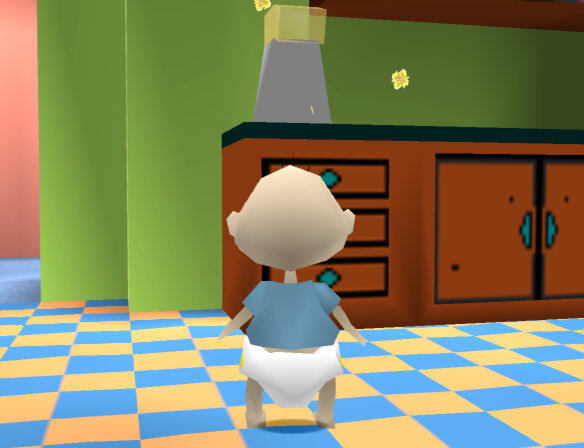
First we need to talk about the Pickles Home, what has been rendered entirely within the games engine, and servers as a gateway to the mini games that need to be completed. It’s a pretty nice house consisting of 5 bedrooms, 2 bathrooms, a living area, kitchen and a study room, along with a garage. Its very faithful to the TV show, at least from the episodes I’ve seen, a lot of cartoon shows tent to remodel the house to suit the plot. It’s probably one of my favourite cartoon house alongside the Simpsons house which I got to explore in Virtual Springfield. Whilst rendered in a 3D environment, the art style tries to be faithful to the shows animation.
Some areas of the house are locked out initially, but when you enter a specific level they are available like the garage, I put this down to memory limitations of the PSX because some rooms that were previously explorable are disabled in some levels. An example of this was the Chuckie’s glasses level which opens the garage area, but removes the basement and garden area for that level. Some objects of the house can be interacted with, mainly Tommy’s toys which can be thrown or picked up.
Activities
Easy
Chuckie’s Glasses
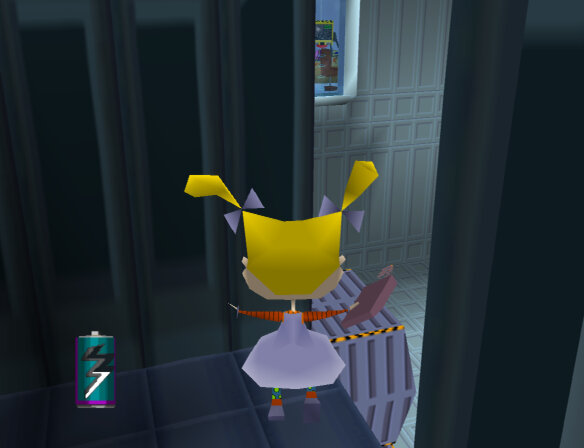
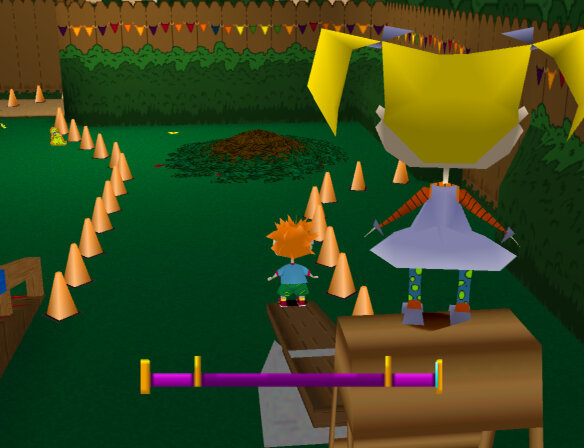
Its raining outside and Angelica decided to play Hide & Seek with the babies, volunteering Chuckie’s to find them. However to make it fair, she takes his glasses, using Chuckie, you have to find and tag the babies (Phil, Lil, Tommy) and race them back to the play pen. It’s fairly easy and you get to explore the Rugrats house as you play, there’s no time limit and if one of the babies win you simply have to find that Rugrat again, although its gave over if they beat you three times.
Ice Cream Mountain
Stu wants to go golfing, he take the kids and promises a huge ice cream mountain, based on an episode in the show. There are 10 levels and to play, you walk to the ball, press the triangle button to start the power meter and press triangle again to hit the ball when the meter is in the right spot. Some require a power shot, others only require a small amount.
Grandpa’s teeth
The level starts off in a playground where you and Chuckie can play on one of the slides/rides. When your done, you can progress through the level into some sort of maze where the goose is hiding with grandpas teeth. Once you navigate the maze, a second segment starts where you have to chase the goose that has Chuckie, using Spike to catch up to it. The third stage concluded with you throwing hockey pucks at the goose (Hopefully PETA didn’t play this game), whilst trying to avoid Chuckie.
Cookie Race
You just have to race and beat Angelica to the kitchen. The house has been slightly altered and some areas have been blocked off, meaning you have to go the long way round. This is fairly easy since Angelica is quite slow but the controls can be a hindrance since its easy to run into an object.
Medium
Visitors From Outer Space
You control Angelica in a spaceship where the babies have been abducted. Avoid the TV robots/aliens and navigate to the lower levels (you can still explore the ship) where you will meet an alien fish thing, who will disable the gravity. Angelica can then float through the air vent and navigate to one of the pod escape ships where she meets the babies, somehow? Based on a real Rugrats episode.
Mr Friend
This one sucked, basically you have to throw objects at Mr Friend and destroy it. First you have to deal with one, then three will spawn. Its challenging since the hit detection is very inconsistent and the controls are digital which makes it hard for Tommy to aim, also some of the throwable objects will just clip through Mr Friend.
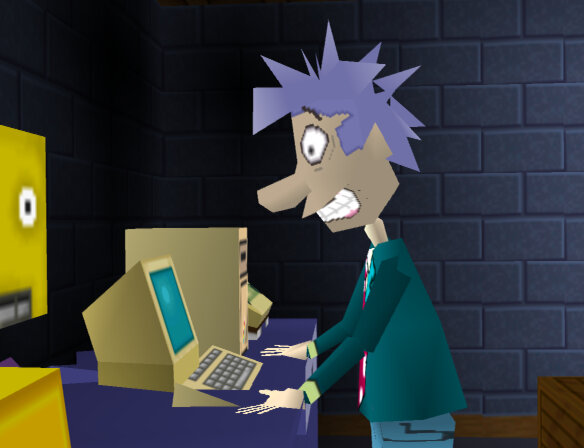
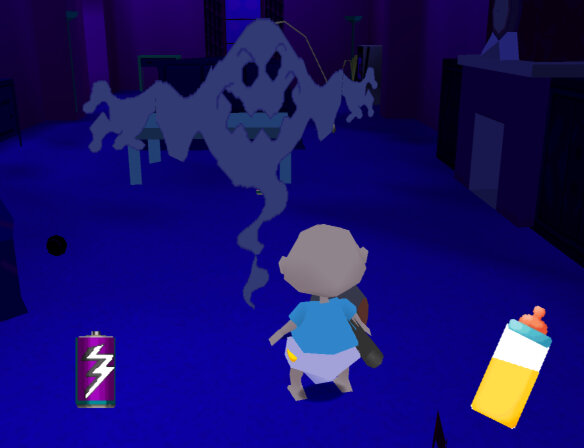
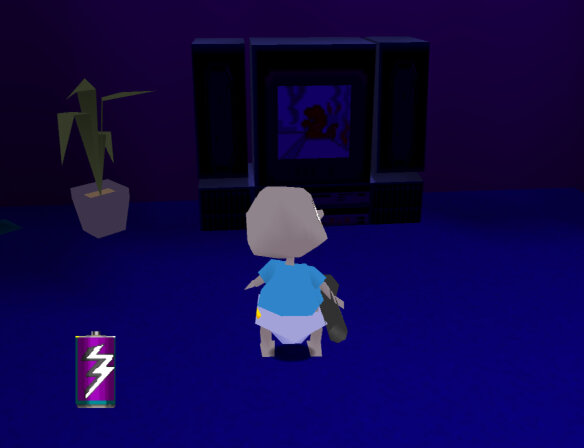
Let There be Light
Stu overclocks his Amiga and causes a power cut, so its up to Tommy to restore the power. This level has the pickles house in darkness, with the textures being darkened for effect. There are ghost’s that roam around the house that can drain Tommy’s health, use the flash light to zap them away. First part see you navigating the house in near darkness to the kitchen where you find the Pickles fridge, but Tommy is unable to open it by himself so he needs the help of Spike to open it for him, which starts the next segment when you have to find Spike.
Circus Angelica
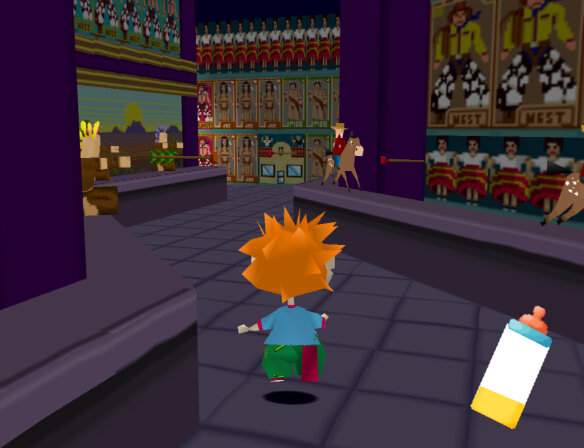
The Rugrats are tasked with performing with Angelia’s Circus, and have to perform a variety of tricks. This isn’t really difficult but the controls can be a major problem since you have to be accurate when it comes to Chuckie’s part, and if you fail twice the game is over.
Hard
Hard basically means long, as there are multiple objectives that have to be completed for the activity.
Incident on Isle 7
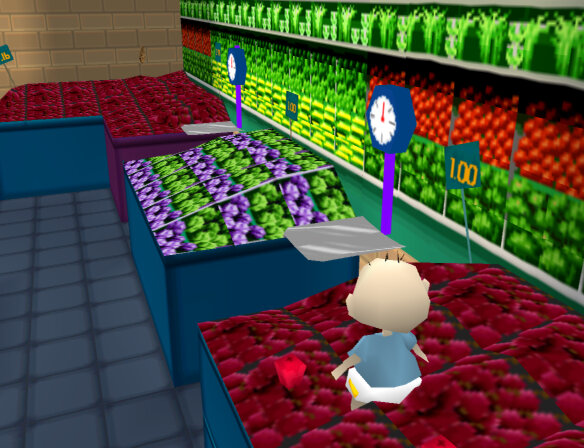
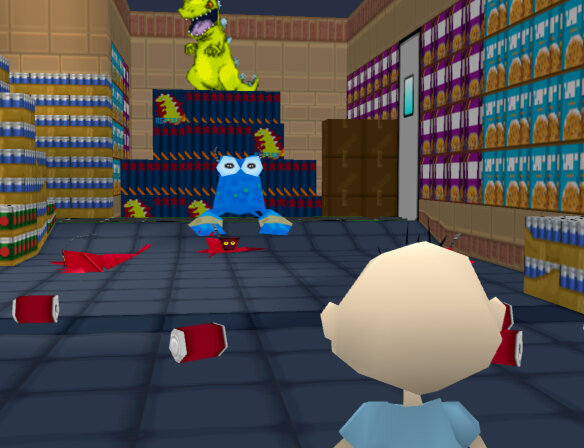
Set in a supermarket, Grandpa takes Tommy shopping for some Reptar cereal, Tommy breaks free and is left to explore the store. First section sees you exploring the different sections of the shop, until to reach the seafood section where a bunch of lobsters get loose. You then have to avoid or kill the lobsters and navigate through the various areas that have spillages that can cause Tommy to fall. Lastly you will reach the boss section where you have to stun the main Lobster in order to hit a switch.
Toy Palace
Set in a toy store, Stu loses Tommy and Chuckie after they decide to go solo. They explore the toy store zone in the hope of finding Reptar. Everything seems to cause damage in the first part, and the last part can be frustrating since you have to collect the blocks in order to reach the switch, some of which are located on shelves. The jumping is inconsistent as there is a delay before Tommy jumps, resulting in him falling a few times. Tommy and Chuckie also have a habit of repeating their dialog endlessly.
7 Voyages of Cynthia
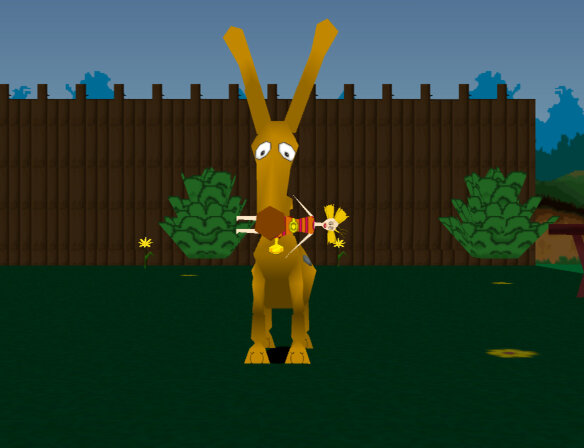
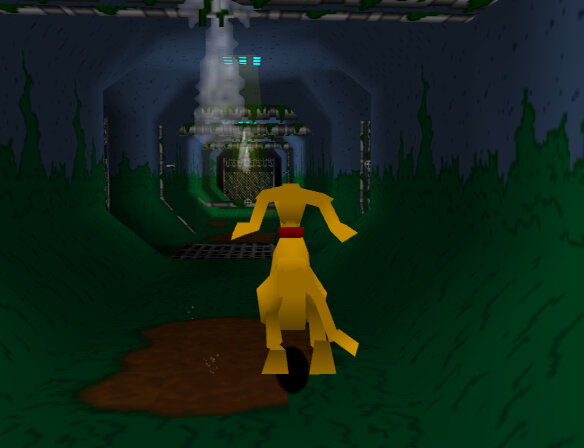
You control Spike (Poorly) in this level as you navigate the sewer, Spike is very vulnerable to damage and will take a hit over every minor collision. The second stage isn’t any better since you have to avoid the mud which will reduce his health. The final stage is easy as you just need to find Cynthia before the time runs out, except she spawns in a random place.
Activities
Cookie Race – Same as the main version
Egg Hunt – Also in the main game, Angelia wants to hog all the easter eggs, so its up to Tommy to find them all before the time runs out, I guess the cookies weren’t enough for Angelica?
Gold Rush – Also available as a bonus game, Phil and Lil need to collect all the coins before time runs out, Same as egg hunt really
Mini golf – Can be played with multiple players, but instead of split screen, its more of a pass the controller for each turn kind of affair. There are 10 courses to play through.
Emulation
Recommended emulator: BeetlePSX or Mednafen, Duckstation works just as well.
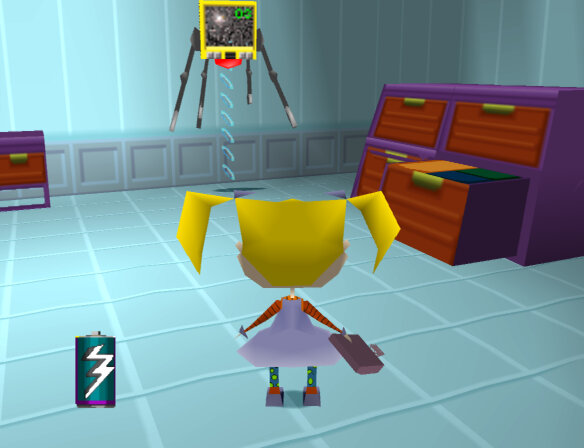
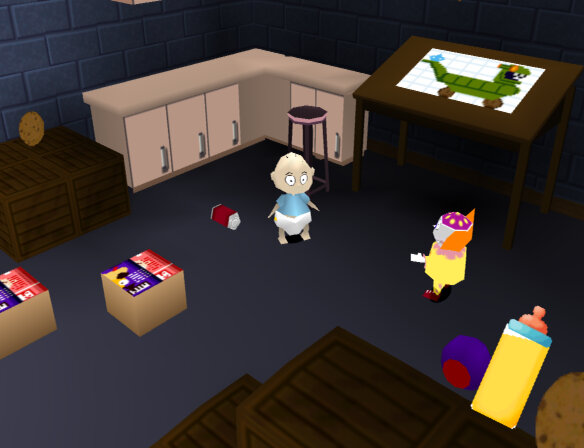
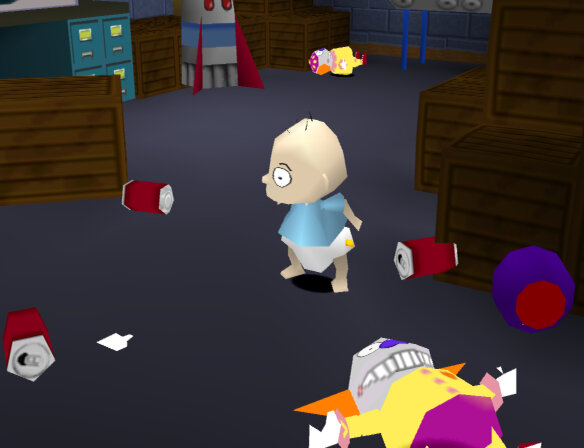
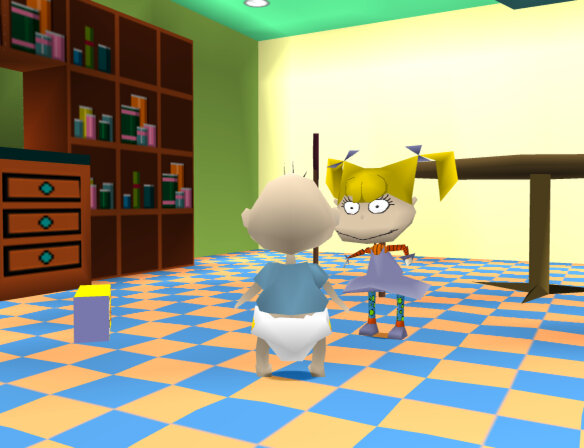
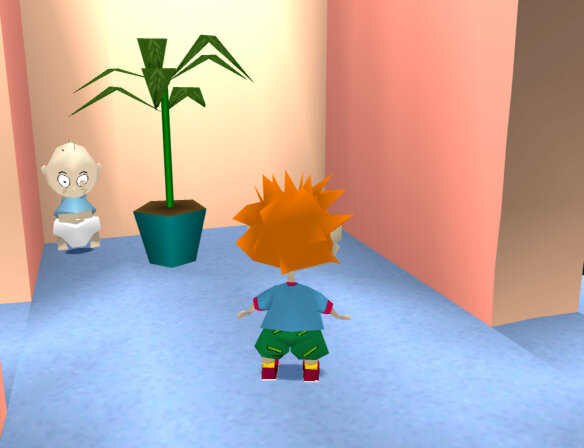
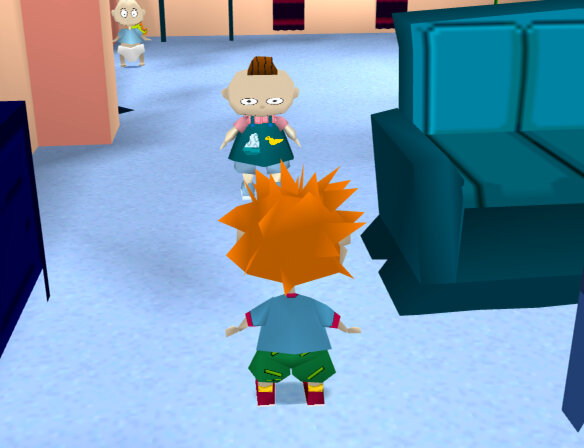
One of the issues that occurred when playing this game in Duckstation was some cutscenes not playing, or the ones that did play would end early, and some of the Rugrats would be played randomly around the house, like in the screenshot below where Angelica is present in the kitchen, and cannot be interacted. This would often happen if you start the game in training mode first, then exit via the door which starts the main game. Angelica’s model is in the training map so maybe the game forgot to remove her from the world?
Angelica has seen some deep shit…
The hide and seek game is mainly affected, with the Rugrats randomly appearing around the house once they have been beaten to the playpen
Not a very good hiding place Tommy…
Tommy and Phil have been found, but instead of being in the play-pen, they are in the living room. This issue also occurred with the older builds of ePSXe where rugrats would randomly appear around the house, and issues with cutscenes playing. I’ve not tested it in modern ePSXe (this was around ver1.6)
Rugrats untextured object
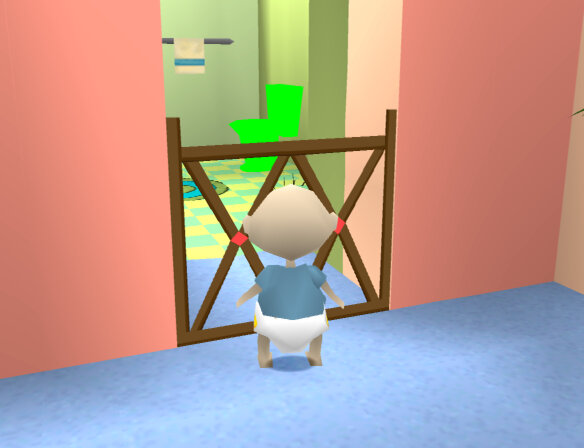
An untextured toilet? Found in the cookie race level. I remember something similar occurring on the actual console itself so possibly not an emulator issue. The light above the mirror is also affected in both the cookie race and Chuckie’s glasses.
Navigating the Disc
Opening the SLUS_006.50 in Notepad++ and scrolling to line 168 reveals a few menu name strings, one of which references a Debug Menu, wonder how we activate this?
All the game data is present in the DATA folder, and each of the levels are broken up into different DB folders, with DB00 being the Pickels family home. Inside each folder are multiple BIN folders that follow the name convention. DBxxANM.BIN might refer to the animations for that level. Unfortunately these formats are likely built using proprietary game tool exclusive to N-Space, so there isn’t really much to play about here. Maybe we could rename and swap a few files around and experiment what happens when the game tries to load data intended for another level?
Update: 18/04/2023
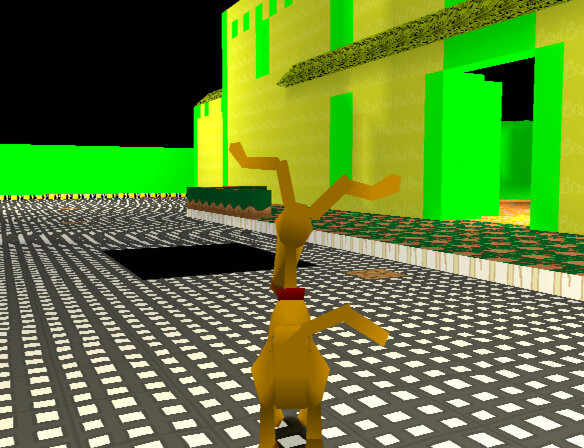
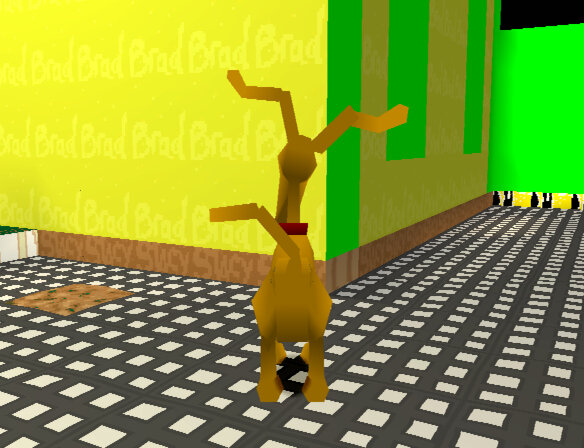
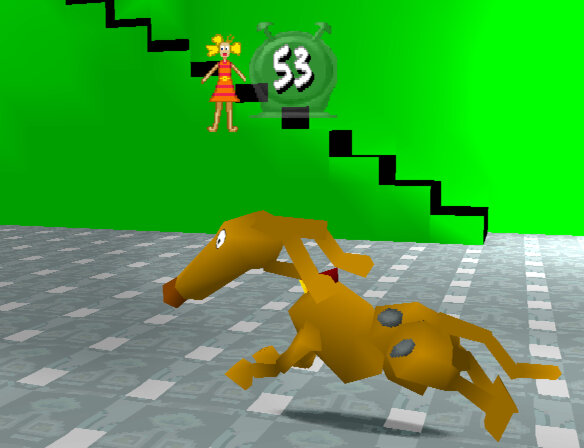
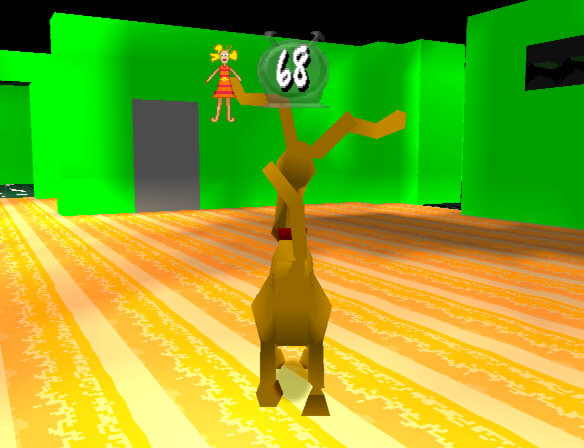
There is also a hidden/unused level known as DB19, which appears to have been scrapped during development. By using CDmage to copy and move the files, we can trick the game into loading. Because of the way PlayStation discs are authored, we need to extract and then inject the files specifically into DB04 – the Voyages of Cynthia as that’s the largest levels that we can fit the files into.
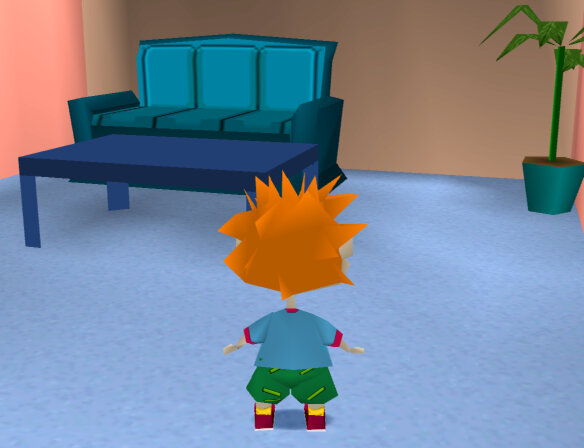
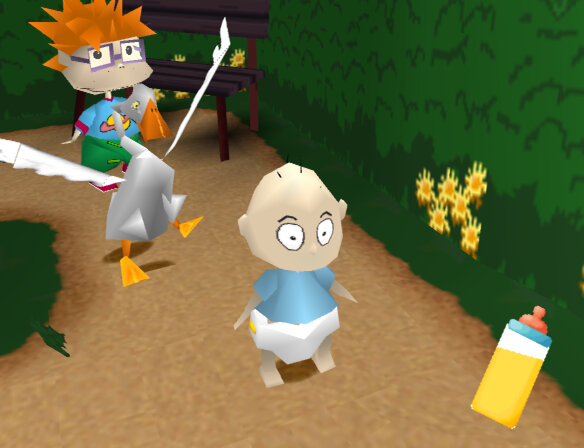
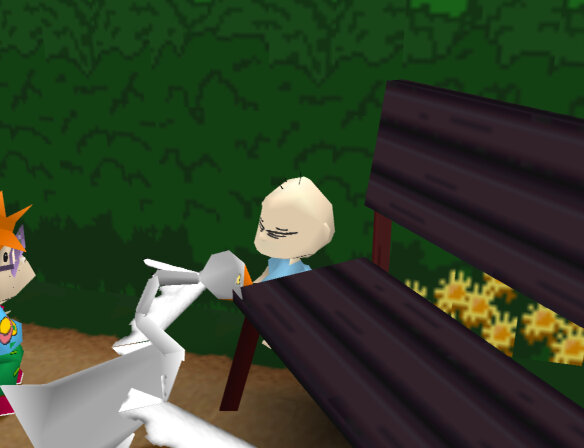
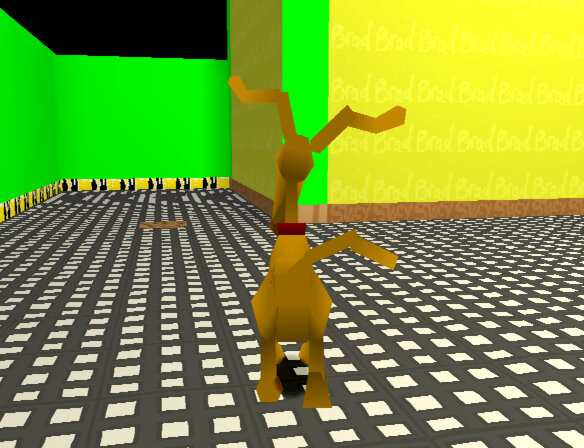
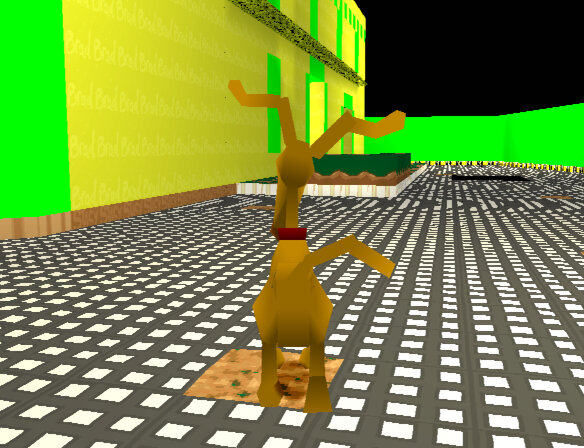
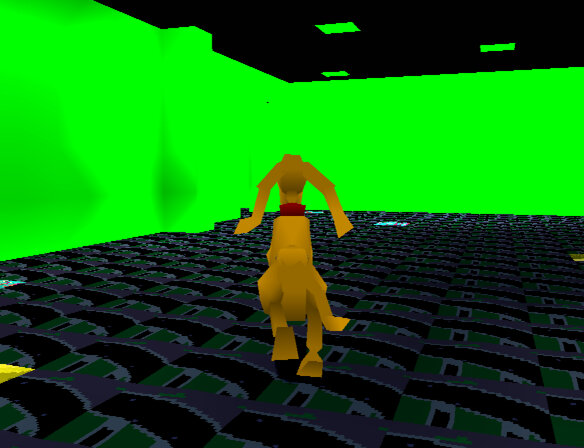
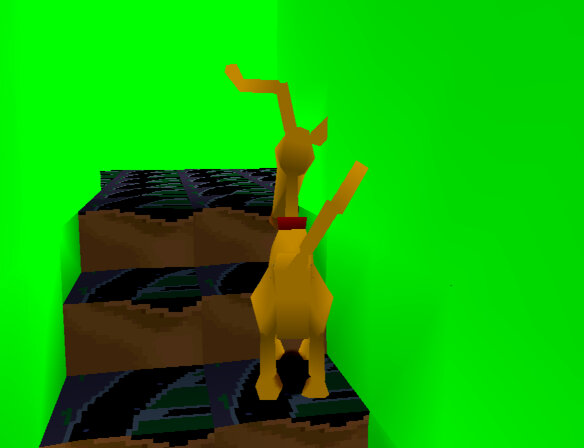
The level appears untextured and looks to be an earlier version of the Pickles household. Notable differences is space around the house, and more narrower stairs. As you are controlling Spike for this level, we have a few issues using the stars, with careful precision you can jump up to the second floor which appears mostly the same layout.
Entering the closet causes the countdown timer to start, likely because the game thinks we are on the Cynthia level and Spike as entered into a specific trigger for the countdown timer.
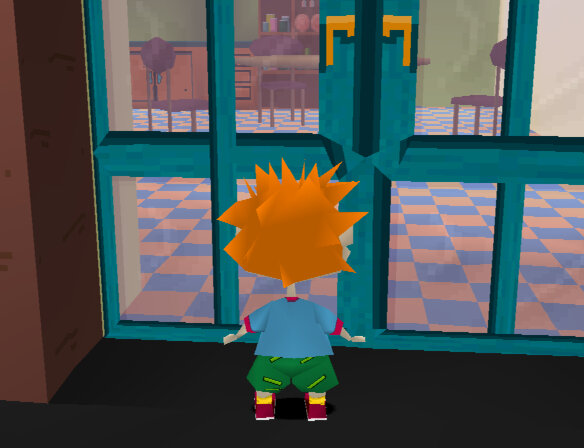
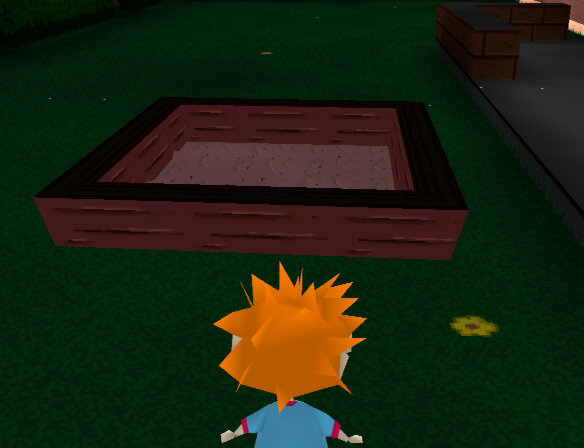
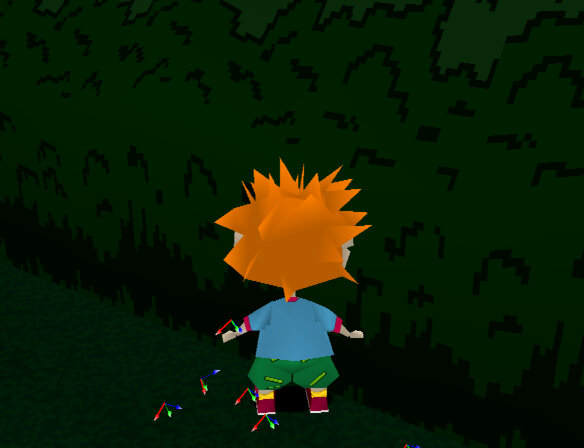
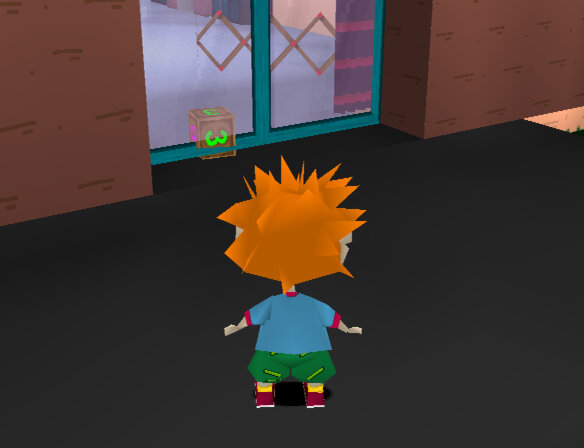
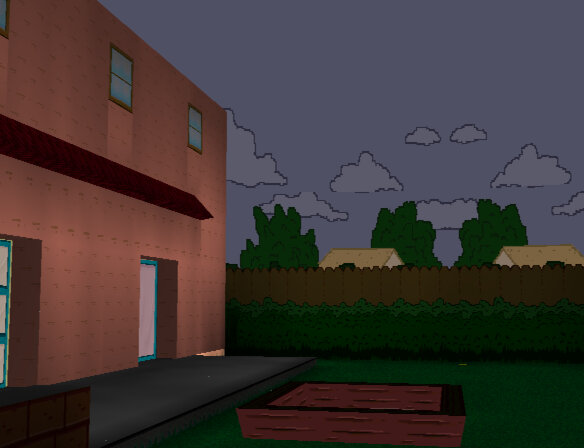
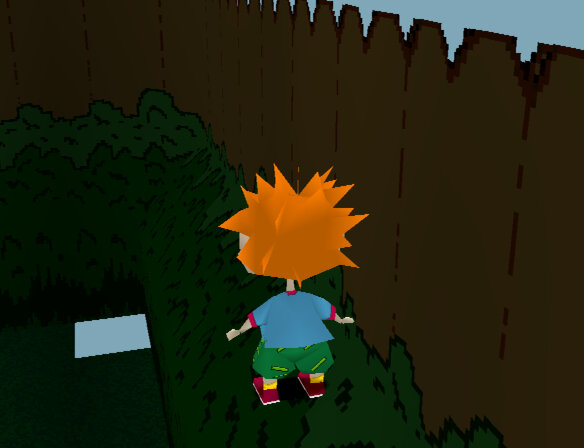
Lastly lets see what’s outside in the level Chuckie’s glasses, by using the cube found in Tommy’s room we can use this to glitch out of the boundaries and into the garden which we normally cannot access. We can see its not raining at all and Spike’s doghouse is missing. Jumping on the buses causes a weird model/prop to come out which spawns shortly after. There’s also a weird square at the edge of the garden which we cannot stand on.































 Drew1440: Blog