Set in Japan (But from the title you would assume Brooklyn, new York) the game features actual real life locations set in Japan. It was the first Sega fighting game to use motion capture footage giving the character detailed and accurate move sets compared to Virtua Fighter.
The fights typically take place in the evening or night, and most of the stages have a dark urban tone to them in contract to Virtual Fighter 2 where most stages take place in the daytime since its meant to be based on a worldwide tournament, Last Bronx has a more underground fight club like feel to it.
Stages
All characters have their own stage, but when you select their characters their personal stage is skipped until the end, where you will face Red Eye on that characters stage
Cross Street: which is complete with advertising billboards and may be based off the Tokyo/Shibuya crossing. This is the first stage for all characters, unless you choose Tommy then Tears Bridge will be the first
Tears Bridge: is set near a warehouse / cargo park near a large bridge, hence the name. At this point the game is set in the evening, and most stages thereafter have a night time ambiance to them.
Dark Rooftop: reminds me a lot of Lei Wulong’s stage in Tekken 2, as its set on top of a skyscraper helicopter pad, with many building in the background. From the sky it looks like its set in the evening sunset, but Tears bridge gives the impression it is already night time, assuming the game is intended to simulate nightfall.
Saturn Version of the brilliant room stage
Moonlight Garden: A nice stage which is a departure from the industrial urban settings, this appears to be set on a garden or a large park and is a nice departure form the other stages
Lust Subway: Which is your typical Japanese underground subway, complete with display monitors. Thankfully this isn’t set at rush hour. This will be Yoko’s stage
Nightmare Island: Set on a construction or a building site, despite the name insisting its an island, you will fight Zaimoku on this stage.
Naked Airport: Set on an airport runway and reminds me of the Shooting Hoops track from Ridge Racer Type 4 This is Yusaku’s stage
Radical Parking Lot: Kurosawa’s stage, not much to say here except its set on a moderately used parking lot.
Brilliant Room: Hidden and only available if you beat Red Eye with the lowest time
Lust Subway from the Model 2
A common occourance – Saturn VersionSurvival Mode Results
Modes
Arcade: The main game mode, you choose a character and progress through 8 stages, with a bonus 9th stage if you complete the game with a new time record.
Saturn/PC mode: Similar to arcade player but features a story mode complete with cut scenes, and opponents are chosen at random
Team Battle: Pick multiple fighters who will battle
Survival Mode: You only have one life, and the health bar carries over to the next round. Objective here is to last the longest
Training Mode: A basic training mode that show the different fighting moves across the roster
Network Play: On the PC version, allows two players to play over a LAN
Character Select
There is also an extra mode in the Saturn/PC version that allows you to view unlocked FMVs
Versions
Arcade
The game was released on the Sega Model 2 arcade board, and was designed to be an upgrade for Virtua Fighter 2. This version has the best graphics, and it makes full use of the Model 2 graphics hardware which was more powerful than the Sega Saturn or common Windows PC’s of the time, in terms of 3D performance. However this version lacks FMV endings. It should be noted that the AI in this version is difficult to beat, since it was intended for the player to use multiple credits within a single play-through, you’d be surprised at how hard it is to beat on a single credit, despite using the easy settings in the games config.
This version of the game is fully playable in the Nebula Model 2 emulator, but is still unplayable in MAME as of 2021.
Most of the other screenshots captured are from the arcade version, except where noted.
Sega Saturn
Introduced a Saturn Mode which is similar to arcade mode but the opponents are randomized. This has a few changes compared to the arcade version, with the 3D background options being exchanged for sprite based background which are handled flawlessly by the Saturn’s VDP2. You will mostly notice the effect when the charicters move to an extent where the camera has to pan to follow the player. FMV videos are also present in the Saturn mode. Although they are in Japaneese, English subtitles are provided.
Most Saturn emulators will play this game, being a 3D titles it will play slowly on less powerful hardware. The Nvidia Shield struggles to play at full speed using the Yaba SanShiro emulator, and the FMV videos pixilate whilst playing. Mednafen Saturn will work the best
Microsoft Windows
A Windows PC port was released in 1998 and is very similar to the Sega Saturn version, and makes use of DirectX. Saturn game mode is renamed to PC Mode but remains the same with random opponents. The PC version supports higher resolutions then the Saturn version, and retains most graphical effects but lacks the texture quality and geometry of the arcade version.
Like most PC titles that were released in the 90s, the game is reliant on using analogue CD audio, which can cause problems on modern systems that use SATA or IDE CD drives without the CD audio line being connected. The reason is that from Windows 2000/ME on wards, Microsoft introduced digital audio for CD decoding, where audio is sent via the IDE cable itself rather then than the CD audio line. There’s no easy workaround unless you play the game in Pcem or 86box, otherwise the game will play but with no background audio or music.
I’ve not tested the game on modern Windows NT based release, but can confirm the game to be playablle using PCem or 86Box using any Windows 9x based operating system with a 3DFX or S3 based accellerator.
Sega’s hit racing game and part of the new generation of 3D arcade titles. Here we are introduced to texture mapped polygons, an upgrade from the flat shaded graphics from Virtua Racing. Daytona would be in prime competition with Ridge Racer, which was released by Namco.
Tracks
Beginner: A simple track but has 40 opponent cars, this track can get crowded in places. The only track on the game that begins with a rolling start and features a pit in area. There are 8 laps to race in total, but this can be extended to 20 or 40 with the Grand prix or endurance modes.
Advanced: A regaular track but has a couple of sharp turns. ‘Lets Go Away’ is the song that plays for this track, which a portion also plays during the games attract mode. Theres a few hidden messages in this track that appears in the grass during the race.
Expert: The hardest track with frequent sharp turns and a couple of obstickles in the track, Thankfully these don’t affect your cars speed and are mostly for visual effect. Powersldiing is reccomended to get the best lap times.
The tracks would be renamed in later releases after further tracks would be added.
Modes:
These can be set in the options menu (Test mode on the arcade release)
Standard: The default option with 8 laps for the beginner track, 4 for the advanced and two for expert
Grand Prix: Addidtional laps are added which expands the game’s length, with 20 laps for the beginner, 10 for advanced and 5 for the expert. With these laps you will want to use the pit stop to replace the cars tyers.
Endurance: 80 laps for beginner mode, 40 for advanced and 20 for expert mode.
There is also a time attack mode which can be accessed by holding down the 1P Start button on the arcade version whilst choosing transmission.
Releases
Arcade
Where it all started, running on Sega’s Model 2 hardware. This was initially released in 1993, and a updated version came out in 1994 to promote the Sega Saturn version. This version also amended the HUD elements slightly. 3 tracks are present in this version and lcoal multiplayer is avalible by linking the arcade machines together. This version of the game runs at a constant 57fps and a higher resolutiob compared to the Saturn, but lower then the PC version.
Can be emulated using the Nebula Model 2 emulator, or recently MAME. However the Model 2 core is still under development and there has been some improvements to the MAME core.
Daytona USA Arcade had three releases, all of which run on the original Model 2
1993 release that was exclusive to Japan
1994 release that was worldwide that amended the on screen counter display
Sega Saturn update that added adverts for the console, for before and after the consoles release (Changeable in the games test mode the Model 2 had no RTC clock)
There were a couple of unofficial modifications that were done by a few third party programmers that added RPG like elements to the game, known as GTX edition and To the Maxx
The game was only compatible with the original Model 2 board.
Sega Saturn
The first version that was ported for the home market, this was a rushed port due to wanting to be a Saturn launch title and the difficultly of the Saturn’s hardware for the developers. Also, its no secret that 3D wasn’t the Saturn’s strong point, being built primarily as a 2D sprite scaling system, and Daytona USA being designed for the 3D model 2 arcade board. The music is altered in this version, taking advantage of the red-book CD audio.
There are two game modes, an arcade mode which plays the same as the arcade original, and a Saturn mode which gives the option of selecting a car. Mirror tracks are also selectable for all tracks in the game and a 60 lap endurance mode. This version has no support for multiplayer.
Sega would later release a revised version for the Sega Saturn that corrected a couple of issues that the original port recieved.
Windows
Very similar to the Saturn version, the game is designed to run on Windows 95 but features little graphics acceleration, rending entirely in software mode (on the CPU). The game uses DirectX 2 which limits it to Windows 95, although it will work on later Windows 9x releases, things start to break on more modern systems.
This release is not recommended since a better version was released a few years later, and the limited resolution and graphics settings this game offers. There’s also black bars at the top and bottom which makes it feel like I’m playing an ported PAL game, either that or they thought Daytona PC needed to be cinematic?
Comparison
Arcade version is running in the Nebula Model 2 emulator with default settings, Saturn is running the NTSC build in Retroarch Beetle Saturn, Windows is running in a PCem virtual machine running Windows Me.
Arcade
Saturn
Windows
The home versions remain very faithful to the arcade original when it comes to the menu layout
Car transmission selection
Saturn version has the worst draw distance, to the extent that some background elements don’t appear fully and look like they are floating
Only major difference being the lap time dispay, with other HUD elements remaining consistant.
Conclusion
Daytona USA would go on to become very popular in the arcades thanks to the pioneering 3D graphics technology, despite the high price of the Model 2 hardware. The home ports were not greatly recieved, with the Saturn port having a negative reception in comparision to Ridge Racer, which was also ported from the arcade to the Playstation and was considered a bettrer adaption.
Sega would later release newer home versions of Daytona USA, being the Champtionship edition which helps fix the issues of the initil Saturn port and was ported to the PC shortly after. It was released again for the Sega Dreamcast in 2001 with slightly remastered graphics.
In the arcades, Sega would follow up with Daytona USA 2, being a showcase for the Model 3 platform.
Nvidia Shield has been out for a while now and has become a attractive device for Android based emulation due to is relatively powerful SoC and the application support of the Android TV platform.
History
The Shield series of devices started out with the original Nvidia Shield, which was a portable Android powered device which was capable of streaming games from a desktop PC that had an Nvidia graphics card. Very similar to Sony’s remote Play for the PS3 and PSP, and later PS4 and the underrated Vita. They later evolved into the Shield tablet, and the Shield TV which is a Android TV powered streaming set top box, like the Amazon Fire TV.
Processor
The Shield and the Nintendo Switch share the same processor, the Tegra X1, and X1+ in later revisions which is a die shrink of the original processor. The processor is quite powerful, compared to other Android which rock the Cortex A53 (An in order CPU) the X1 has both the A57 and the A53 with the former being used to run common applications. Together with its Maxwell based GPU makes the Shield an attractive device to run emulators on. There are also Android TV games that are distributed on the Google Play store which will run on the Shield.
Play Store has plenty of emulators
Controller
By default the Shield Pro does not come with the Shield controller (Previous versions did) but can be purchased separately and paired. The controller itself seems to be inspired by the PlayStation Dualshock design with its symmetrical dual analogue sticks, and the face/shoulder button design. The controller also features the regular android navigation buttons to call up the home screen or the app switcher. There is also a microphone and a Nvidia button which calls the Google assistant. Vibration is also present, but I have yet to use this with emulators, it seems Nvidia are using a custom controller API which makes vibration support difficult. Remember this is an Android based device, and features like Xinput are unsupported with out third party applications. Also shipping with the SHIELD is the remote control, which is shaped like a Toblerone, and is quite comfortable to hold. Here you can navigate Android streaming apps and adjust the volume of the TV or AV receiver if you have one. Soundbars are also supported. A nice feature is it come with a backlight that activated when motion is detected.
Emulation
Retroarch
This was the first thing I installed on the Shield, and whilst I’m familiar with how Retroarch, and Libretro in general, there are a couple of issues. The way it detects the controller is an issue, since Retroarch will detect the Shield remote and assumes it is some sort of controller and assigns it as controller 1, whilst the Shield Controller is detected as controller 2, which prevents you from navigating the retroarch interface. Also sometimes retroarch will not detect a controller at all, the fix for this was to press the home button which would return you to the Android home screen, then open Retroarch again with the controller, which Retroarch should detect as player 1. Retroarch can be difficult to set up, I’m not sure if this is an issue with the Android / Play Store version since I can use the PC version without these issues. There’s also an issue where retrarch does not apply changes will often resert some setting back to the default, like the BIOS location or the game save directory.
Retroarch
It’s a shame because Retroarch does have a good list of emulators that can be used and its user interface is one of the best, but the complicated set up on config file issues make it a huge turnoff.
Duckstation (PlayStation)
Sideload launcher
The best PlayStation emulator imo, but there is one huge issue here. Duckstation does not support Android TV officially, it will still run if you sideload the apk but the app runs like its running on a smartphone, and there are issues when navigating the interface using the controller as the emulator is expecting the touchscreen. Its perfectly usable with some compromises having to be made. Sideload launcher will need to be installed to access Duckstation.
When scanning for roms, Duckstation will open the Android file browser for you to select a directly to locate your roms, but this app does not support input from a controller. The workaround? Use a USB or Bluetooth mouse, which allows you to control using the mouse cursor. Thankfully you only need to do this one since one you have told Duckstation where your roms are located, it will keep updating the rom browser when you add new files to that directory.
On screen buttons, thankfully there is an option to disable this.
Memory Card file management, I have yet to find a way to change the directory where Duckstation saves the memory card files, I could do this on the Xbox One version and have all my game saved stored on the external hard disk, but are inaccessible since there is no way to change the directory from what I can see.
Lastly just to recap what was mentioned at the start, because its not built for Android TV you have to use sideload launcher in order to open Duckstation, and you have to use the platform tools in order to sideload, along with enabling developer mode.
But this emulator has its merits, since it is able to offer enhancement in a simple menu structure. There are two types of settings, global/default applies the settings for all ROMS you load through Duckstation but you can also specific induvial settings for specific games that override the global settings. useful if a specific game has issues with say, enabling PXGP, you can disable that settings and that will only apply to that game only.
Grid list of roms, cover art can be set but is a manual process
PXGP support – Helps reduce or completely remove the polygon warping effects, can also help with the texture popping
Upscaling – handled in multiples depending on the games resolution, the Shield can handle 720p, with 1080p for some titles. I should mention that some games like Wipeout 3 run in a high resolution mode (around/near 640×480 compared to 320×240 for most games)
I should also mention the Shield being advertised with 4K upscaling capability , but this only applied to video content and not games or any app that generates its own graphics. I’m also not sure if the Shield reserves a few CUDA cores for the upscaling, as even though I have tried disabling the AI upscaling option there is little different with the graphics performance when upscaling, 720p seems to be a limit for most titles.
CD-ROM Speed – A faster read speed can be used to reduce loading times which was the main issue with CD-ROM based games, but can cause some games to malfunction since they may be hardcoded around the PlayStations CD drive limitations.
Memory Card Management: Each game can be set to have its own memory card and the emulator will create a file for that game. This fixes one of the main issues with the PlayStation, as each memory card is limited to 15 blocks per card with some games consuming multiple blocks. You no longer need to create and swap virtual memory cards as Duckstation will do this for you.
But you can set memory card slot 2 to be shared, and you can set certain games to use a specific memory card instead by amending which save file it uses. This is useful for PlayStation games that make use of another titles save file.
Overclocking – Another nice performance feature, but can break games if they were hardcoded to run at a specific speed. A must for certain games like Driver, The Shield can overclock the PSX CPU at up to 1.5x the original clock speed without suffering from frame drops. Some titles may be able to go further, depending on how they run in the emulator.
Overall Duckstation is perfectly usable, And I would recommend it over retroarch despite the issues outlined above. A lot of these can be fixed by incorporating a few of the Android TV API’s
SettingsSearchMenu
ePSXe (PlayStation)
On Android its kind of been left to rot, since the interface isn’t very polished and there are a few emulation issues that crop up here compared to the other emulators. Overall it will work and its on the play store, so you can launch it from the Android TV interface directly, but I don’t recommend it.
M64Plus FZ Emulator (Nintendo 64)
A nice emulator for Nintendo 64 titles, has support for upscaling and has a prebuilt set of plugins that can be tailored to performance or accuracy. The Shield can handle the accuracy settings rather well if your happy with 720p rendering, otherwise higher resolutions can be used if you choose the performance profile. Some of the later N64 games that used their own microcode can have considerable slowdown (Perfect Dark) so you may need to tailor the performace settings to compensate.
There is also a similar emulator known as Mupen64+AE which is an older version of the Mupen emulator, and lacks Android TV support.
Yaba Sanshiro 2 (Sega Saturn)
Named after the mascot of the Sega Saturn, this is an Ok emulator but what lets it down is its limited compatability with certain games. Many Sega exclusives will work fine, with a few thrid party games failing to boot or suffering from issues. Thankfully these games have PlayStation/PC/3DO ports which arguably run better on those platforms, at least for 3D titles.
The user interface is noice and tegrate with the android tv launcher, showing previous played games, and will sort the games in alphabetical order which allows you to navigate and find titles more easily.
MAME4droid (Acade)
This is an Android adaption of MAME 0.139, and uses its romsets. As MAME 0.139 was relased mid 2010, it misses out on any improvements to the different machines that MAME emulates and as a result it struggles to emulate machines from the early 90s onwards, espically 3D arcade boards.
Namco System 11 games are playable but the sound emulation is poor, System 12 games struggle to run at full speed. Forget System 22 or Sega Model 2 or above, as the Shield lacks the CPU power to emulate these in the way that MAME does.
Sixth Generation
Emulators for sixth generation consoles are available like Dolphin and Redream, but due to the Shields aging hardware it is unable to reach full speed in these emulators for the majority of games. I wouldn’t recommend using the Shield for Gamecube titles, rather look to the Wii/Wii U instead which features native comparability. Dreamcast you can sort of get away with if you avoid the problematic titles, but for PS2/NGC/DC i would adisve to get an Intel NUC running either Linux or Windows with a living room friendly frontend. Retroarch can be configured to run at startup if you wish to use that.
External Hard Disks
Internally the Shield has 16Gb of flash storage, of which half is reserved for the operating system and the preinstallerd apps. The Shield Pro come with two USB3 ports for expandable storage for use with an external hard drive.
There are two ways to provision external storage on the Shield: External storage which mounts the drive for use, as long as its formatted using a compatable file system. NTFS, FAT32 and exFAT are supported. As the name suggests, you can transfter files and access them, providing you give the application the correct permissions to do so. And you can connect and mount the drive to another computer or Android device whilst keeping the file system intact. Device Storage formats the device using it’s own filesystem, which allows for additional Android applications to be installed to the external hard drive. This pairs the hard drive to the console itself, so you cannot use it as removable storage for use of another Android or any other device without reformatting.
However the Shield implemtation is not perfect and there are a few issues when it comes to pwer management. Android itself has no ability to spin down the hard drive without the use of additional software, unless the drives firmware has support to do this. The Shield does have the option to power down the USB port when it enters sleep mode, however I found this to be rather abrupt since it will shut off the power to the drive without spinning it down first, which means it has the same effect as unplugging the drive whilst it is still spinning. This may have an affect on the life and health of the drive, since hard disks need to be spun down before they are powered off. I did look into using the hard drive utilities to spin the drive down after a certain amount of time. I downloaded Seagate Tools to see what was offered but found this only allows control of the drives LED lights. Nothing in regard to the hard drives power management or sleep time. The only other thing I can think of is if an app is keeping the drive alive by accessing it. I did hear that the photos app will routinely check any external drive for new content, and will check every 20 mins or so. I disabled these to check but found it made no difference, The drive still spins.
Alternatives
Amazon Fire TV: Fire TV set top boxes are based on the Android operating system , and Amazon sold game controllers that were compatible with the Fire TV but these have since been discontinued. Note this isn’t regarding the Fire TV stick which are quite underpowered and are designed for boomers to connect their 10 year old Bush/Alba TVs Later Fire TV devices use the Cortex A53 which can cause issues with more demanding emulators due to the lack of performance, the second generation Fire TV cube or box are recommended. Nexus Player: Considered to be the predecessor to the Shield, although now underpowered for most apps and emulators. Razer Forge TV: A good alternative but sadly discontinued. The Shields is more powerful than the Forge TV and runs a later versions of android.
Non-Android Atari VCS: Recently released in the US, although there is no confirmed Europe release date. Runs a customized Linux disto similar to Ubuntu which should allow for compatibility with Retroarch and Linux emualtors. Apple TV: Not much experience with Apple gear, but jail braking is a possibility (Check software version before use) and game controllers can be used. However the software restrictions make this a huge turnoff. Intel NUC: This is more of a DIY solution, but the form factor of the NUC devices makes them suited for set top box use. Windows would be the first option to install, but SteamOS would make more sense sine it has a TV based user interface as the default, and Debian based Linux distributions typically have good hardware and software emulator support. You would have to use your own controller, or use the Steam controller instead if you go with SteamOS.
Xbox One / Series: Can be a good alternative, they are easily the most powerful but install but setup can be longwinded. Two methods are avaliable, the dev mode or the whitelist. The dev mode route requires you to have a developer account with Microsoft, if you have used MSDN or Dreamspark (Or any Microsoft Higher education program) previously you may already be registered. This will allow you to sideload emulators onto the Xbox itself, but requires you to reboot into developer mode each time. Alternativly you can go the whitelist method, which will allow you to run these emulators in retail / regular mode, but the Xbox must be online and connected to Microsoft whenever those applications are used, and may be removed at any time. You must register with the developer who will have to approve your account in order to download and install the emulator. There are also some file system limitations with both methods, having everything stored on an external drive is reccomended, espeically for roms and game saves.
Set in one of the World Wars, here you are the commander who is responsible for the lives of up to six men, and possibly the rest of Europe.
The games uses an isometric view, similar to the Sims but without the rotatable camera. Locations start off in Europe, but also range to Africa. The game is played using an isometric 2D view from only one angle, similar to The Sims. There are a couple of FMV sequences with footage from the time period itself which is related to the mission, this makes the game a good history lesson. Unfortunately in order to run on 1998 era hardware the footage ha to be heavily compressed to fit on a CD-ROM. The games cover art is rendered in 3D, and there are some renders of the main character themselves. Sadly this is never used in game but would be ideal if the game was to be remade.
Installing the game
The game is mainly played in single player, but a multiplayer mode using LAN is supported. Here one player runs a server which will allow the clients to connect, and missions can be played cooperatively.
The game itself
Characters
There are six character in the game, each has their own voice and skills depending on their branch in the military. Each character will have a different loadout depending on the mission, and some missions require a certain character to be above in order to complete the objective, otherwise its game over.
• Green Beret: The badass from Ireland, defiantly the man you want on your side during the World War. He is one of the more common characters you will command, being present in nearly every mission. Typical load-out consists of a pistol, a decoy radio to distract enemies, a knife to stab enemies in close contact. The green beret can also climb certain surfaces without the use of a ladder and can move barrels and corpses to hide from the enemy which prevents the alarm from being set off. In certain missions he can also bury himself in the terrain (typically snow). The green beret will be the most used character in the game, so its worth keeping him alive. • The Sapper: Expert in explosives and demolitions of which there are two types of bombs that he carried, a timed explosive which is deployed and explodes after a short amount of time, and a trigger explosive which is triggered by using a switch. Grenades are also equipped which can be used to destroy a group of enemies, but the loud noise will cause the alarm to sound. The explosives are only used towards the end of the mission. • The Driver: An American soldier., Is mainly present in missions where a truck or a vehicle is being used. He also functions as the medic and can heal other commandos if they lose any health. He also carries a machine gun if things get a little heated. • The Sniper: A well mannered Sniper with a deadly weapon, also services as the teams medic if the Driver is not present on the mission • The Marine: An Australian who is able to go underwater. Ideal for maps that contain a lot of water or a river, which may be needed to navigate to certain areas. The marine carries a diving suit that allows him to swim underwater, and will sometimes have a inflatable raft that can carry up to two other commandos. • The Spy: A French former soldier who can wear the Nazi uniform as a disguise, although this only fools regular Nazi soldiers and has no effect on commanders, who will see through the disguise. Carries a syringe loaded with leather poison to silently take out enemies making I’m sort of like an assassin. • There are two over controllable characters that appear in some missions, the Pilot which is used to escape at the end in a plane (Level 10), and the prisoner who your commando will have to rescue as part of the mission (Level 12)
Levels
First few levels are set in Norway, and feature green terrain with some parts of snow on the ground. Be mindful of this as enemies can see your footprint in the snow and will investigate. Level 5 is completely covered in snow and takes a while for them to disappear.
Waka Waka Its time for Africa
Levels 8 – 12 onwards are set in North Africa, and you will notice the new terrain as well as the new outfits your commands will be wearing. In these levels oil canister’s can be used to set building and vehicles alight, with the game considering this as an explosion and trigging an alarm. You can place multiple barriers nearby to create a chain reaction explosion.
Level 13 – 15 and onwards are set in Normandy and features a varied terrain.
Finally levels 16 – 20 are set in Germany.
There are also a few tutorial levels available to learn the game mechanics.
Gameplay
Guards – these will be populated throughout the map and are your main enemy. Some of these will be stationary but will others will follow a preset patrol route. There can also be a group of guards, typically 3 but sometimes up to 8 following a preset route. You will need to study their route and make sure your commando does not fall into their field of view. If the tertian contains snow, make sure they don’t catch your footprints.
Enemies can also be stationed in machine guns or armed vehicles, and may also be hiding in various building indicated by the Nazi flag.
A patrol
Alarm – If a group of soldiers notice any dead fellow officers (They shout something along the lines of uncle Lester), or hear any gunfire or explosive, an alarm will sound which will cause more enemies to appear on the map, and will often patrol more quicker. This makes it harder to complete the objects since guards will be on higher alert, and you will have to be more stealthy from then on. Sometimes soldiers will should Alarm, but one will not sound as they are too far from base. You can use this to your advantage by studying the map to see where the nearest bunker is. In some levels, sounding the alarm is an instant mission fail.
Game settings
Submissive to enemy halt, if your commando gets caught by the enemy, this option determines if they halt their existing command, or if they will continue as normal.
Laconic commands refers to the acknowledgment your commando will make when you issue a command, if this gets annoying you can disable it and will mute your commandos.
The third option I would assume refers to background noise, but I wasn’t able to change this option.
Multiplayer
There are two ways to player a multiplayer game, either locally using IPX, or over the internet using TCP/IP. Both options are difficult to do since IPX support has been deprecated in modern versions of Windows (XP onwards) and the MPlayer service, which the game relied on for its central server is longer online. Trying to connect results in the above error message.
However it may be possible if you use two Windows 98 machines, and dedicate one as the server, since the server application is simply a console/MS-DOS program that runs in background.
A dancing/rhythm based game for the original PlayStation, released in Europe, US and Japan with each having some minor changed being made across the different regions. A very niche game and one that could only exist an a console.
Gameplay
The game is played by monitoring the beats within rhythm, there are four beats. You press the directional buttons and on the fourth beat you press either the Circle or Square button to execute your character dance move. Whilst this seems easy a lot of the timing is based on the current song being played, and on some songs this can be difficult (Like Kelly’s stage, which is at a slower BPM than the other songs) Timing is crucial and on some emulators its hard to play the game because the delay in response makes it near impossible to play. This is something to consider when playing on a system that has wireless controllers. You can look at the two faces icons at the top left or right of the screen for an idea of which beat you are on. The green bar that shows the buttons to enter also flash to indicate the beat.
There is only one round per level, and score is determined by the complexity of the dance moves performed. The commands to enter are displaced on screen, and after completing the first two combos, you have two possible combinations to enter which alter the dance moves your character does, some being more complex.
Its possible for your enemy player to attack interrupt and break your combo for a maximum of two chances per round. If your quick to respond, you can jump and avoid the attack by pressing triangle. You cannot attack or be attacked during a solo. Otherwise if your hit you will lose whatever combo you were building and will have to start again.
A normal play-through features 12 levels, each getting harder as you progress. Capoeira serves as the mid boss, whilst Robo-Z serves as the final boss. Completing the main game mode unlocks that character for Dance View use, which is where you can select that character and crate your own sequence using the different dance moves that character has.
A Jammer in action, this interrupts your rivals dance move
Fever Time: If you score high enough, your character will enter what is called fever time at the end of the game, this is a bonus dance moves that your character does and does not require any additional input from you, the player.
Characters
Each charicters has their own dance moveset, along with a unique stage and music. Except for Columbo and Burger Dog, which reuse Shorty’s and Hamm’s music and stage respectivly.
Heat: The poster character of the game, basically the Kazaya of Bust A Groove (For those who are familiar with Tekken). Supposedly got indo a race-car accident and is now able to expel flames from his body. Dances to the break-dance style.
Frida: A Hippie/Beech chick who lives on a beech shack and is a keen graphic artist.When you attain a high score a tropical storm blows her shack to bits, leaving her homeless.
Pinky: A Dancer, looks like RuPaul
Hamm: A hiphop rapper who loves burgers, sounds like Kermit the Frog. Despite his size he is able to pull off some moves
Strike: A gangster rapper, inspired by Snopp Dogg and Coolio. Drinks from a flash in the Japaneese version which is missing in the US/Europe versions.
Shorty: A 12 year old girl who deiced to enter a dance competition, has a pet mouse
Kelly: Blonde woman who has a fetish for milkshake and baby items, her level can potentially cause a seizure if you’re doing well.
Gas-O: Wears a gas suit, some sort of scientist?
Hiro: Disco dancer, also has a hairy chest. The official description of him shows hes is shy and works with his computer each night (On the disco Reddit?)
Kitty N:Might be A Furry? Has a catchy theme music
Capoeria: Two aliens (Lala and Kiki) who serve as the mid-boss. You can guess what their dance style is. Unlocked when you complete the game on normal.They have supposedly come to earth to collect enough billboard to construct a giant fan (To combat global warming?)
Robo-Z: A vogue dancing robot, and the final boss of the game. Unlocked when you beat the game on hard.
Columbo: Unlocked when you beat the game with Shortly, her pet mouse/ferret.
BurgerDog: You can see him in Ham’s stage behind the counter. Can be unlocked by playing with Hamm once you have unlocked Robo-Z, uses Hamms move set.
Each character has an alternative costume
Screenshots are captured from the Mednafen emulator running on elementaryOS, using the Mednaffle fronted, up scaled to 2x the resolution
You can choose from the default soundtrack which features vocals, or just the instrumental versions. You can also hear the various samples and sound-effects.
Arcade
There are references to an arcade version of the game that was released in Japan only, most likely running on Namco System 10 or Sony ZN hardware which was PlayStation based. There isn’t much footage of this available online and there are no MAME roms that exist so I would assume this game was never fully released, or was only produced in small numbers.
The first exclusive console release of The Sims, and sequel to the original console port. The Sims Bustin Out reuses a lot of assets from the original game with many objects returning along with their animations, however a revised user interface for both Live and the Build/Buy modes. Sims themselves have been redesigned along with new hairstyles, customizations and clothes styles.
The game builds from the previous console instalment and a lot of objects looks familiar. An improvement is the lighting engine, sunrise and sunsets are gradual and look more natural comparted to the previous title, which would blank the screen whilst it switch to day or night mode. The lots themselves are more details with various background elements that set the environment, like moms house being set on a barn, Clubb Rubb being set in a city downtown, Shiny Things Labs being set in a waste plant and Casa Caliente set on a beach.
Bustin Out Mode
The main game mode that is similar to Get A life mode from the first release. You start off at Mom’s house and then progress onto different lots, gaining several job promotions along the way. As you gain promotions and unlock goals you will unlock new objects and social interactions, many of which were exclusive to The Sims Bustin out.
Goals
Like the previous game, Most levels had a few common goals that most be completed in order to unlock new locations, social interactions and objects, but whilst the original release required you to complete all goals in order to processed to the next level, Bustin out is a lot more open ended and will let you progress to the next house/level. You can always move back to the previous level to complete locked objectives.
Parties: Many goals will require you to host parties in releation to the lot, they can be started by using the Throw Party option on the telephone, which is available from 8am to 11pm. Once started, a random collection of sims will arrive to your house (Just like the MySpace bulletin parties back in the day). To throw a good parties you have to keep your guests needs satisfied. Complete this by serving a few meals (Pizza, BBQ burgers or a meal from the fridge), have plenty of toilets of which you may want to build more outside the house since some lots only have one bathroom. A large table with plenty of room, a few free counters and a dishwasher are also highly recommended. A hot tub is a must, although its quite expensive to buy. Lastly have some music in the background and some entertainment objects. Either a good TV, the unlockable game console,
Its worth noting that if your guests motives fall low, your guests will leave automatically. You can call sims individually if you require a specific guest, which is needed for a few goals. A little cheat you can do is using the Aromaster, and choose the Juniper and Rosemary setting in increate your sims energy in that room.
Upgrade or make improvements: Just spend a certain amount of cash on new objects, or sell and buy new objects to replace the old ones.
Get to know (Sim) Better: Make friends with the named sim, this normally unlocks a new social interaction or a item of clothing.
Other goals include getting a promotion, usually two per career track. Others require you to visit another lot to complete the objective.
Lots
Dream Club: The opening dream sequence where you are in a nightclub. You have to kiss your admirer, who turns out to be Candy/Peter from Free Street. This lot is very similar to 3 Free Street in Free play mode judging by the environment surrounding the lot. Sadly this lot does not appear again, the closest to it would be Club Rubb which is a lot different internally.
Mom’s House: the starting level, House is like a cottage barn. No bus will arrive here for work but is a great place to upgrade your skills, and if your money goes under 200 you will receive a phone call will a reward as a way to earn money. The only annoying bit is Mom like to turn the jukebox/radio on at night and will dance non-stop. As this is the first level, many of the goals will be introducing you to the mechanics of the game like replenishing your motives and speeding up time.
Level 2
Mimi’s Place: Unlocked after you get a job, some careers will branch here. It’s a decent lot with two bedrooms so there’s plenty of space. Mimi (who is your step-sister and daughter of Malcom Landgrab) herself is annoying and will constantly make meals and try to interact with you, often standing in the way when you need to use an item. However she will occasionally leave the lot to give you some peace. The house on the other hard is pretty much complete with little to no improvements needed, its just a bit too… pink? Probably just purchase a computer or a skill building item.
When you first move in, there are a lot of items that are broken which need to be repaired. I recommend a mechanical skill of at least 4, ideally 5 to quickly repair items, which unlocks the repairman service. Some of the career unlocks include the Gourmet Stove from the Counter Culture career, and The Slushrush bar counter from the Fashion Victim career. Botha re excellent at building your cooking skill and keeping your party guest’s hunger satisfied.
Dudley’s Trailer: Also unlocked after you get a job, this lot is used for certain careers and is set on a desert trailer park. Like Mimi, Dudley will also try to interact with you and will cook food constantly. As for the lot itself it’s a bit of a dump, but not the worst the game has to offer. You will have to clean up the entire lot since there’s a lot of trash. You will want to improve the kitchen area, and replace the couch for a more comfortable one. Also build or expand the bathroom, since sims tend to get stuck in there due to how cramped it is, maybe create an outhouse keeping with the trailer park theme. As a general rule for parties, you will want to create two bathrooms with the same model of toilet, otherwise one will get congested.
Dudley himself seems like a pretty chill dude, but like Mimi he will constantly try to interact with you and use his signature social, pulling his finger. He is also suspected to be a thief since he will often leave the lot at night (and in later levels, it appears to have a fondness for stealing fern’s). I guess it runs in the family.
Some of the unlockable include the Dude buggy which is a new vehicle you can trade in from being promoted. A nice game console can be unlocked from getting a promotion in the paramilitary career (HellaGraphix 1024) and a Hockey Table from being promoted in the Jock career. These are the items Malcom takes from the lot when you move in.
Level 3
Goth Manor: Remember the Goth family from the first Sims game? They reappear here albeit without Cassandra. This might mean the game was set before Cassandra was born, or they just abandoned her for the summer. Bella and Mortimer are present, along with a large synthesizer that they love to play at 2am of the morning, thankfully this is in a separate room and won’t wake your sim which is surprising considering how loud it is. You can only control your sim and Mortimer (or Bella if your sim is female) so one if them is guaranteed to be playing the synth. Also if you invite guests round, they start playing the synth too. The Synth itself is a good way to build your creativity skill that will be useful in later careers and it satisfies your fun, the melody it plays also changes as your sims creatively level progress. Some of the samples played sound similar to the 80’s electro band DEVO, which one of the members (Mark Mothersbaugh) was part of. Mark would then go on to produce some of the music in The Sims 2, and has also previously composed some of the Rugrats music.
Like other Goth households in the sims, this one is haunted and has a chance of ghosts appearing at night. There is even a mission goal for communicating and convincing the ghosts to leave by using the crystal ball, which you will need to do twice.
Some cool items to be unlocked on this level, the Incubator can be unlocked from getting to the Viris Breeder in the Mad Scientist career, which will let you create your own trash-eating plant mutants. The Synth itself is unlocked from the Horror Movie Extra from the movie star career.
Throughout the level, Either Bella or Mortimer will complain about a stolen fern, which you can resolve by visiting Dudley and reclaiming the fern from the back of the trailer.
Studio 8: This is supposed to be an art gallery although I found it a pain to live in since half the lot is dedicated for the gallery. Not much fun items here so you will need to buy a TV or have your sim paint on the easel to increate their fun, which wont be possible if they are in a bad mood. Just don’t sell the art items, since they tend to increase in value over time.
One of the goals here is to check up on Mimi’s place, who has appeared to trash her kitchen (although the location of the trash can vary). Here you will need to clean up all the trash which will unlock the Cruisette Leviathan.
Other goals include the Beejaphone Guitar which is rewarded for spending 1000 worth of improvements. Career rewards include the Artist’s block that lets you create a sculpture and increate your creativity, rewarded from becoming a Flower Child in the Counter Culture career. The laser light show can also be unlocked which can assist with your sims moods, rewarded when become a Fingernail Painter in the Fashion Victim career.
The party goal can be tricky as its not well explained, what the game is looking for is for five sims to be in the same room, of which that room must have a room score of 90 or above. The art gallery already fills this goals, so what I would do is place an attractive fun item into the main gallery (Like a TV, radio or game console, or even a hot tub if you can afford it. Others suggest deleting a wall between the kitchen and the main art room which should work as long as the main kitchen area is kept tidy as to not affect the room score. As with all parties, having two bathrooms is a must, and the bar or BBQ is a good addition to keeping sims well fed.
Toane’s Gym: Another crap lot to live in since this is supposed to be a gym but you only have one back room for all sims on a lot to sleep in. It would make sense it this game supported two-story buildings so you could at least have an apartment on the second floor instead of having a couple of rooms squished at the back. Still you can easily solve this by purchasing two beds int he spart room at the back, which should satisfy the improves goal. Here you can focus on building your body skill which will save you from having to purchase exercise equipment at future lots.
Max and Goldie are the two sims you will be living with and are apparently siblings? which gets interesting as family relations don’t appear to exist in these earlier sims games, which means Max and Toane can fall in love with each other, for a proper Lannister romance.
Some of the unlockable’s here include the climbing wall from getting to the Starter position in the Jock career, and the high dive from the Car Thief in the Gangster career.
There is also a party goal that I have always struggled to unlock, as from the games description, you have to visit Dudley’s trailer to party. From that assume everyone at the party much have a good time, however you actually must increase your friendship score by 5 points with every sim at that party. Its a little hard to pull off so i recommend moving back into Dudley’s trailer and preparing the lot accordingly , ensuring the lot is clean and there is a hot tub, two bathrooms, the grill BBQ and bar (ideally the one unlocked from Mimi’s house) along with the unlocked game console. Good social interactions to try are complements and jokes.
At this point its worth mentioning some of these levels from this point forward have goals relating to marriage, you only have to get married once and it will unlock on every lot you move in. Same applies for the children goal.
Casa Caliente: Some sort of beach shack, set on a tropical location. You will need to purchase two beds since Malcom will take the existing (unlockable) heart bed. Overall this is a nice lot to play on since its set on a beach and you have background noise of the waves to listen to. Both randy and Paisley are friendly sims that are easy to get along with.
One of the goals here is to travel to Studio 8 and help with their outsider art, which simply involves you painting on one of their easel’s. When you finished painting, the goal is unlocked.
A major goal is to score with two other sims at the same party, this will require a lot of preparation to make sure you party guests are happy at the party, but this simply required you to “Try and Score” with two their sims. This interaction wont appear by default, but does come available then you throw a party. A tricky aspect to this is the party guests arriving at random, meaning you wont get the same set of sims if you host another party on a different day. However you can manually invite your lover round and score with them, providing they have had time to eat and raise their motives. Remember to enter a dedicated room and call sims over to score, as sims will get jealous if they see their lover scoring with another sim. The Case Caliente lot is quite large and has plenty of room for expansion if needed.
Club Rubb: A nightclub, this is similar but not the same as the club in the dream sequence when you first started the game. Sadly Malcom takes the dance floor and the laser thing. There are also no bedrooms, and there is some hut at the back of the lot with a recliner and a toaster oven. There are also no bathrooms or showers.
Shiny Things Labs: My favorite lot, this is themed after a desert laboratory, like the Curious family from The Sims 2, Strangetown neighborhood. Its also well equipped with beds, proper bathrooms. Only thing its missing is a living area but there’s plenty of items to increase your sims fun rating.
This maid is fearless
Tinsel Bluffs: looks like a Hollywood themed house, with a garden that overlooks the city. Plenty of well equipped items on this lot although Malcom does take the high end TV.
Pixel Acres: A nudist colony, bet you’d never thought you would see this on The Sims. Thankfully the sim themselves are censored. A gripe with this levels is there’s near to no fudging rooms! That means if you purchase a TV or a stereo , ensure it is turned off otherwise it will wake your sim, since it and the sims beds are in the same room (Outside, which the game considered to be one large room). Also make sure you hire a maid, or ensure you clean up after your sim since dirty plates will cause the room score to plummet. Honestly this is one of the worst levels of the game since there are little rooms built. I ended up building a small hut just for my sim and partner. Chase and Ying were left outside however, if they choose to live like that that’s their choice.
The Octagon: This is a military themed lot, similar to the Grunt family in The Sims 2, you might want to upgrade some of the objects here since the beds are quite basic. Everything else seems to be Ok although the house design sees a lot of wasted space.
Malcom’s Mansion: The final level of the game, and it’s a nice one being set in a typical mansion. Still only one floor though. The good news is Malcom gets kicked out of the house, allowing for your sim to move in freely.
Free Play Mode
This is the sandbox mode of the Sims game and is quite a downgrade compared to the previous release. You only have three lots to play with on this game, compared to the six on the previous console instalment. And you have a different set of careers in this mode which we will talk about later.
The game save for this mode is intertwined with the bustin out mode which means sims from that mode will appear once your sim progresses to a certain point. The intention is that your player sim can marry and have one of those free play sims move in with your sim, rather than being stuck with your premade sim.
Up to 8 save games can be made, when you take into account the three lots per sim you have up to 24 different sims that can be saved. However only three can be interacted with at a time, its not possible for sims from one save file to appear in another save. Also each save games will have its objects locked again, unless you unlock them again in Bustin Out Mode.
Honestly this mode seems to restrictive and feels like it was tacked on at the last minute. For open ended gameplay you are best of sticking with the PC version of the Sims, or if you prefer playing on s console or like 3D graphics, the original Sims release for consoles.
Lots:
Tutti: A sausage party consisting of four males, intended to be married by a female sim in Bustin Out mode. If you have played the previous console instalment you will recognise some of the names
Frutti: All female version of the Tutti family
Careers
There are seen new careers in Bustin Out mode and five new careers in Free Play mode. These careers remain exclusive to the game and do not appear in the PC counterpart. I’m not sure why the careers are separated by the game mode, as it would have been fun to play this in both Bustin Out and Free Play mode.
Bustin Out Mode:
Paramilitary, Movie Star, Mad Scientist, Jock, Gangster, Fashion Victim and Counter Culture.
Free Play Mode:
Slacker, Swindler, Rock Star, Computer Geek and Artist.
Objects
A few unique objects that are exclusive to the game, many of these are related to skill building
Tumultech Sim-Phony Synthesizer
Like the piano it increases the sims creative skill. The tune that it plays depends on your sims creative level. Bella and Mortimer love to play this at 2am of the morning
Crystal Ball
Can be used to tell your sims fortune and to communicate with the dead, required to complete a goal at Goth manor.
Gene GenieIncubator
Use this to create your sims logic skill and to create a mutant plant which will eat your sims trash. Unlocked after being promoted to virus breeder in the Scientist career.
Sham-Shag Polar Rug
A carpet for your sims to relax on, required to complete a goal as Casa Caliente
Diving board
Sims can perform a single, double or a triple flip, which is required for a later goal. Sims can die if they perform tricks if their needs are low.
Tappan Yakki
Great for parties since it can serve 5 people at a time and is very satisfying for hunger. This can also be used for an outdoor table
Ping pong table
Another fun group activity that raises fun and social with other sims.
Tetherball
Multiple sims can play with this. Unlocked by promotion to Love Guru in the Counter Culture Career Path
Drink’s bar
Also good for parties, sims can make and serve drinks for other sims and builds the cooking skill
Floyd Co. laser Light Show
Emits laser effects and can boost your sims mood. Unlocked at Fingernail Painter in the Fashion Victim Career path.
Kraftking Potters Wheel
Like the artist block, finished pots can be sold. Higher the creative skill, the more valuable the pots will be.
Miss Gyrotic
A programmable robot, similar to the Servo object in The Sims Livin Large. Can be set to clean, socialize and guard. Unlocked after being promoted to Robotician in the Scientist career.
Gyrosport Abdominator
Looks similar to the one in The Sims 2, builds the body skill the fastest. Unlocked by completing the “Seek and Destroy Bioweapons” goal
Hellagraphix 1024 Diamond Edition
A holograph powered game console, does not require a TV and good for playing with multiple sims. Service NPCs can also play with this in a group session. Unlocked following promotion to Boot Polisher in the Paramilitary career.
Sonic Shower
Also in the first console game but not the PC release. Supposedly vibrates all the dirt of your sim with sound, ideal for sims with low neat personality since it does not flood.
Nostalgico Microphone
Fastest way to build the charisma skill, unlocked after getting promoted to Sex Symbol in the Movie Star Career Path.
Information Overload by Bu Butubu
A TV with 9 screens and a snack dispenser, unlocked after reaching Head Coach in the Jock Career Path
Console Specific Features
PlayStation 2 – Online Weekend: Exclusive to the PS2 version, this was an online mode that used the PS2 network adaptor to connect online. This has since ben shut down, but has been resurrected using the same netcode as the Sims Online ran on.
Strangely the Xbox version lacks any sort of online play, which is an odd decision by EA since every Xbox has an ethernet port and was designed for online play, whilst older PS2 units require a network adaptor to go online (The PS2 slim wasn’t a thing when this game was released) Therefore the install base for online play would have been smaller for the PS2 compared to the Xbox, despite the PS2 selling much more consoles.
Xbox – High Definition: The Xbox version is capable of running in high definition with the use of a component cable for the NTSC version of the console. PAL/Europe consoles have this feature disabled since HD wasn’t a standard until the launch of the Xbox 360, but can be enabled by softmodding the console and changing the consoles EEPROM to NTSC and using the component cable. The only issues is the UI does not scale very well with the opening FMV being centered in a pilliarbox, but the 3D environment itself does and is a noticeable improvement with the higher resolution.
(How does this compare to emulated Gamecube/PS2 versions? that are upscaled)
Gamecube – Gameboy Link: The Gamecube version can link with the GameBoy advance version to exchange minigames.
Screenshots from the Gamecube version, captured on the Nintendo Wii using DIOS MIOS. Textures are slightly downgraded, but is hardly noticeable compared to the Xbox version.
Common Annoyances
Lights – They keep breaking. Literally after a few days of your sim being on a lot all the light will be out, with the interaction ‘Replace Bulb’ needed to fix the light. This is common amongst all three console versions and require your sim to constantly repair the lights otherwise the lot will be in darkness. Hiring a handyman will help, but they will soon break, one by one. I even had one break a couple of seconds after it was fixed.
Gossip – This social interaction is a huge pain. First is every sim loves to do it, it’s the most used autonomous social interaction so your sims will often be doing it. The second issue is the time it takes to perform the interaction, sims will often gossip 3-4 times per interaction. Lastly its hard to cancel, literally nothing can stop this interaction once it starts. I’ve had sims miss work because they were stuck gossiping with a sim
Dialogue Boxes – Affects Bustin out mode. NPC sims will often try to tell to you directly though the game, usually by telling you a certain hints on how to complete certain goals or general game mechanics like taking care of your needs. Usually this is fine if there was a way to disable them, but you can’t.
Object Limiter: See the bar on the left when you’re in buy mode? That’s the object limiter since these console has a restriction on the amount of objects that could be placed because of the limited Ram these console had. It’s the same throughout despite the console having varying amounts of RAM (PS2 had 32MB, Xbox 64MB)
The first Simpsons game on sixth generation consoles, Simpsons Road Rage is a combination of racing with taxi driving. If you’ve played Crazy Taxi before, you will already be familiar with the games concept, but for those who aren’t, the objective here is to pick up passengers and drop them off at their desired location within the time limit, all whilst avoiding traffic obstacles. There are six locations, and over 20 different characters to choose from with slightly different mechanics.
A lot of references to previous episodes are in the game
Story of the game is Mr Burns has brought out the local bus company and has filled the buses with radioactive waste, which are wrecking havoc across Springfield (You will see why in the game) Simpsons basically predicted Uber.
Moleman gonna Netflix n chill with Patty and Selma
Road Rage
The main mode of the game and the one used to earn money to unlock characters and locations which can be done by dropping passengers off as fast as possible for bonuses. If you fail to get a passenger to their destination on time, you sill get to keep cash accumulated so far. As soon as you start a game you will have to pick up a passenger by stopping within the blue rings that surround a character, an icon of the destination will appear on the left of the screen, and a hand will appear at the top which will point in the direction where you need to go, along with a point marked on a mini map. The passenger time limit is also displayed.
Avoiding traffic gives an extra bonus
Reward
Slow: Between 0% and 20% of the timer left, $25 bonus only Normal: Between 21% and 35%of the timer left, $50 and 1 second added Fast: More than 36% of the timer left, $100 and 3 seconds added Safe Driver: Awarded when the bonus randomly appears, you have to avoid and NOT hit traffic three times. If you hit three cars then you lose this bonus. $250 and 5 seconds added Road Rage: Awarded when the bonus randomly appears, you have to destroy a certain amount of objects before you drop the passenger to their location. $1000 and 10 seconds added
The Safe Driver bonus is triggered when ‘Avoid Traffic For Bonus’ appears when you pick up a passenger, the Road Rage bonus is similar where upon picking up a passenger, you are prompted to destroy a set amount of objects by running your car into it.
When the time runts out, its game over. You will return to the score screen to see how much you have collected, then you are promoted to enter your initials if you have a high score, then the game auto-saves and you can then picked a different character or location.
Be Mindful of
Mr Burns will randomly appear during the game, (you will hear him say ‘Get them Smithers’) who will then try to drive into you to disrupt your driving, but due to the poor AI will either miss you completely, or crash into another car or bus. The Buses, These wreck havoc around the town, and will leave a trial of destruction in their path such as cards and objects which can be of hindrance since you will have to drive round them to avoid them slowing you down. Transit Stops, Knocking over these add an additional 2 seconds to your time, and you can hit them on your way to your passengers destination Obstacles: Some objects like billboards are solid and will cause your car to crash which impacts your speed. Some billboards can be knocked down but others are solid and will cause your car to collide with them. Physics: The game doesn’t have the best physics engine, and sometimes you car can crash into something that isn’t there due to a faulty hit box detection, or when you drive into the air, your car may land at a weird angle which will take some time for your car to correct. Not something that you want when your trying to beat the time limit. Best thing is to ty and straighten your car as its about to land.
Smithers has had enough of Mr Burns
Sunday Drive Mode
The chilled mode, here there’s no time limit or fares. This means you can explore all unlocked locations at your leisure, and find new shortcuts for road rage mode (There are loads) You cannot unlock anything in this mode since you don’t earn any fares.
Marge had a bit of road rage
Mission Mode
A series of 10 missions where you have to complete an objective within the time limit. Most of these missions consist of knocking over X amount of objects within a set time, or just getting a passenger to their destination at a specific time limit. There’s little variety here and you only unlock the special car for Homer when you complete all 10 missions. Also these missions are very short, with the games loading screen taking more time to load than the game-play itself, at least on the PS2 version.
Locations
Evergreen Terrace: The location that contains the iconic Simpsons House, along with the Kwik-E-mart, Springfield Church, Retirement Castle and the Elementary school. This is the only location that’s available at the start of the game.
Entertainment District: Where Moe’s, Duff Brewery, Mini Golf and the Rusty Barnacle are located. Plenty of shortcuts but due to the tall buildings its easy to miss them.
Springfield Dam: The infamous Spring Dam, This locations has no transit stop so you will need a fest vehicle to get the faster times, this is despite having plenty of transit buses? Destinations here are quite far apart, so make use of the shortcuts. You can drive down the damn itself into the water to get to Rancho Relaxo faster. Kamp Krusty, Jittery Joe’s Coffee Shop (From the season 5 episode where Marge and Ruth Powers meet) and the Stonecutters lodge are also here
Nuclear Power-plant: This is an odd location, since half of it is for the Power-plant with the other being for the Springfield Mall. As a result many character locations will be parts of the Plant itself, like the cut off valve or the cooling towers, which makes no sense as to why a character would want a taxi there. At least there’s a baseball stadium that you can drive through, and an Ikea knock off with the Springfield mall.
Totally not Ikea
Downtown: Various familiar locations are here like the Clown College, Androids Dungeon, the Police Station and the Monorail. This location can get a bit busy with a lot of traffic and objects, and there’s plenty of items to destroy when you get Road Rage bonus.
Springfield Mountains: The final location, set in a rural area like the Springfield Dam. Burns Mansion is located here along with Springfield Gorge. A hard level to make any money on since everything is a large distance from their destinations, there are very few short stops.
Versions
The game was released on all three major console platforms (GameCube, PlayStation 2, Xbox, with no native PC port). There’s very little difference between the three, with the Xbox version having the most detailed textures and stable framerate. The PlayStation 2 version is an earlier build and has a few extra passenger locations which were removed since these could be exploited to gain faster time, you could pick up and drop off the passenger, the race back to the same pickup location and since the destination is very short, you could easily make time by exploiting this.
The game that put the PlayStation on the map for fighting games.
Select Screen, with the mysterious Wild Card fighter
Plot
So the backstory is, Heihachi Michima throws his kid (Kazuya) off a volcano as a test to see his sons strength as a test to see if he is a worthy successor for the Mishima Ziabatsu corporation. Kazaya (who is 5 years old at the time) nearly dies but makes a deal with the devil. He swears revenge on Hitachi for throwing him off the volcano and enters the iron fist tournament. Clearly this family feud was beyond Jerry Springer… There also a bunch of other fighters who enter the tournament for money or to prove themselves, including a robot and a bear.
Gameplay
Each character corresponds to the face buttons on the PlayStation controller, with two buttons being assigned to the left/right hands of the playable character, with the X and O buttons for the left/right which can be used to issue kicks to the opponent. Guarding is done by holding the left, or right depending on where your character is facing the opponent. Some moves cannot be guarded against.
During the first 9 seconds of the fight, you can press the select button to switch between different views (1P Start on the Arcade version)
Arcade mode consists of nine stages, for the first seven stages these are opponents picked at random, on the eighth round you will fight against a rival, depending on the character chosen. The 9th round puts you against Heihachi, and after winning the match the end credits will play. The arcade version runs through a montage of KO replays for each round, whereas the home version will show the characters ending FMV.
Tekken featured different fighting game stages that are based on different real world locations, and each location has their own background theme.
Characters
• Nina Williams: An assassin. Rival is sister Anna Williams • Michelle Chang • Paul Phoenix: A biker who has a killer fist, also a judo expert • Wang Jinrei: Standard old guy who is an expert in Marshall arts • Yoshimitsu: The Ninja • Prototype Jack: A robot who is slightly altered from the regular Jack • Marshall Law: Bruce Lee who can’t keep his mouth closed • Lee Chaolan: Step-brother to Kazuya • Kunimitsu: A kleptomaniac Ninja, rival to Michelle who she stole a pendant from • Kuma: A bear • King: Mexican Catholic wrestler who has a head of a Lion/Tiger for a mask • Kazuya Mishima: Seeks revenge against his dad for throwing him off a volcano, • Jack: A robot cyborg • Anna Williams: Sister to Nina Williams • Armour King: Rival of King • Ganryu: Plus sized Sumo wrestler • Heihachi Mishima: The final boss of the game
All characters have an alternative costume that can be selected by pressing Triangle/Square, instead of X or O. There is also Devil, who is Kazuya but serves as the final boss of the game. He can be unlocked and become playable character by completing the Galaga mini-game at the start with a perfect score.
There is also an unused charicter that exists, known as Wildcard. Believed to be Kazuya’s long lost twin, he grew up and was raised by Yoshimitsu who adopted him into the Manji clan where he learnt how to fight. He entered the iron fist tournament to reunite with his family, but after learning of the devil gene and Kazuya’s heart of darkness, Wildcard left and was never to be seen again.
Versions
Arcade: The arcade version runs on the PlayStation based Namco System 11 board, which is very similar but with a different sound processor, the Namco C76 and C352 which was also used on their System 22 arcade board. This version only allows a limited amount of characters to be selected and playable compared to the home PlayStation release.
PlayStation: Released 1 year after the launch of the PlayStation, this version included FMV based endings for each of the character which explains the back story. Like other Tekken games, the home version has a revised soundtrack, but has the option for the arcade original soundtrack also. The home release of Tekken 5 features an arcade version of the first Tekken game, which looks and play exactly like the actual arcade release, no improved textures or effects. I’m not sure if these are ports for the PS2 hardware or if they’re tapping into the PS2 PlayStation backwards compatibility.
Other Differences
The only other noticeable difference is the question mark animation spins on the arcades character select screen, whilst it is static on the home release. An animation also plays when a character is selected on the arcade, but does not display on the PlayStation. On the stadium stage, a screen can be seen in the background that shows a copy of both characters fighting, the arcade has a static texture in place of this. The stage name is also different, referred to as Marine Stadium in the arcade, and Stadium in the console version.
In Monument Valley, the sun sets in very round for the arcade version, but in the console version the sun sets only one, and stays down for each round
These differences may be due to the arcade version having a larger amount of VRAAM compared to the PlayStation version, 2MB vs 1MB. However the main system RAM remains the same (2MB), along with the main CPU and the GTE (33.8Mhz, although MAME shows this to run at 67Mhz since the PSX CPU divide the incoming clock signal by half, so its still running at 33.8)
Originally Tekken was known as RAVE WAR which appears on a couple of Ridge Racer cars on both the arcade and PlayStation. Also to note the game was originally in development for Namco System 22, which Ridge Racer and Time Crisis had run on.
BT has been trying to reinvent its TV service by overhauling the software and recently have introduced new hardware, the BT TV Box Pro. Content is mainly provided by NOWtv, In addition to its own set of subscription channels (AMC and BT Sport).
Like the previous Youview box, the TV Box Pro makes use of the users aerial to deliver Freeview channels, with the subscription channels coming through the BT Broadband connection. If the customer does not have a working aerial, BT can install one for a charge of £40
From NOWtv comes the Sky basic channels, MTV, Comedy Central, Nat Geo and GOLD. An odd section considering you only get one MTV channel, where is MTV Base/Music/Classic? Or any of the other Discovery channels?
Funny thing is BT offered its own bundle of TV channels ( Previously BT Max, now classic entertainment package, which has now been phased out) which continued to offer channels that were not in NOWtv, which mainly deals with Sky channels with a few extra third party channels.
Its clear that the service is tailored to those who don’t watch much linear TV, or for those who prefer streaming / On Demand since BT it a telecommunications based company.
The BT TV Pro Box
The Pro box is quite wide compared to the previous model and bares a resemblance to the Sky Q box. It’s very low profile with no standby LED or indicators, instead the BT logo lights up purple when out of standby and there are three LED’s which indicates when the box is recording and if there are any network connection issues. Whereas previous models were manufactured by Humax, the TV Pro Box was produced by Sagemcom, who have also supplied BT with their Homehubs, now known as SmartHubs.
The Youview software is in full use here, and benefits from the improved hardware along with the supported applications.
4K output is supported through the use of on demand, and the BT Sport Ultimate channel, which offers sport events in 4K. This is not BT’s first box to support 4K or HEVC, but is now a standard option since the previous models have now been discontinued, except for the basic non-recordable box. HDR is also supported, but I’ve not been able to find which type of HDR that BT use (HLG, Dolby Vision, HDR10?)
New Features
WiFi: A first for BT and Youview boxes which have always lacked the support of Wifi, likely due to the issues of delivering the multicast IPTV channels (Although Powerline wasn’t any much better in that regard). Wi-Fi is only functional when the ethernet cable is disconnected from the unit, and only 5GHZ networks can be connected.
In terms of performance it works well, but the multicast channels will break up on three signal bars or less, depending on the throughput of the broadband router. Meanwhile on demand service will work since they adjust the bit rate and the resolution depending on your bandwidth.
Overall if your gonna use Wifi, ensure the box is relatively close to the router, or just use ethernet.
Bluetooth Remote: Like Sky Q and the Virgin 360 remotes, the BT remote now connects via Bluetooth instead of IR, and features a microphone hole that has yet to be activated. This gives the possibility of giving voice commands to the remote to control the interface.
Quad Tuners: Up to four Freeview channels can be recorded simultaneously, along with two IP subscription channels. That’s a total of six channels with four Freeview and two subscription.
Good to Know
The box retains the Youview software and apps, so you will be able to upgrade with ease. Familiar services like BBC iPlayer, ITV Hub, All4, Netflix, Amazon Prime, Britbox and NowTV are all supported, with some being bundled through TV packages.
Missing Features
Multiroom streaming: You still cannot watch recordings to another box, like to a regular BT TV box, nor can you stream programmes to another device like a Tablet, Smart TV or your Smartphone. Virgin already pioneered this by the time the V6 had launched, where most recorded programms could be watched on another Tivo box, or a smart device (except for a smart TV, a device you actually want to watch shows on. i don’t know why operators think I want to watch my shows on a 8-12 inch tablet screen?
I don’t see why this cannot be offered, My Humax Freeview recorder lets you stream recorded programmes over your own network using DLNA, allowing you to use any comparable DLNA enabled deice (Xbox and PlayStation consoles have support for this, and most network enabled TV and Blu-ray players have a DLNA client included)
Really if you are after a proper multiroom service, you need to look for Sky Q or Virgin 360 service, or if you don’t like subscription services, the Humax FVP-5000T or the HDR-2000T paired with the Humax Expresso is a better solution, and works on any ISP. The Humax solution includes your regular Freeview Play services, along with popular pay services such as Netflix/Amazon Prime.
PlutoTV, VEVO, Discovery+, Disney+ and Acorn TV are services that are missing from the service, and Youtube/Odysee/Rumble are also not offered for web streaming.
Channels & Services offered
NOWtv Entertainment: Contains all of your basic Sky channels, along with MTV/GOLD/SYFY/Comedy Central. You can watch both the channels or watch the box sets via on demand (Some programs like Veep are only available via live TV, and are not on demand, and I have no idea why?)
NOWtv Cinema: All of Sky Movie channels
NOWtv Sports: All of Sky Sports channels with political propaganda shoved in. At least you can record and fast forward through the adverts (For now)
BT Sport: BT premier sports channel packages, features WWE/UFC/Boxing and Soccer. Like Sky Sports it comes with very political adverts shoved in between
BT TV Store: A store to purchase TV shows and movies, some are offered as part of a subscription.
AMC: A bonus movie channel by BT that comes bundled if you have either BT Sport or one of the NOWtv packages
Box Nation: Comes bundled with BT Sport, just boxing in glorious SD resolution
NOWtv Hayu: Not a TV channel but a reality TV boxset service, adds the Kardashian’s to your NOWtv collection
BT TV’s store, where TV show boxsets can be purchased and streamed. Personally I prefer to purchase the physical versions o these show, like a Blu-Ray.
Lack of ITV2/3/4 in HD and E4/More4 HD is a major omission, considering these channels could delivered over BT’s IP network and are considered to be popular channels, they could be a popular perk to BT TV customers considering the NOWtv offerings can be had on the standalone service.
There’s also a few channels offered in the BT Entertainment package, which is a legacy package no longer offered by BT in an effort to move customers onto their NOWtv packages. Channels in this package include Discovery, TLC, Watch, Alibi, Eden and Animal Planet. You cannot subscribe to both the entertainment and the NOWtv package simultaneously, which makes no fucking sense.
Conclusion
Whist the box itself is a nice upgrade and brings it more in line with Virgin 360 and Sky Q, if your looking for a complete TV service, go look somewhere else because BT TV packages are not really tailored for that.
Current software as of Dec 2021
The mobile app
Running on a Sony Xperia 5II
Setting up the app for first time use. If there are multiple boxes on the network you have the option to choose which box you want to use. Once set up you can set recordings remotely and view TV listings and On demand events from BT.
Recordings that are saved on the box appear but cannot be watched on the device itself, You must watch on the box itself. BT TV Store shows and events can be rented and streamed on the device itself, regardless if the user is connected to their BT Broadband or if they are using another provider.
Also known as Sims Livin Large, not sure why they changed the title but Livin large sounds like a fat acceptance movement slogan…
The first of many expansion packs for The Sims, and a must-have since the base game was quite barren for content. Let’s see what’s been added:
Multiple neighborhoods can coexist, and the expansion ships with 5 extra goods for up to 50 different lots/families. More can be added by navigating to the games system directory, and creating a new Userdata folder (up to 99 supported). Each hood has its own set of lots and families, and with later expansions, they also have unique NPCs that show up on their lots. Sims from one neighborhood will not appear in another, and the appearance cannot be customized, unless you mod and load an altered bitmap has the hood’s background screen, but I think the game only allows one background bitmap to be set for all hoods. You would still be stuck with the name neighborhood background.
Objects
Genie Lamp: When rubbed, will summon a genie who gives the choice of two wishes. They do have a chance of going wrong.
Here you can choose between two random choices
A nice result, our wish was granted and we got a free high-end TV
Unfortunately, it was the exact same model that we already had.
Wishes can go wrong, I’m not sure on the change (Possibly 50/50) but when a wish backfires it can result in something drastic, like an object being set on fire or overdue bills being spawned. Always save before making a wish
Vibromatic heart bed: A bed that increases comfort and is where the magic happens. Costs 20 to use the vibration function each time which sucks considering its an expensive bed.
Telescope: Can be used to increase the logic skill and satisfies the fun meter. There is a chance your sim can be abducted by aliens. When this happens they will be returned with a new randomized personality.
When an abduction occurs, all sims will walk to the telescope, cry for a minute and then go back to what they were doing.
Moosehead: This shows the current mood of the lot, its ankers are based on the average mood of all sims and is useful for later expansion packs like House party to judge if a party is going well.
The Concatenation Station: A chemistry station where sims can make potions. This is created at random. • Blue: The most likely potion to be made, fills 3 needs bars which are chosen at random • Orange: Sims become invisible for the next 12 hours • Light Green: The one to avoid, this causes nearly all needs to plummet to low levels • Dark Green: Makes an evil clone of your sim who will perform bad interactions with other Sims, causing their relationship to suffer • Red: Makes a random sim fall in love with them • Purple: Turns your sim into a monster • White: Will cure any sickness, only creatable by a sick sim • Yellow: Inverts the Sims personality for all points Creating any potions runs the risk of a visit from the police complaining about the smell, and you may be fined. The chemistry table also has a risk of exploding and must be repaired before it can be reused, this will not cause a fire.
Breaking Bad styleAn invisible sim
Servo: A robot that acts as the Maid, Gardiner and repairman all in one NPC, one of the most expensive objects in the game. However he has to be manually turned on by your sim, he doesn’t come out automatically when a mess has been made but he can be instructed to serve meals.
Voodoo doll: This can be used by sims to annoy or frustrate another sim which results in their comfort level dropping. Useful to get rid of unwanted guests (Not NPCs)
The little bugger itself (not the sim), be careful when you own this
The gerbil painting, helps cure the disease.
Whilst your sims cannot communicate with the dead, or look into the future, Instead your sims will be given a mini-quest, of which they will be rewarded with a change of personality.
NPCs
Grim Reaper: Appears when a sim has died, can be pled with who will either ignore, resurrect the sim, or resurrect them as a zombie.
Monster: Resembles Frankenstein, Should your sim drink a specific potion, they will temporally turn into a monster and will break all items on the lot and will need to be repaired, But they seem to like painting, If there is an easel on the lot they will paint until they turn back.
Tragic Clown: Appears when your sims has the tragic clown painting and your sim is in a bad mood. If installing on a fresh install, his painting will appear on prebuilt lots.
The tragic clown in action. The only advantage he brings is you can socialize with him to boost your social motive, otherwise he will become a hindrance since he will wake your sim up if they’re sleeping.
Other additions
New floors and walls have been added that allow you to theme your Sims houses as if they were from a certain period, there’s a medieval look, or a retro 50/60s look to an interpreted future theme, complete with teleports that act as stairs or spaceship-like doors.
Sickness: Guinea pig, this was one of the more controversial features that were added to this expansion pack, since it’s possible for your sim to get sick and die which was not known to many players at the time leaving them to wonder why their sims kept randomly dying since the game only informer when your sim has died, but not the cause of death. This disease is caused by having your sim play with the guinea pig whilst it’s either hungry or if its cage is dirty. Once your sim has been bitten their energy motive will begin to decay faster, and sims will start coughing and sneezing. To cure, the ill sim must have plenty of rest and motives should be kept as high as possible. The disease is contagious and can be passed to other sims via contact.
Roaches: Another annoying feature, they appear if your lot is dirty. If there are dirty dishes or a lot of trash on the lot.
The Sims Deluxe Edition
This SKU was introduced in 2002 and replaces The Sims, And the Livin It up Expansion pack since it combines content from the two games. This became the new base game as the previous titles were discontinued, and further deluxe bundles were introduced in specific markets that combined certain expansion packs, like Triple Deluxe which bundles House party and On Holiday.
The neighborhood screen has been slightly altered with the top bar being added for use with future expansion packs (Hot Date and On Holiday)
Deluxe Edition also comes bundled with the Sims Creator which is used for creating Sims faces for use in the game. You can also import a photo and paste it onto a Sims head for use in the game. Also, most downloadable objects that were released on the EA website were included, but not the downloadable families like the Hatfield’s or the Jones. Deluxe edition still ships with the premade sims, including the Mashuga’s from the Living It Up expansion.
Version information and the build date
Mac OS Version
The expansion was later released on the Mac OS platform and installed in a similar fashion to the PC version. If the user has multiple copies of The Sims installed, they are prompted to select the folder they wish to install.
Like the original game, Livin Large only supported classic Mac OS, with a Carbon update being released later for compatibility with Mac OS X


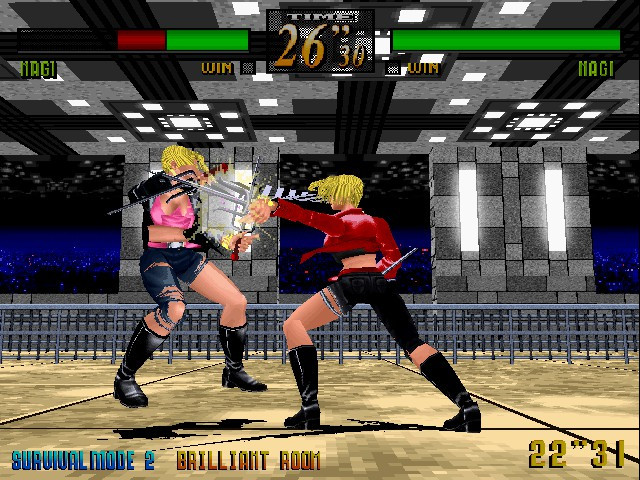


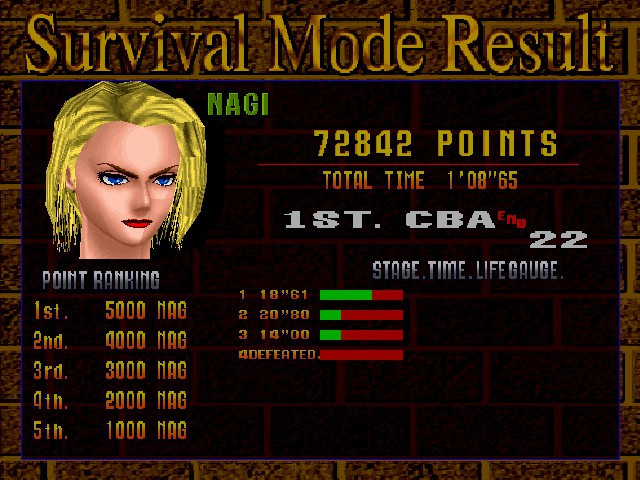
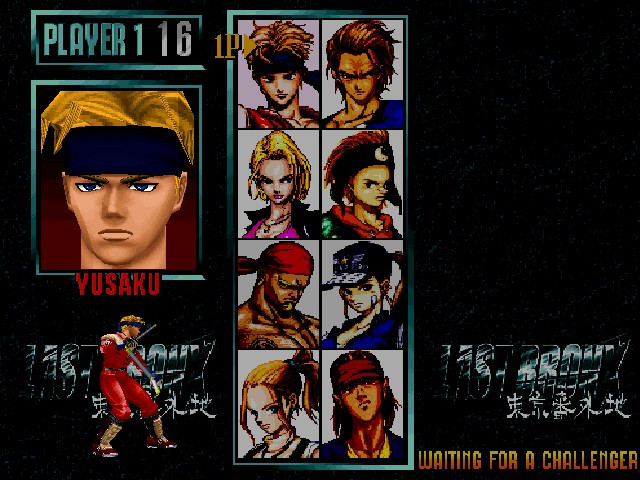

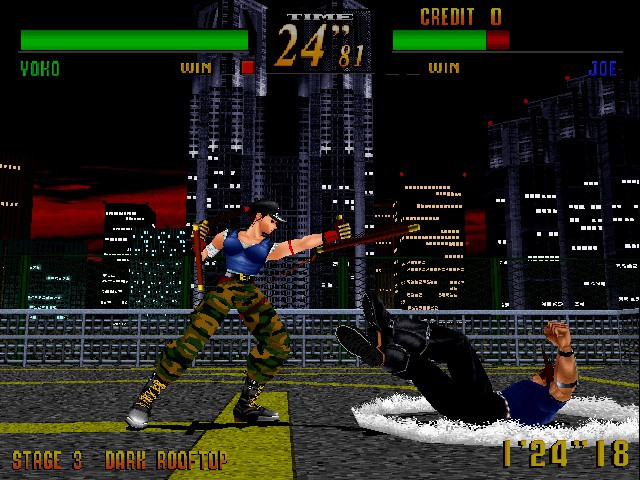
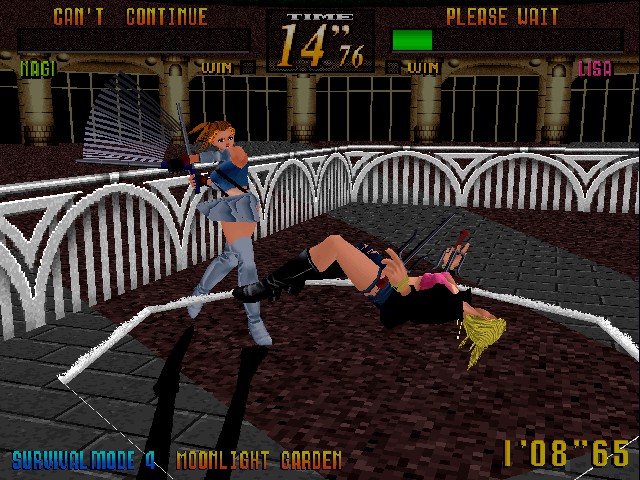
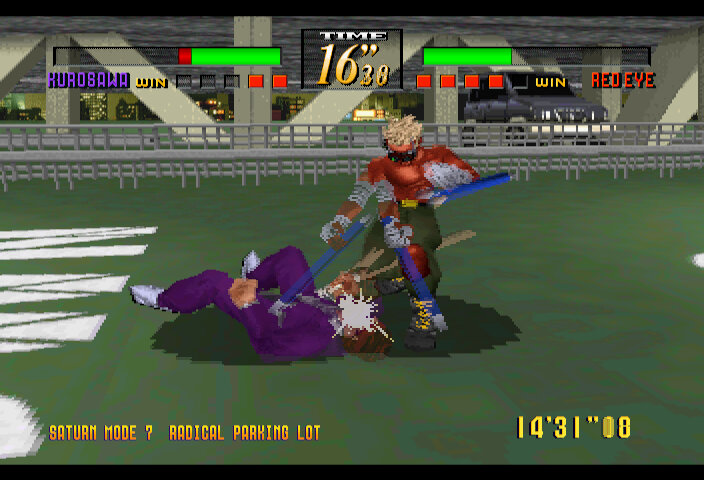


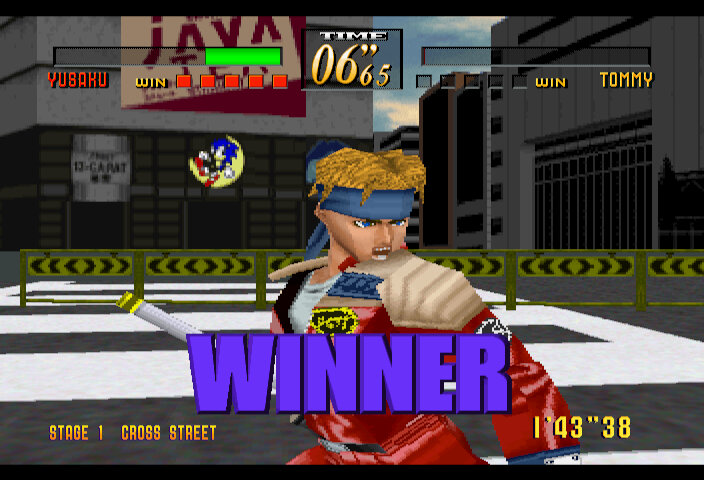


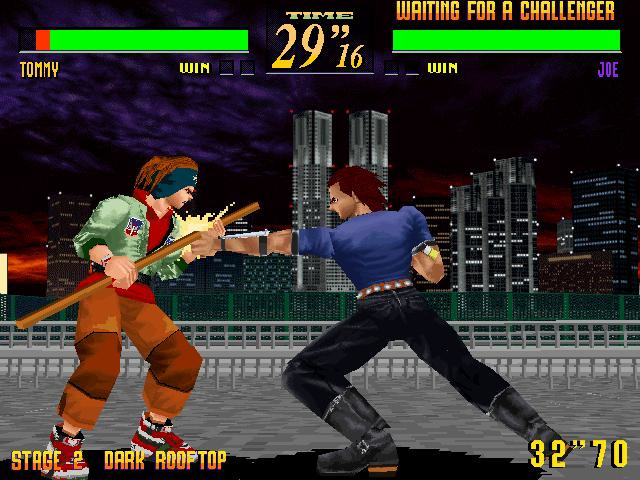


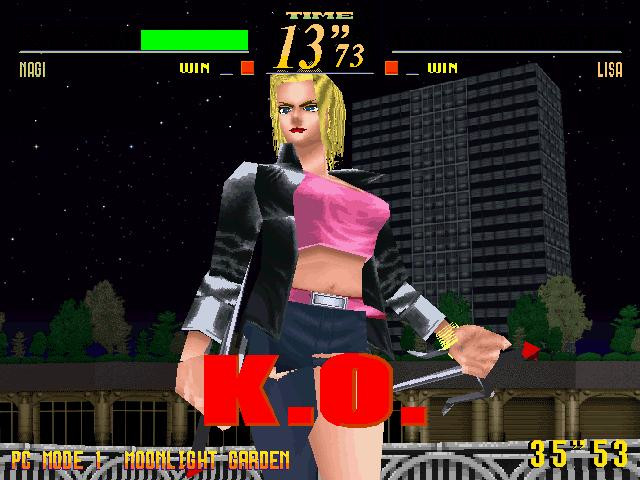


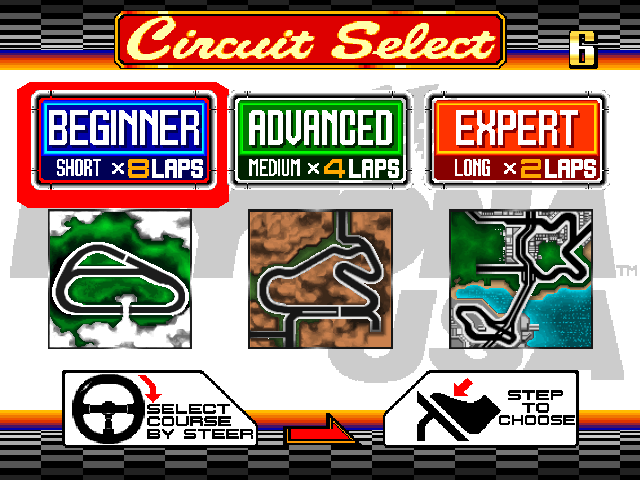
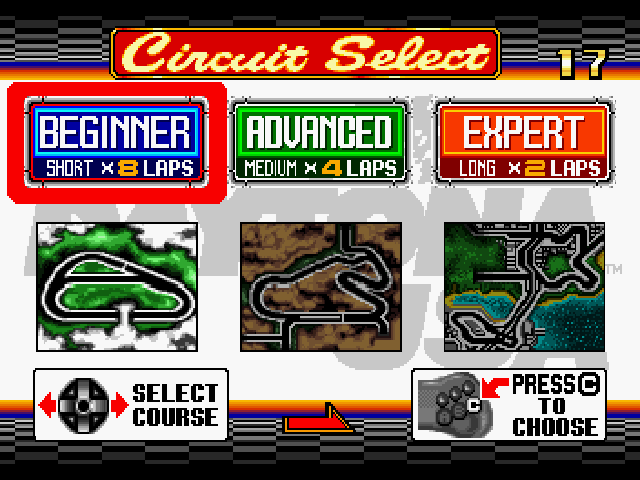
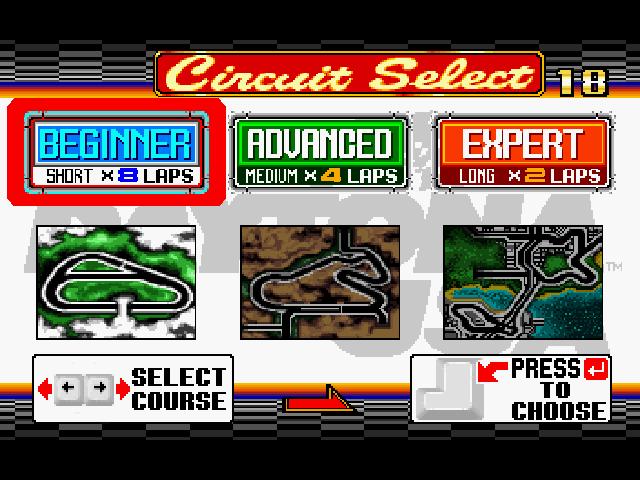
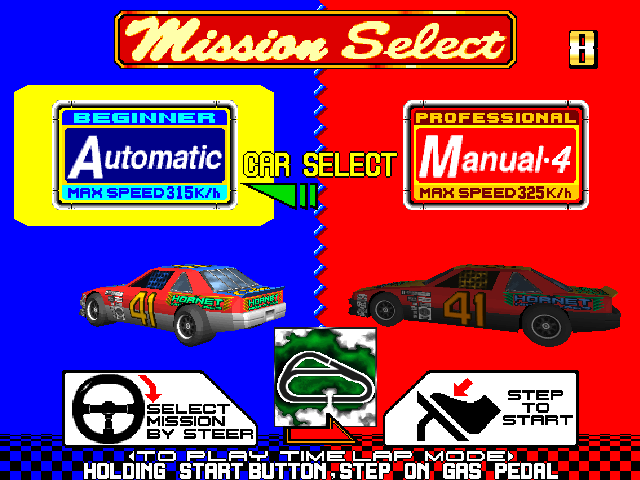
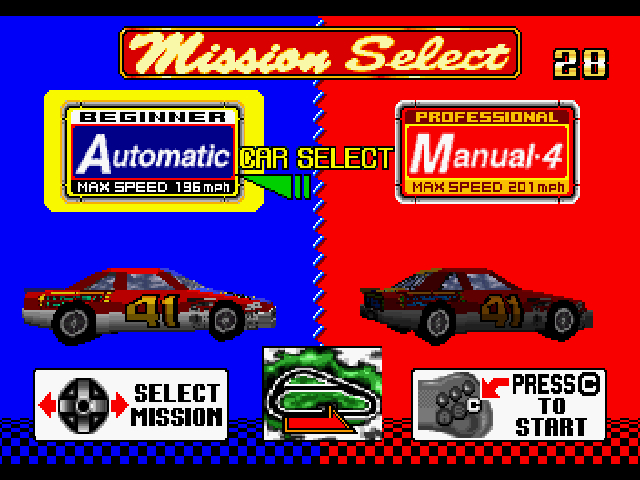
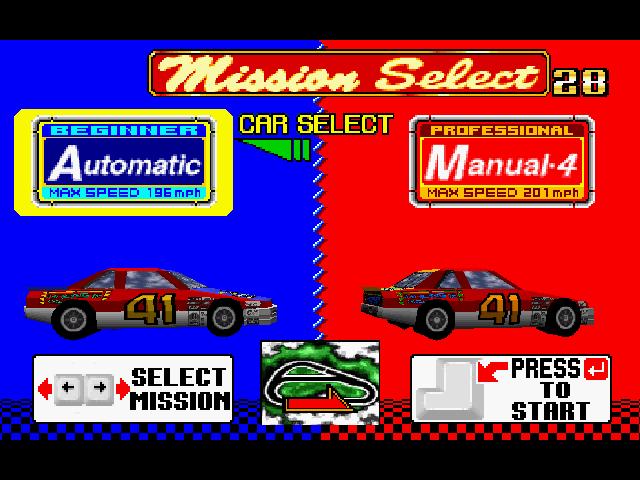
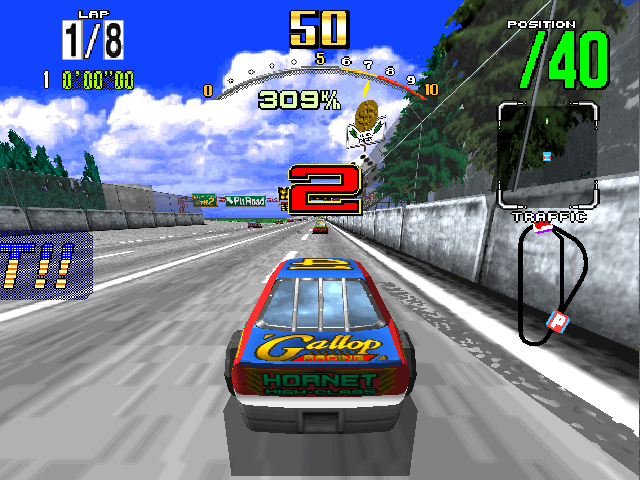
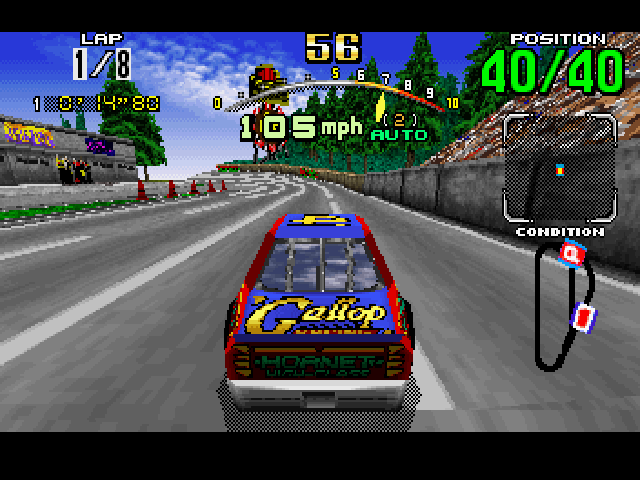
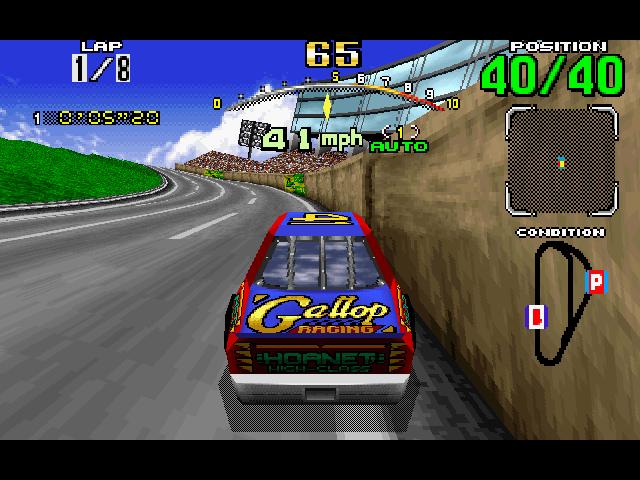
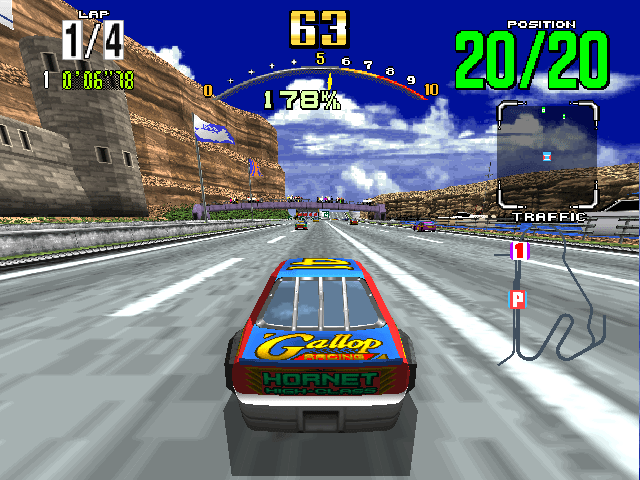
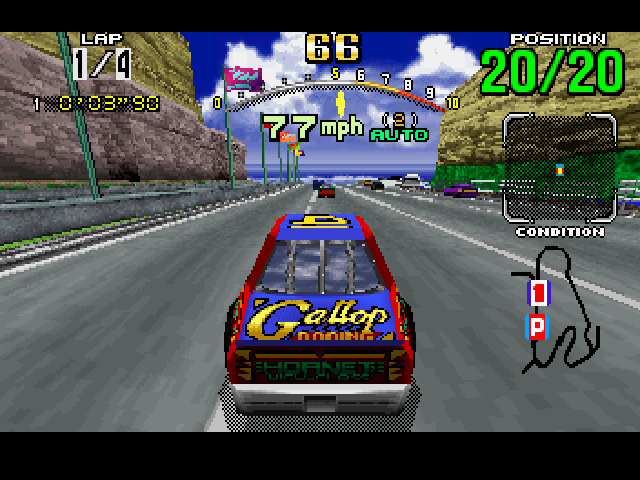
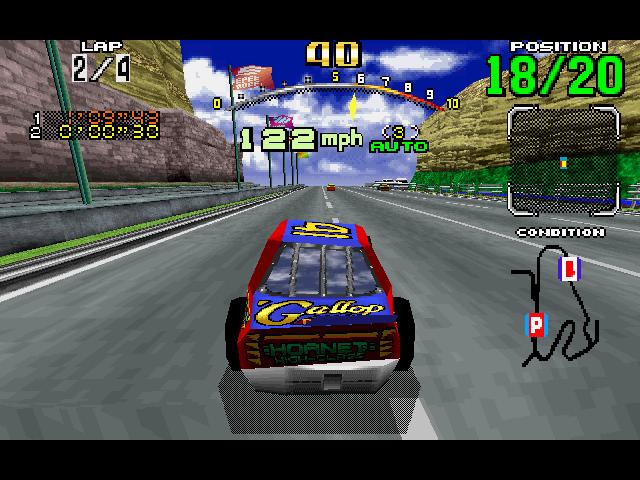


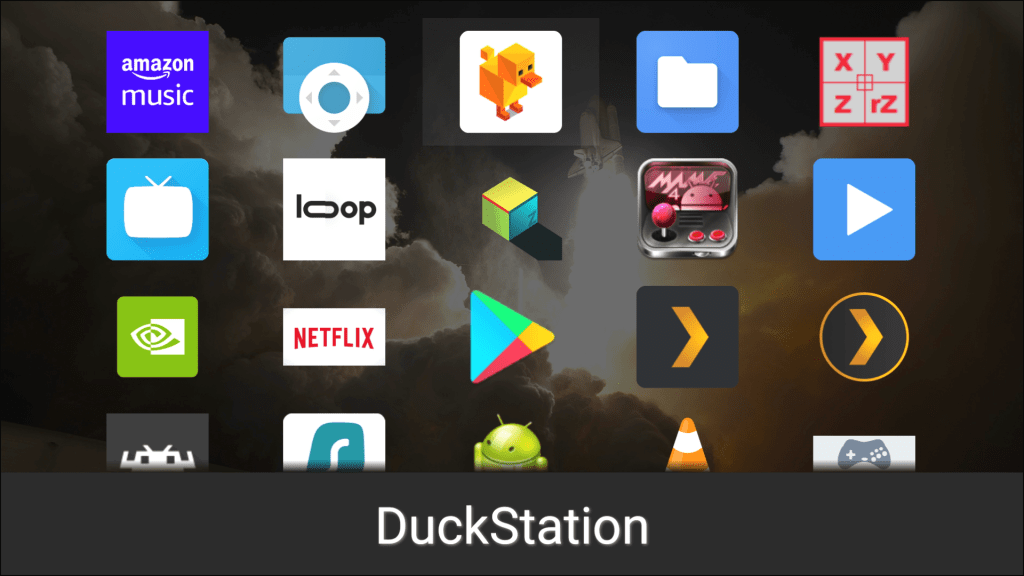
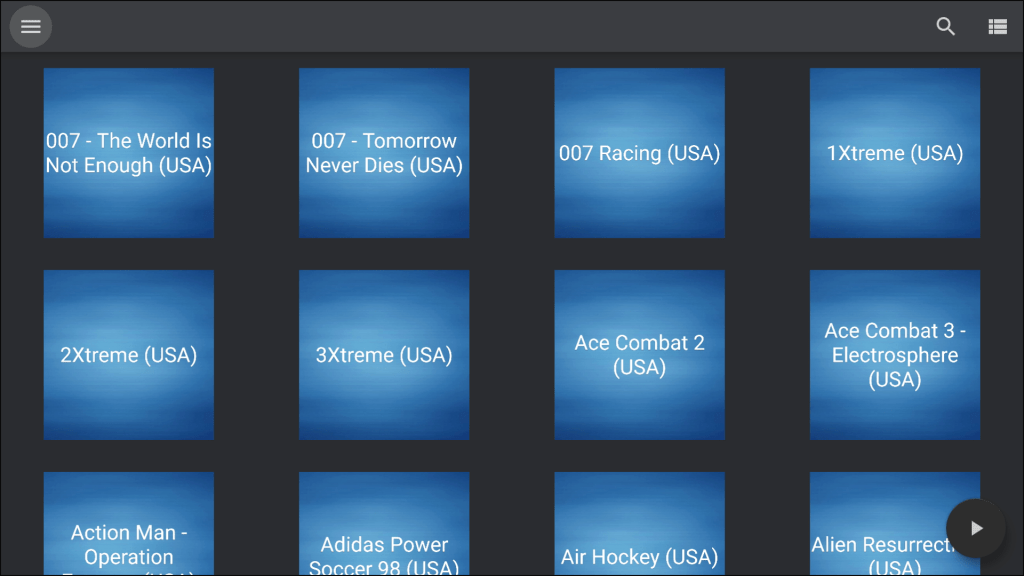
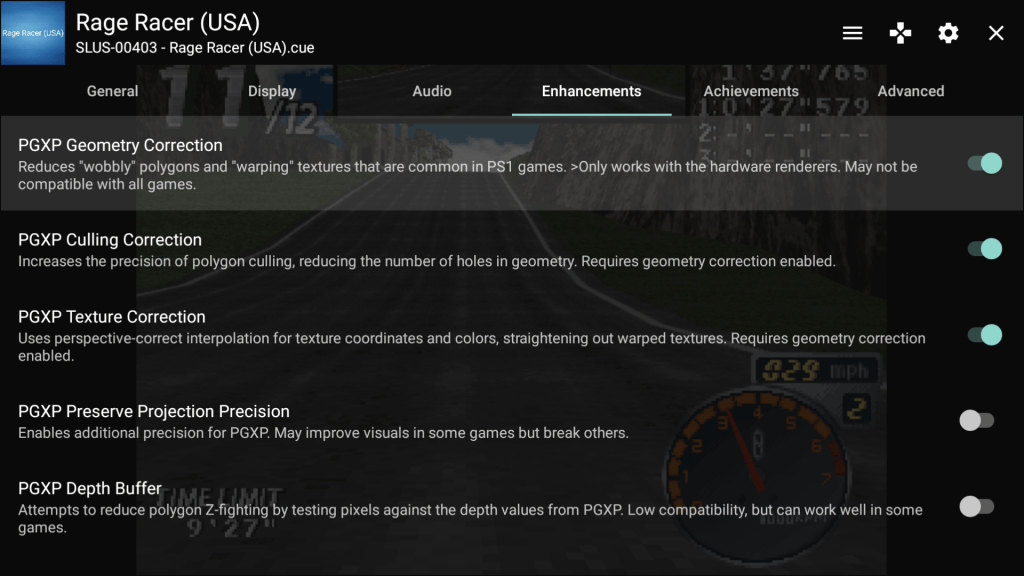
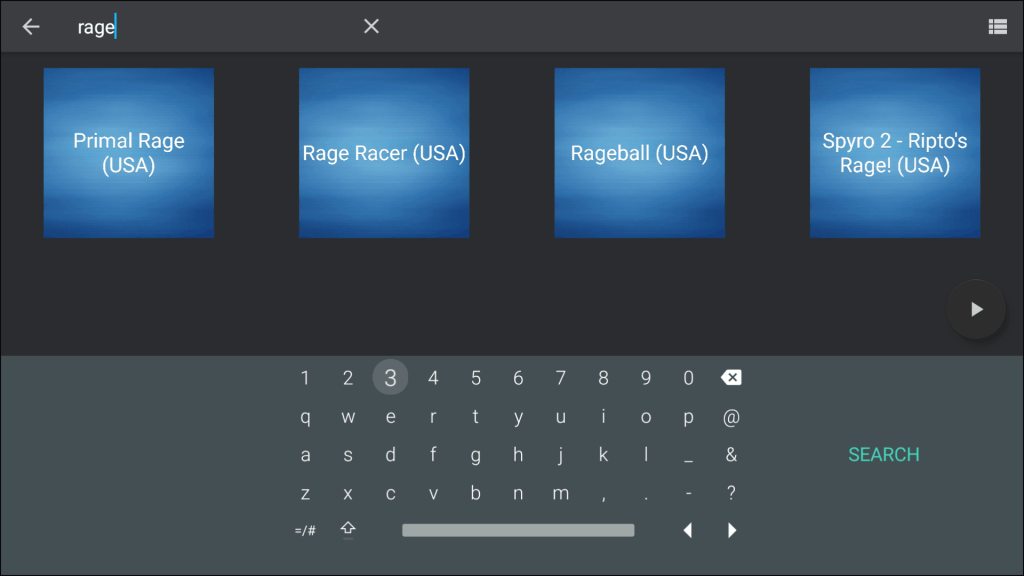
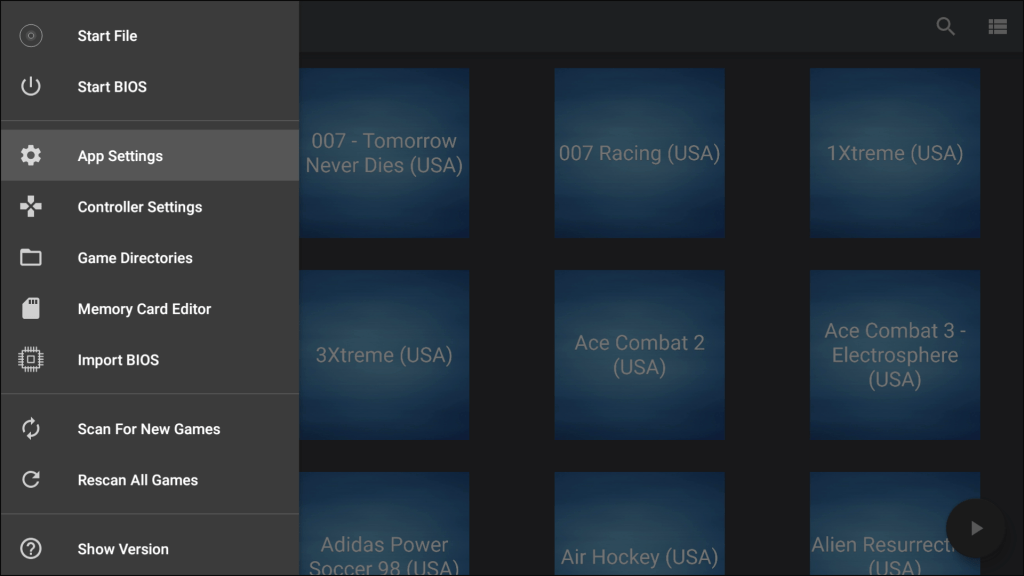
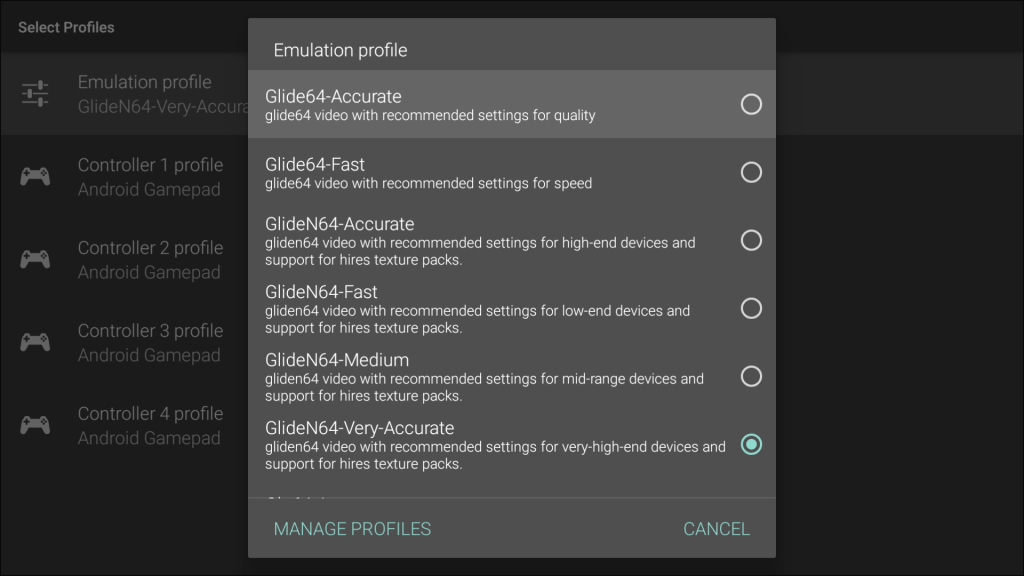
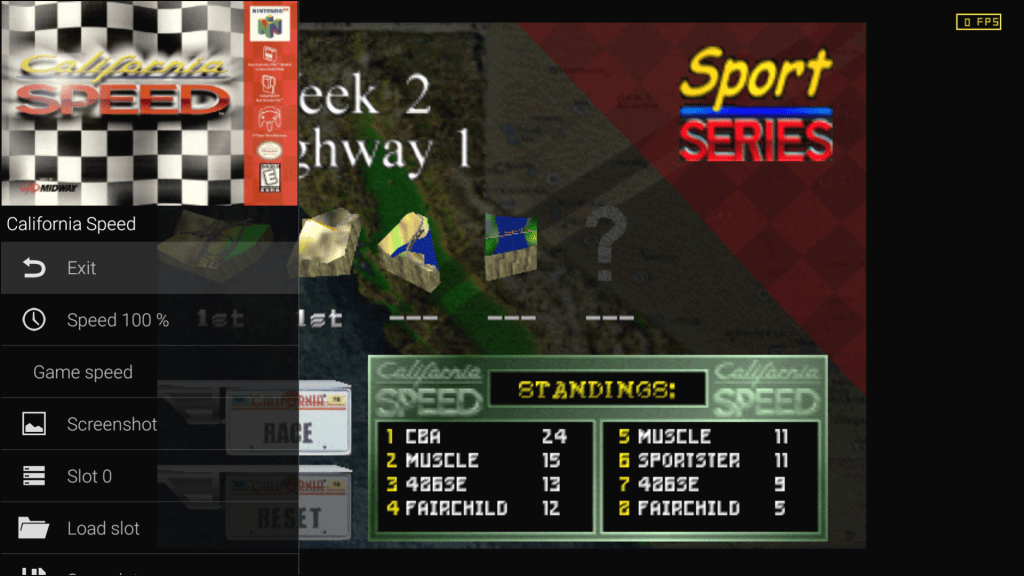
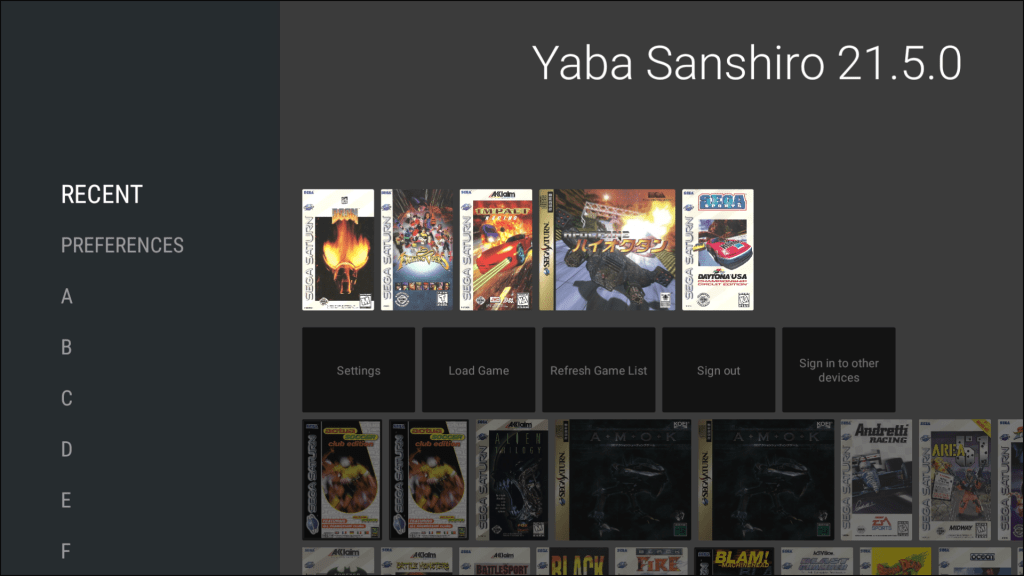
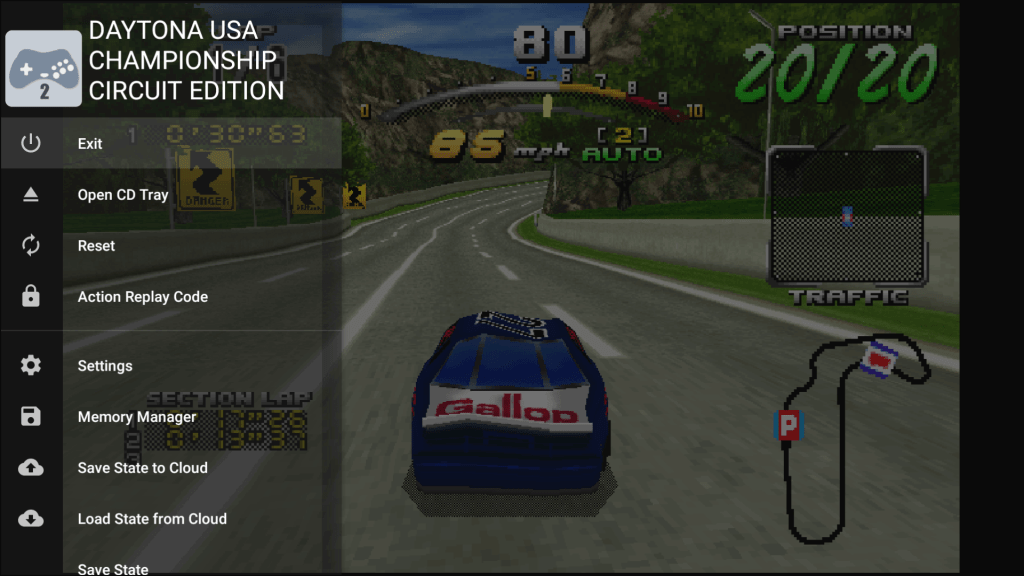
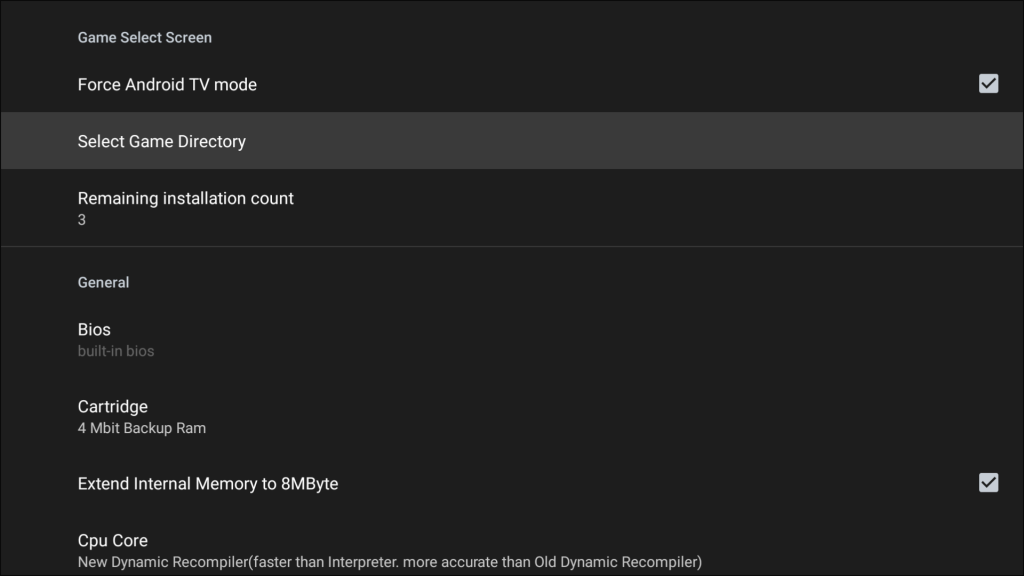
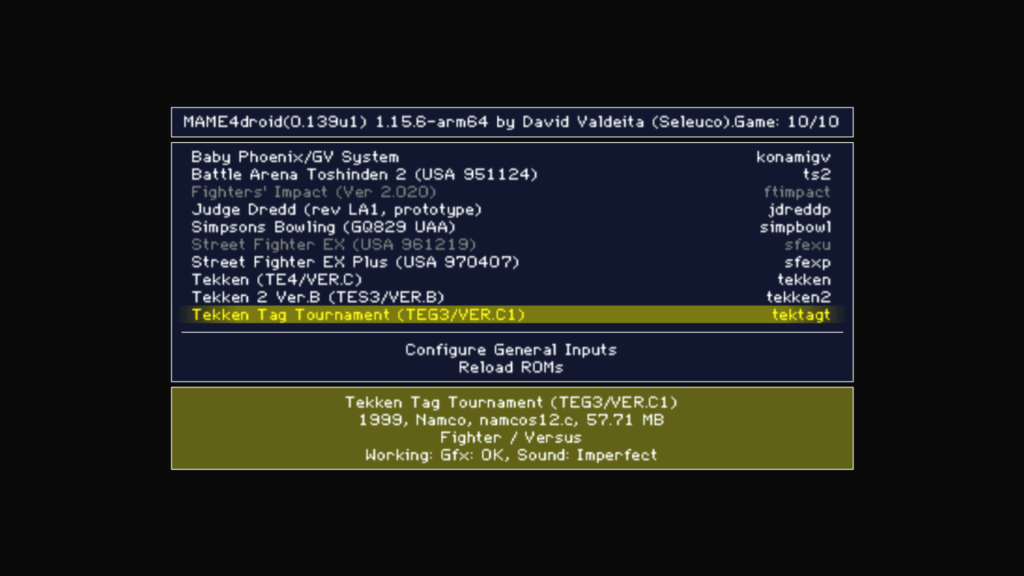
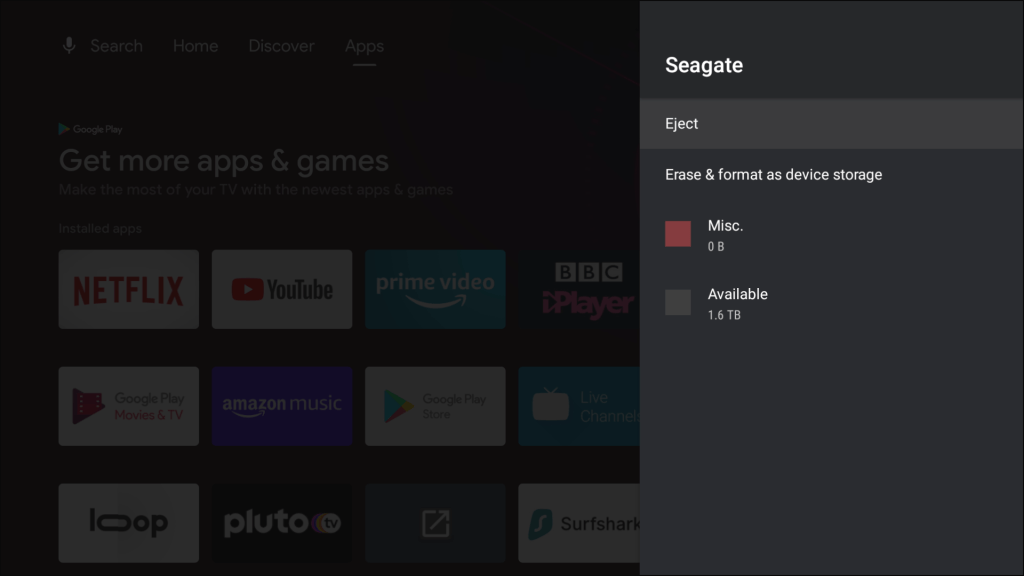
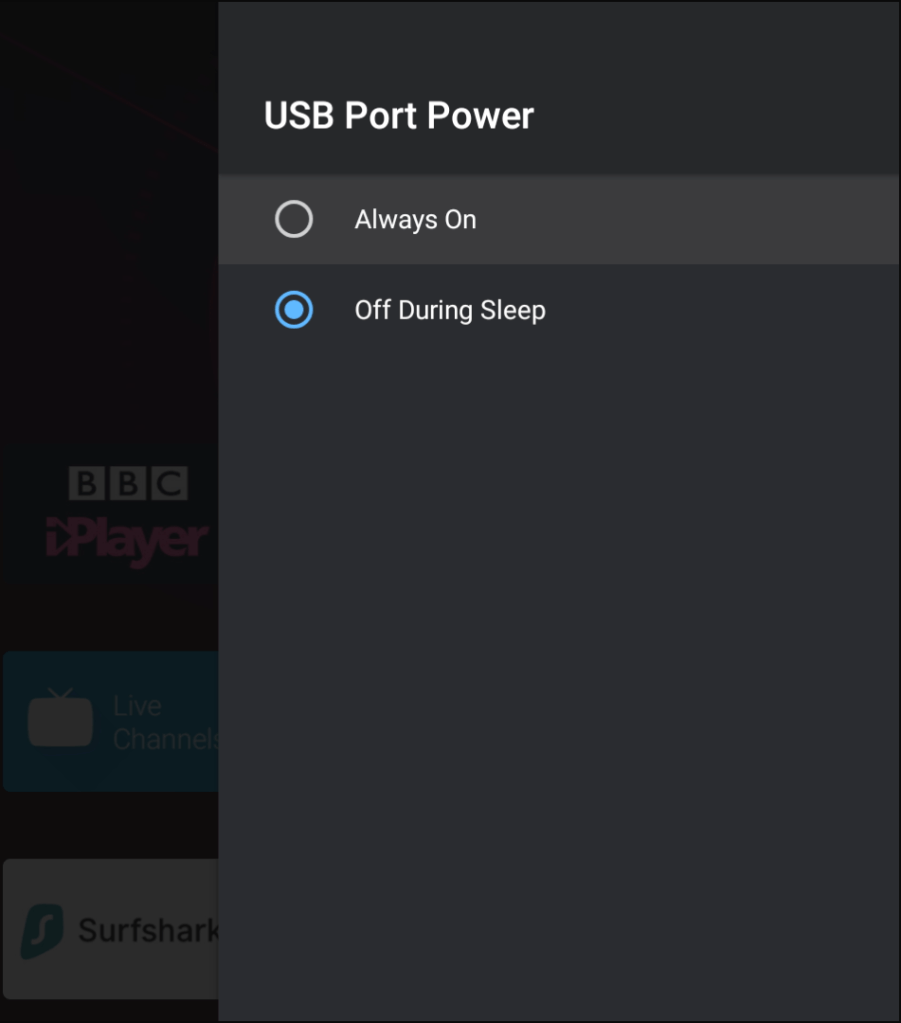
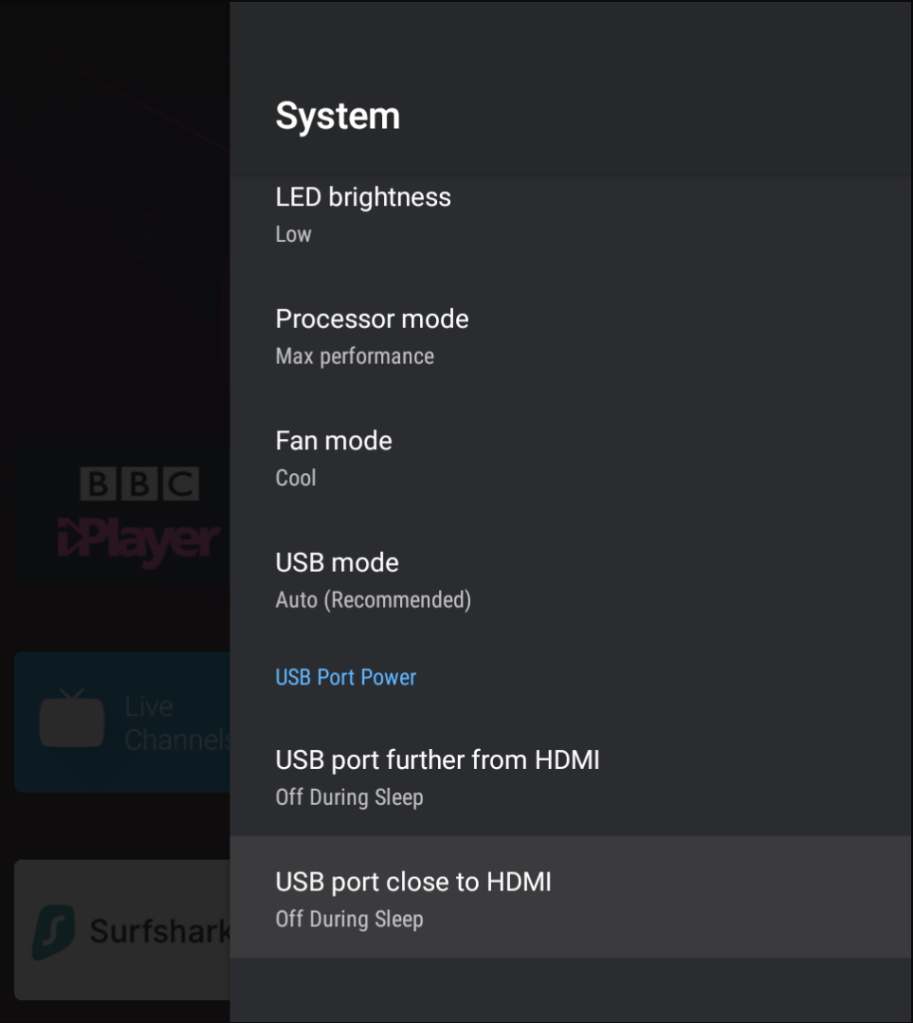


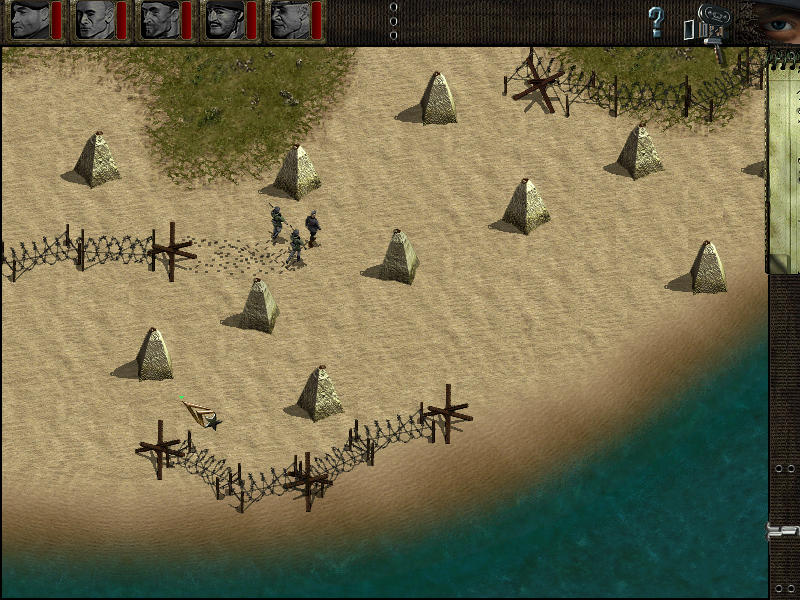

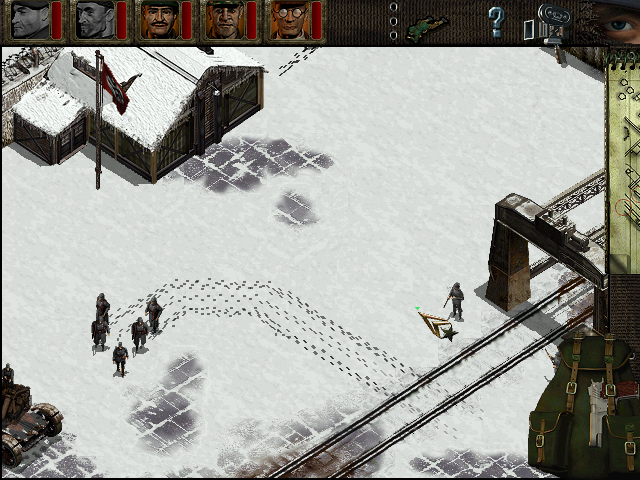


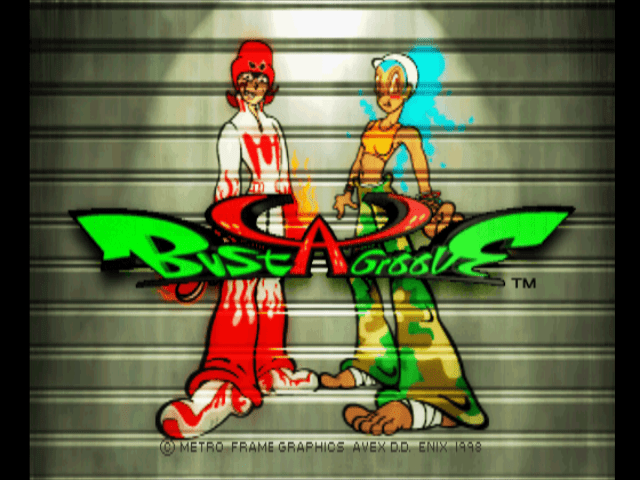
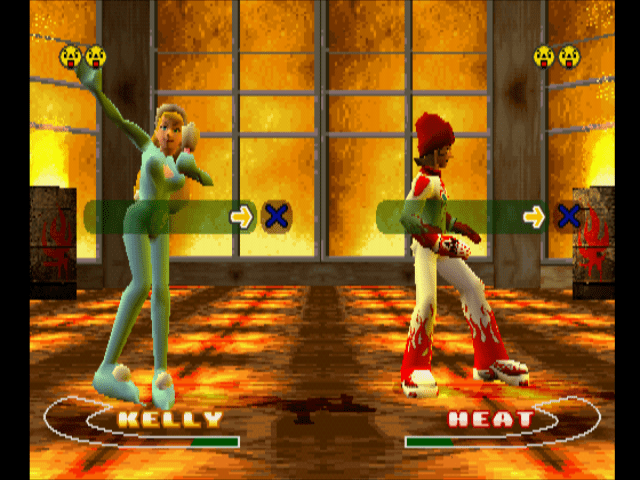
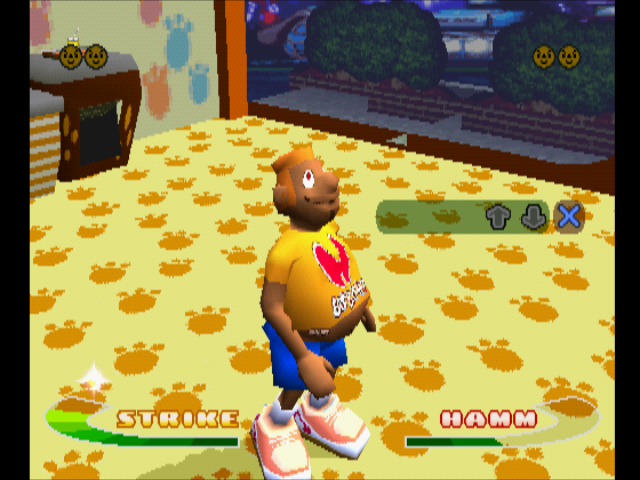
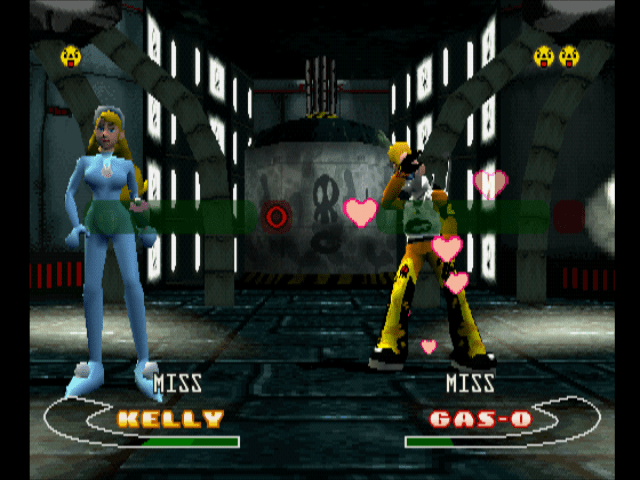
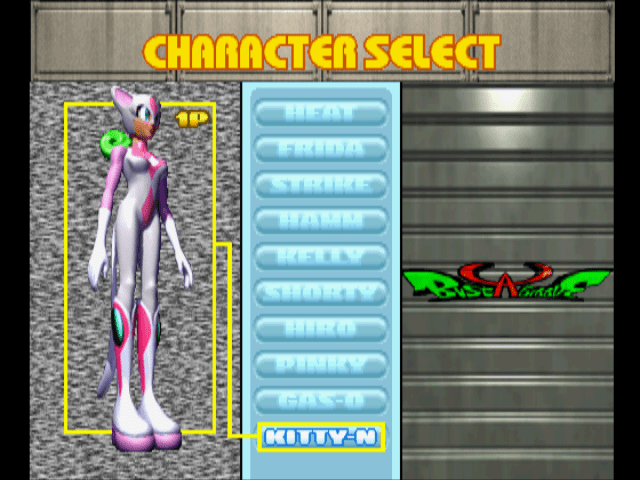
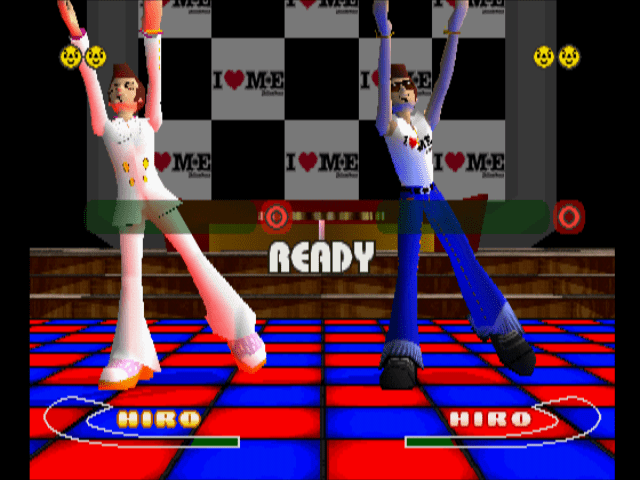
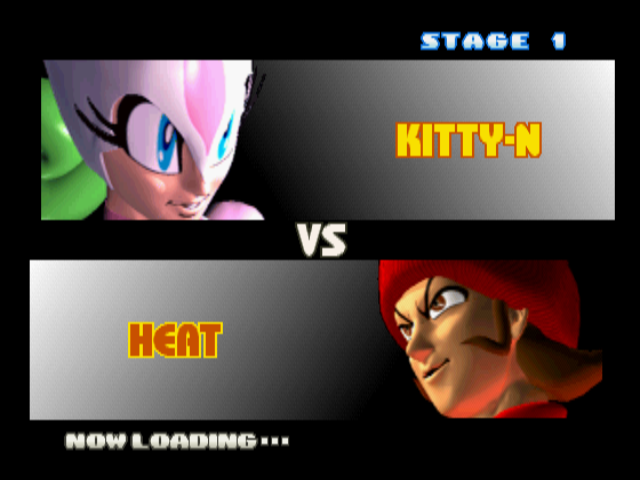
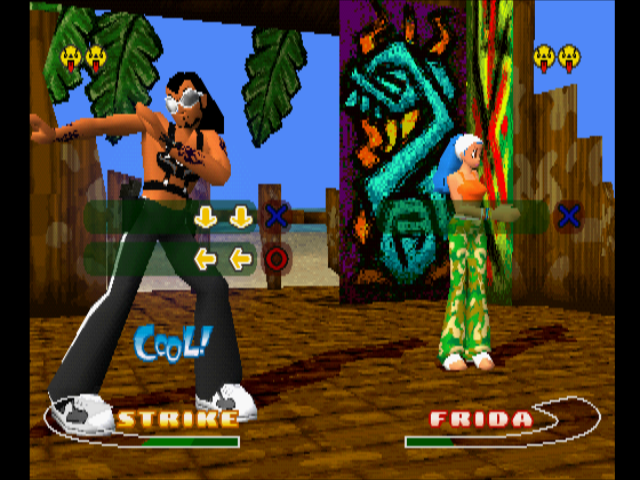
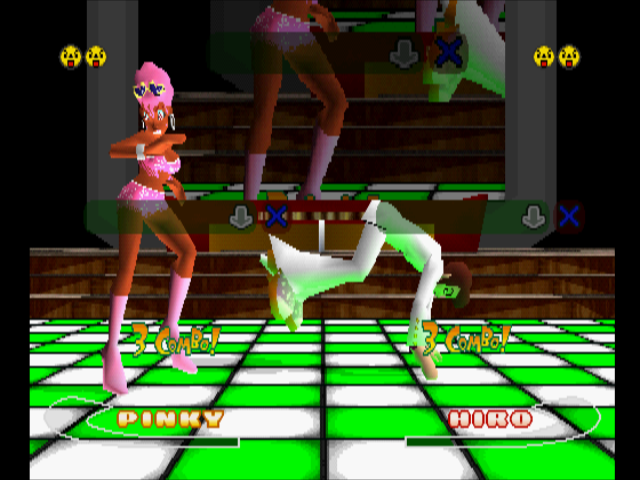
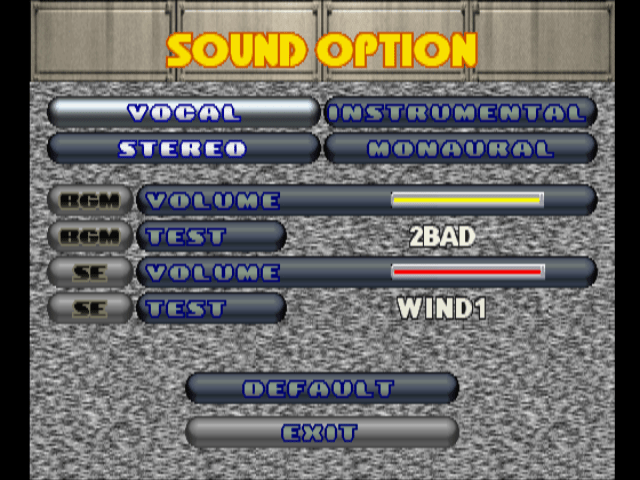
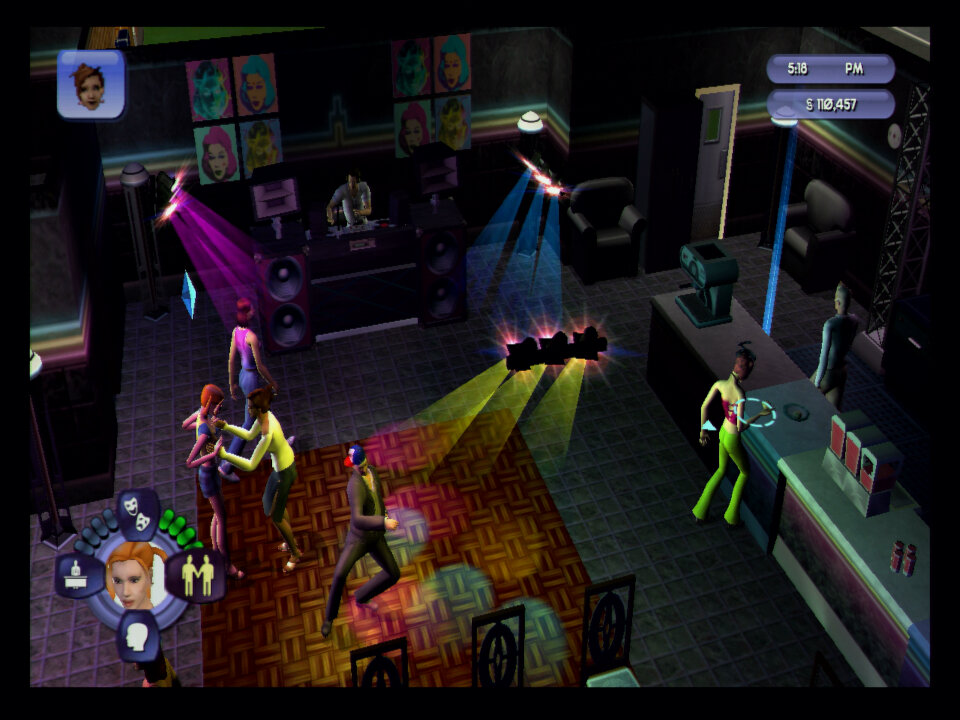
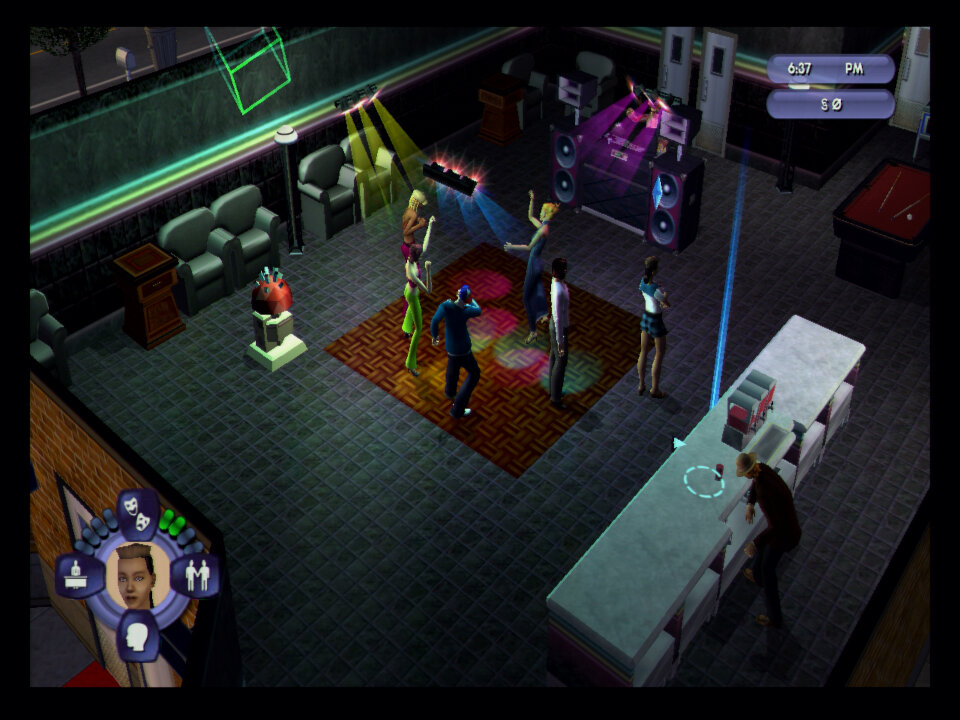
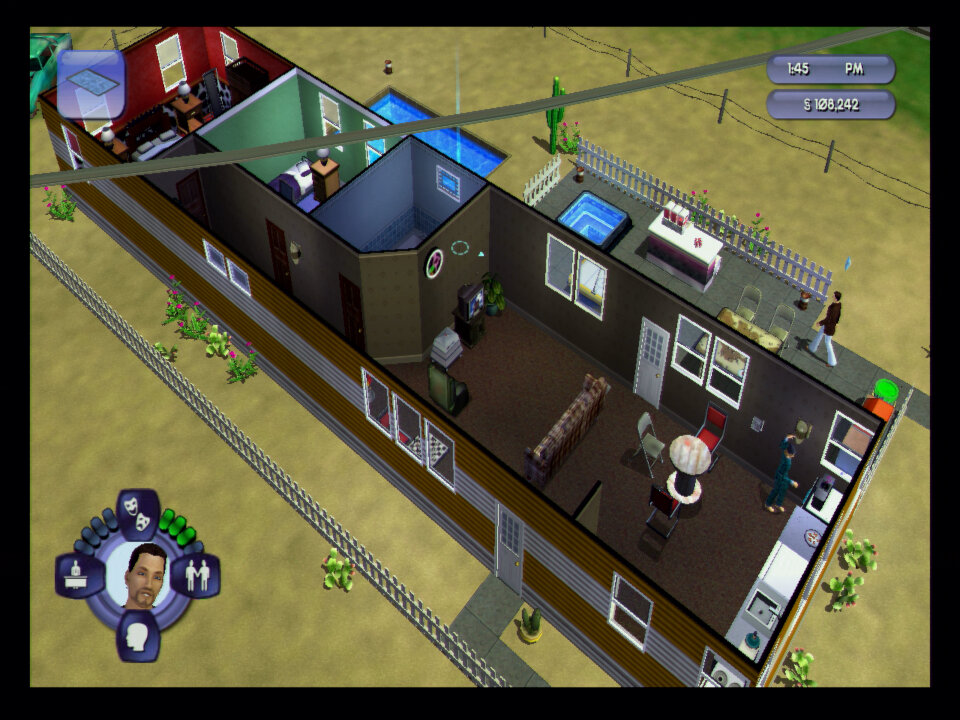
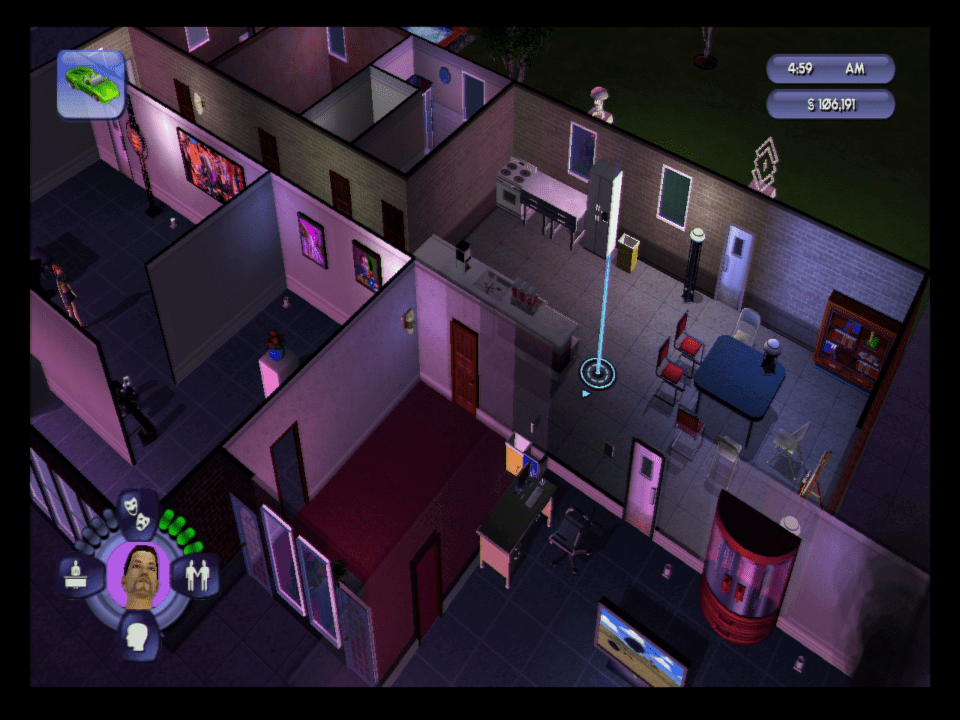
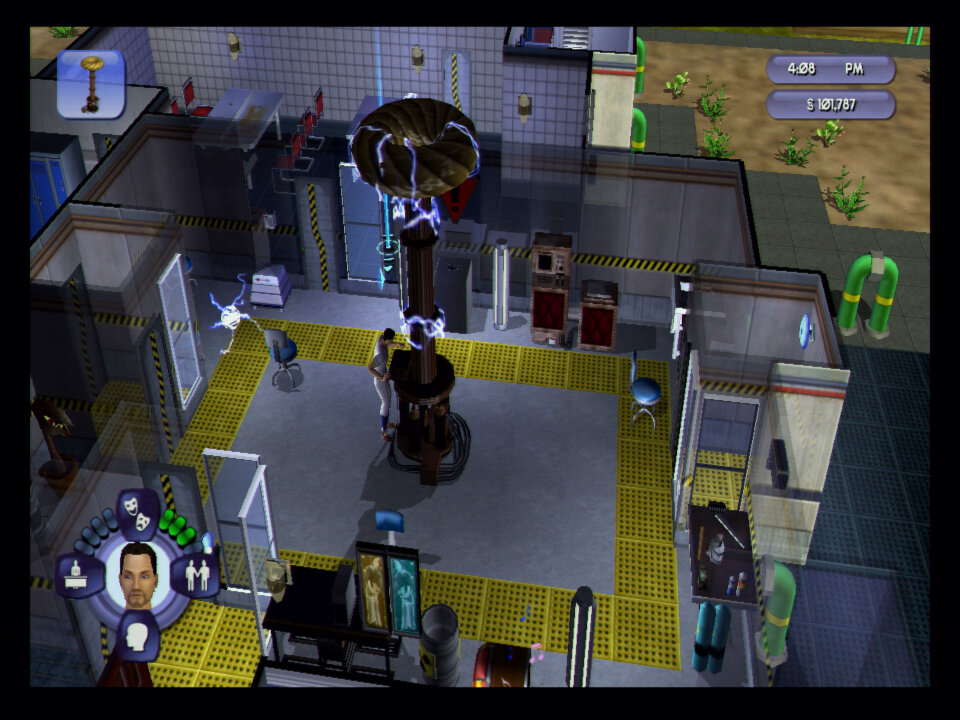
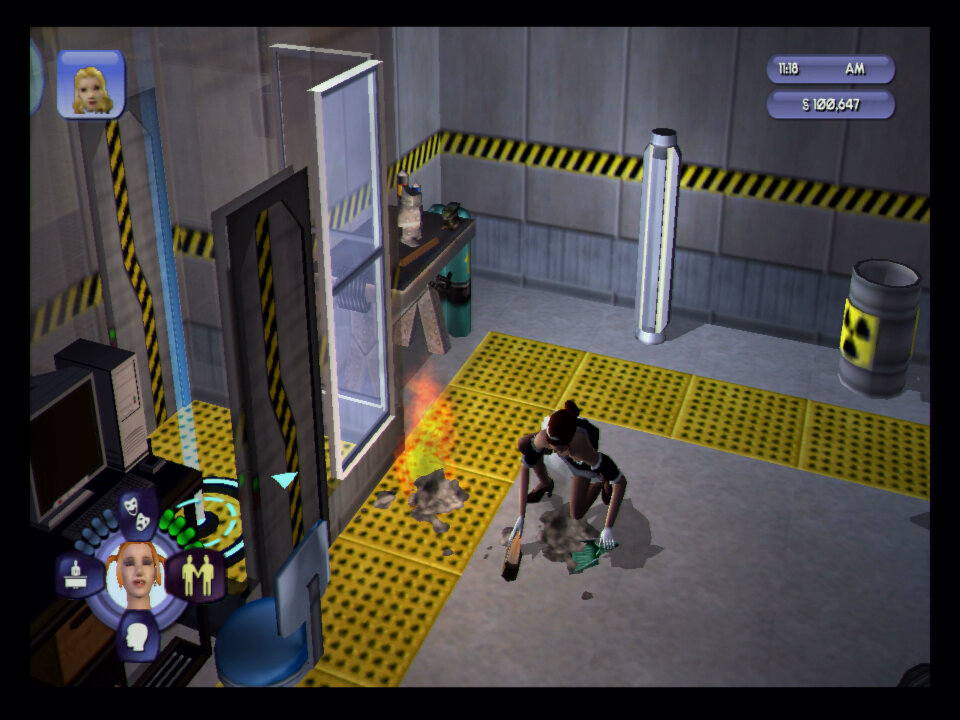
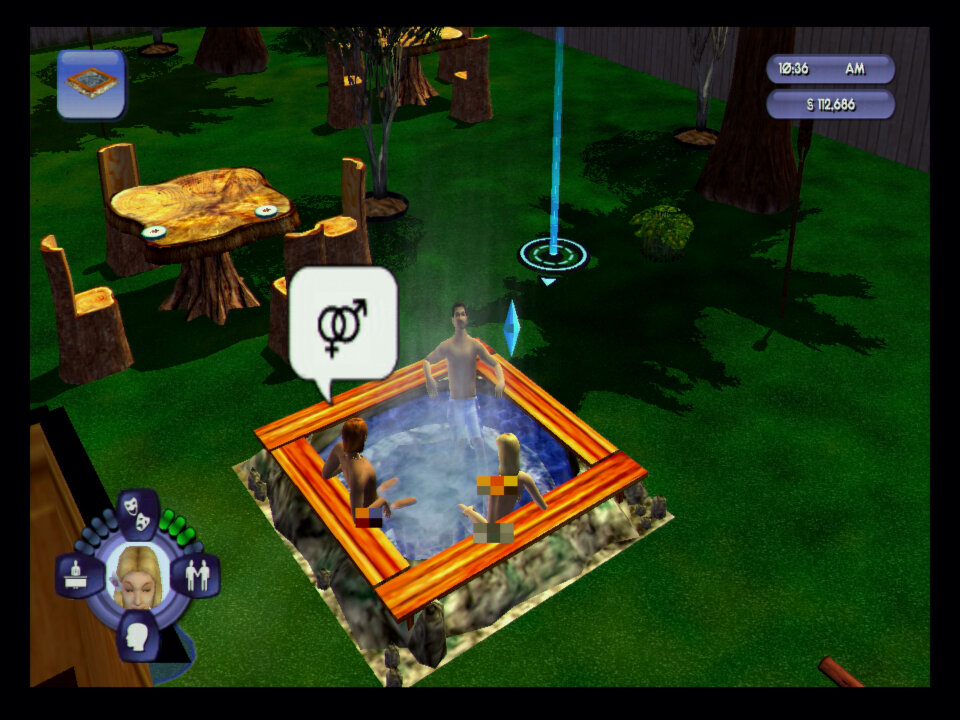
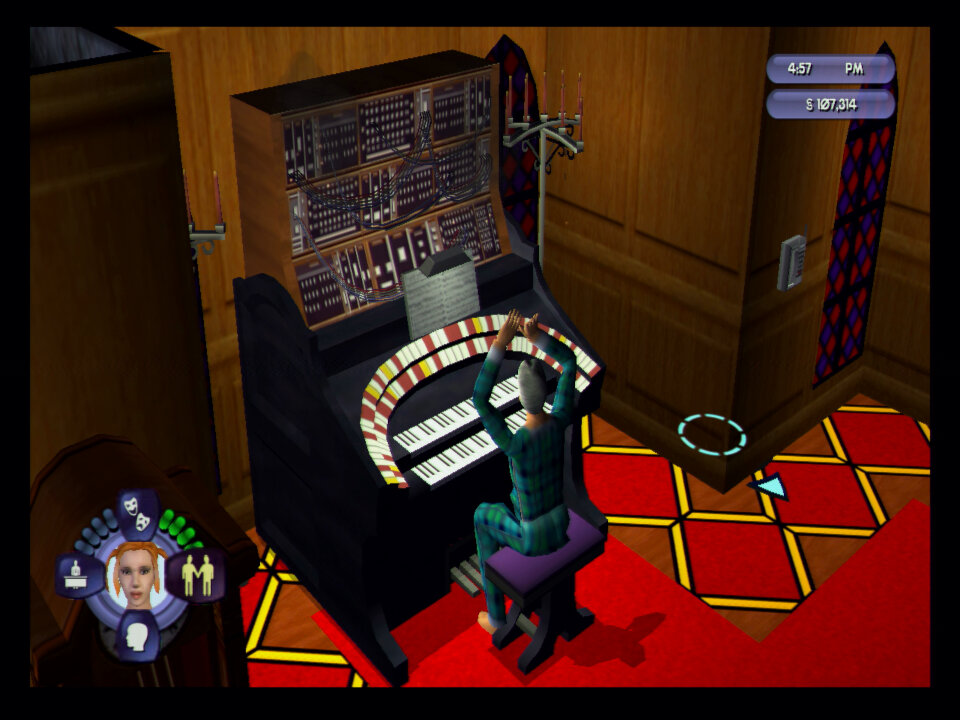
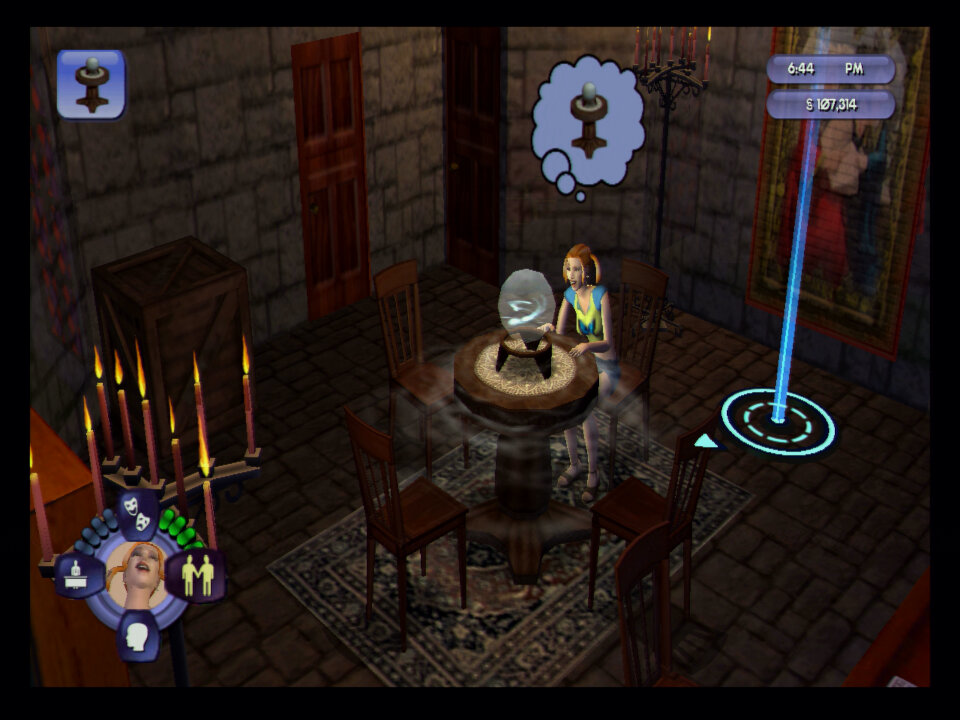
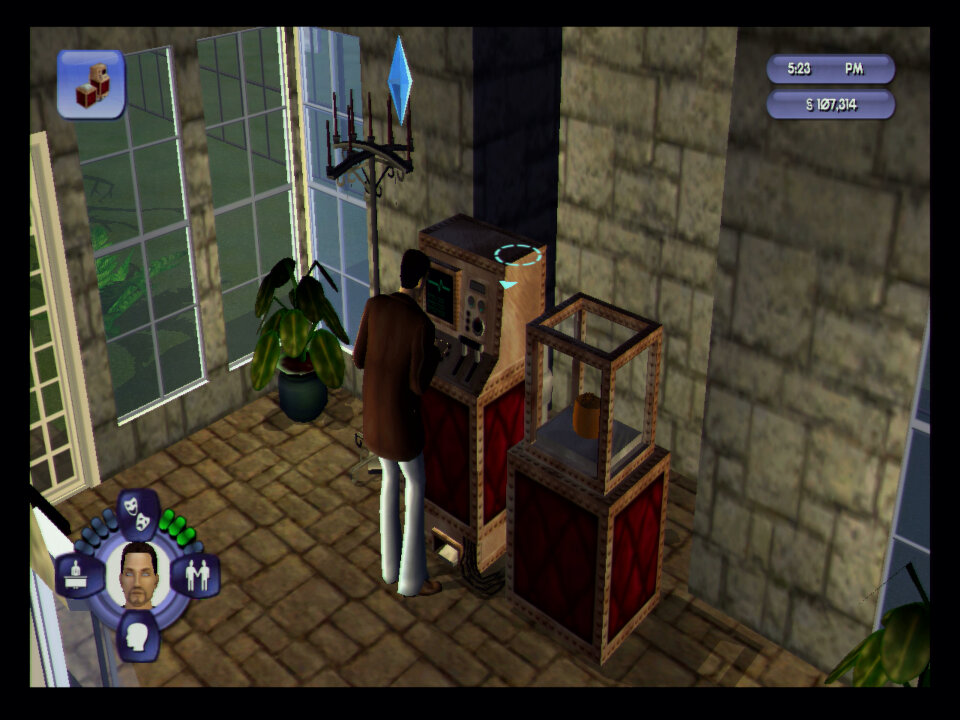
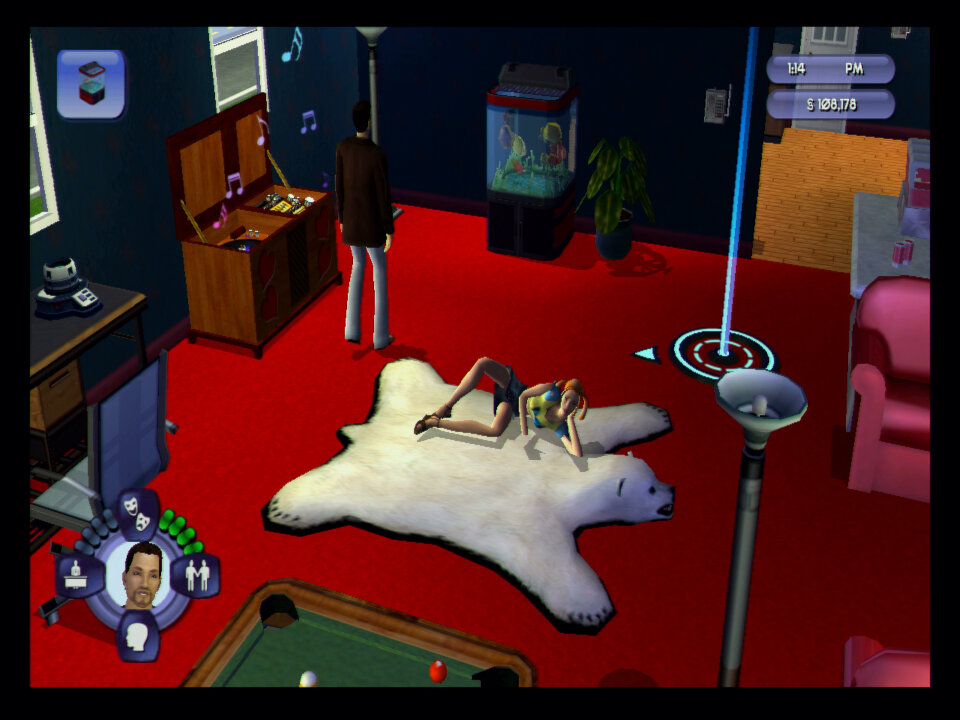
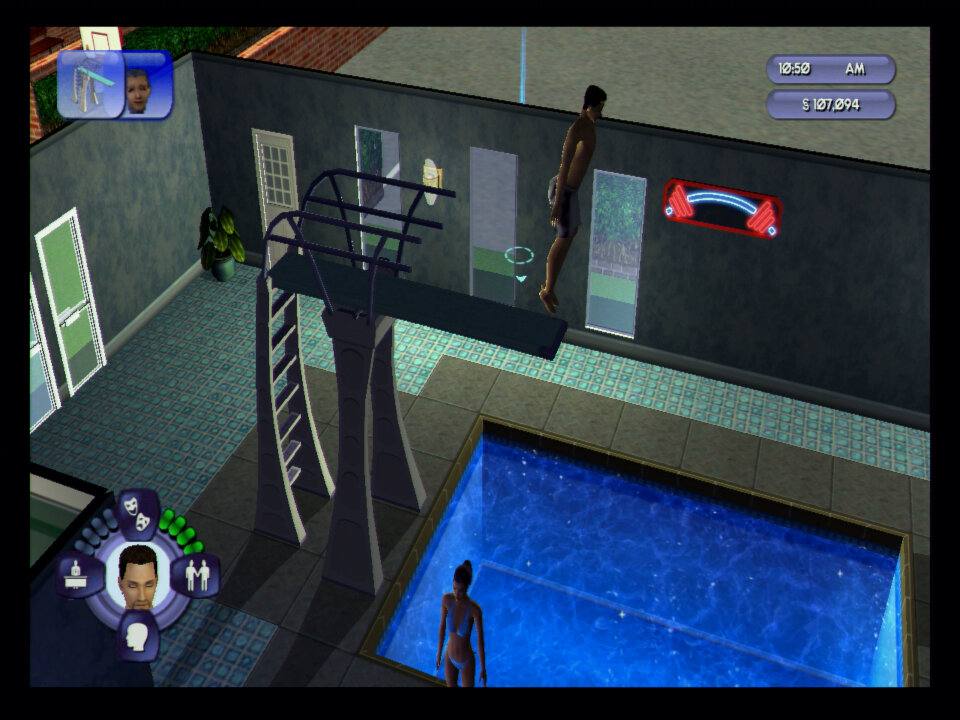
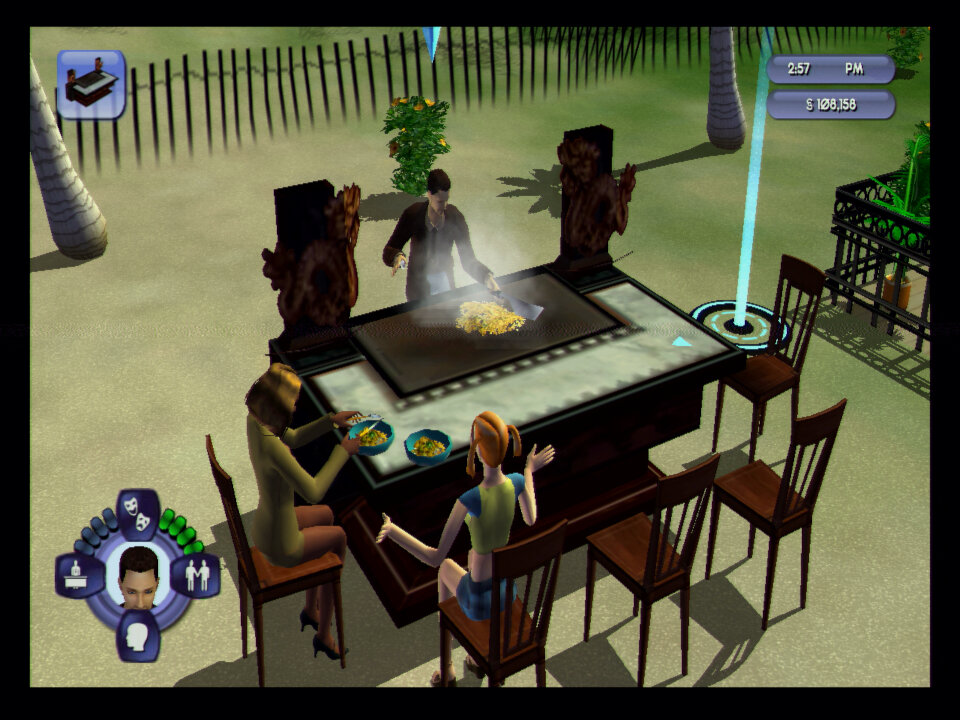
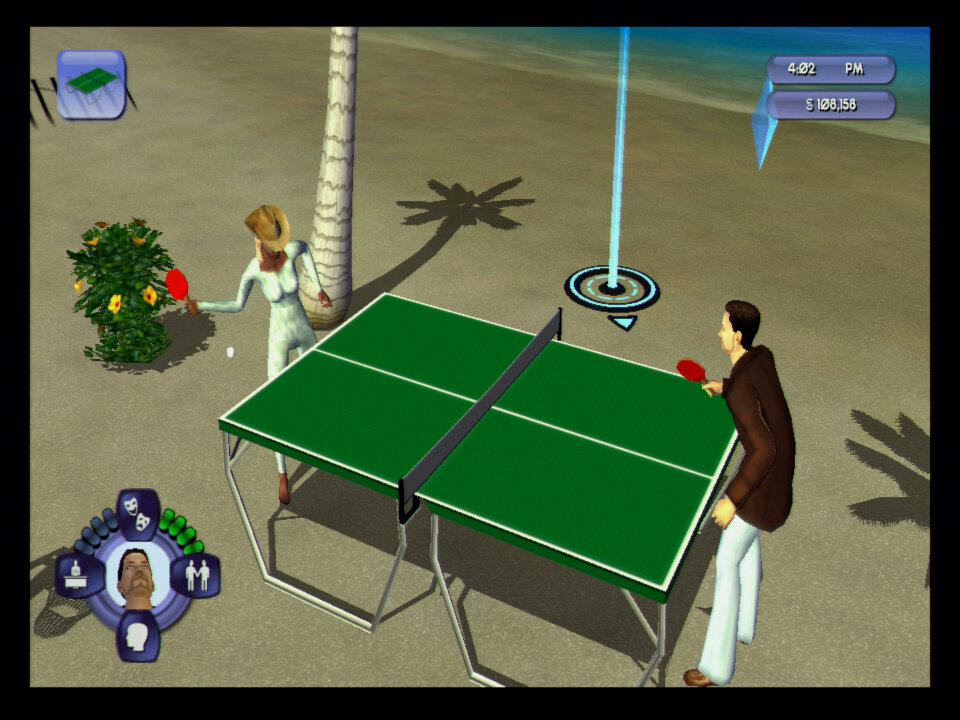
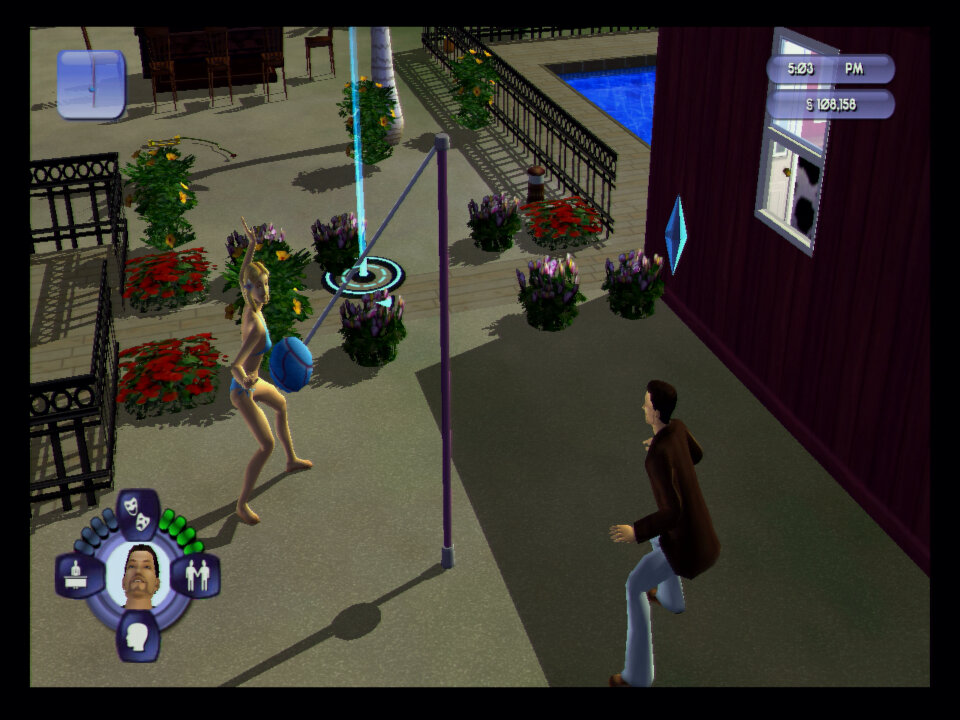
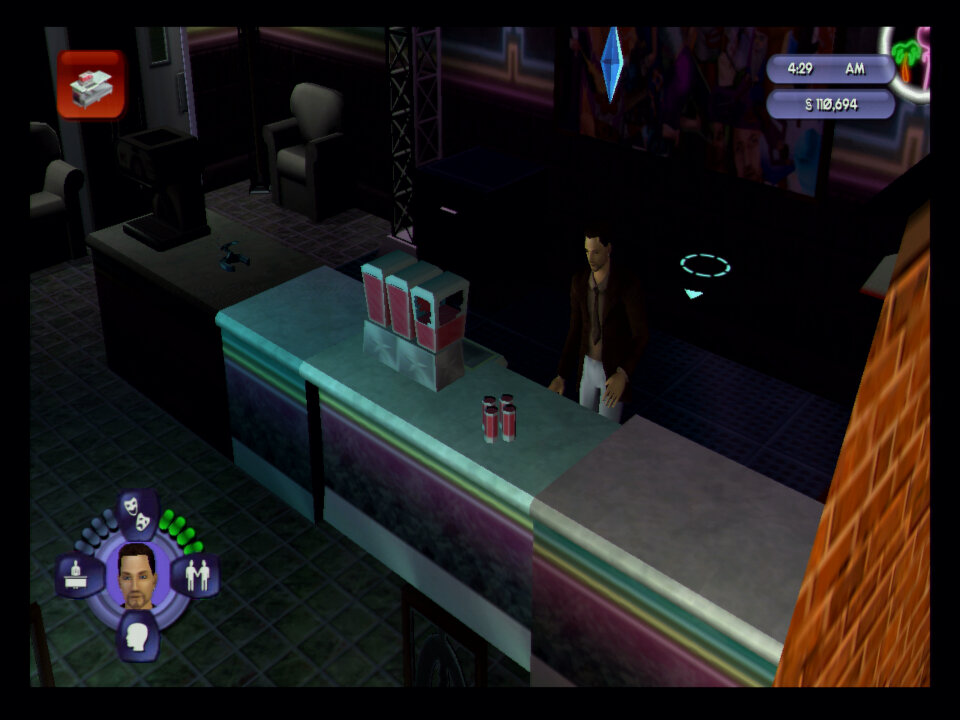
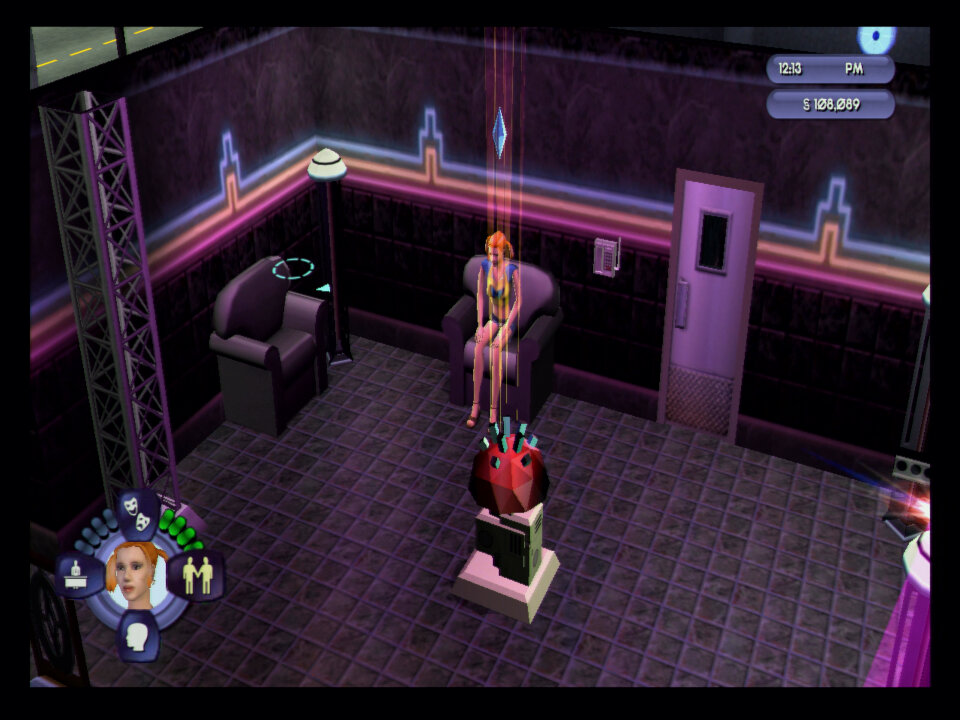
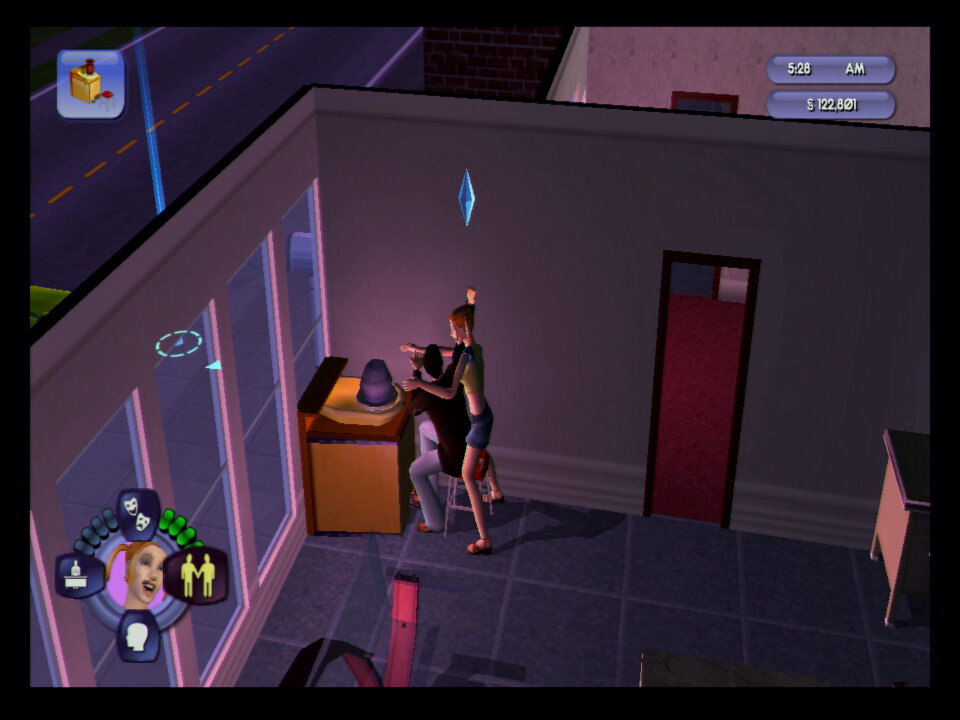
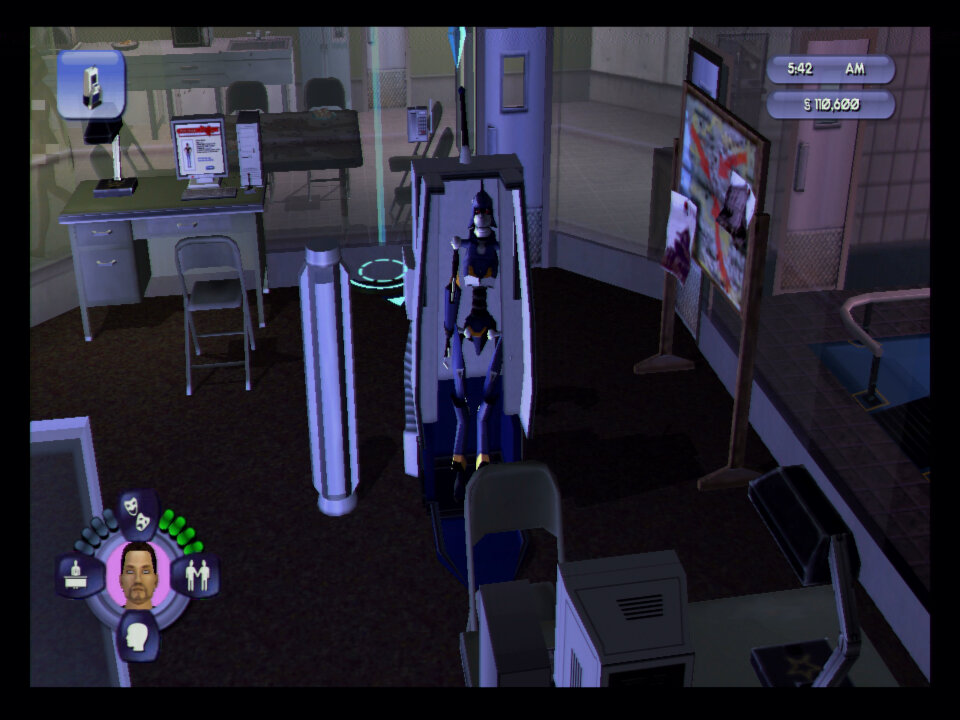
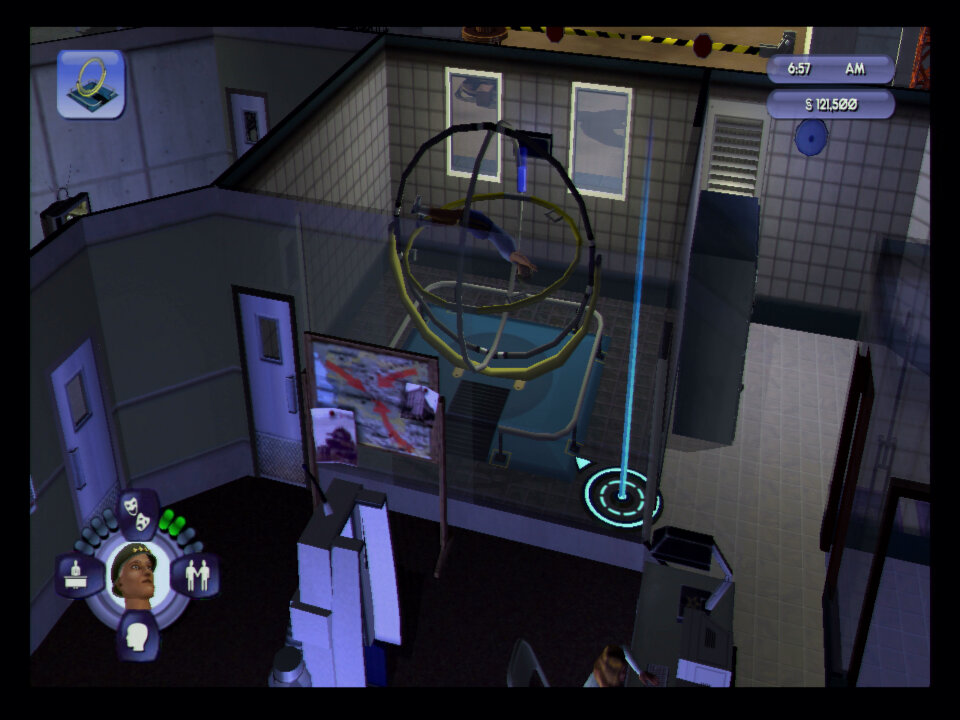
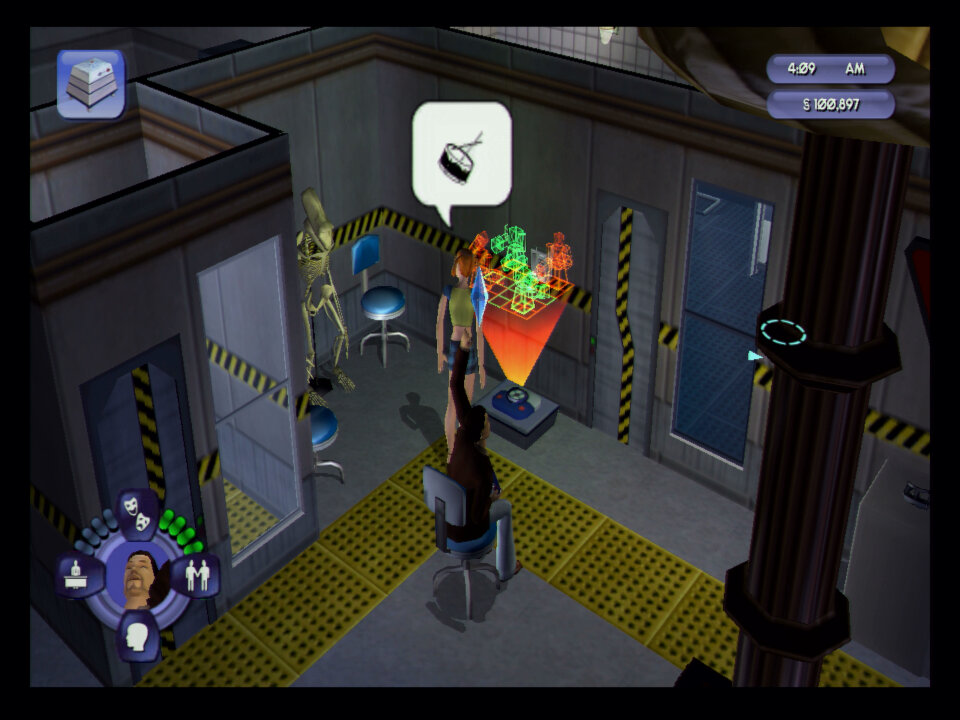
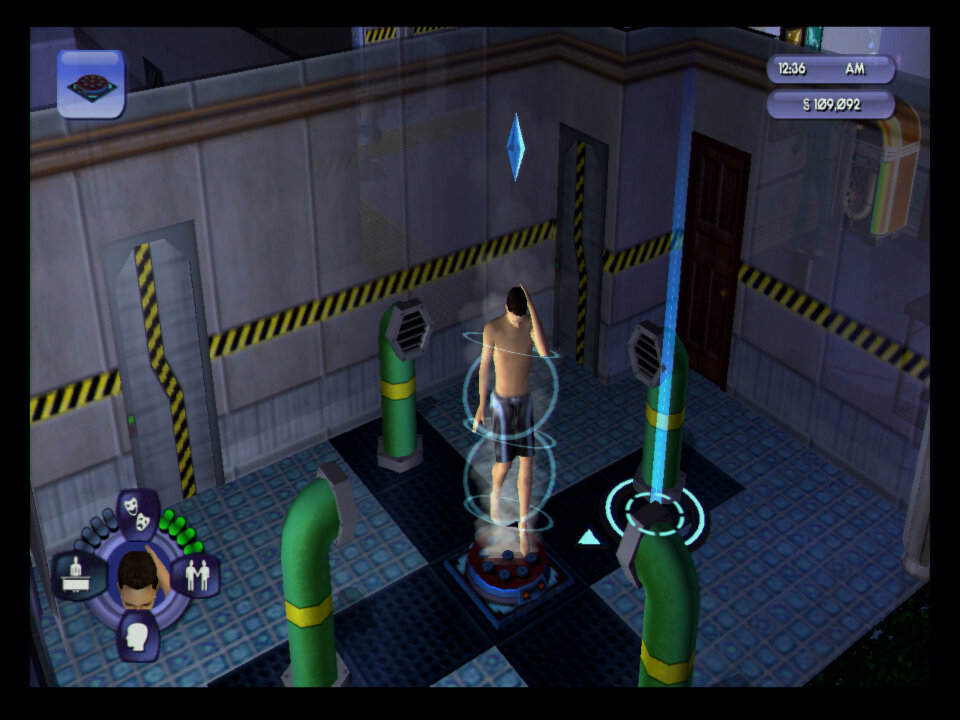
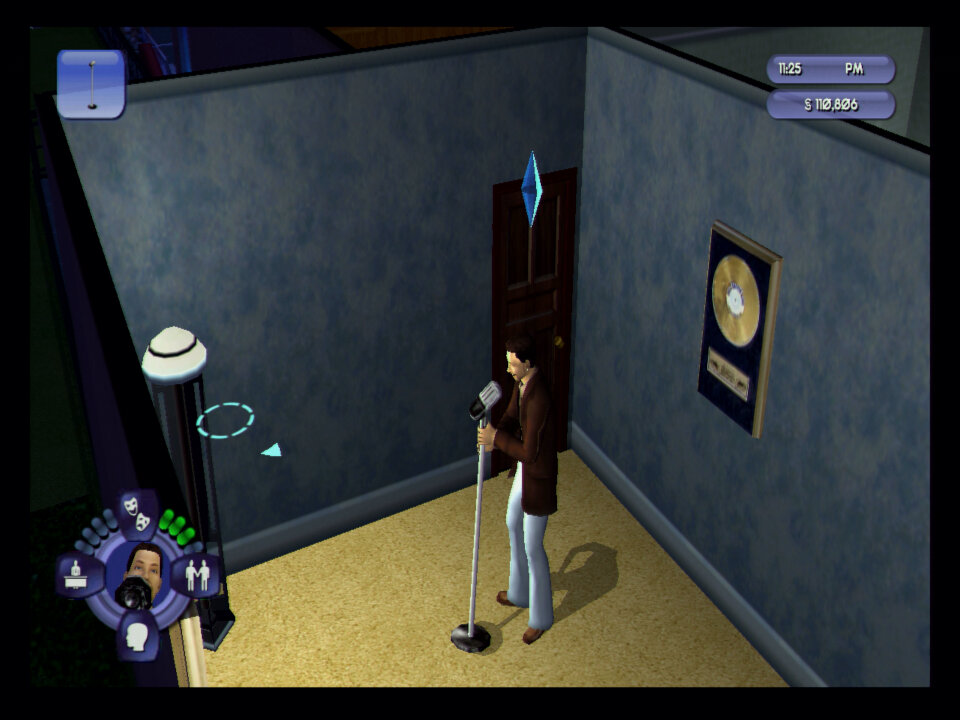
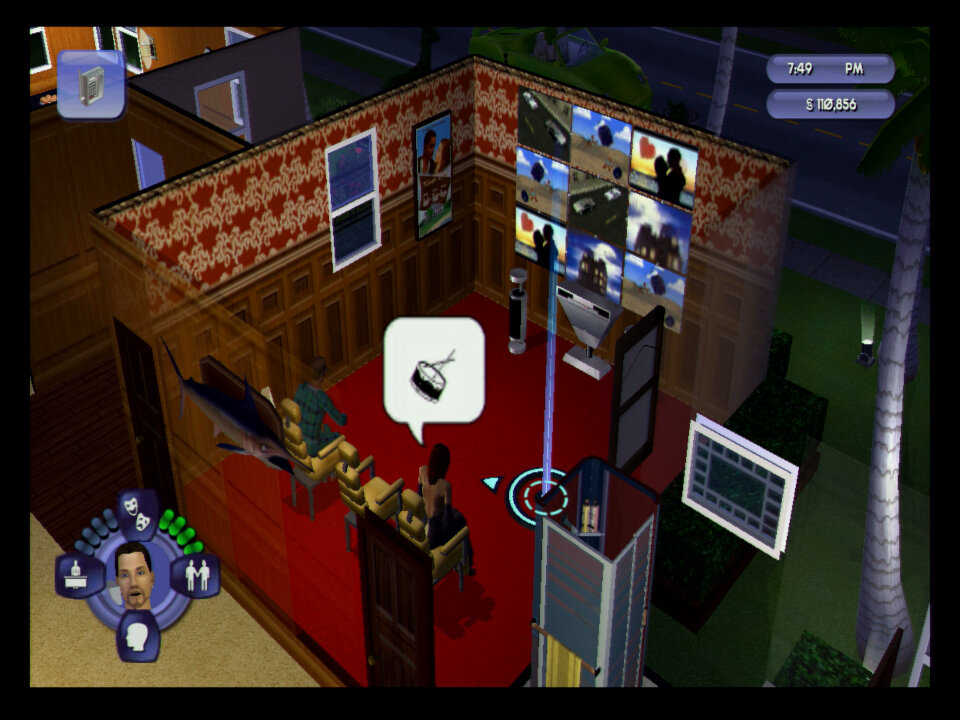
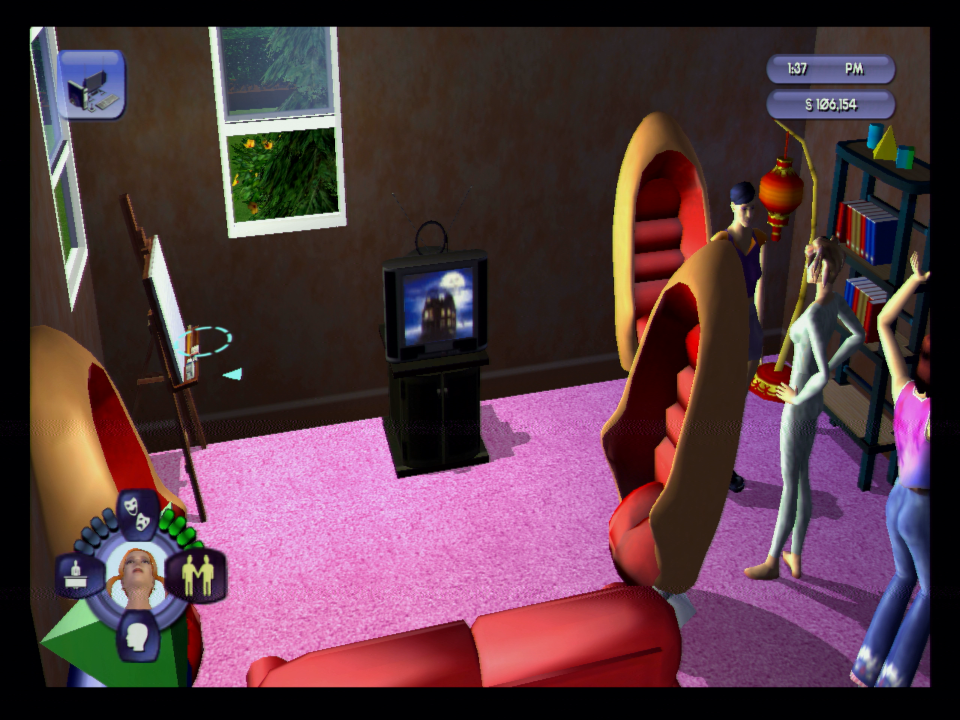
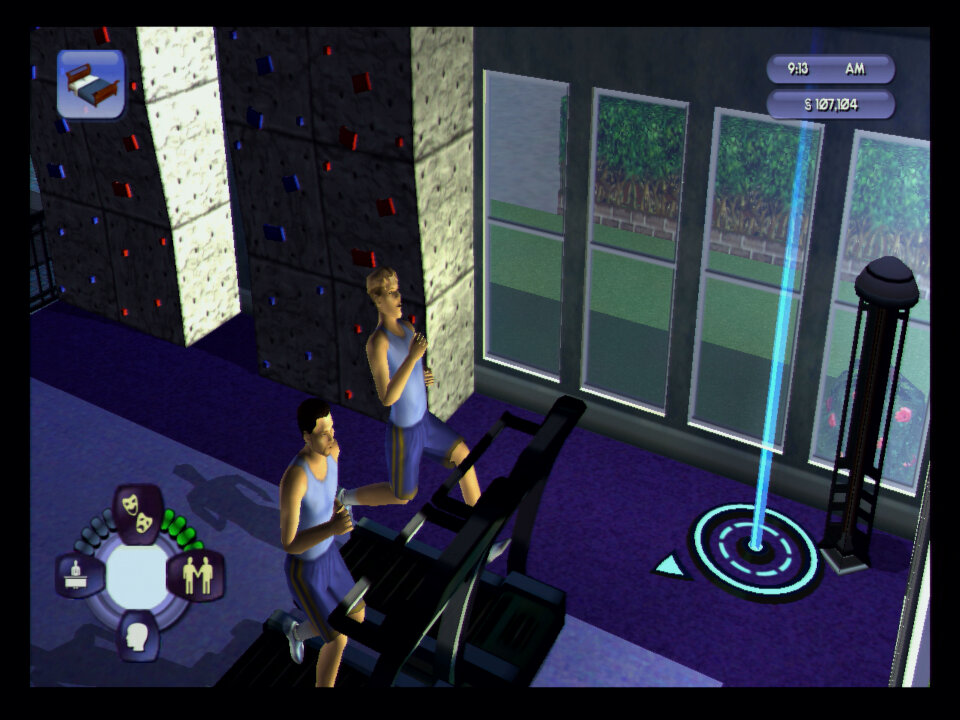
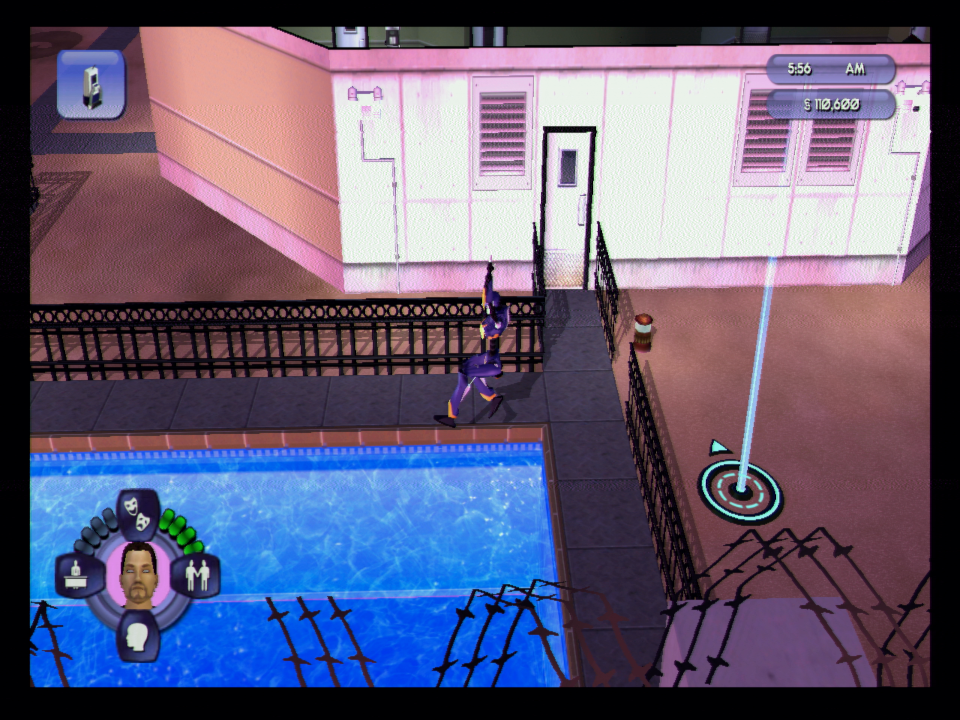
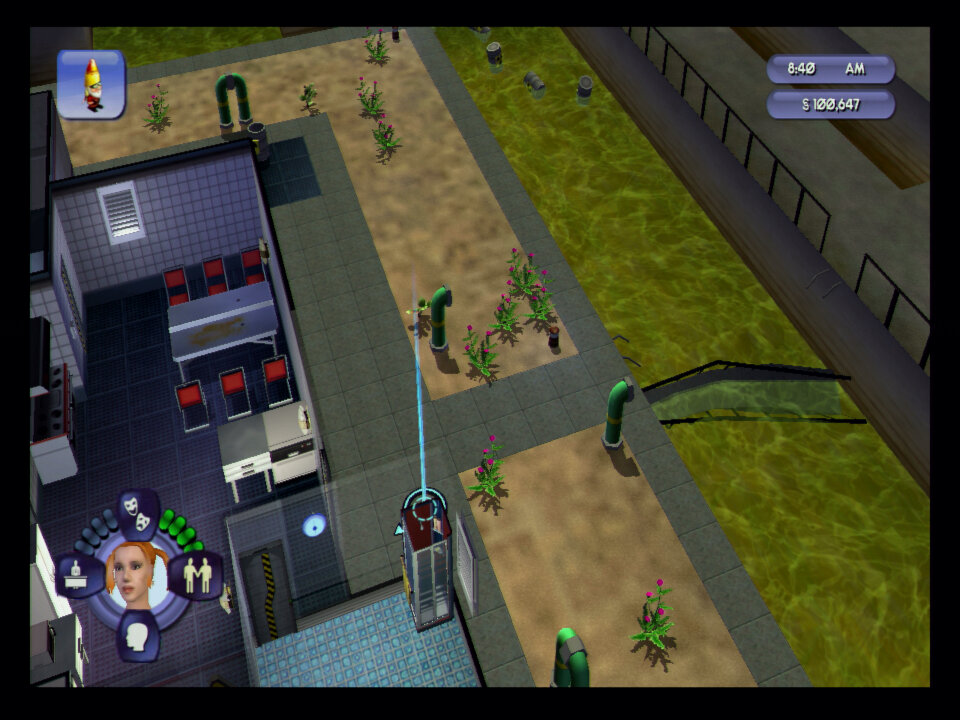
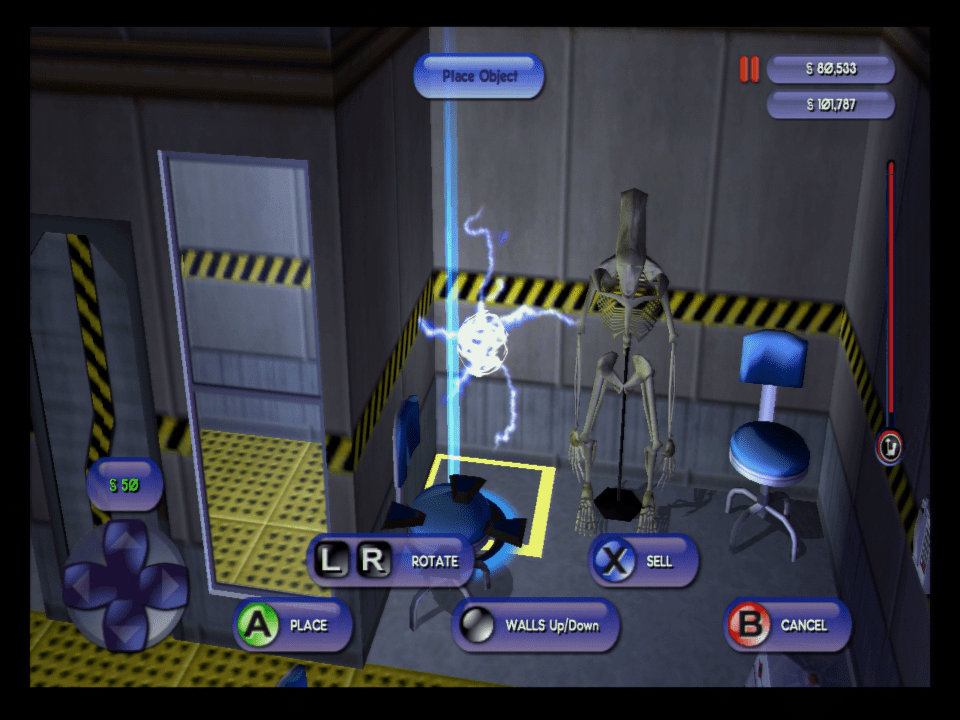
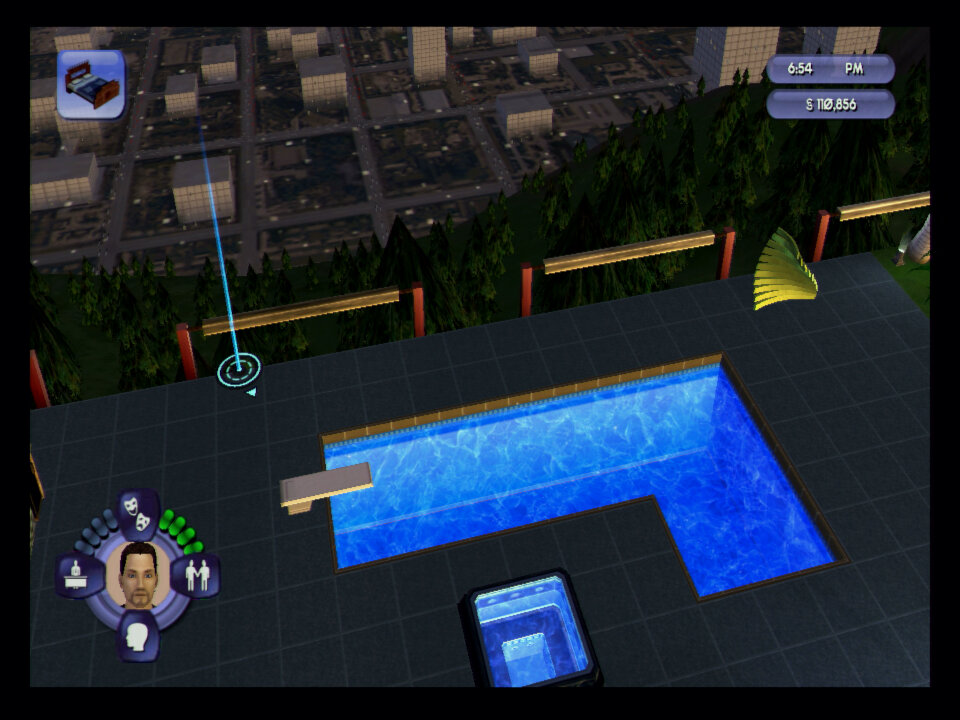
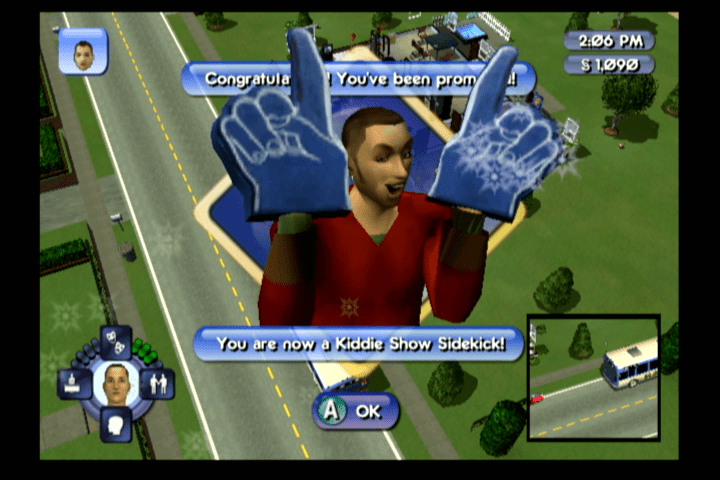
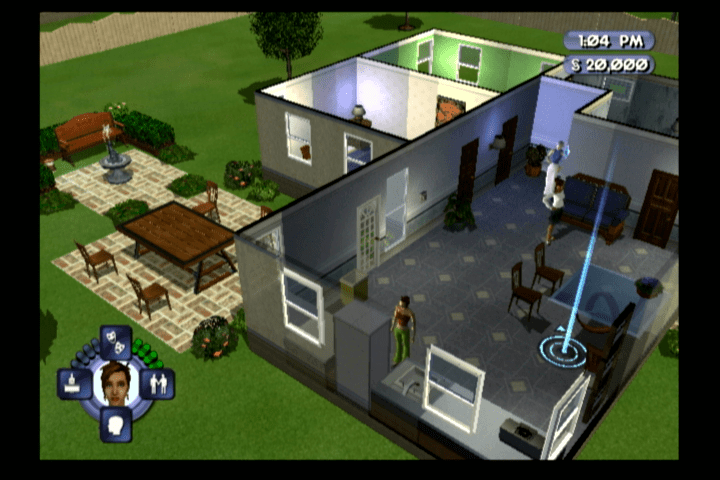
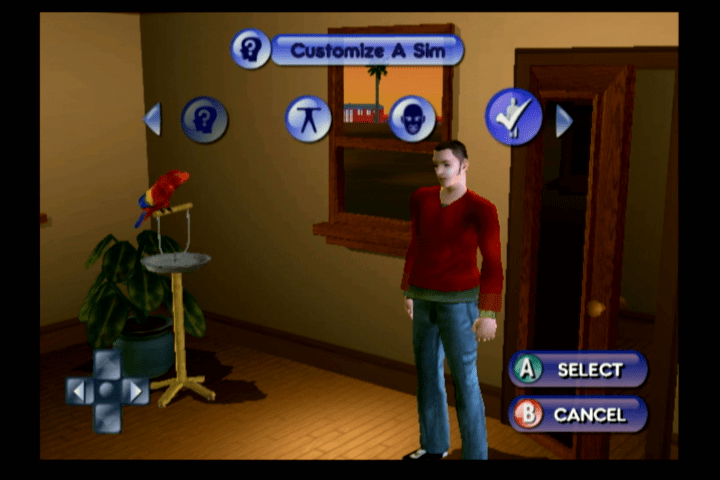
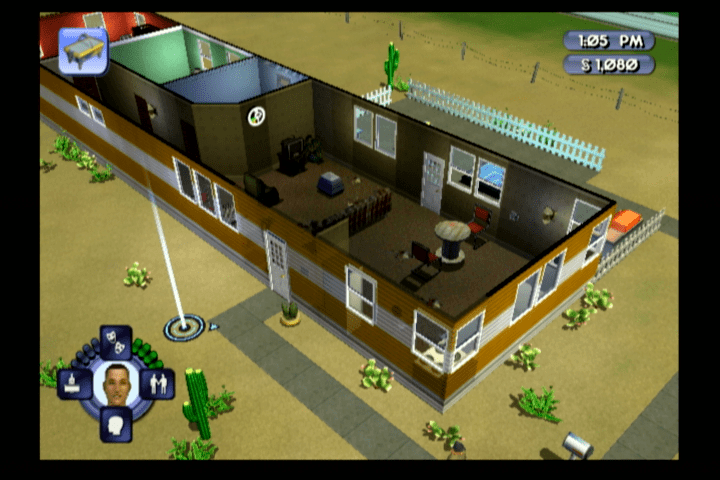
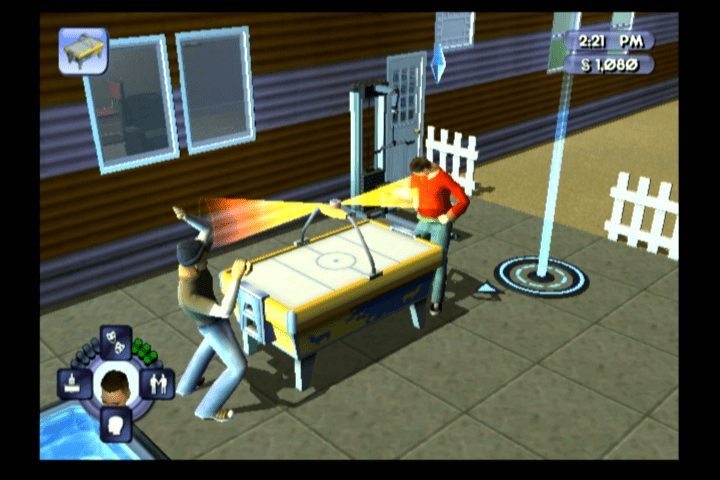
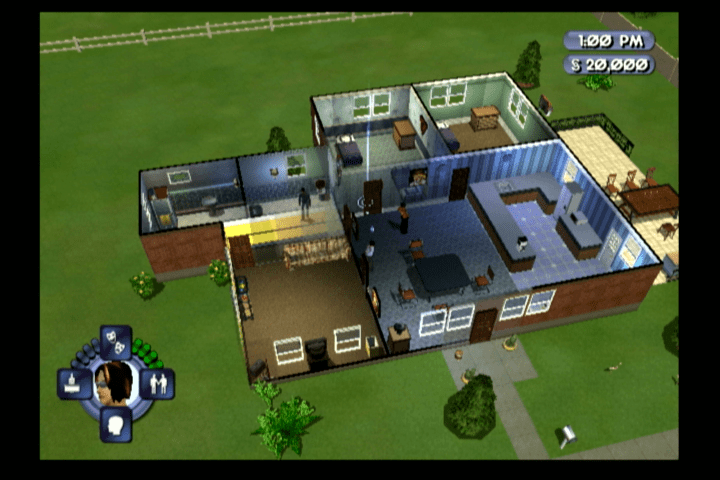
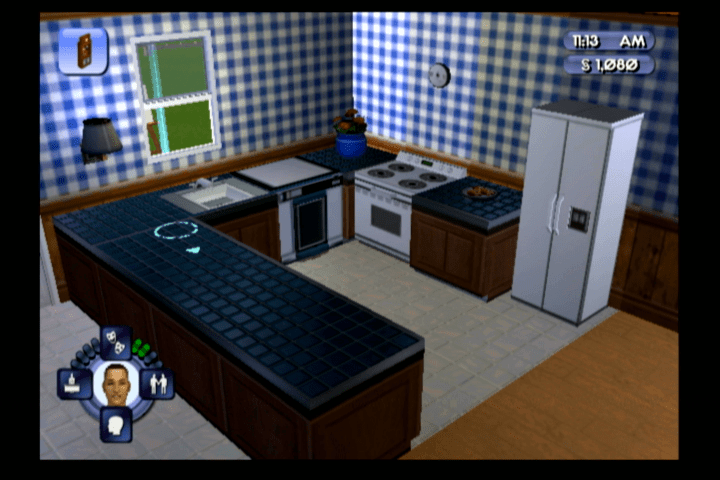
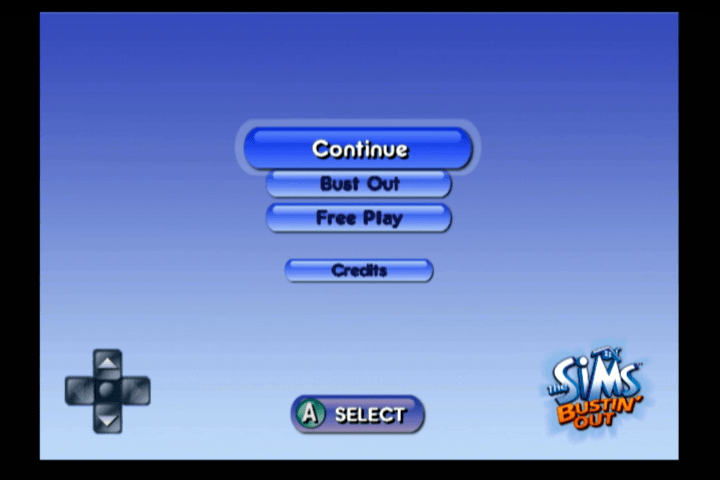
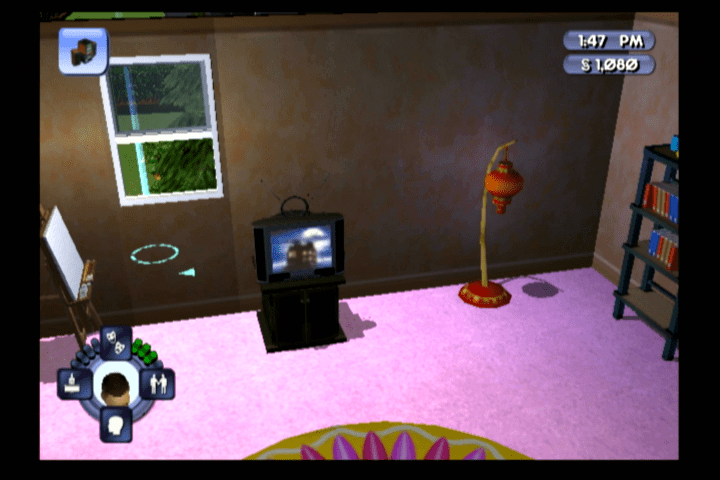
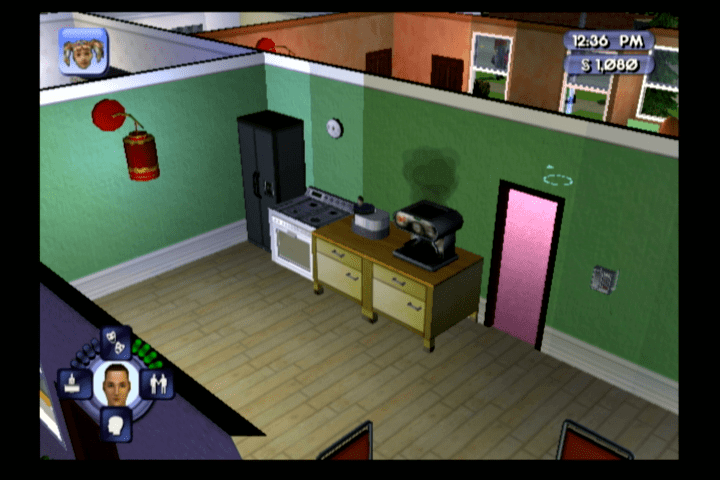

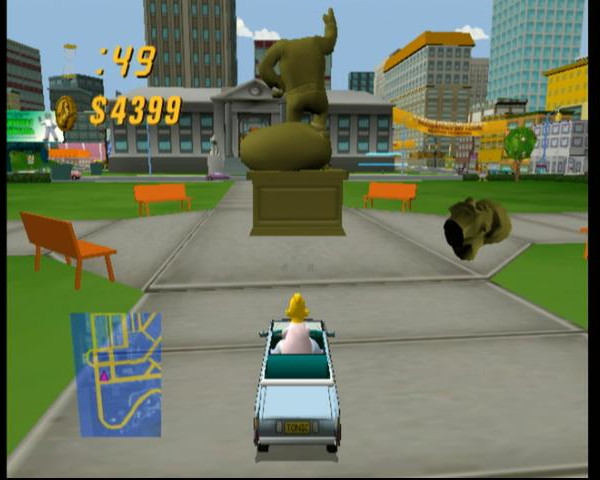


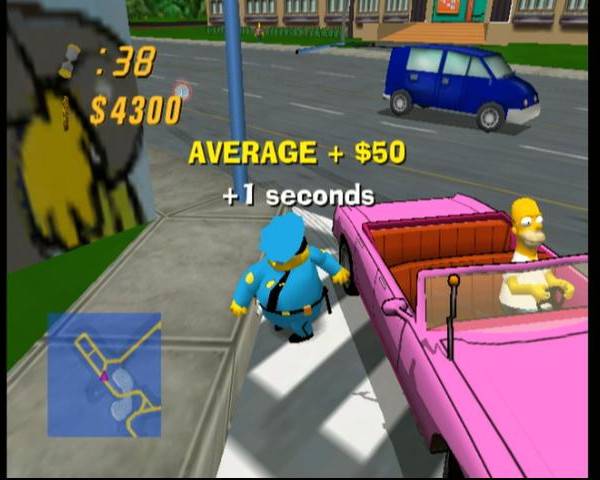
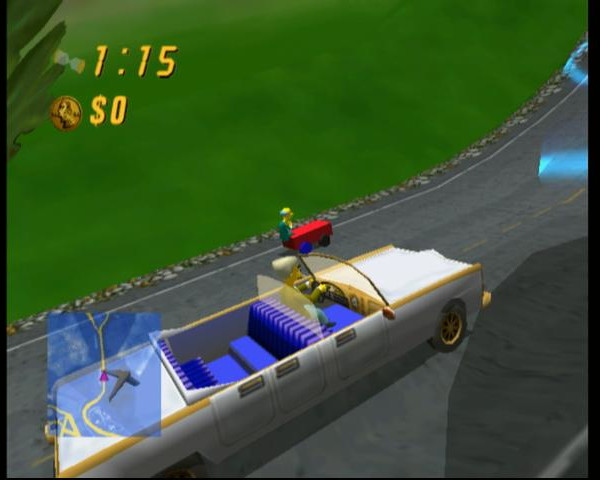
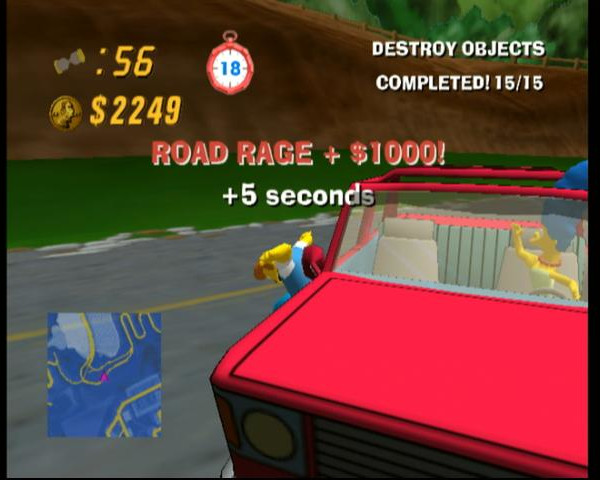
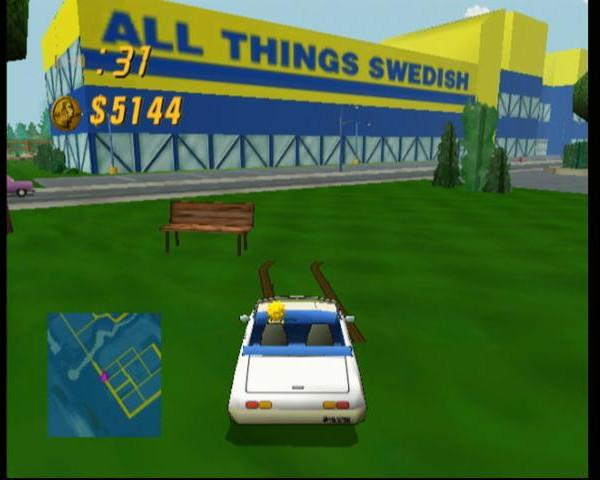
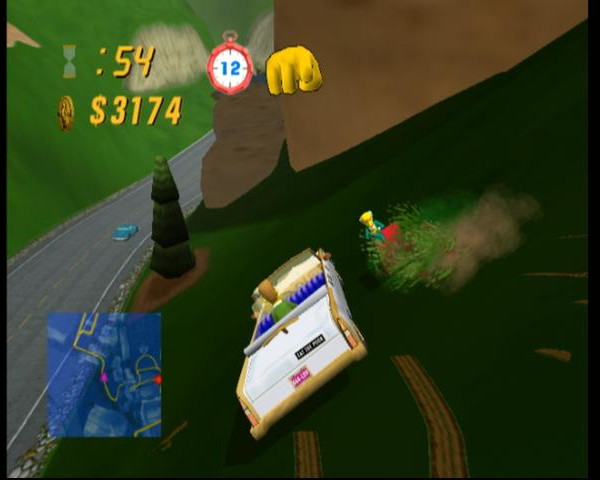

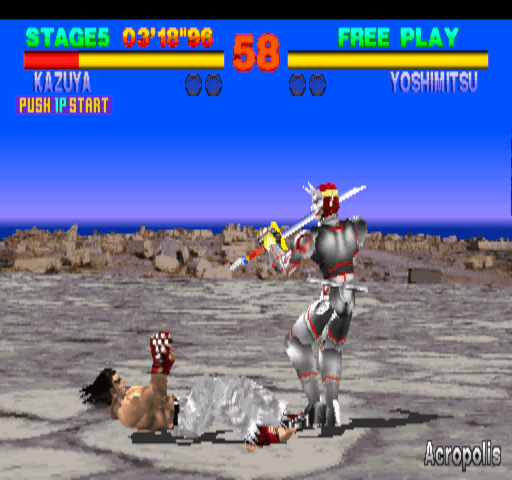
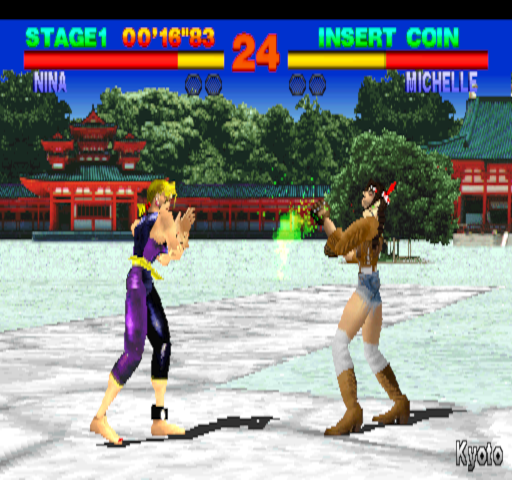
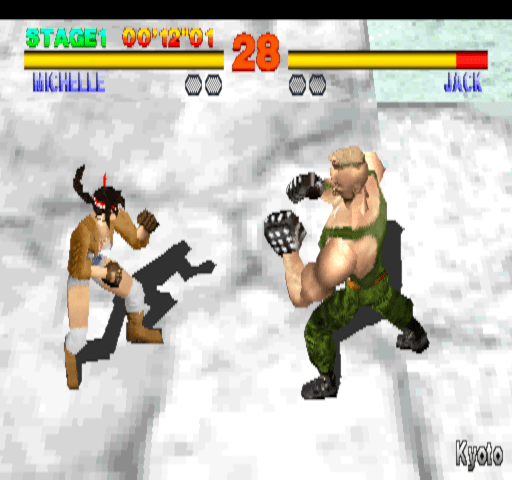
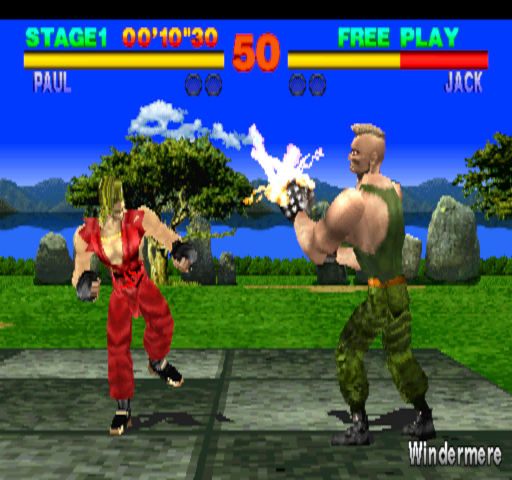
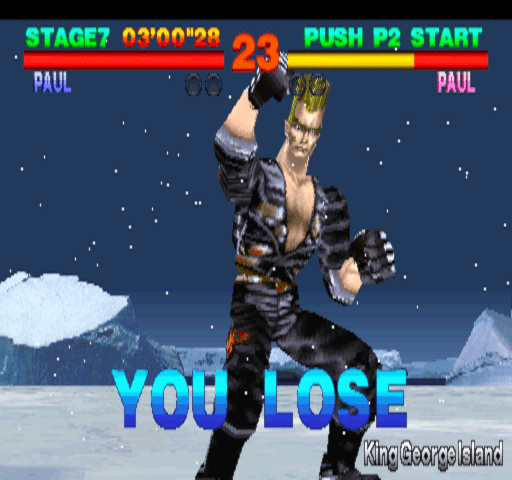
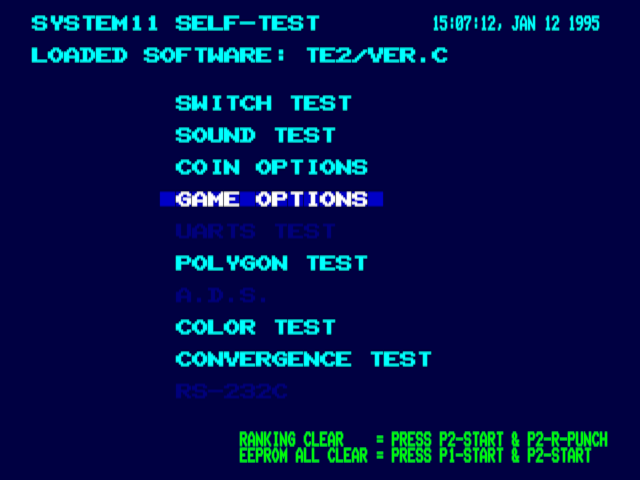
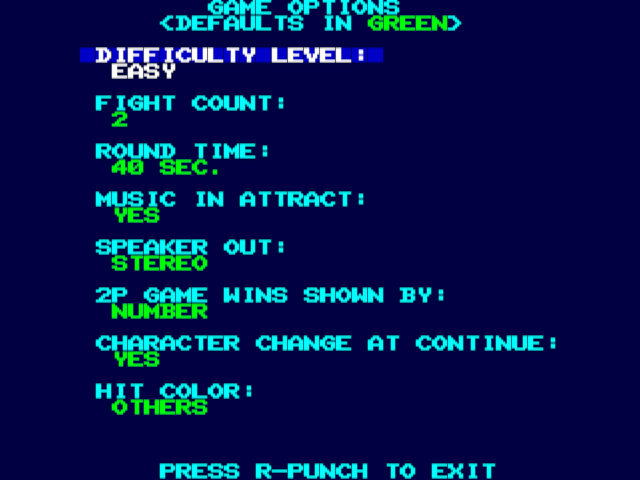
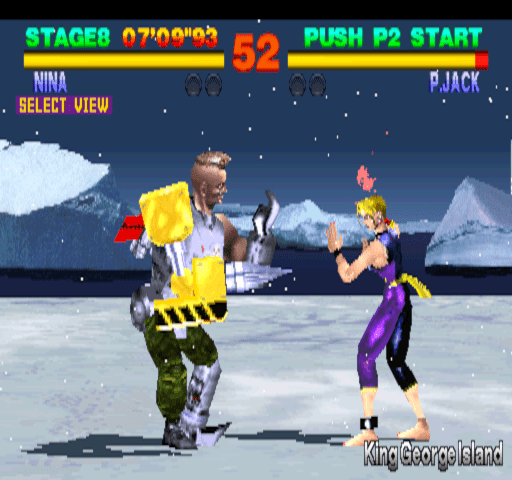
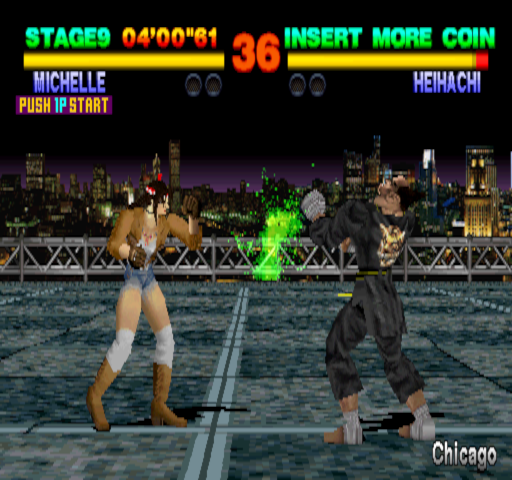
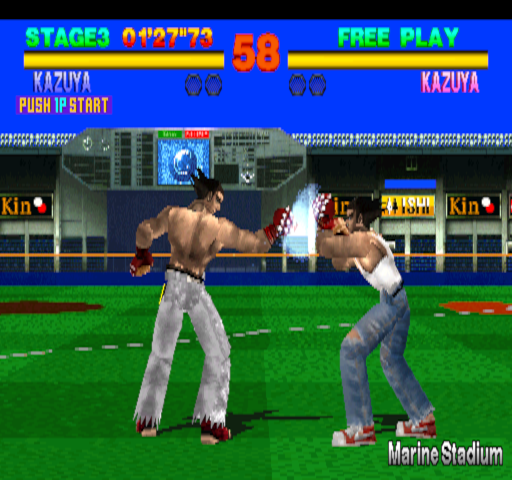
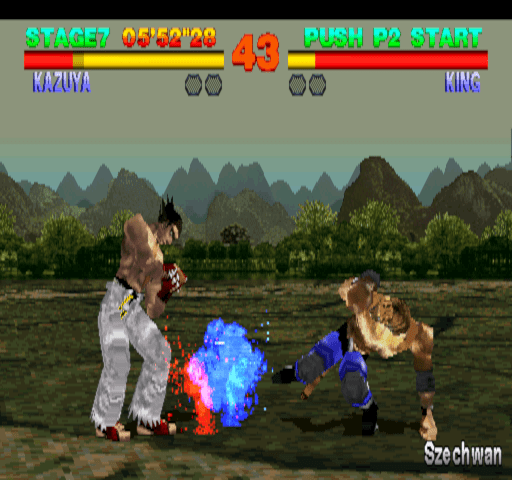
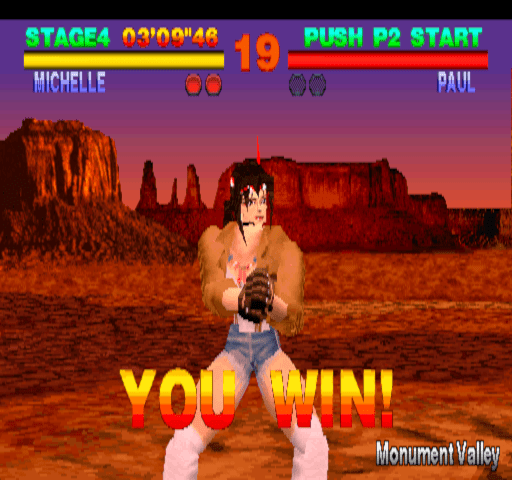
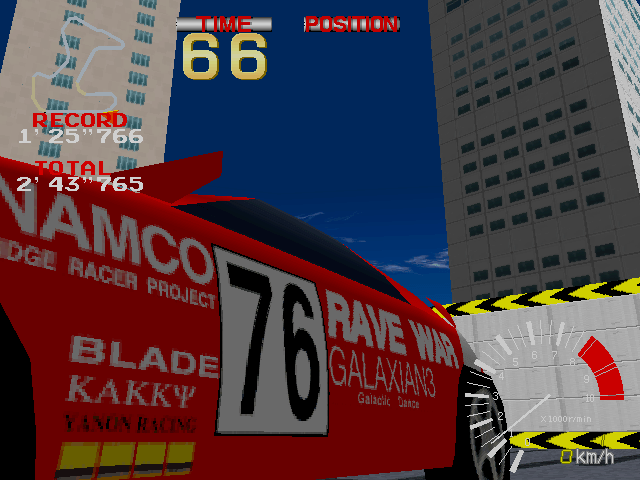

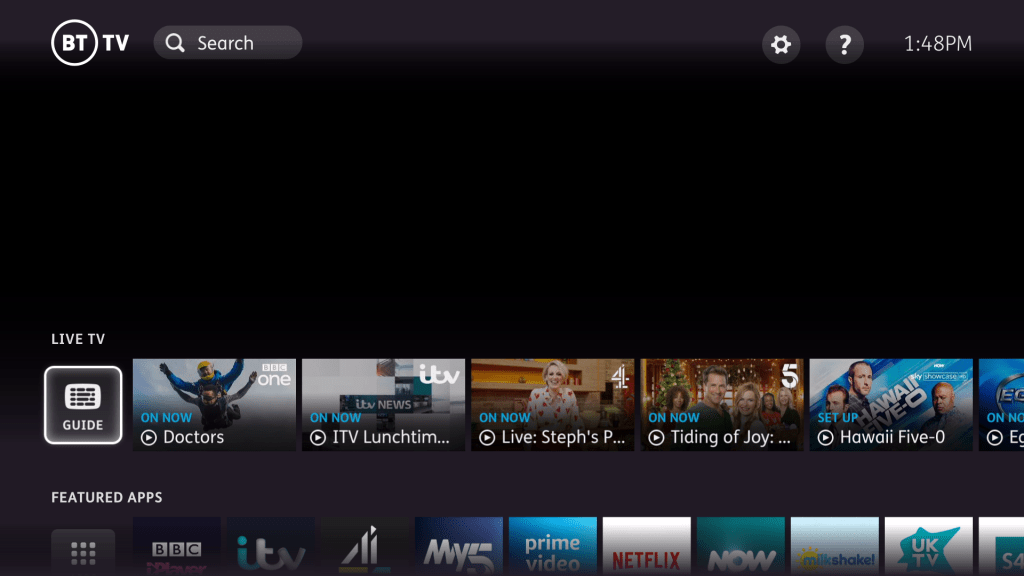

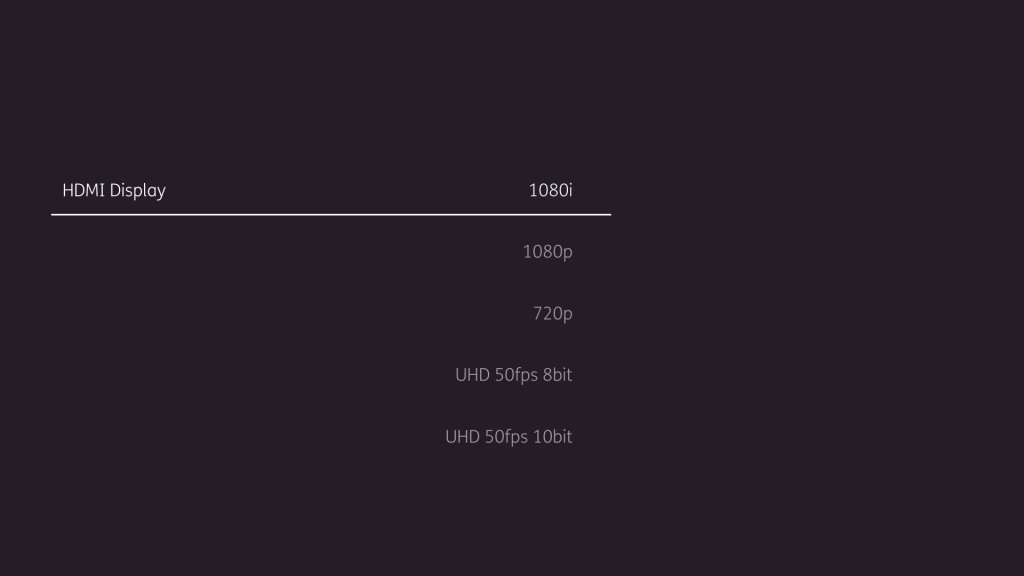

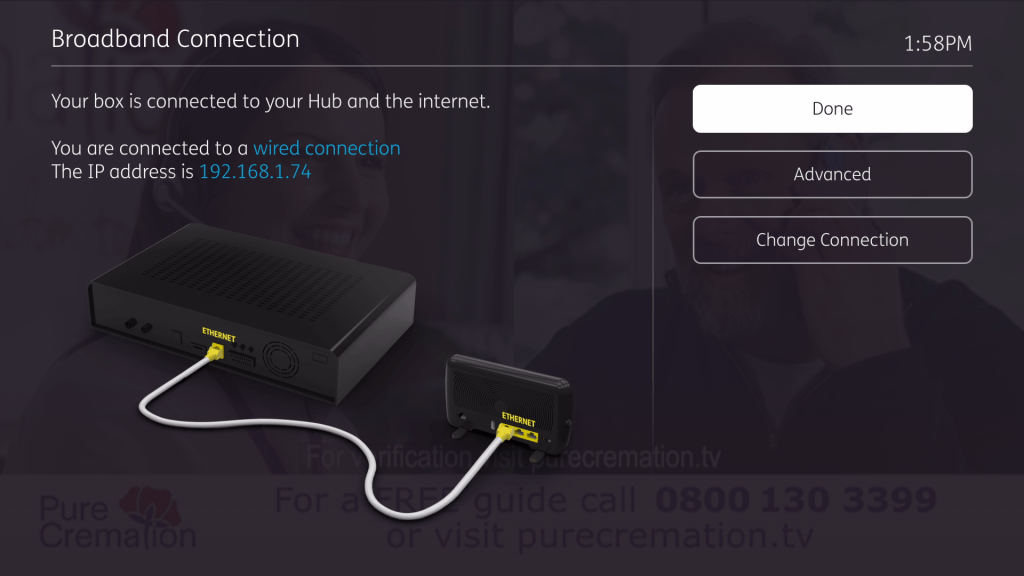

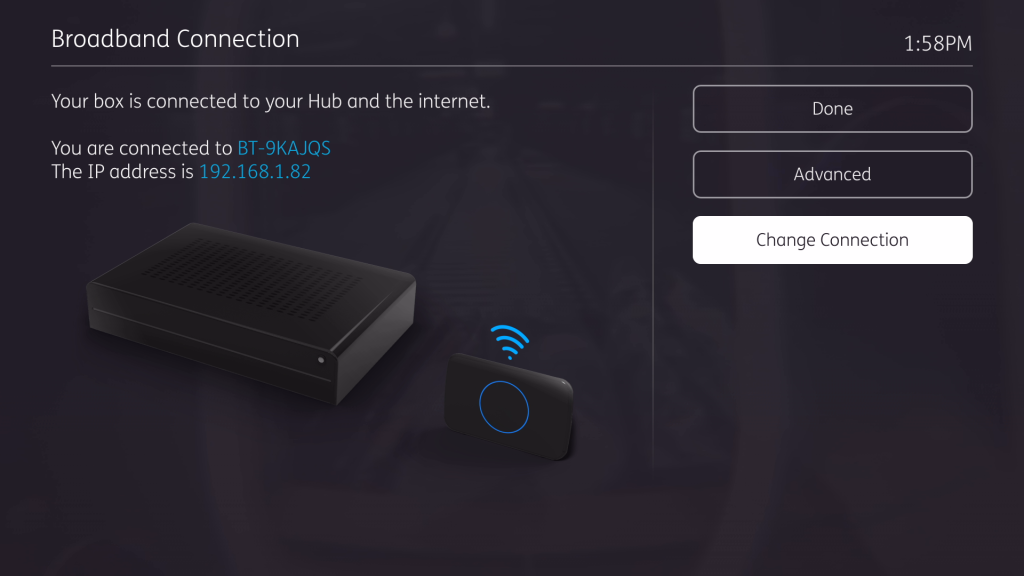
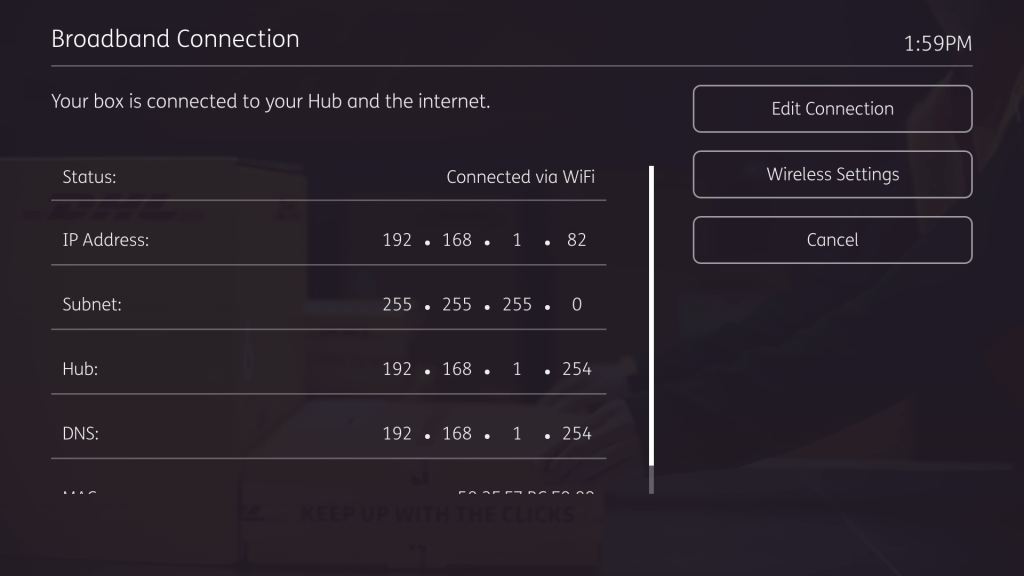
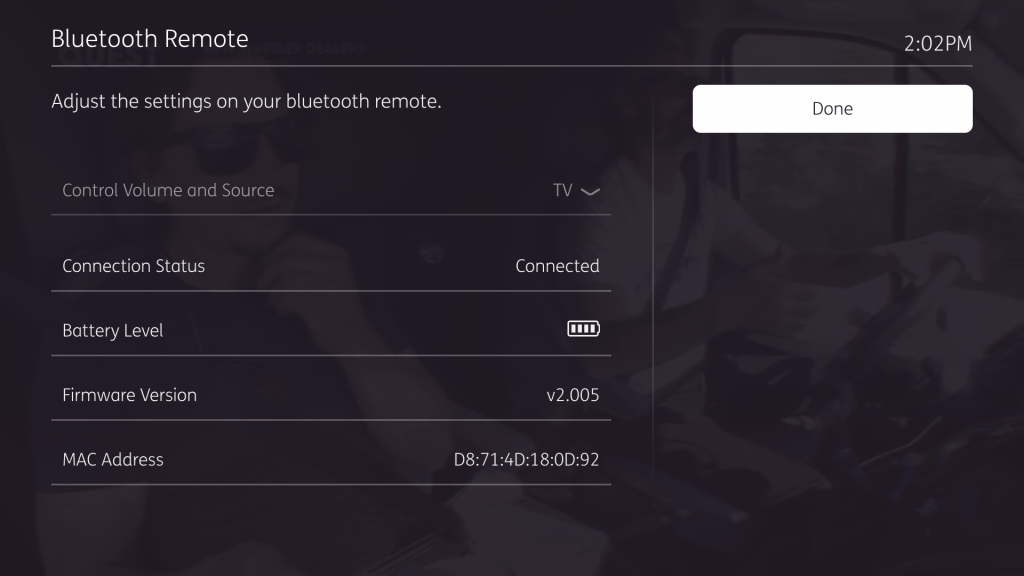
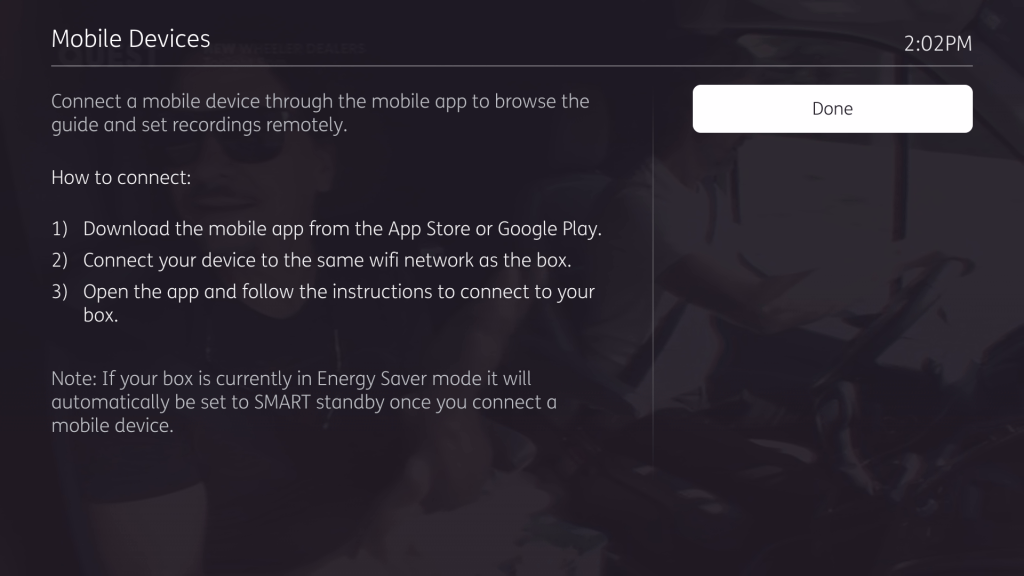
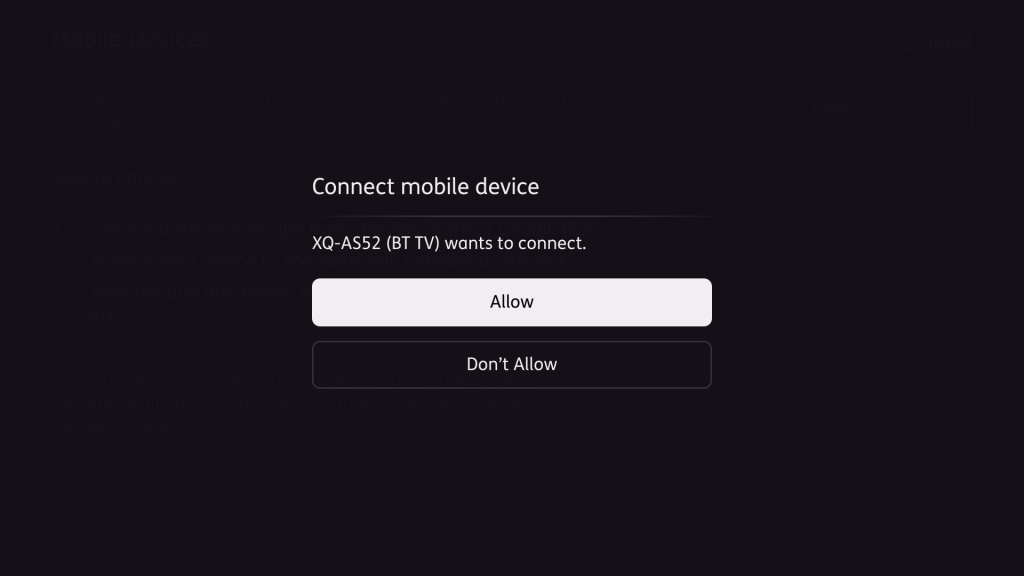

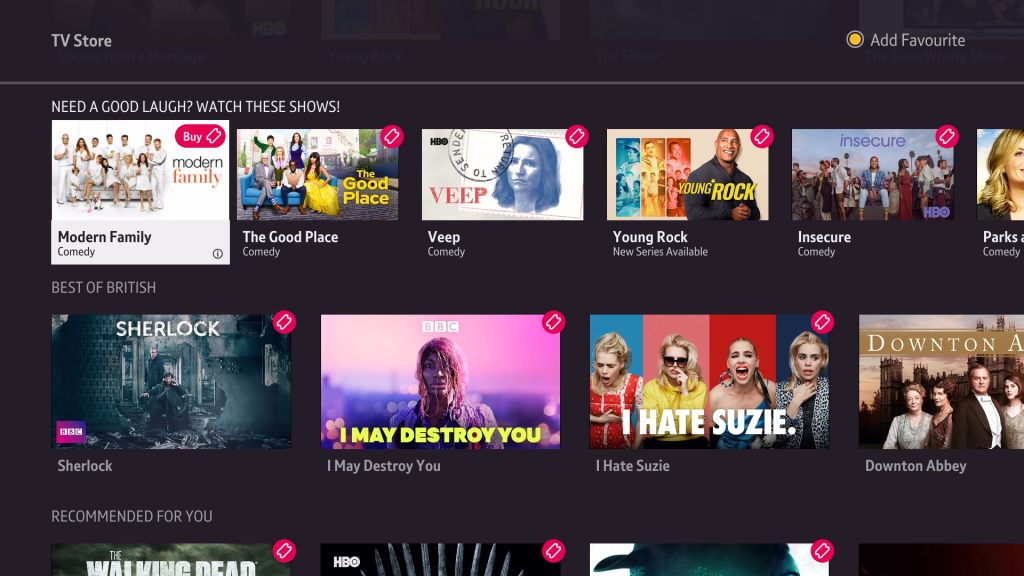
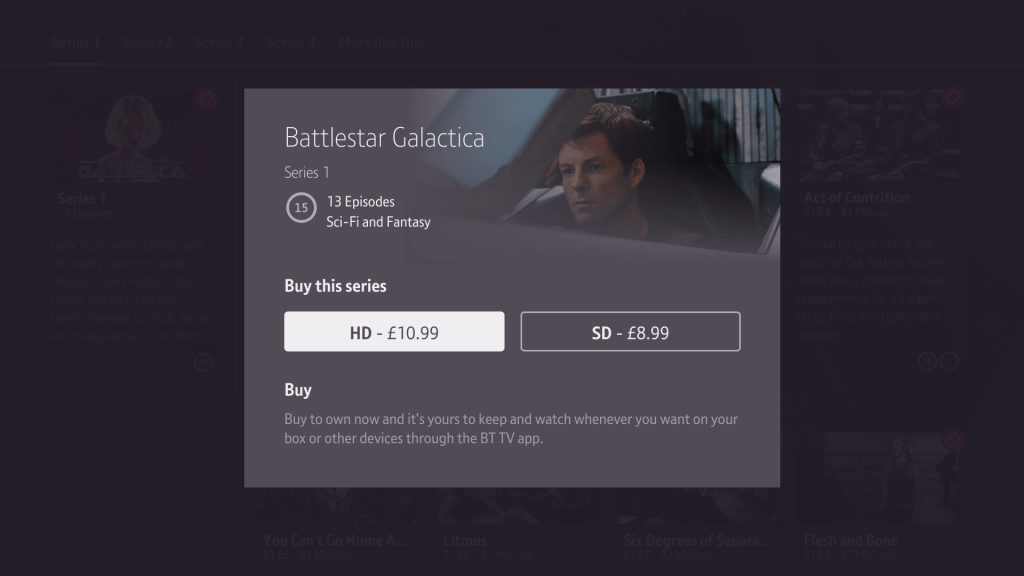
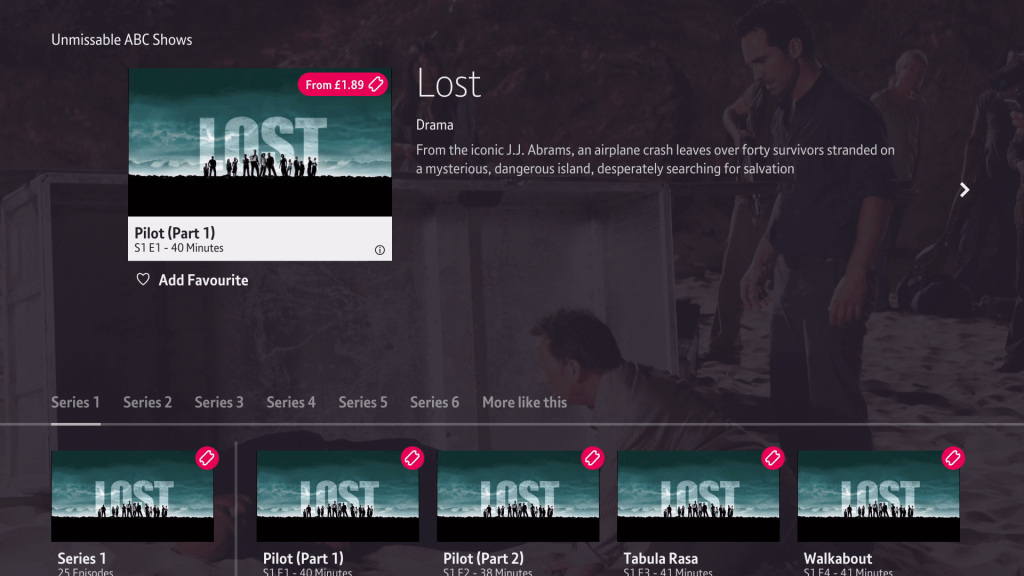
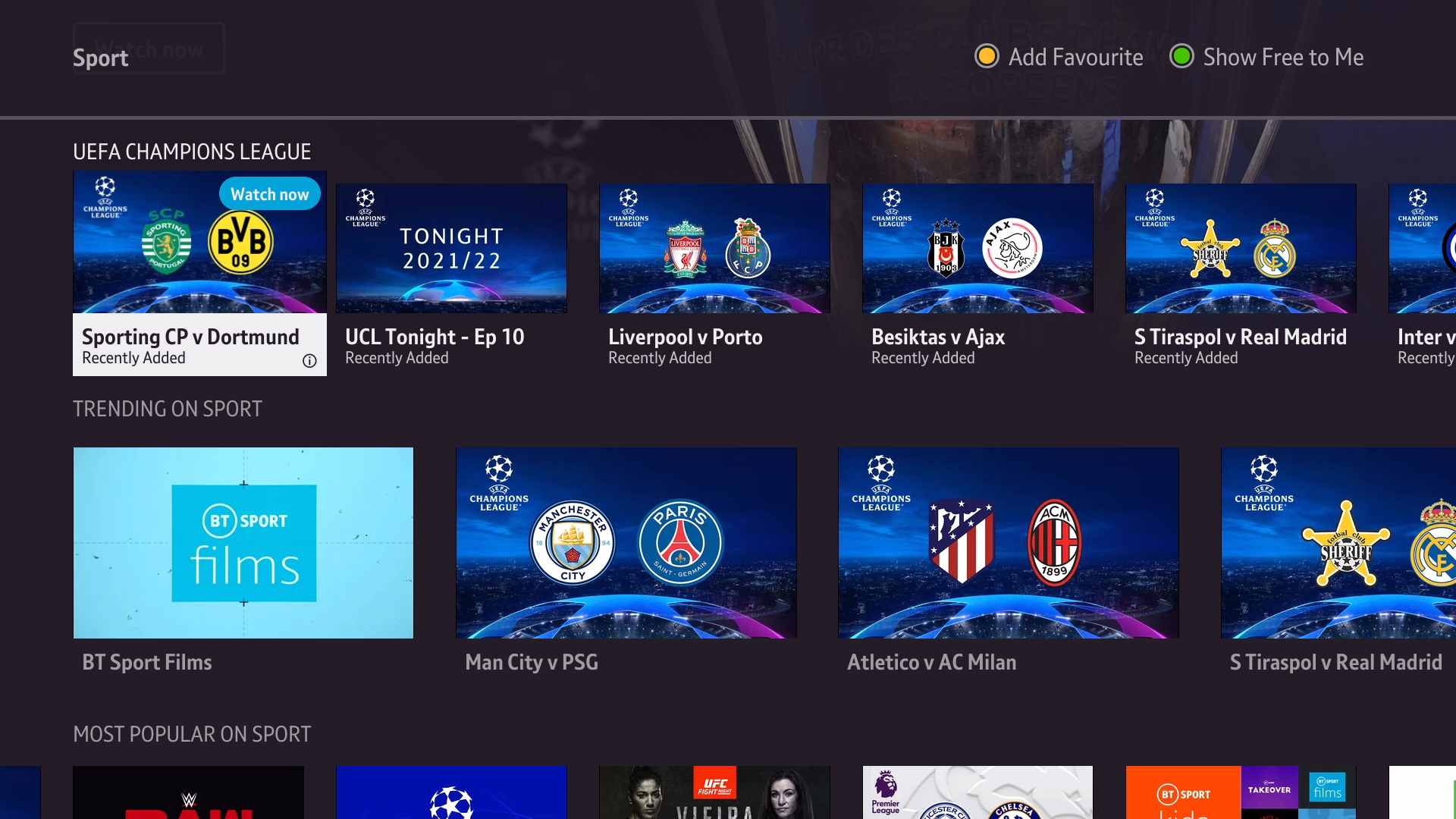
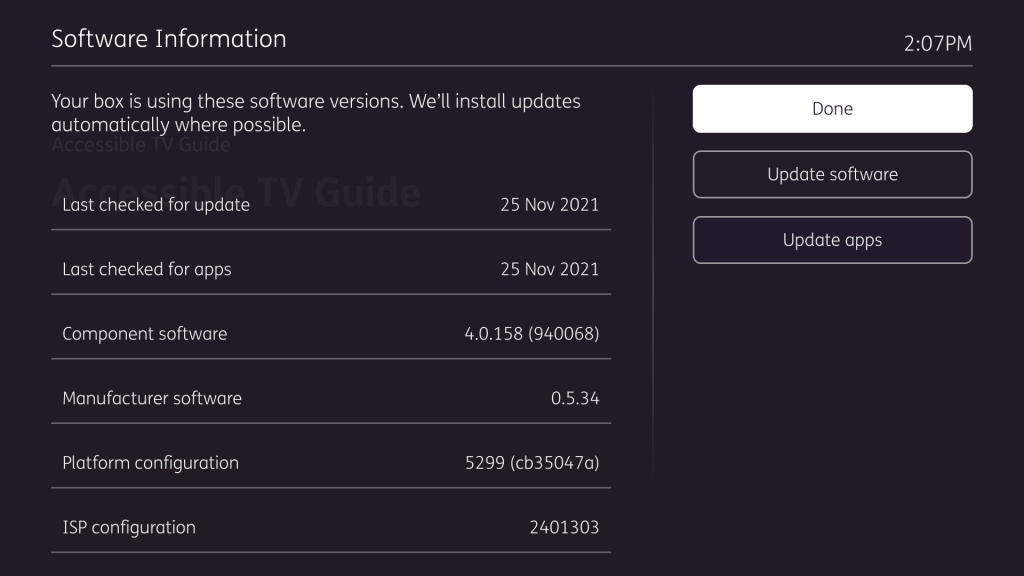
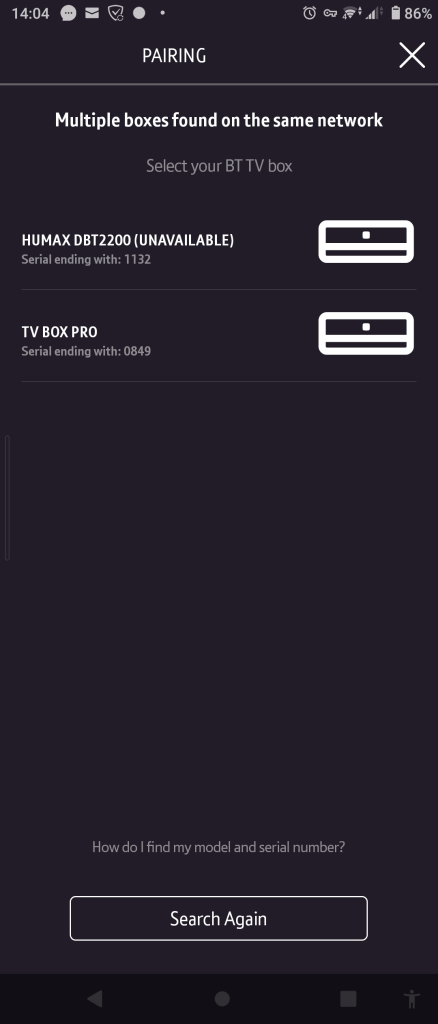
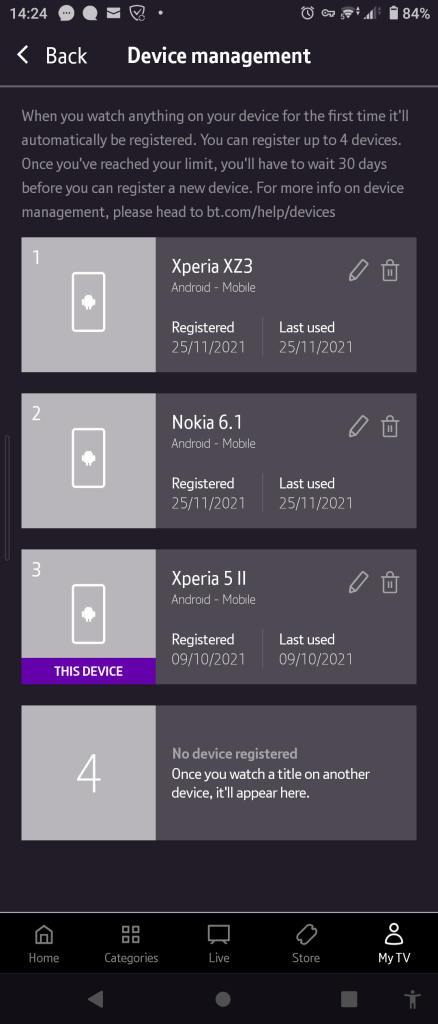
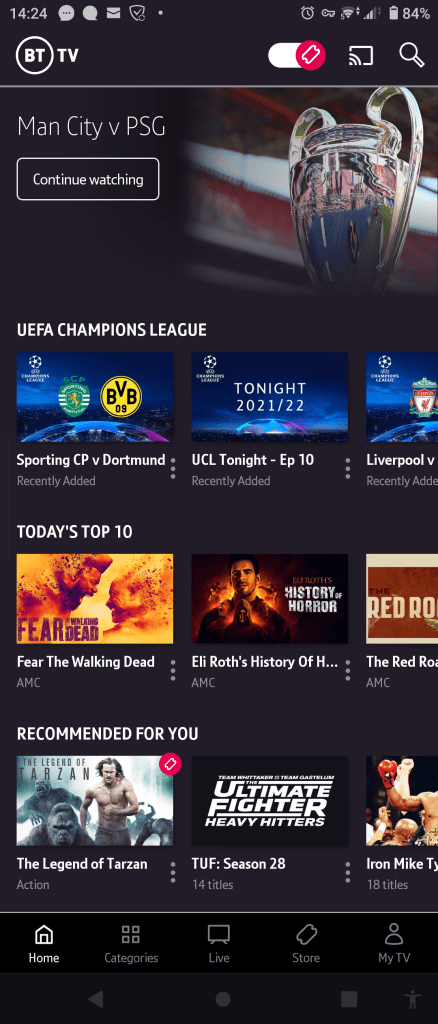
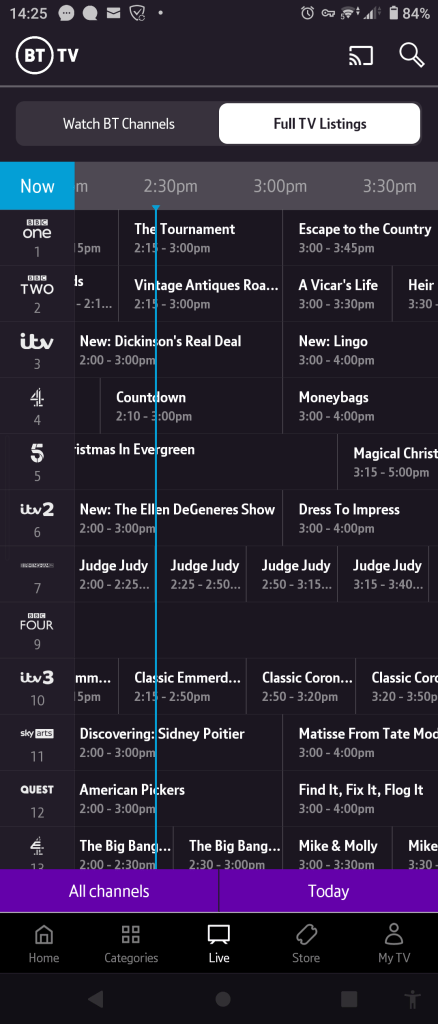
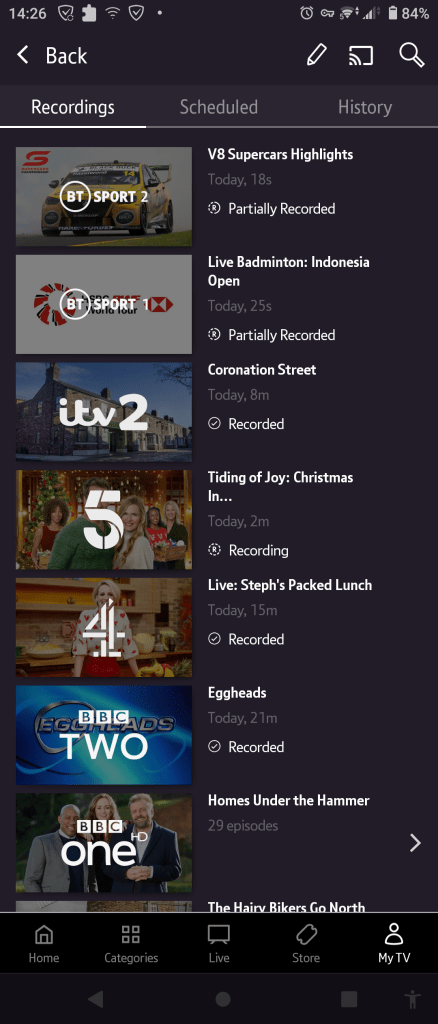
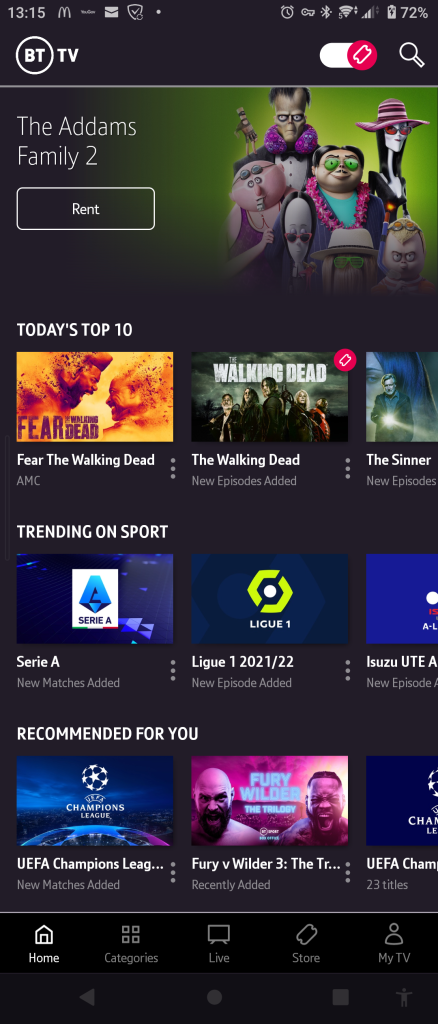


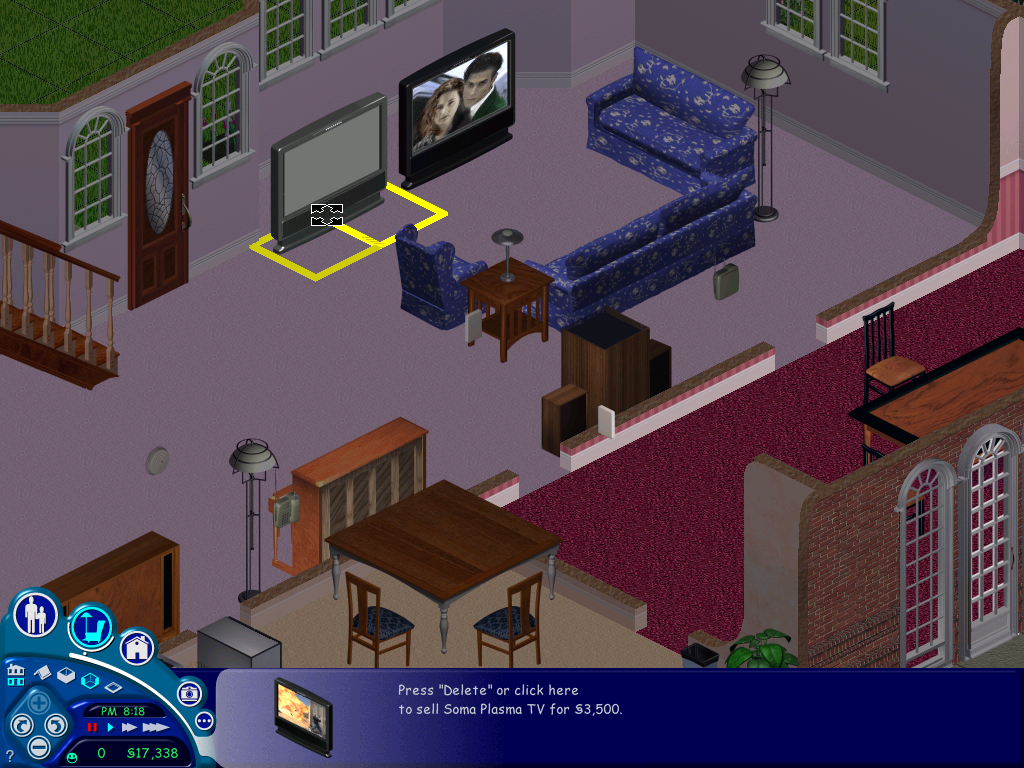


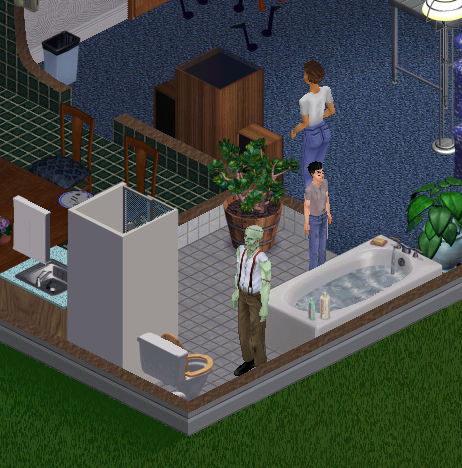


 Drew1440: Blog