Adding a Hard Drive to a Dell Inspiron 5485

Introduction

This laptop comes with an onboard M2 SATA drive that has a 256GB capacity, with the provision of adding a SATA hard disk internally. Whilst you could add another SSD, I decided to reuse an old HDD I had around for some extra storage.

To prepare, make sure you have the hard disk ready that you would like to install and the SATA cable. The thickness of the SATA drive is important, as you will see later I made the mistake of installing a thicker HDD than the bay is designed for. I would also check and make sure the SATA cable is already shipped inside your laptop, since I assumed I had to purchase one separately.

Opening Up

This was a bit tricky, you have to unscrew the screws, the top three being fastened into place and are non-removable. What this means is that you unscrew then as normal but they do not come out of the case, rather they stay to prevent them from falling out.

Once the screws have been removed or loosened, you will need to pry around the edges of the laptop with either a credit or debit card or a thin plastic tip to loosen it. You may need to pry to get it to loosen, be gentle and apply even gradual pressure.

Removing the caddy

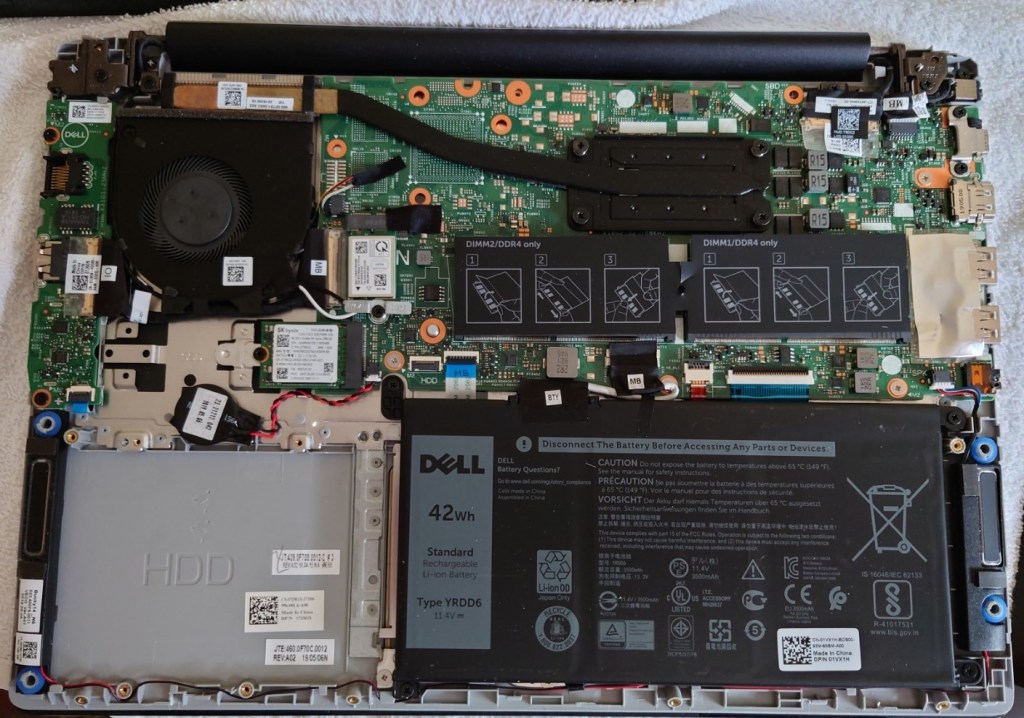
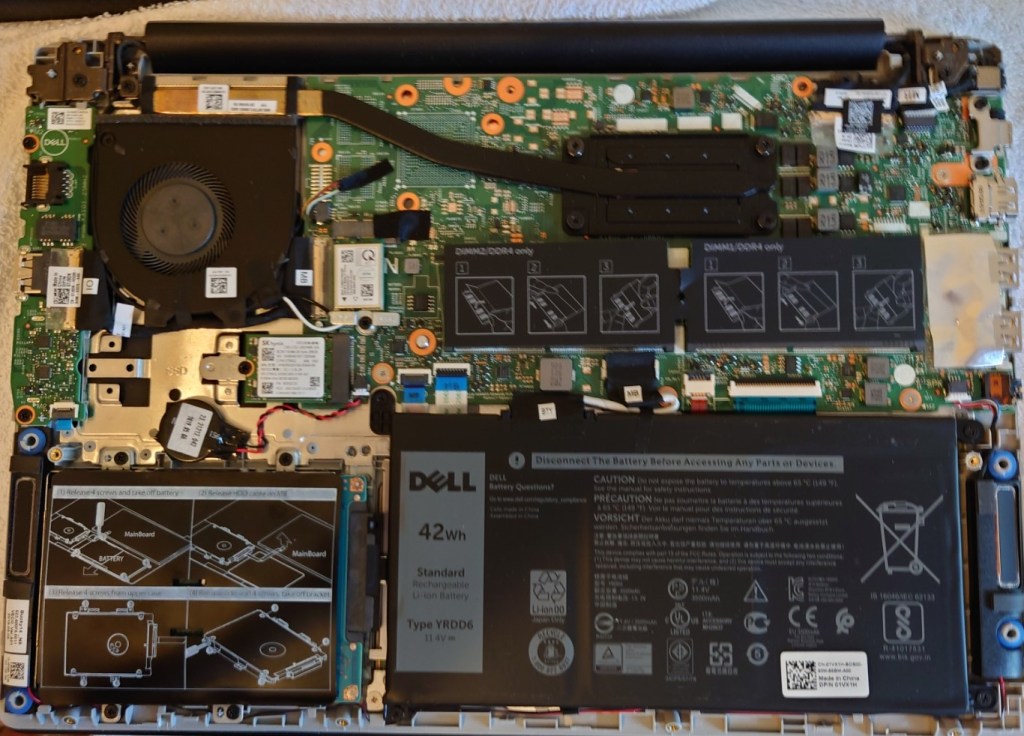
Once opened you will locate the area where the HHD will be installed, alongside the battery that will need to be removed and the socket where the SATA cable will connect to

Removing the battery

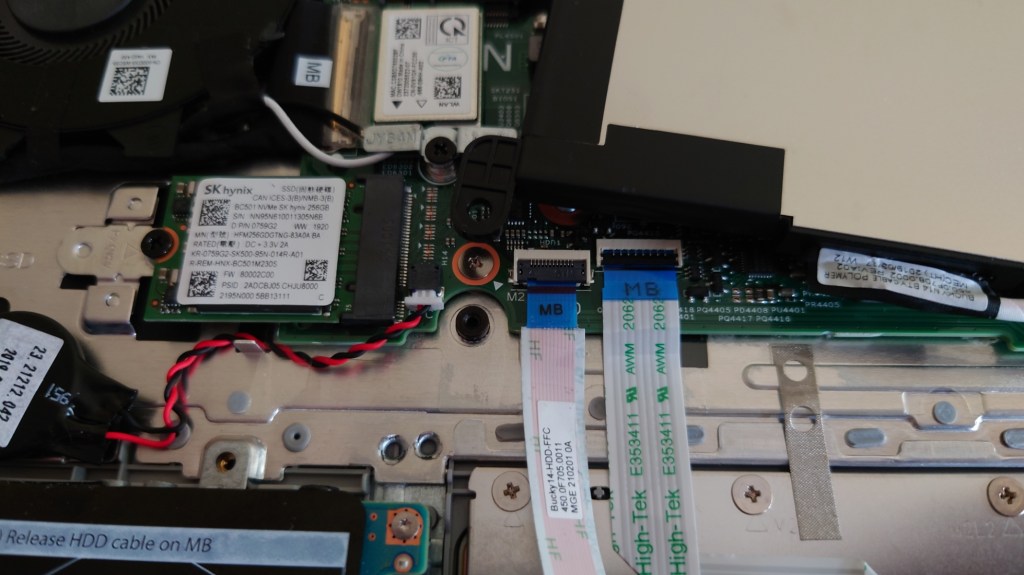
The SATA cable will need to route under the internal battery, so we have to temporary remove it, or in my case move it so we can access the area underneath There enough space where you can just place the battery on top of the motherboard whilst you install the SATA cable.

Adding the Hard Drive

Dell have provided a hard disk caddy where the drive can be installed, simply unscrew it (for screws) to take it out.

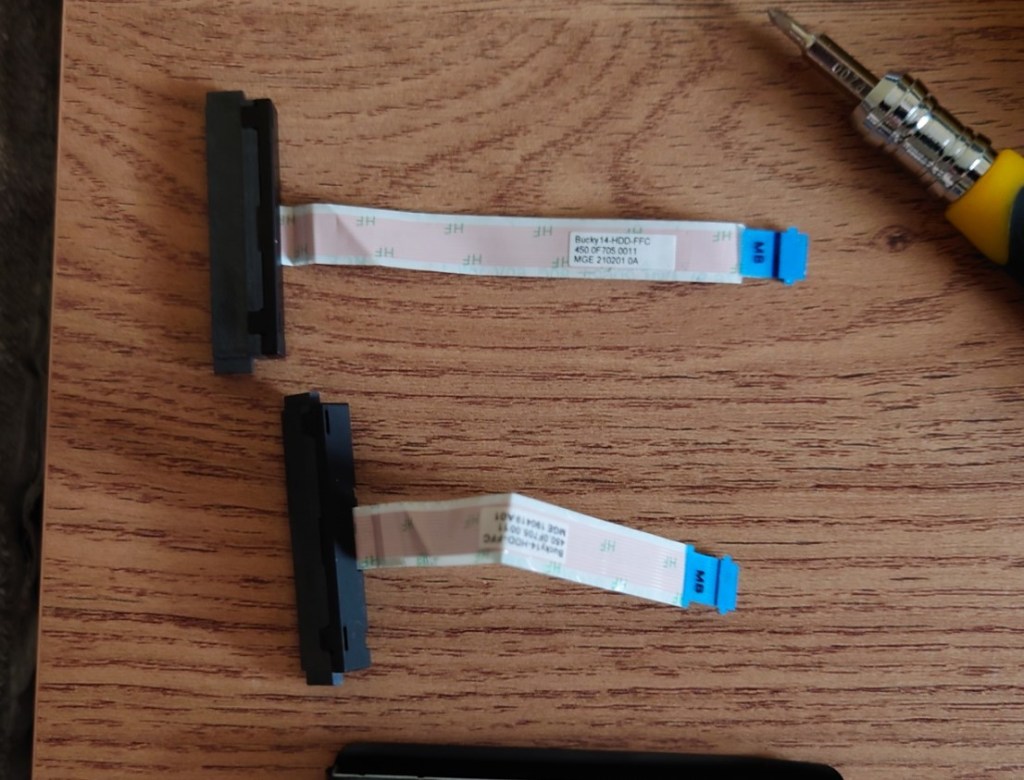
Unfortunately at this point is where I made my first mistake, since I assumed Dell did not provided you with the SATA cable and had to be purchased separated. Imagine my surprise when I took out the HDD enclosure and saw the SATA cable nestled between the plastic cover, meaning I now have two SATA cables. Well that’s £18 wasted…

Then again at least I have one spare incase anything was to happen to it. I’m pretty sure the Dell service manual mentioned you had to buy the came separately, or maybe that only applies to certain markets?

Now it is time to screw in the HDD, which is where I ran into the second issue. I noticed the SATA cable wouldn’t reach, At first I thought I had installed the HDD the wrong way round since the connector wasn’t aligning up but from looking at the hole underneath the HDD bay it seemed to fit. Upon closer inspection it seemed the hard drive I was trying to install was too tall for the enclosure and I had installed it upside down. When the hard drive is too THICC for the laptop…

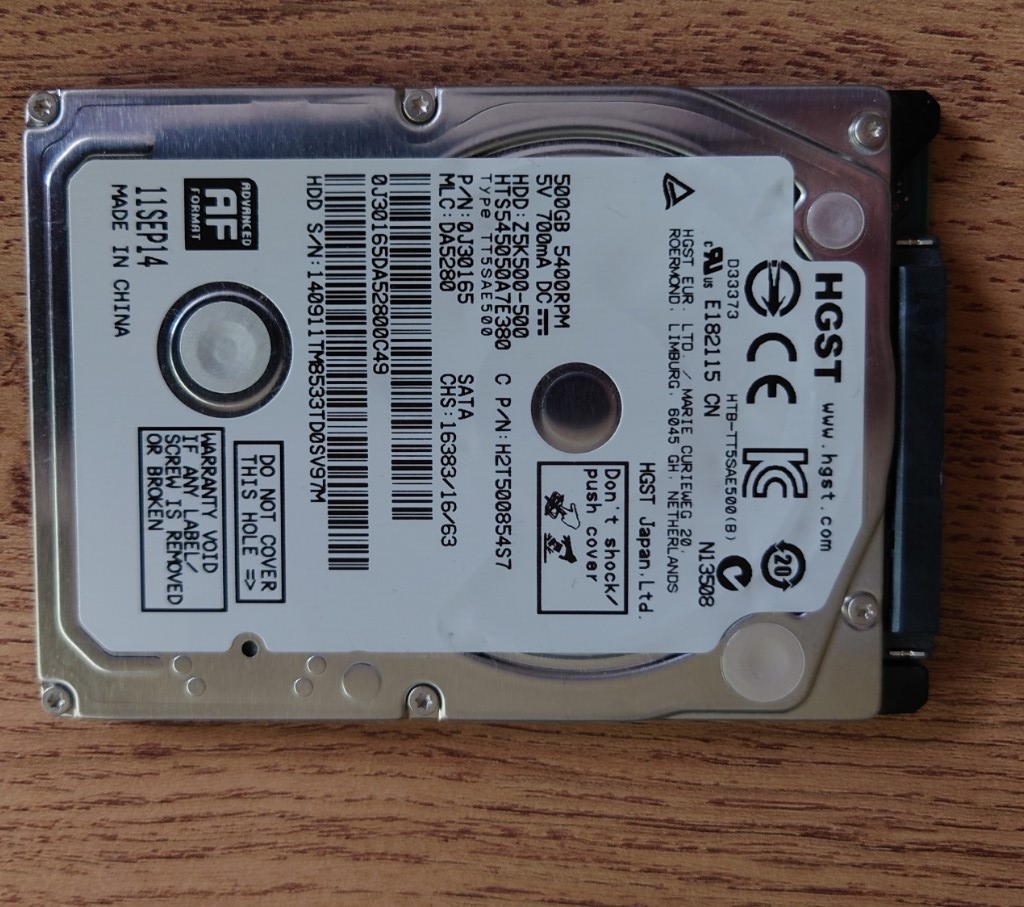
Thankfully I had another hard drive lying around, a HGST that was pulled from my old PS4 when I upgraded its hard disk. This hard drive was thin enough that it would fit inside the bay.

Reassembling

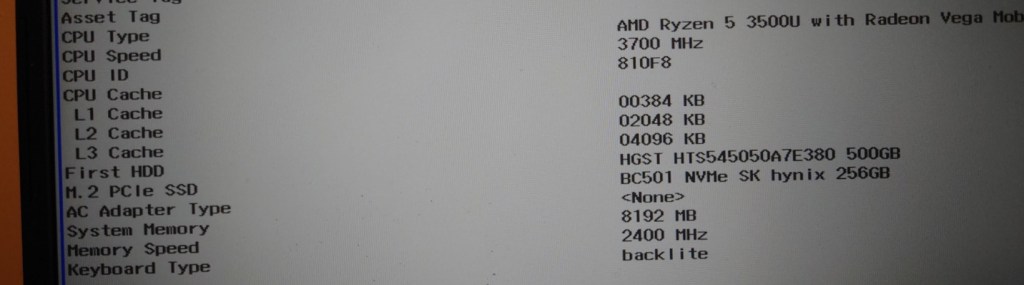
A quick power on test before reassembly to ensure I didn’t fuck anything up. The laptop booted and the HDD was recognised in its BIOS EFI (Still trying to get used to that)

The Simpsons: Virtual Springfield

A look at Springfield in 1997
Simpsons Virtual Springfield

Released for both Mac and PC in 1997, Virtual Springfield puts you directly into Springfield where you can freely explore the Simpsons town, Springfield. Whilst promoted as being a 3D game, it’s actually 2D with a 3D-based perspective, using an engine built by Vortex Media Arts. This isn’t the first Simpsons game released, with previous titles being released on the NES and the Sega MegaDrive, and it wouldn’t be the last either.

Simpsons Virtual Springfield
Launcher where you can start the game

This game was an interesting look at Springfield since in the show, whilst there was never any continuity of the town itself, buildings would come and go and the layout of the town never remained consistent, not helping was the change of animation studio from the first few seasons. Still, a lot of references to the early seasons of the show are present.

Simpsons Virtual Springfield
Marge cooking the cat

The main object of the game is to collect all 74 of collector cards, which are hidden across 17 different locations. Some locations are locked and can be unlocked by collecting specific items. The game’s HUD is designed around the player wearing a VR headset and using it to navigate Springfield.
Simpsons Virtual Springfield

The game runs slowly on PCem when running it directly from the CD-ROM (being played from an external Blu-ray drive) so it’s usually based to create an iso image of the game, then mounting it into PCem. (Update: It seems that I had set the CD-ROM speed in PCem to 4x, which wasn’t fast enough for the game, since increasing it to 16x the stuttering issues have reduced, but you still get the odd delay, defiantly dump to BIN/CUE when running in PCem)

Simpsons Virtual Springfield

The game is navigated using a point-and-click approach, moving your mouse cursor to a specific area lets you either select or interact with an object or if it turns to an arrow, lets you move in that direction. If the game is left idle, random animations are played out.

Simpsons Virtual Springfield
Milhouse had a growth spurt

Some buildings (Like the Simpsons house) can be entered some have multiple rooms that can be navigated through. Some rooms/buildings are blocked and require an item to be in the inventory before it can be accessed, these can be obtained by picking up the item by clicking on it.

Simpsons Virtual Springfield
Who shot Mr. Burns – Part 3
Simpsons Virtual Springfield
Aye Caramba
Simpsons Virtual Springfield
RIP Krusty
Simpsons Virtual Springfield

It’s not really a game in the traditional sense, there’s no fail state or any challenge, except for collecting cards. It’s more of an application like the previous Simpsons Cartoon Studio. Nowadays you could probably build the same game within a modern browser, like Bing maps but for the Simpsons universe, and maybe leverage a VR headset for full immersion.

Simpsons Virtual Springfield
Sappy and Pelma

Being a long-time fan of the show (For seasons 1-9) and an obvious target for this product, my only gripe is that there weren’t more things to interact with per location. Sure the game will have a limited scope, imposed by the technology of the time.

There are the occasional mini-games featured in the Noiseland Arcade, but certainly more activities like this could have been sprinkled into the game.

Simpsons Virtual Springfield
Thought this was a banjo at first

Quite a few locations are missing like the Springfield dog track where they adopted Santa’s little helper, Krusty Burger (appears in-game but cannot be entered), Department of Motor Vehicles, Police Station (again cannot be entered)

Macintosh

Virtual Springfield uses a hybrid disc that allows the PC copy of the game to run on a Macintosh system. To get the game up and running, you simply insert the CD into the Mac and click on the Virtual Springfield icon on the desktop, the game will launch, providing you set the colour depth to 256 colours. No installation is required.

The game will run on a G4 PowerPC-based Mac, running on OS 9.2.2, but you must change the display colour depth to 256 colours, otherwise, the game will crash the system upon startup. Virtual Springfield will not change the display automatically. It also works by changing the resolution to 640×480 since the game will not scale for a higher resolution, resulting in the game being displayed in the center of the screen with black borders around, if run at a higher resolution. What annoys me is the game does not give an error message informing you of this, just crashes the Mac instead.

The classic environment on Mac OS X does not seem capable of playing the game, this was tested on both OS X Jaguar and Panther classic modes.

External Links

FOX Interactive

Virtual Springfield Technical Info

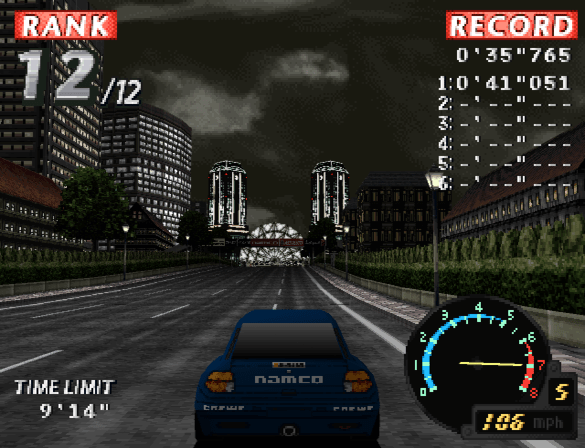
Rage Racer

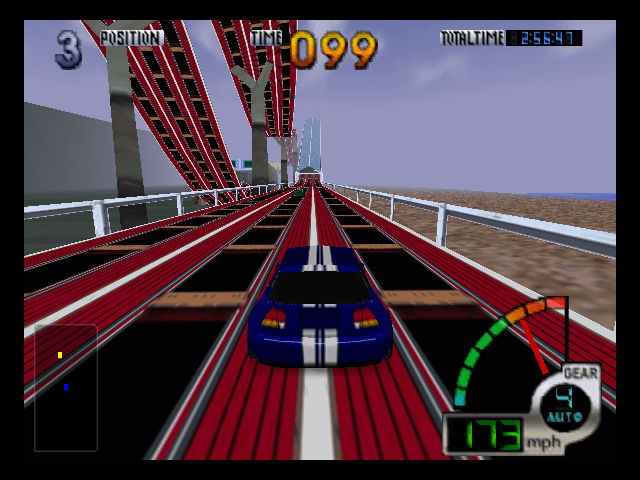
The third console instalment of the Ridge Racer series. This sets on a more darker tone, with more realistic looking graphics and a completely revised soundtrack inspired by industrial drum and bass.­

Grand Prix

The main game mode where you complete a series of races. Like the previous game you start in bottom place and have to finish in third place or higher against the computer controlled cars. There are five classes in total with a bonus sixth class and an extra GP, which is unlocked by completing the main GP mode.

Medals are awarded depending on what place you finish in. As you play the game you will need to replay a few of the races to build up your credit in order to purchase new vehicles, as you move up the GP class the competitors cars also get faster

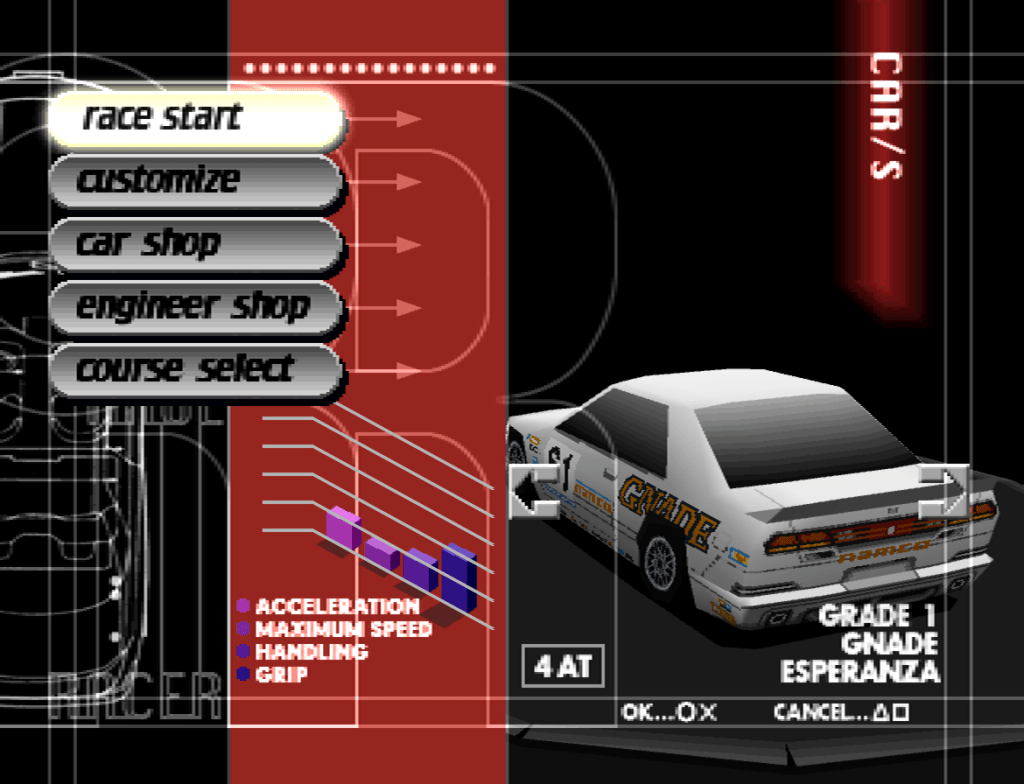
Unlike the previous games in the Ridge Racer series, cars are handled differently with you only starting from one car, instead of four being available. When more races are completed, credit are awarded which allow you to spend them on buying new cars or upgrading your existing car, which will be required in order for you to progress though the next class of GP. Different cars have different specifications, with some having better handling, acceleration or top speed. Some of the later cars are in manual transmission only which requires you to manually change and shift gears.

The Grand Prix mechanic would be expanded heavily in it’s successor – Ridge Racer Type 4.

Time Attack

The mode that no one ever uses, here you get access to the fastest models of the cards with the goal of having the fastest time.

Tracks

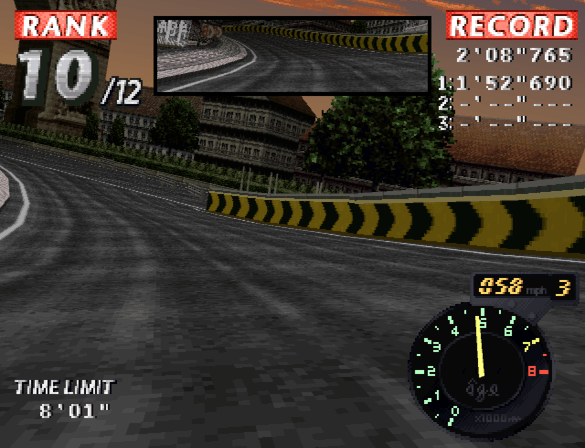
Like the previous Ridge Racer PlayStation games, they all use the same track with some variations in them, Rage Racer is no exception as all tracks have the same starting area but then branch off into different sections and bends, which then combine back together at the end of the lap. This gives the premise of the tracks being set in the same urban city or a town.

The tracks follow a specific design and were designed around the PlayStation’s limitations, as most tracks feature bends that obscure the environmental view as to prevent pop in and to keep the game running at 30fps. Slope and hills are also used to this effect and are incorporated as a game mechanic as for manual transmission vehicles you have to drop down a gear in order to maintain your speed. All of this was used in the next Ridge Racer Game (Type 4) to greater effect and shows how Namco was able to make the most out of the PlayStation hardware which was becoming mainstream at this point.

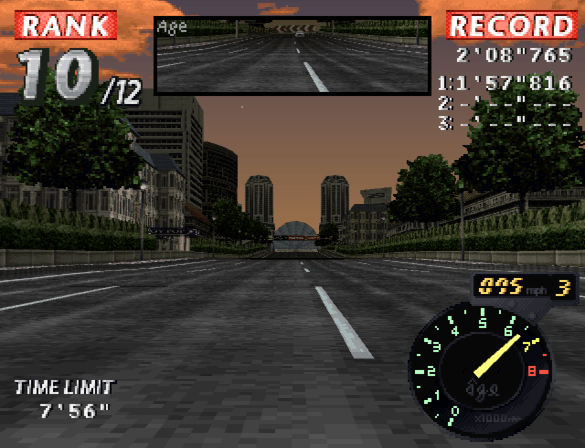
The environments themselves feature a European look judging from the building design, and some Greek style columns can be seen with the first track, which contrasts from the Japanese look of the city in the first game.

However the quantity of the tracks is part of the games downfall, with it recycling the same tracks as reversed and mirrored. It would have been nice to race on the original tracks from Ridge Racer and Revolution, or include the Rave Racer tracks which was already released to the arcades by the time Rave Racer came out. The fact that most tracks are reused limits the variety and questions the value of the game, eventually you are going to get bored of these tracks. It’s even worse when you compare it to the Rush and Crusin series of game which feature way more tracks that are independent from each other.

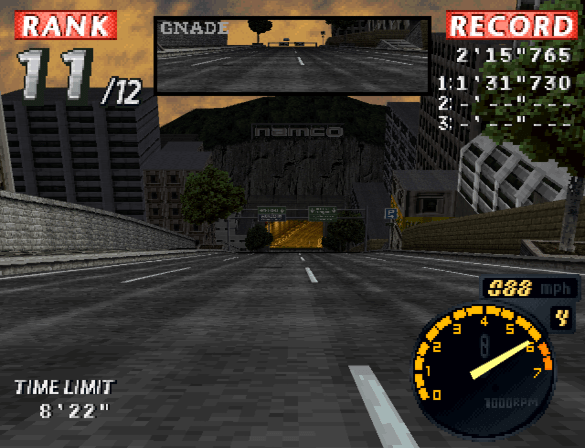
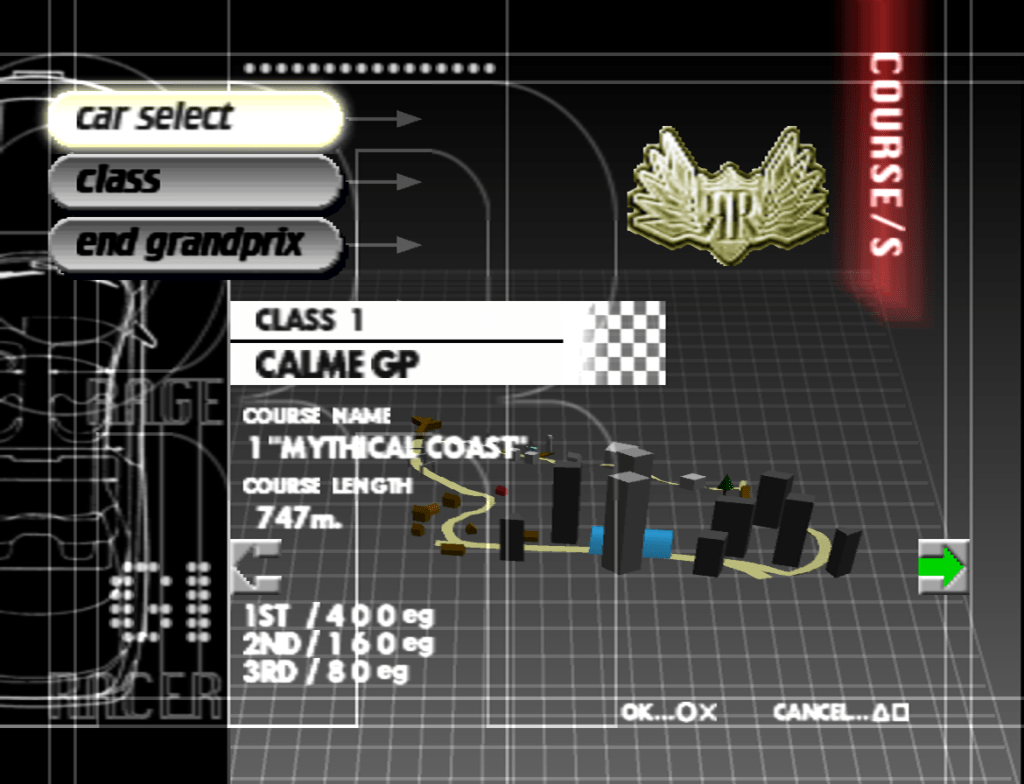
Mystical Coast: The started course for the game, driving past the waterfall into the tunnel, then pass down onto the coast area with Spanish/meddidertain style housing and then into some ruins until you reach a tunnel that takes you back to the starting line

Over Pass City: starts the name as Mystical Coast where you pass the waterfall but the tunnel takes a different direction into the main city, here there are very steep hills past the tram and steep curves as you return to the starting line. This is the longest course in the game.

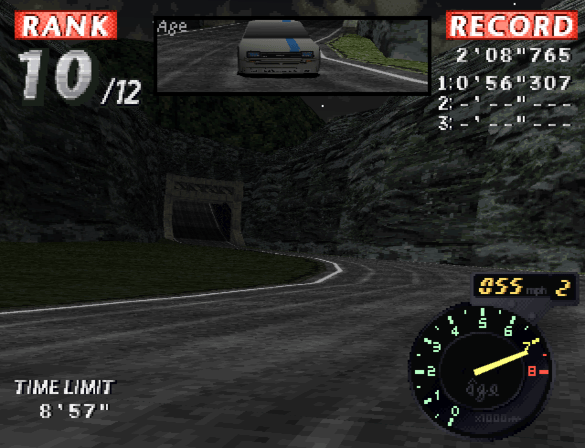
Lakeside Gate: Tricky since there are a lot of sharp turns where you need to drift sharply. Reaching top speed isn’t much of an issue here but having a car that you can control well is necessary. There’s a lot of tunnels and cave/hill like scenery when then proceeds into a rural area with some open scenery.

The Extreme Oval: A simple track designed for cars to reach their top speeds, but has one sharp turn within a tunnel.

Music

As someone who regularly listens to drum and bass, the music in Rage Racer was a pleasure to listen to with many songs taking inspiration from the industrial rock and break beat samples of the era. With many tracks being inspired by popular tracks of the era. They are also similar to music that was used in Namco’s other games, like in Tekken.

Conclusion

As a Ridge Racer game it takes the series into a more serious setting with its GP/credit based mechanic and its realistic art style but as a racing game it falls short due to lack of content, especially with the amount of tracks.

The game as not been released on any digital platforms, which is odd since this is an entirely Namco game that does not feature any licensed cards or music.

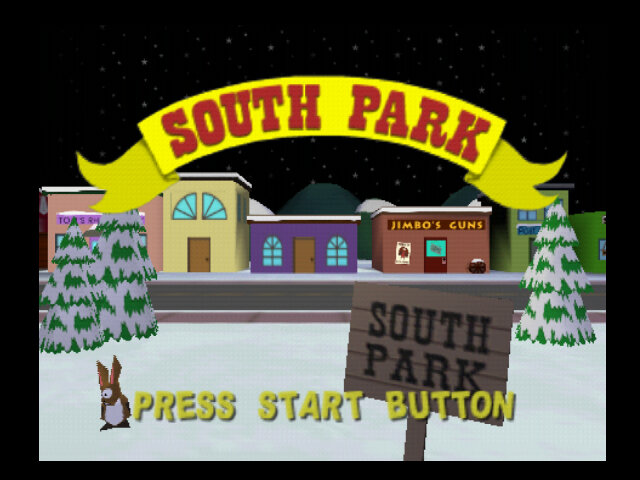
South Park

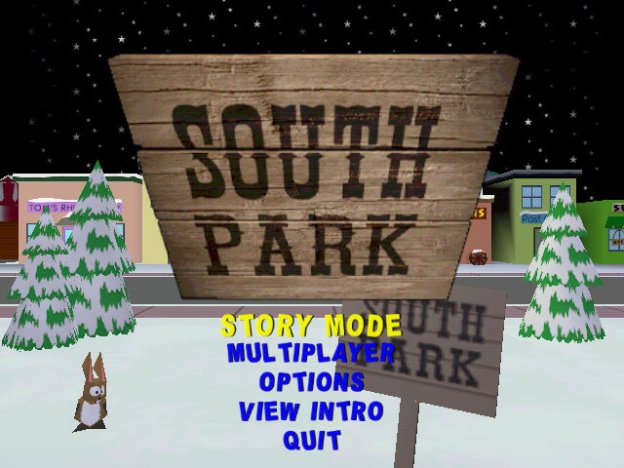
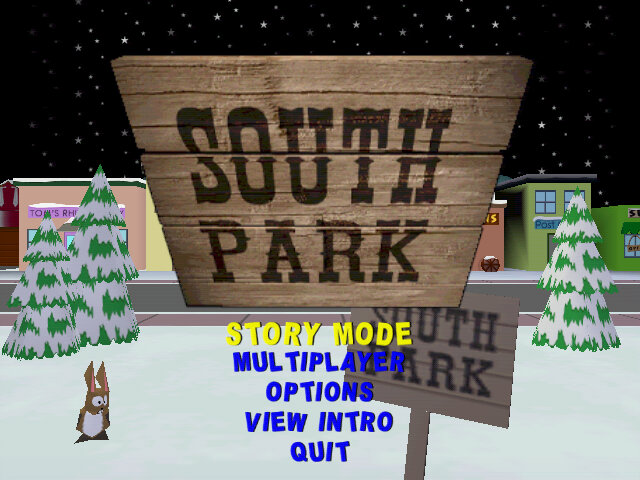
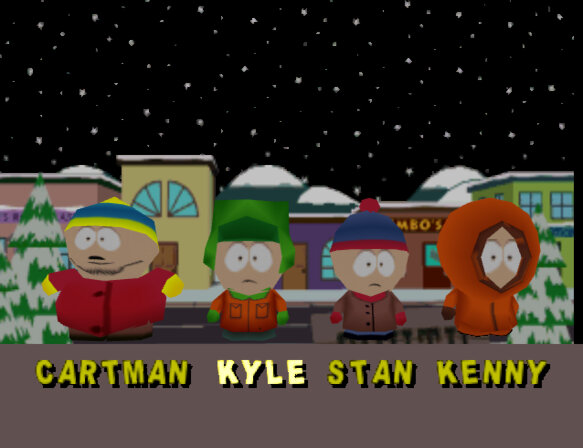
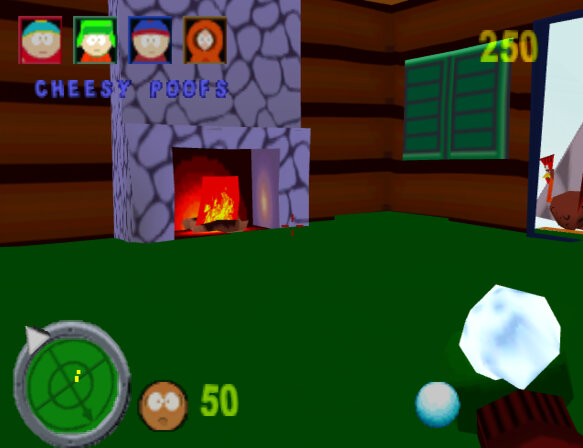
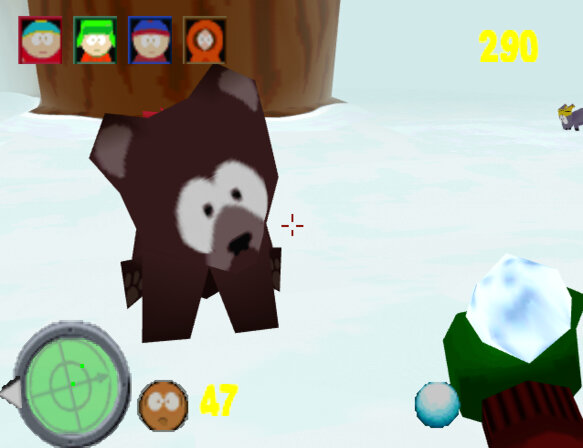
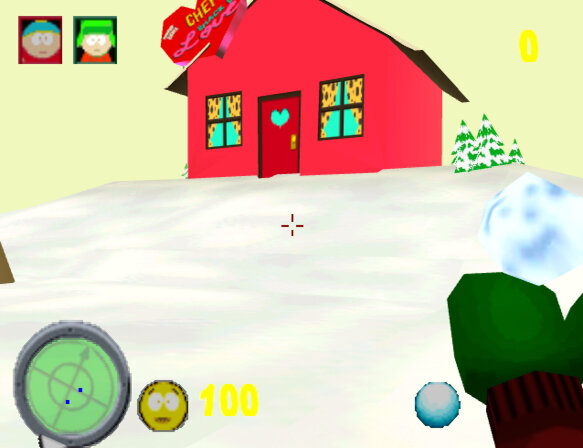
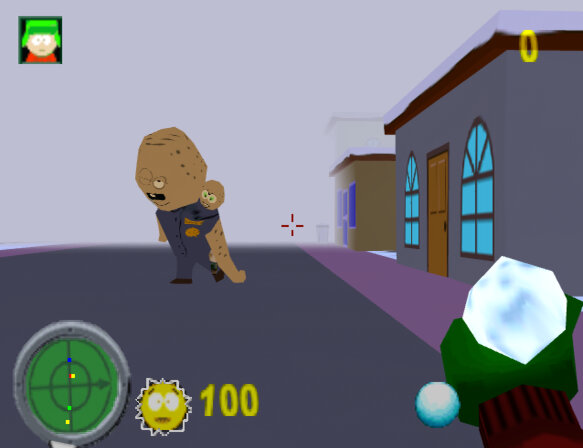
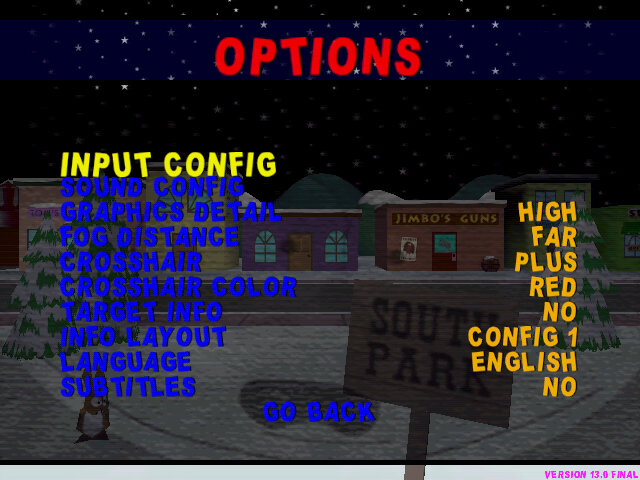
South Park 1998 PC N64

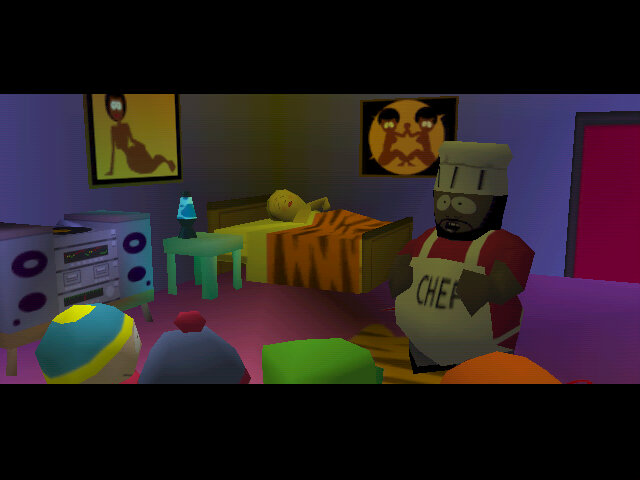
The game based on the popular TV show, came out very early in the shows life, along with a hit number 1 single

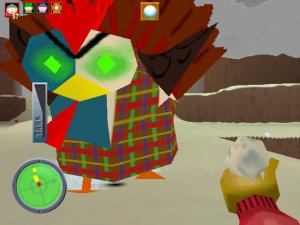
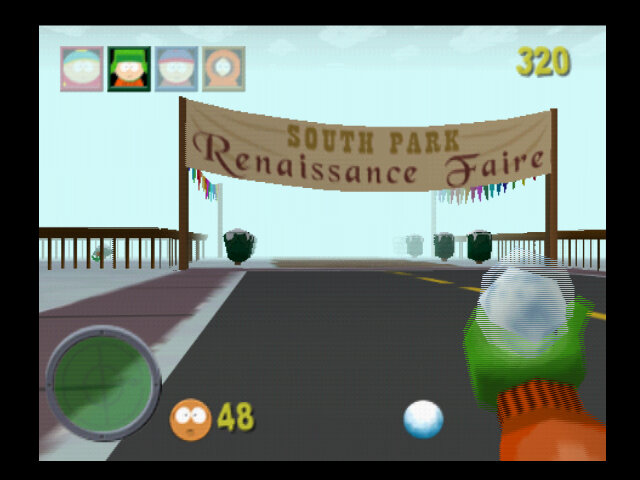
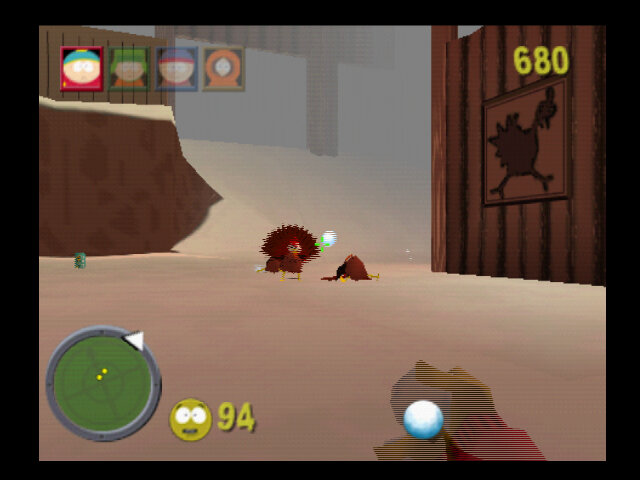
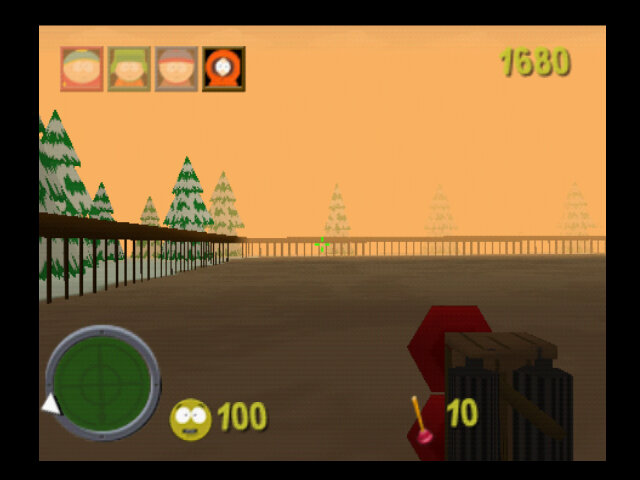
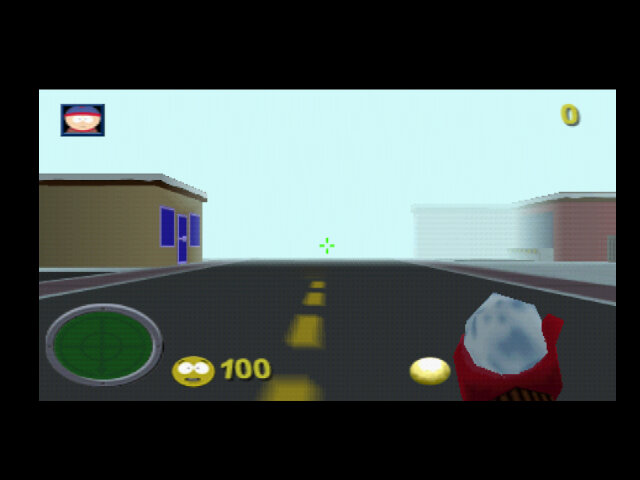
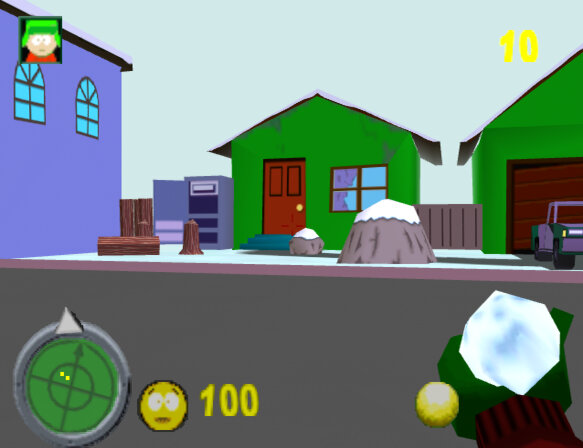
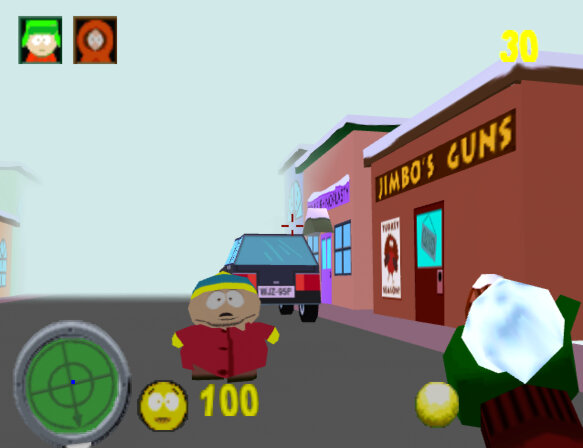
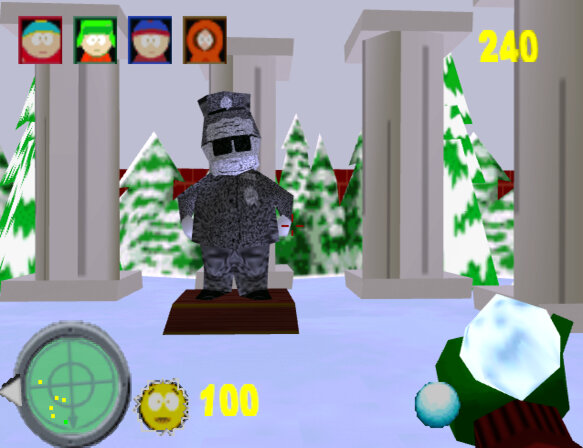
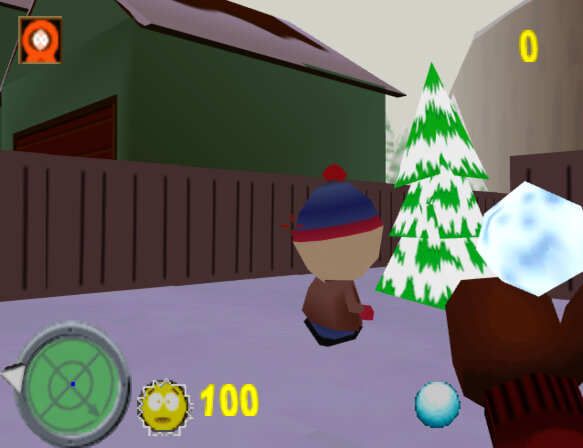
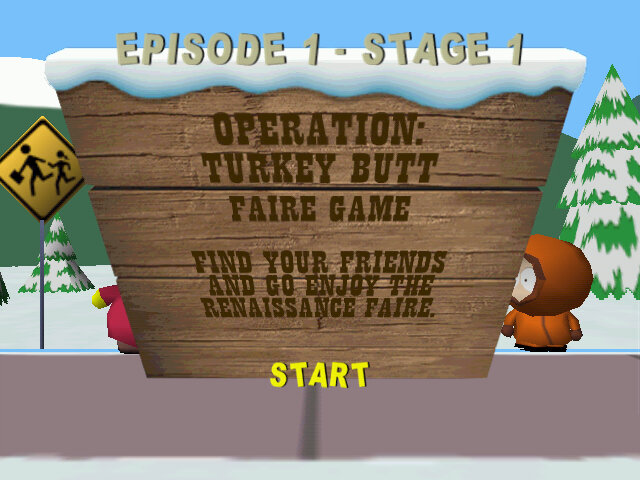
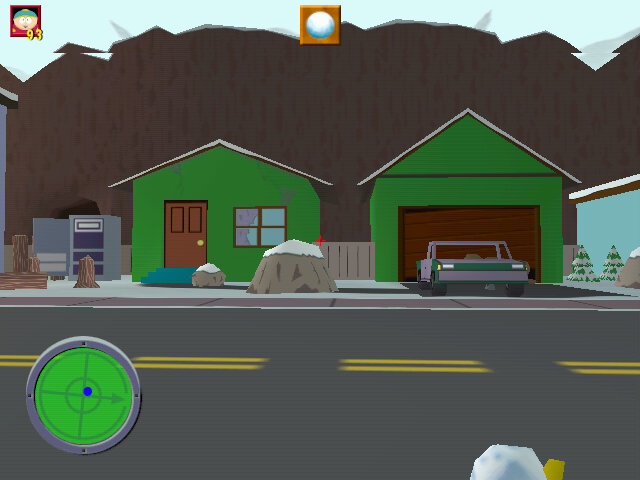
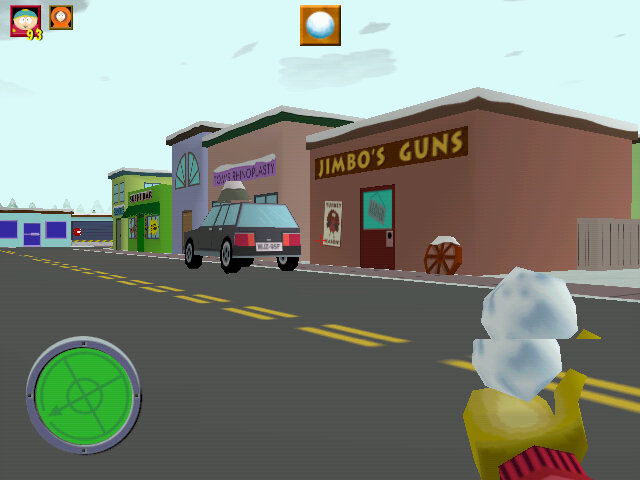
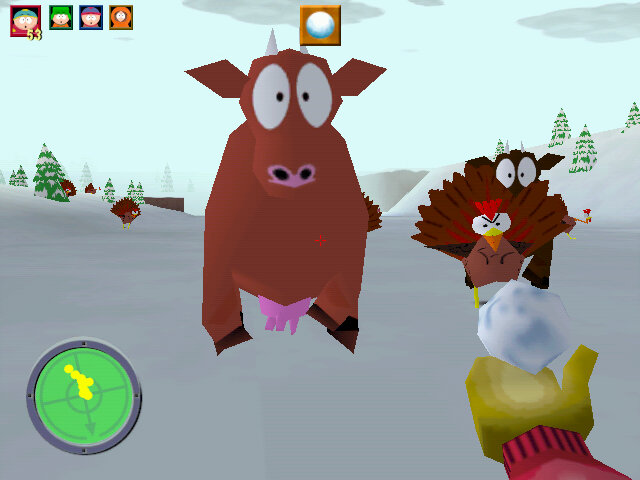
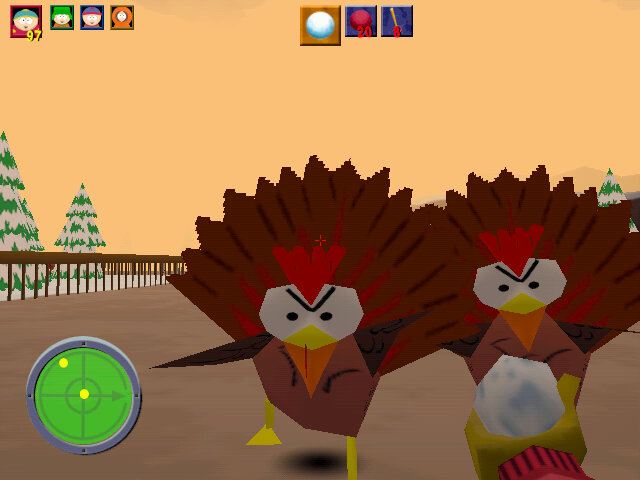
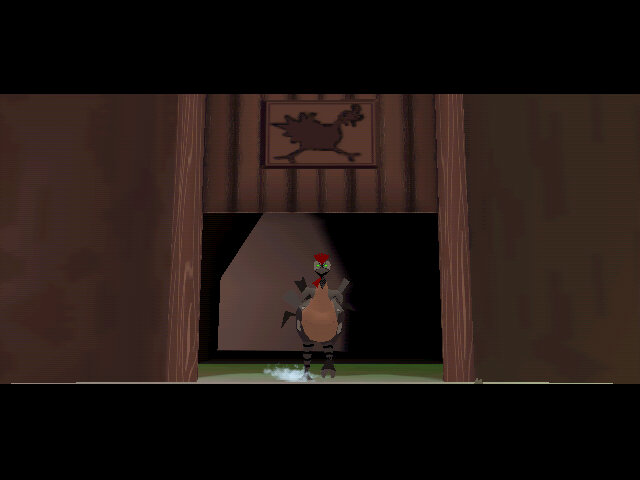
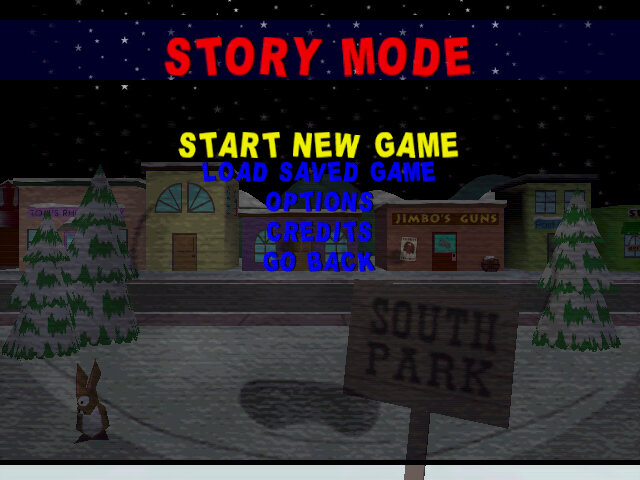
Story mode does not make for a good game, with the enemies being repetitive to the point of tediousness. The first level starts you off in your home town where you are attacked by deranged Turkey’s (who have the most horrible sound effect, and it’s horrendous if there’s 3 or more enemies present) and throughout the first three levels its just ongoing Turkey’s, with the occasional cow thrown in (only on the PC version, I’ve not seen the cow in the console versions on this level).

South Park 1998 PC N64
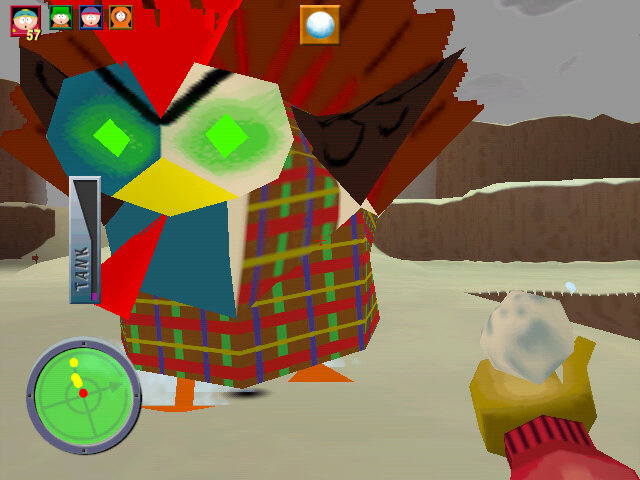
A Tank version of the turkey.

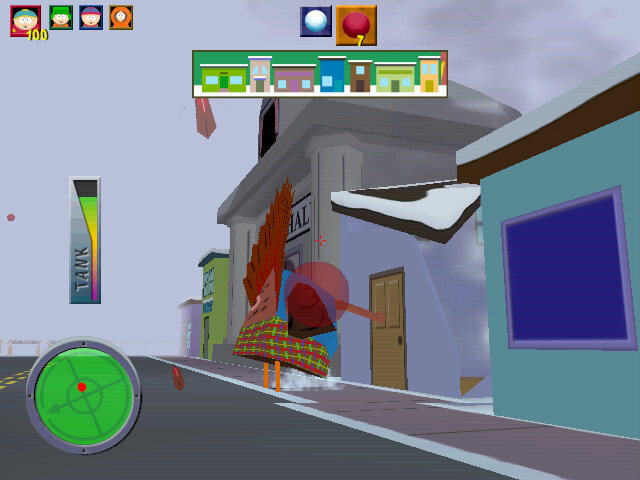
On the next stage you encounter Tank enemies which are larger Turkey’s that have the ability to spawn more turkeys that will attack. The tank’s have much more health than regular turkeys and will start to run into the beginning of the level when their health goes below 30%. If a tank manages to make it to the start point of a level, than another stage will need to be completed after you complete the level, where you have to kill the tank enemies that escaped, with a replenished health bar. You will need to do this before they destroy the town, of which depends on how many tanks had escaped. For this reason its a good idea to kill the tanks in the main game, since you are going to have to beat them regardless. What’s frustrating to me is they speed run back to the start of the level, meaning you have to chase them whilst firing, and causing you to backtrack. This makes the level much more tedious since you hare going through areas you have already passed.

South Park 1998 PC

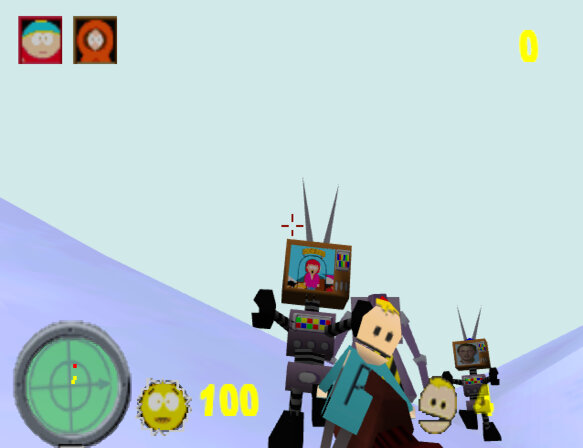
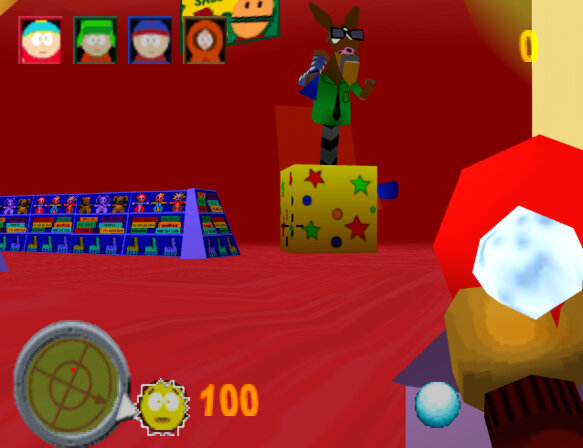
The next levels don’t change much, replacing the turkeys with clones, robots, aliens and moving toys, however its mostly the same type of enemy throughout the level which become boring fast. Some of the later enemies becoming literal bullet sponges, taking 20-30 hits before they go down.

The multiplayer on the other hand is rather fun, playing as a regular FPS with a interesting selection of guns. The console versions let you play with two players, whilst the PC version supports LAN netplay. If there is one reason to play this game, its for the multiplayer mode.

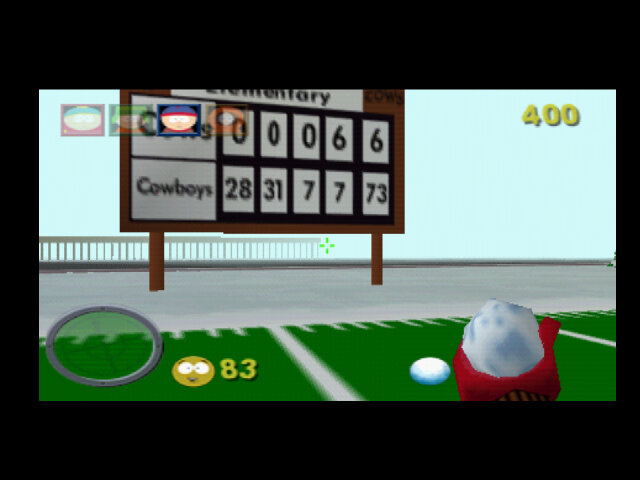
The Nintendo 64 version has 17 different maps to choose from, all with a variety of weapons. The PC version has the most maps, with 26 in total This includes all the N64 maps, plus some PC exclusive maps. PlayStation has an alerted version of the multiplayer mode, discussed in its section.

Nintendo 64

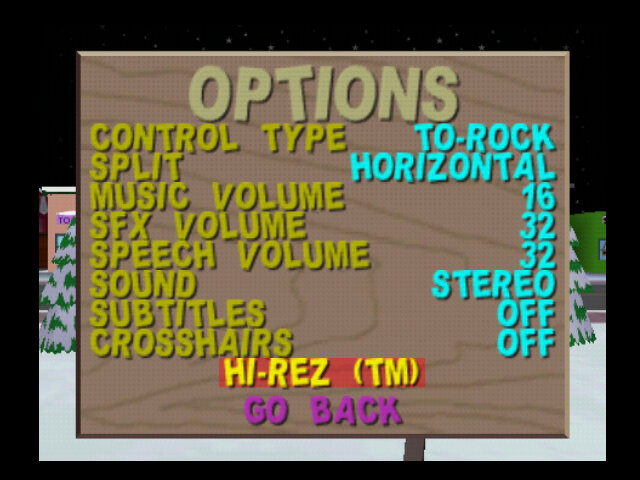
The first release of the game, and was the best version of the game until the PC version, however it remains the most accessible. Multiplayer supports up to four players on one console with a range of multiplayer options, including deathmatch. This version also features a high score table and supports 16:9 aspect ratio and a ‘High-Res’ mode with the use of the expansion pack.

Downside to this version is the significant frame drops when there’s a lot of action on the screen, and the short draw distance being disguised as fog.

Below is running on Retroarch Mupen64plus with Angrylion RSP plugin, I do own a copy of the PAL version of the game, but my N64 is one of those models that only supports composite out (No RGB or even S-Video, way to go Nintendo)

PlayStation

Released a year later (1999) and used a revised soundtrack compared to the MIDI N64 version, the cutscenes are captured from the N64 version instead of being pre-rendered on a workstation like many other games of the era. Graphically its a downgrade compared to the N64 version, and the multiplayer only supports two players, known as head to head in this version.

The PlayStation version comes with a head to head mode that has 6 maps, some of which are modified from the Nintendo 64 version. DM1 is based off the Ravine level from the N64, but with some alterations like the removal of water. DM4 is based of the badlands level, DM5 off badlands 2 and DM6 is based off the Gym Class map. DM2 and DM3 look to be unique maps for the PlayStation version.

Captured on Duckstation emulator with bi-linear filtering and rendered at twice the original resolution, with GTE accuracy enabled

Windows

The definitive port of the game, with better graphics and CD audio. Also comes with a proper multiplayer mode that use the Gamespy client (now defunct) to organize games. However there are issues running this game on modern systems, as the game only seems to work on Windows 98/Me systems (95 untested but assumed to work) this could be down to DirectX/Glide support on modern systems.

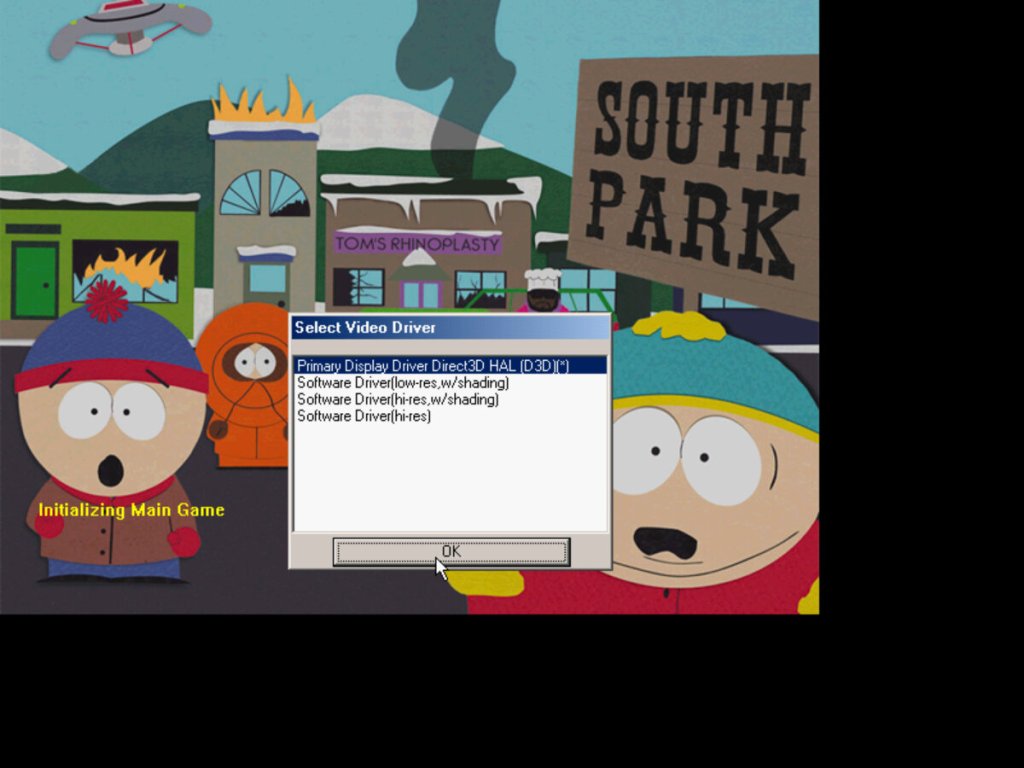
Below is running on the PCem v17 emulator running Windows 98, emulating a Pentium Overdrive MMX 200Mhz, 3DFX Voodoo graphics, with a Aztech sound galaxy soundcard.

There is also a software rendering mode that renders the games graphics in just the CPU, ideal if you do not have a dedicated 3D accelerator or one that is unsupported. Unfortunately it gives PlayStation level graphics at a weird screen aspect ratio.

Cheats PC

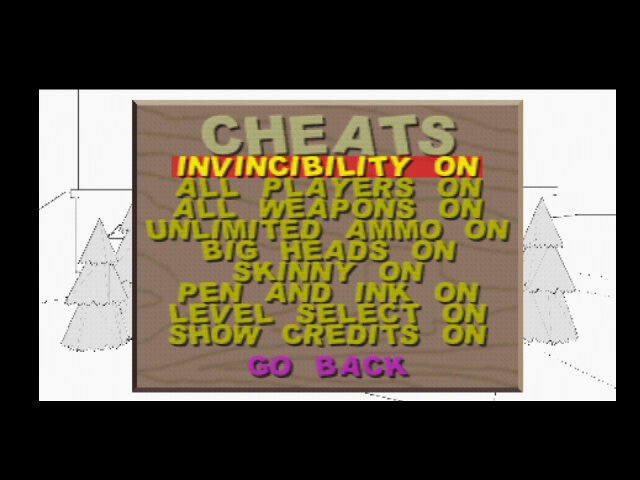
These were hard to find, so I thought i’d put them here

Press the Esc button, select Options and move the mouse cursor to the lower left of the screen and then click, you can then enter the below cheats. Sometimes you may have to move the cursor so it goes off the screen before you can enter a cheat.

DESCRIPTIONCODE TO ENTER
All Weapons & AmmoSWEET
Big head modeEGOTRIP
Display framerateFRAMERATE
Enable all cheatsBOBBYBIRD
God modeBEEFCAKE

External Links

acclaim.com: South Park (archive.org)

BT Youview Guide Redesign

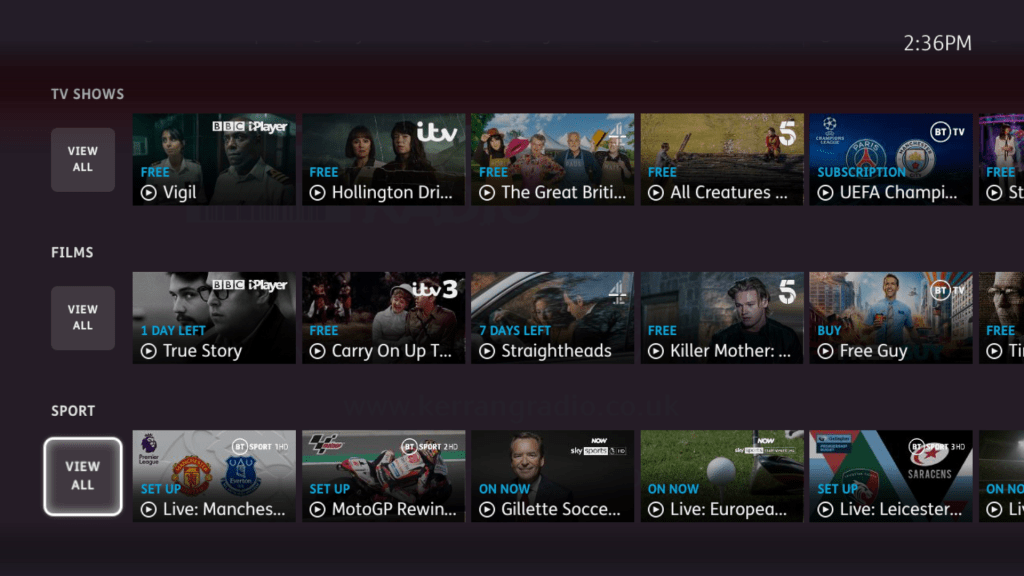
BT (and Youview) treated their TV service to a redesign in early 2021, with the main screen being redesigned

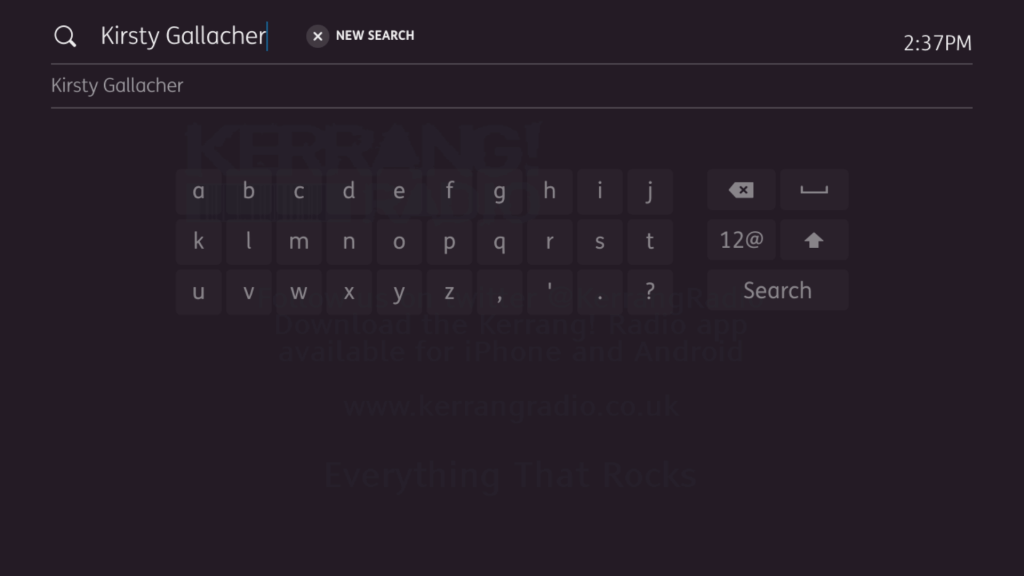
The home screen is displayed when the box is switched on from standby, or when the Home button is pressed. On older remotes this will be the Youview button. A search box is displayed at the top

Meanwhiles there a look at the old interface which has now been phased out

Back to the new interface, Pressing down allows you to scroll down the menu. Different sections will be displayed with content being promoted depending on its genre.

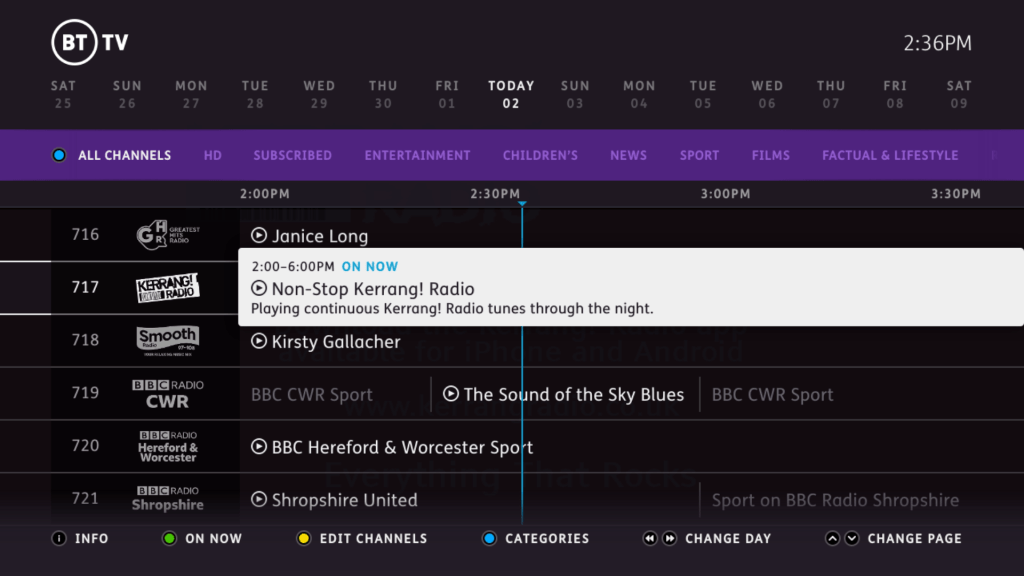
The main TV guide interface, not much has changed here

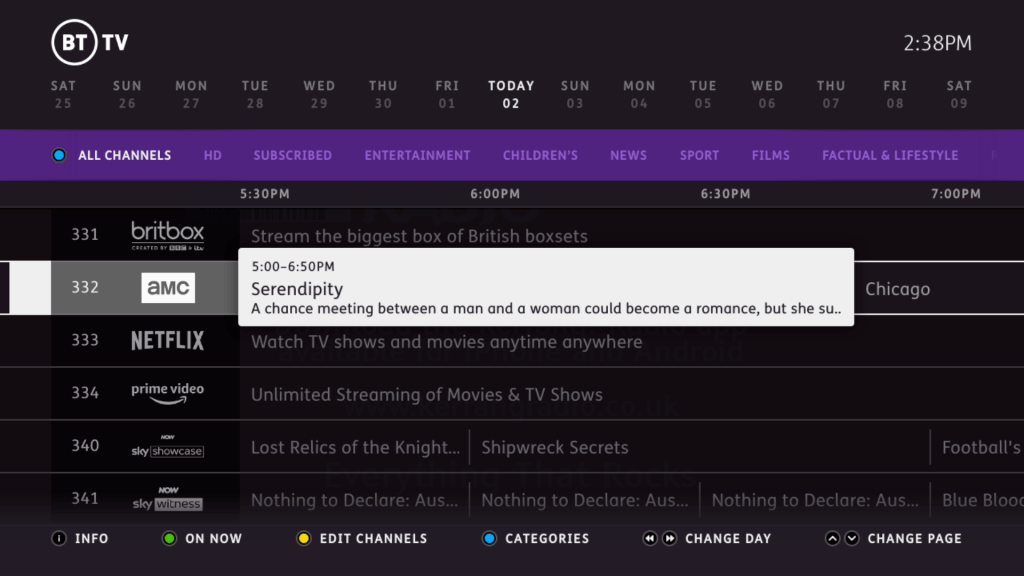
BT’s subscription channels, the program description is displayed on the highlighted show, which can be expanded by pressing the information button

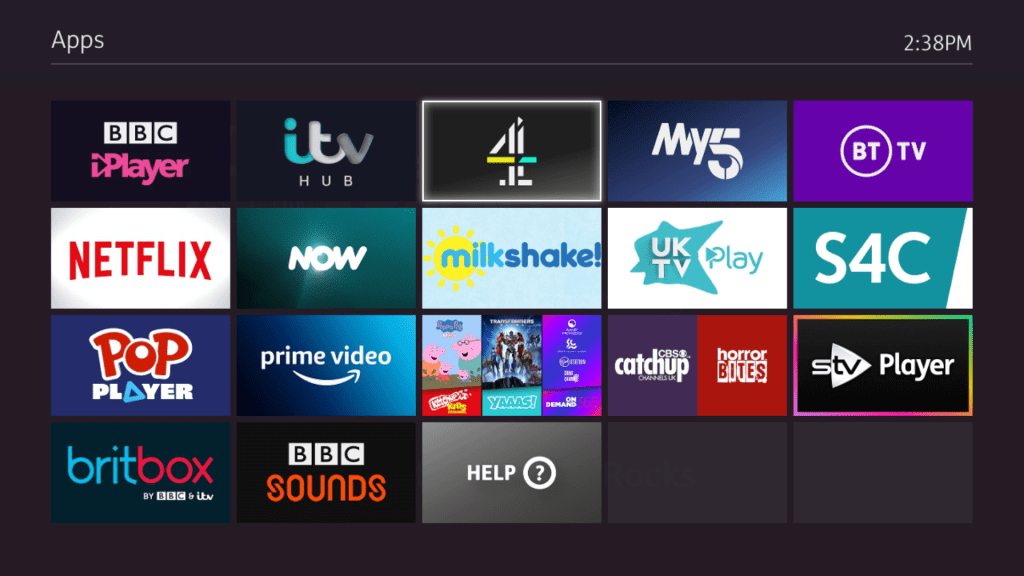
On demand apps menu, not much has changed here

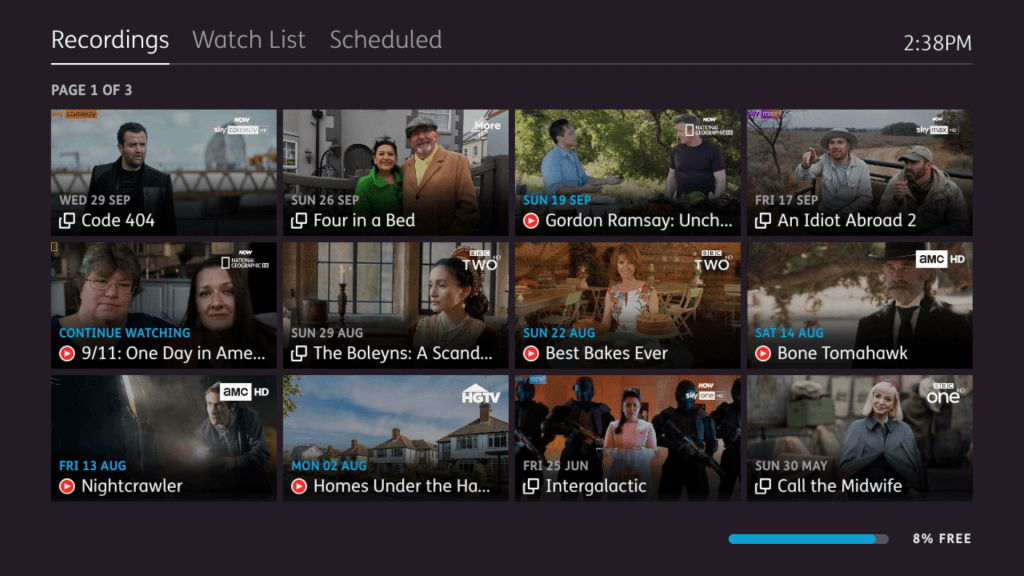
Recoded shows list

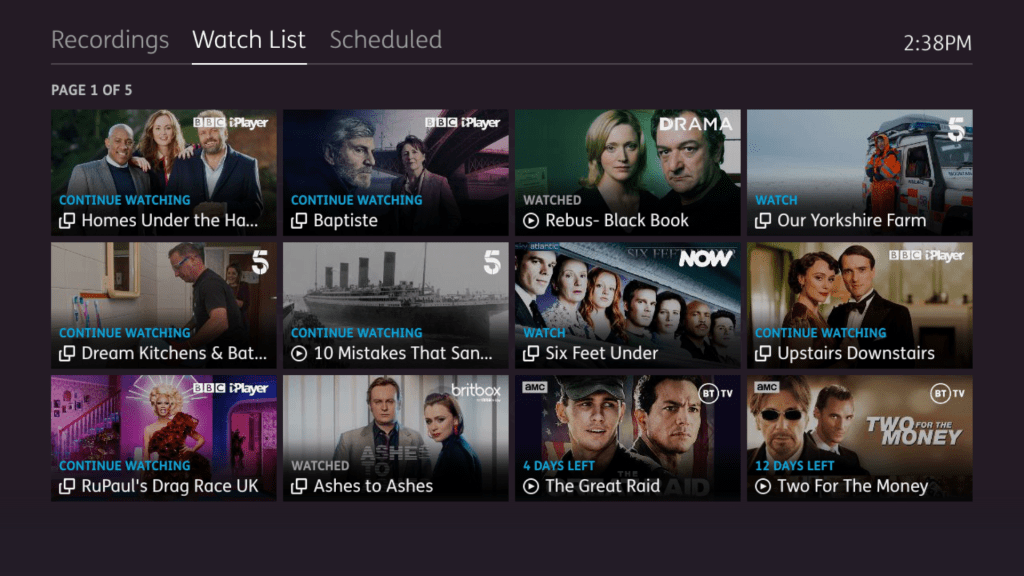
Watch list is programs that have been bookmarked for both on demand and live TV channels

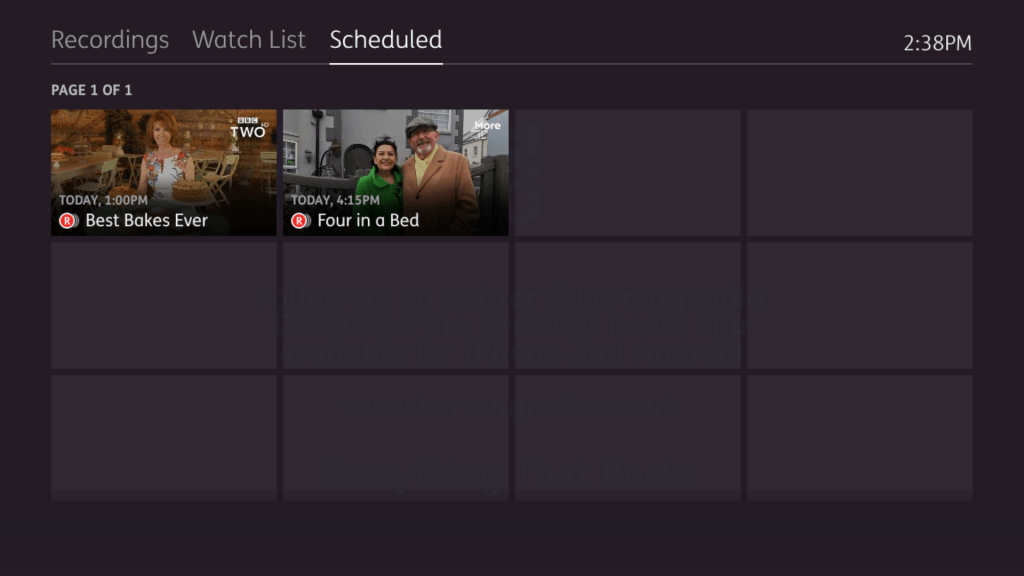
Programs that are due to be recorded

Shows promoted and popular shows that are due to start later that day

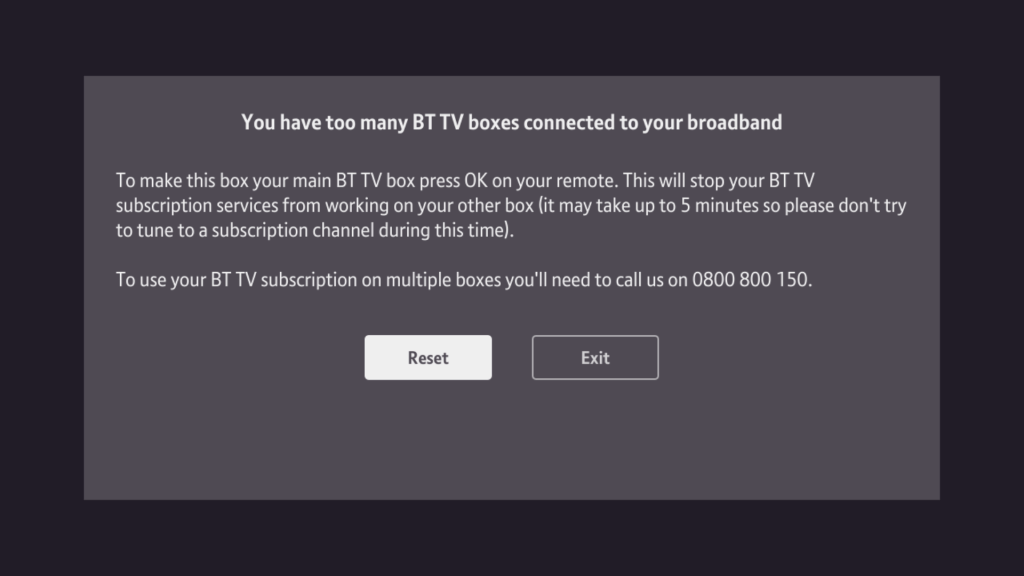
BT has a limit on how many boxes that can be connected to a single broadband line, depending on the bandwidth and how many boxes are authorized on the account

The subscriptions channels require HDCP to be enabled, due to Hollywood copy protection

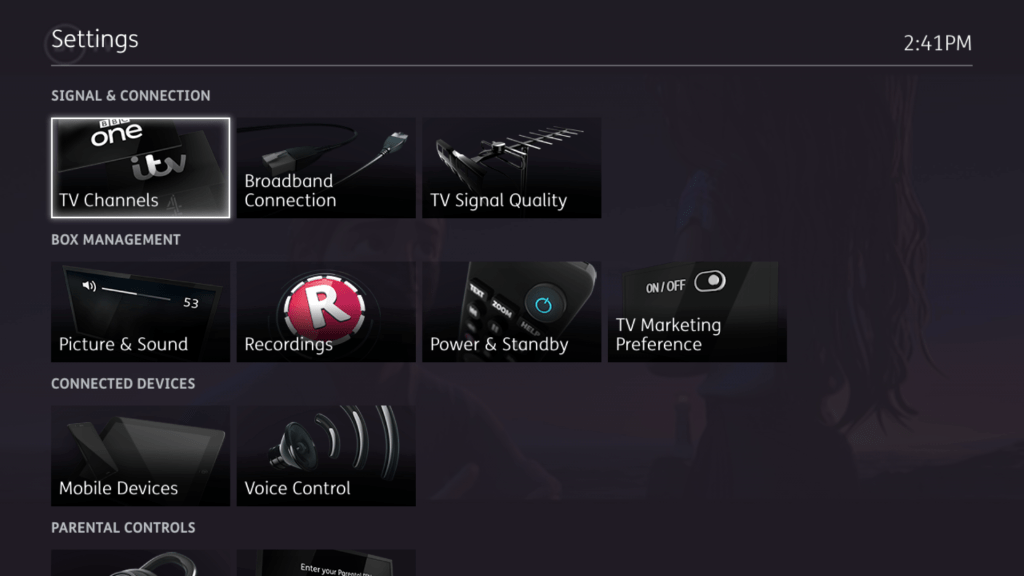
The settings area, again not much has been changed here

Pressing the information button brings up the program description

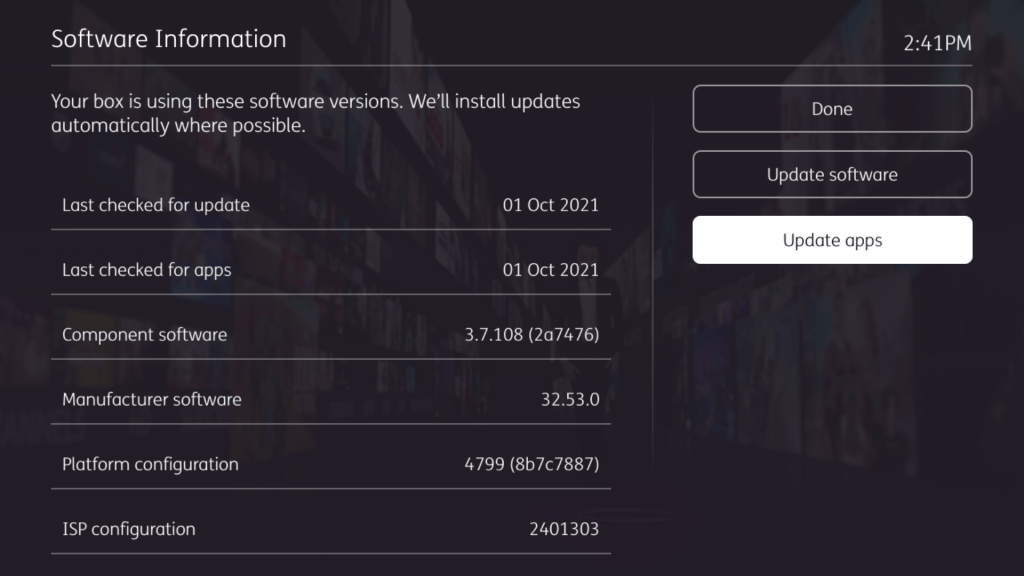
Software information

Errors

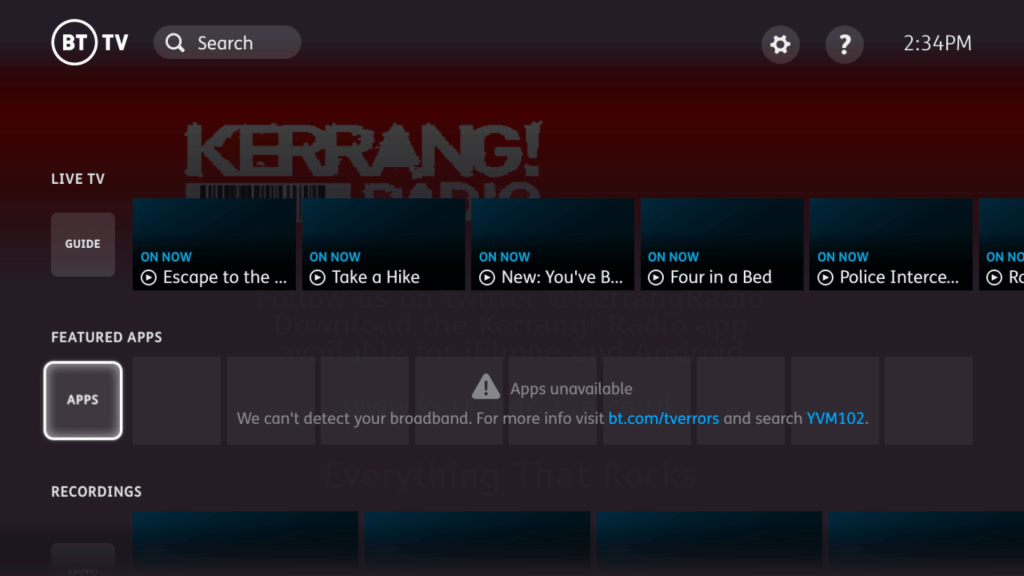
When you start the box without an active broadband connection, Freeview will continue to work and will pull TV listings from the DVB data, but you wont see any enhanced thumbnails

WipEout

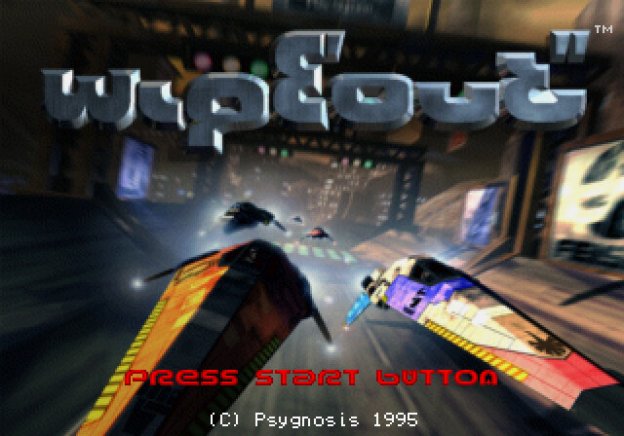
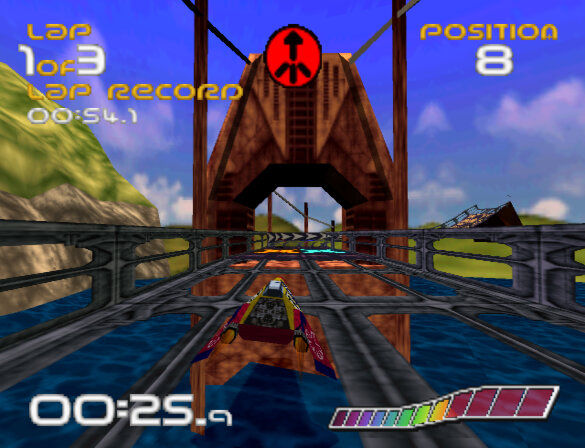
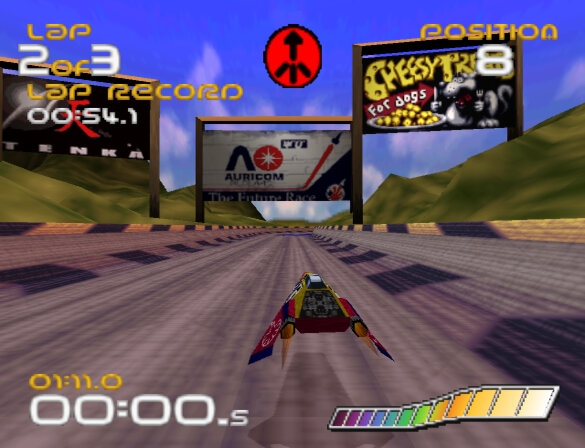
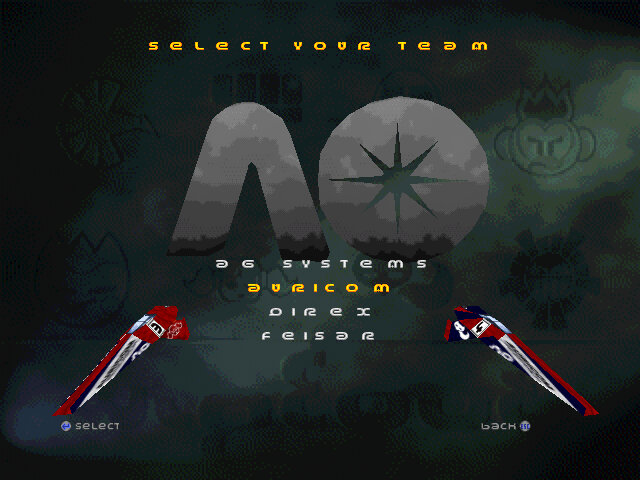
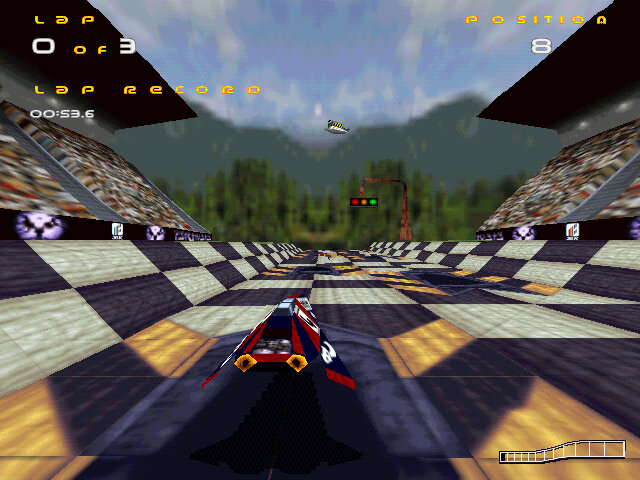
A futuristic racing game released in 1995 for various platforms.

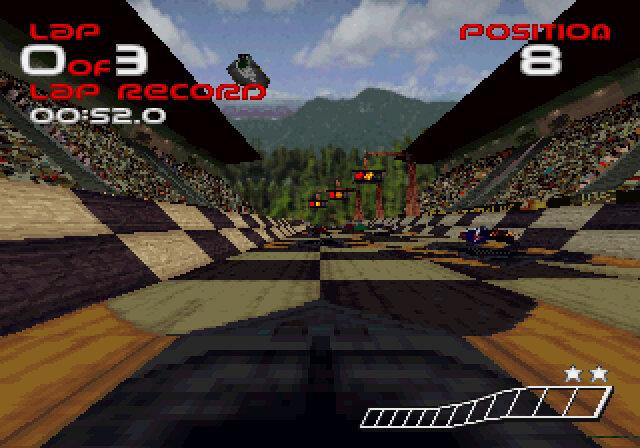
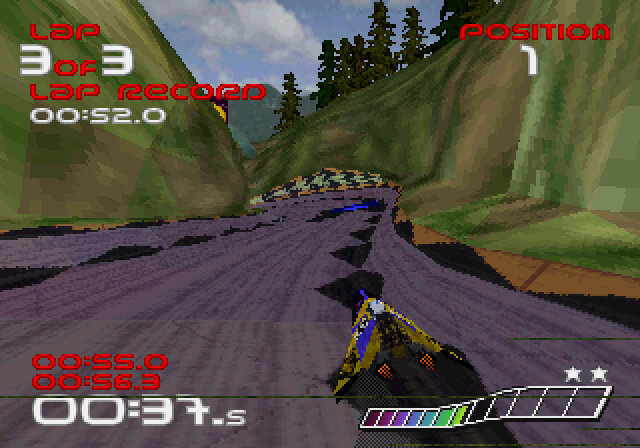
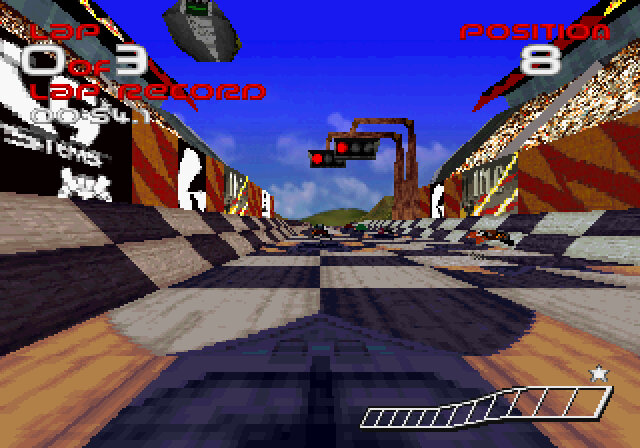
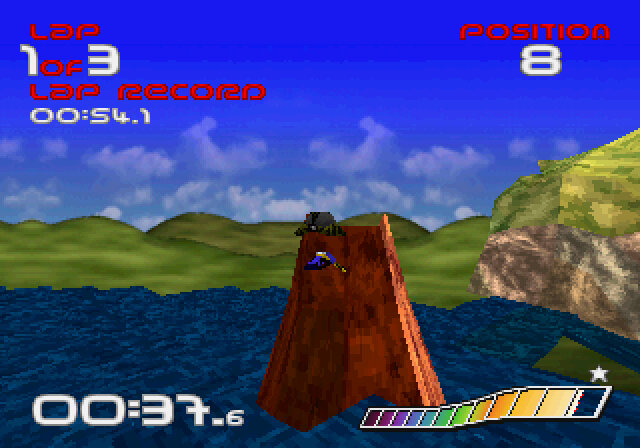
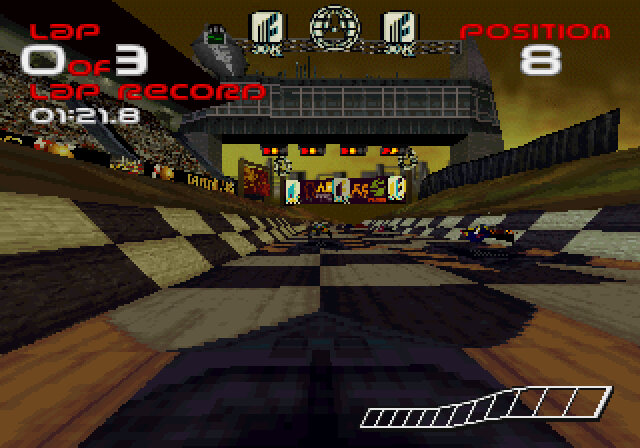
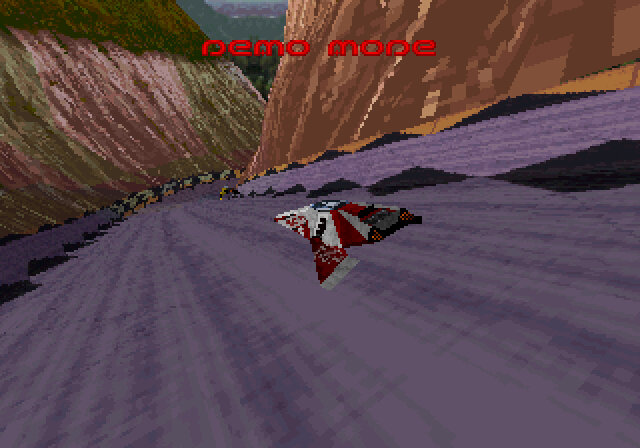
In Wipeout your mostly battling against the track itself, rather than the rival ships, and at fast speeds the game can become a challenge, requiring quick reflexes. Thankfully it comes with a banging soundtrack, something which is a staple of the Wipeout series of games.

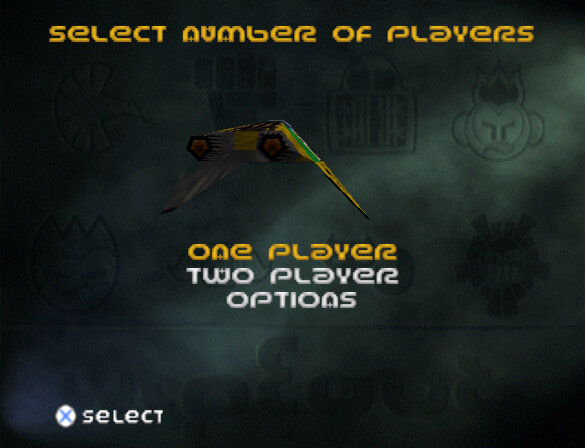
2 Player mode exists for the console versions, but its one of those games that needs a serial cable, two PlayStation or two Saturn’s, TV’s and copies of each game.

PlayStation

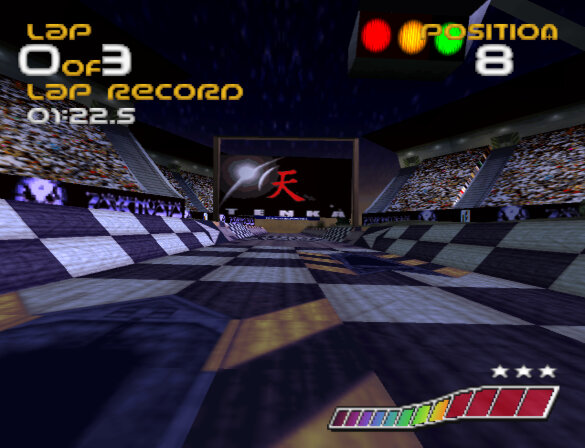
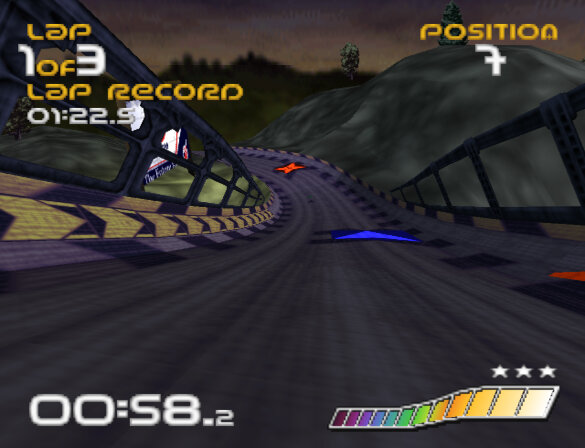
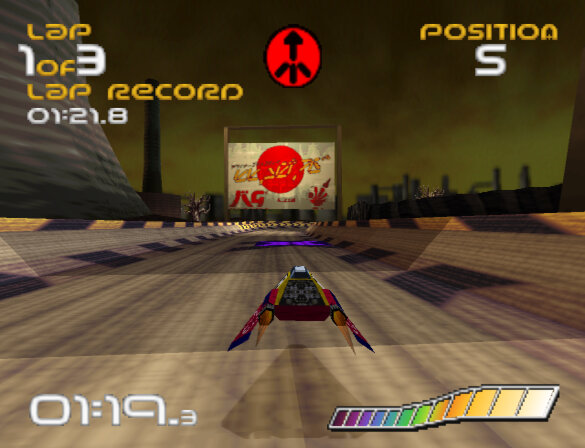
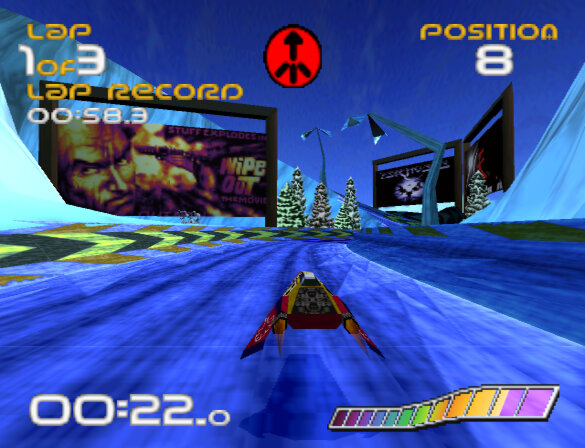
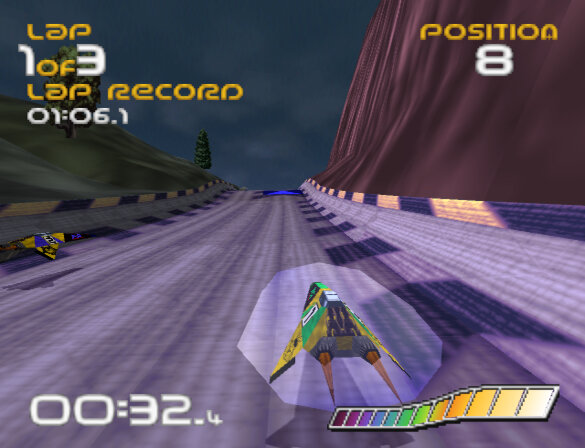
Probably the best version, since it has all the graphical effects, and the sound effects when you enter a tunnel. Can also be played on the PlayStation 3 and PSP as part of the PS Classics. Only issue with this port is the low resolution and the pop-in textures on the track, poor draw distance. As a bonus the game supports the use of a NeGcon controller, allowing for an analogue control, useful for turning and for the airbreaks.

On modern emulators you can sort of re-create the PC effects such as higher resolution and texture filtering, but you are still stuck at 30fps. Overclocking the CPU results in the game running too fast.

Duckstation: Enhanced

The game clears up rather well compared to how it originally looked

Sega Saturn

Wipeout was released for the promising Sega Saturn, and serves as an example of the PSY-Q dev kit for the Saturn, which Psygnosis were trying to promote at the time as an alternative to Sega’s devkit (a version of PSY-Q was released for the PlayStation). The soundtrack has been altered with some songs being removed

Screenshots: SSF emulator

Windows

WipEout was ported to the PC a year later than the PlayStation release, and was designed exclusively for ATI video cards and was typically bundled with Windows PC that had those cards. It’s one of the games that supports ATI’s CIF API rather than Direct3D. This limits it to ATI Rage series 3D chipsets, the one in my Dell OptiPlex being one of them, but in order to play CIF games you need to use an older 1999 driver from ATI (The Windows 98 bundled driver has no CIF support), also CIF is only supported under Windows 98, there is no support for Windows NT 4.0. ATI later removed CIF support from its drivers from late 1999 onwards, so you may have to downgrade the driver order to play. A CIF wrapper exists for Windows 7 onwards, although I’ve not tested it.

Screenshots below are captured from a Dell OptiPlex GX1 with an Intel Pentium 2 350mhz and an ATI RAGE 2 with 4Mb of VRAM

The main difference is the ability to play the game in a higher resolution and with the ability to play at a higher framerate, it’s not exactly 60fps on a Rage2 but its a lot more smoother than the PlayStation version. However the sound is not has good as the console versions, with the PC missing the echo sound effects that play when you enter a tunnel. It’s also one of those games that’s stores the music as Redbook CD audio, and the game plays the audio back like a regular CD player would. This gives the option to change the CD (as the game runs from the hard disk) to play your own music.

MS-DOS

Very similar to the accelerated Windows version, but has a lot of enhancements removed, there’s no texture filtering, the framerate is lower and the resolution is reduced, likely because everything is being done on the CPU. You are limited to a low 320 resolution, 16 bit colour.

Personally I would stick with the PlayStation version, or the Saturn if you prefer more detailed textures. The PC versions sacrifice too much for what benefit they give, although you get the opportunity to run in a higher resolution, the missing sound effects are a huge setback and ruin the immersion of the game. besides with modern emulators you can run the game with additional filtering and upscaling, the FPS is still stuck at 30fps.

Hackers

A concept imaging of Wipeout appeared in the movie Hackers, which features slightly different gameplay with obstacles on the track, a crew that speaks to you instead of techno music playing. It was believed to be rendered on a SGI workstation and features perspective correct texture mapping

External Links

WipEout – Archive Website

WipEout – DOS Support

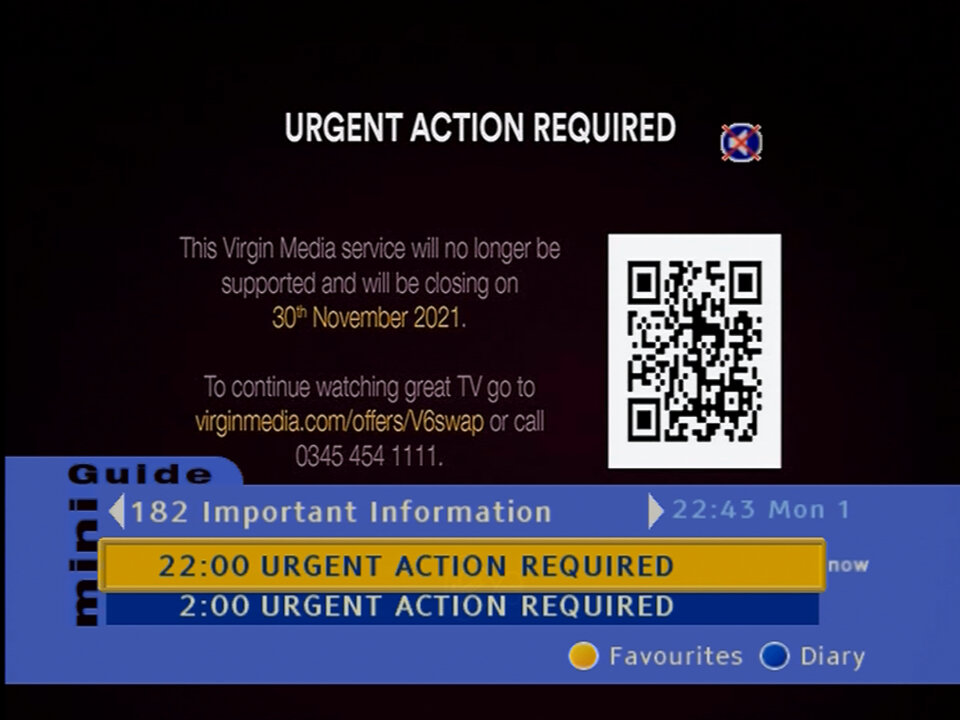
Virgin Media TV Shutdown

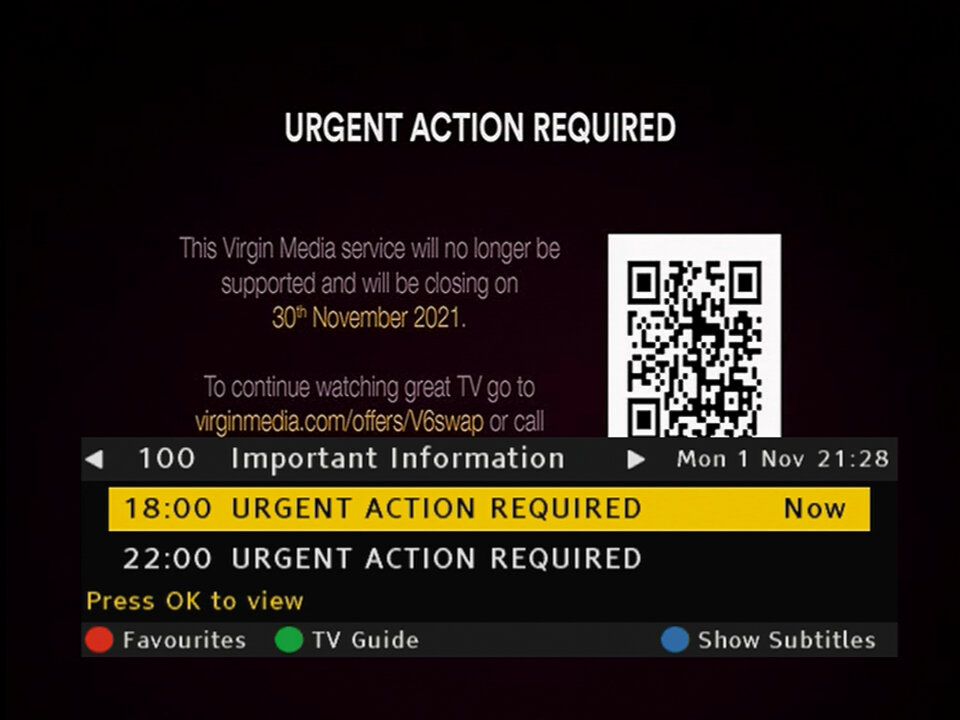
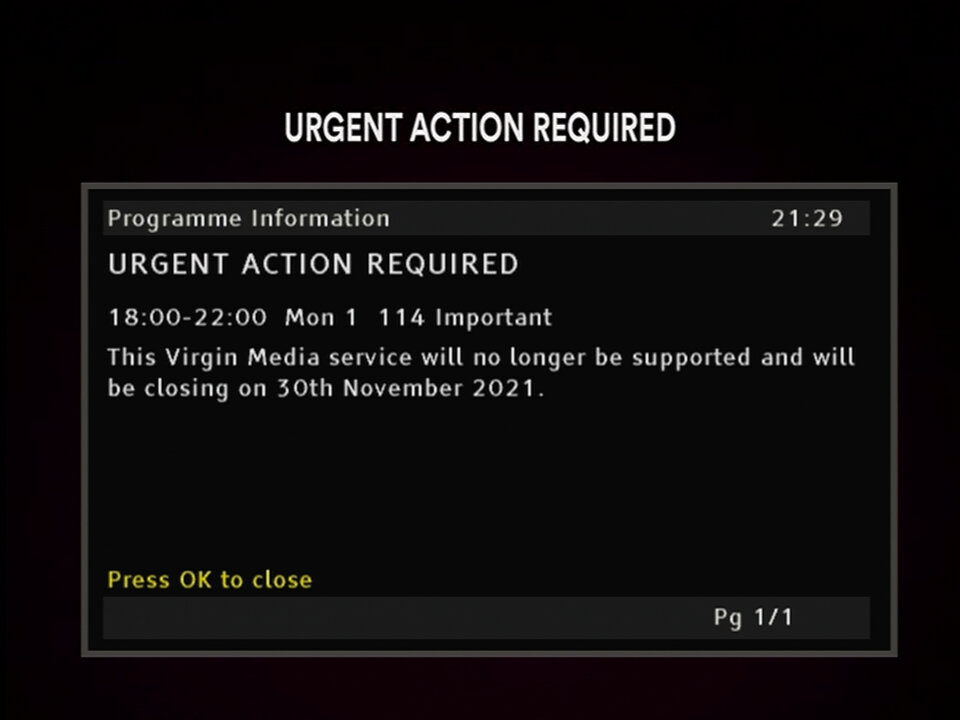
Looks like Virgin are planning to pull the plug on the original TV service. Not sure what this will entail since they had already converted most of their SD channels to MPEG4 a couple of years ago, with the exception of BBC One and Channel 4 which remained in MPEG2, possibly for PSB reasons?

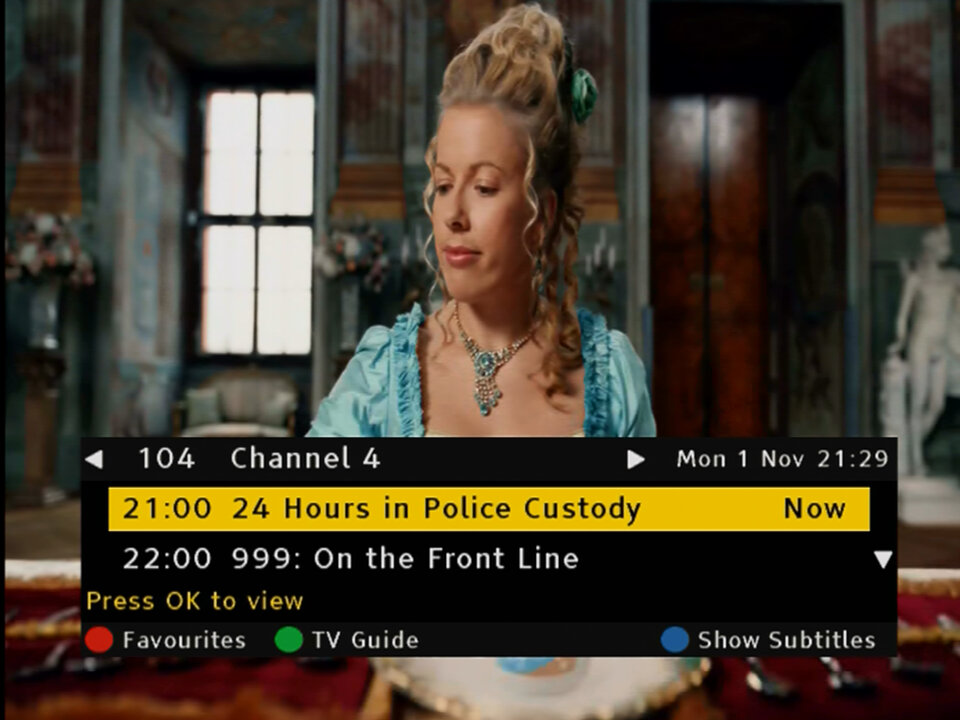
Here what’s shows up on a Virgin Media SD cable box (Pace DiTV1000 on UK2 software)

A look at Channel 4 on this box, one of the few channels that display video

Lets check the ntl software

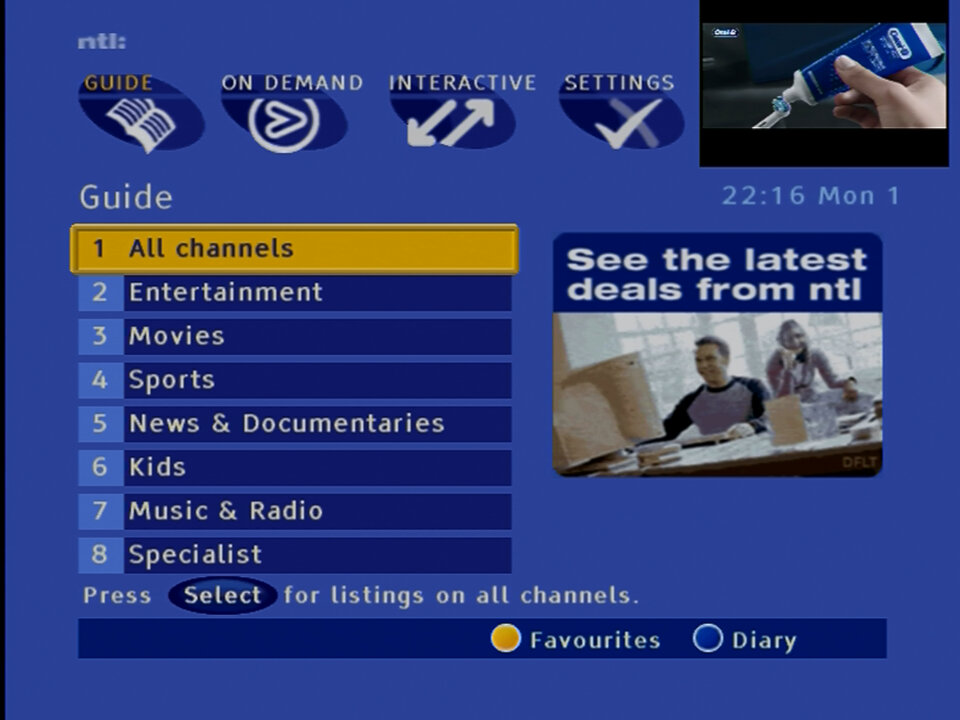
I pulled out the Pace Di4000N running the ntl CR3 Bromley guide which dates from 2003

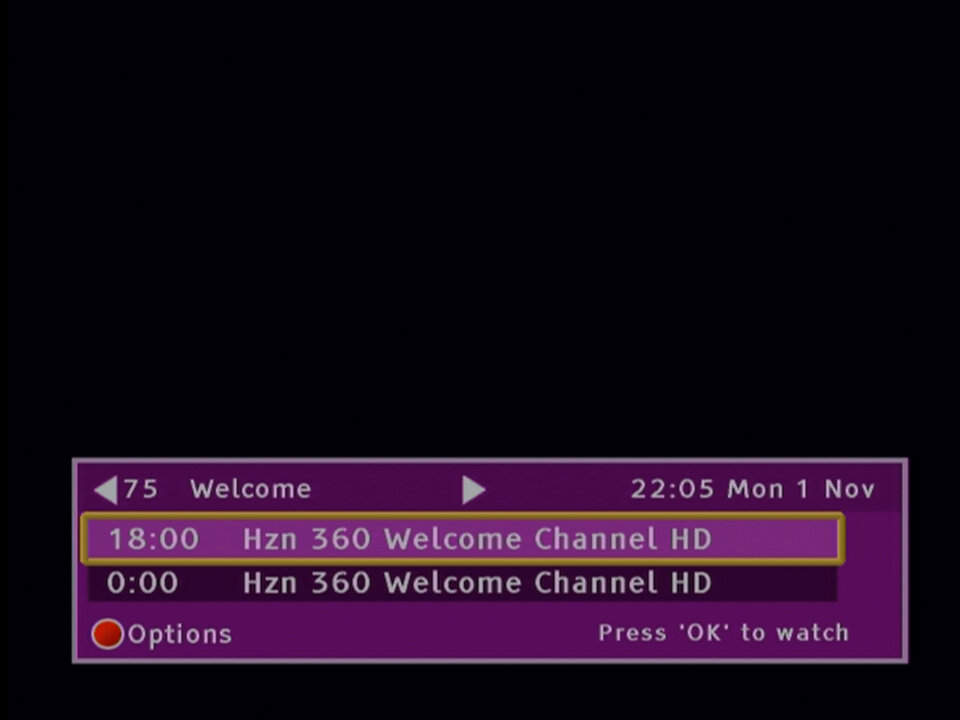
Horizon (HZN) is Virgins next generation TV platform

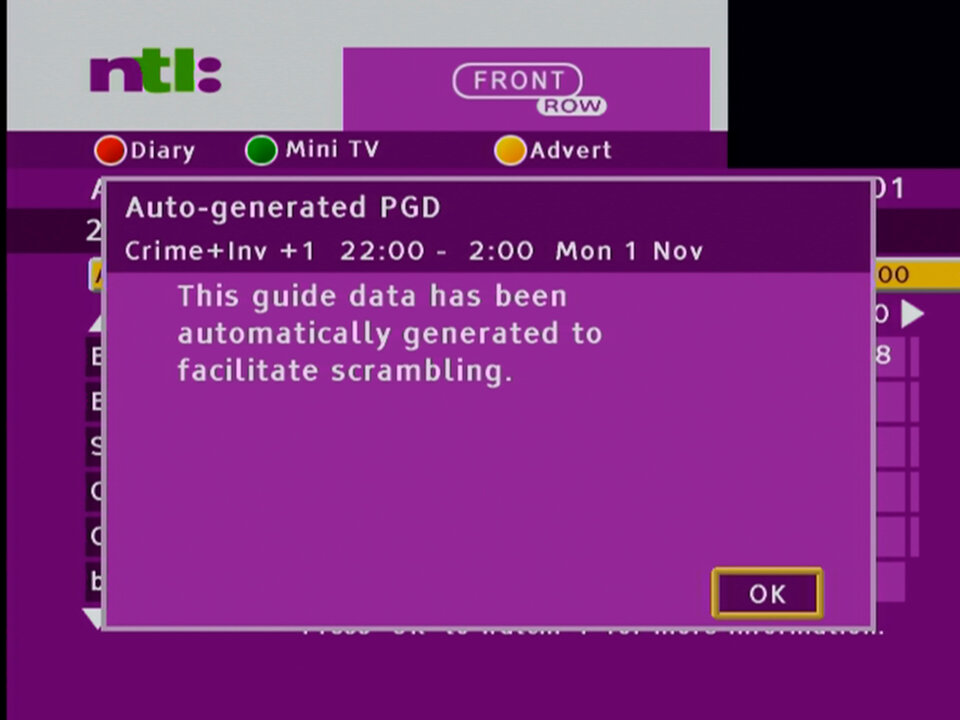
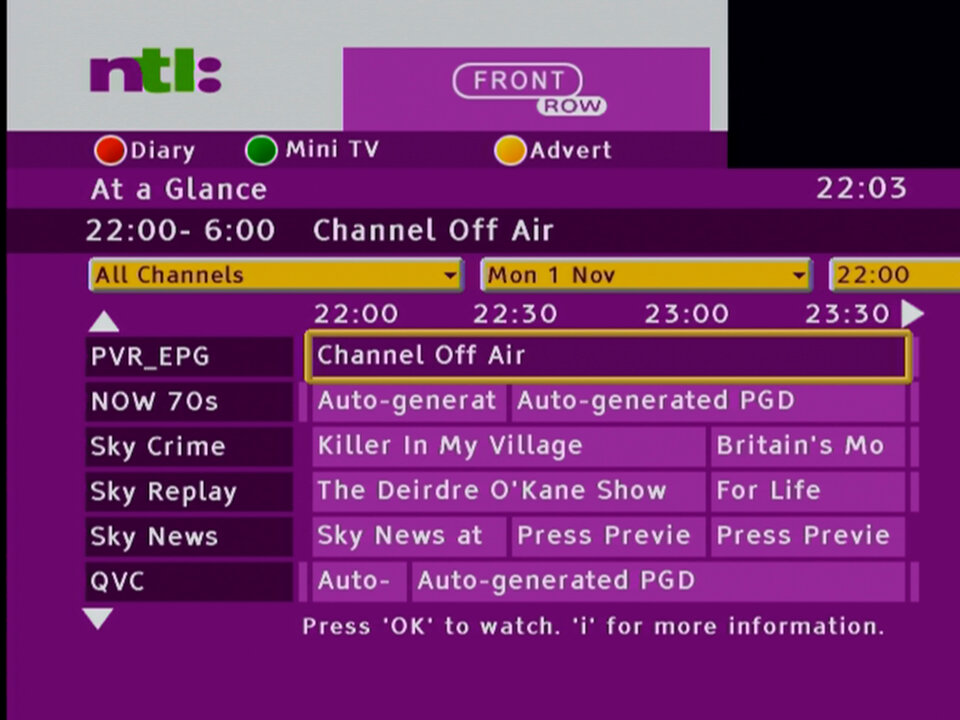
Same EPG data

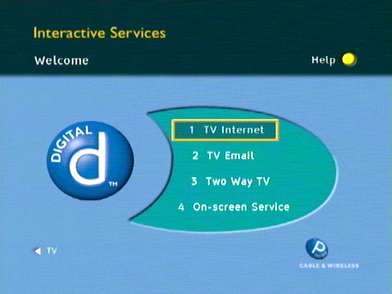
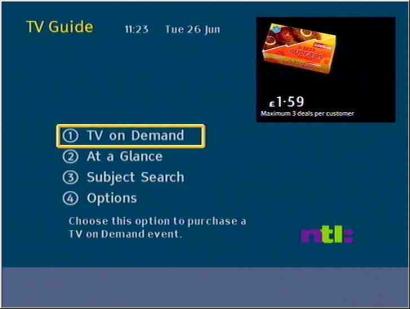
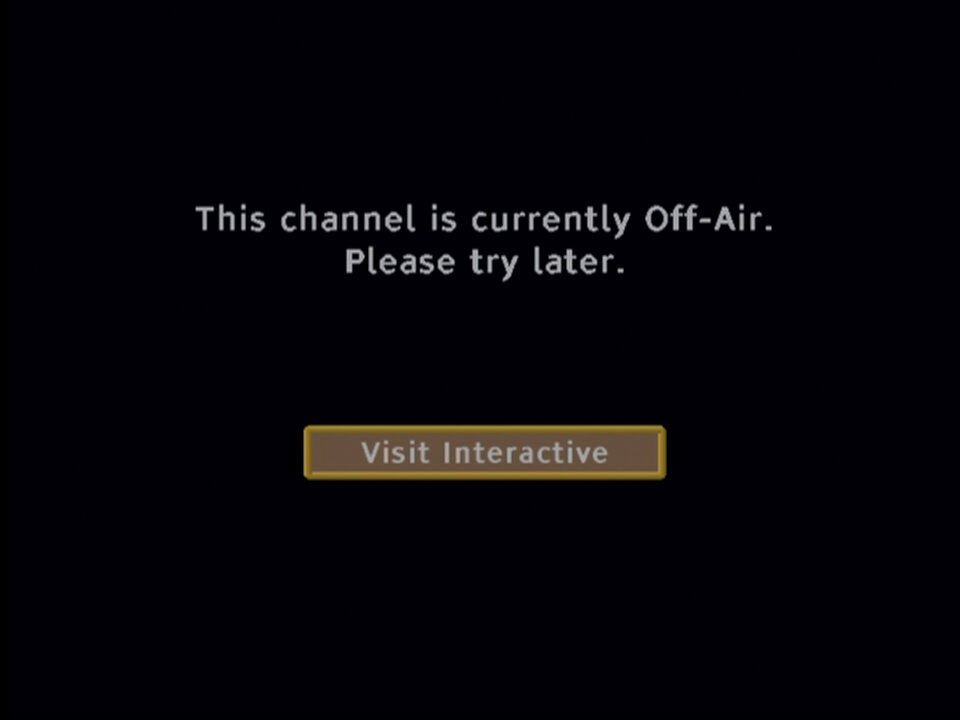
I guess when a channel is off air it gives a link to the interactive services

Sadly no video, I never got round to amending the net id for this box, since it requires an SCART RS232 cable which seem of have disappeared off the face of the earth.

ntl Langely?

Last resort lets check the Pace Di4001N running ntl Langely CR3 software, which had a build date from 2004

Well this is a miracle, seems this box was able to locate and set my local netID

What the home screen looks like with actual video feed

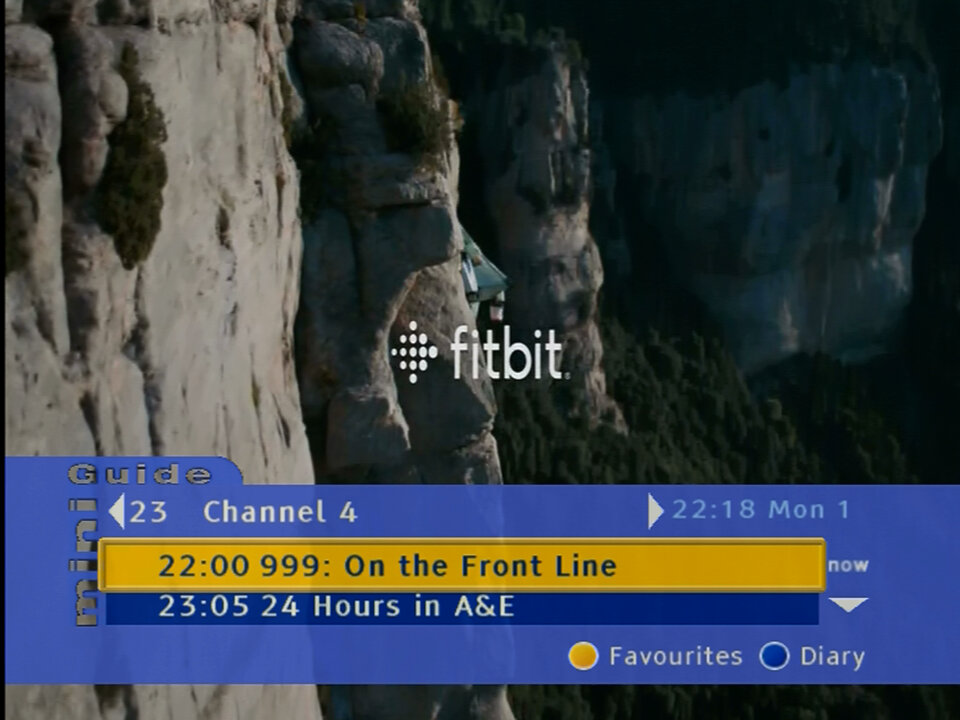
Channel 4 still broadcasts in MPEG2 SD!

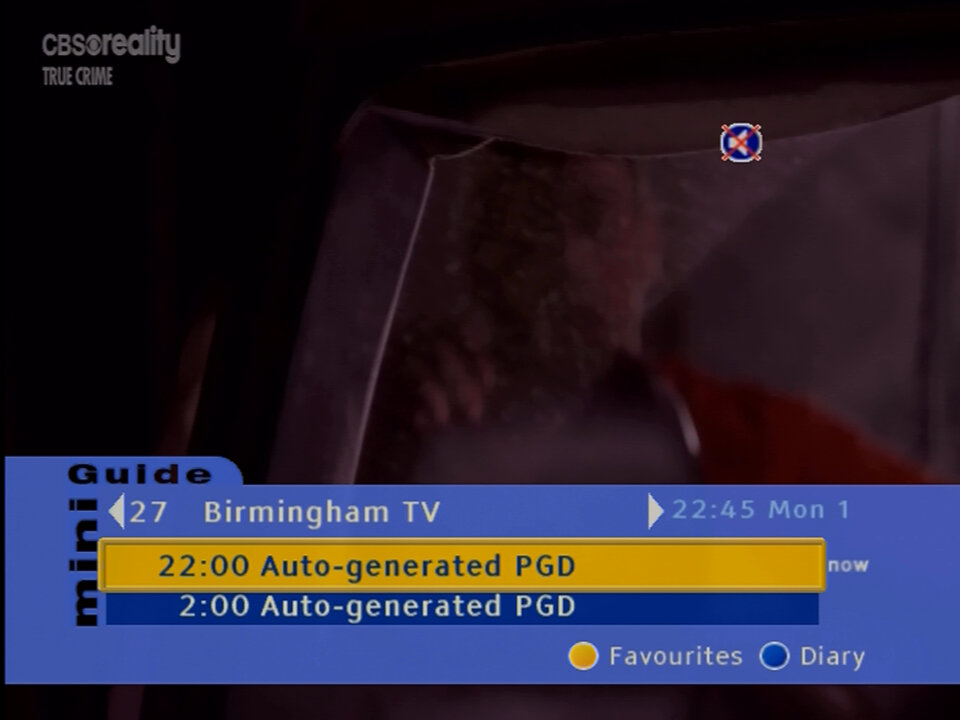
As does Birmingham TV (Our local TV station, that play Judge Judy all day)

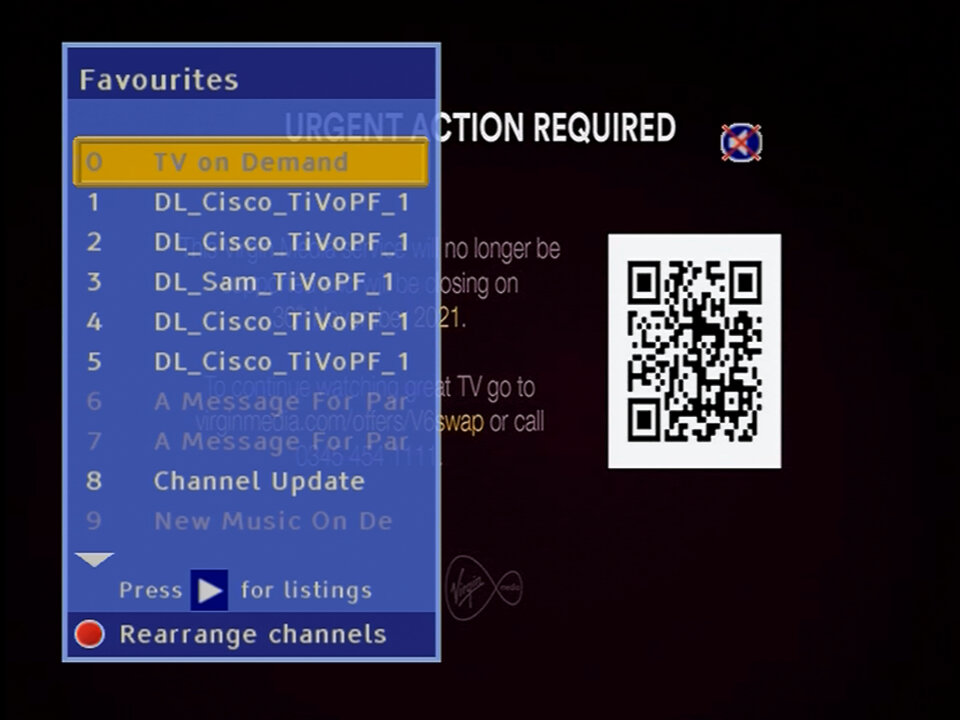
A list of channels which includes the Tivo software update streams

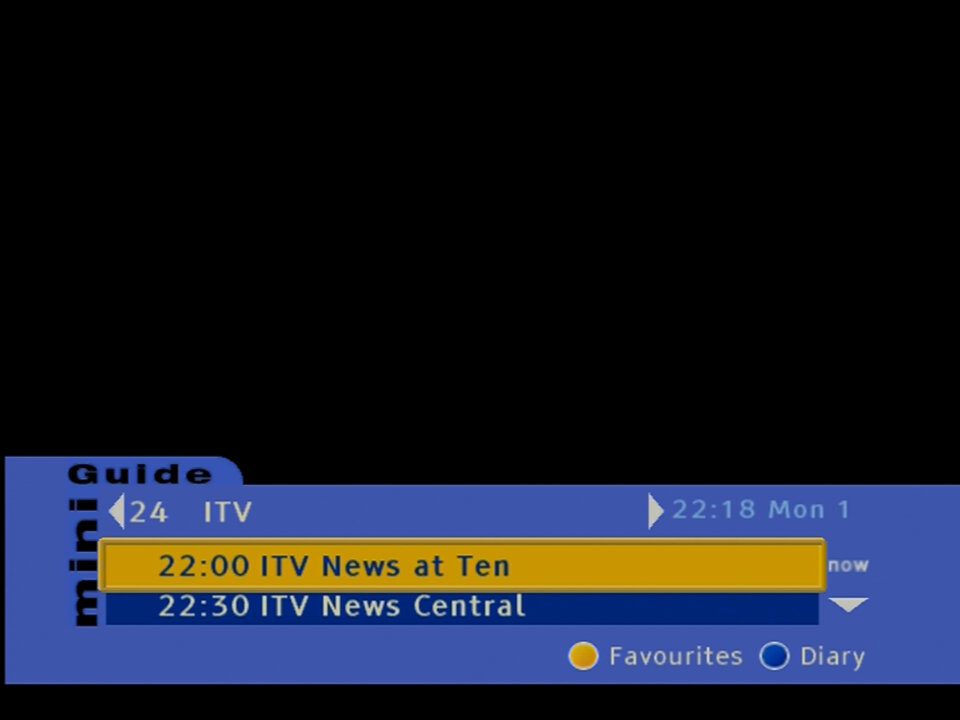
ITV still remains an radio channel, this is because the video is AVC MPEG4, whilst the audio is MPEG2. No idea why they done this

Conclusion

So what will happen? likely the last few MPEG2 channels will disappear completely, leaving the boxes with nothing to receive. Possibly removing the SD versions entirely since all of their equipment would be HD capable, the exception is BBC1 which still has regional news in SD only. A shame since instead of investing in their playout and transmission network, they would rather invest in diversity (No, Not diversity of thought). Meanwhile if you want local news, your stuck with the SD versions for the future.

Radio channels may stick with MPEG2 Musicam, but could easily go MPEG4

Windows NT Hydra (Beta 2: Build 1314)

Windows NT 4 was the next major release of the NT line of operating systems, and was to bring the new Windows 95 inface to the NT platform. Underneath the hood however it is very similar to NT 3.51

Install

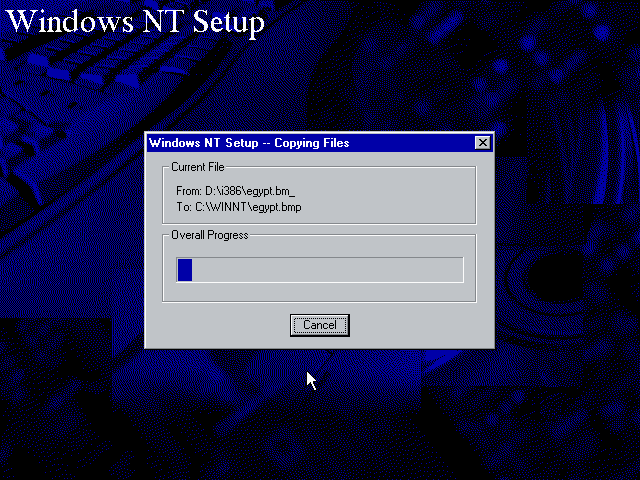
The only License agreement I agree to. The first stage of the install is done through a basic blue installer, where the disk volume and storage drivers are selected for install. Once that’s complete the second stage install pick up in a full Windows Nt environment. here the install can be customized.

Drivers

SoundBlaster Install

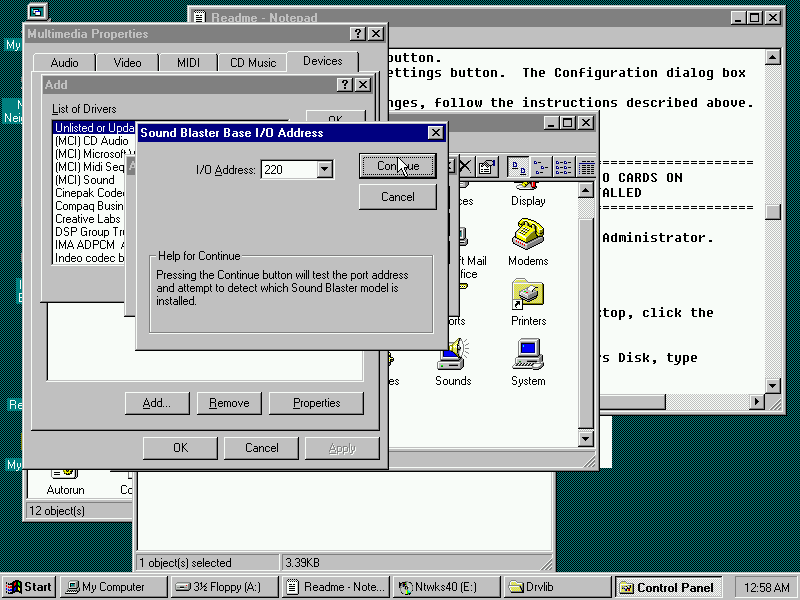
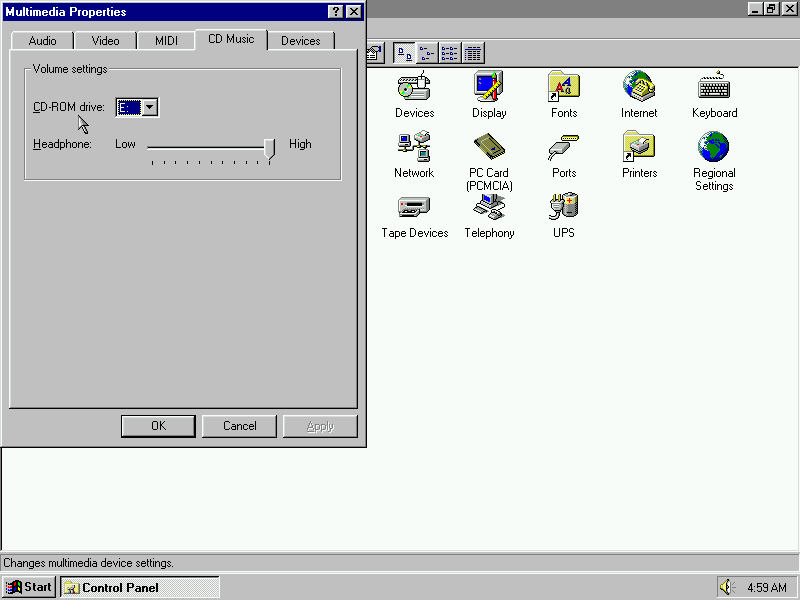
Unlike Windows 95, NT4 did not feature a device manager or the Add New Hardware Wizard, making hardware instillation more difficult since Plug and Play was not supported in the NT family until the release of Windows 2000. Adding the sound card can be done through the Multimedia applet and adding a new multimedia device, just make sure you have NT driver files available (95/98 drivers will not work)

3DFX Voodoo Install

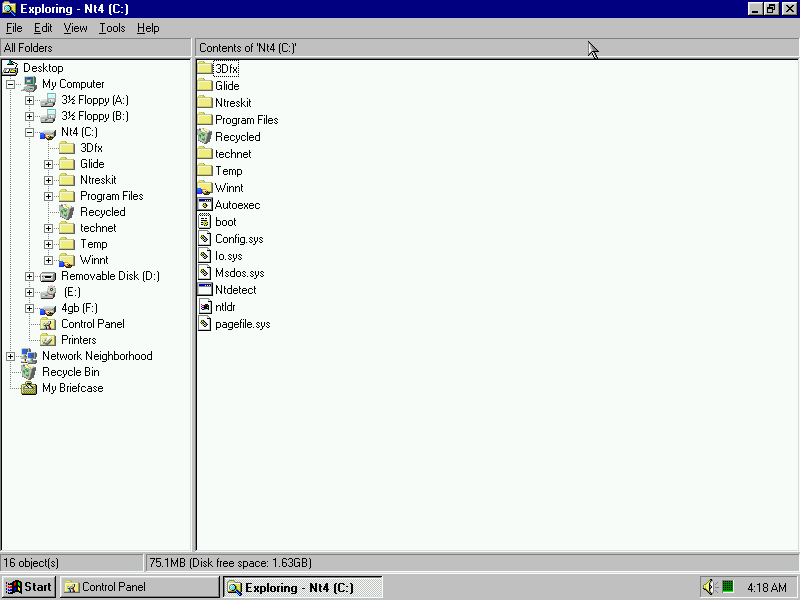
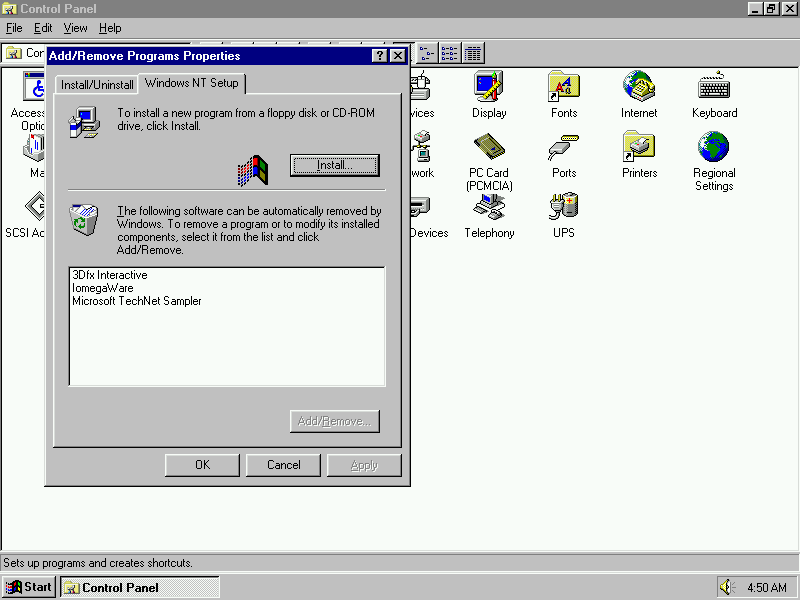
Installing 3Dfx Glide drivers, as NT4 shipped with DirectX 2 only with limited upgrade capabilities so having Glide support should allow a wider range of games to be played. Instillation was done using the setup wizard which came with the WinZip self extractor.

Iomega Zip

NT4 did not support Zip drives natively, so additional software is required in order to use Zip disc images. However the only version I could find required the instillation of Service Pack 3 in order for it to run. Accessing the Zip disk is done using that software instead of using Windows NT Explorer.

https://archive.org/details/neczipjazz

Desktop

After the is complete the system will reboot and the default desktop will be displayed

One of the preloaded desktop backgrounds, on this build ‘Click here to begin’ appears on the taskbar after a fresh install or when a new user has been created.

The Windows 95 Explorer interface is present in this build on NT

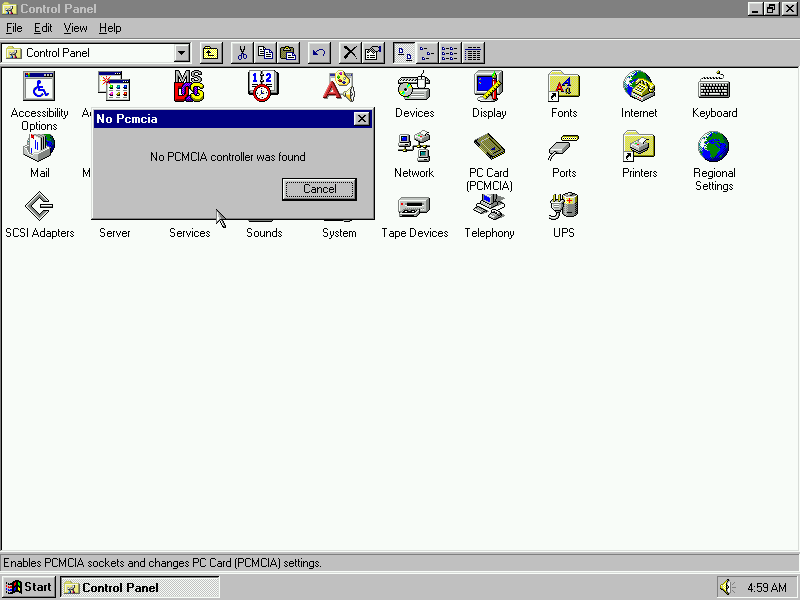
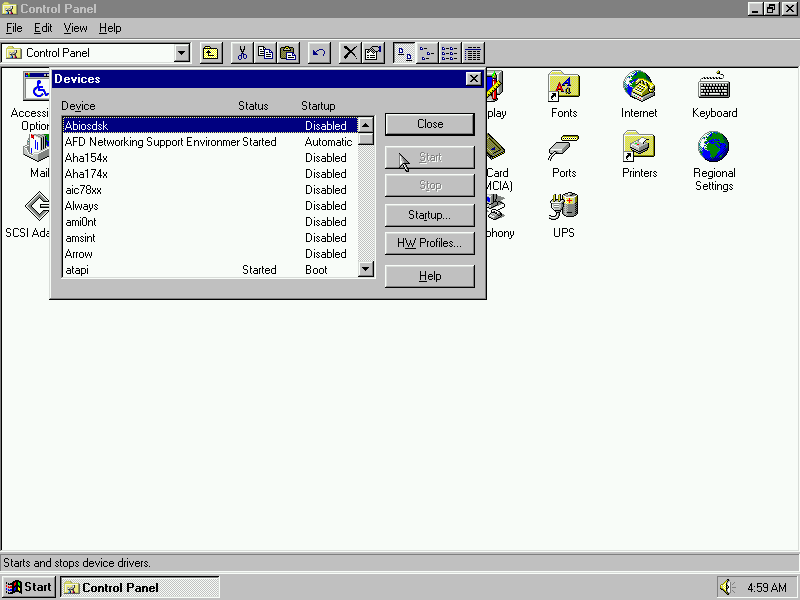
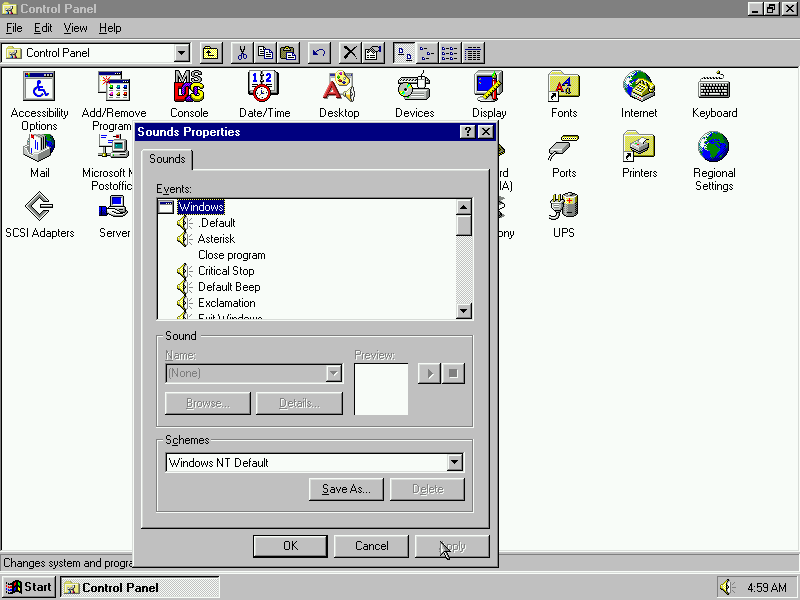
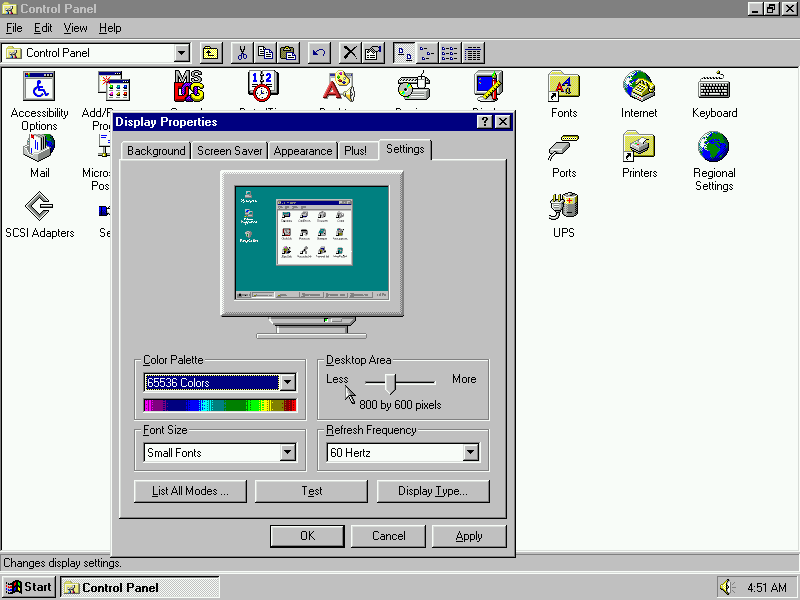
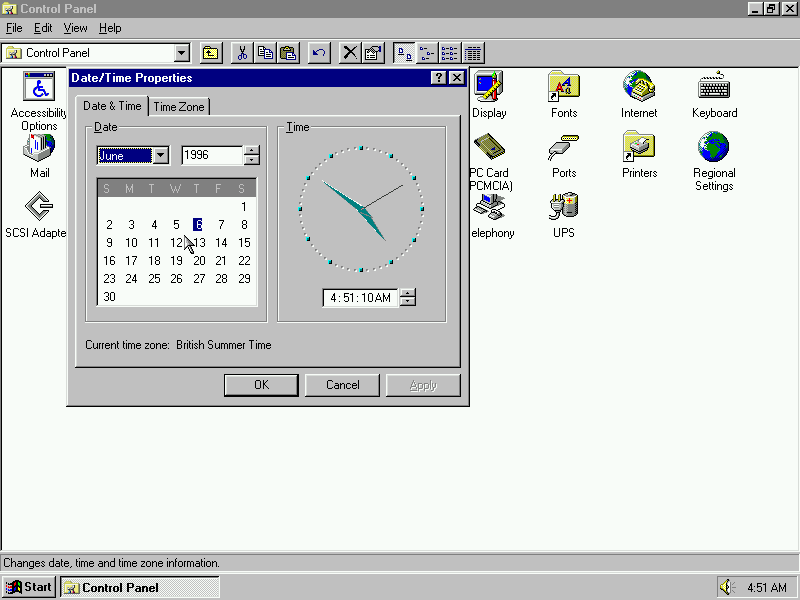
Control Panel

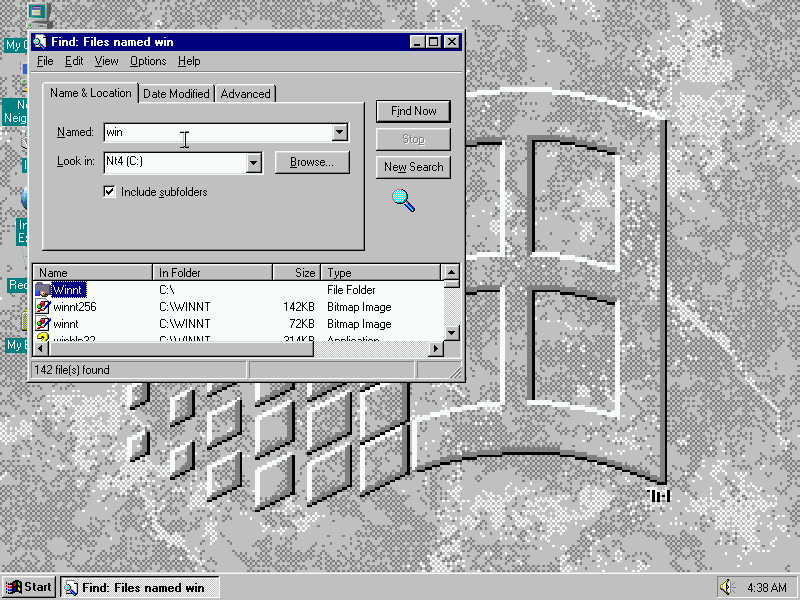
Find

Used to search and find files and folders, this is not an indexed search to the application has to manually search through the individual files

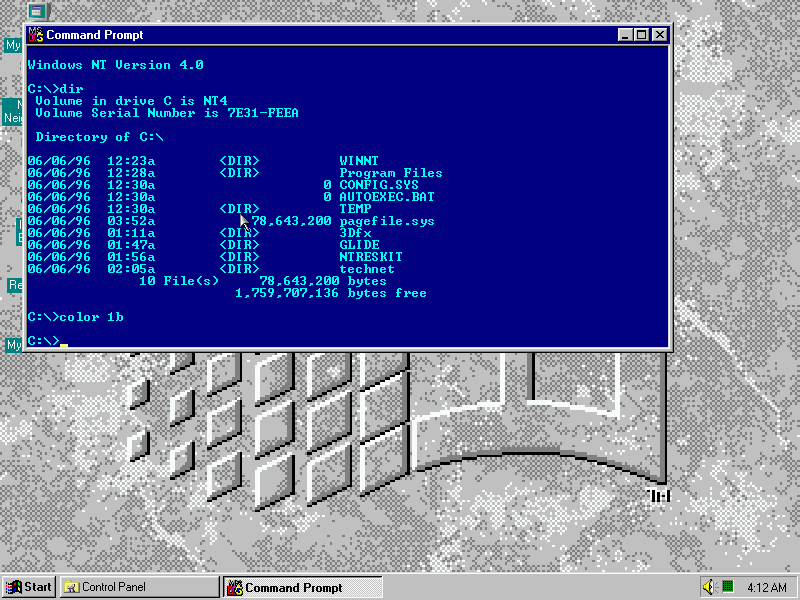
Accessories

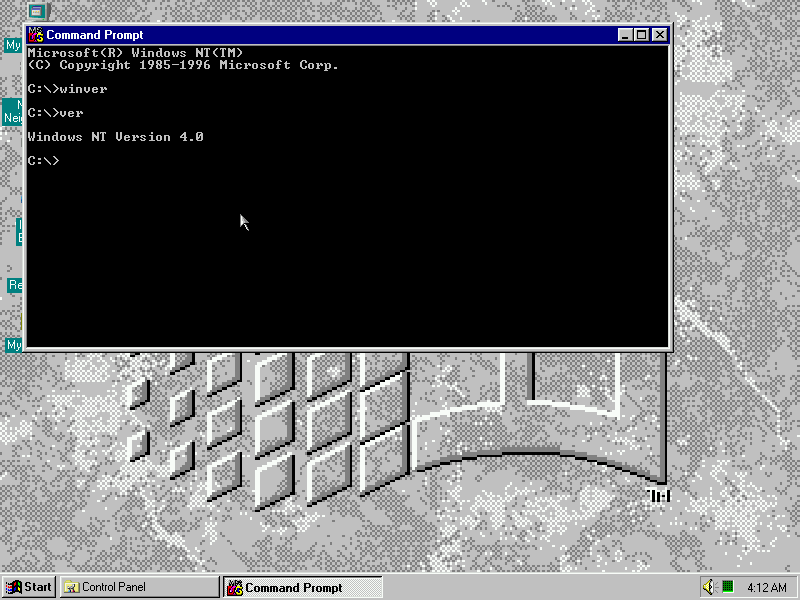
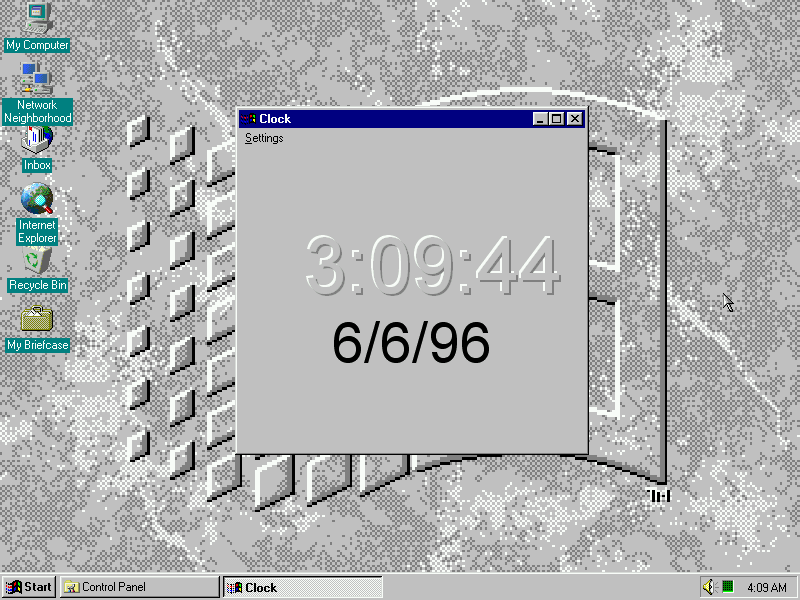
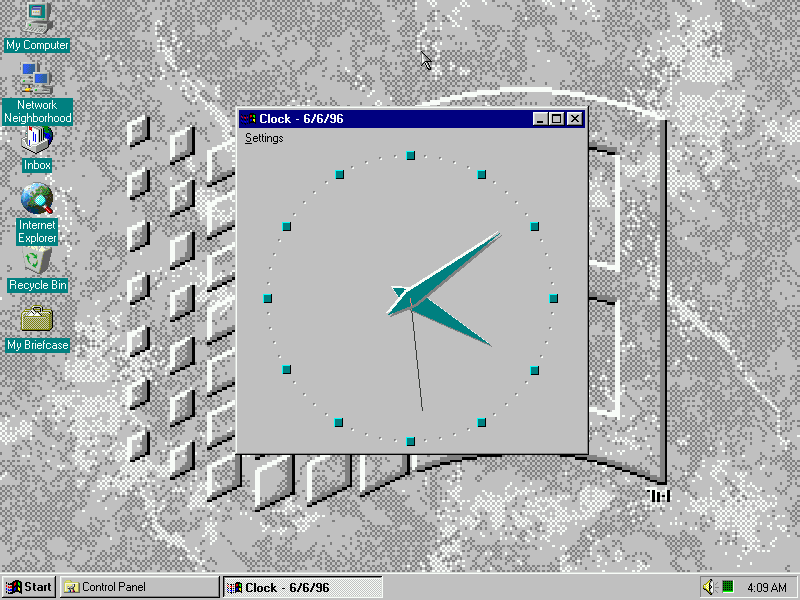
Command prompt (Also known as Console) allows commands to be entered that is not converted in the GUI interface and also allows MS-DOS 16bit applications to run. Not sure why the clock application was included here since the clock appears in the taskbar.

Paint

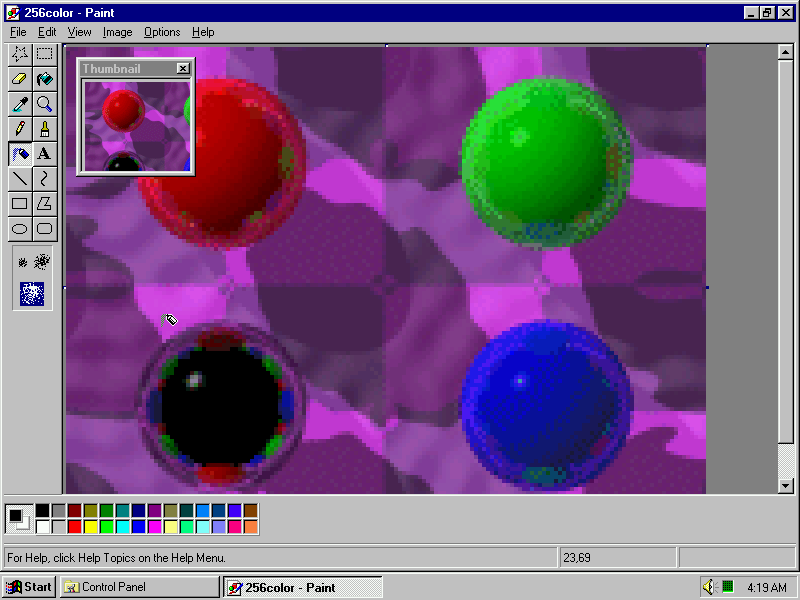
Windows 95 paint with a default background image

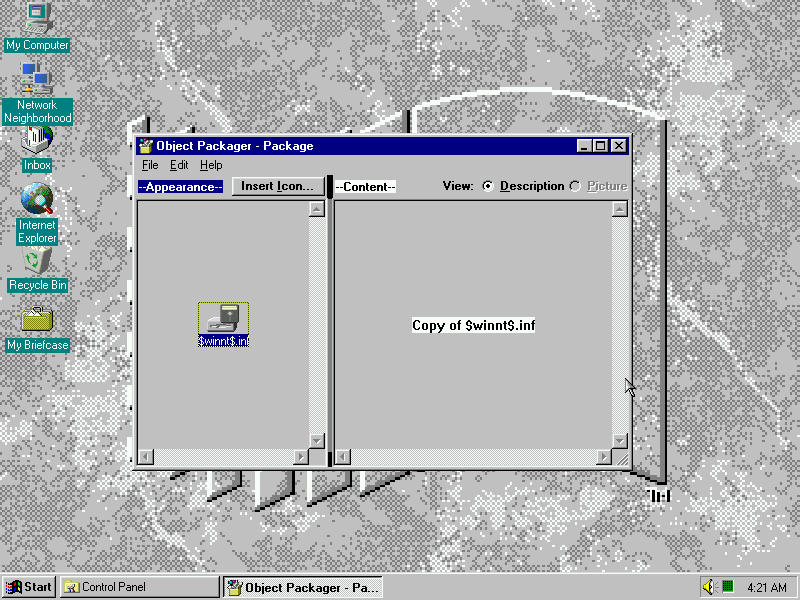
Object Packager

Not sure on what this is?

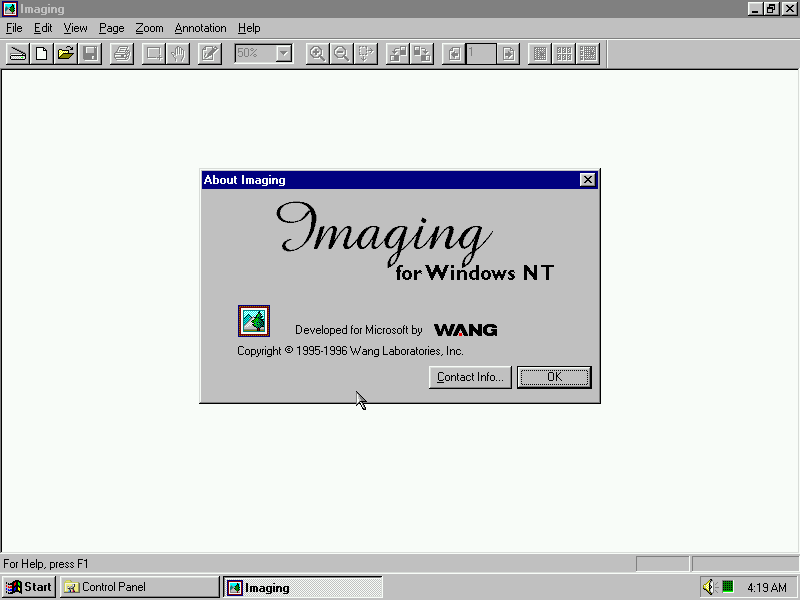
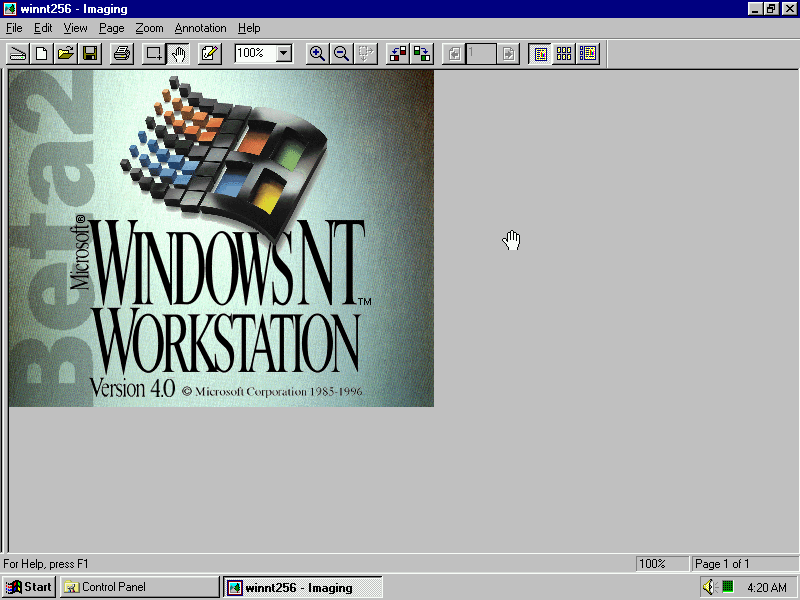
Imaging for Windows

Bitmapped image editor, designed to open an image from a scanner or a digital camera.

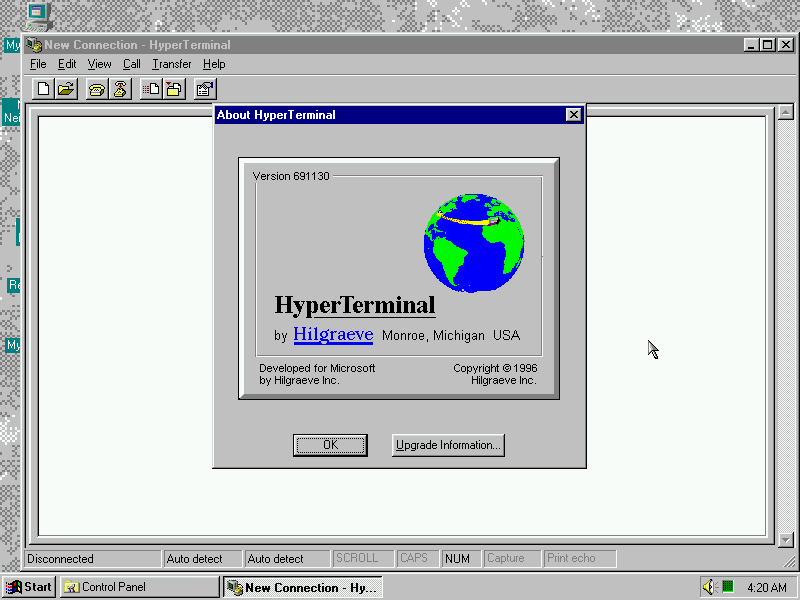
Hyper Terminal

HyperTerminal comes bundled with this build and allows for access to protocols like Telnet

CD Player

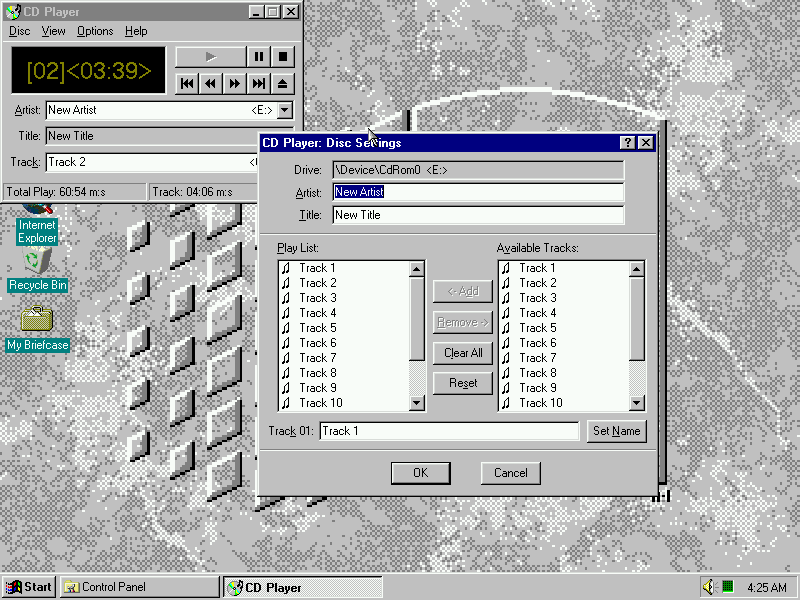
A regular CD Player, tracks can be played and renamed

Diagnostics

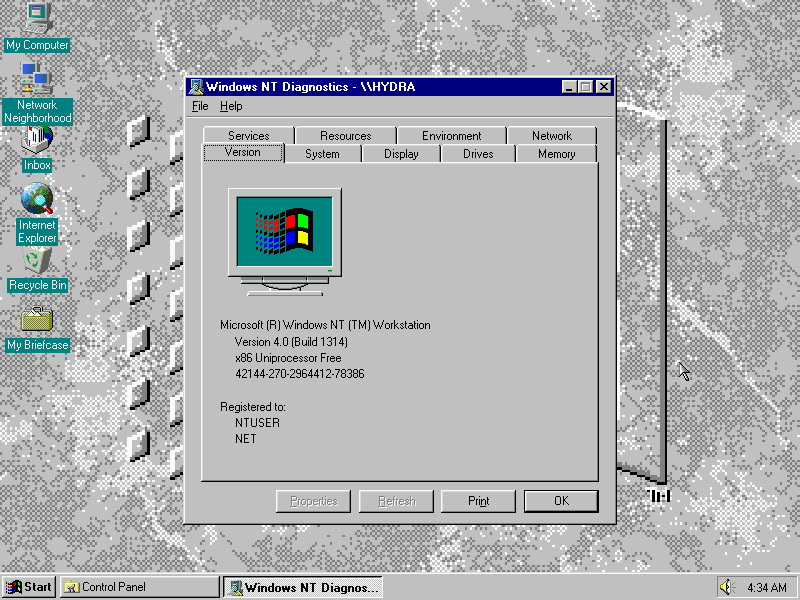
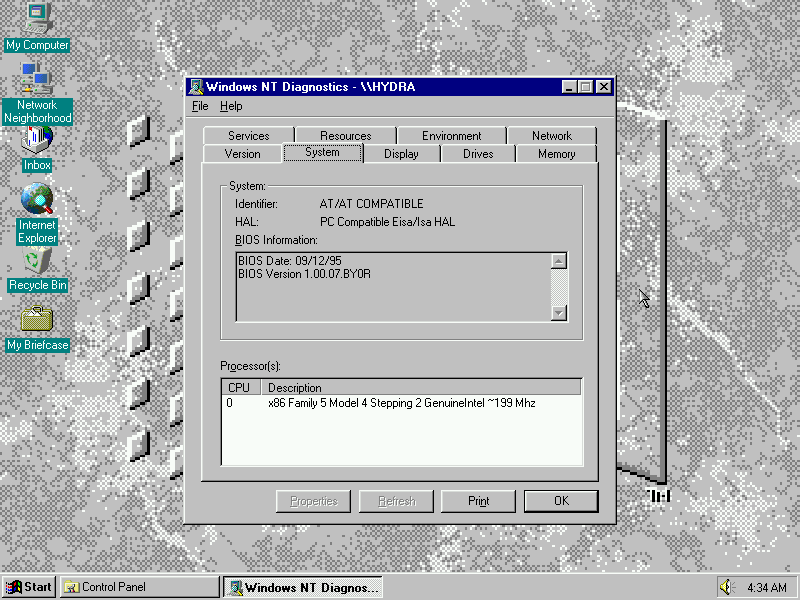
Views detailed system information and the hardware/drivers currently installed

Logon

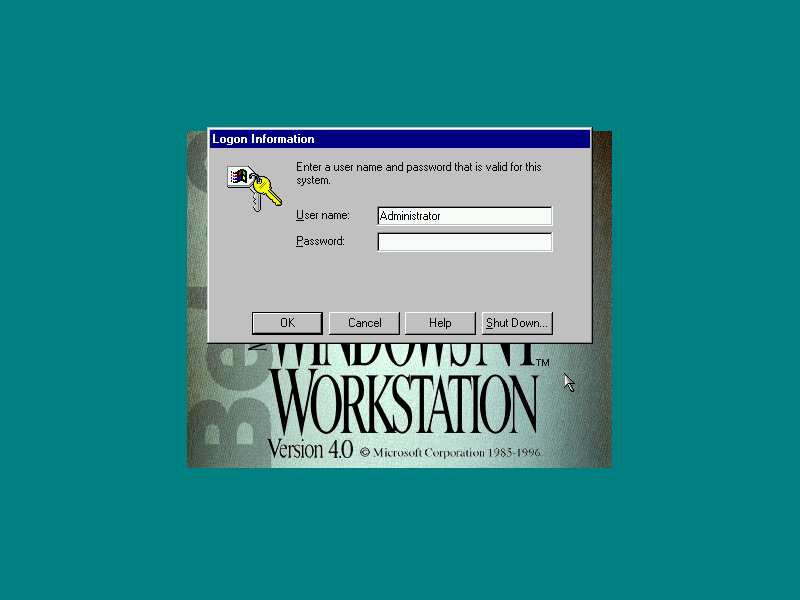
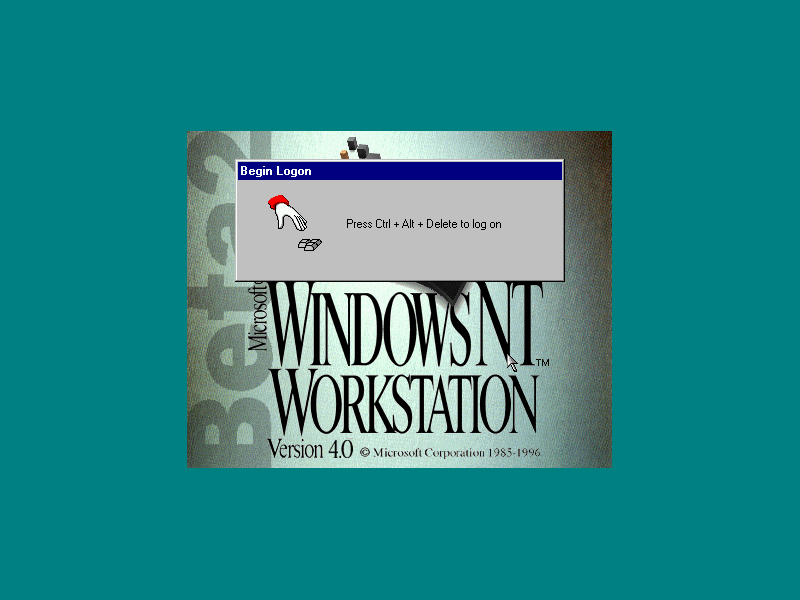
Windows NT requires you to press Ctrl + Alt & Del in order to logon to ensure the logon screen is genuine, which will bring up the login screen. On some systems this may be replaced by the Novell Client logon screen for Netware networks.

Shutdown

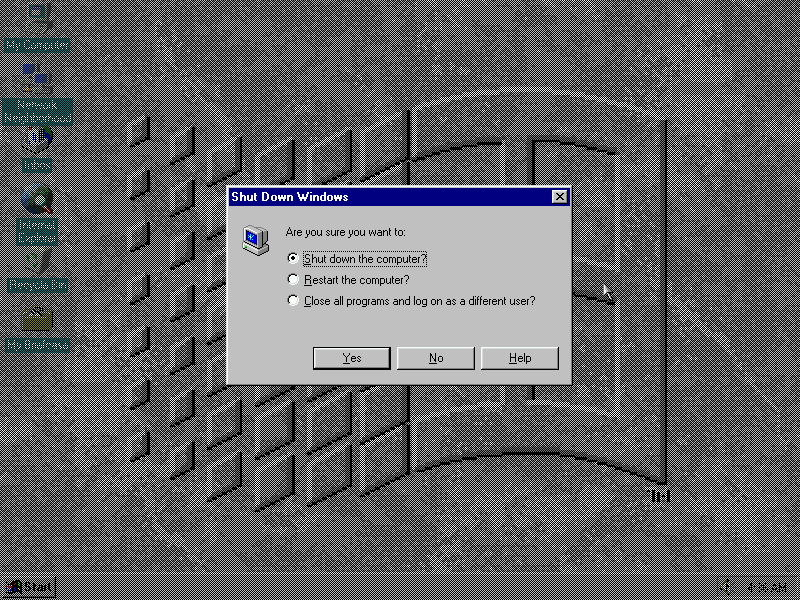
Shutting down Windows NT, from here you can log off, restart or shut down. If ACPI drivers are installed the system will power off, otherwise a power off prompt will appear instead

PCem Specifications

  • Motherboard: Packard Bell PB570
  • Processor: Pentium Overdrive MMX
  • Graphics: Built In Video – Cirrus Logic
  • Sound: SoundBlaster AWE32
  • Mouse: PS/2 Intellimouse
  • Network: Novell NE2000
  • 3D Accelerator: 3DFX Voodoo Graphics

Driver: You are the Wheelman

A classic game, Shame about the tutorial level…

  • Undercover – The main story mode of the game, you complete a set of missions which can range from driving from point A to B within a set amount of time, to escaping or pursuing another car
  • Take a Ride – Sandbox mode, only two cities are available with the other two being unlocked as you progress through the story.
  • Driving Games – A set of activities to choose from, Pursuit, Getaway, Cross Town Checkpoint, Trail Blazer, Survival and Dirt Track. Carnage is a mode exclusive to the PC version.
  • Training – Introduction to the came and the various mechanics and techniques to mastering Driver
  • There are no two player or multiplayer modes, Driver is a single player game.
Desert training level

PlayStation

The version that most people have played and are familiar with. This was the first version of the game to be released. Main attraction was the sandbox Take a Ride mode where you could drive freely until you caught the attention of the police, who would then proceed to ram you to death.

Cop car went vertical, a common occurrence

The game occupies on memory card block per story save, and two blocks for replay data, you can easily fill a memory card with this data, thankfully the game

PAL-land version

Thankfully this game runs in full PAL resolution, no top/bottom bars, likely since the studio that developed the game was based in Europe. There is a difference in the logos, with the NTSC version having a altered blue version of the logo with the works ‘You are the wheelman’ which is also present in the games title. The PC version adapts this for both Europe and US markets (Makes sense since the PC isn’t regionalized compared to the PlayStation releases, PAL/NTSC does not exist on PC)

Windows

Despite this version running in a higher resolution and a capability of having a higher framerate there are a few drawbacks compared to the PlayStation version. there was also a Mac version, although I believe its very similar to the PC version.

Screenshots here are running on an emulated PC (PCem v17), running an Intel Advanced/ZP with a Overdrive MMX processor with a 3DFX Voodoo Graphics card. The operating system is Windows Me. The graphics here will depend on the 3D video card an API, as 3DFX cards used Glide, the Direct3D version may look different.

Differences between the two

One of the main differences is the background music which was changed in the PC version. Also unlike the PlayStation version, there are no separate themes for when you gain felony, in the PlayStation version the music would change when you attracted the attention of the cops, but the PC version remains the same throughout. As someone who grew up on the PS1 version, it was kind of jarring to play Miami without the familiar theme, and for the game to not change when catching the cops attention.

Comparison screenshots below, the PSX version is running in Duckstation at twice the native resolution (640×480) with bilinear filtering and 2x anti-aliasing enabled. With these enhancements we can try to bring the PSX version up to the PC version, which is running at 640X480 resolution with ultra graphics present.

One thing to mention with the PC version, as with all PC games of the era the game is reliant on using Redbook CD audio for the background music, where the games streams the music from the disc itself, like an audio CD. For this to work you had to have an audio cable connected from the CD drive to the motherboard or soundcard, in addition to the IDE cable. On modern systems (with SATA drive onwards) this is no longer supported, and modern Windows versions / soundcards its no longer possible to stream analogue audio from the CD drive, instead being delivered through the IDE or SATA interface, which this game won’t support. The game itself will still run and you can still hear sound effect like the car engine, but you wont hear any music.

  • The spawn points are also different for each of the maps/level, again not sure why these were changed
  • The map layouts were also changed, with some areas being remodelled completely, Dodge Island had a massive change, possibly since it was designed around the PlayStations limitations initially.
  • The cop radio voices were also changed, with some lines being completely different
  • A speedometer is present which gives the speed of the players car in miles per hour
  • The car models themselves had change and I cant say I prefer the PC version of the cards, which are lacking certain details from their textures, the back of the cards look like a blur compared to the PlayStation version.

Upgrading the PlayStation version

Modern emulators are capable of running the game in a higher resolution with additional smoothing effects. Unfortunately there is little we can do for the framerate, that’s stuck at 30fps, or 25 for Pal-land copies. Still at least there’s no boarder, and you can overclock the PlayStation CPU on some of these emulators, which helps with the slowdown when there’s a lot of cars and particle effects on screen.

The game can be upscaled to 640×480 or 800×600, which the PC version also natively supports. Depending on the emulator, higher resolutions can be used but I don’t recommend it unless the emulator supports perspective correction, otherwise those polygons will be jittering aggressively. This video will help explain further on why this occurred on PlayStation games.

Texture filtering can be hit or miss, whilst it helps smooth out the textures, due to the way the PlayStation handled 2D, it can affect the HUD display too, causing excessive blurring on the HUD, making it look like an N64 game.

Exploring the disc

In the NFMV folder there is a exe file called NFMV.EXE however this does not open even in older versions of Windows

Windows For Workgroups 3.11 Beta (Build 70)

Install

MS-DOS (6.0) must be installed first before Windows 3.11 can be installed. At this point Windows was still reliant on MS-DOS, but were regarded as two separate products.

After install and some graphics drivers. By default Windows will use VGA mode which restricts you to 640×480 and 16 colours. Windows Sound System is not included in this build but can be installed and was required to use the Windows Sound System Soundcard.

Applications

  • Microsoft Anti-Virus: They had their own Anti-Virus application, before Windows security essentials, Defender or Windows Live OneCare. Different drivers can be scanned manually on request.
  • Smartdrive: Disk caching application
  • Undelete: As the concept of the recycle bin did not exist until Windows 95, Microsoft Undelete was offered instead which could restore files deleted by the user that had not been overwritten

Accessories

  • Write: Predecessor to Wordpad, for when you don’t have Microsoft Office installed
  • Paintbrush: Paint
  • Notepad: Text editing application
  • Recorder: Used to record keyboard and mouse commands, useful for automation.
  • Calculator: On screen calculator
  • Clock: Displays the time in both analogue (Face) and digital format
  • Character Map: Insert and remap any characters that are not supported by the users keyboard
  • Media Player: Plays WAV and MIDI sound files supported by the users soundcard
  • Sound Recorder: Records sound from the line input to a WAV file

Control Panel

Control Panel remains unchanged from Windows For Workgroups 3.1

Drivers

Some drivers that may be useful to users of PCem, depending on the machines they are emulating

AVGA2 Driver

The Commodore PC I was using used a Acumos graphics accelerator onboard and integrated to its motherboard, which was based on a Cirrus Logic CL-GD5402. Installing a driver lets you access further resolutions and colour modes that the graphics chip supports.

AVGA2 Driver – Vetusware

Windows Sound System

This build of Windows did not ship with Windows sound system drivers but can be installed.

WinWorldPC – WSS and SoundBlaster drivers